Archive for the ‘Film Festival’ Category

WHAT:  Screenwriter’s Lab 2012, a 2-part workshop is designed to prepare screenwriters with original Indian stories for working with the international filmmaking market place. It aims at improving a completed screenplay in its final stages and to increase the international marketability of the same.

The Lab is organised in partnership with Binger Filmlab, Netherlands, and the Venice International Film Festival, Italy.

LAB : The 1st Session will be held during the Venice International Film Festival in Venice (31st August- 4th September, 2012) where participants will get first-hand experience of the workings of the international film community and get to train with their screenplay mentors.

The 2nd session at Film Bazaar, Goa from 24–27 November, 2011 is where participants will apply their training and pitch their revised screenplays to participants at the film market. (dates are subjected to change)

MENTORS : The workshop will be conducted by Marten Rabarts, Artistic Director, Binger Filmlab, aided by experienced international guest mentors. It is organized in association with Binger Filmlab, Netherlands and Venice International Film Festival.

DATES : Last date for submitting complete application forms : 31st May 2012.  Results : August 2012

FEES : Application will not be considered complete without the Submission fee of Rs. Three Thousand Only [Rs. 3000/-]. The fee can be paid through cheque/demand draft/electronic transfer. For more details, click here.

CONTACT: For any doubts, you can check out the FAQ and other details here or can write to  screenwriters-lab@filmbazaarindia.com

Rules & Regulations : Do carefully read the Rules and Regulations page as there has been some changes this year.

Happy writing!

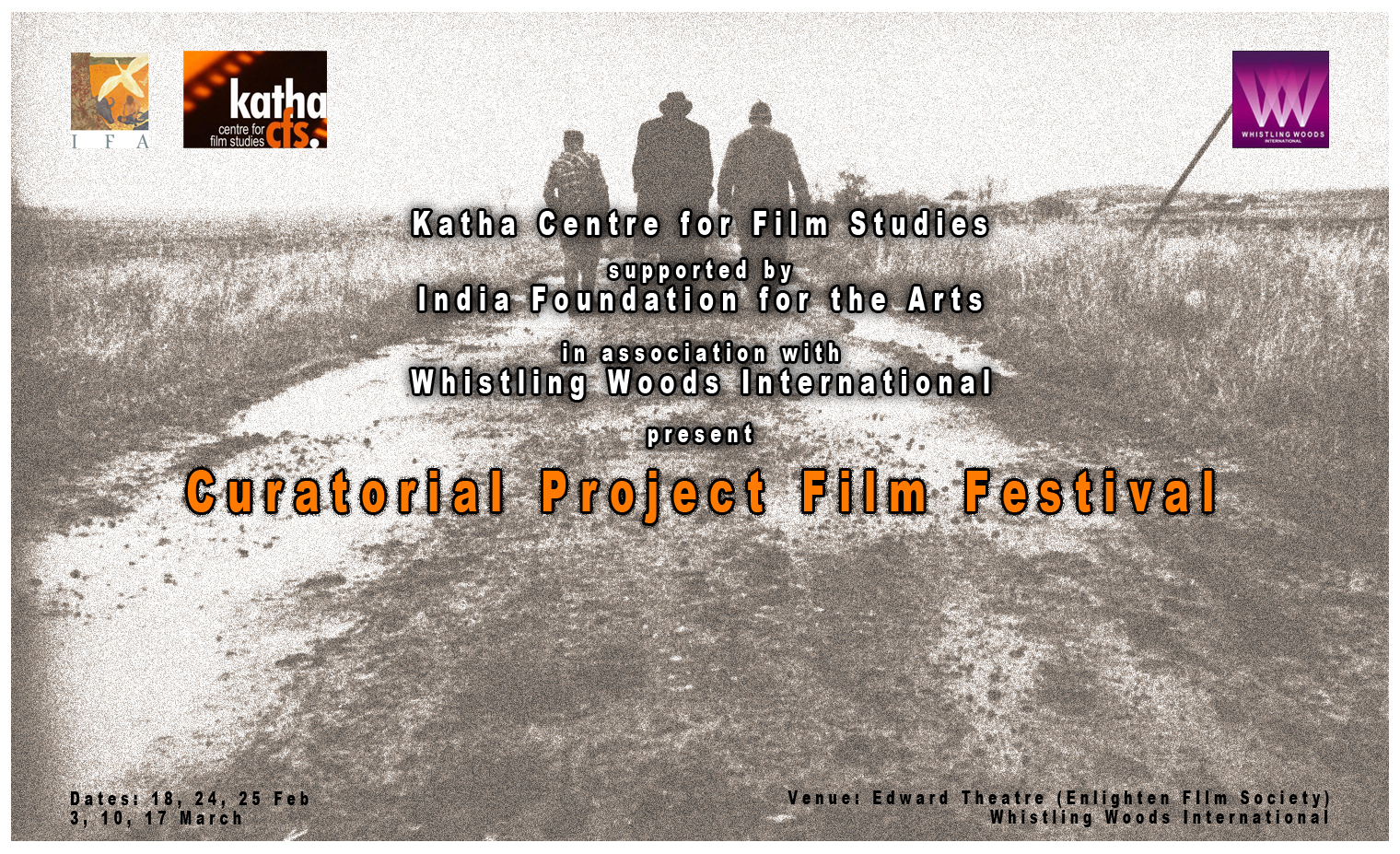
Katha Centre for Film Studies : Curatorial Project Film Festival (Weekend Screenings from 18th Feb to 17th March)

Curatorial Project Film Festival is a part of the workshops on Film Curatorial Practices organized by Katha Centre for Film Studies and supported by India Foundation for the Arts.

– All film screenings are followed by discussions around films and the curatorial idea. The film screenings and discussions are open to all. No registration, no tickets required – just reach the venue and join us!

Schedule:

1. A bit of I, A bit of Me –  Curated by Afrah Shafiq.

Date : 24th and 25th Feb, 2012

Location : Edward Theatre, Kalbadevi and Whistling Woods International, Film City, Goregaon East, respectively

The programme includes a collection of documentary work that is in one way or the other a cinematic rendition of the self. These subjective truths with generous doses of reality, explore the practice where the filmmaker chooses to face the camera and implicate themselves in their own work and the teller becomes inseparable from what is being told.

Desperately Seeking Helen (Eisha Marjara, 81min, Canada)-  3:15pm, 24 Feb, Edward Theatre| 3:45pm, 25 Feb, Whistling Woods International

The Beaches of Agnes (Agnes Vards, 110min, France) – 5:00pm, 24 Feb, Edward Theatre| 10:15am, 25 Feb, Whistling Woods International

Summer in my veins (Nish Saran, 41min, India) 7pm, 24 Feb, Edward Theatre| 5:30pm, 25 Feb, Whistling Woods International

Unlimited Girls (Paromita Vohra, 94min, India) – 12:15pm, 25 Feb, Whistling Woods International

2. Emerging Voices of Indian Cinema – Curated by Manjeet Singh.

Unreleased Independent Feature films / Short films / Animation films. An attempt to probe into the challenges and delights of filmmaking

Date – 3rd March, 2012

Venue – Whistling Woods International, Film City, Goregaon East

Alms of a blind horse (Gurvinder Singh, 90min, India) – 10:15am

VideoKaran (Jagannathan Krishnan, 73min, India) – 12:00 noon

Hawa Anne De (Partho Sen Gupta, 93min, India) – 3:00pm

Carnival (Madhuja Mukherjee, 61min, India) – 4:45pm

3. Sonic Silences, Soundscape and Cinema – Curated by Geetha B.

The programme explores varied ways in which silence is used in films and the complexity of silence both in a philosophical and acoustic sense.

Date : 10th Mar, 2012

Venue : Whistling Woods International, Film City, Goregaon East

2001 A Space Odyssey (Stanley Kubrick, 142min, USA ) – 10:30am

In the Mood for Love (Wong Kar Wai, 98min, Hong Kong) – 1:45pm

Satantango  (Bela Tarr, 60min, Hungary) – Selections from the film – 3:30pm

Siddheshwari (Mani Kaul, 123min, India) – 5:15pm

4. Food and Cinema –  Curated by Atika Chohan.

The programme looks at the centrality of food as  recurrent film theme and how imperative a tool it is to explore society, culture, tradition, race, displacement, immigration, current socio-economic concerns and politics; and further, since food-films marry cinematics and rhetoric so engagingly that it finds an instant  receptivity amongst both the lay and initiated audience.

Date : 17th March, 2012

Venue : Whistling Woods International, Film City, Goregaon East

The Cook the Thief his Wife her lover  (Peter Greenaway, 95min, France-UK)  –  10:15am

Silence of the Lambs (Jonathan Demme, 118min, USA) – 12:00 noon

My Dinner with Andre (Louis Malle, 110min, USA) – 3:15pm

Eat Drink Man Woman (Ang Lee, 124min, Taiwan) – 5:15pm

– In case of any query, tweet to @kathaCFS or @svetlana25 or you can write to  katha.film@gmail.com

– **Please note that screening times are subject to change in case of certain unavoidable situations.

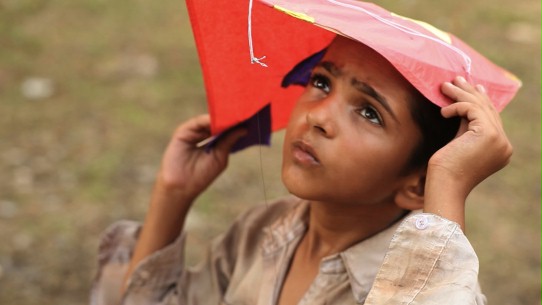
India doesn’t have anything to boast about at the ongoing Berlin Film Festival. Like any other cinema snob, if you don’t count Don2, Rajan Khosa’s Gattu is the only film in the official selection of Berlin. The film will be screened in the Generation section of the festival.

Since 1978, the Berlinale has devoted a section to children and young people: Generation. In two competitions, Generation Kplus and Generation 14plus, discoveries from state of the art world-cinema and on a par with young people are presented and the most outstanding of these are awarded the Crystal Bears. (from official release)

Gattu is produced by CFSI and the cast includes Mohammad Samad, Naresh Kumar and Bhura.

And here’s the official synopsis….

‘Truth with triumph in the end’ is the motto of the local school in the part of town where Gattu lives. But Gattu is too poor to go to school and he’s not always that truthful either. Gattu lives and works very hard at a scrap yard belonging to a man he simply calls ‘uncle’. Uncle bought him years ago from his sick father. Gattu is particularly inventive when it comes to thinking up excuses so he can slip away and indulge his passion for kite-flying. Day after day the children love to compete against each other with their kites. They’ve given the name Kali to one mysterious black kite that dominates the sky; strangely, nobody seems to know who owns it. If Gattu wants to win the next competition he’ll have to climb to the highest place in town. This is the school roof, of all places. Gattu manages to creep inside where he assumes command of a small but determined group of pupils. A dramatic battle of the skies ensues during which Gattu uses every trick in the book to claim the lead. But his greatest achievement is when, encouraged by his friendship with his new-found comrades, he decides to tell the truth.

Musa Syeed’s low-budget debut feature, Valley Of Saints recently premiered at the Sundance Film Festival and also bagged the World Cinema Audience Award for dramatic feature. It’s currently screening at the International Film festival Of Rotterdam.

To quote from the official synopsis, during a violent summer in the beautiful Kashmir Valley, a young boatman tries to escape. But then he finds a new love. It’s a story of conflict, but it’s also about the environmental destruction of the beautiful Dal Lake.

Do check out the trailer.

To know more about the film and the director, click here to read the DearCinema.com interview.

Gurvinder Singh’s debut feature Anhey Ghorhey Da Daan (Alms For The Blind Horse) came into the limelight when it was selected for the prestigious Venice Film Festival last year. It premiered in the Orizzonti section of the festival which is presented as an exploration of the modes of contemporary cinema.

And now, almost after a year, two trailers of the film are finally out. Have a look.

The film has been produced by National Film Development Corporation (NFDC) and is based on Gurdial Singh’s novel of the same name.

To know more about the film, click here to read an interview of Gurvinder Singh.

Yes, yes, yes, we know. For a change we’re behaving like the incestous bollywoodwaalas and promoting someone who is a good friend and who also happens to be a punju 😛 (but unlike them, we know our boy man is zooper talented). Kabir Chowdhary dabbled in theater and arts in Chandigarh before making a one minute short film called Dolly (click here to see it) which won the Gold PFCOne award (passionforcinema.com one minute film festival). He was an intern on the sets of DevD, and for those who claim to have seen the film many times, let’s see if you can figure out which scene in the film gave a tribute/promotion/plugin to his short film.

He later moved on to direct more short films like Pour, this low budget spunky music video here, a black humored clay news spoof  ‘Balbir News on Nithari Killings and worked on the art department for films like Wake up Sid, Aisha, and now going independent art director with Midnight’s Children.

He’s directed a 43 minute short film ‘Good morning’ which played at SAIFF film festival NY and won the grand jury award for best short. Our verdict? A trippy ride with some lovely visuals and performances. Pretty good sound design and music too. Nitpick – a few minutes long but still engaging. Do watch it if you get a chance.
Click on the play button to check out the trailer and if it looks interesting, scroll down to know more about the film. Over to Kabir.

Good morning is a psychological drama that explores the obsessions and insecurities of a married man who is completely dedicated to his wife. His world is shattered one day when he discovers his wife in bed with another man.

What happens next is diabolical, cold and shocking.

When viewing a film I have directed, my mind always wanders to what I was thinking when I was making it.

Which I guess is a very normal thing to ponder over for anyone who has been a part of a film project.

However, with Good Morning, all I can think about every time I watch it, is what an utter explosion it was for all of us working on it.

It was a guttural, visceral spewing of all our collective emotions, it was like I had lit a firecracker and burst it in my own hand.

The original script of Good Morning was 60 pages long and was written by me about 5 years ago, but we only got down to making it after I recently fractured my hand.

There was little activity in Chandigarh (my hometown), I was utterly bored, but brimming with a sense of purpose when my friend and the editor (Sakshi Bhatia) suggested, we rework the 60 page script and do a 10 minute film (which ended up to be 45 minutes running).

The 10 minute script, unlike the final film was written like an absurd comedy, it had extensive dialogue written in rhyme and was layered with a lot of nonsensical humor and a few sexually explicit scenes which were all later slashed out of the film.

Because once the casting process started it became very difficult for us to find an actress in Chandigarh who was willing to get naked! We did meet a lady who came all the way from a hill station about 3 hours away, and asked for 8000 rupees for the nudity involved. Without wanting to spend so much, we finally gave up this extensive search and decided to ask my cousin (Sukhmani, the actress in my earlier film Dolly) without giving her a copy of the script – and figured we will deal with the sex scenes when we shoot them! (we finally worked our way around the sex and made it suggestive, because we were obviously not going to shoot my sister naked!!!!)

Manish Kumar (Sunny) and Emanuel Singh (The Suit) who have both been trained at the NSD readily agreed to be a part of the film and were told that they were incharge of leading the actress (as she was unaware) and surprise her with their actions!

Our aim was to make a very small film on the I-phone, but the cast in flesh, blood and training was too exciting to keep it low quality, which is when my dear friend Rahat came down from Kashmir with his Canon 5-d and we were finally all set to start shooting.

Having been around conventional film sets with my work as an art director, I developed a sincere disdain to the long and arduous process of filmmaking, I feel boxed in and bored and genuinely feel that it drains the spontaneity out of everyone on set!

On our own film I wanted everyone to be themselves and have fun working! I also wanted to shoot without any prior rehearsal or deciding the location of the scene. And once the emotional quotient of the film was explained to the actors, they were made to let go of themselves completely as everyone was allowed only 1 take as I didn’t want anything to look remotely mechanical or well rehearsed!

Everything in this film for me was relying on the trust with the actors and the environment that the scene took place.

The actors were allowed to be themselves and bring themselves fully, without any penalty. So if our actor was a drinker or a hash smoker, within takes we would let him smoke or drink and come and get naked on a railway track, or dance wildly in the meat market with eels and a chicken!

And on the day of the climax, keeping up with our traditions, everyone got sloshed, ! (barring Rahat, the camera person, who literally had to focus!) and it was getting almost impossible to manage a room full of drunks (being a little drunk myself!)

As is, with a bunch of spontaneous crazy and creative people working together, it was four days of relentless chaos that was created and captured. The shooting process was a coming together of palpable energies stemming from being confrontational and disruptive to the real spaces and people we were around, but it seemed like everyone’s energies, even a crowd that collected(wondering what the hell was wrong with the actor and paying no attention to the camera!) was working in tandem to create this piece of work. it was a fulfilling, satisfying and mildly exhausting journey for everyone involved!

With this film, we have tried to carefully assemble a lot of nonsense, all held together by an element of no reason. There are no particular reasons why this film was made, its not trying to make any strong points, but it is more an emotional journey, a very personal piece of work that has fuelled within us the fire and the longing to stay true to ourselves and the film that is being created, we want to allow ourselves to be able to let go of ourselves and still be restrained and most of all make the experience for everyone involved, personal, therefore memorable and hopefully will be the same for the people who get to watch it!

The film is 45 minutes long and was made on a budget of Rs 25,000, with a crew of just 3 people and it was shot over a period of four days in Chandigarh.

This slideshow requires JavaScript.

Facebook page of the film is here.

The film also won the Grand Jury Prize for best Narrative short at SAIFF and is currently doing the festival rounds.

Ladakh International Film Festival (LIFF) at 13,500 ft above the sea level is being pitched as “the highest altitude film festival of the world”.

DATE : The first edition of the fest will happen between 15th June – 17th June, 2012.

LIFF is chaired by Shyam Benegal and Melwyn William Chirayath is the festival director of LIFF. And here are some more details about this new fest –

FILMS : LIFF is divided into following segments of film sections to be screened:

  • Indian Section – Best of Indian Cinema Open to Indian films only
  •  International Section (Best of World Cinema) Open to non-Indian films only
  •  Competition Section – Short films, Animation films, Documentaries & Feature Films for a period of 2 calendar years
  •  Ladakh Section – Open only to citizens of Ladakh and films made on Ladakh(All formats from mobile phone to 35mm are accepted)

– Film Bazaar, Exhibition, Workshop and Green Carpet are other highlights of the festival

ENTRIES – Submissions of entries for the LIFF are now open from January 01, 2012 and the last date of submission is April 01, 2012.

ENTRY FEES – Ladakh International Film Festival will not be charging any entry fee.

WEBSITE : For further information please visit the website  www.liff.in

or Email – info@liff.in, monasse@gmail.com.

– Eminent personalities who are now on board as patrons of the festival include Christian Jeune – Deputy Director General, Festival De Cannes, Derek Malcom – President of British Federation of Film Societies & The International Film Critics Circle and distinguished Film Critic & Historian, Jacob Neiiendam – Director, Copenhagen film festival, Govind Nihalani – hEminent Film maker, Shekhar Kapoor ( Eminent Film maker), Mike H Pandey – Chairman (Steering Committee, IFFI) & Film maker, Vishal Bhardwaj – Eminent Film Director/Producer/Music Director, Ketan Mehta – Eminent Film maker, Shaji N Karun (Eminent Film maker), Madhur Bhandarkar – Eminent Film maker, Deepti Naval (Eminent actor/film maker/author) and Nitin Desai ( Eminent Art Director)

– The mascot of Ladakh International Film Festival is ‘Schan’- The Snow Leopard. Through its association with the Snow Leopard Conservancy India Trust, the Festival’s aim will be to raise awareness amongst people from all over the world on protecting the rare and endangered Snow Leopard.

–  There will be an auditorium screening with 35mm dual projection and 5.1 sound facilities. Besides this, there will be two open air screenings.

– Films will be screened in three venues simultaneously and venues will have transportation facilities like buses and bicycles.

– Film Shoppé, planting fish and fish eggs in the river bodies of Ladakh, exhibitions, workshops and Green Carpet Premieré are other highlights of the festival.

– There is an adjacent ground which could be utilized by local Ladakhi businessmen to promote the local business.

– Snow Leopard trophies, citations, certificates etc. would be given. There would also be a special Snow Leopard award to the best film made on any endangered species in the world. Cash prizes would also be given in the feature film competitive category.

– Film Shoppe would be attended by invited representatives of International Studios/Film Producers/Film Buyers, satellite channel etc. One could bring in their film and explore business opportunities with them. The focus is on the improvement of marketing opportunities of completed film projects.

– The fest is organised by Monassé, an event management company established in 1994 and is involved with the pre-production, production, post-production, permissions and liasioning of many cinematic ventures and provides services for documentary production to TV commercial productions. It facilitates in Hollywood/ Bollywood or any other Indian language (regional) films, talent casting, location scouting. Monassé operates from New Delhi and Mumbai. It has representations at all major metro cities of India and affiliations in Canada, Europe including UK, New Zealand, Australia and South Asia.

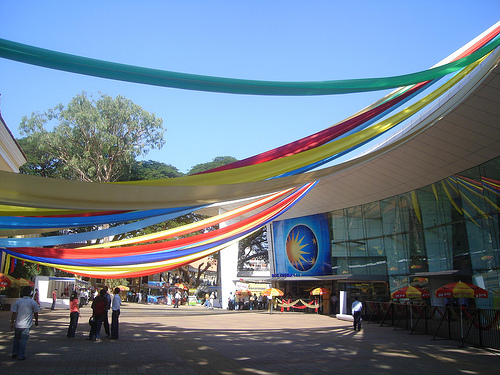
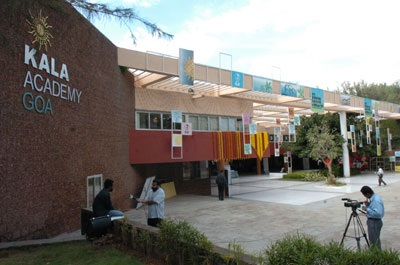
This is the 42nd year of the festival. And Goa has been its permanent venue since 2004.  Take a quick glance at the festival and the way it’s organised, it’s easy to say that they still haven’t learnt anything in the last four decades. Even by normal sarkari standard, four decades is quite a long time to rectify the mistakes. We have been going to IFFI since it moved to Goa. Here’s what we experienced this year. Plus, some unwanted suggestions.

Registration – Trust any government body to make a simple thing look complicated. If you have tried you luck to fill up the registration form online, you will get it when i mean. Not sure why they need your history, geography and biology to attend a film fest. Even that is fine, but God forbid if your application has not been approved for some reason, you will end up spending one day to get a card, as a friend experienced it this year. Compare this to Mumbai Film Festival’s registration process. They had web cams installed on the spot, fill in the details, make the payment and you get your delegate cards in just 10mins. If only there was a way to tell the sarkari babus that the world has moved to better and faster means. There is internet, google, printer, scanner, web cams and all this can happen faster than they can put their stamps on those application forms.

So we got our cards. But not the festival brochure. We were given another token card to go to another counter and asked to stand in a long queue where we could submit the token card and collect the fest bag. Why? Why can’t they give the bag, the brochure and everything else with the registration card? I think that’s sarkari by nature. What can happen at one counter, it will be done at five counters by ten people. What’s worse is that they have sarkari work timings at every counter.  So its either 10am to 12 and/or 4pm to 6pm and so on. Again, learn from Mumbai Film Festival.

Tickets – One good thing that IFFI managed to do this year was to issue tickets. Delegates could collect 3 tickets for each day. (But only three?) So that you don’t have to stand in long queue to get into the theater. But the problem is even though tickets were issued with seat numbers, once you were inside the theater, it was free seating. At one of the screening i was five minutes late and the security guy wouldn’t allow me inside. The reason given was those with tickets have gone inside and now those who don’t have the tickets but are in the queue will be allowed to go inside if there are spare seats. Not willing to give up easily, i fought, abused, pushed few people and managed to went inside. And though it was chaos outside, there were enough seats inside to accommodate all those who were struggling inside. Point is issuing tickets was a good idea but if you don’t know how to implement it, its useless. Dear Mumbai Film Festival, please do it. But just 3 tickets per day? That’s not what film fests are for.

Opening Ceremony – This year the opening ceremony of the fest was held in Margaon. One had to travel about 1.30 hours from the festival’s main venues – Inox and Kala Academy at Panaji. why? And then the film started about 2 hours late. With government protocols and all that desi naach-gaana, it has never made any sense. And they still do it every year. Click here to read a report of this year’s opening ceremony.

Vote Of Thanks – A weird controversy happened before the opening ceremony. It was for giving vote of thanks at the opening ceremony. Is there a limit to how ridiculous can our problems be? It seems Film Federation of India, almost toothless body of the film fraternity wanted to give the vote of thanks. That has been the norm so far. But it seems the fest director didn’t approve of it for some reason. And so there was a tiff over it and FFI wanted to pull out of the festival. That means no participation by bollywood stars and directors at the fest. Really? Who participates anyway? And if Shah Rukh Khan wanted to participate, could FFI stop him? Or any other big star or director? I doubt. All that jazz over vote of thanks. This should go straight to Ripley’s Believe It Or Not.

French film-maker Bertrand Tavernier was given the Lifetime Achievement Award this year and he thought it’s quite ironical that he is getting his first Lifetime Award in a country where his films have never released. People are not even aware of it. Any answers?

Indian Panorama – Who picked the films? What’s the motive? What’s the point of screening those films which have already released in theaters almost a year ago? Opening film was Santosh Sivan’s Urumi which has released in Malyalam and Tamil. Some other films  in the same categories are Ranjana Ami Aar Ashbona, Memories In March, Sahi Dhande Galat Bandhe, Shagird, Zindagi Na Milegi Dobara, Adaminte Makan Abu, Traffic, Baboo Band Bajaa, Balgandharva. Can anyone enlighten us please? Mumbai Film Festival at least managed to get Umesh Kulkarni’s Deool.

Communication – With three bodies involved in the fest – the sarkari, Entertainment Society of Goa and a private agency, there’s absolutely no communication and co-ordination between the three bodies. Nobody knows anything. They are born to make Goldman proud. At the opening of the Indian panorama, as everyone was waiting for Madhuru Dixit, heard a sarkari babu talking to one of the delegates  – Woh aa rahi hai, par kahan se, kitne baje, kisne bulaya hai, yeh toh hum bhi nahi jaante. Hum bhi aapki tarah intezaar kar rahe hain. And this is just the tip of the of the iceberg. Another day i met two hassled film buffs who had just landed at the venue and were trying to find where the film village (for accommodation) is located. The security wouldn’t let them enter because they don’t have the delegate card. And they can’t get the cards until they enter. And like everyone else, the poor souls had no clue that babus dont work after sunset. Managed to help them to get inside. Not sure if they found the village.

Last year i had experienced another similar situation. A European filmmaker was lost outside the venue and was trying to figure out how to go back to his hotel. The shuttle service was closed by the time his film screening got over. It was his first visit to India and he could hardly manage in English. I tried calling up few people to help him out. With no response from anywhere, finally helped him with a cab. I am sure he is not coming back to the fest again.

Films – One could overlook everything else if the films are good. But with such inept people at the helm of the affairs, you can blindly trust them to fail in every aspect. Except counted few films, most others were either old or bad or haven’t made much news anywhere. They even screened films like The First Grader which i saw it at another fest last year. Ah, just a year late.

If there was one film which made the fest any good, it was Werner Herzog’s 3D documentary The Cave Of Forgotten Dreams. The best 3D film i have ever seen. Watch it only in theater, only in 3D. Otherwise it will be complete injustice to the film. DEPTH has never been captured so gorgeously on the big screen and not just for the sake of it.

It’s a sad state of affairs. And it’s getting worse every year. Pity that they can’t organise a good fest at a place which could easily become the mecca for film buffs. Nice location, spacious venue by the river Mandovi, proximity to beaches, liquor cheaper than water, and you can even drink at the venue – what else does one need to have a good vacation. But if only the sarkari babus could get out of this film business and just give it “support from outside” as the political parties do while playing the seat game.  Or it can learn something from NFDC’s Film Bazaar. The sarkari baggage is there too but in just five years it has managed to at least look professional. Big money talks might not be happening yet but once you step in there, you know it’s going in right direction. Hopefully we will be able to put a first person account of the Bazaar very soon.

Dear IFFI Goa, cut the government umbilical cords as it’s killing you slowly.  Get rid of the protocols because they just create distances. Get some film buffs and filmmakers in and pick some great films that can get the buzz in. You are already off radar as far as the mainstream media is concerned. Someone will write the epitaph soon. And forget the Cannes dream forever. Just a decent fest will do. Gear up or pack up.

After seven days of cinema, conversations, chai-coffee and standing in long queues, it’s a wrap for this year’s Mumbai Film Festival. And since I had put an open bet on the Dimensions Mumbai shorts, it’s time to say, we told you so. Click here to read the post with short reviews of all the shorts selected for this year’s Dimensions Mumbai. Out of the four shorts that I had put a bet on, three made it to the jury’s list.

Dimensions Mumbai

The Silver Gateway Award and cash prize of Rs 100,000 for The Best Film was presented to Ameya Gore and Sunaina Mahadik for ‘Facelift’.

The Silver Gateway Award and cash prize of Rs 50,000 for The Second Best Film was presented to Abhay Kumar for ‘Life is a Beach‘.

The Jury Special Mention Award was given to Chinmaya Nagesh Dalvi for ‘Bombay Snow’ and to Harshvir Oberai for ‘The Circle Is Mine’.

International Competition

– The Golden Gateway Award and cash prize of US $ 100,000 for The Best Film was presented to French film ‘My Little Princess’ directed by Eva Ionesco.

– The Silver Gateway Award for Jury Grand Prize and cash prize of US $ 50,000 was presented to Canadian film ‘The Salesman’ (Le Vendeur) directed by Sebastien Pilote.

– The Silver Gateway Award for Best Director was presented to Eva Ionesco for the movie ‘My Little Princess’.

– The Silver Gateway Award for Best Actress was presented to Isabelle Huppert and Anamaria Vartolomei for their performance in the film ‘My Little Princess’.

– The Silver Gateway Award for Best Actor was presented to Gilbert Sicotte for his performance in ‘The Salesman’ (Le Vendeur).

– The Silver Gateway Jury Award for Technical Excellence was presented to Diego Poleri for ‘Las Acacias’.

– The Silver Gateway Special Jury Award was presented to Markus Schleinzer for ‘Michael’.

Mumbai Young Critics

– The Mumbai Young Critics Silver Gateway Award was presented to Markus Schleinzer for ‘Michael’.

Celebrate Age Category

– The Silver Gateway Award and cash prize of Rs 50,000 for The Best Film was presented to ‘Grandma, A Thousand Times’ (Teta, Alf Marra) directed by Mahmoud Kaabour.

– The Silver Gateway Award and cash prize of Rs 25,000 for the Second Best Film was given to ‘Fear of Falling’ directed by Bartosz Konopka.

– The Celebrate Age Jury Award Certificate of Special Mention was given to Zubin Sethna for ‘The Usual’ (Wie Immer).

And the Lifetime Achievement Award was given to Gulzar.

Except some minor hiccups here and there, Mumbai Film Festival turned out to be great success this year. What makes a fest good? Films. And that’s where MFF scored. We can live without the stars and the celebrities. Hopefully next year will be bigger and better, and the queues will be smaller. Can we please get Chandan Theater as the big venue along with a multiplex as the main venue from next year. Team MFF, thanks a ton.

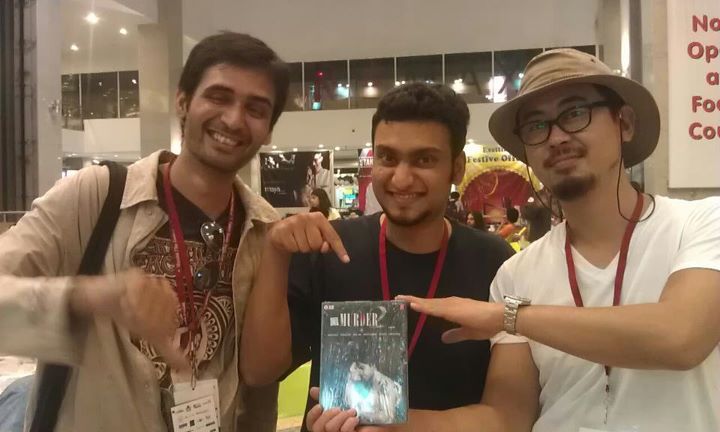
This has to be the height of cheap thrill. Hong-jin Na, director of the Korean film Chaser, is in Mumbai for the Mumbai Film Festival. And since he has no clue about our Bhatt Factory, which specialises in importing films from across the world to give it a desi makeover, our good friends Mihir Fadnavis and Sudhish Kamath decided to burst the bubble.

Murder 2 was copied from Chaser and so Hong-jin Na was gifted an “original” dvd of the “plagiarised” film.

Sumit Purohit, who has been doing some interesting sketch work based on films, also gifted him a sketch based on Chaser.