Archive for the ‘Hollywood’ Category

Yes, after much speculations Variety has confirmed it. And to quote Variety, here is the synopsis of the film.  

After his right forearm got pinned for nearly five days under a boulder during a climb in Utah in May, 2003, Ralston used a dull knife to amputate the limb. He then scaled a 65-foot sheer wall and hiked out before running into a family that gave him water and food. He was finally rescued by helicopter.

And if the synopsis doesnt excite you, check out the video. The amazing story of mountain climber Aron Ralston, in his own words.

Amitabh Bachchan starrer new film Paa is ready for release on Dec 4th. Its directed by R Balki and also stars Abhishek Bachchan, Vidya Balan & Paresh Rawal. Music is by Ilaiyaraaja and lyrics by Swanand Kirkire. The first trailer of the film will be out on 6th November 2009. Till then its all covered up! Here is the first official poster of Paa!

Paa

Btw, click here for the official website address of the film. So far not much there but just a bit of Ilaiyaraaja’s music.

And if you are too curious to remove the carton from the pic and see how Bachchan looks as a 13 year old in 39 years body, click here.

In the film Paa, Amitabh Bachchan (Auro) suffers from a disease called Progeria, a rare genetic disorder in which a person ages three times faster than a normal person. Its a family drama in which Abhishek Bachchan and Vidya Balan are parents to Amitabh Bachchan, their 13 year old son who looks 39, and its all about how they try to deal with it. The look has been designed after much research and the make up used to take almost 4-5 hours everyday.

Strangely, the basic premise of Paa sounds similar to Francis Ford Coppola’s film Jack starring Robin Williams. To quote from IMDB….

JackThe movie is about a boy with a unique aging disorder: one that makes him age 4 times faster than normal. Movie picks up when Jack (Robin Williams) is 10 years old, but looks 40. He tries to go to public school for the first time, and tries to become friends with kids his own age. His physical appearance causes him lots of problems, however.

So, is Paa really Jack ? Inspiration, plagiarism or just coincidence ? Few more days and we will have the answer.

And on the red carpet premiere of his film Leatherheads! Aaahh!

Not sure how many actors get to experience the same. To have the premiere of your film in your hometown and to face your dad, who is on the red carpet with a boom mike in hand! So, here is Nick Clooney talking to George Clooney on film, family and more! A reader of your blog mailed us this link. Bit old but good fun. Do check it out if you still haven’t.

And if you go by Rotten Tomatoes score card, its a new low in Mira Nair’s career!

Amelia1

For Top Critics, the score is at 12%, lowest rating for any film by Mira Nair so far! Her last film The Namesake scored 87% on the same scale.

And if you have not been following the film and wondering whats Amelia, then read on. 

Amelia posterAmelia is a biopic on the life of legendary American pilot Amelia Earhart, who disappeared while flying over the Pacific Ocean in 1937 in an attempt to finish a record breaking flight around the world. It stars Hilary Swank, Richard Gere and Ewan McGregor. When it comes to biopics, Hollywood has delivered some great ones on screen and with the big ones, they rarely go wrong,  and manage to pick up few Oscars too.

So what went wrong with Amelia ?

To quote from the review of Rolling Stone’s Peter Travers…

“Who wants a life imprisoned in safety?” Amelia asks in a voice-over. And you want to shout, “This movie does, honey.” There’s not a real or spontaneous minute in it.

Click on the Rotten Tomatoes link at the top of the page to read other reviews. Though Roger Ebert seems to be in minority this time as he has rated it 3/5. To quote from his review….

I’m not suggesting that Mira Nair and her writers, Ronald Bass and Anna Hamilton Phelan, should have invented anything for “Amelia.” It is right that they resisted any temptation. It’s just that there’s a certain lack of drama in a generally happy life. 

Amelia” is a perfectly sound biopic, well directed and acted, about an admirable woman. It confirmed for me Earhart’s courage — not only in flying, but in insisting on living her life outside the conventions of her time for well-behaved females.

BTW, if you havent seen the trailer of the film yet, click on the play button.


Best Foreign Language Film – This is one category which is getting tougher every year. Because an Oscar Award easily turns into big bucks for any film from any country. And this year 65 countries have submitted films for consideration.

Harishchandrachi FactoryMarathi film Harishchandrachi Factory is India’s official entry to this year’s Oscars in the Best Foreign Language Film Category. The film is directed by Paresh Mokashi who has been doing theatre since last twenty years. Harishchandrachi Factory is Mokashi’s debut film. The film traces the obstacles and hurdles faced by Dhundiraj Phalke ( or Dada Saheb Phalke, also known as the father of Indian cinema) while he was making the first Indian film Raja Harishchandra in 1913. So,  Harishchandrachi Factory will compete with films from 64 countries!

And here is the complete list of films from 65 countries, in alphabetical order….

Albania, “Alive!,” Artan Minarolli, director;
Argentina, “El Secreto de Sus Ojos,” Juan Jose Campanella, director;
Armenia, “Autumn of the Magician,” Rouben Kevorkov and Vaheh Kevorkov, directors;
Australia, “Samson & Delilah,” Warwick Thornton, director;
Austria, “For a Moment Freedom,” Arash T. Riahi, director;
Bangladesh, “Beyond the Circle,” Golam Rabbany Biplob, director;
Belgium, “The Misfortunates,” Felix van Groeningen, director;
Bolivia, “Zona Sur,” Juan Carlos Valdivia, director;
Bosnia and Herzegovina, “Nightguards,” Namik Kabil, director;
Brazil, “Time of Fear,” Sergio Rezende, director;
Bulgaria, “The World Is Big and Salvation Lurks around the Corner,” Stephan Komandarev, director;
Canada, “I Killed My Mother,” Xavier Dolan, director;
Chile, “Dawson, Isla 10,” Miguel Littin, director;
China, “Forever Enthralled,” Chen Kaige, director;
Colombia, “The Wind Journeys,” Ciro Guerra, director;
Croatia, “Donkey,” Antonio Nuic, director;
Cuba, “Fallen Gods,” Ernesto Daranas, director;
Czech Republic, “Protektor,” Marek Najbrt, director;
Denmark, “Terribly Happy,” Henrik Ruben Genz, director;
Estonia, “December Heat,” Asko Kase, director;
Finland, “Letters to Father Jacob,” Klaus Haro, director;
France, “Un Prophete,” Jacques Audiard, director;
Georgia, “The Other Bank,” George Ovashvili, director;
Germany, “The White Ribbon,” Michael Haneke, director;
Greece, “Slaves in Their Bonds,” Tony Lykouressis, director;
Hong Kong, “Prince of Tears,” Yonfan, director;
Hungary, “Chameleon,” Krisztina Goda, director;
Iceland, “Reykjavik-Rotterdam,” Oskar Jonasson, director;
India, “Harishchandrachi Factory,” Paresh Mokashi, director;
Indonesia, “Jamila and the President,” Ratna Sarumpaet;
Iran, “About Elly,” Asghar Farhadi, director;
Israel, “Ajami,” Scandar Copti and Yaron Shani, director;
Italy, “Baaria,” Giuseppe Tornatore, director;
Japan, “Nobody to Watch over Me,” Ryoichi Kimizuka, director;
Kazakhstan, “Kelin,” Ermek Tursunov, director;
Korea, “Mother,” Joon-ho Bong, director;
Lithuania, “Vortex,” Gytis Luksas, director;
Luxembourg, “Refractaire,” Nicolas Steil, director;
Macedonia, “Wingless,” Ivo Trajkov, director;
Mexico, “Backyard,” Carlos Carrera, director;
Morocco, “Casanegra,” Nour-Eddine Lakhmari, director;
The Netherlands, “Winter in Wartime,” Martin Koolhoven, director;
Norway, “Max Manus,” Espen Sandberg and Joachim Roenning, directors;
Peru, “The Milk of Sorrow,” Claudia Llosa, director;
Philippines, “Grandpa Is Dead,” Soxie H. Topacio, director;
Poland, “Reverse,” Borys Lankosz, director;
Portugal, “Doomed Love,” Mario Barroso, director;
Puerto Rico, “Kabo and Platon,” Edmundo H. Rodriguez, director;
Romania, “Police, Adjective,” Corneliu Porumboiu, director;
Russia, “Ward No. 6,” Karen Shakhnazarov, director;
Serbia, “St. George Shoots the Dragon,” Srdjan Dragojevic, director;
Slovakia, “Broken Promise,” Jiri Chlumsky, director;
Slovenia, “Landscape No. 2,” Vinko Moderndorfer, director;
South Africa, “White Wedding,” Jann Turner, director;
Spain, “The Dancer and the Thief,” Fernando Trueba, director;
Sri Lanka, “The Road from Elephant Pass,” Chandran Rutnam;
Sweden, “Involuntary,” Ruben Ostlund, director;
Switzerland, “Home,” Ursula Meier, director;
Taiwan, “No Puedo Vivir sin Ti,” Leon Dai, director;
Thailand, “Best of Times,” Yongyoot Thongkongtoon, director;
Turkey, “I Saw the Sun,” Mahsun Kirmizigul, director;
United Kingdom, “Afghan Star,” Havana Marking, director;
Uruguay, “Bad Day for Fishing,” Alvaro Brechner, director;
Venezuela, “Libertador Morales, El Justiciero,” Efterpi Charalambidis, director;
Vietnam, “Don’t Burn It,” Dang Nhat Minh. 

For more details about the Harishchandrachi Factory (film/director/promos), click on the website link http://harishchandrachifactory.com/ .

filmwritingNo, its not us! Its the man who gave us the lifeline Fight Club. Chuck Palahniuk. And when the Fight Club guy talks, we just listen! So, here it goes…13 writing tips from him. You can click here for the link or just scroll down!

Twenty years ago, a friend and I walked around downtown Portland at Christmas. The big department stores: Meier and Frank… Fredrick and Nelson… Nordstroms… their big display windows each held a simple, pretty scene: a mannequin wearing clothes or a perfume bottle sitting in fake snow. But the windows at the J.J. Newberry’s store, damn, they were crammed with dolls and tinsel and spatulas and screwdriver sets and pillows, vacuum cleaners, plastic hangers, gerbils, silk flowers, candy – you get the point. Each of the hundreds of different objects was priced with a faded circle of red cardboard. And walking past, my friend, Laurie, took a long look and said, “Their window-dressing philosophy must be: ‘If the window doesn’t look quite right – put more in‘.”

She said the perfect comment at the perfect moment, and I remember it two decades later because it made me laugh. Those other, pretty display windows… I’m sure they were stylish and tasteful, but I have no real memory of how they looked.

For this essay, my goal is to put more in. To put together a kind-of Christmas stocking of ideas, with the hope that something will be useful. Or like packing the gift boxes for readers, putting in candy and a squirrel and a book and some toys and a necklace, I’m hoping that enough variety will guarantee that something here will occur as completely asinine, but something else might be perfect.

Number One: Two years ago, when I wrote the first of these essays it was about my “egg timer method” of writing. You never saw that essay, but here’s the method: When you don’t want to write, set an egg timer for one hour (or half hour) and sit down to write until the timer rings. If you still hate writing, you’re free in an hour. But usually, by the time that alarm rings, you’ll be so involved in your work, enjoying it so much, you’ll keep going. Instead of an egg timer, you can put a load of clothes in the washer or dryer and use them to time your work. Alternating the thoughtful task of writing with the mindless work of laundry or dish washing will give you the breaks you need for new ideas and insights to occur. If you don’t know what comes next in the story… clean your toilet. Change the bed sheets. For Christ sakes, dust the computer. A better idea will come.

Number Two: Your audience is smarter than you imagine. Don’t be afraid to experiment with story forms and time shifts. My personal theory is that younger readers distain most books – not because those readers are dumber than past readers, but because today’s reader is smarter. Movies have made us very sophisticated about storytelling. And your audience is much harder to shock than you can ever imagine.

Number Three: Before you sit down to write a scene, mull it over in your mind and know the purpose of that scene. What earlier set-ups will this scene pay off? What will it set up for later scenes? How will this scene further your plot? As you work, drive, exercise, hold only this question in your mind. Take a few notes as you have ideas. And only when you’ve decided on the bones of the scene – then, sit and write it. Don’t go to that boring, dusty computer without something in mind. And don’t make your reader slog through a scene in which little or nothing happens.

Number Four: Surprise yourself. If you can bring the story – or let it bring you – to a place that amazes you, then you can surprise your reader. The moment you can see any well-planned surprise, chances are, so will your sophisticated reader.

Number Five: When you get stuck, go back and read your earlier scenes, looking for dropped characters or details that you can resurrect as “buried guns.” At the end of writing Fight Club, I had no idea what to do with the office building. But re-reading the first scene, I found the throw-away comment about mixing nitro with paraffin and how it was an iffy method for making plastic explosives. That silly aside (… paraffin has never worked for me…) made the perfect “buried gun” to resurrect at the end and save my storytelling ass.

Number Six: Use writing as your excuse to throw a party each week – even if you call that party a “workshop.” Any time you can spend time among other people who value and support writing, that will balance those hours you spend alone, writing. Even if someday you sell your work, no amount of money will compensate you for your time spent alone. So, take your “paycheck” up front, make writing an excuse to be around people. When you reach the end of your life – trust me, you won’t look back and savor the moments you spent alone.

Number Seven: Let yourself be with Not Knowing. This bit of advice comes through a hundred famous people, through Tom Spanbauer to me and now, you. The longer you can allow a story to take shape, the better that final shape will be. Don’t rush or force the ending of a story or book. All you have to know is the next scene, or the next few scenes. You don’t have to know every moment up to the end, in fact, if you do it’ll be boring as hell to execute.

Number Eight: If you need more freedom around the story, draft to draft, change the character names. Characters aren’t real, and they aren’t you. By arbitrarily changing their names, you get the distance you need to really torture a character. Or worse, delete a character, if that’s what the story really needs.

Number Nine: There are three types of speech – I don’t know if this is TRUE, but I heard it in a seminar and it made sense. The three types are: Descriptive, Instructive, and Expressive. Descriptive: “The sun rose high…” Instructive: “Walk, don’t run…” Expressive: “Ouch!” Most fiction writers will only use one – at most, two – of these forms. So use all three. Mix them up. It’s how people talk.

Number Ten: Write the book you want to read.

Number Eleven: Get author book jacket photos taken now, while you’re young. And get the negatives and copyright on those photos.

Number Twelve: Write about the issues that really upset you. Those are the only things worth writing about. In his course, called “Dangerous Writing,” Tom Spanbauer stresses that life is too precious to spend it writing tame, conventional stories to which you have no personal attachment. There are so many things that Tom talked about but that I only half remember: the art of “manumission,” which I can’t spell, but I understood to mean the care you use in moving a reader through the moments of a story. And “sous conversation,” which I took to mean the hidden, buried message within the obvious story. Because I’m not comfortable describing topics I only half-understand, Tom’s agreed to write a book about his workshop and the ideas he teaches. The working title is “A Hole In The Heart,” and he plans to have a draft ready by June 2006, with a publishing date set in early 2007.

Number Thirteen: Another Christmas window story. Almost every morning, I eat breakfast in the same diner, and this morning a man was painting the windows with Christmas designs. Snowmen. Snowflakes. Bells. Santa Claus. He stood outside on the sidewalk, painting in the freezing cold, his breath steaming, alternating brushes and rollers with different colors of paint. Inside the diner, the customers and servers watched as he layered red and white and blue paint on the outside of the big windows. Behind him the rain changed to snow, falling sideways in the wind.

The painter’s hair was all different colors of gray, and his face was slack and wrinkled as the empty ass of his jeans. Between colors, he’d stop to drink something out of a paper cup.

Watching him from inside, eating eggs and toast, somebody said it was sad. This customer said the man was probably a failed artist. It was probably whiskey in the cup. He probably had a studio full of failed paintings and now made his living decorating cheesy restaurant and grocery store windows. Just sad, sad, sad.

This painter guy kept putting up the colors. All the white “snow,” first. Then some fields of red and green. Then some black outlines that made the color shapes into Xmas stockings and trees.

A server walked around, pouring coffee for people, and said, “That’s so neat. I wish I could do that…”

And whether we envied or pitied this guy in the cold, he kept painting. Adding details and layers of color. And I’m not sure when it happened, but at some moment he wasn’t there. The pictures themselves were so rich, they filled the windows so well, the colors so bright, that the painter had left. Whether he was a failure or a hero. He’d disappeared, gone off to wherever, and all we were seeing was his work.

Lil late on this. Ok, quite late! Its been a while since the film released. A reader of our blog MM mailed us this pic, poster of Ram Gopal Varma’s Agyaat and of The Unborn. And he wrote that the only originality on the RGV poster seems to be a strategically placed text. As Asha-tai would say….Aur kya kahein, jaanam samjha karo!

Have a look.

Agyaat Unborn

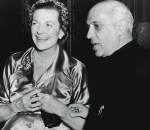
Nehru and EdwinaJust a few days back we wrote about the film here , when the news came out that Irrfan Khan is going to play Jawaharlal Nehru in the Cate Blanchett starrer Indian Summer to be directed by Joe Wright (The Soloist, Atonement). The film is an adaptation of the book Indian Summer : The Secret Historty Of The End by London based writer and historian Alex Von Tunzelmann.

We also wrote how the I & B Ministry wants the love/sex scenes to be toned down. Outlook magazine has got exclusive details on the same.  The five specific objections raised are as follows…

  • The film is not based on recorded facts, say the officials. So, from the outset, it should be declared as a work of fiction.
  • No scenes showing physical intimacy should be filmed between Nehru and Edwina Mountbatten.
  • No gestures or actions, or words of love or affection, should be filmed.
  • No kissing scenes should be included.
  • The word “love” has to be struck off from six dialogues in the submitted script.

To read the full article click here or it follows here.

“I have often been asked whether I think Nehru and my mother were in love. The answer undoubtedly is, yes, they were.”

—Pamela Mountbatten Hicks, daughter of Lord Louis Mountbatten, the last viceroy of India

Jawaharlal Nehru, the statesman/visionary. Chacha Nehru, the man who doted on children. A loving father, who wrote letters to his daughter while in prison. Pandit Nehru, committed socialist, architect of modern India, dashing and intelligent public figure. India’s first prime minister was all this and more. But Nehru, the handsome lover, lonesome widower, the man who penned eloquent letters to the woman he loved—wife of India’s last viceroy, Edwina….That is one side of Nehru the Congress would rather keep under wraps. Which is why when British filmmaker Joe Wright—who also directed Ian McEwan’s Atonement and Jane Austen’s Pride and Prejudice—wanted to capture the last gasp of the British empire in India in the backdrop of a romantic relationship between the first prime minister of India and the last viceroy’s wife, he ran into trouble. It was pretty predictable. The Union information and broadcasting ministry in India told his producers—Working Title—not to cross the line and serve up Nehru’s private life for public consumption on the big screen.

Ironically, the relationship between Edwina and Nehru was never really a secret. The film is, in fact, based on a book by historian Alex von Tunzelmann. Titled Indian Summer: The Secret History of the End of an Empire, the tome did not scorch the Indian bookshelves when it was launched here two years ago, despite its compelling and often controversial narrative. Its proposed celluloid version, however, has the government scurrying to put a freeze on any filmic Indian Summer.

Sources in the I&B ministry revealed to Outlook the exact nature of the five objections the ministry detailed in its July 27, 2009, letter to the film’s producers. The film’s script had been submitted to the ministry four months earlier and it had been sent to a panel of experts (read serving and retired I&B ministry officials) for vetting. It was they who passed the verdict that the script had ‘objectionable’ amorous references which could well hurt the sentiments of the Indian public. The five objections run something like this:

Objection 1. The film’s not based on fact, so call it a work of fiction. 

“Where has the love affair been chronicled in history?” asks a ministry official. “Has any Indian historian said it impacted events?” The panel is of the view that the “romance” between the two principal characters—Edwina and Nehru—is not borne out by historical facts. Nor was the relationship, by their reckoning, in any way central to Partition. In all fairness, therefore, they say, the filmmakers should primarily declare beforehand that the storyline is fictional.

The official discomfiture stems from the fact that Tunzelmann’s book is quite upfront and forthcoming about the Nehru-Edwina romance, and the film’s script has followed it pretty closely. An excerpt that a panel member has flagged from the book reads thus: “Meanwhile the relationship became more close. In public, Jawahar and Edwina were formal; in private, they were inseparable. Letters became fervent: ‘The more one talks, the more there is to say and there is so much that it is difficult to put into words’.”

Objection 2. This is a straight injunction: thou shalt not show any intimacy between Edwina and Nehru.

The I&B panel says that when it comes to Nehru, only recorded history can be shown. Beyond that, “everything is conjecture. And in this realm of conjecture…falls the love affair between Countess Edwina Mountbatten and the first prime minister of Independent India, Jawaharlal Nehru.” Asks a ministry official: “Where has the love affair been chronicled in history as we know it? More specifically, have Indian historians ever written about the so-called romance and have they said it impacted the course of events in history?”

Indian historians might have desisted but not Tunzelmann. Her book details, for example, the famous trip to Mashobra in Himachal Pradesh, which is also included in the script and for which the producers had sought permission to shoot in Mashobra. “Edwina and Jawahar met early every morning in the garden. They drove together along the Tibet Road stopping for picnics in the woods. They stayed up late and alone after Dickie (Lord Mountbatten) and Pamela (their daughter) had retired to bed. When Jawahar came to see Edwina in her room, he somehow upset an inkstand. ‘They were both too busy mopping it up to be abashed,’ wrote Edwina’s official biographer.” Scenes like this, say officials, when adapted on screen, could be embarrassing.

Objection 3. No ‘love’ in the script, we are Indian.

The L word figures six times in the script, but I&B ministry officials would not hear of it even once. Why, they don’t want even a hint of love by word or gesture. They object to love scenes cropping up regularly in the script, saying the film focuses more on the romance than on Partition. They would be happier if Indian Summer emerged as a sanitised docu-drama of Partition and not the great romance of the 20th century that they suspect the filmmakers will sell the movie as. But while the ministry mandarins may choose to turn a blind eye to any sign of weakness in Nehru, Tunzelmann is vivid in her description of a pining Nehru. To quote from her book: “After her return to England, Jawahar wrote to Edwina that he could still sense her ‘fragrance on the air’ and that he read and re-read her letters. ‘I lose myself in dreamland which is very unbecoming in a Prime Minister’.”

Objection 4. No gestures or words of love or affection either, please.

There is no question of the Edwina-Nehru characters holding hands or being in any romantic or intimate pose on screen. The I&B ministry officials cite Edwina’s daughter Pamela as saying that her mother’s relationship with Nehru was “more platonic” than anything else. It would be scandalous, they say, for instance, to film this from Tunzelmann’s account: “Their relationship had worked because it allowed both Jawahar and Edwina their own private space; but suddenly being together around the clock did not seem so undesirable after all. The intensity of their feelings both exhilarated and frightened them….”

Objection 5. Kissing scenes? No way

It would be sacrilege to have the screen Nehru enacting any sensual scenes. He might come across as only human but for the I&B wallahs, it would be showing him in a poor light.

The official discomfiture stems from the fact that the book on which the film script’s based is explicit about ‘romance’.

Will this mean the end of Indian Summer? Perhaps not, but not quite the start the producers might have wanted either. They had sought permission to shoot in Rashtrapati Bhavan and Teenmurti House in Delhi, and in Amritsar and Mashobra, as it is mandatory for foreign filmmakers to seek clearance from the I&B ministry before filming in India. With the I&B ministry throwing this spanner in the works, it is clear that they will be allowed to shoot in India only if they agree to the suggested cuts. They could, of course, consider filming on locations abroad. But then that won’t quite be an Indian Summer.

Meanwhile, the I&B ministry’s squeamishness has put paid to the filmmakers’ original plan to start filming in winter. Take One, the Indian first-line production company, put up a brave front when its officials said the delay in production was due to the global financial crisis. Director Joe Wright has been quoted in the British media as admitting that the script has run into problems. So even as the script is in hand and actors Cate Blanchett, Hugh Grant and Irrfan Khan shortlisted for the leads, the I&B ministry is playing spoiler. Perhaps it is reading too much into one observation Tunzelmann makes in her book. “The security of three nations—Britain, India and Pakistan—rested on this one love affair being kept quiet.” This may be the only thing they agree with Tunzelmann on.

UNKNOWN ??

acid-factory-cut2Acid Factory is the new film by journalist turned filmmaker Suparn Verma (Ek Khiladi Ek Haseena). In an interview to Hindustan Times, when asked about the story of Acid Factory, Suparn had to say this…
Sanjay Gupta is known to look towards foreign films for inspiration. So which one was the muse for Acid Factory?

Sanjay (Gupta) had this amazing story given to him by a writer about seven people trapped inside an acid factory. They’ve lost their memories and in the terrifying present have just realised that there’s a killer amongst them and two others are his intended victims. We wove the screenplay around it. The challenge was in shooting the film in sequence and extracting performances from the group as a whole and not simply from individual actors. Before shooting, I made my cast read out their parts in front of each other and that created a bond between them.

You can read the full interview here. For us, the most interesting part of the interview was the first line – Sanjay had this amazing story given to him by a writer. We would like to know who is the writer ? And why is the poor writer not given credit in the interview ? Strangely, even in the IMDB full credit list of Acid Factory, there is no mention of the writer, though it tells you who is the stunt double and even has 2nd AD’s name.

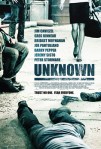
Coming from Sanjay Gupta’s factory, most probably the writer doesnt exist! Or its all UNKNOWN! Read Dvd, copy, plagiarism! Unknown ? Yes, thats the name of the film. We havent seen it but to quote from IMDB, here is the plot of Unknown.

UnknownFive men wake up in a locked-down warehouse with no memory of who they are. They are forced to figure out who is good and who is bad to stay alive.
OR

How would you feel if: You were tied to a chair, In a locked-down warehouse, In the middle-of-nowhere, With no recollection what-so-ever of what happened, or what didn’t. To add to it, you’re not alone. There’s 4 others in the exact same state of mind. Some responsible for putting the others there BUT no one knows who’s who. Thats how this movie starts, getting grittier with every passing minute.

Now, scroll up and read the plot in Suparn’s answer. It sounds suspiciouly similar to Unknown. And coming from sanjay Gupta, dil hai ki manta nahi!

The film stars Irrfan Khan, Manoj Bajapi, Fardeen Khan, Aftab Shivdasani, Dino Morea, Diya Mirza, and Danny Denzongpa.

If you still have some doubts, check out the trailer of Unknown..

Gawd, even the trailer looks the same! And here is the Acid Factory trailer..

Are we jumping the gun again ? With Sanjay Gupta, who loves guns and bikes and babes, its justified! What say ? Or lets wait till this friday.

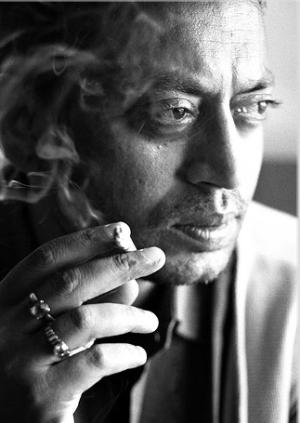
Irrfan KhanIf rumour mills are to be believed, the news is true! And as they say, the only Khan they know in Hollywood is Irrfan Khan!

Irrfan Khan has been signed on to star opposite Cate Blanchett in the film Indian Summer. The film is an adaptation of the book Indian Summer : The Secret Historty Of The End by London based writer and historian Alex Von Tunzelmann.

The film is about the romance between Pandit Jawaharlal Nehru and wife of Lord Mountbatten, Edwina Mountbatten. Hugh Grant will star as Lord Mountabatten, Cate Blanchett as Edwina Mountbatten and Irfan Khan as Jawaharlal Nehru. It will be directed by Joe Wright (The Soloist, Atonement).

The buzz is that the  script of the film is currently with I & B Minstry for clearance, and the Ministry want the romance/sex scenes to be toned down. On CNBC TV18’s Karan Thapar show last night, Nayantara Sehgal, author & Nehru’s niece said that anybody who claims that they had a sexual relationship would be conjecturing. What they had was a long and lasting relationship of love and friendship. It was a rare relationship based on meeting of minds. They had respect and admiration for each other.

Cant find the video link to the interview but you can read more about it here.