Archive for the ‘Movie Recco’ Category

Booked your tickets yet? Do it first. Then come back to this post. This isn’t the usual hyperbole. It’s really good and rare chicken soup for your soul. And so the film straight goes into our list of “Must Watch” films.

Our regular contributors Varun Grover, Svetlana Naudiyal, Mihir Desai and Sumit Purohit tells you what the film meant to them, why it spoke the way no other Indian film has done in a long time, and why you should not miss this one at any cost.

And as the norm goes with most of our posts, these are not formal reviews. Just ramblings. Why four? Well, we are going with the theme of of the film – three for three stories and one to connect it all. or something like that. Aha, call it cheap thrill and read on.

Ship MFC

Cinema of duality

by Varun Grover

I have been struggling with this scenario for some time now, this concept of duality. Not in a spiritual sense (that is still many years away I think) but in a very daily-life sense. Have been swinging between left and right ideologies, between Arundhati Roy and her detractors,  between hedonism of sab chaat lo/bator lo and nihilism of sab chootiyapa hai, between the urge to document every travel trip through photographs/ticket stubs  and the need to live in the moment making the concept of posterity sound like a well-manufactured fraud, and many other, similar conundrums.

Anand Gandhi picks up three such stories of duality, set in three different worlds, and binds them together through the philosophical paradox of Ship of Theseus. If that sounds heavy then yes, ambition-wise the film is this heavy. But the beauty is that the team has pulled-it off with great cinematic value in each frame and line of writing. It’s refreshing, beautiful, insightful, and as gripping as a well-made thriller.

The philosophical moorings never get in the way of entertainment or storytelling, the two core elements people safely assume missing from any film termed an ‘Indie’.  And that, I think, is the greatest success of Ship of Theseus. Here’s an Indie that appeals to the mind as well as the heart. We don’t need to love it out of some guilt for the poor filmmaker who sold his house and ate only vada-paav for 1008-days non-stop to fund the film. We don’t need to love it because it’s arbitrary and arty and we don’t get it but ‘Mint Lounge or Caravan are loving it so we must too’ pressure.  We can love it with all our understanding, ego, and guiltlessness intact, like we love any mainstream film.  It’s like health food that doesn’t taste like health food.

The 3 stories – a visually-impaired photographer about to get new eyes, an atheist monk and stand-up comic cum lawyer sparring on about the relative value of an animal’s (and human’s) life, and a man with a new kidney having doubts about the legality and ethics of the transplant – explore one genuine doubt each (माकूल शक़  as KK Raina said in Ek Ruka Hua Faisla) about existence and mortality.

The characters are talking a language rarely heard before on Indian cinema’s screens.  The language of loaded words and of a life lived in knowledge. Though I’ve met some people who found the language to be faux-intellectual and the 2nd story a bit too verbose.  I think it’ll come down to how invested in the basic conflict of the story you are. Do you want to know more about the layers of conflict at hand or are just happy seeing the surface and are now mumbling ‘Haan samajh gaye…ab aagey story bataao na!’ Like after watching a great film, I spend hours reading about it on the internet. Director’s interviews, googling ‘<film name> explained’, trivia, theories, hate it generated – everything.  Sometimes I know how much I liked the film only after realizing I have spent 2 days reading up on it. I think same theory works here – if you find the core debate interesting, you will enjoy the शास्त्रार्थ going on between the monk and stand-up comic. (And what is a stand-up comic if not a modern-day version of debate-loving, analyzing, theorizing monks we read about in stories from mythology, people who debate just for the heck of it. So in a way, 2nd story is a debate on morality between two monks/comics from two different time periods.)

If a film’s merit is in showing a new world with great authenticity and insight, then Ship of Theseus shows us three. And to top that, terrific performances, excellent background score, one brilliant song in Prakrit, and consistently sharp photography throughout made this most-awaited Indian film of the year for me absolutely worth the hype.

Ship Of Theseus

“You chose your journey long before you came upon this highway”

by Svetlana Naudiyal

I really don’t know what to say amidst the deluge of opinions and interviews and reviews. Social media is flooding with them and here I am, adding my own two bit to that. Will saying that I’ve seen it thrice already at different occasions and will happily (and surely) see it again, suffice?

Quite lazily and shamelessly, I am kind of reiterating something I wrote earlier this year for this very same blog. Primarily because, I think kisne padha hoga. And secondly, what I think about the film, it hasn’t changed a bit.  (Also, maybe now I can add some of those so-called spoilers.)

Ship of Theseus invents a language. Not just in terms of cinema, but in terms of thought. It compels you to go home and read. If not read, then at least think.  (At times when we spend our lives not thinking, you may discover that ‘thinking’ is a wonderful exercise). It takes you closer to your own self and yet far away from it, where almost unintentionally you find yourself objectively pondering over your own self and its relationship with the world around.

It is so evolved in thought and yet so accessible. Sophisticated, mature and nowhere in the remote vicinity of pretentiousness. And yet it is light like a feather, a pleasant watch replete with humour. (And in case I haven’t yet reiterated enough in indirect phrases, the film stems from life itself.)

The blind photographer’s search for meaning in being able to see, the monk’s dilemma and the stockbroker’s quest for purpose in his own life. You may like a story little less and another a little more, but it is the whole they construct that runs like a background score for you after you’ve seen the film.  In our Cinema, where do we see references to something like Unilateralis Cordyceps,  Charvak and Church of the Flying Spaghetti Monster anyway? Or to introduce a blind photographer, to have a song in ‘Prakrit’, to choose Sweden (Sweden is rated to be one of the most fair and just social systems in the world – this little piece of info comes from the filmmaker, not my discovery. I just crosschecked a bit.)

I also love how the film resorts to traveling. (More of a personal connect, may be, for a firm believer of the idea that any meaning that can ever be found is during a journey). From wandering to a far off valley in Himachal to cave diving in Manipur, a journey into the infinite and open world within.

[May be next week, we could compile a post listing the brilliant moments of the film. There are many. The only one I would probably want to mention for now is Maitreya’s encounter with what seems like death. In each viewing, at that particular moment and in every reflection about that moment, I’ve found myself come to a standstill. Needless to mention, if a film can capture that particular feeling, that moment in all its freezing cold reality, one can imagine how close to life the film is.]

Having said that, I must also admit that I’ve wondered if I’m breathing too much meaning into the film for its (and my) own good. I’ve refuted my own thoughts, with reasons ranging from beauty in lack of perfection to the subjectivity of what we call perfect. I’ve oscillated between “if this is a very well done pop philosophy” to “if this could have been deeper, darker” or something else, something more. Whether it is too much on words or too little on silence? But then again, those questions are personal, subjective and could be irrelevant to someone else who might not or might appreciate the film in a very different way for very different reasons.

Here’s where I found a bit of my answer –

Quoting Anand

An early treatment scribble

I’ve made a conscious choice of dialogue over action in several scenes in the script. I felt a strong urge to revert the “show, don’t tell” thumb rule, to the extent that many scenes cut abruptly at their most dramatic high point, and then in the following scenes, the characters narrate, through casual conversation, their experience of the dramatic moment. I analysed this urge to distance myself from the heart of the action. I discovered that I find some human experiences too deep, intimate and emotionally stirring to try and capture on camera. Also the immediacy and the drama of the experience end up fogging the essence, which seems to come out more honestly in the objective after-experience reflection. When a character talks about a moment experienced in the previous scene, it is not intended as a guide for the audience, but rather as an experiential lens, through which the audience lives the moment twice – once through the speculation of the dramatic high point of the moment led towards by the author, which being never shown, is experienced in the imagination, and then, the moment redefined through a tinted world-view of the character.”

It is in being the narrow, delicate bridge between simplicity and complexity, the singularity and duality of the quest for meaning, that Ship of Theseus is poetry reinstating itself as cinema, or vice versa.

Will it change your life? Maybe not. Life changing events and experiencing deep meaningful literature or cinema, are known to be mutually exclusive. But the film is sure to rekindle a little hope and a little faith or maybe a little more.

(p.s. In the 100 years of Indian Cinema brouhaha all around, Ship of Theseus arrives as a perfect anti-tribute and thankfully so! Here’s to The New!)

Ship Of Theseus

Let It Sail

by Mihir Desai

I didn’t want Ship of Theseus to end. The philosophical depth and visual beauty put me in a mind space that movies don’t tend to these days. I didn’t want to come out of it, back to mediocrity where filmmakers take their audience for granted. SoT treats the audience as equal, it gives an opportunity to reflect and interact with the thoughts presented in the film. Anand Gandhi very carefully crafts a film that raises questions about identity, ethics and evolution. The three stories within the film come together in what could be the best closing shot of the year! The film doesn’t take the easy route of leaving things up to ‘audience interpretation,’ instead it gives its audience some food for thought, without being preachy.

Ship of Theseus is truly made with an independent spirit. This is an example of what DSLRs are capable of doing. The visuals will prove once again that for DIY and low budget filmmakers, DSLRs are still a worthy investment. Pankaj Kumar’s (Director of Photography) brave cinematic choices takes the core idea of Theseus’ paradox to a whole new level. Three different looks and specific choice of camera movements for each story adds a new dimension to the characters. Technically this is a perfect film.

I look forward to a second viewing of the film as it opens to public. We’ve always been cynical about audiences rejecting new kind of films. The evolution of Indian cinema is in its prime, it’s not the audience that needs to carry this forward, it’s us, the filmmaking community that shouldn’t shy away from taking such risks.
Ship Of Theseus2

Kyunki Gandhi Bhi Kabhi Soaps Likhta Tha

– by Sumit Purohit

It was a rainy morning of July 2011. The Enlighten Film Society’s Naya Cinema Festival was going to screen Aaranya Kaandam as the closing film. I had heard lot about it, so I went despite the rain and the morning. I had no idea then that I will get introduced to another very special film there. It was announced that post the film screening the excerpts from three upcoming films will be played. I decided to stay back. One of these three films was SHIP OF THESEUS. That was the first time I heard about it. Anand Gandhi was present there with his team. He spoke briefly about the film.  But the few minutes of visuals that were played on screen were enough to tell everyone in the theatre that they were witnessing something exceptional. It probably was a film that will change Indian Independent cinema forever.

Almost a year later, Ship of Theseus was screened at Mumbai International Film Festival and it went beyond all expectations. It was not only the best Independent film to come out of India; it was a film which could compete with the finest from around the world. It was a master class in filmmaking. It was technically superior to most Indian films and it explored the stories significant to our times.

To realise that Anand Gandhi is a genius you need not watch his films. You just need to listen him talk for five minutes. He can talk about most things under the sky with great expertise. It seems he is less of a filmmaker and more of a cross between a mad scientist and a philosopher. No wonder he calls his production house a lab and writes research papers too. May be he is the monk from his film, or may be he is the young man who keeps arguing with the monk. Actually, he could be both of them at the same time.

Ship Of Theseus in a way is reflection of what Anand has experienced and learnt over the years. Though what’s wonderful about the film is that it communicates all those ideas and beliefs simplistically yet beautifully when it could have easily become pretentious, preachy or gone all abstract. Ship of Theseus is not what we usually associate with Indie films that have been to film festivals. It’s entertaining, at times humorous and very accessible. It respects its audience, and is intelligent.

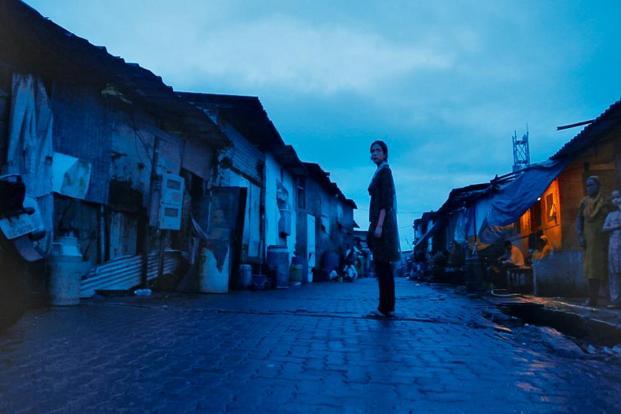
The three stories in the film are all set in present Bombay and yet they look like they could be worlds separated by time and space. It’s interesting to notice how Anand uses certain elements in his film. The 1st story is about a blind photographer. Some of the gadgets she uses are straight from science fiction as if the story was taking place in the near future. At the same time the background song with Prakrit lyrics in the 2nd story makes the soundscape feel ancient. It’s a story about a monk who is fighting a court case to ban animal testing in India. He seems to connect with the most unlikely person, a young lawyer who sports long curly hairs and shares Internet jokes with him. In the 3rd story a young stockbroker’s obsession forces him to travel to Stockholm, a place away from his comfort zone. This coming together of contrasting elements makes Ship Of Theseus such an intriguing cinema.

Recently I read that the three films Anand suggested that everyone should watch are – Du Levande (You, the Living), The Turin Horse and Underground. If you look closely, you might find that these films could have influenced Ship Of Theseus conceptually and technically (Gábor ifj. Erdélyi, the sound designer of SOT has also worked on The Turin Horse). SoT has lot of non-actors in the cast, similar to what Roy Andersson prefers. Then there is a scene in the film where a fat man gets stuck in a narrow alley. One can easily imagine it to be a scene from an Emir Kusturica film.

SoT is a great example of how a filmmaker uses his experiences – things he has seen, stories he has heard, films he has watched, books he has read, and gels them together into something new. And at times referring back to them amusingly in the film.  This is a good reason why Ship Of Theseus can be seen again – to search for such references, to find those connections and see how they have changed in this process. Isn’t it similar to the Ship of Theseus paradox?

You will not hear or read any negative criticism of Ship of Theseus, so let me try it (for the sake of an argument and for fun). Strictly speaking it’s not a feature film. I will consider it an anthology of three short films that are thematically connected. The three films are visually and stylistically distinctive.  It’s deliberate but then you can’t overlook the clear dissimilarity between the writing, the way actors approach their roles, the language used and the impact it creates.  But then, for a debut filmmaker this really is not a negative thing. It only shows how talented Anand and his team are and how capable they are at creating these different worlds. It would be really interesting to see what Anand does when he decides to make a feature length film that follows one storyline. What narrative techniques he will use? What cinematic style he will adapt? He is an exciting filmmaker to follow. The best way to start stalking him is by watching Ship Of Theseus.

(PS – If you still need more reason to watch the film and you are a TV soap fan, then you should know that at once upon a time Anand used to write Kyunki Saas Bhi Kabhi Bahu Thi and Kahaani Ghar Ghar ki. Now, that should excite some of you.)

– And if these four writers have not been able to convince you so far, click here to read what Dibakar Banerjee has to say about it. Not everyone has the guts to say such good things about someone else’s film.

Raanjhanaa(Has SPOILERS)

Like most Bollywood films these days, Raanjhanaa is completely two different films packed in one – pre and post-interval. One is the “politics of love” and the other is “lovers in politics”, and there’s a big difference between the two. As the initial reactions and reviews started pouring in, the verdict seems to be unanimous – first half is fun, the curse of 2nd half strikes yet again. As i stepped into the theatre, i was ready for it. But as i came out of the theatre, i realised that i belong to that minority group which liked the second half more.

First half is easy, you know the tricks, you have seen it many times, love stories in small towns and galli mohalls is not new. It’s charming and easy to like. There’s no way one cannot not like it. Some might argue that it’s stalking and glorification of it, then let me say that you have never been part of any small town love story. It’s stark reality. That’s the way it happens. If you don’t know a friend who has cut his wrist or drank kerosene (sleeping tablets is for metroes), the film might seem a bit stranger to you. But what stood out for me was how ruthlessly selfish the lovers are. Sonam (Zoya) knows Dhanush (Kundan) loves her. And so she uses him in every possible way. It’s the same with Kundan, who knows that Swara (Bindiya) can do anything for him. And he uses her blatantly. It all seems fun and jovial on the surface but scratch it and you realise how cunning their acts are. It’s the politics of love. Their love might be pure but the tricks aren’t.

Some even might point out the physical equation between Kundan, Bindiya and Murari. How can you hit her? i would say this is what “camaraderie” between friends is all about, without being aware of one’s gender. And in the scene when Bindiya says kewal mere baap ke hi kapde phadega, and Kundan backs out, you know that she isn’t the shy kind. If she had protested, these guys would have backed out long back. It’s part of the game, of growing up together.

Now, the second half seems like a completely different film.  A death, and the childhood romance of Benaras moves to ambitious student politics of Delhi. Kundan doesn’t know why he is there. He is lost. He is not sure what to do with his life. He has tried every possible option. Is he still chasing Zoya? Yes. Kind of. Does he know why? No. Has he any more hopes from her? No. The simple chasing the girl routine turns into a heavy cocktail of ambitions and emotions. Let’s see how. So Zoya aspires to fulfill the ambitions of her dead lover (Abhay/Akram). But slowly it looks like all these dreams will come true only through Kundan whom she hates now, whom she holds responsible for Akram’s death. It’s a difficult choice to make. Can she accept Kundan now? And even if she does, the world will curse her for being selfish and opportunist who forgot her lover after his death. Between love, life and dreams, she is confused with no easy way out. And then comes an opportunity to turn it all over and conquer it all. She opts for it too but the guilt is too heavy to bear.

Kundan is caught in a similar situation. He is aimless, he is just tagging along and is getting lucky wherever he puts his foot, except in love. And when it all comes to the conclusion, he realises that even if he wins everything, he has lost the only thing he ever wanted from life – love. So what’s the point of living? Someone who can slash his wrist so easily, he has no fear of death. The monologue in the climax wraps it up beautifully. Lovers always claim to be ready to die in love. But only few dare to do it. And very few directors and writers dare to opt for such uncompromised end for a love story. Nothing else was possible. All credit to writer Himanshu Sharma and director Anand L Rai for going the whole hog. And this is exactly why i liked the second half more. It’s complicated,  and the makers went for the unusual choices. I think first half is easy to write, and easy to like. Second half is damn difficult to write from the point when Dhanush lands up in Delhi not knowing what to do. I could hear the writer’s voice there – what to do with this mujhe-bus-Zoya-chahiye character? He (character and writer) really doesn’t know what to do now.

Raanjhanaa2

Now, the running joke. In a scriptlab where Sriram Raghavan was our mentor, we used to joke that whenever you are stuck at any page, just put a gun in that page. Sriram will like it for sure. Here the formula is slightly different – stuck on the page, opt for the blade. Not once or twice, but three times. Woah!

Interestingly, the entire film is one long montage cut on back to back songs. You can exactly count the numbers of the scenes where the characters talk. But the flavour of the real locations and the terrific acting by Dhanush, Swara Bhaskar and Mohammed Zeeshan Ayyub makes it look perfectly smooth. Also, it might be a smart decision keeping Dhanush’s dialogue delivery in mind. They have justified his character, and his hindi diction is weird but it’s not jarring to ears. So a big credit must go to its music director A R Rahman. His music is the thread that holds this complicated tale of unrequited love together. Sonam seems to have improved a lot from her previous films but her dialogue delivery is still irritating. And Kumud Mishra is always quite pleasant to watch onscreen.

I never bothered to watch Rai’s earlier films. But going by Tanu Weds Manu (i like it and TERRIFIC album) and Raanjhanaa, i think Imtiaz Ali has some competition finally. Especially if it’s matters of hearts in small towns. And Dhanush, welcome to bollywood.

Watch it. And if uncomfortable, take off your “metro” shoes.

@CilemaSnob

ApprovedCelluloudMan

Pain is temporary, film is forever” – Michael J. Fox

Unfortunately, it is not. And neither are memories, both die, if not carefully preserved. Without memories, the past is a blank slate, existing in a space where we cannot touch it. Without a past we are a blank slate, forever trapped in a present that makes little sense. Films, like all our art, keeps our past safe, for us to delve into and understand how we came this far and, more importantly, where to go from here.

P.K. Nair understood this and scraped together our largely dissipated past, bit by bit, literally from across the country’s landscape and even beyond. What I felt when I heard that was sheer awe. And awe-inspiring is everything about Shivendra Singh Dungarpur’s documentary, “Celluloid Man”.

The film is the centre of attention right now, thanks to a much-deserved release (a shout out to the rare PVR Rare!), the National Awards, the Cannes selection and especially the centenary of our much-maligned yet much-beloved Hindi Film Industry. Much has been written about it so I’d like to simply share what the film did to me instead.

I like watching documentaries in the theatre. Especially our Indian docus which, by default, generally have a rusty appeal that somehow get an exotic aura in the hall. I also like everything old and forgotten; its romance and nostalgia, and the bitter-sweet pain that memories always bring with them. Celluloid Man, smelling of museums and ruins, was tailor-made for me. I walked in with the same excitement, same anticipation I had while watching Hugo, except that this was a bit more personal. This was about history that was specifically ‘mine’.

I settled down and there was this old, decrepit man detailing first-hand, his journey of collecting films and teaching a stubborn India the importance of preserving its history. How he salvaged the print of Dadasaheb Phalke’s ‘Kaliya Mardan’ and put the film together with little besides Phalke’s small notebook and his own diligence. How he travelled to remote corners of the country to collect film negatives, even bits. How Ardeshir Irani’s son confessed to having sold his father’s negatives for silver extraction. How he made prints of films that came to FTII for screening without bothering about permission. How he bargained and bartered copies of Indian films for foreign ones. His meeting with Langlois of Paris’ Cinematheque (I particularly loved how unimpressed he was about the meeting with what seemed-like a rather stuffy Langlois purely from the way Nair saab relates the meeting). And how much he now misses being close to what was probably the only love of his life, films.

But that was not all. The legendary man has a legendary memory of the location of every scene in every film he has archived. The NFAI under him collected 12,000 films, 8000 Indian and 4000 foreign. The mind boggles, yes. But that is not all, as he walked around FTII he also recollected memories of the old Prabhat Studios effortlessly. Of a certain make-up room at the then Prabhat Studios and now FTII campus that was Madhubala’s favourite. Of a certain wooden floor having a tank underneath to convert it for outdoor water sequences. Of the sturdy equipment still in use. Of Prabhat Studios being modelled on the best of Hollywood indoor studios. His memory and appetite for trivia seemed as marvellous as his legacy.

Even more marvellous was to watch the number of lives he touched. Lives of the very people who have created our celluloid history. It was immensely humbling to watch each one of them speak ever-so-warmly about their association with him. Of Girish Kasavaralli recalling how his thoroughly neglected Ghattashraddha was restored and archived. Of Jahnua Barua talking of how Nair saab helped him out by giving him a much-need job which he suspects was an unofficial arrangement. Of an aged Jaya Bachchan recalling with the pride of a young student how she was the only girl allowed for night screenings because Nair saab vouched for her dedication. Of Naseeruddin Shah gleefully talking of surreptitious screenings of censored cuts. Of Vidhu Vinod Chopra’s awe at being handed the print of Godard’s Breathless to study for as long as he wished. He came across as this strict Guru, dedicated to authentic instruction and learning, willing to go to any lengths to open up a student’s horizons if he sensed the hunger. And of Gulzar saab warmly (rightly) placing him next to Dadasaheb Phalke in importance to our film history.

mini-still_celluloid_man_2

The film packed in bytes with so many important film personalities, right from Sitara Devi, that it felt like some sort of a masterclass in itself. Maybe it is to accommodate their presence then, it has a loose structure. It pans out as a long-winded stroll down memory lane piecing together the painstaking effort of Nair saab’s work with the sole purpose of celebrating the man and his achievements through his and other’s eyes. I didn’t mind the rather meandering and sometimes repetitive narrative solely because this is one film that proves Roger Ebert wrong. The ‘what’ matters more than the ‘how’. Besides, where do you ever get to listen to the likes of Adoor Gopalkrishnan, Kumar Shahani, Gulzar saab, Saeed Mirza and Shyam Benegal at length, at one place?

The film is an unabashed ode, yet, Shivendra Singh Dungarpur takes care to include controversies surrounding the exclusion of Nair saab post his retirement. Neither does he shy away from asking him a tough question, framing his habit of making copies without permission as ‘stealing’. And keeping the camera rolling through an uncomfortable silence and a louder repetition of the question. It could have been edited out but it wasn’t.

He also goes beyond the purview of Nair saab’s work, into his personal life to give us a better glimpse of the man. Unacknowledged, but I was dreading this part. When have men with a singular passion ever had happy personal lives? What followed were long and touchingly forthcoming interviews with Beena Nair, his daughter who confessed how father was never available during her and her brother’s childhood. But now things had changed as she had accepted that it wasn’t lack of love for them but too much love for films that kept him away. I didn’t want to look at her face closely or read her emotions because it seemed like a preciously personal part of her past she was sharing, who am I to peek into someone’s pain? It touched a raw nerve nevertheless. Having an emotionally unavailable parent isn’t easy, I have one. Besides, there is this incident from childhood sharply imprinted on my memory that it sruck. My father is a huge fan of the Gujarati shayar/poet Mareez. He quotes him off-handedly at any point with a look of pure bliss. Once, he had the opportunity to meet him, that too at his home. My gushing dad asked Mareez to recite a few lines for him and Mareez saab obliged. After the recital, his daughter came forward and thanked my father and said something like, ‘Thanks to you we heard father’s poetry today. He never shares anything with us, ever. He is in his own world, it’s like we don’t exist.’ As a child I understood the girl, as an older person with a few insistent passions of her own, I understand Mareez and Nair saab too today. Passion does that. Separates you from everything. You are alone in it, because there you are already with that one thing you love, you don’t need anyone else.

In more than two hours, what I saw unfold onscreen was a meta experience. A while into the film and it became difficult for me to distinguish between Nair’s passion for films and Dungarpur’s for Nair saab’s work. Because, passion, after all has only one language and if you speak it you understand it and Shivendra Singh Dungarpur clearly does. It made me emotional to see that kind of drive for something considered unimportant and a mere commodity. Because, in my eyes, what the two men had done was save me a chunk of my history, not only as culture but as art via the very medium I love so much. How can I thank them enough for that?

I am leaving you with some of the quotes from the film that stayed with me. (might not be verbatim)

You can see a hundred years from now; you can see a certain aspect of life which was there only at the time, on that day. It means a lot. It means more than Greek Tragedy where everything is heightened beyond compare. But those very small things get so beautifully manifest (on film). It is the very, I think, soul of art of any kind.” -Kumar Shahani

(It is important for us to preserve our past because) “We have a rich past but a very poor history, whereas the West has a significant past. (Perhaps) Not a rich past, but a very significant history.” – U. R. Ananthamurthy

Before P.K.Nair, there was no one else. After P.K. Nair there is no one else.” – Shyam Benegal

As an archivist I cannot accept that we have lost forever the print of Raja Harishchandra”. – P.K. Nair

As a film lover, I cannot accept that either. But at least we had Nair saab.

I don’t remember the last time I felt so raw while watching a film.

FATEMA KAGALWALA

Last week i watched Kannan Iyer’s Ek Thi Daayan. It’s co-produced and co-written by Vishal Bhardwaj. And last night i watched Aparna Sen’s Goynar Baksho. And i could not stop myself from comparing the two. Apart from Konkona Sensharma’s spectacular acting, there are few more common factors between the two. Both the films are based on literary work. Ek Thi Daayan is based on a short story written by Konkona’s father Mukul Sharma. (You can read the story here) Goynar Baksho is based on Shirshendu Mukhopadhyay’s story titled “Rashmonir Sonadana”. So in a way one is Mommy’s film and the other one is Daddy’s. Though both are in supernatural space, in terms of what they deliver, the difference is huge.

Ek Thi Daayan is a strange film. Because it’s two films in one. Though it plays around with all the common elements of horror films in first half, it sets up a great mood, is deliciously ambiguous, and keeps you totally hooked. Konkona and the kids keep you engaged in their mouse and cat game. The 2nd half is drastically different – almost a Vikram Bhatt film. Everything is on the face, new rules are set, it’s silly, becomes unintentionally hilarious and has a strange closure. What is Kalki’s character doing in the film? She is just to misguide us? Is it all about who is the witch out of the two? It all boils down to one spoiler? There have been many rumours floating around about the film’s climax being changed by its producer, and once you watch the film you realise that all those rumours must have been true. There can’t be no other reason for the second half to be so disappointing.

Now, about the end. A wise man once said that you must ask yourself 3 Questions – 1. what’s the film about? 2. What’s the film *really* about? 3. What’s the film *really, really* about? If you know the answers, you are on right track. And the answers to these three questions tells you the difference between these two films – Ek Thi Daayan and Goynar Baksho – why one works and why the other doesn’t. Let’s see.

(SPOILER ALERT)

Magician Bobo can hear voices. Because he has a back story. Because his sister was mysteriously killed by his step-mom/witch. Interval. Bobo has a GF/wife. He also has a kid. A new stranger who might be a witch. BOOM! She is not the witch. The GF/wife is the witch. But why is Konkona suddenly back, and from where? What’s the sudden funda of pisach? And all that choti-wali ladayee? Why kill all ambiguity? Was there a way out in the same set-up? i think so. It was all there, just needed to be perfectly tied up like Konkona’s hair braid.

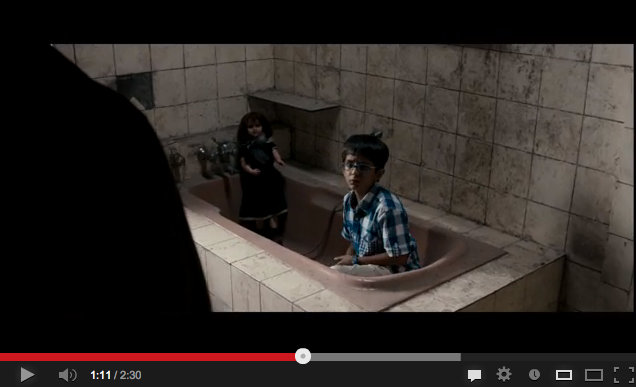
For me, the answer would have been Bobo’s adopted kid, Zubin. Going by the trend of orphan kids who get superpowers, he perfectly fits the demography too. We don’t know about his real parents. Aha, that’s where the magic and mystic happens. If you see the second trailer here (at 01:05), you will know that there was more to Zubin for sure. See the screenshot – Zubin talking to a doll (or Misha?) when Bobo spots him. This scene was not there in the film.

The film just used him for the choti-kaato act. Given a choice, i would have gone with Zubin getting some of the supernatural powers to hear/see daayans, something that connect Bobo and Zubin, and then a closure for Bobo’s story with him coming to terms with Misha’s (his sister) death in some way. I believe it was also there in the script – if the lift is going down, it’s going to hell. Can Bobo take the lift up to heaven for Misha? As for Lisa (Kalki’s character), isn’t she going to be step-mother for Zubin? When it plays around on the funda of sauteli maa acchi ho toh sakti hai par hoti nahi, isn’t Zubin in same scenario as Bobo? Aha, the loop.

(SPOILER OVER)

ETD2

And if there’s something more funnier than Vikram Bhatt style kaat-choti-kaat act, it was the disclaimer in the beginning of the film. Easy to understand that neither the makers nor the Censor Board is guilty of that. It’s because of the times we live in, where the fringe groups are always looking for such occasions to raise their voice and get attention. This is where Aparna Sen’s Goynar Baksho hits the ball straight out of the boundary.

On the surface it’s a story about three generations of women and their relationship with Goynar baksho (jewellery box). But Aparna manages to pack in so much, that it’s unbelievable. And treated it in a humourous tone, this one should work for all. In a memorable and heart breaking sequence in the film, Pishima (aunt in bengali, father’s sister), a child widow who has died and become ghost, asks Konkona Sen (new daughter-in-law) what sex feels like? Does she enjoy cuddling? In today’s times of offending sensibilities, this might be counted as quite sacrilegious. But this is where the bravery and the brilliance of the film lies – it packs everything with humour.

Pishima got married at 12 and was widow at 13. Forget love, relationship, or any such pleasure, widows were not even allowed to have good food. All she got was boiled veggies, all she wore was white sarees. It reminded me of someone i know closely. Married at young age, she had a son just after marriage, and then her husband died soon. She returned back to her parents and brothers. Since then it was been a life of white sarees, religious stuff and only vegetarian food. It’s actually quite a common sight in bengali families, mostly in rural areas – the eldest daughter who is married at young age and if she becomes widow, she comes back to her parents and stays with them for the rest of her life.

Moushumi Chatterjee plays the role of Pishima, an authoritative voice in the house. Because she owns those expensive jewels, nobody wants to be in her bad books. But the fun begins once she dies and becomes a ghost. Interestingly, only Konkona’s character of Somlata (new daughter-in-law) can see her. She is new in the house, she is scared and to make things worse, she even stammers. With a hookah in her hand and more abuses that you can count, initially Pishima starts bullying Konkona to protect her jewellery box, and then slowly they develop a bond. Pishima is bitter, sarcastic and is always cursing everyone around, but all done with dollops of humour in her Faridpur accent. Her dead character is the life of the film.

Goynar Baksho

In another sequence she gets emotional as she talks about how the men in the house always had all the pleasures, and all she got was this jewellary box. The (pishima) ghost played brilliantly by Moushmi Chatterjee, instigates Konkona’s character to go out, fight for her rights, to pursue her passion and enjoy everything that’s forbidden. Who talks about heaven and hell? As a ghost she knows it better than everyone. Enjoy till you can and then your body will perish one day.

Konkona’s character of Somlata represents the second generation. She is on the other extreme compared to her Ek Thi Daayan role. Set in a completely rural background, instead of scaring others, in this film she is always scared. And like in almost every other film of hers, she is so convincing that you would think she has a twin sister who acted in ETD. She is undoubtedly the best actress of our generation. The last 15mins of the film feels bit odd but you get what the filmmaker is trying to do – the third generation. You can also see the limitation of budget and resources, but this one is a must watch.

The film has released with subtitles in Mumbai and other cities. Though the subtitles might not be able to translate the fun of Faridpur accent but do watch it. Bollywood desperately needs some funny ghosts. And Vikram Bhatt needs to put his tacky ghosts in his closet for sometime.

So in two weeks we had two supernatural stories – one with mysterious witches and the other with loveable ghost. Both with three leading ladies. For whatever reason, one remains a half-baked affair, the other manages to pack a punch. One doesn’t say anything new, the other takes a strong stand on so many issues without making a big fuss about it. And it all comes from the same family. I guess in the end it’s all about the *choices* – we are the stories we tell.

@CilemaSnob

(PS – To make life bit simpler, now you don’t need to fill in all the details to post comments. If you are already logged into Facebook or Twitter, just log in with your FB/T account. Click on comment box, you can see the small (FB/T) icon below the comment box, click on FB/T, a pop up will appear, authorize the app and you are done)

ApprovedCelluloudMan

We don’t have a culture of documenting our history.

We don’t have a history of making great documentaries.

We don’t have documentaries on our “real heroes”.

And this is why Shivendra Singh Dungarpur’s Celluloid Man is such an important film, which stands tall on those three parameters. It’s about a real hero who has documented our cinematic history, and it’s a documentary on his life and passion.

I had missed the screening few times in the past and finally managed to catch it recently. The name is P.K.Nair. His designation sounds even boring – Archivist. Sounds almost clerical – someone who archives stuff. What separates Mister Nair from his designation and the rest is just one thing – passion. And this film does complete justice to that man and his undying passion for cinema.

Chances are you might not have heard his name if you have not been to FTII or not friends with FTII graduates. He is the man responsible for National Film Archive Of India, popularly known as NFAI. Starting literally from scratch, P K Nair built it up slowly – reel by reel, can by can, film by film. No wonder that you ask him about a scene and he can tell you which reel and which can has it. Celluloid Man is his story – how he built NFAI, the way he travelled to various places in search of those rare films which most didn’t care about.

The film runs on two tracks. One traces Nair’s personal story – starting from Nair’s childhood in Kerala to how he wanted to become filmmaker and how he landed up at FTII and started NFAI. Some of the well known faces from FTII recount their younger days at the Institute and talk about Nair saab. And then you realise that his contribution is much more than just being an archivist. It’s about shaping up those young bright minds.

The other one is about building NFAI – this has intersecting anecdotes about collecting those precious films by travelling to remote places, and sometimes even opting for illegal routes for a greater cause. Dungarpur balances it well by scratching the uncomfortable surface too – was it one-upmanship, why NFAI is hostile to Nair now and such.

It feels bit long at the running duration of more than 2 hours (2:24 exactly i think, not sure which version is releasing), and the director’s sudden voice-over feels odd which doesn’t gel well with the film as the rest of it is through Nair saab’s words. But those are just minor issues in this mammoth task of documenting this important part of our cultural history so beautifully. If you are film lover, WATCH IT. If you are not, watch it just to know how to define Passion and Commitment.

The initial portions of the film is shot gorgeously, almost like a dream, feels some kind of daze. And then there’s a heartbreaking surreal sequence of silver being extracted from film reels by those who understand only commerce. The horror! Horror! i shouted in my head.

And this film could not have come at a better time. If there’s one person who needs to be celebrated at the occasion of 100 years of cinema, it’s Nair saab. If nothing else, at least this documentary serves that purpose. Thanks, Shivendra.

– The film is being released by PVR Directors Rare on May 3rd. Don’t Miss this one.

– To know more about the film, click here.

– DearCinema has a detailed review of the film from IFFLA. Click here to read.

(PS – My fav quote is about gym in FTII. I guess that says a lot about our current cinema too)

@CilemaSnob

TheMaster.php

Great cinema always inspires great writing. And going by that rule, the latest one to join the club is P T Anderson’s The Master. And like us, if you also love reading everything possible related to a film once you have seen it and love it, then you have come to the right place. Some of us have seen the film and googled everything on it so that you don’t have to. Also, there are high chances that once you have seen the film, you will have too many questions. This post has links to some of the explanations offered.

But DON’T READ ANYTHING if you have not seen the film.

The Master is finally getting a theatrical release in India this friday. It might not work for everyone but you can’t deny Anderson’s stamp of great film-making all over. So don’t miss it. And for two more reasons – it deserves to be seen on big screen. There’s no other way. If it works out well, we might get to see much better releases in the coming months.

At the end of the scene, Lancaster sings “(I’d Like to Get You On) A Slow Boat to China” to Freddie. And yes, it’s eerie and perhaps more than a little homoerotic, but it also feels like a twisted version of a lullaby — the most domestic and familial of actions turned into something terrifying and strange — making it clear once and for all that Freddie’s dream of becoming a family with Lancaster and Peggy Dodd is an impossibility. And freeing him, ironically, to try and form a new family — perhaps with Winn, the girl he’s met in the final scenes of the film, right before we see him lying next to the female sand sculpture, suggesting that his search goes on.

– Vulture has done a brilliant piece titled “What Is The Master Really About?: Five Interpretations”. Click here to read.

It’s hard to make a lot. That was one thing when I was working on The Master, they kept being like, “well, he’s got a tea kettle, and he’s making gallons of spirit out of it.” I’m like, “Mmm, you might get a shot of spirit out of a tea kettle.” Like that flask setup in the shed in the cabbage field? No way that would have produced a five-gallon glass carboy full of moonshine, unless you were working every day for several weeks. But, you know, movie magic.

– Vulture has also done a piece answering that million dollar question which everyone will surely ask after watching the film – Can You Really Make Booze Out of Paint Thinner? Click here to know the answer.

The haunting, utterly inward stillness of the actors in “The Master” is one of the director Paul Thomas Anderson’s most apparent achievements, and it’s no mere ornament or element of dramatic plausibility—it’s at the core of the film, as is the very question of performance as such.

– New Yorker’s Rochard brody has written a long essay titled “The Astonishing Power Of The Master”. Click here to read.

– And if you want to read about the making of the film, click here for a long interview.
In “The Master,” we’re often left gasping for air, as in the scene when Freddie is required not to  blink for a painfully long stretch of his processing. Or because of the sheer beauty of some of the compositions. Warts, wanderings, reiterations and all, this is a film destined to be processed in many different ways. And hallelujah to that.
– Michael Philips’ 4 star review is here.
There are hints of an erotic relationship between Freddie and Dodd’s daughter (Ambyr Childers) and a not-too-veiled suggestion that Dodd’s paternal yearnings for Freddie are complicated by other desires. But at the risk of issuing a spoiler of sorts, beyond a bewildering point-of-view sequence when Freddie imagines that all the women at a Philadelphia cocktail party are naked, this is a film suffused with sexual desire that has no sex in it. If you look at “The Master” through the lens of Paul Thomas Anderson’s body of work, this is a prelude to the world of “Boogie Nights,” a disordered America where nobody was getting any that led straight to the disordered America where everybody was getting too much.
– Another great piece by Salon’s Andrew O’Hehir. It’s titled “The Master: A forbidding portrait of L. Ron Hubbard’s America” . Click here to read.
All of this striving — absurd, tragic, grotesque and beautiful — can feel like too much. “The Master” is wild and enormous, its scale almost commensurate with Lancaster Dodd’s hubris and its soul nearly as restless as Freddie Quell’s. It is a movie about the lure and folly of greatness that comes as close as anything I’ve seen recently to being a great movie. There will be skeptics, but the cult is already forming. Count me in.
– A O Scott’s article is wickedly titled “There Will Be Megalomania”. Click here to read.
– Time Out Chicago also offers “An Explanation” of the film. Click here to read.

So where does this leave “The Master” on the Anderson landscape, that oddly populated terrain? Few modern films have been as crowded as “Boogie Nights” and “Magnolia,” and few have been more lonely than “There Will Be Blood.” The new work sways toward the latter. I kept expecting, and even hoping, that Dodd would acquire a tinge of Elmer Gantry—that he might start to muster large throngs to the Cause, with Freddie employed as the muscle to keep the mob in line. But the scale of the story, for all Dodd’s swagger, remains compact, and the plot slowly condenses into a blend of character studies. Look at Amy Adams in closeup, for instance, all the scarier for being so perky and correct, her features filling the screen as she quizzes the reprobate. Or look at Phoenix, lifting his head high and proud, as Brando used to do, with an added, cranky stiffness that comes from having, or being, a serious pain in the neck. The eyes narrow and the mouth is awry, one corner twisting into an Elvis curl, though it looks too sour for seduction, let alone song.

– Anthony Lane’s review in the New Yorker is here. And it’s a must read.

Why do you make things so difficult? Else it wouldn’t be fun.

–  1 hour long Q & A with Anderson
– The Career of Paul Thomas Anderson in Five Shots
If you read any other brilliant essay on the film, do post it in the comments section.

With the positive reviews pouring in from all quarters, i was waiting for some contrarian views. Because what’s the fun if we all are on same page. Though there have been few such views too, and criticism mostly have been looking at the big picture and the issues involved. But Runcil Rebello believes that the film is about “the smaller picture”. And he also writes about how the film is different from the book.

kai-po-che

In Abhishek Kapoor’s Kai Po Che!, it’s all about opposition – ideas clashing with each other, and sometimes both winning, sometimes just one. There is the age-old money versus passion squabble, further highlighted in the academics versus sports issue omnipresent throughout Indian homes. Then there is the overarching notion on which the film is built: friendship versus ideology, and friendship does not always win. There is also Mathematics versus Biology.

Kai Po Che!, adapted from Chetan Bhagat’s The Three Mistakes Of My Life, is a story set in Gujarat around the turn of the millennium. The nineties were done and dusted with. Internet, Nokia mobiles, malls were making their introduction into daily Indian life. The Indian cricket team would become a leading Test-cricket playing nation in the following decade. Religious politics had not yet reached a fuming and flaming high.

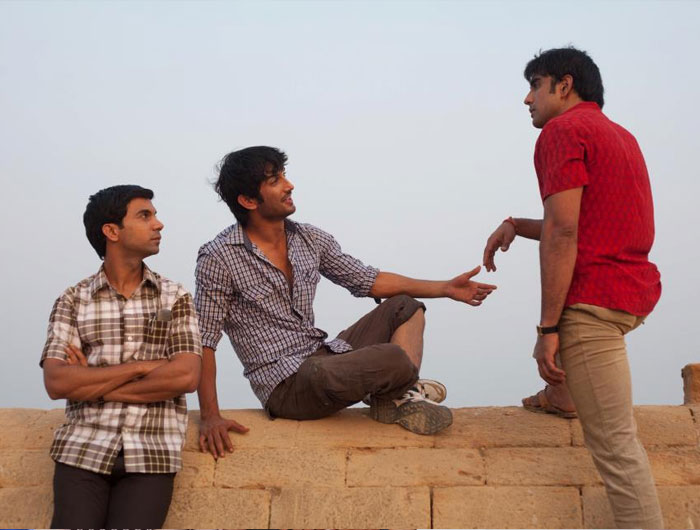
But Kai Po Che! doesn’t have its eyes set on such large-scale issues. Rather, it is content telling the story of three friends: Ishaan (Sushant Singh Rajput) – flamboyant, impulsive, passionate, Govind (Raj Kumar Yadav) – logical, ambitious, money-minded, and Omi (Amit Sadh) – simple, lovable, easily swayed, who set up a sports equipments store-cum-cricket training academy-cum-Maths tuition classes. This film is as much an ode to friendship as it is about the decay of that lovely bond.

The idea of opposition isn’t hammered into our heads. It’s brought up now and then, never over the top. Just like the film. The story (written by Abhishek Kapoor, Chetan Bhagat, Pubali Chaudhuri and Supratik Sen) does not veer much from the book, and if you’ve read the book, you’d realise then that it is a story tailor-made for Bollywood. And yet, the writers and the director stitch the film into an altogether different piece of fabric. The film is removed from typical Bollywood treatment. No star actors, no item numbers, no over-the-top treatment, just three songs (Hell! The soundtrack by Amit Trivedi [with lyrics by Swanand Kirkire] includes a garba-beat song in Shubhaarambh, but the film’s garba scene isn’t picturised on it. Unexpected.) Instead, Kai Po Che! is about the small moments in the fabric. Don’t lose sight of the smaller picture.

Characters, especially Omi’s, oscillate, not able to settle on one thing. He, at times, goes where the wind blows, and sometimes marches to the beat of the other drummers of the show. He may not always like what he does, but he is loyal to any cause he signs up for. Govind and Ishaan, on the other hand, are the proverbial immovable object and unstoppable force. They’d go to any distance to get what they want, albeit what they want is in diametrically opposite directions. Govind has to let loose, has to understand that not all things in life are solved by Mathematics, but some by Biology too. Ishaan’s sister Vidya (Amrita Puri) would be his teacher in this regard. Ishaan has to grow up, has to not let anger affect his decisions, but his mind. Ishaan, and to a lesser degree, Govind too, do not care about how religion plays into their plans. They are fine with sitting on the fence when it comes to this particular power struggle, letting Omi handle the dirty work.

What these three have in common, though, is something India is obsessed with: cricket. Cricket (and films) are said to heal wounds. In this film, it is the historic 2001 Calcutta test match between India and Australia that plays the role of mediator and doctor. It is also cricket that brings together children of two opposing homes, Omi and wiz kid Ali (Digvijay Deshmukh), under one roof.

Abhishek Kapoor has a knack for staging event situations. In Rock On!! earlier, he staged rock concerts in a way no Indian film had before. In Kai Po Che!, he goes large scale, but doesn’t make them the focus of his movie. The eye firmly remains on the three friends. Earthquakes, cricket matches and the Godhra Riots form the trifecta of incidents around which they break and mend. Tough decisions are made, mostly on impulse and emotion. When calamities strike, there is no time to think. Govind, Omi and Ishaan choose their respective sides all on basic instinct.

The film, though, has been meticulously planned. If Anay Goswami’s cinematography portrays Gujarat in a favourable light, Hitesh Sonik’s background score livens up the lives of the three friends. Deepa Bhatia transitions from one date to another finely, giving her best cut in the crucial scene during the riots.

Sushant Singh Rajput and Raj Kumar Yadav play their roles well. They really look the part, and so does Manav Kaul, being crafty and smart as Bittoo mama, Omi’s political leader uncle. Amrita Puri is cute and plucky adequately. In fact, the casting (by Mukesh Chhabra) is impeccable. The one actor, though, to make the most impact is Amit Sadh. From portraying a simpleton to a political henchman, Amit Sadh’s eyes, and hair, speak.

All these people, eventually, are just holding the manja. It is Abhishek Kapoor flying this kite, cutting every other kite in his path. He’ll be the one screaming kai po che! at the end of it. And what a delight it has been to watch this kite soar great heights.


P.S.: If you’ve read the book, you’ll understand the flashback and the conclusion has changed; all for the best. Below are a few details of what is different in the film.

(SPOILERS AHEAD!)

Chetan Bhagat, in his book, The Three Mistakes Of My Life, had Govind as the lead character. The biggest change is towards the end. In the riot scene, Omi is the one who protects Ali, Ishaan and Govind from his uncle. Omi dies in the process, and Ishaan doesn’t talk to Govind for years because of the revelation that his sister and he were in a relationship. Govind eventually, before committing suicide many years later, writes a letter to Bhagat, who he is inspired by, thanks to his two books Five Point Someone and One Night At The Call-Centre, who then intervenes and brings all of them together again. An utterly melodramatic end to the story, which thankfully was changed.

Another important section that was missing from the film was the part where the three friends finance a trip for Ali and themselves to Australia to receive cricket coaching. The Australians, seeing the marvel that Ali is, offer to train him but only if he eventually plays for Australia. Ali here in an outright dramatic fashion proves his patriotism for the country by shouting that he’ll play only for India and then they return to India.

Also, Vidya and Govind sleep together on Vidya’s eighteenth birthday at her home itself in the book. This too was changed in the film.

Also, missing in the book is the Diu section. The three friends are basically saints in the book, not leaving their pol to do things normal twenty-something guys would do i.e. to drink.

Abhishek Kapoor also changed the narrative by making all three characters equally important, thereby removing the crux of the story from the ‘three mistakes’.

The rest of the movie is pretty faithful in its adaptation.

Abhishek Kapoor’s new film Kai Po Che has released today. The reviews so far have been unanimously positive. But does it mean anything beyond that – The Big picture? Over to filmmaker Hansal Mehta who connects the dots.

Kai Po che

4 reasons for not watching the increasing number of films released every week –

  1. I am perennially broke
  2. I am lazy
  3. I need to work
  4. My wife is not in the mood
  5. I am hoping I get invited for a preview/premier.

The past few weeks have been different though. The spate of films released and due for release stared at me in the face because

  1. They featured friends in lead roles
  2. They were directed by friends
  3. They were produced by friends
  4. I was looking forward to the films
  5. I felt compelled to watch them

I am going to limit my post to the Hindi films I saw because in the case of foreign films:

  1. I feel inadequate commenting about commenting on them
  2. I did not feel like watching many of them
  3. I am waiting for uncensored DVDs of some of them
  4. I don’t get invited for previews of these films

In the past few years, most significantly 2012, I am seeing a pattern in films that are successful (relatively) and appreciated. A majority of them stand out for their choice of actors, their choice of subject, their non-formulaic narratives and a host of other similarly intellectually stimulating reasons.  One factor that has begun to increasingly stand out in these films is sheer audacity. The more I think about what drew me to watch the films, to like some of them, to dislike some of them and to find some of them memorable was the lack of apologetic film-making that has mostly led our films towards pathetic levels of mediocrity.

I’ve noticed that many film-makers no longer feel pressured to make the same formulaic nonsense with the same boring people over and over again. Many of the older directors also seem to realize the futility of formula and are trying hard to reinvent. Those who aren’t will soon be history.

Ever since I made Shahid, I’ve been asked over and over again about how the trend of biopics is on the increase. The media unfortunately reads trends very poorly and looks for convenient analysis. Trade pundits who have in the past thrived upon silly generalization are very shallow in their understanding of artistic/creative decisions taken by film-makers or in analyzing the success of films that don’t fall into their formulaic comfort zones. The truth is that book adaptations, biopics and stories inspired by true events are an indicator and not trends in themselves. We now have film-makers looking for newer stories to tell. We have film-makers looking for new ways to tell stories. We have film-makers who are fearless. We have film-makers who are not afraid of audacity.

Whether it is Talaash, Gangs of Wasseypur, Ek Main Aur Ekk Tu, Vicky Donor, Special 26 or Kai Po Che, I notice a fearless streak in the directors and the team that has made these films possible. Even potboilers like Dabangg, or before that Wanted, or the recently released ABCD have displayed a certain audacious vision. Rockstar had the audacity to be deeply philosophical and sometimes mendering while pretending to have commercial trappings. A certain Anurag Kashyap whose films either got banned or termed as jinxed is now celebrated because of his delightfully indulgent Gangs of Wasseypur or his subversive take on Devdas. Sujoy Ghosh redeemed himself with the surprising Kahaani. Tigmanshu Dhulia’s Pan Singh Tomar was commercially successful. English Vinglish marked the successful return of a Bollywood diva who churned out some of the most cringe-worthy films of my growing up years. The list could be exhaustive and I’m sure it will soon dominate successful box-office lists. On the other hand there has been a steady increase in films (Ship of Theseus, Miss Lovely, Peddlers etc.) that have found appreciative audiences in international film festivals and critics. These films have shown a fierce independence in their making while giving alternate Indian cinema a new lease of life and an unpretentious, fresh form of expression. They have been audacious in their abandonment of what we perceived as ‘art-house’ or ‘parallel’ cinema in India. They were unabashed in their treatment, style, narratives and expression. These and many other films that I have viewed over the past year and this year have challenged audiences, provoked critics and subverted formulaic convention with amazing audacity. Even more encouraging is the fact that producers, actors (including some stars) and trade have begun to embrace the audacious breed, backing them to the hilt.

So what is the point I’m trying to make? It’s simple. Audacity is in. Safe is not safe anymore. Take the second installment of Dabangg. It disappointed because it succumbed to ‘ingredientization’ and failed to live up to the fearless audacity of the first part. Films like ‘Zila Ghaziabad’  or ‘Jayantabhai Ki Love Story’ are passé. They will continue to get made. They will continue to remind us of everything that is unimaginative and about how we have allowed ourselves to be taken for granted all these years.

So here is my two bit gyaan. Whether you aim for the mainstream or the alternate space, make it audacious. Just making it big will soon cease to work – neither for the makers or the audience. Yes, we will have regular installments of successful franchises. We will have ridiculous remakes. We will have mindless, story-less films – but my guess is that all of them will work for their audacity and not for their adherence to convention.

Audacious will soon be safe. Safe is already dangerous. It could soon be suicidal.

This post is bit late. But here’s Mohit Patil‘s notes from PIFF, 2013. And as his twitter bio goes, he loves films and scotch. For films, the recco list is here. For scotch, you can ask him on twitter.

PIFF2

First things first, this was the most awesomely organised edition of PIFF. They not only made sure that we got to watch great films from around the world, but also end up learning the basics of film projection before the fest concluded. For most of the screenings took place only after someone from the audience helped the projection operator with his job – like explaining what subtitles are, helping him change the aspect ratio, explaining the difference between the original audio track and the Director’s Commentary, telling him that talking on the phone in the projection booth is bad manners etc.

Anyway, here’s what I thought of the films I saw at the Pune International Film Festival 2013 –  The old ones and the new ones, the shorts, the documentaries, feature films, everything.

[ Title (Director, Country, Year, Section under which the film was screened) ]

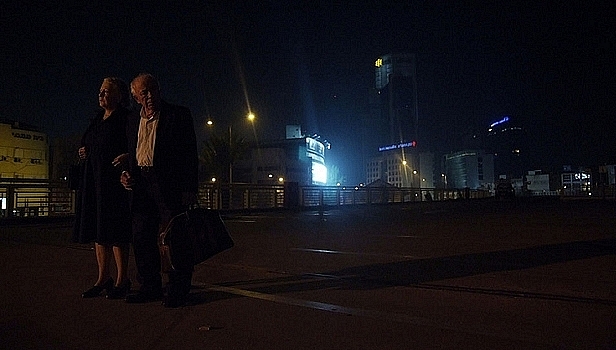
Epilogue (Amir Manor, Israel, 2012, Opening film):

1

(Another short paragraph and I’ll be done with the rant, I promise)

I was in a terrible state of mind when I saw this one. They delayed the screening by an hour, then started the film without subtitles, and then after half the delegates had walked out disappointed and about half an hour of hunting for a PIFF authority (and eventually finding none) began the film. Only to allow the projectionist to talk (read: shout, yell, scream etc.) on the phone for a full 45 minutes.

I came across this review by Leda Galanou which nicely sums up what I thought of, from whatever I could grasp of this mess of a sceening of a fine little film.

Story Of A Love Affair (Michelangelo Antonioni, Italy, 1950, Retrospective) :

                                          “Giovanna separated us in life… And in death…”

This debut feature film of the Italian master Michelangelo Antonioni is as entertaining as it is a meticulous study of its characters stuck in a labyrinth of guilt, paranoia, wild lust and reluctant pragmatism, and a theme common to quite a few Antonioni films – characters replete with material needs but craving for emotional/spiritual solace. The film throws basic noir elements at us right from the beginning, where a private detective investigates about a certain Paola Molon for her rich suspicious husband, ironically causing Paola to meet and eventually start seeing her former lover after years. And what follows is a dark, incisive Hitchcockian trip.

The Fifth Season Of The Year (Jerzy Domaradzki, Poland, 2012, World Competition):

1095_fifth-season-of-the-year-640

The opening 5 minutes of the film are highly misleading. It opens with a picturesque long shot of the sea, sunset and a boat enters the frame, all this accompanied by a quaint piano; followed by a close up of a kohl eyed woman playing with a cigarette lighter; the kind of opening which prepares us for a film blatantly art-house in nature. The rest of the film, however, is nice fluffy entertainment: a romcom-cum-roadtrip movie, and a very likable one. The charm lies in its simplicity and although it doesn’t really offer anything you haven’t seen before, it’s the fine strokes Domaradzki paints the characters with, largely aided by the actors that made this one work for me. After one film  screening full of sulking and another one which was a great film, but a tiring watch too, this film came as a whiff of fresh air.

Kaliya Mardan (D.G.Phalke, India, 1919, 100 Years Of Indian Cinema) :

The film by Dadasaheb Phalke based on Little Krishna’s mischiefs in the neighbourhood and his endeavor to conquer the giant snake Kaliya was the first Indian film to employ special effects. While Ms.Mandakini Phalke steals the show as Krishna, and the film might be historically significant with respect to Indian cinema, it was a bit of a slog and didn’t really work for me. Full film is available on youtube here.

Duvidha (Mani Kaul, India, 1973, 100 Years Of Indian Cinema) :

Duvidha is based on the same Rajasthani folk legend as Amol Palekar’sPaheli. The story has been narrated through voice-over, allowing the haunting imagery to take over the film, and how! The dialogues are minimal, the frames mostly consist of reds and whites, the camera is mostly static and the actors do little but stare at something or someone. And Kaul incredibly employs this hyper de-dramatized style to amplify the eventual pay off. You can watch the entire film on YouTube here.

(P.S. Since Paheli treats the story as a wicked comedy-cum-romance, an approach completely different than Kaul’s, I’m salivating at the idea of Vishal Bhardwaj making his version of Paheli. Anyone?)

——————————————————————————

 Short Films – Live Action shorts by students:

Allah Is Great (25 min, A foreigner in a politically tense region and his Indian cab driver): The film quite smoothly shepherds us through the journey of and the conversations between the foreigner, who’s  here for a conference and his cab driver who’s a die hard film buff, a bade dilwala, and ardently religious. I’m still unsure of the purpose of the inclusion of one of the subplots here. And the film makes me appreciate the ending more than I would have on paper.

Back Against The Wall (14 min, A girl desperately wants the attendant at a shop to know something) : I’d be spoiling it for you if I say anything about the story. All I can tell you about are the performances and the atmosphere, and both are very good here.

Last Calls (22 min, A 17-something girl dials the numbers last dialed by her departed sister) : Wow! This one hits all the right notes. Has a very strong emotional core and terrific mood too. Completely different tonally and structurally, but it reminded me of another favourite of mine, Vihir.

(This was the last of the short films section. Over to feature films.)

————————————————–

Rose (Wojciech Smarzowski, Poland, 2011, World Competition) :

2

It’s Summer of 1945 and we are in Masuria, a German territory before the war but granted to Poland afterwards. The war is the backdrop and the emphasis is on the two main characters living together under brooding circumstances. Shot in greyish-greenish quasi-monochrome, the film doesn’t shy away from showing us the horrific consequences of war – personal lives shattered by macro-level political moves, but instead of going for kitschy manipulation, it wisely and effectively uses these as devices to develop the relationship between Rose, the widow of a soldier and his colleague who happens to stay with her.

Celluloid Man (Shivendra Singh Dungarpur, India, 2012, 100 Years Of Indian Cinema):

Celluloid Man2

The first “Wow!” of the fest. The 164 minute documentary traces the life and work of one of arguably one of the greatest contributors towards Indian cinema not as a filmmaker but as a film archivist : the founder of National Film Archive of India, P.K.Nair. The film begins with a vivid image where we see P.K.Nair juxtaposed against  a scene from Citizen Kane playing on the screen behind him. And the film before us, much like the film playing in the background, builds a fascinating sketch, mostly through interviews, of a towering personality. Through a series of interviews with some important figures of Indian parallel cinema, with each giving insight into Mr.Nair’s life – how he would acquire films from the archives abroad or from the families of the early pioneers, some admitting with a smile and a coy pride that some of their films exist today simply because of Mr. Nair’s relentless and unbiased passion for film preservation. Interspersed with footages from classics, and talks with Mr.Nair himself about his childhood memories with cinema, his “Rosebuds” and how cinema became a part of him and vice versa; the film is a tribute to a man who Indian cinema owes its history to, a fascinating trip to the early cinema, and an important film asserting the importance of film archiving in a country that boasts of its cutural prosperity. What’s more, the screening took place at NFAI and was graced by Mr.Nair’s presence.

The film is scheduled for release in March.  Click here for the teaser. 

Short Films – Legends We Remember:

I Am Twenty (S.N.S Sastry): This epic docu-short was made in 1967, when independent India was exactly 20. Through a series of interviews with the then-20-year-olds hailing from diverse cultural backgrounds and strata and holding diverse interests and ambitions; the film serves as a sprawling essay on the then past, present and future of India with respect to personal, professional, societal, and cultural spheres through its youth; their dreams and their fears, their interaction with the country, and their take on the varied phenomena India was going through then.

Explorer (Pramod Pati):

Pramod Pati’s exceptional Explorer(1968), a highly abstract experimental short can be said to be a hefty companion piece to ‘I Am Twenty’. If Sastry used conversations with youngsters as a device to present a comprehensive picture of India, Pati shows India torn between past and future, science and religion through a mosaic of random, sequentially rhythmic shots using elemental components of cinema: camera movements, the sounds accompanying every shot and swift focus shifts dexterously.

You can watch the film here.

(P.S. Some other films by Pramod Pati are available on Youtube. Here are the links: a) Trip/Udan   b) ABID c) Claxplosion d) Six, Five, Four, Three, Two. )

(Essential reading: 1) A superb exhaustive essay on ‘Explorer’ by Just Another Film Buff

2) Excavating Indian Experimental Film by Shai Heradia 

3) Pramod Pati – The Cinema Of Pra-Yoga, Of Swa-Bhava by Amrit Gangar)

Arrival (Mani Kaul):

Through incessant shots of jam-packed crowd and of the action of eating (consuming), Arrival is a cold, stirring look at the exploitation of life to cater to industrial needs. And even here, Kaul lets the visuals do the talking and the technique is used to maximum effect in one of the most chilling moments of the film, when we’re given a detailed visual account of sheep being brought in, unpeeled and slaughtered, treated like objects; cut to shots of labourers who, much like the sheep, are mere pawns of a much larger commerce.

Daastan-E-AlamAra (Chetan Mathur):

This short uses some 30 stills from Alam Ara that have managed to survive (the film itself is not available anymore) and employs a lyrical narrative written by Kaifi Azmi and sung by Jagjit Singh (citation needed) to plot the story of India’s first talkie. Sounds interesting on paper? Well, the film, sadly, is pitiably insipid.

Khilonewala (S Sukhdev):

The disappointing ‘Khilonewala’ begins with saccharine event when a bunch of children gather around a Khilonewla and he makes faces and sings for them. It was after an assortment of goons (Amrish Puri in multiple roles, to underline the fact that crime has no class or religion) encircle the Khilonewala that the film begins to get unbearable. You can watch it here.

Mandi (Shyam Benegal, India, 1983, Tribute – Ashok Mehta) :

Mandi (Market) satirizes the interpersonal relationships between people directly or indirectly associated with a brothel when a social activist decides to eradicate prostitution from the town. For me, it was darkly funny with some sharp observations and  ironies, but ultimately vacuous.

I.D. (Kamal K.M, India, 2012, Indian Cinema Today):

IDKamal--621x414

Another Indian Wow! Here, we have a taut, nuanced thriller that transcends the limitations of the “quest to find someone’s identity” sort of films and presents a complex and intriguing portrayal of obsession, and the ambiguity and elusiveness of one’s “identity” as our protagonist gets sucked from her laidback life shot sharply in robust colours into the dusky blue-tinted world of digression. I was quite impressed. The film is produced by Resul Pookutty and Rajeev Ravi, and I don’t see a reason why it shouldn’t find a release. Don’t miss it when it does. And be warned, the official trailer floating online contains a spoiler.

Blow Up (Michelangelo Antonioni, USA, 1966, Retrospective)

Thomas, a fashion photographer spends most of his time clicking the most glamorous “birds” (sic) in the business, who he is fed up of being with. He clicks informal photographs of a couple in a garden and spots a man with a gun hiding in the bushes when he develops them. He visits the garden the next day, finds the corpse lying there and soon intrigue turns into obsession. The film rightfully doesn’t even care to tell us any more about the murder and Antonioni’s Blow Up is really a solemn rumination of its central character’s emotional solitude and his dire pursuit of the feeling of having done something remarkable. For me, it served as a languid companion piece to the somewhat dynamic Taxi Driver. And it’s the muted final scene of Blow Up that takes it to an all new meditative high. Mind Blown Up.

My Father’s Bike (Piotr Trzaskalski, Poland, 2012, Global Cinema)

My Father’s Bike, a delicately crafted family drama with not one, but two sour father-son relationships at its core. The film, instead of judging its characters, gives us a warm coming-of-age picture of a family with its members innocuously flawed and imperfect. In other words, human; but unforgivably so among themselves. And there’s some very good acting at display.

With You, Without You (PrassannaVithanage,Sri Lanka/India, 2012,Global Cinema)

With You, Without You, based on Dostoyevsky’s short story “The Meek One”; designed and scored in blues making us feel the gloominess; is a tenderly composed and deeply moving film about a personal relationship ruptured irreparably by politically influenced deeds of the past.

Night #1 (Anne Emond, Canada, 2011, Global Cinema)

786-NIGHT_no_1

Night #1 could well be described as a darker, more Bergman-esque version of Before Sunrise. Oh, and quite brilliant. Through their profoundly bleak yet romantic monologues, the two characters open themselves up to each other, revealing their true inner fractured selves after a one-night stand.

Laurence Anyways (Xavier Dolan, France/Canada, 2012, Global Cinema)

156233_445021915514187_361463324_n

Initially, I was sort of put off by Dolan’s music video like style and wasn’t sure what to make of certain sequences. It was after some pondering that the film started to grow. The film tracks over a decade of Lawrence Alia’s life and relationships and remarkably makes us sense not only the protagonist’s physical transformation but her emotional journey as well. And with a lot of heart.

Liv & Ingmar (Dheeraj Akolkar, Norway/UK/India, 2012):

Note: I’m fully aware that it’s unfair to opine about a film one hasn’t seen completely.

Implication of the Note: I walked out.

This utterly frustrating documentary about the off-screen relationship between the legendary Ingmar Bergman and his muse-cum-wife Liv Ullmann makes some terrible choices: it chooses peripheral cutesy over insight, shows us random shots of pretty landscapes which make no sense whatsoever in context and intersperses that with clips from Bergman’s films which are so literally synonymous (and thus redundant) with the lines spoken (by Liv Ullmann in the interviews) that it insults the the medium of cinema itself. I myself am a Bergman fanboy but I can’t even give ‘Liv & Ingmar’ the least respectable pass(?) a film can get, that “it’s strictly for fans.”

Heck, even ‘Mohabbatein…’ was less schmaltzy. Cons of going for a film without watching the trailer. Sigh.

80 Million (Waldemar Krzystek, Poland, 2011, World Competition) :

Beginning with dense details and lots of jargon about a confrontation between communists and the opposition in Poland, what we find here is a rather entertaining heist movie about a group of Solidarity activists who conspire to withdraw 80 million of the Union money from a bank before their account would be blocked. And it was refreshing to see a film that declares that it was “based on true events” only in the end credits.

The Adventure (Michelangelo Antonioni, Italy/France, 1960, Global Cinema):

Much like Antonioni’s ‘Story Of A Love Affair’, we have a couple madly in love but separated by the dead, by their conscience. And much like a theme common to a lot of his films, it is a study of the emotional isolation of its characters and the complexity of love.

Clip (Maja Milos, Serbia, 2012, Global Cinema):

The disconcerted Clip is crammed-to-the-point-of-rupture with scenes of hyper-explicit sex (so much so that it has little else to offer for most part) and often tested my patience. It’s only towards the end that the film begins to work as an unruly depiction of the wayward, disturbingly nonchalant and shallow youth of urban Serbia. And all those scenes, which had seemed showy earlier, start making sense rendering the film with meaning. A one that takes forever to arrive at its point? Yes, and may be no. May be, the indulgence is the point here. May be the director wants the film to be a metaphor for its characters. Boy, that was repulsive in parts, often repetitive, but ultimately trippy. And a special mention for Jelena Mitrovic, who is absolutely terrific as the disillusioned, riotous Jasna.

Chidambaram (Govind Aravindan, India, 1985, Retrospective):

The imagery and expressive silences render the languidly paced Chidambaram effectively with the meditative quality it was supposed to have.  Aravindan explores the personal spiritual journey of Shankaran battling his own conscience.

MKBKM

Vishal Bhardwaj is a disturbed man.

At least that’s what it seems. And that’s a good starting point. Filmmakers and artists should feel disturbed by their environment. Great art always comes out of that disturbance. So while rest of the bollywood seems to be living in Tumbuktoo with no connect to the issues that matters, and want you to remain equally stupid, blind and deaf with their corn-cola-crap combo, Matru Ki Bijlee Ka Mandola is Vishal Bhardwaj’s first reaction to the changing world around us.

At a recent presser, Bhardwaj said that wo jo ugly malls…meri saansein aani band ho jaati hai wahan…uske andar…wahan ke shor se. As i watched the film where Pankaj and Shabana talk about his dreams on a hill top with dark clouds hovering over them, and a surreal sequence involving giant cranes, industries and malls comes up, it was eerie (wish they had avoided those tacky interior shots of the malls though). That’s the core of this whimsical film by Vishal Bhardwaj – development at what cost?

Land.

That doesn’t feature in our dictionary. The ones who are born and bought up in city never knew that it existed. We, the kids of small towns who moved to smaller houses in bigger towns, used to hear about it from our previous generation. Now, we are either comfortably numb, or understand the size of 1BHK – space is our only connect with “land”. And in this scenario, it’s quite easy to understand how difficult and daring it is to make a film like Matru Ki Bijli Ka Mandola. Land, farmers, farming, rainfall, pesticides, gobar, anaaz, anaaz ka bhav – they don’t exist in our films anymore. Not that it deserves all the credit just for the dare act.  But, then, the industry and this country doesn’t understand “satire” either. We are still stuck at Jaane Bhi Do Yaaron. Even on the day when the film is out, the makers are selling it as “massy comedy drama”, like they did with the trailer and tried to hide the film. Massy comedy drama? Paincho paincho!

And that’s the tragedy of Vishal Bhardwaj and his films – audience. Maybe the blame lies with him too. Intention is always honest, filmmaking is always top notch, but he wants big budgets. Big budgets means only one thing – big stars. Doesn’t matter if they can act or not. With big stars and big budgets, you need the big box office numbers too. So? Package it as “vitamin ki goli“, or massy comedy drama, as they would like you to believe.

Last time when he made a film without any compromise, he delivered two of the best films of his career which are classics in more than one way – The Blue Umbrella and Maqbool. Since then it’s always been a slippery ground. This balancing act is a tough business. Emir Kusturi-ca’s absurdity is full throttle. Bhardwaj’s absurdity is bollywoodised where every solution lies in hero-heroine ki shaadi. Some of the best cinema across the world never looks for solutions, and trying for a quick fix is unpardonable. Problems/issues – that’s the muse of a true artist. And this is what i found completely indigestible in Matru – how suddenly everything comes together in the end. Maybe they meant it’s “massy comedy drama” by its climax. Aha, the trappings of commerce when the film has an anti-commerce stand. Irony! And watching this film funded by a corporate giant in a multiplex inside a mall. Irony ka baap!

But other than its hurried and hotchpotch climax, the film has so much more to offer and is deliciously wicked. Sit back, relax, and chew it bit by bit like Gulaabo does. This one needs jugaali. (i hope you know what it is) Make sure you watch the film in a theatre which has good audio system. Miss one line and you will miss the joke. But wait, if your idea of being funny is 50 plus actors making faces on the tune of pon pon, this movie is not for you. Call it quirky, whimsical or absurd, i wonder if Mao and moo moo will ever get together in one film. Or you can just buy some species because you like their music. Or a Gulaboo bhains in such a pivotal role. It’s Cattle-ship Communism!

The story is simple – man has a daughter. man has a servant. daughter has a lover with a corrupt mother. It’s a hindi film and so you know the end. In the illustrious filmography of Bhardwaj, this is his first political film. i remember an interview of his where he said script aapko nanga kar deti hai…aap kya sochte ho, wahan sab dikhta hai. And if that’s so, am happy to tell that one of my favourite filmmaker looks smart even when his soch is stark naked. He makes other filmmakers of his generation who are still busy doodling with matters of heart, look like nursery kids. Paincho, ab toh duniya dekho! 

And hand over all, i mean ALL the trophies to Pankaj Kapur. A slur here, a sigh there, a blank stare in this direction – this actor is pure delight on screen. He owns it and how! Forget his Jekyll and Hyde avatar, he is 100 times the Jekyll hidden in one Mr Hyde! The film belongs to him and it’s no wonder that Bhardwaj calls him his most favourite actor on this planet. It’s been ages since an actor made everyone look like lilliput. Even if nothing interests you, just watch the film for him. Actors of his age are put in a bracket called “character actors” in this country and you never know when someone like him can get another terrific role like this one and will do full justice to it. Shabana Azmi is the Politician-who-licks-Lollypop and is a perfect match for Kapur as his footsie partner. And like any other Bhardwaj film, this one also has the entire supporting cast setting up a great ambience and a distinct world where the story unfolds. Any film which has great performances by actors in small roles, or even just for one dialogue – that’s my kind.

Book your tickets now!

– by @CilemaSnob

(PS – Dear VB, why this big dhokha this time?)