Archive for the ‘movie reviews’ Category

Booked your tickets yet? Do it first. Then come back to this post. This isn’t the usual hyperbole. It’s really good and rare chicken soup for your soul. And so the film straight goes into our list of “Must Watch” films.

Our regular contributors Varun Grover, Svetlana Naudiyal, Mihir Desai and Sumit Purohit tells you what the film meant to them, why it spoke the way no other Indian film has done in a long time, and why you should not miss this one at any cost.

And as the norm goes with most of our posts, these are not formal reviews. Just ramblings. Why four? Well, we are going with the theme of of the film – three for three stories and one to connect it all. or something like that. Aha, call it cheap thrill and read on.

Ship MFC

Cinema of duality

by Varun Grover

I have been struggling with this scenario for some time now, this concept of duality. Not in a spiritual sense (that is still many years away I think) but in a very daily-life sense. Have been swinging between left and right ideologies, between Arundhati Roy and her detractors,  between hedonism of sab chaat lo/bator lo and nihilism of sab chootiyapa hai, between the urge to document every travel trip through photographs/ticket stubs  and the need to live in the moment making the concept of posterity sound like a well-manufactured fraud, and many other, similar conundrums.

Anand Gandhi picks up three such stories of duality, set in three different worlds, and binds them together through the philosophical paradox of Ship of Theseus. If that sounds heavy then yes, ambition-wise the film is this heavy. But the beauty is that the team has pulled-it off with great cinematic value in each frame and line of writing. It’s refreshing, beautiful, insightful, and as gripping as a well-made thriller.

The philosophical moorings never get in the way of entertainment or storytelling, the two core elements people safely assume missing from any film termed an ‘Indie’.  And that, I think, is the greatest success of Ship of Theseus. Here’s an Indie that appeals to the mind as well as the heart. We don’t need to love it out of some guilt for the poor filmmaker who sold his house and ate only vada-paav for 1008-days non-stop to fund the film. We don’t need to love it because it’s arbitrary and arty and we don’t get it but ‘Mint Lounge or Caravan are loving it so we must too’ pressure.  We can love it with all our understanding, ego, and guiltlessness intact, like we love any mainstream film.  It’s like health food that doesn’t taste like health food.

The 3 stories – a visually-impaired photographer about to get new eyes, an atheist monk and stand-up comic cum lawyer sparring on about the relative value of an animal’s (and human’s) life, and a man with a new kidney having doubts about the legality and ethics of the transplant – explore one genuine doubt each (माकूल शक़  as KK Raina said in Ek Ruka Hua Faisla) about existence and mortality.

The characters are talking a language rarely heard before on Indian cinema’s screens.  The language of loaded words and of a life lived in knowledge. Though I’ve met some people who found the language to be faux-intellectual and the 2nd story a bit too verbose.  I think it’ll come down to how invested in the basic conflict of the story you are. Do you want to know more about the layers of conflict at hand or are just happy seeing the surface and are now mumbling ‘Haan samajh gaye…ab aagey story bataao na!’ Like after watching a great film, I spend hours reading about it on the internet. Director’s interviews, googling ‘<film name> explained’, trivia, theories, hate it generated – everything.  Sometimes I know how much I liked the film only after realizing I have spent 2 days reading up on it. I think same theory works here – if you find the core debate interesting, you will enjoy the शास्त्रार्थ going on between the monk and stand-up comic. (And what is a stand-up comic if not a modern-day version of debate-loving, analyzing, theorizing monks we read about in stories from mythology, people who debate just for the heck of it. So in a way, 2nd story is a debate on morality between two monks/comics from two different time periods.)

If a film’s merit is in showing a new world with great authenticity and insight, then Ship of Theseus shows us three. And to top that, terrific performances, excellent background score, one brilliant song in Prakrit, and consistently sharp photography throughout made this most-awaited Indian film of the year for me absolutely worth the hype.
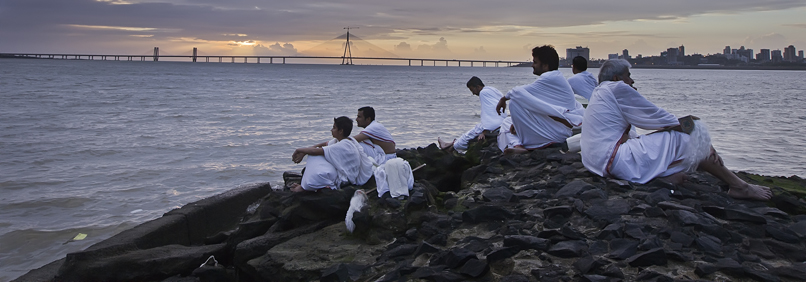
Ship Of Theseus

“You chose your journey long before you came upon this highway”

by Svetlana Naudiyal

I really don’t know what to say amidst the deluge of opinions and interviews and reviews. Social media is flooding with them and here I am, adding my own two bit to that. Will saying that I’ve seen it thrice already at different occasions and will happily (and surely) see it again, suffice?

Quite lazily and shamelessly, I am kind of reiterating something I wrote earlier this year for this very same blog. Primarily because, I think kisne padha hoga. And secondly, what I think about the film, it hasn’t changed a bit.  (Also, maybe now I can add some of those so-called spoilers.)

Ship of Theseus invents a language. Not just in terms of cinema, but in terms of thought. It compels you to go home and read. If not read, then at least think.  (At times when we spend our lives not thinking, you may discover that ‘thinking’ is a wonderful exercise). It takes you closer to your own self and yet far away from it, where almost unintentionally you find yourself objectively pondering over your own self and its relationship with the world around.

It is so evolved in thought and yet so accessible. Sophisticated, mature and nowhere in the remote vicinity of pretentiousness. And yet it is light like a feather, a pleasant watch replete with humour. (And in case I haven’t yet reiterated enough in indirect phrases, the film stems from life itself.)

The blind photographer’s search for meaning in being able to see, the monk’s dilemma and the stockbroker’s quest for purpose in his own life. You may like a story little less and another a little more, but it is the whole they construct that runs like a background score for you after you’ve seen the film.  In our Cinema, where do we see references to something like Unilateralis Cordyceps,  Charvak and Church of the Flying Spaghetti Monster anyway? Or to introduce a blind photographer, to have a song in ‘Prakrit’, to choose Sweden (Sweden is rated to be one of the most fair and just social systems in the world – this little piece of info comes from the filmmaker, not my discovery. I just crosschecked a bit.)

I also love how the film resorts to traveling. (More of a personal connect, may be, for a firm believer of the idea that any meaning that can ever be found is during a journey). From wandering to a far off valley in Himachal to cave diving in Manipur, a journey into the infinite and open world within.

[May be next week, we could compile a post listing the brilliant moments of the film. There are many. The only one I would probably want to mention for now is Maitreya’s encounter with what seems like death. In each viewing, at that particular moment and in every reflection about that moment, I’ve found myself come to a standstill. Needless to mention, if a film can capture that particular feeling, that moment in all its freezing cold reality, one can imagine how close to life the film is.]

Having said that, I must also admit that I’ve wondered if I’m breathing too much meaning into the film for its (and my) own good. I’ve refuted my own thoughts, with reasons ranging from beauty in lack of perfection to the subjectivity of what we call perfect. I’ve oscillated between “if this is a very well done pop philosophy” to “if this could have been deeper, darker” or something else, something more. Whether it is too much on words or too little on silence? But then again, those questions are personal, subjective and could be irrelevant to someone else who might not or might appreciate the film in a very different way for very different reasons.

Here’s where I found a bit of my answer –

Quoting Anand

An early treatment scribble

I’ve made a conscious choice of dialogue over action in several scenes in the script. I felt a strong urge to revert the “show, don’t tell” thumb rule, to the extent that many scenes cut abruptly at their most dramatic high point, and then in the following scenes, the characters narrate, through casual conversation, their experience of the dramatic moment. I analysed this urge to distance myself from the heart of the action. I discovered that I find some human experiences too deep, intimate and emotionally stirring to try and capture on camera. Also the immediacy and the drama of the experience end up fogging the essence, which seems to come out more honestly in the objective after-experience reflection. When a character talks about a moment experienced in the previous scene, it is not intended as a guide for the audience, but rather as an experiential lens, through which the audience lives the moment twice – once through the speculation of the dramatic high point of the moment led towards by the author, which being never shown, is experienced in the imagination, and then, the moment redefined through a tinted world-view of the character.”

It is in being the narrow, delicate bridge between simplicity and complexity, the singularity and duality of the quest for meaning, that Ship of Theseus is poetry reinstating itself as cinema, or vice versa.

Will it change your life? Maybe not. Life changing events and experiencing deep meaningful literature or cinema, are known to be mutually exclusive. But the film is sure to rekindle a little hope and a little faith or maybe a little more.

(p.s. In the 100 years of Indian Cinema brouhaha all around, Ship of Theseus arrives as a perfect anti-tribute and thankfully so! Here’s to The New!)

Ship Of Theseus

Let It Sail

by Mihir Desai

I didn’t want Ship of Theseus to end. The philosophical depth and visual beauty put me in a mind space that movies don’t tend to these days. I didn’t want to come out of it, back to mediocrity where filmmakers take their audience for granted. SoT treats the audience as equal, it gives an opportunity to reflect and interact with the thoughts presented in the film. Anand Gandhi very carefully crafts a film that raises questions about identity, ethics and evolution. The three stories within the film come together in what could be the best closing shot of the year! The film doesn’t take the easy route of leaving things up to ‘audience interpretation,’ instead it gives its audience some food for thought, without being preachy.

Ship of Theseus is truly made with an independent spirit. This is an example of what DSLRs are capable of doing. The visuals will prove once again that for DIY and low budget filmmakers, DSLRs are still a worthy investment. Pankaj Kumar’s (Director of Photography) brave cinematic choices takes the core idea of Theseus’ paradox to a whole new level. Three different looks and specific choice of camera movements for each story adds a new dimension to the characters. Technically this is a perfect film.

I look forward to a second viewing of the film as it opens to public. We’ve always been cynical about audiences rejecting new kind of films. The evolution of Indian cinema is in its prime, it’s not the audience that needs to carry this forward, it’s us, the filmmaking community that shouldn’t shy away from taking such risks.
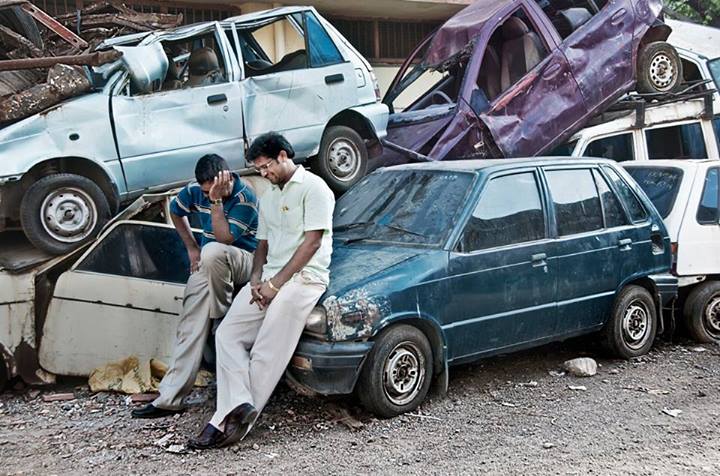
Ship Of Theseus2

Kyunki Gandhi Bhi Kabhi Soaps Likhta Tha

– by Sumit Purohit

It was a rainy morning of July 2011. The Enlighten Film Society’s Naya Cinema Festival was going to screen Aaranya Kaandam as the closing film. I had heard lot about it, so I went despite the rain and the morning. I had no idea then that I will get introduced to another very special film there. It was announced that post the film screening the excerpts from three upcoming films will be played. I decided to stay back. One of these three films was SHIP OF THESEUS. That was the first time I heard about it. Anand Gandhi was present there with his team. He spoke briefly about the film.  But the few minutes of visuals that were played on screen were enough to tell everyone in the theatre that they were witnessing something exceptional. It probably was a film that will change Indian Independent cinema forever.

Almost a year later, Ship of Theseus was screened at Mumbai International Film Festival and it went beyond all expectations. It was not only the best Independent film to come out of India; it was a film which could compete with the finest from around the world. It was a master class in filmmaking. It was technically superior to most Indian films and it explored the stories significant to our times.

To realise that Anand Gandhi is a genius you need not watch his films. You just need to listen him talk for five minutes. He can talk about most things under the sky with great expertise. It seems he is less of a filmmaker and more of a cross between a mad scientist and a philosopher. No wonder he calls his production house a lab and writes research papers too. May be he is the monk from his film, or may be he is the young man who keeps arguing with the monk. Actually, he could be both of them at the same time.

Ship Of Theseus in a way is reflection of what Anand has experienced and learnt over the years. Though what’s wonderful about the film is that it communicates all those ideas and beliefs simplistically yet beautifully when it could have easily become pretentious, preachy or gone all abstract. Ship of Theseus is not what we usually associate with Indie films that have been to film festivals. It’s entertaining, at times humorous and very accessible. It respects its audience, and is intelligent.

The three stories in the film are all set in present Bombay and yet they look like they could be worlds separated by time and space. It’s interesting to notice how Anand uses certain elements in his film. The 1st story is about a blind photographer. Some of the gadgets she uses are straight from science fiction as if the story was taking place in the near future. At the same time the background song with Prakrit lyrics in the 2nd story makes the soundscape feel ancient. It’s a story about a monk who is fighting a court case to ban animal testing in India. He seems to connect with the most unlikely person, a young lawyer who sports long curly hairs and shares Internet jokes with him. In the 3rd story a young stockbroker’s obsession forces him to travel to Stockholm, a place away from his comfort zone. This coming together of contrasting elements makes Ship Of Theseus such an intriguing cinema.

Recently I read that the three films Anand suggested that everyone should watch are – Du Levande (You, the Living), The Turin Horse and Underground. If you look closely, you might find that these films could have influenced Ship Of Theseus conceptually and technically (Gábor ifj. Erdélyi, the sound designer of SOT has also worked on The Turin Horse). SoT has lot of non-actors in the cast, similar to what Roy Andersson prefers. Then there is a scene in the film where a fat man gets stuck in a narrow alley. One can easily imagine it to be a scene from an Emir Kusturica film.

SoT is a great example of how a filmmaker uses his experiences – things he has seen, stories he has heard, films he has watched, books he has read, and gels them together into something new. And at times referring back to them amusingly in the film.  This is a good reason why Ship Of Theseus can be seen again – to search for such references, to find those connections and see how they have changed in this process. Isn’t it similar to the Ship of Theseus paradox?

You will not hear or read any negative criticism of Ship of Theseus, so let me try it (for the sake of an argument and for fun). Strictly speaking it’s not a feature film. I will consider it an anthology of three short films that are thematically connected. The three films are visually and stylistically distinctive.  It’s deliberate but then you can’t overlook the clear dissimilarity between the writing, the way actors approach their roles, the language used and the impact it creates.  But then, for a debut filmmaker this really is not a negative thing. It only shows how talented Anand and his team are and how capable they are at creating these different worlds. It would be really interesting to see what Anand does when he decides to make a feature length film that follows one storyline. What narrative techniques he will use? What cinematic style he will adapt? He is an exciting filmmaker to follow. The best way to start stalking him is by watching Ship Of Theseus.

(PS – If you still need more reason to watch the film and you are a TV soap fan, then you should know that at once upon a time Anand used to write Kyunki Saas Bhi Kabhi Bahu Thi and Kahaani Ghar Ghar ki. Now, that should excite some of you.)

– And if these four writers have not been able to convince you so far, click here to read what Dibakar Banerjee has to say about it. Not everyone has the guts to say such good things about someone else’s film.

Filmmaker Anurag Kashyap did AMA on Reddit yesterday. Someone asked him about the state of Indian film criticism. His reply in one word was “terrible”. Well, it doesn’t take much brains to figure this out. Open the papers on Friday and you can see it all over. Not to mention the reviews by trade analysts which industry endorses most vehemently, and who then manipulates box office updates accordingly, the ones with agendas other than films, and then there are the paid and the plugged ones. It’s routine now. Nobody is shocked or surprised. And that’s the worst thing to happen – to get used to it.

With social media getting prominence and becoming at least some kind of parameter to get audience reaction, the game of making a “perceptive hit or classic” starts days before the release. You are blinded by the blitzkrieg, a kind of emperor’s new clothes. And journos who are suppose to tell you otherwise, they are happy to get their pictures clicked with the stars. Well, why am i ranting? Because today is friday. Because a bigger rant follows this one. And because we have always been accused of being biased for/against some films and filmmakers. Not to mention being branded contrarian for the sake of it. From saying Talaash works best when you know the spoiler to defending Shyamalan’s latest to liking Raanjhanaa’s 2nd half more to Ghanchakkar being not that bad what critics are saying. Here’s the latest one in the series – on Lootera. And am saying this even though i liked lot of things in the film, especially the 2nd half. And you have to watch it because it’s made by the same filmmaker who gave us Udaan.

So watch the film and come back to the post. Though it’s a spoiler free and you can read before watching the film too. This one is by a new author called Nicolas Bourbaki. Familiar? You will get to know him soon.

Lootera

Warning – this is NOT a review of the film. This is a rant. A wannabe brilliant piece in support of brilliant cinema and stemming from the rangat of self conceit. And even though it doesn’t have spoilers, it is recommended to not read this piece of crap before watching the film.
It’s 1.30 am in my bedroom. I’m alone sitting by the almirah with the king sized mirror. I look at my reflection. I have pain anguish angst remorse guilt redemption realization hope despair despondency writ all over my face. The fan whirls 7 ft above my head. It’s a second hand cheap 800 rupees fan which makes a whirrring noise. No PSPO unlike the film I saw. Bedbugs trouble me. I look at my freckled face. Time stands still unhealed by pain and unfettered by the nocturnal twists and turns of a solitary night. Half a drop of tear rolls over my eyelid, brimming over, somewhat reluctant to fall down. Yet it knows, and it can feel my melancholia. It knows it must fall down. But will it or will it not ?

आँसुओं की किंकर्तव्यविमूढ़ता हो तो ऐसी हो

Please bear with me dear reader. This is not another synopsis of Ship of Theseus.

What a brilliant film!

Brilliant cinematography. Such gorgeous frames. Color schemes which would guarantee taciturn unconditional approval by Kie-slow-iski. Yellow when the mood is prosperous. White when characters are fighting inner demons. Dark interiors for people with dark circles. Transitions from Puja/Ramleela fervor to fever-ish asthma attacks that Baradwaj Rangan would love to write thesis & books on. Aesthetics which are carefully calibrated to the exact precision so well that Light appears to meticulously obey both Particle & Wave theory simultaneously at the director (and DOP’s) will.

When the characters come to kiss each other in a Terrance Malick-ian way, there is just about enough background flare to make the moment surreal, yet real without the hyper reality of the scene underscoring the cinematic liberties. Equality Fraternity. That’s the French revolution all the way till 2008’s Entre Les Murs (Class) – maybe the director’s favorite film that year. Sheer class!

Breaths. Pauses. Stays. Beats. Playback songs. Measured. Sure. Nimble footed. Sometimes hurried. Sometimes slow. Asphyxiating. Liberating. Gesticulating. Pontificating. Prepossessing. Repossessing.

“चार बाल सामने चाहिए. सिर्फ़ चार बाल! मुझे एकदम Natural look चाहिए. बिल्कुल made up नही”.” – Steven Kapoor said.

“मैं पिछली picture का print Tirupati (Balaji) ले जाना भूल गया था. इसी लिए नही चली थी” – the producer from Ludhiana reasoned with him.

I suddenly observe. Snowflakes are falling on me. यारी रोड में बर्फ बारी ? हौले हौले धीमे धीमे. I quickly wear my color co-ordinated sweater and stand up with my arms folded out like Andy Dufrene. Epiphany striked, symphony plays – Costume Design and Art Direction should have had top billing over writer/director’s credit.

I scribble my review on a piece of paper with a Chinese fountain pen dipped in a दवात. Then tear it apart. Then do a for-next loop until fade out.

What a performance by the father (Barun Chanda). Ranveer Singh restrains in restraining himself while Sonakshi Sinha has all the reasons to have my sympathy. But for some strange reason my sympathies lie with my bums, which have been lying motionless for over the 2 hours, uninvolved, dis interested, dazed, waiting for a jump in my seat moment, a lump in the throat, a mournful sigh. They perhaps demand too much as they get only assiduously created multi-textured verisimilitude along with a velvet touch of a fabric. Kora kagaz tha yeh bum mera…..

I wanted to cry, to laugh, to be angry, nervously bite my nails, fight with the irritating uncle with the kid asking them to shut up instead of searching for adjectives to define the craft. Even some of the later films directed by Santosh Sivan were … (space left intentionally for background music).

Even a gunshot wound has been brilliantly (decorated) created with 50 shades of grey. Nerolac Nerolac Nerolac! Waah miyaan Henry! Life is a tale told by an idiot. All sound and fury. Signifying nothing. Like this rant perhaps.

As the song goes – (har ek frame ko) Sanwaar loon, Sanwaar loon.

(PS – And now the media blitzkrieg begins. All I can muster up is this –

लबों के सिलवटों से उप्पर सिकुड़ी हुई छोटी सी एक नाक है

रूह ही ना डाली पिक्चर पोस्टकार्ड में तो फिर खुजली मज़ाक है)

(PPS – what’s well shot, needs editing, slow pace and blah blah blah? Here you go.

Raanjhanaa(Has SPOILERS)

Like most Bollywood films these days, Raanjhanaa is completely two different films packed in one – pre and post-interval. One is the “politics of love” and the other is “lovers in politics”, and there’s a big difference between the two. As the initial reactions and reviews started pouring in, the verdict seems to be unanimous – first half is fun, the curse of 2nd half strikes yet again. As i stepped into the theatre, i was ready for it. But as i came out of the theatre, i realised that i belong to that minority group which liked the second half more.

First half is easy, you know the tricks, you have seen it many times, love stories in small towns and galli mohalls is not new. It’s charming and easy to like. There’s no way one cannot not like it. Some might argue that it’s stalking and glorification of it, then let me say that you have never been part of any small town love story. It’s stark reality. That’s the way it happens. If you don’t know a friend who has cut his wrist or drank kerosene (sleeping tablets is for metroes), the film might seem a bit stranger to you. But what stood out for me was how ruthlessly selfish the lovers are. Sonam (Zoya) knows Dhanush (Kundan) loves her. And so she uses him in every possible way. It’s the same with Kundan, who knows that Swara (Bindiya) can do anything for him. And he uses her blatantly. It all seems fun and jovial on the surface but scratch it and you realise how cunning their acts are. It’s the politics of love. Their love might be pure but the tricks aren’t.

Some even might point out the physical equation between Kundan, Bindiya and Murari. How can you hit her? i would say this is what “camaraderie” between friends is all about, without being aware of one’s gender. And in the scene when Bindiya says kewal mere baap ke hi kapde phadega, and Kundan backs out, you know that she isn’t the shy kind. If she had protested, these guys would have backed out long back. It’s part of the game, of growing up together.

Now, the second half seems like a completely different film.  A death, and the childhood romance of Benaras moves to ambitious student politics of Delhi. Kundan doesn’t know why he is there. He is lost. He is not sure what to do with his life. He has tried every possible option. Is he still chasing Zoya? Yes. Kind of. Does he know why? No. Has he any more hopes from her? No. The simple chasing the girl routine turns into a heavy cocktail of ambitions and emotions. Let’s see how. So Zoya aspires to fulfill the ambitions of her dead lover (Abhay/Akram). But slowly it looks like all these dreams will come true only through Kundan whom she hates now, whom she holds responsible for Akram’s death. It’s a difficult choice to make. Can she accept Kundan now? And even if she does, the world will curse her for being selfish and opportunist who forgot her lover after his death. Between love, life and dreams, she is confused with no easy way out. And then comes an opportunity to turn it all over and conquer it all. She opts for it too but the guilt is too heavy to bear.

Kundan is caught in a similar situation. He is aimless, he is just tagging along and is getting lucky wherever he puts his foot, except in love. And when it all comes to the conclusion, he realises that even if he wins everything, he has lost the only thing he ever wanted from life – love. So what’s the point of living? Someone who can slash his wrist so easily, he has no fear of death. The monologue in the climax wraps it up beautifully. Lovers always claim to be ready to die in love. But only few dare to do it. And very few directors and writers dare to opt for such uncompromised end for a love story. Nothing else was possible. All credit to writer Himanshu Sharma and director Anand L Rai for going the whole hog. And this is exactly why i liked the second half more. It’s complicated,  and the makers went for the unusual choices. I think first half is easy to write, and easy to like. Second half is damn difficult to write from the point when Dhanush lands up in Delhi not knowing what to do. I could hear the writer’s voice there – what to do with this mujhe-bus-Zoya-chahiye character? He (character and writer) really doesn’t know what to do now.

Raanjhanaa2

Now, the running joke. In a scriptlab where Sriram Raghavan was our mentor, we used to joke that whenever you are stuck at any page, just put a gun in that page. Sriram will like it for sure. Here the formula is slightly different – stuck on the page, opt for the blade. Not once or twice, but three times. Woah!

Interestingly, the entire film is one long montage cut on back to back songs. You can exactly count the numbers of the scenes where the characters talk. But the flavour of the real locations and the terrific acting by Dhanush, Swara Bhaskar and Mohammed Zeeshan Ayyub makes it look perfectly smooth. Also, it might be a smart decision keeping Dhanush’s dialogue delivery in mind. They have justified his character, and his hindi diction is weird but it’s not jarring to ears. So a big credit must go to its music director A R Rahman. His music is the thread that holds this complicated tale of unrequited love together. Sonam seems to have improved a lot from her previous films but her dialogue delivery is still irritating. And Kumud Mishra is always quite pleasant to watch onscreen.

I never bothered to watch Rai’s earlier films. But going by Tanu Weds Manu (i like it and TERRIFIC album) and Raanjhanaa, i think Imtiaz Ali has some competition finally. Especially if it’s matters of hearts in small towns. And Dhanush, welcome to bollywood.

Watch it. And if uncomfortable, take off your “metro” shoes.

@CilemaSnob

Ritesh Batra’s The Lunchbox (Dabba) and Amit Kumar’s Monsoon Shootout had their premiere screenings at the ongoing Cannes Film Festival. Lunchbox is selected in International Critics Week section and Monsoon Shootout had a midnight screening. Some early reviews of both the films have been pouring in. For curious folks like us, here are the excerpts and links to the reviews.

Variety review is here

A feel-good movie that touches the heart while steering clear of expectation, “The Lunchbox” signals a notable debut from tyro helmer-scripter Ritesh Batra. The ingredients on their own are nearly fail-proof, yet it’s the way Batra combines food with an epistolary romance between a nearly retired number cruncher and a neglected wife that hits all the right tastebuds. An indie Indian pic with the crossover appeal of “Monsoon Wedding,” it’s sure to be gobbled up by audience-friendly fests before heading into niche cinemas.

Screen Daily review is here

A wistful, elegant love story played out across the streets of Mumbai, The Lunchbox is an unexpectedly aromatic charmer from first-time film-maker Ritesh Batra. Eschewing the pitfalls of what appears, on face value, to be a highly schematic set-up, Batra infuses his film with warmth and humanity, while cameraman Michael Simmonds steps up to deliver delicate visuals of modern Mumbai.

Film Business Asia’s review is here

There’s hardly a shot, line or gesture out of place in The Lunchbox, a hugely impressive feature debut by Mumbai-born, partly New York-based Ritesh Batra that starts out like a foodie film but spins a simple idea into a whole mini-universe of feelings.

– To watch the presentation ceremony video, click here

– To watch Ritesh Batra’s interview, click here

– Two clips from the film

Cast and crew list

Directed, written by Ritesh Batra.
Camera (color, widescreen) – Michael Simmonds
Editor – John Lyons
Music – Max Richter
Production designer – Shruti Gupte
Costume designer – Niharika Bhasin Khan
Sound (Dolby Digital) – Michael Kaczmarek, Ramesh Birajdar, Joerg Theil, Tom Korr
Line producers – Meraj Shaikh, Smriti Jain
Assistant director – Prerna Saigal
Casting – Seher Latif.
Cast – Irrfan Khan, Nimrat Kaur, Nawazuddin Siddiqui, Denzil Smith, Bharati Achrekar, Nakul Vaid, Yashvi Puneet Nagar, Lillette Dubey

And here are the reviews of Amit Kumar’s Monsoon Shootout.

Peter Bradshaw’s review is here

It’s a moody, broody downbeat drama for most of the time, a rainy noir. But along with the plot trickery, there are some unexpected turns…..It’s an entertaining popcorn-movie with a twist, for which commercial success is on the cards. There should be space for pictures like it in Cannes.

The Hollywood Reporter review is here.

A cunningly intricate first film from India, Monsoon Shootout combines the best of two worlds – a ferocious Mumbai cops and gangsters drama, and a satisfyingly arty plot that turns in on itself to examine the outcome of three possible choices a rookie cop might make when he confronts a ruthless killer. Three times the story returns to a key moment: a boy with a gun uncertain whether to pull the trigger. Though the idea of Dirty Harry meeting Sliding Doors may sound abstract, writer-director Amit Kumar pulls it off gracefully, without losing the sense of heightened drama that earned the film a Midnight Movie slot in Cannes. The Fortissimo release should make good headway in territories open to India and exotic genre fare and put Kumar on festival radar.

Screen Daily review is here.

Serving up a portion of Rashomon with a side of Sliding Doors, this tasty Mumbai crime story offers multiple outcomes of one fateful decision in a rookie cop’s professional life. Though it sounds like a potentially experimental premise, Monsoon Shootout is a glossy ethical drama designed to appeal equally to more upscale Indian audiences and worldwide genre fans.

Film School rejects review is here

The Upside: Nicely photographed; boasts decent enough lead performances, specifically the presence of Thapa as Adi’s beau; sound editing is also strikingly effective

The Downside: Aspirations towards existentialism don’t pay off well because it lazily recycles some grand ideas, but without the same level of ingenuity and entertainment value; atrocious editing stifles the action beats, which are themselves too sparse and brief to satisfy.

Here’s the Variety review:

“Monsoon Shootout” is a racy mash-up of Tarantino-esque ultra-violence and-gritty but-hip contempo Indian actioners. Amit Kumar invests a schematic police-thriller structure with a compelling moral dilemma hinging on a standoff between a cop and his suspect.

And here’s the Rope of Silicon podcast on the film.

A look at the film:

Cast and crew list

Production companies: Yaffle Films, Sikhya Entertainment in association with Pardesi Films AKFPL, Dar Motion Pictures

Cast: Vijay Varma, Nawazuddin Siddiqui, Neeraj Kabi, Geetanjali Thapa

Director: Amit Kumar

Screenwriter: Amit Kumar,

Producers: Trevor Ingman, Guneet Monga, Martijn De Grunt

Co-producers: Anurag Kashyap, Arun Rangachari

Director of photography: Rajeev Ravi

Production designer: Mayur Sharma

Editor: Atanu Mukherjee, Ewa Lind

Music: Gingger Shankarv Sales Agent: Fortissimo Films

88 minutes

(Pics taken from various online sources/social media)

Update: TWITTER BUZZ…

Since reviews for Indian films are scarce, we decided to add some tweets into the mix.

On The Lunchbox:

THE LUNCHBOX (R Batra): Like a bonsai tree, modest but magnificent. Standout performances. Bit cloying, but only if you want to find faults. — @bgji May 20, 2013

A very well-deserved, sustained, standing ovation for The Lunchbox at Cannes. Congratulations, Ritesh!! — @Shripriya May 19, 2013

On Monsoon Shootout:

MONSOON SHOOTOUT is the ‘Choose Your Own Adventure’ of crime actioners. I’m not completely convinced, but I do respect the ambition. #Cannes — @RylandAldrich May 19, 2013

MONSOON SHOOTOUT (D-) 3 versions of the same story, except it’s not as the filmmakers abandon the logic of the conceit. Morally dubious too — @CSkinner May 19, 2013

MONSOON SHOOTOUT does somehow seem to have become the defining film of the Festival. #cannes2013 — @JonathanRomney May 18, 2013

MONSOON SHOOTOUT (A Kumar): Thoroughly ordinary. Heavy handed 3 pronged narrative structure/metaphor. More imagination re: Bombay, please. — @bgji May 19, 2013

Monsoon Shootout is the Sliding Doors of cop thrillers. Fleetingly entertaining but the alt-outcomes narrative wears thin… #Cannes2013 — @totalfilm May 19, 2013

Monsoon Shootout – 2/5. Slumdog Millionaire meets Run Lola Run (Run Slumdog Run?) in fecklessly bloodless gimmick thriller #Cannes2013 — @ShaunMunroFilm May 19, 2013

MONSOON SHOOTOUT is the Indian RUN LOLA RUN if RUN LOLA RUN were a predictable cop drama. #Cannes2013 #cannes — @FredTopel May 19, 2013

On Ugly:

UGLY (A Kashyap): A Blaft-like pulp thriller with @ankash1009 bravely pushing his style to the limits. Depressingly hilarious & brilliant. — @bgji May 18, 2013

And finally…

UGLY and MONSOON SHOOTOUT taught me not to be a person who works for, needs help from, or who is wanted by police in India. #cannes2013— @marshalclark) May 19, 2013

Jai Ho. 🙂

At the ongoing Cannes Film Festival, India has a much better presence this year compared to last few years. So we are back with our regular post to track all the Cannes buzz that the desi films are creating there.

Anurag Kashyap’s film Ugly had its screening in the Directors’ Fortnight section. Some of the early reviews are out.

– The Holly Reporter review is here

Kashyap’s nasty point is that, between violence, greed and corruption, just about no one is innocent in the end. Certainly all the characters are selfish beyond belief. This existential cynicism hits home in the horrific crime revealed in the last shot, But by that time, the emotions feel light years away.

– Translated text of French review on Telerama is here.

Heavy, unbearable. Surprising to the end, vitriolic portrait of contemporary India…

– Twitchfilm review is here

Really, the more divisive issue of the film will be the content itself, and audiences willingness to spend so much time watching greedy, ruthless and often idiotic people going from bad to bottom of the barrel. The ending may be a potential deal-breaker for some too, and while I can’t argue in detail without spoiling it, my sleep-deprived Cannes impression is that the haunting final shot effectively hammers home the moral center of the movie rather than functioning as the cheap, shock-value alternative. In fact, reflecting on the way Kashyap handled the rest of the film, specifically spurts of intentional violence, I do feel that there was a sympathetic voice in the film — it was just behind the camera instead of in front of it.

– The Hindu’s report on the film is here.

“The first 10 minutes of the film have to do with my own life when I depict the relations between the divorced father and his little girl. But the rest of the film came about after I read about the disappearance of children in India.

– Screendaily review is here.

After the five-and-a-bit-hour gangland epic Gangs Of Wasseypur, the godfather of the Indian commercial arthouse sector, Anurag Kashyap, serves up a slimline two-hour hard-boiled crime thriller with Ugly. But the running time is the only thing that’s restrained about this lazy kidnap caper, whose hints of Fargo, echoes of Old Boy and touches of Tarantino are compromised by the story’s sprawling lack of discipline.

Mubi’s short review is here.

The dissonance between the tone of the highly mobile plotting with its harsh and justified moral judgement of everyone in the film and the unconscious, conventionally acted characters break the film’s sinister, society-flailing vision. Thus Ugly‘s interest is more academic than actual—perhaps a failed experiment—and while its disappointing inconsistency instills dullness, it also provokes a strange and blistering series of events, each unfolding in shocking succession.

Directors Fortnight videos

Interview of AK

Q & A after the screening

The Hollywood Reporter on Kashyap getting the French honour Chevalier dans l’ordre des Arts et Lettres honour (Knight of the Order of Arts and Letters)

– Cast and Credit list from THR

DAR Motion Pictures presents a Phantom Films production

Cast: Ronit Roy, Rahul Bhat, Tejaswini Kolhapure, Anshika Shrivastava, Vineet Kumar Singh, Girish Kulkarni, Surveen Chawla, Siddhant Kapoor

Director: Anurag Kashyap

Screenwriter: Anurag Kashyap

Producers: Madhu Mantena, Vikas Bahl, Vikramaditya Motwane, Arun Rangachari, Vivek Rangachari

Co-producers: Vivek Agrawal, Shahnaab Alam

Director of photography: Nikos Andritsakis

Production designer: Mayur Sharma

Costumes: Divya Gambhir, Nidhi Gambhir

Editor: Aarti Bajaj

Music: Brian McOmber, G V Prakash Kumar

Sales Agent: DAR Motion Pictures, Mumbai

124 minutes.

(Pics – from social media/DF Facebook page)

pizza

S-P-O-I-L-E-R—-A-L-E-R-T

i finally saw the film that i have been reading and hearing about for a long time. A Tamil film called Pizza which became a surprise hit and its remake right has been sold in many other languages including Hindi. That made me more curious. I knew that it’s a horror film. If you are told otherwise, it will be a spoiler. And that’s sad in a way because then you wonder if the film is so weak that if you tell the real genre to which it belongs, it wont work? Imagine if you always knew that it’s a thriller, and not a horror film. Would the film still work? Am not so sure now. Take Talaash, i think it works best when you know the spoiler. (Post here) And as a friend said it here – A movie is never about its twist, and if it is, it’s not worth it. Pizza is badly handicapped on that front.

Directed by Karthik Subbaraj, the film starts on quite a thrilling note. Almost like one of those found footage films. A bunch of guys trying to trace ghosts in an old building and everything is recorded on a handy cam. As it gets more exciting, as the so called ghosts are about to appear, you realise that this is not the real film. It’s a film inside the film which is playing on tv and the lead characters are watching it. You can brand this as cheating, or, you might overlook it because of the thrill that it provides. I guess the director set the tone of his film with this sequence. The way you react to it, my guess is you are going to react to the film in a similar way once it ends.

I was thoroughly enjoying the film till the interval. And i kept wondering how are they going to close it because it looked like a difficult task. Well, it turned out to be KLPD. Because the director cheats us not once, but twice actually. First time when we are hearing the ghost story. It’s in one flashback. Almost the first half. And second time when the lead character is trying to act scared, pretending to be spooked – breathing problem, blood on his back, someone in the loo. Even if you are willing to take the first instance as film making tool, what about the second one? The second one makes you completely believe in the first story and kills all your doubts.

So you enjoy the thrill so much that you don’t call it cheating, or maybe you even call it so but overlook the fact once you know the reality. Why? Because it was worth it. Or you brand it as pure KLPD, cheating and childish. There’s nothing right or wrong, it’s just the way you react. And so the question in the post because i felt it was cheating. You might be completely fine with it. Do let us know in the comments section.

I am guessing you are still with me and are reading this post because you have seen the film already. Otherwise it won’t make sense as am not explaining everything in detail. And remember Kahaani? Lot of us criticised Sujoy Ghosh for that one scene where Vidya is talks about her husband and we get to see her “fake” story in flashback. Unlike others Sujoy was honest enough to participate in a discussion with us after its release and gave us his version. You can check the entire discussion here.

I still believe that the character might be talking about his/her story but it’s the filmmakers choice how he is showing it to us. We are not peeping into the character’s head like Being John Malkovich. Now, if we criticised Sujoy for that one scene, imagine an entire film based on such a scenario. Pizza is exactly that.

Once you are inside the theatre, one completely trusts the filmmaker. Saying and showing things with the help of a character and making us believe in it is the simplest thing inside that dark room. And then you turn around and say that it was all false, well, those were my favourite games in kindergarten. Not anymore.

Interestingly, when i asked people on twitter to rate the film on a scale of 1 to 5, most people rated it between 2.5 to 5. So clearly am in minority. Or, maybe am growing old. I prefer human stories more than thrill pills now.

Or i can try a better one. Since i was talking about his closing lines in the last post, and most probably someone will soon say “The Usual Suspects” while discussing this post, so here’s a quote from his review of the same film – I prefer to be amazed by motivation, not manipulation.

@CilemaSnob

TheMaster.php

Great cinema always inspires great writing. And going by that rule, the latest one to join the club is P T Anderson’s The Master. And like us, if you also love reading everything possible related to a film once you have seen it and love it, then you have come to the right place. Some of us have seen the film and googled everything on it so that you don’t have to. Also, there are high chances that once you have seen the film, you will have too many questions. This post has links to some of the explanations offered.

But DON’T READ ANYTHING if you have not seen the film.

The Master is finally getting a theatrical release in India this friday. It might not work for everyone but you can’t deny Anderson’s stamp of great film-making all over. So don’t miss it. And for two more reasons – it deserves to be seen on big screen. There’s no other way. If it works out well, we might get to see much better releases in the coming months.

At the end of the scene, Lancaster sings “(I’d Like to Get You On) A Slow Boat to China” to Freddie. And yes, it’s eerie and perhaps more than a little homoerotic, but it also feels like a twisted version of a lullaby — the most domestic and familial of actions turned into something terrifying and strange — making it clear once and for all that Freddie’s dream of becoming a family with Lancaster and Peggy Dodd is an impossibility. And freeing him, ironically, to try and form a new family — perhaps with Winn, the girl he’s met in the final scenes of the film, right before we see him lying next to the female sand sculpture, suggesting that his search goes on.

– Vulture has done a brilliant piece titled “What Is The Master Really About?: Five Interpretations”. Click here to read.

It’s hard to make a lot. That was one thing when I was working on The Master, they kept being like, “well, he’s got a tea kettle, and he’s making gallons of spirit out of it.” I’m like, “Mmm, you might get a shot of spirit out of a tea kettle.” Like that flask setup in the shed in the cabbage field? No way that would have produced a five-gallon glass carboy full of moonshine, unless you were working every day for several weeks. But, you know, movie magic.

– Vulture has also done a piece answering that million dollar question which everyone will surely ask after watching the film – Can You Really Make Booze Out of Paint Thinner? Click here to know the answer.

The haunting, utterly inward stillness of the actors in “The Master” is one of the director Paul Thomas Anderson’s most apparent achievements, and it’s no mere ornament or element of dramatic plausibility—it’s at the core of the film, as is the very question of performance as such.

– New Yorker’s Rochard brody has written a long essay titled “The Astonishing Power Of The Master”. Click here to read.

– And if you want to read about the making of the film, click here for a long interview.
In “The Master,” we’re often left gasping for air, as in the scene when Freddie is required not to  blink for a painfully long stretch of his processing. Or because of the sheer beauty of some of the compositions. Warts, wanderings, reiterations and all, this is a film destined to be processed in many different ways. And hallelujah to that.
– Michael Philips’ 4 star review is here.
There are hints of an erotic relationship between Freddie and Dodd’s daughter (Ambyr Childers) and a not-too-veiled suggestion that Dodd’s paternal yearnings for Freddie are complicated by other desires. But at the risk of issuing a spoiler of sorts, beyond a bewildering point-of-view sequence when Freddie imagines that all the women at a Philadelphia cocktail party are naked, this is a film suffused with sexual desire that has no sex in it. If you look at “The Master” through the lens of Paul Thomas Anderson’s body of work, this is a prelude to the world of “Boogie Nights,” a disordered America where nobody was getting any that led straight to the disordered America where everybody was getting too much.
– Another great piece by Salon’s Andrew O’Hehir. It’s titled “The Master: A forbidding portrait of L. Ron Hubbard’s America” . Click here to read.
All of this striving — absurd, tragic, grotesque and beautiful — can feel like too much. “The Master” is wild and enormous, its scale almost commensurate with Lancaster Dodd’s hubris and its soul nearly as restless as Freddie Quell’s. It is a movie about the lure and folly of greatness that comes as close as anything I’ve seen recently to being a great movie. There will be skeptics, but the cult is already forming. Count me in.
– A O Scott’s article is wickedly titled “There Will Be Megalomania”. Click here to read.
– Time Out Chicago also offers “An Explanation” of the film. Click here to read.

So where does this leave “The Master” on the Anderson landscape, that oddly populated terrain? Few modern films have been as crowded as “Boogie Nights” and “Magnolia,” and few have been more lonely than “There Will Be Blood.” The new work sways toward the latter. I kept expecting, and even hoping, that Dodd would acquire a tinge of Elmer Gantry—that he might start to muster large throngs to the Cause, with Freddie employed as the muscle to keep the mob in line. But the scale of the story, for all Dodd’s swagger, remains compact, and the plot slowly condenses into a blend of character studies. Look at Amy Adams in closeup, for instance, all the scarier for being so perky and correct, her features filling the screen as she quizzes the reprobate. Or look at Phoenix, lifting his head high and proud, as Brando used to do, with an added, cranky stiffness that comes from having, or being, a serious pain in the neck. The eyes narrow and the mouth is awry, one corner twisting into an Elvis curl, though it looks too sour for seduction, let alone song.

– Anthony Lane’s review in the New Yorker is here. And it’s a must read.

Why do you make things so difficult? Else it wouldn’t be fun.

–  1 hour long Q & A with Anderson
– The Career of Paul Thomas Anderson in Five Shots
If you read any other brilliant essay on the film, do post it in the comments section.

With the positive reviews pouring in from all quarters, i was waiting for some contrarian views. Because what’s the fun if we all are on same page. Though there have been few such views too, and criticism mostly have been looking at the big picture and the issues involved. But Runcil Rebello believes that the film is about “the smaller picture”. And he also writes about how the film is different from the book.

kai-po-che

In Abhishek Kapoor’s Kai Po Che!, it’s all about opposition – ideas clashing with each other, and sometimes both winning, sometimes just one. There is the age-old money versus passion squabble, further highlighted in the academics versus sports issue omnipresent throughout Indian homes. Then there is the overarching notion on which the film is built: friendship versus ideology, and friendship does not always win. There is also Mathematics versus Biology.

Kai Po Che!, adapted from Chetan Bhagat’s The Three Mistakes Of My Life, is a story set in Gujarat around the turn of the millennium. The nineties were done and dusted with. Internet, Nokia mobiles, malls were making their introduction into daily Indian life. The Indian cricket team would become a leading Test-cricket playing nation in the following decade. Religious politics had not yet reached a fuming and flaming high.

But Kai Po Che! doesn’t have its eyes set on such large-scale issues. Rather, it is content telling the story of three friends: Ishaan (Sushant Singh Rajput) – flamboyant, impulsive, passionate, Govind (Raj Kumar Yadav) – logical, ambitious, money-minded, and Omi (Amit Sadh) – simple, lovable, easily swayed, who set up a sports equipments store-cum-cricket training academy-cum-Maths tuition classes. This film is as much an ode to friendship as it is about the decay of that lovely bond.

The idea of opposition isn’t hammered into our heads. It’s brought up now and then, never over the top. Just like the film. The story (written by Abhishek Kapoor, Chetan Bhagat, Pubali Chaudhuri and Supratik Sen) does not veer much from the book, and if you’ve read the book, you’d realise then that it is a story tailor-made for Bollywood. And yet, the writers and the director stitch the film into an altogether different piece of fabric. The film is removed from typical Bollywood treatment. No star actors, no item numbers, no over-the-top treatment, just three songs (Hell! The soundtrack by Amit Trivedi [with lyrics by Swanand Kirkire] includes a garba-beat song in Shubhaarambh, but the film’s garba scene isn’t picturised on it. Unexpected.) Instead, Kai Po Che! is about the small moments in the fabric. Don’t lose sight of the smaller picture.

Characters, especially Omi’s, oscillate, not able to settle on one thing. He, at times, goes where the wind blows, and sometimes marches to the beat of the other drummers of the show. He may not always like what he does, but he is loyal to any cause he signs up for. Govind and Ishaan, on the other hand, are the proverbial immovable object and unstoppable force. They’d go to any distance to get what they want, albeit what they want is in diametrically opposite directions. Govind has to let loose, has to understand that not all things in life are solved by Mathematics, but some by Biology too. Ishaan’s sister Vidya (Amrita Puri) would be his teacher in this regard. Ishaan has to grow up, has to not let anger affect his decisions, but his mind. Ishaan, and to a lesser degree, Govind too, do not care about how religion plays into their plans. They are fine with sitting on the fence when it comes to this particular power struggle, letting Omi handle the dirty work.

What these three have in common, though, is something India is obsessed with: cricket. Cricket (and films) are said to heal wounds. In this film, it is the historic 2001 Calcutta test match between India and Australia that plays the role of mediator and doctor. It is also cricket that brings together children of two opposing homes, Omi and wiz kid Ali (Digvijay Deshmukh), under one roof.

Abhishek Kapoor has a knack for staging event situations. In Rock On!! earlier, he staged rock concerts in a way no Indian film had before. In Kai Po Che!, he goes large scale, but doesn’t make them the focus of his movie. The eye firmly remains on the three friends. Earthquakes, cricket matches and the Godhra Riots form the trifecta of incidents around which they break and mend. Tough decisions are made, mostly on impulse and emotion. When calamities strike, there is no time to think. Govind, Omi and Ishaan choose their respective sides all on basic instinct.

The film, though, has been meticulously planned. If Anay Goswami’s cinematography portrays Gujarat in a favourable light, Hitesh Sonik’s background score livens up the lives of the three friends. Deepa Bhatia transitions from one date to another finely, giving her best cut in the crucial scene during the riots.

Sushant Singh Rajput and Raj Kumar Yadav play their roles well. They really look the part, and so does Manav Kaul, being crafty and smart as Bittoo mama, Omi’s political leader uncle. Amrita Puri is cute and plucky adequately. In fact, the casting (by Mukesh Chhabra) is impeccable. The one actor, though, to make the most impact is Amit Sadh. From portraying a simpleton to a political henchman, Amit Sadh’s eyes, and hair, speak.

All these people, eventually, are just holding the manja. It is Abhishek Kapoor flying this kite, cutting every other kite in his path. He’ll be the one screaming kai po che! at the end of it. And what a delight it has been to watch this kite soar great heights.


P.S.: If you’ve read the book, you’ll understand the flashback and the conclusion has changed; all for the best. Below are a few details of what is different in the film.

(SPOILERS AHEAD!)

Chetan Bhagat, in his book, The Three Mistakes Of My Life, had Govind as the lead character. The biggest change is towards the end. In the riot scene, Omi is the one who protects Ali, Ishaan and Govind from his uncle. Omi dies in the process, and Ishaan doesn’t talk to Govind for years because of the revelation that his sister and he were in a relationship. Govind eventually, before committing suicide many years later, writes a letter to Bhagat, who he is inspired by, thanks to his two books Five Point Someone and One Night At The Call-Centre, who then intervenes and brings all of them together again. An utterly melodramatic end to the story, which thankfully was changed.

Another important section that was missing from the film was the part where the three friends finance a trip for Ali and themselves to Australia to receive cricket coaching. The Australians, seeing the marvel that Ali is, offer to train him but only if he eventually plays for Australia. Ali here in an outright dramatic fashion proves his patriotism for the country by shouting that he’ll play only for India and then they return to India.

Also, Vidya and Govind sleep together on Vidya’s eighteenth birthday at her home itself in the book. This too was changed in the film.

Also, missing in the book is the Diu section. The three friends are basically saints in the book, not leaving their pol to do things normal twenty-something guys would do i.e. to drink.

Abhishek Kapoor also changed the narrative by making all three characters equally important, thereby removing the crux of the story from the ‘three mistakes’.

The rest of the movie is pretty faithful in its adaptation.

MKBKM

Vishal Bhardwaj is a disturbed man.

At least that’s what it seems. And that’s a good starting point. Filmmakers and artists should feel disturbed by their environment. Great art always comes out of that disturbance. So while rest of the bollywood seems to be living in Tumbuktoo with no connect to the issues that matters, and want you to remain equally stupid, blind and deaf with their corn-cola-crap combo, Matru Ki Bijlee Ka Mandola is Vishal Bhardwaj’s first reaction to the changing world around us.

At a recent presser, Bhardwaj said that wo jo ugly malls…meri saansein aani band ho jaati hai wahan…uske andar…wahan ke shor se. As i watched the film where Pankaj and Shabana talk about his dreams on a hill top with dark clouds hovering over them, and a surreal sequence involving giant cranes, industries and malls comes up, it was eerie (wish they had avoided those tacky interior shots of the malls though). That’s the core of this whimsical film by Vishal Bhardwaj – development at what cost?

Land.

That doesn’t feature in our dictionary. The ones who are born and bought up in city never knew that it existed. We, the kids of small towns who moved to smaller houses in bigger towns, used to hear about it from our previous generation. Now, we are either comfortably numb, or understand the size of 1BHK – space is our only connect with “land”. And in this scenario, it’s quite easy to understand how difficult and daring it is to make a film like Matru Ki Bijli Ka Mandola. Land, farmers, farming, rainfall, pesticides, gobar, anaaz, anaaz ka bhav – they don’t exist in our films anymore. Not that it deserves all the credit just for the dare act.  But, then, the industry and this country doesn’t understand “satire” either. We are still stuck at Jaane Bhi Do Yaaron. Even on the day when the film is out, the makers are selling it as “massy comedy drama”, like they did with the trailer and tried to hide the film. Massy comedy drama? Paincho paincho!

And that’s the tragedy of Vishal Bhardwaj and his films – audience. Maybe the blame lies with him too. Intention is always honest, filmmaking is always top notch, but he wants big budgets. Big budgets means only one thing – big stars. Doesn’t matter if they can act or not. With big stars and big budgets, you need the big box office numbers too. So? Package it as “vitamin ki goli“, or massy comedy drama, as they would like you to believe.

Last time when he made a film without any compromise, he delivered two of the best films of his career which are classics in more than one way – The Blue Umbrella and Maqbool. Since then it’s always been a slippery ground. This balancing act is a tough business. Emir Kusturi-ca’s absurdity is full throttle. Bhardwaj’s absurdity is bollywoodised where every solution lies in hero-heroine ki shaadi. Some of the best cinema across the world never looks for solutions, and trying for a quick fix is unpardonable. Problems/issues – that’s the muse of a true artist. And this is what i found completely indigestible in Matru – how suddenly everything comes together in the end. Maybe they meant it’s “massy comedy drama” by its climax. Aha, the trappings of commerce when the film has an anti-commerce stand. Irony! And watching this film funded by a corporate giant in a multiplex inside a mall. Irony ka baap!

But other than its hurried and hotchpotch climax, the film has so much more to offer and is deliciously wicked. Sit back, relax, and chew it bit by bit like Gulaabo does. This one needs jugaali. (i hope you know what it is) Make sure you watch the film in a theatre which has good audio system. Miss one line and you will miss the joke. But wait, if your idea of being funny is 50 plus actors making faces on the tune of pon pon, this movie is not for you. Call it quirky, whimsical or absurd, i wonder if Mao and moo moo will ever get together in one film. Or you can just buy some species because you like their music. Or a Gulaboo bhains in such a pivotal role. It’s Cattle-ship Communism!

The story is simple – man has a daughter. man has a servant. daughter has a lover with a corrupt mother. It’s a hindi film and so you know the end. In the illustrious filmography of Bhardwaj, this is his first political film. i remember an interview of his where he said script aapko nanga kar deti hai…aap kya sochte ho, wahan sab dikhta hai. And if that’s so, am happy to tell that one of my favourite filmmaker looks smart even when his soch is stark naked. He makes other filmmakers of his generation who are still busy doodling with matters of heart, look like nursery kids. Paincho, ab toh duniya dekho! 

And hand over all, i mean ALL the trophies to Pankaj Kapur. A slur here, a sigh there, a blank stare in this direction – this actor is pure delight on screen. He owns it and how! Forget his Jekyll and Hyde avatar, he is 100 times the Jekyll hidden in one Mr Hyde! The film belongs to him and it’s no wonder that Bhardwaj calls him his most favourite actor on this planet. It’s been ages since an actor made everyone look like lilliput. Even if nothing interests you, just watch the film for him. Actors of his age are put in a bracket called “character actors” in this country and you never know when someone like him can get another terrific role like this one and will do full justice to it. Shabana Azmi is the Politician-who-licks-Lollypop and is a perfect match for Kapur as his footsie partner. And like any other Bhardwaj film, this one also has the entire supporting cast setting up a great ambience and a distinct world where the story unfolds. Any film which has great performances by actors in small roles, or even just for one dialogue – that’s my kind.

Book your tickets now!

– by @CilemaSnob

(PS – Dear VB, why this big dhokha this time?)

Sam: [In the women’s dressing room] What kind of bird are you?
Sparrow: [Starting to point to the other actresses] I’m a sparrow, she’s a dove…
Sam: [Cutting her off] No. I said…
[Points to Suzy]
Sam: What kind of bird are YOU?
Suzy: I’m a raven.
what-kind-of-bird-are-you

I have stood in front of the mirror, pointed my index finger at my image, just like Sam points at Suzy in that delicious Wes Anderson film, and have asked the same question quite a number of time, using all kind of possible emotions. And whenever i think about the scene, it still makes me smile. Bit of Googling tells me that am not the only one who loves this dialogue so much. Though it’s quite difficult to dissect why such a simple line from the film has turned out to be one of my favourite quotes of the year and has stayed back with me for such a long time.

So i thought about doing a collaborative post on similar lines. Quickly mailed some of the friends/films buffs for a simple exercise –

1. Close your eyes

2. Think of all the films you have seen in 2012…released/unreleased/long/short/docu/anything

3. Think what has stayed back with you…impressed/touched/affected/blew

4. Write on it and tell us why.

And i didn’t tell anyone else what the other person was writing about. Got some very interesting responses on all kinds of films and i have put it all together in this collaborative post – 15 film buffs on 17 movies (memories) of the year. The post has turned out to be bit long but hopefully you will enjoy it. And it can also serve as a movie recco list if you haven’t seen the films.

@CilemsSnob

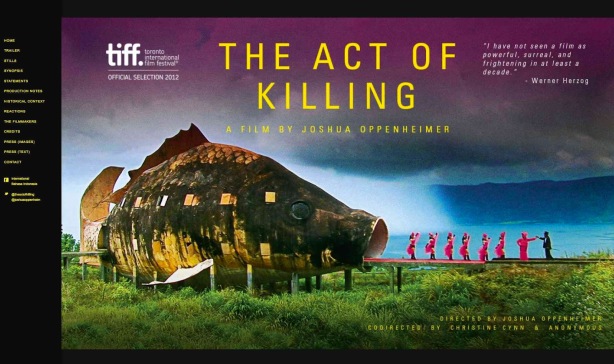
Joshua #TheActOfKilling

—–> Kushan Nandy on The Act of Killing

I saw this two and a half hour-plus documentary at the Toronto International Film Festival in September 2012 and was blown away. Long after the film got over, after Joshua Oppenheimer spoke about it, even much after, weeks later, the film haunted me. It did to me what Incendies had done to me a couple of years back. But much more.

Never before have I seen a film or documentary, where, during the process of film making, the characters go through a life changing process. They metamorphosize into better beings, and this becomes a part of the actual film.

For example, what would happen if someone video interviewed Modi, his political associates or even the people who were the actual executioners of the 2002 Gujarat massacres? And they all accepted their crimes and celebrated this with glee? But suddenly, one of them changed, understanding the repercussions of what he had done?

Anwar, from The Act of Killing, is a person I will never forget. He had butchered thousands. But it was this documentary, and the process of filming it, that showed him who he actually was. He can’t sleep anymore, he stutters, he throws up. He will never be the same again.

And after watching this film, I wont either.

SRK JTHJ1

—–> Varun Grover on Shah Rukh Khan/Jab Tak Hai Jaan

Setting: 7 degree centigrade. Fog. Railway station. A small town in North India where Shatabdi/Rajdhani trains don’t stop.

My fingers are numb and typing out each letter is like feeling the power of it. For some strange reason, the 1st image from Cinema of 2012 that comes to my mind is SRK’s bike rising above the horizon as AR Rahman’s strings go crazy in the background. The theme music of JTHJ (the one they used in promos) it is. Call it the power of music, and it can’t be anything else ‘cos I didn’t even bother to watch the film, or call it my latent romanticism.

My friends from Lucknow – who were there alongside me, fighting for tickets outside Anand cinema hall in 1997 when Dil To Paagal Hai released – watched JTHJ on 1st day in Lucknow and sent me an excited SMS telling me – “Don’t believe the reviews. It’s as good as any Yash Chopra – SRk film you’ve seen. The crowd at Novelty loved it.”

The crowd at Novelty. I was that crowd once. My life’s biggest joys came from being that crowd. Especially on being among the select few who had the matinee show ticket on the 1st day. (1st show was for loafers, matinee was for civilized middle class.)

For Dil Toh Paagal Hai, our friends’ group of 5 was split into 2. Three of us got the evening show, while two fortunate ones got the matinee show. They were clearly the winners – getting to see Maya and Rahul and a new-look Karishma before us. Also they’d get to tease us on their way out, may be telling a couple of spoilers too. So we tried our best to avoid them as their show got over and we were allowed in.

But as it turned out – the theatre owner had cut the film by 15 mins in the 1st and 2nd shows. Apparently he didn’t think the Karishma outrage scene by the river had any merit. But when he saw the audience going crazy with whatever they saw in 1st two shows, he added the cut footage back. And we, the losers till just a few hours ago, were the 1st bunch in Lucknow to watch the entire film.

This scene, Karishma blaming God for complications in love, is almost the crux of Jab Tak Hai Jaan. Though that doesn’t explain why that image of SRK is the 1st that comes to mind. My nostalgia does.

Paan Singh Tomar4

—–> Varun Grover on Paan Singh Tomar

Now inside the train. Cozy and warm. Time to think clearly.

I can’t be a cinema buff by just noting down SRK/ARR as the lasting memory of 2012. But of course there are more. Neeraj Kabi’s intellectual-saint from Ship of Theseus, Denis Lavant and Kylie Minogue singing the existential song of the year (Who Were/Are We) in a post-apocalyptic shopping mall, Sridevi’s eyes full of tears (sprinkled throughout EV), Pi’s uncle swimming in what appears to be sky, the big-screen film print grainy look on Naseer’s face as he looks in the mirror half-seduced, half-confused by Bhakti Barve’s reflection in JBDY (which re-released this year), the spaceship landing smoothly in waters next to a dense mountain in Cloud Atlas, the sad, spent face of Dimple Kapadia at Rajesh Khanna’s funeral (in contrast to a 21-year old Dimple asking Khanna which color sari she should wear for the wedding reception party in the excellent BBC docu resurrected this year due to once-superstar’s death), Gael Garcia Bernal walking away silently, amused and (maybe) depressed amidst the emotionally charged crowds of his nation in Pablo Lorrain’s excellent NO, the trailer of Nikhil Mahajan’s ‘Pune 52’ (though the film didn’t live up to the high expectations and made the trailer look like a red herring), Faisal Khan’s eyes as he lets his gun go crazy on Ramadhir Singh while singer-composer Sneha Khanwalkar screams ‘Teri kah ke loonga‘ in the background……. and I can go on and on.

But one image that will shake me for many more years, the one that is so depressing that I haven’t seen the film again even though it is, for me, one of the best films of the year – Paan Singh Tomar’s sadness at seeing his worst enemy Bhanwar Singh dead. The man who had forced Paan Singh to end his international sporting career to become a dacoit had died. And instead of being relieved, Paan Singh was left purpose-less. The cries of Paan Singh, telling Bhanwar Singh’s dead body that he will chase him in another world and get his answers still give me chills. Those lines are the best lines of the year for me, resonating so much with the cynicism and depression of our times, where one fine morning, without any notice, all good turns into hopeless, impossible bad by the apathy of the system and resident evil of vengeful human kind we are, making Paan Singh Tomar the film, a kind of socio-political version of unrequited love stories.

Talaash

—–> @Anand Kadam on Talaash

This year we saw a gamut of movies from the hilarious yet fresh Vicky Donor, violently poetic Gangs Of Wasseypur,  and a mystery with a pregnant femme fatale  – Kahaani . But the movie that has stayed with me, which still sneaks into my mind and cuddles me, is a strange one. I call it a strange choice since this movie isn’t a great one (to be honest), and i didn’t think of it much when i watched it. But the grief stricken Shekhawat and his wife refuse to leave me. Talaash is like “Rabbit hole” with more guilt. When you lose someone very close to you, really really close, his or her or its memories sticks to you like a parasite, sucking every notion of happiness from you. You become a robot going through your daily chores with only one thing playing inside your head – how things could/would have been different. And when a small ray of hope or redemption comes into your life, even if it defies common sense, you cling on to it, not for a closure which comes later (or does it really comes) but for confronting the loss and accepting life as it is.

This is Talaash for me, not the twist, not Kareena or Aamir Khan, or the underbelly of Mumbai. And as i had said it earlier – A movie is never about its twist and if it is, it’s not worth it.

Kumki

—–> @Vasan Bala on Kumki

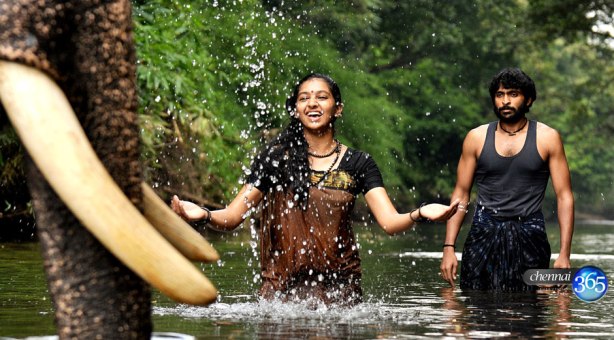
This year, I guess, without much fuss some low budget sleeper hits happened down south. Sundarapandian, Pizza, Naduvula Konjam Pakkatha Kaanom (a few pages missing in between). This year’s Paruthiveen-set-in-the-Jungles-with-an-Elephant marked the debut of Sivaji Ganeshan’s grandson, KUMKI! Breathtakingly shot. Directed by Prabhu Solomon, the guy who made Mynaa.

The film was earlier called “Komban” (Big Tusker). It’s about a mahavat and his “timid” Elephant Kumki, which is supposed to keep a wild elephant Komban from straying into the fields. The film is basically Kumki v/s Komban. It almost reads like a Pixar film, doesn’t it? BUT….Like any south RURAL “hit” this too has it’s rugged faced man with a toothy grin walking behind a shy girl “LOU STORY”, this one too has endless walks and shy glances and grins and predictably ends in a bloody tragic battle. An epic elephant battle! and it boils down to Computer Generated Blood and Dust (hmmm..ummmm). It’s a bona fide formula now, it’s a dream debut for any Star before he graduates into City “Criminal and Cop” roles, mouthing punch lines and beating up Telugu Villains. Loved the music though.

take-this-waltz04

—–> Jahan Bakshi on The Sarah Polley Double Bill : Take This Waltz & Stories We Tell

Sarah Polley delivered a double whammy this year with two diametrically different but intrinsically linked films. The first was Take This Waltz, her deeply sensual and feminine take on love, longing and those gaps in life that we try to fill in vain, and those questions about relationships that never have easy answers. Once you get over the affectedness: the overtly twee touches and some clunky dialogue at the start, Take This Waltz is in turns both superbly seductive and devastating. Michelle Williams once again, brilliantly owns her character and her mousy imperfection, and it’s clear that Margot could only spring from the mind of a filmmaker with a distinctive voice, and one who is a woman. And it contains two of the most exhilarating (musical) sequences I’ve seen at the movies this year.

In Stories We Tell, Sarah turns the camera on her own family with a brave, deeply felt documentary/personal detective story about her discovery of her real biological father, but more importantly, the meaning of family, secrets, memory and the very nature of storytelling. This must have been an impossibly hard and emotionally testing project to put together, but Polley pulls it off- life might be messy but Stories We Tell holds together very well as a rich document, revelatory in unexpected ways. Watch it when you can, and you’ll see where Take This Waltz comes from.

Shanghai-Movie-2012-Review

—–> Kartik Krishnan and Fatema Kagalwala on Shanghai

Kartik’s take

He gets to know that the system is rotten, that the investigation he was heading was flawed to start with from beginning, that beyond the scattered red herrings lay the actual ‘villain’, who incidentally is the same person who gave him the power & ‘support’ to start the investigation in the first place, that the ‘villain’ is the CM of the State.

So easy for any protagonist to become an Anna Hazare/Kejriwal in such a case, or to become a whistle blower and later face the inevitable martyrdom (ala the Satyendra Dubeys & Manjunath Shanmughams). What else can a cog in a wheel in such a scenario do? Pickup the gun like Eddie Dunford in Red Riding 1974 and blaze away? Become corrupt like Micheal Corleone or Ram Saran Pandey (Mihir Pandya has written an awesome article on Dil Pe Mat Le Yaar) ? Or run away into overexposed light like Vijay in Pyaasa? Should he accept defeat and get down to some other profession like learning Medicine (like KK Menon in HKA), or resign hopelessly like Vikas Pande in The New Delhi Times? Even Z didn’t have an answer.

He goes to the party and plays a ‘Prisoner’s Dillema‘ of sorts with his Paneer tikka-munching Boss and the other Powerful man. Eventually he somehow manages to ensure that the guilty get their comeuppance. But this ‘victory’ is hollow. As his Boss asks him “Yeh hai tumhari Justice?”, he gives a reply which was there in the promos but sadly cut out from the film – “Justice Ka Sapna Maine Chhod Diya Hai”.

And this was probably my moment of the year which is not there in the film, but there in my memory, for a long time!

Fatema’s take

The cutaway from Dr. Ahmadi’s murder to the item song. It was a stroke of brilliance. Not only technically, but as a comment on our conscience in itself. Physically it’s a jolt, meant to unsettle us and shake us up. We’ve just witnessed a murder we’ve seen hundreds of times before but what we expect to come next is NOT an item song. And so we sit up and take notice. Besides, there is the juxtapositioning of the two warring factions of the film itself, one (the ‘good’) killed like a dog on the street and the other (the ‘bad’) celebrating his decadent power in all its ugliness. And then there is that tenuous mirror to our own conscience – what’s our rtn to this cutaway? Are we glad we are back into an indulgent song-n-dance setting and away from boring Dr Ahmadi? Or gratified by our own lust? Or guilty about feeling so? Or disgusted to watch such sharp contrasts unfolding in front of us? Or do we feel the cut is an over-sighted mistake? That the director doesn’t know what he is doing? The answer to this is a huge part of our response to the film and to think AND achieve something like this is no less than genius.
Beasts of the Southern Wild - 6—–> Shripriya Mahesh on Beasts Of The Southern Wild

The movie of the year for me was Beasts of the Southern Wild. I saw it in Sundance in January 2012 at it’s premier. I knew very little about the movie going in because the filmmakers were careful about not even putting out a trailer before the premier.

It was instantly captivating. I love the world Benh Zeitlin creates. It is constantly surprising, always engaging. All the actors are local and that lends significant authenticity to the world (bigwig directors would do well to take note). It tackles such powerful themes, but all from the perspective of the little girl, Hushpuppy, played to perfection by the adorable Quevenzhané Wallis.

There are no long speeches about government control, environmental disasters or about the right to live freely in a manner you choose. No sermonizing. The visuals speak and the magical realism is very nicely done. The music (also composed by Zeitlin) and the the production design really elevate this movie.

And it’s a debut feature. It won the Camera d’Or and Sundance.

Since the film’s theatrical release, there has been a fair share of haters. But for me, it just worked. Eleven months later, I still think about it.

ScreenShotAlma
—–>Mihir Desai on Fjögur Píanó

There are times when I can’t put things in words, I feel the need to express and communicate in visuals. Visuals stick with me and this year one such visual experiment has been playing in my head for the longest time. Directed by Alma Har’el, the Sigur Rós music video, Fjögur Píanó.

Har’el, director of last year’s surreal documentary Bombay Beach creates this gorgeous portrait about the painful pleasures of love. The couple, addicted to each other only really ‘feel’ the pain when separated. The edit juxtaposes the bruises on the girl with the boy softly touching the butterfly. This image stuck with me and Alma Har’el’s quote sums it up so perfectly, “For me it’s about not knowing how to get out of something without causing pain to somebody else.” Without lyrics Alma Har’el has created this beautiful story which I feel was one of the best, cinematic experiences of the year. Due credit to Sigur Rós’ music that inspired Alma Har’el to create this world. Click here to watch the video if you still haven’t seen it.

Other Picks: Celluloid Man, Last Ride, Rampart, Once Upon A Time In Anatolia, Holy Motors, Your Sister’s Sister.

Supermen Of Malegaon

—–> Neeraj Ghaywan on Supermen Of Malegaon

At the surface it may be about the lives of people dreaming about film-making with empty stomachs and hearts full of passion, it could be about an accidental hero, about a world we have never seen but still seems so close. The director is never interested in milking the tragedy of the crew’s limitations, their poverty or the tragic loss of the lead character. Instead, she turns it all into a celebration of life, we smile along with the characters who are making the film, in a way we reflect upon our own personal constraints and learn to laugh at them. It is a comment on the Bollywood system of over-produced film-making, it is paying homage to films of the 80s/90s, it’s also a drawing lessons about how to keep going at it even when there is no hope, it is philosophical at times, it is laughing at itself too.

A film that is so simple in its structure and still speak at so many levels is remarkable. And above everything, it inspires you to take the plunge without thinking twice. When I saw the film, I wanted to get out of the hall and start shooting a film immediately. The biggest achievement of this film is that it goes beyond the confines of being a documentary and touches you more than a big budget fiction based feature.

 Koormavathara

—–> Ranjib Mazumder on Koormavatara and Makkhi

Be it a random blogger or a certified critic, everyone is Noah on internet and takes no time to float the boat of top ten lists. Like the middle-class father comparing his kids among themselves or with other families, we always manage to make a list of ten best films every year, irrespective of their debatable qualities. I am no exception.

However, when I was asked to contribute for this collaborative piece after shutting the eyelids, a bald man appeared in front of my eyes, riding a fly. So, here I am, writing (only because I have been threatened with sarcasm) on two of the most remarkable Indian films of 2012.

Koormavatara

It starts late at MFF 2012. I am almost certain that I would leave it midway because Hansal Mehta’s Shahid is right after it and almost everyone from my group is going for it. The film opens, Godse shoots Gandhi and my doubts evaporated in no time. This is the world of an old man, disinclined to show emotions and engrossed only in his mundane office work and his little grandson. A Gandhi lookalike, when he is approached to play Gandhi in a TV show, he vehemently opposes but gives in due to the greedy family tentacles. Gandhi, like the fourth passenger in Mumbai locals, slowly invades his life, brings him down to the level of helpless co-passengers. Like a master of swift attack, Girish Kasaravalli breaks down the middle-class system and releases the Gandhi in him, leaving him in the midst of incessant disintegration of his surroundings. Rajkumar Hirani’s Munnabhai MBBS was a joy to behold, but Lage Raho Munnabhi, despite a splendid screenplay, offended the adult in me, with its preachy attitude. Without making him God, Koormavatara makes Gandhi accessible showing the mighty repercussions it can have in a typical family in independent India. As far as breaking down the myth of Mahatma, this is the best we have seen so far.

Makkhi

With scenes dipped in liquid cheese, a boy constantly stalks a girl with trite expressions; Makkhi was loathsome in the first 20 minutes. I wanted that boy to just die. Thankfully he did thanks to the overdramatic villain, soon after I wished. Little shaky special effects took charge. And I witnessed the most inventive revenge drama this year. A fly killing a mighty man is simply an impossible idea! But the way this little soldier choreographs his action scenes in the concrete fort of the villain, you can’t help but root for an insect that you have always detested. The triumph of S S Rajamouli’s film lies in the sheer leap of faith. We are yet to have our Jaws, but this is the one that comes closest to the idea of a fantastically executed concept film.

Kahaani2

—–> Pratim D. Gupta on Kahaani

Parineeta did the same thing for me in 2005. Celebrate Calcutta! And how. It reminded me of the way Mira Nair shot Delhi in Monsoon Wedding and Taj Mahal in The Namesake, almost pausing the narrative to just soak in the sensuality of the space. You sexy! Also what Sujoy Ghosh did brilliantly was inculcate his love for cinema in the many myriad moments of the movie in a way that they never became copie conformes but rambunctious references that served those respective scenes just fine. From Satyajit Ray to Salim-Javed to Bryan Singer. And those eyes of Bidya Balan when she looks up in the twist-revealing scene before unleashing her real self. Eyes filled with hurt, vengeance and rage…Our own Beatrice Kiddo? Present please!

Ship Of Theseus

—–> Svetlana Naudiyal on Ship Of Theseus

I don’t see all films that release in the year (and I am kind of unabashedly arrogant about it; can’t spend moneys contributing to someone’s 100 crores or out of sympathies to so called indie/different films), so my opinion from the very beginning of it, is skewed. The indie film movement (or whatever there is of it) took a whole new leap with PVR Director’s Rare creating a platform for their release. And even though in my personal opinion, indie films are becoming the cinema equivalent of DSLR carrying people with so & so photography facebook pages (read opinion as – ‘people should be banned, either from making films or from expecting people to watch’), there have been moments of pure delight at the movies in 2012 than years before that, much thanks to the few Indie films that released this year.

Some of the favourites this year are Supermen of Malegaon (one of the best, a documentary so delightful, hard hitting and yet nowhere remotely close to being poverty porn), Kshay (for Chhaya), Gattu (for finally bringing to the screen an unpolished, bratty, clever, naive and most importantly, real kid), Shanghai (for creating that discomfort that exists in our world and we do not see) , Anhey Ghorhey Da Daan (for creating a cinema experience like no other, for delving into time space and making the silences speak)

The most favorite of all that I managed to see in 2012 would be Ship of Theseus for its language, for its being able to be so unique, so evolved in thought and yet not have an iota of pretentiousness and be accessible to just anyone. For the benchmark it creates not just for indie filmmakers but Indian cinema, in general. I am dying to point out and quote every single nuance I loved, but that should be saved for the film’s release. For the smallest of elements it picks and for the whole it creates. For repeating itself like a poem long after you’ve seen it. This is Cinema!!

anhey ghorey da daan

—–> Mihir Pandya on  “अन्हें घोड़े दा दान” (पंजाबी), निर्देशक – गुरविंदर सिंह

एका – कदमों का, कराहों का, नांइसाफ़ियों का, नकार का। एका – दुख: का, संघर्ष का, सपनों का, समता का। वही इंसानी पैरों का जत्था जिसकी मूक कदमताल में पलटकर मेलू सिंह के पिता शामिल हो जाते हैं। किसी अभ्रक से चमकते इंसानी इरादों का जत्था, जिसका सीधा मुकाबला समाजसत्ता अौर राज्यसत्ता के मध्य हुए भ्रष्ट समझौते से तैयार हुई दुनाली दुरुभिसंधि से होना है। किसी ख़ास दिशा में सतत बढ़ते चले जा रहे वे कदम कोरी भीड़ भर नहीं, वे जनता हैं। एक अात्मचेतस समूह। निर्देशक गुरविंदर सिंह की ‘अन्हें घोड़े दा दान’ के इस विरल संवादों से बने विस्मयकारी दृश्य में, जिसके अन्त में सरपंच की दुनाली के सामने गाँव के दलित फ़कत लाठियाँ किए खड़े हैं, अाप सोचते हैं कि अाख़िर वो कौनसी अात्महंता चेतना है जिसने उन्हें वहाँ साथ अा खड़े होने का यह गर्वीला माद्दा दिया है?

बराबरी का सपना। समता का सपना। यह खुद अपने में पूरा मूल्य है। गैरबराबरी के अंधेरी सुरंग रूपी वर्तमान के अाख़िर में न्याय अौर समानता रूपी किसी उजले सिरे के होने का यूटोपियाई स्वप्न। बराबरी स्वयं ऐसा मूल्य है जिसके लिए लड़ा जा सकता है, जिसके लिए मरा जा सकता है। अौर जिस दिन एक दलित दूसरे के लिए खड़ा होता है, एक शोषित दूसरे शोषित के हक़ की अावाज़ का साझेदार बनता है, वह सदियों से जड़वत इस सत्ता व्यवस्था के लिए अंत का बिगुल है। यह दलित चेतना सबक है जानने का कि हमारी देश के भीतर की तमाम पुरानी संरचनाएं कहीं गहरे बदल रही हैं। यह शोषित की साझेदारी है। यह दुख का एका है। वो बस एक फ्रेम भर है ़फ़िल्म में। गाँव के सरपंच की दुनाली के सामने डटकर खड़े मेरी पिता की उमर के ये निहत्थे भूमिहीन किसान। लेकिन इस एक फ्रेम में अक्स है मणिपुर की उन तमाम माअों का जिन्होंने अपनी उस एक बेटी के लिए खुद को विद्रोह में उठे जिंदा माँस के झंडों में बदल लिया था। इनमें अक्स है सशस्त्र सेना का सामना पत्थरों से करने का दम रखने वाली उस नौजवान पीढ़ी का जिनकी ज़बान पर बस यही गूँजता रहा, “हम क्या चाहते… अाज़ादी”। इनमें अक्स है खंडवा मध्य प्रदेश के उन किसानों का जिनकी सामूहिक जल समाधि ने एक बहरी सरकार को भी सुनने अौर अपना फैसला बदलने पर मजबूर कर दिया। अौर इनमें मेरी ही उमर के उन दो नौजवान साथियों का भी अक्स है जो रविवार की उस रात उस बस में इंसानी जिस्म की हदों के पार जाकर भी अंत तक लड़ते रहे, एक-दूसरे के लिए। बराबरी के उस अप्राप्य दिखते स्वप्न के लिए जो सदा ‘फेंस के उधर’ रही इन अाँखों ने अब देख लिया है।

So this was our list. Do comment and share your movie memories/thoughts/opinions of this year.