Archive for the ‘reviews’ Category

Most of you might not have even heard about the film Videokaaran. We also had no clue. A video link on someone’s FB wall and it quickly spread all over. Varun Grover saw the film, loved it and strongly recommends it. Read on…

“Nahin boloonga – Mera secret hai yaar yeh” – Videokaaran

Before the film: The trailer hit like a bolt. “A film about a slightly unusual film buff” it said, and gave me the biggest blood rush that week. It looked dark, candid, grungy, and very passionate. Aur Hindustan mein film lovers pe film kaun banaata hai? It looked like a story from our own backyard, an original story. The trailer was shared, RTed, discussed, and we all were very curious. A screening at Vikalp, Alliance Francaise Mumbai came up. Not on a weekend, hence only I from among the Mumbai group could make it. And mighty glad that I did. Baaki ki kahaani…cut to.

After the film: Starting with a question. How many of us remember the title song, with antara, of Amitabh Bachhan’s 1992 film ‘Khuda Gawah’ (probably his last good act as a ‘hero’ in Hindi cinema). Think a bit. I am sure some can come close to remembering ‘Ho koi ghulaam…ya ho baadshaah…ishq ke bagair, zindagi gunaah’ lines. (Or was it ‘zindagi tabaah’?) But how many will remember, AND relish, the casually thrown in repeat-phrase ‘wai-wai’ throughout the song? Videokaaran is about a group of film-lovers who not only remember this ‘wai-wai’ bit but also sing it (over a doped out night at one point in the film) with as much respect as the rest of the song. In fact, a lone voice keeps singing ‘wai-wai’ even after the rest of the group has faded off.

Now this may sounds like a frivolous start – especially when the claim is that Videokaaran is the most definitive work you will see on the very complex cinema-fan relationship in India. But the example, much like a zen puzzle, is an answer in itself. It’s about passion for something some of us may consider unpassionworthy. It’s about people, who while living on the edge in their day to day existence, find a bond with moving images, words, tunes, stories, and to use an Arundhati Roy-esque term ‘the collective hysteria of larger-than-life’.

And it’s not a ‘look, they are so unique/ weird/ curio-pieces’ narrative the director goes for at all (the easiest way out, taken by many including the ‘B-Movie-Club’ of Mumbai which shows 80’s films to a group ‘for laughs’, or Anuvab Pal’s latest book on ‘Disco Dancer’ which reads the film as campy fun at its best). The subjects, with Sagai Raj in focus mostly, have been treated with as much respect as a serious film lover/observer deserves.

And the best part – Videokaaran (Video-waalah), doesn’t just stop at cinema. It very incidentally, mostly through the conversations, paints a picture of a world within Mumbai which seems not only time-removed from us, but plane-removed too. The characters, their pains, days, uninhibited laughter seem to hang in a surreal space-time we never cared to check. (But don’t mistake it for an ‘activist’ take on ‘two Indias’ or such. It’s as much fun as you will ever have at the movies.) A real, brass-and-nails world where Rajnikanth is God, and with a very strong reason.

And it helps that the Rajnikanth fan Sagai Raj, the central character of Jagannathan Krishnan’s debut docu-feature, has a unique, intelligent opinion on almost everything to do with cinema. Sagai used to run a Tamil video parlor in Chembur, in the shanties by the railway tracks, and is the kind of Thalaivar fan we have come to smirk at. But the smirk fades off with every passing minute, replaced by friendly warmth.

Sagai talks non-stop, loves porn and slasher flicks, has a quirky tangential mind (“I can’t fool a mad dog by pretending that I am not afraid. Dog’s sixth sense will interact with my sixth sense to let out the truth”), a weirdly original thought process (“porn films are the best indicator of a girl’s mind”), lives in a shady locality where police-raids and death by local trains is a norm, and has a life-story straight out of City of God. But above all, and in the context of Videokaaran, he is the brand ambassador of a class of people who consume cinema differently. And a brand-ambassador who not only was a regular viewer, but somebody who sourced porn to be exhibited, edited out films according to audience tastes at his own machine, marked out escape routes and strategies in case of a police raid, and indulgently, heartbreakingly filmed (on his DV cam) the bulldozer destruction of the very video-parlor he helped grow.

Interspersed with film footage (‘Subramaniapuram’, primarily) and Hindi songs sung by the group of Sagai’s friends on a trippy night in Karjat, Videokaaran is as intimate a piece of documenting a vanishing history as it comes. The astonishing thing is, Jagan had not initially planned to make the film around Sagai. Sagai was just going to be the camera-person for the documentary, and the story was supposed to be about this bunch of Chembur guys who are the standard target audience of single-screen and/or video parlor cinema. And this bunch is equally interesting – comprising of a professional juggler and clown, whom Jagan calls ‘an evolved soul’, a DJ and painter who even designed a camera rig for the shoot on his own instinct, a sadhu baba they chanced upon who loves singing sappy songs from the 90’s hindi films (and whatay voice he has!), and a couple of other friends from the locality. (“We even thought up a sequence where the juggler-clown (name: Alisha) stands outside SRK’s bungalow, wearing an SRK mask, and does the juggling act.”)

But while filming, Jagan stumbled upon Sagai’s story and the camera changed hands. (The film still retains many portions shot by Sagai too.) From then on, it’s Sagai and his worldview – filled with anecdotes that shock, regale, and in a few surprise moments pierce through the hard skins of our snobbery to treat him as an equal, if not greater film lover.

The 70-minute film, culled from 40-hrs of footage, is edited (by Jagan’s life-partner Pallavi Singhal) unconventionally too. No voice-overs, no time-stamps or location-stamps (you won’t see many documentaries this confident about their content), and no fixation with linearity – Indian docus just took a huge leap ahead with Videokaaran.

Watch it wherever you can – jaise bhi. A film this passionate deserves some passion from each and every film lover out there. Options? At a film club or festival screening, by buying the DVD straight from Jagan, or waiting for someone to rip it off and put it up online.

As a final important word – Jagan hopes the film helps Sagai get more work as a photographer and photoshop artist. He is a brilliant, natural artist, as per Jagan. He can be contacted through his FB page: http://www.facebook.com/profile.php?id=100002362315963. And Jagan at: http://www.facebook.com/profile.php?id=781940706. So if any of you have any photoshop or photography gig in Chembur or around, try Sagai.

The header is from one of the tweets of Varun Grover. He has posted a long comment on this post also. Just when we thought that we all agree on one film finally, Varun felt otherwise – Aha, the joy and beauty of cinema! One film but so many things for so many souls.  He gives a strong recco for Vishal Bhardwaj’s 7 Khoon Maaf – Poetry, pain, darkness, more than a bunch of crackling performances, and quirks that stab you lovingly. Read on…

‘७ खून माफ’ के बारे में बहुत कुछ कहा जा रहा है. बोरिंग, कच्ची, बचकानी, और ना जाने क्या क्या! इन सब रंग-बिरंगे इल्जामों का जवाब देने में वक्त बर्बाद किये बिना मैं बस यही कहूँगा कि  जिसे ‘७ खून माफ’ बोरिंग लगी उसे गज़लें नहीं सुननी चाहिए और ना ही ठंडी-अँधेरी रातों में बाहर निकलना चाहिए. उन लोगों को गज़लें भी बोरिंग लग सकती हैं, और ठंडी अँधेरी रातें बेमतलब.

फिल्म के अंदर का मैं कुछ भी नहीं बताऊँगा…और मुझे भी फिल्म शायद इसलिए बहुत पसंद आई क्यूंकि मैं खुद बहुत बच के रहा था पिछले दिनों फिल्म के बारे में कुछ भी जानने से. अच्छा-बुरा कुछ भी नहीं. तो अगर आप सिर्फ ये जानने के लिए पढ़ रहे हैं कि देखनी है या नहीं – तो अभी कह दिया – देख लो जा के! और बाकी का वापस आकर पढ़ो.

अगर फिर भी कीड़ा है, और अभी पढ़ना ही है तो भी वादा है कि आगे कोई spoiler नहीं है. लेकिन उसके बावजूद – जो भी है, फिल्म से ही जुड़ा हुआ है ना! आगे आपकी श्रद्धा.

मैं यहाँ बस यही बताऊँगा कि फिल्म देख कर मुझे क्या-क्या याद आया. कौन-कौन सी चीज़ें याद आयीं. और वो चीज़ें, यादें, कितनी गहरी हैं. क्यूंकि याद बहुत कुछ आया. सबसे पहले तो याद आया विशाल का गुलज़ार से इतना लंबा रिश्ता. फिल्म शुरू होने के १० मिनट में ही भाषा ने पकड़ लिया. इतनी साफ़, नपी-तुली ज़बान सिर्फ विशाल की फिल्मो में ही कैसे मिलती है? उनकी फिल्म यू.पी. की हो, या बंबई की, या कश्मीर की – सब जगह की ज़बान का वज़न बराबर रहता है. और ‘७ खून माफ’ में तो उन्होंने ‘ग़ालिब’ से लेकर ‘मीर’ तक सबको याद कर लिया है….साथ में गुलज़ार साब के लिखे गाने!

इसके अलावा याद आयीं दो फिल्में जिनका इस-से कोई सीधा लेना-देना नहीं है (फिर भी treat this as a spoiler) – पहली Lars Von Trier की Dogville, और दूसरी ‘साहिब बीबी और गुलाम’. दोनों में प्यार से जुडी उदासी, manipulations, cruelty, अंतहीन खोज, और अधिकतर शांत (या reaction-mode में) central female character है. और इन दोनों फिल्मों का याद एक ही फिल्म देखकर याद आना मेरे हिसाब से बहुत बड़ी उपलब्धि है.

फिर याद आये विशाल के पुराने गुरु Shakespeare और inevitably, मकबूल. फिल्म में बार बार यही लगता है कि विशाल ने रस्किन बोंड की कहानी को शेक्सपियर वाली बोतल में डाल के जमा दिया. किरदारों की भीड़, नौकरों का कहानी में बहुत बड़ा रोल, quirky characters, और लंबे-लंबे dialogue…सब उसी कमरे के थे जिसमें मकबूल लिखी गयी थी. और भी बहुत सी वजहों से मकबूल याद आई…पर यहाँ नहीं बताऊँगा. देखो और सोचो.

इसके अलावा भी बहुत कुछ याद आया – बहुत सी कविताएं, गज़लें, सपने, डर, और गीत. एक बार ‘मेरा नाम जोकर’ भी याद आई.

और अंत में बाहर निकलते हुए, जब आगे चल रहे दो लड़के बोल रहे थे ‘यार ठीक थी…पर कहानी कुछ पूरी नहीं हुयी…’ तो याद आया कि थोड़े दिन पहले कहीं और भी बात हो रही थी (‘दायें या बाएं’ देखने के बाद) – कि हम लोगों ने कहानी को इतना सर पे चढ़ा लिया है कि सिनेमा के बाकी मतलब कभी ढूंढते ही नहीं. परदे पर कई बार एक साथ १०-१२ चीज़ें चल रही होती हैं….और हम लोग सिर्फ ये खोजते रह जाते हैं कि कहानी कहाँ आगे बढ़ी? मुझे तो खैर इसमें कहानी भी हर वक्त आगे बढती हुयी ही दिखी (सिर्फ एक जॉन अब्राहम वाला किस्सा थोड़ा out of place लगा) – लेकिन जो सिर्फ कहानी देख के आ जायेंगे, उनको इस फिल्म का असली प्रसाद नहीं मिलने वाला. एक-एक फ्रेम, एक-एक लफ्ज़, एक-एक किरदार का मतलब है…और वो मतलब गज़ल की तरह ही, कई बार हौले से बोला गया है….कई बार उर्दू या फ़ारसी में, जो हमें समझ तक नहीं आती. उसे दोबारा सुनो, या जोड़-घटा के समझो, या गुज़र जाने दो…किसी अच्छी गज़ल के उस हिस्से की तरह जो समझ आये बिना भी हम गुनगुनाते रहते हैं.

PS – To copy-paste another tweet of his – All you good folks, falling for bad-reviews of 7KM, just one piece of advise – GO WATCH IT! VB IS STILL THE DADDY.

The day I got to know that Vishal Bhardwaj was adapting another Ruskin Bond short story for the big screen, I went to all the possible book stores, searched desperately for the book with the story Sussana’s Seven Husbands, found it, bought it, read it and then heaved a sigh of relief. How else can you claim to be a Bhardwaj Fanboy!

The short story (just 5 or 6 pages) by Bond is a mood piece, sets an atmosphere where you don’t feel comfortable and there is an eerie feeling that something is lurking around the corner. Things are not explained, deaths are without any reasons and everything else is left to your imagination. Once I and other B-fanboys finished reading it, we all wondered endlessly about how Vishal is going to adapt it for the big screen. Knowing Bond, it should have been easy to predict. Rewind to Rusty days.

But what will compensate for the lack of central drama ? Add to that, our cinema habit of enjoying a “destination film” more than a “journey film”. If the last 20 minutes doesn’t satisfy us, nothing can compensate for the price of the ticket, no matter how brillant the rest of the film is.

And every fear came true with 7 Khoon Maaf. In CBSE curriculum, we had a short story in school titled “Curiosity Killed The Crow”. In case of 7 Khoon Maaf, I was the Crow. Not sure how different my reaction would have been had I not known about all the spoilers. Since the announcement of the film, have been following every bit of news, forcing every possible source to spill out the beans and I even knew about the spoiler in the film. The film’s official synopsis made matters worse where it gave out every detail about the plot. The only thing left to know was – How ?

The film opens with a scene where Priyanka is holding a gun close to her head. And the first thing I noticed was the patchy make-up on her face. You don’t expect to see such a face in a film directed by one of the country’s top five filmmakers. And things got worse from there. Not sure on whom the blame should be put but you can almost feel the layercake of make-up put on Priyanka’s face in many scenes.

If you follow the blog, am guessing you know more than enough about the story. Sussana. Six Marriages. Husbands. Dead. Neil’s character had so much potential but if only fake moustaches could save the day, we all would have been roaming around with those. John, well, I don’t have too many adjectives for wooden blocks. More or less, he remains the same. Naseeruddin Shah doesn’t have much to do, Russian actor Aleksandr Dyachenko has a charming presence and as always,  Annu Kapoor is effortless. Irrfan Khan – benign by day, beast by night and he can go no wrong. But the one who gets to be the dude is Shah Junior – Vivaan. Not conventional good looking but confident and how! An assured debut. Unlike other first timers, not self-conscious of his body language at all. Blame it on the Shah-DNA. But to imagine him as Konkona’s husband, and again with that layer-cake make-up, that was the toughest part. Priyanka is spot-on, whatever she is expected to deliver, she does it well. If only she could get rid of that school-girl giggle, she would be more likeable.

If I ever murder someone, I’ll put the blame on Coen Brothers. Because they make killing look so cool. Wish I could share the blame with Bhardwaj too. But he goes for the emotional baggage. Justifiying every killing of the “dukhi-bechari-badkismat” Maidyum. Looking for love. Settling for blood. Killing just for the sake of killing, what a delicious dish it is! Like that war of whip-lashes (Neil Nitin Mukesh) in an open muddy ground.

And what’s the big picture ? 1,2,3,4,5,6 and then go for the sublime sufi swirls. Count that 7 and bingo!

The brillance of Bhardwaj is there, but too little, the way scenes are set and lit ( Double woot for Ranjan Palit).  The master who has penned some of the best dialogues in the last few years, also drops few few lines here and there. Shaadi jaldi jaldi aur pachtao araam se. But it all boils down to nothing. It’s packed with so much stuff and yet offers so little.

The worst – even the song Tere Liye is not there in the film. At least that would have compensated for some of the pain of seeing one of your favourite filmmakers falter this way.

It is difficult to write a ‘review’ of the musical output of team VB-Gulzar. You generally listen with the heart and gut (and if you don’t then Lilaah!). The head is generally blissed-out by the perfection of lyricism and sounds so much so that even the imperfection melts in and doesn’t evoke question marks. So you understand my difficulties in writing a ‘review’. More so you wouldn’t be interested in reading if I just went by my gut and said, ‘Nahi boss, jama nahi.’ Or just gushed, ‘OMG, OMG, OMG, what genius!’ Jamta nahi na boss, so here is me trying my best to sound all knowledgeable and balanced, while blaspheming as I review VB-Gulzar. (Astagfirullah!)

Tere Liye – All of you, or at least most of you, have been going crazy about this one. So have I. It starts like ‘Ab mujhe koi’ but as it unfolds becomes totally something else. It is a soft, mellow ditty that matches Suresh Wadkar’s vocals perfectly. The light, pretty, romantic lines are matched with the equally light, pretty, romantic music. It makes u imagine chiffon sarees and Swiss hills, soft focus, diffused sunlight and well, Lata Mangeshkar 🙂 but it isn’t superficial. It is tender and soaked in love, the kind, gentle, warm type. It makes you want to hold your love by the hand and slow dance till forever ends.

Or just –

Jado ki narm dhoop aur aangan mein let kar,

Aankhon pe kheench kar tere daman ke saaye ko,

Aundhe pade rahe kahi karwat liye hue’.

Know what I mean? Gulzar’s lyrics do that to you. Savour this –

Halksi sardiya aur saans thodi gram ho,

Shamo ki shawl bhi thodi si narm ho,

Tere liye kishmish chune, piste chune,

Tere liye,

Humne toh parindo se baagon ke saude kiye,

Tere liye…

The piano is beautiful. And then its mixed with santoor-like strains. Suresh Wadkar’s redolent singing takes you back to ‘Tumse milke’ but with a lovely blend of western and Indian, the song is unique in itself.

Dil Dil Hai – Suraj Jagan ROCKS! Young and very unlike the regular VB. Reminds you a bit of Emotional Atyachaar rock version. Maybe the way the bass guitar has been used but then its rock after all. It doesn’t really impress me but I like the adolescent rebellion. It’s not intense or angsty, even a little rabble-rousing type. But since I can’t say anything bad about VB I shall simply say it’s the weakest of the lot and let it remain here.

Yeshu – Love the haunting tone. The way the church bells ring, suggesting an impending terrible doom. Like heralding the rise of the dark world. Builds tempo and becomes absorbing, enthralling and like a black hole hurtling towards you. It has a distinct dystopian note to it despite the fact that it’s a prayer. This contradiction is interesting and gives it the intensity. Rekha Bhardwaj’s sensuality adds an undefined aura, a mixed emotion of yearning, pain, searching, confusion, hidden desires. You start off wishing it wasn’t a ‘prayer’ because you don’t want her singing chaste songs really but it is amazing the darkness she brings to an already sinister song. The over-powering orchestration builds in a fine momentum throughout till it gradually reaches this sustained crescendo. And then it doesn’t end with a bang but on a gentle note. With Rekha crooning and church bells echoing alone somewhere in the background. The loneliness is ever-so-beautifully established. Ever-so lingeringly sad…

Darrling – I listened to the Russian folk song Kalinka (composed in 1860) after I heard this one and got a little more besotted by VB. Listen to the original, its all over the net! Darling wins the top-spot in my list hands down. Its verve, its energy and absolutely lip-smacking folksy gusto. And then there is Usha Uthup. I can like anything she sings even without listening to it. And my heart is torn to pieces here as I admit I like Uthup’s energetic dominance more than Rekha’s rumbling romp. The former has a command and the latter’s earthiness comes in the way, for once becoming her un-doing. To my ears the combination kind of doesn’t add up and Uthup clearly wins my vote. So when she sings with her fiery irreverence ‘public mein sansani ek baar karne do!’ I just wanna say, ‘Be my guest, can I join you?’ 😉

Doosri Darrling – Starts with a collective vigour that is difficult not to tap your feet to. Makes you wanna get into groups and dance away till your feet fall off. This other version is loveable because it beautifully uses RB’s mellowness. So much so that Uthup sounds a little lesser here in comparison. And love the Pushkin bit! (WHERE does Gulzar come up with stuff like this? :))

BekaranL’ilaah! The intoxication of love! That is this nazm. Doobne lage hain hum… saans lene dijye nayes, there is a sinking kind of ecstasy in the song, a dreamy smile that cannot be rubbed off. There is a slight crackle in the beginning which makes me want to imagine rain. VB does a perfect O Saathi Re again. The echoes in the background and the slightly mis-matched mixing is ever-so delectable. Again contemporary rhythms are used so well even as there is a light retro feel very reminiscent of 70’s ghazals which were pure melody.

Awara – Very mood song! Has a typical banjara feel and Master Saleem’s fakir-like singing bathes the Sufi song with emotion. The music is desert-tribe Arabic with its gypsy instruments mixed palette of a rousing orchestra. Will have you swaying from the time it kicks in. Its cyclical, repetitive rhythm with Saleem’s wanderer-voice is trance-like…makes me want to step out of my skin and look at my body doing restive moves to it. There are strains resembling ‘Naina’ from Omkara, ‘Albela Sajan’ from Hum Dil De Chuke Sanam and vague resonations with ‘Satrangi Re’ from Dil Se. But the way my gut responds to it, these influences don’t take away from the originality or power of the song.

Na shaakh jude na jad pakde…Sounds scary but think about it, wouldn’t it be lovely if that were to happen in real-life? Free-floating all of us, with no roots, no need to be rooted…bliss-like, gypsy-like…The song ends on a fade-away…narrowing as much as it becomes expansive. Love the fade-away…

Tip – Play and listen to it while doing something else. It will grab you by the…collar 😉

Mama – Rock again! Again, adolescent. And this time the lyrics sound more so. Begins with a promise, somewhat light and innocuous. I prefer it to Dil Dil Hain but then to my ears, heart, gut and other music-responding organs it really is not that hot. Guess both the music and lyrics were done keeping John Abraham in mind 😉 Oh, btw Wiki bhaiyya tells me Mohanlal was to do JA’s role. Errr…wonder if this song would still be the same way then? It owes a sort of allegiance to the original baap of under-ground rock, ‘Khuda Hoon’ from Paanch, also by VB but doesn’t really hold a torch to the power or hotness quotient of that one. But then KK does a brilliant job and the rest of the song, well, flows. Remember I said I can’t say anything bad about VB? 😛

And just when I was gonna wind up, the acoustic version comes up and this slightly disappointing O Mama becomes a love ballad that drowns me. KK’s soulful singing and the tempered version transforms this one completely! I’d listen to this one over the rock version, given a choice.

Like most VB albums this one grows on you on repeat hearing. Like most VB albums this one also reveals its beauties on every hearing. As it is Gulzar’s lyrics never have you say enough, so all in all, ‘Hit hain boss!’

Hrrmmppphhhfff! So much for restrain!

Anupam, who ? Well, here is Jahan Bakshi on Anupam – I can’t really think of any grandiose ways to describe the unassuming bloke that is Anupam Dhar. So I’ll just say that Sunny, as we often call him – is my senior from the rather eclectic Department of Mass Communications at St. Xavier’s College, Kolkata, who happens to be a dear friend- and a huge movie-buff himself.  A Coen Brothers fanboy like many of us, Anupam thoroughly enjoyed their new film True Grit, and with this post, hopes to provide some perspective, especially in light of the many rants about it lacking that ‘Coens touch’ and being ‘just another western’.  Read On…

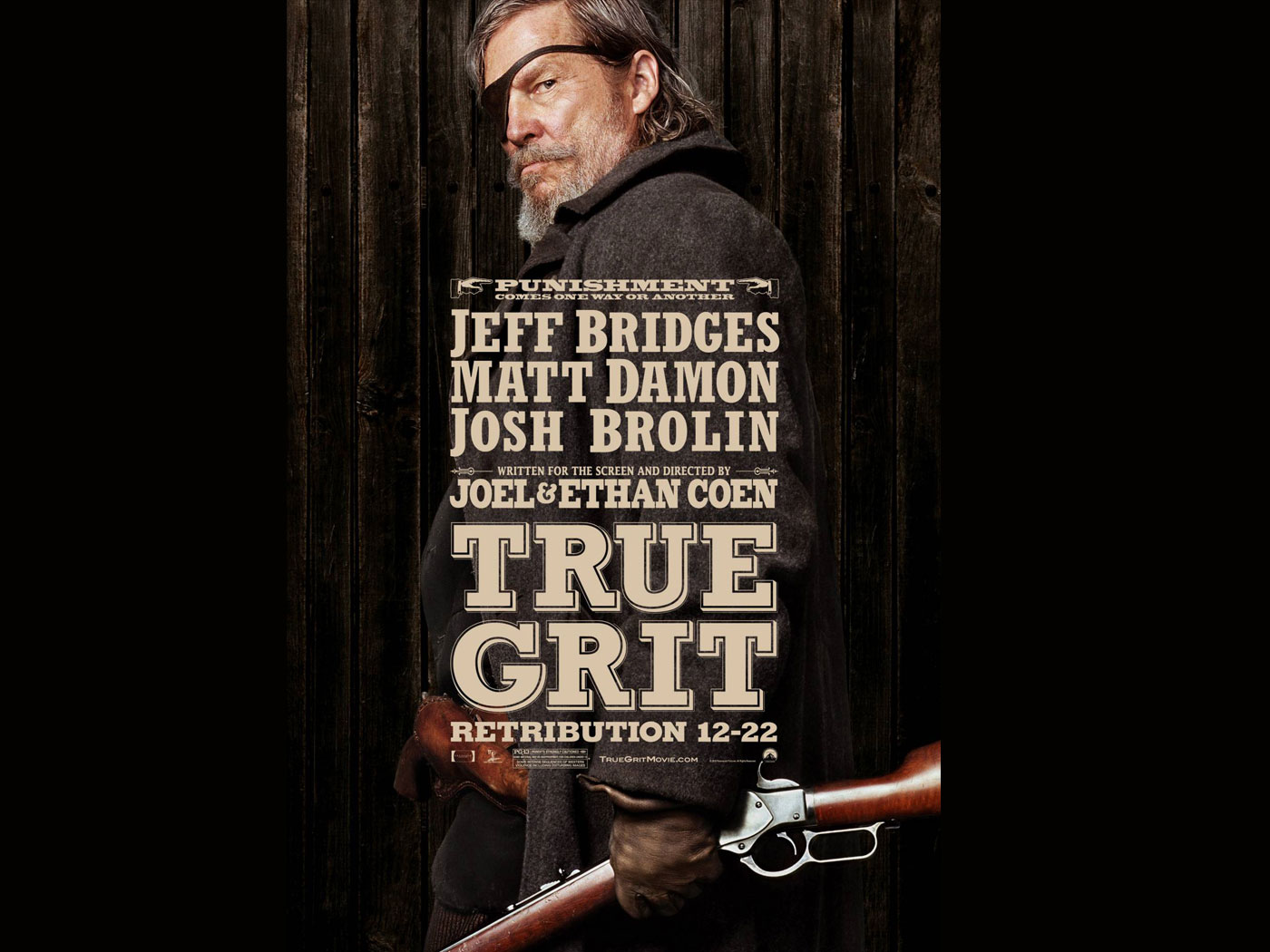
What is True Grit? This was a question I first saw in a review by some Western film critic. As much as I wanted to answer it, I was never sure I could do so simply because it’s almost so indefinable and so very personal. Indeed as I revisited the retelling of Charles Portis’ novel by the Coen Brothers last night, I was again so sure that maybe True Grit is just more than being brave and courageous in the face of adversity. True Grit is being able to stand up to what is right and what is correct; to be able to take things in your own hands when all around you people are shirking away from it. True Grit is fighting for what you believe in and never compromising on that belief. True Grit is Gandhi in his search for freedom but in the way he wanted it, without ever raising a hand when he was being beaten mercilessly by the British Imperialists. True Grit is Mandela, Martin Luther King, Bolivar and many more who have stood up against adversity with a smile and a determination to fight for what they believed. The biggest achievement of film True Grit is a reminder of that; the noblest and strongest of human emotions which often make people triumph over the seemingly insurmountable.

A lot has been said about the film, how it is just “another Western” with nothing new to add to it. Many were expecting the Coens to add a new dimension, maybe make a dark and satirical interpretation of a book, which had already been made into a much loved film. But isn’t the Western about raw human emotions; about those wild times when the gun ruled supreme and human lives were none too important; about the passions that the raw, unchartered and seemingly endless territories of the New World evoked? If that is so, then True Grit succeeds in its intention. It’s a beautiful film and much of that praise must go to Roger Deakins who once again reminds us that beauty lies in the eyes of the beholder, in this case that of Deakins and his camera. As the camera pans the rough territories, it tells its own story, one of survival and hardships and one where the rule of the jungle reigns supreme.

In one beautiful shot, the film’s protagonists, Mattie Ross and Reuben “Rooster” Cogburn approach a tree to which a man is hung. Neither display any emotion to the scene and their only interest lay in whether the dead man hanging is the man they’re searching for. Life is worth pennies where each man is fighting for his own. The beauty of the film lies in its simplistic narration; where a dark and somber story of courage and revenge is told just as it is, without the intrusion of the directors’ own point of view. In that sense True Grit is not just a story, it is also a study of man’s own brutal instincts and the latent violence that is there in all of us and which threatens to unleash itself at the slightest provocation.

True Grit succeeds a lot because of a wonderful ensemble cast. Led by the towering Jeff Bridges, the cast gives itself off to the film’s characters and brings in them the depth that enriches our experience of the film and makes us sympathise with the characters. Bridges moves far off from John Wayne and gives the character his own personal interpretation resulting in a far more complex character which evolves as the film moves on. Matt Damon is good as well and his Texas Ranger makes a deep mark in the film, especially in the scene where he spanks Mattie and tries to scare her off. Josh Brolin and Barry Pepper shine in their small roles. But this film truly belongs to young Hailee Steinfeld, who as Mattie Ross gives a brilliant performance; one which offers us a vivid picture of the 14 year old girl who wants to avenge her father’s murder. Mattie’s innocence, her resolve, determination, courage and vulnerability is expressed beautifully by Steinfeld which gives her character a larger dimension that was missing from the earlier film. Special mention needs to be made of Production Designer, Jess Gonchor and Costume Designer, Mary Zophres who give the film a beautiful and old world feel. Carter Burwell’s haunting background score adds to the atmosphere of the film. The Coens write and direct the film in the way a Western should be and for once I am very pleased with that. Some films are meant to plainly entertain, some are meant to make you think, but some like True Grit are simply meant to be absorbed and felt. It’s a document of those hard and brutal times and a testimony to the most sublime and also the most dangerous of human emotions. True Grit is, as I had tried to answer before, the heart to stand up and fight.

If you can force your heart and nerve and sinew

To serve your turn long after they are gone,

And so hold on when there is nothing in you

Except the Will which says to them: “Hold on”

Yours is the Earth and everything that’s in it,

And – which is more – you’ll be a Man my son!

When i pinged Kartik Krishnan on GTalk yesterday, he told me has busy reading a new book. Film book ? Yeah. As always, i asked him if he could write a (recco) post and as always, he replied with a hmmmmm, which is a difficult expression to decipher. What to write about a book where every page is delicious ? Now that’s a genuine excuse, and difficult argument to win. So he wrote something and typed some excerpts from the book. Knowing him so well, I should have guessed it ( Click here to read Kundan Shah on Renu Saluja. And click here for  Guru Dutt on Classics and Cash) Typing out excerpts from a book may sound simple but is really a painstaking job. And is also a service for less privileged human beings who don’t have access to the book but are e-connected. And now his side of the story and more..

He asked me to ‘review’ this book written by Jai Arjun Singh (a superb writer-blogger who should write as frequently about cinema as literature – cos when he does – he nails it)

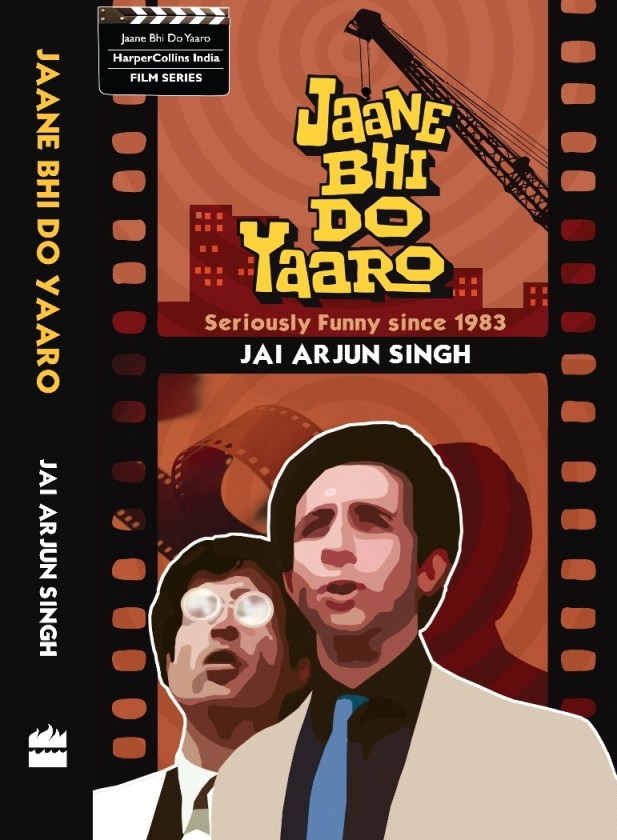
“Jaane Bhi Do Yaaro – Seriously Funny since 1983 – By Jai Arjun Singh” – click here to buy it

Now how does one try an encapsulate more than 250 pages devoted to the making of one of the oft quoted cult classic films of our times, in about 500 words ? How much trivia do we JBDY Bhakts know already, that we need a book to tell us ? What good could it possible tell which would be new ?

Turns out – Lots !!! My knowledge of the film is a measly 1% of what is there in the book. And I claimed to be one of the biggest JBDY bhakts among my circles-have even met Kundan Shah and tried to squeeze out maximum information out of him on the film. Clearly I’m wrong 😛

Trivias, Background history of the players, the director, writer, actors, scripting, NFDC, pre production, fights, troubles, ultra low budget shooting, post production, release & reviews, the legacy – it has it all – all summed up in an unputdownable read.

And when you read such a revelation – how do you write a post on it ?

May be stop endlessly raving about it and simply give some snippets of the book. May be hope that seduced by the ‘trailer’ of the book, people will go and buy it. Because at 188 bucks (film books normally cost Rs 500,800,1500 or more) this book is a steal. Highly Recommended. Cash on delivered to you doorstep in 3 days! Flipkart rocks!

So instead of a recco post, am transcribing quarter of a chapter here & there, hoping that this will contribute to the sales of the book. I hope I’m not offending the author of the book or the director.

Over to the book’s Intro –

The Artist as a Store Attendant (talks about the initial days of Kundan Shah- the humor streaks – the beginning transcribed below)

“Take this hypothetical situation”, Kundan Shah tells me at our first meeting in his Bandra office. “You want to write a book about this film I made years ago. So you call repeatedly and ask me to meet you and I keep putting you off, and you are getting fed up but you aren’t in any position to say anything. You’re the underdog in our relationship.”

“Then, finally, I do call you over at a very inconvenient time, say 10.30 at night. You travel a great distance to get here, but then find that I’m busy-I have people over. I brush you off with the words :”Hey listen, can you come later?”. It’s an inconsequential matter for me – your book isn’t going to make my 25 year old film more popular than it already is- but for you, it’s as if the world has come crashing down.”

“But you don’t want the people sitting around to see that you’re hurt. So you put on a brave face, turn the whole thing into a joke. “Okay, sir,” you say with your dead pan expression, “should I go back and come again at one am?” So now your humiliation has been transferred into another medium -sarcasm, whatever. And it’s for me to respond because, suddenly, I’ve become the butt of the joke”

Comedy and cruelty often go hand in hand, stresses the man who wrote and directed a very funny film that ends with its two most likeable characters heading for the hangman’s noose. “When a person slips and falls, he might -speaking realistically – have broken his hip, or worse, but people laugh. You create humour out of something painful.”

The Corpse, The Chess Game And The Flush Handle

Given how popular the ‘laash’ sequences would become, it’s a pity that the crew never got around to shooting some of the zanier scenes with the dead body, especially after the inebriated Ahuja takes it home with him. The scenes at the guesthouse were to include one where Ahuja – eager to entertain this strangely shy mehmaan who doesn’t say a word-initiates a game of chess with the body.Naturally, the drunkard ends up losing to the dead man. (Ingmar Bergman’s The Seventh Seal had established a precedent for Death winning cinematic chess games, though it is unlikely that Kundan and Ranjit Kapoor had this in mind when they wrote the scene).

Ranjit also fondly remembers a sight gag that begins with Ahuja encouraging the corpse to have some whiskey. When the drink inevitably spills on the floor, the builder slurs, “Arre yaar, tu yahaan susu kar raha hai? (‘You’re peeing on the floor?’), but regains his courteousness and, in the tradition of the good Indian host, carries his guest to the bathroom. There he puts the deceased commissioner’s hands through the flush chain, comes back to his room and falls asleep. The next day, when Vinod and Sudhir are looking for the body in the guesthouse, they are alerted by the osund of the flush: the body has been upright in the bathroom all night, the weight of its arm pulling down the flush handle every time the tank fills. Rinse and repeat, so to speak.

The climactic chase offered endless possibilities for droll use of the laash, one of them being a planned scene where Vinod and Sudhir disguise it as a beggar asking for alms. In a fine touch, Tarneja, Ahuja and the other crooks – who have built a career by cheating people out of crores of rupees – interrupt the chase to conscientiously put money in the ‘beggar’s’ bowl. But pehraps the funniest laash moment that didn’t make it to the final cut was a scene where the partners hide the body in a doctor’s clinic. The physician, described in the script as ‘a Jiri Menzel type’ (a reference to the Czech director of such movies as Closely Watched Trains), gives the body a complete check-up (temperature, blood pressure, pulse etc) and then proclaims, in the self assured, avuncular manner of the typical Hindi-film doctor : “Ghabraane ki koi baat nahin hai. Do din mein theek ho jaoge” (“Nothing to worry about. You’ll be fine in two days”)

Naseeruddin Shah Ko Gussa Kyun Aata Hai ? The Mirror Crack’d

But the next scene with which Naseer had problems might have worked better if he had been allowed to have his way. This is a sequence that ranks among the films weakest, most awkward moments – the faux mushy exchange between Vinod and Shobha as they stand in front of the mirror and she plays victim (‘Main ek akaylee abhla aurat hoon …’) to mine his romantic-hero feelings and manipulate him into helping her.

Actually the scene begins with Vinod trying to cosy up to Shobha, who swiftly makes it clear that theirs is a ‘professional sambandh’, that of ‘maalik aur naukar’ (hence the famous shot of Shobha placing her foot under Vinod’s chin). But then, realising how important these photographers are to her grand design, she changes tack. Some of the dialogue that follows – “Mere sapnon ka sathi, main bhi bhookhi hoon…pyaar ki” and “Suno mere dil ki dhadkan” – plays like a parody of mainstream melodrama.

When Kundan wrote the scene, his idea was that it would be a game of charades between Shobha and Vinod. Obviously, Shobha is the devious one, but Vinod isn’t entirely innocent either: he wants the fun of being seduced by this attractive woman but at the same time he vaguely senses that this might be a trap and he doesn’t know how far he can trust her. The scene was to be driven by this conflict. In fact, it was the thought of this scene which had inspired Kundan to cast Bhakti Barve – when he saw her on stage in Hands Up!, he realized that she was an actress who could handle the required nuance.

However when it came to shooting, Naseer said he wanted to play the scene seriously – Vinod would take everything Shobha said at face value and fall hook, line and sinker for her trap. A major arguement followed.

Naseer: There has to be a serious moment between these two!

Kundan: I agree. But this isn’t it! The serious moment can come afterwards, once she has backstabbed them.

Naseer: Let’s put it to a vote. The whole unit can decide whether I should play this scene straight or crooked.

So everyone voted and it turned out that almost everyone was on Naseer’s side.

Kundan: This is ridiculous. So what if everyone agrees with you. I’m the bloody writer of this thing and I’m also the director – I’m using my power to overrule the vote.

Naseer: Fine, then I won’t have dinner!

Okay, it probably didn’t happen exactly that way, but the upshot is that things were threatening to fall apart. As it is, this was never going to be an easy or straightforward take. When you are shooting a scene where two actors face a mirror together and the viewer sees only their reflections, the camera set-up is complicated. The actors have to look at predetermined spots rather than at each other, which can make performing the scene somewhat tricky since they can’t directly respond to each others facial expressions. A lot of preparation is required, and it is probably a good idea if the overall mood on the sets is congenial.

Eventually, Naseer agreed to play the scene the director’s way – and even had his food – but the results of the disagreements are sadly visible in the film. The sequence begins very well – Bhakti is outstanding in the shot where she realizes that she has to put on an act for this lovelorn fool and slowly starts drawing the curtains – but it quickly deteriorates into something clunky and inconsistent. Temporarily deprived of his simplicity, Vinod has a sly, cocky look about him that goes against the character, and Naseer doesn’t look at all convinced about what he is doing. Watching the scene today, one cringes at the sight of one of India’s finest actors so obviously out of sorts.

But this is the only scene where the actor’s discomfiture shows: though his role in the film is relatively subdued compared to those of Ravi Baswani, Om Puri and Satish Shah. He has a gala time in scenes such as the one where he pretends to be an American reporter for DeMello’s benefit, and as the fake ‘Duryodhana’ in the Mahabharata scene. In some ways, his achievement is all the more notable because he wasn’t to the genre born, so to speak. Besides, his commitment to the movie never flagged. Crew members remember him as being constantly encouraging towards the younger members of the unit, and very keen not to be treated as a big-shot (which he was, in the context of non mainstream cinema). Anytime there was a problem with money – as there frequently was – he would tell Kundan: “Take this out of my salary”. His attitude was emblematic of the overall approach to the making of Jaane Bhi Do Yaaro: fume and curse about specific things going wrong, but then get over it and put in your best.

PS – This post is NOT sponsored by the author, the publishers of the book or by Flipkart. If you are good, we will shout out from roof top and let the world know.

—————————————————————————————————————————————————————————

Also, click on the play button to check out an interview of Jai Arjun Singh…talking about the book…

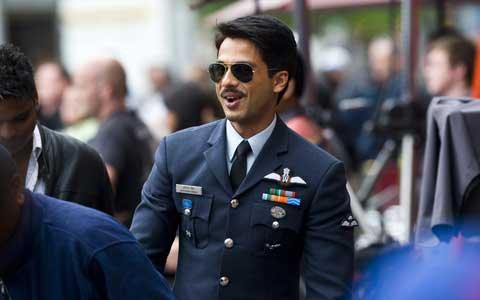
The weather was cloudy, again. And this time, it rained. We again headed to Juhu for some chaana zor garam. And again, it was Ripley’s Believe It Or Not. This time it was the script of Pankaj Kapur’s directorial debut Mausam. It stars Shahid Kapoor and Sonam Kapoor.

And those of you who are still wondering about the “again” factor, click here to read how we got lucky one day and put an open bet on Imran Khan’s famous dud – Luck. And if you  are curious to know the weather report this time, read on…

Looks like Pankaj Kapur’s aim is to tell an epic love story, which crosses the barriers of age, time, space, religion, countries and events. But the problem is, there is nothing epic about it. Its all about Harry and Aayat’s meeting, separation, meeting, separation, meeting, separation and finally, well, we all know how hindi films end.

And this meeting & separation of lovers happens all of a sudden, every time, once, twice, thrice and so on. The script is divided into four seasons, each like one chapter that tells us how the lovers meet to separate again. It starts with political undertones, and then, few more big national and international news incidents are added in every chapter to separate the lovers. The story starts in 1992 and ends in 2002. The impact of one big international incident is hilarious, its just in one scene. And there is NO need for it.

In the first season, the set up is quite elaborate, all about a marriage that has got nothing to do with the main story.  The story moves in sluggish pace and will test your patience. The second season is the one where the love story happens. And its all in Scotland. Why ? No clue. It could have been any other place, even in India. The lovers don’t get to meet because there is a communication gap. And may be, the distance helps in making the gap wider.  Season three keeps the lovers away from each other for some reason or another and then the finale in season four. One more big national incident and suddenly all is well. So, the drama is all about the communication gap and  after a point, we felt like we should just call up both Harry and Aayat and tell both of them about their whereabouts. No need to struggle to find each other. That was 70’s, sir!

If we can’t finish about 120pages at one go, it means there is something wrong with us or with the script. First 30 pages and we were snoring and how! And there are three songs in the first 30 pages. Jejus! Holy fuck! Its PANKAJ KAPUR – one of the best actors we have. Lets go back.

We tried again and finally managed to finish it. And re-read it. Its not bad, its just boring. May be, Pankaj Kapur should continue with acting or may be, he will prove us wrong and show us the big middle finger. But with Shahid Kapoor and Sonam Kapoor in the lead, it needs the talent of Wong Kar-Wai to make something interesting out of this script. And yes, lot of scenes have to go. Lots! Just go. They don’t make any sense and go nowhere though the story moves from Kashmir to Mallukot to Scotland to London to Udhampur to Ahmedabad.

And here is what we liked – The writer-director seems to be very clear about the ambience sound he wants and the way he wants. Almost every scene has decription of the same. Some of the romantic scenes in season two are interesting. There are options written for some of the scenes – either this way or that. And here is one scene from the script….

I/E.  TRAIN/TRAM.  SCOTLAND  – DAY

Harry and Aayat are seen standing in a train or tram, it is crowded.

AAYAT

Bua ab hamare saath rehti hain.

HARRY

Oh! I see. Kaise hain ?

AAYAT

Theek hai….aur tum ?

HARRY

Main bhi theek hun

AAYAT

( smiles a little or small laugh)

Nahi. I mean tum kahan rahe itne saal ?

HARRY

Kaha raha hun….(looks at her) Mallukot station se tumhari gadi ko jate dekha – ussi waqt air force mein selection ka khat mil gaya. bas phir training, uske baad commission, ab jahan jahan posting hoti hai vahin rehta hun.I mean in a way Mallukot choot sa gaya hai.

AAYAT

Mallukot what a lovely place na ?

HARRY

Yaad hai tumhe ?

AAYAT

Yes, of course.

There is a silent pause. They look at each other.

Show us the finger, sir! Show us. We are waiting and how!

The film is produced by Madhu Mantena, Reliance Religare (Sheetal Talwar) and Eros Entertainment. Madhu and Sheetal’s last masterpiece was Rann. And Eros have been delivering one dud after another. Their latest is Anjaana Anjaani. Click here and here to read what the makers have to say about this film.

Sirs, hope you do read scripts before you decide to produce a film. Hope you do know how to read a script. And hope you will be able to deliver. Good luck. And if you decided to produce the film because it has Shahid Kapoor and Sonam Kapoor, well, its never too late to start praying. Jejus!

Why ? Read on.

Let’s call it observations…

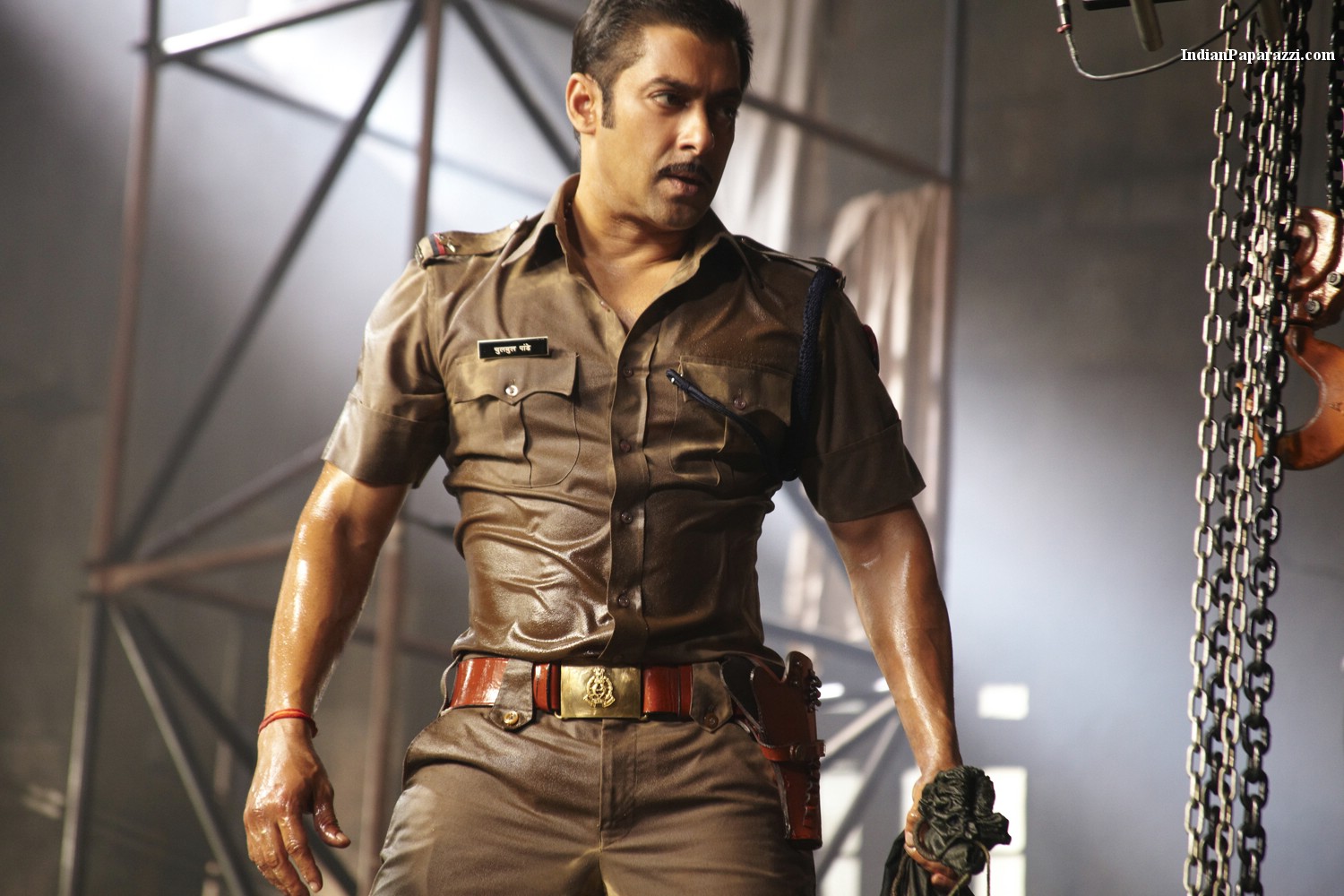
I love paisa vasool cinema. The front-bencher, seeti-maar type. The brazen ‘I am what I am, take it or leave it’ type. And if it has Sallu in an earthy, small-town part then I suck my teeth hard in anticipation. After all, at 14 this was the first man in my life to take my breath away.

Over the years, especially the last five or so he began to take my mind away and I relegated him to a parenthesis in my Bollyland likes.

But when the news of Dabangg hit the film circuit my ears perked up. No, I am not a dog, what I meant was I was all attention. Unusual name, small-town setting, earthy appeal (It looked like that at first!) and Sallu in a mouche! Touché! (No, I am not KM either.)

So the wait was a WAIT. Long-time since I had really waited for a film to release. Hud, hud Dabangg, Dabangg, Dabangg and Munni Badnaam Hui were playing endlessly in my mind.

Cut to stalls in a single-screen theatre, first day first show. I was tucked in quietly like an abla naari in a corner seat among jeering, leering, cheering crowd unable to hide her own enthusiasm. The audience was on an incredible high, catcalling and hooting much before the film had started. Even on trailors. If a director of those films had sneaked in to see audience reaction to his trailor, they just might have gone home thinking he has struck gold. No, the fact is Abhinav Kashyap, Salman Khan and Dabangg have struck gold.

Dabangg turned out to be an unabashed entertainer in love with its own gimmickery and un-self-conscious style. Sallu made me fall in love with him all over again, mouche and all.

He came striding against the sunlight in slo-mo against a thumping ‘Hud., Hud’ score and I knew I loved him again…you know that feeling…when you have loved with the gush of first love, heart beating at every phone ring, blushing-by-his-mere-mention type of love everyone scorns but secretly wishes for…and then you grow up and become all like a dry leaf with a stone for a heart pretending to be ‘mature’ but one day you meet that guy who made you understand the magic of spring…he looks different but that boyish charm is still there and you don’t know if he has changed…or forgotten…and you don’t know if you have forgiven…but then he smiles and you smile back and in that moment you love him again…a different kind of love that will remain and will now keep beating silently next to your heart asking for nothing…Well, I got carried away there, but you understand. Yes, I was back in love with Sallu. With that kind of love.

And Dabangg IS Sallu.

In marketing terms it means a repeat of the mad success of Wanted but in cinematic (I cringe to use a dignified word as that but I can’t find an alternative) terms it means Salman can get away with whatever he does.

I smiled and grinned as much at his antics, silly, stupid, oddball, endearing and all along enjoying the audience antics too. (This guy in formals sitting next to me evidently had bunked office to watch ‘first day first show’ kept dancing and laughing his guts out and every time he laughed he looked at me to share the joke. Quite cute. The ‘mature’ woman that I am I never looked back.)

But Dabangg works not because Sallu can get away with anything. It works because only he can do what he does. And he does it best here, by far. THAT is charming.

We have enough superstars who think they can get away with murder because their name sells, (AK, SRK, this K that K) and Sallu was one too until Dabangg happened. I mean, not that he is humbled or anything, anything but. I mean he kept committing murder till now and after a long long time has redeemed himself. Somewhat.

So what if it was with a film that had no story.

I can hear you waiting to shout, ‘you expected a STORY?’ What’s WRONG with you?’

But I thought that was the minimum I could expect, nai? Especially from a dhamaal, chavanni chhaap entertainer like Dabangg? (To be frank guys, I was expecting a LOT more but I always give credit where it is due.)

But I was willing to give up anything but not the small fact that it had a story missing…because it not only killed the film for me (I am a big girl, I can handle disappointment, you know.) but it killed itself. You know when a child has brilliant potential but he squanders it as he grows up by making the wrong choices? How do you feel when you look at that grown up? I felt the same way…

And why did I feel it let itself down when it promised dhamaal and gave dhamaal? I will illustrate with an example, the only one that has been continuously on my mind since I watched it. The 90’s saw a class act in the form of David Dhawan’s ‘Aankhen’. It starred three monkeys but what a show all three of them put up! As silly, stupid and oddball as it could get. Sometimes so slapstick you wanted to slap your forehead in frustration. But the film worked like a charm. Was it because of the charm of the central monkey who is still that generation’s Hero No.1? Not quite, it was because the film had a story and a crafty screenplay.

Dabangg did not have a story or story idea leave aside a screenplay. Its creative brief was ‘Salman Khan as he is’. For a ‘Coolie no.1’ or ‘Aunty no.1’ its ok. But it would have been criminal if ‘Aankhen’ went that path. All of us still love ‘Coolie no.1’ and ‘Aunty no.1’ (Oh, shut up, we all do. Next time, you are drunk tape yourself and listen to it the next morning!) but not as much as we love ‘Aankhen’. I loved Dabangg as much as I loved ‘Coolie no.1’ when it could have become an ‘Aankhen’.

Story-telling is an art fast dying in Bollywood. Style, technique and botoxed heroes are taking care of the gap.

But what was it that made kitsch so cool back then? Indraneel, one of the commentators makes a great point here. Kitsch entertainers were so superbly entertaining because side-characters were equally well-fleshed out and supported the hero every step. Same goes for the villain. In Dabangg neither the side-characters left an impact (and that was because of the way they were treated) nor did the villain. The enmity between the characters of Chhedi Singh and Chulbul Pandey was almost an after-thought, because the romance angle and father-son trouble angle ran out of steam. But WHY did they run out of it steam when each angle hand enough potential to contribute to making a complete enetertainer? Because the focus was the hero and nothing else.

Sad, when Salman Khan can be so much more than Salman Khan is. Oh, keep the chappals in control, he can. Of course he is not great, is often lazy but he is not as limited as he has been type-casted as. Not only is he a malleable actor, he is also is a class entertainer. He has vulnerability, can cry MUCH better than SRK and get into a character MUCH better than Aamir (even if its only of ‘Prem’, its STILL a character). Oh, and Sonakshi Sinha and he make a great pair I must say. Well, mostly because the way she has been styled. That sex appeal was electric and I was wondering, was it the same woman who looked so ‘saas-bahu’ type in pics??? And Dimple Kapadia and Vinod Khanna made me interested to watch the dynamics of a small-town middle-class family. Arbaaz Khan was err…never mind, and Mahi Gill made me cry. Not because of her great acting, but because of the miniscule role this super-talented girl was relegated to. Does the industry really have to be so unfair? I won’t even talk about Anupam Kher, Om Puri and Murli Sharma’s roles…

And so after, all my rambling the point is, the film is a super-hit, the audience tore a lot of clothes (and my eardrums) and Sallu is a hit hero again after a series of flops.

But there is also a tiny point we miss out on, in this hullabaloo about Sallu. (Hey, it rhymes!:D) Dabangg is made by a debutante director whose first film is so assured it does not seem a debut at all. The choices he makes in story-telling (or rather whatever is there of it) are discussions of another day but the promise he shows is a gleaming hope for the otherwise gloomy Bollywood horizon. Because this kind of film is the toughest to make AND pull off. You see, all of the old guard have become senile and the new guard knows nothing but malls and the other section who knows tons more will not touch Dabangg type cinema with a barge pole. So it’s heartening to see that there is still some hope for the regular badnaam masala Hindi film.

Just next time, Abhinav, please remember to put in a story. More than anything else, I think you deserve better.

And Sallu, you deserve much better too. And so do we. Keep our hopes alive!

And this one comes from far east. Or you can say far North, North of Bengal. Jahan Bakshi, a member of U-25 gang, is currently stuck in the tea gardens of Dooars. Bored with the smell of tea and too much green all around, he traveled to Siliguri (some 95kms) to watch Udaan. And thinks it was worth every penny. Since he was non-stop tweeting about the film after he saw it (No, he wasn’t paid to do so), we asked him if he can go beyond 140 characters and write a post for us. So, here it is…read on…

(And a clarification…No, he was never thrown out of Mayo College, Ajmer or Calcutta’s St Xaviers  College from where he graduated in Mass Communication. Current Status – Still flying high!)

Okay. Have been tweeting since the screening like a man possessed. Not, however out of bored frustration like @moifightclub during #Lamhaa screening. But because I take Anton Ego’s monologue in Ratatouille rather seriously. You see, unlike Mr. Amitabh Bachchan, I don’t think a critic is someone ‘who knows the way but can’t drive the car’, but someone who encourages the new, because the new needs friends. The new needs US – you & me. And hence before I talk about the film, I urge you to please (get over/ delay watching Inception and) go and watch this film. You’ll do yourself and good cinema a favour.

I genuinely haven’t felt the way I felt after watching Udaan this afternoon seeing any Hindi film. Forget about the emotional richness of the film- I’ll probably see the film again to absorb it fully. I was stunned by the maturity and delicateness with which Motwane crafts this film. As treatment goes, this is as un-Bollywood as it gets. As opposed to the Bollywood hammer and tongs approach, here is a film that feels like it’s been created with forceps. Nothing goes overboard or out of hand, thanks to the amazingly controlled direction. Each character and emotion has nuance and heart, thanks to some of the most sharp, sensitive writing I’ve seen in some time. Each frame breathes with life, and Jamshedpur becomes a character in the film, thanks to the wonderful cinematography. And each frame is allowed to speak, thanks to the absolutely exquisite pacing. This is a film with a texture (yes, Kartik Krishnan you can laugh) that truly echoes international cinema.

Rohan Singh (Rajat Barmecha, whose eyes speak volumes, and who I described earlier in the day as ‘twice as cute as Imran Khan and a 1000 times more talented’ and his ‘despotic’ Bhairon Singh (Ronit Roy, mind-blowingly brilliant, who knew he had this in him?) are both men with scarred souls. No one really understands them, and they certainly don’t understand each other. Rohan, however distills his pain into his writing and poetry (watch out for the hauntingly beautiful poems recited through the film), while his father chooses to drown it in, well, distilled spirits. He may be a well built monster on the outside, but inside, he is a lonely, pathetic figure, swallowed by his hopelessness and personal demons- a fact that comes through brilliantly in the end.

Troubled growing years are something that inevitably change you. Even if you come out of it as a healthy, ‘functional’ human being, you bear scars that people mostly can’t see or imagine. And even when those wounds occasionally surface to fester, you can’t expect other people to understand. But the amazing thing is- you feel you’re cursed, but what you may not realize is that it is the reason you can feel things and sense emotions no one else can feel. And in that sense, you’ve been blessed with something beautiful- the ability to appreciate beauty all the more. In my many moments of self-pity, I’ve often wished I wasn’t the mind-fucked creature I am, only to realize how all my bad experiences have only enriched me as a human being, and frankly I wouldn’t trade that for anything.

Udaan is also such a magnificent story about fathers and sons. I wondered what Rohan actually felt more- the real absence of his mother, or the virtual absence of his father. I empathized with his feeling of being trapped, of having to bear the consequences of things that you have no hand in, and which you can do absolutely nothing about. I felt his humiliation, his helplessness, his anger. And I was touched by the power of his undying hope and spirit to overcome in the midst of this unending cycle of despair.

Udaan is truly a little film that says so much, that moves you on so many levels, that inspires you like nothing I’ve seen in a long time- and not in the ‘light a candle today, and piss on it tomorrow’ way. I said it before and will say it again: Red Bull doesn’t give you wings, but Udaan will.

P.S: I also must say that the film is pure poetry, not just in metaphor, but literally. The haunting pieces of poetry recited by Rohan through the film are so good, they’re worth the price of admission by themselves.

P.P.S: For those who can spare a good 15 odd minutes, do read this lecture by Orhan Pamuk, where he talks all about his father and being a writer.

‘For me, to be a writer is to acknowledge the secret wounds that we carry inside us, the wounds so secret that we ourselves are barely aware of them, and to patiently explore them, know them, illuminate them, to own these pains and wounds, and to make them a conscious part of our spirits and our writing. ‘

Makes for great reading.

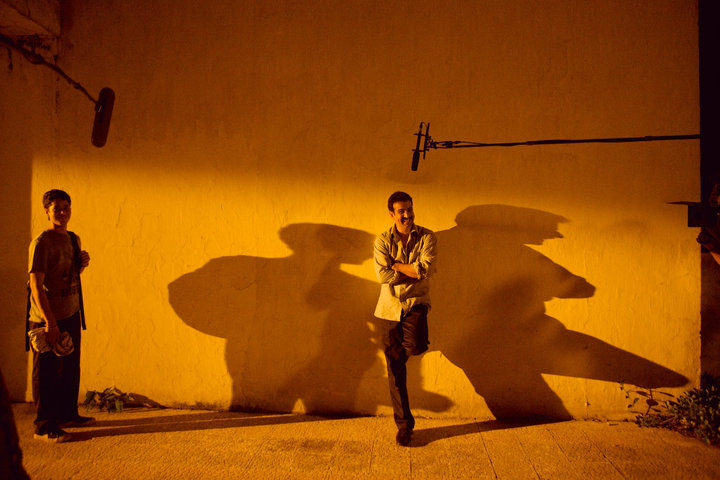
Pic Courtesy – From making of Udaan

We all have been INCEPTED! Ok, except few here and there. And few who belong to U-25! Guys, go easy on that age factor, seriously. Am going all cerebral here. Deep down, three levels. #JGrin

Lot of us, including Vasan Bala worship Charlie Kaufman. So, to compare anyone else with him is itself a big compliment. But Christopher Nolan is not “anyone”. Oops.

Vasan is the third musketeer in our group whom we ditched and went to see Inception before it hit the theatres today. But seems like for the next Nolan movie, I have to give him the preference because he has dethroned the old fanboy Kartik Krishnan. Vasan has nailed it and how! In short, simple and crisper way and much like one of the central thoughts of the film – you don’t remember where you start dreaming from, rite ? Its “Being Christopher Nolan“. Read on. For Kartik Krishnan’s post click here and for my orgamsic non-stop twitter post, click here.

Some people are calling it the Cerebral Blockbuster.

Some say it’s all mind and detached from the heart.

I call it the Charlie Kaufman Action Movie.

Or was it the GREAT NOLAN RETROSPECTIVE.

Then again something in me says the seeds of Inception were thrown in when Sammy Jankis was born or was it the insulin, or was it when the search for John.G began…it never ended…did it…ok…where was I ?

Or when Will Dormer could not sleep in the endless daylight of Alaska ?

Or was it when Angier’s wife drowned.

Or was it Bowden’s arrogance in pushing his devotion for magic too far which led to a lot of blood shed, scarred egos, tons of accumulated guilt. Were we watching closely?

But then wait wait wait…Cobb….was always there, right from the start FOLLOWING the young man. A serial burglar….a thief getting into the mind of the YOUNG MAN.

As Cobb said in the Following “You take it away, and show them what they had.”

Cobb here in Inception just takes a HUGE ‘LEAP OF FAITH’ and digs into some three more layers.

The art, the craft, the obsession, the love, the loss, the guilt, the anger, the redemption, was it all worth it…was it for real…are you willing to put a bullet to your head to know ?

INCEPTION is one of those Kaufman moments where the genius lies in telling a simple story in a seemingly complex way yet with plenty of leads to find your way, almost spoon feeding you and making you feel cerebral enough to decipher HIS creation…..and all this with Nolan’s blockbuster vision. Where Kaufman failed at his SY^&%%$%^$ NEW Y$%^ maze Nolan builds it ever so complex yet so effortless, ever to explanatory yet so discreet. LET GO.

Am still quite dumbstruck by this illusionary cerebral elevation in my created by Nolan.

Fuck all that…..go watch it THRICE. Am already geared for level 2.

What last for 5 minutes will last for an hour in LEVEL 2….and the third???? Go figure!

It never stopped spinning….hahahahahahahahhahahahhahahahahahahha!!!

(PS – Lets ditch the old fanboy this time and go for Level 2 soon)