Archive for the ‘World Cinema’ Category

Raam Reddy2

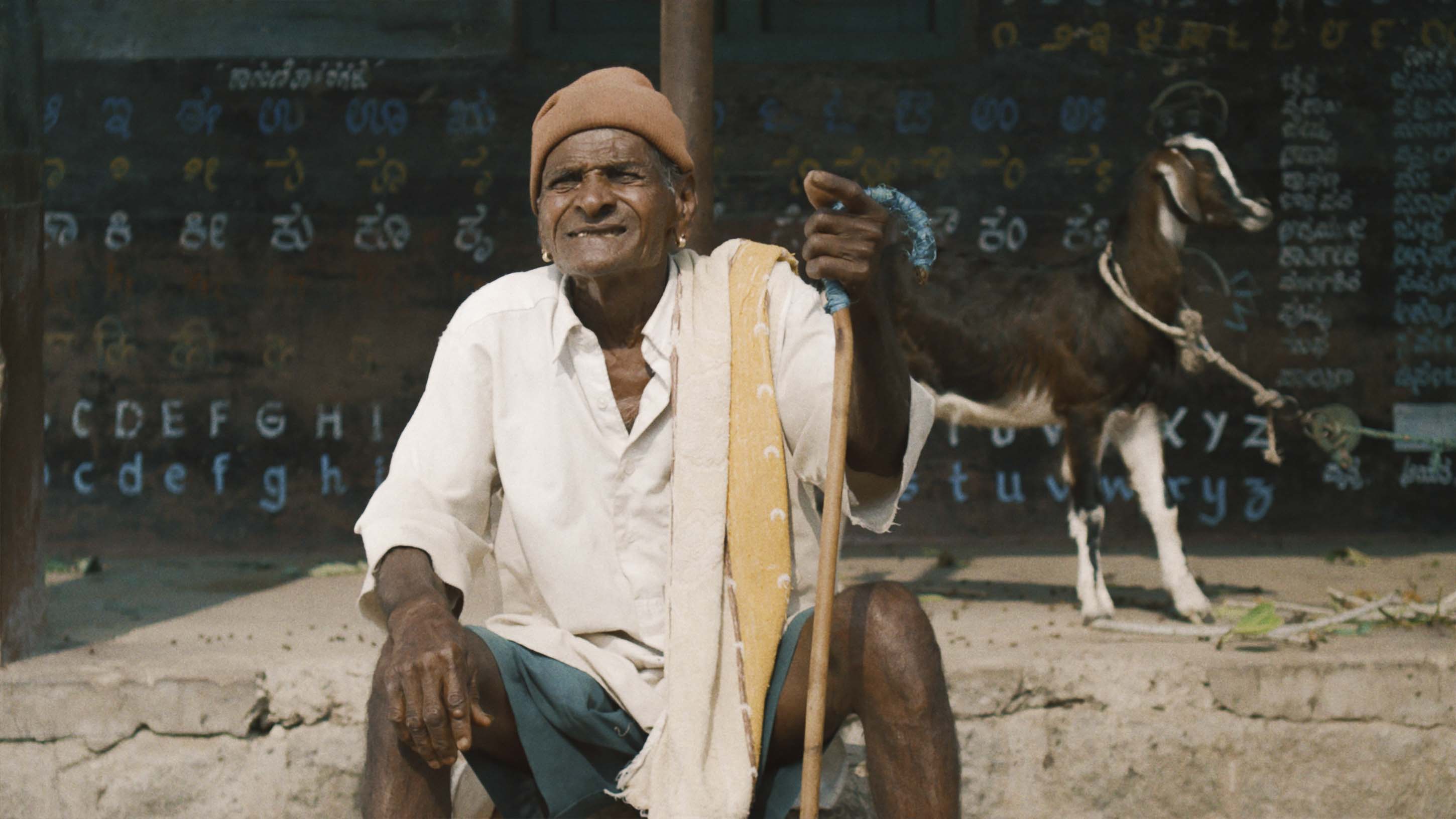
And the good news for the desi indies continues. This time it’s from Locarno Film Festival. Raam Reddy’s debut feature Thithi has bagged 2 top awards at the just concluded festival.

The First award is Pardo d’oro Cineasti del presente (Golden Leopard Filmmakers of The Present) – Premio Nescens worth 40,000 CHF, to be shared equally between the director and the producer. The second award is in the category of First Feature – Swatch First Feature Award (Prize for Best First Feature) 15,000 CHF to be shared equally between the director and the producer awarded to the Best First Film screened in the Piazza Grande, Concorso internazionale, Concorso Cineasti del presente, Fuori concorso or Signs of Life segment.

The film is a dramatic comedy about how three generations of sons react to the death of Century Gowda, their great grandfather, who is a locally renowned, and is a highly cranky 101-year-old man. Set in a village in the Mandya District of Karnataka, the three storylines intertwine before converging at Century Gowda’s thithi, the final funeral celebration 11 days after a death.

Shot in the Mandya district of Karnataka, this was co-written and developed along with Eregowda, who spent most of his childhood in the same village that the film was shot in. The cast of the film comprises of completely non-professional actors.

Filmmaker Raam Reddy is a graduate of St. Stephen’s College, Delhi and Prague Film School. Previously, he directed a critically-acclaimed short film called Ika (Feather). He has also published a novel titled It’s Raining in Maya.

Thithi_Still1

(click on any pic to start the slide show)

Aha. It feels so good to write this post. And since Indian media is still busy covering gowns at Cannes, we feel like shouting out from rooftop that our Neeraj Ghaywan has bagged not one, but two-fucking-awards at Cannes! The first one is the FIPRESCI Award, which is given by the International Federation Of Film Critics. For other winners, click here.

The next win is in the Un Certain Regard section in which Masaan premiered and was in competition. The film won the Special Jury prize for Debut films/Promising Future (Prix de l’avenir). It shared the award with Ida Panahandeh’s Nahid. Click here for the video. For complete list of winners, click here.

Earlier, the film had received a standing ovation after its first screening. Click here for the video and all the pics. To check out film’s trailer and premiere pics, click here. And to know more about the film, its synopsis, cast & crew, click here.

(PS – whatever you think of Bombay Velvet, Anurag Kashyap still remains the best film school in India. Here is one more proof)

The brief was the same this year. A mail was sent to the usual cinema comrades who write, contribute, and help in running this blog. Pick a film (released/unreleased/long/short/docu/anything) that stood out and has stayed with you, whatever is the reason. Since the idea was that we cover maximum films, so no two people were allowed to write on the same film. And nobody was told who was writing on which film. So here is the final list:

This slideshow requires JavaScript.

shripriya mahesh on Love Is Strange

Love Is Strange is a quiet, contemplative, almost observational movie that follows two older gay men, Ben (John Lithgow) and George (Alfred Molina). After finally getting married, they are then forced to live apart when George loses his job. We follow their separate lives as they adjust to not being together and to imposing on those who host them. The awkwardness of small talk with family he doesn’t know well, the feeling of constantly being underfoot, the profound sadness at being separated from someone he’s spent his life with are all portrayed exquisitely by John Lithgow. The loneliness and dependency of old age are captured so perfectly that months after seeing the movie, I find myself thinking about Lithgow sitting alone in the kitchen or painting on the roof. The little moments stay with you and make this a special, intimate film.

shubhodeep pal on Drevo (The Tree)

I wrote about the Slovenian film Drevo (The Tree) almost three months ago when I watched it at the Mumbai Film Festival. A month later, by a curious turn of fate, I found myself in Slovenia. At the main train station in Ljubljana — where trains themselves look like art installations — I chanced upon exactly what I was looking for: a poster of Drevo, in its homeland. In Ljubljana, which has forever embedded itself as a colour in my memory — grey — I explored the scantily populated streets in the early hours of the morning and thought about Drevo, a film that has refused to leave me since I saw it first. Juxtaposed with the chilling backdrop of the movie — about a peculiar sort of honour killing in the Balkans — the Slovenia I saw felt harmless, almost inert. But this curious contradiction left me with two realisations: first, the power of imagination, which transcends reality despite all odds, lends colour to the most drab surroundings — as indeed it does to the child trapped inside his house, going endlessly around the courtyard on his bicycle, and imagining the world outside, out of his reach seemingly for ever. Second, the nature of reality itself is twisted: accidents become murders; a place of beauty houses ugliness; seemingly innocuous places house terrors. The films I watch inevitably take on a life of their own, outside the screen, moving me in inexplicable ways. For Drevo, this has never been truer.

shazia iqbal on Boyhood

After a dramatic scene where the mother (played by Patricia Arquette) walks out on her abusive alcoholic second husband, she tries to pacify her daughter’s tantrums and breaks down, we see a poster outside her son, Mason’s new classroom that says ‘You are responsible for your own actions’. Richard Linklater is the most remarkable filmmaker of our times who has cracked certain philosophical conundrums of life like most of the humanity hasn’t and makes stories to make sense of the same.

In a family where children are treated as adults, the boy (Ellar Coltrane) in Boyhood silently observes the intimate ‘in-betweens’ of life, post his parent’s separation, where the only constant is changing families, friends and houses. Linklater’s response is not anger, aggression and rebelling, typical of a quintessential coming-of-age story. He almost seems unaffected, unsure by wherever life puts him, and reasons it with confused curiosity only to conclude that growing old doesn’t mean having all the answers. Even during the most disturbing moments, the drama happens in a character’s head than outside of them. Which is why Boyhood, devoid of all sentimentality and melodrama is a path-breaking reflective piece of cinema, and to paraphrase the final line in the movie, it seizes you in its various moments. These moments stay with us accompanied by a daunting silence specially at the point where the mother breaks down saying ‘I just thought there would be more…’, which becomes the culmination of our collective expectations from life.

mihir fadnavis on Cheap Thrills

What if you found a guy in a bar who offers you ridiculous amounts of money to indulge in the most bizarre challenges? How far towards depravity would you go when the chips are down? Do you really care about right and wrong when defecating in your neighbors house gives you one thousand dollars? Debutant director EL Katz’s answers all your sickening queries in Cheap Thrills, a pitch black, hilarious, and audacious horror comedy that transcends the torture porn genre. As the crackpot version of Who Dares Wins unfolds on the screen Katz offers you a huge dose of guilty pleasure, and surprisingly, an even larger helping of social commentary, which sends over Cheap Thrills to this particular ‘best of 2014’ movie list. Katz also happened to direct the best segment of The ABCs of Death– couple that with Cheap Thrills and you’ve got a very interesting young filmmaker on your radar.

rahul desai on Mommy

Forget that director Xavier Dolan is 25 years old. Forget that this is his fifth full-length feature film. Forget that he is known as L’enfant Terrible in Quebec–where he has grown up, and perhaps the town that has made his films such throbbing, breathing, evocative chunks of heart.

Mommy is his finest; a wretched, energetic snapshot of time. It is about a single mother struggling to bring up her ADHD-afflicted 15-year old son, with the help of an enigmatic, stuttering woman next door. Somehow, somewhere, this is a rousing film; brutally honest escapism, grounded and battered into frames of all-consuming chaos.

Three souls combine to give us something more than just mere performances; they blend into their surroundings and suck us into their vortex of desperate love. None of them are quite in sync with society. They’re not ideal mothers, sons and neighbours. They’re misfits, but unapologetic and glorious. So uncomfortable, yet beautiful to watch. The cheesy pop collection chosen as an audacious score surprises with intent, and album-izes their lives in phases.The result of messing around with something as taken-for-granted as a screen aspect-ratio is not always pleasant, but Dolan gives us the cinematic moment of the year when it happens.

Mommy is best symbolized by this fervid Ludovico Einaudi piece, which incidentally amounts to the most exhilarating time-lapse imagery captured on film. Not because of how it looks or sounds, but because of where it appears, and because of where we hope it will take us.
Because it gives us light, and messes with our jittery minds, and because we don’t want to discover what happens next.

varun grover on The Wind Rises

Didn’t see many films this year and I can feel the emptiness in my heart. Among the ones I saw Dedh Ishqiya, Haider, Abhay Kumar’s docu Placebo (due in 2015), Avinash Arun’s Killa (due in 2015), and Nisha Pahuja’s The World Before Her were the most powerful and delightful. But the film that churned the cold corners of my existence and turned them into soft, frothy Malaiyyo was Boss Miyazaki’s The Wind Rises. An animated feature unlike any other I’ve seen (quite unlike earlier Miyazaki films too) – a period love story in the backdrop of early days of aviation industry in Japan. I can watch it again just for the stunning colors of sky in various frames, and once again just for the various sources of light shown and used. And then there is this flight of crazy fancy by Miyazaki in his last film. The film has the feel of a farewell letter – lots of meta references to Miyazaki’s own career and ambitions – and that makes it all the more poignant. Magical, and I mean it when I use the word, in every sense.

manish gaekwad on Under The Skin

The other night, watching Under The Skin, I was reminded of what Kiarostami had once said about the kinds of films he likes watching. “I prefer the films that put their audience to sleep in the theater. I think those films are kind enough to allow you a nice nap and not leave you disturbed when you leave the theater. Some films have made me doze off in the theater, but the same films have made me stay up at night, wake up thinking about them in the morning, and keep on thinking about them for weeks.” A little bit of that rubbed on us when i watched the film with a few friends.

Our senses were so dulled by what was happening in the film, that between switching it off, to leaning forward and peering at the screen, only sleep could have rescued us. But we kept staring, unblinking, intrigued by the mysterious nature of the film, discussing if this was any different than Veerana, where a pale white woman, lures men into her lair. IMDB pretty much sums it as, ‘A demonic woman uses her seductive charm to prey on unsuspecting men,’ and this could be said for Under The Skin.

While Veerana was obviously titillating giallo, Under The Skin is simply hypnotic; from the striking images to the creepy Ramsay upgrade background score. That divide between what is crass, and what is art comes here, when days after viewing, the images and sounds of UTS recur and crawl under my skin. What separates these two films is also what unites them in memory – if it is unforgettably etched, difficult to erase, then that’s what Kiarostami is getting at. Oh and he also made a film where all the action is inside a car with a woman driver talking to various people, quite like Scar Jo in Under The Skin. Ah, almost.

kushan nandy on Interstellar

Writing about a Nolan film is monumental. What can you write about a film directed by a man who is the greatest illusionist of all? The Alfred Borden of Cinema.

The standout moment of the film is when Cooper watches his teenage daughter suddenly turn as old as him. Stationed in the darkness of a spaceship, millions of miles away, he watches time slip out.

I felt like Cooper, sitting in the darkness of the theatre, watching time slip out. Remembering
the moments of life I skipped in an attempt to survive life itself. I wanted to savour and appreciate the remaining moments of life just like Cooper did.

It made me pause. It took me beyond Cinema.

Kubrick must be watching from up there. Proud.

sukanya verma on Aankhon Dekhi

When a 50-something family man of limited means and unfinished responsibilities decides to go the distance between method and madness, real and surreal, thought and practicality, there will be repercussions. To question the natural order of things, to argue, to protest is one thing but to make it a way of life is another.

Rarely does a Hindi film probe into its protagonist’s soul as nimbly as Rajat Kapoor’s brilliant Ankhon Dekhi. Told with tremendous thought and texture, Ankhon Dekhi’s parable-like profundity unfolds through Bauji’s unique metamorphosis (conveyed in Sanjay Mishra’s extraordinarily perceptive performance) following his resolve to believe only what he sees or experiences.

If one aspect of Ankhon Dekhi’s episodic narrative is concerned with the different stages of his idiosyncratic obsession and its impact on his big family, the other draws us into the authentic sights and sounds of his hectic, populated space in Old Delhi– rickety roofs, yellowed walls, poor plumbing, crumpled sheets as well as the multihued personalities of his claustrophobic neighbourhood among whom he eventually garners a spontaneous, unsought following.

Where many would solely focus on his quirk to generate ridicule and humour, Kapoor, even when proffering moments of ingenious wit (“Male menopause”) treats him with fascination and fragility. Bauji’s existential crisis may cause embarrassment to his supportive wife, darling daughter and reserved younger brother but he’s much too well meaning and mild-mannered to take offence. Even if they don’t understand his motivations, they never cease to care.

Absorbing, whimsical, intimate, awe-inspiring and evocative, Ankhon Dekhi doesn’t make claims of knowing better but faithfully documents a determined individual’s journey to seek answers unmindful of what the world dubs him– fool or fearless.

karan anshuman on Pride

Pride may not be the best film I’ve seen this year (that’d probably go to Tamhane’s Court) but it’s definitely the best formula (commercial? mainstream? sellout?) film I’ve seen all year. Having entered the Bollywood fray, these days I’ve newfound respect and appreciation for films that pull off the balancing act with grace.

Pride’s remarkable, still-relevant tale set in Thatcherian UK essays a comic love/hate standoff between exuberant London homosexuals and dour Welsh miners. This is a true, unlikely underdog story with heaps of emotion, humor, social and political insight, and a magnificent feel-good ending: the ultimate recipe for that sense of contentment when you walk out the theater. Pride would make Hirani proud (and is probably the ideal next subject for him) and other filmmakers scramble a search for similar real-life stories.

But for crying out loud, director Matthew Warchus, why didn’t you use U2’s Pride, my all-time favorite song, in the movie?

jahan bakshi on The Grand Budapest Hotel

As one sees more and more films, there’s this dreadful kind of inertia that sets in- and film experiences that arouse genuine joy and excitement rather than cold admiration become increasingly rare. Of late, the one thing I’ve longed for at the movies is for a film to really move and surprise me. With his last film, Wes Anderson managed to do both these things- and as the cliché goes- made me rediscover that elusive magic of the movies.

This one actually warrants that much-abused M-word: The Grand Budapest Hotel is a masterpiece. There is just so much happening in this movie on so many levels, it’s a minor miracle that it never goes off the rails- and major credit for this must go to Ralph Fiennes’ soulful and masterfully comic performance and Anderson’s astonishing control over his material and craft. Together, they make it all look like a piece of cake, quite literally.

An internet commenter put it perfectly: This is a beautiful pastry of a film- with chisels and sharp files baked into it. I expected to be delighted but was startled by the sadness and darkness at its core. Loaded with mirth, melancholy and a streak of the macabre, Grand Budapest Hotel is an ebullient comic caper that ultimately reveals itself as an elegy to an era long gone by (or perhaps one that only exists in the collective imagination of a few- such as Monsieur Gustave H himself). The film’s unexpectedly poignant, tragic ending stabbed me right in the heart- and in the sweetest way possible. Sorry Amazing Amy- this was the real cinematic twist of the year, darling.

PS: I recently realized that the two best films I saw this year: Grand Budapest Hotel and The Square (2013) couldn’t be more different- and yet, they’re both about essentially noble people fighting battles to defend the liberal ideals of human dignity and freedom from the looming dark clouds of fascism. This is Anderson’s most violent and overtly political film- not just as an indictment of modern barbarism, but because it puts forward the argument that maybe prettiness is political. If ‘a thing of beauty is a joy forever’- perhaps it’s also something worth fighting for.

fatema kagalwala on Clownwise

Very recently I was contemplating on the films that stay with me and I realised all of those films have been portraits of life seen through the prism of hope. Maybe that is why I jumped and clutched at Clownwise to write about. A story of a once-superstar trio of clowns now in the dusk of their lives trying to gather its strands, Clownwise made me happy, it had me literally smiling at its sheer joie-de-vivre of not only the world and its people, but of the writing and the making. It is this very vitality of thought and spirit of the world of the film and film itself that has had me charmed. The bittersweet tone of the film effortlessly carries through the dramas and dysfunctionality of the lives of the three men, now in their sixties, seeing them dealing with it all with a head held high and enough gumption to see it through till its logical end. Smart and sensitive at once, large-hearted and laughing at one’s owns pain, a little cheerful, a little sad, a little profound, a little reflective, and a lot of fun – now where do we get films like that often?

aniruddha chatterjee on Anubrata Bhalo Acho?

His wife, her husband, both terminally ill with cancer. All they do is come to the hospital, sit beside their respective spouses and give false hope. Life has become repetitive, mundane. They meet and fall in love. To have a film that deals with people in their 50s, married, yet daring to fall in love to heal themselves from the pain they are in, deserves to be applauded especially in a country obsessed with morality. While watching the film I was worried that the climax will be a cop out. That is where the film scores the most. Brownie points for taking the film where we as viewers will shudder to go. It has been more than two months I have seen the film. Yet, the shocking climax keeps on lingering in the mind.

kartik krishnan on Jigarthanda

A bunch of gangsters are seated somewhere in a banana ‘bhajji’ (pakoda) shop in Madurai, pulling one of the lieutenant’s legs. It’s Tea/Snack time with few goons sipping a quarter whisky in a plastic cup. It’s a setting straight out of Goodfellas with goons chilling out, joking.

The Gangster Boss – ‘Assault Sethu’ casually takes one last jibe at his lieutenant, spits out the tasteless bajji, orders the shop owner to put more masala and walks ahead. Does small talk with the dosa making chef and walks outside into the rain with a steel plate as cover on his head, behind the shady single screen theatre which, true to the nature of the film, has a Kamal-Rajni poster somewhere in the background.

Sethu walks ahead to the sarvajanik shauchalay where a cleaner does dua-slaam and ingratiatingly asks for some baksheesh, directing him to the 1st loo which he has cleaned just now, for his use of course. That is the power of a gangster. And that is all what a poor toilet cleaner can offer as obeisance to him.

Sethu replies cheekily – You should be the one paying me to crap in your loo instead.

Sethu walks ahead and is about to enter the designated loo when a Vomiting (presumably) drunkard, who under sober circumstances wouldn’t dare cross his path, dissuades him from entering his ‘territory’. The disgusted gangster moves ahead into another loo and the vomiting drunkard opens the door of the designated loo instead.

BAM ! BAM ! BAM ! BAM!

The door to the loo opens and the poor drunkard is shot to instant death by an Assassin from inside the loo who immediately calls up his Clients – “Hey. Sethu is dead. Hear this” – Bam ! Bam! Bam!.”

More bullets are fired into the dead body as Sethu who has just survived a hit by sheer luck, watches silently. The shirt pant wearing assassin continues on the phone -“Sethu seems to have lost a lot of weight”.

And then Sethu’s goons rush in to see – the cocky assassin boasting his kill – “Come on folks, take away your Boss’s dead body.”

Slowly, the assassin realises that he has killed the wrong man and Sethu is very much alive, standing behind him. He shoots at Sethu but his gun is empty. SHIT!

He is facing certain death and Sethu can kill him any second.

However, Sethu prefers to go and answer nature’s call instead of bludgeoning the assassin to death. Revenge can wait.

This long take sequence is laced with humor, violence, pop culture & unpredictability that is so omnipresent in Karthik Subbaraj’s Jigarthanda – a film which is much more than just a gangster flick. While some might have been disappointed by his debut film Pizza’s ‘cheat’, this one is a must watch. Yes it is long and a genre bending film again, but immensely rewarding.

neeraja sahasrabudhe on Court

न्याय (सामजिक, आर्थिक और राजनीतिक) पहला अधिकार है जिसे हम भारतीयों (“We, the people of India”) ने अपने संविधान के preamble में अपनी आवाम को दिया है। चैतन्य ताम्हणे की फिल्म ‘कोर्ट’ इस अधिकार, इससे जुड़े संस्थाओं व उन संस्थाओं और जनता के बीच के सम्बन्धों को समझने का एक प्रयास है।

कहानी की शुरुआत लोकशाहिर और दलित कार्यकर्ता नारायण कांबळे की गिरफ्तारी से होती है। इलज़ाम यह है की उन्होंने अपने किसी भड़काऊ गीत द्वारा सीवर साफ़ करने वाले कर्मचारियों को आत्महत्या के लिए उकसाया और इससे एक व्यक्ति की मौत को गयी। ये case तो एक बहाना है, हमें कोर्ट के अंदर ले जाने का। इस case के बहाने चैतन्य हमें उस कोर्टरूम के महत्वपूर्ण खिलाड़ियों के जीवन से परिचित करवाते हैं। मध्यम वर्ग की प्रॉसिक्यूशन वकील, नए पैसेवाले तबके के जज और व्यापारी वर्ग में जन्मे डिफेंस वकील। ऐसा करने से एक disconnect उभर कर आता है (जो चेखोव की इस कहानी की याद दिलाता है)। हालांकि डिफेन्स वकील कांबळे साहब के काम के प्रति संवेदनशील है, पर उनके जीवन के तमाम पहलु देख कर यह समझ बनती है कि बड़े सामाजिक बदलाव के लिए संवेदनशीलता या ज़रा सी मदद काफी नहीं है। ऊपर के तबके को जिस तरह के जीवन की आदत पड़ चुकी है उसे चुनौती देनी ही होगी और अगर उसमें ये संवेदनशील लोग साथ नहीं हैं, तो वे सब कुछ कर करा कर भी उसी शासक वर्ग को serve कर रहे हैं जो चाहता है कि आवाज़ें उठें पर उतनी ही जितनी दबाई जा सकें।

कोर्ट में चल रही कभी हास्यास्पद तो कभी झल्ला देने वाली जिरह के बीच एक दूसरी ज़रूरी बात उभर कर आती है। वह यह कि – ये सच है कि ये सरकारी दफ्तर, कचहरी वगैरह bureaucracy से लदे हैं और यहाँ काम करने वाले लोग न्याय की परिकल्पना या न्याय मांगने आई जनता के प्रति बिलकुल असंवेदनशील हैं, लेकिन न्याय न मिलने का असली कारण है कि नारायण कांबळे जैसे लोगों को, जिन्हे शासक वर्ग अपने रास्ते का काँटा समझता है, state न्याय देना ही नहीं चाहता। State चाहता है की वे या तो जेल में रहें या कचहरी के चक्कर काटते रहे। न्यायपालिका एक साधन है लोगों को डरा कर रखने का।

‘कोर्ट’ अभी हमारे समाज में हो रही घटनाओं के द्वारा एक अहम मुद्दा सामने लाता है। ये फिल्म हमें मजबूर करती है उन बातों पर सोचने के लिए जो छुपी हैं और सिर्फ कचहरी के न्याय-अन्याय तक सीमित नहीं हैं।

और अंत में नारायण कांबळे की तरफ से बोलते गोरख पाण्डेय:

हज़ार साल पुराना है उनका गुस्सा
हज़ार साल पुरानी है उनकी नफ़रत
मैं तो सिर्फ़
उनके बिखरे हुए शब्दों को
लय और तुक के साथ लौटा रहा हूँ
मगर तुम्हें डर है कि
आग भड़का रहा हूँ

mihir pandya on Killa

‘किल्ला’ देखना किसी रूठे हुए जिगरी दोस्त से सालों के अन्तराल के बाद मिलने की तरह है। इसमें उदासी भी है, उन बीते सालों की जब वक़्त हाथ से छूटता रहा अौर दोस्त की बेतरह याद अाती रही। इसमें बेचैनी भी है, उस पल को पकड़ लेने की चाहत जिसका सालों इन्तज़ार किया अौर अाज अचानक समयचक्र ने उसे सामने ला खड़ा किया है। इसमें ठहराव भी है, जब दौड़ती ज़िन्दगी में अचानक अासपास की दुनिया की तमाम गतिविधियाँ अापके लिए रुक जाती हैं अौर सब कुछ उसी पल में सिमट अाता है। अौर इन सबके ऊपर इसमें निस्संगता भी है, कि दोस्त के चले जाने से दोस्तियाँ नहीं जाया करतीं। कि वर्तमान से बड़ा कोई सच नहीं अौर वे तमाम स्मृतियाँ अतीत नहीं, दरअसल इसी गतिमान वर्तमान का हिस्सा हैं। हमारा हिस्सा हैं। कि ज़िन्दगी का नाम चलते रहने में है।

लड़कपन की दहलीज़ पर खड़ा चिन्मय (अर्चित देवधर) अपनी माँ के तबादले की वजह से ‘बड़े शहर’ पूना को छोड़ कोंकण के किसी छोटे से कस्बे में अाया है। ‘किल्ला’ की कथा हमें ग्यारह वर्षीय चिन्मय के जीवन संसार के भीतर ले जाती है। इसमें एक अोर है चिन्मय का अपनी कामकाजी माँ (अमृता सुभाष) से रिश्ता जहाँ पिता के असमय चले जाने की ख़ामोश उदासी घुली है, वहीं दूसरी अोर है कस्बे के स्कूल में चिन्मय के नए बने दोस्तों का संसार जहाँ बेपरवाह दिखती दोस्तियों में गहरे छिपी व्यक्तिगत प्रतिस्पर्धाअों अौर रूठने-मनाने के अबोले दायरों के मध्य वह ज़िन्दगी के कुछ सबसे महत्वपूर्ण सबक सीखता है। उमेश विनायक कुलकर्णी की लघु फ़िल्म ‘गिरणी’ अौर उनकी बेहतरीन फीचर फ़िल्म ‘विहीर’ की याद दिलाती अविनाश अरुण द्वारा निर्देशित ‘किल्ला’ मेरे लिए अात्मकथात्मक फ़िल्म है, लेकिन भिन्न क़िस्म से। यहाँ फ़िल्म सिनेमा बनानेवाले की अात्मकथा न होकर देखने वाले की ज़िन्दगी के किसी पीछे छूटे अध्याय का अात्मकथात्मक अंश हो जाती है। जिस कस्बे की यह कथा है, वह प्रतिनिधि है मेरी किशोरवय स्मृति में छूटे कस्बे का। इसे परदे पर देखने वाले हम सब इन्हीं बाहर से उनींदे दिखते लेकिन भीतर से खदबदाते कस्बों, देहातों को छोड़ अाज शहर के मेले में अा पहुँचे हैं। अौर ऐसे में ‘किल्ला’ का यह ‘पुनरागमन’ स्वयं हमारी स्मृतियों की कथा बन जाता है।

‘किल्ला’ जितनी उसकी कथा में है, उससे कहीं ज़्यादा उसकी गतिमान तस्वीरों में है, उसकी ख़ामोश ध्वनियों में है। पावस के महीने में मूसलाधार बरसते बादलों के बीच अविनाश अरुण कोंकण को उसकी अनछुई काया में टटोलते हैं। समन्दर किनारे बसा यह ठहरा हुअा कस्बा बारिशों के बाद जैसे एक नई हरी सघन पोशाक पहनता है। यह समन्दर की लहर के लौटने के बाद रेत के कोरे किनारे पर पहला पैर रखने की तरह है। उन्होंने किरदारों की भीतरी उदासी को परदे पर फ़िल्माने के लिए इंडोर दृश्यों को लट्टू की सघन पीली रौशनी में फ़िल्माया है अौर इस उदास पीले का विलोम वे बरसात, समन्दर अौर अाकाश के अासमानी नीले के साथ अपने अाउटडोर दृश्यों में रचते हैं। पानी स्वयं यहाँ सबसे बड़ा मैटाफर है। पानी ही यहाँ बाँधता है अौर पानी ही यहाँ किरदारों को बंधनों से अाज़ाद कर देता है। किरदारों के मन का बोझ जब पक जाता है तो वे भरी बरसात में छाता ‘भूलकर’ निकल जाते हैं, अौर मुझे चैप्लिन की कही वो बात याद अाती है जिसमें वे बरसात को अपना दोस्त बताते थे जो अाँखों से नमकीन पानी बनकर निकलते दुख को अपने अाँचल में छिपा लेती है। ‘किल्ला’ की कोमलता मुझे भाषा में कविता कहने वाले, सदा मुंह में छालों वाले किसी मितव्ययी स्वभाव पहाड़ी कवि की कविताअों की याद दिलाती है। यह उन फ़िल्मों की सूची में शामिल होगी जिसकी स्मृति को अाप फ़िल्म ख़त्म होने के बाद सिनेमाघर के अंधेरे में छोड़ने की बजाए किसी नवजात ख़रगोश के बच्चे की तरह नज़ाकत के साथ अपने सफ़री झोले में रख साथ घर ले जाना चाहेंगे।

sudhish kamath on The Interview

The stoner bromance that almost started World War III was smarter than most people gave it credit for and truly representative of our times. In fact, The Interview > Newsroom.

The world doesn’t give a shit about anything anymore.

One tweet, it’s mourning innocent kids being shot dead, the next it’s cheering a goal. Or a six. Aircraft lost. Sad face. Next moment. OMG! Eminem’s gay? Did you know McConaughey fucked a goat?

The guys behind Superbad, Pineapple Express or This is the End never intended The Interview to be seen as a symbol of patriotism. The film’s clever enough to take digs at not just American/global media priorities, it also portrays America as the country that is capable of making citizens shove a missile up their own ass (literally) to fuck with another country’s politics.

When the American “heroes” of the film believe they have the required statistics to corner Kim Jong-Un, he simply gives it back to them raising far more uncomfortable questions about the US and sanctions imposed that was driving them to the brink of despair.

Unable to deal with reasoning, the Americans go back to what they are best at.

Because trolling NOT reason, bullying NOT debate, is the only form of supremacy that the world recognizes today. Mediocrity connects with more people than intellectuals or custodians of high art do. No wonder then that the elitists, the critics and all the snooty uptight fuckers hate The Interview. As Skylark says: “They are motherfuckin peanut butter and jealous… They hate us ‘cause they ain’t us… You know what you do to haters? You just smile.” *pops Ecstasy*

sudhish kamath on Birdman

“You’re not important, ok? Get used to it.”

Only the greatest epiphany you would ever have.

That’s Alejandro Gonzalez Inarritu’s Birdman in a line.

We lead dysfunctional – largely unsatisfying – lives and try hard for relevance and popularity that matches the self-importance in our heads. The film is full of precious little moments, a fucking brilliant drums score and cinematography so fluid and seamless that you can’t ever spot the cuts even if you try. A terrific ensemble that’s going to have a field day at the Oscars.

When Riggan (Michael Keaton) tries to reinvent himself as an artist, after having played a superhero earlier in his life (and continues to in his head), he has this superb conversation with his daughter who tells him about her days in rehab and an exercise they gave her. About drawing tally sticks.

She hands him a roll of toilet paper full of tally sticks. Each stick represents thousand years. And all of humanity has been around for what would fit in one slip of toilet paper, she tells him. The rest of the roll is how long the world has been around.

He hears out her perspective and wipes his hand with it accidentally. And he’s wiped out all of humanity, she jokes.

How good is Emma Stone! She’s even better in this scene here that pretty much seals her a Best Supporting Actress nomination: Click here.

There are just too many brilliant scenes to list – the one where’s locked out of his green groom in his underwear and has to make his way in public and get up on stage to not miss his cue or the one where Norton tells Keaton that popularity is the slutty little cousin of prestige when they go out to get coffee. But every single scene in the film is designed to tell us that in the larger scheme of things, nothing really matters. Nobody’s opinion really matters. Or as a sign in Riggan’s green room tells us: A thing is a thing, not what is said of that thing.

ranjib mazumder on Jatishwar

Jatishwar as a concept is brave and ambitious to say the least. As the film unfolds, it has the promise of a new classic. Traversing through different timelines and a story of reincarnation, it dares to bring back Anthony Firingee, a man of Portuguese origin and exceptional talent, who not only mastered Bengali but also composed songs in it to perform in public duels known as Kavigaan in the early part of the 19th century.

Kabir Suman’s music is so good that I can’t possibly to begin to imagine another music album in the last 20 years that can match the majesty of this work. Bringing back lyrical fights of nostalgic Bengal, Mukherji shoots it with beautiful tenderness. That’s the film’s biggest strength. Also the biggest weakness. Apart from Anthony’s story, you hardly care about modern day sappiness that the story brings along.

Mukherji is probably the most acclaimed filmmaker working in West Bengal today. And that speaks a lot about the current state of Bengali cinema. I find Mukherji brimming with new ideas in every film; flashes of brilliance in certain scenes but the sum of the parts never make an engaging whole. And that’s been my consistent problem with his filmography. I know I would be attacked by my fellow Bengalis for looking at Mukherji through a glass darkly, and I have tried hard to sum up my feeling for his brand of inconsistent narrative. And then I stumbled upon this paragraph by one of my literary heroes.

“From the moment I start a new novel, life’s just one endless torture. The first few chapters may go fairly well and I may feel there’s still a chance to prove my worth, but that feeling soon disappears and every day I feel less and less satisfied. I begin to say the book’s no good, far inferior to my earlier ones, until I’ve wrung torture out of every page, every sentence, every word, and the very commas begin to look excruciatingly ugly. Then, when it’s finished, what a relief! Not the blissful delight of the gentleman who goes into ecstasies over his own production, but the resentful relief of a porter dropping a burden that’s nearly broken his back . . . Then it starts all over again, and it’ll go on starting all over again till it grinds the life out of me, and I shall end my days furious with myself for lacking talent, for not leaving behind a more finished work, a bigger pile of books, and lie on my death-bed filled with awful doubts about the task I’ve done, wondering whether it was as it ought to have been, whether I ought not to have done this or that, expressing my last dying breath the wish that I might do it all over again!”

― Émile Zola, The Masterpiece

So that was our list. What’s your list? The films that stood out and stayed with you, and you won’t mind pushing the rewind button on it. Tell us in the comments below!

So after much hype (courtesy our friends Namrata JoshiAseem Chhabra and others), a few of us finally ended up joining them this time at the 3rd edition of the annual Dharamsala International Film Festival, up in the beautiful township of McLeodganj- and I’m happy to report that it did live up to the buzz, and I can’t wait to get up there again next year. It’s an excellently organized festival- with helpful signs all over town to guide you, autos hired to take you up to the main venue TIPA (Tibetan Institute of Performing Arts) and a wonderful, warm team of volunteers, some of who travel from various parts of India and the world to be part of this joyous little celebration of cinema up in the mountains, in a town without a single cinema theatre.

Clearly, the common thread among many of the films shown at DIFF was that they belonged to the genre I will call ‘cinema of social unrest’- and from what I hear, this was the case the year before as well. So there are many documentaries as well as fiction features about social and political movements, revolutions, human rights violation and conflicts of land, culture and identity. This feels especially apt considering Dharamshala itself is a place where you can distinctly feel the angst of displacement and the forced refugee status of Tibetans under the gentle, tranquil atmosphere of the town.

This year included a fairly interesting selection of films (you can check out the list here) as well as some interesting retrospectives, curated short film packages and masterclass/Q&A sessions with filmmakers such as Rajat Kapoor, Hansal Mehta, Gitanjali Rao, Q and Umesh Kulkarni. I’m afraid I did not manage to catch a whole lot of them- the main drawback of having a film festival in such a picturesque location is that you are conflicted whether to spend your time watching films or savor the sights around, not to mention visit all the charming cafés and eateries in the area. Still, here are a few notes on some of the films I did catch at the festival:

KILLA:

Killa

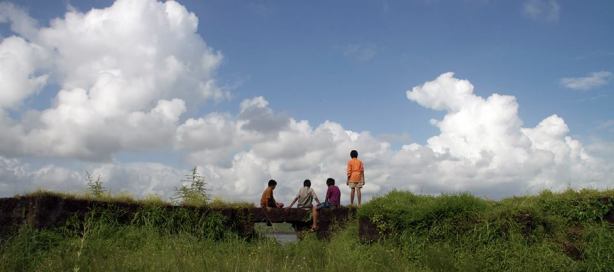
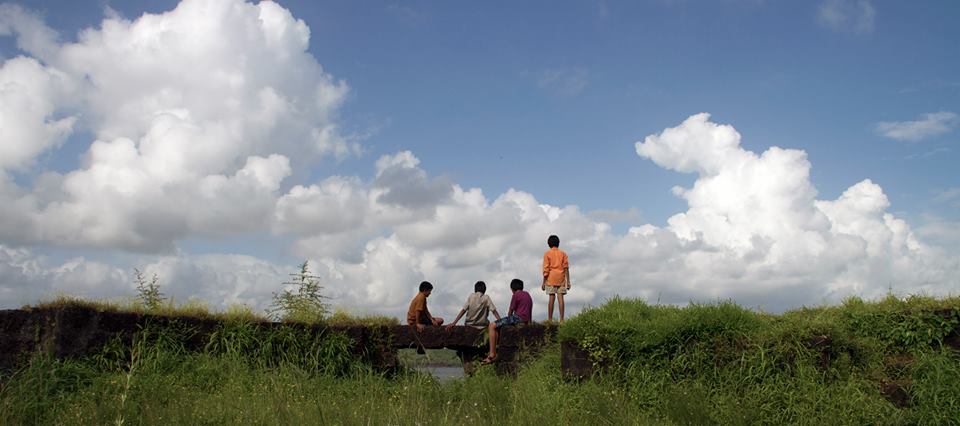
Avinash Arun’s debut feature is a gorgeously evocative and poignant film about friendship, loss and the resilient ability of children to deal with disappointment, displacement and even death. Killa is clearly a very personal film, and is shot and crafted with great love and sensitivity. It also features some unforgettable, textured characters brought to life with amazingly natural performances from Amruta Subhash, Archit Deodhar, Parth Bhalerao and a wonderful ensemble of young actors. This is yet another strong contemporary Marathi film about children, and definitely the one with most finesse out of the ones I’ve seen. I must mention here though that I haven’t seen Umesh Kulkarni’s acclaimed Vihir yet- interestingly, Avinash Arun cites Kulkarni as his mentor and a strong influence.

BRINGING TIBET HOME:

Bringing Tibet Home documents the deeply emotional and often funny story of New York-based artist Tenzing Rigdol’s audacious art project to reunite exiled Tibetans with their land, quite literally. After his father dies with his last wish of setting foot in his homeland unfulfilled, Tenzing decides that if Tibetans can’t return to Tibet, he will bring Tibet to them by smuggling 20 tonnes of native Tibetan soil to Dharamshala for a one-of-its-kind art installation. It was especially moving watching the film in Dharamshala- though it did also really make me ponder about what makes land itself so important to human beings. Maybe because I’ve never quite had roots anywhere, soil to me just feels a little overrated… ‘it’s just tiny little rocks.’

THE SQUARE:

This shattered my heart and blew my mind to bits. Jehane Noujaim’s The Square is the most devastating film I have seen in a long time and easily the best one I saw at Dharamshala. The film puts you right at the heart of a revolution inside Tahrir Square, with young, common people spiritedly fighting a fascist and fundamentalist regime in Egypt, spilling their blood and guts out for the hope of a brighter, free future even as they come to the crushing realization that courage and idealism aren’t enough to win their war against oppression. This is absolutely essential viewing- the auditorium was filled with tears and goosebumps in the end and the applause didn’t stop till the credits had finished rolling.

(PS: Also spotted in the documentary- Aida Elkashef from Ship of Theseus and a Vikramaditya Motwane doppelganger. I kid you not- the resemblance is uncanny. See if you can spot him. 😉 )

OMAR:

https://www.youtube.com/watch?v=OPcvn4Mtglc

Director Hany Abu-Assad cleverly sets a gripping tale of love, deceit and betrayal against the Palestine-Israel conflict. The film borrows sparingly from Romeo and Juliet and Othello to give us a heady mix of socio-political thriller and Shakespearean drama- and while a comparison might be a little unfair- I can’t help feel that Omar blends the two a lot more seamlessly and effortlessly than Vishal Bhardwaj’s Haider, which of course is very good in its own right. Adam Bakri gives a superbly charismatic performance as the protagonist- though admittedly, it’s hard to take your eyes off him anyway considering how jaw-droppingly good he looks.

TRUE LOVE STORY:

Filmmaker Gitanjali Rao showcased a great set of Indian and international animated shorts curated by her at DIFF (including her marvelous Printed Rainbow), and ended the session with her newest film True Love Story, which screened at the Cannes Critics’ Week section earlier this year. The film, originally scripted to be part of a feature film (alas, no one wants to fund quality animation films in India) begins as a homage to masala movies which is both affectionate and hilariously tongue-in-cheek- but in the end reveals itself to be a sharp social satire, using a real-life tragedy that made headlines a few years back (the court case is still on) to brilliant, scathing effect. The film is a visual and aural delight with its colorful evocation of Bombay’s sights and sounds through Bollywood tinted glasses, and hopefully it will make its way to a wider audience soon. And I hope some producers funding ‘indie’ films (which more often than not, turn out to be sub-par) see the potential in this medium and back Ms Rao’s extraordinary talent and bring more of her singular, unique vision to the big screen.

Jahan Singh Bakshi

(Photos courtesy DIFF Facebook page, Mihir Pandya and author)

So we read this piece on Quartz India – “A Bollywood-backed Twitter campaign saved the Mumbai Film Festival—but crushed its spirit”. Friends told us it’s a well respected website. Yet to figure out why. (Not that we trust Columbia Journalism grads on desi film industry, most of the times they have no clue about bollywood or indie-bhindies) As we were joking about it, we thought let’s not respond to it till the closing ceremony. Aamir, Madhuri, Anushka, Parineeti, Esha…OMG! So many stars at MAMI! We have never seen them before at Mumbai Film Festival. They killed the indie spirit and how. Look at the winners. Bollywood must not have heard about these filmmakers and they crushed them by giving them awards – Avinash Arun (Killa), Bikash Mishra (Chauranga) and Chaitanya Tamhane (Court). And these 3 films bagged top 6 awards in International Competition and India Gold section. Interestingly, all three are based in Mumbai. City’s fest, city’s filmmakers, what an achievement! MAMI never had a better year than this. If only some people knew what they are writing about.
Moving on, here’s our day wrap of last 2 days

’71

A Soldier is abandoned accidentally by his unit in the middle of a riot in Belfast. I must confess I was at loss quite a few times thanks to the heavy North Irish accent, but this edge of the seat thriller-drama has enough moments to keep you hooked on. The riot sequence and the chase alone itself is worth the watch. Editing, Cinematography, Production Design, Look and feel – all top notch in this gritty film. One can feel the pain of the wound being stitched, the weight of the stone being thrown and the deafening screech after an unexpected bomb blast. Watch it.

Court

This film deserves every accolade it has got abroad. Minimal with pitch perfect detailing, long takes & wide shots, performances that seem natural and unrehearsed, a dab of social & political commentary every now and then, and a realistic depiction of a Kafkaesque trial – it at times ceases to be a film and seems like life unfolding in front of your eyes. Easily one of the top films at MFF this year. Do not miss this for anything.

@nagrathnam

Theeb

This is as unpretentious and straightforward a film can be. And that’s where lies its joy. A young Jordanian boy is left alone to fend for himself in bandit territory with the bandit that killed his brother. The bandit becomes his protector and the boy needs him to reach safety. Its not the barren terrain alone, a terrain from whose womb few films emerge but an entire world that opens up to us simply by the choices the characters make in this film. If you like films as an observer and seeker of experience, then this is well worth it.

Clouds of Sils Maria

Literary world threatens to envelope the real and the real world reflects the literary one, shadowing each other as the film explores the nature of time and age. Oblique with a lot of subtext, Clouds of Sils Maria is a meta referential guide to an aging actor’s work and life experience as we explore her inner world and art through her explorations of the character she is playing. Absorbing and visually beautiful, the end is mystifying but Juliette Binoche’s glorious performance makes it more than worth the watch even as a the point in its entirety maybe subject to subjective audience interpretation or simply lost. Almost meta referential of tha film again!

Mission Rape – A Tool Of War (Documentary)

Disturbing even at its short length of an hour. The documentary talks about the mass rapes that were used to perpetrate horror in Bosnia-Herzegovinian conflict during the early nineties. Victims and their families fighting for justice speak their stories and how justice has been denied to them. A stark image of the hegemony of patriarchy and the politics of war stares in front of us as we despair at the continuing inhumanity of the world. There is no attempt to dramatise events or manipulate the audience, facts are laid out bare and footage used matter-of-factly. Its short and not as incisive or comprehensive as it could be, but its honest and dignified, and therein lies its worth.

Girlhood

 Is it me or was there a major number of women-centric films this year at MAMI?In any case, its a cause for celebration and I did with Girlhood. In fact, what better film than that! Its a journey of an African teenage girl, bred and brought up in a steeply patriarchal culture finding her independence. Not only the thrift of storytelling and the simplicity of narration but the wealth of detailing makes this not only an important coming-of-age film, but a feminist film. Blue as the primary colour in the scheme, girls finding their freedom in acting like boys, the need for male approval, the male gaze and so on and on, the script explores each one of these very important aspects of influence in the shaping of a girl into a woman. A must watch!

Coffee Bloom

An interesting film about coming to terms with the past…Set in lush Coorg that is filmed with a lot of love, it is a the story of Dev, a troubled young man who is trying hard to gather his life torn apart by loss of his childhood home and his love. Love, loss, betrayal with spirituality on the fringes are some of the themes that inform the plot-driven narrative with able support from the lead actors. The screenplay is tight and engaging, the unfolding or rather undoing of the characters and their coming together quite convincing. A minor grouse, however, were the dialogues or maybe it was the way some of them were delivered, that sounded quite banal. An assured debut.

Demons

An adaptation of Dostoevsky’s novel by the same name, it is an ambitious film that tries hard to embody all of Dostoevsky’s ideas questioning nihilism, utopianism, spirituality and the human condition. Unfortunately, it fails to portray the complexity of these ideas, leave alone present a picture of 19th century Russia in all its multifarious-ness. The narrative is non-linear, something that adds a complex physicality to the film but does not supply the necessary depth or breadth, leave alone create any darkness in mood. Demons is supposed to be an intense literary work, both exploring the interiority of its characters as possessed by an inexplicable evil that is part of human belief system as well as the social conditions of Russia and its politics of the time. The film, despite its three hour long running time does little justice to the dark world of Dostoevsky or the zeitgeist of Russia, confusing hyperventilating for intensity and substituting CG work for surrealism.

–  @Fatema

The Tree (Drevo)

In the 15th century, a deadly tradition began in the Balkans, which were then under Turkish rule. Krvna Osveta is still practiced in Albania today. But that is not the story of The Tree, though it does flutter in the backdrop. Instead, in three sections, we see captivity (or, as the director prefers to say, “entrapment”) of three kinds. The story is also about power; about struggling against power; about the various shades of power — personal, political, emotional and familial. Intimately shot and powerfully acted against a spare landscape in three main colours, this film will enter your mind and haunt you endlessly.

Slovenia makes only five to ten films a year — and the director, Sonja Prosenc, who graced the screening, informed us that two of the three remarkable leads were amateurs. In such a spare landscape, it is even more remarkable when a director makes such a stunning debut.

The Big Journey

Perhaps the best movies about journeys are those that are not about the journey at all. A devout, French Muslim coaxes his reluctant son to drive him all the way to Mecca — a taxing route spanning 3000 miles. But there are no sights on the way, even though the son would like to stop for some of them. Instead, we enter the minds of the protagonists and travel through their maze of differences — due to a significant distance in their ages; due to their belonging to different times; due to their having different beliefs about religion, and right and wrong.

Their clashes are the age-old clashes of the conservative and the modern; the devout and the casual believer; the old and the young. There are some regular road movie tropes thrown in — such as trouble at customs; thieves and strange companions on the journey. But there is also some great detailing — especially in the last part where we meet travelling Arabs going to Mecca, replete with their customs, their prayers, their caravans.

As the father and son travel farther away from home, The Big Journey becomes all about bridging the distance between two minds and hearts.

Theeb

Are we a product of our environment? Or do we shape it? Theeb suggests the former. After all, who can shape the mighty desert? In Arabia in 1916, we see the cruel, unforgiving, death-giving desert produce children who see, and accept, cruelty as a routine ingredient of their lives. Of course, accepting cruelty with such equanimity requires fearlessness as well. And we see all of this in both Theebs — the protagonist, and the movie.

Mesmerisingly shot entirely on location against the ravishing landscape of Wadi Rum and Wadi Araba, and cast with non-professional actors from one of the last of Jordan’s nomadic Bedouin tribes to settle down, Theeb is often disturbing — for its hyper-realistic depiction of life in the desert, the desperation it induces, and the everyday violence accepted by the tribes. Often the movie crawls, just like the days in the desert, and it becomes difficult to watch on. But life is never easy; why should such a marvellous movie be?

@Shubhodeep

Court

Extremely real situations (too close to reality for people who keep tabs on what’s happening), real people and performances. In fact, a lot of people in the cast are not professional actors but they seem natural in front of the camera. Film unfolds mostly in a courtroom where a man (a Shahir) stands accused of abetting suicide of another man. Clearly it’s just an excuse by the state to put him behind bars. While the starting point of the film seem to be inspired from real events, it aims to take a broader view of the society and its functioning as well as its relationship with the state and its institutions by going into the lives of each of the main players.

@neeraja

A Girl Walks Home Alone At Night

I have to say I wasn’t terribly impressed by this, given the hype. Powered by a cool ‘vampire-in-a-veil’ conceit and hip soundtrack, it’s fun but doesn’t do anything very interesting thematically or in terms of storytelling, especially given the vast potential of its premise. Instead, it feels disappointingly content in just being an exercise in posturing and Sin-City style B&W visuals instead of being genuinely groundbreaking or revelatory. (Perhaps Tomas Alfredson and John Ajvide Lindqvist set the bar way too high a couple of years back.)

Clouds Of Sils Maria

Juliette Binoche and Kristen Stewart play off each other brilliantly in Clouds Of Sils Maria, Oliver Assayas’ sharp, brutally funny and super-meta movie with a heart of melancholy. The compelling dynamic and amazing chemistry between the actresses alone makes this a must-watch, even as all the nudging and winking occasionally gets a tad overbearing. The film is too diffuse to be devastating (or a modern companion-classic to Sunset Boulevard) but Clouds of Sils Maria is always compelling, and when Binoche bares her soul with such blazing poise and elegance, it’s hard not to be floored.

jahanbakshi

Mumbai Film Festival – Our annual movie ritual is on. And like every year, we are going to cover the Festival like nobody else does it. Team moiFightClub will bring you all the day’s reccos and reviews. We are also involved with the fest this year – helping wherever you can to make it better.

Killa

DAY 1

Two Days, One Night

Dardenne Brothers. Superb premise, stunning Marion Cotillard, Dardenne brothers venturing into a near-thriller zone, and managing to keep us hooked for most of its duration. The last act was a bit of a downer, but overall, another terrific, depressing, human drama on European working class. Just that as Indians (and cinema audience in general), seeing Marion Cotillard as a down with depression, stuck in poverty mother of two kids takes some amount of suspension of disbelief.

@varungrover

KILLA

A stunningly assured directorial debut from cinematographer Avinash Arun. Nostalgia, childhood, parenthood, loss, friendship, school all captured in gorgeous detail. Never before has an Indian film about a bunch of kids been so immersive. Terrific performances from Archit Deodhar as a child trying to cope with constant change and Amruta Subhash as his single mother. Cherry on top is the minimalistic music by Naren Chandavarkar.

SCHIMBARE

What would you do if your loved one were terminally ill? How far would you go to save her? Would you take the life of someone else to save her’s? How noble would that be? These questions are explored to brutal levels in the Spanish film Schimbare. Through the eyes of a truly desperate couple (played by Candela Pena and Luis Zahera) we’re taken on an existential dilemma wrought with manic depression, blood, murder, illegal organ transplants and kidnapping. Not for the faint hearted, but certainly a feast for hard boiled film buffs.

@mihirfadnavis

In Between Worlds
The film tries to give a balanced portrayal of war-torn Afghanistan and succeeds to some extent. It is the story of a German commander torn between his conscience and the military protocol. The interwoven story of the Afghani brother and sister is touching. There are moments where one feel that there is also an unmistakable element of “white man’s burden”. An incident regarding the shooting of a cow by the German soldiers is particularly illustrative of the fact that they are trying to dictate terms on some else’s land. More than the story, it is the ragged visuals of the landscape that affect you. Those multiple shots of huge army tanks ravaging the terrain reminded me of Sahir’s lines:
खामोश ज़मीं के सीने में, खैमों की तनाबें गड़ने लगीं
मक्खन-सी मुलायम राहों पर बूटों की खराशें पड़ने लगीं
फौजों के भयानक बैंड तले चर्खों की सदायें डूब गईं
जीपों की सुलगती धूल तले फूलों की क़बायें डूब गईं

Schimbare

Set in a mansion for the most part – the film suffocates you. It’s a dark tale of a desperate couple going to extremes to save their child. The film sort of starts off by asking – Why are we okay to commit a morally ambiguous/wrong act as long as we don’t have to get our own hands dirty? What happens when we can no longer keep our hands clean? The grim setting, absence of background music and some rather depressing scenes (like the one involving a magic show by a criminal, or the little girl eating out of trash) make it a difficult watch. Unfortunately the scenes involving the couple and their struggle to come to terms with their decision are too long, slow and repetitive. They test your patience. The film, however, picks up towards the end and really delivers.

Killa

Stunning, moving and an absolute delight! It takes you back to your childhood, to those simpler times. It deals with multiple themes of loss, parenthood, friendship which are all part of growing up. I know it’s too early to say, but this is probably the best film you will see at MFF.

@NeerajaTurtle

She’s lost control

Lonely Ronah (Brooke Bloom) is doing her Masters in Behavioural Psychology and working with a psychiatrist to treat patients with intimacy issues. Sex is not our of bounds here, in fact the cultivation of an emotional and physical relationship is a part of the process of healing. Ronah’s life is strewn with such incidents and she is somehow managing her loneliness. Until one day. The slow progression of Ronah’s descent into breakdown is subtle yet feelingly traced. The minimalist and cold composition replete with burnt out or dark frames and myriad cutaways create the distance the characters feel between themselves. Ronah’s journey builds from a self assured woman to a battered one in smooth progression leaving us wondering what is in store for her now…

@Fattiemama

Over Your Dead Body

by Takashi miike – is probably something that both Miike fans and non Miike fans should watch. The film is about actors rehearsing a folklore story based play, who end up recreating the scenes into their real lives. Could’ have delivered more on the horror quotient, and laid less emphasis on the culture/subtext (which was lost on me I confess) but still – body horror fans and blood/gore lovers should be satisfied.

In Between Worlds
– I’m sure that the politics of the film will be questioned, but still the film works as a pure humane drama and a War thriller. A takedown of a car particularly & a couple of other scenes reminded me of Apocalypse Now’s puppy scene. Plus the detailing – an engineering clsss has 20 odd male students and 3 female students, etc. The lead is particularly effective sympathetic character and you feel sorry for the other guy (Tariq – the translator) too. Now that is something difficult to achieve in a War film. Nothing is black or white – that is the best part of this film

Schimbare

– a Robert De niro lookalike Hero & a brilliant self destructive heroine as the protagonists of this journey film, this is a slow intense film which tugs your patience but rewards you towards the last 20-30 min. The central premise is only spelled out in the last act, and if you forgive the film’s 60 minutes (setup and characters’ time) – it goes onto drag the rug beneath your feet; all the while establishing the ’cause’ as well. Not to forget – there are several single take scenes in this one. It’s a sad sad situation the world is in when ‘nice’ people have to resort to not so nice steps for a nice cause. Watch this film. Highly recco’d

Fever

– What a brilliant premise. Two teenagers murder an old woman. No motive, but aivain. And a young woman who happens to catch them running away. But then ? Disappointment at not being able to take the premise to fruit. Shot and performed well, this one makes you wonder – what was the point of the film ? Did the director cop out ? I’m sure the murder (not shown in the film) must have been a kickass scene in isolation. But even if the director had shown it, the film must have been a disappointment. No Sir. We want more than just the teenage killers mouthing references of famous historical figures killing off a person to achieve the victim list as a rounded off figure (from 69 to 70). We wanted more drama sir.

She’s Lost Control

– Another film with great premise. A student of masters in psychologist whose job is to resolve her clients’ ‘intimacy issues’ by eventually sleeping with them. That in itself is an arresting premise/character. But then the film tells you something that you already can guess. Despite the lead’s sparkling performance, you might feel disappointed after watching the film.

P.S – those injection shots were insulin or heroine ?
P.P.S – If you are an investigator/doctor – never get too involved with the subject/patient.

@nagrathnam

Charlie’s Country

This movie confirms the fact that Australian filmmakers can never disappoint. Easily the best of day (out of 2 Days, 1 Night and Boyhood) Charlie an Aboriginal man living in Australia starts feeling distant from his own land and is in constant struggle to adapt with the new way of things. The silence here works because of the well thought out cinematographic frames. At crucial points the way the character is presented (framed) says a lot about how the country treats aboriginals as outcasts and ‘foreigners.’ As grim as this may sound you will be surprised by the how the director injects humour in the darkest of situations. Finally, what really takes the film to a whole new level is David Gulpilil’s extraordinary performance. His Cannes best actor win is absolutely well deserved.

@mihirbdesai

Venice Film Festival has announced the winners for this year’s fest. And here’s the good news – Chaitanya Tamhane’s debut feature Court has bagged the “Lion Of The Future – Luigi De Laurentiis” Award for a Debut Feature. It premiered in Orizzonti section of the fest. The Jury was chaired by Alice Rohrwacher and comprised of Lisandro Alonso, Ron Mann, Vivian Qu and Razvan Radulescu.

It also includes cash prize of 100,000 USD, donated by Filmauro di Aurelio e Luigi De Laurentiis to be divided equally between director and producer. Court has also got the Best Film in the Orizzonti section. This Jury was chaired by Ann Hui and composed of Moran Atias, Pernilla August, David Chase, Mahamat-Saleh Haroun, Roberto Minervini and Alin Tasçiyan. The section had 29 films in competition.

Click here to read Chaitanya’s interview on making of Court.

Last year, Shubhashish Bhutiani’s Kush had won the best short at Venice Film Festival.

Danis Tanovic’s desi film Tigers starring Emraan Hashmi will have its world premiere at Toronto International Film Festival this year. Synopsis, cast & crew, and other details of the film is out.

Film

Director: Danis Tanovic
Country: India/France/United Kingdom
Year: 2014
Language: Hindi/English/Urdu/German
Premiere Status: World Premiere
Runtime: 90 minutes
Rating: 14A

Synopsis (from TIFF)

Devastated when he discovers the effects of the infant formula he’s peddling, a young salesman challenges the system and the powers that be, in this based-on-fact drama from Academy Award-winning director Danis Tanovic (No Man’s Land).

Multinationals’ activities in the developing world come under harsh scrutiny in Danis Tanovic’s hard-hitting new drama Tigers. No stranger to controversy, the Academy Award-winning director is unafraid to stick his nose into contentious subject matter. Here, he explores Pakistan’s fascination with Western drugs, basing his film on a true story — its real-life protagonist lives in Toronto — involving a corporation aggressively trying to increase its market share through the sale of baby formula to new mothers.

Ayan (Emraan Hashmi) is a young, recently married salesman who gets a job peddling locally made drugs to pharmacies and doctors. Despite the fact that the Pakistani-manufactured pharmaceuticals he sells are much cheaper than those sold by Western competitors, no one will trust or buy products that lack major brand names. His wife encourages him to apply for a job with Lasta, a large multinational, and Ayan is hired on a trial basis. It’s not long before his natural charm and knack for glad-handing make him into a minor star, and Lasta expands his responsibilities. However, one day he is devastated to see first-hand what the selling of baby formula really means in certain cases. Shocked, Ayan sets out to challenge the system and the powers that be.

In a neat piece of narrative structuring on Tanovic’s part, this David-and-Goliath story is told partially through the eyes of a film crew making a documentary on Ayan’s astonishing findings. But the power of Tigers lies in his willingness to push his film out onto the streets of Pakistan and into the face of a system where narrow interests prevail, and an honest man doing the right thing is castigated and threatened, and finally sees his life endangered.

Cast & Crew

Executive Producer: Karen Tenkhoff, Michael Weber, Praveen Hashmi, Achin Jain
Producer: Prashita Chaudhary, Kshitij Chaudhary, Guneet Monga, Anurag Kashyap, Cedomir Kolar, Marc Baschet, Andy Paterson, Cat Villiers
Production Company: Cinemorphic Pvt Ltd, Sikhya Entertainment Pvt Ltd, A.S.A.P. Films
Principal Cast: Emraan Hashmi, Geetanjali, Danny Huston, Khalid Abdalla, Adil Hussain, Maryam D’Abo, Satyadeep Misra, Heino Ferch, Sam Reid, Supriya Pathak, Vinod Nagpal
Screenplay: Danis Tanovic, Andy Paterson
Cinematographer: Erol Zubcevic
Editor: Prerna Saigal
Sound: Anthony B J Ruban
Music: Pritam
Production Designer: Rachna Rastogi, K.K Muralidharan

Danis Tanovic was born in Zenica, Bosnia-Herzegovina, and attended l’Institut National Supérieur des Arts du Spectacle in Brussels. His feature films include No Man’s Land (01), which won Best Screenplay at Cannes and the Academy Award for Best Foreign Language Film; L’enfer (05) and Triage (09), both of which premiered at the Festival; and An Episode in the Life of an Iron Picker (13), which screened at the Festival and won the Silver Bear at Berlin. Tigers (14) is his latest film.

1658720_566365606793453_343484244_o

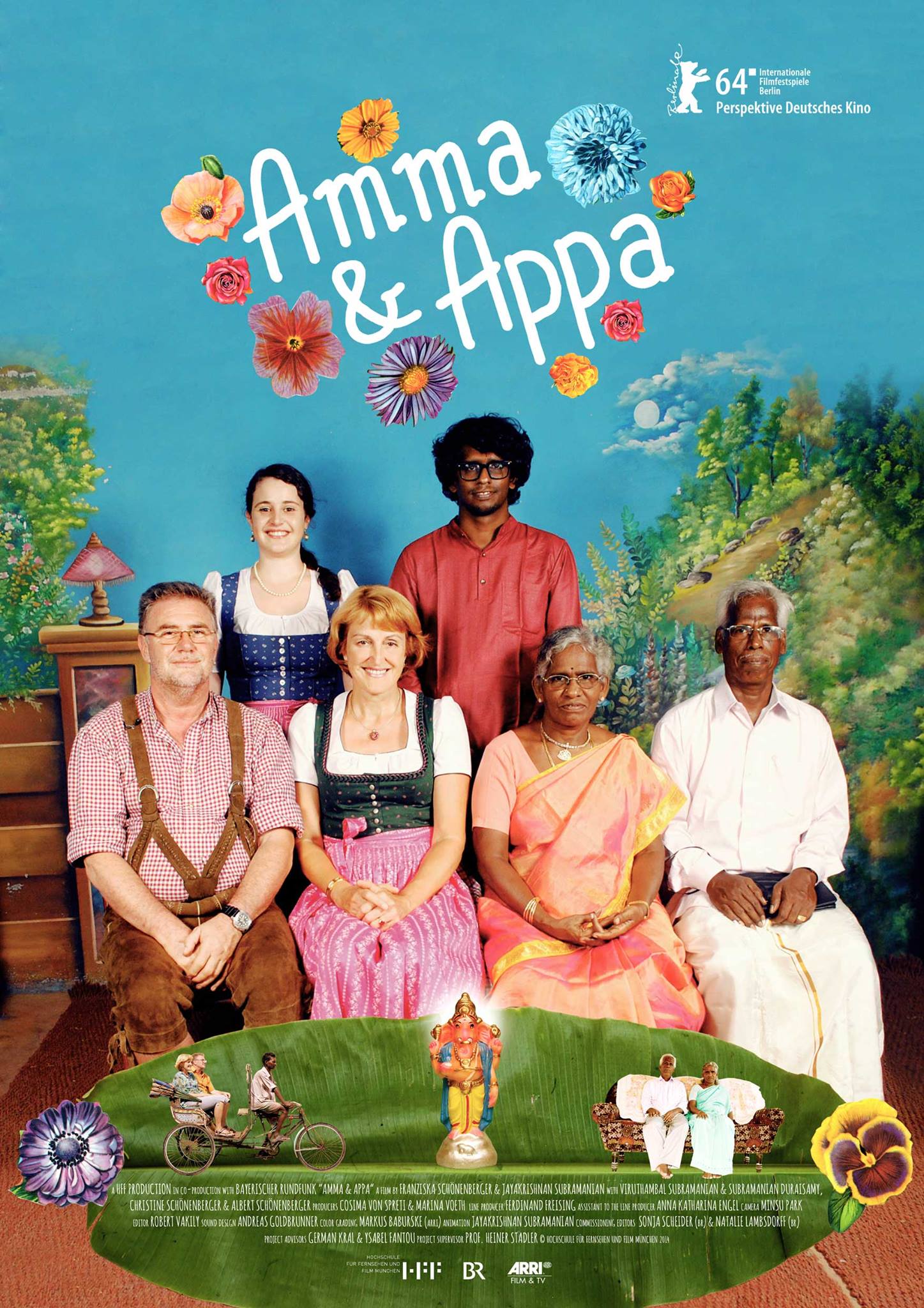
As we have said before, it’s a great time for desi documentaries. And while this one is not an Indian production, it does have a desi connection. Amma & Appa is a personal documentary about the cross-cultural marriage of director Franziska Schoenenberger and her fiancé and co-director Jayakrishnan Subramaniam. It was warmly received when it showed recently at the Berlin Film Fest in the Perspektive Deutsches Kino section. Check out the trailer and synopsis below:

Franziska comes from Bavaria and is in love with Jayakrishnan from southern India. When the couple decide that their love should lead to marriage and a life in Germany, both sets of in-laws find that cultural customs they took for granted are now suddenly subjected to scrutiny.

Whilst Franziska’s parents chose to marry of their own free will, the marriage of Jayakrishnan’s parents was arranged within their own caste, as is customary in Caddalore in southern India. As far as they are concerned, their son’s intention not only to marry a foreigner but to marry for love represents a cruel act of revenge on the part of the gods, since the match calls into question their whole traditional way of life.

Hoping to overcome cultural barriers, the parents of the Bavarian bride-to-be decide to travel to India to visit their future son-in-law’s parents. Interspersed with delicate animation sequences, Amma & Appa is a personal documentary which tells the story of one intercultural union — and in doing so humorously explores the familiar in the unfamiliar, and the unfamiliar in the familiar.

For more info on the film, check out the FB page or the website.

If you are regular reader of the blog, you probably know his name. Neeraj Ghaywan is part of the editorial team and is a regular contributor to the blog. So it’s a great news for all of us. Yay! Yay! Yay!

Sundance Institute and Mahindra today announced the winners of the 2014 Sundance Institute | Mahindra Global Filmmaking Award, in recognition and support of emerging independent filmmakers from around the world. The winning directors and projects are Hong Khaou, MONSOON from Vietnam/UK; Tobias Lindholm, A WAR from Denmark; Ashlee Page, ARCHIVE from Australia; and Neeraj Ghaywan, FLY AWAY SOLO from India.

– Each of the four winning filmmakers will receive a cash award of $10,000, attendance at the Sundance Film Festival for targeted industry and creative meetings, year-round mentoring from Institute staff and creative advisors, eligibility to participate in a Sundance Institute Lab, and ongoing creative and strategic support from Sundance Institute’s renowned Feature Film Program.

More details about the winners and their films –

Hong Khaou / MONSOON (Vietnam/UK): Two young men visit present day Vietnam, and are confronted with the war’s ramifications nearly forty years after its end.

Hong Khaou’s debut feature film Lilting premiered in World Cinema Competition at the 2014 Sundance Film Festival.  The film stars Ben Whishaw and Cheng Pei Pei. He is also the director of three short films, including Spring, which premiered at the 2011 Sundance Film Festival, and Summer, which premiered at the 2006 Berlinale. This year, Hong was named one of the Stars of Tomorrow by Screen International.

Tobias Lindholm / A WAR (Denmark):  The major of a Danish unit in Afghanistan faces the consequences of his actions in the aftermath of his most dangerous mission..

Tobias Lindholm graduated as a screenwriter from the National Film School of Denmark in 2007, and has collaborated with Thomas Vinterberg as co-writer on Submarino and Oscar nominee The Hunt. In 2010 he wrote and directed his first feature film in collaboration with Michael Noer, and in 2012 he wrote and directed the critical acclaimed A hijacking.

Ashlee Page / ARCHIVE (Australia): With the help of a supercomputer, an isolated 16-year-old girl grows plant life on Saturn’s moon Titan in the hope of one day restoring Earth’s ecosystems. But when an unexpected accident leads her to the moon’s surface, she discovers evidence that her mission is a lie and that her life is in danger.

Ashlee Page is an Australian writer and director. Her multi-award winning short The Kiss screened at Busan, Clermont-Ferrand, Palm Springs and Tribeca film festivals. Her most recent work is on the film compendium The Turning, adapted from the novel by Tim Winton. Archive is her first feature film.

Neeraj Ghaywan / FLY AWAY SOLO (India): Four lives intersect along the Ganges river: a lower-caste boy in a hopeless love, a daughter torn with guilt, a father sinking in greed, and a spirited kid craving a family, all yearning to escape the constrictions of a small-town.

Neeraj Ghaywan worked with Anurag Kashyap on the veteran director’s two-part opus Gangs of Wasseypur and as the second unit director on Ugly.  His short films as writer-director include Shor and The Epiphany. Shor won the grand jury prize at three International film festivals.

– The script of Fly Away Solo is been written by Varun Grover.

– You can watch Neeraj’s short films Shor and Epiphany here and here. And click here to read a post by him on the making of Shor.

– Also, Love.Love.Love, a short documentary directed by FTII student Sandhya Daisy Sundaram, won the Short Film Special Jury award for non-fiction at the ongoing Sundance Film Festival. More details here.