The header is from one of the tweets of Varun Grover. He has posted a long comment on this post also. Just when we thought that we all agree on one film finally, Varun felt otherwise – Aha, the joy and beauty of cinema! One film but so many things for so many souls.  He gives a strong recco for Vishal Bhardwaj’s 7 Khoon Maaf – Poetry, pain, darkness, more than a bunch of crackling performances, and quirks that stab you lovingly. Read on…

‘७ खून माफ’ के बारे में बहुत कुछ कहा जा रहा है. बोरिंग, कच्ची, बचकानी, और ना जाने क्या क्या! इन सब रंग-बिरंगे इल्जामों का जवाब देने में वक्त बर्बाद किये बिना मैं बस यही कहूँगा कि  जिसे ‘७ खून माफ’ बोरिंग लगी उसे गज़लें नहीं सुननी चाहिए और ना ही ठंडी-अँधेरी रातों में बाहर निकलना चाहिए. उन लोगों को गज़लें भी बोरिंग लग सकती हैं, और ठंडी अँधेरी रातें बेमतलब.

फिल्म के अंदर का मैं कुछ भी नहीं बताऊँगा…और मुझे भी फिल्म शायद इसलिए बहुत पसंद आई क्यूंकि मैं खुद बहुत बच के रहा था पिछले दिनों फिल्म के बारे में कुछ भी जानने से. अच्छा-बुरा कुछ भी नहीं. तो अगर आप सिर्फ ये जानने के लिए पढ़ रहे हैं कि देखनी है या नहीं – तो अभी कह दिया – देख लो जा के! और बाकी का वापस आकर पढ़ो.

अगर फिर भी कीड़ा है, और अभी पढ़ना ही है तो भी वादा है कि आगे कोई spoiler नहीं है. लेकिन उसके बावजूद – जो भी है, फिल्म से ही जुड़ा हुआ है ना! आगे आपकी श्रद्धा.

मैं यहाँ बस यही बताऊँगा कि फिल्म देख कर मुझे क्या-क्या याद आया. कौन-कौन सी चीज़ें याद आयीं. और वो चीज़ें, यादें, कितनी गहरी हैं. क्यूंकि याद बहुत कुछ आया. सबसे पहले तो याद आया विशाल का गुलज़ार से इतना लंबा रिश्ता. फिल्म शुरू होने के १० मिनट में ही भाषा ने पकड़ लिया. इतनी साफ़, नपी-तुली ज़बान सिर्फ विशाल की फिल्मो में ही कैसे मिलती है? उनकी फिल्म यू.पी. की हो, या बंबई की, या कश्मीर की – सब जगह की ज़बान का वज़न बराबर रहता है. और ‘७ खून माफ’ में तो उन्होंने ‘ग़ालिब’ से लेकर ‘मीर’ तक सबको याद कर लिया है….साथ में गुलज़ार साब के लिखे गाने!

इसके अलावा याद आयीं दो फिल्में जिनका इस-से कोई सीधा लेना-देना नहीं है (फिर भी treat this as a spoiler) – पहली Lars Von Trier की Dogville, और दूसरी ‘साहिब बीबी और गुलाम’. दोनों में प्यार से जुडी उदासी, manipulations, cruelty, अंतहीन खोज, और अधिकतर शांत (या reaction-mode में) central female character है. और इन दोनों फिल्मों का याद एक ही फिल्म देखकर याद आना मेरे हिसाब से बहुत बड़ी उपलब्धि है.

फिर याद आये विशाल के पुराने गुरु Shakespeare और inevitably, मकबूल. फिल्म में बार बार यही लगता है कि विशाल ने रस्किन बोंड की कहानी को शेक्सपियर वाली बोतल में डाल के जमा दिया. किरदारों की भीड़, नौकरों का कहानी में बहुत बड़ा रोल, quirky characters, और लंबे-लंबे dialogue…सब उसी कमरे के थे जिसमें मकबूल लिखी गयी थी. और भी बहुत सी वजहों से मकबूल याद आई…पर यहाँ नहीं बताऊँगा. देखो और सोचो.

इसके अलावा भी बहुत कुछ याद आया – बहुत सी कविताएं, गज़लें, सपने, डर, और गीत. एक बार ‘मेरा नाम जोकर’ भी याद आई.

और अंत में बाहर निकलते हुए, जब आगे चल रहे दो लड़के बोल रहे थे ‘यार ठीक थी…पर कहानी कुछ पूरी नहीं हुयी…’ तो याद आया कि थोड़े दिन पहले कहीं और भी बात हो रही थी (‘दायें या बाएं’ देखने के बाद) – कि हम लोगों ने कहानी को इतना सर पे चढ़ा लिया है कि सिनेमा के बाकी मतलब कभी ढूंढते ही नहीं. परदे पर कई बार एक साथ १०-१२ चीज़ें चल रही होती हैं….और हम लोग सिर्फ ये खोजते रह जाते हैं कि कहानी कहाँ आगे बढ़ी? मुझे तो खैर इसमें कहानी भी हर वक्त आगे बढती हुयी ही दिखी (सिर्फ एक जॉन अब्राहम वाला किस्सा थोड़ा out of place लगा) – लेकिन जो सिर्फ कहानी देख के आ जायेंगे, उनको इस फिल्म का असली प्रसाद नहीं मिलने वाला. एक-एक फ्रेम, एक-एक लफ्ज़, एक-एक किरदार का मतलब है…और वो मतलब गज़ल की तरह ही, कई बार हौले से बोला गया है….कई बार उर्दू या फ़ारसी में, जो हमें समझ तक नहीं आती. उसे दोबारा सुनो, या जोड़-घटा के समझो, या गुज़र जाने दो…किसी अच्छी गज़ल के उस हिस्से की तरह जो समझ आये बिना भी हम गुनगुनाते रहते हैं.

PS – To copy-paste another tweet of his – All you good folks, falling for bad-reviews of 7KM, just one piece of advise – GO WATCH IT! VB IS STILL THE DADDY.
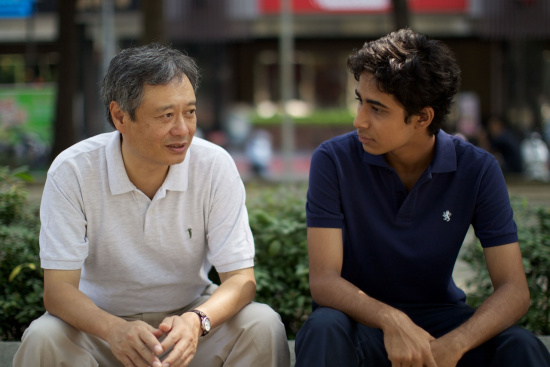
Thanks to the good soul who mailed us the (un)official synopsis of Life Of Pi. The film is directed by Ang Lee and is based on Yann Martel’s novel of the same name. It has Irrfan Khan (Older Pi), Tabu (Pi’s mother), debutant Suraj Sharma (Piscine Molitor ‘Pi’ Patel) and Adil Hussain (Pi’s father) in lead roles. It’s scheduled to release in 2012 and will be in 3D.

And here is the synopis…

PISCINE “PI” PATEL (54) was born in India but now lives in Montreal. Though he loves Canada, he misses the heat of his native country. He is still a bit traumatized by the memory of being abandoned by RICHARD PARKER when he was 12.

Pi’s father studied zoology in Paris which is where he met Pi’s mother. An avid swimmer, Pi’s father taught Pi how to swim when he was seven. His father worked as the director of the Pondicherry Zoo in Madras. Pi grew up around the animals, learning to love each of theirs unique and sometimes amusing idiosyncrasies.

In school, Pi earned the unfortunate nickname of “pissing Patel”. When he entered middle school, he took the moniker Pi and was thankfully never teased again.

In 1964, over the objections of his mother, Pi’s father took Pi and his cousin RAVI to the tiger cage to watch it kill a goat. It was a lesson to teach them to fear the big cats. They may look fluffy and cuddly but they are ferocious animals.

Pi became interested in Catholicism. He would visit the local church and talk to the PRIEST about his religion. Pi was raised as a Hindu and would go to temple to question the PANDIT about his philosophy. Pi also would go to the mosque to ask the IMAM about his religion. Pi was fascinated by all three religions and considered himself a member of each. It never proved a problem until one day when he was walking with his parents and encountered the priest, pandit and imam. Each declared Pi a member of their congregation and got into a fight when the others made the same claim.

When the owner of the zoo, the MAHARAJAH died, his SON took control of his holdings. He decided to raze the zoo and replace it with a golf course. Pi’s father hoped he could change the Maharajah’s son’s mind by acquiring a lion for the zoo. He took Pi with him when he went to a circus to look for a lion to buy. While he negotiated a deal with the circus owner, Pi met the LION TAMER. He took the boy into the cage with him and showed him how he controlled the animals. The most important thing he taught Pi was never to show fear and to always be in command. Pi’s father was unable to make a deal with the circus owner and they left empty-handed.

With the zoo closing, Pi’s father got a job with the Canadian zoo which purchased all of the animals. They were loaded onto a boat along with Pi and his family. While on the cruise to their new home, Pi helped to feed the animals.

Pi was awakened one night to find his room flooding. The ship was sinking. The sailors freed most of the animals, giving them a chance on the open sea rather than drown on the boat. Unable to find his parents, Pi was taken topside by a sailor who threw him into the ocean. Pi swam to the nearest lifeboat, climbed aboard and watched the ship go down. That’s when he noticed that he wasn’t alone on the lifeboat. He shared it with a zebra, peacock and a hyena. Pi never saw his parents again.

Pi saw a tiger named Richard Parker clinging to a piece of driftwood nearby. It got that name from the Brit who found the orphaned cub that was then given to the zoo.

Pi is telling the story from his hospital bed to MR. OKAMATO and MR. CHIBA, investigators from the insurance company who were questioning him about why the boat sunk. Besides the two Japanese, there were a few nurses and orderlies also listening to Pi’s fascinating tale.

Pi then saw a hand grab the edge of the lifeboat. It belonged to a female orangutan who pulled herself into the boat. After a couple of days and getting hungry, the hyena moved to attack the zebra. Pi tried to fend it off with an oar but couldn’t stop the starving animal. It attacked the zebra who panicked and fell out of the boat. Thwarted, the hyena then turned and attacked the orangutan, killing it. That’s when the tiger reappeared, jumped into the boat and killed the hyena. Pi escaped the boat after making a raft from oars and life preservers. He stayed near the boat because it contained supplies that he might need.

As Pi continued his tale, his hospital room began to be filled with more patients and staff who were hanging on every word he said.

As the days continued, Pi remembered the things he learned from the lion tamer. Using a fishing hook he found in the survival kit on the lifeboat, Pi began catching fish to feed himself and the tiger. He would clean the fish by using one of the tiger’s discarded claws. In time, they formed an unlikely truce. The tiger wouldn’t eat Pi as long as he continued to feed him. When Pi got the chance, he would also feed on sea turtles and sea birds that he would encounter. Pi would keep track of the days by making notches on an oar. He would eventually make a total of 137 notches.

Pi woke up one morning to find that his boat had reached an island. The tiger jumped out and ran into the jungle. Pi began to investigate himself before passing out from exhaustion. He woke up to find his hands and feet bound. The sailor from the ship was also on the island. The sailor was apologizing for his what he was about to do – eat Pi. Before he got the chance though, he was attacked and killed by the tiger. Pi jumped back in his boat and began to paddle away but then felt guilty about leaving the tiger, so he used a whistle he had found to call the big beast. It came running (carrying the sailor’s arm in his mouth) and jumped back in the boat.

Some time later, the boat washed up on the beaches of Mexico. The tiger leaped to the shore and disappeared into the woods. Pi was extremely saddened by the loss of his only friend. Pi was found by some locals and taken to the nearest hospital.

By now Pi’s audience had filled his room and spilled out into the hallway. When he finished his story, many of the listeners dabbed at the tears in their eyes. Some openly wept.

SPOILER

Mr. Okamato and Mr. Chiba expressed their doubts about the veracity of the story, finding it to be just too implausible. When they saw Pi’s eyes look downward, they thought they hit a nerve so they ushered everyone out of the room. Pi then told a simpler tale. He said when he reached the lifeboat, it held his mother and two sailors, one with a broken leg. After a few days out on sea, one of the sailors wanted to kill the injured one to eat. Rather than face that fate, he jumped into the ocean taking his chances with the sharks. The sailor then turned and killed Pi’s mother, stripping her flesh to hang and dry. When the sailor fell asleep, Pi killed him and later ate him. Mr. Okamato and Mr. Chiba are distressed by the story, feeling sorry for Pi having to witness his mother being killed and cannibalized. As they left the boy alone, they remarked how similar his two tales were, marveling how the young man’s imagination had replaced humans with animals. They figured the hyena was one sailor, the zebra was the injured sailor and the orangutan was Pi’s mother. Who then was the tiger? Well, Pi of course.

SPOILER ENDS

Years later, Pi is living in Montreal. He returns to his apartment. Pi still has the tiger’s claw.

The day I got to know that Vishal Bhardwaj was adapting another Ruskin Bond short story for the big screen, I went to all the possible book stores, searched desperately for the book with the story Sussana’s Seven Husbands, found it, bought it, read it and then heaved a sigh of relief. How else can you claim to be a Bhardwaj Fanboy!

The short story (just 5 or 6 pages) by Bond is a mood piece, sets an atmosphere where you don’t feel comfortable and there is an eerie feeling that something is lurking around the corner. Things are not explained, deaths are without any reasons and everything else is left to your imagination. Once I and other B-fanboys finished reading it, we all wondered endlessly about how Vishal is going to adapt it for the big screen. Knowing Bond, it should have been easy to predict. Rewind to Rusty days.

But what will compensate for the lack of central drama ? Add to that, our cinema habit of enjoying a “destination film” more than a “journey film”. If the last 20 minutes doesn’t satisfy us, nothing can compensate for the price of the ticket, no matter how brillant the rest of the film is.

And every fear came true with 7 Khoon Maaf. In CBSE curriculum, we had a short story in school titled “Curiosity Killed The Crow”. In case of 7 Khoon Maaf, I was the Crow. Not sure how different my reaction would have been had I not known about all the spoilers. Since the announcement of the film, have been following every bit of news, forcing every possible source to spill out the beans and I even knew about the spoiler in the film. The film’s official synopsis made matters worse where it gave out every detail about the plot. The only thing left to know was – How ?

The film opens with a scene where Priyanka is holding a gun close to her head. And the first thing I noticed was the patchy make-up on her face. You don’t expect to see such a face in a film directed by one of the country’s top five filmmakers. And things got worse from there. Not sure on whom the blame should be put but you can almost feel the layercake of make-up put on Priyanka’s face in many scenes.

If you follow the blog, am guessing you know more than enough about the story. Sussana. Six Marriages. Husbands. Dead. Neil’s character had so much potential but if only fake moustaches could save the day, we all would have been roaming around with those. John, well, I don’t have too many adjectives for wooden blocks. More or less, he remains the same. Naseeruddin Shah doesn’t have much to do, Russian actor Aleksandr Dyachenko has a charming presence and as always,  Annu Kapoor is effortless. Irrfan Khan – benign by day, beast by night and he can go no wrong. But the one who gets to be the dude is Shah Junior – Vivaan. Not conventional good looking but confident and how! An assured debut. Unlike other first timers, not self-conscious of his body language at all. Blame it on the Shah-DNA. But to imagine him as Konkona’s husband, and again with that layer-cake make-up, that was the toughest part. Priyanka is spot-on, whatever she is expected to deliver, she does it well. If only she could get rid of that school-girl giggle, she would be more likeable.

If I ever murder someone, I’ll put the blame on Coen Brothers. Because they make killing look so cool. Wish I could share the blame with Bhardwaj too. But he goes for the emotional baggage. Justifiying every killing of the “dukhi-bechari-badkismat” Maidyum. Looking for love. Settling for blood. Killing just for the sake of killing, what a delicious dish it is! Like that war of whip-lashes (Neil Nitin Mukesh) in an open muddy ground.

And what’s the big picture ? 1,2,3,4,5,6 and then go for the sublime sufi swirls. Count that 7 and bingo!

The brillance of Bhardwaj is there, but too little, the way scenes are set and lit ( Double woot for Ranjan Palit).  The master who has penned some of the best dialogues in the last few years, also drops few few lines here and there. Shaadi jaldi jaldi aur pachtao araam se. But it all boils down to nothing. It’s packed with so much stuff and yet offers so little.

The worst – even the song Tere Liye is not there in the film. At least that would have compensated for some of the pain of seeing one of your favourite filmmakers falter this way.

The first look of Rohan Sippy’s new film Dum Maaro Dum is out. It stars Abhishek Bachchan, Bipasha Basu and Rana Daggubati. Prateik is credited as Special Appearance in the teaser. It’s written by Shridhar Raghavan, shot by Amit Roy and has Pritam’s Music. Check it out.

And here is the official synopsis….

Goa. Paradise on Earth. But every Paradise has a few snakes.

Multiple lives collide brutally one day at Goa Airport… and change forever.

Prateik Babbar: Lorry
A student on the verge of following his girlfriend to a US University. But when his scholarship gets rejected, his life threatens to spiral out of control, until he meets a smooth talking hustler who promises to get it back on track. For a small price. His soul.

Abhishek Bachchan: ACP Vishnu Kamath
A self destructive cop fleeing his own past, Kamath is given the job of destroying the brutal local and international drug mafia in Goa. As he begins his ruthless, relentless campaign and takes on the murky drug world… he discovers nothing is what it seems.

Rana Daggubati: DJ Joki
A local musician and mute spectator to what is happening around him, Joki drifts aimlessly through life after an encounter with the drug mafia cost him everything he held dear. Today he discovers history has a nasty habit of repeating itself. Will he finally have the guts to take a stand?

Bipasha Basu: Zoe
An aspiring airhostess who saw her dreams turn to dust, Zoey in a way represents Goa itself. A child of the hippy generation, a mix of local and foreign culture, innocence and beauty have gradually been replaced by cynicism and abuse.

Aditya Pancholi: Lorsa Biscuta aka the Biscuit
A ruthless local businessman, the Biscuit has his finger in every Goan pie, legal or illegal. The point person between all the various Mafias operating in Goa, the Biscuit finds himself pushed to the extreme limit with Kamath’s arrival. But he knows who to turn to:

A mysterious shadow
The ultimate drug kingpin. Many names, many identities but no one knows who he is….

We hurtle into the bylanes, beach shacks and raves of Goa with Lorry as his life spirals out of control, with Joki as he tries to redeem the past and with Kamath as he goes no-holds-barred after the mysterious shadow figure behind it all…

Punctuated with a soundtrack that moves from pulsating dance tracks to haunting Konkani songs, shot right in the midst of the teeming international tourist hotspots, Dum Maaro Dum takes you on a dramatic, thrilling trip filled with twists, turns, suspense… and a shocking finale!

Not sure why and how, but Freida Pinto is surely going places. As if Danny Boyle, Julian Schnabel, Woody Allen, Tarsem Singh and the Apes movie weren’t big enough for her CV, now she also has Michael Winterbottom.

The film is titled Trishna and will also star Riz Ahmed (Four Lions). It’s based on Thomas Hardy’s novel Tess of the d’Urbervilles. We haven’t read it but according to IMDB, it’s “The story of the tragic relationship between the son of a property developer and the daughter of an auto rickshaw owner”. And a friend described it as “hopelessly depressing”.

The film will be shot all over Rajasthan and it’s a start to finish schedule. The shooting starts by end of February. Last time when Winterbottom shot A Mighty Heart in India, it was in news for all the wrong reasons. So this time its been kept as a hush-hush affair.

And this is not the first time that Thomas Hardy’s novel is getting adapted for the screen. Tess of the D’Urbervillies was also adapated as a four part mini-series for BBC and had Gemma Arterton in the lead role.

Rajasthan, Frieda Pinto, property developer, rickshaw owner – well, something tells us that it will again be desi exotica for the West. What’s missing ? Bollywood and naach-gaana ? Bet it’s there. Someone will move to Mumbai and dhen tedan! We can’t spill all the beans at one go.

Click here to read the Deadline.com report.

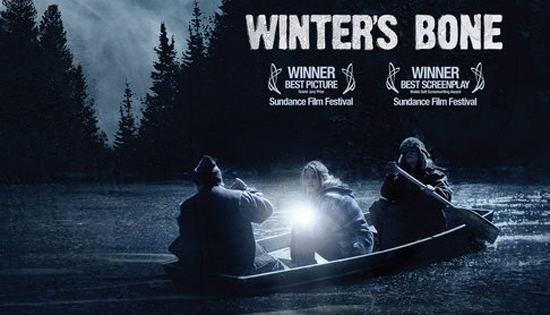
The real battle in storytelling is with the cliches. You sit down to write a different ‘coming of age’ story. You pick a female protagonist, an unlikely location and you paint a grim picture of life addled with addiction, poverty and a fierce sense of kinship. You think that’s distinct – the trunk and branches that should hold the narrative seem real – so, you start arranging the leaves of the tree. It is then the hard work begins. These leaves look no different from the leaves you have seen on many other trees. Then begins your battle with the cliches. Fortunately for us, this is a battle that Debra Granik wins with aplomb in Winter’s Bone. In her dual role as writer and director, she scripts and brings to life on screen a searing coming of age story that’s original, disturbing and filled with arresting details.

There are two templates of coming of age story in modern literature. The most famous of them is Salinger’s Catcher in the Rye. Holden Caulfield’s three days in New York after being expelled from his school where he confronts his sexuality, reconciles to his delusions of being the saviour of his generation, deepens his relationship with his sister and discusses life with his former teacher is the most adapted mould. There is no specific external event that triggers Caulfield’s actions. In fact, most of the external world is actually inert to his condition. The strife of Caulfield is internal as his soft idealism dashes against the granite hard reality that is the world outside. As Caulfield hurtles through the three days, the reader is constantly searching for a motive for his martyr without a cause behaviour. There’s none except you discover at the end that the motive was to have him accept adulthood – that living for cause than dying for it is the mark of coming of age.

The simplest example of the other template is ‘Barn Burning’, a short story by Faulkener. Here the catalyst to the coming of age of Sarty Snopes is his disgust at the life of crime and pyromania his father leads. Sarty has to question the only way of life he has known, discover his moral compass and break free. Again, there’s no added motive to Sarty’s actions. It’s his journey of self discovery; of finding his innate idealism in conflict with the principles (or the lack there of) that have reared him.

The second template is the closest that Winter’s Bone gets to as a coming of age tale. It’s a template that Udaan, one of the finest coming of age tales in Indian cinema, follows as well. What Winter’s Bone does beyond the template is to invest in a motive that would have been a story in itself.

Ree Dolly, the seventeen year old protagonist, has her hands full managing her two younger siblings and her ‘not quite there’ mother. There’s a certain elan and economy with which the Granik eases you into the film. There’s a folk song about Missouri that’s playing at the back as the film opens and the radio cackles with the newscast talking about a spell of really cold weather in the area. The stark landscape of Ozarks is quickly established as is the poverty of the families living there through the opening montage of run down houses, disposed cars and the lack of options for feeding the Dolly family dog. Ree is a woman too early – as she takes charge of the breakfast for her siblings, combs her mother’s hair and then walks the siblings to the school while testing them on their spelling and math. This is unlike any America you have seen on screen for a long time. There’s poverty of the kind where the next meal is uncertain, lurking lawlessness around and the class that’s running when the teenaged Ree reaches her school is on parenting which sums up the social environment. There’s also a strange kind of kinship that’s established quite early when the neighbour brings in meat and potatoes for the Dollys with the purpose of knowing why the police (or the law as it’s referred to through the film) had visited them that afternoon. There’s benevolence in here as also a fierce instinct of self preservation; two forces that drive the story forward. Ree accepts both these forces with a line that sums up her own view about the kinship – ‘never ask for what ought to be offered.’

The arrival of the law sets the things in motion. Ree’s father, Jessup, who’s out on bond on charges of ‘cooking’ meth has gone missing a week before his court date. This wouldn’t have meant much to the family except he has pledged the house and the farm to the court. Finding Jessup is the only thing that will keep the family from being out in the cold. The motive for Ree is established. She has to find her father before the week’s up.

This isn’t an easy task. As Ree goes looking for him, she finds an almost mafia-like code of silence pervading the community. She’s constantly advised to stop looking for him for her own good. There are ruses set up to leade her to believe he may be dead including a burnt barn (that’s when you first think of Faulkener) which seems to have gone up in flames because of the meth exploding while cooking. The reactions to her search range from angry but well meaning advice from her uncle Teardrop to active support from her friend (a teenager who already has a baby which makes the parenting class shown earlier in the film quite appropriate), threat of violence from others involved in the meth trade and finally, violence at the hands of women of the house of the local ringleader. Through all this Ree doggedly pursues in her quest. On the surface this is for her family and for a roof on their heads in this particularly harsh winter. But underlying it is Ree’s desire to understand the lives around her and her own life as it would be. By the time Ree finds her father you know she won’t remain the girl she was before she started this search.

This is an incredibly nuanced film. The cold weather and the landscape of Ozarks are used to create a cold, detached mood through the film. Meth is an all pervading character in the film. You see people addicted to it, dying of it, peddling it and living off it. There’s a matter of fact acceptance that eventually everyone will take to it when you find Teardrop asking Ree if she’s developed any taste for it. There is also chauvanism of the kind that would make khap panchayats proud. The distinct sense of discomfort is not only from the nature of Ree’s questions but the fact that she is a woman who is going about seeking such information. And, when things come to a pass, it is the women of Thump Milton’s house (the local ringleader) who get violent with Ree. The men couldn’t bring themselves to be harsh on a girl.

The film rests on Ree’ shoulders and, this is, quite possibly, the best written female character seen on screen for a long time. Ree is remarkably assured and level headed for the kind of world she lives in. It was easy to make her precocious but she isn’t. She has preserved a set of ideals that she lives by and they give her the fortitude to shoulder on as well as the vulnerability to break down when she finds the seizing of the house by court imminent. You could almost see they way life could have turned out for her when she goes to the Army recruitment centre. The singularity of purpose in the face of odds and the moral courage that she demonstrates would have been attributes of a fine young soldier. Those attributes aren’t lost. They eventually help her discover the truth in a test of grit that’s almost mythical.

Winter’s Bone is a poetic film. There’s lyricism amidst dirt, hunger and betrayal. There’s hope and optimism at the end that juxtaposes with an eerie sense of what Ree might become eventually. It’s poetry because it doesn’t wait to explain. It flows and takes you along till the final sequence. Ree on a rowboat on a pond on an inky cold night along with Thump Milton’s women. There’s a surreal beauty around that pond that hides the macabre truth that Ree already knows but is about to ascertain.

The water’s icy cold and the moment the chainsaw cuts to the bone, you know why this is a mould-breaking coming of age film. You also discover why it’s titled Winter’s Bone.

As always, thanks to Pavan Jha.

Yes, the video that we all have been waiting for, is finally out. And guess who has got the song ? Irrfan Khan. Again? First, Bekaran and now Tere Liye. Or may be the promos are misleading.

Tip – Pratyush Painuly

Rakeysh Omprakash Mehra is back after the debacle of Delhi – 6. But this time as a producer.

Teen Thai Bhai is produced by PVR Pictures and ROM. It stars Om Puri, Shreyas Talpade and Deepal Dobriyal. The film is directed by debutant Mrigdeep Singh Lamba. Lyrics are by Gulzar and music is Ranjit Barot and Sukhwinder Singh.

The film was earlier titled Mad, Madder, Maddest. The cast is interesting for sure but seems like the film is going to be slapstick.


WHAT : Pitchfest is an opportunity for writers to ‘pitch’ their television ideas to Walkwater Media! It is an open call to writers all over India who want to write television content and have an interesting idea germinating in their mind.

QUALIFICATION : If you’re over 16 years of age and have an interesting idea for a TV show, you qualify! Pitchfest is open to new as well as experienced writers.

GENRE – Walkwater is open to ideas across various genres be it children’s content, daily soaps, crime thrillers, comedy, or any other genre for which you want to pitch! You can also turn in your ideas for non-fiction television content including reality TV!

HOW : You will need to upload your material, written in English or Hindi in the following format –

a. Logline – a 2-3 line brief about your idea.

b. Concept Note – not larger than 2 A4 size pages.

c. Character sketches of all important characters – not larger than 2 A4 size pages.

d. 5 episode story arc.

DATE : Entries open on February 1st 2011 and the competition closes on February 28th 2011.

CONTACT : If you have any questions, you can email at pitchfest@walkwater.in

WEBSITE : Click here to know more about it including the option fee and the assignment fee which the writers will be paid. And click here to know more about Walkwater Media.

– Don’t forget to check out the Terms & Conditions page. ( And yes, point No. 8 )

Happy writing & pitching!