A new Vishal Bhardwaj film is always cause for celebration. Even his weakest films have so much to savour, and in an industry so plagued by intellectual and creative bankruptcy, Bhardwaj is the rare filmmaker who could perhaps truly claim auteur status- he produces, directs, writes, composes- and does all of it with a style so distinctive and quixotic- there’s no mistaking his stamp. We’ve got to admit, we’re fanboys, and unashamedly so.

The much awaited trailer for Mr Bhardwaj’s new film ‘Haider’ has arrived along with a trio of posters. Haider is based on Hamlet and is the final film of his Shakespearean Trilogy (preceded by Maqbool and Omkara) and stars Shahid Kapoor, Tabu, Shraddha Kapoor and Kay Kay Menon among others (including Irrfan Khan in a special appearance).

Notably, Haider has been co-written with Kashmiri author and journalist Basharat Peer and also marks the filmmaker’s first collaboration with cinematographer Pankaj Kumar, who is best known for shooting Anand Gandhi’s Ship Of Theseus. Click here to read an interesting article about Peer’s collaboration with Bhardwaj.

Take a look at the trailer and posters and let us know what you think:


anurag--300x300Dear All,

When I am not making movies – which is thankfully rarely – my favourite pastime is to get fundamentally quoted without the context. Blame the lack of space in newspapers today with all those advertisements accounting for most of it. It helps to keep our conversation going, you see. And it has happened again. My whole conversation has been reduced to one line that’s being knocked around, “rape is a bad accident says anurag kashyap”

Fun though it is, I think it’s time I speak for myself and not let some out-of-context quote in a paper, or an edited version of a half-an-hour conversation do the talking.

Sitting here in Karlovy Vary I have been inundated with texts and mails about an interview of mine, that has of course, as always, been completely misread.  It does not help that a long conversation has been reduced to a paragraph, but credit to the writer that he does mention that the now-controversial paragraph is the point of view of a woman and not my own.

The reactions on various social platforms do prove that in anger the opinionists also turn blind, and they actually read what they want to, so that they can rage over it, rather than seeing it and arguing healthily over it.

I don’t mean to spoil the rage party, but let me try to bring some context here.

Recently, I was in conversation with a woman, who quoted an old article she had read in The Times of India oped page, years ago.  That article profiled a courageous rape survivor, a European woman living in India, who after being gang raped, actually fought for a fair trial for her rapists and a lighter sentence. She strongly protested any baying for blood or vengeful mindset. She was in fact ridiculed and vilified for standing up for justice for her own rapists. When asked why she did it – she said that she would treat the trauma of her rape the same way she would treat the trauma of being in a terrible car crash. She would try to heal from it, she would want the irresponsible perpetrators punished, but she would not allow the crime to gain greater significance than she felt it was due. Any greater assignment of meaning to her own rape would be to give in to a male view of the female gender. She also believed that her identity and her dignity did not reside between her legs, but between her ears.

The woman friend of mine who told me about this case, also mentioned that this article made her rethink the concepts of honour, izzat,  dignity and personal identity, for years to come.

What was read as my comment or statement in the HINDU were actually “questions” raised by the survivor, which were then subsequently narrated to me by another woman and by me to Sudhish Kamat who writes it like it is but not all of it, which by now is attributed to me as my quote. Those questions stayed with me and bothered me, and made me question things, because I felt that there was a certain truth to them.

I am not so good at articulation without my camera, but let me try and elucidate the point my female friend was making: No woman invites rape, rape is never ever the woman’s fault, and no woman would chose it – if the choice was a viable one. But in a situation where the choice is between life and rape, a woman might just choose the latter. If her choice is ‘life’, why is that very life taken away from her, once she is raped? Why is she called stuff like ‘zindaa laash’ and why does the entire focus shift to ‘honour’ rather than to ‘healing’? To ‘punishment’ rather than to ‘rehabilitation’? When does the male gaze take over, such that even the extent of the victim’s physical and mental bruising is decided for her by others?

Why is she never granted the quiet she so sorely needs? She is frequently dragged out by the social worker to narrate her story again and again, she relives the trauma again and again, she is used to make a point. should that not be a choice. the choice of the survivor.

The woman who told me this story also said that she often puts a very difficult binary choice to her female friends: Such as: burnt alive, or rape? Dismembered, or rape? Acid attack, or rape? Horrible though it sounds, when given a choice like this, many women went quiet. The horror of rape, when pitted against other ghastly horrors, acquired a perspective. Not that of being ‘fine’ or ‘acceptable’ but often, of the lesser evil – if other brutalities or violence was not involved.

Does this mean any of us is trivializing rape here? Far from it. It is a violent, traumatic, battering, violating experience. All I want to say is that let us not add male notions of honour and purity to it. That is like adding insult to the injury.

The point is about not having a choice. When one is raped, there often is no choice. When one has the option of fight or flight one uses it but often neither option is available. It is the same in a bad accident. You do not have a choice but you go through the brutality .

However, what happens afterward is telling. When in a bad accident, the victim goes to the doctor or a hospital, tries to recuperate, allows oneself to heal, the victim is rehabilitated or allowed to rehabilitate.

And the one who causes the accident is punished.

My distress with our social network-ists is that they assume they understand rape simply because they are women. Rape is not that easily understood and it is not a gender’s prerogative to do so.

In this world men are raped too and more so in our society, in this part of the world. I am also a victim of rape and I have healed a lot more than most because the world was not fussing over me.

Suddenly there is a new term being thrown around, VAW (violence against women) well, coming to VAW, VAW is not the same as rape, VAW includes rape but rape has a much broader bracket that includes the other gender too and also the one we most often don’t consider a gender, the transgenders, who are the biggest victims of the said crime..How I look at Violence? You can’t wish it away, laws will not and can’t control it, it has existed since the mankind has existed, violence against animals, violence against humanity, all kinds of violence exists and will continue to as long as people are not equal. as long as two people will have different strengths and ability, there will always be a power struggle and there will be violence. The weak will always be violated by the strong and it is not gender specific. You can police it. regulate it .. there is violence in sport but is regulated. the perpetrator is always shown a yellow card, then a red card and then is barred from the field and if he/she continues, is banned from the game for life. Only physical assault does not constitute violence, emotional blackmail is also violence, mind games are also violations, misusing nirbhaya laws is also violence and rise in that VIOLENCE AGAINST MEN since those laws have been constituted, was even commented on by the Supreme court just last week. Every solution will create a new problem. anyway i am digressing here..its a never-ending discourse.

If I had to discuss or argue about rape, I would much rather do so with the victims and survivors than with a feminist.Why? Because I get a strong feeling that the Indian feminist is very hard to talk to, because he/she doesn’t listen. He/She has a fully formed opinion etched in stone and will give no space to accommodate any other point of view.

Indian feminists start with the agenda already defined, and hence there is no room for any other opinion or position. Feminists are always eager to adopt any woman with a strong voice as their own. We saw our film “Queen” being immediately adopted by them as a feminist film. Let me say here that neither is Vikas Bahl a feminist, nor am I, and we both love and respect women as we do men: as people, as human beings. Isn’t that the way it should be?

Queen was not intended to be a feminist film, it was the love and respect for this human being and her story that came through, the film was not pro woman or anti men. It was a story of a girl finding her own self and how she does it on her terms.

I know a lot of women who the feminists project as their own and these women hate it, they hate it because they don’t see themselves that way but don’t say it out loud because they are mortally afraid of offending the feminists. The fear that the feminists inculcate even in women is especially peculiar.

Next. coming to my short film – well everything we do is not always a statement. The purpose of the film was not to offer a solution but to tell a story. I made a deal where I was obligated to do a short film for the platform it provided to five other young filmmakers around me who I think deserve more and so that they can showcase what they are capable of.  They made their shorts and the time came to do mine, we were running out of time, I was already late by a month. We were to do a short film and I had two days and the script was chosen from a bunch of scripts and purpose of the film was not to offer a solution. Purpose of the film was to tell a story, and this was the best of the lot, it had its issues but we did not have time to iron out the issues and in that story we tried to shoot it in a way , that one feels the harassmentThe ending was meant to be light hearted. We had no idea that it would go viral and that’s our shortcoming probably, we had no idea that it will be taken as my opinion and even after it was, it helped to bring forth so many points of view – and that wouldn’t have happened if that short did not exist.

I responded to and engaged with some sensible points but the angry, short sighted judgemental ones that came from twitter anger we chose to ignore. I refuse to take the responsibility of making a statement on behalf of a half baked -ism of this country through my work. I am not your voice so please stop expecting me to be, I am on my own journey and constructive points of views help me grow and understand things more, I have been taught not to be afraid to sound like an authority before I speak, I have been taught to speak freely because until and unless you don’t do that, there will not be debates and discussion and arguments.

I am my own voice and I speak for myself, and my life is an ongoing process, I have not come to any conclusions about anything in life, about you or me or cinema or rape or women or anything. I react, I think, I over react, I think too much and I think aloud. I am what I do and not what I am expected to do.

I don’t think I am that important in any scheme of things and I write this letter for the sake of the few people I actually care about, who are distressed, and  who urge me to have my say.

– Anurag Kashyap

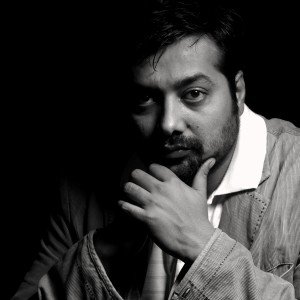
(ps – To avoid further misunderstanding, let us clarify that he didn’t send us that profile pic of his to go with this post, we just googled and put one. Because just text looks bit drab)

NFDC (National Film Development Corporation Ltd) today announced the six finalists of the Screenwriters’ Lab 2014.

In its eighth edition, the first stage of the Lab this year will be held in Sarajevo Film Festival (15 – 23 August 2014) culminating in the second stage prior to and during Film Bazaar (20- 24 November 2014). The market, like every year, will be held along side IFFI (International Film Festival), in Goa.

 The six scripts / screenwriters selected are:

  1.  The Boyfriend – Vidur Nauriyal and Ashim Ahluwalia
  2. Winter– Aamir Bashir
  3. Char Log Kya Kahenge – Hitesh Bhatia
  4. Flow – Vandana Kohli
  5. All about Her – Ruchi Joshi
  6. The Sunset Club – Karan Tejpal

Details about the scripts/writers

– Vidur Nauriyal and Ashim Ahluwalia – The Boyfriend will be the second feature from the team behind Miss Lovely, directed by Ashim Ahluwalia, which was screened at Un Certain Regard at Cannes Film Festival 2013. Ashim recently received the Hubert Bals Fund for script and project development (a Rotterdam festival initiative) for The Boyfriend. Miss Lovely was one of the five projects at Film Bazaar’s Co-production Market 2008 and Work-In-Progress Lab 2011.

– Aamir Bashir – Winter, is the second feature to follow Harud (Autumn), Aamir’s debut film, which premiered in Toronto Film Festival 2010. As an actor he has also appeared in some of the highlights of the new independent cinema including A Wednesday, Peepli Live and Frozen (TIFF 2007)

– Hitesh Bhatia – Comes to the Lab with a wealth of experience in commercials and directing commercial TV shows and has moved his focus to feature films as he embarks on this new phase in his career with his project Char Log Kya Kahenge

– Vandana Kohli – Has scripted, directed and edited projects for clients including The National Geographic Channel, The History Channel, and India’s national broadcaster Doordarshan. Also a photographer and musician, Flow is Vandana’s first feature film project.

– Ruchi Joshi – Followed her film studies in Melbourne Australia with work in music videos, commercials and independent feature films in Mumbai. All about Her is her second project as a screenwriter.

– Karan Tejpal – Has worked for several years in the film industry making commercials for global brands and working as assistant director on mainstream feature films including the mega-hit 3 Idiots, Lage Raho Munnabhai and Ferrari Ki Sawari. His first feature will be The Sunset Club, adapted from Khushwant Singh’s novel of the same name.

– The mentors of the Lab include noted experts from the industry, namely, Marten Rabarts, Senior Consultant – Training and Development, NFDC Labs; Olivia Stewart, Script Developer; Urmi Juvekar, Script Developer; Bianca Taal, International Industry Advisor.

– NFDC’s Screenwriters’ Lab was introduced in the year 2007 with the Co-production Market in the inception year of Film Bazaar. The Lab gives an opportunity to six independent screenwriters to develop their skill under the guidance of a variety of industry experts from across the globe. Through one-on-one sessions with their mentors, the Screenwriter fellows are advised on tools and techniques required to improve their scripts and methods to pitch the same in the international domain. The previous editions of the Lab were held in Locarno, Venice and Toronto International Film Festivals.

– The Screenwriters’ Lab is specially re-designed to prepare screenwriters with original Indian stories for working with the international filmmaking market.

– The Screenwriters’ Lab 2013 finalists at Film Bazaar included: Rajesh Jala’s Chingari (The Spark), Nikhil Mahajan’s Dainik (Daily), Bela Negi’s Kaalapani (Dark Waters), Varun Grover’s Maa Bhagwatiya IIT Coaching Class (Mother Goddess Coaching Class), Shanker Raman’s My Brother the Salesman and I, and Ashish Aryan’s T Se Taj Mahal (T for Taj Mahal). While Rajesh Jala won the Incredible India award for Chingari and also got Cedomir Kolar’s France based ASAP Films board as the co-producer of the film, Nikhil Mahajan’s Blue Drop boarded Varun Grover’s Maa Bhagwatiya IIT Coaching Class as the producer of the film.

– Please visit http://filmbazaarindia.com/programs/screen-writers-lab/ for more details about the Lab and its mentors.

WHAT

The idea of the Matterden Center For Films And Creations (CFC) is to break the barriers of conventional movie watching, and renewing the experience with Creativity, Computation Clarity and Surprise.

Matterden CFC will try to engage people through a collaborative film viewing, incubating and filmmaking platform, secret screenings, workshops, discussions, and help upcoming filmmakers with technological know-how and support on various films. Not just limited to exhibition of films, it is a place for film creation too.

WHEN

Matterden CFC starts on 11th July 2014. To begin with, one film will be released every week with one evening show every single day at the Matterden FC. ‘A Line of Classics for Mumbai’ is the first collection that will be screened and it will start with De Sica’s Bicycle Thieves, considered one of the most important works in cinema.

LAUNCH

Various important filmmakers, international film studios and friends from the film and tech community have pledged their support for this space and with their support, from September 2014, Matterden CFC will shift gears and Mumbai will see slew of advance screenings of Indian independent films, documentary films and workshops by animators and filmmakers as well as some the most engaging films from across the world.

PEOPLE 

People working for the Enlighten Society were happy running the NGO screening great films when the owners of The Deepak: Lower Parel invited and offered them this newly renovated amazing cinema space. Overwhelmed, and wanting to turn their passion into business, the Enlighten guys started Matterden.

TICKET PRICE

For the collection ‘A Line of Classics for Mumbai’, the introductory price for most of tickets will only be Rs.100.

Also, due to collaboration with the Enlighten Society for films, one can watch a film for free every week if you buy their membership (no strings attached). The Enlighten Society membership would be available for a discounted price of Rs. 3500 (otherwise Rs. 5000).

WHERE

Matterden CFC, The Deepak: Lower Parel, Mumbai

Email: matterden@gmail.com

Twitter: @Matter_den

Website: www.matterden.com (details coming soon)

Phone: +91 22 40150621

It’s the latest blockbuster that you might not have heard about. A bit of googling tells me that Anurag Singh’s Punjab 1984 had no takers intially. A serious drama in the backdrop of 1984, and that too in the age of YoYoHoneySingh and Jatt-Juliet, who would watch? But if only formulas and calculations of what-works-what-doesn’t could prove right every time, we would have been deprived of some of the best films ever made. Shailesh Kapoor tells us why Anurag Singh’s Punjab 1984 is a must watch, and how it has turned out to be such a blockbuster.

Punjab1984

Technically, Punjabi is my “mother tongue”. I have grown up seeing my parents converse in the language at home, as well as with friends and relatives. I have even studied Punjabi as a third language in school for two years, till I was shifted from a Sikh school to a “normal” school, post the 1984 riots in Delhi.

Yet, I have never watched a Punjabi film in a theatre before this Thursday. Till recently, Punjabi cinema was not a thriving industry. Over the last 3-4 years, the industry has found its feet, thanks to the mushrooming of multiplexes in the East Punjab territory, creating a fertile ground for business. Yet, their cinema has been skewed towards the comedy genre. In a bus trip in Punjab last year, I was subject to watching one such Punjabi blockbuster on video. Assault on the senses won’t be an over-statement to describe the experience.

Glowing online reviews of last week’s release, Punjab 1984, forced me to a theatre during my short Delhi trip earlier this week. My interest in Operation Bluestar has grown over the last few years, leading me to read a few books on the subject. That familiarity with the subject, and the presence of Kirron Kher in the principal cast, was sufficient motivation.

Even as I went in with high expectations, I was not prepared for the brilliance of the cinematic experience I was about to be a part of. Know the song “Luka Chhuppi” from Rang De Basanti? Punjab 1984 is that song’s little story told through a film. And even though the song featured Waheeda Rehman as the mother, Punjab 1984 can well be described as the story of Kirron Kher’s character in the same Rang De Basanti, converted into a full-length feature film.

A mother-son story set in the aftermath of Operation Bluestar, Punjab 1984 has a grammar that’s uniquely matter-of-fact. It does not attempt to commercialize the subject, and equally importantly, it does not do the reverse either – of trying to be an off-beat film that demands to be taken seriously. As a result, what we get is a human story, laced with human situations and dialogue, directed with a free spirit that blends entertainment with sensitivity effortlessly.

Director Anurag Singh has directed some of those mindless blockbuster Punjabi comedies, one of which I encountered in the aforementioned bus trip. With a solid script and a superb starcast, he comes into his own with Punjab 1984, delivering a knockout performance at the helm.

I hadn’t heard of Diljit Dosanjh till a week ago, though I now realize he has sung a few Bollywood songs as well. Kirron Kher is in top form, at home with the language and the culture, and yet, Dosanjh manages to live upto her caliber in the role of her son, played with a sense of raw believability that’s rare to film these days.

There are at least half a dozen moments in the film when you struggle to hold back tears, when emotional highs are delivered through a mix of fine writing and good acting. And unlike Gulzar’s Maachis, the film does not confuse the issue of terrorism, and leaves the audience with a clear message that’s rooted in reality and morality together. Of course, without a hint of being preachy at any point.

The end credits blend the real into the reel. Not a soul moved in my half-filled theatre till the screen had turned absolutely black. I last remember going through that experience in Taare Zameen Par.

Punjab 1984 is set to cross the 10 crore mark, which remains a magical figure for Punjabi films, much like 150 or 200 crore for Bollywood. It’s been four days since I watched it, and I’m still wondering why an industry more than 20 times in size not produce such films, at a rate more than once or twice a year. And by “such films”, I don’t mean this exact film, but unconventional subjects where human emotions are treated as, well, human emotions.

I know that we are in an age of instant gratification and the youth drive cinema choices at the studios these days. But surely, there can be more variants (not versions) of A Wednesday or Queen. Surely, there’s a market. At least, there is no evidence that there’s not a market.

If “regional” cinema like Punjab 1984 is needed to shake up a national industry, then so be it. But hope the shake-up happens at some level. No place is a bad place to learn from.

Go and watch Punjab 1984 in a theatre if you can. Even if the language is entirely alien to you, the universality of emotions will cut through to you, right across the screen. And great performance can be heard, even when you don’t understand a word.

(Shailesh Kapoor is the founder and CEO of Ormax Media)

If you are a regular follower of this blog, you must have noticed that the frequency of posts have gone down here. Apologies for that. The reason is most of us have got bit busy with our scripts and films. Anyway, we are starting a new section – Sunday Shorts. The idea is to feature some of the acclaimed shorts. They serve as great cv for feature filmmakers. And it’s a great way to look back at the early work done by directors who are now established.

We are starting with Gareth Edwards‘ Factory Farmed. It was an entry at Sci-Fi-London’s 48 Hr Film Challenge, and it went on to win the top award. The film had to be written, shot and edited in 48 hours, had to use a given prop (bottle with red/green liquid) and a line – I am required to carry out this task until completion: your orders do not override anything. 48Hr Film Challenge gives you these 3 conditions.

Edwards went to direct the indie hit Monster, and is now known as the director of new Godzilla.

VOTD : I Saw The Villain

Posted: June 23, 2014 by moifightclub in VOTD
Tags: , ,

Today’s VOTD is a beautiful mashup video by Mihir Desai, and if are a film buff, it’s self-explanatory. Just click on the play button and watch. Though we will get to know the truth only on Friday – Villain. Devil. #sameguy or not. And if you haven’t seen I Saw The Devil yet, WATCH IT! It’s TERRIFIC!


Indie Bhindi

Posted: June 15, 2014 by moifightclub in cinema
Tags: ,

INDIE BHINDI

(Disclaimer : Some patience as this is long and because not every Indie film follows the crisp and tested 3 act structure. Nor every film gets to it’s conflict very quickly and I make sure is it not fast paced or laced with dynamic songs and dramatic situations, the only Indie tools used here is RAW writing, cuss words, unconventional grammar, spelling mistakes and refusing to cut unnecessary material that’s not a part of the story. Why am I writing this? Fuck knows!)

Lot of us here are the children of the 90s. Fed on some privileged liberal Door Darshan censorship days, VHS tapes and the good old Single Screen Cinema Halls. We have also been privileged to be a part of the worst times of Cinema in India and have also seen the post 70s hollow, hopeless middle class languish till Internet hit us.

In 1989 mainstream Cinema halls had yet another South Superstar make his attempt at Bollywood but beyond that another guy changed a lot for mainstream audiences. Ram Gopal Verma. The languishing non-South Bombay middle-class suddenly found a voice. It was making some sounds but nothing audible or palpable. Maybe after repeatedly losing mainstream validations in 1995 with Rangeela and in 1998 with Satya he became a bitter man and lost his way. Who knows? Who cares now? We all moved on. We had to.

Then there were these classes. North Bombay, South Bombay, Central Bombay, all finding various reasons to validate their cultural significance and how the other is spoiling the fabric. Then again there was the Small Town, Small City, Big Town and Big City bickering that was throwing shit at each other blaming it’s the “OTHER GUY” who is fucking it up not us.

The fight in all this was to come to Bombay and make that film we all dreamt we should be making. The 40s and the partition shaped the 50s – 60s of Cinema , the Emergency and Indira Gandhi in many ways lead to the late 70s being what it was and with the Mills closing in the 80s and the underworld and unemployment on the rise, it fucking changed it all. Disparity, black money, blood money and also Dawood’s brother trying his hand at lyrics writing in some Bollywood movie. How insignificant a point is that, Exactly that it what it was. A joke. But on the other hand it is also now is a treasure of some fantastic B-Movies where the Roger Corman’s of India slummed films out in a week or two.
the raven
The 90s, our most vivid memories of Jhankar beats and the rise of NRI fluff. Till this time there were the film literate and the NFDC who were very quietly in a non-media savvy way commissioned some films. No one ranted. No one thought anything was unfair.
Somewhere around 5-6 years into the new Millennium when the Internet was being discovered for a little more than just porn, some angsty filmmaker started ranting. And I am so bloody sorry all references to anything new goes back to him, but you like it or not, it somewhere started there.

2014 ! BOOM ! What the FUCK happened? A word INDIE being drilled in. It sounded accessible with technology and economics supporting this. Anyone could push the record button without going through the BOLLYWOOD DRILL. I did too.

Of course things changed but the” other guy” fucking it up shit is of course there. The small town, big town, small daddy, big daddy, small Indie orphan, Big Indie Daddy. They are still on. One often forgets the freedom the digital medium has given us is not necessarily a tool to override the idea of finding an audience. It only says you can make a film not you can show it and make money. If only finding an audience was the pure noble purpose all films would have been on Youtube or Vimeo.

Indie or otherwise films cost and everyone who has made movies on borrowed capital needs to pay back. Just like to counter the big manufactures and the huge industries some bright people made some pretty unessential tools and marketed them in innovative ways. We know them as infomercials and some more recognise it as the “main bahut pareshan tha” dubbed voice.

The Indie scene too seems like this space now. We need not set up huge factories but we can make machines. For whatever the utility being there is a space. Some made “post its” and some “ad rollers” and some “hair curlers”. All built in the great spirit of innovation and engineering. Some work some don’t and some are not even considered to be a part of the great Infomercial parade.

Similarly new and stubborn ideas need to burst out in the form of movies too. Big Networks pump in all the monies to eventually get wider distribution and extensive screenings to make sure, immaterial of the content the weekend is a money spinner. Their method and order has been formed after years of brain storming and study by moviemakers, con-artists, middlemen and businessmen. Some genuine artists too sporadically contributed unassumingly but since “they” knew it was more the exception than the thumb they ignored. They know their game. They knew when an old horn commissions “A” project she/he knows what they are getting into.

Then in a scenario where anyone can hit the record button and slam their doors. The doors were too Big and Strong to break. Maybe with the technology the commissioning barrier has been broken but distribution? Distribution is not to fulfil any artistic aspirations. Distribution as a fundamental is only for economic gains. The crowd at the doors grew exponentially, a few sneaked in. Some dehydrated with all the banging, some were given a backdoor.

sandhi sudha

Just like the infomercials if you cannot play your product during the IPL on Prime Time go for the afternoon hours. That was the same slot given to most innovations. “Main bahut pareshan tha”, no one saw. Sadly the more ideologically driven films rise pertinent questions and don’t give solutions really. It does not say you’ll grow hair or your teeth will sparkle or you will develop six pack abs. All it says is (mostly) this is the place we live in and this is the truth or rather my honest perspective. Who the FUCK wants the truth, we need HOPE. In most cases were the reality is presented harshly as the maker felt that she/he can express himself as she/he wants, the ”INDIE” perishes even without an Indie sympathizers glowing review.

What they are essentially saying is ideas can be limited to looking low end without songs but at least say it’s not that bad, the world we live in that is. At least say Green Tea will reduce cholesterol and has no fat. OK, we agree don’t say all people look good and wear high fashion but at least say old people also have a chance at love. Some geniuses with bad aesthetics and the same old story to say and who suck at that too also sneaked into with their INFOMERCIAL. PHOTO-BOMBED! So other than the usual distribution and other expression hassles INDIE was being Photo Bombed too.

In the ever-crowing space the smaller gate to the bigger distribution gate got stuffed. Any space that gets stuffed gives rise to the MIDDLEMAN. Many will claim, many will depend, many will get conned. Safe guard your film. Safeguard yourself. If you were stubborn enough to make the film, be strong enough to knock the door straight, the sound will reach. If you have the courage and innovation you don’t need a middle man.

Then many forget no one is saying you are my angel, the Kashmiri apple of my eye, I have all the money to spend and launch you like star sons as I am now a star Independent Orphanage. No one asked Arun Bhaiyya from Mr. India as to why he did not adopt 50 more children. Areee aab to wo formulaaaaaaa bhi mil gaya, then why the fuck leave us out. No, because Mr. India’s story ends with Mongabo being killed, post that who knows what happened.

mr india
But post the 5Ds and the Black Magic 4Ks being launched everyone who hit the record button wants to know what Arun Bhaiyya will do for them. But many forget Arun Bhaiyya made his own choices and decisions and did what he had to, he found his way and many have to find their own way and become their own Mr. Indias. Maybe he killed his Mogambo and moved on. He never set out to kill Mogambo till he was being evicted from his house. It was a personal fight and not a public one.

Again we come back to the “OTHER GUY” fucking it up. He got the formula so he has become the high priest and has left us alone? Lets fuck him! Lets break his gadget and make him visible! Lets not find our own formula. Because the opponent is not the DISTRIBUTION network we have to crack but the one who was with us on this side of the door is now on the other. He is the traitor as we need company to stand outside and not the inspiration to become the person who walks through that door.

I am on the other side of the door too knocking. Still knocking hard. I am tired too. But now I am going back and have resolved to learn how to knock better with my material and not with Mr. India holding my hand.

As most Indie films also have abrupt endings, I take that liberty too here. I will not round of characters and find no resolutions. It’s a bleak one here, lot of people lose and perish. Even more play spit ball and spit at the other guy. The only difference being I am not too thrilled with my last draft. I’ll try and improve, I’ll go better prepared this time and knock it better. If I fail this time too, I’ll go back and do it all over again. And for the “OTHER GUY” who fucks it up always. I wish him good. He is trying hard too and not really floating in heaven with all privileges. Maybe he has a bigger house and a new Apple gadget, nothing more. He has to knock the door too if not bang it like us now.

– by Vasan Bala

(Vasan’s debut feature Peddlers premiered at Cannes Film Festival in International Critics Week and his latest script Side-Hero is selected for Sundance Lab)

(ps – pics added for some dramatic effect. Not sure if he endorses them. We are the culprits for the pics)


The World Before Her, directed by Nisha Pahuja is currently playing in select cinemas across India. Fatema Kagalwala first wrote about it on our blog, where we called it a ‘must-watch’. Here’s another post about the film by Shazia Iqbal:

MFC1

“The question isn’t who is going to let me; it’s who is going to stop me”

These are words of Objectivist Ayn Rand who rejected religion and faith and believed in rational reasoning as the way to make sense of life. Her words tore up the frame as the sub text every time the two protagonists (along with other girls) spoke in Nisha Pahuja’s powerful documentary ‘The World Before Her’. The irony is the world they want to capture; a world where they know they can’t be stopped has already caged them with its regressive ideologies and unfortunately they aren’t even aware of it. I watched the film a few days ago and it has been pulling me back for several reasons. Not because the film is full of strange, depressing truths about a divided India, and a women’s identity in the same, more so because it asked the very questions I have been asking of myself for years now. Who else does an atheist woman go to? I love and respect Ayn Rand and women like her who publicly shunned religion because it’s a tad bit more difficult for women to deny God than their counterparts.

I am a Muslim woman. My surname makes me a minority in a country that largely has fixed notions of the community I belong to. My gender makes me a minority in a patriarchal society. Also to make things a little more twisted for myself, I questioned and tried to reason with my religion and others, and bracketed myself in another group, the atheists. Minority again. Minority within minority is a task to pull off, I now realize. In a world where humans are so deeply fucked up, it sometime gets lonely to not even have a god but when you see the madness in the ones that have him, you know you are better off not belonging anywhere.

When asked about my faith, my regular responses are ‘I’m not a Muslim.. I’m an Atheist’, ‘Agnostic?’ Or simpler: ‘My parents follow Islam.’

‘So you are a Muslim?’
‘No, I don’t belong’
‘Don’t belong?’
‘Don’t belong to any religion.. I’m fine without knowing the truth about God’s existence.’

Somehow my answers have never been good enough to not raise eyebrows. For years I have been looking for an identity. And I have made my peace with not having one and my questions being unanswered. I don’t look at myself as a Muslim and that’s why I have not felt discriminated against though being called a Pakistani is something most Indian Muslims grow up with and get used to. I am not victimizing Muslims, just that being a minority comes with its own share of pros and cons in every part of the world. We have our own. So every time my surname separated me from the crowd and I was treated differently, I didn’t retaliate because why should I? I am not a Muslim. So I thought.

I think my parents are a rare case because they celebrated the birth of their first daughter, when everyone around was killing the female child. I was born in a small village near Patna. After two sons, they were craving for a daughter. I am not thankful to my parents for not killing me, I take it for granted as my right to live and yet the character I empathized with the most in the film is Prachi Trivedi, the 24 year old instructor at the training camp of Durga Vahini, the women’s wing of VHP (Vishwa Hindu Parishad) because she is grateful to her father for not killing her at birth. That line made me realize how deeply complexed we are as a society.


My life is not about a movement, I don’t hate Gandhi and terrorizing people is not my idea of teaching. And yet it was Prachi’s volatile relationship with her father that touched my heart. Prachi is aware that the world that gives her strength to fight the enemies of the Hindu Culture (apparently the Muslims and Christians) is also the world that eventually asks her to follow the norms of marriage and children, something she doesn’t agree with. The ideologies that tell her women are not meant for house chores also tell her she ‘has’ to be tamed by getting married and not fly high and dream of a career. Girls don’t do that. Prachi struggles to balance the two contradicting ideologies, while asserting the right to find her way. Like Prachi, I have had my own daddy issues. My emancipated father raised me and my sister like ‘boys’. He told me very early in life about carving out a place for myself in the world. Marriage was not his idea of making a good life. It’s never been my idea of anything. We never spoke about marriage. But our relationship is volatile and argumentative because of our different belief systems of surviving in a society, where we are lesser in numbers compare to other race. It’s not about me being atheist. Although I have defied God in his presence, he is liberal enough to mostly let me think with my own head. The only one issue I have had with him is he asked his children to be quiet and not rebel because ‘we are minorities’. Under different circumstances, we fought over the same issue, and never reached common ground.

During a Ganapati festival, my mother was just back from a long stint in hospital. The noise mongers were playing loud music at 5 in the morning, and after bearing with it for days in row, I finally decided to call the police. He stopped me. ‘We are Muslims, we can’t complain. You are a girl and people don’t show their bias to women but you’ll know some day’. I argued and was told ‘ladki ho, ladki hi raho’ (You are a girl, behave like one). I struggled to understand if this was the same man who took pride in raising his daughters like sons. And whether I should be a boy and speak up or be a girl and shut up. And what’s stopping me from speaking up is it being a Muslim or being a girl? Or both? I felt suffocated in the hypocrisy of the world my father created for me. I didn’t choose to be a Muslim or a girl. Why do others have the rights that I don’t? Lottery of being born a man? Lottery of being born in a religion that’s bigger in numbers? I didn’t want this world. I wanted to make my own new one that doesn’t chain people in their own thoughts. But largely this is the reason why most anonymous in history have been women.

Somewhere halfway through the film, when you are already exposed to two very different, yet parallel, disturbing worlds, a young teen at the training camp gushes with pride ‘No, I don’t have any Muslim friends and I am proud about it’. After bearing with a few prejudices, this one felt like a sharp knife cut through the heart. I felt stifled. A few drop of tears streamed out. Why did it affect me so much when I don’t consider myself part of the community? When I proudly defy standing by any faith. When I don’t feel the need to group with a bunch of people who have similar ideologies and believe we are superior to the other race. Her words made me realize that even though I have left the religion years ago, it hasn’t left me. And in all probability, it never will.

Her words reminded me of how I felt years ago, when Bombay’s lifeline, the trains were attacked on 7/11. I worked as an Asst Art director back then and was shooting in a studio at Filmcity for a feature film. We were working with a couple of stars and anticipated an early pack up that evening. But as soon as the blast news came out of the vanity, the set became a story in itself. Chaos reigned. People panicked and called home. I managed to call home and found everyone safe, except my brother, who none of us could trace. Production decided to lock up the set till the bombings stopped. It went on for 11 minutes but we kept getting news. Mostly post blast rumours. My mother realized that the sixth train that blew up was my brother’s regular ride back home. That was it. I fell on a chair and broke down. A couple of Asst directors gathered around me. Out of nowhere the production manager, a paan chewing middle aged man, shrugged them aside and attacked me in his stringent language ‘kyun ro rahi hai? Tum logon ne toh karaya hai yeh sab’ (why are you crying when you and your people have executed this). I looked at him. The asst director retaliated ‘What the hell! She is a girl…’

He attacked further, ‘the girls carry the bomb inside the veil.. ’ He said that and spat his chewed betel leaf next to me. My friend blabbered something that I didn’t hear. I was numb. I don’t know the chemical composition of a bomb, not even as much as Prachi’s knowledge of an AK-47. But we are both victims here. I have never worn a veil and have fought against people who support and justify women being bound in a veil. I realized that I belong neither to a community that wears the veil nor to the one that’s judges it and labels them a terrorist because of it. I feel that spit on my face every time I recollect this incident. I remembered my father’s words and reasoned his fear of speaking out as a minority.

Ruhi is a Miss India contestant who dreams of winning the crown to make her parents of their product, that’s her. Jo-Ann Endicott in Pina Bausch’s Walzer struts around angrily, frustrated and enraged at a world that tells her how to carry off her body. She chalks out a boundary in different spacial forms her body creates and repeatedly screams ‘I don’t need your help or anybody else’s help, Thank you!! ’ She describes how she is asked to sit with an erect posture, so her legs don’t look fat and ugly. She struggles to keep her thighs together because they fall apart or hold her boobs up with a bra or they hang, sometimes right till the floor. There is rule for every part of the body, the fingers, wrist, elbow, the long neck, the longer hair, the various ways of doing up the hair, which lets the world categorize as classy or trashy. She wants to let her hair down and be herself. She wants to hide herself behind her long hair but they wont let her. Her face, her torso, her spine, her legs, her gait is all exposed for her to be judged. This is the gist of what beauty pageants stand for. Girls in this country have grown up dreaming of the crown from the time Sushmita Sens and Aishwarya Rais won the Miss world crown and made India ‘Proud’. The beauty standards pretty much changed in this country since then and how.

I would love to say fuck your fascist beauty standards if I myself wasn’t falling prey to it every now and then.

It was only a couple of months ago when I went to a skin clinic for a regular acne issue; they asked me to undergo a surgery for a sharper Jawline. A half an hour procedure that would apparently change my life. I was dumbfounded. The doctor told me it would give me confidence to face the world with a new face. Ha! Fortunately I didn’t think anything wrong with the current one. I smiled and walked away. But a lot of women fall prey. The rising numbers of these clinics are a proof of that. Everything is wrong with a world that tells a women a certain body type, certain shapes, particular complexion are what makes an ideal women, empowers them. Botox, skin whiteners, weight control, boob jobs are not going to let me have my place in the world. A director once belittled me when I refused to do a fairness cream TVC. He said if not me, somebody else would take it up. Exactly! I am aware.

Wearing a bikini doesn’t empower women. Neither does holding a gun and being able to pull the trigger. You are not empowered by exposing your bra strap or by being married and raising kids at 18; not by having ideal torso and limbs, not even by internalising the politics of hatred in a religious camp.

If this is power, I don’t want it. I want the opportunity to voice my opinion and be heard respectfully. I do not ask for permission before I speak. It is my right as a human. I do not want a career to escape the world you have made; I want to create my own world. Don’t allot me my space. Give me the freedom to carve my own niche. That would be empowerment. Hope Prachi and Ruhi and thousands like them comprehend this and liberate themselves from the world that is thrown before them.

Thank you- Nisha Pahuja for this hard-hitting story and Anurag Kashyap for supporting it.

(Shazia Iqbal is an Art director, and has worked in Films and Advertising since last eight years. She designed Dum Maaro Dum and many other films. Her script was selected for NFDC’s Director’s Lab.)


Rahi Anil Barve’s short film Manjha was talk of the town when Danny Boyle had announced that he would include this short in the blue ray dvd of Slumdog Millionaire. Only because he saw the film and loved it. And he did include it in the dvd. The film also bought to spotlight the talent of director Rahi Anil Barve and cinematographer Pankaj Kumar. Rahi’s feature film in the making Tumbad is already being talked about a lot. Pankaj got more recognition with Ship Of Theseus, and he has just completed Vishal Bhardwaj’s Haider. At MFC, we would like to say that these two talents are to watch out for. Mark our words, and mark this post.

Anyway, the short film is finally online. We had seen it long back. And it would have been great if it was available in better quality, at least to see Pankaj’s work. But since we don’t have it online, we are posting whatever we found online. Do watch.