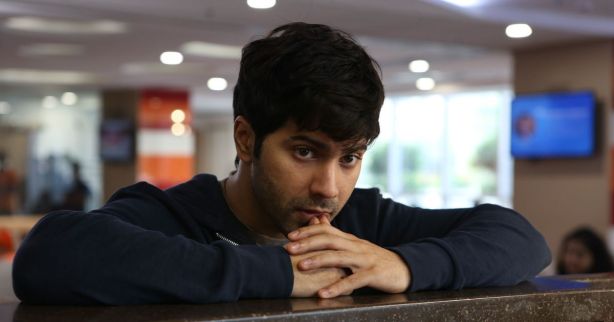
The National Film Development Corporation has announced the Call for Entries for the 12th Year of Film Bazaar Co-Production Market.

Full length fiction feature projects with South Asian themes are invited to apply.

The Deadline for submissions is September 13th, 2018. Extended Deadline is September 18th 2018. The deadline has been extended to September 30th 2018.

The Market will be held between 20-24th November, 2018 at Film Bazaar, Goa.

The Co-Production Market presents a list of curated projects to the national and international film professionals attending Film Bazaar. The Market kicks off with Open Pitch where participants present their projects through Video Pitches to an audience of investors, producers and financiers. The four days of the market are earmarked for one on one meetings specially scheduled for each project.

Over the years, the dedicated team has honed its skills for matching projects with the right delegates. Dedicated online and print catalogues consisting of all project details are available for Film Bazaar attendees interested in Co Production Market projects. The Co-Production Market also conducts an orientation session to familiarize participants to Open Pitch as well as the working of the Co-Production Market and Film Bazaar.

For Application Form and more details, please visit https://filmbazaarindia.com/co-production-market/
For further queries, write to: coproduction@filmbazaarindia.com

CPM Projects Over the Years:

  • Lipstick Under My Burkha, Alankrita Shrivastava CPM 2013
  • Newton, Amit Masurkar, CPM 2015
  • Song of the Scorpions, Anup Singh CPM 2013
  • Beyond the Known World, Pan Nalin, CPM 2012
  • Lady of the Lake, Haobam Paban Kumar, CPM 2011
  • Manto, Nandita Das (in production), CPM 2015
  • Court, Chaitanya Tamhane, CPM 2012 (VENICE INTERNATIONAL FILM FESTIVAL, 2014)
  • Chauthi Koot, Gurvinder Singer, CPM 2012 (FESTIVAL DE CANNES 2015)
  • Titli, Kanu Behl CPM 2012 (FESTIVAL DE CANNES 2014)
  • Liar’s Dice, Geetu Mohan Das, CPM 2011 (Official Selection, Sundance Film Festival, IFFRIndia’s Official Entry to the 87th Academy Awards)
  • Arunoday, Partho Sengupta, CPM 2012 (BUSAN 2014)
  • Highway, Umesh Kulkarni CPM 2013
  • Television, Mostofa Farooki CPM 2010 (PUSAN INTERNATIONAL FILM FESTIVAL 2012) Chauranga, Bikas Mishra, CPM 2011 (MUMBAI FILM FESTIVAL 2014)
  • Qissa, Anup Singh CPM 2008 (Toronto International Film Festival 2013)
  • LSD, Dibakar Banerjee (CPM 2009) (Filmfare for Best Editing, Sound Design, Stardust Film of the Year)
  • Paltadacho Munis, Laxmikant Shetgaonkar (TORONTO INTERNATIONAL FILM FESTIVAL, FIPRESCI for Discovery 2009)
  • That girl with Yellow Boots, Anurag Kashyap (VENICE INTERNATIONAL FILM FESTIVAL 2010)
  • Deool, Umesh Vinayak Kulkarni (BUSAN INTERNATIONAL FILM FESTIVAL 2011 & 59th National Award for Best Feature Film).
  • Karma, Prasanna Jayakody (ROTTERDAM INTERNATIONAL FILM FESTIVAL 2011)
  • Shanghai, Dibakar Banerjee (TORONTO INTERNATIONAL FILM FESTIVAL 2012)
  • Miss Lovely, Ashim Ahluwalia (FESTIVAL DE CANNES 2012)
  • Mumbai Cha Raja, Manjeet Singh (TORONTO INTERNATIONAL FILM FESTIVAL 2012)
  • As the River Flows, Bidyut Kotoky, CPM 2007
  • Shor in the City, Krish D K, Raj Nidimoru, (CPM 2007) (MIAAC Festival – Best Director, PUSAN FIlm Festival, Dubai International Film Festival 2010)
  • 28, Prasanna Jayakody, CPM 2013, (IFFR, 2014 – NETPAC Award.)

Some of the projects and people who have attended the Co Production Market at Film Bazaar are Chedomir Kolar [ Producer No Man’s Land], Mustofa Sarwar Farooki [Director Television], Michael Werner [Fortissimo Films ], Chris Paton [San Sebastian Film Festival], Christian Jeune [Cannes Film Festival], Kristen Niehuus [Medien Board, Berlin-Brandenburg] Remi Burah [Arte France Cinema], Anurag Kashyap, Madhu Mantena, Manish Mundhra, Sooni Taraporewala, Sabiha Sumar [Director Khamosh Pani], Guneet Monga, Nandita Das, Govind Nihalani, Shyam Benegal, Pablo Bertolini [Venice Film Festival], Charles Tesson [Cemaine de la Crtique Cannes Film Festival], Aviva Silver [NEA cinema, Belgium], Anup Singh [Director Quissa],Catherine Dussart [Producer Chautih Koot France], Ramesh Sippy, Kabir Khan, Sheeladitya Bora, Marco Muller, [Beijing Film Festival], Benjamin Illos [Director’s Fortnight, Cannes]
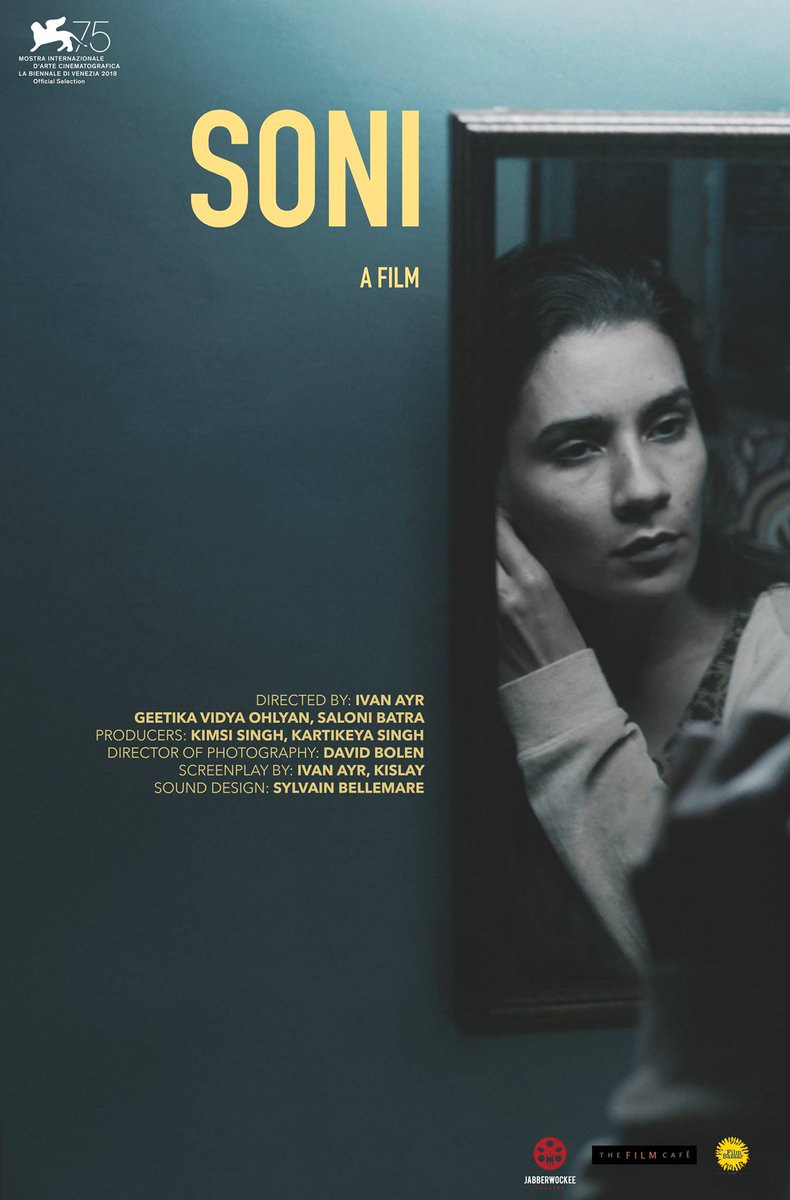
Ivan Ayr’s debut film Soni, which is making its world premiere at the 75th Venice Film Festival under the Orizzonti Competition category just released its first look poster and trailer.

It is the only Indian feature to compete at the festival.

Summary of the film

Soni, a young policewoman in Delhi, and her superintendent, Kalpana, have collectively taken on a growing crisis of violent crimes against women. However, their alliance suffers a major setback when Soni is transferred out for alleged misconduct on duty.

Soni had won the Facebook Award for Best ‘Work-In-Progress’ Project and Prasad DI Award for the Best Film In ‘Film Bazaar Recommends’ section at NFDC Film Bazaar 2017.

The film has a running time of 97 minutes and features newcomers Geetika Vidya Ohlyan and Saloni Batra in lead roles. The producers are Kimsi Singh and Kartikeya Narayan Singh, whose previous credits include the 2015 Cannes Un Certain Regard Selection Chauthi Koot.

The 7th edition of Dharamshala International Film Festival, in association with the Paddy & Joan Leigh Fermor Arts Fund, announces the launch of the Dharamshala PJLF Editing Workshop 2018.

The Editing Workshop will be mentored by Internationally renowned editor Jacques Comets, editor and Artistic Director of the International Film Festival of Kerala Bina Paul, and Producer and Script & Editing Mentor Olivia Stewart.

Eligibility

The application for the workshop is only open to Director/Editor teams who are working closely together as equal collaborators on the edit of an Indian-language (including in English) feature film.

The film can be at any stage between rough-cut and fine cut and should be at least 90 minutes long. Indian-language films will need to have English subtitles.

Submission process

The following information must be submitted to: diffeditingworkshop@gmail.com

  1. Name of Director
  2. Address, email and mobile number of Director
  3. Short filmography of Director
  4. Name of Editor
  5. Address, email and mobile number of Editor
  6. Short filmography of Editor
  7. Short synopsis of film (max 200 words)
  8. Short statement outlining the reasons why Director and Editor want to enter their film for the Editing Workshop (max 200 words)
  9. Link to rough cut/fine cut with English subtitles

Submission deadline: 22 September 2018.
The decision of the Selection Committee will be final.
Two teams of director & editor will be given a chance to screen their film, receive feedback from a team of experienced film professionals and have two follow-up sessions working with the Editing Mentor on revising their cut and/or concentrating on particular sequences in their film.

Application Deadline & Dates

Applications are open from 23 August 2018 and the submission deadline is 22 September. The two selected projects will be announced on 8 October.

The two selected Director/Editor teams will be invited to come to Dharamshala for seven days from 29 October to 4 November. All their expenses including travel and stay will be covered by the workshop.

Editing Workshop Mentors: Bina Paul and Olivia Stewart
Editing Mentor: Jacques Comets
Selection Committee: Umesh Kulkarni, Bina Paul and Tenzing Sonam

Ritu Sarin + Tenzing Sonam

More details: http://diff.co.in/dharamshala-pjlf-editing-workshop-2018/

This slideshow requires JavaScript.

Renowned Indian documentary maker Anand Patwardhan’s latest film Reason (Vivek) is having its world premiere at TIFF in the TIFF Docs section.

The official note from the festival reads:

In what is perhaps his most urgent and thorough exploration of Indian society yet, renowned documentarian Anand Patwardhan charts his country’s slide away from secular democracy and toward divisions of power, caste, and religious belief — and the violence that has followed.

Anand Patwardhan’s passionate, detailed chronicling of injustices in India has made him the filmmaking conscience of his nation. In The Name of God, Jai Bhim Comrade, and Father, Son, and Holy War stand not only as first-rate documentaries, but as direct interventions on behalf of justice and compassion. After years of work, Patwardhan is back with perhaps his most urgent and thorough film yet.

Divided into eight chapters, Reason sets out to chart what Patwardhan sees as India’s slide away from the complex tumult of a secular democracy towards hardening divisions of power, caste, and religious belief — lines that are enforced increasingly by violence.

The first chapters recount the work, struggles, and eventual assassinations of Narendra Dabholkar, a rationalist who fought what he called “blind faith,” and Govind Pansare, a communist politician and anti-caste activist. Later chapters probe subjects such as Dalit caste protests against social oppression, terrorism’s tangled roots, and how religious outrage can so easily descend into mob violence. Accompanying interviews, captured footage, and archive sequences, Patwardhan’s voiceover makes connections and provides deeper context.

Reason is not an easy film to watch, nor should it be. The film denounces — and depicts — violence perpetrated or fuelled by religious nationalists pushing to make India a Hindu state. As Reason builds and expands toward its conclusion, the scale of the dangers India faces becomes clear, and connections are made between the country’s inner conflicts and the similar political fires burning all over the world. Even with countless people of conscience offering resistance, the film ends with yet one more assassination. This time it is a journalist.

The film runs at 260 minutes, is shot by Anand Patwardhan himself along with Simantini Dhuru, and edited by Patwardhan.

Anand Patwardhan is one of the most prolific documentary makers from India, with films like In the Name of God (’92) and Father, Son and Holy War (’94), both of which have featured at TIFF in the past, as well as War and Peace (02) and Jai Bhim Comrade (11).

The first look of Vasan Bala’s upcoming Bollywood-infused action film Mard Ko Dard Nahi Hota (MKDNH) is out. It’s teaser cut for the Toronto International Film Festival. Take a look.

MKDNH is the first ever Indian film to be a part of TIFF 18’s Midnight Madness. It stars Bhagyashree’s son Abhimanyu Dasani and TV star Radhika Madan who is also playing a lead in Vishal Bhardwaj’s next. The film is produced by RSVP.

NFDC Film Bazaar 2018 is calling for entries for the Viewing Room and the Work-in-Progress (WIP) Lab.

– Film Bazaar will be held from November 20-24, 2018 at the Goa Marriott Resort.

– The Early Bird Deadline for submissions is August 31, 2018, which will offer a discount on the submission fees. The last date for submission of completed applications is September 14th 2018.

WIP Lab

– Submissions are invited for the WIP Fiction lab.

– Up to five projects in their rough-cut stage will be selected to be presented to a panel of international film experts for their feedback.

– Feature-length fiction films of any genre in the rough-cut stage are invited to apply to the WIP lab.

Viewing Room

The Viewing Room will present films seeking finishing funds, world sales, distribution partners and film festivals to investors, world sales agents and film festival programmers attending the film bazaar. Here, films are viewed on individual computer terminals in private booths via a specially designed software which allows the users to contact the director or producer of the film via email.

– Films (fiction/documentary) of all genres and lengths in rough or final cut are invited to apply to the Viewing Room.

– Feature length films in the rough cut are eligible to apply to both WIP lab and Viewing Room.

– Short films can also be submitted to the Viewing Room, which will be showcased in a category called Short Films.

– For application form and other details, click here.

The films that were a part of the previous Work-in-Progress Labs at Film Bazaar have had their world premieres at leading international film festivals and some have even gone on to enjoy a successful theatrical run. These include Raam Reddy’s Thithi, Ashwiny Iyer Tiwari’s Nil Battey Sannata, Kanu Behl’s Titli, Avinash Arun’s Killa, Ashim Ahluwalia’s Miss Lovely, Anand Gandhi’s Ship of Theseus, Ajay Bahl’s BA Pass, Ere Gowda’s Balekampa, Alankrita Shrivastava’s Lipstick Under My Burkha, Dipesh Jain’s Gali Guleiyan.

This slideshow requires JavaScript.

After Vasan Bala’s MKDNH, TIFF has added two more Indian films to its lineup, this time in the Contemporary World Cinema section.

Bulbul Can Sing

Rima Das is back at TIFF’s Contemporary World Cinema section yet again with her new film Bulbul Can Sing which is having its world premiere there.

Here’s the official TIFF program note on the film:

Rima Das presents a visceral coming-of-age drama about a young girl living in rural India, fighting her way through love and loss as she figures out who she really is.

Rima’s last film, Village Rockstars, was also premiered at TIFF.

The Sweet Requiem

Ritu Sarin and Tenzing Sonam’s latest film The Sweet Requiem (K​yoyang Ngarmo)​​​ is having its world premiere at TIFF’s Contemporary World Cinema section. Similar to Rima Das’s previous film, Ritu Sarin and Tenzing Sonam’s debut film had also premiered at TIFF.

This is what the official note from TIFF says about the film:

In a follow-up to 2005’s Dreaming Lhasa, Ritu Sarin and Tenzing Sonam return with a story of a young Tibetan woman grappling with living in exile, revealing a side of the refugee crisis we rarely get to see.

The film, running at 91 minutes, was one of the 19 South Asian Projects selected at the NFDC Film Bazaar 2015.

This slideshow requires JavaScript.

Vasan Bala’s new film Mard Ko Dard Nahi Hota (The Man Who Feels No Pain) is going to be featured at the Toronto International Film Festival’s (TIFF) ‘Midnight Madness’ section. It’s the first Indian movie to be featured in Midnight Madness.

Here’s the official TIFF program note on the film:

In this Bollywood-infused action film from Vasan Bala (Peddlers), a young man quite literally born with the ability to feel no pain strikes out on a quest to vanquish 100 foes.

Cast: Abhimanyu Dasani, Radhika Madan, Gulshan Devaiah and Mahesh Manjrekar
Abhimanyu is the son of ‘Maine Pyar Kiya’ actress Bhagyashree, while Radhika Madan is a popular television star who is also playing one of the main characters in Vishal Bharadwaj’s next ‘Patakha’.

The 131 min film is produced by Ronnie Screwvala’s RSVP.

<It’s better that you go see it first and then come back and read it.>

Hospitals are usually extremely humbling places. I have been to some, quite a few times and every single time I have felt the fragility of life from up close. Hotels, on the other hand, are the exact opposite. Specially 5 star ones. October expertly navigates these two spaces. One filled with arrogance, opulence, mirth and joy and the other full of weirdly calming sounds of ventilators, ECGs and the constant humming of the ceiling tube-lights.

During the 1st year of our Engineering college annual fest, two of the hostel-mates went drunk-biking and drove into a divider. The luckier one survived with a fractured arm, while the other, who was riding pillion, a good looking 6 feet+ Delhi boy ended up with a cracked skull in a hospital. All of us went to see him. He lay on the bed unconscious, his head wrapped in white, blood splotched cotton bandages and his face bruised tender on one side. He was critical. He had to drop out because he wasn’t the same guy after surgery. He was hospitalized for a long time, lost most of his memory and went home to recover. We all forgot about it and went about our lives as usual. I remember it vividly because it was my first visit to the ICU and it was a surreal experience for an 18 year old me.

I saw the guy 2 years after that. He came back to re-enroll in 1st year. His father was holding his hand while walking him around the administrative buildings. He was limping with the help of a cane. His speech was slurred. Some of the guys went to say Hi, but he didn’t recognize them.

I remember seeing him like that and feeling strangely emotional. My eyes welled up a little. I had played cricket/volleyball with the guy. He was a proper hunk and to see him as a hollow shell of his former self made me sad.

I hadn’t thought of him since that day, until yesterday. October made me think of him. I was one of the side characters in his life like one of the many friends of Shiuli who visited her a few times in the hospital and then slowly moved on.

One of her friends, Dan, didn’t. He stuck around. Why? October doesn’t have a straightforward answer for you. As a film, it’s more interested in observing the glacial pace of life and healing and human bonds that form by accident but last a lifetime.

October 1

You hang on to something, only God knows for what reason. You find a purpose in it? Sukoon? It makes you feel good about yourself? Or you’re just delusional and making up shit that isn’t there. Maybe you are overcompensating for the lack of anything else meaningful in your life? ‘Dhun’, ‘Lagan’, ‘Deewanagi’, ‘Obsession’, call it whatever. You grab on to it tightly and hold it close to your chest, and you don’t pay attention to anything that tells you to do otherwise.

Job hai, family hai. Sab kuch chhod chaad ke thodi baith sakte hai. Practical hona padta hai yaar.

But Dan’s practical is different. His practical tells him to let go of sanity and embrace this cause because her last sentence was a question about him. “Ae, Where is Dan?”, said absolutely casually, with no hidden meaning or feelings. A totally casual inquiry that just happened to be the last thing she said before she met a life altering tragedy. But he somehow makes it his crucible to carry.

That kind of inexplicable madness is of course what drives artists, explorers, scientists, and people who really really give a fuck about what they do. But sometimes ordinary people like Danish Waliya fall prey to it. There is nothing to be achieved here, in materialistic terms. It’s not even spiritual per se. It just is. It took the controls from him when he wasn’t looking and now he can’t go back. He loses appetite, sleep, friends, routine and even a career. For a person he barely knew. But this cause has become his life’s mission. It’s a beautiful mess.

He isn’t her boyfriend. Not even one of the close friends. They were Hotel Management trainees at Radisson, Dwarka and sometimes worked the same room or hung out at the roof where Dan brought everyone stolen booze coz he’s an irritable class clown but also a sweetheart. He’s annoying & temperamental but also capable of befuddling kindness. He don’t suffer fools or snobs. So you know, life’s difficult for him.

Thankfully, October surrounds him with nice people whose own kindness allows them to see through his annoyance. Friends are so important.

october 2

“She can’t survive. It’s highly unlikely. We should pull the plug. It’s too costly to keep her alive.”

He hears everything and he doesn’t get angry. There is no melodrama, emotional outburst, or an impassioned speech against euthanasia. The dexterity with which this film tiptoes around cliches is mesmerizing.

“She is just 21. I think she would have wanted to live.”

This is enough. Enough for her mother to clutch on and keep fighting for her barely conscious girl. He becomes a part of their life so effortlessly. The doctors, nurses, staff, Shiuli’s family, they all accept this stranger, with obvious initial reluctance. He finds a sort of relevance that we all crave for, in a place where hope springs eternal.

A friend of mine once told me that “Helping someone is inherently a very selfish act.” and I have found myself agreeing with it most of the times. The sleight of October is that it is skillfully oblivious of this selfishness, and so is Dan which is what makes him such an endearing character. Someone you would want to hug every time you see him. Varun Dhawan brings his A game here, not as a star, but as an actor.

Dan’s mother, in a beautiful scene between her and Shiuli’s mother Vidya, talks about the fear of losing ones kids once they grow up, hinting at Dan who hasn’t visited her even once in 10 months.

“Dan has been a pillar.”, Vidya (a perfectly cast Gitanjali Rao, an award winning animator and storyteller herself) informs her.

Dan was busy being the son of a single mother whose daughter may or may not have cared about him.

Vidya abruptly leaves the room and the camera linger a second too long on Dan’s mother and Shiuli as the scene changes.

This restrain in the writing and thoughtfulness in frames is magical and so unconventional for a Bollywood film (only ‘Court’ comes to mind), all thanks to the sensibilities of its writer Juhi Chaturvedi, who has matured into such a confident screenwriter over this trilogy of sorts of ‘Delhi Films’ (Vicky Donor, Piku). It also reminded me of this brilliant animated short Death of a Father, perhaps because a major chunk of it is set inside a hospital and it also refuses its audience a catharsis.

Delhi winter, with all its fog and smog and pollution, makes for a beautiful backdrop to this film that finds warmth in abundance in everyday moments. Be it a conversation between Dan and the Nurse (“Gift leke aana aap”), or between Dan and her friend who gives him 2500 rs for petrol (“Kitne chahiye? ” “Bas tank full ho jaaye.”) or when Shiuli’s siblings make fun of him or when he is the only one who remembers to get a wood-plank installed at the doorsteps because Shiuli will be on wheelchair when she comes back home (“Iske neeche baad me na cement lagwa denge“). It’s choke-full of such tender moments and just when you think that you can hold the water in your eyes, the exceptionally contained background score kicks in. This just might be Shantanu Moitra’s life’s best work, at par with this beautiful Leftovers theme that never fails to move me.

There is so much filth around us for the past week that I had kinda started giving up on humanity. Cynicism and bitterness are a constant when you are scrolling through your twitter/FB feed and seeing people spew hatred and garbage towards each other. In such a time, October was like a soul cleanse I so badly needed. You do too. Go for it, you will come out a better person, I promise you.

Avinash Verma

(Avinash‘ full time job is to watch films and in his free time he pretends to be a Digital Marketeer. He occasionally writes on Medium as well.)

As we have done in the past, this time too we are trying to source the scripts of some of the best bollywood films of last year. As most of you know, the scripts of Hollywood films are easily available online, even the unreleased ones. But we don’t have any such database of Hindi or Indian films. So that has been the primary reason for this initiative. And it has been possible only because some of the screenwriters and filmmakers have been very supportive about it. It’s only for educational purpose, and much like the spirit of the blog, is a complete non-commercial exercise.

To read the scripts of best bollywood films of last few years, click here. In this post, we are sharing the script of ‘A Death In The Gunj’.

Konkona (L), Disha (R)

Konkona Sen Sharma made an assured debut with A Death In The Gunj. More atmospheric and less plot, more characters and less events, this was a brave choice to make a debut with. A nuanced take on how toxic our daily casual masculinity can be, the film took us to a new place in an old era. No wonder the film was among the top favourites of all critics.

Happy reading!

Film : A Death In The Gunj

Director : Konkona Sensharma

Based on a short story by Mukul Sharma

Written by Konkona Sensharma

Addition Screenplay : Disha Rindani