KAUFMAN - "Or cramming in sex, or car chases, or guns. Or characters learning profound life lessons. Or characters growing or characters changing or characters learning to like each other or characters overcoming obstacles to succeed in the end. Y'know ? Movie shit."
Kaufman is sweating like crazy now. Valerie is quiet for a moment - from "Adaptation".
We are all about CINEMA. That movie shit.
NOTHING is sacred.
NOBODY is spared.
Because we talk about films, dammit.
Not your sex life.
Films, fests, unsung, indies, undiscovered - all that and some fun. If you have dope on anything related to cinema or you would like to share something, do write to us at moifightclub@gmail.com.
The views, opinions, reviews, articles, or positions, expressed by the authors and those providing comments are theirs alone, and do not necessarily reflect the views, opinions, positions or strategies of ANY OF THE EMPLOYERS, FRIENDS, RELATIVES, PR agencies, Production houses, Media group and such third parties associated with the authors. The latter make no representations as to accuracy, completeness, currentness, suitability, or validity of any information on this site and will not be liable for any errors, omissions, or delays in this information or any losses, injuries, or damages arising from its display or use.
In short, if you have an issue with us or any post we've written, write to us at moifightclub@gmail.com
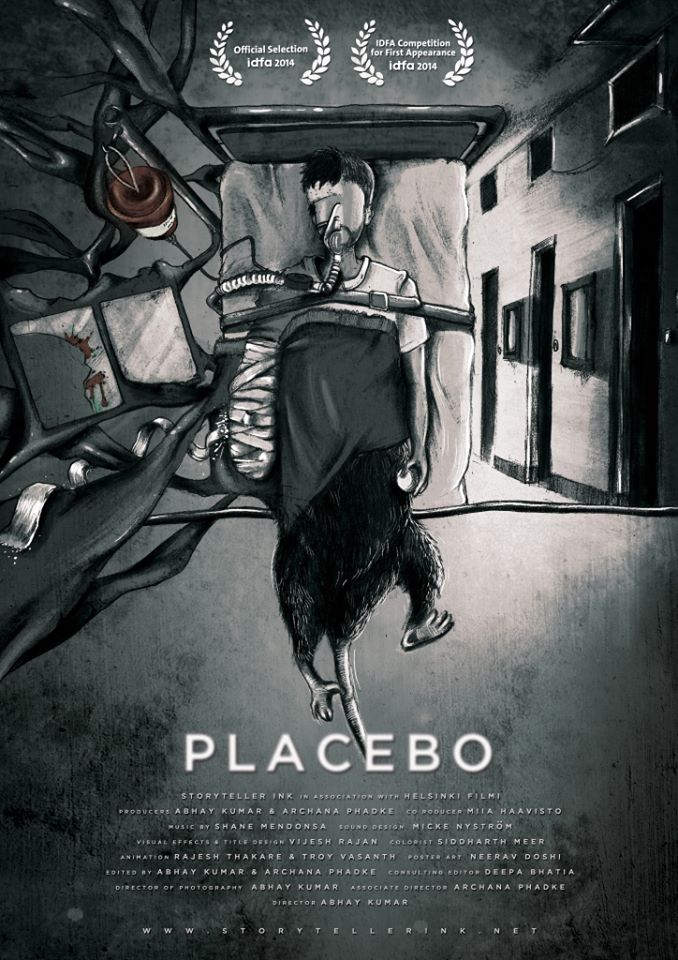
Abhay Kumar’s documentary film, Placebo, just had its international premiere at the reputed International Documentary Film Festival of Amsterdam (IDFA).
And the good news is the film has also been nominated for Best Film in “Competition for First Appearance” category. It’s competing with Always Together (Czech Republic) by Eva Tomanova, Drifter (Hungary/Germany) by Gábor Hörcher and Mother of the Unborn (Egypt/United Arab Emirates) by Nadine Salib.
Here’s the first look teaser of the film
Synopsis
After witnessing an act of brutal violence, a film maker starts following the lives of four students at one of the prmiere educational institutes of India. However, as the camera starts infiltrating this complex mindscape of ambition and restless youth, a startling new reality begins to emerge – one in which an implosion is taking place. In this world, what can be the cure?
So after much hype (courtesy our friends Namrata Joshi, Aseem Chhabra and others), a few of us finally ended up joining them this time at the 3rd edition of the annual Dharamsala International Film Festival, up in the beautiful township of McLeodganj- and I’m happy to report that it did live up to the buzz, and I can’t wait to get up there again next year. It’s an excellently organized festival- with helpful signs all over town to guide you, autos hired to take you up to the main venue TIPA (Tibetan Institute of Performing Arts) and a wonderful, warm team of volunteers, some of who travel from various parts of India and the world to be part of this joyous little celebration of cinema up in the mountains, in a town without a single cinema theatre.
Clearly, the common thread among many of the films shown at DIFF was that they belonged to the genre I will call ‘cinema of social unrest’- and from what I hear, this was the case the year before as well. So there are many documentaries as well as fiction features about social and political movements, revolutions, human rights violation and conflicts of land, culture and identity. This feels especially apt considering Dharamshala itself is a place where you can distinctly feel the angst of displacement and the forced refugee status of Tibetans under the gentle, tranquil atmosphere of the town.
This year included a fairly interesting selection of films (you can check out the list here) as well as some interesting retrospectives, curated short film packages and masterclass/Q&A sessions with filmmakers such as Rajat Kapoor, Hansal Mehta, Gitanjali Rao, Q and Umesh Kulkarni. I’m afraid I did not manage to catch a whole lot of them- the main drawback of having a film festival in such a picturesque location is that you are conflicted whether to spend your time watching films or savor the sights around, not to mention visit all the charming cafés and eateries in the area. Still, here are a few notes on some of the films I did catch at the festival:
KILLA:
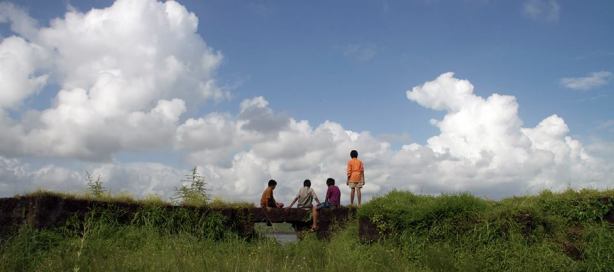
Avinash Arun’s debut feature is a gorgeously evocative and poignant film about friendship, loss and the resilient ability of children to deal with disappointment, displacement and even death. Killa is clearly a very personal film, and is shot and crafted with great love and sensitivity. It also features some unforgettable, textured characters brought to life with amazingly natural performances from Amruta Subhash, Archit Deodhar, Parth Bhalerao and a wonderful ensemble of young actors. This is yet another strong contemporary Marathi film about children, and definitely the one with most finesse out of the ones I’ve seen. I must mention here though that I haven’t seen Umesh Kulkarni’s acclaimed Vihir yet- interestingly, Avinash Arun cites Kulkarni as his mentor and a strong influence.
BRINGING TIBET HOME:
Bringing Tibet Home documents the deeply emotional and often funny story of New York-based artist Tenzing Rigdol’s audacious art project to reunite exiled Tibetans with their land, quite literally. After his father dies with his last wish of setting foot in his homeland unfulfilled, Tenzing decides that if Tibetans can’t return to Tibet, he will bring Tibet to them by smuggling 20 tonnes of native Tibetan soil to Dharamshala for a one-of-its-kind art installation. It was especially moving watching the film in Dharamshala- though it did also really make me ponder about what makes land itself so important to human beings. Maybe because I’ve never quite had roots anywhere, soil to me just feels a little overrated… ‘it’s just tiny little rocks.’
THE SQUARE:
This shattered my heart and blew my mind to bits. Jehane Noujaim’s The Square is the most devastating film I have seen in a long time and easily the best one I saw at Dharamshala. The film puts you right at the heart of a revolution inside Tahrir Square, with young, common people spiritedly fighting a fascist and fundamentalist regime in Egypt, spilling their blood and guts out for the hope of a brighter, free future even as they come to the crushing realization that courage and idealism aren’t enough to win their war against oppression. This is absolutely essential viewing- the auditorium was filled with tears and goosebumps in the end and the applause didn’t stop till the credits had finished rolling.
(PS: Also spotted in the documentary- Aida Elkashef from Ship of Theseus and a Vikramaditya Motwane doppelganger. I kid you not- the resemblance is uncanny. See if you can spot him. 😉 )
OMAR:
Director Hany Abu-Assad cleverly sets a gripping tale of love, deceit and betrayal against the Palestine-Israel conflict. The film borrows sparingly from Romeo and Juliet and Othello to give us a heady mix of socio-political thriller and Shakespearean drama-and while a comparison might be a little unfair- I can’t help feel that Omar blends the two a lot more seamlessly and effortlessly than Vishal Bhardwaj’s Haider, which of course is very good in its own right. Adam Bakri gives a superbly charismatic performance as the protagonist- though admittedly, it’s hard to take your eyes off him anyway considering how jaw-droppingly good he looks.
TRUE LOVE STORY:
Filmmaker Gitanjali Rao showcased a great set of Indian and international animated shorts curated by her at DIFF (including her marvelous Printed Rainbow), and ended the session with her newest film True Love Story, which screened at the Cannes Critics’ Week section earlier this year. The film, originally scripted to be part of a feature film (alas, no one wants to fund quality animation films in India) begins as a homage to masala movies which is both affectionate and hilariously tongue-in-cheek- but in the end reveals itself to be a sharp social satire, using a real-life tragedy that made headlines a few years back (the court case is still on) to brilliant, scathing effect. The film is a visual and aural delight with its colorful evocation of Bombay’s sights and sounds through Bollywood tinted glasses, and hopefully it will make its way to a wider audience soon. And I hope some producers funding ‘indie’ films (which more often than not, turn out to be sub-par) see the potential in this medium and back Ms Rao’s extraordinary talent and bring more of her singular, unique vision to the big screen.
Megha Ramaswamy’s documentary Newborns premiered at Toronto International Film Festival. And now it’s online for a limited time as part of Vimeo’s presentation of TIFF Short Cuts.
Watch it.
From fest site – A hauntingly beautiful documentary that follows female survivors of acid attacks, who bravely defy the trauma and fear that will always accompany them.
Cast, Crew and Other Details
Country: India
Year: 2014
Language: Hindi
Premiere Status: World Premiere
Runtime: 8 minutes
Rating: STC
Producer: Anand Gandhi, Sohum Shah, Ruchi Bhimani
Production Company: Recyclewala Labs
Principal Cast: Laxmi, Nasreen, Sapna, Daya Kishan, Usha, Rupesh Tillu, Heena Agrawal
Screenplay: Megha Ramaswamy
Cinematographer: Satya Rai Nagpaul
Editor: Anand Gandhi, Rohit Pandey
Sound: Ajit Rathore, Aditya Jadav
Production Designer: Megha Ramaswamy
With Recyclewala Films presenting Gulabi Gang and Anurag Kashyap putting his might behind The World Before Her, we are seeing a great new trend of documentary release in India. And this is what is required to push those small gems which don’t have the big marketing budget. Hope more well known filmmakers and production houses will come forward for this kind of endeavor. The latest one is Phantom Films presenting Fahad Mustafa and Deepti Kakkar’s documentary Katiyabaaz. The film will hit the screens of 22nd August, 2014. It has lyrics by our Varun Grover.
Official synopsis – The film highlights the issues faced by the city of Kanpur due to power cuts and failures from the perspective of Loha Singh, a local katiyabaaz who, with an almost vigilante like attitude, steals electricity for the locals of the town.
If the synopsis sounds serious, don’t go by it. Trust our words – it’s a fun film. Though it looks staged at many places but it’s worth a watch. The film also bagged the National Award for the Best Investigative film at the 61st National Awards, won the India Gold for Best film at the Mumbai Film Festival, 2013, and received a grant from the prestigious Sundance Institute.
After Leaving Home and Baavra Mann, filmmaker Jaideep Varma has directed one more documentary – I Am Offended. According to official post, it’s a documentary about stand up comedy in India within the context of Indian humor and growing intolerance in the country today. Featuring some of the brightest talents, in stand up comedy in India.
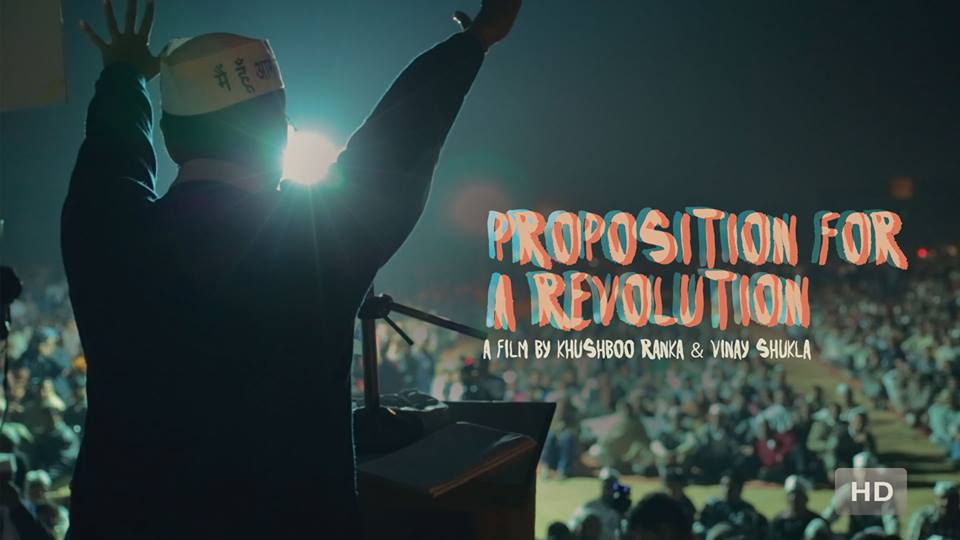
Khushboo Ranka and Vinay Shukla have documented one of the most exciting political turn of events in recent times – the making of AAP and the rise of Arvind Kejriwal. They have just released the first look of the documentary titled ‘Proposition For A Revolution’. They are also looking for post-production funds. So do check this out and if you like, do contribute.
– To contribute, you can go to their official site here.
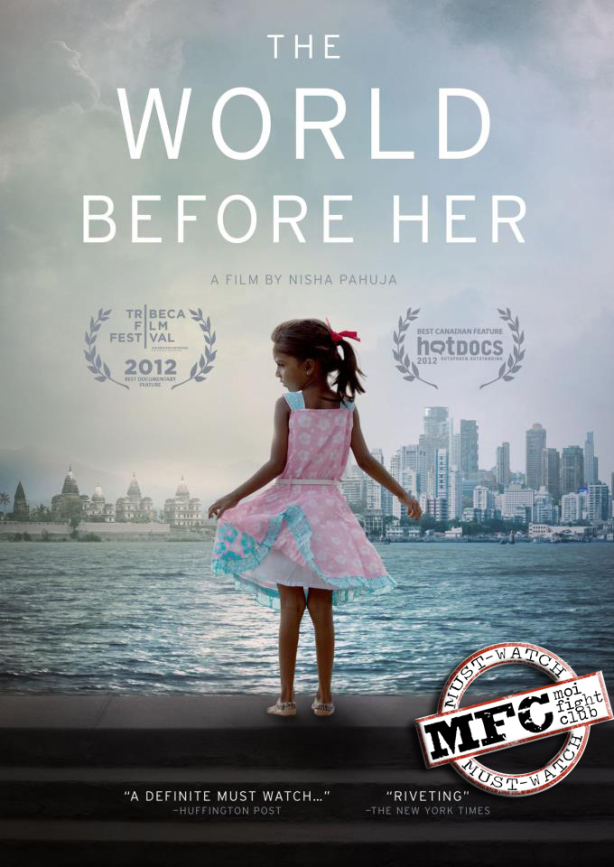
After doing the fest rounds, Nisha Pahuja’s critically acclaimed documentary, ‘The World Before Her’ is all set to release on May 16th, 2014. Filmmaker Anurag Kashyap is presenting it and PVR Directors Rare is releasing the film. Moving between the worlds of a Durga Vahini training camp and the beauty boot camp of the Miss India Pageant, the film is a powerful story that could not have come at a better time. Some of us managed to watch the film earlier and we have put it in MFC’s Must Watch recco list. Click here to read our recco post on the film.
We are posting two clips from the film – one from the film, and one that did not make the cut. We also got Nisha to write on these two clips.
1. Pooja’s story
Director’s Note – I remember when Pooja told me the story of almost being killed at birth for being a girl..that moment became a turning point for me in terms of the focus of the film. I knew it had to be about the struggles that so many Indian women continue to face. It also changed the way I looked at Miss India–suddenly it was no longer passe or just simply derogatory..it was so much more complex. I had to ask myself “Given the Indian context, can I disregard my Western prejudices and see a beauty pageant as “empowering.” It’s something I still grapple with..
2. Tulsi’s story
Director’s Note – When I began the research in 2008, I was determined to find a young woman from a village who harboured dreams of becoming a Miss India. Somehow I did. Meet Tulsi – achingly lovely..a symbol of “aspiring India.” Tulsi’s story was incredible, she comes from a village in UP that got electricity in 2009, and that only intermittently. Her grandfather was a freedom fighter and and there was a temple that had been built in his honour. Tulsi’s mother did not want to get married but was forced to. So in an act of defiance on her wedding night she chopped off all her hair and began to dress like a man. Somehow she was accepted. She decided she would allow her daughter to do as she wished. When Tulsi told her parents she wanted to move to Bombay and pursue her Miss India dream, they sent her off with the money they had been saving for her dowry. The Miss India team never responded to her application or her pics and when I last saw her in 2010 she was having a hard time and it seemed clear to me that she was being exploited, but didn’t want to talk about it in too much detail. I still get the odd email from her but she never responds when I write her back. I had always wondered how her grandfather, who had fought for India’s freedom would feel about Tulsi’s dream of winning a beauty pageant. Was this the freedom he was prepared to die for?
TRAILER
FUND-A-FILM Project
The makers of the film are also running a kickstarter campaign with the goal of taking the film to a wider audience – schools, colleges, public screenings. Click here to read about their plan and do contribute if you want to support the initiative. The aim is to raise US$ 50,000 out of which they have already got $ 41,000. Now they have just a week left to achieve the target. So if you feel for it, do contribute generously. The film needs your support.
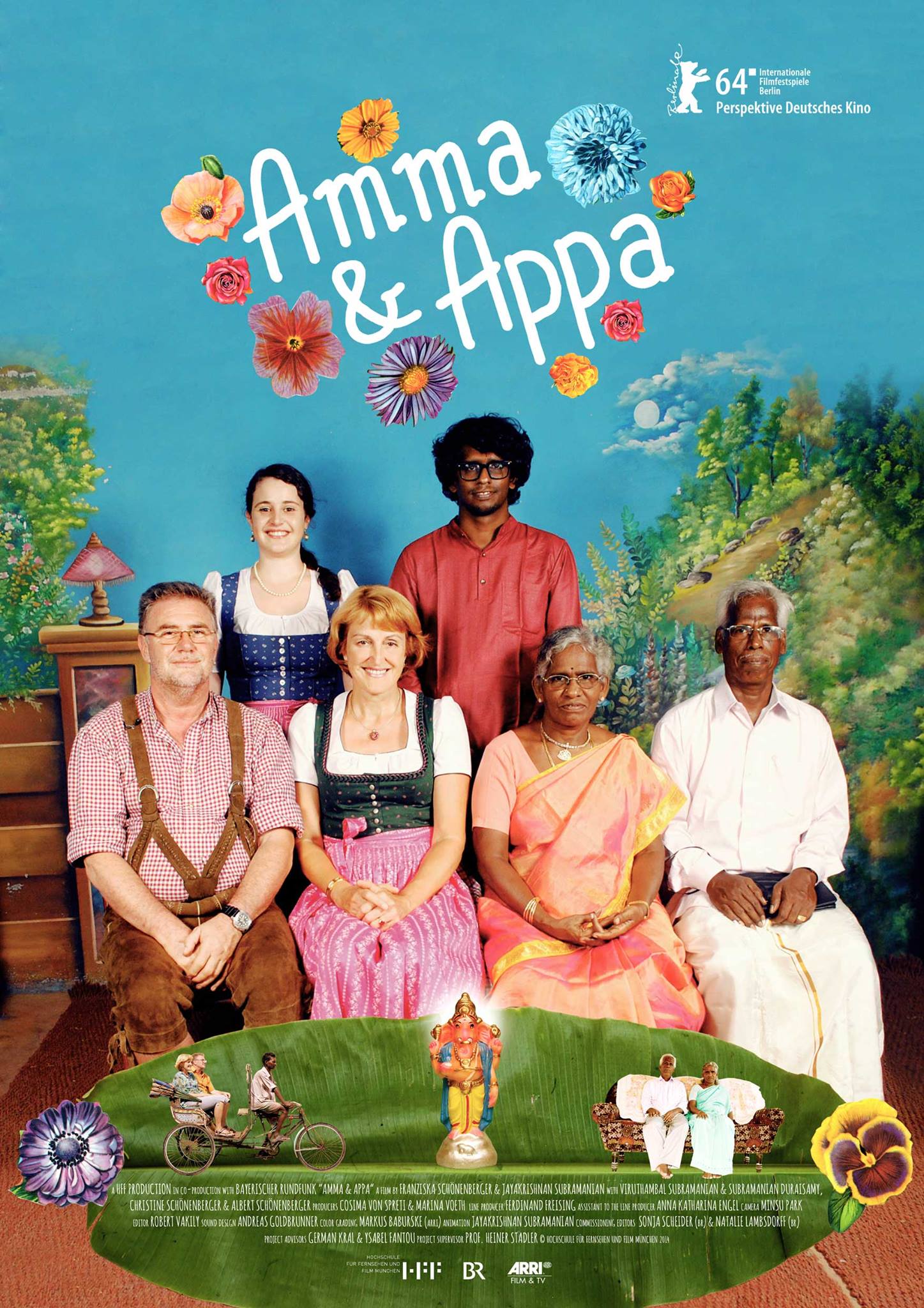
As we have said before, it’s a great time for desi documentaries. And while this one is not an Indian production, it does have a desi connection. Amma & Appa is a personal documentary about the cross-cultural marriage of director Franziska Schoenenberger and her fiancé and co-director Jayakrishnan Subramaniam. It was warmly received when it showed recently at the Berlin Film Fest in the Perspektive Deutsches Kino section. Check out the trailer and synopsis below:
Franziska comes from Bavaria and is in love with Jayakrishnan from southern India. When the couple decide that their love should lead to marriage and a life in Germany, both sets of in-laws find that cultural customs they took for granted are now suddenly subjected to scrutiny.
Whilst Franziska’s parents chose to marry of their own free will, the marriage of Jayakrishnan’s parents was arranged within their own caste, as is customary in Caddalore in southern India. As far as they are concerned, their son’s intention not only to marry a foreigner but to marry for love represents a cruel act of revenge on the part of the gods, since the match calls into question their whole traditional way of life.
Hoping to overcome cultural barriers, the parents of the Bavarian bride-to-be decide to travel to India to visit their future son-in-law’s parents. Interspersed with delicate animation sequences, Amma & Appa is a personal documentary which tells the story of one intercultural union — and in doing so humorously explores the familiar in the unfamiliar, and the unfamiliar in the familiar.
For more info on the film, check out the FB page or the website.
Some of us had the privilege of watching Nisha Pahuja’s critically-acclaimed, controversial and undoubtedly brilliant documentary “The World Before Her” last year, and had nothing but praise for it. In fact, we even wrote about it at length and put it on our Must Watch film recco list. We’re now delighted to announce that after having a theatrical release in US and Canada, and winning accolades and top awards in the prestigious International film festivals, the film will get a release in India via PVR Director’s Rare in 6 cities — Bombay, Delhi, Kolkata, Pune, Ahmedabad and Bangalore — on April 25. More about the film below.
Synopsis
The World Before Her tells the story of girls competing in the Miss India Pageant and those taking part in the VHP’s Durga Vahini camps. It is a tale of two Indias. In one, Ruhi Singh is a small-town girl competing in Bombay to win the Miss India pageant—a ticket to stardom in a country wild about beauty contests. In the other India, Prachi Trivedi is the young, militant leader of a fundamentalist Hindu camp for girls run by Durga Vahini, where she preaches violent resistance to Western culture, Christianity, and Islam. Moving between these divergent realities, the film creates a lively, provocative portrait of the world’s largest democracy at a critical transitional moment—and of two women who hope to shape its future. The film also features former Miss India Pooja Chopra who was a near victim of female infanticide. Watch the trailer below:
The writer and the director of the film, Nisha Pahuja who is the first filmmaker to get inside a Durga Vahini camp says,
“I am thrilled to finally present the film to audiences in India! Although we’ve had a great run with it abroad, I’ve always felt that it needs to be seen in India because it is first and foremost an Indian story. And sharing it now is key since women’s rights has become an issue that is front and centre in the public consciousness.”
The award winning film is shot by the ace cinematographer and FTII graduate, Mrinal Desai and Derek Rogers.
Apart from the theatrical release, the film will be screened in various cities, villages, schools and colleges across the nation as a part of its ambitious nation-wide campaign. The film is being shown at the prestigious educational institutes including Symbiosis, IIT and IIM institutes across the country. Joining the campaign are women’s rights activist and some of the incredible women featured in the film including the former beauty queen Pooja Chopra.
Awards and Accolades
The award winning film which premiered at Tribeca Film Festival in 2012 has been screened in more than 125 film festivals across the world and has won over 19 awards including best documentary feature at the Tribeca Film Festival 2012, best Canadian Feature, 2012 Hot Docs Film FestivaL, best Foreign Film, 2012 Traverse City Film FestivaL, best Canadian Documentary, 2012 Vancouver Film Critics Circle Awards. It was recently featured in the ‘Film Forward’ program of the prestigious Sundance film festival and was part of Indiana University Cinema program where Pahuja was invited to present and speak about the film along with other speakers including Meryl Streep, Abbas Kirostami and Roger Corman.
About the director
Nisha Pahuja is a freelance filmmaker, writer, producer, and researcher who was born in India, but grew up in Toronto. Her third film, The World Before Her won the World Documentary Competition Award at Tribeca Film Festival, where it premiered. Though she grew up in Toronto, this is her second film focusing on India. She makes films that deal with social and political issues and are driven by character and narrative.
For further information on the film please log onto the website.
It’s a great time for desi documentaries. In the recent past we have seen some pretty terrific ones- Malegaon Ka Superman, The World Before Her and Katiyabaaz to name just a few. Which is why it’s a pity that Nishtha Jain’s powerful documentary Gulabi Gang hasn’t quite got the audience it deserves- yet.
Perhaps the makers ought to have employed the Gulabi Gang themselves to whack our lazy, torrent-savvy audiences into theaters. 😉 The film is now running in its second week in a select few theaters/cities with ticket rates further slashed. There’s no good excuse to miss this one, really.
Anyway, here we have an interesting post by Prashant Parvatneni on Gulabi Gang and how genres usually associated with (fiction) cinema can find their way into the documentary format as well. Over to him:
Gulabi Gang by Nishtha Jain is undoubtedly a rigorous study of a women’s movement in the deep interiors of Bundelkhand where a group of women networked between several villages have formed a ‘gang’ to fight against the oppression of women and dalits. They drape themselves in Pink sarees and carry pink lathis that becomes an image of the identity that binds these women. There are complex issues that these women are dealing with and fighting. Young brides are being burnt, dalit activists murdered and certain high-caste Choudharies have concentrated all power in their hands suppressing any and every dissent using gun and muscle power. It is this nexus of power and oppression that the Gulabi Gang is trying to tear apart under their feisty leader Sampat Pal.
Sampat Pal inevitably becomes the ‘hero’ of this film, her infectious zest and fearlessness naturally grabs the attention and it’s hard not to root for her like we would for the angry underdog taking on the system in a Bollywood film. It only helps that Jain adopts a form of narrative that is simple in structure but quite inventive. It follows 2-3 cases that Gulabi Gang encounters and as it does so, quite curiously these cases turn to a kind of whodunit with the Gang acting as detectives trying to uncover the truth behind the violence inflicted on women.
Like in one of the cases, a young wife is found burnt inside the house. When Sampat reaches the spot, the in laws of the woman claim that she got burnt while making rotis but Sampat in true detective spirit, deduces that it cannot be a mere mishap. There wasn’t any stove at the spot, nor was any other part of the house burnt or even charred. Sitting in the audience even we also could start the process of knitting the clues together and deducing while also being acutely aware of entire machinery which includes the panchayat and the police trying to push this crime under the carpet. Sampat Pal’s own relative burns his wife but she wants the truth to come out. When the director’s voice asks her will you fight against your kin as well, she replies inspiringly ‘I just want to find out the truth’. Quite fittingly then, Anand Gandhi (director, Shipof Theseus) called this film a ‘reinvention of detective genre’.
This is a welcome change as the problem with most documentary films dealing with social evils, people’s movements, subaltern issues etc. is that they have sort of reached a saturation of form. While they do deal with a variety of issues, they follow the same old form – interview of key players, a bit of commentary, a bit of field action all merged seamlessly to ‘illustrate’ and ‘explain’ and thereby ‘document’ the problem. Such a form has turned even more uninteresting with its derivatives populating news channels through their ‘human stories’.
Thankfully the film doesn’t stop short of also pointing towards the limits of such genres that evidently end with a resolution a climax arrived at through carefully plotted series of events. Unlike in a detective genre film, we do not get to know whether the culprit was caught or not. Often the battles are lost and the guilty gets away. But like the truest of detective stories, the importance lies in questioning what one gets on face value rather than solving the puzzle and Gulabi Gang does point our attention towards the need to inquire and shakes up the static status quo.
Instead of a gradual convergence towards a resolution of problem, the film starts to spread in and out of such inquiries of cases and looks at the varied other forms of struggle that a people’s movement engages in – organization, activism, mobilization, planning etc. One of the most charming and equally thought provoking sequences involves the meetings and the practice sessions of the Gulabi Gang. As a ritual Gulabi Gang practices lathi fights with a playful zest as two women take on each other while others on the periphery cheer and clap. It quite casually points towards a ritual- even a ritual of violence (though more for protection in this case) that is involved in any people’s movement.
The entire movement also resembles a theatrical performance. There is backstage practice and rituals and there are costumes and props – the pink sarees and pink lathis juxtaposed against the dry, arid brown and gray landscape is an image that gives tremendous gravitas to the Gang and binds them into a community. In fact the saree and the lathi are the first things that are given to the women who join Gulabi Gang and they have to change into the ‘costume’ right away. There is a slightly comic cut in the film where we see Sampat Pal encouraging the mother of the burnt bride to fight her case and in the next shot the frail creature of the mother is draped in bright new pink saree as she is on her way to the court with the Gang. It’s a terrific reminder of how a bit of theatre and performance is a part of every movement or revolution. It also reminds us how such performativity can be appropriated for contradictory causes – for assertion of justice or for religious or political fanaticism.
Gulabi Gang ends with tragic human drama as the documentary manages to trace a character arc of sorts of one of the Gang’s members – Husna. Husna, a hardworking and passionate activist and member of Gulabi Gang takes a position completely contradictory to the movement when her own brother kills her sister for marrying out of love. When she supports him instead of condemning in the name of culture and tradition, one is hit by the extent to which such fundamental, patriarchal ideas can deride compassion and human justice and what a difficult battle Gulabi Gang is fighting – not just externally but internally. For me, the film was special because it shows how certain genres – like detective, political, social drama, human drama genres – can seep into documentary also; in-fact they come from the reality that the documentary often deals with. But, it also shows how cinema can avoid using genre as a trope and move in an out of genres to question the complexity instead of using such genre games to manipulate sentiment and to take an easy position of a sympathizer. The last sequence shows Gulabi Gang members waiting for a train on the platform and few men looking at these women clad in Pink Sarees with contemptuous humor. For them they look nothing short of fancy dress. One of the men asks the man who moves around with the Gang – ‘kuch milta hai issse’. The director shows amazing empathy here as she cuts to the image of Sampat Pal staring into the camera or perhaps into the far horizon, sitting amidst other women with eyes filled with acceptance of difficulty but shining with a rare honest hope. All the contempt of the scene just washes away and we are filled not with sentiment but with emotion – an unsaid but urgently felt hope and a desire at least to think.







 F.i.g.h.t C.l.u.b