Posts Tagged ‘Varun Grover’

Katiyabaaz2

With Recyclewala Films presenting Gulabi Gang and Anurag Kashyap putting his might behind The World Before Her, we are seeing a great new trend of documentary release in India. And this is what is required to push those small gems which don’t have the big marketing budget. Hope more well known filmmakers and production houses will come forward for this kind of endeavor. The latest one is Phantom Films presenting Fahad Mustafa and Deepti Kakkar’s documentary Katiyabaaz. The film will hit the screens of 22nd August, 2014. It has lyrics by our Varun Grover.

Official synopsis – The film highlights the issues faced by the city of Kanpur due to power cuts and failures from the perspective of Loha Singh, a local katiyabaaz who, with an almost vigilante like attitude, steals electricity for the locals of the town.

If the synopsis sounds serious, don’t go by it. Trust our words – it’s a fun film. Though it looks staged at many places but it’s worth a watch. The film also bagged the National Award for the Best Investigative film at the 61st National Awards, won the India Gold for Best film at the Mumbai Film Festival, 2013, and received a grant from the prestigious Sundance Institute.

Here’s the new trailer of the film


We generally don’t have a culture of discussing movies with the makers after they are made. Most of the talk on the film happens before its release, mostly as a PR exercise. But things are changing slowly/steadily and after similar discussions on Gangs of Wasseypur, Rockstar, Paan Singh Tomar, and recently Highway, we got a chance to interact with Rajat Kapoor on his excellently reviewed ‘Ankhon Dekhi’.

Here’s the video in 3 parts, and advance apologies for low sound on the questions (keep your speakers at full-blast please). Though Rajat Kapoor’s responses are loud and clear enough. The session was moderated by our own Somen Mishra and film’s music director Sagar Desai, lyricist Varun Grover, and actor Taranjit Kaur (who played Rajat’s wife in the film) were also present on/around the dais.

(A quick thanks to Cinemax Versova managers and our PVR-man Shiladitya Bora for the venue permissions and arrangements, and Sameer Sheikh for getting the video recorded and uploaded..)

************************************************************

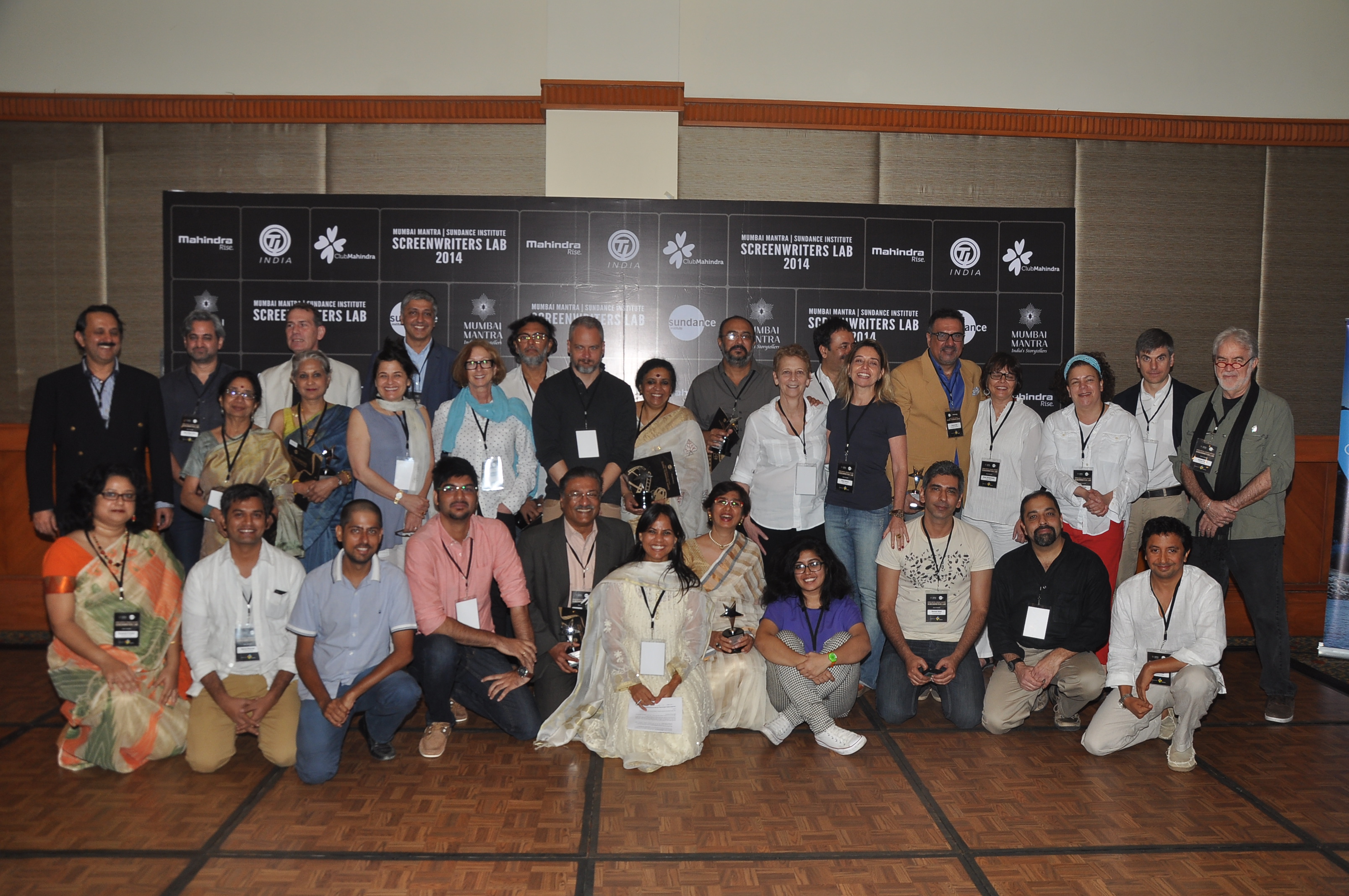
Mumbai Mantra Sundance Institute Screewriters LabMumbai Mantra, the media and entertainment division of the Mahindra Group, in collaboration with Sundance Institute, has selected eight Indian Screenwriters and their feature film projects for the third annual Mumbai Mantra | Sundance Institute Screenwriters Lab, to be held from March 16-21 at the Club Mahindra Resort in Tungi.

– This year’s Screenwriting Fellows, selected from submissions from India and the Indian diaspora around the world, are: Navneet Behal (Experiments with Truth); Ashvin Kumar (Noor); Bornila Chatterjee (Nuclear Hearts); Gaurav Madan (Shaktipur Crude); Deepanjali B Sarkar (Svadharma); Dylan Mohan Gray (The Last Day of Winter); Sanjay Talreja (The River Murder); and Neeraj Ghaywan and Varun Grover (Ud Jayega / Fly Away Solo).

– Creative Advisors include: Naomi Foner (Running on Empty, The Bee Season), Michael Handelman (The Ex, Night At The Museum), Dante Harper (The Delicate Art of the Rifle), James V Hart (Contact, August Rush, Dracula, Tuck Everlasting), Malia Scotch Marmo (Hook, Madeline), Anjum Rajabali (The Legend of Bhagat Singh, Raajneeti), Elena Soarez (City of Men, House of Sand), Rose Troche (Go Fish, The Safety of Objects) and Sooni Taraporevala (Salaam Bombay!, Mississippi Masala, The Namesake).

– Mumbai Mantra received over 500 applications for the Lab from Indian screenwriters across the globe. After a rigorous deliberation and consultation with Sundance Institute, the final eight projects were chosen.

– The Selection Advisory Committee included Advaita Kala, Anjum Rajabali, Deven Khote, K. Hariharan, Kanika Luthra, Mahesh Samat, Meenakshi Shedde, Neeru Nanda, Prakash Kovelamudi, Ram Madhvani, Ravina Kohli, Uma Da Cunha and Vikramaditya Motwane.

PROJECTS AND SCREENWRITERS SELECTED

EXPERIMENTS WITH TRUTH

LOGLINE: Following three children over the course of eighteen years, Experiments With Truth explores a recent history of state-sponsored violence.

Writer/director: Navneet Behal

While pursuing his Masters in Film at the New York Institute of Technology, Navneet Behal started work in New York as a camera operator. Upon his return to India, Navneet worked as Associate Director on a Hindi feature film, produced by Wild Elephant Motion Pictures. He is currently directing his first feature film, produced by M.A.S Universal Fin & Intra, due for release in 2015.

NOOR

LOGLINE: A six year-old girl sets out to find her missing father and stumbles upon mass graves, implicating the Indian army and putting herself in danger.

Writer/director: Ashvin Kumar

Ashvin Kumar is the youngest Indian filmmaker to be nominated for an Academy Award, for Little Terrorist, which played at 130 film festivals, winning 25 awards, including Honourable Mention at BAFTA/LA and a nomination by the European Film Academy. In 2012, his documentary Inshallah Football was awarded the National Award, India’s highest honor for cinema. Its sequel Inshallah, Kashmir won the National Award for best investigative film in 2013. His other work includes Dazed in Doon and The Forest.

NUCLEAR HEARTS

LOGLINE: A Bengali lounge singer who becomes involved with two French expats living in Calcutta, India.

Writer/director: Bornila Chatterjee

Bornila Chatterjee graduated from New York University’s Tisch School of the Arts with a BFA in Film and TV in 2008. Her debut feature film, Let’s Be Out, The Sun Is Shining, premiered at the 2012 New York Indian Film Festival, where it won the Audience Award and received a Best Actress nomination for lead Lipica Shah. Bornila was previously Managing Director of Stone Street Studios, a screen acting school and advanced conservatory in the Department of Drama at Tisch. Bornila is a curator and essayist for Vyer Films, a Brooklyn-based film streaming service, and a writer for Overdose Art Pvt. Ltd, a progressive art platform and production company in Calcutta, India.

SHAKTIPUR CRUDE

LOGLINE: When oil is discovered, a small village at Indo-China border suddenly becomes the most important place in the country and changes the lives of its people forever.

Writer/director: Gaurav Madan

Gaurav Madan grew up in a small town in Haryana. He received his Masters in Communications from University of Pune. He has won several awards for his commercial work, and owns an advertising production company based in Mumbai. His first screenplay was 3 nights 4 days, which was completed in 2009.

SVADHARMA

LOGLINE: The true story of an army officer who is betrayed by his government and sentenced to eight years of solitary confinement.

Writer/director: Deepanjali B Sarkar

Deepanjali B Sarkar is a digital media content specialist with experience ranging from internet and telecom content to corporate communications. She has worked with ITC, Indiatimes.com and Mobifusion. An alumnus of Presidency College Kolkata and Jadavpur University, she blogs regularly at http://filmandbookclub.blogspot.com/.

THE LAST DAY OF WINTER

LOGLINE: Condemned by a thuggish political regime as the son of a traitor, a 15-year-old boy faces a torturous set of choices as he reluctantly leaves childhood behind.

Writer/director: Dylan Mohan Gray

Dylan Mohan Gray is an award-winning producer, writer and director. His documentary Fire in the Blood was presented at the 2013 Sundance Film Festival and set a record for the longest theatrical run by a non-fiction feature film in Indian history. Fire in the Blood has won major awards in Washington, Hamburg and Vancouver and also received the award for Best Debut Film at the 2014 Mumbai International Film Festival (MIFF). Trained as a historian, Dylan founded the production company Sparkwater India in 2005 and has worked in various capacities on feature films, including collaborations with directors Fatih Akin, Peter Greenaway, Paul Greengrass, Deepa Mehta and Mira Nair.

THE RIVER MURDER

LOGLINE: A small town cop investigates whether a body found floating on the river is one of four missing local men.

Writer/director: Sanjay Talreja

Sanjay Talreja is an award-winning writer, director and editor of narrative features and documentaries, whose work has appeared on television and at film festivals. He most recently wrote and directed the feature film Surkhaab, which won Best Director, Foreign Language Feature at the 2013 London International Film Festival. Sanjay also teaches at various colleges and universities in Canada, the US and India. He has a MFA in Film.

UD JAYEGA (FLY AWAY SOLO)

LOGLINE: Four lives intersect along the Ganges river, each yearning to escape the constrictions of a small town.

Writers-director: Neeraj Ghaywan / Varun Grover (co-writer)

Neeraj Ghaywan worked with Anurag Kashyap on the veteran director’s two-part opus Gangs of Wasseypur and as second unit director on Ugly. His short films as writer-director include Shor and The Epiphany. Shor won the grand jury prize at three International film festivals.

Varun Grover grew up in Dehradun and Lucknow. He has written stand-up comedy for various TV shows and currently performs stand-up comedy at the biggest venues in India, writes fiction and graphic series for children in Chakmak (published from Bhopal, by Eklavya), and has written lyrics for Anurag Kashyap’s Gangs of Wasseypur (2012), Vasan Bala’s Peddlers (2012), Rajat Kapoor’s Aankhon Dekhi (2013), and Fahad Mustafa/Deepti Kakkar’s Katiyabaaz (2013).

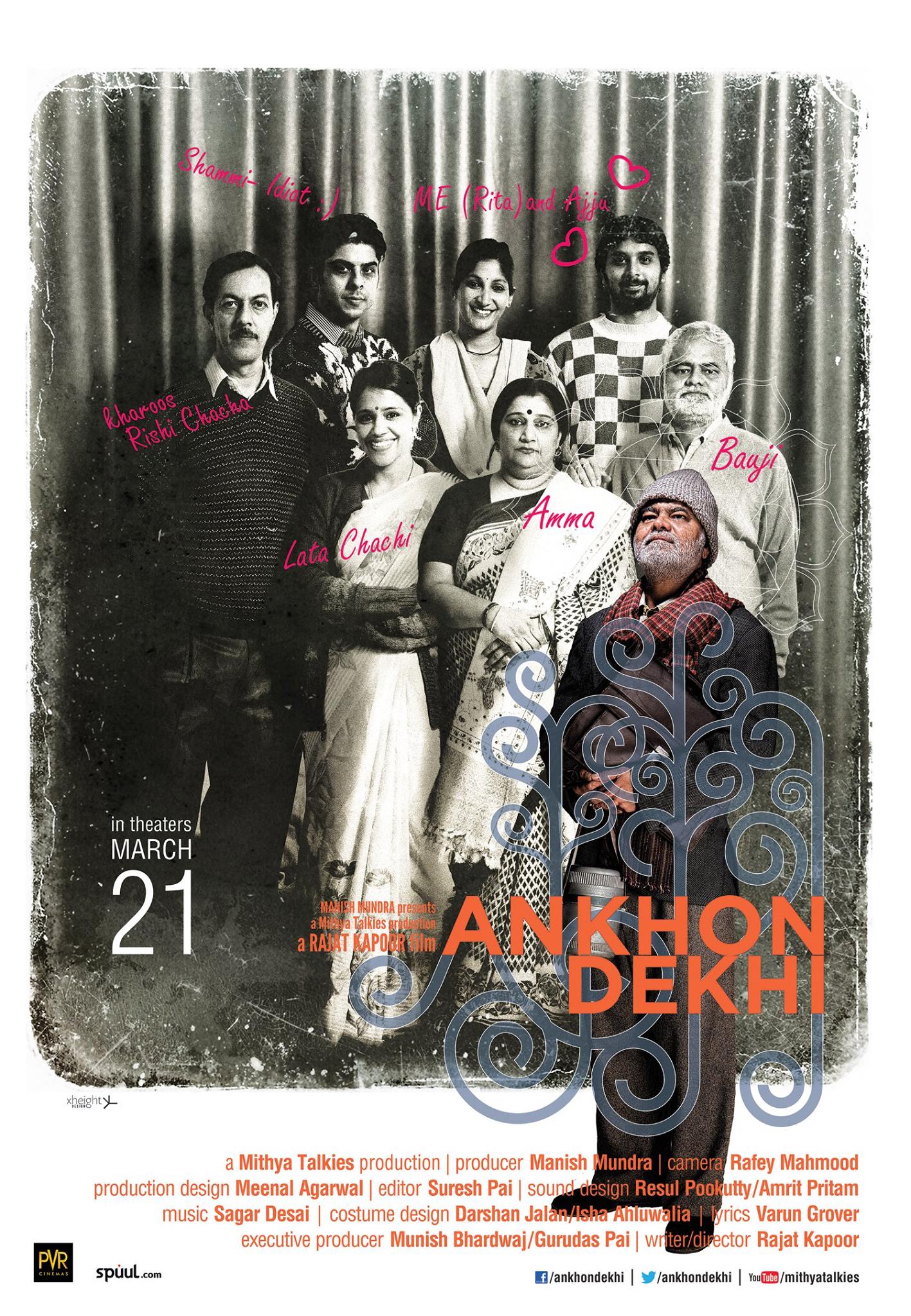
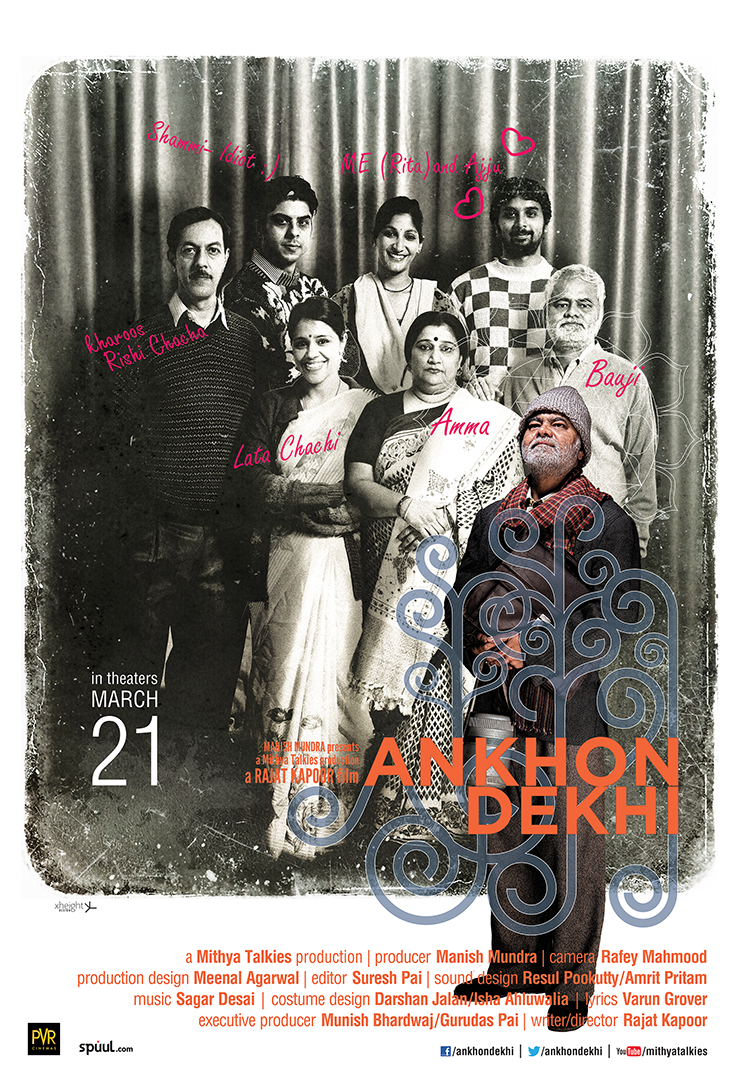
Ankhon Dekhi Poster

We are a bit late on this one, but we still thought we ought to feature it nevertheless. The poster and trailer of Rajat Kapoor’s Ankhon Dekhi arrived online sometime back- and while we are not quite sure how well they sell the film or convey what it’s really about- they give us a feel of the world it’s set in.

Some of us happened to see the film a while back and the reactions were pretty good. It’s an oddball, quirky film that goes through some distinct shifts of tone but always remains interesting and thought provoking. It’s also powered by some good performances from a strong cast led by Sanjay Mishra.

Here’s the trailer of the film, followed by the synopsis:

‘Ankhon Dekhi’ is the story about ‘Bauji’, a 55 year old man, who lives a dreary but eventful life in a joint family, that shares a small house cramped with people and drama. One day Bauji has an epiphany and decides that from that point on he would only believe what he sees with his own eyes, nothing else can be certain. There are a quite a few challenges on his onward journey- but Bauji never loses sight of what is before his eyes.

Produced by Manish Mundra, the film has been written and directed by Rajat Kapoor, who also stars in the film. ‘Aankhon Dekhi’ also features Sanjay Mishra, Seema Pahwa, Taranjeet, Maya Sarao, Namit Das, Brijendra Kala and Manu Rishi Chadha.

Varun Grover, lyricist and our editorial member, has written the songs for the film.

And here we have an interview of Rajat Kapoor where he speaks about Ankhon Dekhi and the challenges of making his brand of cinema.

If you are regular reader of the blog, you probably know his name. Neeraj Ghaywan is part of the editorial team and is a regular contributor to the blog. So it’s a great news for all of us. Yay! Yay! Yay!

Sundance Institute and Mahindra today announced the winners of the 2014 Sundance Institute | Mahindra Global Filmmaking Award, in recognition and support of emerging independent filmmakers from around the world. The winning directors and projects are Hong Khaou, MONSOON from Vietnam/UK; Tobias Lindholm, A WAR from Denmark; Ashlee Page, ARCHIVE from Australia; and Neeraj Ghaywan, FLY AWAY SOLO from India.

– Each of the four winning filmmakers will receive a cash award of $10,000, attendance at the Sundance Film Festival for targeted industry and creative meetings, year-round mentoring from Institute staff and creative advisors, eligibility to participate in a Sundance Institute Lab, and ongoing creative and strategic support from Sundance Institute’s renowned Feature Film Program.

More details about the winners and their films –

Hong Khaou / MONSOON (Vietnam/UK): Two young men visit present day Vietnam, and are confronted with the war’s ramifications nearly forty years after its end.

Hong Khaou’s debut feature film Lilting premiered in World Cinema Competition at the 2014 Sundance Film Festival.  The film stars Ben Whishaw and Cheng Pei Pei. He is also the director of three short films, including Spring, which premiered at the 2011 Sundance Film Festival, and Summer, which premiered at the 2006 Berlinale. This year, Hong was named one of the Stars of Tomorrow by Screen International.

Tobias Lindholm / A WAR (Denmark):  The major of a Danish unit in Afghanistan faces the consequences of his actions in the aftermath of his most dangerous mission..

Tobias Lindholm graduated as a screenwriter from the National Film School of Denmark in 2007, and has collaborated with Thomas Vinterberg as co-writer on Submarino and Oscar nominee The Hunt. In 2010 he wrote and directed his first feature film in collaboration with Michael Noer, and in 2012 he wrote and directed the critical acclaimed A hijacking.

Ashlee Page / ARCHIVE (Australia): With the help of a supercomputer, an isolated 16-year-old girl grows plant life on Saturn’s moon Titan in the hope of one day restoring Earth’s ecosystems. But when an unexpected accident leads her to the moon’s surface, she discovers evidence that her mission is a lie and that her life is in danger.

Ashlee Page is an Australian writer and director. Her multi-award winning short The Kiss screened at Busan, Clermont-Ferrand, Palm Springs and Tribeca film festivals. Her most recent work is on the film compendium The Turning, adapted from the novel by Tim Winton. Archive is her first feature film.

Neeraj Ghaywan / FLY AWAY SOLO (India): Four lives intersect along the Ganges river: a lower-caste boy in a hopeless love, a daughter torn with guilt, a father sinking in greed, and a spirited kid craving a family, all yearning to escape the constrictions of a small-town.

Neeraj Ghaywan worked with Anurag Kashyap on the veteran director’s two-part opus Gangs of Wasseypur and as the second unit director on Ugly.  His short films as writer-director include Shor and The Epiphany. Shor won the grand jury prize at three International film festivals.

– The script of Fly Away Solo is been written by Varun Grover.

– You can watch Neeraj’s short films Shor and Epiphany here and here. And click here to read a post by him on the making of Shor.

– Also, Love.Love.Love, a short documentary directed by FTII student Sandhya Daisy Sundaram, won the Short Film Special Jury award for non-fiction at the ongoing Sundance Film Festival. More details here.

Kamal Swaroop’s cult film Om Dar-B-Dar has been restored and its finally in the theatres. Don’t miss it.

DON’T .  MISS.   IT.

And we are going with the mood of the film, so recycling an old post by Varun Grover which was written 3/4 years ago. Don’t worry, it still reads new just like the film and its ideas. If you have seen the film and are still wondering what the real story is, this post got all your answers.

ODBD

Death and mythology in a small town

बबलू बेबीलॉन से, बबली टेलीफोन से  (Bablu calling from Babylon, Babli listening on telephone)

Om Dar-B-Dar.  Om here and there. Or more precisely, Om here and there, helpless. That’s the name of a film I first heard about around 10-years back. It sounded like a typical wannabe ‘Indian Parallel Cinema Movement’ film of the 80’s. Though the ‘movement’ never went beyond the occasional film festival screening in India then (and now, much later, beyond the difficult-to-find DVDs in malls with bad architecture and heavy security) – it did give the otherwise angry-for-no-reason 70’s and colored-clay-pot strewn 80’s some credibility. Shyam Benegal, Govind Nihalani, Basu Chatterjee, Mani Kaul, Kumar Shahani and with a much lighter hand, Sai Paranjape made cinema which was sometimes as local as a small stretch of highway in north India (Uski Roti (Our Daily Bread), Mani Kaul, 1970) or a residential chawl in a Bombay suburb (Katha (The story), Sai Paranjpe, 1983). In fact, they were the only people making cinema with a very strict sense of time and place – love letters which started with a date and place on top.

But then, art cinema movement too had groupies trying to pass off as the real rockstar. Films with dim lights, grim faces, and half a social issue (invariably leftist in thought) would instantly be termed as ‘parallel’, get the government of India funding, and be sent to film festivals abroad. Om Dar-B-Dar sounded like that kind of film, especially after one article I had read which described the film as some kind of existential study into the life of a teenager in a small town of Rajasthan.

Watching it recently for the first time, I realized, it is anything but me-too. Or even close to ‘art cinema’, as we know it. It exists in a league of its own. And though that may not be intended as a high praise, but that’s the only way it can be described.

मिथ्या है संसार – माया है संसार  (The world is a lie – the world is an illusion)

Kamal Swaroop, a scientist with DRDO (Defense Research and Development Organization) of India, turned a filmmaker, graduating from FTII, Pune, to debut with Om Dar-B-Dar. He calls his only feature film to date a kind of spoof on ‘art films’ of the time. “If anything, I wanted to make an anti-intellectual film. I didn’t want to make a film on some social issue or sad people. I just wanted to make a film about a small town”, said Swaroop in a personal interaction after the screening a few months ago. Having stayed in Pushkar in Rajasthan, famous for its annual Hindu mela (fare), probably helped him nail the setting of the film. His love for science and mythology admittedly helped in deciding the next two important aspects – the central character of teenaged Om and the basic conflict points in the story.

But is there a story in Om Dar-B-Dar? Kamal Swaroop insists there is – though the group with which I watched the film was clueless. Swaroop calls it bad conditioning – looking for story and only story in cinema. He says cinema is not necessarily mass communication, it can be a personal expression too; a painting or a poem. Though many were not convinced, Swaroop claims that the film, when screened in small villages of Rajasthan, was completely ‘understood’ and enjoyed by the simple villagers. Reasons being – less conditioning and more connection to the vibes and idiosyncrasies of a small town.

Next question – does the film have a form, a structure? Swaroop’s crisp answer – even deform is a form. What about accessibility? Comprehension? Head and tail? Again – Swaroop’s answer – why should cinema be objective? Why a film should be only one of the two things – I got it or I didn’t get it?

That raises some very valid debate points – story, form, and accessibility in cinema. Indian cinema, traditionally has been a story-driven exercise in videography. Starting off with mythological tales in the 30’s and 40’s, and evolving into equally simplistic good vs. evil (Hero vs Villain) cinema of the 60’s and 70’s – there is a long and deeply ingrained history of accessible stories pushing ‘cinema’ more and more into the ever-expanding space of ‘mass-media’. Rumor has it, two of the greatest films of Hindi cinema (Mughal-e-Azam, Guide) had their endings tweaked to accommodate popular tastes. (Anarkali being given a safe passage by the emperor and rains arriving on Raju’s death respectively).

The third aspect – form or structure, was also rarely played with in popular cinema, with the most adventurous of the lot taking the ‘flashback’ route as the only standout narrative element. It can be noted here that most of the art cinema movement films too had a strong focus on story-accessibility couple – they differed majorly in the structure/form department. In addition to having more realistic settings and acting, they succeeded in creating a new cinematic-clock for themselves – a form where time moves slower and hence more details are visible, and vice versa.

And here lies the most distinct element of Om Dar-B-Dar – cinematic clock, here, moves as fast, if not faster than a regular commercial Hindi film while the other two aspects (story and accessibility) are given the least respect. In fact, it would be much enjoyable to watch it as 20 short films (a lot of them very funny, and an equal number completely nonsensical) about Om’s family and friends, stitched together with music, surreal dreams and a mythological back-story. So, for the math-minded – ODBD is an anti-art, anti-commercial film moving at the pace of a commercial film and having the details of an art-film.

टैडपोल से हम (We are like Tadpoles)

After the film screening is over, and after heated debates on whether it can even be called a film in the first place are done with, Kamal Swaroop smiles and asks whether anybody still wants to know the story. A few hands go up and Swaroop relents.

(SPOILERS) Om, a teenager, is blessed with a magical power and he can hold his breath for any desired duration of time. This results in him putting up a show at the holy place of Pushkar (ascribed as the only heaven on Earth in Hindu mythological texts), where he goes inside water and holds his breath. Once, to protest against Brahma, the Hindu God credited as the creator of the world, who has decided to remove the ‘heaven’ status of Pushkar, the locals decide to put up a non-cooperation movement against Brahma. The only non-cooperation they can do to Brahma is to stop breathing, as that’s the only gift he has given. But since Om’s natural tendency is to not breath, for him, the non-cooperation would be the act of breathing. At the time of protest, Om happens to be inside the pond where he puts up his show. He breathes, to support the non-cooperation, and dies. (spoilers end)

But then, one has to watch the film many times to get this story – and as I said, there are at least 20 more stories, all equally layered, and delivered at a crazy pace. At times, it looks like an MTV Production, with the kind of visual liberties, caricatures, and abrupt cutting involved. (No wonder, Swaroop later helmed the launch of Channel V in India, playing a crucial role in defining the ‘funky’ auro-visual space it’s known for now.)

 कसप (How do I know)

In a crucial scene in Hindi novelist Manohar Shyam Joshi’s ‘Kasap’, the male protagonist’s naada (thread of pajamas) gets stuck in a knot in front of the girl he is wooing. In Om Dar-B-Dar, a similar thing happens when a young man is about to start making love to his girlfriend. Funny, sad, frustrating, and deeply observational at the same time – moments like these make ODBD a watch to remember.

Whether it’s a film with story, structure, accessibility, or (latest buzzword) ‘take-homes’ is a debate worth drunken nights with friends. The film released in 1988, and has been getting buzz (positive, negative, both) at regular intervals. Though that doesn’t guarantee a great, path-breaking, or cult status to any work of art (or mass-media) – it surely means there are enough cinema crazies in the world.

As for whether you will like it, the only answer is ‘कसप’.

film bazaar2

– Early buzz on Kanu Behl’s Titli : Titli is the most stunning, daring, solid Indian film i have seen this year. Nothing like Indian cinema has seen ever…not a single wrong frame. Too depressing and suffocating at times…but man, this MUST go international. Animal kingdom ka baap hai! And all actors just at their career best roles. (via a friend who saw it). Titli is produced by Dibakar Banerjee and Aditya Chopra. To know more about the film, click here.

– Kanu Behl’s Titli also won the DI Award for the Best Work-in-Progress Lab Project. The DI Award sponsors the completion of the Digital Intermediate process at Prasad Labs.

– New York-based BGP Film has picked up the North American rights of Gyan Correa’s film The Good Road.

– Abhay Deol will star in the UK-set thriller, Bounty Hunter, to be directed by brothers Sunandan and Yugesh Walia. They will also co-produce the film rough their UK-based production company Endboard Productions.

– Q to make English-language debut with Brahman Naman, to be produced by Steve Barron’s UK-based Riley Productions.  Set in Bangalore in the 1980s, the film is a comedy about a 17-year-old who tops his class but also has whisky addiction, filthy mouth and a porn collection. Q’s Kolkata-based production company Overdose Joint will co-produce.

– France’s ASAP Films to produce Rajesh Jala’s The Spark (Chingari). It was selected for NFDC Screenwriters’ Lab and Co-production Market. The script also won the Incredible India award at Film Bazaar. The Award comes with a cash price of Rs. 1 mn for the best project in the Co-Production Market and is presented by the Ministry of Tourism.

– Ashim Ahluwalia’s film Miss Lovely is set to release in India in January 2014. This will be done through the start-up theatrical distributor Easel Films and Eagle Movies.

– Guneet Monga’s Sikhya Entertainment has announced two new films – Amit Kumar’s Give Me Blood and Vasan Bala’s Side Hero.

– Nikhil Mahajan (of Pune 52) has announced his new film Dainik which will star Rajkummar Rao (Yes, RajKumar Yadav is now Rao). DAR Motion Pictures, IME Motion Pictures and Nikhil Mahajan’s Blue Drop Films will co-produce Marathi action adventure Baji, starring Shreyas Talpade.

– Varun Grover’s film Maa Bhagwatiya IIT Coaching will be produced by Nikhil Mahajan. The script was selected for Screenwriters Lab.

– DAR Motion Pictures, IME Motion Pictures will co-produce Nikhil Mahajan’s Marathi Superhero film Baji starring Shreyas Talpade.

– After Qissa, filmmaker Anup Singh is working on adapting UK author Paul Pickering’s novel Over The Rainbow. The film will be produced by Switzerland-based Saskia Vischer Productions.

– Channel 4 has picked up four titles – The Good Road, Sulemani Keeda, Fandry and B.A. Pass.

(Via various News sources)

Screenwriter and lyricist Varun Grover‘s script Maa Bhagwatiya IIT Coaching was selected for NFDC-TIFF’s ScriptLab this year. He not only went to the lab but also managed to catch some of the interesting films at the fest. So over to him for all the dope on the fest and some film reccos.

disappearanceofeleanorrigby_01

Thanks to NFDC’s script lab in association with Toronto International Film Festival (TIFF), I got to attend this year’s fest (from 5th to 15th September) in Toronto. Though the first 5 days were devoted mostly to the script lab sessions (with our excellent mentors – Marten Rabarts, Olivia Stewart, and Esther van Driesum – who got the nuances and layers of our scripts so bang-on in spite of being from a culture far removed from ours), I stayed for 5 more days to watch cinema. And I think Toronto has been getting the best line-up of films for the last few years. Oscar season is close-by, TIFF Director Cameron Bailey’s film-hunting/sourcing skills are legendary, and TIFF doesn’t shy away from seemingly non-festival stuff like Gravity and The F Word (on two ends of commercial spectrum) – resulting in a film fest with so many options (with ample repeat screenings) that out of the 16 films I could catch, at least 10 were absolutely stunning and another 3 in #MustWatch category. And I missed at least 7 big films, in addition to many small ones, that I so badly wanted to see. (People’s Choice winner ‘12 Years a Slave’, FIPRESCI winner ‘Ida’, Cannes winners ‘Blue is the warmest color’ and ‘A Touch of Sin’, Richard Ayoade’s ‘The Double’, Reitman’s ‘Labor Day’, and Miyazaki’s last ‘The Wind Rises’.)

But what a smooth fest it was. Never seen volunteers this organized, informed, helpful, cheerful, and above all passionate for cinema! Most of them were students who chose to volunteer because for every 6 hours of work they used to get one movie ticket free. And then there were some who had been doing it for many years – and some (like this 80-year old lady scanning barcodes on our cards outside the venue) who loved being part of the buzz. Every volunteer inside the venue I went to (Scotiabank) knew which movie was playing on which screen, who had directed it, and what was the duration. And they would make a human-chain in the theatre gallery for really crowded screenings (like Gravity’s) so that no one jumps the queue. Met two young filmmakers while waiting in a queue who had volunteered at the fest 3 years ago and they said the recruitment for next year’s volunteers will start soon after this is over, and they prepare for close to 10-months for this level of professionalism.

So here’s the list of films I watched and my 2-line reactions to them:

fifth estateThe Fifth Estate (Bill Condon): Hugely underwhelming. No insights into Assange’s mind or workings or flaws, and more like a Madhur Bhandarkar attempt at cashing-in on the hype around the man. Wannabe Social Network, but with writing so clichéd that even Cumberbatch couldn’t save this one. And later I realized the director, Bill Condon, had made 2 Twilight films before this. That figures.

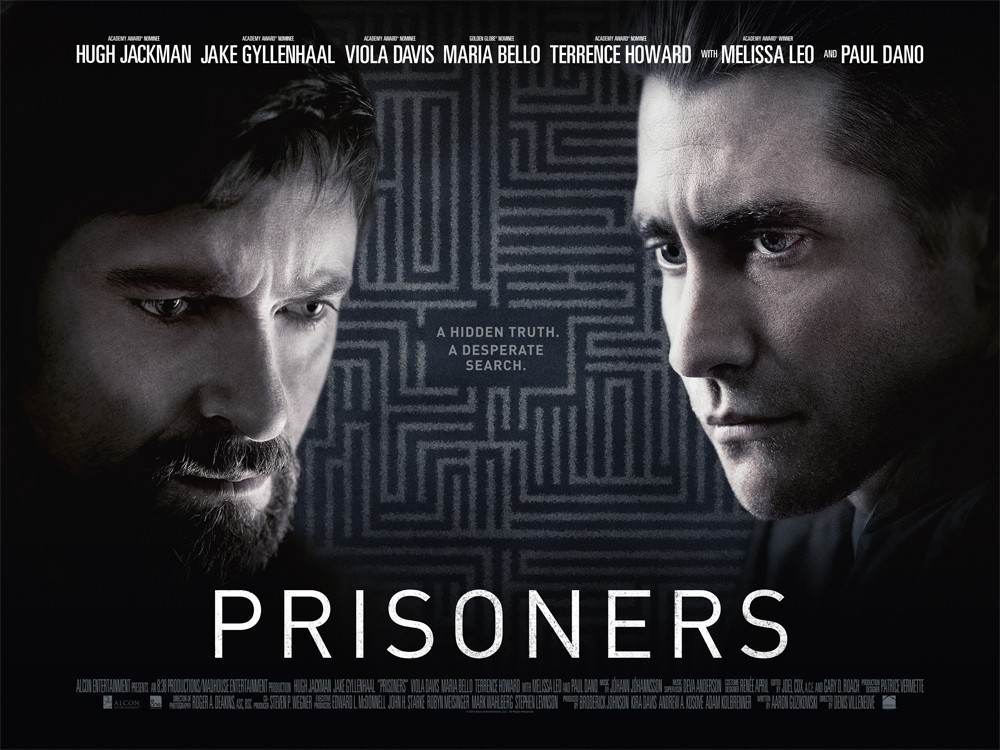
PrisonersPrisoners (Denis Villeneuve): Sirf naam hi kaafi hai. Villeneuve’s last (Incendies) was one of the best, most explosive film 2 years ago, and hence was really looking forward to this. Turned out it had (my fav) Paul Dano too in it, with (Prestige-faced) Hugh Jackman and Jake Gyllenhaal. And what a spine-chilling film it was! Definitely among the top 3 I saw at TIFF. Villeneuve (with his writer Aaron Guzikowski) enters a David Fincher world but brings much more art-house sensibility (with a Korean psycho fetish angle) and Roger Deakins’ absolutely gorgeous aesthetics to it. Won’t talk about the plot as this film is best savored with a blank slate mind. Doubt we will see a better thriller this year.

Gravity (Alfonso Cuaron): This one was a safe bet – and it still managed to exceed my expectations. By around a 100 light-years. I don’t think I breathed for the 90-minutes it played. Best use of 3-D, green-screen, Sandra Bullock, and space debris yet in cinemas. Watch it on the biggest screen in 3-D please.

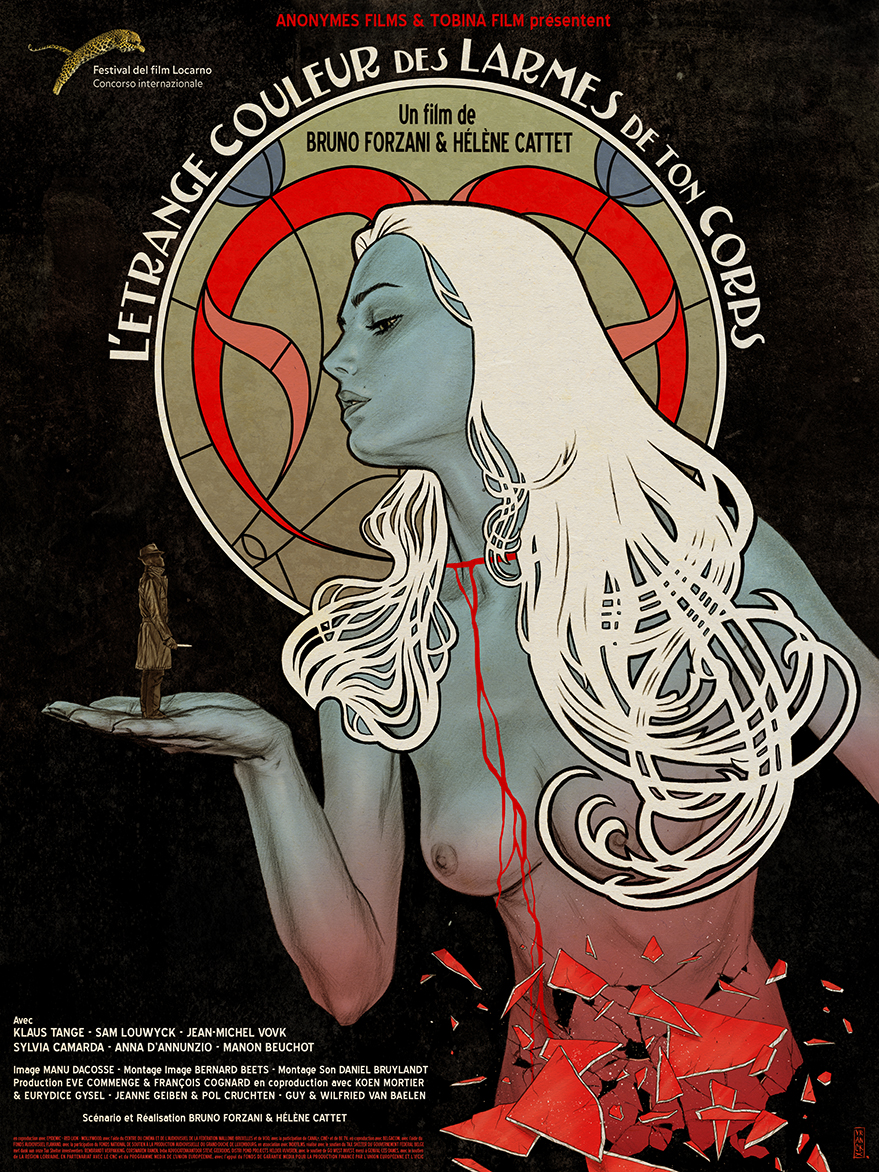
The-Strange-Colour-Of-Your-Bodys-Tears-posterThe Strange Color of Your Body’s Tears (Helene Cattet, Bruno Forzani): I don’t really know what I saw. 4-5 people walked out every 5 minutes and by the time the film ended, only 30-35 of us were left. Something that would make the much acclaimed mad-duo of Belgian cinema happy. Weirdia of the highest order. Lots of blood, nudity, absurdism, zero narration or attempt at it, but everything done with so much class and aesthetic value that difficult to dismiss it. Colors, mood, performances – all screamed ‘installation art’ of highest order.

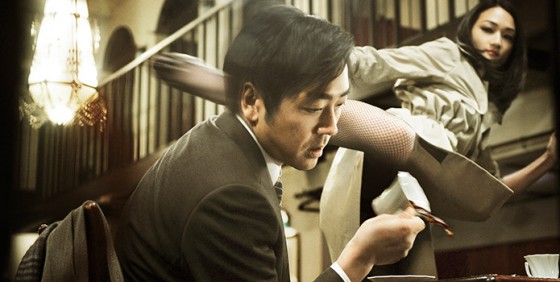
R100R100 (Hitoshi Matsumoto): One of the best discoveries at TIFF. Directed by Japan’s most absurdist filmmaker and leading comedian, this was weird, funny, cutting-edge satire, and sexual fantasy in equal measures. Brilliantly, genuinely subversive. (And he called it R100 to take a swipe at censor boards who’d give it a rating ‘suitable only for 100-years or older’). Wait for this one!

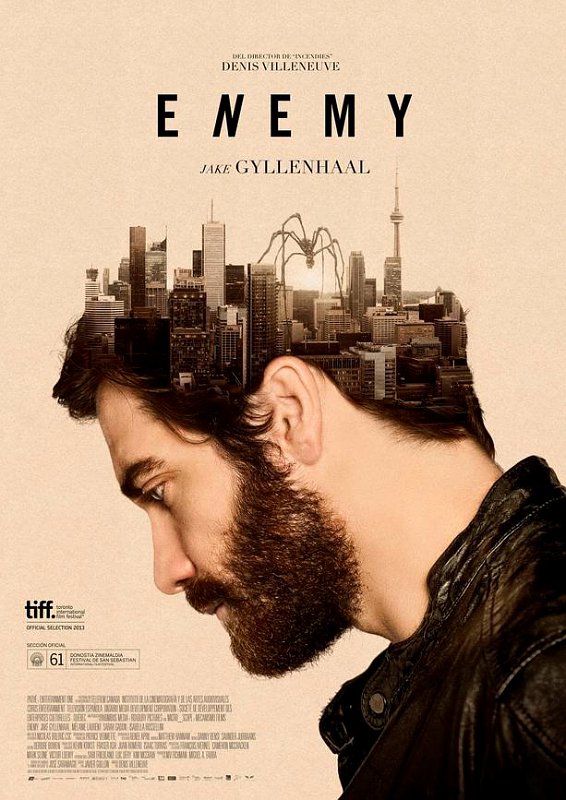
Enemy posterEnemy (Denis Villeneuve): Yup, DV had two films at the fest. Both with Jake Gyllenhaal in a major role. He apparently shot them back to back and then edited parallel – and seeing how different the genres and mood was, he has to be having two separate brains to do it with so much perfection. Enemy, based on a Jose Saramago novel (yup!) though reminding me of a Satyajit Ray short story ‘Ratan Babu’, has terrific Melanie Laurent and Sarah Gadon giving company to Jake finding his exact double accidently, and is so moody that it feels like a tarantula spider creeping up your back. Just a bit underwhelming when compared to ‘Prisoners’, but is comparison even valid?

MoebiusMoebius (Kim ki Duk): You walk into a Kim ki Duk film expecting bizarre but this one, as far as I know, is bizarre level max he has ever reached. This one is bizarre level ‘eating a dick after cutting it’. This one is bizarre level ‘mom eating son’s dick after cutting it’. (No, it’s not a spoiler, just a warning. This particular sequence is right in the beginning of the film.) And it’s a silent film – completely silent. And it could have been called ‘Dick of Theseus’. And it was the funniest, goriest, sexiest, most disturbing, and thrilling, and taali-seeti worthy film I saw at TIFF. And somehow, Duk manages to push his Buddhist agenda through all this weirdness too. Takes a genius for that. Also among my top 3 there. Must watch if you can handle bleeding dicks.

Gopi GawaiyyaGopi Gawaiyya Bagha Bajaiyya (Shilpa Ranade): The only film at the fest that left me disappointed. Had high hopes with this one – and the art of the film is top-notch. Beautiful frames, decent level of animation, but where it faltered badly was in the dialogues and technicalities of animation. Lines written in clunky, orthodox Hindi and making the background out-of-focus to give depth (in a 2-D animation!) made the film look way tackier than it should have been.

QissaQissa (Anup Singh): A film based on partition, in Punjabi, starring Irrfan and Tillotama Shome and Rasika Duggal and Tisca Chopra! I was already sold. And though it deals with partition in a more symbolic, metaphoric, allegorical way – I was moved immensely by it. Many friends had issues with the logic and amount of suspension of disbelief it demands (basic premise of a father who brings up his daughter as a son without letting anybody else know is a bit of a stretch, yes) – but it still managed to disturb and involve me probably because of the magic realism zone it enters in the 2nd half. And also because of Rasika and Tillotama’s terrific performances. Probably it’s only me but I think the film gives a solid theory on why Punjab has the maximum cases of female foeticide/infanticide. (Qissa won the NETPAC Award at TIFF.)

Why_Dont_You_Play_In_Hell_Banner_4_25_13-726x248Why Don’t You Play In Hell (Shion Sono): Shion Sono of Cold Fish fame is a rockstar already and this film (recommended strongly by my script lab friend Nikhil Mahajan who wanted to watch all the films in Midnight Madness section, a section devoted to all the mad-horror-slasher-campy films, with titles like ‘All Cheerleaders Die’) came with huge expectations. And the first 15-minutes just raise your expectations to the skies. A spoof on Yakuza cinema of Japan, film sags a bit in the middle with spoofs being so subtle that it starts looking serious, but the last 30-minutes or so Sono comes back full-steam and blows your head. And the very last shot adds another magical layer to the entire film! Super-ambitious and super-welldone. (WDYPIH won the best film in Midnight Madness section.)

under-the-skinUnder the Skin (Jonathan Glazer): The creepiest film at TIFF, in spite of it being non-gory, non-gross. Scarlett Johansson plays an alien (nudity is there, perverts) and nothing much happens beyond a pattern (which may be a minor spoiler so avoiding), but the mood, location (cloudy, wet Scotland), Glazer’s solid craft, and Mica Levi’s trance-type BG score make it a super-juicy watch.

Half of a yellow sunHalf of a Yellow Sun (Biyi Bandele): Knew nothing about this film but then Aseem Chhabra recommended it and I found out it’s based on a novel by Chimamanda Adichie (always a big plus for me when a film is based on a book). And it was like a fulfilling novel – a sprawling, excellently recreated epic of 2 sisters and their 2 lovers in the middle of Nigeria-Biafra conflict of the late 60s. Would have been a strong Oscar contender in many categories if it didn’t have an all-black cast and ethos and history. And to make it even more worth it – Thandie Newton and flavor of the season Chiwetel Ejiofor (of 12 Years A Slave fame) hit it out of the park with their excellent performances.

Walesa, Man of HopeWalesa: Man of Hope (Andrzej Wajda): Another of my favorite genres – biopics. And this one is as solid as any I’ve ever seen. Based on the life of Lech Walesa, a man I knew nothing about except vague memories from GK books that he won a Nobel Peace Prize, the film is a bit too political-jargon heavy, but none of it stops it from being a great, engaging film with some godlevel period-recreation detailing. And the use of Polish punk-rock music as a thematic narration device adds so much to the mood of the era. Plus the main lead Robert Wieckiewickz has the charm and power of early Robert De Niro and the actress playing his wife (Danuta Walesa), Agnieszka Grochowska, had a face with so much beauty, pain, and understanding ki mujhe us-se pyaar ho gaya. Triple Ace!

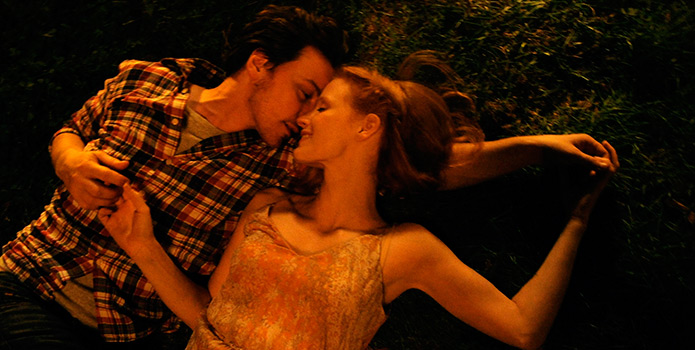
ElanorThe Disappearance of Eleanor Rigby – Him and Her (Ned Benson): A mouthful of a title, a seemingly simple drama about a couple’s separation but dive into the film and realize it’s almost as ambitious as Gravity. Two films (of 90 mins each) showing the perception of events through husband’s and wife’s perspective – and so many layers added by just one more perspective to a particular event. And the best part – the film showed as Him-Her and then in another show as Her-Him (the order of perspectives reversed) and that changed the meaning of many scenes for viewers, including the climax. So in a way, it’s a film as well as a perception game! Interactive cinema done so simply. And I’ve not even started on how sensitive, brilliant, and insightful Ned Benson’s writing is. This one too, among my top 3 at TIFF.

ThouThou Gild’st The Even (Onur Unlu): Shot in crisp 35 mm black and white and great to look at, but kuchh samajh nahin aaya so walked out after 30 minutes. Read more about it here and go WTF.

The f wordThe F Word (Michael Dowse): Don’t even ask me why I went to see this one. (There wasn’t anything else playing at that time, mainly that’s why. Also ‘cos Dowse made the terrific ‘It’s All Gone Pete Tong’.) A standard rom-com, most likely to make profit if it releases during Christmas or Valentine’s Day, with some very funny lines, and some very average clichés, but done well. Zoe Kazan is excellent, crush-worthy, yet again after Ruby Sparks (which she by the way wrote too), and Daniel Radcliffe is stuck in that odd place/age where Kunal Khemu and Jugal Hansraj have already been.

NFDC Screenwriter's Lab

NFDC has announced the list of finalists for NFDC-TIFF Screenwriters Lab which will be held during the Toronto International Film Festival, 2013.

Here are the six finalists  for NFDC Screenwriter’s Lab 2013.

1. Chingari (The Spark) by Rajesh Jhala

2. Dainik (The Daily) by Nikhil Mahajan 

3. Kaalapani (Dark Waters) by Bela Negi

4. Maa Bhagwatiya IIT Coaching  (Mother Goddess IIT Coaching) by Varun Grover

5. My Brother the Salesman and I by Shanker Raman

6. T se Taj M se Mahal (T for Taj M for Mahal) by Ashish Srivastav

Yay! Especially for Varun Grover. Those of you who regularly follow our blog, must be aware that he is one of our regular writers. Some of us have read the script and it’s a terrific one. Hopefully it will get made soon.

All the best to to all the finalists.

Booked your tickets yet? Do it first. Then come back to this post. This isn’t the usual hyperbole. It’s really good and rare chicken soup for your soul. And so the film straight goes into our list of “Must Watch” films.

Our regular contributors Varun Grover, Svetlana Naudiyal, Mihir Desai and Sumit Purohit tells you what the film meant to them, why it spoke the way no other Indian film has done in a long time, and why you should not miss this one at any cost.

And as the norm goes with most of our posts, these are not formal reviews. Just ramblings. Why four? Well, we are going with the theme of of the film – three for three stories and one to connect it all. or something like that. Aha, call it cheap thrill and read on.
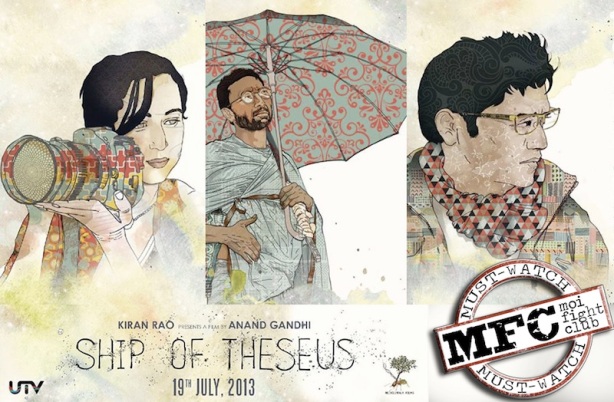
Ship MFC

Cinema of duality

by Varun Grover

I have been struggling with this scenario for some time now, this concept of duality. Not in a spiritual sense (that is still many years away I think) but in a very daily-life sense. Have been swinging between left and right ideologies, between Arundhati Roy and her detractors,  between hedonism of sab chaat lo/bator lo and nihilism of sab chootiyapa hai, between the urge to document every travel trip through photographs/ticket stubs  and the need to live in the moment making the concept of posterity sound like a well-manufactured fraud, and many other, similar conundrums.

Anand Gandhi picks up three such stories of duality, set in three different worlds, and binds them together through the philosophical paradox of Ship of Theseus. If that sounds heavy then yes, ambition-wise the film is this heavy. But the beauty is that the team has pulled-it off with great cinematic value in each frame and line of writing. It’s refreshing, beautiful, insightful, and as gripping as a well-made thriller.

The philosophical moorings never get in the way of entertainment or storytelling, the two core elements people safely assume missing from any film termed an ‘Indie’.  And that, I think, is the greatest success of Ship of Theseus. Here’s an Indie that appeals to the mind as well as the heart. We don’t need to love it out of some guilt for the poor filmmaker who sold his house and ate only vada-paav for 1008-days non-stop to fund the film. We don’t need to love it because it’s arbitrary and arty and we don’t get it but ‘Mint Lounge or Caravan are loving it so we must too’ pressure.  We can love it with all our understanding, ego, and guiltlessness intact, like we love any mainstream film.  It’s like health food that doesn’t taste like health food.

The 3 stories – a visually-impaired photographer about to get new eyes, an atheist monk and stand-up comic cum lawyer sparring on about the relative value of an animal’s (and human’s) life, and a man with a new kidney having doubts about the legality and ethics of the transplant – explore one genuine doubt each (माकूल शक़  as KK Raina said in Ek Ruka Hua Faisla) about existence and mortality.

The characters are talking a language rarely heard before on Indian cinema’s screens.  The language of loaded words and of a life lived in knowledge. Though I’ve met some people who found the language to be faux-intellectual and the 2nd story a bit too verbose.  I think it’ll come down to how invested in the basic conflict of the story you are. Do you want to know more about the layers of conflict at hand or are just happy seeing the surface and are now mumbling ‘Haan samajh gaye…ab aagey story bataao na!’ Like after watching a great film, I spend hours reading about it on the internet. Director’s interviews, googling ‘<film name> explained’, trivia, theories, hate it generated – everything.  Sometimes I know how much I liked the film only after realizing I have spent 2 days reading up on it. I think same theory works here – if you find the core debate interesting, you will enjoy the शास्त्रार्थ going on between the monk and stand-up comic. (And what is a stand-up comic if not a modern-day version of debate-loving, analyzing, theorizing monks we read about in stories from mythology, people who debate just for the heck of it. So in a way, 2nd story is a debate on morality between two monks/comics from two different time periods.)

If a film’s merit is in showing a new world with great authenticity and insight, then Ship of Theseus shows us three. And to top that, terrific performances, excellent background score, one brilliant song in Prakrit, and consistently sharp photography throughout made this most-awaited Indian film of the year for me absolutely worth the hype.

Ship Of Theseus

“You chose your journey long before you came upon this highway”

by Svetlana Naudiyal

I really don’t know what to say amidst the deluge of opinions and interviews and reviews. Social media is flooding with them and here I am, adding my own two bit to that. Will saying that I’ve seen it thrice already at different occasions and will happily (and surely) see it again, suffice?

Quite lazily and shamelessly, I am kind of reiterating something I wrote earlier this year for this very same blog. Primarily because, I think kisne padha hoga. And secondly, what I think about the film, it hasn’t changed a bit.  (Also, maybe now I can add some of those so-called spoilers.)

Ship of Theseus invents a language. Not just in terms of cinema, but in terms of thought. It compels you to go home and read. If not read, then at least think.  (At times when we spend our lives not thinking, you may discover that ‘thinking’ is a wonderful exercise). It takes you closer to your own self and yet far away from it, where almost unintentionally you find yourself objectively pondering over your own self and its relationship with the world around.

It is so evolved in thought and yet so accessible. Sophisticated, mature and nowhere in the remote vicinity of pretentiousness. And yet it is light like a feather, a pleasant watch replete with humour. (And in case I haven’t yet reiterated enough in indirect phrases, the film stems from life itself.)

The blind photographer’s search for meaning in being able to see, the monk’s dilemma and the stockbroker’s quest for purpose in his own life. You may like a story little less and another a little more, but it is the whole they construct that runs like a background score for you after you’ve seen the film.  In our Cinema, where do we see references to something like Unilateralis Cordyceps,  Charvak and Church of the Flying Spaghetti Monster anyway? Or to introduce a blind photographer, to have a song in ‘Prakrit’, to choose Sweden (Sweden is rated to be one of the most fair and just social systems in the world – this little piece of info comes from the filmmaker, not my discovery. I just crosschecked a bit.)

I also love how the film resorts to traveling. (More of a personal connect, may be, for a firm believer of the idea that any meaning that can ever be found is during a journey). From wandering to a far off valley in Himachal to cave diving in Manipur, a journey into the infinite and open world within.

[May be next week, we could compile a post listing the brilliant moments of the film. There are many. The only one I would probably want to mention for now is Maitreya’s encounter with what seems like death. In each viewing, at that particular moment and in every reflection about that moment, I’ve found myself come to a standstill. Needless to mention, if a film can capture that particular feeling, that moment in all its freezing cold reality, one can imagine how close to life the film is.]

Having said that, I must also admit that I’ve wondered if I’m breathing too much meaning into the film for its (and my) own good. I’ve refuted my own thoughts, with reasons ranging from beauty in lack of perfection to the subjectivity of what we call perfect. I’ve oscillated between “if this is a very well done pop philosophy” to “if this could have been deeper, darker” or something else, something more. Whether it is too much on words or too little on silence? But then again, those questions are personal, subjective and could be irrelevant to someone else who might not or might appreciate the film in a very different way for very different reasons.

Here’s where I found a bit of my answer –

Quoting Anand

An early treatment scribble

I’ve made a conscious choice of dialogue over action in several scenes in the script. I felt a strong urge to revert the “show, don’t tell” thumb rule, to the extent that many scenes cut abruptly at their most dramatic high point, and then in the following scenes, the characters narrate, through casual conversation, their experience of the dramatic moment. I analysed this urge to distance myself from the heart of the action. I discovered that I find some human experiences too deep, intimate and emotionally stirring to try and capture on camera. Also the immediacy and the drama of the experience end up fogging the essence, which seems to come out more honestly in the objective after-experience reflection. When a character talks about a moment experienced in the previous scene, it is not intended as a guide for the audience, but rather as an experiential lens, through which the audience lives the moment twice – once through the speculation of the dramatic high point of the moment led towards by the author, which being never shown, is experienced in the imagination, and then, the moment redefined through a tinted world-view of the character.”

It is in being the narrow, delicate bridge between simplicity and complexity, the singularity and duality of the quest for meaning, that Ship of Theseus is poetry reinstating itself as cinema, or vice versa.

Will it change your life? Maybe not. Life changing events and experiencing deep meaningful literature or cinema, are known to be mutually exclusive. But the film is sure to rekindle a little hope and a little faith or maybe a little more.

(p.s. In the 100 years of Indian Cinema brouhaha all around, Ship of Theseus arrives as a perfect anti-tribute and thankfully so! Here’s to The New!)

Ship Of Theseus

Let It Sail

by Mihir Desai

I didn’t want Ship of Theseus to end. The philosophical depth and visual beauty put me in a mind space that movies don’t tend to these days. I didn’t want to come out of it, back to mediocrity where filmmakers take their audience for granted. SoT treats the audience as equal, it gives an opportunity to reflect and interact with the thoughts presented in the film. Anand Gandhi very carefully crafts a film that raises questions about identity, ethics and evolution. The three stories within the film come together in what could be the best closing shot of the year! The film doesn’t take the easy route of leaving things up to ‘audience interpretation,’ instead it gives its audience some food for thought, without being preachy.

Ship of Theseus is truly made with an independent spirit. This is an example of what DSLRs are capable of doing. The visuals will prove once again that for DIY and low budget filmmakers, DSLRs are still a worthy investment. Pankaj Kumar’s (Director of Photography) brave cinematic choices takes the core idea of Theseus’ paradox to a whole new level. Three different looks and specific choice of camera movements for each story adds a new dimension to the characters. Technically this is a perfect film.

I look forward to a second viewing of the film as it opens to public. We’ve always been cynical about audiences rejecting new kind of films. The evolution of Indian cinema is in its prime, it’s not the audience that needs to carry this forward, it’s us, the filmmaking community that shouldn’t shy away from taking such risks.

Ship Of Theseus2

Kyunki Gandhi Bhi Kabhi Soaps Likhta Tha

– by Sumit Purohit

It was a rainy morning of July 2011. The Enlighten Film Society’s Naya Cinema Festival was going to screen Aaranya Kaandam as the closing film. I had heard lot about it, so I went despite the rain and the morning. I had no idea then that I will get introduced to another very special film there. It was announced that post the film screening the excerpts from three upcoming films will be played. I decided to stay back. One of these three films was SHIP OF THESEUS. That was the first time I heard about it. Anand Gandhi was present there with his team. He spoke briefly about the film.  But the few minutes of visuals that were played on screen were enough to tell everyone in the theatre that they were witnessing something exceptional. It probably was a film that will change Indian Independent cinema forever.

Almost a year later, Ship of Theseus was screened at Mumbai International Film Festival and it went beyond all expectations. It was not only the best Independent film to come out of India; it was a film which could compete with the finest from around the world. It was a master class in filmmaking. It was technically superior to most Indian films and it explored the stories significant to our times.

To realise that Anand Gandhi is a genius you need not watch his films. You just need to listen him talk for five minutes. He can talk about most things under the sky with great expertise. It seems he is less of a filmmaker and more of a cross between a mad scientist and a philosopher. No wonder he calls his production house a lab and writes research papers too. May be he is the monk from his film, or may be he is the young man who keeps arguing with the monk. Actually, he could be both of them at the same time.

Ship Of Theseus in a way is reflection of what Anand has experienced and learnt over the years. Though what’s wonderful about the film is that it communicates all those ideas and beliefs simplistically yet beautifully when it could have easily become pretentious, preachy or gone all abstract. Ship of Theseus is not what we usually associate with Indie films that have been to film festivals. It’s entertaining, at times humorous and very accessible. It respects its audience, and is intelligent.

The three stories in the film are all set in present Bombay and yet they look like they could be worlds separated by time and space. It’s interesting to notice how Anand uses certain elements in his film. The 1st story is about a blind photographer. Some of the gadgets she uses are straight from science fiction as if the story was taking place in the near future. At the same time the background song with Prakrit lyrics in the 2nd story makes the soundscape feel ancient. It’s a story about a monk who is fighting a court case to ban animal testing in India. He seems to connect with the most unlikely person, a young lawyer who sports long curly hairs and shares Internet jokes with him. In the 3rd story a young stockbroker’s obsession forces him to travel to Stockholm, a place away from his comfort zone. This coming together of contrasting elements makes Ship Of Theseus such an intriguing cinema.

Recently I read that the three films Anand suggested that everyone should watch are – Du Levande (You, the Living), The Turin Horse and Underground. If you look closely, you might find that these films could have influenced Ship Of Theseus conceptually and technically (Gábor ifj. Erdélyi, the sound designer of SOT has also worked on The Turin Horse). SoT has lot of non-actors in the cast, similar to what Roy Andersson prefers. Then there is a scene in the film where a fat man gets stuck in a narrow alley. One can easily imagine it to be a scene from an Emir Kusturica film.

SoT is a great example of how a filmmaker uses his experiences – things he has seen, stories he has heard, films he has watched, books he has read, and gels them together into something new. And at times referring back to them amusingly in the film.  This is a good reason why Ship Of Theseus can be seen again – to search for such references, to find those connections and see how they have changed in this process. Isn’t it similar to the Ship of Theseus paradox?

You will not hear or read any negative criticism of Ship of Theseus, so let me try it (for the sake of an argument and for fun). Strictly speaking it’s not a feature film. I will consider it an anthology of three short films that are thematically connected. The three films are visually and stylistically distinctive.  It’s deliberate but then you can’t overlook the clear dissimilarity between the writing, the way actors approach their roles, the language used and the impact it creates.  But then, for a debut filmmaker this really is not a negative thing. It only shows how talented Anand and his team are and how capable they are at creating these different worlds. It would be really interesting to see what Anand does when he decides to make a feature length film that follows one storyline. What narrative techniques he will use? What cinematic style he will adapt? He is an exciting filmmaker to follow. The best way to start stalking him is by watching Ship Of Theseus.

(PS – If you still need more reason to watch the film and you are a TV soap fan, then you should know that at once upon a time Anand used to write Kyunki Saas Bhi Kabhi Bahu Thi and Kahaani Ghar Ghar ki. Now, that should excite some of you.)

– And if these four writers have not been able to convince you so far, click here to read what Dibakar Banerjee has to say about it. Not everyone has the guts to say such good things about someone else’s film.