Archive for December, 2012

Film critic turned filmmaker Sudhish Kamath is planning his next film. And he is trying something new with this one. He has put out the script of his film along with the instrumental theme track on his blog even before he has started shooting. Why and how? Over to him.

EK NAYI DUNIYA / APOTHEOSIS

The END is here.

In an ideal world, I would have had enough money to have shot and released my new film called Ek Nayi Duniya/Apotheosis today. But for now, I would like to share the script and the instrumental theme composed by Sudeep Swaroop with supporters of independent cinema in the hope that some of you like it and spread the word.

By the time the film is ready for release next year, you will know if you want to watch it or save your money.

After Good Night | Good Morning, I wanted to do a film at the opposite end of the spectrum.

If GNGM was new age romance in an old-world setting, I wanted to deal with an old-world arrangement in a futuristic setting.

If GNGM was conversational, I wanted to make a film that was largely atmospheric.

If GNGM was claustrophobic, I wanted to make one on a huge canvas and a lot of space.

If GNGM was shot indoors in an air-conditioned studio, END will be shot in the middle of the Indian Ocean during the monsoon mid 2013.

Why am I then putting the script out?

Could someone steal it?

Sure. They are most welcome to. Only that I am 100 per cent certain that they wouldn’t dare.

Besides, I have taken care of the legalities to protect myself in the unlikely event that someone figures a way out to monetise this script without really making the film. But if you want to go ahead and make the film, please go ahead. I promise I won’t sue…as long as you credit and pay me, of course.

But I am certain that wouldn’t happen. Because nobody wants to invest money on anything without a precedent.

I am pretty sure that nobody would have made Good Night Good Morning even if I had put the script out before making it. Nobody would have thought it was possible to make a feature with two people on the phone for its entire duration. But it worked. I couldn’t have asked for a better launch as a filmmaker.

EK NAYI DUNIYA (Apotheosis is the English working title) is a modern day Adam and Eve relationship drama that plays out like a science fiction psychological thriller.

Like Good Night | Good Morning, I have tried to keep things simple: a two-character film once again. Something I can shoot in three weeks even in the most difficult of conditions. As an independent filmmaker who really likes his day job (I’m a film critic), I don’t want to make films that take too much time to shoot. But I compensate by spending months writing the film.

We have been writing this since mid-March.

END didn’t start out as a science fiction film. But today, it’s just impossible to even imagine it as any other genre.

I started writing this as a simple film about a couple on honeymoon dealing with the pangs of arranged marriage – as an antithesis to Woh Saat Din or Hum Dil De Chuke Sanam.

We did a lot of research, got over a 100 respondents for a sex survey to figure out what happens during the honeymoon in an arranged marriage set-up. It seemed like India’s best-kept secret.

But after the first draft, I felt I was exploring a few relationship issues that I had already covered in GNGM. Besides, I felt claustrophobic…every morning, the couple would wake up on the same bed during their honeymoon!

One of the exercises I used to make students do when I was teaching screenwriting was to make them rewrite the logline as different genres, just to check if they had indeed chosen the best genre to tell the story. It helps to practice what you preach. We hit a goldmine when we transported the idea of an incompatible odd couple into science fiction.

To cut a long prologue short, take a look at what the film/script tries to do and a brief synopsis below.

If you like it, maybe you want to give the script a read. It’s an early draft and the script is likely to change a lot more in the next six months. So if you have any ideas, criticism or any words of appreciation… or better still, MONEY to collaborate and co-produce this film, mail me at madeinmadras@gmail.com.

It would be refreshing to see someone put money on the table reading the script and not looking at the star cast.

I don’t want to announce our actors at the moment so that you can visualise the characters just the way you want them to be.

Thanks for your time and interest in my work.

EK NAYI DUNIYA: WHAT IT SEEKS TO DO

The Indian Arranged Marriage presents a fascinating dynamic and a unique equation between the sexes. It’s an arrangement, a match that’s put together by a system that expects the marriage to work simply because it is tried and tested. Over centuries. It has worked. And continues to work. The divorce rates in India are among the lowest in the world.

Yet, it isn’t exactly ‘And They Lived Happily Everafter’ situation that we have seen in most Indian films about the arranged marriage. In the conventional Hindi film narrative, a couple bound in matrimony inevitably falls in love. This cannot be further from reality today as couples in metros are falling apart, unable to reconcile their differences, especially when the woman is strong-minded, truly liberated and fiercely independent.

This isn’t because culture, tradition or society is to be blamed. This is because men and women are built so differently that even if they were the last people left on the planet, they would still have issues living with each other IF they were equals.

After the first draft of this idea, I realised that no matter how I played it, it would seem like I am criticising the Hindu arranged marriage system simply because the film chooses to highlight conflict and the tension that’s bound to rise.

To ensure that the conflict takes centre-stage and does not get hijacked or distracted by the cultural and socio-political subtext that isn’t intended, I decided to explore this dynamic of the arrangement through the lens of science fiction.

What if this was a story of the modern day Adam and Eve? Two people who are products of the world that was. Two people who are the only survivors of an apocalypse triggered by man’s disregard for nature. What if they got a chance to start afresh? Would they go nature’s way or want to stick to what years of nurture taught them?

Man, a soldier of the system, is a survivor who would do anything to feel safe, inexplicably attached to the concept of a home. Or the nurturing of the mother. (Though the character will never be referred to by name in the film, I call him RUDY, short for RUDRA KAILASH SINGH – a name borrowed from God of destruction – Shiva.)

Woman, an explorer always questioning the world, is a preserver who would do anything to protect, and is too wild to be tamed by any boundary, man-made or otherwise. She’s nature herself. (Though she will never be referred to by name in the film either, I call her BHAIRAVI, short for BHAIRAVI KUMAR – a name borrowed from the fierce Goddess, the other half of SHIVA/RUDRA.)

Can these opposites really fall in love? What is this home and the world they want to start together? A unit of the system that will lay down rules on how things must play out for the future? Or an unending quest? Is it a physical place? An emotional state? Or a mental space?

To understand who they are, we need to understand what made them – the system. Is there someone who’s controlling what’s happening to them? Or can they beat this system?

There are no easy answers. Hence, this is a film that hopes to provoke you into thinking about what we really want, how we want to live and where? This is a puzzle of a film that can be interpreted according to your own faith and belief system. But it also assures you that there may be other possibilities too. Equally real. The only truth, after all, is that there is no one truth.

The film tells you the story of the modern day Adam and Eve and their post-apocalyptic world that may or may not exist physically but we see the pattern. It’s almost cyclical – The Wild, The Cradle of Invention, Civilization & Escape – and through these four chapters of history, we see it repeat itself. The film then becomes the story of our world itself and its life cycle.

SYNOPSIS

Fourteen years after a global catastrophe, a spaceship on a mission returns home to an accident.

RUDY and BHAIRAVI fall out of the sky and are probably the only ones to survive. They manage to land on a pristine island in the Southern Hemisphere.

This modern day Adam and Eve need to create a new world together. It was a match made in heaven. Just not right for earth.

As the male and female energies clash and the opposites repel, the couple thrown into this unlikely marriage must survive the odds.

And each other.

Read the full script here:

@SudhishKamath

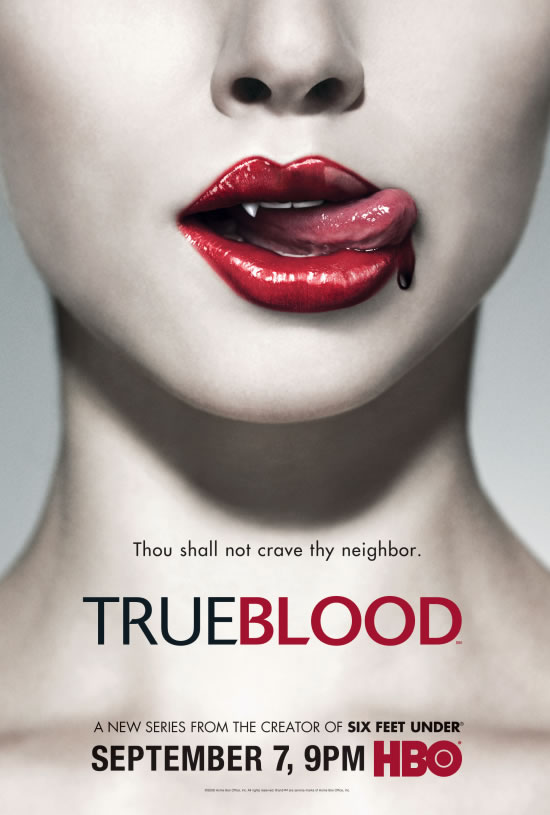
Murder 3true bloodjennifers body

OR

we are creating a new series in “How To Classify Movie Posters”

(source – ropeofsilicon. via @jahanbakshi)

DA

Filmmaker Darren Aronofsky was a special guest at 12th Marrakech International Film Festival where his masterclass was one of the main attractions of the fest. Some of us got time to sit down with him and talk about his films, characters, reviews, how he works and his thought process. Click on the play button and enjoy!

For pointers on specific topics, you can follow the time code given after the audio file.

at the start – on Sandy and Noah‘s shoot

02:44 – Taking to Twitter. My friend Louis C.K.

04:13 – Studios reaction on giving out film details on Twitter

– The studio was bit nervous but i get the idea about teasing people and still not giving away too much.

05:30 – On Noah. His filmography, ideas.

– The first film I pitched after Pi was Noah.

– All these ideas come from before i was making films. In fact this is my fear I feel I’m running out of ideas!

06:37 – Making a movie with Mickey Rourke. Girls. Phone numbers.

09:00 – On bollywood, Hindi films, Bandit Queen, Sholay

11:55 – From zero budget indies to big budgets Studio films

– Every film i have done up to this time, nobody wanted to make it except me.

13:20 – Animals, Water, Life Of Pi

14:37 – Superhero films

16:00 – Characters in dark territory, uncomfortable feeling, Happy endings

– So you drive your characters made. DA – Fair enough.

17:14 – Comedies? Did four shorts in film school. Two comedies.

18:15 – Mad people. Over the edge.

– Classical Hollywood happy ending never made sense to me.

20:55 -Looking back at your films and finding flaws

– Never look at your films, it’s kind of like masturbation.

– I watched Requiem for A Dream and I couldn’t recognize the person who had made it. It was surely a different person.

22:50 – Reviews, Criticism. Unromantic reviewer at Variety.

– when I meet her, it won’t be a good day.

26:40 – HBO series Hobgoblin

Saif, Sriram - Agent Vinod

For many of us, Sriram Raghavan’s Agent Vinod was one of the most anticipated films of the year. After two thrill-pills – Ek Haseena Thi and Johnny Gaddar, we all were waiting for a hat-trick. But somehow it didn’t work out. And that leads us to a bigger question – how do you know what’s working and what’s not at the script stage. It’s quite a difficult task.

I had read the script first and then saw the film. And this (So what happened to Agent Vinod?) was the post that i wrote after watching the film. At that time many of you had tweeted and sent mails asking for the script of Agent Vinod. I didn’t have the permission then. Now, as we look back, and are compiling year-end posts, i thought it would be a nice idea to share the script with you all. And we must thank Sriram Raghavan for it who quickly agreed and gave a go-ahead to post it.

So here it is, read, share and have fun! It’s written by Sriram Raghavan and Arijit Biswas.

(PS – Don’t forget to check out Sriram’s footnotes in the script 😉

(PS1 – The script shared here is only for educational purpose and is completely non-commercial initiative.)

(PS2 – To check out other scripts that we have posted on the blog, click here for Vikramaditya Motwane’s Udaan script, click here for Anurag Kashyap’s Dev D script and click here for Dev Benegal’s Road, Movie script.)

Miss Lovely

It’s that time of the year again. You sit back, relax, remember the titles, ponder over it and decide what has stayed back with you.  I have been thinking about writing a post on Ashim Ahluwala’s Miss Lovely and Anand Gandhi’s Ship Of Theseus for a long time. But something or other came along and it kept on getting postponed. Now that am thinking about year-end posts, these two films stand out completely from the rest. And strangely, both have many things in common, starting from redefining the “indie” cinema space in its truest nature.

The term “indie” has become quite convoluted in India and we have started using the term broadly for any film which isn’t exactly mainstream. Also, because by conventional rule book, bollywood’s studio system used to be quite different till few years ago. Now, these two films – Miss Lovely and Ship Of Theseus, can be called true blue indies. They have been financed and produced independently, not only outside the studio system but even completely outside the bollywood network. Forget being big stars, the lead actors are not even known faces except for Nawazuddin who was nowhere on the cinema map when he shot Miss Lovely. And most importantly, both the films tell “our” stories – rooted and distinct to the core.

Once you have seen both the films, you realise that it’s finally coming of age moment for desi indies which mostly either look tacky because of lack of budget, or at most we end up giving grace marks and credit to them for at least trying something new. These two films stand strong on their own merit and doesn’t want you to give them “indie sympathy” for just trying to making a different film. They deliver it and how! May i add that these two are easily the best desi films of the year i have seen and they stand on par with the world cinema titles of the year.

As most of you know by now that Miss Lovely is set in the underbelly of Bombay where people churn out B-movies full of sex and horror. The story, as evident from its trailer,  is about rivalry of two brothers as a new actress joins the industry. But the film is so much more than that. It doesn’t follow the conventional narrative rule book, it’s more of an “atmospheric” film. You can smell the walls and feel claustrophobic because of the mood it manages to create with its visuals. It’s documentation of an era, of a time, of history and culture. It’s indulgent with minimal dialogues and will test your patience too, but i don’t remember seeing something so brilliantly crafted on indian screen in a long time.

Ship Of Theseus

Ship Of Theseus is on the other end of the spectrum. It’s verbose but never dull. It’s philosophical but not pretentious. It questions life, death, morality, religion, humanity, existential issues, and if all that makes it sound like a boring and serious film much like its title, then let me assure you that it isn’t. Even though it doesn’t have a known face but Gandhi’s direction is so assured that it keeps you engaged throughout the film. And what impressed me the most was that the filmmaker had so much “empathy” for the characters. That’s quite rare quality in our films.

I have been following Gandhi’s work since his short film, Right Here Right Now which i first saw at a film club in a cafe. He followed it up with brilliant short called Continuum, and i have been hearing about this feature since last 4-5 years. No wonder it took him so long to put it out finally because the film is completely uncompromised, much like Ashim’s film. Gandhi’s producer is one of the actors in the film, and Ashim managed funding through co-production deals in various countries. But unlike their previous generation, these two represents a new breed of filmmakers who are not willing to find a balance between bollywood and the cinema they associate with and want to make. They want to sail in only one boat and am glad that they could find producers who backed them in their vision.

Though Ashim had made the docu John and Jane earlier but Miss Lovely can be counted as a narrative debut of Ashim. And SoT is the first feature of Gandhi. Desi debut film which is ambitious, assured, and shows so much maturity is a rare find. And in a year when we get to see two such films, i think our cinema future is not very bleak.

To quickly check where these two debut films will stand in comparison to others, i tweeted and asked people to name some of the best desi debut films. I got all kind of replies – DCH, KKHH, Udaan, Masoom, Aaranya Kaandam, Makdi, Munnabhai MBBS, Sarfarosh, Socha Na Tha, Salaam Bombay, Ankur, Ishqiya, Khosla Ka Ghosla, Ek Haseena Thi, Black Friday, Ab Tak Chappan, DDLJ, Luck By Chance, Bhavni Bhawai, Hyderabad Blues, Jaane Bhi Do Yaaron, Neecha Nagar, Dharti Ke Laal, Uski Roti, Musafir, Khamoshi, MPK, Pather Panchali, Ghatashraddha, Om dar-ba-dar and many more.  This was just a fun exercise for me – if i am saying these two are such great films, would they fit in the company of some of these debut films? I think they will and will stand out too because of their distinct narrative and treatment.

But test of time?

Well, that also depends on what they do next. I keep on hearing from people that both of them sound so cocky in their interviews, and are completely dismissive when it comes to bollywood and other kind of films. I think it’s good to be cocky as long as you can deliver a good film, and especially so when you do it by remaining completely outside the system. Or maybe there’s other way, as a filmmaker once said, it’s a great film but just don’t tell the director for his sanity.

It’s also great that both these films managed to get a good round of fest selections and screenings. Our cinema desperately need to go beyond the corporates obsessed with box office numbers and coke-corn-crap movie going audience. We need to tackle new territories and gain new markets on the world cinema map. But it would be sad if these two films don’t get a release in India. If not this year, am hoping it will happen next year because otherwise the loss will be entirely ours.

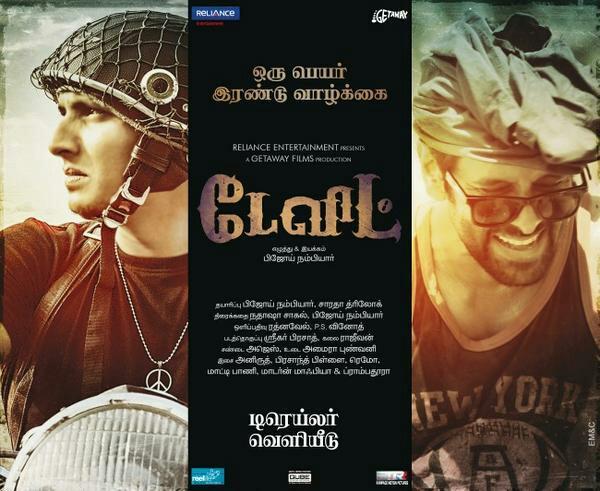
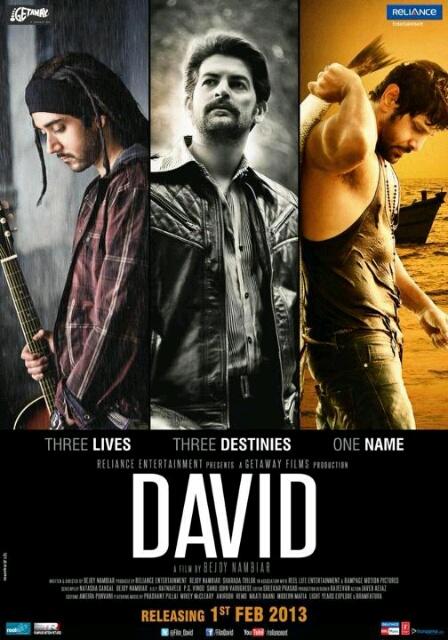
Bejoy Nambiar is ready with his new film, David. Interestingly, this film is in both Hindi and Tamil, and strangely, there’s a mismatch in the number of Davids in the two versions; while the Hindi one has three, Tamil version has only two Davids.

The hindi one has Vikram, Tabu, Neil Nitin Mukesh, Vinay Virmani, Lara Dutta, Isha Sharvani and Monica Dogra in the lead. The Tamil version has almost the same cast but has Jeeva instead of Vinay and Neil.

First, the hindi trailer

And now, the Tamil Trailer

The trailers look very interesting. And though they don’t tell you much about the story but the visual montage looks powerful. What we saw in Shaitan, seems Nambiar is going to deliver more of it in this film – those slo-mo action sequences drenched in blood, rain and bullets. Also, the romantic portions bear a clear stamp of Ratnam-ish playfulness, and more so in the Tamil version.

And here are the two posters…

David Tamil Davivd Hindi

And the official synopsis (Hindi version)….

The story revolves around the lives of 3 Davids in 3 different parts of the world in 3 different eras.

1975 London- 30 year old David works for Iqbal Ghani, a dreaded Mafia don who controls the entire Asian community. He is a protege who is poised to take over the empire until a revelation which changes the course of his future.

1999 Mumbai- 19 year old David is a musician born into a family of devout Christians. A happy go lucky teenager who loses all semblance of his peaceful existence when his family gets dragged into a political issue.

2010 Goa – 40 year old David is a fisherman living in the small fishing village of Betul in Goa. He falls in love with the deaf and mute Roma- the only hitch is that she is engaged to be married to his best friend Peter in 10 days!

All 3 Davids are about to take a step which is going to change their lives forever.
3 LIVES, 3 DESTINIES, CONNECTED BY 1 NAME – ‘DAVID’.

And like everyone else, if you are still wondering about this 3 and 2 Davids, the director clarified about it to Anurag Kashyap on Twitter..

@ankash1009 the 3rd one (neil’s) didn’t fit into the tamil mileu. Would have had to re imagine it completely which was not feasible.

Dear Leander Paes, WHY?

Posted: December 14, 2012 by moifightclub in bollywood, film, first look, News, WTF
Tags: , ,

WTF is this? Can you please explain. Thanks.

talaash

SPOILER  ALERT

My blood group is C+ve. And i don’t mean the Hindi cuss word that starts with “C”. Because there’s no other explanation for me getting so restless about films and going to bed peacefully only after i have chased all the possible “sources” to know what the films (or its spoilers) are about. Blame it on occupational hazard, or maybe am in this occupation because of the same blood group. Also, because for me, films are more about “how they happen” and not “what happens”.

Nothing to boast about but i knew about the so called big twist of Talaash almost a year back. Though i had my doubts about it but everything related to the film was pointing in the same direction. And a year is a long time to make peace with the “ghostly” fact. As the release date of Talaash was near, i was travelling out of country. Curious that i am, got in touch with a friend who was watching the film much before anyone else. I asked him if he can let me know as soon as he is done with it. He saw it, liked it, and said, he is not going to tell me the spoilers. I told him, i am going to tell him what i know, and he just has to say yes or no. I asked him about the big twist. He said, yes, but how do you know? Well, the first rule is you never reveal your sources. Aha, much relief after waiting for a year. I quickly tweeted that yes, yes, yes, it’s the same twist that we knew since a year back. At least the C+ souls like me will get a good night’s sleep finally.

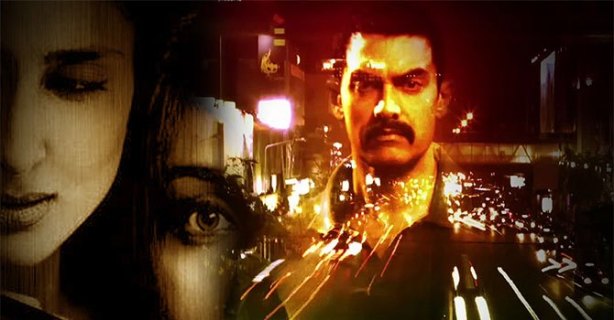
I saw the film almost a week after its release. And i have concluded that if you know the twist, the film works in a much better way. And there are many reasons for it. First, the pitch. The makers tried to keep the per-release campaign quite low-key because of the fear that the twist might get out due to over-exposure. Everything pointed out that it’s a thriller or suspense drama. The font of the print campaign started becoming bigger with the countdown – TRUTH will be out in 5…4…3….2…1 day. You can’t blame anyone when everyone saw the same story in the promotions – a cop chasing the death of a film star. He has to crack the case. So what is the TRUTH? The big twist? Now, if the baggage comes down to the fact that Kareena is a ghost who guides Aamir Khan’s character to crack the case, it seems straight out of @OMGFacts, or evn LOL-Facts. It’s easy to dismiss it when you have invested so much in the case which looks so real, and with such great mood that creates the world around it and builds the prefect pace. Ghost? That’s a joke, that’s so flimsy! The writers could not think of anything else?

Now, imagine if the film was pitched to you as “supernatural drama”. You are prepared for it and it’s much to easy to accept it that way. But i think the writers of the film did set up the track of Rani Mukerjee quite well to give you a hint in which direction the film was heading. It wasn’t like a pop-up music video. I can’t say with full confidence but i think i would have still liked it if i had no clue about the twist.

Show me a man who was shattered by the unnatural death of a loved one, and has made peace with it without doing anything unnatural. Shit happens, and then we find our ways to cope with it. I am an atheist but  i have seen/heard/experienced things which are difficult to explain and impossible to believe. They remain unanswered and life goes on till another death comes knocking.

Also, when you don’t know the twist, you are waiting for the big revelation in the end. The problem is the fashion in which we have been conditioned to watch films – the theory of “end me kya hota hai?” But Talaash is much more than that. And you can focus on the rest, which is so gorgeous, once the twist is out of your way. In fact, that’s not even the film. It’s about a couple coming to terms with the loss of their kid. Both take different routes to trace that piece of peace. The murder case is purely incidental. But the sad part is you won’t waste you weekend to watch a couple coming to terms with the death of their loved ones. Will you? You need coke, corn and crap on screen for your weekend outing. So most probably they decided to hook you with that “murder mystery” pitch. And i must admit that’s it gives me a kind of sadistic pleasure to know that you have been cheated.

And in a good way, it also reminded me of an all time favourtive film of mine – Umesh Kulkarni’s Vihir. Because love, loss, death, water, wandering souls, and peace – the motifs are the same here. If you still haven’t seen it, WATCH IT!

Without any doubt, Talaash is one of the best directed films of the year. Mohanan’s photography with Sampath’s music creates such a compelling mood. The tone is set as soon as the credit roll begins with those invisible faces and characters that bollywood doesn’t give a fuck about even though they are at every signal in this city. Rani Mukerjee, Nawazuddin Siddiqui, Raj Kumar Yadav, Sheeba Chaddha, Aditi Vasudev and Subrat Datta – all of them are in top form here. You are hooked to it till the interval happens, and then Cinemax Versova killed the mood for me by playing commercials for at least 30minutes. Had to go out and shout at the manager to start the film post-interval.

Another criticism i have heard so far is that the film scratches the surface, and it doesn’t go any deep. Aha, i have always believed that it entirely depends on you – how you want to read the film. If you can’t scratch beyond the surface, don’t put the blame on the film and the filmmaker always. Instead click here and read the best piece on the film.

I might not be a fan of Aamir Khan but you have to appreciate the choices he makes. He believes in them and pulls it off. Compare it to the films of others A-list stars of Bollywood. What are they doing? What are the delivering? All the focus is on 100-crore these days. And when it’s so much easy to deliver that with cheap crap-corn-cola, why put so much effort and take a risk? Respect for that.

Also, am wondering if it’s high time to divide Excel’s films into Farhan Akhtar Films and Zoya Akhtar/Reema Kagti Films. Someone compared Kartik Calling Kartik to Talaash on twitter and said KCK was better. I tried hard to control my laughter. That film had much more baggage on its twist and it was a (chinese?) joke in the end. And, remember Game – their another venture in similar space? Don’t have words in my dictionary to describe that garbage. Not sure why, but i feel these films belong to Farhan Akhtar who has been on a downhill since his brilliant debut, Dil Chahta Hai. But the ladies are trying new things and pulling it off with so much ease – Honeymoon Travels Pvt. Ltd, Luck By Chance, Zindagi Na Milegi Dobara and now, Talaash. To quote another favourite dialogue of the year, Farhan Baba, tumse na hoga ab, rehne do. Bus acting hi kar lo.

(PS – Can we please nominate Aamir’s eyebrows for performance of the year? Though his moustache was vying hard for attention but my vote goes for the eyebrows.)

– Posted by @CilemaSnob

Talaash – Seeking the ‘real’

Posted: December 1, 2012 by fattiemama in cinema, film, Thoughts

Everyone’s seeking something. Identity, most often than not. Some find, some sink. Bollywood happens to be in some sort of a no-man’s land in that respect. Most of the time we don’t even know it’s looking…

download

What made me want to write this? Partly, a vague and naïve belief that our cinema can be saved. Especially by some who are in the very thick of commercial cinema’s circus ring. Not that it’s a bad thing, at all. But my expectations may be. And that brings me to lay them out and examine them. And with it, the reality out there, of our craven, exhilarating, diseased, infectious, addictive, inconsequential film world.

Talaash is a good film. It is tight, engaging, dramatic and emotionally expressive. It has a superb theme at the centre manifested in multiple strands connecting it. For what I think must be the first time in my cine-conscious life, I had a good word for Aamir. I had sat through an Aamir film without cringing at his non-performance and I loved him for that. But it bothered me big-time. Why do we insist on the surface so much? Why can’t we, for once, scrape out the skin and lay bare the soul of a story for absolute, complete and total consumption? What are we so scared of?

I kept getting distracted by the holes everywhere in the film that personify this superficial approach we take to things. Symptomatic of the entire sensibility of our hallowed Bollywood. And in so many ways representative of what the Excel world has come to embody.

Somewhere in the mid 2000s, Bollywood began to see beyond its general upper class fetish. It began to set its stories outside perfectly manicured sets of lavish bungalows, choosing instead, a milieu its audience lived in. You see, a few stark films had been received well and Bollywood’s herd mentality swooped in. With classic insecurity, it then mixed this trend with populism and dreamy stuff. Meanwhile, the so-called parallel camps that really wanted to break-free were busy choosing style over substance or let’s say form over hard-core story-telling. Garish, loud, escapist stuff always won hands down, and stars were always less available for anything with a remotely realistic setting, the story notwithstanding. After all, she is a whore no one cares for in Bollywood. Hence, when a film like Talaash comes out of the blue it’s a delicious prospect. Funny, how the traditional suddenly seems out of the ordinary just because it is on the verge of extinction.

From there began a worse kind of prositutionalising (if that’s a word) of the realist film. All you needed was your heroine in Fab India clothes, nude lipstick with lesser gloss and mascara-ed eyes without fake eyelashes, unclean-looking (‘looking’ only for that lived-in feel) houses, crowds made of junior artistes that rarely get work with Dharma and a little swearing. It didn’t matter if it was uttered with a convent-educated polish. It didn’t matter that none of it was convincing because it all looked so real. Looks after all is what Bollywood is all about, isn’t it?

And there and that’s why we are able to overlook Kareena speaking in perfectly correct Hindi and classy accent when playing a prostitute. We hardly notice when Rani playing a woman so heart-broken she couldn’t care about her appearance, flicks a strand of unkempt hair off her face like a diva would to avoid spoiling her painfully dressed-up hair. We pass by an entire police force that is so upright and intent on its job when the fact alone removes all doubt of the film being realistic. We gulp down a suitably grungy red light area if its characters are duly wearing garish, ill-matched clothes. Nothing strikes us as out of ordinary when the police-prostitute relationship comes with no disgust, no statement and completely without any hint of the dirtiest power plays that informs that world. Our eye-lids don’t bat when a prostitute is put in the care of a really nice woman running a rehab/NGO and chapter closed all hunky dory. And so on. It all appears properly realistic so what are we cribbing about?

Because appearances are not always deceptive. At times they are representative of what lies beneath.

Excel Entertainment that began with the era-defining Dil Chahta Hain, has made an admirable reputation for making films with strong content. (Except of course, the Don films but then when you have SRK who’d bother with content anyway. He himself doesn’t  anymore.) But why are they always so sanitised? Far-removed from going beneath the surface?

Why is glamour suitably replaced with just-about pretty when upper class and just-that-much scruffy for any of the stratas below? Why aren’t emotions all-consuming, why do characters who even when behaving ordinary seem affected and why do the stories, although full of lovely moments, keep us at a distance? It’s as if an invisible glass curtain has fallen in between. There seems a desperate reluctance to approach anything that is extreme, anything that isn’t middle-line. What began as a fresh perspective on story-telling seems to be fast developing into some sort of a middle-of-the-road voice that’s saying nothing new, happy to simply tone down the intensity of what both extremes have been doing for ages.

And so we have a dispassionate Rock On, a squeaky clean and naïve Lakshya, exotica pretending to be exploratory Zindagi Na Milegi Dobara, an underwhelming Karthik Calling Karthik, a neither flaky nor deep Honeymoon Travels and now a funnily packaged thriller Talaash that simply cannot make up its mind about its physical or emotional landscape.

I’ve really liked all these films (with the exception of Rock On, which I found extremely mediocre and too populist to have true merit.) because they have been well-told stories and refreshingly non-self-conscious. But through them all I have waited for a film from the Excel stables to max out its subject, take the juice out of it and compel me to go ah-a because their films do display a fresher approach. Luck By Chance is the only exception that takes a dangerously close look at its subject but its singularity as an example makes me regard it as one of those rare flashes of brilliance that talented people are capable of but some hardly show often. And Excel, despite its premeditated insistence on an extremely sanitized reality, has the potential to show that brilliance more often than it does. The other bigger reason I felt like writing this post.

images_1

There were so many things going for Talaash but this insistence on a safe distance from any sort of crudity called out the entire game. If not for Nawazuddin Siddique and Subrat Dutta, the carefully-cultivated setting would have been faker than those pretentious Fuji apples. I didn’t write it off, despite the finale which I’d have readily bought had the film only set it up right. It had a beautiful, somber mood, carried through faithfully, successfully smearing the narrative with a blanket of bleakness that served it so well. It stayed away from incorporating formulaic elements and actually went so far as to have three top stars shedding all their vanity to actually serve the film, an almost unheard of feat, leave alone unachievable. It had Aamir Khan get into the skin of a character for a change, for God’s sake! Yet, it stopped short of the brilliance it could have been.

The curious thing about it is that it’s out-of-the-box and extremely traditional at the same time. It mixes genres not in formulaic Bollywood style but to serve its own purpose. But having done that, it doesn’t create anything new. It is well-written, tight and engaging but stereotypical at more places than one, picking its people and places more out of tested territories than a kicking imagination. It is very well-directed yet unfinished…so many rough edges, so many moments where the lack of attention to detail shows through. And these become big holes in what informs an entire sensibility and ‘type’ of film Excel is fast becoming synonymous with. Despite an actively engaging two and half hours, these holes are all that remained with me.

Bollywood abounds in horror stories more horrifying than Ramsay films so I accept that it is probably impossible to make an honest film and still earn money. But I do need to ask, if compromises (artistic, intellectual or of mere effort) are absolutely necessary, can we find a way to do them so they don’t come in the way of pure-blood story-telling and some really memorable cinema that surely we are capable of? Or we aren’t?

Any answers?

Fatema Kagalwala