Archive for the ‘bollywood’ Category

raanjhanaa_rahman360_Arrahman

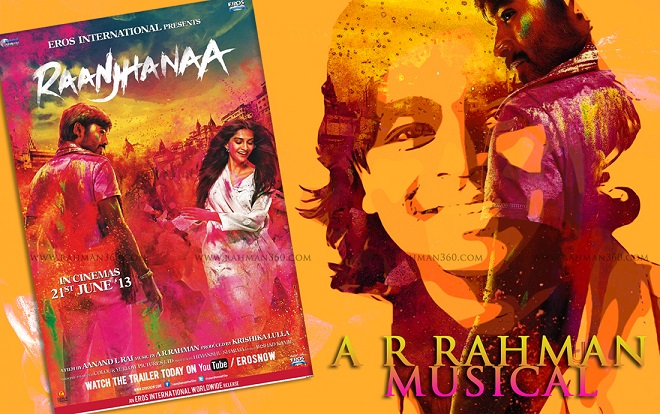
After a long wait, it’s finally out – the music of Raanjhanaa. But seems the wait was worth it. Do check out the music of Raanjhanaa. Rahman is back and how. Over to @Rohwit for its music review.

  • Raanjhanaa hua – The ever so melodious (yet not as popular as I would like him to be) Jaswinder Singh starts the song and vanishes too quickly. Anyway, the song belongs to ‘at times out of sync Shiraz Uppal’ and that’s what you will love the song for. It just doesn’t try to ‘fit in with calculated singing’. The percussion arrangement – top class, the use of Sitar – exemplary. In fact, when the song ends, the sitar doesn’t leave your mind. Go ahead, try it! A racy tune marked with excellent violins (which literally take the song to it’s peak every time they appear), the song is top class! Watch out for the faint guitar riffs throughout!

  • Banarasiya – Like the name indicates, a song that ought to remind us of Benaras. Starts quite rightly with Sarangi and flute (aided with the mandatory manjiras). Tune wise crisp, singing wise excellent, Shreya Ghoshal’s vocals! Sitar, Tabla and flute do their bit to raise the level of the song. The playful backup vocals by the hugely talented Meenal Jain and Anwesha add the right amount of playfulness and mischief to the song and you can picture the dancers in a group, exchanging glances and moving the neck and eyes in sync.The atmosphere is very ‘evening’ and the setting reminds us of the ‘Kotha’ culture.

  • Piya Milengey – The song that begins with KMMC sufi ensemble going at it along with Sukhwinder is endowed with definitive bass and faint piano notes towards the beginning part of the song. The ensemble does an excellent job without getting loud at all. A song that is likely to appear in the background as the film paces up. Thankfully a bollywood – sufi offering that leaves an impact and not screaming singers in the mind as it ends.

  • Aye Sakhi – A song that has the most delightful and talented singers around. Madhushree, Chinmayi, Vaishali and Aanchal sethi come up with a song that’s treated with sheer brilliance and arranged classically (and gives out a feel that the singers are practising kathak). In fact, the music and the feel around the ‘aye sakhi uljhan’ reminded us of ‘Jao rey jogi tum jao rey’ (from Amrapali). The ‘Tyun tyun tyun’ bit in between reminded us of the Tain tain tain song from Gangs Of Wasseypur. Still so enjoyable! The song has an element of ‘Kya dekh rahey ho tum’ from Taal in terms of feel but is vastly different tune wise. Thumbs up!

  • Nazar Laaye – With lazy guitars, simple beats and Rashid Ali who is almost sleep-singing along with Neeti Mohan, the first impression of the song is ‘JTYJN-hangover!’ A typical song that gets skipped most of the times but stays in the playlist nevertheless.

  • Tu Mun Shudi – A lot has been written and propagated about Hazrat Amir Khusro’s Persian words around which the song is created, so we won’t go there. (By the way, Tu = you, mun = mine, shudi = became, Muntu = me yours, shudam = have become). The techno start to the song with superlative A R Rahman setting the tone of the song welcomes Rabbi (No no, not the Rabbi who sang Challa, this one sings better!). The use of shehnai in the song is top class. The way it flirts with the beats, we never thought it can, and all this with a constant hip-hop like beat. There is always that song in an ARR album that evokes extreme reaction (apart from other songs which are tagged in ‘Give it time and they will grow’ category). This one belongs to the ‘extreme reaction’ category. People will either like it or completely dislike it. We? LOVED it! ARR at his innovative best (with his characteristic giggle!)

  • Aise na Dekho – A bonfire song. Starts with a frolicky mouth organ up and about with guitars. Yet another ‘JTYJN-hangover’ infected song, one might argue. Sung by ARR himself, the song scores low on words and the way they are pronounced (May be intentional?). Still the music arrangement is soothing. The whistling in between is simple and adds charm to the tune. Will I hear it again? Not now.

  • The land of shiva – Heavy chants with heavier music setting and bells marks this piece and before you realise what is happening, it gets over. With a little over 1 minute running time, the tune is clearly added to compliment the overall feel of the album and is surely going to appear in the film.

  • Tum Tak – May be it is Javed Ali who melts with the musical arrangement (The other way of looking it could be – his voice doesn’t stand out), the song is likeable only because of it’s music arrangement. The construct is too confusing, singing wise. Too many ‘Tum taks’ are irritating to say the least. The sudden change in the song on the other side of 3 minutes is bearable vocally. Kirthi and Pooja are efficient in the song. What lessens the impact of average singing is the excellent use of Manjeera and shehnai.

AR Rahman somewhere mentioned that the use of shehnai in this album is a tribute to Ustad Bismillah khan.

What we liked the most about the album is that it gives out sense of the film without being vague. The lyrics by Irshad Kamil are largely effective.

The variation that we hear in terms of tune selection and treatment is vast, the music arrangement as usual top drawer! The album exudes a lot of confidence and the feeling of ‘durability’ oozes in good measure.

Just when the promos were looking an ordinary, it is unbelievable what a brilliant music album can change it all. Now only if the film is good enough to hold it all together.

Correction for Tu man shudi explanation – Tu man shodi” means You became me and “Man tu shodam” means “I became you” not “yours”. “Man” means “I” not “mine”. “I became yours” is “Man maal-e-to shodam”. Thank you for correcting it everyone
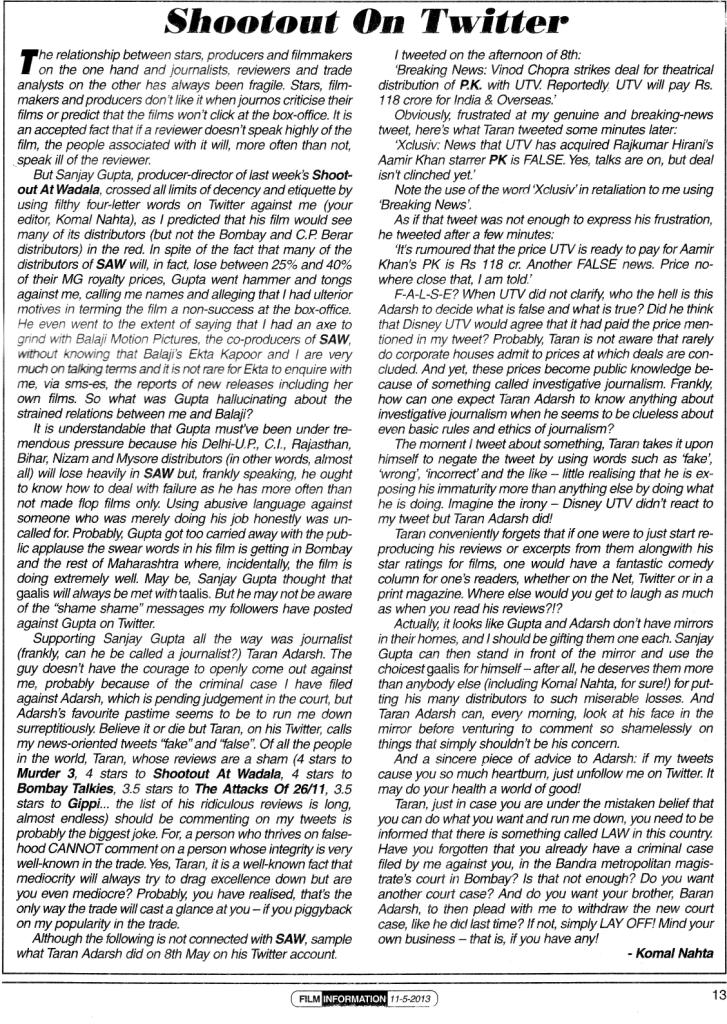
We started the segment “Just A Page” with completely different intention. But here’s a fun page in the same category. Read it to know more. It’s from the latest issue of trade magazine Film Information.

Aah, bollywood. There’s a reason why we love it so much.

SAW

DB StarBombay Talkies has released in the theatres. And so far the unanimous verdict is that Dibakar Banerjee’s short Star is easily the best out of the lot. Click here to read what we thought about the other short films and do vote for your favourites.

Back to Dibakar’s. It’s based on a short story by Satyajit Ray titled Patol Babu Filmstar. Though the basic idea is the same Dibakar has added many new elements to it and given it a new setting too. Do read.

Tip – Pavan Jha

If you have not seen the “making of” Udaan, you have missed the best “making of” (film) made in recent years. Quickly go here and here and watch it. It’s as good as Udaan and is a film in itself.

Cut to

Lootera.

Again. Hope no controversies this time 🙂

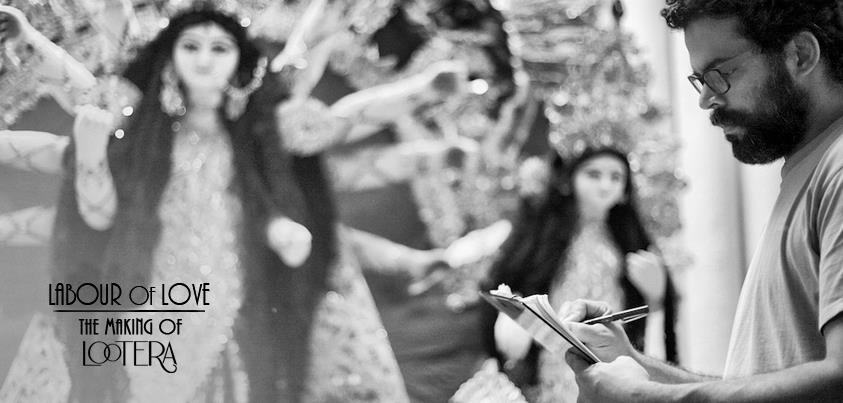
Lootera making

Since they started teasing about it, we have been keenly waiting for Lootera making. Good news is it’s out. Bad news is it’s just 5 minutes. But it looks good – unlike others it gives a real sense of “making a film”. We hope they soon release the full making of the film.

She went to watch Aashiqui-2. She came back with pyaar, ishq aur mohabbat in her heart head. So over to Fatema Kagalwala who ponders over matters of the heart.

kagaz ke phool2

Insights don’t owe the source anything. Neither is observation obligated to its genesis. So while watching Aashiqui-2, when my mind began wandering with a momentum that had nothing to do with the emotional quotient of the film, it was time to set pen to paper. Or well, keyboard to MSWord. Why rein in a capricious mind that revels in intellectual masturbation?

There was a dulcet time in our movie-watching nostalgia when grand passions on screen were our personal emotional crescendos. Unattainable, intense romances that scarred us so bad, it was unbearable to live after that, yet a life like that was worth many without it. We could happily become the lovers on-screen and do everything they did with a resounding passion. We’d devour their legendary pain feverishly as though somehow it would redeem us of the pedestrian-ness of our lives and bring us instant immortality. The choices of the lovers were unquestionable, all was fair in love and war, and the world was at the feet of the two touched by Cupid. Nothing else mattered except that undying longing for the other. It wasn’t cute, it was disturbing in that lovely, intense way that morning dreams are sometimes, where you walk in deep darkness, with a red halo descending on you, towards the end of a tunnel that is showing the glimpse of dawn. You are alone in your anxiety yet clutching at hope, not knowing what the next moment brings but yearning to have it all. And then you wake up with a start and there is a weight on your chest like it is sometimes in morning dreams. You snuggle back but continue to savour that strange mix of dread and anticipation, having been there and not quite but longing to go back… That was love for us and what passion was always meant to be. Like Salim’s delirious love for Anarkali, Heer’s utter devotion to Ranjha, Vasu and Sapna’s inseparability or the sheer innocence of Raj and Rashmi’s bond. It wasn’t about how well the films were made as much as how deeply we aspired to that kind of love. And more importantly how we understood it. “Haif us chaar girah kapde ki kismet ghalib, jiski kismet mein hain aashiq ka gareban hona”. That is the kind of yearning love was made of…

Mughal-e-azam 1

Somehow, love was absolute for us. ‘Chhup na sakega ishq hamaara, chaaron taraf hai unka nazaara’. A non-negotiable reality. One for which anything, any action wasn’t too dramatic or no cost too much to pay. Letters written in blood drew painful sighs from us and parental opposition was villainy of the highest kind. The lover’s friends were Gods own angels and daresay if the lovers were to die, it was an irrevocable loss for us, as an audience. It was a scar that would refuse to heal, making the hero-heroines saints in our eyes. We’d love them for loving like that and more importantly having a love like that. Through them we’d have our bit of history-making and feel soul-satisfied for having ‘lived’ true to ourselves, even if it was for mere 3 hours, a dot on the terrain of our unbearably long drawn out lives.

But like a disheartening inevitability, love changed with time and so did love stories. It changed from love letters to running to catch truant trains to get together with your loved one. It changed from passion-drenched poetry to Geet-like non-stop chatter. From inner landscapes of Laila dying to know how her Majnu is doing out in the unforgiving desert to stunning locales where the yuppy boy helped the timid girl open up and ‘live-a little’. From longing to sex – that defining ache replaced by the inevitable first kiss that today is more ‘being-in-the-moment’ than drenched in the desire of true love. Compare the tender moment of Raj and Rashmi’s first kiss to any of our must-have liplocks today. Or the lovely, pubescent tension between Raja and Bobby. Or even Prem and Suman’s first sexually charged encounter in ‘Mere Rang Mein’ which seems corny to us today but speaks volumes of the philosophy that was sublime love back then. Back, when we devoured it with fatal sighs ourselves. But now love has ‘moved on’- as is the new-age term for growth and overcoming pain while leaving behind love’s scars – something we yearned to acquire in the past… it has gone from commitment that is default to questions that are endless. From a dream to a reality, that’s more often than not, a pain to suffer rather than an ideal to cherish. Imtiaz Ali made an entire ‘Love Aaj Kal’ defining more than just our attitude with one sweep. Jaane kyon log pyaar karte hain, the question Jai spent an entire movie finding an answer to

maine pyar kiya

And try as we might to resist it, love has got urbanized too. And it doesn’t matter if our romantic films aren’t telling the story of the small-towner because today even he aspires to be as cool as the big city-guy except maybe in a spare Ishaqzaade which tries to reverse this but gets it all wrong.  And maybe that is why there is no Mohnish-Bahl type villain anymore to fight, nor well-meaning but opposing parents – there is nothing to rebel against because the enemy is the mindset itself. The self that doesn’t believe in love and hence lets everything else come in the way, itself included. And the more modern our love-stories get the more we love them. But the modern they get, less they are about love. Today, it’s got to be fun, we don’t wanna hurt, it isn’t cool, it’s boring and so regressive. Emotions are cheesy and poetry is melodrama. Tears are meaningless and only thought has value. Self-debilitating passions like Jordan’s are addictions to us because our new-age mindsets cannot comprehend living and dying for that one, inviolable love anymore. “Aah ko chahye ik umar asar honay tak, kaun jeeta hai teri zulf ke sar honay tak.

So today, when we watch Rahul sacrificing himself for his girl we cringe because it looks so passe. Sacrifice is now self-pity and I wanted to slap him and tell him, ‘You idiot, stop playing the helpless victim. If you really love her do what needs to be done instead. Change yourself!”.  Like Jackie did for his Radha in Hero. But had I seen Rahul do that, I’d have screamed so old school! Who changes themselves for their lovers these days? Easier to change partners no? When Arohi, deep in the throes of her grand passion, throws away a stunning career we raise eyebrows. I wanted to shake her up and tell her, ‘Girl, this guy is hopeless, don’t bother throwing everything away for him. This is not love, this self-sabotage. THINK.” Something I never felt like telling Gulabo when I first saw Pyaasa, or Shanti in Kaagaz ke Phool. I wept with them and for them. But with Arohi it is different and the difference isn’t Guru Dutt and Mohit Suri. We see her as ‘today’s’ girl and hence her actions are confounding because if we are no longer like Gulabo or Shanti how can she be? We see her yearning to be with her man but we don’t see any reason in her choice. We don’t see that she had no choice, and so we do what we did with Cocktail’s Meera – define her in hundred ways that have nothing to do with her.

DevdasOver the ages and with all the progress we pat our backs about, love has taken the biggest beating; the only bloodless casualty of our hard-bought modernity. Today, we seek reason, labeling passion as desperation and self-sacrifice as moping, whereas at one point it signified devotion, a concept synonymous to ‘bhakti’. Take for example Zaara’s choice to live almost nun-like in the memory of her long-lost Veer, now assumed dead. Or Samar Anand’s decision to court death if he couldn’t unite with his lover in this lifetime. We shift uncomfortably in our seats when we encounter characters like these not because these films are less than perfect, but because the emotion they espouse sound alien to us and we overlook the fabric of love that compels them to do what they do. That fabric is tattered beyond recognition today as we weave other weaves to drape our souls in. We don’t accept the old, more enduring weaves anymore even if we see them. Rockstar’s simmering emotions, which spoke right through all its flaws, refusing to be contained despite a choppy flow exposed our vulnerabilities with a rare emotional intelligence but we couldn’t understand it. We won’t be getting a more honest or more intense love story for a long time after this but maybe that’s inevitable. We see what we are and we are no longer what we used to be when Salim declared his ardour with flourishing poetry to a trembling Anarkali dying to fall into his arms. That, may also have been part of the difference between Dilip Kumar’s Devdas and Shahrukh Khan’s.

But the makers are draped in the same cloth, one that is cut out of an unwieldy carpet cloth, so we don’t make love stories anymore either. We simply don’t know how to. We are bored of Shahrukh’s outstretched arms in which we wished to die 20 yrs back and we see red when we see women singularly committed to their loves. We yawn when we see love-at-first sight sort of chemistry and go blank should any character even speak of laying down their lives for the other. Our makers are the same as us, they don’t get it either and so we have half-baked stuff like Aashiqui-2. It isn’t anything to write home about but I still wonder, if it (or JTHJ or even Ishaqzaade for that matter) was made 20 yrs back would it be more watchable just because we, as an audience and as people were more in love with love then, than we are today?

Fatema Kagalwala

P.S.: At the end of this I caught myself telling myself ‘Guzra hua zamana aata nahi dobara’… and I suddenly remember this beauty is from “Shirin Farhad”. What irony… Sigh…

(Note : To make life bit simpler, now you don’t need to fill in all the details to post comments. If you are already logged into Facebook or Twitter, just log in with your FB/T account. Click on comment box, you can see the small (FB/T) icon below the comment box, click on FB/T, a pop up will appear, authorize the app and you are done)

Last week i watched Kannan Iyer’s Ek Thi Daayan. It’s co-produced and co-written by Vishal Bhardwaj. And last night i watched Aparna Sen’s Goynar Baksho. And i could not stop myself from comparing the two. Apart from Konkona Sensharma’s spectacular acting, there are few more common factors between the two. Both the films are based on literary work. Ek Thi Daayan is based on a short story written by Konkona’s father Mukul Sharma. (You can read the story here) Goynar Baksho is based on Shirshendu Mukhopadhyay’s story titled “Rashmonir Sonadana”. So in a way one is Mommy’s film and the other one is Daddy’s. Though both are in supernatural space, in terms of what they deliver, the difference is huge.

Ek Thi Daayan is a strange film. Because it’s two films in one. Though it plays around with all the common elements of horror films in first half, it sets up a great mood, is deliciously ambiguous, and keeps you totally hooked. Konkona and the kids keep you engaged in their mouse and cat game. The 2nd half is drastically different – almost a Vikram Bhatt film. Everything is on the face, new rules are set, it’s silly, becomes unintentionally hilarious and has a strange closure. What is Kalki’s character doing in the film? She is just to misguide us? Is it all about who is the witch out of the two? It all boils down to one spoiler? There have been many rumours floating around about the film’s climax being changed by its producer, and once you watch the film you realise that all those rumours must have been true. There can’t be no other reason for the second half to be so disappointing.

Now, about the end. A wise man once said that you must ask yourself 3 Questions – 1. what’s the film about? 2. What’s the film *really* about? 3. What’s the film *really, really* about? If you know the answers, you are on right track. And the answers to these three questions tells you the difference between these two films – Ek Thi Daayan and Goynar Baksho – why one works and why the other doesn’t. Let’s see.

(SPOILER ALERT)

Magician Bobo can hear voices. Because he has a back story. Because his sister was mysteriously killed by his step-mom/witch. Interval. Bobo has a GF/wife. He also has a kid. A new stranger who might be a witch. BOOM! She is not the witch. The GF/wife is the witch. But why is Konkona suddenly back, and from where? What’s the sudden funda of pisach? And all that choti-wali ladayee? Why kill all ambiguity? Was there a way out in the same set-up? i think so. It was all there, just needed to be perfectly tied up like Konkona’s hair braid.

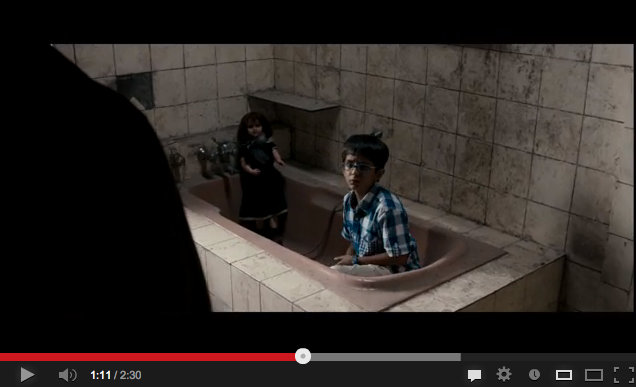
For me, the answer would have been Bobo’s adopted kid, Zubin. Going by the trend of orphan kids who get superpowers, he perfectly fits the demography too. We don’t know about his real parents. Aha, that’s where the magic and mystic happens. If you see the second trailer here (at 01:05), you will know that there was more to Zubin for sure. See the screenshot – Zubin talking to a doll (or Misha?) when Bobo spots him. This scene was not there in the film.

The film just used him for the choti-kaato act. Given a choice, i would have gone with Zubin getting some of the supernatural powers to hear/see daayans, something that connect Bobo and Zubin, and then a closure for Bobo’s story with him coming to terms with Misha’s (his sister) death in some way. I believe it was also there in the script – if the lift is going down, it’s going to hell. Can Bobo take the lift up to heaven for Misha? As for Lisa (Kalki’s character), isn’t she going to be step-mother for Zubin? When it plays around on the funda of sauteli maa acchi ho toh sakti hai par hoti nahi, isn’t Zubin in same scenario as Bobo? Aha, the loop.

(SPOILER OVER)

ETD2

And if there’s something more funnier than Vikram Bhatt style kaat-choti-kaat act, it was the disclaimer in the beginning of the film. Easy to understand that neither the makers nor the Censor Board is guilty of that. It’s because of the times we live in, where the fringe groups are always looking for such occasions to raise their voice and get attention. This is where Aparna Sen’s Goynar Baksho hits the ball straight out of the boundary.

On the surface it’s a story about three generations of women and their relationship with Goynar baksho (jewellery box). But Aparna manages to pack in so much, that it’s unbelievable. And treated it in a humourous tone, this one should work for all. In a memorable and heart breaking sequence in the film, Pishima (aunt in bengali, father’s sister), a child widow who has died and become ghost, asks Konkona Sen (new daughter-in-law) what sex feels like? Does she enjoy cuddling? In today’s times of offending sensibilities, this might be counted as quite sacrilegious. But this is where the bravery and the brilliance of the film lies – it packs everything with humour.

Pishima got married at 12 and was widow at 13. Forget love, relationship, or any such pleasure, widows were not even allowed to have good food. All she got was boiled veggies, all she wore was white sarees. It reminded me of someone i know closely. Married at young age, she had a son just after marriage, and then her husband died soon. She returned back to her parents and brothers. Since then it was been a life of white sarees, religious stuff and only vegetarian food. It’s actually quite a common sight in bengali families, mostly in rural areas – the eldest daughter who is married at young age and if she becomes widow, she comes back to her parents and stays with them for the rest of her life.

Moushumi Chatterjee plays the role of Pishima, an authoritative voice in the house. Because she owns those expensive jewels, nobody wants to be in her bad books. But the fun begins once she dies and becomes a ghost. Interestingly, only Konkona’s character of Somlata (new daughter-in-law) can see her. She is new in the house, she is scared and to make things worse, she even stammers. With a hookah in her hand and more abuses that you can count, initially Pishima starts bullying Konkona to protect her jewellery box, and then slowly they develop a bond. Pishima is bitter, sarcastic and is always cursing everyone around, but all done with dollops of humour in her Faridpur accent. Her dead character is the life of the film.

Goynar Baksho

In another sequence she gets emotional as she talks about how the men in the house always had all the pleasures, and all she got was this jewellary box. The (pishima) ghost played brilliantly by Moushmi Chatterjee, instigates Konkona’s character to go out, fight for her rights, to pursue her passion and enjoy everything that’s forbidden. Who talks about heaven and hell? As a ghost she knows it better than everyone. Enjoy till you can and then your body will perish one day.

Konkona’s character of Somlata represents the second generation. She is on the other extreme compared to her Ek Thi Daayan role. Set in a completely rural background, instead of scaring others, in this film she is always scared. And like in almost every other film of hers, she is so convincing that you would think she has a twin sister who acted in ETD. She is undoubtedly the best actress of our generation. The last 15mins of the film feels bit odd but you get what the filmmaker is trying to do – the third generation. You can also see the limitation of budget and resources, but this one is a must watch.

The film has released with subtitles in Mumbai and other cities. Though the subtitles might not be able to translate the fun of Faridpur accent but do watch it. Bollywood desperately needs some funny ghosts. And Vikram Bhatt needs to put his tacky ghosts in his closet for sometime.

So in two weeks we had two supernatural stories – one with mysterious witches and the other with loveable ghost. Both with three leading ladies. For whatever reason, one remains a half-baked affair, the other manages to pack a punch. One doesn’t say anything new, the other takes a strong stand on so many issues without making a big fuss about it. And it all comes from the same family. I guess in the end it’s all about the *choices* – we are the stories we tell.

@CilemaSnob

(PS – To make life bit simpler, now you don’t need to fill in all the details to post comments. If you are already logged into Facebook or Twitter, just log in with your FB/T account. Click on comment box, you can see the small (FB/T) icon below the comment box, click on FB/T, a pop up will appear, authorize the app and you are done)

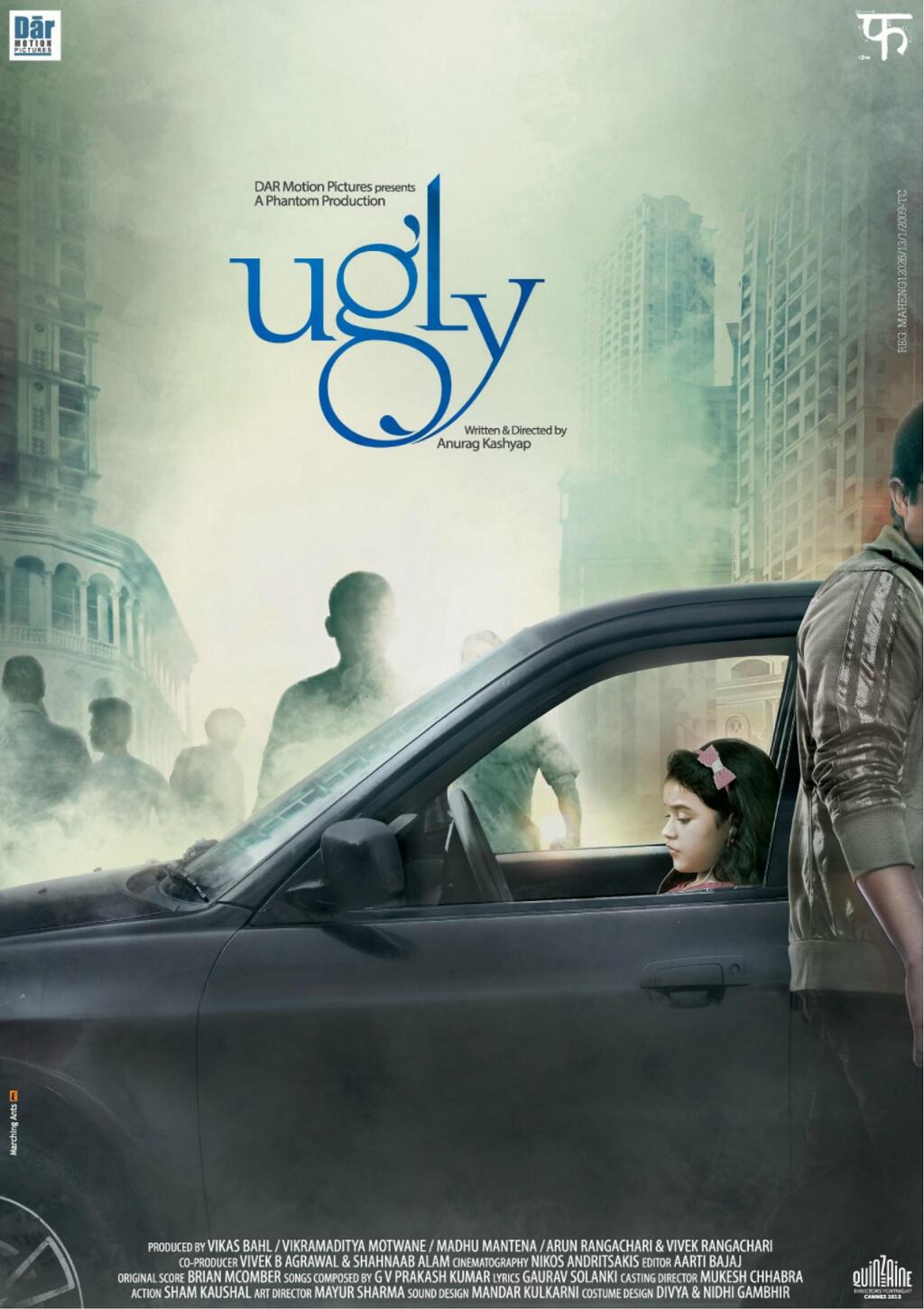
A poster of Anurag Kashyap’s new film Ugly was floating on the net. But Kashyap confirmed on twitter that it’s indeed the official first poster. Have a look.

Ugly

It’s like a minimal poster – a kid and a bunch of men. All in dark. Looks impressive.

The film will have its world premiere at the Cannes Film Festival in Directors’ Fortnight section. It stars Rahul Bhatt, Tejaswini Kolhapure, Ronit Roy, Girish Kulkarni and Siddhant Kapoor.

So what’s Ugly about?

It seems Kashyap is not willing to divulge any details yet. But in this interview to DearCinema he says that it’s a thriller, a simple kidnap drama but it actually deals with lots of things. It deals with relationships, our patriarchal system, how men look at women, domestic violence. It’s a very personal drama in the shape of a thriller.

Tip – Shyam Joseph

The first part of the “Satya” series was posted here. And now the second one. Written by its editor Apurva Asrani.

Satya

–> Disclaimer: There is a term called ‘The Rashomon Effect’; in which observers of an event produce substantially different but equally plausible accounts of ‘the truth’.

So it is possible, that my truth, may differ from yours…

1997.

Sequences from Satya were getting a fabulous response from those that previewed it. We were editing alongside the filming. Ramu was a very instinctive director and was confident enough to alter characters & screenplay as he went along. His vision was broadening before our eyes. Saurabh Shukla was on set playing Kallu Mama as well as collaborating as a writer. Anurag Kashyap too was writing on location, other times he wrote in the evenings at Ramu’s large but modest Four Bungalows apartment.

It was a vodka/whisky darbar and young non-drinkers (or beer-drinkers like me) spent evenings like this without a glass. I can be corny and say that we were intoxicated in the air of a brilliant collaboration! The fit and pretty Urmila Matondkar hung out with us too, she was warm and charming, a complete departure from her cold & reserved self on set.

Along with the other assistants like Barnali Ray (now Shukla), Pradnya Lokhande (now Sharma), Feroze and Dev, I too pondered about the plausibility of the Ramu-Urmila affair as was reported. We looked for clues in those casual evenings, and convened later on to exchange notes. My close friends would often ask for gossip and I would try to look for evidence. If you’re eager to know, I never did find it; nothing conclusive at least.

First day of shooting. 12th of August 1997.

The location was a stinky stable in the suburb of Jogeshwari where Manoj Pahwa’s character introduces Satya to his new home. I wasn’t sure about Chakri’s dialogue delivery, but there was comfort in the talk that it might be dubbed later. A few hours into the shoot, Ramu received a phone-call. I saw before my eyes the blood drain from his face. His friend, media baron Gulshan Kumar had been murdered, riddled indiscriminately with bullets.

Ramu became very disturbed. We stopped work and followed him around for more news, he was among the few with a mobile-phone. It dawned upon me for the first time, how close to the truth our film was. Ramu was taking a great risk by making a film on the extortion enterprise while gangsters still ruled Bombay. I didn’t know then, that much of the film’s story-flow would be altered post this incident.

Satya2

Chakri & Manjo

I liked Chakri (Chakravarti). He came from an acting background that I was familiar with. My mother is a Telugu girl and I had seen many Telugu film’s while growing up. I empathized with Chakri’s discomfort with Hindi and we spent a lot of time together, discussing his plans for the character. I was also privy to Chakri’s soft-spot for another crew member and I often dispensed to him the wisdom of a 19 yr old.

Manoj Bajpai also became a close friend. I called him ‘Manjo’. Manoj often hitched a ride with me on my rickety-old Kinetic Honda, came out clubbing with me and my friends, and even had a few drinks with my father. Manoj had the utmost awe for the work I was doing, and encouraged me to follow my style. One day Manoj signed an agreement with me stating that he would act in my 1st film for 2 rupees. Even though it was written on a paper napkin, I was sure that it would stand the test of time. Manoj was a talent like we had never seen before, and I remember feeling like I had hit the jackpot.

I learned much later that ‘editors are an actors best friend’. So when I bonded recently with the talented Rajkumar Yadav during the making of Shahid, we added a line to this pearl of wisdom…‘till the film is complete.’ 😉

Chakri and Manoj were another ‘hit-duo’ from Satya, who’s celluloid chemistry didn’t exactly come from admiration for the other. Their rivalry was less subdued than the other’s, and it worked wonders for the film. It was the battle of the North Indian vs the South Indian, of the NSD actor vs the commercial actor. I thought that both vied to be Ramu’s pet actor. But then everyone was in awe of Mr Varma, he commanded it effortlessly.

I had mentioned in my previous blog, the tension between Anurag & Saurabh, and I think from Anurag’s reactions to my blog, that he took my claim very seriously. I didn’t mean to say that their friction over credit on the promo caused any bad blood. It seemed quite innocent, and was obviously channeled correctly, which is why they wrote a cracker of a film. Besides the ones mentioned above, there were a couple of other ‘teams’ that struggled for their inpidual place in the sun.

Two’s company

Let me pose a few questions, and see if there is a one-word/one name answer that comes to mind.

‘To whom would you attribute the cinematography of Satya?’ Would you say it was the American veteran DP Gerhard Hooper or the realistic documentary cameraman, Mazhar Kamran? Both were eventually credited.

‘Whose words were Satya really based on?’ Were they Saurabh Shukla’s–who was basking from his association with the semantic Bandit Queen & Is Raat Ki Subah Nahi or were they Anurag Kashyap’s–who was this wonder-kid that everyone was talking about and had just written Jayate (Hansal Mehta’s first tryst with the courtroom). Both were credited.

‘Who’s music will Satya be remembered for?‘ Vishal Bharadwaj’s?–The man who infused emotion into the film with songs like the dreamy Badalon se kaat kaat ke or Sandeep Chowta–who’s stark and intense themes reverberated in a shattering new system called DTS. Both were credited.

‘Who actually edited Satya?’ Apurva Asrani, the urban kid who had made promos for Sanjay Bhansali’s Khamoshi and Ramu’s Daud or was it Bhanodaya-the Telugu editor who had earlier edited Ramu’s Ana Ganaga Oku Roju & Daud? Both were credited.

While Manoj-Chakri, Saurabh-Anurag, Gerry-Mazhar, Vishal-Sandeep will be best suited to answer how they felt about sharing credit at the time, they will also be able to tell you why why none of them ever teamed up again. I can only tell you how I felt. I got asked for years, ‘who edited Satya?’ and that question used to make me angry. I guess, the simplest thing for me would have been to say ‘we both did’. But to me, that would have been a diplomatic answer, not necessarily an honest one.

Jump Cut to: Bhanodaya

If I remember right, Satya was the first Hindi film to be cut on avid. We were choosing a work-flow that required us to make a print from the negative, transfer the print to tape, digitize the tapes onto the hard disk and then start editing. The process was fascinating and I think we used Avid to its fullest potential to maintain a fresh & compelling rhythm, now synonymous with the film. But it is when the film was edited, and the technical process had to be reversed, that Ramu began to get angsty. He was nervous about matching the negative to an Avid produced cut-list. He was worried that something may go wrong with the negative. He began to feel that his judgment would work best if he saw a print before locking the film. So Ramu brought in his Daud editor Bhanodaya, specifically to match the print to the list.

What I didn’t see coming, was that I would have to share credit with Bhanodaya. This came as a bolt from the blue. I first heard about it from Ramu’s cousin, Satya’s Executive Producer, Som Shekhar. I felt somewhat cheated by Ramu and began to find it impossible make-up lies about how Bhanodaya had co-edited the film. Jitesh Pillai, then the bright kid at Filmfare had interviewed me for his magazine, and had asked me about Bhano. I remember saying, ‘I don’t know Bhano, I never met him during the editing of the film’. It was the truth, but my lack of diplomacy and patience brought out the arrogance in me.

What made things worse were the rumors going around. I would hear that Ramu had gone about telling people that I had only cut the promos of the film, and that Bhano was the editor. Now whether the rumors were true or whether people were fanning my anger, I was too naïve to know.

Filmfare Awards, February 1998

I remember the night of the Filmfare awards when the award for ‘Best Editing’ was announced. I was sitting among my loved ones who became very emotional and pushed me towards the stage to collect the award. As I walked, from the corner of my eye, I looked at a familiar man, wearing a black shirt, who also began walking towards the podium. I remember thinking ‘I hardly know that man, have not had a single creative exchange with him, but he is sharing my award.’ Bhanodaya was being celebrated for my work, and it just didn’t make sense.

There was only one award statuette. So I buckled my speed. Bhanodaya also walked faster. He had the advantage of being two rows ahead – with Ramu. I was like an energizer bunny, high from the industry’s acknowledgment of my skills, but somewhat wounded by the sudden U-turn of my mentor. I somehow got to Jeetendra and Poonam Dhillon first, and they handed me the statuette. Bhanodaya followed behind me and shook hands with them after I did. As I held up the coveted statuette in the air, a much shorter Bhanoday reached for it, touched it, and smiled.

If only I had known then, that I would get opportunities to prove myself again; to be part of some meaningful cinematic attempts. If I had know then that I would see other awards and some rewards that are far greater than trophies, I would have shared that award gracefully with Bhanodaya. After all, his efforts touched the final product too.

So my dear colleague Bhanodaya, I guess it isn’t too late to say ‘Congratulations….! for our Filmfare award for Satya!’

– Apurva Asrani

( You can follow Apurva Asrani on Twitter here and his blog is here)

(PS – To make life bit simpler, now you don’t need to fill in all the details to post comments. If you are already logged into Facebook or Twitter, just log in with your FB/T account. Click on comment box, you can see the small (FB/T) icon below the comment box, click on FB/T, a pop up will appear, authorize the app and you are done)

One of the best things about your favoutite film is that you are never tired of reading about them. And if it’s a landmark film, then with every passing year as its cult grows bigger, stories surrounding those films became urban legends. Satya is one such film. And though we have heard so many stories about its making, one is always interested to read more. So as its editor Apurva Asrani  started writing about its making on his blog, we thought it would be nice to share the post here too. Over to him.

Satya

My name is Apurva Asrani. I am a film editor. My job profile includes receiving shooting rushes and putting together a cohesive film. I attempt to choose the most honest moments in the material to string together a tableau of scenes. I try to work at proper punctuation. i.e moving around silences, action, music and dialogue to flow rhythmically. I try to clean up the rough edges in performances, sometimes cheating moments to bring on the desired effect. ‘There is no one above the film’ is a motto that I have tried to follow in a career spanning 17 years, 13 films, 5 tele-films & 3 theater productions, often confronting ego’s that were infinitely bigger than the film.

When factors bigger than the film were in control, i.e stars, marketing gimmicks and/or producers with no real love for cinema, the films found no audience. Some were appreciated in part, but not in whole. But several times, the power of the story was above all involved, and the crew worked selflessly, leveled under the radiance of good intention. For me, Satya , Snip!, Chhal, Jalpari-The Desert Mermaid & the yet to release Shahid are all examples of good teamwork.

I spent my 20’s thrilled like a kid in a celluloid store. I have had intimate creative relationships with incredible film personalities like Ramgopal Varma, Hansal Mehta, Anupam Kher, Basu Bhattacharya Bhupen Hazarika & Nagesh Kukunoor. My joy knew no bounds when I spent days with legends like Mehmood & Shammi Kapoor while putting together a show for TV. I have even worked with some incredible people who I could never relate to, like Vashu Bhagnani. This blog is my attempt at documenting memories from some of those relationships.

Ramgopal Varma & Satya

In 1997, when I was a teenage promo producer, a mad-man named Ramu asked me to edit a film called Satya. Mani Rathnam’s Iruvar was about to release and I had heard that it had been cut digitally, i.e on Avid. I had already befriended the digital editing system through my TV & promo work and found that I had an ally in Ramu in going digital. Ramu was high from the failure of Daud and the man mesmerized me. Instead of getting crushed by rejection of his biggest budget film to date he was reveling in its failure. He knew that he was garnering a cult following, and was being admired for making the offbeat comedy the way he wanted to. He carried the creative air of a man who had produced & directed the biggest musical hit of those days, Rangeela, and soon his revelry was to became rebellion against the popular grain.

Ramu, me & Avid Media Composer spent one year in a 6 by 8 foot cabin while editing Satya. I met a man who gambled with life and had a mischievous disposition while doing it. ‘Ramu’ truly wanted to tell Satya’s story. He was living vicariously through the character. The South Indian producer penetrating the Bombay market was a striking parallel with Telegu cinema’s Chakravarti penetrating Manoj Bajpai & Saurabh Shukla’s underworld in the film. In the film, Chakravarti ordered the sudden killing of ‘Bollywood star’ commissioner Paresh Rawal, and Ramu had made his point. The fact that the film found cult status only cemented the man’s journey thus far.

 Ram-Gopal-Varma

The Team

Ramu had put together an incredible team for Satya. There was the unlikely writing duo of Saurabh Shukla & Anurag Kashyap, both chipping into the film with more than just their writing roles. There was the American director of photography Gerard Hooper, who closely collaborated with his Indian counterpart Mazhar Kamran to bring us grit like never before. There was the Industry veteran Krishna who has over a 100 film titles to this credit, but only one as Art Director–for Satya. There was Vishal Bharadwaj, at the start of his juiciest creative phase.

I remember riding with Ramu in his red Maruti Esteem and we were listening to the songs of the Chandrachur Singh starrer, Betaabi. The film was a wash-out but Vishal’s powerful music fueled this car to the Versova sea side office, where Ramu was putting together a team for his underworld film. ‘You like this, Apurva?’ Ramu had asked me, a gawky 19 year old, still numb from the opportunity that had been presented to him. Having been a fan of Vishal since Maachis, I vehemently supported his decision to go with him. I was beginning to feel the onset of a magical phase in my life.

Anurag Kashyap was the irreverent mischievous kid on the set, often getting into sulks with Ramu about Saurabh’s involvement. I remember this huge stand-off about whose name should appear on top, when I had cut the first promo of Satya. Ramu used good humor and leveraged the awe each team member had for him, to manage the ‘children’ on set. I was younger than Anurag, but I was the more serious kind. Diligently trying to prove myself on-set and in the editing room. I knew nothing about film editing, but I would trip-out on the wild material in the darkened room, sometimes not going home for hours and days on end. I seemed to enjoy telling stories & after writing, I found only editing to be an uncorrupted creative space. Besides, the rushes for Satya were honest and ‘ballsy’, unlike the cinema of the day. You couldn’t help but become consumed by the material.

Editing Satya

‘Stay out of the room’, I’d shout, sending my assistant Pradnya to stand as a barricade to the studio door, so that Ramu’s curious eyes couldn’t see what I was cutting. I had a desire to shock and I knew early on that directors must wait till the cut is complete, before they can see it. The Ramu of 1997 was a humble man. Like a child, he would plead to watch it, try and peer through a small window in the door, but he would wait outside till he was allowed in. Most often, the results would please him to no end, and there would a deluge of film personalities who would be invited to see the brewing magic.

Two meetings that I will never forget are with Gulzar, also the lyricist of the film & with Shekhar Kapoor, high on the success of Bandit Queen. When Gulzar walked in, a nervous Ramu forgot to introduce me to him (Ramu always introduced me to his guests), I was also very nervous to turn around and look at the legendary kurta-pyjama clad auteur. Then I distinctly remember there was a soft touch on my shoulder, I turned to see Gulzar who smiled at me and said hello. I was floored. Shekhar Kapoor was all chatty and excited. He couldn’t stop raving about his editor Jill Bilcock who had just cut his film Elizabeth and I was already feeling jealous.

Ramu allowed me break up, re-align, mold and reshape the film the way I wanted to. I believe that’s how he dealt with the writers, actors and camera crew as well. Allowing everyone he trusted to interpret his vision. I never really understood then, how rare it was to find great teamwork. I think Ramu also soon forgot.

Satya was never intended to open the way it did. The opening scene was written with Satya’s character’s arrival in Mumbai. I remember thinking that the opening was flat. What was needed was a fiery and sinister set-up, the correct atmosphere for the silent Satya’s arrival. I wrote an opening voice over about the city of Mumbai and cut it to a montage of city shots. I got actor Aditya Srivastav to correct my Hindi and dub a VO on the avid. I used climatic shots of the long-haired gangster Sabir Masani shooting angrily at a newspaper right at the start of the film, and inter-cut shots from Vidya’s (Urmila Matondkar) fathers funeral pyre (from later in the film).

The sequence got its desired reaction. Ramu jumped up from his seat and clapped in awe. I knew in that moment, that there was no other industry I’d rather work in.

(To Be Continued)

( You can follow Apurva Asrani on Twitter here and his blog is here)

The Cannes Film Festival recently announced its 2013 official list, and it features two Indian films – Bombay Talkies and Monsoon Shootout. Guess what’s common between the two? Nazauddin Siddiqui. It was the same scenario last year, he was at Cannes for Gangs Of Wasseypur and Miss Lovely. That’s quite an achievement – to have four films at Cannes in two years. And that’s not all. If our sources are to be believed, there’s more. Keep watching this space.

So we thought it’s a good time to look back and search for Mister Siddiqui. It started on Twitter, as a cheap thrill – to spot him in all those blink and miss roles that he has done over the years. Thanks to internet and youtube, it’s all just “click and play” game now. Try it. You will be surprised, and it’s great fun. Also, it defines what “perseverance” really means. Over to @SilverlightGal who went searching for Siddiqui and wrote this post.

Nawazuddin

In 1999, he was featured in a scene, that of a waiter, sharing screen space for a few seconds with Manoj Bajpayee. That 13 years later, he would feature as a leading man in a movie, playing Manoj Bajpaee’s son, and dominate the screen space was perhaps something that no one had envisioned. Not even the guy himself. That’s Nawazuddin Siddiqui for you.

It was on this blog, MFC (moifightclub), that I first heard of his name.  Nawazuddin Siddiqui? Sure didn’t sound like the names we’d been used to hearing in Bollywood in recent times.  Year after year it was either a Kumar or a Khan that made news in Bollywood. But this new guy was being written about with awe and respect. Curious, I read up as much as I could about him and that’s when I understood why he was being awed, despite not having a single release at that time. With unbridled excitement, I looked forward to seeing him on the silver screen, in Gangs of Wasseypur. And he didn’t disappoint. Gow-I, Gow-II, Kahaani, Talaash, it was just one powerhouse performance after another.

By now, reams have been written in media about his struggle from the days he worked as a watchman to now when he is acting alongside the likes of Aamir Khan and Vidya Balan. So, this post will not cover any of that.  For those unfamiliar with his back story or his long struggle or his various media interviews, there is a bunch of links at the bottom of this post.

This article instead attempts to list all his work from 1999 to the present.  (Note,  at Wikipedia, there are just 23 listings. At MFC, we have discovered 46, collated from various sources on the Net) And you can spot him in some of the clips listed here.

VIDEOS

Sarfarosh

He played a criminal named Nawazuddin and was featured in a police lock-up scene that lasted for approximately 130-140 seconds. That was the first time he shared screen space with Aamir Khan. 12 years later, he played the second lead in an Aamir Khan movie, Taalash. Notice how scrawny and nervous he looks back then. But, far more than that, notice the way he gets under the skin of the character. It may have been a miniscule role but one that he can still be proud of.

Jungle

He played one of the dacoits in Sushant Singh’s gang. This again was a very short role, lasting a few seconds.

Black Friday

He played the role of Asgar Muqadam, Tiger Memon’s  manager. In the movie, he is arrested shortly after the bomb blasts and is beaten in the lockup until he provides whatever information he has about the bomb blasts, which then leads to a police inquiry. Again, despite the extremely short time he got on screen, Nawazuddin managed to put in his best and make a mark for himself. Legend has it (okay, I just couldn’t resist this starter) that Anurag Kashyap saw his Sarfarosh scene and also a few of his plays and then signed him up for Black Friday.

Munnabhai MBBS

Remember, the thief who stole Sunil Dutt’s wallet and was good-naturedly hauled to beta Sanjay Dutt’s “clinic”? That was Nawazuddin Siddiqui. He was very lean back then and his face still looked young and fresh.

“OP” Stop Smelling Your Socks (short)

In this little-known short film, he plays one of the production guys.

The Bypass

In this award-winning 2003 short film, he played the role of a desert robber, who in conjunction with another guy, killed and looted people travelling on the bypass route.

Summer of 2007

(Trailer, between 1:59 to 2.00)

Again a blink and miss role, that of a villager in the village the protagonists go to fulfill their internships. The movie was a box office disaster.

Firaaq

He played the role of Hanif, a young Muslim man who finds his home looted and burned in the aftermath of the 2002 Gujarat riots and wants to retaliate against the violence.

********************

If you are interested to know more about him, here’s the list of some of the news reports and features.

His biography

– “A journey from a watchman to Bollywood” DNA article is here.

– “Tryst with Roger Ebert” HT report is here.

– “It must be boring to be a star.” DearCinema interview is here

– “An Unlikely Hero” GQ India feature is here

– “Now Starring NS : The life and struggle of an unlikely hero” Open magazine feature is here

– “The late but unstoppable rise of Nawazuddin Siddiqui” Caravan magazine’s feature is here

And these listings are not in exact order of his appearances, they are just sorted by year

  1. Sarfarosh 1999
  2. Shool 1999
  3. Jungle 2000
  4. Bindiya Mange Bandook 2000
  5. The Bypass 2003
  6. Mudda 2003
  7. Munnabhai MBBS  2003
  8. Black Friday 2004
  9. Elephant Boy 2005 (short)
  10. Adharm 2006
  11. Family – Ties of Blood 2006
  12. Manorama Six Feet Under 2007
  13. EK Chaalis ki last local 2007
  14. Salt N Pepper 2007
  15. Recycle Mind 2007
  16. Aaja Nachle 2007
  17. Safar 2008
  18. Black and White 2008
  19. Summer 2007  2008
  20. Dev D 2008
  21. Meridian Lines 2009
  22. New York 2009
  23. Firaaq 2009
  24. New York 2009
  25. OP Stop Smelling Your Socks (short) 2010
  26. Peepli live 2010
  27. Mehfuz (short) 2011
  28. Dekh Indian Circus 2011
  29. Kahaani 2011
  30. Paan Singh Tomar 2012
  31. Miss Lovely 2012
  32. The Owner 2012
  33. Talaash 2012
  34. Chittagong 2012
  35. Patang 2012
  36. Gangs of Wasseypur 2012
  37. Liar Dice 2012
  38. Gangs of Gardulley 2013
  39. Black Currency 2013
  40. Monsoon Shootout 2013
  41. Mountain Man 2013
  42. Dabba 2013
  43. Aatma 2013
  44. HaraamKhor 2013
  45. Bombay Talkies 2013
  46. Anwar Ka Ajab Kissa Filming

If we have missed anything interesting or if you managed to spot him in some film, do let us know in comment section.

(@SilverlightGal is passionate about cinema and is always eager for any discussions pertaining to cinema.)

PS – To make life bit simpler, now you don’t need to fill in all the details to post comments. If you are already logged into Facebook or Twitter, just log in with your FB/T account. Click on comment box, you can see the small (FB/T) icon below the comment box, click on FB/T, a pop up will appear, authorize the app and you are done)