Archive for the ‘film’ Category

Sonali Cable was on our radar because it was selected for Mahindra Sundance Screenwriters Lab in 2012. It’s the debut film of Charudutt Acharya who has been writing for the small screen for a long time.

His bio from Mahindra site – Charudutt Acharya is an award winning writer of Indian TV drama shows like Haqeeqat, Kagaar, Jassi Jaise koi Nahin, Siddhanth, Rajuben &Crime Patrol. He has also co-written Hindi feature films Dum Maro Dum & Vaastushastra. Charudutt is a graduate of FTII, Pune and Royal Holloway, London.

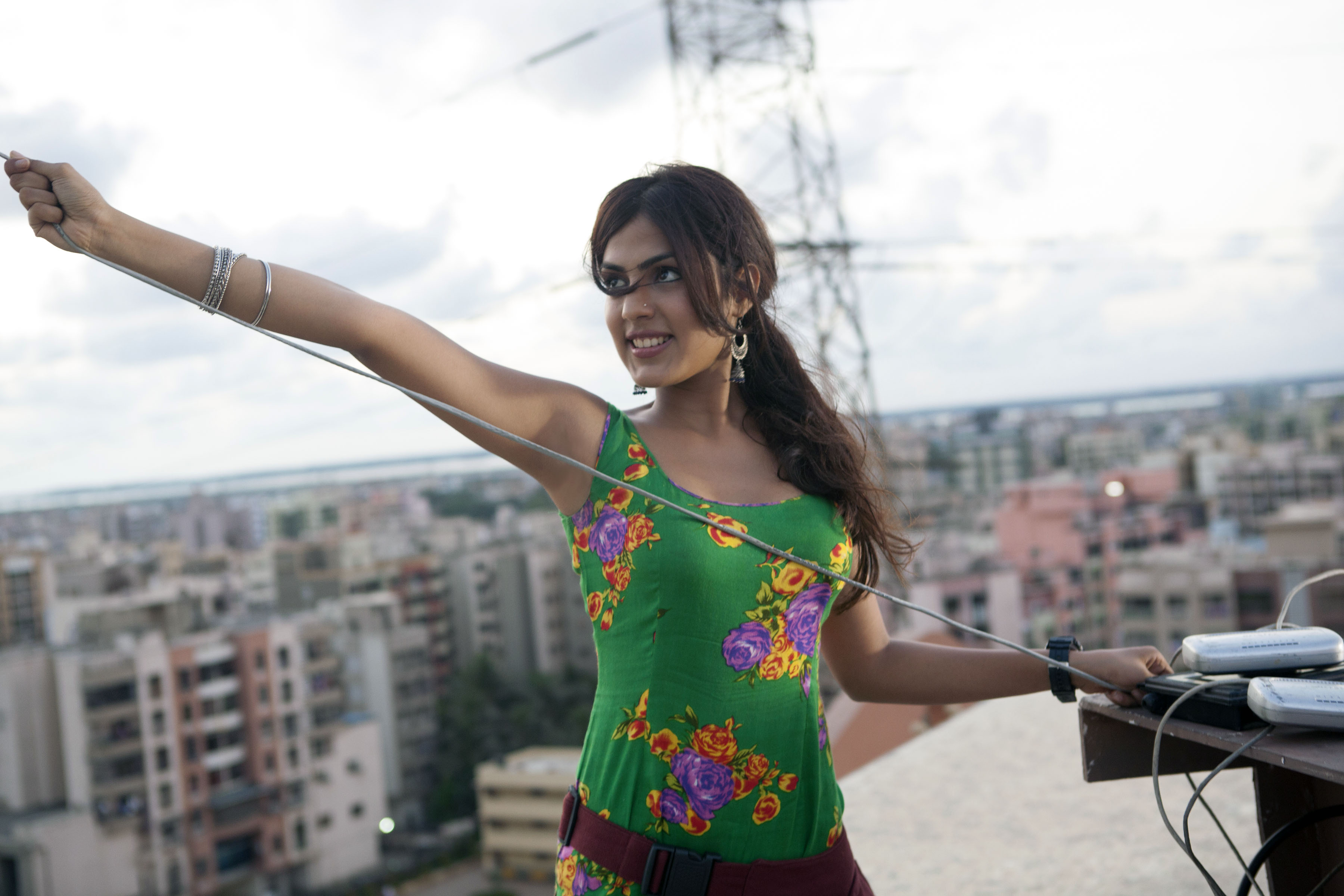
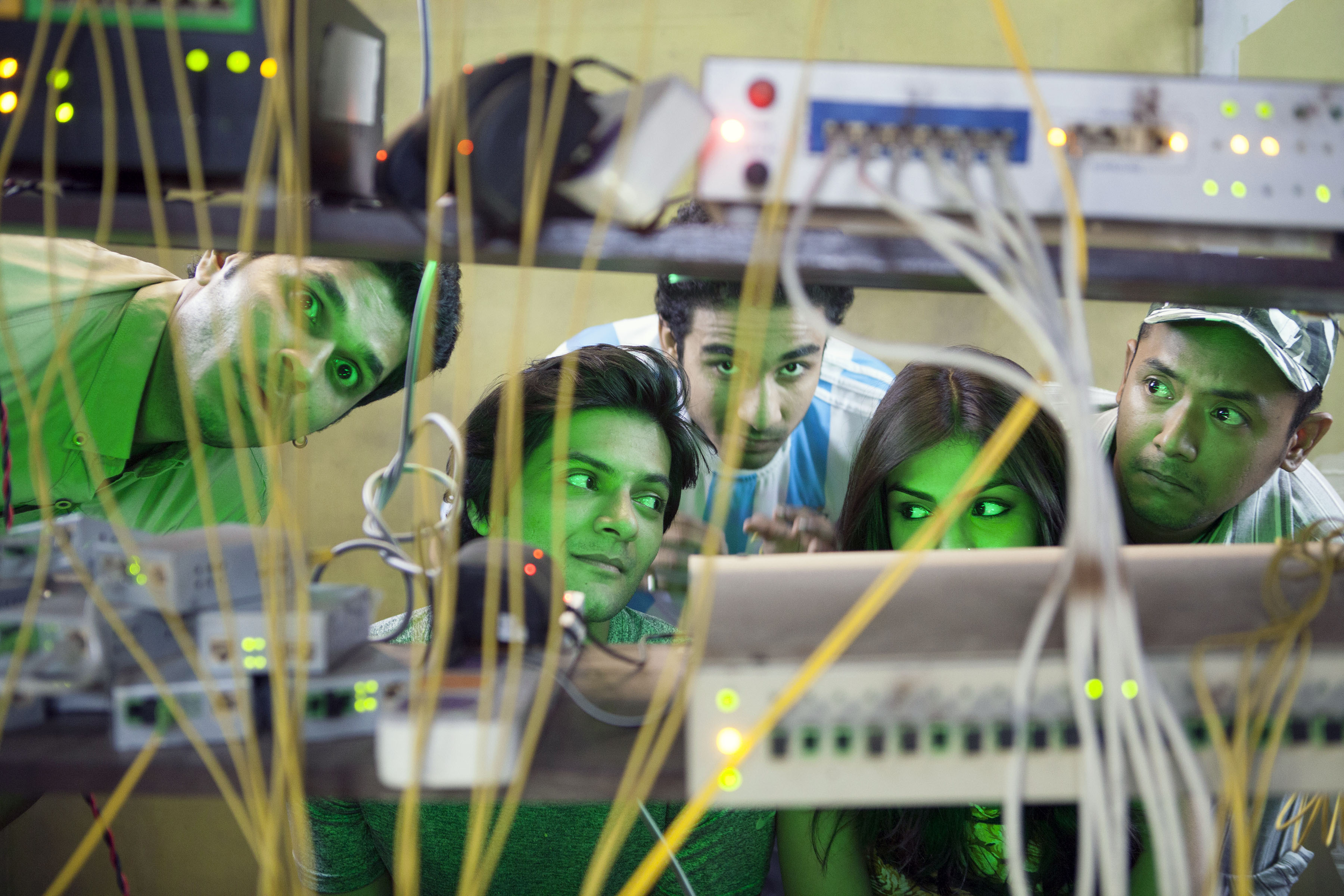
FIRST LOOK OF SONALI CABLE 001FIRST LOOK OF SONALI CABLE 002


About the film (from release) –

SCIL (Super Cassettes Industries Limited), Ramesh Sippy Entertainment and NextGen Entertainment announces the release of their film ‘Sonali Cable’ on 3rd January 2014.

Sonali Cable is a ‘David versus Goliath’ story, in the thick of the cable internet turf war in Mumbai. An ordinary girl puts her love, life and survival at stake, when she and her ragtag team come in the way of the expansion plans of India’s largest corporation. The film wants to establish the growing corporate crushing small businesses without any scope for co existence.

The film is written and directed by debutant Charudutt Acharya with an ensemble cast that includes Rhea Chakraborty, Ali Fazal, Swanand Kirkire and Raghav Juyal (aka Crockroaxz), supported by accomplished veterans Smita Jayakar and Anupam Kher.

The film features a varied soundtrack showcasing the talents of Devi Shri Prasad, Ankit Tiwari, Mikey McCleary and Falak, with lyrics by Kausar Munir.

Lunchbox

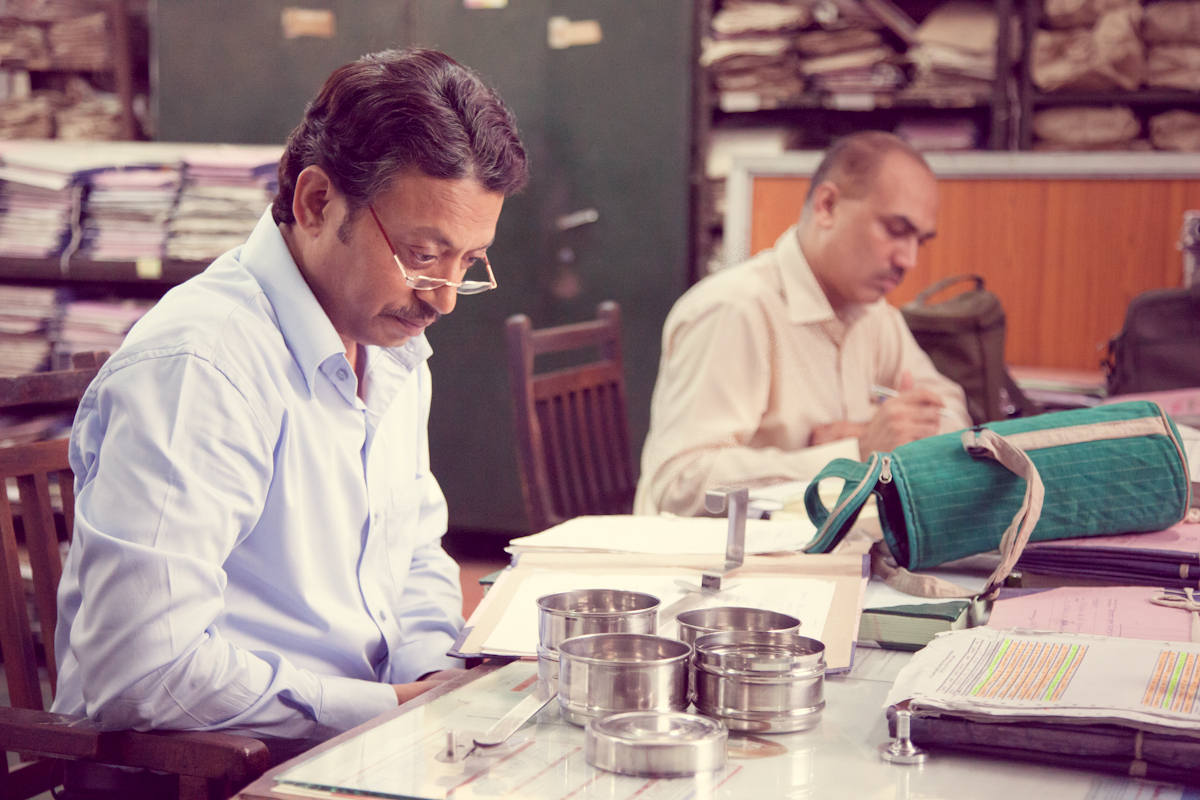
Here’s the good news about one of the best films of the year, The Lunchbox. Producer-director Karan Johar has come on board to present the film and it will be released by UTV on September 20th. This is exactly what we need – big faces should attach themselves with brilliant indies and make them reach the theatres. Otherwise distribution is a pain in the current scenario. After Kiran Rao came on board to help Ship Of Theseus’ release, this is another step in right direction.

Some of us have seen the film and let us assure that it’s a simple and solid film. Directed by Ritesh Batra, it’s not only one of the best debuts of the year, it also has two of the best performances of the year – Irrfan Khan and Nimrat Kaur.

– You can read more about “The Lunchbox” here (on Sony Classics deal) and here (all the Cannes buzz)

And now another bit of news – The Toronto International Film Festival has announced its first list of films selected for the 2013 edition of the festival. And two desi films feature in the list – Ritesh Batra’s The Lunchbox and Maneesh Sharma’s Shuddh Desi Romance. Here’s more on both the films (from the official release) :

The Lunchbox Ritesh Batra, India/France/Germany North American Premiere

– Middle class housewife Ila is trying once again to add some spice to her marriage, this time through her cooking. She desperately hopes this new recipe will finally arouse some kind of reaction from her neglectful husband. Unbeknownst to her, the special lunchbox she prepared is mistakenly delivered to miserable office worker Saajan, a lonely man on the verge of retirement. Curious about the lack of reaction from her husband, Ila puts a little note in the following day’s lunchbox which sparks a series of exchanged notes between Saajan and Ila. Evolving into an unexpected friendship between anonymous strangers, they become lost in a virtual relationship that could jeopardize both of their realities.

Shuddh Desi Romance Maneesh Sharma, India Canadian Premiere

– Shuddh Desi Romance follows a fresh and very real love story about the hair-raising minefield between love, attraction and commitment. A romantic comedy that tells it like it is, providing a candid look at the affairs of the heart in today’s desi heartland. Starring Rishi Kapoor, Sushant Singh Rajput, Parineeti Chopra and Vaani Kapoor.

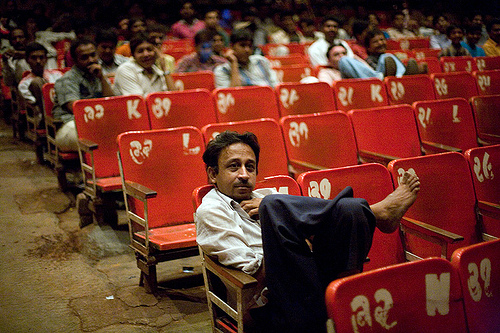
With the release of Ship Of Theseus, we are not only debating its merit (here and here) but another conversation has started on social media – about ticket prices. Why is it so expensive? Should indie tickets be less expensive? Is it even possible? Well, we do believe that if a film is great, it’s worth the ticket price. But if you are still bothered about the price, here’s Shiladitya Bora on why it isn’t so easy to control ticket prices.

cinema

To be brutally honest, no one (and that includes me as well) genuinely knows what is the best way to distribute an Indian Indie in India. The revival of Indian Independent film industry has just started and it is currently in a very nascent stage. We all are experimenting and trying to identify the best case scenario factoring all the constraints (read quality of the film, limited appeal, limited marketing budget and resources etc). There is no one single formula applicable for all Indies and each film requires a customized plan. While owning theatres/ screens (like in case of PVR) helps a bit to screen indie content; other distributor(non cinema owners) mostly rely on relationships built over years with programmers and cinema chains to be able to screen indies.

Whenever an indie releases we see people starting endless debates on the social media platforms with respect to shows, show-timings, ticket prices etc. In order to make the most out of these debates it is of pivotal importance to first have our basics right.

1. So who actually decides how many shows to be allocated to an indie and in which theatres?

For an indie releasing on a Friday, on the preceding Monday the distributor send show requests (wish list in terms of cities, theatres, number of shows, show timings) to the programming teams of various cinema chains. The concerned programming teams then works out a tentative showcasing plan based on factors like the number of films releasing on that particular Friday, performance of last week releases, expected target audience of the film, past performance of similar indies etc. This tentative schedule is then shared with Cinema Operations Team for final approval.

Cinema Operations – Each theatre is managed by a cinema manager who has a target to achieve in terms of number of admits, ATP (average ticket price), SPH (sales per head) – a daily target, weekly target, monthly target, quarterly target and annual target. The career of a cinema manager is directly proportional to these targets and hence all his/her efforts are focused on optimizing the same.

Statistics show that the performance of Indian Indies is abysmally poor in all the three parameters – admits, ATP and SPH and hence not many cinema managers are keen on showcasing Indies at his/her property. So if we want Indies to be released in as many theatres as possible, we need to make the people who run the cinemas confident about the product and this is possible only when a few Indies start performing.

So we come to the next big question on ticket pricing.

2. How is ticket pricing decided?

Every cinema has to operate within price bands pre-approved by the government and no theatre can sell tickets below the lowest price band. The best thing an indie distributor can do is to request the respective cinemas to run the film on the lowest price band and it’s at the discretion of the individual cinemas/ Operations to agree to the request or not.

In addition to the above there is a regular pricing and a blockbuster pricing. Blockbuster pricing is applicable during weeks of tentpole/ big releases and in case an indie is releasing in a week with a tentpole film, blockbuster pricing is applicable to the indie as well in most cases.

We are trying to work out a special discounted price band for Indies released through Director’s Rare.

Another solution can be government waiving off the E.Tax for Indies but for that we need clear cut guidelines to define a film as an independent film.

 3. At PVR Director’s Cut, Vasant Kunj, Delhi, the ticket price of an Indie is above Rs. 1000. Why?

First of all I would like to clarify that PVR Director’s Cut and PVR Director’s Rare are 2 different things. PVR Director’s Cut is a super luxury premium theatre located at Vasant Kunj, New Delhi where as PVR Director’s Rare is a banner for theatrical distribution/ showcasing of niche content.

Director’s Cut being a premium theatre, not only Indies but every film is at a premium price. This is like the Business class of an airline and we have a dedicated clientele for this property.

Now the question is if Director’s Cut is a premium property, what is the point of releasing an Indie there?

There are a few reasons for the same.

First it has always been a struggle to get screens for an Indie in Delhi as most of the multiplexes in Delhi have 3-5 screens which is not enough when compared to the number of films releasing in a particular week unlike that in Mumbai, Bangalore, Pune etc.

In PVR Director’s Cut, there is one dedicated auditorium for showing alternate content and hence we always get a show there. And I have always believed that it is better to release the film in Director’s Cut rather than not releasing the film in Delhi at all. In most of the cases we release the film simultaneously in PVR MGF Mall/ PVR Ambience Mall etc, which are regular priced cinemas.

Also if we analyze the total box office earnings of an indie in most cases (not all), a major percentage of the collections is from PVR Director’s Cut. This is because the producer’s earnings on a ticket of Director’s Cut after tax are almost 3-4 times as compared to a regular cinema.

4. In Delhi, the spread of theatres for Indies are mostly limited to South Delhi. Why is this so?

We have to understand one thing that when a film is released, there is a cost attached to it.  For releasing a film in one show in one theatre, the total expense on content comes to around INR 18000 per property per week ( INR 14000 Virtual print fee + 12.3% tax + INR 2000 for cloning and cargo). For a producer to recover this cost on content, we need net box office sale of close to INR 40-45000 for that particular property. So as of now it is really not a very good decision to release such niche content in theatres other than in South Delhi. May be in future once the market matures, we will be able to spread the reach all over Delhi NCR.

All said and done we must rejoice on the fact that this is perhaps one of the best phases to  be in for an Indian Indie filmmaker and the future will be better.

A few observations/ suggestions which may be useful for aspiring Independent filmmakers.

Make a kickass Indie. There is no substitute to that. No amount of support, gyaan, strategy, patronizing, social media buzz can save a bad/mediocre indie. Do not compare with Rowdy Rathores of the world because that industry works on a completely different dynamics.

When you are planning an indie, in case you do not have access to marketing and distribution budget of around INR 1.5-2 crores, the production cost of your indie should not exceed a few lakhs at any cost. But is it possible to make a good film with such minimal amount? Read about Karan Gour’s KSHAY, which I consider as a classic case study of a successful Indian Indie.

Do not try to do everything yourself. Not every one of us is a Robert Rodriguez. I know we have budget constraints but it is always better to rope in professionals wherever possible and do pay them a fee (whatever best you can afford). Know your weak spots. For e.g if you are not very good at writing, it is always advisable to hire a screen writer to write the screenplay for you. You will find many talented screenwriters willing to help you out. Roping in professionals will definitely help in raising the quality of the final output.

Once you have made a good film, invest some money in hiring a good intelligent publicist who will help with creating the much required aura around the film. Rope in a good designer and get some good artwork ready. Invest in a professional promo editor. These are few small things but if done properly will go a long way in packaging the film well which in turn may yield better results during distribution phase.

(Shiladitaya Bora manages PVR Director’s Rare and has been actively involved with the theatrical distribution of more than 30 independent films)

Pic Courtesy 1 / 2

What’s the fun if a film doesn’t get its share of contrarian views? And with all honesty, not for the sake of it. So over to Aditya Sudarshan who ponders over the latest indie film which is the toast of the town.

SoT

(Contains plot information)

By now, Ship of Theseus is a phenomenon. From UK critics to Bollywood directors, from Dibakar Bannerjee to Karan Johar, it has been hailed as an absolute, once-in-a-blue-moon work of genius. That these opinions are honest, that the film genuinely spoke to people, is not being questioned here. The question I am asking is: Why? How? And what does this say about us- sociologically?

I say ‘sociologically’, because as art goes, I am going to argue that Ship of Theseus features a level of thought that can at best be termed ‘half-baked’, and a level of storytelling which is strictly average. And perhaps if either of these elements had been different- for better or worse- the flaws of the movie would have become indisputably clear. It’s easy to recognize that a film which has nothing to say and says it badly, is bad- take any example from mainstream Bollywood. It’s also easy to recognize ‘grand failures’- for example, Terrence Malik’s Tree of Life, grounded as it is in actually deep philosophy, shows up its failed story-telling. But deception arises when a movie has nothing particular to say and says it not too badly. In the case of SoT, this multiplication of mediocrity has passed as good- and then, wedded to the truly beautiful cinematography, has passed as genius.

Why is the thought in SoT mediocre? Because name-dropping is not the same as knowledge. Because being enamoured of philosophy is not the same as doing philosophy. In the history of human thought, the Grecian paradoxes, like Theseus’, and Zeno’s (who asked how a man could cross a room, when he must first cross half the room and before that half of the half and so on infinitely), have actually been tackled. Understanding what infinity really implies is a part of the answer. Getting to grips with ‘God’ is a part of the answer.

But I am getting ahead of myself. I am starting to engage seriously  with questions that SoT does not even seriously raise. And the key word here is seriously. If SoT had seriously put forth a vision of a Godless universe where karmic causality is the only truth (as in the lines from the monk’s chant, Naham Janami), of a world without boundaries where we are really not individuals but colonies, where there is no intrinsic right or wrong but only consequences to actions- had the movie had this power, then it would have made sense to plunge into such discussions.

The very fact that these discussions seem unwarranted and ‘too much’ here, is testimony to SoT’s half-heartedness. After all, enjoying a mantra is not the same as understanding its meaning. The mystery of free-will is not disposed off because a long-haired lawyer has read an anecdote about the behaviour of ants. Our moral sense of right and wrong is not shown to be illusory because an old woman with a broken leg has probably read ‘The Secret’.

What such scenes and dialogues do, is flatter viewers into believing they have engaged with deep and significant truths, when really they have merely gawked at them- from a very, very safe distance.

I have less to write about the story-telling, because as I said earlier, had it not been for their supposed philosophical weight, I doubt these stories would in any case have been so praised. Without doubt, the three stories in SoT all feature interesting, meaningful premises and strong performances. But the film fails to confront a single great crisis in any of them. All together, they are a bundle of beginnings. The story of the blind photographer reaches her crisis- and rests there. Why and how the monk’s faith alters, and what the alteration really means to him- is untold. And humour and stock cliches (the ‘fat sidekick’, the ‘hapless slum-dweller’) become means to escape engagement with the real moral realities of ‘do-gooding.’ When the grandmother says the line that closes the third story (prior to the epilogue)- ‘itna hi hota hai‘- she could well be talking about the whole movie. So you thought Ship of Theseus would really say something? Arre bhai- ‘itna hi hota hai‘.

I hope it will be noted here that I’m not heaping any insults whatsoever on this film. I don’t say it’s pretentious. I don’t say it’s dishonest. It is, in my opinion, almost touchingly honest- the way an adolescent enamoured of big ideas- and unequal to them- is touchingly honest. Unconsummated ideas, unconsummated stories, there are all the honest expressions of an over-awed and wonder-struck mind.

What is not ok, is for such an un-rigorous and adolescent piece of work (and ‘adolescent’ here, I emphasize, is not a pejorative, but a term of description), to pass as a mature masterpiece. This brings me to the question I started with and am also closing with, because I am going to think about it further myself. (And this is the only real food for thought SoT left me with). Why is this movie a phenomenon? Are we such suckers for beautiful cinematography? Surely not. Or are we so starved for any spiritual ideas in our lives whatsoever, that we can’t recognize cooked material from uncooked? I think perhaps this is close to the answer. Perhaps we have kept ourselves so desperately stranded from the big questions- the meaning of life, religion, morality, God- that even a child-made raft, passing by our desolation, can be hailed by us as our flag-ship.

(Aditya Sudarshan is the author of two novels, A Nice Quiet Holiday (Westland Books, 2009) and Show Me A Hero (Rupa and Co., 2011) and several plays, including The Green Room, winner of the Hindu Metroplus Playwright Award for 2011.)

Anand Gandhi’s much accalimed film Ship Of Theseus is going to release this friday. Thanks to Kiran Rao and UTV, the film is getting much deserved space in mainstream media. If you have read about Gandhi’s short films in those interviews and still haven’t seen them, we are embedding two of his shorts here. The video quality is not great but do watch both the shorts.

Right Here Right Now (2003)

29 Minutes. 12 Locations. 19 Characters. 8 Languages. 2 Shots. 1 Cut.

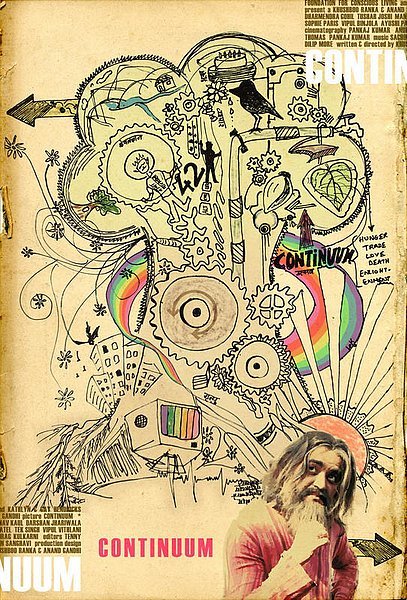
Continuum (2006)

– written and directed by Khushboo Ranka & Anand Gandhi.


continuumSynopsis – This film narrates simple enjoyable stories from everyday life that explore the continuum of life and death, of love and paranoia, of trade and value, of need and invention, of hunger and enlightenment. The five moments of its childlike innocence branch out into a more intricate gamut of an urban scape, culminating into a space where the stories no longer exist as singular threads in their own vacuum but come across and play with each other to form a larger fabric of life.

– You can also check out the filmmaker’s blog here and his DeviantArt page here to see some of his interesting work.

– Click here to check out the Flickr page of Pankaj Kaumar, the DoP of Ship Of Theseus.

Bidesia In Bambai

“Bidesia in Bambai” is a story of music, migration and mobile phones. Ah, that sounds interesting – the title and its description. And what a gorgeous poster too. Not sure what exactly i was googling when i landed up on this blog. Just found out on Film Divison’s FB page that the first trailer of the film is out. Have a look.

For a better view, you can go directly to its vimeo page here.

Here’s more on the film (from the director’s blog) – Migration is the predominant theme in the music, and the phone is a recurring motif. Mobile phones are also used to circulate the music. And it’s the only way to stay connected to the mothers and wives back home in the village. This film follows two singers in Mumbai who occupy extreme ends of the migrant worker’s vibrant music scene, a taxi-driver chasing his first record deal and Kalpana, the star of the industry.

Film details – 86 minutes/2013/ Bhojpuri and Hindi/ with English subtitles/ INDIA

Screening – The film will have a screening in Mumbai on 20th July. You can follow the FD FB page for venue and other details. Hopefully they will update later on.

If you want to know more about the film, copy/pasting her latest post from the filmmaker’s blog

Bidesia is Bhojpuri for ‘the one who leaves home’. One in four migrants in Mumbai is Bhojpuria, a people from the north Indian states of Uttar Pradesh and Bihar. Bambai is their name for Mumbai/Bombay.

The bidesia in Bambai, like most recent migrants in this ‘global city’, inhabit the precarious edges of Mumbai. Along with his meagre belongings though, the impoverished migrant brings with him a vibrant musical culture.

Bhojpuri pop music is produced, circulated and performed in the crumbling sites that is home to the bidesia in the big city. Migration is the predominant theme in the music, and the mobile phone is a recurring motif in the songs. Frequently sexually charged, at times religious, often lyrical and occasionally political, the migrant is both the subject of, and the audience for this music. The musical landscape he inhabits mobilises notions of masculinity; gives form to his identity; makes tangible his desire for a place in the city; and evokes his longing for home.

This feature-length film attempts to make the migrant visible by celebrating the musical sphere that he inhabits, in a city that renders him illegal and unwanted.

– Click here to go to Surabhi Sharma’s blog.

Poster/Trailer courtsey – Surabhi’s blog.

Jaideep Sahni is one of my favourite screenwriters. And most probably, the best among the current lot. He has dabbled in various genres – from underworld saga (Company) to sports film (Chak De India), dramedy (Khosla Ka Ghosla) to rom-con (if i can say so, Bunty Aur Babli), and has delivered terrific results. His last film Rocket Singh – Salesman Of The Year didn’t work at box office but i liked it. Similarly, with Aaja Nachale, there was no critical acclaim neither box office but there were many bits in the film which were noteworthy. Also, when you go into the theatre to watch a Shah Rukh Khan film but come out remembering the names of about a dozen other characters played by completely new actors, you know that the writing is great. And that’s a rare achievement in India cinema.

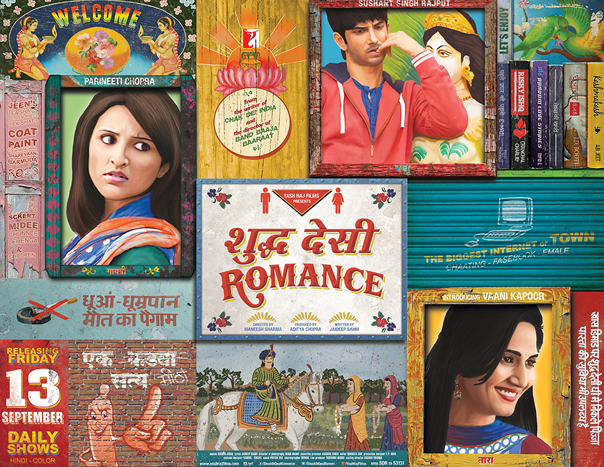
Strangely, Sahni has never written a romantic film so far, as in dealing with just matters of heart. And that’s one of the reasons i am quite kicked about Shuddh Desi Romance.  The first three teasers of the film (here, here and here) completely stood out from the rest of the crowd. And i have been told that Sahni is the brain behind those three. Two teasers dipped in nostalgia of ek chidiya and last one with the customer care headache that has become part of our everyday life now. And today the theatrical trailer has come out. If you haven’t seen yet, have a look.

So what’s the film about?

Here’s what the cryptic official synopsis says…

Shuddh Desi RomanceDoes what starts physical always turn into love? And what reaches love, always turn into commitment? How do you figure out?

From the director of Band Baaja Baaraat and the writer of Chak De! India, comes a fresh and very real love story about the hair raising minefield between love, attraction and commitment SHUDDH DESI ROMANCE finally, a romantic comedy that tells it like it is.

Starring in this classy, candid look at the affairs of the heart in today’s desi heartland are the endearing Rishi Kapoor, exceptionally talented Sushant Singh Rajput, and the versatile Parineeti Chopra, along with debutant Vaani Kapoor.

Well, i can see the “shudd” part, the “desi” part but not sure about the “romance”. What’s new? What’s not been done? What will Sahni deliver? As the trailer doesn’t say much about the plot except the usual mood and feel of the characters and the place which was quite clear from the teasers also. Or is it Saathiya in small town with a new girl in the loop?

So what’s your take? What are you expecting? Do let us know in the comment section.

– Posted by @cilemsnob

Through this blog we have always tried to spread the good word about various crowd-funded (Kickstarter, wishberry and such) projects. Not sure how much it helps those projects but even if its in a small way, it feels good to get the acknowledgement. We hope at least the information reaches some kind souls (with deep pockets) who are pursuing similar interest. Here’s the latest one in our “Fund A Film” page – Supriti Malhotra’s Shakti – of science and traditions.

About the film : A documentary on the concept of Shakti, as seen in mythology, religious practices, social influence, and modern scientific theories.

Video Preview : Currently, the trailer only includes footage pertaining to modern scientific theory

More on the film (from its Kickstarter page) – This feature length documentary explores the concept of Shakti, the Hindu Mother Goddess, whilst looking at various versions of her myth. A parallel search in the scientific world, a world of empirical enquiry, reveals a similarity of concepts. This film also explores the idea that women are active manifestations of the Goddess, believed by those practicing Shaktism or worshipping the Mother Goddess.

In India, the worlds largest democracy, with close to 80% Hindus, religion finds expression not just as personal belief; it also plays a role in politics and media; as well as dictating social traditions as per its code of conduct.

I have always questioned the idea of women’s empowerment. Is it simply about equal rights and opportunities? Is it not also the right to decide the course of your life?

In a country seeped in rituals of tradition and modern economics, the role of women has changed in recent times. I seek to largely examine whether it has filtered to those living outside urban areas.

As I search through the villages and small towns, through temples and traditions, the film is hopeful of finding a new perspective on women, Shakti and their relationships in a fast changing India. The film also hopes to show that some mythical and scientific concepts may not be that different after all.

In order to make academic data interesting, I would like to present them through animation. The animation will include characters based on avatars of Shakti. A fictionalized story of events will be written based on myth, scientific theories, archaeological and anthropological data. There was a simultaneity of changes in mythologies around the world, given the trade that existed between early civilisations – Supriti Malhotra

– To know more about the film, the filmmaker and how you can contribute to it, click here to go to its Kickstarter page.

– She has just 27 days to get her funding.

If you want us to feature your project, you can send us the details at moifightclub [at] gmail dot com. We will put out the posts with the interesting ones.

Two films. Set in the backdrop of war-torn Sri Lanka. Both have Sri Lanka map in their posters. But such drastic results. Take a look. And let us know  which one works for you.

Madras Cafe is directed by Shoojit Sircar and Ceylon is by Santosh Sivan.

Madras CafeCeylon

I got to watch the film on Tuesday. This was amidst too much hype, too much expectation, pressure to like/dislike instantly, and too eager to react. By that time reactions from the film fraternity had already started pouring in. And as a member of the crew told me during the screening, honestly, it’s impossible to make out anything from the pre-release screenings. Also, if one has read the script, one might be reacting differently from others.

In terms of reactions, Lootera has turned out to be strangely divisive films. The reaction of critics and audience going in extreme directions is quite obvious for most films these days. But here the critics rating varied from 2.5 to 5 stars. I can only think of Dev D which went further extreme and got ratings from 1 to 5 stars, and everything in between. But strangely, the audience reaction have also been extreme with Lootera. To give an example, as this twitter friend tweeted – “In our theater, about 15 ppl walked out. And about 15 broke into applause at the end. Strange. Didn’t think Lootera would be so polarizing.”

Anyway, after watching the film i told Motwane that i will mail my reaction, all in detail. Can’t react so quickly. And VM has responded to the criticism. Much thanks to him as most filmmakers in B-town run away as soon as their film releases. Also, thanks for agreeing to make the mail public.

Actually we wanted to do a post-release Q and A with him and his DoP Mahendra Shetty. But as the joke goes, Sonakshi is spreading her Lootera disease quite fast. So me and few others have been coughing like her since the film released, and hopefully these few answers are better than having absolutely nothing else.

Lootera

What worked for me

– as i told you i loved the second half. I loved the way it’s shot, so dark ( i hope it’s visible in theatres with bad projection. i remember problems with Kaminey, Gangster), the mood it creates and almost meditative in its space and silence. it’s GORGEOUS!

– as expected from you, it’s very well directed. well mounted, well captured.

– acting across the board is good, from leads to small roles.
– the pace is slow or leisurely which goes well with the mood and setting. good you didn’t hurry anywhere – consistent through out.

– the romantic village portions with so much brightness was looking tacky to me in the trailers. Thankfully it doesn’t feel so in the film. Right rustic touch with a FabIndia colour palette , if i can say so 🙂

– BEST part – you didn’t hit the excess notes for melodrama, perfect balance, didn’t even try to cash in on deaths on screen. That’s GREAT!
i was actually waiting to see if you will go Bhansali way with the father and friend’s death 😉 but you didn’t even go close there. Smart! and smartly handled.

what didnt work for me (and VM’s reply below each point)

– i think people will love the 1st half more but i didn’t feel that romance or passion in the first half. i am not sure why. or was it the heavy  background that you were using to make the point which was distracting me.

VM : It’s the same issue I have with the script in it’s current form. Though when I tried to think back to my original intention when writing the screenplay, it was pretty intentional to make it a love story that wasn’t quite a love story. It’s wasn’t supposed to be the achy type of love story and wasn’t supposed to become that way at all, even towards the end. I always wanted a lightness to the film throughout. So can’t say whether this is better or that. It is a flawed screenplay. Willing to live with that.

– actually the sound design at two places in 1st half was very odd, i felt. when the father starts narrating the story to Sonakshi in the beginning, the music suddenly fades in and goes so high. It was very out of place. i know you might be trying to make the easy connect with the sound so that it can be used in 2nd half with Sonakshi and tree. But it was too loud and so suddenly.

VM : The intention wasn’t to connect the music with the second half. It was a background piece. Maybe it was too loud. Didn’t seem that way when mixing it.

– similarly the use of that old hindi song that goes through all the montage when they are at the site and many such odd things, as in not romantic stuff but the song goes on, and just stops with the news of zamindari over. again very out of place.

VM : It stops with the zamindari news because that’s where the plot changes a little bit. And it feels loud because it’s mono and it cuts through the rest of the dialogue. Something we discovered too late and only at the final mix stage. No matter how soft we had it, it cut through,

– why so much grainy footage in 2nd half?

VM : Aesthetic call that me and (Mahendra) Shetty took. We both like grain and purposely went for a high grain stock. Wanted to give an aged, period feel without making it glossy or sepia tinted. In fact, there is more grain in the injection scene in the first half, which is just an under-lit scene. Mistake on our end.

–  And this might be nitpicking – when he climbs the tree, and the climax sequence – when he is walking, she is coming out of the house – at few places one can see the (VFX) jugaad – foreground and background not in sync especially when Ranveer is walking towards the police, the light, the things you have cheated – i mean it’s nice but not pitch perfect. similarly with snow and when he falls from the tree, you can make out it’s fluff. maybe if you are watching minutely then only.

VM : If you’ve seen the making video, you know what we had to go back to shoot snow sequences in summer with fake snow. Which means VFX work. Work that we have shot on grainy film, without green screen, with handheld camera. It’s the worst kind of situation for a VFX team and under the circumstances, they did an amazing job. The whole tree climbing and shoot out is VFX created. There are shots and mattes and snowflakes that make me cringe every time I see them but it’s just something we have to live with. Will do better next time.

– Basically, overall another good film. But you are so strong at filmmaking aspect, the craft, why tell a bollywood story. I hope you go beyond it now that you have done your conventional part. a more non-conventional/interesting/out of box idea/tale to match up to the talent of your craft.

VM : So the indie world thinks i’m telling a bollywood story. And the bollywood world thinks i’m too indie. You think this is conventional, they think this is too out of the box. So I can’t win…

Fact is, I went to tell a story that I believed in, warts and all. I can make all the excuses in the world about not having enough time to fix the script before shooting because we only had two months of pre-production blah blah but it’s pointless. This is the film I chose to make and I stand by it. Nobody knows and feels and understands the flaws of the film better than I do but that’s a discussion for another day.

I don’t want to get stuck making 4 crore films for the rest of my life because that’s what happens in this industry. It gets very easy for them to slot you into a ‘type’ of filmmaker. For better or for worse, this film was my attempt to break out of that.

– Posted by @CilemaSnob

(Pic courtesy – Lootera FB page)