Archive for the ‘film’ Category

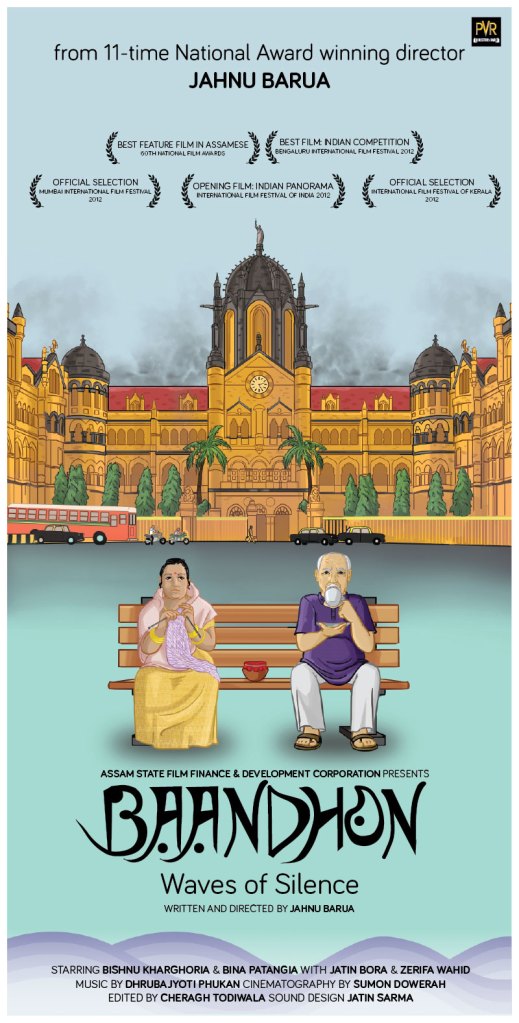
Baandhon is the first Jahnu Barua film to get a multi-city release outside Assam. Thanks to PVR Directors Rare. For cities and show timings, do check the poster below. And here’s Pradeep Menon on the film.

943271_470624503025894_1991809589_n

The media, social and otherwise, has been abuzz with the latest Hindi release; an exciting, talented director’s sophomore feature, one that is making critics and audiences alike gush over gorgeous frames, celebrate the coming of clean cinematic craft, and most importantly, reminisce about romances of the days of old.

Indeed, sometimes one can’t help but feel that, in this day and age, we’ve all forgotten how to fall in love. We’ve forgotten what it is like to drown oneself in that heady rush of a new romance, embrace unbridled passion today like there isn’t a tomorrow and push the limits of rational behaviour in the pursuit of real life moments that make us feel like we’re living a movie.

But here’s the thing about romance – it always dies away. No question about it. So what remains then? What happens when you spend years, or even decades, with a person? Hopefully, once the romance, the passion and the giddy joy of the other’s company gradually ebb away, what you’re left with is respect, stability, comfort, and, if you’re extremely lucky, a lifelong friendship.

That, precisely, is what Jahnu Barua’s ‘Baandhon’ (“Waves of Silence”) is about. On the surface, it appears to be about the complex relationship shared by a married couple; a man and a woman who’ve spent nearly their entire life together. But if you really pause to think about it, it is quite simple. Their love has evaporated perhaps, but they are left with the next best thing – companionship.

Baandhon spends more than half its run-time soaking itself in a single fight between an aged husband and wife; a couple that has already been bereaved of its offspring, and is now solely alive for their grandson, who studies in IIT Mumbai. However, right from the outset, we know that this fight isn’t for real. They’ve done it to death umpteen times before, and it is perhaps the only thing that keeps them going on a daily basis. One ticks because the other is.

But, before we even see the couple for the first time, we are told the date of the fight. 26th of November 2008; a day that sent waves of silence of its own, all around the country. And immediately, you know that this is a story that is always going to end in some sort of a tragedy.

Barua, then, with his decades of filmmaking experience and multiple National Awards, chooses to douse his narrative in such minimalism and sparseness that not only is there never a twist, but there also isn’t even the anticipation of one. The terse inevitability of the path the film traverses is always writ large over the goings-on, and yet, Baandhon gently attempts to reaffirm faith in humanity while admitting that somewhere along the way, humanity has failed.

Reminiscent more than once of Mahesh Bhatt’s ‘Saaransh’, yet largely steering clear of some of the harsh questions and issues that Bhatt’s film raises, ‘Baandhon’ roots itself in economy of craft and storytelling. Even the background score of the film tries its best to camouflage itself behind the visuals; so rare for Indian cinema today, which nearly always attempts to elevate every emotion with over-the-top mood music embellishment.

There isn’t an overt attempt at displaying craft or technique here. Baandhon could easily have been a play. It is set mostly in Guwahati, before the climax, if I can call it that, shifts to Mumbai. Yet, there is no attempt to give the film a texture that sets it in a particular time or place. It could be happening anywhere, at any time. The 26/11 backdrop gives it a real world context perhaps, but even that could just as easily have been a fictional human tragedy that only needed Mumbai to be the place it occurs in. This of course, is clearly intentional on Barua’s part. If you’ve watched ‘Maine Gandhi Ko Nahin Mara’, you know that he’s fully capable of creating a perceptible flavour of place and time.

Baandhon also has no solutions on offer. In fact, it hardly asks any questions. All the film does is give us a brief window of a few days, into the life of a man and woman who, after 73 years of their life, have only each other, even if their journey brings in their path a few kind souls who unselfishly look out for them. It is in these side characters, the ones that attempt to show you that humanity has hope after all, where the film really falters. Our cynical selves will find it hard to swallow the genuine goodness that the peripheral characters go out of their way to shower on our protagonists.

It doesn’t help that most of these side characters aren’t particularly well performed either. Even Bina Patangia, who plays one half of our couple, has an adorable character to fall back on, but her performance itself is mostly functional. Only Bishnu Kharghoria, who plays the husband, truly manages to turn in a memorable performance.

Despite some almost naïve writing and characterization, it is in its silences and pauses that Baandhon’s honesty shines through. This honesty draws you in and makes you want to sit right next to the couple as they deal with loss. Yet, just before your hand reaches out to caress them, you realize that they still have each other. And as you draw your hand back and walk away from them, all you really tell yourself is that perhaps that is all one needs – another person to fall back on, forever.

( To read more posts by Pradeep, you can check out his blog here)

Chor Chor Super Chor

Deepak Dobriyal has been missing in action for sometime. So it’s good to see him back, and that too in a leading role. Watch the trailer.

Official Synopsis

In the crowded bylanes of Old Delhi, Shukhla ji runs a photo studio that is a front for small time crime. Satbir, who is a part of this gang now wants to give up a life of vice and make a new beginning with his love interest – Neena. Is Neena’s keen interest in Satbir’s past only curiosity or is there a secret intent? Will Satbir finally win Neena? What happens to wannabe crooks Amol and Ronnie? Will Satbir be able to give up his life of crime?

Cast & Crew
Produced by: Ved Kataria & Renu Kataria
Directed by: K.Rajesh
Story: K.Rajesh
Screenplay: Ani Thomas & Radhakrishnan Cherpu
Dialogues: Alok Chaturvedi

Cast
Deepak Dobriyal, Priya Bhatija, Anshul Kataria, Paru Uma, Alok Chaturvedi, Brahma Mishra, Nitin Goel, Jagat Rawat, Chandrahas Tiwari, Anurag Arora, Shrikant Verma, Megh Pant, Avtar Sahani, Jatin Sarna, Gaurav Das

Production company: Katson Motion Pictures
Music by: Mangesh Dhakde
Cinematography by: Rakesh Haridas
Editing by: James.J. Valiakulathil
Sound Design: Niraj Gera
Art Direction: Suman Roy Mahapatra
Casting: Alok Chaturvedi
Lyrics & Choreography: Vibhu Puri
Executive Producer: Tushar Radhakisan Tupe

So Jahan Singh Bakshi gets to design his first film poster. And that too for a well know filmmaker – Jahnu Barua. His film Baandhon is getting a multi-city release this friday. Do watch the film if you can. And over to Jahan on “making of the poster”. Or should we say when Jahan met Jahnu 🙂 Anyway, go ahead and read this very interesting post.

943271_470624503025894_1991809589_n

Jahnu Barua’s Baandhon (Waves of Silence) will be releasing in select theaters across the nation this week, and thanks to Shiladitya Bora I had the great opportunity to design a poster for the film. I haven’t seen any of Jahnu Da’s work apart from his only (released) feature in Hindi- Maine Gandhi Ko Nahi Maara- which is something I hope to change soon. But I happened to meet the soft-spoken filmmaker once before during college in Calcutta and then recently in Bombay before getting to work on the poster and it was a pleasure on both occasions- even though he speaks so gently that one often has to strain to even hear what he is saying! Moreover, I spent much of my growing years in Assam and it is an honour to have an Assamese film from one of the most esteemed filmmakers from the region as my feature poster debut, especially since this is a first-of-its-kind Pan-India release for an Assamese film.

Anyway, back to the poster. Baandhon is a disarmingly sweet film  which beautifully shows the relationship between an old couple superbly played by Bishnu Kharghoria and Bina Patangia. The first half of the film plays out like a genteel comedy, with the old man and woman constantly bickering and then making up. It reminded me of so many old couples including my grandparents- they can’t live with or without each other. The second half of the film, where their grandson goes missing during the 26/11 attacks in Bombay is a comment on how it is the common man who bears the impact of the large scale politics and terror.

For me, one dialogue from the film pretty much summed it all up:

“We are common people. The world is too big for us. We have no choice but to trust in it.” 

Two simple people who live in their own small world oblivious to the harshness and the cruelty that lies outside.

Since the film’s look is pretty simple and basic, I wanted to reinterpret the film a little differently while maintaining this essence. I saw the film in two halves. When I am making a poster the first thing I look out for is an image from the film that stays with me. In the first half I would say this was the image that defined the film for me.

Jahnu]--330x220

The first thought was to use this image with the two on the rickshaw with the two holding hands in between. I loved the charming and hilarious first half of the film- I have to admit that I wished that the terror angle never came into the picture; I could watch these two quarrel endlessly!) However, I realized that the comment on terror and violence is an important part of the film and the Jahnu Da’s intent behind making it.

After watching the second half, I found what is easily one of the most haunting and defining visuals from the film:

Baandhon cover

So this was it. The old couple on a bench with the alien city of Bombay in the backdrop which could perhaps have a hint of violence or destruction. I deliberated on how I would depict Bombay in the backdrop and suggest violence without it becoming  loud or overwhelming. Ultimately I zeroed in on Victoria Terminus (you’ll see why when you watch the film).

The shot in question is from behind the bench, and Deepshikha Mondal (who did the title design and was to initially do the artwork) asked why can’t we use the exact shot from the film as seen above. It is a powerful visual, no doubt. But I insisted on sticking to a front-on view. Movie Posters are after all, commercial art and it always helps to have a face on a poster, especially when a lot of the audience know nothing about the film or its characters, and especially since we were going to have only one poster, it’s essential to make that connect. And it needs to stand out.

Besides, I have a soft spot for what I like to call the ‘dollhouse’ aesthetic, with a flat symmetrical design- reminiscent as many have pointed out- of Wes Anderson films. I wouldn’t say it is inspired by him- in fact my love for this kind of frame is what drew me to Wes Anderson’s films in the first place- but yeah, they do serve as a great reference point. Also I was keen to have a caricature style for the character design- to lend the poster freshness as well as capture the innocence and droll humour of the film.

Clients, as any designer will tell you, can be a nightmare to work with. At the very least, you need to show them exactly what you have in mind for the final design, or they can’t visualize it. (And I can tell you that even after they are executed completely, the best designs often lie unused and unseen.) And I have to really hand it to Shiladitya for not even asking a single question regarding what the poster would really look like. This is the sketch I first sent him, to give him a basic idea- and it really  is BASIC in the truest sense.

Baandhon

Sketch by Deepshikha Mondal

Anyway, I don’t know whether he really got the idea or just trusted me highly, but I really have to thank him for giving me a go ahead on the basis of this. It’s a big risk to take on someone who has done almost no independent posters before. Now the next step was to make the title logo and flesh out the character design and drawing style.

TITLE DESIGN

For the title design, Deepshikha suggested we create/use a font that is a fusion of the Roman and Assamese script and I was totally on board with the idea. Shiladitya didn’t like the initial title design (seen in the second image from top)- and I agreed that readablility could be an issue. However I was a bit stubborn here and managed to convince him that with bolder glyphs and minus some lines and curves it would be perfectly readable. I wanted this particularly because I wanted an Assamese touch to the poster, in the title, even if not in the image.

Untitled

Final Title Logo by Deepshikha Mondal

ILLUSTRATION/CHARACTER DESIGN:

We had already decided on a clean, caricature style for the characters- droll, but still serious. I wanted the feeling of two simpletons sitting on a bench a la Forrest Gump, looking straight ahead at the audience. Deepshikha made the first sketch- which didn’t quite turn out as I imagined it. We tried to rework the design as Deepshikha had seen the film and I thought she could give a nice, North-East Indian aesthetic to it. Unfortunately, she was piled with other work and we were way past deadline and running out of time.

altAp2kR3ddim3ConPGJPQ_Cuq4vVcxLUBlb6s0P53YwZad_jpg

First illustration by Deepshikha Mondal

That’s when Mrinal Roy came into the picture. I love Mrinal’s illustration work and I was working with him on another poster that should be out soon. I couldn’t give him a copy of Baandhon, which is why I didn’t approach him for this poster. However, now being short on time I got in touch with him and he agreed to do it at incredibly short notice. Mrinal is one of those guys who- unlike me- doesn’t speak a lot- so I never really know whether he’s getting my vision. Anyway, I sent him as many stills and promos off the net that I could find online along with references.

When I saw the first line-drawing, I breathed a HUGE sigh of relief. He had got it down pat  and pretty much nailed it perfectly.. I remember telling him that he could place the ‘kalash’ anywhere he wanted- in the center or the side (even though I preferred it  in the center). He sent me this, saying: ‘I put the kalash in the center because it belongs to both of them.’ That made me smile.

lineart

First cut- Character line-art by Mrinal Roy

The man’s face looked a little too angry, and the woman was a little too roly-poly and North-Indian. So the man’s eyes were to be made softer and sadder and the lady was to be put on a bit of a diet. That was fixed. Then came the background. I hadn’t asked Mrinal to put a lot of detail in the background- there was very little time and it wasn’t necessary. However, he absolutely floored me with the detailing he put into the Victoria Terminus sketch and the poster is all the better for it. My idea was to have a busy background and a clean foreground with gentle waves ending the picture. I think he got that right. The last thing to do was to add the smoke rising from the building which was my little contribution to the artwork.

Bandhon-Standee

The Final Poster

There are a few things I would have liked to change, if I had more time. Mainly the colours and the textures. Maybe a little more detail to say, the lady’s saree, etc. But I’m largely satisfied with the result and this was a great learning experience. Most of the credit for this however goes to Mrinal. Like I said before (the night I was sent the artwork):Screen shot 2013-07-04 at 12.05.06 PM

A thank you to a few more people:

Malvika Asher who suggested the font for the poster- Bariol was just the kind of clean, slightly rounded typeface I was looking for (it’s been used in the trailer too). Sidharth who painstakingly put it all together on Illustrator. Shiladitya and Jahnu Da for the opportunity. for And to everyone who has had kind and encouraging words to say about the poster .

Do watch the film, it releases in cinemas this Friday.

PS: Confession. I purposely didn’t send Shiladitya the line drawing and the in-progress pictures from the poster. Wanted him to see it in entirety before making any suggestions or changes. Thankfully, there were none. 🙂

Bandhon-Poster-2

Jahnu Barua has won 11 National Awards. And there’s high chance that you might not have seen a single film of his, even if you are a die-hard film buff. The reasons and excuses can be many. So here’s your chance to change it. His latest film Baandhon is going to be released in 7 cities across the country, and with English subs. The film is being released under PVR Directors Rare banner and will have shows in Delhi, Mumbai, Kolkata, Chennai  (special screening on Saturday/Sunday), Bangalore, Pune and Ahmedabad.

– Baandhon (Waves of Silence) is the first Assamese film to be released outside the state. It is produced by the Assam State Film (Finance & Development) Corporation ltd. (ASFFDC) and has won the award for Best Assamese Feature Film at the 60th National Film Awards in 2012.  It opened the feature film section of Indian Panorama at the 43rd International Film Festival of India and was also screened at the International Film Festival of Kerala.

– The film is 96 minutes long and features Bishnu Kharghoria, Jatin Bora, Bina Patangia, Zerifa Wahid, Abastosh Bhuyan & Anshuman Bhuyan.

– Synopsis : Baandhon is a story of an elderly couple – Dandeswar and Hkawni whose lives are deeply impacted when their grandson goes missing in the attacks of 26/11 in Mumbai. The film captures the turmoil and the upheavals the couple goes through in trying to come to terms with the void that has been created in their lives forever.

And here’s the trailer of the film (with subs)

TRANLITE new low(1)

Filmmaker Anurag Kashyap and producer Guneet Monga under their banner, AKFPL, will be releasing SHORTS (a collection of 5 short films) on July 12 2013.

The films will be released by PVR Directors Rare across Mumbai, Delhi, Pune, Kolkata, Surat, Cochin, Ahmedabad and Bangalore in select theatres. The five shorts are directed by Shlok Sharma, Neeraj Ghaywan, Rohit Pandey, Siddharth Gupt and Anirban Roy. The films feature Huma Qureshi, Nawazuddin Siddiqui, Richa Chadda, Vineet Singh, Aditya Kumar, Ratnabali Bhattacharjee, Shweta Tripathy, Satya Anand, Preeti Singh among others.

Synopsis of the 5 Shorts –

1. SUJATA by Shlok Sharma

Starring: Huma Qureshi, Shweta Tripathi, Satya Anand & Aditya Kumar

– Sujata is a riveting tale of a young girl, who is struggling to come out of the clutches of her tormenting cousin brother. At a very young age, she is forced to live with her cousin and his family. Herein, begins a life of incessant harassment by her cousin brother.

Even as an adult she lives in the shadow of fear. For years, she changes addresses and identities in the hope of finding freedom; but each time he hunts her down. Neither the police, nor the NGOs are able to help her. Pushed to a corner, she decides to take the extreme step.

2. EPILOGUE by Siddharth Gupt

Starring: Richa Chaddha and Arjun Shrivastav

A relationship that has already fallen apart and is just about to snap. It describes the love and intimacy, the entangling of two lives and the completely symbiotic nature of a couple.

It reflects the possessiveness control isolation, depression and desperation that a relationship can lead to, representing a cycle that needs to be broken in order to keep sane.

3. AUDACITY by Anirban Roy

Starring Preeti Singh, Sankar Debnath and Kanchan Mullick

A thirteen-year-old girl has her first real confrontation with authority when her father forbids her to play the American dance music she loves. When she decides to take revenge, the situation escalates to become a neighbourhood scandal.

A dark comedy about parental authority, teenage rebellion, curry, whiskey, and house music.

4. MEHFUZ by Rohit Pandey

Starring: Nawazuddin Siddiqui and Aditi Khanna

In an ambiguous space and time. The city has turned mad, as violence has taken its toll. But, far away in the sounds of silence at the border of the town, a man takes care of all the death around. He drags away this usual routine with every passing night.

One night, he notices a strange woman wandering on empty streets. As her behavior changes, so does his journey.

5. SHOR by Neeraj Ghaywan

Starring: Vineet Singh and Ratnabali Bhattacharjee

Lallan and Meena, a couple from Banaras, are consumed by their pursuit to survive in the city of Mumbai. Meena takes up a job in a sewing factory.

One day over a phone call, they find each other while embracing death, divorce and redemption. It takes the darkest hour of our life, the fear of death, to regain our consciousness back in to life. To find the beauty that is lost in our relentless angst towards an unyielding life.

Ship Of Theseus

With UTV and Kiran Rao in the picture, Anand Gandhi’s Ship Of Theseus is getting some much deserved attention. The film is scheduled to release on 19th July in Mumbai, NCR, Kolkata, Bengaluru and Pune. To get the film released in other parts of the country, one  can now VOTE for it. This kind of “Demand the film in your city” initiative is quite common in US and they have been able to release many films through it. Good to see the idea being tried here.

So if you are not from Mumbai, NCR, Kolkata, Bengaluru or Pune, this what you need to do watch SoT in your city – To submit a vote one needs to visit the ‘Ship Of Theseus’ Facebook page with or without logging in. And then go to ‘Vote For Your City’ tab and cast your vote. Cities that hit the 100% mark will see a guaranteed release.

The options include, but are not restricted to, Ahmedabad, Allahabad, Aurangabad, Baroda, Chandigarh, Chennai, Hyderabad, Indore, Jaipur, Kochi, Lucknow, Ludhiana, Raipur, Rajkot and Surat. To choose any other Indian city, click on the ‘Others’ option and type out the name of your preferred location. Click ‘Submit’ to finalise your vote.

Click here to VOTE and DEMAND Ship Of Theseus in your city.

There’s only one reason why you should vote and demand the film – It’s easily one of the best films of the year. And you need to see it on big screen. Don’t get scared by it’s title if it seems pretentious to you. The film is accessible to anyone.

– To watch its trailer, and to read the synopsis, click here.

– Our recco post on the film is here, here and here.

Raanjhanaa(Has SPOILERS)

Like most Bollywood films these days, Raanjhanaa is completely two different films packed in one – pre and post-interval. One is the “politics of love” and the other is “lovers in politics”, and there’s a big difference between the two. As the initial reactions and reviews started pouring in, the verdict seems to be unanimous – first half is fun, the curse of 2nd half strikes yet again. As i stepped into the theatre, i was ready for it. But as i came out of the theatre, i realised that i belong to that minority group which liked the second half more.

First half is easy, you know the tricks, you have seen it many times, love stories in small towns and galli mohalls is not new. It’s charming and easy to like. There’s no way one cannot not like it. Some might argue that it’s stalking and glorification of it, then let me say that you have never been part of any small town love story. It’s stark reality. That’s the way it happens. If you don’t know a friend who has cut his wrist or drank kerosene (sleeping tablets is for metroes), the film might seem a bit stranger to you. But what stood out for me was how ruthlessly selfish the lovers are. Sonam (Zoya) knows Dhanush (Kundan) loves her. And so she uses him in every possible way. It’s the same with Kundan, who knows that Swara (Bindiya) can do anything for him. And he uses her blatantly. It all seems fun and jovial on the surface but scratch it and you realise how cunning their acts are. It’s the politics of love. Their love might be pure but the tricks aren’t.

Some even might point out the physical equation between Kundan, Bindiya and Murari. How can you hit her? i would say this is what “camaraderie” between friends is all about, without being aware of one’s gender. And in the scene when Bindiya says kewal mere baap ke hi kapde phadega, and Kundan backs out, you know that she isn’t the shy kind. If she had protested, these guys would have backed out long back. It’s part of the game, of growing up together.

Now, the second half seems like a completely different film.  A death, and the childhood romance of Benaras moves to ambitious student politics of Delhi. Kundan doesn’t know why he is there. He is lost. He is not sure what to do with his life. He has tried every possible option. Is he still chasing Zoya? Yes. Kind of. Does he know why? No. Has he any more hopes from her? No. The simple chasing the girl routine turns into a heavy cocktail of ambitions and emotions. Let’s see how. So Zoya aspires to fulfill the ambitions of her dead lover (Abhay/Akram). But slowly it looks like all these dreams will come true only through Kundan whom she hates now, whom she holds responsible for Akram’s death. It’s a difficult choice to make. Can she accept Kundan now? And even if she does, the world will curse her for being selfish and opportunist who forgot her lover after his death. Between love, life and dreams, she is confused with no easy way out. And then comes an opportunity to turn it all over and conquer it all. She opts for it too but the guilt is too heavy to bear.

Kundan is caught in a similar situation. He is aimless, he is just tagging along and is getting lucky wherever he puts his foot, except in love. And when it all comes to the conclusion, he realises that even if he wins everything, he has lost the only thing he ever wanted from life – love. So what’s the point of living? Someone who can slash his wrist so easily, he has no fear of death. The monologue in the climax wraps it up beautifully. Lovers always claim to be ready to die in love. But only few dare to do it. And very few directors and writers dare to opt for such uncompromised end for a love story. Nothing else was possible. All credit to writer Himanshu Sharma and director Anand L Rai for going the whole hog. And this is exactly why i liked the second half more. It’s complicated,  and the makers went for the unusual choices. I think first half is easy to write, and easy to like. Second half is damn difficult to write from the point when Dhanush lands up in Delhi not knowing what to do. I could hear the writer’s voice there – what to do with this mujhe-bus-Zoya-chahiye character? He (character and writer) really doesn’t know what to do now.

Raanjhanaa2

Now, the running joke. In a scriptlab where Sriram Raghavan was our mentor, we used to joke that whenever you are stuck at any page, just put a gun in that page. Sriram will like it for sure. Here the formula is slightly different – stuck on the page, opt for the blade. Not once or twice, but three times. Woah!

Interestingly, the entire film is one long montage cut on back to back songs. You can exactly count the numbers of the scenes where the characters talk. But the flavour of the real locations and the terrific acting by Dhanush, Swara Bhaskar and Mohammed Zeeshan Ayyub makes it look perfectly smooth. Also, it might be a smart decision keeping Dhanush’s dialogue delivery in mind. They have justified his character, and his hindi diction is weird but it’s not jarring to ears. So a big credit must go to its music director A R Rahman. His music is the thread that holds this complicated tale of unrequited love together. Sonam seems to have improved a lot from her previous films but her dialogue delivery is still irritating. And Kumud Mishra is always quite pleasant to watch onscreen.

I never bothered to watch Rai’s earlier films. But going by Tanu Weds Manu (i like it and TERRIFIC album) and Raanjhanaa, i think Imtiaz Ali has some competition finally. Especially if it’s matters of hearts in small towns. And Dhanush, welcome to bollywood.

Watch it. And if uncomfortable, take off your “metro” shoes.

@CilemaSnob

This one is a brief  (and spoiler free) recco/review of the film. We happened to catch this at a private screening and quite enjoyed it. Here’s the post containing the trailer and the short story on which it is based on. The film releases on 12th July. Here are two small reviews by Kartik Krishnan and Nusrat Jafri.

BA Pass3

Ajay Bahl takes us through the narrow lanes of Pahadgunj and the badi badi kothis of Kamla Nagar/Rajpura/DU in his adaptation of Railway Aunty by Mohan Sikka (one of the many stories in the must read book Delhi Noir). The days are lazy with the freshly served wahi-purana-Rajma-Chawal-wali-Punju-Middle class Dilli-Roohafza sherbets-Cokey Coley; while the nights are neon lit with all kinds of depraved creatures on the prowl (Beer se naha kar Gaddi chalane wale Jaat, Rishwatkhor Thulley – you know the ilk). Such is the world the characters of BA Pass inhabit.

The story is fairly straightforward in the Noir ballpark. This ‘Postman Always Rings Twice‘  begins with the very talented Shilpa Shukla playing the seductress with zestful ferocity and oomph, charming the young & unsuspecting Shadab Kamal, who then delves deeper into the behind-the-parde-wala world of Kothiwali aunties residing in posh Delhi colonies. Money is tempting; Sex with ‘experienced’ married (lonely) women is irresistible, and a combination of both is a potent enough mindf**k for any below average BA/B Com/B Sc student. Not only is he struggling to make ends meet with two younger sisters (and their troubles) but is also feeling suffocated in a not so pleasant rishtedaaron ke ghar mein PG environment. Slowly but steadily, the pyaada goes onto becoming the wazir but not before he traverses through the netherworld, with the transition punctuated by clear daylights transforming into rang birangi tubelit hazy nights.

This erotic drama boasts of arresting performances by the supporting cast right down to the junior artists. While the ‘Bijis’ & the ‘Chachis’ add color to the story, the benevolent gravedigger Johnny (played adequately by Dibyendu Bhattacharya – though may be a Vinod Nagpal or M K Raina might have taken the role to another level) and the ever reliable Rajesh Sharma (once again pitching in with a bravura 3-4 scene performance) stand out. Shilpa Shukla nails Sarika Aunty to perfection and hope she gets meaty roles like this in Bollywood. One wishes however, that the pivotal performance by the sincere Shadab Kamal had been a little more nuanced and multi layered as opposed to the two note one. Also may be the film could have gone one a tangent than in the somewhat predictable direction, but that is perhaps a limitation imposed by a faithful adaptation of the short story.

But a special mention for Ajay Bahl (the Director – Dop – Producer) who’s done quite an impressive task of faithfully adapting the story and embellishing it with realism and drama. It is to his credit (along with the enthusiastic production design) that the film (considering the subject material at hand) steers away from B Grade/Kanti Shah/tacky-pulpy/Low budget ‘gareeb’ film territory and that there is enough foregrounding/back grounding in the frames to lend an aesthetic richness to the film. Definitely looking forward to the director’s next.

Kartik Krishnan

Ajay Behl’s Erotic Noir film, BA PASS is based on Mohan Sikka’s short story “Railway Aunty,” which was published in Delhi Noir. And true to the tagline of the book, B A Pass is indeed the story of “Darkness and Despair.”

Mukesh, is a young, shy, small town boy, who moves in to live with his Bua’s family in Delhi, after tragedy strikes home. He is burdened with the responsibility of two younger sisters, with whom he longs to re-unite. He runs errands in the house and plays chess in a graveyard at leisure. Until Mukesh meets the flirtatious Sarika “Aunty” at his Bua’s kitty party, and his rollercoaster ride of sex, life and deceit begins. Their surreptitious affair and dealings go on till Sarika’s husband walks in on them. Things go out of control and life reveals it’s ugly teachings to Mukesh.

When I saw the promo of the film, I was captivated. It looked classy and well made, even though the amount of sex in the promo itself was a bit concerning. Films made on such shoe – string budgets, can easily look tasteless but B A Pass is aesthetic to say the least.

Ajay Behl, donning the cap of both the Director and the Cinematographer takes you into the world of Mukesh, the naïve, and emotionally vulnerable boy. In a perverse world that not only exists but also flourishes behind the veneer of boredom that middle class lives project. It takes us into the mysterious world of Sarika, who is not only fiercely attractive but has desires that break the hypocrisy of our middle class notions of modesty. Shilpa Shukla, adds power to the character with her is impressive performance. She has gotten into the skin of the character and not let inhibitions get in the way. Rarely seen in Indian films.

Sex is a big part of the film.  Seeing purely from the growth of Mukesh’s character, it goes from initial lust driven to fulfilling the quirky requests of Sarika, to hilarious script narrations with one of the other women clients! But never once is it lewd.  The scene when Khanna, (Sarika’s husband) walks in on her and Mukesh, gave me goose bumps. It was scary and real in equal measures.

Behl has captured a middle class Delhi of colonies and gullies. One that is aspiring and ruthless at the same time. He uses sound and silences beautifully. Shadab Kamal, is raw and his performance as the lonely, timid and vulnerable boy, is very good. Though at some point I felt the transformation in his character didn’t surface too well. Supporting cast members, Dibyendu as the graveyard caretaker and Sarika’s husband are all fantastic.

I loved Bibiji, in the scene (it’s in the trailer too!) when she says “vo dayan hai” to Mukesh, she is brilliant!

Mohan Sikka’s short story ends quite metaphorically; Behl’s screenplay leaves Mukesh with even fewer choices.

If Noir has it’s roots in German Expressionist Cinematography, BA Pass has it’s in Neon – Realistic Cinematography (If I may be allowed to coin a phrase!). This is the Pahargunj we saw in Dev D, but only more asphyxiating, garish, neon lit, and yet real. Tough lessons for this BA Pass.

Nusrat Jafri

logo1NFDC (National Film Development Corporation) has announced the Call for entries for one of its important programs, Co-production Market at Film Bazaar 2013 (Nov 21st- 24th). The seventh edition of South Asia’s Global Film Market- Film Bazaar, will be held from November 20th-24th, alongside IFFI (Nov 20th- 30th), in Goa.

– The first of its kind in South Asia, the Film Bazaar Co-Production Market offers a unique opportunity to filmmakers with South Asian stories seeking international co- productions as well as artistic support.

– Every year, the Co-Production Market invites a select number of directors and producers to present their projects to international producers, distributors, sales agents, funding representatives and other financial partners from across the world.

– Film Bazaar Co-production Market boasts an eclectic range of films that were successful outcomes, namely; The Lunchbox (by Ritesh Batra), Monsoon Shootout (by Amit Kumar), Titli (produced by Dibakar Banerjee), Deool (by Umesh Kulkarni), I AM (by Onir), LSD (by Dibakar Banerjee), Shor in the City (by Raj Nidimoru), to name a few, from the past editions.

– Film Bazaar Co-Production Market 2012 selected twenty six South Asian projects from thirteen countries, namely, Pakistan, Bangladesh, Sri Lanka, Australia, New Zealand, USA, UK, Germany, France, Algeria, Canada, Netherlands and India including an Independent Filmmaker Project, USA.

– The deadline for applications is July 30, 2013.

– There is an entry fee of Rs 3,500.

– For more details on the program and its process, click here.

(All info from press release)

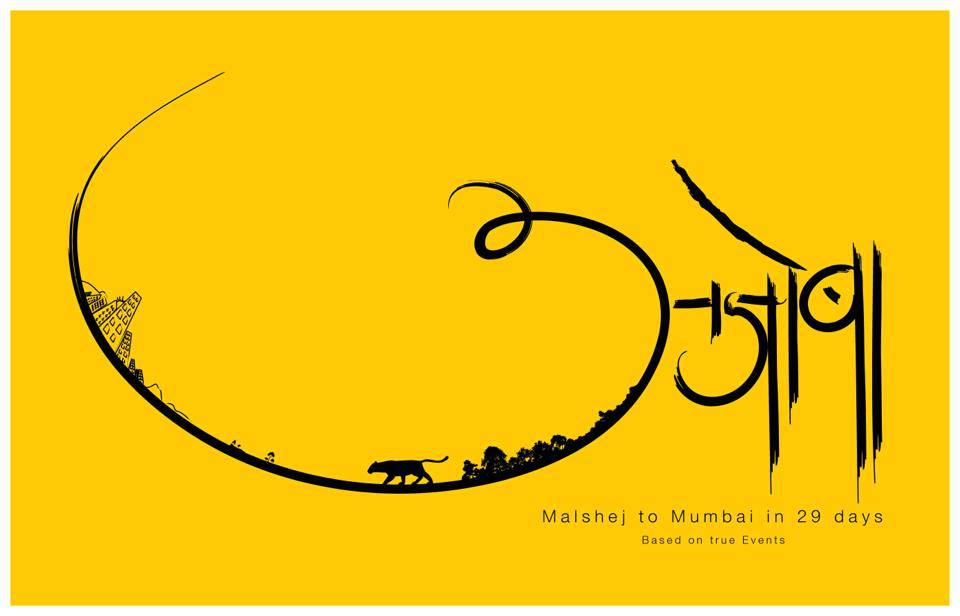
AjobaAt 25, Sujay Dahake made an assured debut with his nostalgia-dipped Shala. We all loved the film, had recco-ed it (here) and did a podcast with the director (here). The film was lying in cans for sometime, got a limited release initially and then went on to become critical and commercial hit.

Sujay is back with a new film titled Ajoba. The first trailer of the film is just out. Based on real events, it stars Urmila Matondkar and Yashpal Sharma. Have a look.

It looks so interesting but more than a trailer it looks like a short film. What do you guys think? Do comment and let us know.

And here’s the official synopsis –

Big Cat’s Big Adventure. Malshej to Mumbai in 29 days: Ajoba the leopard’s ambitious trek. Ajoba was rescued from a well and a tracking device was fixed on his neck, before being released back into the wild. He turned out to be one adventurous cat, as he made his way to Mumbai over the Sahyadris, i.e a cool 120kms.

– To know more about the film, click here for its FB page.