KAUFMAN - "Or cramming in sex, or car chases, or guns. Or characters learning profound life lessons. Or characters growing or characters changing or characters learning to like each other or characters overcoming obstacles to succeed in the end. Y'know ? Movie shit."
Kaufman is sweating like crazy now. Valerie is quiet for a moment - from "Adaptation".
We are all about CINEMA. That movie shit.
NOTHING is sacred.
NOBODY is spared.
Because we talk about films, dammit.
Not your sex life.
Films, fests, unsung, indies, undiscovered - all that and some fun. If you have dope on anything related to cinema or you would like to share something, do write to us at moifightclub@gmail.com.
The views, opinions, reviews, articles, or positions, expressed by the authors and those providing comments are theirs alone, and do not necessarily reflect the views, opinions, positions or strategies of ANY OF THE EMPLOYERS, FRIENDS, RELATIVES, PR agencies, Production houses, Media group and such third parties associated with the authors. The latter make no representations as to accuracy, completeness, currentness, suitability, or validity of any information on this site and will not be liable for any errors, omissions, or delays in this information or any losses, injuries, or damages arising from its display or use.
In short, if you have an issue with us or any post we've written, write to us at moifightclub@gmail.com
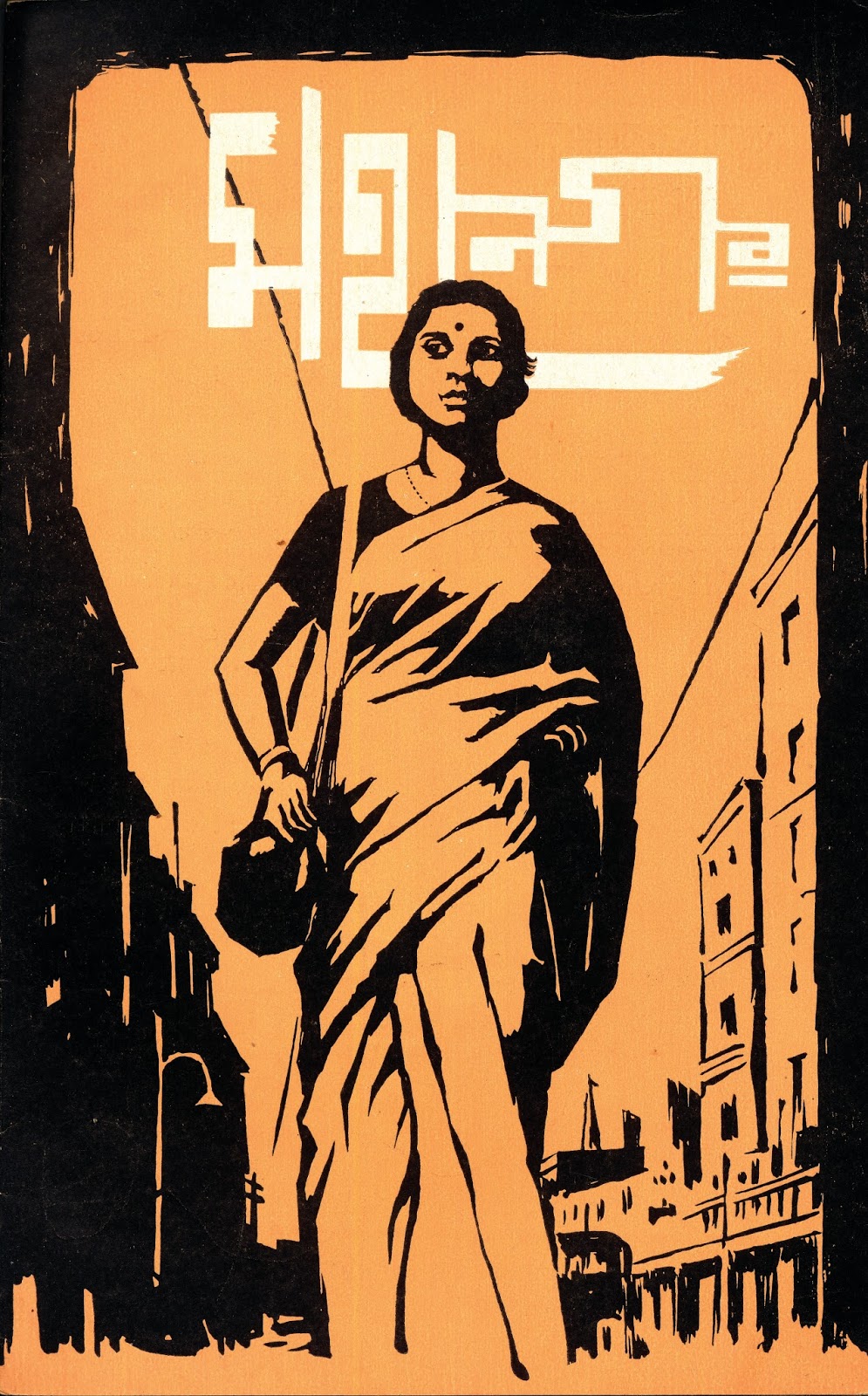
After releasing digitally restored classics like Jaane Bhi Do Yaaro, Salaam Bombay, Chashme Buddoor and Om Dar B Dar, PVR is releasing Satyajit Ray’s timeless classic Mahanagar (The Big City) on 18th April, 2014, under its PVR Director’s Rare banner.
The movie will release with English subtitles across Delhi, Mumbai, Kolkata Chennai, Bangalore, Pune and Ahmedabad. Mahanagar has been digitally restored by The RDB Organization under the leadership of Mr. Kamal Bansal.
Mahanagar was originally released in 1963 and Satyajit Ray won the Silver Bear at the 14th Berlin International Film Festival for it in 1964.
Whether you’ve seen it before or not, this is one unmissable big-screen event. Here are some good articles to bookmark and read on the this timeless and universal classic:
As we have said before, it’s a great time for desi documentaries. And while this one is not an Indian production, it does have a desi connection. Amma & Appa is a personal documentary about the cross-cultural marriage of director Franziska Schoenenberger and her fiancé and co-director Jayakrishnan Subramaniam. It was warmly received when it showed recently at the Berlin Film Fest in the Perspektive Deutsches Kino section. Check out the trailer and synopsis below:
Franziska comes from Bavaria and is in love with Jayakrishnan from southern India. When the couple decide that their love should lead to marriage and a life in Germany, both sets of in-laws find that cultural customs they took for granted are now suddenly subjected to scrutiny.
Whilst Franziska’s parents chose to marry of their own free will, the marriage of Jayakrishnan’s parents was arranged within their own caste, as is customary in Caddalore in southern India. As far as they are concerned, their son’s intention not only to marry a foreigner but to marry for love represents a cruel act of revenge on the part of the gods, since the match calls into question their whole traditional way of life.
Hoping to overcome cultural barriers, the parents of the Bavarian bride-to-be decide to travel to India to visit their future son-in-law’s parents. Interspersed with delicate animation sequences, Amma & Appa is a personal documentary which tells the story of one intercultural union — and in doing so humorously explores the familiar in the unfamiliar, and the unfamiliar in the familiar.
For more info on the film, check out the FB page or the website.
Some of us had the privilege of watching Nisha Pahuja’s critically-acclaimed, controversial and undoubtedly brilliant documentary “The World Before Her” last year, and had nothing but praise for it. In fact, we even wrote about it at length and put it on our Must Watch film recco list. We’re now delighted to announce that after having a theatrical release in US and Canada, and winning accolades and top awards in the prestigious International film festivals, the film will get a release in India via PVR Director’s Rare in 6 cities — Bombay, Delhi, Kolkata, Pune, Ahmedabad and Bangalore — on April 25. More about the film below.
Synopsis
The World Before Her tells the story of girls competing in the Miss India Pageant and those taking part in the VHP’s Durga Vahini camps. It is a tale of two Indias. In one, Ruhi Singh is a small-town girl competing in Bombay to win the Miss India pageant—a ticket to stardom in a country wild about beauty contests. In the other India, Prachi Trivedi is the young, militant leader of a fundamentalist Hindu camp for girls run by Durga Vahini, where she preaches violent resistance to Western culture, Christianity, and Islam. Moving between these divergent realities, the film creates a lively, provocative portrait of the world’s largest democracy at a critical transitional moment—and of two women who hope to shape its future. The film also features former Miss India Pooja Chopra who was a near victim of female infanticide. Watch the trailer below:
The writer and the director of the film, Nisha Pahuja who is the first filmmaker to get inside a Durga Vahini camp says,
“I am thrilled to finally present the film to audiences in India! Although we’ve had a great run with it abroad, I’ve always felt that it needs to be seen in India because it is first and foremost an Indian story. And sharing it now is key since women’s rights has become an issue that is front and centre in the public consciousness.”
The award winning film is shot by the ace cinematographer and FTII graduate, Mrinal Desai and Derek Rogers.
Apart from the theatrical release, the film will be screened in various cities, villages, schools and colleges across the nation as a part of its ambitious nation-wide campaign. The film is being shown at the prestigious educational institutes including Symbiosis, IIT and IIM institutes across the country. Joining the campaign are women’s rights activist and some of the incredible women featured in the film including the former beauty queen Pooja Chopra.
Awards and Accolades
The award winning film which premiered at Tribeca Film Festival in 2012 has been screened in more than 125 film festivals across the world and has won over 19 awards including best documentary feature at the Tribeca Film Festival 2012, best Canadian Feature, 2012 Hot Docs Film FestivaL, best Foreign Film, 2012 Traverse City Film FestivaL, best Canadian Documentary, 2012 Vancouver Film Critics Circle Awards. It was recently featured in the ‘Film Forward’ program of the prestigious Sundance film festival and was part of Indiana University Cinema program where Pahuja was invited to present and speak about the film along with other speakers including Meryl Streep, Abbas Kirostami and Roger Corman.
About the director
Nisha Pahuja is a freelance filmmaker, writer, producer, and researcher who was born in India, but grew up in Toronto. Her third film, The World Before Her won the World Documentary Competition Award at Tribeca Film Festival, where it premiered. Though she grew up in Toronto, this is her second film focusing on India. She makes films that deal with social and political issues and are driven by character and narrative.
For further information on the film please log onto the website.
It’s a great time for desi documentaries. In the recent past we have seen some pretty terrific ones- Malegaon Ka Superman, The World Before Her and Katiyabaaz to name just a few. Which is why it’s a pity that Nishtha Jain’s powerful documentary Gulabi Gang hasn’t quite got the audience it deserves- yet.
Perhaps the makers ought to have employed the Gulabi Gang themselves to whack our lazy, torrent-savvy audiences into theaters. 😉 The film is now running in its second week in a select few theaters/cities with ticket rates further slashed. There’s no good excuse to miss this one, really.
Anyway, here we have an interesting post by Prashant Parvatneni on Gulabi Gang and how genres usually associated with (fiction) cinema can find their way into the documentary format as well. Over to him:
Gulabi Gang by Nishtha Jain is undoubtedly a rigorous study of a women’s movement in the deep interiors of Bundelkhand where a group of women networked between several villages have formed a ‘gang’ to fight against the oppression of women and dalits. They drape themselves in Pink sarees and carry pink lathis that becomes an image of the identity that binds these women. There are complex issues that these women are dealing with and fighting. Young brides are being burnt, dalit activists murdered and certain high-caste Choudharies have concentrated all power in their hands suppressing any and every dissent using gun and muscle power. It is this nexus of power and oppression that the Gulabi Gang is trying to tear apart under their feisty leader Sampat Pal.
Sampat Pal inevitably becomes the ‘hero’ of this film, her infectious zest and fearlessness naturally grabs the attention and it’s hard not to root for her like we would for the angry underdog taking on the system in a Bollywood film. It only helps that Jain adopts a form of narrative that is simple in structure but quite inventive. It follows 2-3 cases that Gulabi Gang encounters and as it does so, quite curiously these cases turn to a kind of whodunit with the Gang acting as detectives trying to uncover the truth behind the violence inflicted on women.
Like in one of the cases, a young wife is found burnt inside the house. When Sampat reaches the spot, the in laws of the woman claim that she got burnt while making rotis but Sampat in true detective spirit, deduces that it cannot be a mere mishap. There wasn’t any stove at the spot, nor was any other part of the house burnt or even charred. Sitting in the audience even we also could start the process of knitting the clues together and deducing while also being acutely aware of entire machinery which includes the panchayat and the police trying to push this crime under the carpet. Sampat Pal’s own relative burns his wife but she wants the truth to come out. When the director’s voice asks her will you fight against your kin as well, she replies inspiringly ‘I just want to find out the truth’. Quite fittingly then, Anand Gandhi (director, Shipof Theseus) called this film a ‘reinvention of detective genre’.
This is a welcome change as the problem with most documentary films dealing with social evils, people’s movements, subaltern issues etc. is that they have sort of reached a saturation of form. While they do deal with a variety of issues, they follow the same old form – interview of key players, a bit of commentary, a bit of field action all merged seamlessly to ‘illustrate’ and ‘explain’ and thereby ‘document’ the problem. Such a form has turned even more uninteresting with its derivatives populating news channels through their ‘human stories’.
Thankfully the film doesn’t stop short of also pointing towards the limits of such genres that evidently end with a resolution a climax arrived at through carefully plotted series of events. Unlike in a detective genre film, we do not get to know whether the culprit was caught or not. Often the battles are lost and the guilty gets away. But like the truest of detective stories, the importance lies in questioning what one gets on face value rather than solving the puzzle and Gulabi Gang does point our attention towards the need to inquire and shakes up the static status quo.
Instead of a gradual convergence towards a resolution of problem, the film starts to spread in and out of such inquiries of cases and looks at the varied other forms of struggle that a people’s movement engages in – organization, activism, mobilization, planning etc. One of the most charming and equally thought provoking sequences involves the meetings and the practice sessions of the Gulabi Gang. As a ritual Gulabi Gang practices lathi fights with a playful zest as two women take on each other while others on the periphery cheer and clap. It quite casually points towards a ritual- even a ritual of violence (though more for protection in this case) that is involved in any people’s movement.
The entire movement also resembles a theatrical performance. There is backstage practice and rituals and there are costumes and props – the pink sarees and pink lathis juxtaposed against the dry, arid brown and gray landscape is an image that gives tremendous gravitas to the Gang and binds them into a community. In fact the saree and the lathi are the first things that are given to the women who join Gulabi Gang and they have to change into the ‘costume’ right away. There is a slightly comic cut in the film where we see Sampat Pal encouraging the mother of the burnt bride to fight her case and in the next shot the frail creature of the mother is draped in bright new pink saree as she is on her way to the court with the Gang. It’s a terrific reminder of how a bit of theatre and performance is a part of every movement or revolution. It also reminds us how such performativity can be appropriated for contradictory causes – for assertion of justice or for religious or political fanaticism.
Gulabi Gang ends with tragic human drama as the documentary manages to trace a character arc of sorts of one of the Gang’s members – Husna. Husna, a hardworking and passionate activist and member of Gulabi Gang takes a position completely contradictory to the movement when her own brother kills her sister for marrying out of love. When she supports him instead of condemning in the name of culture and tradition, one is hit by the extent to which such fundamental, patriarchal ideas can deride compassion and human justice and what a difficult battle Gulabi Gang is fighting – not just externally but internally. For me, the film was special because it shows how certain genres – like detective, political, social drama, human drama genres – can seep into documentary also; in-fact they come from the reality that the documentary often deals with. But, it also shows how cinema can avoid using genre as a trope and move in an out of genres to question the complexity instead of using such genre games to manipulate sentiment and to take an easy position of a sympathizer. The last sequence shows Gulabi Gang members waiting for a train on the platform and few men looking at these women clad in Pink Sarees with contemptuous humor. For them they look nothing short of fancy dress. One of the men asks the man who moves around with the Gang – ‘kuch milta hai issse’. The director shows amazing empathy here as she cuts to the image of Sampat Pal staring into the camera or perhaps into the far horizon, sitting amidst other women with eyes filled with acceptance of difficulty but shining with a rare honest hope. All the contempt of the scene just washes away and we are filled not with sentiment but with emotion – an unsaid but urgently felt hope and a desire at least to think.
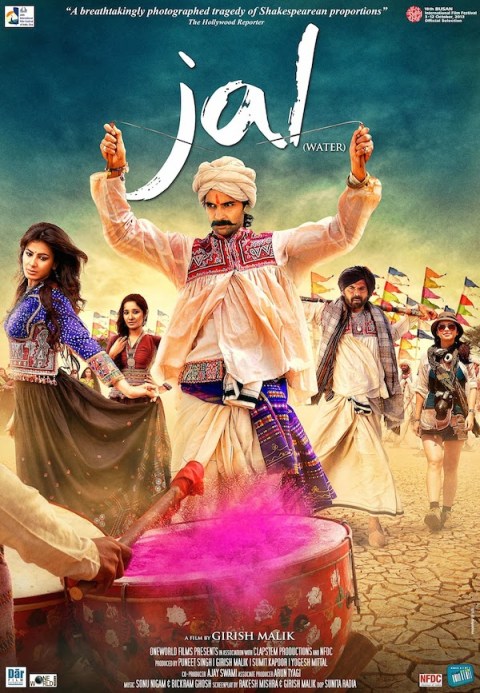
The trailer for ‘Jal’ came our way recently, and left us somewhat intrigued. Even if the prominent blurb by The Hollywood Reporter — “a breathtakingly photographed tragedy of Shakespearean proportions” — doesn’t catch your attention, the lavish photography will surely charm you. Water has been a contentious resource since ages — prompting anything from friendly neighbourhood quarrels to full-blown riots to inter-governmental conflicts. We hope this premise translates into a good film.
After having travelled the festival circuit last year — it was selected in the New Currents section at Busan International Film Festival 2013 and was screened in the Indian Panorama section at the International Film Festival of India (IFFI) — ‘Jal’ releases on March 21 across India.
Here’s the trailer of the film, followed by the synopsis:
‘Jal’ is a high-octane, action-drama about a young water diviner, Bakka, who is gifted with a special ability to find water in the desert.With the backdrop of water scarcity, the film tells a complex and intriguing story of love, relationships, enmity, deceit and circumstances that bring about the dark side of human character. It is a high-octane, action- drama with a shocking climax. Shot on an epic scale, the film is a visual treat and has managed to capture ‘Rann Of Kutch’ like never before.
Cast and Crew
Produced by ‘One World Films Pvt. Ltd’ and ‘Clapstem Productions’, the film is directed by Girish Malik starring Purab Kohli, Tannishtha Chatterjee, Kirti Kulhari, Saidah Jules, Mukul Dev, Yashpal Sharma, Rahul Singh & Ravi Gosain.
Quite interestingly, the music is by Sonu Nigam and Bickram Ghosh.
For those who wish to learn more, here’s a short interview of Girish Malik in which he speaks about his inspiration for the film, the idea for which had been brewing in his mind for 15 years.
As far as the reactions go, Imtiaz Ali’s new film ‘Highway’ is more or less on the same track like his last film Rockstar – completely divided between lovers and haters. And like last time, Ali was quite open and candid to discuss the strength and every weakness of the film, and took it all head on. We love and respect those filmmakers who are open to such dialogues. So thanks a lot, Imtiaz Ali. Whatever film you make, hope you remain like this.
We also hope more bollywood filmmakers will be open to such Q and As. Who really wants to read about the film pre-release, which is still quite the norm in the country. And post-release, they just vanish.
The film got over by 12:15 or so, and then the discussion went on till 2:30 am, and then it went on for some more time outside the theatre. It was great fun. Hope you guys enjoy the videos as much as we enjoyed the live session. Some questions might not be audible, so do use your headphones or speakers.
Thanks to PVR Andheri and Shiladitya Bora for helping us out with all the logistical support.
A brand-new teaser for director-cinematographer Santosh Sivan’s new film Ceylon (Inam in Tamil) has launched online. We don’t have details on the plot currently, but the film reportedly revolves around the lives of teenagers in an orphanage against the backdrop of war-torn Sri Lanka.
It’s an interesting, unconventional first look for the film, which doesn’t showcase any of the characters just yet, and instead chooses to show the destruction of war juxtaposed against nature, something Sivan is known to capture beautifully. Take a look:
The film stars Saritha, Karunaas, Sugandha Ram among others. Here are some of the crew details:
In what’s turning out to be a most heartening trend in recent years, yet another Indian film has made a name for itself at a prestigious International film festival. Avinash Arun’s directorial debut, the Marathi feature film Killa (The Fort) had its world premiere at the Berlin International Film Festival (better known as the Berlinale). The film was selected in the Generation Kplus competitive category and has won a Crystal Bear from the Children’s Jury and a Special Mention from the International Jury.
About the Prize
In the Generation Kplus section the jury members are no older than those of the audience. Eleven children and seven teens award the best films with Crystal Bears. Special Mentions are given for outstanding achievements. Two international juries present further prizes in the Generation Kplus and Generation 14plus competition.
The film received glowing reviews from both juries. The Children’s Jury, awarding the Crystal Bear said:
“This film convinced us in all respects: with his good camera work and the great actors, but also because of its incredibly beautiful nature images which blend perfectly with the music. This film made us all want to discover India.”
Interestingly, the film also received a Special Mention from the International Jury too:
“A beautifully photographed story about the challenges of being a boy. This film had wonderful pace and rhythm. Never reverting to clichés, the fresh performances left us feeling we were right there with the characters.”
About the Film
Coping with the recent death of his father, Chinu, 11- year old boy moves to a small Konkan town from a big city because of his mother’s job transfer. He finds it difficult to adjust to the new place and finds himself alienated and reluctant to open up to its people. Both Chinu and his mother grapple with their own individual struggles and anxieties in the new town. In the process, they emerge with newer experiences and as newer people, both healed and enriched.
Produced by Madhukar R Musle, Ajay G Rai, Alan McAlex under the banner, Jar Pictures and presented by M R Filmworks, the film was a part of NFDC Film Bazaar’s Work-in-Progress (WIP) Lab in 2013.
It stars Amruta Subhash, Archit Deodhar, Parth Bhalerao and Shrikant Yadav. Here are some stills from the film:
Killa
About the Director
Avinash Arun is a Director – Cinematographer from Maharashtra, India. Born in the textile town Solapur in 1985 in a middle class Maharashtrian family, he started assisting in FTII Diploma films at the age of 16. He eventually graduated in Cinematography from FTII in 2011. In 2010, his school project “The Light and Her Shadows” won him the cinematography award in Kodak film school Competition. His diploma film “Allah Is Great” was the official entry from India for Student Oscars. It also won several awards including the National award in 2012. Avinash has worked on “Kai Po Che!” (Berlinale Panorama section 2012), Deool (National Award winner 2011). Killa is his first feature film as director. He is also the cinematographer on this film.
Avinash has also shot Vasan Bala‘s short film ‘Geek Out’, which we’ve featured previously on this blog.
After the success of Pancham Unmixed, the National Award-winning film on RD Burman, filmmaker Brahmanand Siingh is now working on another feature length biopic, this time on legendary ghazal maestro, Jagjit Singh, titled “Kagaz Ki Kashti…”
“Kaghaz Ki Kashti…” is planned to be an evocative account of a down-to-earth small town boy from Rajasthan who became a legend in no time, but not without his share of struggle. In the process, the film will capture that extra something in his music that gave his compositions a certain polish and a soul at the same time which delighted millions of listeners across countries, cultures and age segments.
Through visual and sensory experiences, the film intends to take us on a journey of his choice of poetry — simple but touching world of Urdu lyrics that he chose to sing (sometimes nazms, sometimes ghazals), setting them to soulful tunes and introducing western instrumentation to make them textured, contemporary, and rich. The film will also take us back in time and trace the zigzag marathon run by a man with passion, fire, and soulful melodies within him, which kept him alight all through his luminous career as well as in some difficult personal times, all with a seamless and gripping narrative.
The lyrical film aims to use his music and the poems he chose to tell his own story of love and loss, of tribulations and triumphs. In the process, the film creates a warm portrayal of the man behind the visible, and the artist behind his creations.
Brahmanand’s previous film “Pancham Unmixed” went on to become a big success at film festivals and won two National Awards, among many others, and was a big draw at over 40 International film festivals.
– For all the updates on the film, click here to go to its FB page.
Avinash Arun’s directorial debut, the Marathi feature film Killa (The Fort) will have its world premiere at the upcoming Berlinal International Film Festival. The fest runs from February 6-16, 2014.
The film is selected in the Generation Kplus competitive category. IT stars Amruta Subhash, Archit Deodhar, Parth Bhalerao and Shrikant Yadav. Avinash has also shot the film.
Official Synopsis
Killa deals with the universal conflict of migration, and how it impacts the lives of people, especially children. The story revolves around a young boy Chinu who finds it difficult to adjust to his new surroundings where he has migrated to, after his father’s death. But gradually he makes new friends and gains more confidence.
Produced by Madhukar R Musle, Ajay G Rai, Alan McAlex under the banner, Jar Pictures and presented by M R Filmworks, the film was a part of NFDC Film Bazaar’s Work-in-Progress (WIP) Lab in 2013.
There are few other Indian films at this edition of Berlin Fest. Gaurav Saxena’s Rangzen will also have its world premiere in Generation Kplus. Imtiaz Ali’s Highway and Papilio Buddha (India/USA) directed by Jayan Cherian will be screened in the Panorama section. Lajwanti (The Honour Keeper) directed by Pushpendra Singh has been selected for Berlinale Forum which is for avant garde, experimental works, essays, long-term observations, political reportage and yet-to-be-discovered cinematic landscapes. Also, Berlinale Talent Campus has selected 3 Indians – Producer Sanjay Shah, documentary filmmaker Nishtha Jain and director/screenwriter Dipesh Jain. More details here.










 F.i.g.h.t C.l.u.b