Archive for the ‘Film Festival’ Category

Lunchbox

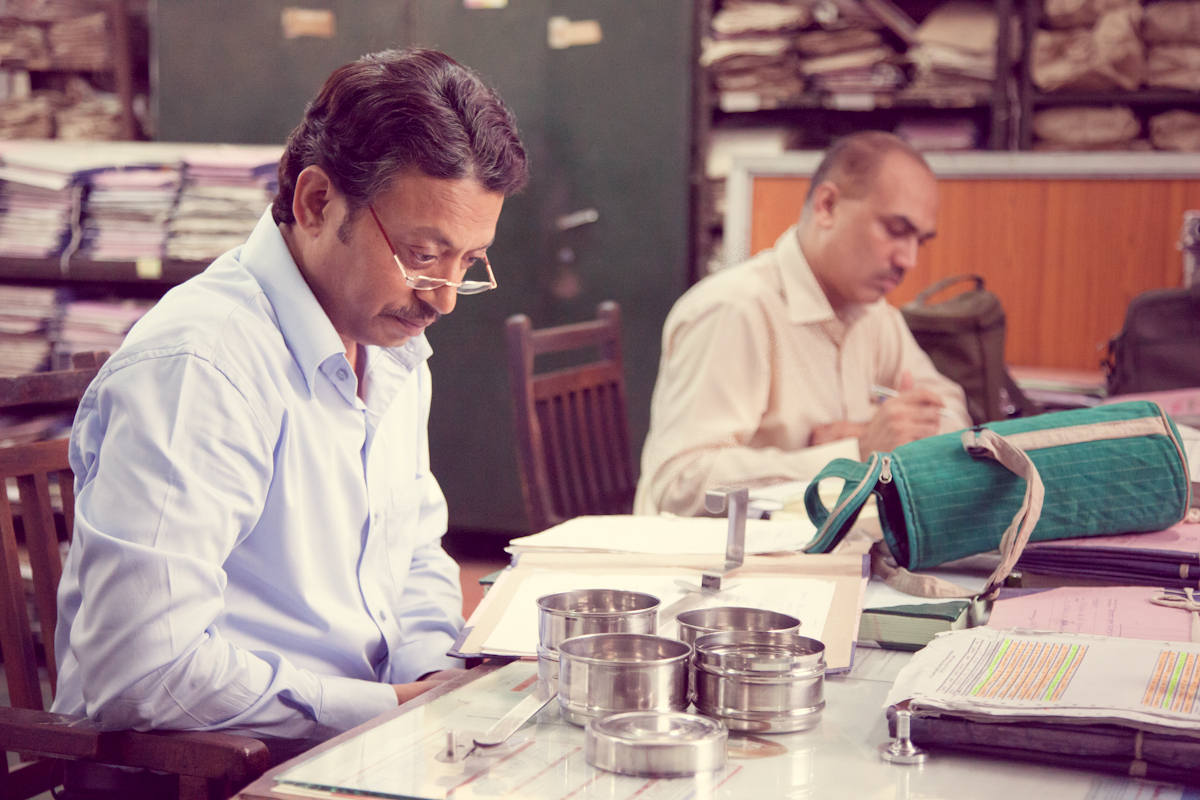
Here’s the good news about one of the best films of the year, The Lunchbox. Producer-director Karan Johar has come on board to present the film and it will be released by UTV on September 20th. This is exactly what we need – big faces should attach themselves with brilliant indies and make them reach the theatres. Otherwise distribution is a pain in the current scenario. After Kiran Rao came on board to help Ship Of Theseus’ release, this is another step in right direction.

Some of us have seen the film and let us assure that it’s a simple and solid film. Directed by Ritesh Batra, it’s not only one of the best debuts of the year, it also has two of the best performances of the year – Irrfan Khan and Nimrat Kaur.

– You can read more about “The Lunchbox” here (on Sony Classics deal) and here (all the Cannes buzz)

And now another bit of news – The Toronto International Film Festival has announced its first list of films selected for the 2013 edition of the festival. And two desi films feature in the list – Ritesh Batra’s The Lunchbox and Maneesh Sharma’s Shuddh Desi Romance. Here’s more on both the films (from the official release) :

The Lunchbox Ritesh Batra, India/France/Germany North American Premiere

– Middle class housewife Ila is trying once again to add some spice to her marriage, this time through her cooking. She desperately hopes this new recipe will finally arouse some kind of reaction from her neglectful husband. Unbeknownst to her, the special lunchbox she prepared is mistakenly delivered to miserable office worker Saajan, a lonely man on the verge of retirement. Curious about the lack of reaction from her husband, Ila puts a little note in the following day’s lunchbox which sparks a series of exchanged notes between Saajan and Ila. Evolving into an unexpected friendship between anonymous strangers, they become lost in a virtual relationship that could jeopardize both of their realities.

Shuddh Desi Romance Maneesh Sharma, India Canadian Premiere

– Shuddh Desi Romance follows a fresh and very real love story about the hair-raising minefield between love, attraction and commitment. A romantic comedy that tells it like it is, providing a candid look at the affairs of the heart in today’s desi heartland. Starring Rishi Kapoor, Sushant Singh Rajput, Parineeti Chopra and Vaani Kapoor.

Rome_header_Wide_new(from Official release)

WHAT – ROME FILM FESTIVAL
(FESTIVAL INTERNAZIONALE DEL FILM DI ROMA)
Calls for Entries in all categories for 2013.

Fest Dates – The 8th Rome Film Festival will run November 8 – 17, 2013.

Basic Criteria – Only films that will be world premieres at the festival will be considered for selection.

SECTIONS –  The Official Selection will present two competitive sections for International films

1) International Competition (16 films, presented as world premieres)

2) CinemaXXI (21st-century Cinema, a selection of films devoted to new trends in world cinema, which will welcome feature-length and short films presented as world premieres)

– And a choice of Out of Competition screenings (a maximum of 12 titles, presented as world, international and European premieres)

– Last year, ‘Tasher Desh’ by Q and ‘The Museum of Imagination’ by Amit Dutta were the films from India which had their world premieres in the CinemaXXI Competition Section.

AWARDS – The festival will give out more than 12 awards for World Cinema.

– Last year, more than 2500 members of the major press and media and more than 800 professionals from all over the world attended the event, which will take place in the screening venues of the renowned Auditorium Parco della Musica, the multi-functional public complex designed by Italian architect Renzo Piano. CinemaXXI program will be hosted in the nearby MAXXI, the National Museum dedicated to contemporary creativity, designed as a multidisciplinary space by Iraqi-British architect Zaha Hadid.

– Films will also be offered the possibility to participate in The Business Street (November 13-17), Rome Film Festival program dedicated to the circulation, acquisition and sale of audiovisual products, which will be hosted in the area of Via Veneto, the famous street of Rome that was portrayed in Fellini’s classic “La Dolce Vita” and it is known all over the world for its cafés, restaurants and shops. The Business Street offer includes screenings reserved for industry professionals, buyers and sellers.

Eligibility Criteria: All submitted films must be recent productions completed not prior to Friday, November 29th, 2012. They must not have been presented in any other format or length, not even as works-in-progress, for submission to previous editions of the Festival. Under no circumstances may films that have had prior public screenings, have participated in other international festivals or are available on the Internet, be presented at Rome Film Festival.

– To submit a film to the selection, one has to fill out a pre-selection entry form on the official festival website (www.romacinemafest.org).

– The preview DVDs should be sent to Deepti DCunha, the India Consultant to Artistic Director, Marco Mueller.

– The DVDs should reach her before 1st September 2013. Filmmakers with films in post-production are requested to contact Deepti at the address below.

– All submissions (duly subtitled in English) should be sent to the contact details given below before the 1st of September.

Deepti DCunha, 23 Gautam Niwas, 7 Bungalows, Andheri West, Mumbai 400 053, India

Email: deepti.dcunha@gmail.com or d.dcunha@romacinemafest.org

– For complete rules and regulations please visit the Festival website at www.romacinemafest.org

– The festival’s Director Marco Mueller will be visiting India at the end of August for the final selection of films.

FD

This one seems like a great and unique retrospective. Check out the details and if possible, do attend it. Copy-pasting the info from the official release. And the best part – Entry is FREE!

(from official release)

Retrospective of Indian cinema and video
28, 29, 30 June 2013
FD Zone, Films Division, Mumbai

Print Courtesy: DFF, FTII, SRFTI, NFAI, NID

ENTRY – All screenings are free!

CURATED by – Ashish Avikunthak & Pankaj Rishi Kumar

SCREENING SCHEDULE

Day 1 – 28 June, 2013, Friday

Session 1: Experiments with Gods 

10.00-12.30 pm
A collection of early films made by D.B. Phalke between 1913 and 1935.
Raja Harishchandra (20 mins, 35mm, 1913)
Lanka Dahan (9 mins, 35mm, 1917)
Shree Krishna Janma (6 mins, 35mm, 1918)
Kaliya Mardan (50 mins, 35mm, 1919)

Session 2: Experiment in the State

 1.15- 3.45 pm
The earliest robust experimentation in India begins under the imaginative tutelage of Jean Bhownagary while he headed the Films Division in 1965.
Explorer – Pramod Pati (7 mins, 35mm, 1968)
Claxplosion – Pramod Pati (2 mins, 35mm, 1968)
Trip – Pramod Pati (4 mins, 35mm, 1970)
Koodal – Tyeb Mehta (16 mins, 35mm, 1970)
Abid – Pramod Pati (5 mins, 35mm, 1972)
Child on a Chess Board – Vijay B. Chandra (8 mins, 35mm, 1979)
India ’67 – S. Sukhdev (57 mins, 35mm, 1968)

Session 3: Experiment in the School 

4.00- 6.45 pm
FTII became the centre of experimentation soon after it was headed by Ritwik Ghatak. Since then, along with SRFTI, it has continued to be a space where experimentation in cinema occurs on a regular basis.
Bodh Vriksha – Rajan Khosa (27mins, 35mm, 1987)
In Short – Kuntal Bhogilal (18 mins, 35mm, 1996)
Repentance – Rajeev Raj (22 mins, 35mm, 1997)
Chinese Whisper – Raka Dutta (27 mins, 35mm, 2006)
Airawat – Renu Savant (10mins, 35mm, 2011)
Moon Stars Lovers – Jessica Sadana (10 mins, 35mm, 2012)

Session 4: Feature Film 1 – Kanchan Seetha (87 mins, 35mm, Malayalam, 1977) by G. Aravindan

7.00- 9.00 pm
Ending the first day with Malayali Filmmaker Aravindan’s masterpiece Kanchan Seetha – an invigorating reworking of the Ramayana, which opens up a new discourse on Indian cinema and its interpretation of religion. This film is located here to be in direct conversation with Phalke’s cinema of religiosity.

Day 2 – 29 June, 2013, Saturday

Session 1: Experiment with the Documentary
10.00- 12.30 pm

Documentary has been a formidable cinematic form in India. Although most innovation has occurred in world of the political, it has also has seen serious experimentation.
I am Twenty S.N.S. Sastry (20 mins, 35mm, 1967)
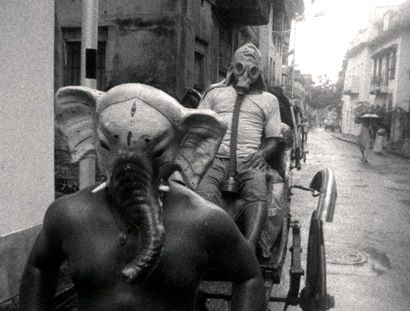
Tales from Planet Kolkata – Ruchir Joshi (38 mins, 16mm, 1993)
Brahma, Vishu, Shiva – R.V. Ramani (19 mins, video, 1999)
Presence – Ekta Mittal & Yashaswini B. R.- Behind the Tin Sheets Project (18 mins, HD, 2012 )
Nayi Kheti – Pallavi Paul (11 mins, HD, 2013)

Session 2: Experiments with the Short Film

Saturday, 1.15- 3.45 pm
This section focuses on films that were made outside the institutional framework of the state or the school and can be understood as independent experimentations, especially focusing on the short form.
Nirjan Godhuli – Santosh Gour (10 mins, 16mm, 1993)
Dust – Ashim Ahulwalia (20 mins, Video, 1993)
Atreyee – Shumona Goel (17 mins, Video, 2003)
Straight 8 – Ayisha Abraham (17 mins, Video, 2005)
Bare – Santana Issar (11 mins, Video, 2006)
Jan Villa – Natasha Mendonca (20 mins, HD, 2010)

Session 3: Experiments in the Gallery

4.00- 6.00 pm
In the last decade, the Art Gallery has become a vibrant space for exhibiting moving images mostly in the form of video art and installations. This section attempts to grasp with this new space of experimentation. It has been co-curated by Mortimer Chatterjee.
Record/Erase – Nalini Malani (10 mins, Video, 1996 )
Flight Rehearsals – Kiran Subbaiah (7: 26 mins, Video, 2007)
Dance Like Your Dad – Hetain Patel (6:15 mins, Video, 2009)
There is a spider living between us – Tejal Shah (7 mins, Video, 2009)
Man Eats Rock – Nikhil Chopra & Munir Kabani (22:11 mins, Video, 2011)
The First Dance – Hetain Patel (7:44 mins, Video, 2012)
Forerunner – Sahej Rahal (12:16 mins, Video, 2013)
File not Found – Jaret Vadera (1 min, Video, 2013)

Session 4: Feature Film 2 – Satah Se Uthata Aadmi (114 mins, 35mm, Hindi, 1980) by Mani Kaul

6.30-8.30 pm 
Mani Kaul is known mostly for his landmark film Uski Roti. However, the Satah Se Uthata Aadmi is probably his most conceptually rigorous and philosophically penetrating work. Based on the writings on Muktibodh, this film is a deep philosophical articulation on post-colonial modernity.

Day 3 – 30 June, 2013, Sunday

Session 1: Experiments with Animation

10.00- 12.30 pm
Co-curated by Nina Sabnani, this section examines experimentation in the world of animation. We shall look at the way in which animation directors have pushed the boundaries and expanded its scope in process, materials, concepts and its functions.

Session 2: Cinema of Prayoga

1.30- 4pm 
The invocation of “prayoga” from Sanskrit etymology is Amrit Gangar’s radical move of rejecting the Western art historical terminology of experimental and avant-garde to explain the specific nature of experimentation in Indian cinema. This section has been co-curated by Amrit Gangar.
And now i feel i don’t know anything – Kabir Mohanty (35 mins, 35mm, 2001)
Egotic World – Vipin Vijay (21 mins, 35mm, 2002)
Kramasha – Amit Dutta (22 mins, 35mm, 2006)
Vakratunda Swaha – Ashish Avikunthak (22 mins, HD, 2010)
21 Chitrakoot – Sambhavi Kaul (9 min, HD, 2012)

Session 3: Feature Film 2- Kaal Abhirati (120 mins, 35mm Bengali, 1989) by Amitabh Chakraborthy

4.15- 6.30 pm 
This is a significant film of this era that explores the complexities of human existence within the confines of Indian philosophy and discourse. This film, along with Kamal Swaroop’s Om Dar Badar, is the link between experimentations by Mani Kaul and Kumar Shahni and contemporary articulations by the ‘Cinema of Prayoga’ filmmakers.

Session 4: Round Table Discussion

6.45- 8 pm 
The curators along with filmmakers, discussants and respondents will have a Round Table conversation teasing out and putting on the board the major points/ issues /debates that have been brought out in these three days.

VENUE
RR Theatre, 10th floor, Films Division
24, Pedder Road, Mumbai – 400026

– The exhibitional emphasis of this retrospective has been to show almost all the works in their original format – 35mm, 16mm and digital video.

If you want to know more about this retrospective, keep reading.

– FB page of the event is here.

CURATORIAL CONCEPT

This retrospective is a celebration of the spirit of experimentation in Indian cinema; from the moment of its mythic birth in 1913, with Phalke’s Raja Harishchandra, to the innovative and challenging moving images produced and exhibited today. The films brought together chart the transformation of experimentation, from early celluloid spectacle to contemporary digital adroitness. The curatorial impetus of this retrospective is marked by an emphasis on tracing the chronology of experimentation through the history of Indian cinema. It halts at pit stops of radical moments of experimentation and underscores it.

The idea of ‘experimentation’ rather than the experimental or avant-garde drives the films put together in this retrospective. The conceptual rubric of this ‘experimentation’ traces its theoretical genealogy from Gandhi’s “Experiments with Truth” rather than the Western art historical lineage of experimental or avant-garde. Although these terms are temporally analogous to the 1920s and have an aesthetic origin, experimentation in Gandhi has a metaphysical, self-reflexive and ontological root.

In this retrospective, experimentation is viewed as a philosophical response to colonial and postcolonial modernity in India. These films challenge modernity by generating a contemplative dialogue with Indian history, tradition, culture and religion. Experimentation then becomes a dexterous rejoinder, like Gandhi’s experiments that rupture the trajectory of modernity. These are careful, controlled and meticulous interventions in the world of cinematic modernity, than fortuitous laboratory experiments. These films are not driven by the desire to just produce an aesthetic artifact, but rather to create a discursive field. Here, corresponding to Gandhi’s “Experiments with Truth” cinema is an engagement with the self, located in the world.

RETROSPECTIVE PROGRAM
The retrospective begins by underscoring that the moment of birth of Indian cinema with Phalke was the first experiment – the “Experiments with Gods”. The kinesthetic employment of the divine sparks a birth of a representation medium in India that catapults modernity and tradition into a cinema of religiosity – a dominant form of cinema of the silent era. Here, the cinematic apparatus becomes a technological conduit, comparable to the oral, the visual and the written, for the manifestation of that religiosity.

It was more than 50 years later that the first experimentation occurred within the bureaucratic confines of the post-colonial Films Division in the late 1960s. These films challenged the formidable account of the sturdy developmentalist state and shattered its edifying edifice. These were the first cinematic critiques of the nation – forthright, trenchant and angry. S. Sukhdev, Pramod Pati, S.N.S Shastry and K.S. Chari among others, radically altered the possibilities of cinematic representation in India.

Soon the films funded by Film Finance Corporation (later NFDC) ushered the much-celebrated rise of the Indian New Wave. Mani Kaul’s Uski Roti (1969) and Kumar Shahani’s Maya Darpan (1972) spearheaded profound experimentation in this period. However, the foundation of this continued experimentation was first established in the venerable FTII under the tutelage of Ritwik Ghatak. The section “Experiment in School” is a small curatorial gesture towards the pioneering works produced in its confines along with the later established SRFTI.

Just like the narrative feature, documentary, short film and animation were also formidable sites of experimentation. There are sections devoted to each of these forms in this retrospective that will showcase some of the most cutting-edge works made in recent times as well as in the past. The films in these sections push the boundaries of form and structure in a direction not seen earlier; like the enlivening usage of found footage or the construction of disjunctural narrative structures. Films were not only made with state funding, but also by filmmakers who were outside institutional settings.

In the last decade, the meteoric rise of contemporary Indian art along with the technological democratization of video has allowed for a productive intersection. Now galleries and museums have become fecund locations of experimentation in moving images. The section “Experiment in the Gallery” focuses on both established as well as emerging artists experimenting with digital video and specifically showing in the gallery/museum context. The works selected here are particularly single-channel works that also have exhibitive possibilities outside of the installation context.

Finally, the emergence of the term ‘Cinema of Prayoga’ coined by Amrit Gangar to challenge the hegemonic category of the experimental and avant-garde. It has been one of the most significant moves in the history of Indian cinema. The term ‘Prayoga’ in “Cinema of Prayoga” is in conversation with the Western art history term ‘experimental’, by unequivocally critiquing it. Simultaneously, it argues for a new imagination for comprehending idiosyncratic cinematic practices in India. It signals the conceptual inadequacy of the term ‘experimental’ and at the same time opens up a richer discourse to understand what is happening in India. It roots its discursive imagination within the world of Indian philosophical theories that accentuate temporal probabilities.

RETROSPECTIVE STRUCTURE 

This retrospective is conceptualized as a conversation with cinema, cinematic experience and cinematic thought. The curators hope that the three-day festival will provide opportunities for thinking through the nature of experimentation in Indian cinema in a historical fashion – the transformation of form and structure through time. The conceptual tension of terms like experimentation, experimental, avant-garde and Prayoga hope to be debated upon and thought through.

It also responds to the careless and ahistorical usage of the term ‘experimental’ in media and popular culture. It delineates a clear genealogy of experimentation and creates a lineage. More than a curatorial assertion, this retrospective is a historical framing of experimentation in Indian cinema. It builds upon the pioneering work of curators like Shai Heredia and Amrit Gangar, who have in the past decade signaled a robust nature of experimentation in Indian cinematic modernity.

As a disclaimer, it should be noted that this not a comprehensive historical delineation of experimentation in Indian cinema. Some key and very important works by filmmakers like Mani Kaul, Kumar Shahani, G. Arvindan, John Abraham are missing because the curatorial emphasis has been on showing rarer, and unseen films rather than known masterpieces.

The various sections of this retrospective are not mutually exclusive. Some films and filmmakers can exist in more than one section if not multiple. The quantum of experimentation in Indian cinema is multifarious; therefore as a curatorial policy we have decided to show only one film by a contemporary filmmaker. Due to time constraints, we have focused on shorter works rather than epic and longer works which are equally important. Here it is imperative to mention films by Amar Kanwar, Arghya Basu, Kabir Mohanty, and feature length narratives by Amit Dutta, Vipin Vijay and Ashish Avikunthak.

We would also like to note that the curatorial ambitions of this retrospective have been thwarted due to the lack of original prints for exhibition of some films that we would have liked to show. Here we would specifically like to name Kamal Swaroop’s Om Dar Badar (1988), S. N. Dheer’s Pratishodh (1982), Vishnu Mathur’s Pahela Adhyay (1981) and Nirad Mahapatra’s Maya Miriga (1983).

– The exhibitional emphasis of this retrospective has been to show almost all the works in their original format – 35mm, 16mm and digital video.

The office of the Director-General of Films Division who have artfully negotiated the bureaucratic maze of the Indian government to get us these prints have made this retrospective possible. We take this opportunity to thank them. We would also like to thank the National Film Archive, Pune, Directorate of Film Festival Delhi, Film & Television Institute of India, Pune Satyajit Ray Film & Television Institute, Calcutta and National Institute of Design for loaning us the prints for this retrospective.

CURATOR BIOGRAPHIES
– Ashish Avikunthak is a filmmaker, film scholar and anthropologist. He has been making films for the past eighteen years and his films have been shown in film festivals and museums worldwide. He is an Assistant Professor in Film Media at the University of Rhode Island and has a PhD in Cultural Anthropology from Stanford University.

– Pankaj Rishi Kumar is a graduate from FTII who began his career as an assistant editor on Sekhar Kapoor’s Bandit Queen. He has been working as a documentary filmmaker for more than 20 years and his work has been shown at festivals all over the world. He has won grants from Hubert Bals, IFA, Jan Vrijman, AND (Korea), Banff, Majlis, Sarai and Pad.ma and was awarded an Asia Society fellowship at Harvard Asia Centre (2003). He also teaches and curates.

Other Screenings

6th July : To Let The World In, Volume 1 by Avijit Mukul Kishore
13th July : To Let The World In, Volume 2 by Avijit Mukul Kishore
20th July: BIDESIA in BAMBAI by Surabhi Sharma

Lunchbox

Aha, this is what you call a break out film. First, premiere at Cannes Film Festival in International Critics Week. Followed up by rave reviews. Then the Grand Rail d’Or Award. And now, the big news – Sony Classic Pictures picks up the US rights of the film.

According to this report in Variety,Sony Pictures Classics has acquired all U.S. rights to Ritesh Batra’s feature debut “The Lunchbox”,  a Cannes Critics’ Week standout.

Copy-pasting excerpts from the report…..

Repped by Germany’s The Match Factory, the Mumbai-set crowd-pleaser got a standing ovation following its Cannes unspooling.

At Cannes, SPC also acquired all U.S. rights to Iranian helmer Asghar Farhadi’s Paris-set drama “The Past,” starring Berenice Bejo and Tahar Rahim, which is vying for a Palme d’Or.

SPC has a strong track record when it comes to acquiring foreign arthouse films with strong Oscar potential. Last year, it nabbed Michael Haneke’s “Amour,” which was nominated for five Oscar nods and won best foreign-language film.

Gaul’s Happiness Distribution also picked up ”Lunchbox.” It is one of four Indian entries that bowed at Cannes, which is celebrating 100 years of Indian cinema.

No wonder many critics already termed it as a film with crossover appeal. Click here to read the reviews here.

The Lunhcbox.jpg large

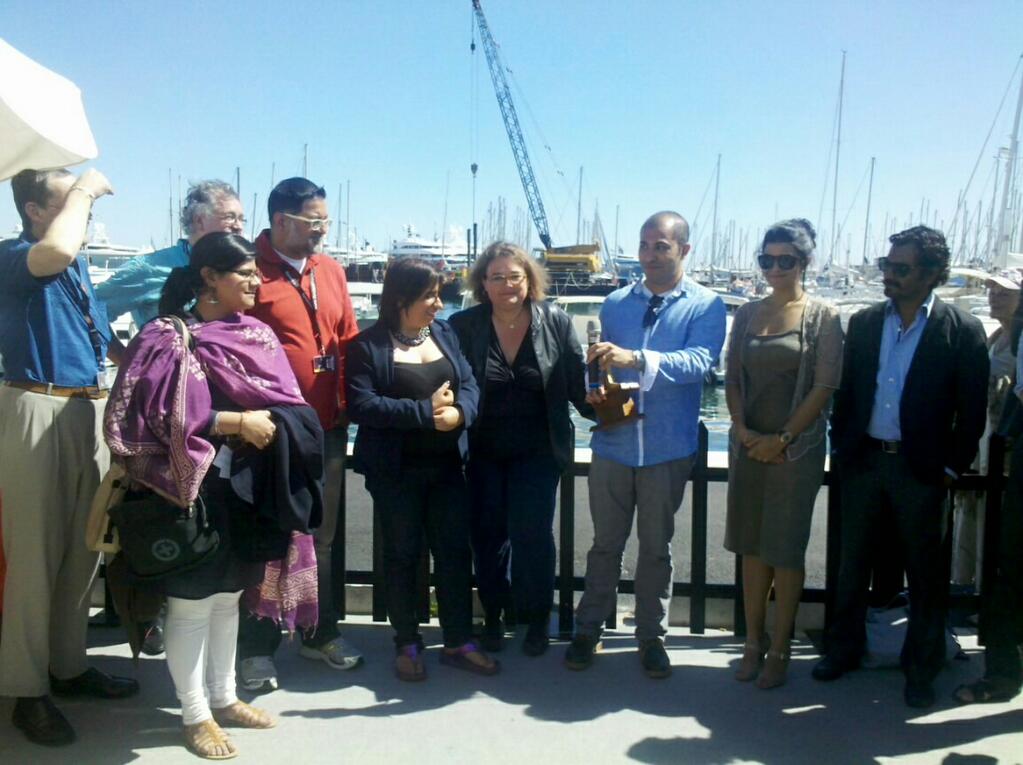
Also, the film recently bagged the Grand Rail d’Or Award at Cannes.  According to DearCinema, since 1995, a group of rail worker film enthusiasts presents the Golden Rail awards to two films in Cannes Critics’ Week: Petit Rail d’Or for best short film and Grand Rail d’Or  for best feature. So it’s kind of viewers choice award.

Written and directed by Ritesh Batra, the film stars Irrfan Khan, Nimrat Kaur, Nawazuddin Siddiqui, Denzil Smith and Bharati Achrekar. To read its official synopsis and full cast/crew details, click here.

Ritesh Batra’s The Lunchbox (Dabba) and Amit Kumar’s Monsoon Shootout had their premiere screenings at the ongoing Cannes Film Festival. Lunchbox is selected in International Critics Week section and Monsoon Shootout had a midnight screening. Some early reviews of both the films have been pouring in. For curious folks like us, here are the excerpts and links to the reviews.

Variety review is here

A feel-good movie that touches the heart while steering clear of expectation, “The Lunchbox” signals a notable debut from tyro helmer-scripter Ritesh Batra. The ingredients on their own are nearly fail-proof, yet it’s the way Batra combines food with an epistolary romance between a nearly retired number cruncher and a neglected wife that hits all the right tastebuds. An indie Indian pic with the crossover appeal of “Monsoon Wedding,” it’s sure to be gobbled up by audience-friendly fests before heading into niche cinemas.

Screen Daily review is here

A wistful, elegant love story played out across the streets of Mumbai, The Lunchbox is an unexpectedly aromatic charmer from first-time film-maker Ritesh Batra. Eschewing the pitfalls of what appears, on face value, to be a highly schematic set-up, Batra infuses his film with warmth and humanity, while cameraman Michael Simmonds steps up to deliver delicate visuals of modern Mumbai.

Film Business Asia’s review is here

There’s hardly a shot, line or gesture out of place in The Lunchbox, a hugely impressive feature debut by Mumbai-born, partly New York-based Ritesh Batra that starts out like a foodie film but spins a simple idea into a whole mini-universe of feelings.

– To watch the presentation ceremony video, click here

– To watch Ritesh Batra’s interview, click here

– Two clips from the film

Cast and crew list

Directed, written by Ritesh Batra.
Camera (color, widescreen) – Michael Simmonds
Editor – John Lyons
Music – Max Richter
Production designer – Shruti Gupte
Costume designer – Niharika Bhasin Khan
Sound (Dolby Digital) – Michael Kaczmarek, Ramesh Birajdar, Joerg Theil, Tom Korr
Line producers – Meraj Shaikh, Smriti Jain
Assistant director – Prerna Saigal
Casting – Seher Latif.
Cast – Irrfan Khan, Nimrat Kaur, Nawazuddin Siddiqui, Denzil Smith, Bharati Achrekar, Nakul Vaid, Yashvi Puneet Nagar, Lillette Dubey

And here are the reviews of Amit Kumar’s Monsoon Shootout.

Peter Bradshaw’s review is here

It’s a moody, broody downbeat drama for most of the time, a rainy noir. But along with the plot trickery, there are some unexpected turns…..It’s an entertaining popcorn-movie with a twist, for which commercial success is on the cards. There should be space for pictures like it in Cannes.

The Hollywood Reporter review is here.

A cunningly intricate first film from India, Monsoon Shootout combines the best of two worlds – a ferocious Mumbai cops and gangsters drama, and a satisfyingly arty plot that turns in on itself to examine the outcome of three possible choices a rookie cop might make when he confronts a ruthless killer. Three times the story returns to a key moment: a boy with a gun uncertain whether to pull the trigger. Though the idea of Dirty Harry meeting Sliding Doors may sound abstract, writer-director Amit Kumar pulls it off gracefully, without losing the sense of heightened drama that earned the film a Midnight Movie slot in Cannes. The Fortissimo release should make good headway in territories open to India and exotic genre fare and put Kumar on festival radar.

Screen Daily review is here.

Serving up a portion of Rashomon with a side of Sliding Doors, this tasty Mumbai crime story offers multiple outcomes of one fateful decision in a rookie cop’s professional life. Though it sounds like a potentially experimental premise, Monsoon Shootout is a glossy ethical drama designed to appeal equally to more upscale Indian audiences and worldwide genre fans.

Film School rejects review is here

The Upside: Nicely photographed; boasts decent enough lead performances, specifically the presence of Thapa as Adi’s beau; sound editing is also strikingly effective

The Downside: Aspirations towards existentialism don’t pay off well because it lazily recycles some grand ideas, but without the same level of ingenuity and entertainment value; atrocious editing stifles the action beats, which are themselves too sparse and brief to satisfy.

Here’s the Variety review:

“Monsoon Shootout” is a racy mash-up of Tarantino-esque ultra-violence and-gritty but-hip contempo Indian actioners. Amit Kumar invests a schematic police-thriller structure with a compelling moral dilemma hinging on a standoff between a cop and his suspect.

And here’s the Rope of Silicon podcast on the film.

A look at the film:

Cast and crew list

Production companies: Yaffle Films, Sikhya Entertainment in association with Pardesi Films AKFPL, Dar Motion Pictures

Cast: Vijay Varma, Nawazuddin Siddiqui, Neeraj Kabi, Geetanjali Thapa

Director: Amit Kumar

Screenwriter: Amit Kumar,

Producers: Trevor Ingman, Guneet Monga, Martijn De Grunt

Co-producers: Anurag Kashyap, Arun Rangachari

Director of photography: Rajeev Ravi

Production designer: Mayur Sharma

Editor: Atanu Mukherjee, Ewa Lind

Music: Gingger Shankarv Sales Agent: Fortissimo Films

88 minutes

(Pics taken from various online sources/social media)

Update: TWITTER BUZZ…

Since reviews for Indian films are scarce, we decided to add some tweets into the mix.

On The Lunchbox:

THE LUNCHBOX (R Batra): Like a bonsai tree, modest but magnificent. Standout performances. Bit cloying, but only if you want to find faults. — @bgji May 20, 2013

A very well-deserved, sustained, standing ovation for The Lunchbox at Cannes. Congratulations, Ritesh!! — @Shripriya May 19, 2013

On Monsoon Shootout:

MONSOON SHOOTOUT is the ‘Choose Your Own Adventure’ of crime actioners. I’m not completely convinced, but I do respect the ambition. #Cannes — @RylandAldrich May 19, 2013

MONSOON SHOOTOUT (D-) 3 versions of the same story, except it’s not as the filmmakers abandon the logic of the conceit. Morally dubious too — @CSkinner May 19, 2013

MONSOON SHOOTOUT does somehow seem to have become the defining film of the Festival. #cannes2013 — @JonathanRomney May 18, 2013

MONSOON SHOOTOUT (A Kumar): Thoroughly ordinary. Heavy handed 3 pronged narrative structure/metaphor. More imagination re: Bombay, please. — @bgji May 19, 2013

Monsoon Shootout is the Sliding Doors of cop thrillers. Fleetingly entertaining but the alt-outcomes narrative wears thin… #Cannes2013 — @totalfilm May 19, 2013

Monsoon Shootout – 2/5. Slumdog Millionaire meets Run Lola Run (Run Slumdog Run?) in fecklessly bloodless gimmick thriller #Cannes2013 — @ShaunMunroFilm May 19, 2013

MONSOON SHOOTOUT is the Indian RUN LOLA RUN if RUN LOLA RUN were a predictable cop drama. #Cannes2013 #cannes — @FredTopel May 19, 2013

On Ugly:

UGLY (A Kashyap): A Blaft-like pulp thriller with @ankash1009 bravely pushing his style to the limits. Depressingly hilarious & brilliant. — @bgji May 18, 2013

And finally…

UGLY and MONSOON SHOOTOUT taught me not to be a person who works for, needs help from, or who is wanted by police in India. #cannes2013— @marshalclark) May 19, 2013

Jai Ho. 🙂

At the ongoing Cannes Film Festival, India has a much better presence this year compared to last few years. So we are back with our regular post to track all the Cannes buzz that the desi films are creating there.

Anurag Kashyap’s film Ugly had its screening in the Directors’ Fortnight section. Some of the early reviews are out.

– The Holly Reporter review is here

Kashyap’s nasty point is that, between violence, greed and corruption, just about no one is innocent in the end. Certainly all the characters are selfish beyond belief. This existential cynicism hits home in the horrific crime revealed in the last shot, But by that time, the emotions feel light years away.

– Translated text of French review on Telerama is here.

Heavy, unbearable. Surprising to the end, vitriolic portrait of contemporary India…

– Twitchfilm review is here

Really, the more divisive issue of the film will be the content itself, and audiences willingness to spend so much time watching greedy, ruthless and often idiotic people going from bad to bottom of the barrel. The ending may be a potential deal-breaker for some too, and while I can’t argue in detail without spoiling it, my sleep-deprived Cannes impression is that the haunting final shot effectively hammers home the moral center of the movie rather than functioning as the cheap, shock-value alternative. In fact, reflecting on the way Kashyap handled the rest of the film, specifically spurts of intentional violence, I do feel that there was a sympathetic voice in the film — it was just behind the camera instead of in front of it.

– The Hindu’s report on the film is here.

“The first 10 minutes of the film have to do with my own life when I depict the relations between the divorced father and his little girl. But the rest of the film came about after I read about the disappearance of children in India.

– Screendaily review is here.

After the five-and-a-bit-hour gangland epic Gangs Of Wasseypur, the godfather of the Indian commercial arthouse sector, Anurag Kashyap, serves up a slimline two-hour hard-boiled crime thriller with Ugly. But the running time is the only thing that’s restrained about this lazy kidnap caper, whose hints of Fargo, echoes of Old Boy and touches of Tarantino are compromised by the story’s sprawling lack of discipline.

Mubi’s short review is here.

The dissonance between the tone of the highly mobile plotting with its harsh and justified moral judgement of everyone in the film and the unconscious, conventionally acted characters break the film’s sinister, society-flailing vision. Thus Ugly‘s interest is more academic than actual—perhaps a failed experiment—and while its disappointing inconsistency instills dullness, it also provokes a strange and blistering series of events, each unfolding in shocking succession.

Directors Fortnight videos

Interview of AK

Q & A after the screening

The Hollywood Reporter on Kashyap getting the French honour Chevalier dans l’ordre des Arts et Lettres honour (Knight of the Order of Arts and Letters)

– Cast and Credit list from THR

DAR Motion Pictures presents a Phantom Films production

Cast: Ronit Roy, Rahul Bhat, Tejaswini Kolhapure, Anshika Shrivastava, Vineet Kumar Singh, Girish Kulkarni, Surveen Chawla, Siddhant Kapoor

Director: Anurag Kashyap

Screenwriter: Anurag Kashyap

Producers: Madhu Mantena, Vikas Bahl, Vikramaditya Motwane, Arun Rangachari, Vivek Rangachari

Co-producers: Vivek Agrawal, Shahnaab Alam

Director of photography: Nikos Andritsakis

Production designer: Mayur Sharma

Costumes: Divya Gambhir, Nidhi Gambhir

Editor: Aarti Bajaj

Music: Brian McOmber, G V Prakash Kumar

Sales Agent: DAR Motion Pictures, Mumbai

124 minutes.

(Pics – from social media/DF Facebook page)

For those who have been curious about Ritesh Batra’s Dabba, we have got the first look of the film. Here are some of the stills from the film which look really impressive. We do also have all the cast, credit and official synopsis details.

The film will have its international premiere at Cannes Festival in International Critics Week section.

(Click on any image to start the slide show in hi-res)

Though Nawaz was also in Paan Singh Tomar, but it looks like this film finally brings together two of the finest actors of our generation in full fledged roles. And is Irrfan Khan in Namesake avatar again? Bring it on!

Official Synopsis

A mistaken delivery in Mumbai’s famously efficient lunchbox delivery system connects a young housewife to an old man in the dusk of his life as they build a fantasy world together through notes in the lunchbox. Gradually, this fantasy threatens to overwhelm their reality.

Mumbai, a city of miracles.

One of Mumbai’s miracles is Mumbai’s Dabbawallahs – a community of 5000 dabba (lunchbox) deliverymen. It is a hereditary profession. Every morning the Dabbawallahs deliver hot meals from the kitchens of housewives to the offices of their husbands, and then return the empty lunchboxes back to the homes in the afternoon. For 120 years they have provided Mumbaikars with a taste of home in the office. They navigate through the overcrowded local trains and chaotic streets – that often have a namesake or more than one name. The Dabbahwallahs are illiterate, and instead rely on a complex coding system of colors and symbols to deliver dabbas in the labyrinth that is Mumbai. Harvard University analyzed their delivery system, concluding that just 1 in 8 million lunchboxes is ever delivered to the wrong address. Dabba is the story of that one lunchbox.

A mistakenly delivered lunchbox connects a housewife, Ila Singh, to Saajan Thomas, a lonely man in the dusk of his life. Ila lives in Dadar, the conservative middle class Hindu enclave. And Saajan lives in Ranwar village, Bandra, an old Christian neighborhood that is threatened by the new high rises in Mumbai. Very soon Saajan will retire and bid goodbye to a Mumbai that has crushed his dreams, took away his loved ones one by one, and turned his hair white. Just then Ila comes into his life. In the big city, that crushes dreams and recycles them every day, both find a dream to hold on to. Ila begins a fantastical affair with a mystery suitor, pouring her heart into cooking meals for him. And Saajan looks forward to lunch box deliveries from a mystery woman every day. They exchange notes via the lunchbox and create a fantasy life. As the lunchbox goes back and forth, this fantasy becomes so elaborate that it threatens to overwhelm their reality. The characters of The Lunchbox exist on the line between the Mumbai of reality and the Mumbai of fantasy.

The Lunchbox is the story of the life we dream of versus the life we live in, and of the courage it takes to turn out fantasies into reality.

Credits

director: Ritesh Batra
screenplay: Ritesh Batra
cinematography: Michael Simmonds
editing: John Lyons
sound: Michael Kaczmarek
production design: Shruti Gupte
music: Max Richter

Cast:
Irrfan Khan
Nimrat Kaur
Nawazuddin Siddiqui
Denzil Smith
Bharati Achrekar
Nakul Vaid
Yashvi Puneet Nagar
Lillete Dubey
Sada (Dabbawala)

The film is produced by Sikhya Entertainment (India), Dar Motion Pictures (India), and co-produced by National Film Development Corporation (India), ASAP Films (France) and Roh Films (Germany).

Btw, Michael Simmonds? The DoP of Ramin Bahrani’s films? Chop Shop, Man Push Cart, Goodbye Solo and Plastic Bag. That’s a great talent to have on board.

To know more about the film and the filmmaker, click here to read his interview on DearCinema.

Director

Ritesh Batra is a writer/director based in Mumbai and New York. In 2009, Batra was selected for the Sundance Writers and Directors labs for his feature project “The Story of Ram”. He was also named the Sundance Time Warner Storytelling Fellow and an Annenburg Fellow. He was part of the Graduate Film Program at New York University’s Tisch School of the Arts, from which he dropped out in 2010. His short films have been presented in many international film festivals and fine arts venues. His recent short “Café Regular, Cairo” was featured in the 2012 Inter- national Film Festival of Rotterdam and 2012 Tribeca Film Festival. His upcoming short ‘The State of Siege’ is currently in post-production.

His feature screenplay THE LUNCHBOX was part of the 2011 Binger-NFDC Screenwriting Lab, it won an Honorable Mention from the Jury at the 2012 edition of the Cinemart at the International Film Festival of Rotterdam and was part of the Berlinale Talent Project Market.

(Cast/credit/synopsis/Director’s bio taken from various co-producers’ site)

The Cannes Directors’ Fortnight section unveiled its official selection list today. And there’s one Indian film in the list – Anurag Kashyap’s Ugly. His two-parter Gangs Of Wasseypur was also screened in the same section last year.

An edge of the seat thriller, Ugly stars Rahul Bhatt, Tejaswini Kolhapure, Ronit Roy, Girish Kulkarni and Siddhant Kapoor.

Interestingly, five films which are going to Cannes this year has some kind of connect with Kashyap or his company, AKFPL. Ari Folman’s The Congress, Amit Kumar’s Monsoon Shootout and Ritesh Batra’s The Lunchbox – these three films have been co-produced by AKFPL. And Kashyap has directed one of the shorts in Bombay Talkies which is going to have its Gala premiere at Cannes.

Click here to know more about The Directors’ Fortnight section.

Dabba 2

The 52nd Cannes International Critics Week unveiled its lineup today.

Among the 11 features screening in the sidebar, which showcases first and second films, there’s one film from India – debutant director Ritesh Batra’s Dabba (The Lunchbox). The film stars Irrfan Khan, Nawazuddin Siddiqui and Nimrat Kaur.

And here’s the official synopsis from the site of one of the co-producers, Cine Mosaic

A mistaken delivery in Mumbai’s famously efficient lunchbox delivery system connects a young housewife to an old man in the dusk of his life as they build a fantasy world together through notes in the lunchbox. Gradually, this fantasy threatens to overwhelm their reality.

The Lunchbox is the story of the life we dream of versus the life we live in, and of the courage it takes to turn out fantasies into reality.

Apart from Dabba, Cannes will also screen Bombay Talkies and Monsoon Shootout.

Satyajit Ray

(from official release)

Satyajit Ray: The 21st Century Man

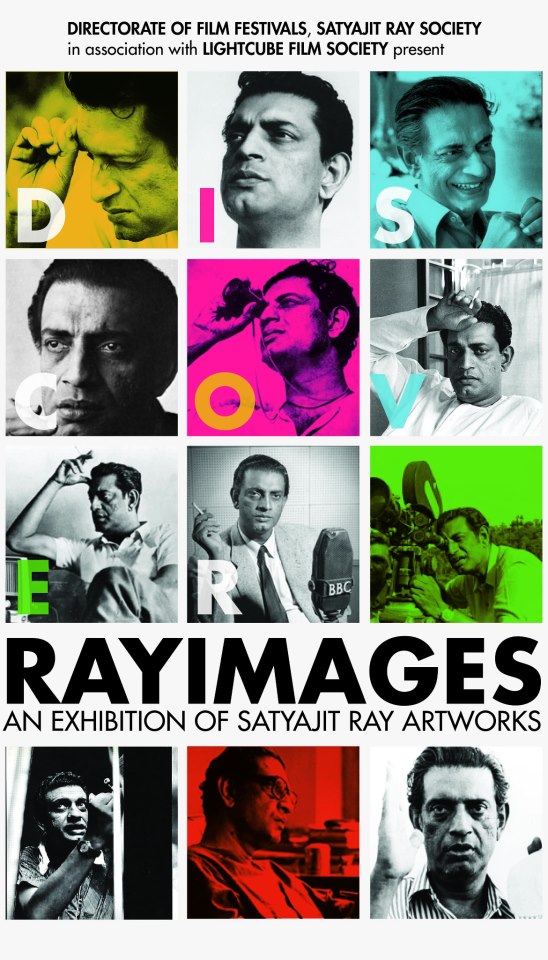
As part of the centenary year of cinema in India celebrations, the Directorate of Film Festivals, Satyajit Ray Society and Lightcube Film Society are working together to organise a Retrospective of the director responsible for more masterpieces than any other great in Indian cinema; illustrator, painter, visualiser, author, musician, photographer, film society activist and filmmaker, Satyajit Ray.

For long, Satyajit Ray’s been thought of as being symbolic of the ‘alternative’, or ‘the other’ – the notion that despite the existence of the bludgeoning mainstream industries across the country exercise almost vulgar control over markets and minds alike, there is still the possibility that a figure like Ray may exist and make films that resemble personal visions over forty years. In that, the existence of Satyajit Ray has throughout been of a figure who existed in spite of the system, instead of because of it – this evaluation of him as an artist whose being is carved out primarily through opposition or perversion is, however, terribly reductive and unmindful of the fact that after all, Ray films made not against someone, but in favour of the medium he so loved. To highlight Ray’s status as a cineaste and film-lover over his status as a ‘parallel filmmaker’, the Directorate of Film Festivals, Satyajit Ray Society and Lightcube Film Society are collaborating to organise a three-day long Retrospective of his work at Sirifort Auditorium, this runs from the 26th April to 28th April 2013.

– The Retrospective will feature both Satyajit Ray’s long-form work and his shorts, alongwith Mr. Shyam Benegal’s 1984 documentary on him, entitled Ray (this film opens the Retrospective).

– The vision behind the programming of the festival, where all films will be exhibited on 35mm, is to represent as a whole Ray’s career – both in terms of its various phases (from the autobiographical musings of the first era, to the politically charged films of the middle and his assimilation into the larger culture of the world in the final) and the various ideas contained within it.

– These films will be discussed at length in panel discussions that will feature close associates of Satyajit Ray, colleagues and members of the Ray Society who have worked actively for the past twenty years to preserve Ray’s artistic legacy.

– The screenings at the Retrospective will also be accompanied by an exhaustive exhibition which will have on display a  wide selection from Ray’s numerous artistic work, such as ad-artworks, book jacket designs, posters, booklets, set and costume  designs, sketches from shooting scripts, as also still photographs of people and places.

– The Retrospective runs as part of the Centenary year of Indian Cinema celebrations organised by the Directorate of Film Festivals.

DATE : 26th to 28th April 2013

VENUE : Sirifort Auditorium, New Delhi

ENTRY : Free

SCHEDULE :

Friday, 26 April 2013

2 pm: Satyajit Ray / Shyam Benegal

4:45 pm: Pather Panchali


Saturday, 27 April 2013

11 am: Jalsaghar

1.30 pm: Charulata

4 pm: Pratidwandi

7.30 pm – 8.30 pm: Dhritiman Chaterji, in a Q/A session with members of the audience; moderated by Shantanu Ray Choudhury.


Sunday, 28 April 2013

11 am: Rabindranath Tagore, Sadgati and Pikoo’s Diary

1:30 pm: Sonar Kella

3:45 pm: A multimedia presentation tracing the etymology/origins of Feluda, the character.

4 pm: Ghare Baire

6:25 pm: Panel Discussion: ‘On Ray’s Oeuvre’ featuring Mr. Dhritiman Chatterjee, Mr. Shantanu Ray Choudhury and Ms. Swati Joshi.

For inquiries, call: 011-7838340196, write to lightcubefilmsociety@gmail.com | satyajitraysociety@gmail.com