KAUFMAN - "Or cramming in sex, or car chases, or guns. Or characters learning profound life lessons. Or characters growing or characters changing or characters learning to like each other or characters overcoming obstacles to succeed in the end. Y'know ? Movie shit."
Kaufman is sweating like crazy now. Valerie is quiet for a moment - from "Adaptation".
We are all about CINEMA. That movie shit.
NOTHING is sacred.
NOBODY is spared.
Because we talk about films, dammit.
Not your sex life.
Films, fests, unsung, indies, undiscovered - all that and some fun. If you have dope on anything related to cinema or you would like to share something, do write to us at moifightclub@gmail.com.
The views, opinions, reviews, articles, or positions, expressed by the authors and those providing comments are theirs alone, and do not necessarily reflect the views, opinions, positions or strategies of ANY OF THE EMPLOYERS, FRIENDS, RELATIVES, PR agencies, Production houses, Media group and such third parties associated with the authors. The latter make no representations as to accuracy, completeness, currentness, suitability, or validity of any information on this site and will not be liable for any errors, omissions, or delays in this information or any losses, injuries, or damages arising from its display or use.
In short, if you have an issue with us or any post we've written, write to us at moifightclub@gmail.com
As this year’s Sundance selection list came out, a friend from Calcutta pinged me on whatsapp, and asked why am i not going to Sundance. I asked why. He said two new films of Philip Seymour Hoffman are premiering this year. I told him i am sending my man to get the job done. I was serious about it, but it was too early to let the news out.
A close friend and editorial team member of this blog, Neeraj Ghaywan, was selected to get the Mahindra Sundance Award. As our long chain mail between usual suspects went on and on about who wants what from Sundance – this bag, that merchandise, those liquor, that Quinoa, i said get me PSH. I never chase actors, they all are of the same breed, and mostly, boring. Have never bothered for anyone’s autograph or photograph – be it Hollywood or bollywood. It’s always the writers and directors whose tales attract me. But PSH was different. I reminded him again and again to get me his autograph on one of the posters of his new films. But if the film turned out to be bad? Well, it never mattered how the film was going to be. Because Hoffman was always great, in every bad film too.
Neeraj reached Sundance. Updated us about what he has got and what he hasn’t. I reminded him again – Get me PSH! He said he can’t find him. I joked how it is possible to not spot such a fat man. He can’t hide anywhere. I don’t know why i was insisting so much on getting his autograph this time. Because there have been few occasions in the past where i could have managed it. Always wanted it, and always thought i will manage it some day. So never pushed the way i did this time. Now, it all makes sense. Maybe that thing call intuition.
Few years back, as a friend updated me about how he came for the screening of their films at her film school in NY as he was executive producer on one of the shorts, i asked everything possible about him. As another friend saw one of his theatre act live, and narrated the experience, i would get gooseflesh imagining myself in place of him and thinking about his act in front of my eyes. Simply because he was one of my all time favourite actor. And one of the greatest actors of this generation.
It was Magnolia when i sat up and took notice of Hoffman’s talent for the first time. And then went back tracking him in all those small roles. The fat guy in supporting roles with hardly any screen time but making an impression in every role he portrayed – from Scent Of A Woman to Boogie Night, Hard Eight to Happiness. A drag act in Flawless to a suspicious act in The Talenetd Mr. Ripley. As he started getting noticed, meatier roles came his way, screen time increased, and so did his weight. And i always found that it worked in his favour. An actor so fat, it always made him look like he was one of us – not fit, never in perfect shape. Few actors are so fat. And among those, most just use their body as a prop for comedy. That’s the general routine. Fat actors in serious roles are a rare breed (Yes, Gandolfini too). A character actor who gradually when on to become the leading man with all his weight intact, he became my favourite fatso. In any conversation whenever we would talk about films and acting, i would call PSH exactly that – favourite fatso. It made me feel as if it was all cool and casual between us, as if i knew him well, and could joke about his weight like we do with close friends.
So when he portrayed any character, it just added a natural layer to it. He always looked like that distant uncle whom you are fond of, one who would give you a bear hug on a bad day, share a beer with you after yet another heart break, and will tell you stories about love, life and experiences of yesteryear.
When i watched him in Almost Famous, that was my first lesson in journalism – Be honest, and unmerciful. I thought was it really like that. Uncool? Few years later as i landed in bollywood, it turned out to be the ultimate truth. Just replace the rock scene with bollywood films. When i watched him down and out in Love Liza, i wanted to hug him and tell that his plane will fly the best. Whenever i have got angry on phone, i remember his SHUT UP, SHUT THE FUCK UP, SHUT SHUT SHUT SHUT SHUT SHUT UP in Punch Drunk Love, and have always felt shouting exactly like that. When he got his first sex scene with Marisa Tomei in Before The Devil Knows You Are Dead, i jumped with joy and shouted YAY! He finally got one. Fat man can fuck! Why should only the Greek Gods with bulging biceps get sex scenes in Hollywood. Graduating from a creepy phone sex to a real deal, i was the happiest as if a close friend of my just lost his virginity, and that too with Marisa Tomei. Only difference was this time it was on screen. And when i decided to learn swimming, many a times i would imagine that i will bump into Jack on the other end of the pool, struggling exactly like me as he did in Jack Goes Boating,
He made it difficult to believe that he wasn’t the real Dan Mahowny, or the real Truman Capote. And then came one of my favourite films starring Hoffman – The Savages. I saw my reflection in the role he portrayed, that bittersweet sibling equation, and it made me face my own fears. “Excuse me, we haven’t served refreshments yet” bit still brings a smile on my face. Watch this gem if you haven’t.
When the news came out of his collaboration with one of my favourite screenwriter, Charlie Kaufman, i tracked every possible news about it. The expectations were too high. The film left me bit cold with all its complexities, but i could not imagine any other actor who could pull that off with so much ease. He was the Caden Cotard who taught me what “Cotard’s Syndrome” is.
He held his own in front of Meryl Streep in Doubt, he made fat look cool in The Boat That Rocked. If i start counting all his films, the list is long – Charlie Wilson’s War, Moneyball, The Ides Of March, and one of the most powerful roles in recent times – The Master. The hypnosis he could do on screen always felt real. Has he ever done a film where you don’t remember him? Naah, i don’t recall.
As far as the autograph story goes, now it feels like Mary and Max story – an animation film which he voiced. There were no letters between us, i guess his films were enough. And like Mary, i also got bit late. Do watch this gem too if you haven’t.
Thanks for all the movies and the memories, PSH. I don’t understand actors. You were the one whom i really loved, respected, and was in total awe. It’s been 24 hours now, and it’s still difficult to believe that there won’t be any new film starring The Philip Seymour Hoffman.
(PS – As far as drugs go, we all got our demons to battle. Sometimes we win, sometimes they. It’s not a choice, and it’s not easy either. So keep your judgements for some other day, for some other things)
Thanks to PVR, we were running a contest for Inside Llewyn Davis. The ticket winners were announced on daily basis. The poster contest was aimed at having some more fun and for true lovers of the film.
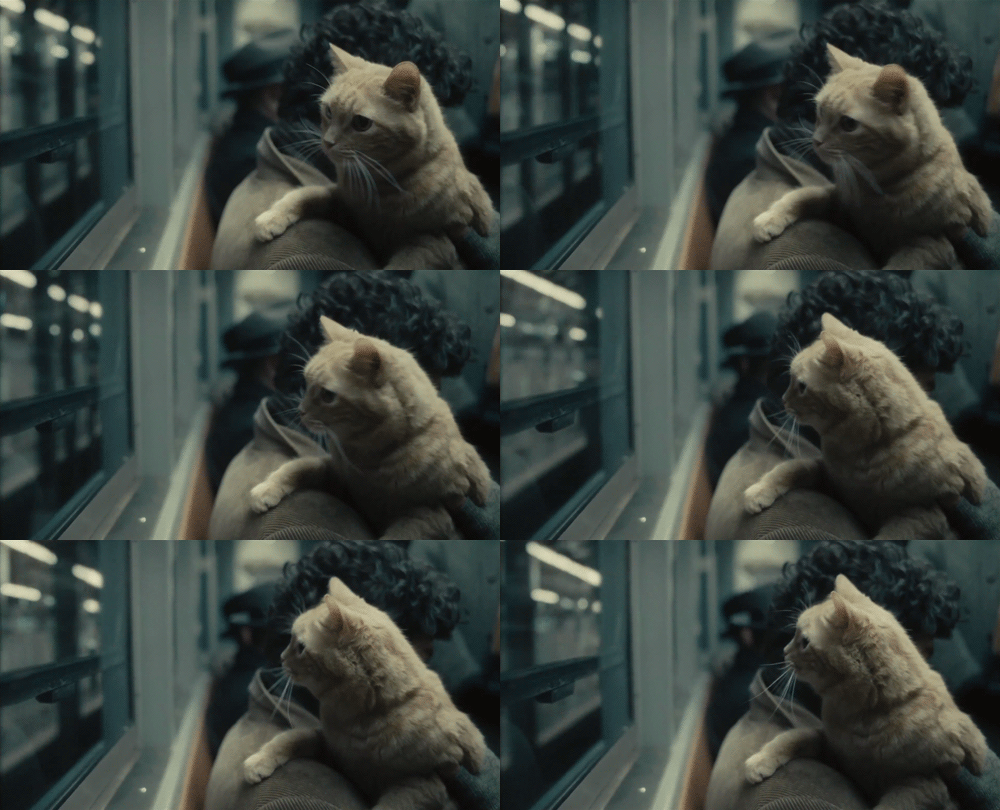
We asked people to pose like Llewyn Davis – with their cat, dog, parrot, snake, dinosaur, or any pet they have, and if nothing, props will also do. Some entries were genuine, some just copy-pasted from net (so no prize), and some for fun which have been sent by friends. We are sharing some of the pics here.
Click on any image to start the slide show. You can see the person’s name/handle on left bottom. Or just right click to open individual pics in new window, you can see the contributor’s name on top. or just hold the cursor on the pic, you can see the names.
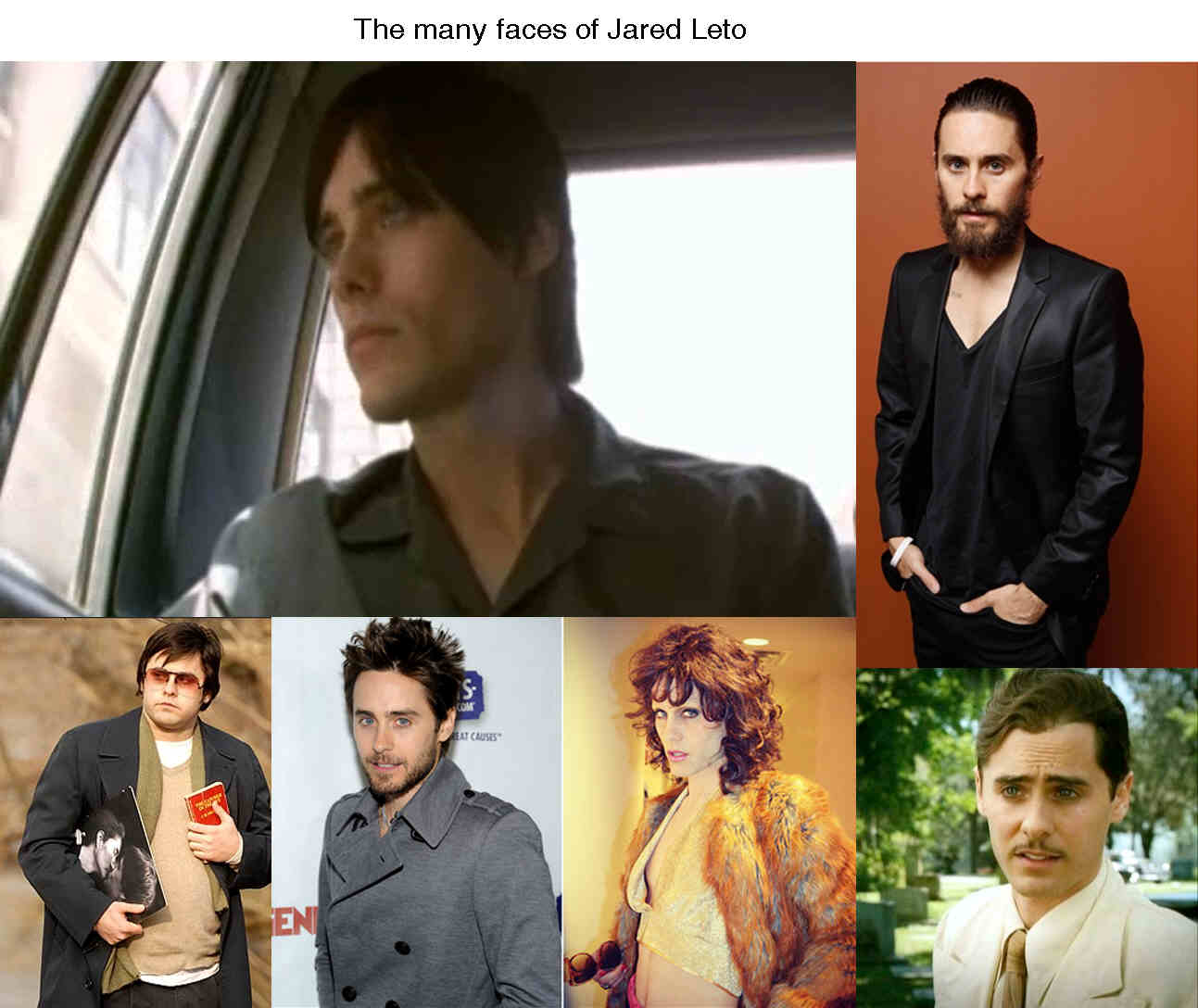
You know JLo, you also know JLaw, but do you know JLe or JLeto? Well, If you were watching Golden Globes and heard the name Jared Leto, and are still wondering who is this guy, @SilverlightGal has got the answer for you.
It’s that time of the year again when actors and actresses make space in their (perhaps already crowded or perhaps nearly empty) shelves to store little statuettes that recognize their contribution to the world of films. The BAFTAs, the Golden Globes, and the Academys, all will follow one another. And this year, besides rooting for the usual suspects, the one person whom I am strongly rooting for is, Jared Leto. Yes, you heard that right.
Who’s Jared Leto, you may ask?
A man who is perfectly sober plays a heroin addict convincingly.
A man who is scrawny and looks harmless on first sight plays a serial killer with such conviction that it send a chill down your spine.
A man who is scrawny gains enough weight in real life without using prosthetics to imply bulk.
A man who is sane and socially active plays a socially awkward, unstable, and deranged murderer.
A man who is perfectly straight plays a transgender woman.
That’s Jared Leto for you.
From playing a heroin addict Harry Goldfarb in Darren Aronofsky’s Requiem for a Dream to playing the bloated deranged Mark Chapman who assassinates John Lennon to playing a scrawny yet chilling killer Raymond Fernandez, he’s done a wide range of roles. Yet received comparatively less recognition as compared to the other A-list actors. People often go into raptures citing Christian Bale’s commitment and dedication to a role (I myself have been guilty of that at times) and yet ignore Leto’s similar preparations for a role. While the likes of Bale instantly gain worldwide acclaim and popularity, actors like Leto get sidelined and their contributions to cinema often overlooked.
To play Harry Goldfarb, Jared Leto lost 28 pounds and to play Chapman, he gained a whopping 67 pounds. And it’s not just about losing or gaining weight. Pushing himself to extremes, he sinks into the character he’s supposed to play. In Lonely Hearts, he teamed up with Salma Hayek to play a serial killer. On a normal day if someone had told you this skinny and funny looking guy could play a character that chops up a woman into pieces, you would laugh right out into their faces. But it was Leto who had the last laugh when he played the role with immense conviction.
Despite winning critical acclaim for his roles, the awards have mostly eluded him. He’s been nominated several times but hardly won any big awards. Hopefully, this year, his performances as a HIV positive transgender woman in Dallas Buyers Club will change that. The 2014 Golden Globes have arrived with a big bang and they have brought good tidings for Leto with a Best Supporting Actor in a Motion Picture award.
Pitted against Barkhad Abdi (Captain Phillips), Daniel Brühl (Rush), Bradley Cooper (American Hustle), and Michael Fassbender (12 Years a Slave), Jared Leto held his own and emerged the dark horse winner. Dark horse because a lot of people’s money was on Michael Fassbender or even Bradley Cooper for his scintillating portrayal of a wild FBI agent.
So, what’s Dallas Buyers Club about?
Ron Woodroof a Texas-based electrician and rodeo cowboy finds his freewheeling life turned upside down when he discovers he’s H.I.V.-positive and given 30 days to live. However, he refuses to accept the death sentence. He begins a daredevil journey into smuggling alternative medicines into the U.S where they weren’t available earlier. It is in the course of this journey that he comes across Rayon, a transgender woman who is also a fellow AIDS patient. Together, they establish the Dallas Buyers Club through which AIDs patients get access to the smuggled medicines by paying a monthly fee. Slowly, buyt surely, they build a collective, a community, of fellow patients who all want a little more of life, dignity, and acceptance.
To play the transgender woman, Rayon, Jared had to wax his whole body including his eyebrows, learn the appropriate styles and mannerisms to portray a transsexual person without appearing demeaning or derogatory in any way. He has been quoted on how he went deep into that character so much that he hopes to take away some of the good elements of Rayon into his own life.
In an interview with Rolling Stone in November 2013, he spoke about how he’s always been awarded and recognized for his music than his acting and that he did so wish people would value his film performances too.
With the Golden Globe safely tucked under his arm, here’s hoping that he goes on to win all the other awards too that he’s been nominated for.
Let’s hear it for Jared Leto!
(@SilverlightGal is passionate about cinema and is always eager for any discussions pertaining to cinema.)
(Note – To make life bit simpler, now you don’t need to fill in all the details to post comments. If you are already logged into Facebook or Twitter, just log in with your FB/T account. Click on comment box, you can see the small (FB/T) icon below the comment box, click on FB/T, a pop up will appear, authorize the app and you are done)
Coen Brothers latest film Inside Llewyn Davis has just released in India. The film won the Grand Prix at Cannes Film Festival and has been getting rave reviews since then. If you still haven’t seen the film, here’s your chance to win tickets. And if you have seen the film and loved it, here’s your chance to win posters. We are running this contest with the help of PVR Cinemas.
For “Inside Llewyn Davis” Tickets
Just answer these 3 simple Questions. We are not looking for right answers (at least for the first two questions). We are looking for interesting answers. The more creative you can be, better is your chance of winning.
1. In Inside Llewyn Davis, why is the cat called Ulysses? (we don’t want correct wiki answers, think of a new reason and tell us)
2. If you were one of the Coens, what would you have named the cat? And why? Put your Coen cap on.
3. What’s your favourite Coens film and why. Tell us in one line.
– Mail us the answers to these 3 Questions and just write “ILD” in subject. Our mail id is moifightclub@gmail.com
– We will be giving away free tickets everyday, for Monday-Thursday shows of the film. If the answers are really good, there is not limit to the number of tickets to be won.
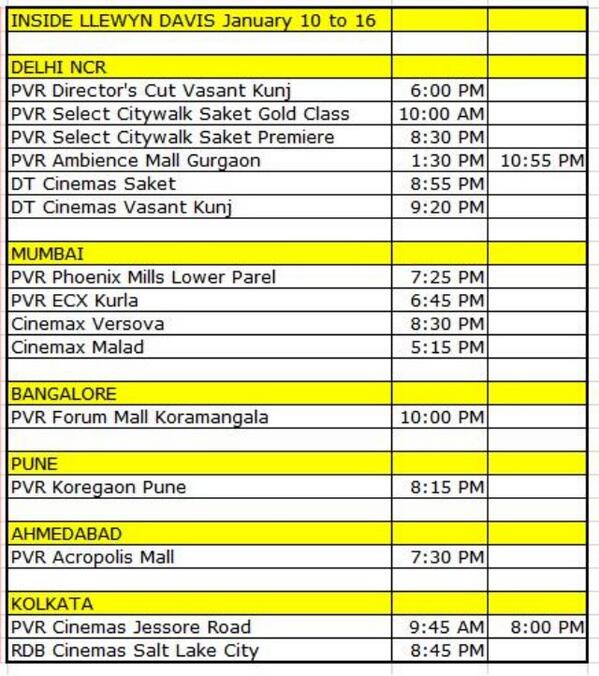
– Since the film has released in just 6 cities (Delhi, Mumbai, Bangalore, Kolkata, Pune, Ahmedabad) so you have to in one of the cities to participate and win. For theatre listing, scroll down. If the response is good, PVR plans to release it in other cities in second week.
– For the tickets, do scroll down and check out the theatre listing. Along with your entries, do let us know your preference for the city/date/theatre/show. Give us at least 2 choices. We will try to give you the tickets for the same.
For Inside Llewyn Davis Posters
To win the film’s posters, it’s a much easy contest. If you have seen the film, then pose with your cat like Llewyn Davis. It can be from any scene of the film. If you haven’t seen the film, just google “Inside Llewyn Davis + cat”, you will see enough images. Get your cat and pose exactly like that. If you don’t have a cat, try it with your dog, parrot, dinosaur or whatever pet you have.
– Click the pic, tweet it and tag us – @NotSoSnob and @ShiladityaBora. We are not obsessed with the moronic idea of trending dumb hashtags, so not asking for the same. If you are not on twitter, mail us at moifightclub@gmail.com with subject “ILD PIC”.
– If you don’t have a cat or dog or dinosaur or any such pet, you can try it with your or your friend’s kid or even any prop/object.
– The interesting the pic, the more creative you can be, the closer it looks like Inside Llewyn Davis pose, better is your chance of winning the poster.
– For any queries or doubts, comment here or write to us at moifightclub@gmail.com
– Thanks to PVR Cinemas for getting the film here and for the contest.
And even if you don’t win tickets, don’t miss this film. Click here for our recco post on the film and click here for a terrific review of the film by A O Scott.
If you have read this earlier post on 17 terrific films of the year, the brief was the same for this new post. And this one is collaborative too. Only film has been replaced with scenes. So here are the 16 most memorable and powerful scenes of the year as picked by 16 film fanatics.
(If you missed our earlier post in this 2013 flashback series, here’s the list – 20 Things We Learnt At The Movies and 13 Unanswered Questions is here, Top 10 Musical Gems We Discovered This Year is here, 15 Film Fanatics on 17 Terrific Films That Have Stayed With Them is here, and 14 Bollywood Song We Played in Non-stop Loop Is here.)
Fandry, Nagraj Manjule’s charming story of Jabya, a young boy battling his inner turmoil of being born a Dalit, whose only source of income is rescuing the village from droves of pigs by chasing them out, and only happiness is a teenage infatuation and perhaps a non-existent bird, reaches an inevitable, satirical climax that can truly be described as the successor of the Mahabharata scene from Jaane Bhi Do Yaaro.
Cruelly hilarious and dripping with pathos, the last scene of Fandry is a portrayal of who we truly are. As Jabya is forced to help his aging parents chase the pigs down, the village gathers to celebrate this humiliation, almost like spectators at a T20 match.
At one point, one of the characters uploads Jabya’s plight on his Facebook page. That one moment points out how technology has invaded us and yet human values remain absent.
However, Manjule’s masterstroke is Jabya doing exactly what the viewer had been wanting to do all along. He gathers his frustration and desperation to plant a sounding kick into the belly of the very society that was trying to hold him down. Match over.
Sadly though, Jabya’s non-existent bird somewhere stands for the freedom from society’s humiliation that he shall never ever get.
Joseph Gordon Levitt’s hilarious Don Jon is the single greatest commentary piece on porn. It isn’t about porn but it’s a guy’s perspective on the necessity of porn. Early in the film in Don Jon explains why he watches porn despite scoring chicks whenever he pleases. He watches porn simply because it is more exciting and entertaining than actual sex. Real women don’t do the things that the ones in the porn videos do. Which is why always slips off the bed in the middle of the night, turns on his computer, rubs one out, and returns to snuggle with the girl in his bed.
Later in the film he falls in love with the Hollywood rom-com buff Scarlett Johnasson’s character Barbara who does everything with him except have sex. This tortures him. She becomes his porn. Whenever he opens his laptop he browses FB photos of her instead of looking at porn websites. After a lot of torment Don finally has sex with her. But as he lies in his bed, his voiceover tells us that he’s in love with Barbara, and he finally got to have sex with her after weeks and weeks of waiting, and that he’s sorry to say that it was STILL not as good as porn. Don skulks off to his computer and proceeds to rub one out.
The scene that brought down the house was the one where Barbara confronts Don about his porn addiction and calls it sick. He enlightens her that firstly, every guy watches porn and those who say who don’t are lying, and she refuses to believe him. And secondly they have sex all the time, whenever she wants, and it’s not like he’s cheating on her. When she asks him how he can even watch that shit, he replies by asking how she can watch those stupid unrealistic romcoms all day. Shell-shocked, she tells him that movies and porn are different things. And they give awards for movies. He tells her they give awards for porn too.
It was a beautiful and hilarious clash of irony, ideals and cultural norms. With one single scene JGL brought down the accepted definitions of ‘decency’ and ‘addiction’. He’s addicted to enjoying a perfect and unrealistic view of fulfilment and emotional satiation. She’s addicted to enjoying a perfect and unrealistic view of fulfilment and emotional satiation. And yet he is called a sicko and is dumped.
And most importantly, JGL pulled this off without coming across as sexist. That makes him a fucking great filmmaker.
I always believed that the past is truly yours and no one can deny you that. It’s like a drug which you crave for (un)knowingly. And this drug called nostalgia, like a termite, can eat through your present, one moment at a time. How many times have we watched that same video from 90s on youtube just to scrape whatever little memory you can from that time and place. When Sajan Fernandez watched Ye Jo Hai Zindagi on an old VCR, it killed something inside me. There is a sweetness to it and melancholy, still, a man lost in time trying to live his present through scraps from his past. That scene has stayed with me ever since i watched the film. Like those scenes where he smoked on his balcony, Irrfan Khan here emotes with minimal muscles and no words, and yet the entire back story of the character, his pain and his longing is laced before you.
The most powerful, stand out scene for me in any movie in 2013 – after careful deliberation – is from Short Term 12. Surprisingly, it doesn’t involve the lead characters, but one from the ensemble. Marcus – played by Keith Stanfield – is the standoffish kid on the verge of turning 18 and getting ‘released’ from the foster-care center for teens. He’s brooding, strong, and intense for most part of the story and, until the moment, paints himself as if pushed into a corner. When he does lash out, he does it – incredibly – with poetry. In a single, long take as his supervisor sits him down to talk, he unleashes a rap song no one knew he had the capacity to write or perform – heartfelt, expletive-ridden, and delivered with a gumption that’d give Tupac goose bumps. It is a remarkable piece of writing – not just the scene itself – but the build up to it. It is so carefully constructed, you will never see the character’s revelation coming. It leaps out at you from the pages, the screen, and yet goes with the grain of the narrative. Stanfield’s steely-yet-vulnerable performance and Destin Cretton’s choices as director only serve to heighten the experience and leaves you forgetting to breathe.
Scenes are like souvenirs an audience walks out with after a gratifying, enriching or, heck, even a revolting, experience. 2013 at the movies left me wowed, tongue-tied, startled, nostalgic, affected, bored, disgusted, thrilled, the works. But the one scene that stayed with me for all the right reasons and in all probability always will is from Vikramaditya Motwane’s Lootera. Resembling O Henry’s short story The Last Leaf only in the third act, Motwane creates a unique emotional history around Sonakshi Sinha and Ranveer Singh’s star-crossed romance. It’s this melting moment between an ethereal Sonakshi and her on-screen father (played by a brilliantly benign Barun Chanda) that resonates most with me:
Following a bad bout of asthma, the concerned dad is seen comforting his sickly daughter, gently waving a fan on her recumbent frame. They share a lighthearted joke, which leads him to innocuously thwack her wrist and promptly ask, “Laga kya?” Her made-up frown quickly drowns in peals of laughter (and coughing). On cue, with the opening strain of Amit Trivedi’s mesmerising Ankahee playing in the background, he begins to recount the story of an invincible, much feared Bhil King who just wouldn’t die no matter how fiercely the British attacked him. “Phir ek din pata chala ke Raja ne apni jaan ek tote mein chhupa ke rakhi hai.” To find the whereabouts of this peculiar parrot, the British sent out a beautiful spy who lured the King in her romantic trap and the two got married. One day she discovered the truth behind the King’s immortality and smothered the parrot to death without a second’s thought. “Phir?” quizzes his only child, somewhat, uneasily. “Phir…woh mar gaya. Beta, aap mera tota ho. Agar aap ko kuch ho gaya na…,” he doesn’t complete his sentence. He doesn’t have to. There’s so much more at its core though. Apart from highlighting the hearty father-daughter bond, it constructs a context to understand the magnitude of Sonakshi’s consecutive loss, heartbreak and need for retaliation. One has to possess a certain level of sensitivity to convey tenderness that doesn’t feel manufactured. Motwane does. And he lends it to this scene, which works beautifully even as a standalone.
Only in a state like Maharashtra, where right-wing is so strong that even after the death of their biggest ideologue I don’t feel confident and safe mentioning his name in a post that has no direct criticism of his easily-criticizable styles of functioning, where newspaper offices get ransacked for faintest of hurt sentiments, where people get beaten up for not standing up during the mandatory National Anthem before the film – a film like ‘Fandry’ is possible. (Just like BR Ambedkar and Vijay Tendulkar couldn’t have been anywhere else.) A state of oppression breeds an inventiveness and ferocity of protest like nothing else.
And in a protest film (though treated like a coming of age for the most part) like ‘Fandry’, comes a scene that makes all the protest scenes in the history of our cinema look tame in comparison. A Dalit family is trying to catch a pig next to a school, the Dalit kid is feeling humiliated ‘cos his friends might be watching the reality of his caste he has so carefully hidden from them, the pig evading them like a pro. After lots of chasing the pig finally seems to be cornered. The family now just has to move closer and catch it and end the misery on both sides of this hunter-hunted divide. The kid seems slightly relieved that the ordeal may be over as they encircle the pig. But, just before they could swoop down, the national anthem starts playing in the school assembly next door. Nobody can move now, except of course the pig. As the Dalit family stands in attention, paying ‘due respects’ to the nation they are equal citizens of, the pig walks away into the free morning.
The whole cinema hall jumped up and applauded the scene wildly. I guess the irreverence, cheekiness, and metaphor it stood for connected with all of us, so used to standing awkwardly before the film, one hand carrying smartphone, another carrying popcorn, thinking ‘Pandit Bhimsen Joshi ji, aalaap mat lo itna lamba. 56 second mein khatam hona chaahiye ideally!
My pick for the best scene of the year (apart from every other scene from The Great Beauty) is the 9 minute opening scene of Carlos Reygadas’ Post Tenebras Lux ( I wasn’t too impressed by the film). Reygadas has outdone the brilliant time-transition shot from his previous film, Silent Light. Here we have a little girl left out in the open in the middle of barking dogs and horses, running around merrily, unaware of the ominous shift in the sky. Shot almost through the girl’s eye level, the 4:3 frame and the blurry edges shows the constricted world of the girl and in effect, take us closer to her experience. Watch and get hypnotized.
Towards the end of the Bengali movie “Goynar Baksho” a young woman in her 20s rides a scooter to meet a lover who has been incommunicado for a few months. The scene, in which she is accompanied on the scooter by one of the film’s protagonists – another headstrong woman who asks her to drive faster – is remarkable for a number of reasons. It’s a starkly happy contrast from one of the first scenes of the film (dated about 50 years earlier) where a 12 year-old child was married to a man much older than her; was widowed soon after and subsequently had to endure three indignities: of wearing white for the rest of her life, of remaining unmarried and of having her lustrous mane of hair chopped off. Moreover, startlingly, the year is 1971, around the time of the creation of Bangladesh; not 2011. Lastly, it’s a bittersweet reminder of progressive Bengali literary thought and the once ostensibly modern, well-educated and relatively prosperous society that influenced it. Sadly, the great Bengali dream, a burgeoning reality till the late 70s, was crushed by decades of preposterous Communist rule, aided by a general lethargy in the Bengali bhadralok. That one scene holds a mirror to our present, where many observers rightly despair about the position of women in India. In an increasingly intolerant and regressive Indian society, one can only wonder where the next well of inspiration will spring from?
@nagrathnam on Soodhu Kavvum’s confrontation scene
[SPOILER ALERT]
For me, it’s the confrontation scene between the honest minister’s errant son and the Tamilnadu Chief Minister. Only a veteran like Radha Ravi could pull off the dead pan humor with which he dispenses shakti-ka-santulan and casually hands over the mantle to his son, forcing the irritatingly honest minister into retirement. That is the turning point of the film. Fair is foul and foul is fair, Welcome to Kalyug. And followed by the kickass retro montage.
“See how he shakes his head. A minister should like him!”
Don’t worry about the spoiler. Because this isn’t a plot twist. Or a big reveal.
A man who has been told that his ex-wife who is in a coma hasn’t reacted to the smell of perfumes, carries the box out of the hospital room. We follow him out in the corridor. Moments later, he changes his mind. He comes back to the bedside. Takes a bottle of perfume out of the box. His. The one she used to like. He sprays a little on him and leans towards her face and says: “If you can smell this, squeeze my hand.” He holds her hand. We see a solitary tear roll down a still woman’s face. He doesn’t see it. The camera is not interested in that. The camera takes us to a close up of his hand in hers and it’s waiting for the squeeze. The camera lingers on that beautiful composition. The entire film is constructed to arrive at this scene.
This ladies and lads, is the story of modern relationships. We all think we are so bloody mature to move on but the first instance when someone tells us it’s possible to revive the romance, we are quick to go and revisit it. We hold on to the undead person from the past, waiting for signs of life but are rarely in a position to see it.
Absolutely beautiful. Heartbreaking. Depressing. But also reassuring. We are not alone. This is the story of our times. Of fucked up relationships and messed up choices. I liked this film because it gave me the courage to put it all behind and let go. Completely. Cut off. And respect the dead.
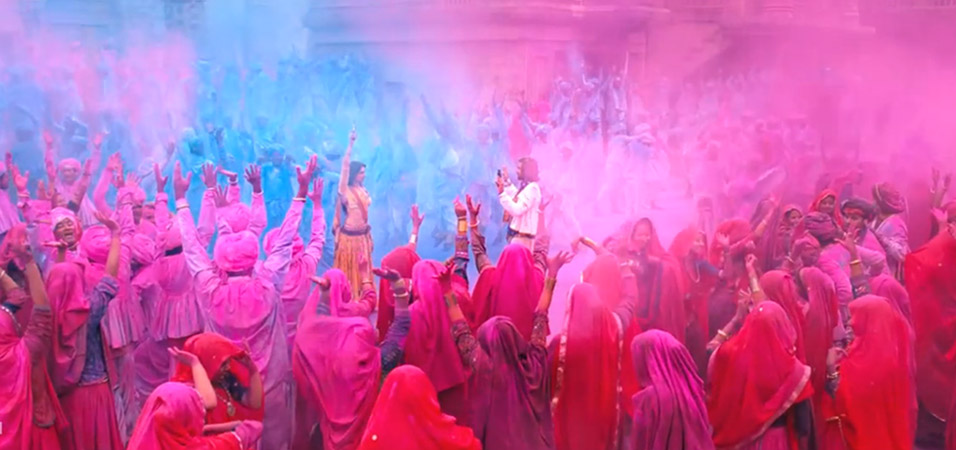
When Deepika runs into Ranveer, and they draw out their guns. That frame, that shot, those colours. Wow! The one time I must have cinegasmed at the movies this year. The song that follows. The kiss. Lahoo mooh lag gaya! Truly breathtaking. It jogged me back to how Balam Pichkari was shot in YJHD. The same Deepika, the same sort of boisterous set up, the same use of riotous holi colours, and yet, you can tell the difference in how a film-maker frames his shot. Balam was youthful, zany, messy and the colours were ‘khacha-khach bhara hua’ – no sense of symmetry in it. Look at how Bhansali co-ordinates/’arranges’ his colours – the blues, the pinks, the reds – all evenly sectioned for each one hue to stand out. This is how you separate the men from the boys.
@shripriya on 12 Years A Slave’s roll Jordan scene
To say “12 Years A Slave” is a powerful film is an understatement. Some of the scenes are very hard to watch and that is the point. But of all the scenes, a short scene, with no violence, is, perhaps, the most powerful.
What happened right before:
Solomon (Chiwetel Ejiofor) has just been betrayed by a white farm hand and had to burn a letter he very painstakingly wrote to his wife and with that, his last hopes of ending his bondage.
A slave collapses in the field due to overwork and Solomon and two others bury him. Solomon goes about the task mechanically. He’s even mildly surprised/annoyed when one of the other grave diggers wants to say a few words for the dead man.
The scene:
A group of slaves stand near the grave and start singing “Roll, Jordan, Roll”. Solomon is part of the group, standing right in front, but emotionally apart from the rest of the slaves, as he as been through most of the movie. Solomon, who was not born a slave, has always maintained his distance – protected himself by maintaining a distance.
We then switch to a shot of Solomon’s face. His face is anguished, full of despair and desperation, overwhelmed by the recent events. The camera just stays on his face as slowly, Solomon starts to sing. It is almost like the song is his lifeline and he grasps onto it, at first just mumbling the words. As he sings, his voice gets stronger and his face changes. The song powers him and finally, he accepts that he is a slave. He starts singing even louder and seems to embrace the group with whom he sings as his brothers. And finally, you can hear his voice stand out, powerful. Despite what he is acknowledging, it feels like a positive self-affirmation. Yes, I am a slave, but I will survive. Even as a slave, I will survive.
The shot of Solomon’s face lasts a minute and fifteen seconds. There is no dialog. Just the singing. For this scene alone, for all the complex emotions conveyed, Chiwetel Ejiofor needs to be a front runner for the Oscar. Brilliant.
@fattiemama on Blue Is The Warmest Colour’s break-up scene
I looked away. For a good ten minutes, I kept my eyes away from the scene. I would have loved to shut my ears too but not understanding the language helped. She kept hitting her and she kept crying, pleading for forgiveness. Tears, snot, blood all became one as the searing pain of betrayal and guilt broke through the barriers of language. I have felt all of it and in not a small degree to not acknowledge it, yet the sheer rawness was so testing I wanted to be relieved of it. They were so good together, so happy, so carefree, so intense and so young…young, I think that hurt the most…All of us love ‘happily forever afters’. The most cynical of us too, somewhere in the corner of their hearts they too believe and yearn. And to watch a love so young and so deep break in a moment hurts. It shatters all that we hold dear, dream of. Was it the beautiful performances of the two young actresses? Was it the single long take? Was it the unbridled tears and blows? Was it the resounding thud of a featherlite dream breaking? Was it my own connection to a story that wasn’t my own? The reasons could be all or any but that scene refuses to leave me. Someday it will be replaced with the eternal tenderness she feels towards her. At the end of great love does not lie emptiness or hate. At the end of great love lies great tenderness. Had the scene not escalated to that intensity the end would not have mattered as much as it did. Had the violence not been so visceral, the wound of the soul would not have been bared. Because a love as deep has to hurt as much too. I just wish the blows had not travelled beyond the screen to sear me.
@jahanbakshion Spring Breakers: In which Alien and the Girls become ‘Soulmates’
Harmony Korine’s Spring Breakers was certainly one of the most divisive films of the year, lauded and loathed in equal measure. Some found it provocative, others called it puerile. For me, it was certainly one of the most hypnotic and immersive cinematic experiences of the year, and at the center of the film were 2 of the most memorable scenes of the year, one segueing into the other seamlessly.
The first scene begins with a gun-toting Alien jumps around his bed, Brit and Candy kneeling before him, seemingly in awe.
“You like it? You like my shit? Look at you fucking bitches. You fucking love it, don’t you? You a couple of bad bitches, ain’t you?”
He thrusts and rubs wads of money in their hungry faces and then begins to kiss both the girls. One of them picks up a pistol from the bed.
“Careful with that, it’s loaded.”
We see a look on Alien’s face we haven’t seen before. It’s the look of genuine terror. Suddenly, out of nowhere, both the girls have pistols pointed at Alien. The get him down on his knees and shove a pistol in his face, then another.
“Sick motherfucker, aren’t you? You think that you can just fucking own us? Open your mouth. Open your fucking mouth…. You’re a nasty little fuck. Yeah, you are. Do you like that? You like that in there?”
Alien is shitting concrete by now. You can see it in his eyes, almost closed shut out of fear.
“We have everything we need right here. We don’t need you, Alien. What if we just used you to come here? And in five seconds we just shoot you? Blow your brains out. And you’re dead… What do you think, Brit, should we kill him?”
And just then, something happens. Alien opens his eyes and stares into the girls faces. And starts to fellate the gun with unnerving glee. First one, then two loaded guns, and he’s going at them like a seasoned pornstar.
It’s a stunning scene- sexy, shocking, gender-bending, nail-bitingly tense and unpredictable- all at once. That’s what makes it so great, apart from how crucial it is in building the characters, their relationship(s) and the trust that forms the basis of their truly twisted love story.
“Y’all my motherfuckin’ soul mates, swear to god. I just fell in love with y’all…”
This flows into what is the most talked-about scene from the film, in which Alien sings Britney Spears’ Everytime, playing a piano as the girls do a ballet around him in pink ski-masks, bikinis and sweatpants, wielding shotguns like toys. As Franco’s voice fades into Britney’s, the scene cuts to a blizzard of hedonistic violence as Alien and his Angels perform their dance of destruction.
The use of contrasting music as a counterpoint to violence in cinema is nothing new, but Spring Breakers does it exceptionally well, managing to transform Britney Spear’s pop ballad not just into something darkly humorous but also a strangely beautiful elegy to the loss of innocence. It’s one of those scenes that lift the viewer into a trance and the film into transcendence. True to his name, Mr. Korine achieves that rare thing in cinema: Absolute Harmony.
@miyaamihir on last scene of Star (Bombay Talkies)
हिन्दुस्तान की ही नहीं, शायद विश्व की सबसे प्रामाणिक ग्रामीण फिल्मों में से एक बनाने वाले निर्देशक सत्यजित राय मूलत: एक शहरी फिल्मकार थे। हमारे वर्तमान महानगर के चितेरे। उसकी अाकांक्षाअों के, उसके अपमानों के। मुझे श्याम बेनेगल के उन पर बनाये उस प्रामाणिक वृत्तचित्र का अंतिम दृश्य याद अाता है। राय अपने घर में अपने घर में, अपने कमरे में अपनी वर्किंग डेस्क पर बैठे हैं अौर अपना वही मशहूर सिगार पी रहे हैं। अौर फिर कैमरा ज़ूम-अाउट होता है। एक ही सिंगल शॉट में हम देखते हैं कि कैमरा पैन-अाउट होता हुअा खिड़की से बाहर निकलता है, अौर हालांकि राय अब भी हमारे सामने हैं लेकिन उनके साथ अब अन्य बहुत कुछ इस फ्रेम में है। एक पूरा शहर इस एक सिंगल शॉट में जैसे राय के साथ चला अाता है। एक ही फ्रेम में हम बीच में उनका घर देख रहे हैं जिसकी बीचोंबीच खिड़की में अब भी राय बैठे दिखाई दे रहे हैं, वही सिगार के साथ। लेकिन अब इस वाइड एंगल में चारों अोर से कलकत्ता की बहुमंजिला इमारतें अौर बाज़ार भी चले अाये हैं। यह एक दृश्य फिल्मकार को उसके सबजेक्ट के ठीक बीचोंबीच स्थापित करता है अौर शायद हमें यह भी बताता है कि किसी भी रचना को जैसे उसके समय से निरपेक्ष नहीं पढ़ा जा सकता, ठीक वैसे ही किसी भी रचना को उसके स्थान से निरपेक्ष रख के पढ़ना भी मुश्किल है।
दिबाकर की ‘स्टार’ के उस अंतिम पोर-पोर जादू से भरे दृश्य में जहाँ पुरंदर (नवाजुद्दीन सिद्दीक़ी) अपनी बेटी को अपने जीवन का एक दिन पुन:रचकर सुना रहे हैं, दिखा रहे हैं, ठीक ऐसे ही एक पैन-अाउट होते हुए कैमरे के साथ पूरा शहर उनके दृश्य की सीमा के भीतर चला अाता है। यहाँ वो नायकत्व है जिसका दायरा अपनी चाल की बालकनी से अागे नहीं बढ़ पाया। यहाँ वो पिता है जो अपनी बेटी के लिए रची कहानियों में भी कभी नायक नहीं हो पाया अौर उसे कल्पना की दुनिया में भी सदा किसी ‘िहृतिक’ का सहारा लेना पड़ा। यहाँ वो इंसान है जिसकी असफलता अगर गौर से देखें तो हमारे वर्तमान शहर की वो बची-कुची ईमानदारी अौर असलीपना है जिसके होने के चलते ही पुरंदर अाज भी इस शहर में मिसफिट है।
‘स्टार’ सही मायनों में बम्बई की कथा है। यहाँ मुम्बई की बन्द हुई मिलें हैं अौर बेरोज़गार हुए मजदूरों के घरों का ठंडा चूल्हा है। तमाम सिनेमा की पृष्ठभूमि पर ऊँची चिमनियाँ है उन मिलों की जिनका धुअाँ जीवन की अग्नि की तरह कब का बुझ चुका है। यहाँ कुछ सर्वश्रेष्ठ अदाकार हैं जो विदर्भ से मुम्बई तक कुछ सौ किलोमीटर की दूरी अपने जीवनकाल में कभी पाट नहीं पाये। फाकों पर होता थियेटर है अौर उसमें फिर बराबरी का स्वप्न है। यहाँ अपने बाप की पेंशन पर जीता अौर समाज की नज़रों में एक असफ़ल इंसान है, अौर फिर एक निर्णायक क्षण है जब वह खुद पिता हो जाता है। सिनेमा के दायरों से परे एक अौर दुनिया है जिसमें अाज संतुष्टि को असफलता अौर असफलता को अयोग्यता का मूल मान लिया गया है। ऐसे समय में जहाँ अापके होने से ज़्यादा दिखाई देने का महत्व हो, ‘स्टार’ इशारा करती है कि सफल-असफल के खांचों के परे भी एक संसार होगा जिसमें योग्यता प्रदर्शन की मोहताज नहीं होगी। ‘स्टार’ उस जीवन के बारे में है जिसे अपने दायरे की पहचान करनी है, अौर जानना है कि उसका ‘स्टार’ होना, न होना दुनिया की स्वीकार्यता पर नहीं, सिर्फ एक बच्ची की हंसी पर निर्भर है। अौर इसके साथ ही यह हमें समझना है कि महत्वाकांक्षा का जयगान गानेवाले इस दुर्दांत समय में ‘संतुष्टि’ एक दुर्लभ मूल्य है।
@NotSoSnob on The Great Beauty’s opening party scene
The two most memorable scenes of the year for me are the climax of Frances Ha and Ilo Ilo. Frances Ha’s climax wraps up the film beautifully as its lead character gets what she wants from a relationship. Guess? It’s simple, unusual and still profound. Ilo Ilo’s climax is bitter sweet, as a kid gets slapped, you laugh at the scene first and then you realise what the filmmaker has done – completed the loop between two strangers who fought initially, bonded later and then had to separate. But am writing about another absolute favourite scene of the year. This one is from The Great Beauty.
When you are watching the film for the first time, you keep wondering what’s happening. Where is it going? It seems like a non-stop party music video. And all you see is bodies shaking vigorously in every possible way interrupted by chants of a bald man shouting, I’ll screw you, while looking at a lady dancing on top of the table. You see striptease, a woman shouting for her lost mobile, a dog in a purse, a very short woman lost in the crowd while sipping her drink, and then a tv showgirl appears with 6-5 written on her boobs. As Jep Gambardella turns back, you realise this is his birthday party. It continues for few more minutes, and then everyone starts dancing while matching their steps on the beats of Mueve la colita. After some time the music slows down, Jep gets out of the queue slowly, looks into the camera, the camera zooms in, slowly everyone gets out of the frame and we see only his face as his voice-over starts – To this question, as kid, my friends always gave the same answer – “pussy”. Whereas i answered, “the smell of old people’s houses”. The question was :
This scene not only sets up the film but also sums it up well. As Gambardella’s search continues through Rome’s rich and boring men and fashionable women, the only word that comes to your mind is decadence. I have gone back to the film many times and specially this scene. Just to hear the opening voice-over. But the impact is lost if you don’t watch the entire party scene – the dancer number, the slowing down of music and Jep moving out of the crowd. Because that’s where the separation begins. Jep and the rest. You are going to encounter all these characters in the film through Jep only. To go back to the madness of the scene, i have even saved this image as my computer screensaver. But i still can’t get enough of Mister Jep Gambardella, his voice-over and the insane beginning of his search for The Great Beauty.
Do let us know about your favourite scenes of the year in the comments section.
I saw Coen Brothers’ new film Inside Llewyn Davis at Mumbai Film Festival in October. And i have been looping its soundtrack since then. The film has released in US now. i saw Noah Baumbach’s Frances Ha recently (Yes, yes, i know am late). And strangely, i have been connecting the dots between the two since that day. This is a perfect double bill. I was shouting out how come nobody was talking about this connect, and so this post. Though recently a friend pointed out a similar tweet by a film magazine editor too.
His name begins on strange note L-L. Her ends on funny note – Ha. He wants to sing. She wants to dance. Both have cat issues which starts their story. Both are in New York. And both have the same problem which they are struggling with – to find a roof above the head, and a bed to sleep.
Inside Llewyn Davis is a grim portrayal of a week in the folk singer’s life. His life is fucked up in more ways than one – career going nowhere, a pregnancy to deal with, family members who don’t mean much, a cat to take care of, and worst, not even a bed to fall asleep and forget all these worries. Is there anything worse than that? The world is hazy, and the weather is cold, gloomy, and depressing. It’s a heartbreaking story of an artist where music is the only comforting factor. In Bollywood dictionary, it’s the story of a struggler – a strange term to define any writer, director, actor, or anyone else who is trying his luck but still haven’t got the big break in the industry. As A O Scott wrote in this absolutely brilliant and spot on review of the film (and read the Coens like nobody has done in any ILD review) – “One of the insights of “Inside Llewyn Davis” is that hard work and talent do not always triumph in the end……We are, as a species, ridiculous: vain, ugly, selfish and self-deluding. But somehow, some of our attempts to take stock of this condition — our songs and stories and moving pictures, old and new — manage to be beautiful, even sublime” This city is full of such bleak stories. Yet that has never stopped anyone from becoming another Llewyn Davis, another eternal struggler. Ha!
Frances Ha film is warmer, lighter and funnier than Llewyn Davis. But her life is no better. She is looking for the same comforts – a roof and a bed. Her dancing career is going nowhere, she has no job, no money, her best friend has moved on, she has just separated from her boyfriend, she is very “undateable”, and her family members are far away from her. Frances doesn’t know what to do with her life, and most importantly, how to do it.
Thanks to Coens’ taste for strange black humour, Llewyn’s life seems to be in never ending loop. Frances is lucky that way. Baumbach is not that cold. In a gorgeous climax which turns this film into one of the greatest films on friendship, Frances at least achieves little bit of happiness (not describing it to keep it spoiler free). And Llewyn just gets another hard punch on his face.
If you are an outsider living and “struggling” in Bombay to find an entry point in Bollywood, you will laugh and cry with this double bill. Too many similarities, and the big picture is too scary at times. A hassle free roof and a comforting bed are the most expensive and elusive things in this city. Just another day, a friend landed up in Bombay. And as it always happens, the first call was about good brokers who can help find that roof and bed. Or you point them to the Flats Without Brokers FB group. Just two days later, she decided to pack her bags and went back to the city from where she came. i don’t know the reasons yet, didn’t bother to ask too. But it made me ponder over many such friends who have come to this city, struggled their way, and have found थोड़ा सा आसमान and a small corner for their bed. If i call it the “Llewyn Davis Condition”, then the comfort syrup can be called “Frances Ha” – strangers who are in similar situation like yours, who have left their roots for similar dreams, who become your family soon, and with whom you develop a bond so strong that it’s impossible to believe that you never grew up with these friends. Where were they all this while? How did you survive without them for so long?
Inside Llewyn Davis and Frances Ha connects more strongly if you are the fringes of any artistic field, and especially if its something to do with films. As i see many such friends with similar stories, all i know is that everything is uncertain till you quit or your name appears in the credit roll one friday. A talented and now-famous lyricist once explained to me why he still prefers working with a loud and pompous producer. He asked me, do you know what an artist want basically? i said, what? To work in peace so that he doesn’t have to think about the bread-butter, bed, and roof. That producer gives me that comfort and i can focus on my art.
So thanks to my “Frances Ha” bunch who helped me survive this city for more than a decade, and if you are new, hopefully you will find your ‘FHa’ friends soon. All you, Ahoy, Sexy!
All i can think that in a parallel world, Llewyn Davis and Frances Ha will meet. He will sing, and she will dance, he will let the cat out, and she will be happy about it. She will shout out Ahoy, Sexy! and he will sing hang me, oh hang me in response. And hopefully, i will be rich enough in that world to give away one of my houses to this duo.
If you haven’t seen, watch these two films. And watch them back to back. Maybe that’s the closest we can get to that wonderful parallel world.
The Academy of Motion Picture Arts and Sciences today announced that 10 live action short films will advance in the voting process for the 86th Academy Awards. 120 films had qualified in the category.
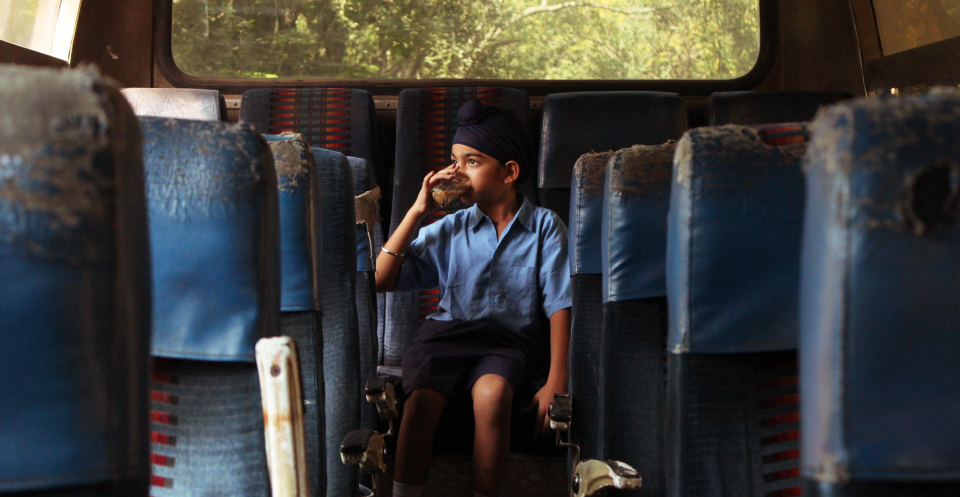
And Shubhashish Bhutiani’s short film Kush is in the shortlist.
The film features Sonika Chopra, Shayaan Sameer and Anil Sharma in the lead. The film had also won the Orizzonti Award For The Best Short film at Venice Fest.
Synopsis
Inspired by a true story, Kush takes place in 1984, surrounding Indian Prime Minister Indira Gandhi’s assassination. Anti-Sikh riots erupt throughout the country. A teacher traveling back from a field trip with her class of 10-year-old students now struggles to protect Kush, the only Sikh student in the class, from the growing violence around him.
– To know more about the filmmaker and its making, you can read the director’s interview here.
– The Short Films and Feature Animation Branch Reviewing Committee viewed all the eligible entries for the preliminary round of voting. Now the Short Films and Feature Animation Branch members will select 3-5 nominees from among the 10 titles on the shortlist.
– The 86th Academy Awards nominations will be announced on Thursday, January 16, 2014.
– Here’s the complete list of Top 10 shortlisted film (in alphabetical order)
– “Aquel No Era Yo (That Wasn’t Me),” Esteban Crespo, director (Producciones Africanauan)
– “Avant Que De Tout Perdre (Just before Losing Everything),” Xavier Legrand, director, and Alexandre Gavras, producer (KG Productions)
– “Dva (Two),” Mickey Nedimovic, director, and Henner Besuch, director of photography (Filoufilm Dani Barsch)
– “Helium,” Anders Walter, director, and Kim Magnusson, producer (M & M Productions)
– “Kush,” Shubhashish Bhutiani, director (Red Carpet Moving Pictures)
– “Pitääkö Mun Kaikki Hoitaa? (Do I Have to Take Care of Everything?),” Selma Vilhunen, director, and Kirsikka Saari, screenwriter (Tuffi Films)
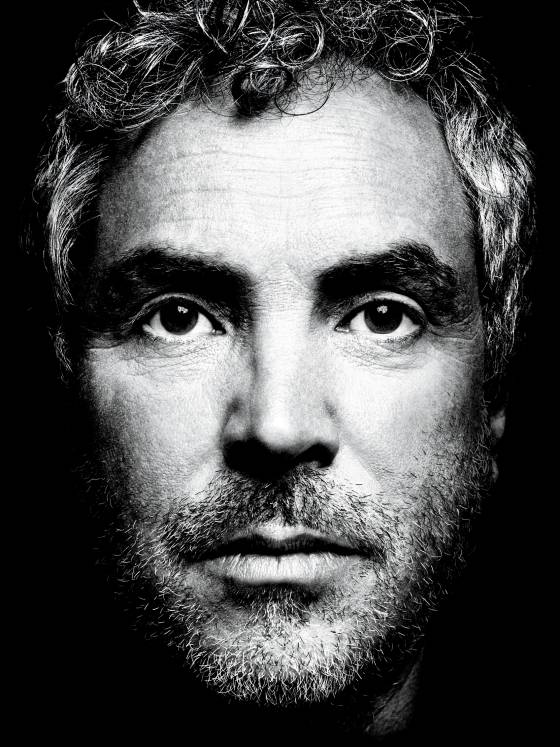
Was I worried?” Cuarón says. “Yeah!” He and Lubezki would watch their footage, “and depending on the day, you’re just in a room laughing, like, What the heck are we doing? Chivo’s (Lubezki) favorite phrase was, ‘This is a disaster.’ Some days you’d just have bits and pieces of Sandra Bullock in a box, floating around, surrounded by robots with cameras and lights on them, and you’d think, This is going to be a disaster.
James Cameron said he was stunned, absolutely floored. He called it the best space photography ever done, best space film ever done, and it’s the movie he has been hungry to see for an awful long time.
Well, watch it. To see, feel, float, and experience.
And it’s entirely possible that even after watching the film you might not get its brilliance – why and how. Twitter has made me realise that. And i am not going to try – argue and make you understand. There are many things that many pea-sized brains might not grasp and understand, and i have made peace with it. This post is for those who were blown by it. If you watch movies like i do, can bet that you will come back home and start googling about it. So i am going to make your life easy and putting all the best articles/features/videos on Cuaron and Gravity here. The links are divided into two parts – filmmaking and sci-fi.
FILMMAKING – How and Why
I have to say that I was a bit naïve; I thought making the film would be a lot simpler…
– Digital Trends has got an interesting feature titled “Before Alfonso Cuarón could make ‘Gravity,’ he had to overcome it”. It tells you all about the problems they faced and what they did to find new technology. Click here to read.
– Cuaron is known for his magical long uncut takes. And as we all know Gravity has some 17-minute long jaw-dropping opening sequence. Here’s a video essay on his “Cinematic Canvas”.
Has voice-over by Cuaron.
I’m going to tell you something, the reality is that the movie was so new that when we finished a shot we would get so excited people would scream on set—probably me before anybody else. There were moments when we were shooting and Alfonso said ‘cut’ we would all just jump and scream out of happiness because we’d achieved something that we knew was very special.
– The Credits have done a feature titled “One of the Greatest Cinematographers Ever: Gravity‘s Emmanuel Lubezki”. This one is an interview with Lubezki. Click here to read.
Both of them—along with a number of other Mexicans who would go on to achieve success in Hollywood—were expelled before graduation. “In Mexico, there are a lot of conspiracy theories” about why, Cuarón told me, “and I’m sure that a lot of them are true. The truth of the matter is that I think we were pains in the asses. We disagreed with the ways of the school.” He laughed. “Even if they had their reasons, we were right.
– Vulture has posted a great piece on Cuaron’s career and filmography. It’s titled “The Camera’s Cusp: Alfonso Cuarón Takes Filmmaking to a New Extreme With Gravity”, and this one is a must read. The story of “a Mexican auteur who’d just made a tiny foreign erotic comedy-drama being handed the biggest, most fantastical franchise in movie history.” Click here.
– Cuarón sat down with George Stroumboulopoulos to talk directing, George Clooney and Sandra Bullock, and new voices in world cinema. This one is a funny interview.
Experiencing this film in 2-D is only getting about 20 percent of the experience of Gravity,” says Cuarón.
– The Daily Beast has also done a feature on Cuaron and his film. It took four and a half years to bring the magnificent 3-D film to the screen. The director retraces the journey for Marlow Stern, from Robert Downey Jr. and Angelina Jolie’s departures to creating the most groundbreaking cinematic voyage ever put to film. Click here to read it.
Still, it was a massive culture shock. “I had more toys to play with, but the crew was three times bigger than my Mexican film, with producers giving me notes, which I never had before.
– DGA has also covered Cuaron’s entire career – from Mexico to big Hollywood studios. Click here to read.
Did even this historically auteur-friendly studio (Kubrick, Eastwood, Nolan, et al.) wonder if they’d just gambled away $100 million on the most expensive avant-garde art movie ever made?
– Variety has done an interesting piece saying Gravity’ could be the world’s biggest avant-garde movie and drawn comparisons with Michael Snow’s films. Click here to read.
– And to know how the sound masters of ‘Gravity’ broke the rules to make noise in a vacuum, click here. Another must read.
SCI-FI – Science or Fiction
From my perspective, this movie couldn’t have come at a better time to really stimulate the public. I was very, very impressed with it.
– The Hollywood Reporter has got Astronaut Buzz Aldrin, the second man on the moon, to review the film. Click here to read.
George Clooney’s character, in a rare and fleeting quiet moment says to Sandra’s character, “Beautiful, don’t you think?” And the scene is the sunrise in space. Hold on to that.
– The Time got another astronaut, Marsha Ivins, a veteran of five shuttle flights, with a total of 1,318 hours—or 55 days—in space, to review the film. Click here to read what she thought – how much is real and what all looked fake.
– And there are some rants too. If they can float, can’t they rant? Vanity Fair has put it all together. Click here.
– So how Realistic is the movie? The Atlantic has interviewed the film’s science advisor. Click here to read.
In India, the film has currently released only on IMAX 3D screens. It should be out in normal 3D screens from this friday. And do remember what Mister Moore said.
If you are in Mumbai, i would suggest you watch it at PVR IMAX screen in Lower Parel. No, they haven’t paid me. This is from my experience across various 3D screens in the city. The glasses at PVR, Lower Parel don’t make the screen dark. Also, they are bigger, better and light in weight. So if you already wear one set of glass, this is the best possible option. Rest, as they say, haath kangan and all that jazz.
If you have read or seen any interesting feature, interview, or video related to Gravity or Cuaron’s film, do post in the comments section.
Because that seems to be the only reason why none of us could speak out openly about our “best” film to be sent for Oscars in the Foreign Language category.
Now that i have seen it, let me say it loudly – The Lunchbox is Casablanca compared to The Good Road. I will come back to the film later. Let me also clarify few things first. I have been reading articles, posts and tweets on similar topic since last 3 days, and some of them are on such a wrong tangent. So here it goes.
Oscars
No, it’s not white man’s approval. It’s not even the best function or festival as far as films are concerned. Some of the best American films and actors don’t even bag a nomination. So why are we getting jizz in pants about Oscars?
Because it still matters. Because it’s money, market and reach. Because one nomination (and win) not only puts the spotlight on the director’s entire filmography but the country also comes into focus. Because it opens every possible door for its lead actors. The examples are many. In the last few years only Chile’s No, Israel’s Ajami and Footnote, Algeria’s Outside The Law, Greece’s Dogtooth, Denmark’s In A Better World, Argentina’s The Secret In Their Eyes, Japan’s Departures and Denmark’s After The Wedding have brought so much attention to their country’s cinema just by being nominated. Same goes for actors. Who knew Matthias Schoenaerts before the Bullhead?
A Cannes win also has the power to do all that. Ask the Romanian filmmakers. But Cannes is not so mainstream, Cannes is French, and Oscar is Amreekan. You know the difference, and two shall never meet. One is purely about cinema, the other is more about box office. Btw, do auteurs eat big burgers?
That’s the simple reason why Oscars count. Not for any white man supremacy. In 2011, when Asghar Farhadi went on stage to collect his award for The Separation, almost everyone knew that it was not only the “best foreign film” but it was the “best fucking film of the year”. The white man supremacy and approval logic is so 80s. The world went back to all his films and he was named one of the 100 Most Influential People in the world by Timemagazine in 2012. Difficult to believe that the journey started with “Nader and Simin” (title was changed later) getting the distribution fund at Berlin fest.
So do i believe in Oscars? NO.
An award ceremony which never did any justice to Martin Scorsese, how can they be fair?
Do i watch Oscars? YES.
The only day in the year when i get up early and see the rising sun. Why? Because Marty believes in it. Because it’s good fun to watch some of your favourite actors, directors, screenwriters, all under the same roof and still be so cool and candid. And because they still make it “look” professional. Some of the best talents never get their due but when they get, it changes everything. One nod is all it takes. That’s it.
Foreign Language Category & The Good Road
In the last few years, this has become one of the most toughest category. The number of submissions keeps on increasing every year. You are not just competing with the best of the Amreekan cinema but from best of the world. Last year it was a new record with 71 films. This year’s running list already has 45 films. Heavyweight Wong Kar-wai’s The Grandmaster is already in the ring.
Since FFI’s announcement on The Good Road came out, anyone having any doubts about it, the first question asked was have you seen it? And as far as i knew nobody except the FFI jury had seen it. So, before writing any post on it, i decided to watch the film, and am so so disappointed after watching it.
So far i was only arguing that it’s always about the “right” film at the Oscars, it’s not about the “best” film. Why get so holier than thou and sentimental about putting our “best” film? Especially when Oscars is just another ‘market’ event that does wonders. Put the “right” film out, play according to the games, play it smart, and get a nod. Simple. Just look at the big picture.
Now, if i consider this is the standard of our best film which is being sent to the world audience, am sorry to say that people will laugh at us. Don’t believe me, go watch “The Good Road”. The film is easily available on dvds and #youknowwhere. It doesn’t even look professional. Except an idea and intention, it has nothing to offer. It’s boring, the production looks tacky, direction is bad, performances are inconsistent, and acting by non-actors look like non-acting only. The arid landscape and the use of music are the only things that work.
The only Oscars bait was a sequence involving young girls in prostitution racket standing on platforms surrounded by coloured tubelights. Haven’t seen anything like that on screen.
With “The Good Road” as our submission, what’s our chance at the Oscars? i think ZILCH. I hope am proved wrong but i doubt it.
And what i am most confused about is the sudden support for the film. As a friend pointed out, just because it has suddenly become the David in front of The Lunchbox Goliath with UTV, Karan Johar and Anurag Kashyap in its support? Strange. Very, very strange. Watch both the films and compare the merits.
More strange is the fact that not a single mainstream critic in this country bothered to review the film when it released – in theatres and on dvds. That says more about the state of film criticism in this country.
The Lunchbox
With The Lunchbox, many of us believed it had a *chance*. Yes, just a chance. And we have been shouting about it. It’s a tough battle there. But with Sony Classics having its US rights and many influential American voices already pushing for it after watching the film at Cannes, Toronto and Telluride, it had the right visibility factor going for it. Michael Moore, Ted Hope and many others tweeted about it. Aseem Chhabra has written more about it here. Also, The Hollywood Reporter and Indiewire, the two ends of spectrum, were counting it among the frontrunners. And am sure they know (at least little bit) more and understand their Oscars more than us.
It was just not the “right” film but it’s a much, much better film than “The Good Road”. Just ideas and intentions don’t make a good film, or a good road.
So what did the FFI jury saw in the film which i could not? Let me quote from this interview of Gautam Ghose…
The criteria is simple — we had to select a film that represents the country perfectly.
WTF! Represents the country perfectly? As in peacocks and elephants? Do they watch the Oscars? Not sure what it means (Can someone explain?). After watching the film, all i can say is that The Good Road represents us amateurishly. You all made us look tacky in front of the world. Forget The Lunchbox, any other film would have been better too.
Though just Irrfan Khan and Nimrat Kaur’s performances were enough to pick the film. These two are not just the best performances of the year in Indian cinema, but they can be easily counted as among the best ones in world cinema too. So I would sincerely like to smoke what the FFI jury was smoking. Anyone?
Because this was our chance. Because we needed it. We needed to tell the world that we do more than naach-gaana now. We needed to assure Sony Classics that you can look and pick more Indian films that can do wonders. You don’t need to wait for 10-15 years again. We needed to tell the world that it’s not just Iranians, Romanians, Koreans, Greeks and Australians, we are also heading in right direction. And this was the best stage to do it. We had a chance, a bright and fair chance. But what a fuck up! what a royal fuck up this turned out to be.
One more thing – who made the rules suddenly that FFI can’t disclose the names of jury members? I would surely love to know the names of those 12 or 15 or 19 people who thought The Good Road was better than The Lunchbox and every other film that was submitted for consideration. As far as i remember, when the jury meet used to happen in Mumbai, almost all the jury members used to present in the press conference to announce their choice. What happened suddenly in the last two years or so? Are they afraid to endorse the film publicly because their taste will be questioned? Someone enlighten me here too. Come on, come out, tell us you loved The Good Road. And as the saying goes, any festival selection or win always tells you more about the jury than about the film. I will still try not to judge you.
The header surely gives you an idea what this post is all about. And going by the latest trend, most of you might have skipped M. Night Shyamalan’s latest release, “After Earth”. But Rahul Desai saw it, and he argues that there’s more to him than what the world wants you to believe. Read on.
‘After Earth’ is realistically Shyamalan’s solo follow-up to ‘Lady In The Water’.
The latter was an original fairytale written from scratch by Shyamalan for his daughter, an urban mythical world imagined and created by the filmmaker – based within the confines of an apartment complex. It had fairies, creatures, parallel worlds, rules and characters intertwined with everyday life. It was a fascinating play on children’s classics, and if not for the limited tolerance of many of today’s film analysts, it could stand alone in its right on any illustrated bookshelf across the world. It was very much how a child with vivid imagination would look at today’s routine worldly scenarios, right from a boring stuttering caretaker to an eccentric writer neighbor. With ‘Lady In The Water’, I personally felt that M. Night Shyamalan cemented himself as one of the foremost storytellers of our times, even if his filmmaking wasn’t always as riveting as his writing.
Many called it an intensely personal and boring project, and concluded that he wasn’t the next Hitchcock or Spielberg after all.
It is interesting that while Americans and Hollywood in general rejected this melancholic little tale, countries like France embraced it and gave it glowing reviews – understanding the originality and simplicity at the root of his effort. This is not surprising considering the fact that movies like Avengers, IronMan and Harry Potter rule American box-offices, while the success of Avatar is attributed to more of a global phenomena with its path-breaking technology.
Shyamalan didn’t do himself any favours by making his only big mistake of his career in the name of ‘The Last Airbender’, and became the favorite whipping boy of American critics- who dismissed his films before they even hit screens anymore. This odd allergy even reached Indian shores, where reviewers began to rate his films at par with their own filmmakers dismal commercial projects- when in reality, no single Bollywood filmmaker is even half as original or is a visionary enough to match Shyamalan at his worst. Not to say reviewing is much of an art in countries like India, but this was not the first time they let the West influence their own opinions.
‘After Earth’ was meant to be a simple tale about a son trying to rescue his soldier father in a dangerous forest. Until Will Smith stepped in. It soon became a fantastical visual extravaganza about a son’s journey and redemption on an uninhabited dangerous waste planet named Earth.
Shyamalan took reigns of this project despite it being his first directorial venture not written by him. This was after the disastrous ‘The Last Airbender’- similarly heavy on VFX and mythical madness- and demonstrated Shyamalan’s willingness to step back into the ring for another brave round. Sneers that accompany his name on screen- either as story or screenplay writer of ‘Devil’- were from people who had forgotten that even his worst effort, allegedly ‘The Happening’ or ‘The Village’ was more original and daring than millions of book-to-screen adaptations and special effect orgies hitting the screens lately.
What is noteworthy is the storyteller’s consistent craving to tell and create new stories- not as films or Hollywood blockbusters- but as tales told with a whispering voice by the fireplace on a cold winter night. The seriousness and self-awareness that his stories contain isn’t necessarily a bad thing- with even superhero classics being dumbed down and sexed up for audience votes these days. And yet, Shyamalan is the man solely responsible behind possibly the greatest superhero story of our time- the unassuming and path breaking ‘Unbreakable’. It was the near perfect anti-epic that took the extraordinary-man-in-ordinary-world genre to another level. It used comic books and graphic novels (again a lead up to ‘Lady In The Water’) to illustrate the clear good v/s evil relationship in an unlikely unique tone.
With the amount of preparation put into ‘After Earth’- a 300-page Bible about the history of mankind and their decision to leave Earth (much like Wall-E) written by award-winning comicbook writers- Shyamalan took charge of the immense visual part of the project- blocking and constructing shots with his trademark anticipation-of-fear-is-greater-than-fear-itself style.
The monologues in the film bear a very existential ‘The Village’ feel about them, deconstructing basic human emotions, fear and danger, under the hood of survival and invincibility. At the center of it all was a fractured relationship between a warrior named Cypher Raige who has overcome fear and a son (Kitai Raige) that is struggling to overcome their history. This is portrayed wonderfully by an I-Am-Legend zoned Will Smith and his real-life son Jaden, who impressed all with his physicality and versatile talents in the nth version of Karate Kid a few years ago. The boy’s desire to acquire his destiny- convinced that is it different than others, much like Phoenix in Village, or Gibson in Signs, or Willis in Unbreakable- forms the crux of this post-apocalyptic story. Concepts like ‘ghosting’ and ranger-codes were created, along with the current destructive nature of Earth- all given a form not too dissimilar from the likes of Pandora or wasted Earth in Wall-E.
Yet, Shyamalan’s version of Earth was rejected before even being given a chance, despite Smith and his son carrying on admirably from where they left off in ‘Pursuit of Happyness’. Adjectives like ‘terrible’ and ‘unbearable’ were thrown around carelessly by respected critics like Bradshaw and the likes- in the process only further highlighting the huge dent caused to film criticism after the passing of master Ebert.
In the film, the talented father-son Smith duo make their relationship believable enough to even forgive the disappointment of the rather tame revelation of those-who-we-cannot-speak-of creatures at the end.
The filmmaker’s Hitchcockian awareness of the sheer bone-chilling result of what can be heard but not seen on screen, remains in tact, even in this attempt to tell a story over a vast canvas.
There is a particular scene that involves a big angry bird and Jaden. It portrays the most basic of primal emotions and could seem comical on paper- but Shyamalan’s understanding of when to reveal the bird in conjunction to Jaden’s startled face is second to none. It is a typically underplayed yet important moment in the film. It possesses wordless undertones that pretty much define Katai’s existence uptil then- constructed in a masterfully subtle manner that escape the blind rage of reviewers today. Instruments like adding the audiovisual contact at all times between father and son- letting the father view his son’s journey to manhood at close quarters while being helpless, or the position-mapping technology visible to father but not son- only add to Shyamalan’s impressive ability to manipulate simple visual situations into something far more suspenseful.
His framing has always been a highly underrated skill, and one can only imagine him snatching the screenplay away from the original writers to give it his own signature.
His use of a rousing background score still manages to tell its own individual story- words that cannot be read between the lines even on paper.
Often enough, his obsession with twist endings and surprise climaxes that try to convince the viewer that it was happening all along has led to his overambitious downfall- but the manner in which he uses dramatic orchestral themes at every single crucial second of such climaxes will be appreciated in the years to come, just like ‘Lady In The Water’ and ‘After Earth’ are destined to become perfect Sunday afternoon family viewings/storybook sessions for generations of Americans kids whose ancestors scoffed at a brooding serious auteur South-Indian writer that once told a slow-burning ghost story and a superhero tale that challenged the very concept of genres it represented.
(For more posts by Rahul, you can visit his blog here)








 F.i.g.h.t C.l.u.b