Archive for the ‘Indie’ Category

Ashish R Shukla’s debut feature Prague is releasing this friday. Starring Chandan Roy Sanyal, Arfi Lamba, Mayank Kumar, Sonia Bindra and Elena Kazan, the film is pitched as a psychological thriller with an interesting theme – “Seeing Is Misbelieving”. And taking the central idea forward, the makers and fans have been making some interesting  and catchy posters of the film. Have a look.

Click on any of the poster to enlarge it and start the slide show.

– To know more about the film, click here for its FB page, and click here to follow it on Twitter.

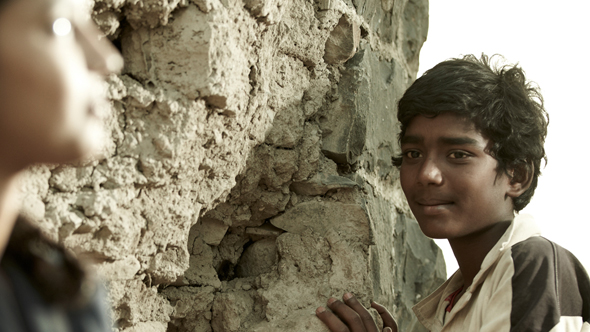
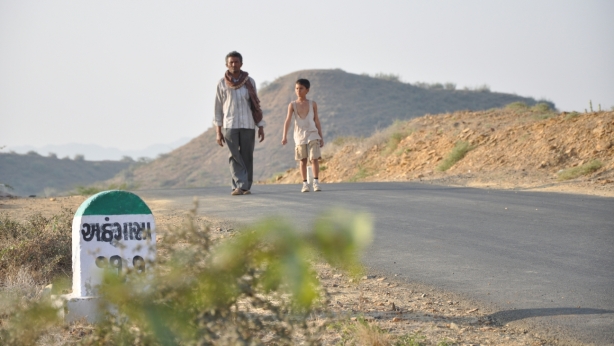
the_good_road_h

Because that seems to be the only reason why none of us could speak out openly about our “best” film to be sent for Oscars in the Foreign Language category.

Now that i have seen it, let me say it loudly – The Lunchbox is Casablanca compared to The Good Road. I will come back to the film later. Let me also clarify few things first. I have been reading articles, posts and tweets on similar topic since last 3 days, and some of them are on such a wrong tangent. So here it goes.

Oscars

No, it’s not white man’s approval. It’s not even the best function or festival as far as films are concerned. Some of the best American films and actors don’t even bag a nomination. So why are we getting jizz in pants about Oscars?

Because it still matters. Because it’s money, market and reach. Because one nomination (and win) not only puts the spotlight on the director’s entire filmography but the country also comes into focus. Because it opens every possible door for its lead actors. The examples are many. In the last few years only Chile’s No, Israel’s Ajami and Footnote, Algeria’s Outside The Law, Greece’s Dogtooth, Denmark’s In A Better World, Argentina’s The Secret In Their Eyes, Japan’s Departures and Denmark’s After The Wedding have brought so much attention to their country’s cinema just by being nominated. Same goes for actors. Who knew Matthias Schoenaerts before the Bullhead?

A Cannes win also has the power to do all that. Ask the Romanian filmmakers. But Cannes is not so mainstream, Cannes is French, and Oscar is Amreekan. You know the difference, and two shall never meet. One is purely about cinema, the other is more about box office. Btw, do auteurs eat big burgers?

That’s the simple reason why Oscars count. Not for any white man supremacy. In 2011, when Asghar Farhadi went on stage to collect his award for The Separation, almost everyone knew that it was not only the “best foreign film” but it was the “best fucking film of the year”. The white man supremacy and approval logic is so 80s. The world went back to all his films and he was named one of the 100 Most Influential People in the world by Time magazine in 2012. Difficult to believe that the journey started with “Nader and Simin” (title was changed later) getting the distribution fund at Berlin fest.

So do i believe in Oscars? NO.

An award ceremony which never did any justice to Martin Scorsese, how can they be fair?

Do i watch Oscars? YES.

The only day in the year when i get up early and see the rising sun. Why? Because Marty believes in it. Because it’s good fun to watch some of your favourite actors, directors, screenwriters, all under the same roof and still be so cool and candid. And because they still make it “look” professional. Some of the best talents never get their due but when they get, it changes everything. One nod is all it takes. That’s it.

Foreign Language Category & The Good Road

In the last few years, this has become one of the most toughest category. The number of submissions keeps on increasing every year. You are not just competing with the best of the Amreekan cinema but from best of the world. Last year it was a new record with 71 films. This year’s running list already has 45 films. Heavyweight Wong Kar-wai’s The Grandmaster is already in the ring.

Since FFI’s announcement on The Good Road came out, anyone having any doubts about it, the first question asked was have you seen it? And as far as i knew nobody except the FFI jury had seen it. So, before writing any post on it, i decided to watch the film, and am so so disappointed after watching it.

So far i was only arguing that it’s always about the “right” film at the Oscars, it’s not about the “best” film. Why get so holier than thou and sentimental about putting our “best” film?  Especially when Oscars is just another ‘market’ event that does wonders. Put the “right” film out, play according to the games, play it smart, and get a nod. Simple. Just look at the big picture.

Now, if i consider this is the standard of our best film which is being sent to the world audience, am sorry to say that people will laugh at us. Don’t believe me, go watch “The Good Road”. The film is easily available on dvds and #youknowwhere. It doesn’t even look professional. Except an idea and intention, it has nothing to offer. It’s boring, the production looks tacky, direction is bad, performances are inconsistent, and acting by non-actors look like non-acting only. The arid landscape and the use of music are the only things that work.

The only Oscars bait was a sequence involving young girls in prostitution racket standing on platforms surrounded by coloured tubelights. Haven’t seen anything like that on screen.

With “The Good Road” as our submission, what’s our chance at the Oscars? i think ZILCH. I hope am proved wrong but i doubt it.

And what i am most confused about is the sudden support for the film. As a friend pointed out, just because it has suddenly become the David in front of The Lunchbox Goliath with UTV, Karan Johar and Anurag Kashyap in its support? Strange. Very, very strange. Watch both the films and compare the merits.

More strange is the fact that not a single mainstream critic in this country bothered to review the film when it released – in theatres and on dvds. That says more about the state of film criticism in this country.

The Lunchbox

With The Lunchbox, many of us believed it had a *chance*. Yes, just a chance. And we have been shouting about it. It’s a tough battle there. But with Sony Classics having its US rights and many influential American voices already pushing for it after watching the film at Cannes, Toronto and Telluride, it had the right visibility factor going for it. Michael Moore, Ted Hope and many others tweeted about it. Aseem Chhabra has written more about it here. Also, The Hollywood Reporter and Indiewire, the two ends of spectrum, were counting it among the frontrunners. And am sure they know (at least little bit) more and understand their Oscars more than us.

It was just not the “right” film but it’s a much, much better film than “The Good Road”. Just ideas and intentions don’t make a good film, or a good road.

So what did the FFI jury saw in the film which i could not? Let me quote from this interview of Gautam Ghose…

The criteria is simple — we had to select a film that represents the country perfectly.

WTF! Represents the country perfectly? As in peacocks and elephants? Do they watch the Oscars? Not sure what it means (Can someone explain?). After watching the film, all i can say is that The Good Road represents us amateurishly. You all made us look tacky in front of the world. Forget The Lunchbox, any other film would have been better too.

Though just Irrfan Khan and Nimrat Kaur’s performances were enough to pick the film. These two are not just the best performances of the year in Indian cinema, but they can be easily counted as among the best ones in world cinema too. So I would sincerely like to smoke what the FFI jury was smoking. Anyone?

Because this was our chance. Because we needed it. We needed to tell the world that we do more than naach-gaana now. We needed to assure Sony Classics that you can look and pick more Indian films that can do wonders. You don’t need to wait for 10-15 years again. We needed to tell the world that it’s not just Iranians, Romanians, Koreans, Greeks and Australians, we are also heading in right direction. And this was the best stage to do it. We had a chance, a bright and fair chance. But what a fuck up! what a royal fuck up this turned out to be.

One more thing – who made the rules suddenly that FFI can’t disclose the names of jury members? I would surely love to know the names of those 12 or 15 or 19 people who thought The Good Road was better than The Lunchbox and every other film that was submitted for consideration. As far as i remember, when the jury meet used to happen in Mumbai, almost all the jury members used to present in the press conference to announce their choice. What happened suddenly in the last two years or so? Are they afraid to endorse the film publicly because their taste will be questioned? Someone enlighten me here too. Come on, come out, tell us you loved The Good Road. And as the saying goes, any festival selection or win always tells you more about the jury than about the film. I will still try not to judge you.

@cilemasnob

( PS – The only consolation is we are not the only morons. We have company)

qissa_01

Toronto International Film Festival has come to an end, and has announced the winners  for this year.

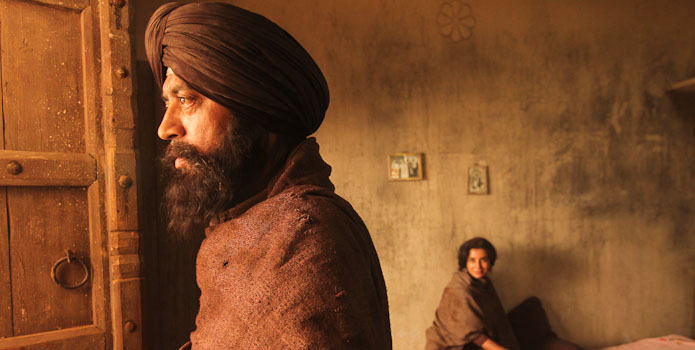
Here’s the good news – An Indian co-production, Anup Singh’s Qissa has bagged the NETPAC Award at this year’s fest. The film stars Irrfan Khan, Tillotama Shome, Rasika Dugal and Tisca Chopra. This Punjabi film is written by Anup Singh and Madhuja Mukherjee. And here’s what the official release says –

As selected by a jury from the Network for the Promotion of Asian Cinema, the NETPAC Award for World or International Asian Film Premiere goes to Anup Singh’s Qissa. Jury members include Jay Jeon (Korea), Intishal Al Timimi (Abu Dhabi) and Freddie Wong (Hong Kong). The jury remarked: “The NETPAC Award for the best Asian film at Festival 2013 goes to Qissa, directed by Anup Singh, for its sensitive portrayal of the issues of identity and displacement that affect people not only in India, but in all parts of the world and for brilliance of cinematic craft and the choice of metaphor that has been employed to tell a moving story that is bound to provoke thoughts, spark debate and give its viewers an intense experience.

TRAILER

TIFF NOTE & SYNOPSIS

Set amidst the ethnic cleansing and general chaos that accompanied India’s partition in 1947, this sweeping drama stars Irrfan Khan — also appearing at the Festival in The Lunchbox — as a Sikh attempting to forge a new life for his family while keeping their true identities a secret from their community.

Beautiful, timeless, and touching the deepest of human impulses, Qissa carries the spirit of a great folk tale. Although it’s set in a particular time and place — the Punjab region that straddles India and Pakistan in the years immediately after partition — it is both deeper and broader than any one moment. As this eerie family drama progresses, it cuts to the heart of eternal desires for honour, empathy, and love.

One of India’s best actors, Irrfan Khan (Life of Pi, Festival premiere The Lunchbox, and a feature guest in this year’s Mavericks programme) plays Umber Singh, a Sikh uprooted by the religious violence that came with partition in 1947. He and his family move to a safer locale, and it is here that the story takes a remarkable turn. Having already fathered daughters, Singh now wants a son. When his next child is born he celebrates his wish come true, but there is one problem: the baby is in fact a girl.

“Qissa” is originally an Arabic word meaning folk tale. Both the word and the idea migrated from the Gulf into the Punjab, still connected by the ancient oral narratives handed down in communal settings. Working within this tradition, director Anup Singh gives his film both the grand themes and elemental emotions of classic storytelling. As Umber’s daughter is raised as a boy, the characters are propelled with greater and greater urgency towards their inevitable fates.

Part of a new generation of directors with feet firmly planted in India and far beyond, Singh has delivered a film immediately accessible to anyone sensitive to the conflicts that drive classic stories: fear versus hubris, individual need versus social codes. Qissa is a Punjabi story for the whole world.

DIRECTOR

Anup Singh was born in Dar es Salaam, Tanzania. He has written film reviews for Sight & Sound, directed Indian television, and consulted for BBC Two. His features as director are The Name of a River (02) and Qissa (13).

CAST & CREW

Director: Anup Singh

Countries: Germany / India / Netherlands / France

Year: 2013

Language: Punjabi

Runtime: 109 minutes

Rating: 14A

Producer: Johannes Rexin, Bettina Brokemper

Production Co.: Heimatfilm, National Film Development Corporation of India, Augustus Film, Ciné-Sud Promotion

Principal Cast: Irrfan Khan, Tillotama Shome, Rasika Dugal, Tisca Chopra

Screenplay: Anup Singh, Madhuja Mukherjee

Cinematographer: Sebastian Edschmid

Editor: Bernd Euscher

Sound: Peter Flamman

Music: Béatrice Thiriet

Prod. Designer: Tim Pannen

Int. Sales Agent: The Match Factory

And this list comes from Aniruddh Chatterjee, the self-declared biggest Korean movie fanatic on this side of the planet. Do read the post, and do watch the films. If you have come across some interesting Korean movies recently, do let us know in the comments.

Over to Aniruddh.

SECRET  SUNSHINE

secret-sunshine_970x390

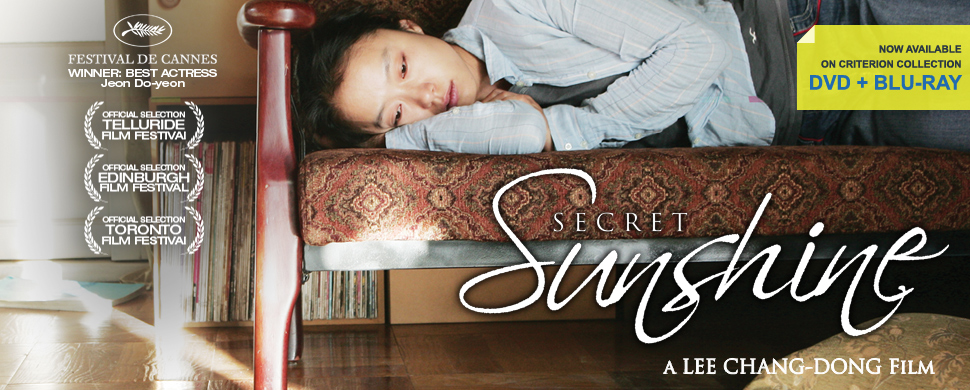
Jeon Do-yeon relocates alongwith her young son to the village where her recently deceased husband grew up. And tragedy strikes again. The film is not so much about the tragedy itself, as about its aftermath. Jeon Do-yeon’s performance is as raw and naked as it can get.

Note: Jeon Do-yeon won the Best Actress award at Cannes Film Festival for Secret Sunshine.

Lee Chang-dong is fairly underrated when it comes to the big league of Korean directors. His last film Poetry is an absolute gem. Do watch his entire filmography which includes Oasis, Peppermint Candy and Green Fish.

Secret Sunshine is now available on Criterion DVD/Blu-ray.

CASTAWAY  ON  THE  MOON

castaway-on-the-moon

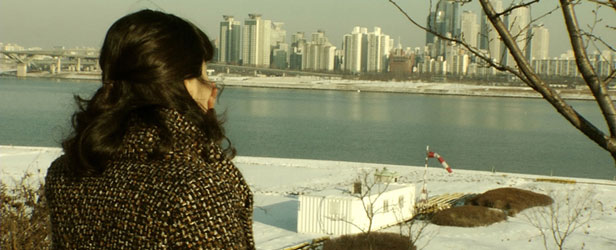
A failed suicide attempt results in Jeong Jae-yeong play Robinson Crusoe in a conservation island in the middle of Han River. The only person who can see him is Kim Jung-yeon, an agoraphobic, who has shut herself in one of the city’s high rises.

Offbeat, quirky, bizarre yet immensely endearing take on romantic comedy.

PAJU

012810paju718

The opening scene in the film sees Seo Woo traveling in a taxi through dense fog. From the first shot director Park Chan-ok is preparing the audience for the ride. Paju is about the complicated relationship between a young girl and her brother-in-law and complications that follow. Gorgeously shot by Kim Woo-hyung and a brilliant and emotionally nuanced performance by Seo Woo in her breakout role.

This is what we call a mood-piece!

TREELESS  MOUNTAIN

tireless mountain

A tender, almost meditative tale of resilience, while facing constant abandonment from family. Heartbreaking real performance from both leads, Kim Hee-yeon and Kim Song-hee.

THE  DAY  HE  ARRIVES

the-day-he-arrives-review2

Hong’s films are very Woody Allen-esque. His characters aren’t as neurotic as Allen but definitely immature and self centered fools. Beautifully shot in monochrome, highlighting the winter, the film is about Yoo Jun-sang, a retired film director, currently teaching film studies, and his encounter with friends, acquaintances and strangers over the next few days when he visits Seoul.

Note : Hong Sang-soo is criminally underrated when it comes to the big league of Korean directors.

He is a Cannes Film Festival regular with five of his films nominated for either Palme d’Or or Un Certain Regard. His film Hahaha won the Un Certain Regard award in 2010.

Do check out his filmography which includes Woman on the Beach, Tale of Cinema, Night and Day, Hahaha and the recent In another Country.

JUVENILE  OFFENDER

juvenile_offender

A beautiful film about a couple of lost souls trying to fit into society, knowing it is difficult for them to change at all.

Terrific performances by Seo Young-joo and Lee Jung-hyun.

DANCE  TOWN

DANCE town

The struggle of a North Korean refugee trying to cope with her new life in South Korea as she’s constantly under the radar of South Korean intelligence alleging her to be a spy.

Note : The final chapter in director Jeon Kyu-hwan’s town trilogy, other two being Mozart Town and Animal Town.

BLEAK  NIGHT

bleak-night

Bleak Night is post-mortem of a suicide. Three high school friends, their loyalty, betrayal, guilt and despair leading to and post the suicide. Touches the important topic of bullying and violence in high school.

Yoon Sung-Hyun makes one of the most assured directorial debuts in recent times.

KolikataKolkata becomes Kolikata. And this avatar is for the 1st Independent Film Festival in the city.

Organisers note – Kolkata (spelt intentionally here as Kolikata, like the old vernacular version of the city’s name) adds another feather to its cap, by hosting an informally, and therefore, impartially organized independent film festival – the first for any Indian city. Nationally awarded films will be screened  alongwith short films made by non-film school students. The filmmakers will be interacting with both film academicians and aspiring filmmakers who are still in college.

Dates : 11-13 September 2013

Films : Independent Short Films, Documentaries and Feature Films.

Initiative : by Chalachchitra Sansad & Leela-Mochchhob

Associate Partner: Guruchandali, an anti-establishment Little Magazine from Kolkata.

Venue: Derozio Hall, Presidency University, College Street, Kolkata

ENTRY : FREE

SCHEDULE

D A Y – I

11:30am: Inauguration

12:00pm: Sa Re Ga Ma Pa by Sankar Karmakar (Fiction, 45 mins)

1:00pm: Plus by Joydip Dam (Fiction, 10 mins)

1:25pm: Chura Liya by Saurav Chattopadhyay (Fiction, 24 mins)

Break, 10 mins.

2:15pm: Students’ Films (4 short films by the students of Presidency University)

Break, 5 mins.

4:00pm: Replica by Sriparna Dey (Fiction, 20 mins)
4:35pm: Memories of a Dead Township by Anamitra Roy (Fiction, 20 mins)

5:10pm: Discussion- Exploring the language of Independent Film.

Panelists:

Moinak Biswas (HOD of Film Studies, Jadavpur University),

Shyamal Karmakar (HOD of Editing, SRFTI),

Amitava Chakraborty (Filmmaker, known for Kaal Abhirati, Cosmic Sex etc.)

& Sankar Karmakar (Filmmaker, known for documentaries like Anya Andhar & Poramatir Mukh)

Break, 5 mins.

6:15pm: Without a Notch of Blue by Sumantra Roy (Fiction, 18mins)

6:50pm: Bilal by Saurav Sarangi (Documentary, 60 mins)

D A Y – 2

11:30am: Swapno Satyokam by Som Chakraborty (Fiction, 20 mins)

12:05pm: Iswar O Protipakhkho by Arupratan Ghosh (Fiction, 15 mins)

12:35pm: Musalmaner Kotha by Soumitra Ghosh Dastidar (Documentary, 60 mins)

1:50pm: Students’ Films (4 short films by the students of Presidency University).

Break, 10 mins.

3:40pm: Ekoda Ek Bagher Golay by Jishnu Mukherjee (Fiction, 16 mins)

4:10pm: Fairy Tales for High School Children by Sayak Shome (Fiction, 5 mins)

4:15pm: This is Not Funny by Sounak Kar (Fiction, 78 mins)

Break, 5 mins.

5:45pm: Tomay Notun Kore Pabo Bole by Kaushik Chakraborty & Arko Kar (Documentary, 60 mins)

7pm: Nothing Unusual by Twish Mukherjee (Docu-fiction, 72 mins)

D A Y – 3

11:30am: Bom by Amlan Dutta (Documentary, 117 mins)

1:30pm: Sand Animation (5 mins)

2pm: Discussion- Alternative Economy & Politics of Independent Film and Power Structure.

Panelists:

Amlan Datta (Filmmaker, known for Bom: One Day Ahead of Democracy),

Q (Filmmaker, known for Gandu, Tasher Desh etc.),

Madhuja Mukherjee (Professor of Film Studies, Jadavpur University; Director, Carnival)

Anamitra Roy (Filmmaker known for Jean Luc Godard Had No Script & The One Rupee Film Project)

Break, 10 mins

3:10pm: Many Stories of Love and Hate by Shyamal Karmakar (Docu-fiction, 55mins)

4:45pm: Priyo Morphine by Atanu Singha (Fiction, 63 mins)

6pm: Kal Abhirati by Amitava Chakraborty (Fiction, 120 mins)

8:20pm: Closing with Sahajiya

– To know more about the fest, click here to go to its FB page.

qissa_01

Anup Singh’s Qissa will have its premiere at the ongoing Toronto International Film Festival. The film stars Irrfan Khan, Tillotama Shome, Rasika Dugal and Tisca Chopra. This Punjabi film is written by Anup Singh and Madhuja Mukherjee.

The first look trailer of the film is just out.

TIFF Note and Synopsis

Set amidst the ethnic cleansing and general chaos that accompanied India’s partition in 1947, this sweeping drama stars Irrfan Khan — also appearing at the Festival in The Lunchbox — as a Sikh attempting to forge a new life for his family while keeping their true identities a secret from their community.

Beautiful, timeless, and touching the deepest of human impulses, Qissa carries the spirit of a great folk tale. Although it’s set in a particular time and place — the Punjab region that straddles India and Pakistan in the years immediately after partition — it is both deeper and broader than any one moment. As this eerie family drama progresses, it cuts to the heart of eternal desires for honour, empathy, and love.

One of India’s best actors, Irrfan Khan (Life of Pi, Festival premiere The Lunchbox, and a feature guest in this year’s Mavericks programme) plays Umber Singh, a Sikh uprooted by the religious violence that came with partition in 1947. He and his family move to a safer locale, and it is here that the story takes a remarkable turn. Having already fathered daughters, Singh now wants a son. When his next child is born he celebrates his wish come true, but there is one problem: the baby is in fact a girl.

“Qissa” is originally an Arabic word meaning folk tale. Both the word and the idea migrated from the Gulf into the Punjab, still connected by the ancient oral narratives handed down in communal settings. Working within this tradition, director Anup Singh gives his film both the grand themes and elemental emotions of classic storytelling. As Umber’s daughter is raised as a boy, the characters are propelled with greater and greater urgency towards their inevitable fates.

Part of a new generation of directors with feet firmly planted in India and far beyond, Singh has delivered a film immediately accessible to anyone sensitive to the conflicts that drive classic stories: fear versus hubris, individual need versus social codes. Qissa is a Punjabi story for the whole world.

Director : Anup Singh

Anup Singh was born in Dar es Salaam, Tanzania. He has written film reviews for Sight & Sound, directed Indian television, and consulted for BBC Two. His features as director are The Name of a River (02) and Qissa (13).

Cast and Crew

Director: Anup Singh

Countries: Germany / India / Netherlands / France

Year: 2013

Language: Punjabi

Runtime: 109 minutes

Rating: 14A

Producer: Johannes Rexin, Bettina Brokemper

Production Co.: Heimatfilm, National Film Development Corporation of India, Augustus Film, Ciné-Sud Promotion

Principal Cast: Irrfan Khan, Tillotama Shome, Rasika Dugal, Tisca Chopra Screenplay: Anup Singh, Madhuja Mukherjee

Cinematographer: Sebastian Edschmid

Editor: Bernd Euscher

Sound: Peter Flamman

Music: Béatrice Thiriet

Prod. Designer: Tim Pannen

Int. Sales Agent: The Match Factory

Since crowd-funding is in vogue these days, it’s good to see the trend going beyond Hindi indies. If our friends are to believed, Lucia is the first Kannada film to be crowd funded. We don’t have much clue about this one but it surely looks interesting. It’s written and directed by Pawan Kumar and will release with English subtitles. The film is released by PVR Directors Rare.

Lucia

Official Synopsis

From the director of smash hit Lifeu Ishtene, comes Lucia, heralding a new direction for Kannada cinema, being the industry’s first crowd funded film. An usher at a decrepit cinema suffers from insomnia. His life changes when he starts getting weird and wonderful dreams but with a caveat. Set in the teeming young metropolis that is Bangalore, the film is a turbulent ride where the lines between dreams and reality are blurred to delirious effect. Please don’t reveal the ending after you’ve watched the film. Prepare to be surprised, very surprised.

Trailer

Show Timings

Lucia2

– To know more about the film, click here.

– To read the filmmaker’s blog, click here.

London Film Festival (LFF) has announced its schedule for this year. The 57th edition of the festival will run from 9-20 October and will screen 234 feature-length films & 134 shorts from 74 countries.

India seems to have a good score at LFF this year as seven desi films have been selected for the fest. The titles include Buddhadeb Dasgupta’s Anwar Ka Ajab Kissa, Ritesh Batra’s fest favourite The Lunchbox, Nagraj Manjule’s Fandry, Richie Mehta’s Siddharth, Shaina Anand and Ashok Sukumaran’s From Gulf To Gulf, Rituparno Ghosh’s Jeevan Smriti and Uday Shankar’s Kalpana. The Lunchbox is in official competition section of the fest.

But the one that we are most excited about is Anwar Ka Ajab Kissa (Sniffer). We have been hearing about it for sometime and now more details have come out.

ANWAR KA AJAB KISSA

sniffer-002

Master Bengali filmmaker Buddhadeb Dasgupta teams up with India’s hottest indie actor Nawazuddin Siddiqui in this richly textured black comedy, set against a magical, surreal tableaux of the Bengali city and countryside that’s typical of Dasgupta’s eye. Anwar (Nawazuddin Siddiqui) is a well meaning if clumsy private detective, or ‘sniffer’, who can’t help getting personally embroiled with the clients he is spying on. His only true companion is an old dog. His pet and his regular drunkenness put him at odds with the local orthodox Muslim housing block, who want him out. At the same time, Anwar increasingly struggles to cope with his small-time sleuth work that shows him that, in the modern world, even love is for sale. When a case takes Anwar back to his rural homeland, he’s forced to confront his own love tragedy. Siddiqui lights up the screen, displaying a talent for deft comic timing that makes Sniffer a joy to watch.

– Director-Screenwriter : Buddhadeb Dasgupta

– Producers : Ajay Sharma, Archismaan Sharma

– With Nawazuddin Siddiqui, Pankaj Tripathi, Ananya Chatterjee

– Duration :132 mins

FANDRY

fandry

The ‘untouchable’ Jabya struggles to reconcile his status with his dreams in Nagraj Manjule’s uncompromising indictment of India’s caste system.

– Director-Screenwriter : Nagraj Manjule

– Producers : Vivek Kajaria, Nilesh Navalakha

– With Somnath Avghade, Suraj Pawar, Kishor Kadam

– Duration : 105 mins

– Production company Navalakha Arts and Holy Basil Combine

Nagraj Manjule’s film is a scorching indictment of the caste system that persists in modern India despite legislation introduced since independence. It is depicted through the eyes of an intelligent Dalit (untouchable) teenager, Jabya, who has a deeply rooted inferiority complex about his looks, caste and his family’s staggering poverty. These feelings prevent him from expressing his affection for his fellow classmate and cherished love, the fair-skinned Shalu, who is the daughter of a higher-caste family. His father is against him going to school and aspiring too highly and fellow villagers expect him to do menial work like the rest of his clan.

SIDDHARTH

siddharth-002

A modern-day quest to find his missing son leads Delhi tailor Mahendra on a perilous journey into the unknown in Richie Mehta’s cautionary tale.

– Director-Screenwriter Richie Mehta

– Producers Steven N Bray, David Miller

– With Rajesh Tailang, Tannishtha Chatterjee, Anuray Arora

– Canada-India 2013

– Duration 96 mins

– Production company Poor Man’s Productions

– Sales : Fortissimo

Director Richie Mehta returns to London with a powerful tale that is all too sadly a common story in today’s Indian cities. In Delhi, a door-to-door tailor, Mahendra, and his long-suffering wife, played by Tannishtha Chatterjee (Brick Lane), are struggling to make ends meet. They send their 12-year-old son Siddharth off to work illegally in a factory in Punjab, but when he doesn’t arrive back on the agreed date, the couple go to the middle men who arranged their son’s job and then the police. As they don’t have a photo of their son, identification is near impossible. As tales of child abduction are raised the desperate father borrows money from his fellow local street vendors and sets off on a quest to trace his son’s journey into the unknown.

FROM GULF TO GULF

from-gulf-to-gulf-to-gulf-002

Mobile phone video from the sailors who brave the routes between India and the Persian Gulf form the basis of grassroots true-life adventure.

– Directors : Shaina Anand, Ashok Sukumaran

– Producer CAMP

– India-United Arab Emirates 2013

– Duration : 81 mins

– Production company : Sharjah Art Foundation

‘A film based on actual events, and videos of actual events.’ Four years ago the Indian artists’ collective CAMP started to work with the boats that crisscross the Arabian Sea from the Gulf of Kutch between India and Pakistan to the Persian Gulf. This film draws from these years of dialogue, friendship and video exchange with sailors, most of whom are from Gujarat in India, Southern Iran and Pakistan. Rather than directing, the filmmakers act as editors, deftly compiling from the sailors’ mobile phone footage an authentic grassroots picture of the experiences of these usually invisible sea workers. But, with the impressive wooden boats and the joyous soundtrack (chosen by the sailors themselves), this humble material is ultimately transformed into a modern adventure on the high seas.

 JEEVAN SMRITI

jeevan-smriti-002

The swansong of the late Rituparno Ghosh is a fittingly personal take on the LFF favourite’s own inspiration, the poet-artist Rabindranath Tagore.

– Director-Screenwriter : Rituparno Ghosh

– Producer : Sanjoy Nag

– With Sanjoy Nag, Samadarshi Dutta, Raima Sen, Anirban Ghosh

– Duration 78 mins

– Sales : National Film Development Corporation

This is a sumptuous, very personal docu-drama about his own inspiration – the legendary poet and artist Rabindranath Tagore. Flamboyant Rituparno, with his camera team, set off from Kolkata in the monsoons to Tagore’s country birthplace, on a journey of love and poetic admiration. On the way they uncover the lesser-known personal life of this Bengali hero. A stunningly photographed dramatic story, backed by great actors like Raima Sen, depicts the inner struggles of the young, introvert Tagore who, in spite of his comfortable background, was constantly tortured but also inspired by love and terrible loss.

Kalpana is Uday Shankar’s classic which has been restored by World Cinema Foundation at Cineteca di Bologna/ L’Immagine Ritrovata laboratory in association with the National Film Archive of India.

Info and pics courtesy : BFI

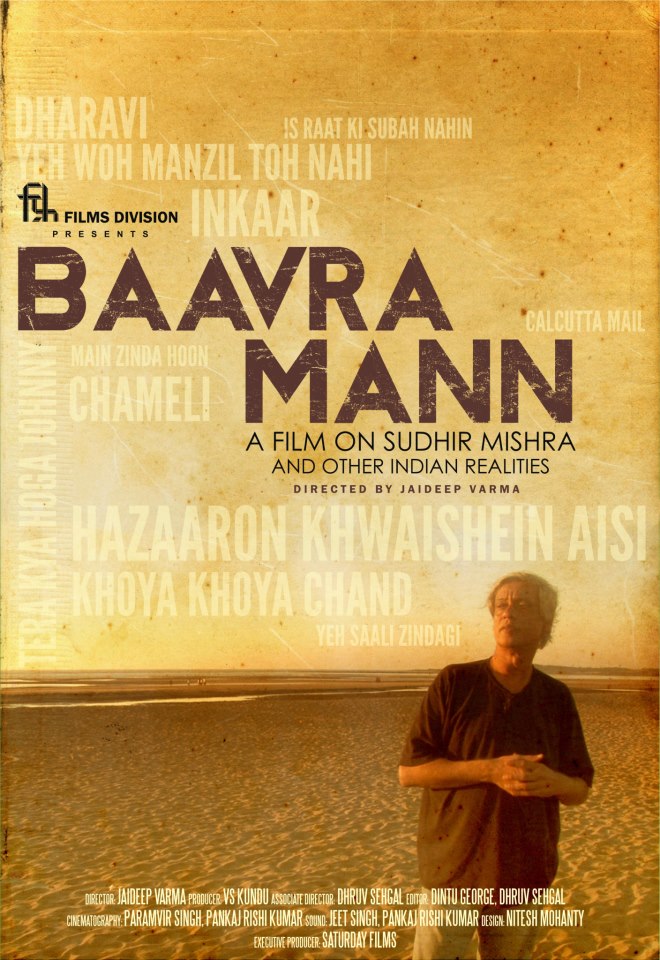
Jaideep Varma’s documentary Baavra Mann is yet to get a release in India. Karan Singh Tyagi saw it at New York Indian Film Festival earlier this year and wrote this post for us. Read on.

(We suggest you play the song in the background while reading the post)

Baavra MannWho is this long-haired Sanjay Dutt duplicate?

Duplicate nahi hai bhaiyya. Iska naam Nirmal Pandey hai. Kya acting kari thi isne ‘Is raat ki subah nahin’ me”, was my prompt reply, as my cousin and I stood in line with a dozen others, scanning movie posters outside Gaiety (Bandra) and booking our tickets for ‘Auzar’. As an 11 year old, I couldn’t contain my excitement, at having recognized Nirmal Pandey in the ‘Auzar’ poster, and went on this long rant about ‘Is raat ki subah nahin’. Much to my cousin’s chagrin, I told him everything about the movie – how it was violent and funny at the same time, how all the actors spoke a very different language, how the story finished in one night, and importantly, how Papa and I were lucky to see the movie on the big screen, as it had a single show in Bombay.

This innocuous little incident came back to me while watching Jaideep Varma’s documentary, ‘Bavra Mann and other Indian Realities’, in New York. For those who haven’t seen it yet, Jaideep’s movie traverses through the life and films of Sudhir Mishra, and somewhere in the middle of the movie, Mishra laments how ‘Is raat ki subah nahin’ was confined to a single show in Bombay and how many people didn’t get to see it. On hearing this, I silently smiled as my mind went back to watching the movie with Papa in the same show that Mishra was referring to. How I wanted to thank my father at that very instant! Not just for taking me to ‘Is raat ki subah nahin’, but for giving me the hereditary gift of love for movies and being the best companion I could have had while I nurtured  it.

There were numerous such nostalgia trips throughout Jaideep’s movie. The portions dealing with ‘Hazaron Khwaishein Aisi’ left me mesmerized. Listening to ‘Bavra mann dekhne chala ek sapna’ on the big screen again did my soul so much good; it stirred something deep within me, something in desperate need of stirring. My mind went back to when I first saw ‘Hazaaron..’ I remember crying tears of joy and sadness, laughing gleefully, feeling melancholic and empty, while ‘Bavra Mann’ played on loop and images from the movie interposed with flashes of my life didn’t leave me for days at end.  Probably, this is a uniform reaction that ‘Hazaaron..’ elicits. The movie strikes a deep chord somewhere, and makes one confront broken promises, failed dreams, and all those bittersweet memories, that we carry with ourselves. Right after watching Jaideep’s ‘Bavra Mann’, a friend who had accompanied me to the screening in New York forwarded me this by Avijit Ghosh who captures this sentiment beautifully:

There are a thousand reasons to watch Hazaaron Khwaishein Aisi. But enjoy it as a last anthem for a generation who knew how to believe. Watch it holding the hand of a woman you have loved and lost. And it would be nice if you have drunk some rotten whisky before.

As must be painfully evident by now, I am easily susceptible to bouts of nostalgia. However, these glorious nostalgia-filled moments were not the only reason why I enjoyed Bavra Mann. I have often wondered what drives filmmakers to make the kind of movies that they do. For example, at the risk of doing a Baradwaj Rangan here, I have been fascinated by two particular scenes from Black Friday and Gangs of Wasseypur.

Sample these dialogues:

Black Friday – “Jiske paas kuch nahi hai karne ke liye, dharam ke naam par chutiya banta rahega”. GOW2 – “Jab tak cinema hai log chutiye bante rahenge

I have often wanted to argue that we can discern in these dialogues a kind of master narrative, a collection of meanings, and, perhaps, a powerful leitmotif that runs through all of Kashyap’s movies, a kind of slavishness and hive mentality – towards religion in Black Friday, towards cinema and everything that one acquires from it in Gangs of Wasseypur. To take the analogy further, slavishness towards power in Gulal, towards self and personal ego in DevD and No Smoking. Therefore, Kashyap’s movies are magic on celluloid, because he lets characters with such aggressive spirit and slavish devotion face their internal conflicts and external surroundings. What we see on screen is the result of a bundle of contradictory aspects and motivations, a certain kind of dualism that everyone and everything in life has. I have repeatedly asked myself, what are the questions that Kashyap is trying to answer through his work? Has he found any answers yet?

Bavra Mann poses similar questions to someone whom Vikramaditya Motwane calls the “original Anurag Kashyap”. Despite the frequent and frenzied analysis of cinematic moves of all current directors’, I feel there is a strong lack of literature that provides us with enough resources to examine and study their work. This is where Bavra Mann triumphs. It gives enough resources to the audience to interpret Sudhir Mishra and his movies in a new light. Bavra Mann is a fascinating exercise in self-revelation and film lovers will revel in the personal anecdotes and casually delivered remarks that reveal layers and layers of information about Mishra and his body of work. The movie has a series of interviews with Mishra and people close to him, covering the length of Mishra’s career, beginning with his childhood, continuing through his education, his failed marriage with his first wife, his relationship with renowned film editor, Renu Saluja, his early film work, his breakthrough success with Dharavi, and his daring work in Hazaaron.., his most autobiographical Khoya Khoya Chand, and finally his recent movies. There is a treasure trove of diamonds in the movie. After all, who wouldn’t want to eavesdrop on Mishra and Shantanu Moitra’s recounting of how they got Swanand Kirkire to sing ‘Bavra Mann.’

A criticism often peddled against movies like Bavra Mann is that the director holds back, and is reverential towards his subject. Here, Jaideep is never in awe of Sudhir Mishra. His questions are probing and the discussions on films themselves are less about why they’re great and more about how they were put together. Jaideep knows that directors are not good at explaining motives behind making particular films. Movies, like many things else, begin with something very vague and abstract. Jaideep, therefore, never tries to look for definite answers and actual motives behind Mishra’s work. His aim is to allow the viewers the freedom to interpret the scene in the way they want, and depending on how their cinematic education (and earlier experiences of Mishra’s movies) has prepared them. Bavra Mann succeeds in bringing before us the greatest number of possibilities to reinterpret Mishra’s movies. After watching Bavra Mann, I realized that Sudhir Mishra’s movies (especially the earlier ones) resonated with me because they were being truthful about life – the movies expressed some deeper emotional experiences that Sudhir Mishra recognized in his own existence. This in and of itself was a reason for me to love Bavra Mann.

However, for me, the biggest strength of Bavra Mann is that it never wavers from admitting that Sudhir Mishra continues to be plagued with what is an inconsistent body of work. It subtly engages in criticism of some of Sudhir Mishra’s recent movies (the likes of Inkar, Calcutta Mail) to reflect on the present-day infertility of thought in India. By using Sudhir Mishra’s example, Jaideep exposes the dangers inherent in adopting a conformist and consensus-driven career. According to me, it is in this context that the movie makes a brutally frank attempt to unravel the intellectual decline of India and Indian movies (using Sudhir Mishra as a metaphor).  The movie, therefore, is an elegy of intellectual life not only of Sudhir Mishra but of us all. In a way, the movie tries to jolt us (Sudhir Mishra included) out of the dark recesses that we have allowed ourselves to fall in.

I do not know if Bavra Mann is getting a theatrical release anytime soon. However, I strongly hope that everyone gets a chance to see it. Watch it to revisit old times, to go back to your personal stories intertwined with Sudhir’s films, watch it to hear “Bavra Mann” on the big screen again, watch it as a student and lover of cinema, and most importantly, watch it because it is a powerful statement on the times that we live in.

Naseerudin Shah says the single most perceptive thing in the movie: “Mishra’s best work is yet to come.” Even though, I love ‘Hazaaron…’, I wouldn’t want it to be Mishra’s best work. I earnestly wish that it turns out to be just a teaser of what he (and by association) Indian cinema goes on to achieve and that no one is ever required to come to the rescue of this long-haired maverick director, like I had to once come to the rescue of his similarly long-haired leading man outside Gaiety.

– Karan Singh Tyagi

(Karan was born in Meerut, lived and studied in Bombay and Harvard, and after a brief stop in Paris, now finds himself in New York. He strongly feels that Ramadhir Singh was directly referring to him while saying, “Sab ke dimaag me apni apni picture chal rahi hai aur sab saale hero banna chah rahe hain apni picture me..” When he is not day-dreaming about movies or Real Madrid, he also works as a lawyer. You can find him on twitter here: @karanstyagi)

shahid_04

Aha, finally the good news. Hansal Mehta’s Shahid has been acquired by UTV and they will soon announce the release date. Hopefully the film should be out in theatres in next few months. The film marks Hansal’s terrific comeback after a long time and Raj Kumar Yadav is so effortlessly good that he makes you believe that he is the real “Shahid Azmi”. The film has been doing the fest rounds for quite sometime now. Do watch it when it releases.

UTV really seems to be going in right direction with the perfect balance of masala and non-mainstream films. First, Ship Of Theseus, then The Lunchbox and now, Shahid. I would say i wouldn’t mind the assault of the big budget braindead star vehicles as long as they keep on balancing it with some sold small and good films. And hopefully other production houses will follow them.

Click here to read a post on Shahid written by Ad filmmaker Ravi Deshpande.

Official Synopsis

Shahid is the remarkable true story of slain human rights activist and lawyer Shahid Azmi, who was killed in 2010 by unidentified assailants in his office. From attempting to become a terrorist, to being wrongly imprisoned under a draconian anti-terrorism law, to becoming a champion of human rights (particularly of the Muslim minorities in India), Shahid traces the inspiring personal journey of a boy who became an unlikely messiah for human rights, while following the rise of communal violence in India. This story of an impoverished Muslim struggling to come to terms with injustice and inequality, whilerising above his circumstances is an inspiring testament to the human spirit. Starring Raj Kumar, Prabhleen Sandhu and Baljinder Kaur.

Cast and crew

Director: Hansal Mehta

Language: Hindi

Runtime: 123 minutes

Exec. Producer: Jai Mehta, Kunal Rohra

Producer: Sunil Bohra, Shailesh Singh, Guneet Monga and Anurag Kashyap

Production Co: Bohra Bros Pvt. Ltd. and Anurag Kashyap Films Pvt. Ltd.

Principal Cast: Raj Kumar, Prabhleen Sandhu, Baljinder Kaur, Tigmanshu Dhulia, K K Menon, Yusuf Husain, Prabal Panjabi, Vinod Rawat, Vipin Sharma, Shalini Vatsa, Paritosh Sand, Pavan Kumar, Vivek Ghamande, Akash Sinha, Mohd Zeeshan Ayyub, Mukesh Chhabra

Screenplay: Sameer Gautam Singh, Apurva Asrani, Hansal Mehta

Cinematographer: Anuj Dhawan

Editor: Apurva Asrani

Sound: Mandar Kulkarni

Prod. Designer: Rabiul Sarkar