KAUFMAN - "Or cramming in sex, or car chases, or guns. Or characters learning profound life lessons. Or characters growing or characters changing or characters learning to like each other or characters overcoming obstacles to succeed in the end. Y'know ? Movie shit."
Kaufman is sweating like crazy now. Valerie is quiet for a moment - from "Adaptation".
We are all about CINEMA. That movie shit.
NOTHING is sacred.
NOBODY is spared.
Because we talk about films, dammit.
Not your sex life.
Films, fests, unsung, indies, undiscovered - all that and some fun. If you have dope on anything related to cinema or you would like to share something, do write to us at moifightclub@gmail.com.
The views, opinions, reviews, articles, or positions, expressed by the authors and those providing comments are theirs alone, and do not necessarily reflect the views, opinions, positions or strategies of ANY OF THE EMPLOYERS, FRIENDS, RELATIVES, PR agencies, Production houses, Media group and such third parties associated with the authors. The latter make no representations as to accuracy, completeness, currentness, suitability, or validity of any information on this site and will not be liable for any errors, omissions, or delays in this information or any losses, injuries, or damages arising from its display or use.
In short, if you have an issue with us or any post we've written, write to us at moifightclub@gmail.com
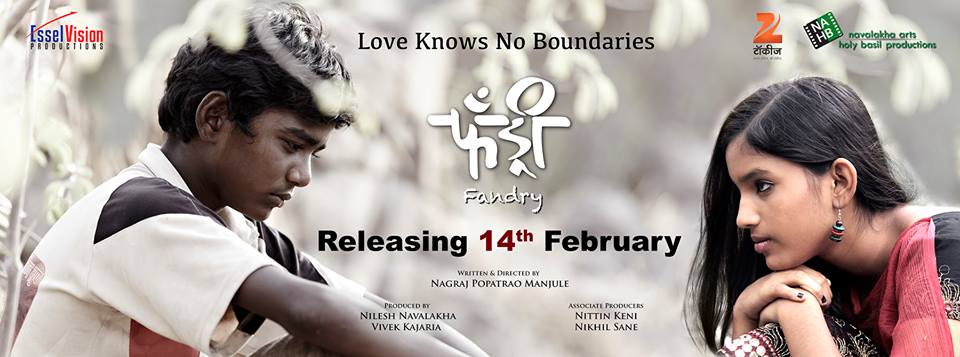
Since the time we saw Nagraj Manjule’s debut feature ‘Fandry’, we have been shouting out from rooftop that it’s a terrific debut and a must watch. Click here to read our recco post. This week, Fandry is releasing outside Maharashtra, and with English subtites.
After the film’s release and the acclaim it got all over, Nagraj wrote a piece for Maharashtra Times. Much thanks to @Shankasur who came up with the idea to translate it in English for wider reach, took the permission, and did it for us. Do watch the film if you haven’t seen it yet. And then read it.
Remembering Fandry
Now that Fandry has been released, I am reminiscing all the memories that are linked with it. These memories have accumulated over a long period of time. The very moment someone mentions Fandry, I am reminded of experiences from
childhood and that of growing. I grew up with a strange sense of fear and a realisation that I was born into an under-privileged life. I was made aware of my limits since my childhood. I would go to watch Ramayana and everybody’s seats were fixed. While watching King Ram from a corner, the invisible “No Entry” signage that was in my mind was getting bold and clear. The surrounding social setup was up in arms that constantly kept reminding me of my deprived social status.
I don’t exactly remember when my innocent courage took a backseat and I became aware of my caste limitations at every step. I never realised when this impotent maturity became a part of my life. Whenever I uttered my or my mother’s name, or even make a reference to my caste while filling forms in school, the class would break into a faint yet violent laughter. To avoid these embarrassments, I would walk up to the teacher and whisper my name and caste into his ears. I made this into a habit since I was in primary school. When one’s identity becomes the reason behind his inferiority complex, he has nothing more to say. I don’t remember since when I feared telling my own name to others. All I carried along was a sense of fear that it would be criminal of me to do so.
When my father would address my friends as “saheb”, “sarkar”, my expectations for friendship, equality would seem unreasonable. If someone loosened the noose around our neck, we would celebrate that as our freedom. But that didn’t stop me from dreaming. Even in this gated social setup, dreams would find their own little ways. A simple jean pant, a sweet dish during a festival, electricity connection at home, a new pair of footwear would seem like dreams that could come true. The system I was living in would stack up these little wishes and desires and make them appear as dreams that were out of my reach. But dreams don’t have labels of caste and religion. They express their desire to be realised in most innocent manner which gives rise to a chaotic struggle between these dreams and our own inferiority complexes. Sadly, the later always wins over the former.
When I entered college, the old nightmare was in front of me all over again. I had expected that at least in college, I would be treated with some dignity. In my first year, we had a story by S. M. Matey in which the protagonist curses the villian as “Hey Kalyaa Wadaaraa!” (Wadar is a denotified tribe (DNT), while Kalyaa refers to a dark skinned man. It’s difficult to translate the heinous undertone of this phrase). I had this habit of reading through all the lessons and stories before the course starts.
When I came across this sentence in Matey’s story, I decided to remain absent in the class the day when this story will be taken for discussion. I bunked classes for a week and thought that the professor must’ve finished discussing this story. To my worst surprise, the professor started with the story the same day I chose to remain present again to the classes. Not to mention, when sir recited those lines, everyone looked at me, trying hard to control their laughter. I felt an immediate need to miraculously disappear from where I was sitting, like a god.
A man starts expecting such miracles to happen at times of these depressing encounters with life. Fandry reminds me of these episodes. It reminds of the haunting space called school. It reminds of those innocent dreams; reminds me of the dreams that were squashed and crushed by the might of my underprivileged caste identity I carried throughout.
“Fandry means what?” is a question that I’ve been asked numerous times. And I’ve refrained telling its meaning in one simple word. Fandry is a word used by a tribe, that lives around us, in their dialect. We do not know of this dialect nor about the tribe. We are unaware of their lives, their dreams, the pleasures and perils of their existence. When you will come searching for the meaning to the word Fandry and spare a moment to understand about lives of these people, I would consider my attempt to keep its meaning a secret a ssuccess.
Fandry is not a secret but an invitation for all of you. Please accept it and face the ugly truth that we always prefer to ignore. A truth that we’ve always been hiding like an epidemic. But when a vaccine to this epidemic would be discovered, we will have to accept that we are struck by it. It is only then I can dream of a clean and compassionate dawn in history of mankind.
In what’s turning out to be a most heartening trend in recent years, yet another Indian film has made a name for itself at a prestigious International film festival. Avinash Arun’s directorial debut, the Marathi feature film Killa (The Fort) had its world premiere at the Berlin International Film Festival (better known as the Berlinale). The film was selected in the Generation Kplus competitive category and has won a Crystal Bear from the Children’s Jury and a Special Mention from the International Jury.
About the Prize
In the Generation Kplus section the jury members are no older than those of the audience. Eleven children and seven teens award the best films with Crystal Bears. Special Mentions are given for outstanding achievements. Two international juries present further prizes in the Generation Kplus and Generation 14plus competition.
The film received glowing reviews from both juries. The Children’s Jury, awarding the Crystal Bear said:
“This film convinced us in all respects: with his good camera work and the great actors, but also because of its incredibly beautiful nature images which blend perfectly with the music. This film made us all want to discover India.”
Interestingly, the film also received a Special Mention from the International Jury too:
“A beautifully photographed story about the challenges of being a boy. This film had wonderful pace and rhythm. Never reverting to clichés, the fresh performances left us feeling we were right there with the characters.”
About the Film
Coping with the recent death of his father, Chinu, 11- year old boy moves to a small Konkan town from a big city because of his mother’s job transfer. He finds it difficult to adjust to the new place and finds himself alienated and reluctant to open up to its people. Both Chinu and his mother grapple with their own individual struggles and anxieties in the new town. In the process, they emerge with newer experiences and as newer people, both healed and enriched.
Produced by Madhukar R Musle, Ajay G Rai, Alan McAlex under the banner, Jar Pictures and presented by M R Filmworks, the film was a part of NFDC Film Bazaar’s Work-in-Progress (WIP) Lab in 2013.
It stars Amruta Subhash, Archit Deodhar, Parth Bhalerao and Shrikant Yadav. Here are some stills from the film:
Killa
About the Director
Avinash Arun is a Director – Cinematographer from Maharashtra, India. Born in the textile town Solapur in 1985 in a middle class Maharashtrian family, he started assisting in FTII Diploma films at the age of 16. He eventually graduated in Cinematography from FTII in 2011. In 2010, his school project “The Light and Her Shadows” won him the cinematography award in Kodak film school Competition. His diploma film “Allah Is Great” was the official entry from India for Student Oscars. It also won several awards including the National award in 2012. Avinash has worked on “Kai Po Che!” (Berlinale Panorama section 2012), Deool (National Award winner 2011). Killa is his first feature film as director. He is also the cinematographer on this film.
Avinash has also shot Vasan Bala‘s short film ‘Geek Out’, which we’ve featured previously on this blog.
6. Because you probably don’t know what ‘Fandry’ means, even if you are a Marathi manoos. And if not, try asking your Maharashtrian friends. Doubt you will get the answer. We tried it all, saying it from experience. You love your little cocoon.
7. Because current Bollywood has forgotten what “adolescence” means. Same with you.
8. Because you don’t know what your caste is. And it has never mattered in your life.
9. Because every time you saw a pig, you felt it’s ugly and so filthy. Nothing humane there. You don’t need a new feeling.
10. Because it’s that rare film whose 2 scenes made it to our year end list of 16 Most Memorable scenes of the year. Scroll down to read why.
Still looking for another excuse?
We discovered the film at last year’s Mumbai Film Festival. This was our first reaction, or you can call it brief review of the film (was posted here) :
Fandry – It’s Beasts Of The Maharashtrian Wild. The pains of growing up, of dreaming about the girl from upper caste, trying to get fair skin, and aspiring to own a pair of jeans. About a family of pig catchers who are considered untouchable in the village, and of adolescent days. The harsh reality might seem like poverty porn, but a line from The Great Beauty came to my mind – you can’t talk about poverty, you have to live it. A daring film where the entire film seems to be set-up for the powerful last 20 minutes.
Later on, for our year-end post, Kushan Nandy and Varun Grover wrote about 2 powerful scenes of the film. One has spoiler alert, other you can read.
Fandry, Nagraj Manjule’s charming story of Jabya, a young boy battling his inner turmoil of being born a Dalit, whose only source of income is rescuing the village from droves of pigs by chasing them out, and only happiness is a teenage infatuation and perhaps a non-existent bird, reaches an inevitable, satirical climax that can truly be described as the successor of the Mahabharata scene from Jaane Bhi Do Yaaro.
Cruelly hilarious and dripping with pathos, the last scene of Fandry is a portrayal of who we truly are. As Jabya is forced to help his aging parents chase the pigs down, the village gathers to celebrate this humiliation, almost like spectators at a T20 match.
At one point, one of the characters uploads Jabya’s plight on his Facebook page. That one moment points out how technology has invaded us and yet human values remain absent.
However, Manjule’s masterstroke is Jabya doing exactly what the viewer had been wanting to do all along. He gathers his frustration and desperation to plant a sounding kick into the belly of the very society that was trying to hold him down. Match over.
Sadly though, Jabya’s non-existent bird somewhere stands for the freedom from society’s humiliation that he shall never ever get.
Only in a state like Maharashtra, where right-wing is so strong that even after the death of their biggest ideologue I don’t feel confident and safe mentioning his name in a post that has no direct criticism of his easily-criticizable styles of functioning, where newspaper offices get ransacked for faintest of hurt sentiments, where people get beaten up for not standing up during the mandatory National Anthem before the film – a film like ‘Fandry’ is possible. (Just like BR Ambedkar and Vijay Tendulkar couldn’t have been anywhere else.) A state of oppression breeds an inventiveness and ferocity of protest like nothing else.
And in a protest film (though treated like a coming of age for the most part) like ‘Fandry’, comes a scene that makes all the protest scenes in the history of our cinema look tame in comparison. A Dalit family is trying to catch a pig next to a school, the Dalit kid is feeling humiliated ‘cos his friends might be watching the reality of his caste he has so carefully hidden from them, the pig evading them like a pro. After lots of chasing the pig finally seems to be cornered. The family now just has to move closer and catch it and end the misery on both sides of this hunter-hunted divide. The kid seems slightly relieved that the ordeal may be over as they encircle the pig. But, just before they could swoop down, the national anthem starts playing in the school assembly next door. Nobody can move now, except of course the pig. As the Dalit family stands in attention, paying ‘due respects’ to the nation they are equal citizens of, the pig walks away into the free morning.
The whole cinema hall jumped up and applauded the scene wildly. I guess the irreverence, cheekiness, and metaphor it stood for connected with all of us, so used to standing awkwardly before the film, one hand carrying smartphone, another carrying popcorn, thinking ‘Pandit Bhimsen Joshi ji, aalaap mat lo itna lamba. 56 second mein khatam hona chaahiye ideally!
– Click here to watch its trailer and for cast-crew and other details.
Avinash Arun’s directorial debut, the Marathi feature film Killa (The Fort) will have its world premiere at the upcoming Berlinal International Film Festival. The fest runs from February 6-16, 2014.
The film is selected in the Generation Kplus competitive category. IT stars Amruta Subhash, Archit Deodhar, Parth Bhalerao and Shrikant Yadav. Avinash has also shot the film.
Official Synopsis
Killa deals with the universal conflict of migration, and how it impacts the lives of people, especially children. The story revolves around a young boy Chinu who finds it difficult to adjust to his new surroundings where he has migrated to, after his father’s death. But gradually he makes new friends and gains more confidence.
Produced by Madhukar R Musle, Ajay G Rai, Alan McAlex under the banner, Jar Pictures and presented by M R Filmworks, the film was a part of NFDC Film Bazaar’s Work-in-Progress (WIP) Lab in 2013.
There are few other Indian films at this edition of Berlin Fest. Gaurav Saxena’s Rangzen will also have its world premiere in Generation Kplus. Imtiaz Ali’s Highway and Papilio Buddha (India/USA) directed by Jayan Cherian will be screened in the Panorama section. Lajwanti (The Honour Keeper) directed by Pushpendra Singh has been selected for Berlinale Forum which is for avant garde, experimental works, essays, long-term observations, political reportage and yet-to-be-discovered cinematic landscapes. Also, Berlinale Talent Campus has selected 3 Indians – Producer Sanjay Shah, documentary filmmaker Nishtha Jain and director/screenwriter Dipesh Jain. More details here.
Initially it was the title of the film that made us curious. And strangely, nobody knew the meaning because though it seems like a Marathi word, it isn’t. And then we saw the film at Mumbai Film Festival and loved it. It even featured in our best scenes of the year list.
The film has been written and directed by Nagraj Manjule. The makers have just released the official first trailer of the film. It perfectly captures the mood and the essence of the film. Have a look. And thankfully, it’s with English subtitles.
Official Synopsis
A mesmeric force pulls Jabya onto the other side. The rarest of rare Black Sparrow, he is told, is the cure to his problem. The hypnotic spell of the sparrow makes him wander relentlessly. Completely away from the magical world of Jabya, exists the callous reality of his parents who are working at the most oppressed level of the Indian Class Structure and assume him to do the same work which they have done all their life. The protagonist Jabya has to now struggle between his quest to find the magical sparrow and his parents’ expectations. Will Jabya be successful in his pursuit of the Black Sparrow? Will the magnetic power surpass the class differences between Jabya and Shalu created by centuries of customs.? Will Jabya break the fences and pass onto the other side?
If you have read this earlier post on 17 terrific films of the year, the brief was the same for this new post. And this one is collaborative too. Only film has been replaced with scenes. So here are the 16 most memorable and powerful scenes of the year as picked by 16 film fanatics.
(If you missed our earlier post in this 2013 flashback series, here’s the list – 20 Things We Learnt At The Movies and 13 Unanswered Questions is here, Top 10 Musical Gems We Discovered This Year is here, 15 Film Fanatics on 17 Terrific Films That Have Stayed With Them is here, and 14 Bollywood Song We Played in Non-stop Loop Is here.)
Fandry, Nagraj Manjule’s charming story of Jabya, a young boy battling his inner turmoil of being born a Dalit, whose only source of income is rescuing the village from droves of pigs by chasing them out, and only happiness is a teenage infatuation and perhaps a non-existent bird, reaches an inevitable, satirical climax that can truly be described as the successor of the Mahabharata scene from Jaane Bhi Do Yaaro.
Cruelly hilarious and dripping with pathos, the last scene of Fandry is a portrayal of who we truly are. As Jabya is forced to help his aging parents chase the pigs down, the village gathers to celebrate this humiliation, almost like spectators at a T20 match.
At one point, one of the characters uploads Jabya’s plight on his Facebook page. That one moment points out how technology has invaded us and yet human values remain absent.
However, Manjule’s masterstroke is Jabya doing exactly what the viewer had been wanting to do all along. He gathers his frustration and desperation to plant a sounding kick into the belly of the very society that was trying to hold him down. Match over.
Sadly though, Jabya’s non-existent bird somewhere stands for the freedom from society’s humiliation that he shall never ever get.
Joseph Gordon Levitt’s hilarious Don Jon is the single greatest commentary piece on porn. It isn’t about porn but it’s a guy’s perspective on the necessity of porn. Early in the film in Don Jon explains why he watches porn despite scoring chicks whenever he pleases. He watches porn simply because it is more exciting and entertaining than actual sex. Real women don’t do the things that the ones in the porn videos do. Which is why always slips off the bed in the middle of the night, turns on his computer, rubs one out, and returns to snuggle with the girl in his bed.
Later in the film he falls in love with the Hollywood rom-com buff Scarlett Johnasson’s character Barbara who does everything with him except have sex. This tortures him. She becomes his porn. Whenever he opens his laptop he browses FB photos of her instead of looking at porn websites. After a lot of torment Don finally has sex with her. But as he lies in his bed, his voiceover tells us that he’s in love with Barbara, and he finally got to have sex with her after weeks and weeks of waiting, and that he’s sorry to say that it was STILL not as good as porn. Don skulks off to his computer and proceeds to rub one out.
The scene that brought down the house was the one where Barbara confronts Don about his porn addiction and calls it sick. He enlightens her that firstly, every guy watches porn and those who say who don’t are lying, and she refuses to believe him. And secondly they have sex all the time, whenever she wants, and it’s not like he’s cheating on her. When she asks him how he can even watch that shit, he replies by asking how she can watch those stupid unrealistic romcoms all day. Shell-shocked, she tells him that movies and porn are different things. And they give awards for movies. He tells her they give awards for porn too.
It was a beautiful and hilarious clash of irony, ideals and cultural norms. With one single scene JGL brought down the accepted definitions of ‘decency’ and ‘addiction’. He’s addicted to enjoying a perfect and unrealistic view of fulfilment and emotional satiation. She’s addicted to enjoying a perfect and unrealistic view of fulfilment and emotional satiation. And yet he is called a sicko and is dumped.
And most importantly, JGL pulled this off without coming across as sexist. That makes him a fucking great filmmaker.
I always believed that the past is truly yours and no one can deny you that. It’s like a drug which you crave for (un)knowingly. And this drug called nostalgia, like a termite, can eat through your present, one moment at a time. How many times have we watched that same video from 90s on youtube just to scrape whatever little memory you can from that time and place. When Sajan Fernandez watched Ye Jo Hai Zindagi on an old VCR, it killed something inside me. There is a sweetness to it and melancholy, still, a man lost in time trying to live his present through scraps from his past. That scene has stayed with me ever since i watched the film. Like those scenes where he smoked on his balcony, Irrfan Khan here emotes with minimal muscles and no words, and yet the entire back story of the character, his pain and his longing is laced before you.
The most powerful, stand out scene for me in any movie in 2013 – after careful deliberation – is from Short Term 12. Surprisingly, it doesn’t involve the lead characters, but one from the ensemble. Marcus – played by Keith Stanfield – is the standoffish kid on the verge of turning 18 and getting ‘released’ from the foster-care center for teens. He’s brooding, strong, and intense for most part of the story and, until the moment, paints himself as if pushed into a corner. When he does lash out, he does it – incredibly – with poetry. In a single, long take as his supervisor sits him down to talk, he unleashes a rap song no one knew he had the capacity to write or perform – heartfelt, expletive-ridden, and delivered with a gumption that’d give Tupac goose bumps. It is a remarkable piece of writing – not just the scene itself – but the build up to it. It is so carefully constructed, you will never see the character’s revelation coming. It leaps out at you from the pages, the screen, and yet goes with the grain of the narrative. Stanfield’s steely-yet-vulnerable performance and Destin Cretton’s choices as director only serve to heighten the experience and leaves you forgetting to breathe.
Scenes are like souvenirs an audience walks out with after a gratifying, enriching or, heck, even a revolting, experience. 2013 at the movies left me wowed, tongue-tied, startled, nostalgic, affected, bored, disgusted, thrilled, the works. But the one scene that stayed with me for all the right reasons and in all probability always will is from Vikramaditya Motwane’s Lootera. Resembling O Henry’s short story The Last Leaf only in the third act, Motwane creates a unique emotional history around Sonakshi Sinha and Ranveer Singh’s star-crossed romance. It’s this melting moment between an ethereal Sonakshi and her on-screen father (played by a brilliantly benign Barun Chanda) that resonates most with me:
Following a bad bout of asthma, the concerned dad is seen comforting his sickly daughter, gently waving a fan on her recumbent frame. They share a lighthearted joke, which leads him to innocuously thwack her wrist and promptly ask, “Laga kya?” Her made-up frown quickly drowns in peals of laughter (and coughing). On cue, with the opening strain of Amit Trivedi’s mesmerising Ankahee playing in the background, he begins to recount the story of an invincible, much feared Bhil King who just wouldn’t die no matter how fiercely the British attacked him. “Phir ek din pata chala ke Raja ne apni jaan ek tote mein chhupa ke rakhi hai.” To find the whereabouts of this peculiar parrot, the British sent out a beautiful spy who lured the King in her romantic trap and the two got married. One day she discovered the truth behind the King’s immortality and smothered the parrot to death without a second’s thought. “Phir?” quizzes his only child, somewhat, uneasily. “Phir…woh mar gaya. Beta, aap mera tota ho. Agar aap ko kuch ho gaya na…,” he doesn’t complete his sentence. He doesn’t have to. There’s so much more at its core though. Apart from highlighting the hearty father-daughter bond, it constructs a context to understand the magnitude of Sonakshi’s consecutive loss, heartbreak and need for retaliation. One has to possess a certain level of sensitivity to convey tenderness that doesn’t feel manufactured. Motwane does. And he lends it to this scene, which works beautifully even as a standalone.
Only in a state like Maharashtra, where right-wing is so strong that even after the death of their biggest ideologue I don’t feel confident and safe mentioning his name in a post that has no direct criticism of his easily-criticizable styles of functioning, where newspaper offices get ransacked for faintest of hurt sentiments, where people get beaten up for not standing up during the mandatory National Anthem before the film – a film like ‘Fandry’ is possible. (Just like BR Ambedkar and Vijay Tendulkar couldn’t have been anywhere else.) A state of oppression breeds an inventiveness and ferocity of protest like nothing else.
And in a protest film (though treated like a coming of age for the most part) like ‘Fandry’, comes a scene that makes all the protest scenes in the history of our cinema look tame in comparison. A Dalit family is trying to catch a pig next to a school, the Dalit kid is feeling humiliated ‘cos his friends might be watching the reality of his caste he has so carefully hidden from them, the pig evading them like a pro. After lots of chasing the pig finally seems to be cornered. The family now just has to move closer and catch it and end the misery on both sides of this hunter-hunted divide. The kid seems slightly relieved that the ordeal may be over as they encircle the pig. But, just before they could swoop down, the national anthem starts playing in the school assembly next door. Nobody can move now, except of course the pig. As the Dalit family stands in attention, paying ‘due respects’ to the nation they are equal citizens of, the pig walks away into the free morning.
The whole cinema hall jumped up and applauded the scene wildly. I guess the irreverence, cheekiness, and metaphor it stood for connected with all of us, so used to standing awkwardly before the film, one hand carrying smartphone, another carrying popcorn, thinking ‘Pandit Bhimsen Joshi ji, aalaap mat lo itna lamba. 56 second mein khatam hona chaahiye ideally!
My pick for the best scene of the year (apart from every other scene from The Great Beauty) is the 9 minute opening scene of Carlos Reygadas’ Post Tenebras Lux ( I wasn’t too impressed by the film). Reygadas has outdone the brilliant time-transition shot from his previous film, Silent Light. Here we have a little girl left out in the open in the middle of barking dogs and horses, running around merrily, unaware of the ominous shift in the sky. Shot almost through the girl’s eye level, the 4:3 frame and the blurry edges shows the constricted world of the girl and in effect, take us closer to her experience. Watch and get hypnotized.
Towards the end of the Bengali movie “Goynar Baksho” a young woman in her 20s rides a scooter to meet a lover who has been incommunicado for a few months. The scene, in which she is accompanied on the scooter by one of the film’s protagonists – another headstrong woman who asks her to drive faster – is remarkable for a number of reasons. It’s a starkly happy contrast from one of the first scenes of the film (dated about 50 years earlier) where a 12 year-old child was married to a man much older than her; was widowed soon after and subsequently had to endure three indignities: of wearing white for the rest of her life, of remaining unmarried and of having her lustrous mane of hair chopped off. Moreover, startlingly, the year is 1971, around the time of the creation of Bangladesh; not 2011. Lastly, it’s a bittersweet reminder of progressive Bengali literary thought and the once ostensibly modern, well-educated and relatively prosperous society that influenced it. Sadly, the great Bengali dream, a burgeoning reality till the late 70s, was crushed by decades of preposterous Communist rule, aided by a general lethargy in the Bengali bhadralok. That one scene holds a mirror to our present, where many observers rightly despair about the position of women in India. In an increasingly intolerant and regressive Indian society, one can only wonder where the next well of inspiration will spring from?
@nagrathnam on Soodhu Kavvum’s confrontation scene
[SPOILER ALERT]
For me, it’s the confrontation scene between the honest minister’s errant son and the Tamilnadu Chief Minister. Only a veteran like Radha Ravi could pull off the dead pan humor with which he dispenses shakti-ka-santulan and casually hands over the mantle to his son, forcing the irritatingly honest minister into retirement. That is the turning point of the film. Fair is foul and foul is fair, Welcome to Kalyug. And followed by the kickass retro montage.
“See how he shakes his head. A minister should like him!”
Don’t worry about the spoiler. Because this isn’t a plot twist. Or a big reveal.
A man who has been told that his ex-wife who is in a coma hasn’t reacted to the smell of perfumes, carries the box out of the hospital room. We follow him out in the corridor. Moments later, he changes his mind. He comes back to the bedside. Takes a bottle of perfume out of the box. His. The one she used to like. He sprays a little on him and leans towards her face and says: “If you can smell this, squeeze my hand.” He holds her hand. We see a solitary tear roll down a still woman’s face. He doesn’t see it. The camera is not interested in that. The camera takes us to a close up of his hand in hers and it’s waiting for the squeeze. The camera lingers on that beautiful composition. The entire film is constructed to arrive at this scene.
This ladies and lads, is the story of modern relationships. We all think we are so bloody mature to move on but the first instance when someone tells us it’s possible to revive the romance, we are quick to go and revisit it. We hold on to the undead person from the past, waiting for signs of life but are rarely in a position to see it.
Absolutely beautiful. Heartbreaking. Depressing. But also reassuring. We are not alone. This is the story of our times. Of fucked up relationships and messed up choices. I liked this film because it gave me the courage to put it all behind and let go. Completely. Cut off. And respect the dead.
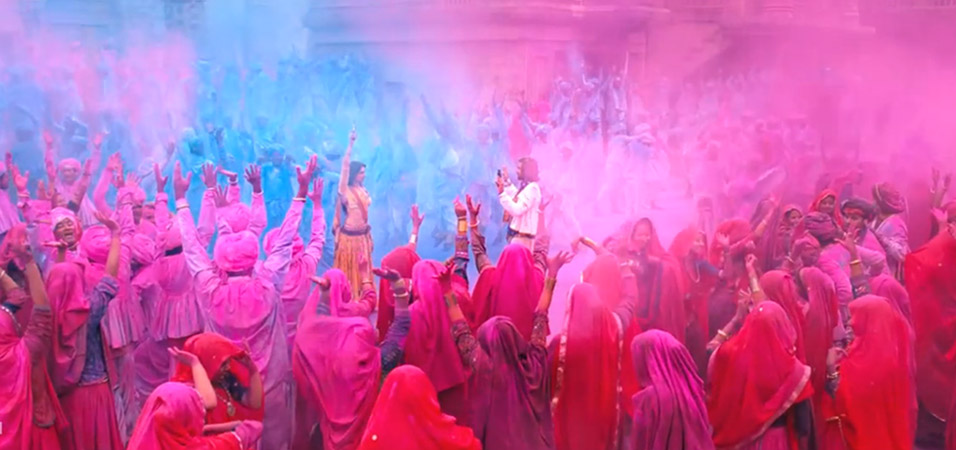
When Deepika runs into Ranveer, and they draw out their guns. That frame, that shot, those colours. Wow! The one time I must have cinegasmed at the movies this year. The song that follows. The kiss. Lahoo mooh lag gaya! Truly breathtaking. It jogged me back to how Balam Pichkari was shot in YJHD. The same Deepika, the same sort of boisterous set up, the same use of riotous holi colours, and yet, you can tell the difference in how a film-maker frames his shot. Balam was youthful, zany, messy and the colours were ‘khacha-khach bhara hua’ – no sense of symmetry in it. Look at how Bhansali co-ordinates/’arranges’ his colours – the blues, the pinks, the reds – all evenly sectioned for each one hue to stand out. This is how you separate the men from the boys.
@shripriya on 12 Years A Slave’s roll Jordan scene
To say “12 Years A Slave” is a powerful film is an understatement. Some of the scenes are very hard to watch and that is the point. But of all the scenes, a short scene, with no violence, is, perhaps, the most powerful.
What happened right before:
Solomon (Chiwetel Ejiofor) has just been betrayed by a white farm hand and had to burn a letter he very painstakingly wrote to his wife and with that, his last hopes of ending his bondage.
A slave collapses in the field due to overwork and Solomon and two others bury him. Solomon goes about the task mechanically. He’s even mildly surprised/annoyed when one of the other grave diggers wants to say a few words for the dead man.
The scene:
A group of slaves stand near the grave and start singing “Roll, Jordan, Roll”. Solomon is part of the group, standing right in front, but emotionally apart from the rest of the slaves, as he as been through most of the movie. Solomon, who was not born a slave, has always maintained his distance – protected himself by maintaining a distance.
We then switch to a shot of Solomon’s face. His face is anguished, full of despair and desperation, overwhelmed by the recent events. The camera just stays on his face as slowly, Solomon starts to sing. It is almost like the song is his lifeline and he grasps onto it, at first just mumbling the words. As he sings, his voice gets stronger and his face changes. The song powers him and finally, he accepts that he is a slave. He starts singing even louder and seems to embrace the group with whom he sings as his brothers. And finally, you can hear his voice stand out, powerful. Despite what he is acknowledging, it feels like a positive self-affirmation. Yes, I am a slave, but I will survive. Even as a slave, I will survive.
The shot of Solomon’s face lasts a minute and fifteen seconds. There is no dialog. Just the singing. For this scene alone, for all the complex emotions conveyed, Chiwetel Ejiofor needs to be a front runner for the Oscar. Brilliant.
@fattiemama on Blue Is The Warmest Colour’s break-up scene
I looked away. For a good ten minutes, I kept my eyes away from the scene. I would have loved to shut my ears too but not understanding the language helped. She kept hitting her and she kept crying, pleading for forgiveness. Tears, snot, blood all became one as the searing pain of betrayal and guilt broke through the barriers of language. I have felt all of it and in not a small degree to not acknowledge it, yet the sheer rawness was so testing I wanted to be relieved of it. They were so good together, so happy, so carefree, so intense and so young…young, I think that hurt the most…All of us love ‘happily forever afters’. The most cynical of us too, somewhere in the corner of their hearts they too believe and yearn. And to watch a love so young and so deep break in a moment hurts. It shatters all that we hold dear, dream of. Was it the beautiful performances of the two young actresses? Was it the single long take? Was it the unbridled tears and blows? Was it the resounding thud of a featherlite dream breaking? Was it my own connection to a story that wasn’t my own? The reasons could be all or any but that scene refuses to leave me. Someday it will be replaced with the eternal tenderness she feels towards her. At the end of great love does not lie emptiness or hate. At the end of great love lies great tenderness. Had the scene not escalated to that intensity the end would not have mattered as much as it did. Had the violence not been so visceral, the wound of the soul would not have been bared. Because a love as deep has to hurt as much too. I just wish the blows had not travelled beyond the screen to sear me.
@jahanbakshion Spring Breakers: In which Alien and the Girls become ‘Soulmates’
Harmony Korine’s Spring Breakers was certainly one of the most divisive films of the year, lauded and loathed in equal measure. Some found it provocative, others called it puerile. For me, it was certainly one of the most hypnotic and immersive cinematic experiences of the year, and at the center of the film were 2 of the most memorable scenes of the year, one segueing into the other seamlessly.
The first scene begins with a gun-toting Alien jumps around his bed, Brit and Candy kneeling before him, seemingly in awe.
“You like it? You like my shit? Look at you fucking bitches. You fucking love it, don’t you? You a couple of bad bitches, ain’t you?”
He thrusts and rubs wads of money in their hungry faces and then begins to kiss both the girls. One of them picks up a pistol from the bed.
“Careful with that, it’s loaded.”
We see a look on Alien’s face we haven’t seen before. It’s the look of genuine terror. Suddenly, out of nowhere, both the girls have pistols pointed at Alien. The get him down on his knees and shove a pistol in his face, then another.
“Sick motherfucker, aren’t you? You think that you can just fucking own us? Open your mouth. Open your fucking mouth…. You’re a nasty little fuck. Yeah, you are. Do you like that? You like that in there?”
Alien is shitting concrete by now. You can see it in his eyes, almost closed shut out of fear.
“We have everything we need right here. We don’t need you, Alien. What if we just used you to come here? And in five seconds we just shoot you? Blow your brains out. And you’re dead… What do you think, Brit, should we kill him?”
And just then, something happens. Alien opens his eyes and stares into the girls faces. And starts to fellate the gun with unnerving glee. First one, then two loaded guns, and he’s going at them like a seasoned pornstar.
It’s a stunning scene- sexy, shocking, gender-bending, nail-bitingly tense and unpredictable- all at once. That’s what makes it so great, apart from how crucial it is in building the characters, their relationship(s) and the trust that forms the basis of their truly twisted love story.
“Y’all my motherfuckin’ soul mates, swear to god. I just fell in love with y’all…”
This flows into what is the most talked-about scene from the film, in which Alien sings Britney Spears’ Everytime, playing a piano as the girls do a ballet around him in pink ski-masks, bikinis and sweatpants, wielding shotguns like toys. As Franco’s voice fades into Britney’s, the scene cuts to a blizzard of hedonistic violence as Alien and his Angels perform their dance of destruction.
The use of contrasting music as a counterpoint to violence in cinema is nothing new, but Spring Breakers does it exceptionally well, managing to transform Britney Spear’s pop ballad not just into something darkly humorous but also a strangely beautiful elegy to the loss of innocence. It’s one of those scenes that lift the viewer into a trance and the film into transcendence. True to his name, Mr. Korine achieves that rare thing in cinema: Absolute Harmony.
@miyaamihir on last scene of Star (Bombay Talkies)
हिन्दुस्तान की ही नहीं, शायद विश्व की सबसे प्रामाणिक ग्रामीण फिल्मों में से एक बनाने वाले निर्देशक सत्यजित राय मूलत: एक शहरी फिल्मकार थे। हमारे वर्तमान महानगर के चितेरे। उसकी अाकांक्षाअों के, उसके अपमानों के। मुझे श्याम बेनेगल के उन पर बनाये उस प्रामाणिक वृत्तचित्र का अंतिम दृश्य याद अाता है। राय अपने घर में अपने घर में, अपने कमरे में अपनी वर्किंग डेस्क पर बैठे हैं अौर अपना वही मशहूर सिगार पी रहे हैं। अौर फिर कैमरा ज़ूम-अाउट होता है। एक ही सिंगल शॉट में हम देखते हैं कि कैमरा पैन-अाउट होता हुअा खिड़की से बाहर निकलता है, अौर हालांकि राय अब भी हमारे सामने हैं लेकिन उनके साथ अब अन्य बहुत कुछ इस फ्रेम में है। एक पूरा शहर इस एक सिंगल शॉट में जैसे राय के साथ चला अाता है। एक ही फ्रेम में हम बीच में उनका घर देख रहे हैं जिसकी बीचोंबीच खिड़की में अब भी राय बैठे दिखाई दे रहे हैं, वही सिगार के साथ। लेकिन अब इस वाइड एंगल में चारों अोर से कलकत्ता की बहुमंजिला इमारतें अौर बाज़ार भी चले अाये हैं। यह एक दृश्य फिल्मकार को उसके सबजेक्ट के ठीक बीचोंबीच स्थापित करता है अौर शायद हमें यह भी बताता है कि किसी भी रचना को जैसे उसके समय से निरपेक्ष नहीं पढ़ा जा सकता, ठीक वैसे ही किसी भी रचना को उसके स्थान से निरपेक्ष रख के पढ़ना भी मुश्किल है।
दिबाकर की ‘स्टार’ के उस अंतिम पोर-पोर जादू से भरे दृश्य में जहाँ पुरंदर (नवाजुद्दीन सिद्दीक़ी) अपनी बेटी को अपने जीवन का एक दिन पुन:रचकर सुना रहे हैं, दिखा रहे हैं, ठीक ऐसे ही एक पैन-अाउट होते हुए कैमरे के साथ पूरा शहर उनके दृश्य की सीमा के भीतर चला अाता है। यहाँ वो नायकत्व है जिसका दायरा अपनी चाल की बालकनी से अागे नहीं बढ़ पाया। यहाँ वो पिता है जो अपनी बेटी के लिए रची कहानियों में भी कभी नायक नहीं हो पाया अौर उसे कल्पना की दुनिया में भी सदा किसी ‘िहृतिक’ का सहारा लेना पड़ा। यहाँ वो इंसान है जिसकी असफलता अगर गौर से देखें तो हमारे वर्तमान शहर की वो बची-कुची ईमानदारी अौर असलीपना है जिसके होने के चलते ही पुरंदर अाज भी इस शहर में मिसफिट है।
‘स्टार’ सही मायनों में बम्बई की कथा है। यहाँ मुम्बई की बन्द हुई मिलें हैं अौर बेरोज़गार हुए मजदूरों के घरों का ठंडा चूल्हा है। तमाम सिनेमा की पृष्ठभूमि पर ऊँची चिमनियाँ है उन मिलों की जिनका धुअाँ जीवन की अग्नि की तरह कब का बुझ चुका है। यहाँ कुछ सर्वश्रेष्ठ अदाकार हैं जो विदर्भ से मुम्बई तक कुछ सौ किलोमीटर की दूरी अपने जीवनकाल में कभी पाट नहीं पाये। फाकों पर होता थियेटर है अौर उसमें फिर बराबरी का स्वप्न है। यहाँ अपने बाप की पेंशन पर जीता अौर समाज की नज़रों में एक असफ़ल इंसान है, अौर फिर एक निर्णायक क्षण है जब वह खुद पिता हो जाता है। सिनेमा के दायरों से परे एक अौर दुनिया है जिसमें अाज संतुष्टि को असफलता अौर असफलता को अयोग्यता का मूल मान लिया गया है। ऐसे समय में जहाँ अापके होने से ज़्यादा दिखाई देने का महत्व हो, ‘स्टार’ इशारा करती है कि सफल-असफल के खांचों के परे भी एक संसार होगा जिसमें योग्यता प्रदर्शन की मोहताज नहीं होगी। ‘स्टार’ उस जीवन के बारे में है जिसे अपने दायरे की पहचान करनी है, अौर जानना है कि उसका ‘स्टार’ होना, न होना दुनिया की स्वीकार्यता पर नहीं, सिर्फ एक बच्ची की हंसी पर निर्भर है। अौर इसके साथ ही यह हमें समझना है कि महत्वाकांक्षा का जयगान गानेवाले इस दुर्दांत समय में ‘संतुष्टि’ एक दुर्लभ मूल्य है।
@NotSoSnob on The Great Beauty’s opening party scene
The two most memorable scenes of the year for me are the climax of Frances Ha and Ilo Ilo. Frances Ha’s climax wraps up the film beautifully as its lead character gets what she wants from a relationship. Guess? It’s simple, unusual and still profound. Ilo Ilo’s climax is bitter sweet, as a kid gets slapped, you laugh at the scene first and then you realise what the filmmaker has done – completed the loop between two strangers who fought initially, bonded later and then had to separate. But am writing about another absolute favourite scene of the year. This one is from The Great Beauty.
When you are watching the film for the first time, you keep wondering what’s happening. Where is it going? It seems like a non-stop party music video. And all you see is bodies shaking vigorously in every possible way interrupted by chants of a bald man shouting, I’ll screw you, while looking at a lady dancing on top of the table. You see striptease, a woman shouting for her lost mobile, a dog in a purse, a very short woman lost in the crowd while sipping her drink, and then a tv showgirl appears with 6-5 written on her boobs. As Jep Gambardella turns back, you realise this is his birthday party. It continues for few more minutes, and then everyone starts dancing while matching their steps on the beats of Mueve la colita. After some time the music slows down, Jep gets out of the queue slowly, looks into the camera, the camera zooms in, slowly everyone gets out of the frame and we see only his face as his voice-over starts – To this question, as kid, my friends always gave the same answer – “pussy”. Whereas i answered, “the smell of old people’s houses”. The question was :
This scene not only sets up the film but also sums it up well. As Gambardella’s search continues through Rome’s rich and boring men and fashionable women, the only word that comes to your mind is decadence. I have gone back to the film many times and specially this scene. Just to hear the opening voice-over. But the impact is lost if you don’t watch the entire party scene – the dancer number, the slowing down of music and Jep moving out of the crowd. Because that’s where the separation begins. Jep and the rest. You are going to encounter all these characters in the film through Jep only. To go back to the madness of the scene, i have even saved this image as my computer screensaver. But i still can’t get enough of Mister Jep Gambardella, his voice-over and the insane beginning of his search for The Great Beauty.
Do let us know about your favourite scenes of the year in the comments section.
At 25, Sujay Dahake made an assured debut with his nostalgia-dipped Shala. We all loved the film, had recco-ed it (here) and did a podcast with the director (here). The film was lying in cans for sometime, got a limited release initially and then went on to become critical and commercial hit.
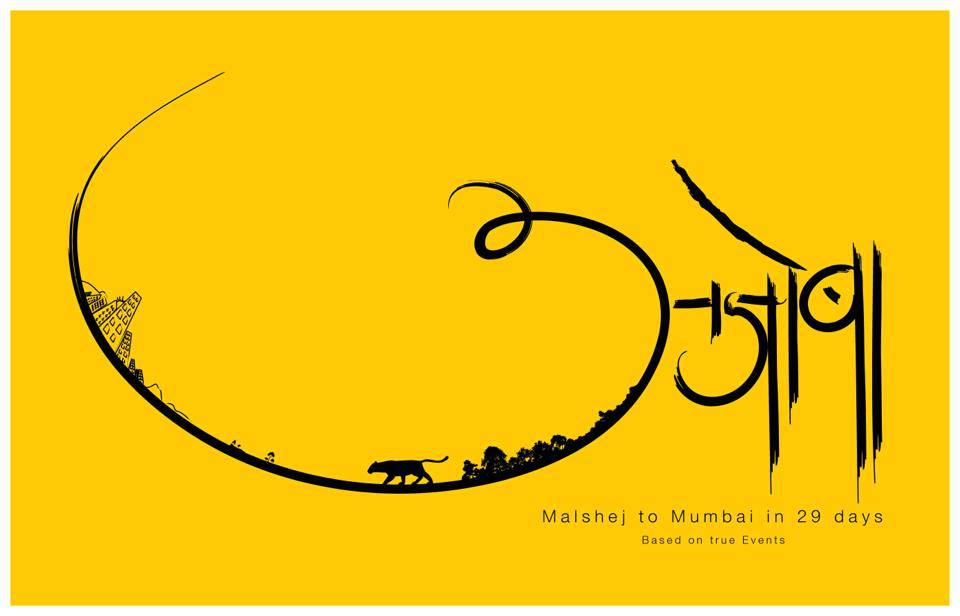
Sujay is back with a new film titled Ajoba. The first trailer of the film is just out. Based on real events, it stars Urmila Matondkar and Yashpal Sharma. Have a look.
It looks so interesting but more than a trailer it looks like a short film. What do you guys think? Do comment and let us know.
And here’s the official synopsis –
Big Cat’s Big Adventure. Malshej to Mumbai in 29 days: Ajoba the leopard’s ambitious trek. Ajoba was rescued from a well and a tracking device was fixed on his neck, before being released back into the wild. He turned out to be one adventurous cat, as he made his way to Mumbai over the Sahyadris, i.e a cool 120kms.
– To know more about the film, click here for its FB page.
If you have been following the blog for a long time, you know our take on “sharing scripts online”. And going with the idea of creating a database of Indian film scripts, we are adding a new one to the list – Pune 52. Most probably the first Marathi film script that we are sharing on the blog.
To check out other scripts that we have posted on the blog, follow the links “here” : click here for Sujoy Ghosh’s Kahaani script, click here for Sriram Raghavan’s Agent Vinod script, here is Shaku Batra’s Ek Main Aur Ekk Tu script. Click here for Vikramaditya Motwane’s Udaan script, here is Anurag Kashyap’s Dev D script and click here for Dev Benegal’s Road, Movie script.)
Going by ReviewGang‘s calculation, the average rating for Sachin Kundalkar’s Aiyyaa is a poor 4.5/10. But almost every reviewer mentioned it that Kundalkar explored many interesting things in the film which never came together. Also, everyone felt that it was too long. On twitter, the most common word used to describe the film was “bizzare”. That made me more curious to find out how “Gandha” became such a wakdaa. I still haven’t seen the film but surprisingly got a post in my inbox which was on similar lines. So over to Shvetal Vyas-Pare and her take on the film and its Marathi original Gandha.
Aiyyaa is a difficult film to like. It can be easily dismissed as having no plot, dragging out one idea for too long and then jumping into a quick conclusion. The tone does not help either – it is neither entirely realistic nor entirely parodied. The actors seem to constantly shifting from subtle to over-the-top, which makes them irritating – both as characters and as actors. However, I’ve been thinking about the film. It hasn’t grown on me, nor will I claim that it is actually a wonderful film that has been misunderstood. I want to use this blog post to think through certain things that I found interesting about the film, and about my reactions to it.
The premise of any story can be outrageous, and it is up to individual viewers whether the story resonates with them or not. Logically, it is absurd to suppose that a wife would not know her husband in a different get-up (Rab Ne Bana Di Jodi) or that a man could pass off a concentration camp as a massive game (Life is Beautiful). I’ve heard people tear the former apart while waxing eloquent about the latter. I’m sure there are also people out there who love Rab Ne… and don’t mind its logical inconsistency. I’m not saying that the two films are at par with each other. The point I am trying to make is that both films accept seemingly outrageous premises as givens and go ahead with their narratives. As I strongly feel that films/books should be allowed to tell the stories they want to rather than those that seem more logical or natural to any individual viewer/reader, an outrageous premise rarely bothers me.
Aiyyaa too has a premise that seems illogical, that of a woman who is attracted to the way a man smells. Come to think of it, smell is difficult to convey on film. You have to rely on familiarity and on audience experience. Like all human experiences, smell is subjective. It is difficult to explain the power of the smell of the mud after the first rains in India to someone who’s never smelt it. It is easier to make films about colour, about touch, about sensation and Aiyyaa too brings in colours – yellow for Rani and blue for Prithvi – and uses them to play around with notions of smell. Perhaps they thought that colours would make smells more tangible. Aiyyaa also reminds one of the odour that one so completely takes for granted in India, showing public toilets and garbage lying open on the streets. Who in India has not scrunched one’s nose, and then passed on?
The other major motif of the film, intertwined with smell, is desire. Meenakshi desires Surya, and is somehow convinced that he is not the monster that everyone else thinks him to be. There is no logical reason behind this belief, and part of the disconnect you feel with her character is because of how illogical her behaviour is. Yet it is good to see the woman rather than the man as the desiring subject in Bollywood cinema, though of late this has become more common. Dreamum Wakeupum (and Ijjajat papad!) are pure genius on the part of Amitabh Bhattacharya. All those thrusting, pumping, heaving dance steps in all those Hindi films over the ages – they were all metaphorically sexual, and this song dispenses with the metaphor.
Another major problem area in the film is the ‘falling in love’ narrative. Meenakshi tries to speak to Surya often, but never actually gets to do so. Until one miraculous evening, wherein they talk, the mystery about him is solved, they confess their feelings, and get engaged to one another, all in the space of one evening. This is again something that induces impatience – how illogical can you get? Behind this impatience however is the assumption that other things that are shown in more realistic narratives are more ‘natural’, whereas they just have become more sedimented in our minds as ways of being in love, ways of performing romance.
Aiyyaa juxtaposes desire, as represented through smell, and the stifling nature of social life in India, as indicated through the odour of the garbage that haunts Meenakshi even in her dreams. The film finds some subtle moments here and there – walking around the clean, rose-garden terrace of a man whom Meenakshi does not find attractive does nothing for her. This garden of red roses must presumably smell great, and brings in notions of conventional romance, but she is entranced neither by the smell nor the appearance of this ideal space because this is not the man for her.
The Marathi original, Gandha, is actually a combination of 3 different stories, each dealing with the motif of smell, and the story that goes on to become Aiyyaa is crisper, told in half an hour. To stretch out the narrative, Aiyyaa adds a younger brother and a rival suitor to the mix, as well as making the boy Tamilian and putting Meenakshi through the task of learning a new language and a different culture. Not just that, the friend of the heroine becomes more bizarre.As ideas, all of them are interesting, though some translate well and some not so well.
Gandha is not as quirky as Aiyyaa and captures its particular Marathi milieu well. In many ways, it is less imaginative than Aiyyaa, perhaps because it is under less pressure in terms of time, and so is more straightforward in its storytelling. Amruta Subhash does an excellent job of conveying the vulnerability as well as the charm of the protagonist. Rani Mukherjee does a good job, but it is easier to understand and relate to Veena in Gandha than to Meenakshi in Aiyyaa.
What seems a small change in the script from the Marathi to the Hindi version brings to light one of the biggest silences of Bollywood cinema. In both versions, the hero is a painter by day and works at an incense factory by night. However, in the Marathi version he had done a diploma in repairing refrigerators and works at the factory to make money and pay for his art education. In the Hindi version the hero is the owner of the factory, left to him by his father, and works alongside his employees. A Bollywood hero cannot be a simple employee, he has to at least own the factory. After all, how could he think about romance otherwise? As if those who repair refrigerators do not have love stories of their own.
Ultimately, my reaction to Aiyyaa is as much about my expectations as about the film itself. I like films to stick to tones and genres. The realistic feel of a college library – the old computers, the library membership cards, the dust on the books – was good. The presence of an overtly sexualised librarian, however, was jarring – such a person would never exist in such a space. But do films have to necessarily be either realistic, or fantasy as accepted by Bollywood convention (i.e. either melodrama or a fantasy of excess, a la Karan Johar or Salman Khan), or totally bizarre? Can a film not be a little bit of each?
The attempt to make a film that is a little bit of each is jarring, but I think that it is a brave attempt. It would not have been that difficult to make Aiyyaa a bit more like Vicky Donor and English Vinglish: emphasise the Marathi – Tamil aspects of both families, show them as more lovable and less quirky, remove the bizarre, give the hero-heroine more conversations, show the heroine as the underdog who finally convinces her family that she has the right to choose her own life partner and so on. I do not think Anurag Kashyap and co. are stupid enough to have not thought of this alternative, safer option. It would have been an easier option to sell too, and that is often a big criterion that drives the way films get made. While I do not quite like the final product thatAiyyaa is, I do admire the fact that they made it their way – bizarre, quirky and idiosyncratic.
(PS – You can watch Gandha with English subtitles here)
(PS – A different version of the write-up was first posted on Shvetal Vyas-Pare’s blog)
The treatment and the mood reminds me of Johnny Gaddar meets Manorama Six Feet Under. Also, like the fact that the makers have realised that their films have the potential to go beyond Maharashtra and so have subtitles in the trailer. Hope from Marathi filmakers start doing the same.
And here’s the official synopsis…
In this engrossing thriller, Amar Apte is a private detective who gets his business from suspicious spouses out to catch their cheating partners in the act. When a femme fatale client enters his life, Apte snaps out of his uninspired domesticity-complete with a nagging wife and mounting bills-and finds himself in dangerous territory.
Set in Pune and against the backdrop of the financial reforms in 1992, Pune 52 juxtaposes the impact of globalization on a city with one man’s inner struggle. With a nod to Raymond Chandler and a hypnotic and ferocious performance by Girish Kulkarni, Mahajan’s debut fiction feature explores the aspirations and frustrations of a small man dreaming big.
The film will be screened at the Mumbai Film Festival where it will compete in India Gold category. It will have a theatrical release on 12th December.
Cast & Credit :
Starring: Girish Kulkarni, Sonali Kulkarni, Sai Tamhankar, Kiran Karmarkar
Editing: Abhijeet Deshpande
Sound Design: Baylon Fonseca
Director of Photography: Jeremy Reagan
Produced by: Abhay Gadgil, Shrirang Godbole, Girish Kulkarni, Umesh Kulkarni
Original Story, Screenplay and Directed by: Nikhil Mahajan
It’s produced by the makers of films such as Valu, Vihir, Deool and Harishchandrachi Factory and is the debut feature of writer/director Nikhil Mahajan.
To read the director’s note, click here for our previous post on the film.









 F.i.g.h.t C.l.u.b