Archive for the ‘movie reviews’ Category

Most of us haven’t. If you don’t have any respect for Oscar, and surely there are many valid reasons for that, then you don’t need to worry about the film Adaminte Makan Abu. It also won four National Awards and it made us curious because Oscar or not, a good film is a good film. So we asked our good ol’ Mallu friend Prasanth Vijay to write a review post for us. Read on…

Abur Sansar

As it happens once in a while in Indian cinema, Davids come out of nowhere and walk over the Goliaths. The latest in line being Adaminte Makan Abu (Abu, Son of Adam) which has become the country’s official entry for Oscar this year. Majority in Kerala, except a few of us who had been following the reports of its making, had a similar shock when the National awards were announced a couple of months ago and Abu won four major awards. It was a natural extension to see the film winning another four at the state awards a few days later (though many argue that this wouldn’t have happened without the National awards win). On hindsight, none of this is too hard to understand because parallel cinema in India is always forced to remain under a veil until a saviour comes along and salvages it (though sadly for many, this never happens).

Adaminte Makan Abu is about an old Muslim couple whose greatest dream in life is to attend Hajj pilgrimage. Over many years, they scrimp and save small sums for this out of their modest living. Things begin to fall in place, and they start preparing for the pilgrimage when calamity strikes in an unforeseen way and they are almost back to square one. Around the protagonists is the rustic panorama of a Kerala village (now a highly endangered entity) and its inhabitants who touch on their lives constantly. The towering achievement of the creators of the movie is turning this seemingly clichéd and possibly melodramatic synopsis into a well-crafted film which culminates in a much higher level of composure and optimism. And for the record, it’s certainly NOT poverty porn. It is about hope, and about a virtuous Abu who moves us to tears by the goodness of his character, rather than by his trials and tribulations.

Abu, a street medicine and perfume vendor is a staunch believer in his religion. And religion serves its true purpose here, making Abu a great human being who is at one with all of nature, not just the humans in it. He accepts that the purity of the means he takes up is as or even more important than the end. He doesn’t have to mull over even a little to resist temptations, however harmless they seem. There is a Malayalam verse which defines ‘courageous’ as the one whose mind doesn’t flicker the slightest even when there are strong reasons. Amidst heroes whose morals stoop when pressed by circumstances, Abu’s frail figure looms above them as the bravest of recent times, though too insignificant to matter to anyone else. True, it is a nearly fanatic faith in his religion that backs him, but with his clarity he touches the essence of it which is nothing but love and goodness, even if it’s unrequited.

Salim Ahamed, the writer- director of the film was as unknown as the film till the National awards. The creative mastery and the maturity of craft of the debutant are commendable. The artistic honesty he has brought into each frame is what has saved the film from falling into the possible traps of cliché and melodrama. It’s well detailed- from elaborately showing the preparations of Hajj pilgrims (which prompted naysayers to call it an extended travel agency ad) to the passing scenes of the wife smelling a lemon to fend off nausea during bus rides. Salim also deserves credit for extracting what he wanted from a seasoned crew- from ace Madhu Ambat wielding a digital camera for the first time to magical musician Issac Thomas Kottukapally creating music out of silences and Pattanam Rasheed for whom adding a few decades to a person’s face is never a big deal. The cast also has prominent artists even in minor roles so that they stay etched in our minds. Zarina Wahab becomes Ayeshumma as effortlessly as she dons her prayer robe.

It’s unjust to a film or any work of art to say that one element of it rises above the rest. But Salim Kumar, playing Abu stands out here because of his inseparability from the film. An accomplishment which is likely to be widely overlooked by viewers outside the home state is the unparalleled makeover he has undergone to become the character. Salim who has received popularity among masses and occasional brickbats from critics for his slapstick roles (which were by no means easy feats!), has proved the versatile actor in him whenever given a chance- in Achanurangatha Veedu (2006) and Bridge (segment in the anthology film Kerala Cafe). He lives as Abu the way no other actor in the world could have.

Adaminte Makan Abu is undoubtedly a lucky film – right from its conception to its reception. It might not be “the best” of its times, but it surely deserves most of the accolades it has already been honoured with. It may be considered as the prize for the honesty and sincerity that went into its making. In an industry that churns out either insignificant trash or over-hyped pseudo classics, this noble film marks itself by its restraint and lucidity. It’s another instance of many right things happening together towards a greater goal. Where mediocrity is celebrated and excellence is even denied birth, it’s not enough that we have visionary and resourceful film-makers. They should also have the blessing of fortune shining on them to materialise their dreams. May their tribe increase!

With any Anurag Kashyap film, one thing is for sure – a debate. A divided house. We are also swinging from one side to another with every new post on the film. This is Salik Shah‘s first post here. Read on..

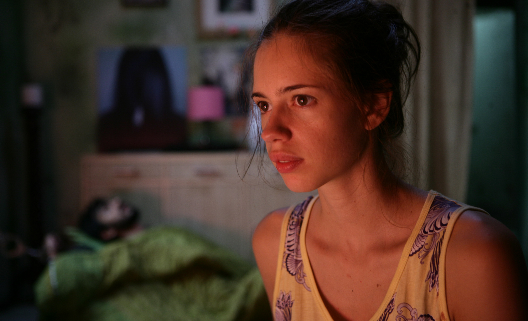
That Girl In Yellow Boots is Kalki Koechlin’s debut as a filmmaker. It’s written all over the film. Anurag Kashyap just happened to be there while Rajeev Ravi was busy setting up his camera on the ‘stage.’ Except for one scene where Ruth smokes against the dazzling red screen, the audience never notices his camera tricks. There is one scene though — where they abruptly cut from a close up to a mid shot of the two protagonists who seem to have finally accepted the tragedy of their solitary existence— which seemed to be an attempt to tease the audience by not allowing them to have their ‘emotional cumshot’ exactly where they needed it.

Pulp Fiction is an old trick—but can provide little ‘happy endings’ in otherwise an unhappy film. The happy diversions in That Girl In Yellow Boots are just that. The sad thing is the mistiming. In an otherwise comic scene, where Ruth spins a story about her father’s death, a little mischief was desirable. A camera angle or two, hinting at her playfulness, where she appears brutally honest to the innocent criminal but palpably mischievous to us, might have been forgiven by the neo-realists. Excess is bad, but so is overt restraint.

Sound is a tricky affair; the jarring background score wasn’t called for at key scenes—or was it placed there to deny the audience any sympathy for Ruth? How I wish I could mute to listen deeply to Ruth’s silences… A minimalist approach might have further polarized the audience—but the result might have been a rewarding experience. Years ago, I couldn’t understand Nobody Needs to Know (Azazel Jacobs, 2003), but the expressionless, unfathomable face of its female lead has stayed with me. That Girl In Yellow Boots works in silence, often brilliantly.

There are people as they are—and many of AK’s assistants have verily filled in as Ruth’s steady customers. Prashant, however, is the film’s most visible link to the theater. The words he chooses, the way he moves—all seem to be a reminiscence of an era behind us. Be it in the Skeleton Woman, Ek, Do (FTII) or That Girl In Yellow Boots, he is there—loud, unchecked, mimicking himself. You can see that he is acting—a constant reminder of the film’s limitation.

Cinema is not an actively participatory experience like the theater. When the human contact is lost, you’ve to employ literary, theatrical or cinematic techniques to fuel the audience’s imagination to fill in the gaps in the visual narrative. That is why you get the unborn child manifested in Three Monkeys. That is why whole sequences in After the Rehearsal are devised to ‘mesmerize’ the audience. Here we get face to face with Ruth and Ben as they are—helpless, victims of their own doing, hopeless—all in a very straight-forward, good in a theatrical way.

If anything, it’s an exercise—for Anurag Kashyap, for you and for me. Why should it be anything else? Making a film is all that matters to him; while we go to great lengths to obtain and frame a fake poster of a pirated film! Strip the cinema of its greatness, please. Today every man with a camera is a filmmaker. While I don’t expect them to be Wong Kar-Wai or Tarkovsky—which they might very well be; they don’t need to be—I do believe if given a chance, they could be more authentic. It’s a good thing for cinema. It’s the new pen of our times; let them write; let us write with it. That’s indie. And no one seems to understand this better than this father of ‘Hindie.’

Keep shooting.

 — Salik

Forget Salman Khan, even Fatema Kagalwala is on a roll. One day, two posts. Click here to read her hilarious dissection of Bodyguard, and scroll down to read her post on Anurag Kashyap’s latest release, That Girl In Yellow Boots.

Seedy is not Mumbai’s underbelly, it is the defining aspect of its identity. In this quagmire is a young girl struggling to survive. An English citizen in a strange city, she is but twenty years old. At a time when most of us our dreaming of building fancy careers, watching our weight, worrying about skin/hair problems while striving to date that hot bod, she is fighting to stay afloat in the dense-ness of red tape and sexual exploitation.

She is Ruth, Anurag Kashyap’s protagonist in his latest film, ‘That Girl in Yellow Boots’. She is as vulnerable as she is steely and as undaunted as she is brittle. She meets exploitation at every corner, simply because she is young, female, single and white-skinned. She is looking for her father who abandoned her when she was five. There is darkness everywhere she turns and she buys some light with the money she earns by giving massages and handjobs to willing customers, what she ironically calls, ‘happy endings’. As the official synopsis reads ‘everyone wants a piece of her’, and she obliges – if it will lead her to father.

Anurag Kashyap lays it out thick. Grime, blood, sweat and semen. Loss, pain, failures and trauma. Darkness is no stranger to the film-maker, his oeuvre almost revels in it. He always says it as it is, sometimes even too much. But TGYIB doesn’t suffer from over-doing. Ruth’s world is murky and steeped in pain but there is spirit in her struggle. Her existence seems doomed but there is assurance in her steps. There is an emptiness in her eyes and a desperation in her heart but her mind is focused. She is love-less but not lost. She is gathered and determined.

So is the narrative. It follows its story with focus even though it becomes unstructured and loose at times. It doesn’t give into impulsive cinematic expressions at the cost of her character’s journey and that seems to be symptomatic of a creative evolution of the maker. For that alone, this can be called a notable film.

This time round there is no shying away from emotions. There is no uncomfortable distance from vulnerability and neediness is not wrong. There is a unique objectivity which is a hallmark frame of reference with Anurag Kashyap’s films, something that made Black Friday the classic it is. Along with this objectivity there was also apparent a seeming reluctance to engage emotionally with the character. Hence Dev simply remained a lost drunkard, Chanda an unapologetic fighter and Paro’s vulnerability never found the sure footing to blossom enough.

But Ruth is not like that. She is almost life and blood. I say almost because she falls prey to a lot of unsure moments in the film which keep her from blossoming fully. Her interactions with her boyfriend seem half-heartedly performed and the fault does not lie with the protagonist but the choreography and uncultivated chemistry between actors. Her denouement is not intense enough but while she is on unsure ground she is also explored from more ways than one. However, she is not sentimentalised and therein lies the strength of the film. Wouldn’t that have simply undone the very premise of her character?

Kashyap employs child abuse as a prominent theme, perhaps to enforce yet another layer of brutality to the already dismal world of the film. But this he juxtaposes with a fatherly figure, Ruth’s only male massage customer who is affectionate to her without objectifying her. Female strength finds yet another towering personification in the massage parlour owner, Maya (A brilliant, effortless and sparklingly honest Puja Sarup). Their identification and subsequent bond speaks volumes about the opposing forces of exploitation and survival.

Cinematic elements come together in harmony to tell the story of Ruth’s journey. Even as Rajiv Ravi’s digital camera caresses Ruth’s dismal life with an expressive graininess, Wasiq Khan’s seamless production design melts grunge with the dullness of the ordinary. We notice the torn beige sofa and the darkly-lit, narrow parlour lounge almost becoming metaphors of Ruth’s dislocated life.

In the pursuit of defining its protagonist’s journey, the film however fails it’s peripheral characters. Shiv Subramaniam, Mushtaq Khan, Divya Jagdale, Makrand Deshpande, Piyush Mishra, all remain mere tools of the exploitative environment without completing an experience. This singularity becomes representative and seems forced and has much to do with broad-stroked writing, seeming to take the ‘easy’ way out.

There is also the sketchily written character of Kannadiga ganglord Chitiappa explosively performed by Gulshan Devaiah, easily the star of the film. He settles in instantly and shines through till the end, effortlessly balancing the Nana Patekar-esque eccentric stereotype with the defencelessness of a school boy. This balance is what Prashant Prakash never gets right unfortunately. His see-sawing volatile character had immense scope to capture a spectrum of moods, emotions, swings and even personalities but he never really manages to get under our skin.

The film begins on an unsure footing, taking us slowly into Ruth’s world, introducing it through her encounters. Dialogues are many a times listless, almost murdering moments. Improvisation shows in the body language of actors and sync sound catches the uncertain intonations of lines made up on the spur of the moment. For a film crafted to evoke a response beyond the intellectual and focused on following Ruth’s path to her father, this serves as an undoing.

The film largely works because of its choice of actors. Kalki’s oval-faced innocence, a full-mouth unable to hide the Bugs Bunny teeth and the clear sad eyes looking at you become synonymous with Ruth right from the beginning. The actress wears her character unlike any other she has done before, and it is this certain ‘giving up to the character’ that one senses, which becomes the most appealing. We never cry with her or hurt for her but somewhere the film convinces us to feel enough for her to know what will happen to her and silently wish her well. As a takeaway, that is big.

Luis Bunuel said – “Fortunately, somewhere between chance and mystery lies imagination, the only thing that protects our freedom, despite the fact that people keep trying to reduce it or kill it off altogether.” Team TGYIB uses theirs very well to give us a world that is precisely between chance and mystery. 

Bollywood has only one Bhai-jaan. Then there are the Bhai-fans, Bhai-trolls, Bhai’s Being Human fans and now there are Bhai-films too. Films which are critics-proof, meant only for Eid release & weekend business, and any kind of criticism of the film means You-Don’t-Mess-With-Desi-Zohan warning from Bhai-trolls. Bhai is our Bay (Michael). He is our Transformers, our summer tentpole movies, our 3(bodydguar)D and our Pirate Of the Arabian, all rolled in one. His films represents everything that’s big, bad and means only box office these days. Fatema Kagalwala tries hard to dissect his latest one – Bodyguard. Read on….

“Strength doesn’t come from the ordeals that are thrown at you, but from crossing them. And surviving to tell the tale”

Not some gyaan-guru, it’s the higher self that kicked in with this gem to help overcome the devastating sheerkhurma that Bodyguard made out of her Eid.

But then, I wonder if something is a medium of spiritual insight as powerful as this, can it be bad?

(I see one Mr Siddique and one Mr Shirt-utaro Khan desperately saying no, but my higher self is sushsh-ing them vehemently right now. Not that they will listen I’m sure. Our collective higher selves haven’t stopped Anees Bazmee and Sajid Khan either, have they?)

As I step back and mull with an objective mind, my intuition tells me that Bodyguard is really not what it seems. You know there is a real crisis at the heart of the story, which we, the self-important, ivory tower vultures of meaningful cinema are overlooking. The hint lies in the name itself.

Bodyguard is about identity. Why else spend two+ hours going round and round in circles but begin at a Sallu-Bodyguard and end at Sallu-successful-something? Why else go ALL the way to Pune and Lonavla and climb the tallest hill stations of Maharashtra to make the point? Why get Kareena Kapoor, an almost style icon (Sorry dear word ‘style’) and pin her into the tackiest Linking Road outfits? Why would Salman Khan do a seemingly meaningless film ? Because, didn’t you know, Salman Khan can do no wrong?

So the identity crisis, yes. It begins with Divya who becomes Chhaya. She wants to throw this newly-dumped-on-her bodyguard and does so by impersonating as a swoonie in love with Shirtlessji. How that was supposed to help is left unexplored (or maybe it is one of those deep mysteries of the Universe we as humans are meant to solve? Paulo Coelho would’ve loved this riddle.) So Divya-turned-Chhaya actually falls in love with Hulk Hogan. And Chhaya becomes Divya when Divya is actually Divya. But Divya cannot be Chhaya as long as she is Divya because Mr Muscles (chhee, not the toilet cleaner, I meant Sallu) won’t accept Chhaya if she is Divya. Get the identity crisis bit now?

It is all about becoming. This would be the tag-line if Osho had made this film.

But it is not over yet. Chhaya is yet to become fully. So Dancing Muscles keeps joking around with a terrible fat man who is so-not-funny-it’s-not-a-joke. (There you have a sub-text for another identity crisis. A non-funny funny man trying to be funny so hard that he is anything but funny. Poor guy but brilliantly thoughtful writing) But neither do the muscles run out of proteins nor is Mr Siddique’s Eid biryani getting cold, so everyone takes their own time finding themselves and each other.

While they are at it, we shall look at other peripheral (but important!) characters weaving this very meaningful theme together. There is Raj Babbar, the Maalik and karta-dharta and the most terrible actor we have seen in a century barring his son of course. His identity crisis is subtle, metaphysical even, wherein he is struggling ever-so hard to prove to himself (not us, mind you) that after all these years he hasn’t lost his touch in the art of hamming and he can outdo even a stammering King at the job! His efforts at desperately trying to regain his forgotten identity are touching. And kudos to the director for giving him a chance. What compassion to his fellow human beings he has… Mother Teresa would have been so moved.

Back to the Chhaya search. The metaphor in the name itself is enlightening. Chhaya is an image, not the reality. And then she becomes Maya, an illusion. An explosively intuitive use of language and semantics makes Bodyguard Cannes material. And it is That Girl in Yellow Boots that gets to do festival rounds. Pathetic and shameful is the state of Bollywood.

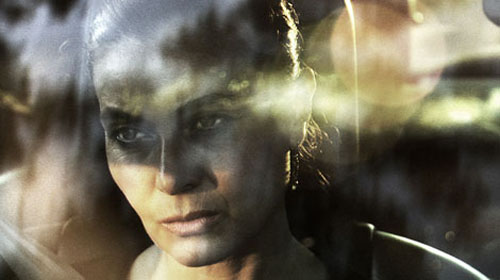
But then Maya soon gets some debilitating disease (which I am assuming should be the ever-dependable cancer or TB, the good old 60’s-70’s devil since the film is so pre-historic too) and becomes an illusion herself. Her identity now remains only in the pages of a diary she has written for her little son a-la Tina and Anjali in Karan Johar’s “Its all about loving your friends.” (Double-meaning beast! And he claims he makes family entertainers) Maya also runs on the station platform to catch the train that toilet cleaner oops Muscle-man is on. Like the millions of youth who got an identity crisis after watching Soooo Romantic Khan (gag) pulling his girl onto the train, Six Sigma Servant gives out his hand too and invites this cute little chashmish illusion into his already confused life. It is inter-texuality and cinematic references such as these that make Bodyguard a deep, meaningful film. I guess I interpreted my intuition right after all.

So Maya becomes Chhaya just like Bairan became Bhairon but their lives don’t remain narrow. They multiply. But Siddique is a Gandhian (dunno if he follows Anna Hazare though, do you? That’s another identity crisis there but for another day). He believes in change being the only permanent thing, so Maya’s illusions end with her death but our troubles don’t. The new and improved Bodyguard goes back to HAMare maalik for his blessings before he flies to Australia. (Why not US? Oh it’s not a KJo film, silly). Son finds Divya and since Maya said she is Chhaya he wants to dump himself on her. Divya is torn, oh poor girl, but the ISO-certified naukar ‘accepts’ her and agrees to marry her. Was there anyone so dedicated? Why don’t our customer service centres learn something from him?

The end is a beautiful tryst of irony and fate in meaningful cinema wherein it is the ‘hero’ who finds himself and ‘becomes’. He learns of Divya’s identity as Chhaya and is moved (as much as Sallu’s face muscles can move that is) beyond words. So Divya does become Chhaya and Body lets his guard down to accept Divya as Chhaya and Chhaya as Divya and everyone forgets Maya. Sab khaya, piya, pachaya. (Burp!)

(Oh, there is also a villain who used to be a hero but continues to think he is still a hero, he even claims it onscreen. This bloomingly creative touch strengthens the very well-defined theme of identity crisis and finding oneself. I am too moved by the very deep spiritual journey of these characters that has been revealed to me and I need to do some soul-searching to connect with my real self ‘within’. So long! Until my higher self kicks in again, that is.)

Pratim D. Gupta is a full-time film critic with The Telegraph and a part-time screenwriter. Well, part-time till his film gets made. Based in Kolkata, he closely tracks Bengali film industry’s every intelluctual, pseudo-intelluctual and aantel (ask your bong friend. There is no english word for this one) move. So where does Aparna Sen’s latest film Iti Mrinalini fits in? Scroll down and read on…

Disclaimer: I don’t know why I am writing this piece. In an industry where scratching backs is the only way forward and where every film is a classic and every performance award-winning, one online rant really matters very little. Unlike Bollywood where good films and bad films, moneymaking films and praiseworthy films all have their own space, Bengali cinema is going through this incredible phase where you have to laud at everything and anything up there on screen. If you do not comply, you are against the growth and prosperity of Bengali cinema. “How dare you? Just because your script hasn’t got funding, you are badmouthing other films!” Honestly, I can’t help myself. I refuse to be party to this mogojdholai (brainwashing). So you can have your own conspiracy theories but I have my own views and I will stick by them. And no I didn’t like Iti Mrinalini. You too have a choice — close the window at this stage or read on.

What goes wrong with Aparna Sen? She makes a brilliant film and follows it up with something so ordinary, you start wondering how could she have possibly made that earlier great movie? One of the frequently asked questions in Bengali movie circles that has refused to die: Did Ray ghost direct 36 Chowringhee Lane? You watch Mr & Mrs Iyer, Paromita’r Ek Din and The Japanese Wife and you know the answer. You watch Yuganto, Sati and 15 Park Avenue and you are not so sure about your answer.

The problem is not just with inconsistency. There are many great directors whose great films are punctuated with not-so-great films. It is the sheer ordinariness of some of Aparna Sen’s films that really complicates the situation. You look at every nook and corner of the frame hoping to spot that Rina-di touch and your disappointment mounts by the minute till the time you want to throw up your hands and leave the theatre.

Sen, along with Rituparno Ghosh, has been the so-called custodian of the modern Bengali woman on celluloid. Her fantastic domestic femmefatales are independent, self-sufficient beings who manage to emerge on top of every challenge that men (and society) have thrown at them. From Paroma to Paromita. Sen herself in the 1970s was this ultimate epitome of everything that was new and clutterbreaking about the Bengali woman ultimately leading to her print revolution, as editor of Sananda.

Mrinalini is a wimp! A namby-pamby, a maudlin… such a waste of human life, that I do not want to watch her wet — strictly tears — life on screen for two hours. I do not care which bits of that life are fictional and which bits are from Sen’s own life, the life is dull, boring and flaccid. She fell in love with a boy in college who was a Naxal and got shot down, she then fell for her director who had a wife and two kids and was never really interested to set up a home with his kept and their daughter, and then she developed feelings for a man who has a very sick wife at home and yet is always there by her side. As is evident, it’s always the men who call the shots in Mrinalini’s life, who is just a ping-pong ball in search of the net.

And this insipid biopic is narrated in the most archaic way possible — an unfinished letter, a bottle full of sleeping pills and lots and lots of glycerine! You get the drift?

The only mildly interesting bit of the film is Mrinalini’s daughter with her director lover Sid who she gives away to her Canada-based brother and sister-in-law but ensures that the girl spends the summer vacation with Pishi and Kaku. It is a unique relationship that these five people share where terms of endearment and lines of blood get beautifully blurred. But then the most important scene of the film, when the young girl Sohini reveals to Mrinalini that she already knows that Pishi is her real mother and Kaku her real father, is so lazily written and treated so matter-of-factly that the emotional fulcrum is not tampered. How can Mrinalini’s reaction line be: “When did this happen?” As if the date and time of the revelation is more important to her — clearly written with the audience in mind — than the fact that her daughter knows she is her daughter. Compare this scene with the heart-wrenching revelation scene between Irrfan and Kal Penn in the car in The Namesake and you know where the difference lies.

The script has no structure or build-up of any sort and have scenes that shouldn’t have ever made it to the screen. Towards the climax we have a scene between Mrinalini and her young director love Imtiaz which goes something like this… “Have the tea Imtiaz.” “I didn’t ask for tea.” “Now that the tea is here, have the tea.” “No.” “Will you have coffee then?” “I can have coffee. But black coffee.” After she has ordered the black coffee for him, she asks: “Have you studied in America?” “Why because I asked for black coffee?” “Something like that.”

And then the whole film is explained in one scene. “There are different types of love Minu,” says one of the men in her life. Ok alright, we get it! But Rina-di, have you seen Frida? That film conquered what you set out to achieve. Yes, it’s a biopic of a real person and obviously a far more fascinating person that Mrinalini but it has the same plot points comprising Frida Kahlo and the men in her life. And this feels really silly on my part to tell this to someone like you but just by giving voice to WHAT THE WOMAN WANTS, Frida becomes so bloody awesome. When her husband Diego Rivera learns that Frida has been unfaithful to him, he says: “You’ve broken my heart, Frida.” She gives it back to him: “It hurts doesn’t it? But why? It was just a fuck, like a handshake.” Mrinalini sadly has no venom or vermin.

The Rituparno effect on Aparna is quite telling in this film. The whole analogy to Karna-Kunti Sambad and Raktakarabi bears a strong whiff of Ghosh and company in the way literature is blended into the lives of the characters. Throughout Iti Mrinalini there is an attempt to attach importance to a subject which is obviously not that important. It’s not true to its genre, it tries to be An Aparna Sen film. The political events streaming in the background (Vishal Bhardwaj tried the same in 7 Khoon Maaf) and the baffling ending are the biggest examples. It wishes to leave you dumbfounded, just like the ending of 15 Park Avenue. It’s that last shot in the arm to elevate the film to something substantial but when it backfires – like it does here – it really does more harm to the film.

The only masterstroke of Iti Mrinalini is how Konkona Sen Sharma is asked to perform like Aparna Sen and not the other way round. They both play Mrinalini and Konkona has the lengthier role but yet she tries to ape Aparna. Because the director understands that the better actor should be given the difficult task. And while Konkona cannot possibly start looking like a young Aparna, her body language and especially her speech is ditto her real-life mother. Close your eyes in the theatres and you will know what an outstanding job Konkona has done in Iti Mrinalini.

All the other actors barring Aparna herself — these filmmakers who act really need someone else directing them, as was evident in Ranjana Aami Ar Ashbo Naa recently — are good. The deadly combo of Rajat Kapoor on screen and Anjan Dutt in the dubbing studio makes Sid such a believable character. Koushik Sen is so effective in the few scenes he has. Saheb impresses in his little cameo. Priyanshu has great presence but is saddled with such a strange character, he can only do that much. The late Somak Mukherjee shot Iti Mrinalini with a lot of pizzazz, especially that shot on the beach where the two women are chatting and the camera curls on the young girl sleeping on top of Rajat. Wish there was at least a hint of period detailing, though.

Iti Mrinalini is really a very weak and disappointing effort from Aparna Sen. But sometimes there comes a performance that becomes so much bigger than the movie it comes in that the ordinariness of the films takes a back seat. Konkona has always reserved her best acts for her mother’s films. And while her mother’s films have ranged from brilliant to bad, she has shone in all of them. Personally, I found this performance to be her best till date. Here neither did she have the superficial condiments embellishing a Mrs Iyer nor the free mind of a schizophrenic patient like Meethi. It’s just one of the best actresses of our countries at the top of her game.

But Rina-di, don’t you think Koko deserves better? And maybe we too?

Iti Pratim

Most of you might not have even heard about the film Videokaaran. We also had no clue. A video link on someone’s FB wall and it quickly spread all over. Varun Grover saw the film, loved it and strongly recommends it. Read on…

“Nahin boloonga – Mera secret hai yaar yeh” – Videokaaran

Before the film: The trailer hit like a bolt. “A film about a slightly unusual film buff” it said, and gave me the biggest blood rush that week. It looked dark, candid, grungy, and very passionate. Aur Hindustan mein film lovers pe film kaun banaata hai? It looked like a story from our own backyard, an original story. The trailer was shared, RTed, discussed, and we all were very curious. A screening at Vikalp, Alliance Francaise Mumbai came up. Not on a weekend, hence only I from among the Mumbai group could make it. And mighty glad that I did. Baaki ki kahaani…cut to.

After the film: Starting with a question. How many of us remember the title song, with antara, of Amitabh Bachhan’s 1992 film ‘Khuda Gawah’ (probably his last good act as a ‘hero’ in Hindi cinema). Think a bit. I am sure some can come close to remembering ‘Ho koi ghulaam…ya ho baadshaah…ishq ke bagair, zindagi gunaah’ lines. (Or was it ‘zindagi tabaah’?) But how many will remember, AND relish, the casually thrown in repeat-phrase ‘wai-wai’ throughout the song? Videokaaran is about a group of film-lovers who not only remember this ‘wai-wai’ bit but also sing it (over a doped out night at one point in the film) with as much respect as the rest of the song. In fact, a lone voice keeps singing ‘wai-wai’ even after the rest of the group has faded off.

Now this may sounds like a frivolous start – especially when the claim is that Videokaaran is the most definitive work you will see on the very complex cinema-fan relationship in India. But the example, much like a zen puzzle, is an answer in itself. It’s about passion for something some of us may consider unpassionworthy. It’s about people, who while living on the edge in their day to day existence, find a bond with moving images, words, tunes, stories, and to use an Arundhati Roy-esque term ‘the collective hysteria of larger-than-life’.

And it’s not a ‘look, they are so unique/ weird/ curio-pieces’ narrative the director goes for at all (the easiest way out, taken by many including the ‘B-Movie-Club’ of Mumbai which shows 80’s films to a group ‘for laughs’, or Anuvab Pal’s latest book on ‘Disco Dancer’ which reads the film as campy fun at its best). The subjects, with Sagai Raj in focus mostly, have been treated with as much respect as a serious film lover/observer deserves.

And the best part – Videokaaran (Video-waalah), doesn’t just stop at cinema. It very incidentally, mostly through the conversations, paints a picture of a world within Mumbai which seems not only time-removed from us, but plane-removed too. The characters, their pains, days, uninhibited laughter seem to hang in a surreal space-time we never cared to check. (But don’t mistake it for an ‘activist’ take on ‘two Indias’ or such. It’s as much fun as you will ever have at the movies.) A real, brass-and-nails world where Rajnikanth is God, and with a very strong reason.

And it helps that the Rajnikanth fan Sagai Raj, the central character of Jagannathan Krishnan’s debut docu-feature, has a unique, intelligent opinion on almost everything to do with cinema. Sagai used to run a Tamil video parlor in Chembur, in the shanties by the railway tracks, and is the kind of Thalaivar fan we have come to smirk at. But the smirk fades off with every passing minute, replaced by friendly warmth.

Sagai talks non-stop, loves porn and slasher flicks, has a quirky tangential mind (“I can’t fool a mad dog by pretending that I am not afraid. Dog’s sixth sense will interact with my sixth sense to let out the truth”), a weirdly original thought process (“porn films are the best indicator of a girl’s mind”), lives in a shady locality where police-raids and death by local trains is a norm, and has a life-story straight out of City of God. But above all, and in the context of Videokaaran, he is the brand ambassador of a class of people who consume cinema differently. And a brand-ambassador who not only was a regular viewer, but somebody who sourced porn to be exhibited, edited out films according to audience tastes at his own machine, marked out escape routes and strategies in case of a police raid, and indulgently, heartbreakingly filmed (on his DV cam) the bulldozer destruction of the very video-parlor he helped grow.

Interspersed with film footage (‘Subramaniapuram’, primarily) and Hindi songs sung by the group of Sagai’s friends on a trippy night in Karjat, Videokaaran is as intimate a piece of documenting a vanishing history as it comes. The astonishing thing is, Jagan had not initially planned to make the film around Sagai. Sagai was just going to be the camera-person for the documentary, and the story was supposed to be about this bunch of Chembur guys who are the standard target audience of single-screen and/or video parlor cinema. And this bunch is equally interesting – comprising of a professional juggler and clown, whom Jagan calls ‘an evolved soul’, a DJ and painter who even designed a camera rig for the shoot on his own instinct, a sadhu baba they chanced upon who loves singing sappy songs from the 90’s hindi films (and whatay voice he has!), and a couple of other friends from the locality. (“We even thought up a sequence where the juggler-clown (name: Alisha) stands outside SRK’s bungalow, wearing an SRK mask, and does the juggling act.”)

But while filming, Jagan stumbled upon Sagai’s story and the camera changed hands. (The film still retains many portions shot by Sagai too.) From then on, it’s Sagai and his worldview – filled with anecdotes that shock, regale, and in a few surprise moments pierce through the hard skins of our snobbery to treat him as an equal, if not greater film lover.

The 70-minute film, culled from 40-hrs of footage, is edited (by Jagan’s life-partner Pallavi Singhal) unconventionally too. No voice-overs, no time-stamps or location-stamps (you won’t see many documentaries this confident about their content), and no fixation with linearity – Indian docus just took a huge leap ahead with Videokaaran.

Watch it wherever you can – jaise bhi. A film this passionate deserves some passion from each and every film lover out there. Options? At a film club or festival screening, by buying the DVD straight from Jagan, or waiting for someone to rip it off and put it up online.

As a final important word – Jagan hopes the film helps Sagai get more work as a photographer and photoshop artist. He is a brilliant, natural artist, as per Jagan. He can be contacted through his FB page: http://www.facebook.com/profile.php?id=100002362315963. And Jagan at: http://www.facebook.com/profile.php?id=781940706. So if any of you have any photoshop or photography gig in Chembur or around, try Sagai.

This recco post is by Gyandeep Pattnayak. You can read his previous recco posts here (Chaser), here (The Proposition) and here (Tell No One).

Are we ever satisfied with the way we define love? Ask yourself this question. Cut out the entire philosophical dialog-pedia such as, “Love is friendship” or “Love is when you don’t know you are in love”. Think deep and you will come to realize that love can not only be not defined but can also be an emotion which you know intuitively but you don’t know why you know it. The question that lurks at the core of Mark Romanek’s hauntingly beautiful Never Let Me Go is a difficult one, to begin with. It’s not difficult in the sense that it can be or can’t be answered; it is difficult because it HAS to be asked.

Based on Kazuo Ishiguro’s bestselling (and said to be unfilmable) novel of the same name, Never Let Me Go begins with a school called Hailsham where kids are told that they are special and that Hailsham is a special school. Kids here are required to swipe in their attendances with the help of a metal wrist band. Intriguing? Even more so because the year is 1978 and a title card suggests that breakthrough in medical science came when it was discovered in 1952 that human life can be extended beyond the normal 100 years. We are introduced to the three principal characters – Tommy, a lonely boy who finds it difficult to mingle with his friends; Kathy, a girl who takes a liking to Tommy because he behaves strangely; Ruth, a manipulative girl who decides to come in between Kathy and Tommy for seemingly no particular reason.

The children of Hailsham are brought up like normal children – they are given food, clothing and shelter. They are taught everything that normal kids should learn, they are taught to actively take part in arts. But, there is one exception – a rule is imposed on all of them that nobody should cross the school boundaries. The world outside is dark and violent, they are told. As any normal kid would, they believe in the stories. There is no reason for them to question these rules. Tell me, if you were taught right since your childhood that a horse is called a rabbit, you will definitely call it a rabbit – unless somebody tells you otherwise. Anyway, the kids grow up and leave Hailsham and move to a new place – ‘The Cottages’. It is here where they start questioning their choices and the reasons why they are called ‘special’. I don’t want to give out any spoilers and ruin the show for you. Let me be extra careful here — when our protagonists get into the ‘conflict’, they do not understand what to make of their existence. Slowly, Kathy makes peace with everything but Tommy is devastated. Everything he has been living for is a lie. I can’t even begin to imagine how nightmarish it would be for me if everybody around me told me tomorrow that we all are not called humans but “zodpackia”. (Don’t make too much of the word, I’m just giving you a hypothetical scenario)

Andrew Garfield’s performance can be described in one and only one word – heartbreaking. Piece by piece, we see him disintegrate into nothing, literally. Physically delving into the role, Garfield creates one of the most endearing characters on screen in recent times. Nothing I say will be a perfect measure of what Garfield brings to his performance. He is as vulnerable and as earnest as a kid sitting next to you in the exams asking you the answer to question number 5 because if he doesn’t answer that particular thing, he’s going to fail. (Please don’t assume that I am making a lousy comparison.) Tommy is searching for answers and he is pretty confident that he has it all figured out. Just watch the scene in which Garfield lets out a wail of anguish at nothing in particular when he realizes that he has been denied something which he deserves so rightfully. It might have been a loud, uneven scene had it been in a different film or performed by a different actor. Garfield makes the pain his own.

Carey Mulligan portrays Kathy as a person who has a sensible understanding of what’s going on around her, even if she believes some of the stories which she has heard at Hailsham. “My name is Kathy H.” she says and thus begins the film. Take one look at her expression and listen to the lines as she speaks and you’ll know why she is one of the brightest talents to have emerged from British cinema. Kathy is, let’s say, too mature for her age and Mulligan nails it by going a bit further and portraying Kathy as someone who can accept defeat and still be satisfied that she ‘lived’ to accept defeat. Keira Knightley essays the role of the manipulative Ruth, who decides she must love Tommy even if she doesn’t understand why she has to love Tommy. Or anyone. Didn’t I just tell you that love is a strange emotion? Strangely, I found myself sympathizing with the Ruth character even when I knew that she had to do something with the gradual separation of Tommy and Kathy. I believe you will too. And it is to the abundantly talented actress’ credit that she doesn’t make Ruth the caricature that she could have so easily been.

One word about the child actors Charlie Rowe, Isobel Meikle-Small and Ella Purnell who portray Tommy, Kathy and Ruth respectively – that their faces resemble so much of the adult actors isn’t the only thing to be admired here. These kids actually become Tommy, Kathy and Ruth when they grow up. May be it is the other way around – because Garfield, Mulligan and Knightley definitely behave like these kids once they start playing their adult versions on screen.

The screenplay is by Alex Garland, the man behind the ingenious Sunshine, which was cruelly overlooked when it released in 2007. Garland distinctly separates the two facets upon which the premise of Ishiguro’s novel is based – love and death – and then makes us question these themes, about what really are our choices. There is a slight sci-fi bend in this love story and thankfully nothing is overdone. What I mean to say exactly is there are no futuristic machines, no jargon-spewing people and no undecipherable mess. Garland is not an ordinary writer; I never had any doubt about that. But, when he hangs up his boots (which I hope he never does), Never Let Me Go will feature prominently as one of his best works ever. This is Mark Romanek’s debut film as a director and I feel Romanek’s importance as a director has been established, given that he has an impressive number of music videos on his resume. He is a director with a vision. Going for restrained shots and a bleak setting and loads of melancholia, Romanek delivers a spectacle of a movie aided by Garland’s brave and uncompromising screenplay.

You may have seen love stories but none as profound as this, none as unsettling as this. And it is not disturbing because of some gratuitous elements; it is disturbing because you will have to answer the fundamental question posed by this movie. You know the answer. It isn’t a puzzle but sometimes, the truth isn’t meant to liberate.

Often done to death and diabetically sweet, love stories are a tricky genre. Hopefully, the times are changing. Because after 2009’s excellent (500) Days of Summer, we not only have a great love story but also something that can be hailed as one of the best films of the year gone by.

P.S. – There is a solo-violin piece in the movie called ‘We All Complete’ by Rachel Portman and I haven’t been able to get it out of my head ever since I heard it.

Abhay Kumar – the name sounds familiar. Little bit of searching and i realised that it’s the same Abhay whose short Udaan was in the news when Dibakar Bannerjee’s LSD released. His short was suspiciously similar to one of the stories in LSD and we wrote about it earlier here.

Abhay is ready with his new film and it’s titled Just That Sort Of A Day. Well, when i first heard the title, it felt like just that sort of a title that doesn’t say anything. No emotions attached, no nothing attached. And then i read the official synopsis…

.. Just that sort of a day is a 14 minute short film which follows seemingly random characters as they go about their day to day activities, watching the dense cloud of nothingness which surrounds their lives…

Aha, nothingness again!

And the IMDB synopsis tells you little more or just say, little more about the objects in the film…to quote…

Peeps into the lives of random characters, with their doubts, quirks and misgivings. As these characters hang in a timeless space- they gaze at the universe through letters, galaxies, parapets, and fishbowls

Finally saw the film and it was love at first sight. Quickly wanted to watch it again because it’s just BRILLIANT.

No actors, no names, random characters, all moving around in that very familiar atmosphere with those very familiar emotions. Difficult to put a finger where exactly you connect with them and start flowing with their emotions because it moves fast and jumps from one character to another. Add to that, some biutiful images and you are easily lost in that maze called life.

Made over a period of 9 months and shot on a handycam with zero budget, the film is a Must-Watch for those who have been cribbing about the death of new ideas. Without explaining much, will just say that it also works as mixed art form installation, and i was grinning from ear to ear while watching it. Pure joy!

The film premiered at the Rotterdam Film Festival, is also in competition at the IFFLA and has now been selected for the Tribeca Film Festival.Watch it, whenever you can.

Congrats Abhay. Way to go!
Click here to go to its Facebook Group.

This is not going to end so soon. We started with this post, Varun wrote this one, and Subrat took the Mir route with this post.

And in this post we are putting out some of the interesting links that we read recently…VB, Ranjan Palit, 7KM, Ismat Chugtai, prosthetics and more.


Time Out’s Nandini Ramnath did an interview with 7 Khoon Maaf’s cinematographer Ranjan Palit. To quote…

In an interview with Time Out in 2009, Palit declared, “I wouldn’t do a Bollywood song and dance film even if I were paid a crore.” Famous last words, it seems.

Click here to read the interview.

Pratim Das Gupta of The Telegraph also interviewed Palit after the release, much longer and a better interview….what he shot, how he shot and why he shot it that way….To quote…

I had to try and make sure that the prosthetics couldn’t be seen. I think there were around seven-eight prosthetic parts stuck on her face in the aged avatar. She would be made up for four hours every day. So, I was asked to shoot in such a way that those parts were not seen. But you can do that in an interior night scene, what do you do during the daytime? We had decided that we would correct that with computer graphics but it’s hugely expensive and tough to spend so much money after the shooting is done….

…..You know what, I first saw a two-hour-45-minute version. It was then cut by 25 minutes for the final theatrical version. In that cutting, some of the finesse, some of the moments got lost. Maybe the rhythm has also slightly suffered. That director’s cut was beautifully paced….

….People in Mumbai have shown interest in working with me right from the time the 7 Khoon Maaf trailer came out. Boley na, jaatey uthey gechhi! But there’s no existing filmmaker apart from Vishal with whom I want to work. I am a snob that way. I appreciate what (Anurag) Kashyap does. bolley, hoyto korbo. I am not dying to work with anybody. I am dying to work with Vishal again.

Click here to read the full interview.

And if you are bored of the long and meandering reviews, then Nisha Susan of Tehelka has packed the Seven Course Meal in short  and sassy new way. To quote…

+7 FOR THE ISMAT CHUGHTAI moment when PC and Irrfan make an elephant under their lihaaf. 10 for naming the Russian Vronsky and Susanna reading Anna Karenina.

+8 TO NEIL NITIN MUKESH
for waving a phallic stump at Priyanka
. Minus 9 points to Neil for setting our teeth on edge a la Kangana whenever he speaks English.

The film scores 98 invaluable points and the point system follows no convention. Bring it on! Click here to read her piece, point-by-point.

If Tehelka is here, can Open be far behind ? Ajit Duara of Open has thrashed the film completely and rated it just 1 star. To quote…

What substitutes for motive is a dark lighting style;  as if to say that if you light a movie dimly enough, depth and hidden meaning will emerge. It never does, and 7 Khoon Maaf ends up as a hothouse of exotic spouses with names scratched off the catalogue at metronomic  intervals.

Click here to read the full review.

Open also has an interesting article titled – Inside the Mind of Vishal Bhardwaj.  His long time associate, co-writer, and the director of Ishqiya, Abhishek Chaubey describes the filmmaker, from his Makdee days to 7 Khoon Maaf. To quote..

After Makdee was made, Vishal called me to a theatre in Juhu. Gulzarsaab and his friend Shivam Nair were also there. Makdee had been made for the Children’s Film Society of India (CFSI). They had rejected it outright, claiming all sorts of problems with it—“Badly directed, badly shot.” He wanted us to see if that was really the case. We all thought their reaction was extreme.

Then Vishal did something courageous, given that he was just a music director then, and not the sort with 20 songs in the bank that he could give producers when they’d come to him. He had worked on very few films. As a producer, he was nobody. And yet, he decided to take the CFSI head on. He told them, “If you don’t like the film, I will buy it off you.” He must have paid Rs 20–30 lakh. He put everything at risk. We completed Makdee and went around town selling it…..

….Vishal had the letter he got from the CFSI framed, and it is still on his wall. It’s right in front of where he sits. Not only was Makdee released, it also won an award at a children’s film festival in Chicago. ‘Courage’ is too goody-two-shoes a term for it. It takes balls.

Click here to read the full piece.

And the last link is a video. Click on the play button to hear Gulzar dissect his own words…the poetry in 7 Khoon Maaf.

Pic Courtesy – Time Out Mumbai

The header is from one of the tweets of Varun Grover. He has posted a long comment on this post also. Just when we thought that we all agree on one film finally, Varun felt otherwise – Aha, the joy and beauty of cinema! One film but so many things for so many souls.  He gives a strong recco for Vishal Bhardwaj’s 7 Khoon Maaf – Poetry, pain, darkness, more than a bunch of crackling performances, and quirks that stab you lovingly. Read on…

‘७ खून माफ’ के बारे में बहुत कुछ कहा जा रहा है. बोरिंग, कच्ची, बचकानी, और ना जाने क्या क्या! इन सब रंग-बिरंगे इल्जामों का जवाब देने में वक्त बर्बाद किये बिना मैं बस यही कहूँगा कि  जिसे ‘७ खून माफ’ बोरिंग लगी उसे गज़लें नहीं सुननी चाहिए और ना ही ठंडी-अँधेरी रातों में बाहर निकलना चाहिए. उन लोगों को गज़लें भी बोरिंग लग सकती हैं, और ठंडी अँधेरी रातें बेमतलब.

फिल्म के अंदर का मैं कुछ भी नहीं बताऊँगा…और मुझे भी फिल्म शायद इसलिए बहुत पसंद आई क्यूंकि मैं खुद बहुत बच के रहा था पिछले दिनों फिल्म के बारे में कुछ भी जानने से. अच्छा-बुरा कुछ भी नहीं. तो अगर आप सिर्फ ये जानने के लिए पढ़ रहे हैं कि देखनी है या नहीं – तो अभी कह दिया – देख लो जा के! और बाकी का वापस आकर पढ़ो.

अगर फिर भी कीड़ा है, और अभी पढ़ना ही है तो भी वादा है कि आगे कोई spoiler नहीं है. लेकिन उसके बावजूद – जो भी है, फिल्म से ही जुड़ा हुआ है ना! आगे आपकी श्रद्धा.

मैं यहाँ बस यही बताऊँगा कि फिल्म देख कर मुझे क्या-क्या याद आया. कौन-कौन सी चीज़ें याद आयीं. और वो चीज़ें, यादें, कितनी गहरी हैं. क्यूंकि याद बहुत कुछ आया. सबसे पहले तो याद आया विशाल का गुलज़ार से इतना लंबा रिश्ता. फिल्म शुरू होने के १० मिनट में ही भाषा ने पकड़ लिया. इतनी साफ़, नपी-तुली ज़बान सिर्फ विशाल की फिल्मो में ही कैसे मिलती है? उनकी फिल्म यू.पी. की हो, या बंबई की, या कश्मीर की – सब जगह की ज़बान का वज़न बराबर रहता है. और ‘७ खून माफ’ में तो उन्होंने ‘ग़ालिब’ से लेकर ‘मीर’ तक सबको याद कर लिया है….साथ में गुलज़ार साब के लिखे गाने!

इसके अलावा याद आयीं दो फिल्में जिनका इस-से कोई सीधा लेना-देना नहीं है (फिर भी treat this as a spoiler) – पहली Lars Von Trier की Dogville, और दूसरी ‘साहिब बीबी और गुलाम’. दोनों में प्यार से जुडी उदासी, manipulations, cruelty, अंतहीन खोज, और अधिकतर शांत (या reaction-mode में) central female character है. और इन दोनों फिल्मों का याद एक ही फिल्म देखकर याद आना मेरे हिसाब से बहुत बड़ी उपलब्धि है.

फिर याद आये विशाल के पुराने गुरु Shakespeare और inevitably, मकबूल. फिल्म में बार बार यही लगता है कि विशाल ने रस्किन बोंड की कहानी को शेक्सपियर वाली बोतल में डाल के जमा दिया. किरदारों की भीड़, नौकरों का कहानी में बहुत बड़ा रोल, quirky characters, और लंबे-लंबे dialogue…सब उसी कमरे के थे जिसमें मकबूल लिखी गयी थी. और भी बहुत सी वजहों से मकबूल याद आई…पर यहाँ नहीं बताऊँगा. देखो और सोचो.

इसके अलावा भी बहुत कुछ याद आया – बहुत सी कविताएं, गज़लें, सपने, डर, और गीत. एक बार ‘मेरा नाम जोकर’ भी याद आई.

और अंत में बाहर निकलते हुए, जब आगे चल रहे दो लड़के बोल रहे थे ‘यार ठीक थी…पर कहानी कुछ पूरी नहीं हुयी…’ तो याद आया कि थोड़े दिन पहले कहीं और भी बात हो रही थी (‘दायें या बाएं’ देखने के बाद) – कि हम लोगों ने कहानी को इतना सर पे चढ़ा लिया है कि सिनेमा के बाकी मतलब कभी ढूंढते ही नहीं. परदे पर कई बार एक साथ १०-१२ चीज़ें चल रही होती हैं….और हम लोग सिर्फ ये खोजते रह जाते हैं कि कहानी कहाँ आगे बढ़ी? मुझे तो खैर इसमें कहानी भी हर वक्त आगे बढती हुयी ही दिखी (सिर्फ एक जॉन अब्राहम वाला किस्सा थोड़ा out of place लगा) – लेकिन जो सिर्फ कहानी देख के आ जायेंगे, उनको इस फिल्म का असली प्रसाद नहीं मिलने वाला. एक-एक फ्रेम, एक-एक लफ्ज़, एक-एक किरदार का मतलब है…और वो मतलब गज़ल की तरह ही, कई बार हौले से बोला गया है….कई बार उर्दू या फ़ारसी में, जो हमें समझ तक नहीं आती. उसे दोबारा सुनो, या जोड़-घटा के समझो, या गुज़र जाने दो…किसी अच्छी गज़ल के उस हिस्से की तरह जो समझ आये बिना भी हम गुनगुनाते रहते हैं.

PS – To copy-paste another tweet of his – All you good folks, falling for bad-reviews of 7KM, just one piece of advise – GO WATCH IT! VB IS STILL THE DADDY.