KAUFMAN - "Or cramming in sex, or car chases, or guns. Or characters learning profound life lessons. Or characters growing or characters changing or characters learning to like each other or characters overcoming obstacles to succeed in the end. Y'know ? Movie shit."
Kaufman is sweating like crazy now. Valerie is quiet for a moment - from "Adaptation".
We are all about CINEMA. That movie shit.
NOTHING is sacred.
NOBODY is spared.
Because we talk about films, dammit.
Not your sex life.
Films, fests, unsung, indies, undiscovered - all that and some fun. If you have dope on anything related to cinema or you would like to share something, do write to us at moifightclub@gmail.com.
The views, opinions, reviews, articles, or positions, expressed by the authors and those providing comments are theirs alone, and do not necessarily reflect the views, opinions, positions or strategies of ANY OF THE EMPLOYERS, FRIENDS, RELATIVES, PR agencies, Production houses, Media group and such third parties associated with the authors. The latter make no representations as to accuracy, completeness, currentness, suitability, or validity of any information on this site and will not be liable for any errors, omissions, or delays in this information or any losses, injuries, or damages arising from its display or use.
In short, if you have an issue with us or any post we've written, write to us at moifightclub@gmail.com
After numerous fest rounds, Ritesh Batra’s critically and commercially acclaimed debut feature, The Lunchbox, is still making news. And for all the right reasons. This time, the film has bagged a BAFTA (British Academy of Film and Television Arts) nomination. The film is nominated in the Foreign Language Film Category (or Film Not in the English Language). It’s a tough category as the other four films are much acclaimed too.
Film Not in the English Language
Ida
Leviathan
The Lunchbox
Trash
Two Days, One Night
So, except the FFI, we guess everyone saw the potential of the film.
Congrats to the team Lunchbox! Click here to see the full BAFTA nomination list.
And if you want to read the script of “The Lunchbox”, click here.
For Shorts and Documentaries below 40 minutes: $50
For Features and Documentaries above 40 minutes: $65
Submission fees are discounted by $5 if paying through Withoutabox. Films received after the final deadline will not be accepted.
– The fest has also announced a new partnership with Carpe diem Residency. IFFLA’s 2015 Grand Jury Prize winner for Best Feature will be awarded a participation at their artists-in-residence program, a retreat designed to allow artists, writers and filmmakers an opportunity to create new works in a stimulating environment. The winner will get to choose from one of these exciting locations for their residency: Almora, Rishikesh, Kerala and Spain.
– All filmmakers will be notified via email by February 27, 2015.
The Sundance Institute has unveiled the competition line-up for the 2015 edition of the Sundance Film Festival. The fest will run from January 22nd to February 1st, 2015. Out of 12,166 submissions, about 185 selections were made.
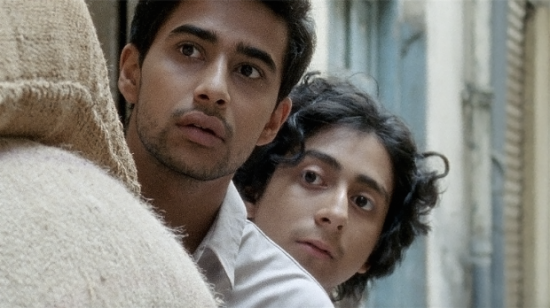
Prashant Nair’s film Umrika will have its world premiere in the “World Cinema Dramatic Competition” section. This section has twelve films from emerging filmmaking talents around the world which offers fresh perspectives and inventive styles. The film is produced by Swati Shetty and Manish Mundra. And here’s the official synopsis of the film –
When a young village boy discovers that his brother, long believed to be in America, has actually gone missing, he begins to invent letters on his behalf to save their mother from heartbreak, all the while searching for him.
The film’s leading cast includes Suraj Sharma, Tony Revolori, Smita Tambe, Adil Hussain, Rajesh Tailang and Prateik Babbar.
Last year, Geethu Mohandas’ Liar’s Dice was in the same section of the Sundance Fest.
So what do you do when you get to know that there’s a screening of Libaas? Well, only a Gulzar fan can tell you the right answer. So over to Mohit Kataria who tells us what exactly he did.
Before you start:
Please don’t read this post as a film review post, it’s all about my personal experience with the movie Libaas and the way I got to watch it. I’ve never written any movie review before and I don’t think I even qualify for writing one (if there is any qualification criteria). You might also find it really biased as I’m a fan of Gulzar Saab and always wear a particular pair of admiration glasses while reading/watching/listening to any of his works.
Prologue
What do you do when you get any once-in-a-lifetime opportunity? You grab it with both the hands, right? That’s what I also did.
It all started with a Facebook post from a very dear friend and an ardent fan of Gulzar saab, Pavan Jha, that I came to know about Libaas getting screened in IFFI – 2014 in Goa on 22nd Of November. Then after a number of confusions, calculations and discussions later, I decided to go ahead and started making my travel plans. Then, I came to know about something called a delegate registration (I have already warned you about my credentials ), which was already into its “register-with-late-fee-phase”. Somehow got registered with some made up bio-data to prove that I was worthy enough to be a delegate there. I got an email mentioning that the confirmation will be done after some careful review of my bio-data. I waited impatiently for the whole day which was the last day for the registration, and by the end of the day, I got a confirmation mail asking me to pay to be a delegate. I followed the instructions and completed the formalities. Then it was time to book the tickets for travel. After doing some calculations, considering family, work, economics and time dynamics, I booked the flight from Bangalore, scheduled to reach Goa at 2 PM on the day of screening (22-Nov-14) (Libaas was scheduled for screening at 5:30 PM) and also booked first available flight from Goa the very next day (23-Nov-14). Needless to say, my only purpose of going through all this exercise was to witness something I really was waiting for ever since I started following and loving Gulzar Saab and his work – to get a chance to watch Libaas. And I never thought I would get an opportunity of a lifetime in this manner, to watch it with Gulzar Saab himself.
Experience
Before cutting through all the details of getting the passes (where Ashok Bindalji and IFFI organizers helped a lot), reaching the theater following Gulzar Saab, and finally settling down to watch Libaas, I would like to mention here that there were lots of people who wanted to get in and watch Libaas and the auditorium had a limited capacity of accommodating 280 people only. So one senior IFFI organizer (I won’t name him to get him into any trouble), took a call after consulting with Gulzar Saab and Vishal Bhardwaj, to allow people to sit in the gallery, on the floor, to stand on the gates, behind the last row and any other place wherever possible without making others uncomfortable. It got reminded me of the pre-multiplex era when it was a norm for any big movie. Isn’t it delightful to treat and watch the movie in the same manner we used to watch movies when it was actually made (in 1988)?
The stage was set by welcoming Gulzar Saab by the IFFI authorities, and then Vishal Bhardwaj presented the movie Libaas as the inauguration movie of retrospective: Gulzar. Vishal said that it’s an honor for him to present this movie, and spoke about how Gulzar Saab started his career as a poet and brought his poetry from paper to screen. Each of his movies are poetries on screen. He also briefly mentioned about the efforts at various levels that have gone in trying to get the movie released, including his personal efforts of 20 years which has gone in vain. Then he mentioned what it means to him personally, and for his whole family to be part of this historic event.
Gulzar Saab was visibly holding back his emotions, and he started on a lighter note saying, saying, “दोस्तो, मैं भी उतना ही curious हूँ फ़िल्म के लिए, जितने कि आप हैं. आप ने भी नहीं देखी फ़िल्म, मैंने भी नहीं देखी”, which rightly summed up the significance of the film. He was happy that the family and friends have come from all over to see this screening. You can listen to the whole discussion here. And then the magic started on screen. We were in for a very delightful treat for next couple of hours.
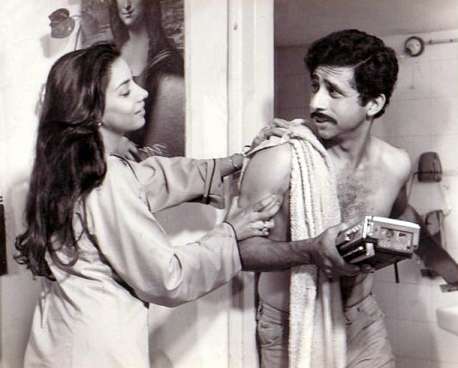
As you might know, the movie was completely based on Gulzar Saab’s own story Chaabiyaan which has also published later with the title Seema. There was wit, brilliance, intelligence and emotions written all over the movie. Each frame was flowing into the other one like the way water flows – at times like a river, sometimes like a silent lake and often like waterfall. It was a sheer pleasure to experience Gulzar Saab’s poetry for the next 137 minutes. The movie has four main characters – Sudhir Bhardwaj (a passionate theater director, played by Naseeruddin Shah), T.K. (a flamboyant businessman, played by Raj Babbar), Seema (an amazing actress who is also a not-so-happy wife, played by Shabana Azmi) and the theater which is the sutradhar which keeps tying all the running threads of the movie. It also has a handful of supporting cast who made their presence felt without shadowing the main leads. Not even a single character was out of place or not required. The story primarily deals with husband-wife relationship and a extra-marital affair, all in the backdrop of theater. While watching it, I could feel it was much ahead of its time (it was scheduled to be released in 1988), as was confirmed by Gulzar Saab in a post screening Q&A session that such things were happening at that time but were never shown in cinema. He dared to reflect what was part of society then.
Opening scene of the movie is in a theater, where Jamal Saheb (played by Utpal Dutt) is entering the theater while taking a look at the play being staged.
Utpal Dutt in Libaas
In the canteen, he is greeted by youngsters who are theater artists/aficionados and the scene establishes that Jamal Saheb is a great artist from the times gone by. He is not relevant anymore and is in a poor state. He has been replaced, so to say, by Sudhir, who is dominating the contemporary theater scene. In next few scenes, we come to know that for Sudhir, the first priority of his life is theater – the way he forces Seema to gargle every day in the morning, no matter what, and the way he keeps on talking about and enacting various scenes from his plays. One scene which nails it down clearly is when Seema asks Sudhir if she could get a hair-cut as she feels she would look prettier in short hair. To which he replies, if she gets the hair cut, what would happen to all the characters she is playing in theater, and starts quoting each of the characters from different plays. All the members of his theater group love and fear him in equal measure due to his strictness while doing the rehearsals. A couple of times when Seema forgets her lines during the rehearsals, he yells at her, and at home, he tells her,
“खाना बनाना भूल जाओगी तो बर्दाश्त कर लूँगा, dialogues भूल जाओगी तो कभी बर्दाश्त नहीं करूँगा.”
Phir Kisi Shaakh Ne Phenki Chaanv – Libaas
Seema is already strained, and wants a break from the monotony of Sudhir being so hard on her as he always thinking about one thing – theater. That’s when T.K. enters the scene and their home. He is informal and is such a close friend of Sudhir that even Seema feelss surprised as she had never seen Sudhir being so comfortable with anyone, including her. TK’s flamboyant style of talking and cheerful behavior attracts Seema, and he gets attracted to her beauty. They all meet a couple of times and then while one relationship starts forming, other one starts breaking. On one side, Sudhir is always busy with his play rehearsals and on the other hand, T.K., a well versed businessman is always ready to meet her and pay attention to her.
Her loneliness and boredom from theater adds fire to the fuel, and before even they realize, the relationship becomes complicated. The high-point of the movie is a scene which has brilliance of Gulzar Saab written all over it. It was Gulzar Saab’s craftsmanship that he handled such a burdened situation in such a subtle manner. The treatment of the characters, the dialogues of this one scene leaves us completely mesmerized and catches us unguarded. The scene is when Sudhir decides to confront T.K. and Seema about their relationship. Seema and T.K. enter the house after spending some good time together, and they find Sudhir at home. T.K. tries to cover up his embarrassment by telling Sudhir that he was asking about him from Seema as Sudhir was very busy, they were not able to meet.
T.K. – और किस ड्रामे में busy हो आजकल?
Sudhir – “अ..अ..म.. आजकल… अ… एक personal से नाटक में ज्यादा busy हूँ.”
“ह.. ह.. मतलब..?”
“नाटक तो दूसरे लोगों का है, मैं खा-म-खां बीच में फंस गया”
“अम.. कुछ समझा नहीं यार, वो कैसे?”
T.K., though embarrassed, is still trying to appear innocent even though he is guilty of cheating Sudhir.
“क्या है के हमारे यहाँ… हमारे यहाँ, वो हैं ना… मि. मुखर्जी”
He looks at Seema and starts building the story.
“मुखर्जी? कौन?”
Seema asks, to which Sudhir replies –
“तुम मिली हो उन से, शायद याद नहीं है… मि. मुखर्जी में याद रखने जैसा कुछ है या नहीं मालूम नहीं… लेकिन अपनी पत्नी की वजह से वो.. अक्सर याद रह जाते हैं लोगों को…. बड़ी talented… और talented से ज्यादा ख़ूबसूरत पत्नी है उन की. अब ज़ाहिर है कि लोग उन की तरफ़ तवज्जो देते हैं, attract होते हैं. और ये कम्बख़्त चीज़ ऎसी है कि आदमी हो या औरत, पाँव तले की ज़मीन खींच लेती है. आदमी सोचता है, इश्क ही में ज़िंदगी है, बाकी सब तो फ़न, आर्ट, talent, सब सजावट की चीज़ें हैं. बहरहाल, मि. मुखर्जी का problem है, उन की पत्नी… वो किसी के इश्क में पड़ गई हैं या कोई है जो उन के इश्क में पड़ गया है….”
Seema asks, “तो problem क्या है?”
To which Sudhir replies, point blank, still keeping it indirect,
“तुम्हें नज़र नहीं आता?”
“नहीं मतलब… समझ में आता है लेकिन दोनों अगर एक दूसरे को चाहते हैं तो…”
“नहीं, नहीं, नहीं, नहीं… तुम उस लड़की के problem को देख रही हो, मैं मि. मुखर्जी के problem की बात कर रहा हूँ”
“उनका क्या problem है?”
“क्यूँ? याने… उन का कुछ है ही नहीं?…
उन का problem ये है कि उन्हें मालूम हो गया है… और जान लेने के बाद शौहर यानि मि. मुखर्जी क्या करे उस पत्नी का? चुप रहे? देखता रहे? होने दे जो हो रहा है? मुश्किल तो ये है कि कोई भी शौहर जान लेने के बाद ये निगल नहीं सकता”
Now T.K. intervenes,
“आख़िर मुखर्जी चाहता क्या है?” “चाहता क्या है, वो छोड़ो, क्या करना चाहिए उसे?”
“अम..ज़ाहिर है अगर उन की पत्नी, उन के साथ नहीं रहना चाहती तो उन्हें कोई हक़ नहीं है कि वो उस के साथ ज़बरदस्ती करें. After all.. वो अपना अच्छा-बुरा समझ सकती है, ऎसी कोई बात नहीं है…”
“हाँ, समझना तो चाहिए, सिर्फ़ ये कि जिस से वो प्यार करती है, क्या सचमुच प्यार करती है? यूँ ही उन्स में तो नहीं पड़ गई? ख़ा-म-ख़ां का infatuation तो नहीं है, जिसे वो प्यार समझ बैठी है?”
“आख़िर शादी-शुदा औरत है, क्या इतना नहीं समझती? इतनी mature नहीं होगी के…”
And that’s when Gulzar Saab’s intelligence of handling the complicated situations comes in full form.
Sudhir interrupts Seema at this point and says it straight,
“इतनी mature हो तुम? इतना समझती हो कि जिस राह पे जा रही हो, जिस के साथ जा रही हो वो झूठ-मूठ का कोई ड्रामा तो नहीं कर रहा है?”
At this time T.K. tries to escape saying this is personal matter between husband and wife and he is an outsider.
Then, as a matter of fact, Sudhir tells him,
“बैठ जाओ T.K., तुम भी कोई बच्चे नहीं हो… बैठ जाओ… देखो T.K., इन रिश्तों में कानूनी, ग़ैर कानूनी कुछ नहीं होता. कानूनन कोई पत्नी नहीं बनती, कानूनन कोई शौहर नहीं होता.Law has nothing to do with it. हम ज़बरदस्ती इन रिश्तों पर कानूनी मोहरें लगाते रहते हैं. आज तक, कोई किसी आते को नहीं रोक सका और ना किसी जाते को थाम सका है. और मैं ये कैंसर ले कर नहीं घूम सकता…. तुम ने ठीक कहा, अगर सीमा मेरे साथ नहीं रहना चाहती तो मुझे कोई ज़बरदस्ती नहीं करनी चाहिए, मैं नहीं करूँगा, लेकिन मैं इसे रास्ते पर नहीं छोड़ सकता. मैं तुम्हारा फ़ैसला जानना चाह्ता हूँ, तुम दोनों का फ़ैसला जानना चाहता हूँ… अगर तुम दोनों flirt नहीं कर रहे हो, एक-दूसरे को धोखा नहीं दे रहे हो, सचमुच एक दूसरे को चाहते हो, तो हाथ पकड़ो और निकल जाओ इस घर से.”
Seeli Hawa Chhoo Gayi – Libaas
Even after Sudhir and Seema get separated and she remarries T.K., there is still an element of care and affection for each other.
T.K. and Seema are living happily, yet Seema is not able to forget her past so easily.
In one scene, where one evening she is sitting sad all alone on a yatch, T.K. comes and asks,
“क्या हुआ… सुधीर का ख़्याल आ गया?”
“हूं..”
“इसीलिए तो तुम्हें शादी के बाद यहाँ ले आया. जानता था, अगर वहाँ रहोगी तो अतीत याद आएगा. अतीत बुरा हो तो सीमा, आदमी गर्द की तरह झाड़ दे, ख़त्म कर दे, लेकिन सुधीर जैसा… मुझ पर अंधविश्वास था उसे. जो कुछ हुआ, मुझे उस का अफ़सोस नहीं, बिल्कुल नहीं, बस यही है कि अगर तुम किसी दोस्त के यहाँ ना होती ना…तो अच्छा होता, क्यूँकि तुम जहाँ भी होती, मैं यही करता, I love you. मैं तुम से प्यार करता. I love you Seema, I love you.”
[Edit Note : While Mohit has written the climax in his post, we are not going to reveal what happens in the end, as we expect more screenings of the film soon and expect you to watch it someday, somewhere. We leave you here with Ravi Shastri Quote : All Three Results Possible ]
And the end credits roll over with the song
“तुम से मिली जो ज़िंदगी, हम ने अभी बोई नहीं,
तेरे सिवा कोई ना था, तेरे सिवा कोई नहीं…”
…Leaving everyone in the theater completely spell bound.
Gulzar Saab got a standing ovation which refused to die down for the next few minutes.
Epilogue
It had Gulzar written all over it. Gulzar the writer, Gulzar the dialogue-writer, Gulzar the lyricist and Gulzar the director. It was like various Gulzar competing with each other and attaining the pinnacle of expressions. The music of R.D. Burman was also a highlight of the movie as the melodies are so soulful, the film would have been definitely incomplete without such lovely songs.
From story perspective, it is really difficult to say what was wrong or who was wrong or whether anyone was wrong at all? This is the power of a sensibly told story on screen. We all know that Gulzar Saab has great sense of expression when it comes to relationships. He is the one who has given the words to all the emotions we have gone through at various points in our different relationships. He is no different here as well. Gulzar Saab has also given various references of past work of theater artists who have explored the complexities of husband-wife relations – Leo Tostoy’s Anna Karenina, Vijay Tendulkar’s Khamosh adaalat jari hai, Mohan Rakesh’s Aadhe-adhure. The film, even though made some 26 years back, is still relevant and I believe due to the nature of human relationships, will be relevant even after 26 years.
There are so many situations in the movie which could have been exploited with melodramatic scenes but he kept them subtle, and trusted the intelligence of audience he was catering to. Like after re-marriage, one day when T.K. is gargling in the morning, all of a sudden she gets reminded of Sudhir, who was always after her for gargling. She gets in that groove for a moment that she actually calls out her old maid’s name “दुर्गा…” and then she realizes her mistake. And when she calls up their family doctor (played by A.K. Hangal) asking him to visit their home for T.K.’s cough and cold, she forgets to mention to the doctor about his new life and husband. The doctor habitually visits their old home and because Sudhir is also suffering from the cough at the same time, he doesn’t find it surprising that Seema called him up. Subtle ways to show that the bridges are not yet burnt completely. The central idea of the story keeps coming back again and again in multiple ways.
During the post-screening Q&A we came to know that the climax which was shown in the film was not his choice but the producers insisted upon him to change the climax.
He wanted to leave it a bit open ended, which he couldn’t do in this movie, hence he made Ijaazat, another masterpiece on husband-wife relationship which he ended the way he wanted it to be.
Nobody dared to ask the question, “अगर लिबास release हो जाती फिर भी क्या वो इजाज़त बनाते?” and I doubt if anyone who has watched Ijaazat would even dare to think it being non-existent from the filmology of Gulzar Saab. Nothing to compare but to give a flavor to the people who could not watch the screening of Libaas, in my opinion, it was at par (if not more) with Ijaazat in terms of exploration of relationships, writing, dialogues, songs, direction and music.
To sum it up, I would just say, no matter how many years the movie has spent in the laundry or dry-clean, this Libaas is still as crisp, clean and white as new.
(Mohit Kataria is an IT engineer by profession, writer & poet by passion, a Gulzar fan by heart. He is based in Bangalore and can be reached at [kataria dot mohit at gmail dot com] or [@hitm0 on twitter)
(Pics & Videos by Ashok Bindal [ajbindal at gmail dot com], a close associate of Gulzar saab, based in Mumbai)
Retrospective Inauguration Video via Ministry of I&B YouTube Channel]
Film Heritage Foundation has announced its first major initiative to save India’s cinematic heritage – Film Preservation & Restoration School India – to be held from February 22nd -28th, 2015 at Films Division, Mumbai.
Film Heritage Foundation is a not for profit organization set up by filmmaker Shivendra Singh Dungarpur in 2014. Recognizing the urgent need to preserve India’s cinematic heritage, the foundation is dedicated to supporting the conservation, preservation and restoration of the moving image and to develop interdisciplinary educational programs that will use film as an educational tool and create awareness about the language of cinema.
This is a pioneering initiative of Film Heritage Foundation in collaboration with Martin Scorsese’s Film Foundation, Cineteca di Bologna and L’Immagine Ritrovata.
Film Preservation & Restoration School, India
– The school is set up in collaboration with Martin Scorsese’s Film Foundation, Cineteca di Bologna, L’Immagine Ritrovata and FIAF.
– Date : It will take place from February 22nd – 28th, 2015 in Mumbai. This is a unique project that is being done in India for the first time.
– The purpose of the school is to address current issues surrounding film preservation and restoration including practical training of current restoration and archival best practices by a faculty that includes some of the leading international experts in the field.
– The week-long course itself will consist of lectures/presentations followed by interactive sessions with experts on film archiving and preservation from the foremost archives and studios around the world, screenings of restored classics and ten modules on film restoration including hands-on training in the latest techniques that will be conducted by a technical team from L’Immagine Ritrovata, a state-of-the-art film restoration lab that has restored landmark films of Chaplin, Fellini, Ozu and Ritwik Ghatak amongst others.
– The deadline for submitting the application form: November 30th, 2014
– Participation Fees : Rs. 50,000/- plus applicable service tax for Indian students. 1000 USD plus applicable taxes for overseas student. (The fee includes lunch and two tea/coffee breaks with snacks every day from February 23rd – 28th, 2015. The fee also includes a closing dinner at the end of the school)
– Scholarship : A few scholarships will be available for deserving students. Selected canditates will be notified.
– Selected applicants will have to start with online preparatory material that will be made available to them from January 14th – February 18th, 2015.
– More details in the Application Form and on the website.
– Contact : Film Heritage Foundation 707, Arun Chambers, Tardeo Road, Mumbai – 400 034. India
Contact person: Mr. Jayant Patel
Email: fprsi_app@filmheritagefoundation.co.in
Tel: +91 22 67367777
– This will be the first step for a long-term goal to create an indigenous resource of archivists, conservation and restoration experts that will work towards protecting India’s cinematic heritage.
The third edition of the Dharamshala International Film Festival begins on October 30th, 2014 with Rajat Kapoor’s acclaimed feature, Aankhon Dekhi. Rajat will also be present to introduce the film.
– The festival will also welcome several filmmakers along with Rajat Kapoor: Chaitanya Tamhane with his award-winning Court; Geetu Mohandas with Liar’s Dice, Q with Nabarun, Shabnam Sukhdev with her documentary, The Last Adieu; Pushpa Rawat with Nirnay; Tibetan filmmaker Tenzin Tsetan Choklay with Bringing Tibet Home; Finnish-Tibetan filmmakers Donagh Coleman and Lharigtso with A Gesar Bard’s Tale; and Swiss-Kurdish filmmaker Mano Khalil with The Beekeeper.
– Gitanjali Rao, one of India’s best-known animation filmmakers, will introduce her new film, True Love Story, and has also curated a series of animation films from India and internationally.
– Fest includes an Indian short film selection curated by reputed filmmaker Umesh Kulkarni.
– A highlight this year is the exciting package of films from the Middle East: Sundance and TIFF award-winning The Square by Jehane Noujaim; Return to Homs by Talal Derki which won the Grand Jury Prize at Sundance; A World Not Ours by Mahdi Fleifel; and Hany Abu-Assad’s Cannes 2013 Jury Prize-winning Omar, which was also nominated for the Oscars.
– DIFF has also announced a series of Special Programmes that include an exploration of the world of sound, a visual journey through anonymous and powerful Tibetan voices, and a tribute to German artist and filmmaker, HarunFarocki, who passed away earlier this year.
a) Soundphiles is a celebration of listening. Curated by Samina Mishra and Iram Ghufran, the first edition – Many Echoes, Many Words –features filmmakers, artists, journalists and arts students who combine a diversity of worlds and forms of sound. The series draws the audience through the rhythm of the textile mills of Malegaon, broken sounds from the contested streets of London, a deafening bombing in Iran, scratchy magnetic tracks of old Hindi films and more.
b) In collaboration with the Shelley and Donald Rubin Private Collection, DIFF 2014 presents Unattributed, a video art series showcasing anonymous Tibetan artists living in Tibet and in the diaspora. The presentation explores the tension between an ancient culture’s unbroken artistic tradition and the personality-driven world of contemporary art.
c) In collaboration with the Goethe Institute, DIFF 2014 will present a retrospective of Harun Farocki’s films. Three films that capture the essence of his work will screen at the festival: Inextinguishable Fire (Farocki’s first movie after leaving film school); Videograms of a Revolution (in which he collects amateur video and material broadcast on television and chronicles the fall of a dictator in Romania); and Workers Leaving the Factory (an exploration of the factory worker through 100 years of film history).
– DIFF Film Fellows initiative; a programme was launched this year to nurture upcoming filmmaking talent in the Himalayan regions. The winners are Akee Sorokhaibam from Manipur, Khanjan Kishore Nath from Assam, Kombong Darang from Arunachal Pradesh, Munmun Dhalaria from Himachal Pradesh and Smanla Dorje Nurboo from Ladakh. The five DIFF Film Fellows were selected from 28 applicants through a rigorous process by a jury of eminent film personalities – Hansal Mehta, Anupama Srinivasan and Bina Paul.
The five winners will have the opportunity to be a part of DIFF 2014 and to engage in special mentorship sessions with the jury and attending filmmakers. They come from varied backgrounds, brought together by a shared passion for filmmaking.
– The 3rd edition of the Dharamshala International Film Festival will take place in McLeod Ganj, Upper Dharamshala, between 30 October and 2 November. Longtime residents of Dharamshala, Indian-Tibetan filmmaking couple Ritu Sarin and Tenzing Sonam, initiated the film festival with the aim to bring high quality independent cinema to Dharamshala, encourage local filmmaking talent and create a meaningful platform for engage all the communities in the area.
– For more : DIFF House, Opposite Norbulingka Institute, PO : Sidhpur, Distt : Kangra, HP 176057
We saw the film Sulemani Keeda at last year’s Mumbai Film Festival. To repeat what we had said, it’s the bonafide Versova indie – of versova, by versova, for versova (and hopefully beyond). It’s honest, charming, funny, and tells all those Versova tales which hardly travel beyond the walls of Aaram Nagar. If Luck By Chance was the big budget portrayal of the bollywood insanity, Sulemani Keeda is the opposite – of those who are on the fringes, of writers and their struggle with actors, producers, landlords.
And here’s the good news – PVR Director’s Rare will release the film on November 28th, 2014. Do check out the trailer.
Official Synopsis:
In this slacker bro-mantic comedy, writing partners Dulal and Mainak dream of shaking up the Bollywood with their script “Sulemani Keeda”. When they’re not being rejected by producers who refuse to read their script, they lurk around bookstores and poetry slams shamelessly hitting on girls. They find some hope when the drug addled, cat-obsessed Gonzo Kapoor, the son of a famous B movie producer, hires them to write an art house film billed as “Tarkovsky with orgies” for his directorial debut. All seems well until Dulal meets Ruma, a beautiful photographer who makes him question his choices in life.
The film will open the South Asian International Film Festival (SAIFF) which runs from Nov 18-23, 2014. Interestingly, it’s 1 film with 11 segments directed by 11 filmmakers. The directorial bunch includes Sudhish Kamath (Good Night | Good Morning), Q (Gandu), Nalan Kumarasamy (Soodhu Kavvum), Suparn Verma (Aatma, Ek Haseena Ek Khiladi), Raja Sen, Sandeep Mohan (Love Wrinkle-Free), Pratim Gupta (Paanch Adhyay), Hemant Gaba (Shuttlecock Boys), Abhinav Shiv Tiwari Sankhnaad (Oass), Anu Menon (London Paris New York), and Rajshree Ojha (Aisha, Chaurahen). And this includes 3 film reviewers. If you don’t like the film, well, you get the drift.
Check out the first trailer of the film. And scroll down for detailed synopsis, cast & credits.
Official Synopsis :
Is man meant to stick to one woman? Is film meant to conform to one genre?
X is a one-of-its-kind film because eleven Indian filmmakers with disparate styles of filmmaking have come together to make different parts of the same film. In strikingly different styles as a bridge between the various cinemas of India. Mainstream, Arthouse, Popular, Underground, Regional and Global – all at the same time. NOT an anthology but a single story.
The story of K (Rajat Kapoor), a filmmaker with a mid life crisis, who meets a mysterious young girl (Aditi Chengappa) who reminds him of his first girlfriend at first, and subsequently, of every woman in his life. Who is she? Is she real or imaginary? A stalker or a ghost? His past catching up or a character from the script he is writing?
Each episode, directed by a different filmmaker (since every woman/story required a different genre) unravels the role of a different woman in his life. Every woman is different and through the lens of different filmmakers, X hopes to explore the role women play in shaping our lives.
What is it that makes us tick or stop? What is it that keeps us anchored or free falling? What is it that makes us move or let go? Are we products of our past or present? What is that X factor that defines who we are?
Cast & Crew
Cast: Aditi Chengappa, Bidita Bag, Gabriella Schmidt, Huma Qureshi, Neha Mahajan, Parno Mitra, Pia Bajpai, Pooja Ruparel, Radhika Apte, Richa Shukla, Rii Sen and Swara Bhaskar with Anshuman Jha and Rajat Kapoor
Directed by: Abhinav Shiv Tiwari, Anu Menon, Hemant Gaba, Nalan Kumarasamy, Pratim D Gupta, Q, Raja Sen, Rajshree Ojha, Sandeep Mohan, Sudhish Kamath and Suparn Verma
Written by: Abhinav Shiv Tiwari, Anu Menon, Hemant Gaba, Pratim D Gupta, Q, Raja Sen, Rajshree Ojha, Sandeep Mohan, Sudhish Kamath, Suparn Verma and Thiagarajan Kumararaja
Directors of Photography: Anuj Dhawan, Aseem Bajaj, Dinesh Krishnan, Gairik Sarkar, Katyayani Mudholkar, Maeve O Connell, Q, Ravi K Chandran, Sandeep Mohan, Siddhartha Nuni, Sidharth Kay and Viraj Sinh Gohil
Mumbai Film Festival – Our annual movie ritual is on. And like every year, we are going to cover the Festival like nobody else does it. Team moiFightClub will bring you all the day’s reccos and reviews. We are also involved with the fest this year – helping wherever you can to make it better.
(Dir: Safi Yazdanian, Iran): A rare Irani film that paid more attention to aesthetics, form, and style over plot. And what a delight this anomaly turned out to be! Dealing with memories of Goli (played by enchanting Leila Hatami of ‘A Separation’ fame) who has returned to Iran after many years in France, the film opens up more into a poetry piece. Abstract imagery, dialogue that feel like snatches from a dream (non-sequitar, funny, puzzling), stunning frames & playback music, and the bitter-sweet play of fractured memories – all combined to make it a demanding but genuinely rewarding watch. Goli meets a man (played by Ali Mosaffa, the lucky real-life husband of Leila Hatami) on her return who seems to remember a lot about her while she doesn’t recognise him at all and most of the film is about the relationship these two people share – which to me looked like our relationship with nostalgia. The way we avoid the past and the way it still pops out from every corner of a city that was ours once but not anymore is portrayed through multiple metaphors.
The film reminded me a bit of another Leila Hatami starrer, Ali Mosaffa directed ‘The Last Step’ which I watched at Osian’s Fest a few years ago. Another abstract (though that had a well-defined plot), stylised, brilliant Irani film which never made it to the (as Mihir Fadnavis puts it) ‘communist shores of torrents’.
Diana Whitten’s debut documentary Vessel is a empowering story of a bunch of women helping women to have safe abortion on ship lead by the rebellious Dutch Physician Rebecca Gomperts under the pro abortion rights organization ‘Women on waves’. These women challenge and fight law (that makes abortion illegal in most of European countries), society, religion and God that doesn’t allow a woman basic human right of what is happening with their bodies. As they sail with the ‘Murder Vessel’ through shores of Ireland, Poland, Portugal they face extremes reactions by the church, the ‘pro life human’, older and younger men and women, and negative publicity by the press citing their practice as illegal. The Portuguese government even forbids them from entering their national water because they are ‘threat to the country’. The meltdown moments are when you are exposed to real words of women who are begging to get rid of life within them that only means suffering in their respective circumstance. As one says ‘I feel terrible.. Am I a monster? I cant have the baby’. Some are raped, some deserted by man, some don’t want it. Their choice.
No! Abortion is not murder and these women are not fascists and terrorists, the sobriquet awarded to them. At what point in this patriarchal society did man convince women that she can be as emancipated as possible, but eventually a child makes her life complete, even in the liberated first world. The high point in the film is when the fiery Gomperts states, ‘to change the world, you have to be offensive’ and struts her SAFE ABORTION banner right under the nose of The Virgin statue at El panecillo. Yes! Mary, the virgin mother.
My body! My right! So f*** you if your religion and law has a problem with that.
Elephant Song
Charles Biname adapts Nicholas Billon’s play ‘Elephant song’ in an engaging suspense drama that tells an intriguing tale of a lunatic patient, Michael playing a psychological game with an Asylum psychiatrist when a colleague goes missing. The story unfolds to explain why “hope is the worst thing you can give a child if you can’t keep up your words”. A traumatic childhood incident explains Michael’s fascination with Elephants. A song that reminds him of his mother that ignored him for better things in life.
He lets her die and sings the Elephant song to her in her last moments. The translation to Elephant song would be my favorite words by Poet Philip larkin’s ‘This be the verse’
Stop motion, Illayaraja’s music, German bride & Tamil groom, Love marriage, candid Meet the Parents situations, 8mm footage, a real story. A hybrid documentary with beshumaar entertaining, endearing moments & more masala than some of our films. Take a bow Dear Franziska & Jai. Jaykrishnan. Jay’s mother should be cast NOW in more films. Highly recco’d.
Elephant Song
Though everyone criticized Xavier Dolan’s acting, I didn’t particularly find his performance as ‘hammy’. A psychiatrist has to work with a patient to unearth info about a missing colleague, while the film also intercuts to flashbacks, multiple pov and an interrogation. This one was pretty riveting thriller with twists unfolding at each turn. Though I felt Bruce greenwood could have been a ‘stronger’ character. And it’s always a pleasure to see Carie Ann Moss & Catherine Keener.
Field of Dogs
The mindfuck trailer notwithstanding – this film delivered little as compared to the promises it made. Politics, Literature, Dystopian lifestyle, Dreams, impressive visuals (especially like the hal chalana scene in a supermarket alley – capitalism ki maa ki aankh probably) – the film has so much going for it but it crosses the line and becomes over indulgent and soporific. I will be grateful to someone who explains me the point of this film.
United Passions
The making of FIFA federation – from it’s inception nearly a century ago to 2010 where South Africa was nominated as the venue of the next World cup – this one is an episodic film with three protagonists -a passionate Gerard Depardieu, Sam Neill (yes yes Jurassic Park wala banda) and a greasy Tim Roth. With montages punctuating the screenplay, it is hard at times to follow the ‘story’ and one cannot help but marvel at the production design and scale of this big budgeted biopic of sorts. As someone who is not a football fan, I quite enjoyed this film – however disjointed it might have been.
Lech Majewski’s follow up to the masterful “The Mill and the Cross” is an absolute disappointment. The indulgence is not even the problem here. The problem in my opinion is the verbose nature of philosophising randomness to form a story. Visually as well as thematically it had a lot going for it but sadly it’s a mess.
Optional end: What a waste of time (and for many others, joints)
The story of Africa is not one that can be told simply. Neither is it a simple story.The Good Lie unfortunately tries hard to simplify it and even achieves that. Communities and families are destroyed in the Second Civilian War of Sudan while a bunch of kids manage to escape and find shelter in a refugee camp where they spend 13 years waiting for an opportunity to get away to better pastures. They are finally sent to the US where they are helped with home and jobs. And after a point family reunions as well. Melodramatic, simplistic and populist, the film takes no stand moral or political to the closer conflict or the larger context of colonisation. What begins as a hopefully refreshing and Chinua Achebe-like empathic peek into the lives of native Africans quickly becomes a tear-jerking saga of poor Africans needing to be saved by the white men. The only difference is in the past it was the British, now it is the Americans. The film seems to have bought the white man’s burden so seriously it even shifts points of views completely at one point and turns the African into a Suppandi-like simpletons, poor archaic villagers totally clueless of the awesomely progressive and modern Western world – the Holy Grail. I could have forgiven the populism and melodrama and even simplistic nature of writing if not for this, because the performances and relationship dynamics were indeed moving. But, then there are somethings that cannot be excused and one of them is a warped world-view.
Beloved Sisters
A long drawn-out but meticulously crafted rhapsody of love, longing and betrayal. It is based on the speculated relationship between German writer-poet Friedrich Schiller (1759-1805) and the Lengfeld sisters. An out and out period piece that does not allow the limitations of its genre to constrict its form and hence making it a delightfully rich film. It is set in the post-Enlightenment period of Europe and the society is in transition. Education is increasing and literature is flourishing as technology is advancing. This constantly changing backdrop makes for a fabulously apt context for the love-lifes of the sisters and Schiller, all three in love with the idea of love and its consequent pain that travel its arduous ups and downs bravely. The long-winded film (and the length does get taxing after a point) traces the relationships of each, the almost incestuous passion of the sisters for each other, and their relationship with Schiller over time gently and with care, never taking sides and never easing a blow, be it in portraying the intensity of passion or pain. It is gorgeously mounted, almost like an Impressionist painting without overdoing the glamour or allowing it to overpower the content which is beautifully supported by its lead actors. However, and this is a grouse, a film about letters and of men of letters takes words too seriously and speaks to us a lot, first through third-person voice-overs then first person and even resorting at one point at having the characters speak to the camera (which is actually interesting especially for a period film.) After a point, there is too much information and too much of talking for us to really feel the grandness of the love between the three or the pain of the lost promises never to be fulfilled..
Killa
Shall I call it heart-warming? Moving? Funny? Intuitively innocent yet understanding? There isn’t one word because Killa is so much more than these words. It is the journey of a boy grappling with the death of his father two years back and the consequent constant change of environment. It is the story of his mother, a single woman, gritty and upright, determined to ensure she is now the father and mother to her only son. It is also the story of struggle and survival fo very common people-children and aged alike, of human triumph, of courage, friendship, loyalty and finding light at the end of the tunnel…Beautifully shot and heartfelt in every detail, Killa is a fabulous directorial debut of Avinash Arun, a cinematography graduate from FTII who is known back home for his humility and gentleness among other things. And among peers in the industry for his cinematic acumen and talent. I will not shy away from saying I was proud to be watching a sparkling debut of one my alumnus but rest assured, the cheering was strictly because it was so well-deserved.
National Film Development Corporation (NFDC) has announced 32 finalists for the Co-Production Market to be held during Film Bazaar in Goa from November 20-24, 2014.
The 32 finalists in the Co-production Market, hoping to attract funding and distribution from potential co-producers, distributors and sales agents from across the globe, include 18 projects from India and 14 from overseas.
Among the 18 Indian finalists, six are from the Screenwriters Lab 2014:
By/Two – Directed byDevashish Makheja and produced by Dutta Dave
The School–Directed bySuchita Bhhatia and produced by Vivek Kajaria
Blossoms (Pallavi)- Directed and produced byNila Madhab Panda
Nuclear Hearts– Directed byBornila Chatterjee and produced by Tanaji Dasgupta
Seven (Saat)- Directed byAshish Bende and produced by Suhrud Godbole
Medium Spicy– Directed byMohit Takalkar and produced by Nikhil Mahajan
The Invisible One– Directed byAmit Datta and produced by Anjali Panjabi
Ashwathama – Directed by Pushpendra Singh and produced by Sanjay Gulati
Rainbow– Directed byShona Urvashi and produced by Raman Lamba
Overcoat– Directed byAbhijeet Singh Parmar and produced by Rishebh Batnagar
Mantra- Directed by Nicholas Kharkongor and produced by Rajat Kapoor
The Indian Prisoner -Directed and produced byShashwati Talukdar
The Boyfriend– Vidur Nauriyal and Ashim Ahluwalia
Winter– Aamir Bashir
Char Log Kya Kahenge– Hitesh Bhatia
Flow – Vandana Kohli
All about Her– Ruchi Joshi
The Sunset Club– Karan Tejpal
The 14 international projects to be showcased in the eighth edition of the Film Bazaar Co-Production Market include two films from the US, two from Sri Lanka, a film from Pakistan, Afghanistan, Nepal, Bangladesh, Norway, France, Germany, Singapore and United Kingdom and an IFP project which is selected through NFDC collaboration with Independent Filmmaker Project, USA.
Three and a Half- Produced by Mira Nair and directed by Sooni Taraporewala (USA)
Interpreter of Maladies – Produced and directed by Amitav Kaul (USA)
Minefield– Directed by Shiladitya Bora, the PVR Rare head and produced by the award winning Sri Lankan filmmaker Prasanna Vithanage (Sri Lanka)
Womb – Directed by Nishantha Shanthadeva and produced and Rasitha Jinasenaby (Sri Lanka)
The Judgement– directed bySabiha Sumar and produced by Sachithanandam Sathananthan (Pakistan)
Summer with Azita- directed by Fazila Amiri and produced by Paul Lee (Afghanistan)
Abomination- directed byKaran Shrestha and produced by Kshitiz Adhiraj (Nepal)
No Land’s Man –directed and produced byMostofa Sarwar Farooki (Bangladesh)
Gilded Cage –directed and produced byVijay Chandran (Singapore)
What Will People Say (Hva Vil Folk Si)- directed by Iram Haq’s and produced by Maria Ekerhovd (Norway)
Goa directed byJamie Mateus-Tique and produced by Luc Bossi (France)
Once Again– directed byKanwal Sethi and produced by Holm Taddiken (Germany)
End Game directed by Geetha J and produced by Ian McDonald (United Kingdom)










 F.i.g.h.t C.l.u.b