Archive for the ‘reviews’ Category

The year was 1994. I was in class 9th. It’s the year when the world starts reminding you that life and death will be based on your next year’s results. So, this is the year before you are crucified for the board exams. Have as much fun as you can have.

My class found its first official couple that year – those who declared their love without saying anything. Boy from middle-class. Girl from Officers’ colony. In a small coal town in Jharkhand (it was Bihar then) where dating wasn’t part of our dictionary, it was a big thing. Quite daring too. Because unlike in big cities, we all knew how many chappatis our neighbours had for lunch and how many they finished in dinner. Everyone knew everyone else and every affair related to them. Love in a small town was a risky business.

So for the rest of us, it was a teasing game – oh, she is with him and he is with her. The peer pressure that makes you imagine weird things. It was all just in the head. But for the couple, i was the middle man. The boy used to sit on my right as we shared the desk. The girl, on my left, had a separate desk. And between the boring classes, writing and passing love chits was their favourite activity. Being a good friend, i had no choice but to spice up the chits when asked by my friend. And help her in  studies too. She is your friend’s girlfriend. If not you, for the first time someone in your life has a girlfriend. You have no other choice.

The first chit, the first letter, the first chocholate that was shared – it was all before my eyes.  And like all small town love stories, this also ended with a Jagjit Singh ghazal. He came back from Benaras and told me that he did exactly what Jagjit Singh sang in Arth – Tere khusboo me base khat mein jalata kaise….Pyaar me doobe huye khat mein jalata kaise…Tere haathon ke likhe khat mein jalata kaise…Teri khat aaj mein ganga me baha aaya hun….Aag behete huye paani me laga aaya hun.

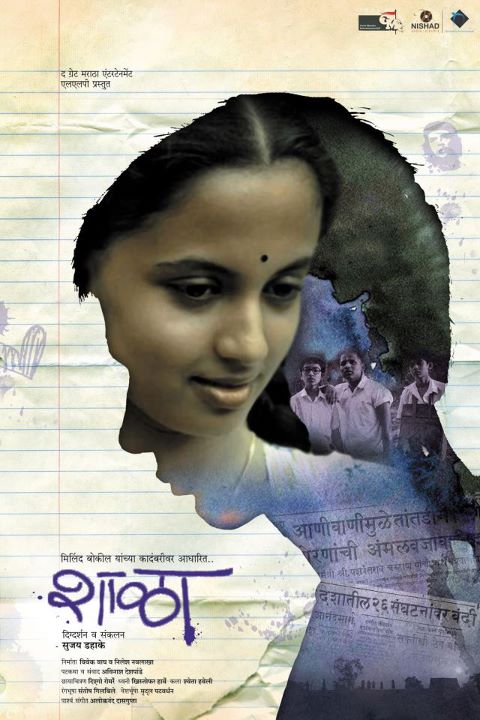
We never discussed this later on. But sometimes i still do think about the entire episode and a big smile appears on my face. For two hours i had the same smile on my face as i watched Sujay Dahake’s directorial debut Shala.

Based on Milind Bokil’s novel by the same name, this is an assured debut. And believe it or not, the filmmaker is just 25 year old.

The film doesn’t state anything new. It’s a trip down memory lane that you have seen many times before. Just the set-up is different and the faces are new. But everything is captured so well – it’s all about the silences, glances, moments and the memories. School, best friends, love, heartbreaks, first rush of hormones, crush on your favourite teacher and that first introduction to politics which tells you that the real world is not what it looked like so far – say it, and it’s all there.

Best thing about Shala is that it doesn’t look like a film at all. The acting is so natural, the camera is so non-intrusive and lingers on frames with so much ease that it feels as if someone just put a camera in a school. There is not a single false note in the family affairs too where the scenes are quite delightful.

The story is set in the backdrop of the emergency. Though it doesn’t add much political colour to the main story and which seems like a tokenism, but Sujay belongs to “subtle school of filmmaking”.

A common factor in any good film is that you will always remember a character who is there in just 2-3 scenes. Mr Joshi (lead character’s father) played by Nandu Madhav is that character in Shala. Watch him in the scene when he receives the letter from the school – knowing some of my friends and their strange equation with their dads, can bet that many people will wish that they had a father like him.

The lead actors played by Anshuman Joshi and Ketaki Mategaonkar have such a terrific and delicate chemistry between them that it’s impossible to believe that it’s just onscreen love. They do nothing heroic about their love story but those tender moments filled with soulful music are so powerful that they will stay with you long after you have left the theater.

Another place where it scores a high point is that the film doesn’t aim for the big bang climax. It’s all about the journey, it’s not a “destination movie”. Because the pain of growing up can’t have a happy ending. Nothing prepares you for the cynicism. The joy is in the journey. Shala celebrates that. This is what pure and uncompromising cinema looks like. And since that’s a rare genre in this country, i suggest you don’t miss this one.

Watch it. Watch it because nostalgia is a bitch, and when the bitch is so beautiful, there is no way out.

And what’s your class 9th story? Do tell us.

The film is playing at Mumbai’s 24 Karat Theater (Jogeshwari) with Subtitles. They have only one show at 3:30pm. If you know about any other show with subtitles, do let us know.

Click here to check out the official website of the film.
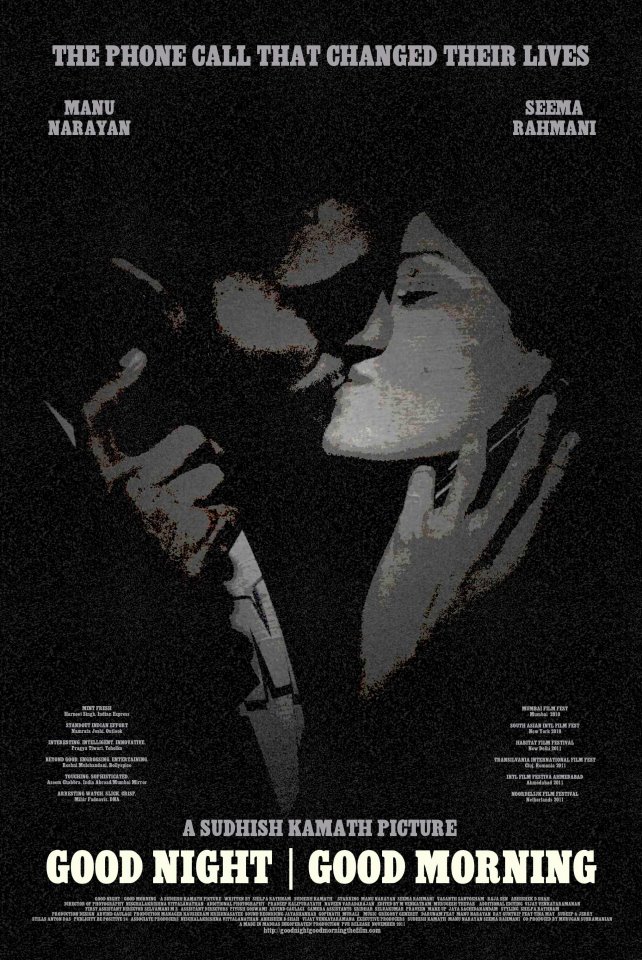
We were bit clueless about how to approach this film. Sudhish Kamath is a good friend and that means we will do whatever we can to support the release of the film and make it more visible. But how good or bad the film is – that’s a completely different question where friendship has no space. You can be our best friend and make the worst film that we will not endorse publicly. And you might be the biggest dodooth* in the town and deliver the best film which we will happily endorse. Also, to be honest and fair with your friends’ films is quite a difficult task. And while we were in this dharam-sankat, Shubhodeep offered to review it. We were more than happy to share the burden. This is his second post here. To read the first one, click here.

Read on.

The guy introduces himself as Turia to the girl. I wonder aloud what the name means. Indeed, whether it means anything at all. A couple of minutes later, the girl says: “What kind of a name is Turia?” I grin and prepare myself for their night-long conversation.

Sudhish Kamath’s Good Night Good Morning is that kind of a movie. Shot in gorgeous black and white (curiously under-produced at a couple of spots) it surprises, amuses and frequently offers situations and dialogue that resonate with déjà vu. All this in accompaniment to a jazz soundtrack that sweeps across the movie and infuses it with much life.

The story straddles New Year in New York: a time usually defined by merriment and debauchery. Neither element is present as this story begins. He is a hopeless romantic unable to get over a broken relationship. She is, at least on the exterior, a cynic who doesn’t believe in relationships. They both have troubled pasts. Both of them appear to be in need of comforting company. We’ve met both characters before in reel as well as real life; nevertheless, the two occupy these comfortably stereotypical characters with an unexpectedly invigorating freshness. He drunk dials her number while riding in a car with three sloshed friends. What follows is an engaging and witty conversation that almost anyone will identify with. I’m certain the movie had snatches of conversations that I’ve actually had verbatim in “real” life. Love, losing love, the oft-perceived hopelessness and uselessness of relationships, are sensitively articulated in the movie. It’s easy to lose yourself in a melee of your own ruminations once you start thinking with them.

As the movie progressed, I became acutely aware of the two writers at work, weaving their words on a fabric so tenuous as to not exist at all. Writing near-endless lines of dialogue, interspersed with little or no action, can be a forbidding task. Not only have Shilpa Rathnam and Sudhish Kamath managed to veer away from schmaltz, they’ve done a telling job of keeping the pace of conversation mostly even. I remember reading that the screenplay of Richard Linklater’s Before Sunset (which, along with Before Sunrise, is perhaps the best “conversation movie” of the past two decades and is indeed referenced in GNGM as well) were largely written by the two leads, Ethan Hawke and Julie Delpy, who drew on their “real” lives for parts of the story. I might be grossly overstating my case but the writing in GNGM seems to suggest that Messrs Kamath and Rathnam share an affectionate camaraderie that has helped them produce a truly well-written script. The chemistry of their writing shines through in the virtual chemistry of the protagonists.

The only real gripe, and a minor one at that, I have with the movie is that it could so easily have been even more relatable and enjoyable had the writers (and director) chosen to do it Hindi (or even Tamil). Indeed, half-way through the movie I was dreaming up a gloriously fun Hindi movie on the lines of GNGM. Even though the dialogues and situation were overwhelmingly familiar, I found it hard to find any sense of belonging to the boroughs of New York. Perhaps because this is a film by an Indian filmmaker I really pined to see a more “accessible” movie as far as the setting was concerned. Of course, choosing what to make and where is a decision that is best left to the filmmaker, but I feel this movie could have stayed indie and yet explored a more Indian setting precisely because it had the potential to be quite a successful entertainer for the masses.

However, back to the movie. Conversation flows freely in GNGM. The lines are incisive and intelligent – sometimes a bit too intelligent – but never over-smart. That is one of the most enduring virtues of the film. Apart from a few moments that fall prey to kitsch, the dialogues sparkle with vim and wit, throwing in memorable lines now and then: “Long-distance success stories are a work of fiction my boy”. “Stories are meant to be simple.” When the dialogues become laborious, the action cleverly changes to the antics of Turia’s three inebriated companions in the car. It’s curious however that the best lines seem to have been reserved (by design or chance) for Seema Rehmani who occupies, with glorious vitality, a character that has been done to death.

Ms Rehmani does a star turn, outshining her male counterpart and keeps us interested in the movie till the end. Manu Narayan is reliably consistent, and even remarkably good at places, but I wish the script had more for hm. Raja Sen and gang exhibit much promise initially but are eventually let down by the script. They’re efficient in the beginning – with Mr Sen turning in a few sharp lines accompanied by epic expressions magnified by his magnificent tache – but seem to dwindle in importance and utility as the story progresses. Ultimately, their tomfoolery becomes mildly irritating in a movie that stands out due to its consistently winsome glow.

GNGM is not a movie that will make you froth at the mouth with amazement or feel giddy with euphoria. Indeed, that is perhaps its most becoming virtue. It neither wallows in conceit nor lays claim to greatness. Instead, like the rising warmth of a hot cup of coffee, its fingertips will lovingly graze your skin like that of a soulmate and that sensation will linger many hours after you’ve watched it. And like the tender glow of a winter sun descending into the fog, it will lure you into cosying up to it again on a rainy day.

I’m eagerly waiting for that day.

Shubhodeep Pal

The film has been released by PVR Cinemas and is currently showing in Mumbai, Delhi, Gurgaon, Ahmedabad, Bangalore and Chennai.

(PS – If you still haven’t read Sudhish’s now famous rant (The Truth About Films : Ungrateful. F***ing. Bitches), click here.

(PS2 – Karan Johar reviewed the film for Rediff as Raja Sen makes his on screen debut in this one. Click here)

(*doodoth = dodo + ch**th the word has been devised for that rare tribe)

Rockstar is Imtiaz Ali’s fourth film after Socha Na Tha, Jab We Met and Love Aaj Kal. Thanks to some good friends, I had some idea about the story of the film long before it was announced because Imtiaz has been trying to make the film since last few years. But after SNT, JWM and LAK, what i was more curious to know was that if Imtiaz will follow the same template of his previous three films. And the template is…

Cool and confused lovers will travel a (physical) distance to realise their true love.

Now try SNT, JWM and LAK. Cool boy will meet cool girl. They will be easy to like and good fun to hang out with. They will become friends. They fall in love but are not sure about it. They will be confused and take a wrong step which will lead to some kind of travel and they will finally meet.

Add marriage to it and you are done. With marriage, Ali takes one step at a time. SNT – the marriage talk is on. JWM – She is about to get married. Almost. LAK – She gets married. SPOILER Rockstar – She gets married and makes love with the boyfriend. SPOILER Ends. Next is what? Extra-marital affair? Let’s wait and watch.

In Rockstar, Imtiaz Ali follows the same template. But as the name suggests, it’s also about music. So what works and what doesn’t? Opting for the easy route by writing it in points.

– The film entirely belongs to Ranbir Kapoor. Hand him all the awards for the Best Actor this year. It has been terrible year anyway. And nobody comes close to him. He is such a delight on screen, makes everything look so natural.

– And it would have been a different game without Rahman. After Ranbir, the film belongs to him. It’s easily the best album of the year and i wanted to see more of songs in the film.

– When it comes to rom-com, writer Imtiaz knows his stuff really well. The scenes, the dialogues, the moments – he knows how to write and handle them. How about a rom-com masterclass, Mr Ali?

– Nargis Fakhri. Great screen presence, gorgeous to look at but as soon as she opens her mouth, it’s all over. Terrible casting. Was it just a silent audition for her? If it was someone else, the film could have gone to another level.

– The film suffers from the same curse which most desi films have : the curse of 2nd half. It seems Imtiaz had no clue what to do in the second half. Is there a way we can edit out “interval” from our films? That seems to be the main culprit.

SPOILER

–  Going by conventional mainstream rule book, the film has a sad ending. But looks like we have become so scared of the box office monster that even when the story is going in that direction, we are finding it difficult to endorse it on screen.

SPOILER Ends.

– Kun faaya fun gave me goose flesh. It’s not the way it’s shot, it’s the moment it captures.

– Shammi saab, such a graceful presence. Wish the ‘dichotomy of fame’ track had only him and Ranbir without jumping over to other scenes. Even when he is playing the shehnai, you can see that he is making the efforts to make it look real. He is just not faking it.

– They really blurred the “Tibet” part in the “Free Tibet” banner. That’s disgusting. What is an artist without his/her politics? And this is such a far fetched endorsement. Weird because they shot the song in Dharmshala with Tibetans who are waving their flags and banners and are on stage with Ranbir.

– The narrative style is not linear. Almost every second sequence moves between past, present and future. Am not sure if it helped the narrative in anyway. Need to watch it again. Also, was it done in the edit? Or Imtiaz thought about it while writing the script? Any inputs will be helpful.

Muazzam Beg has an opening story credit along with Imtiaz Ali.

– Was damn disappointed with Kumud Mishra in That Girl In Yellow Boots. He has compensated for everything in the film. Also, can we see more of Aditi Rao Hydari?

– What else? Aha, Rumi saab gets proper credit in the film.

Go, watch it and do share your thoughts. Am sure this film is going to divide the house completely.

If you want music on your twitter timeline, you must follow Rohit. And if you are lucky enough, your mailbox will be flooded with some evergreen goodies. So when it came to a post on the most awaited album of the year, who better than him to do the job.

With Couples Retreat and some bits here and there, i thought we have lost Rahman. And lost him for Retreat? That’s worst. But it seems he is back and how. As one of the song goes, i wanna sing O nadaan parindey ghar aa ja..for him. Hope we get more. Read On…

In the times of ‘gone with the click’ I cannot remember the last time when the curiosity of a music score being released was even half as it was for the soundtrack of ‘Rockstar’. Guilt is my witness as I shamelessly searched all the ‘shady’ sites to catch hold of this album because right from the first promo we could all smell ‘Rahman on the rocks’ soundtrack. Does it live up to the hype? (Yes T-series, we are talking about the artificial hype you created…Boo you for that by the way!)

1. Phir se udd chala – A folkish chorus of girls humming a tune which you associate with hill stations normally, welcomes you to this song with Mohit Chauhan taking over almost instantly. A song set up with a nomadic feel and the usually accused of being ‘Instrument heavy’ AR Rahman gives us a flavor of how can he blend the music in the background. The first 2 minutes successfully create the anticipation of the song taking off and Mohit chauhan doesnt disappoint throughout. A very positive song.

2. Jo bhi main – Guitar…Yes ‘THAT’guitar starts off with Mohit chauhan throwing his voice melodiously. If you hear attentively you will find the chorus (which is brilliant throughout the album) is set in a very theatrical and live concert style. It doesn’t give you the feeling that a few back up vocals were called in the studio to ‘sing’ (like the ones in the soundtrack of Rock On). The music setting is mostly soft and almost all the ‘hysterics’ are done by a wonderful mix of the ‘crowd’ and Mohit chauhan. Meaning wise, a very deep song especially the part where lyricist has revealed that all of us are just mirrors….I just cannot get the beautiful and very theatrical crowd effect of the song. Two thumbs up!

 3. Kateya karoon – The punjabi folk sounds welcome you to a bubbly song mixed with good bass to begin with and then the characteristic (and almost continuous ‘hoye hoye’ chorus). Harshdeep Kaur has sung this song in a very ‘Jaspinder Narula’ style by occassionally making her voice heavy. A generally happy song. Personally speaking, It did not touch me at all because I felt that the song just couldn’t take off. The song iis just under 4 minutes so it just comes and goes.

4. Kun Faya Kun – AR Rahman starts and is accompanied by a very ‘dargah like’ harmonium and Javed ali joins. The surreal atmosphere of this composition is very infectious and you would definitely end up listening to it more than once. The ‘beautiful romance between ‘claps’ and a slow guitar is ‘oh so very Rahman’. Javed Ali in between calls out to the power that be. Mohit Chauhan joins the party and gives the song his soul. The part where Mohit is reciting words with a very faint harmonium is what makes this song very very special. The near jugalbandi feel towards the end of the song is surreal and hasn’t been heard for a long time. A very pure song. If you feel it reminds you of ‘Khwaja mere khwaja’ then the purpose of the song is accomplished because when you call out to ‘Maula’, it doesn’t matter if someone else has remembered ‘Maula’ before you. Again, the way the song ends is very very theatrical with AR Rahman leaving a haunting echo.

5. Sheher mein – Karthik and Mohit – Not a melodious earth shattering song but a funny song largely thanks to the overall sound of it. The ‘composer’ is very vocal about how should Mohit Chauhan sing this song to ensure that the song is made ‘caller tune’ and is a ‘hit in UP and Bihar’. Mohit by the way croons it well. This will be a treat to see in the film. Clearly the composer (in the film) wants Mohit chauhan to stick to the ‘hit formula’ and not ‘innovate’…but does Mohit listen? Melodiously NO!

6. Hawa Hawa – Acoordion, voilin and a catchy chorus start this retro feel song with somewhat Arabian undertone. A good song because of the way Mohit chauhan has sung it. Hear it attentively and you can almost feel Mohit chauhan dancing in the studio while singing this. The musical setting you might argue is very ‘Zubeida’ like but then hear it and you will hear words like ‘waat’ and ‘bhajiya’! Towards the end you do feel that may be the composer is trying a little too hard. Might grow when the film hits the theatres. (Mohit ‘Meows’ in this song by the way) : )

7. Aur Ho – Mohit and Alma ferovic – A sinking feeling. Thats what the beginning tells you and Mohit chauhan confirms it with very powerful lyrics. The song has a ‘satrangi rey’ (Dil Se) feeling. The instruments are usually repeating short notes to create an eerie feeling. Mohit chauhan at times fades and then comes back almost dreamy/drugged with Alma in the background crying out. A song perfect for theatre performances depicting pain. The song really ends on a high. beautifully.

8. Nadaan Parindey – AR Rahman and Mohit chauhan – Carol like start with electric guitar. The song starts with Rahman requesting one to come back. The song has a very pop feel to it (Ok Ok I will use ‘pop’ and ‘rock’ interchangeably). The words like ‘Har karam ke kapdey mailey hain’ means that the song is advocating peace. Mohit chauhan almost cries out the fact that you will come back home no matter which road you take. The ‘chun chun khaiyoo maas’ (lines from Kabir I guess) are a misfit in the song so I did not like them at all. You might.

9. Tum Ko -Kavita subramaniam – From the start of this song, I got a feeling that this song is an old Rahman song. I hate to mention this but this came across as the weakest song of the album. Although the use of sarangi and tabla is very ghazal like, the song didn’t touch me at all. May be it was because of the fact that the other songs didn’t have me believe that there could be a ghazal like composition woven in between.

10. Sadda Haq – Yes…HELLL YES! Orianthi starts the guitar and tells you quite clearly that this would be the song that will result in the demise of a lot of woofers and speakers all over the world. Kicking ass from the beginning Mohit recites some lines which are very ‘rebellion’ in nature and then the song reaches the HIGH when Mohit along with the chorus cries out ‘Sadddaaaa Haq’. Trust me, when someone sings from heart, it reaches your heart and this so called SCREAM does exactly that. Cannot recall a song in the near future which shakes you up (in a good way) as this one. I could write an entire post on this song but I will stop. Do check this song out even if you feel it is a rip off from here there or somewhere (because I know such tribe exists who cannot accept a good thing from INDIAN composer you see).

Special mention – Would have been too easy for Imtiaz ali and AR Rahman to have opted for Ranbir’s voice at the beginning of the song but thankfully they have used Mohit chauhan. Keeps the wholesome feel alive to the song.

11. Tum ho – Mohit and Suzanne – Romantica! Aha! Suzanne shines in the background (like always) and Mohit chauhan does a vocal waltz around that feeling of someone’s presence and how he has lost himself and gained love. The song lasts for about 5 mins or so but ends leaving you wanting for more. Strange isn’t it? The tune is more or less similar to ‘Tum Ko’ mentioned above. I am yet to make an opinion about the song. Any help on this would be much appreciated 🙂

12. Tango for Taj – Here is a tango piece which is very old piece and signature Rahman. A typical song which if treated well will be a visual treat. The constant piano and the claps are just too good too be in a piece which just lasts for about 3 minutes. Two thumbs up.

13. The Dichotomy of Fame – Shehnai! oh how i have missed you after ‘Swades’ song. After opening this piece beautifully the shehnai mixes well with the rest of the instruments, yet enjoys a ‘lead vocal’ status. Just too good a piece to miss.

14. The Meeting Place – Ranbir Kapoor says one sentence and vanishes…leaving you with much curiosity about the film. No, I won’t write it here. Go discover yourself. In a way, this piece might give away the ending of this film. Or may be not. Spoiler? Let’s see.

This album is undoubtedly a coming of age experience for Mohit Chauhan because he has shouted and romanced at many different levels. A special mention for the master lyricist Irshad Kamil. It’s almost taken for granted that a rock album will have a ‘woofer-phaadu’ music but the character of the songs come out when the lyrics are powerful and it is certainly the case here.

AR Rahman and Imtiaz Ali have gone to the press stating that they have invested a lot of time in this album and when you hear it, you feel they might be right!

Rating – 4/5

So which track are you playing in loop?

(PS – For the complete credit list of the songs, click here.)

(PS1 – For more posts by Rohwit, you can check his blog almostareview.wordpress.com )

With any Anurag Kashyap film, one thing is for sure – a debate. A divided house. We are also swinging from one side to another with every new post on the film. This is Salik Shah‘s first post here. Read on..

That Girl In Yellow Boots is Kalki Koechlin’s debut as a filmmaker. It’s written all over the film. Anurag Kashyap just happened to be there while Rajeev Ravi was busy setting up his camera on the ‘stage.’ Except for one scene where Ruth smokes against the dazzling red screen, the audience never notices his camera tricks. There is one scene though — where they abruptly cut from a close up to a mid shot of the two protagonists who seem to have finally accepted the tragedy of their solitary existence— which seemed to be an attempt to tease the audience by not allowing them to have their ‘emotional cumshot’ exactly where they needed it.

Pulp Fiction is an old trick—but can provide little ‘happy endings’ in otherwise an unhappy film. The happy diversions in That Girl In Yellow Boots are just that. The sad thing is the mistiming. In an otherwise comic scene, where Ruth spins a story about her father’s death, a little mischief was desirable. A camera angle or two, hinting at her playfulness, where she appears brutally honest to the innocent criminal but palpably mischievous to us, might have been forgiven by the neo-realists. Excess is bad, but so is overt restraint.

Sound is a tricky affair; the jarring background score wasn’t called for at key scenes—or was it placed there to deny the audience any sympathy for Ruth? How I wish I could mute to listen deeply to Ruth’s silences… A minimalist approach might have further polarized the audience—but the result might have been a rewarding experience. Years ago, I couldn’t understand Nobody Needs to Know (Azazel Jacobs, 2003), but the expressionless, unfathomable face of its female lead has stayed with me. That Girl In Yellow Boots works in silence, often brilliantly.

There are people as they are—and many of AK’s assistants have verily filled in as Ruth’s steady customers. Prashant, however, is the film’s most visible link to the theater. The words he chooses, the way he moves—all seem to be a reminiscence of an era behind us. Be it in the Skeleton Woman, Ek, Do (FTII) or That Girl In Yellow Boots, he is there—loud, unchecked, mimicking himself. You can see that he is acting—a constant reminder of the film’s limitation.

Cinema is not an actively participatory experience like the theater. When the human contact is lost, you’ve to employ literary, theatrical or cinematic techniques to fuel the audience’s imagination to fill in the gaps in the visual narrative. That is why you get the unborn child manifested in Three Monkeys. That is why whole sequences in After the Rehearsal are devised to ‘mesmerize’ the audience. Here we get face to face with Ruth and Ben as they are—helpless, victims of their own doing, hopeless—all in a very straight-forward, good in a theatrical way.

If anything, it’s an exercise—for Anurag Kashyap, for you and for me. Why should it be anything else? Making a film is all that matters to him; while we go to great lengths to obtain and frame a fake poster of a pirated film! Strip the cinema of its greatness, please. Today every man with a camera is a filmmaker. While I don’t expect them to be Wong Kar-Wai or Tarkovsky—which they might very well be; they don’t need to be—I do believe if given a chance, they could be more authentic. It’s a good thing for cinema. It’s the new pen of our times; let them write; let us write with it. That’s indie. And no one seems to understand this better than this father of ‘Hindie.’

Keep shooting.

 — Salik

Forget Salman Khan, even Fatema Kagalwala is on a roll. One day, two posts. Click here to read her hilarious dissection of Bodyguard, and scroll down to read her post on Anurag Kashyap’s latest release, That Girl In Yellow Boots.

Seedy is not Mumbai’s underbelly, it is the defining aspect of its identity. In this quagmire is a young girl struggling to survive. An English citizen in a strange city, she is but twenty years old. At a time when most of us our dreaming of building fancy careers, watching our weight, worrying about skin/hair problems while striving to date that hot bod, she is fighting to stay afloat in the dense-ness of red tape and sexual exploitation.

She is Ruth, Anurag Kashyap’s protagonist in his latest film, ‘That Girl in Yellow Boots’. She is as vulnerable as she is steely and as undaunted as she is brittle. She meets exploitation at every corner, simply because she is young, female, single and white-skinned. She is looking for her father who abandoned her when she was five. There is darkness everywhere she turns and she buys some light with the money she earns by giving massages and handjobs to willing customers, what she ironically calls, ‘happy endings’. As the official synopsis reads ‘everyone wants a piece of her’, and she obliges – if it will lead her to father.

Anurag Kashyap lays it out thick. Grime, blood, sweat and semen. Loss, pain, failures and trauma. Darkness is no stranger to the film-maker, his oeuvre almost revels in it. He always says it as it is, sometimes even too much. But TGYIB doesn’t suffer from over-doing. Ruth’s world is murky and steeped in pain but there is spirit in her struggle. Her existence seems doomed but there is assurance in her steps. There is an emptiness in her eyes and a desperation in her heart but her mind is focused. She is love-less but not lost. She is gathered and determined.

So is the narrative. It follows its story with focus even though it becomes unstructured and loose at times. It doesn’t give into impulsive cinematic expressions at the cost of her character’s journey and that seems to be symptomatic of a creative evolution of the maker. For that alone, this can be called a notable film.

This time round there is no shying away from emotions. There is no uncomfortable distance from vulnerability and neediness is not wrong. There is a unique objectivity which is a hallmark frame of reference with Anurag Kashyap’s films, something that made Black Friday the classic it is. Along with this objectivity there was also apparent a seeming reluctance to engage emotionally with the character. Hence Dev simply remained a lost drunkard, Chanda an unapologetic fighter and Paro’s vulnerability never found the sure footing to blossom enough.

But Ruth is not like that. She is almost life and blood. I say almost because she falls prey to a lot of unsure moments in the film which keep her from blossoming fully. Her interactions with her boyfriend seem half-heartedly performed and the fault does not lie with the protagonist but the choreography and uncultivated chemistry between actors. Her denouement is not intense enough but while she is on unsure ground she is also explored from more ways than one. However, she is not sentimentalised and therein lies the strength of the film. Wouldn’t that have simply undone the very premise of her character?

Kashyap employs child abuse as a prominent theme, perhaps to enforce yet another layer of brutality to the already dismal world of the film. But this he juxtaposes with a fatherly figure, Ruth’s only male massage customer who is affectionate to her without objectifying her. Female strength finds yet another towering personification in the massage parlour owner, Maya (A brilliant, effortless and sparklingly honest Puja Sarup). Their identification and subsequent bond speaks volumes about the opposing forces of exploitation and survival.

Cinematic elements come together in harmony to tell the story of Ruth’s journey. Even as Rajiv Ravi’s digital camera caresses Ruth’s dismal life with an expressive graininess, Wasiq Khan’s seamless production design melts grunge with the dullness of the ordinary. We notice the torn beige sofa and the darkly-lit, narrow parlour lounge almost becoming metaphors of Ruth’s dislocated life.

In the pursuit of defining its protagonist’s journey, the film however fails it’s peripheral characters. Shiv Subramaniam, Mushtaq Khan, Divya Jagdale, Makrand Deshpande, Piyush Mishra, all remain mere tools of the exploitative environment without completing an experience. This singularity becomes representative and seems forced and has much to do with broad-stroked writing, seeming to take the ‘easy’ way out.

There is also the sketchily written character of Kannadiga ganglord Chitiappa explosively performed by Gulshan Devaiah, easily the star of the film. He settles in instantly and shines through till the end, effortlessly balancing the Nana Patekar-esque eccentric stereotype with the defencelessness of a school boy. This balance is what Prashant Prakash never gets right unfortunately. His see-sawing volatile character had immense scope to capture a spectrum of moods, emotions, swings and even personalities but he never really manages to get under our skin.

The film begins on an unsure footing, taking us slowly into Ruth’s world, introducing it through her encounters. Dialogues are many a times listless, almost murdering moments. Improvisation shows in the body language of actors and sync sound catches the uncertain intonations of lines made up on the spur of the moment. For a film crafted to evoke a response beyond the intellectual and focused on following Ruth’s path to her father, this serves as an undoing.

The film largely works because of its choice of actors. Kalki’s oval-faced innocence, a full-mouth unable to hide the Bugs Bunny teeth and the clear sad eyes looking at you become synonymous with Ruth right from the beginning. The actress wears her character unlike any other she has done before, and it is this certain ‘giving up to the character’ that one senses, which becomes the most appealing. We never cry with her or hurt for her but somewhere the film convinces us to feel enough for her to know what will happen to her and silently wish her well. As a takeaway, that is big.

Luis Bunuel said – “Fortunately, somewhere between chance and mystery lies imagination, the only thing that protects our freedom, despite the fact that people keep trying to reduce it or kill it off altogether.” Team TGYIB uses theirs very well to give us a world that is precisely between chance and mystery. 

Bollywood has only one Bhai-jaan. Then there are the Bhai-fans, Bhai-trolls, Bhai’s Being Human fans and now there are Bhai-films too. Films which are critics-proof, meant only for Eid release & weekend business, and any kind of criticism of the film means You-Don’t-Mess-With-Desi-Zohan warning from Bhai-trolls. Bhai is our Bay (Michael). He is our Transformers, our summer tentpole movies, our 3(bodydguar)D and our Pirate Of the Arabian, all rolled in one. His films represents everything that’s big, bad and means only box office these days. Fatema Kagalwala tries hard to dissect his latest one – Bodyguard. Read on….

“Strength doesn’t come from the ordeals that are thrown at you, but from crossing them. And surviving to tell the tale”

Not some gyaan-guru, it’s the higher self that kicked in with this gem to help overcome the devastating sheerkhurma that Bodyguard made out of her Eid.

But then, I wonder if something is a medium of spiritual insight as powerful as this, can it be bad?

(I see one Mr Siddique and one Mr Shirt-utaro Khan desperately saying no, but my higher self is sushsh-ing them vehemently right now. Not that they will listen I’m sure. Our collective higher selves haven’t stopped Anees Bazmee and Sajid Khan either, have they?)

As I step back and mull with an objective mind, my intuition tells me that Bodyguard is really not what it seems. You know there is a real crisis at the heart of the story, which we, the self-important, ivory tower vultures of meaningful cinema are overlooking. The hint lies in the name itself.

Bodyguard is about identity. Why else spend two+ hours going round and round in circles but begin at a Sallu-Bodyguard and end at Sallu-successful-something? Why else go ALL the way to Pune and Lonavla and climb the tallest hill stations of Maharashtra to make the point? Why get Kareena Kapoor, an almost style icon (Sorry dear word ‘style’) and pin her into the tackiest Linking Road outfits? Why would Salman Khan do a seemingly meaningless film ? Because, didn’t you know, Salman Khan can do no wrong?

So the identity crisis, yes. It begins with Divya who becomes Chhaya. She wants to throw this newly-dumped-on-her bodyguard and does so by impersonating as a swoonie in love with Shirtlessji. How that was supposed to help is left unexplored (or maybe it is one of those deep mysteries of the Universe we as humans are meant to solve? Paulo Coelho would’ve loved this riddle.) So Divya-turned-Chhaya actually falls in love with Hulk Hogan. And Chhaya becomes Divya when Divya is actually Divya. But Divya cannot be Chhaya as long as she is Divya because Mr Muscles (chhee, not the toilet cleaner, I meant Sallu) won’t accept Chhaya if she is Divya. Get the identity crisis bit now?

It is all about becoming. This would be the tag-line if Osho had made this film.

But it is not over yet. Chhaya is yet to become fully. So Dancing Muscles keeps joking around with a terrible fat man who is so-not-funny-it’s-not-a-joke. (There you have a sub-text for another identity crisis. A non-funny funny man trying to be funny so hard that he is anything but funny. Poor guy but brilliantly thoughtful writing) But neither do the muscles run out of proteins nor is Mr Siddique’s Eid biryani getting cold, so everyone takes their own time finding themselves and each other.

While they are at it, we shall look at other peripheral (but important!) characters weaving this very meaningful theme together. There is Raj Babbar, the Maalik and karta-dharta and the most terrible actor we have seen in a century barring his son of course. His identity crisis is subtle, metaphysical even, wherein he is struggling ever-so hard to prove to himself (not us, mind you) that after all these years he hasn’t lost his touch in the art of hamming and he can outdo even a stammering King at the job! His efforts at desperately trying to regain his forgotten identity are touching. And kudos to the director for giving him a chance. What compassion to his fellow human beings he has… Mother Teresa would have been so moved.

Back to the Chhaya search. The metaphor in the name itself is enlightening. Chhaya is an image, not the reality. And then she becomes Maya, an illusion. An explosively intuitive use of language and semantics makes Bodyguard Cannes material. And it is That Girl in Yellow Boots that gets to do festival rounds. Pathetic and shameful is the state of Bollywood.

But then Maya soon gets some debilitating disease (which I am assuming should be the ever-dependable cancer or TB, the good old 60’s-70’s devil since the film is so pre-historic too) and becomes an illusion herself. Her identity now remains only in the pages of a diary she has written for her little son a-la Tina and Anjali in Karan Johar’s “Its all about loving your friends.” (Double-meaning beast! And he claims he makes family entertainers) Maya also runs on the station platform to catch the train that toilet cleaner oops Muscle-man is on. Like the millions of youth who got an identity crisis after watching Soooo Romantic Khan (gag) pulling his girl onto the train, Six Sigma Servant gives out his hand too and invites this cute little chashmish illusion into his already confused life. It is inter-texuality and cinematic references such as these that make Bodyguard a deep, meaningful film. I guess I interpreted my intuition right after all.

So Maya becomes Chhaya just like Bairan became Bhairon but their lives don’t remain narrow. They multiply. But Siddique is a Gandhian (dunno if he follows Anna Hazare though, do you? That’s another identity crisis there but for another day). He believes in change being the only permanent thing, so Maya’s illusions end with her death but our troubles don’t. The new and improved Bodyguard goes back to HAMare maalik for his blessings before he flies to Australia. (Why not US? Oh it’s not a KJo film, silly). Son finds Divya and since Maya said she is Chhaya he wants to dump himself on her. Divya is torn, oh poor girl, but the ISO-certified naukar ‘accepts’ her and agrees to marry her. Was there anyone so dedicated? Why don’t our customer service centres learn something from him?

The end is a beautiful tryst of irony and fate in meaningful cinema wherein it is the ‘hero’ who finds himself and ‘becomes’. He learns of Divya’s identity as Chhaya and is moved (as much as Sallu’s face muscles can move that is) beyond words. So Divya does become Chhaya and Body lets his guard down to accept Divya as Chhaya and Chhaya as Divya and everyone forgets Maya. Sab khaya, piya, pachaya. (Burp!)

(Oh, there is also a villain who used to be a hero but continues to think he is still a hero, he even claims it onscreen. This bloomingly creative touch strengthens the very well-defined theme of identity crisis and finding oneself. I am too moved by the very deep spiritual journey of these characters that has been revealed to me and I need to do some soul-searching to connect with my real self ‘within’. So long! Until my higher self kicks in again, that is.)

Let’s tackle it one by one.

So the film has finally released all over India except Uttar Pradesh. Most critics have rated it between 1.5 to 2.5 stars  ( Rediff 1st review- 1.5, Rediff 2nd Review – 2,  NDTV – 2.5, Indian Express – 2, CNN IBN – 2, Hindustan Times – 2, Mid-Day – 2.5) with the few exceptions (Mumbai Mirror – 3.5 + the usual suspects). I still haven’t seen the film. But looking at the trailers of the film, it seems loud and very tacky, and can be best described as “from the makers of Raajneeti”. Or as Jayhind tweeted earlier, Prakash Jha is Madhur Bhandarkar with a JNU degree.  That’s the best and the apt description of the filmmaker if you look at his last two films. Hilarious trivialisation of serious issues with stars masquerading in unintentionally funny characters. what a fall!

The film still hasn’t released in UP. And with a Dalit Behenji at the helm of the state, this might just be a power trip for her. Plus, the  votebank. But don’t be surprised if it gets a release soon there as well. Though at this point Prakash Jha admits that he is not even getting a window to start the talks – what do they actually want? No communication. Behenji  ne bola, toh darwaza bandh. But a photo-op and some chai-paani can make things move at any political quarter.

Whats more weird is the points raised by the Punjab Government’s 7-Member Committee who saw the film and asked for the following changes –

1. In the dialogue “humne aapki tatti bhi uthai hai“, it was felt that the “mull” can be substituted for the word “tatti”.

2. In one of the scenes, “hans chuggega dana tinka, kauwa moti khayega” is there in the background. The couplet should be removed.

3. In the credit roll of the film, a palm drenched in blood appears when the movie title appears. This needs to be removed.

WTF can be a mild reaction if you ponder over the cuts asked by the Committee. With our over zealous conspiracy theorist mind at work, many insinuated that it was all orchestrated. A tracking agency did confirm that the film’s buzz went up in the last week because of the controversies. But inviting ban? Three states, loss of revenue, fear factor. Some gyaan gurus on twitter also suggested that with its banning in three states, the revenue will increase multiple times in other places. Looking at the first day’s collection, that surely didn’t happen.

So?

My theory is the makers were smartly playing around the issue till the last week. Like all filmmakers do these days. Plant stories, theories, counter it, deny, get space for more stories. When the matter went to court, the reply from the makers spilled out the truth – it’s more about commercialization of education and less about reservation. But with a title called Aarakshan, who would believe it. By that time, P L Punia, Chairman of National Commission for SC, had made enough noise. And bollywood has always been a soft target. People came, shouted, made their voices heard, grabbed headlines and the film got some more buzz. With both the parties benefiting and without spending any single penny, its a win-win situation for both. It all went of hands in the last week. Nobody expected such extreme reactions and the ban. If the film had released without any political party making any noise against it, most of them would have been disappointed after watching the film. A friend who went for the special screening of the film, realised that most RPI party members who had come to watch the film, they never came back to their seats after the interval. Like the rest, they might have got bored.

Though Amitabh Bachchan poured his heart out in this post but Javed Akhtar made a very valid point in an interview – where were these sentiments when Fanna got banned or there were protests against Water? They are paying a price for being silent then. On Fanna’s release, I remember his stand clearly – What Aamir is doing is right, what the others are doing, they are also guided by similar principles. On asked to take a stand and criticise the ban, he said he needs to acclimatised himself with the situation as he is not completely aware of it. I guess it’s a complete circle now with Aarakshan. But you can’t blame him either. That’s the industry stand – don’t look around, don’t speak up till I’ m not hurt. Not sure what those Power Lists of bollywood means when some of the biggest stars of the industry can get together and take some concrete action against nonsensical hullabaloo. Or blame it all on their need for some more buzz.

Not very long ago filmmaker Hansal Mehta wrote a post on PFC about what he had to face during the release of Dil Pe Mat Le Yaar. Since the post is not online now, posting it here again. Do read.

Raj Thackeray – Get Well Soon

A few months ago Shiney Ahuja was arrested for allegedly raping his maid. Yesterday Karan Johar apologized for being raped. His rapists have emerged triumphant. In our law books there is punishment for physical rape. There is no law for raping our freedom of expression. There is only triumph for the rapists. Bravo, Raj Thackeray. You are a master rapist.

Nine years ago after the release of Dil Pe Mat Le Yaar, I was subjected to humiliation by moral police from some wing of the Shiv Sena, headed by ‘youth leader’ Raj Thackeray. His touts(a few thousand) vandalized my office. They thrashed me. They colored my face black. They threatened to burn down the home of Kishore Kadam, a wonderful actor and even more wonderful friend. I was summoned to Khar Danda and made to apologize in front of over 20,000 people and 10 MPs, MLAs and local politicians. I was made to touch the feet of a lady in the village to make amends for my mistake. My mistake? An innocuous line of dialogue from my film, misinterpreted, misunderstood and twisted to suit the publicity hungry touts hired by Mr. Thackeray. Touts who had not even seen the film save a couple of them who viewed a pirated VCD and smelt a great opportunity for titillation. Some called me a coward. Some called me spineless.

The truth is that I was a film-maker who was coping with the box-office failure of his film. I was a father who feared for the safety of his young children. I was a son who feared for the well being of his parents. I was a friend who feared for the security of his actor’s home. They threatened to burn down Kishore Kadam’s house if I did not show up at the village. They refused to stop thrashing me and painting me black until I agreed. The police did not want me to visit Danda village and apologize. They feared that they would be unable to grant me protection. But I wanted to move on. I wanted to erase all memories of this dastardly attack, this blatant violation of my human rights. I thought I had moved on.

The latest threat to Karan Johar about similar innocuous references to Mumbai as Bombay reminded me that whatever happens, the scars of that shameful week will never be erased. The wounds will never heal. It was a similar situation then. There was a Congress government in the state and the Shiv Sena needed to make it’s ‘marathi’ presence felt. Today the situation is doubly dangerous. A bigger film-maker. Not one but two cancerous organizations – the Shiv Sena and MNS. The jihadis have Osama. Gujarat has Modi. Maharashtra has the Thackerays.

I spent last night reliving the horror of nine years ago. I spent a sleepless night. I was tormented by visions of my cowardice. I awoke to find my being filled with anger. Once again, the blood suckers have succeeded. One more film-maker bites the dust. The vicious, self proclaimed messiahs of the marathi manoos have triumphed. They persecuted me. I apologized. They harassed the Bachchans. They apologized. They threatened Karan Johar. He apologized.

Today, I apologize. I apologize for being a selfish, cowardly citizen of an impotent country. I apologize for pretending to express through cinema. Who said cinema is a powerful medium of expression? Who said that it reflects society? The only cinema in our country is the political drama that unfolds every day. The only real protagonists are the goondas who portray such convincing politicians. And the antagonists are all of us who retreat into their supposedly secure lives, happy to carry on living as persecuted citizens of Bombay. Sorry Mumbai.

Dear Sirs, where were you then ? Dil Pe Nahi Liya?

Pratim D. Gupta is a full-time film critic with The Telegraph and a part-time screenwriter. Well, part-time till his film gets made. Based in Kolkata, he closely tracks Bengali film industry’s every intelluctual, pseudo-intelluctual and aantel (ask your bong friend. There is no english word for this one) move. So where does Aparna Sen’s latest film Iti Mrinalini fits in? Scroll down and read on…

Disclaimer: I don’t know why I am writing this piece. In an industry where scratching backs is the only way forward and where every film is a classic and every performance award-winning, one online rant really matters very little. Unlike Bollywood where good films and bad films, moneymaking films and praiseworthy films all have their own space, Bengali cinema is going through this incredible phase where you have to laud at everything and anything up there on screen. If you do not comply, you are against the growth and prosperity of Bengali cinema. “How dare you? Just because your script hasn’t got funding, you are badmouthing other films!” Honestly, I can’t help myself. I refuse to be party to this mogojdholai (brainwashing). So you can have your own conspiracy theories but I have my own views and I will stick by them. And no I didn’t like Iti Mrinalini. You too have a choice — close the window at this stage or read on.

What goes wrong with Aparna Sen? She makes a brilliant film and follows it up with something so ordinary, you start wondering how could she have possibly made that earlier great movie? One of the frequently asked questions in Bengali movie circles that has refused to die: Did Ray ghost direct 36 Chowringhee Lane? You watch Mr & Mrs Iyer, Paromita’r Ek Din and The Japanese Wife and you know the answer. You watch Yuganto, Sati and 15 Park Avenue and you are not so sure about your answer.

The problem is not just with inconsistency. There are many great directors whose great films are punctuated with not-so-great films. It is the sheer ordinariness of some of Aparna Sen’s films that really complicates the situation. You look at every nook and corner of the frame hoping to spot that Rina-di touch and your disappointment mounts by the minute till the time you want to throw up your hands and leave the theatre.

Sen, along with Rituparno Ghosh, has been the so-called custodian of the modern Bengali woman on celluloid. Her fantastic domestic femmefatales are independent, self-sufficient beings who manage to emerge on top of every challenge that men (and society) have thrown at them. From Paroma to Paromita. Sen herself in the 1970s was this ultimate epitome of everything that was new and clutterbreaking about the Bengali woman ultimately leading to her print revolution, as editor of Sananda.

Mrinalini is a wimp! A namby-pamby, a maudlin… such a waste of human life, that I do not want to watch her wet — strictly tears — life on screen for two hours. I do not care which bits of that life are fictional and which bits are from Sen’s own life, the life is dull, boring and flaccid. She fell in love with a boy in college who was a Naxal and got shot down, she then fell for her director who had a wife and two kids and was never really interested to set up a home with his kept and their daughter, and then she developed feelings for a man who has a very sick wife at home and yet is always there by her side. As is evident, it’s always the men who call the shots in Mrinalini’s life, who is just a ping-pong ball in search of the net.

And this insipid biopic is narrated in the most archaic way possible — an unfinished letter, a bottle full of sleeping pills and lots and lots of glycerine! You get the drift?

The only mildly interesting bit of the film is Mrinalini’s daughter with her director lover Sid who she gives away to her Canada-based brother and sister-in-law but ensures that the girl spends the summer vacation with Pishi and Kaku. It is a unique relationship that these five people share where terms of endearment and lines of blood get beautifully blurred. But then the most important scene of the film, when the young girl Sohini reveals to Mrinalini that she already knows that Pishi is her real mother and Kaku her real father, is so lazily written and treated so matter-of-factly that the emotional fulcrum is not tampered. How can Mrinalini’s reaction line be: “When did this happen?” As if the date and time of the revelation is more important to her — clearly written with the audience in mind — than the fact that her daughter knows she is her daughter. Compare this scene with the heart-wrenching revelation scene between Irrfan and Kal Penn in the car in The Namesake and you know where the difference lies.

The script has no structure or build-up of any sort and have scenes that shouldn’t have ever made it to the screen. Towards the climax we have a scene between Mrinalini and her young director love Imtiaz which goes something like this… “Have the tea Imtiaz.” “I didn’t ask for tea.” “Now that the tea is here, have the tea.” “No.” “Will you have coffee then?” “I can have coffee. But black coffee.” After she has ordered the black coffee for him, she asks: “Have you studied in America?” “Why because I asked for black coffee?” “Something like that.”

And then the whole film is explained in one scene. “There are different types of love Minu,” says one of the men in her life. Ok alright, we get it! But Rina-di, have you seen Frida? That film conquered what you set out to achieve. Yes, it’s a biopic of a real person and obviously a far more fascinating person that Mrinalini but it has the same plot points comprising Frida Kahlo and the men in her life. And this feels really silly on my part to tell this to someone like you but just by giving voice to WHAT THE WOMAN WANTS, Frida becomes so bloody awesome. When her husband Diego Rivera learns that Frida has been unfaithful to him, he says: “You’ve broken my heart, Frida.” She gives it back to him: “It hurts doesn’t it? But why? It was just a fuck, like a handshake.” Mrinalini sadly has no venom or vermin.

The Rituparno effect on Aparna is quite telling in this film. The whole analogy to Karna-Kunti Sambad and Raktakarabi bears a strong whiff of Ghosh and company in the way literature is blended into the lives of the characters. Throughout Iti Mrinalini there is an attempt to attach importance to a subject which is obviously not that important. It’s not true to its genre, it tries to be An Aparna Sen film. The political events streaming in the background (Vishal Bhardwaj tried the same in 7 Khoon Maaf) and the baffling ending are the biggest examples. It wishes to leave you dumbfounded, just like the ending of 15 Park Avenue. It’s that last shot in the arm to elevate the film to something substantial but when it backfires – like it does here – it really does more harm to the film.

The only masterstroke of Iti Mrinalini is how Konkona Sen Sharma is asked to perform like Aparna Sen and not the other way round. They both play Mrinalini and Konkona has the lengthier role but yet she tries to ape Aparna. Because the director understands that the better actor should be given the difficult task. And while Konkona cannot possibly start looking like a young Aparna, her body language and especially her speech is ditto her real-life mother. Close your eyes in the theatres and you will know what an outstanding job Konkona has done in Iti Mrinalini.

All the other actors barring Aparna herself — these filmmakers who act really need someone else directing them, as was evident in Ranjana Aami Ar Ashbo Naa recently — are good. The deadly combo of Rajat Kapoor on screen and Anjan Dutt in the dubbing studio makes Sid such a believable character. Koushik Sen is so effective in the few scenes he has. Saheb impresses in his little cameo. Priyanshu has great presence but is saddled with such a strange character, he can only do that much. The late Somak Mukherjee shot Iti Mrinalini with a lot of pizzazz, especially that shot on the beach where the two women are chatting and the camera curls on the young girl sleeping on top of Rajat. Wish there was at least a hint of period detailing, though.

Iti Mrinalini is really a very weak and disappointing effort from Aparna Sen. But sometimes there comes a performance that becomes so much bigger than the movie it comes in that the ordinariness of the films takes a back seat. Konkona has always reserved her best acts for her mother’s films. And while her mother’s films have ranged from brilliant to bad, she has shone in all of them. Personally, I found this performance to be her best till date. Here neither did she have the superficial condiments embellishing a Mrs Iyer nor the free mind of a schizophrenic patient like Meethi. It’s just one of the best actresses of our countries at the top of her game.

But Rina-di, don’t you think Koko deserves better? And maybe we too?

Iti Pratim

And we continue with the bullet-point report again. Tweet after watching the film and then put all the tweets in one place. Here you go…

– With Zindagi Na Milegi Dobara, Excel completes its trilogy of “Coming Of Age” films. And since it’s a given fact that nobody wants to put money for 15 year olds going through the same, we have to settle for “it’s not about the age but mileage” when it comes to COA cinema in Bollywood. Of  course there are exceptions like Udaan and no wonder it took seven years to cover the distance between script and screen.

– It’s about three men and their minor issues in life – job, marriage and daddy. If i say these are minor issues, it’s hard to believe because most films deal with just one issue and devote 2-3hours building the drama around the same, giving enough angst to the hero and finally settling for a solution. This one has nothing of that sort. And so it feels like minor issues.

– Zoya Akhtar loves to capture moments, and not melodrama. The film is full of such small moments and she captures them gorgeously. When the camera lingers on, and the characters are in that moment that matters the most, it’s easy to guess that she knows her job and her characters quite well.

– The dialogues are written by Farhan Akhtar and he has saved the best lines and the punches for himself.

– For a change, even Katrina Kaif acts. In other words, she has been used smartly – smile, show your charm and do the kiss!You cant compare her acting talent with tomatoes this time!

– There is too much of Spain in the film. Almost like a tourism film. Who goes to tourist spots on a bachelor trip? Tomato bhi le lo, bull hi dauda lo, upar se kud ja, paani me doob jao! Aha, where are the raging hormones? Oops, its 30+ coming of age. Imagine going to Bangkok (according to our budget) and visiting the Buddhist temples, right?

– The use of poetry through voiceover is a smart move and it blends in so well with the mood of the film. But such juveline stuff! The writing completely defeats the  purpose. Impossible to believe that it’s written by Javed Akhtar. Always rate his poetry much better than his lyrics but this was quite shocking.

– Dear Shankar-Ehsaan-Loy, it’s time for you to take a road trip and discover some new sounds. From Dil Chahta Hai, where every song stayed with us, to Zindagi Na Milegi Dobara, where all you remember is Senorita, that’s quite a downhill journey. Now go and take a break. Spare us!

– Its feels quite long, takes it own time to unfold and things fall into place easily. No major twists or turns. Aha, the designer issues!

– And finally a bollywood heroine who travels quite a distance just for the liplock. Gimme more!

– After Luck By Chance, there is too much expectations from Zoya Akhtar. Go easy on that E factor and it will come as a breeze of fresh air.

( PS – Did she really shoot the film in Spain? Pedro Almodovar made me believe that Spain is full of transexuals. ZNMD had none.)