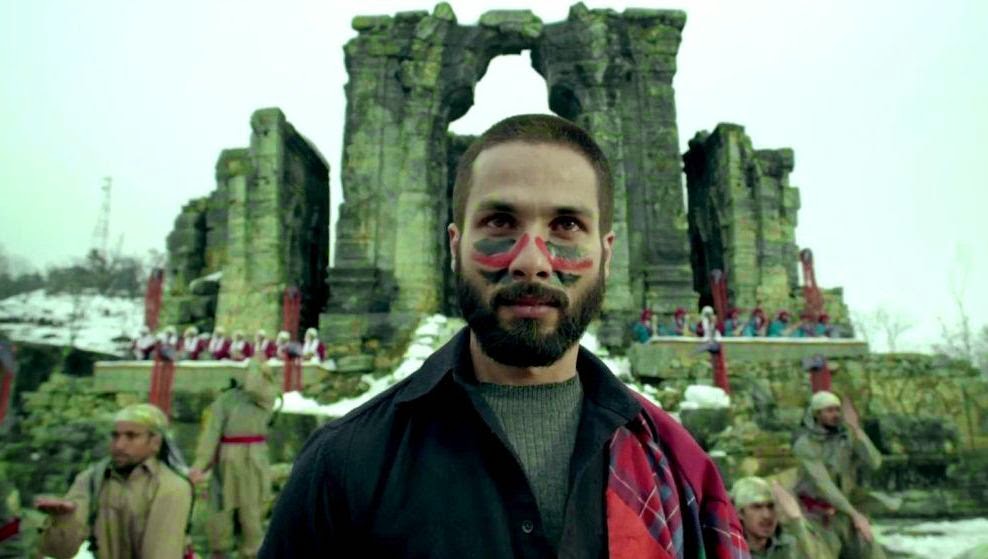
Seen Haider yet? Naah? What are you doing? Go, book your tickets first. Coming back to the film, if Vishal Bhardwaj can get two Salmans, we aren’t far behind. We got two Haiders. One is his, other is ours. So here is our Haider on his Haider.

Our Haider Hussain Beig is a 23 year old filmmaker based out of Netherlands. When he’s not alienating close friends with painful film gyaan, he dabbles in Aerospace Engineering. You can check out his stuff here. This is first post here.

To read our previous post on the film, “Haider : Uncertain, Complex, Asymmetric…Because the screenplay is Kashmir”, click here.
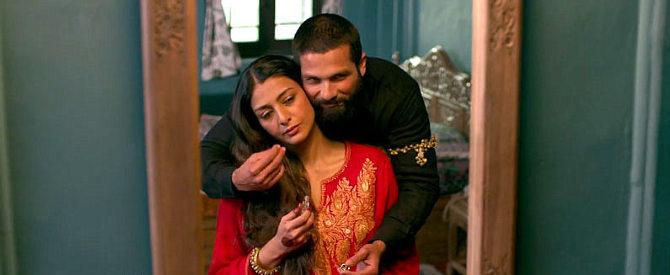
Haider2

Heavy handed exposition usually kills a film for me. It could be a tasteless voiceover or a redundant character painstakingly ear-fucking the audience with drab explanations of already convoluted plot-points. Which brings me to one of my favorite ‘did you catch that?’ Moments in the film. It occurs when Khurram is being led into an abandoned house and he notices ‘Yeh toh Kaul Saab ka ghar hai.’ Then a brief exchange ensues about the whereabouts of ‘Kaul Saab’, finally coming to the conclusion that he has ‘shifted’ to Bombay.

This was an in passing reference to the exodus of the Kashmiri Pandits from their homeland. It perfectly captures the nonchalance of the characters who, putting it crudely, have different issues to deal with now. And perhaps are still dealing with the brutal and horrific ousting of their Hindu neighbours as a mere migration to the big city. This is just one of the many examples of sheer brilliance in storytelling by someone who I would not have expected less of. Best of all, I didn’t feel like I was being explained a point of view or thrown facts at that I was supposed to ingest like a frustrated teenager in a History lesson. I knew most facts about the region and the socio-political situation already, and never once did I feel the need to internally sigh with a ‘pata hai bhai, gyan dena band karo‘. And trust me when I say I know a lot about Kashmir. Because unlike most of us, I have not been fed frustratingly conflicting facts from different sources of news, I have lived them in my own little way.

I was born in Delhi to a German mother and a Kashmiri father, who decided to name me Haider. It’s one of those unique ‘this-guy-is-definitely-a-Shia’ names. I guess like most things my father does, he wanted to be different. And I was happy with that. I personally don’t know any Haiders. Until late last year, when I heard Vishal Bhardwaj was making his third Shakespeare adaptation on Hamlet, called Haider. Same name, same spelling. Not Hyder, Heydar, or Haidar. HAIDER. F-U-C-K-ed-M-E.

Putting it simply, it’s unnerving to see your name in posters, on billboards, as a trending hashtags of some of my cinematic idols on the big screen. In the ticket line at the box office I turned around as a reflex to my name being called out by impatient ticket buyers. And let’s not get started with the jokes that only true friends and elementary school goers can come up with; ‘How does it feel to have Shahid Kapoor in you?’, or ‘Dude! You gave Hansal Mehta fulfilling sleepless nights!’.

What put me to a melancholic ease though, was the name being pronounced in a Kashmiri accent. It took me back to an angry grandmother yelling out ‘Huhder!’ at my mischief. It’s sad that it takes a great like VB to put in the careful attention to detail to make sure that stars make the proper effort into not caricaturizing the dialect. From Shahid Kapoor’s ‘Sirinagar’ to Shraddha Kapoor’s endearing ‘Luvved, Givved, Suckked, Fu..’. They were almost pitch perfect. And even if some may not agree, full points for the effort.

The dialogues, their delivery, and timing, were just a revelation. Blending in Shakespeare’s cunning words with the heavy backdrop of the ‘Kashmir Issue’. Nothing felt pedantic, heavy handed, apologetic, expositional, out of place, or forced. It was as it should have been. Nothing more, nothing less.

The supporting cast was mostly played by locals, and they were spot-fucking on. There was no need for windy character back stories. From Janus’ two faced Salman and Salman, to Khurram’s born-again militant henchman. They could all have separate films based on them and I would pay good money to watch those too. It’s heartening to see such a wide pool of talent scattered all across the country. WAKE THE FUCK UP, BOLLYWOOD!

Shraddha Kapoor’s work was a welcome surprise. I wouldn’t say her performance was perfect, but three films in, she’s already giving her contemporaries a hard time. Aloof, innocent and gullible, Arshia was what I would call a perfect representation of Kashmir in the early parts of the militancy. It resonated, or was rather amplified by Tabu’s Ghazala, as a more worn out, mature, but also much more grey representation of Kashmir in the time the film is set in, the glorious mid-nineties. It seems like Tabu is the only actor that can play a self destructive feminine character in a Shakespearean tragedy to such seasoned perfection. And to Shahid Kapoor, all I want to say is, Ghanta-Ghar in Lal Chowk will never be the same for anyone again. They better fucking throw all the big (even if bogus) awards at him.

Never have I seen a film capture the reality of the situation so beautifully. Pankaj Kumar’s cinematography is a result of what would happen of each character we’re given a brush to paint out exactly what they see. Each frame was a representation of these personal works of art. It was almost akin to the wounded beauty of the valley. You are one of my heros. I was more excited about seeing your name attached to the film than VB’s. After Ship of Theseus, and now this, I can’t wait to see much much more work from you!

Finally, to the master himself. Vishal Bhardwaj. I might need a series of blog posts to talk about your work. And I’m sure, as I have also read, there is enough information, analysis, discourse and dissection of your work already. I’d rather not add to the pile. I’ll stick to what stuck out most for me, the score. I had listened to the songs that had come out in the run up to the release quite a lot. My favorite being, of course, Bismil. Though what really captured my entranced attention was the score. So, so, …. Fuck I’m out of adjectives that would do justice. I hope the score will be out soon. I know what music I’m going to write to now.

I have never lived for more than two months in Kashmir. Most of my upbringing has been in Delhi, though I have visited Kashmir every year of my life since I was born, most of those years being the most dangerous. I have only fond memories. I have never once seen a terrorist/mujahid/militant/freedom-fighter/jihadist. And it’s not like I lived in a cordoned off posh area. In fact my family lives in one of the rather impoverished Shia neighbourhoods in Srinagar. Though that is not to say, that the distant sound of gunshots and bomb explosions was not a common sound. In my own way, a part of my brain would register them as the sound of Diwali fire crackers, and things would be festive in my mind again. I’ve had the most tranquil moments of reflection on the banks of the Nigeen lake, on a grass patch between abandoned houseboats. I’ve cried my eyes out laughing with my cousins at the millionth viewing of Andaz Apna Apna on local cable channels. And don’t even get me started on wazwan. The closest I’ve come to ‘danger’ was a scooter ride back from football practice, dodging a hail of stones, swerving around burning tyres, and slyly detouring to my aunts house who lived nearby. I’ve always thought of that memory as a rather funny adventure. My worried wailing mother on the other hand, did not.

On the contrary, I’ve heard personal first hand accounts of friends, acquaintances and even close cousins (mostly young men), about the dangers they’ve had to endure. From both the militants and the army. Some accounts are so chilling that I’d rather not get into them, for your sake and mine. ‘Jab do haathi ladte hain, neeche ghaas hi kuchli jaati hai‘. It saddens me to see tasteless Anti-India graffiti vomited on ancient walls. Though their distrust and disdain for the AFSPA and conversely the Armed forces, is not without reason. There are bad apples everywhere, even in Kashmir. I recommend Ashwin Kumar’s two brilliant documentaries – Inshallah, Football and Inshallah, Kashmir. They will show you a side of the story the mainstream media conveniently redacts. I’m not an expert on the subject and I’m not foolish enough to think that I might even have something close to an answer. If anything, having a foot in both worlds, has given me a rather confusing point of view, so I usually stay out of Kashmir based bar-conversations. Plus, whenever anyone looks at me for an explanation, I conveniently say, ‘I don’t know bro, I’m German’. Which is why, I love this film too. I went in as an outsider, and actually learnt a few things I did not know. Thank you Basharat Peer, I’m no one to challenge a reputed journalist and writer who, by the way, happens to be from Kashmir.

Haider is by far the most realistic depiction of Kashmir I’ve seen on screen so far. That includes Aamir Bashir’s heartbreaking Harud.

It’s a perfect balance that knocks you out of your seat in a jolt of energy and then in an instant makes you slow-down and wonder. The only think I would have liked to see more of was a bit more on the exodus of the Kashmiri Pundits. Though, the film takes place in a time when the people have ‘gotten over’ it.

The first scene I ever wrote was of a conversation between two friends on the banks of the Nigeen Lake, my spot of tranquility, hiding from the world, sharing a cigarette, something I’ve done a countless number of times. Since then I’ve rewritten, thrown out, written again, and rewritten it again. I think it’s time to finally finish it. Thank you Vishal Bhardwaj.

To everyone out there still deciding, please watch this film. It’s the real ‘Bang Bang’. I really hope it releases in Kashmir. Last I heard, my local cinema in Hawal Chowk was still an army bunker.

Haider Hussain Beig

BOLLYBOOK

It’d been a long time since I laughed out loud while reading a book. A really long time. But Diptakirti Chaudhuri’s latest book has just about managed that. I laughed, chuckled, and nodded my head several times in the midst of reading the book. “BollyBook – The Big Book of Hindi Movie Trivia” is Diptakirti’s third book, the first one being one on cricket, and the second being the precursor to BollyBook, “Kitnay Aadmi Thay” (KAT). It was a genre shifting Bollywood book in the sense that it did not chronicle the travails of film making or profile some specific stars, but it just focused on Bollywood trivia and did a fine job of that.

BollyBook is expected to release in October, 2014. The initial idea, as Diptakirti says on his blog (diptakirti.blogspot.in), was to pitch BB (indulge me as I acronymize the book titles) as a sequel to KAT, but then his publisher at Penguin suggested the idea of a combining the two as a comprehensive and definitive book rather than having a sequel. And thus, BB was reborn in a new avatar. Just like some Bollywood characters do, some would say.

With 19 sections and nearly 460 pages that are packed with interesting trivia and more, the book can definitely live up to the claim of being the definitive book of Bollywood trivia. Good, bad, funny, dark, all sorts of trivia make up this book. Written in his inimitable style, often sparkling with humour and wit, the book is a paean of sorts to Bollywood.

Today I may count myself a fan of filmmakers such as Scorscese, Linklater, or Fincher, but my first introduction to cinema came through the works of Manmohan Desai, Yash Chopra, and others. Back then, we didn’t have a VCR or DVD at home. There were no multiplexes. Going to the movies meant walking to the neighborhood theater, 15 minutes away from home, standing in queue for “first day first shows” or “matinee shows” for a 10 or 20-rupee ticket. Satellite (cable) TV was not yet introduced in my little town. Regular TV broadcast used to a mix of very old to medium old movies. Religious festivals often heralded special community-screenings in an open-air environment where a projectionist would “show” the picture on a vertically mounted white chaddar. Regardless of the venue or the medium, we watched in awe as those larger-than-life stories unfolded on the screen. Chitrahaar, the weekly programme showcasing hit Bollywood songs, was our reason for going “TGIF”! This, in essence, is what Diptakirti would call a pre-credit backstory compression (hint: see the book to understand what this term really means) to explain my fascination for Bollywood.

It doesn’t matter whether you’re a 70’s, 80’s, or 90’s kid. The book has something for everyone. The earlier generations will nod their head at the various retro references, while the newer ones will easily connect with the new age trivia. Although the table of contents mentions lists, the book isn’t packed with boring ones, instead many trivia are presented in anecdotal form, with a surprise twist here and there. Did you know for instance that the Tamil Nadu CM Jayalalitha acted as second lead opposite Dharmendra in a movie named Izzat? Or that Dev Anand was an employee of the Indian Postal Service and perchance grew to know of Gurudutt who lived in the same chawl as him and became thick with him? Many more such interesting nuggets fill up the book including those about movies you thought you knew in and out, only to discover that you actually don’t.

A remarkable trait of the book is that it isn’t restricted to mentioning trivia regarding only actors and actresses, but also takes a good look at the others who play an important part in a movie’s success. In a chapter covering regional superstars, for example, the last para brings to fore the most successful crossover by a regional musician who has gone on to make a name for himself in the international arena. A. R. Rahman. That’s who.

bollybook2There’s also a whole chapter devoted to films within films, called Meta. The amount of research the author must have undertaken for this book can be gleaned from this chapter alone where he not only recounts meta and self-referencing films/directors but also points out bloopers!

All trivia and no interestingness makes a dull book. And Diptakirti is no dull author. He makes neat use of quizzes, Honorable Mentions and little Alerts (Eg, Subtle Mythology Alert) to break the pattern now and then. Chapters are also occasionally peppered with photos and posters.

All in all, for Rs. 370 – paperback or Rs. 318 (Kindle), this book packs quite a punch, just like some of our Bollywood films. If you count yourself as a Bollywood fan, this book is a must-have for your bookshelf.

Footnote: Our very own mFC finds a small mention in the section on low-profile debuts of actors.

@SilverlightGal

(pic courtesy – from Diptakirti’s blog)

The National Film Development Corporation (NFDC) has announced the nine scripts selected for the second edition of the National Script Lab to be running from October 2014 – March 2015.

The first screenwriting workshop will be held from October 1217, 2014 at the Courtyard Marriott, Chakan, Pune, followed by two more workshops and 1 to 1 consultation sessions over the next six months.

Marten Rabarts- Senior Consultant, Training and Development, NFDC; Olivia Stewart- Producer of The House of Mirth, Brassed Off, and script consultant on The Lunchbox and  Rajat Kapoor, writer-director of the much acclaimed Ankhon Dekhi will mentor these scriptwriters one-to-one during intensive residential workshops over the coming six months

Also as part of the National Script Lab program, the screenwriters will be able to attend NFDC’s Film Bazaar 2014 (Nov 2024) to network and introduce their upcoming projects to both the Indian and international film fraternity attending the market.

This year the Script Lab has a special focus on Youth and Children’s stories which feature strongly in the following line up.

 The Selected Writers and Scripts are:

1. Konkona Sensharma – Death In the Gunj

The acclaimed actress and the winner of two National Awards has acted in more than 40 films in Hindi, Bengali and English language.  She co-wrote and directed a short called ‘Naamkaran’ (The Christening) and anticipates this script will be her first feature as writer director, following in a family tradition established by her mother the renowned Film-maker and Actress Aparna Sen.

 2. Ranjeet Bahadur – Oddball

The editor of Rajkumar Hirani’s 3 Idiots, Sudhir Mishra’s Chameli and Ruchi Narain’s  Kal  Ranjeet has done his Post Graduation in film at Satyajit Ray Film & TV Institute, Kolkata, and now turns his attention to writing his first feature.

3. Vicky Barmecha – Naadaan

Vicky has spent the past 2.5 years working as assistant director and postproduction supervisor on Anurag Kashyap’s upcoming Bombay Velvet. He is the older brother of the Udaan actor Rajat Barmecha.

 4. Neha Sharma – Under the Skin

Neha, followed up her filmmaking studies in Capetown, South Africa with the screenwriting programme at FTII Pune. Neha has written dialogues for the TV show Ladies Special and is in active development of several feature films and documentaries. She has honed her craft as an assistant director on films such as The Dirty Picture , Agent Vinod and many others.

 5. Piyush C Panjvani – Idgah

A  Film & Television studies  grad from St. Xaviers IOC Mumbai, Piyush is a multi award winning director/producer of Ad films , shooting around the world for such mega brands as Pepsi and Samsung among others. He is currently developing a documentary on Himalayan shepherds, and will base his debut feature film on a story by Shri Mumchi Prechan.

 6. Abhaya Simha – Bhamini

Based in Bangalore, FTII graduate Abhaya has written and directed three feature films in Kannada and one in Malyalam. His      first feature film, Gubbachigalu won the National Award In 2008 for the Best Children’s Film.

 7. Rigzin Kalon – Neki Kar Kala Kala

The writer-director-producer has worked on shorts, TV , documentaries and feature films, including Ngonsum  a feature set in Ladakh based on short stories by Gabriel Garcia Marquez. Rigzin lives between Mumbai and his native Ladakh, where he is an active figure in the development of this regions emerging cinema scene.

 8. Ruchika Lalwani – A story of Two

Is the writer of Walkaway, an independent American film with Bollywood flair made and released in the USA where she studied Film in New York. Ruchika’s student short film, I’m Afraid I am Hitler was screened and awarded at many international film festivals.

 9. Sudhakar Reddy Yakkanti – Paperweight

An FTII Pune graduate in Cinematography, Sudhakar wrote, directed and shot the short film Ek Aakas, winnning the Special Jury, National Award and in 2010 his documentary short film Duel of Angels  was awarded at the prestigious IDFA in Amsterdam. He also shot Umesh Kulkarnis Deool which won Three National Awards, among a long list of other features as  a cinematographer.

(via press release)

A Vishal Bhardwaj film is an event for us. He is our tent-pole movie. With his latest one, Haider, he has left his contemporaries far, far behind. A bold and uncompromised take on a complicated subject with a master craftsman weaving magic on screen – dark, depressing, violent, poetic, and gloomy. How else do you like your VB-film? Who else can do it better than him? Over to Nadi Palshikar who just watched the film and jotted down her thoughts.

An MBBS doctor by training, Nadi has also done the screenplay writing course at FTII. She is currently doing Gender Studies at Pune University. Sutak is her first novel which has recently got published. This is her first post on mFC.

haider

Innocence has betrayed him ; Haider’s hands are tied by the red scarf made by the innocent one.

He has been captured by the trickster, the two faced Janus – comic and now revealed to be cruel.

Two funny photographers with the same name are used to depict a two faced trickster.

The trickster working at the periphery of the state.

Periphery, the two photographers (the two Salmans) have not got ‘permanent’ posts yet, but serve.

They have once bestowed a favor – they came and took Haider away on a motorcycle, they took him away to safety.

Now, they are driving him in a vehicle owned by his enemy, they are taking him away to death.

He overpowers them, but after a scuffle, they escape.

Haider now picks up a stone and aims it at the (two) trickster(s). We see in the background that the landscape is full of stones. Hurled by those who had no other defence against the powerful state.

A stone for a bullet. And yet, the world took notice.

For the first time, India’s lack of capabilities to handle law and order situations in an appropriate manner came to light. Surely, firing is an out-of-proportion response for stone throwing, asked citizens.

For 20 years, the biggest threat to security forces was militancy, now it is these stones youngsters are hurling at the speed of 40 kms per hour said the Chief Minister. The age old form of dissent (probably inspired by the Palestinian Intifada) had worked.

To the world was presented a clear picture, literally a picture of who was the strong Goliath in this confrontation.

But back to Haider, and the landscape heaped with stones.

Then as if the stones have joined to become formidable, a big rock. And Haider uses this rock to destroy the cruel shape shifting monster.

We leave the scene with an image of stones, stones…

Beautiful, but strange..like the landscape of Kashmir, this tribute to the young men who risked the bullet to hurl a stone..

Just writing down my response to one scene in the film. The film is full of such scenes, making meaning – so many meanings. What an excellent screenplay by Basharat Peer (Curfewed Night) and Vishal Bhardwaj.

What it achieves – An unlikely adaptation of  Shakespeare’s Hamlet – Unlikely and effective. The setting so difficult, yet so believable.

Every little thing, every spoken word has a purpose, a meaning. Even simple lines of dialogue which may seem just ‘funny’ lines reveal insight. e.g- Haider is at a very low point. He is mentally breaking down. And his girlfriend asks him “kya haal banake rakha hain?” To which his quick and laughing retort is ask me “kuchch lete kyun nahin?” Those of you who were born then, do you remember the 80s Coldarin advertisement? This is 1995, and these two young people were are childhood friends.

They shared this dialogue, laughed about it, when they were children.

Also, those were happier times, easier times.

Now at a very difficult point in their life he calls that line from the past.

Also, for us, as audience – the writers are after all Vishal Bharadwaj who will not have anything purposeless, meaningless in his film, and Basharat Peer who has written Curfewed Night about his personal experiences as a child inKashmir.

He knows that History is not just what you find in textbooks. History is personal accounts. History can be what we experienced in popular culture at a particular time.

As audience we remember that ad – we see Haider remembering that ad.

We shared that experience.

This Kashmiri young man, and us.

The same ad is aired over a geographical location.

We shared it.

We are a part of the same history..

A political stand taken by the film- 

I will state it simply – Haider’s monologue about AFSPA is the politically bravest piece of writing that I have seen in film in a long time.

The ending – Even as he ‘hears’ his father’s voice calling for revenge, he also ‘hears’ another voice – his Grandfather’s saying that revenge only leads to more revenge. How can revenge make us free?

How can it give us Azaadi?

Speaking of the AFSPA, remember, when the present government had ruled out changes in the AFSPA?

There was a statement by the army chief which had hurt me then.

He called it an “enabling act” because he said “AFSPA gives Army additional powers to operate in an environment which is marked by very high degree of uncertainty and complexity and an asymmetric environment where you cannot differentiate between a friend and a foe as the terrorist merges with the backdrop and hides amongst the locals.”

A statement that I did not like and now a screenplay that has moved me. See how Kashmir was described?

“environment which is marked by very high degree of uncertainty and complexity and an asymmetric environment where you cannot differentiate between a friend and a foe”

The structure of the screenplay is Exactly that.

Uncertain,

Complex,

Asymmetric.

The screenplay Is Kashmir.

– Nadi Palshikar

Megha Ramaswamy’s documentary Newborns premiered at Toronto International Film Festival. And now it’s online for a limited time as part of Vimeo’s presentation of TIFF Short Cuts.

Watch it.

From fest site – A hauntingly beautiful documentary that follows female survivors of acid attacks, who bravely defy the trauma and fear that will always accompany them.

Cast, Crew and Other Details

Country: India
Year: 2014
Language: Hindi
Premiere Status: World Premiere
Runtime: 8 minutes
Rating: STC

Producer: Anand Gandhi, Sohum Shah, Ruchi Bhimani
Production Company: Recyclewala Labs
Principal Cast: Laxmi, Nasreen, Sapna, Daya Kishan, Usha, Rupesh Tillu, Heena Agrawal
Screenplay: Megha Ramaswamy
Cinematographer: Satya Rai Nagpaul
Editor: Anand Gandhi, Rohit Pandey
Sound: Ajit Rathore, Aditya Jadav
Production Designer: Megha Ramaswamy

Watch the entire Short Cuts Online Program at: vimeo.com/channels/tiffshortcuts

Tip – ShortFilmWindow

MFF2014  Mumbai Film Festival has unveiled its first line-up for this year’s edition. Though the festival is yet to get its full funding, and you can contribute to it (click here), the organisers are going ahead with the plan of having the fest in whatever budget they manage. And like every year, this year’s first impression is good too.

Key Points

– Date : 14-21st October, 2014

– Venue : PVR Cinemas, Juhu as the main venue and Liberty Cinemas at Marine lines as the satellite venue

– Over 185 films from more than 65 countries to be screened

– USD 200,000 to be awarded as cash prizes

– Celebrated French Actor Catherine Deneuve to be conferred with the Lifetime Achievement award. 

– Special Master Classes by internationally acclaimed cinematographer Christopher Doyle and director-writer Mahamat Saleh Haroun

– Fest to screen Xavier Dolans’ ‘Mommy’ , Mike Leigh’s ‘Mr.Turner’, Ken Loach’s ‘Jimmy’s Hall’, ‘Boyhood’ by Richard Linklater, Dardenne brothers’ ‘Two days, One Night’, Kim Ki Duk’s ‘One on One’, Yoji Yamadas ‘The Little House’, Jean-Luc Godard’s ‘Goodbye to Language’ and ‘Party Girl’ by Marie Amachoukeli-Barsacq

List of films for 16th Mumbai Film Festival

International Competition

  1. Difret

Dir.: Zeresenay Berhane Mehari (Ethiopia / 2014 / Col / 99)

2. History of Fear (Historia del miedo)

Dir.: Benjamin Naishtat (Argentina-France-Germany-Qatar-Uruguay / 2014 / Col / 79)

3. With Others (Ba Digaran)

Dir.: Nasser Zamiri (Iran / 2014 / Col / 85)

4. The Tree (Drevo)

Dir.: Sonja Prosenc (Slovenia / 2014 / Col / 90)

5. Next to Her (At li layla)

Dir.: Asaf Korman (Israel / 2014 / Col / 90)

6. Schimbare

Dir.: Alex Sampayo (Spain / 2014 / Col / 87)

7. Fever

Dir.: Raphaël Neal (France / 2014 / Col / 81)

8. Court

Dir.: Chaitanya Tamhane (India (Marathi-Gujarati-English-Hindi) / 2014 / Col / 116)

9. Macondo

Dir.: Sudabeh Mortezai (Austria / 2014 / Col / 98)


Above The Cut

 1. What’s The Time In Your World? (Dar donyaye to sa’at chand ast?)

Dir.: Safi Yazdanian (Iran / 2014 / Col. / 101)

2. She’s Lost Control

Dir.: Anja Marquardt (USA / 2014 / Col. / 90)

3. The Night Is Still Young (La nuit est encore jeune)

Dir.: Indika Udugampola (France-Sri Lanka / 2014 / Col. / 82)

4. Queen Antigone (Vasilissa Antogoni)

Dir.: Telémachos Alexiou (Germany-Greece / 2014 / Col / 93)

5. Musiek vir die Agtergrond

Dir.: Sallas de Jager (South Africa / 2014 / Col. / 124)

6. Party Girl

Dir.: Marie Amachoukeli-Barsacq (France / 2014 / Col. / 96)

7. The Ambassador To Bern (A berni követ)

Dir.: Attila Szász (Hungary / 2014 / Col / 76)

8. The First Summer (O Primeiro Verão)

Dir.: Adriano Mendes (Portugal / 2014 / Col / 105)


World Cinema

 1. Field of Dogs

Dir.: Lech Majewski (Poland / 2014 / Col / 97)

2. Corn Island (Simindis Kundzuli)

Dir.: George Ovashvili (Georgia-Germany-France-Czech Republic-Kazakhstan / 2014 / Col / 100)

3. Early Spring, Kyoto (Kyoto, Sosyun)

Dir.: Hiroshi Toda (Japan / 2014 / BW / 90)

4. I Am Not Him (Ben o değilim)

Dir.: Tayfun Pirselimoğlu (Turkey-France-Germany-Greece / 2013-NOV / Col / 127)

5. Gett, The Trial of Viviane Amsalem (Gett)

Dir.: Ronit Elkabetz, Shlomi Elkabetz (France-Germany-Israel / 2014 / Col / 115)

6. Weekends in Normandy

Dir.: Anne Villacèque (France / 2014 / Col / 90)

7. Snow (Barf)

Dir.: Mehdi Rahmani (Iran / 2014 / Col / 90)

8. Clownwise (Klauni)

Dir.: Viktor Taus (Slovakia-Luxembourg-Czech Republic-Finland / 2013-NOV / Col / 120)

10. The Little House (Chiisai Ouchi)

Dir.: Yoji Yamada (Japan / 2014 / Col / 136)

11. One on One (Il-dae-il)

Dir.: Kim ki-Duk (South Korea / 2014 / Col / 122)

12. The Attorney

Dir.: Woo-seok Yang (South Korea / 2013-Nov / Col / 127)

13. Stations of the Cross (Kreuzweg)

Dir.: Dietrich Brüggemann (Germany / 2014 / Col / 107)

14. Jack

Dir.: Edward Berger (Germany / 2014 / Col / 103)

15. Jimmy’s Hall

Dir.: Ken Loach (UK-Ireland-France / 2014 / Col / 109)

16. Coming Home (Gui Lai)

Dir.: Zhang Yimou (China / 2014 / Col / 109)

17. Two Days, One Night (Deux jours, une nuit)

Dir.: Jean-Pierre Dardenne, Luc Dardenne (Belgium-France-Italy / 2014 / Col / 95)

18. The Third Side of the River (La tercera orilla)

Dir.: Celina Murga (Argentina / 2014 / Col / 92)

19. Stratos

Dir.: Yannis Economides (Greece-Germany-Cyprus / 2014 / Col / 137)

20. Inbetween Worlds

Dir.: Feo Aladag (Germany / 2014 / Col / 98)

21. Turner

Dir.: Mike Leigh (UK / 2014 / Col / 150)

22. The Captive

Dir.: Atom Egoyan (Canada / 2014 / Col / 112)

23. Mommy

Dir.: Xavier Dolan (Canada / 2014 / Col / 139)

24. Still The Water (Futatsume no mado)

Dir.: Naomi Kawase (Japan-Spain-France / 2014 / Col / 121)

25. Norjmaa

Dir.: Bayaneruul Bayaneruul (China / 2014 / Col / 102)

26. Over Your Dead Body

Dir.: Takashi Miike (Japan / 2014 / Col / 93)

27. Refugiado

Dir.: Diego Lerman (Argentina / 2014 / Col / 93)

28. Farewell (A Despedida)

Dir.: Marcelo Galvão (Brazil / 2014 / Col / 90)

29. The Good Lie

Dir.: Philippe Falardeau (USA / 2014 / Col / 110)

30. Boyhood

Dir.: Richard Linklater (USA / 2014 / Col / 165)


Rendezvous


  1. French Riviera (L’homme qu’on aimait trop)

Dir.: André Téchiné (France / 2014 / Col / 116)


  1. Metamorphoses

Dir.: Christophe Honoré (France / 2014 / Col / 102)


  1. Girlhood (Bande de filles)

Dir.: Céline Sciamma (France / 2014 / Col / 112)


  1. Goodbye To Language – 3D (Adieu Au Langage)

Dir.: Jean-Luc Godard (France / 2014 / Col / 70)


  1. The Search

Dir.: Michel Hazanavicius (France-Georgia / 2014 / Col / 149)


  1. The Blue Room (La chambre bleue)

Dir.: Mathieu Amalric (France / 2014 / Col / 76)


  1. Clouds Of Sils Maria (Sils Maria)

Dir.: Olivier Assayas (Switzerland-Germany-France / 2014 / Col / 124)


  1. Saint Laurent

Dir.: Bertrand Bonello (France / 2014 / Col / 135)


  1. Life of Riley (Aimer, boire et chanter)

Dir.: Alain Resnais (France / 2014 / Col / 108)


The Real Reel


  1. Red Army

Dir.: Gabe Polsky (USA-Russia / 2014 / Col / 76)


  1. The 50 Year Argument

Dir.: Martin Scorsese, David Tedeschi (USA / 2014 / Col / 97)


  1. The Master Shyam Benegal

Dir.: Khalid Mohammed (India / 2014 / Col / 60)


  1. Mashti Esmaeil

Dir.: Mahdi Zamanpoor (Iran / 2014 / Col / 60)


  1. Mission Rape – A Tool of War

Dir.: Annette Mari Olsen, Katia Forbert Petersen (Denmark / 2014 / Col / 61)


  1. Altman

Dir.: Ron Mann (Canada / 2014 / 95)


  1. Iranian

Dir.: Mehran Tamadon (France-Switzerland-Iran / 2014 / Col / 105)


  1. Playing with Fire (Paizontas me ti fotia)

Dir.: Anneta Papathanasiou (Greece / 2014 / Col / 80)


  1. Lessons in Dissent

Dir.: Matthew Torne (UK-Hong Kong / 2014 / Col / 98)


  1. Vessel

Dir.: Diana Whittien (USA / 2014 / Col / 88)


Retrospective of Russian films


  1. Alexander Nevsky

Dir.: Sergei Eisenstein (Russia / 1938 / B&W / 112)


  1. Ballad of a Soldier

Dir.: Grigoriy Chukhray (Russia / 1959 / B&W / 88)


  1. Dersu Uzala

Dir.: Akira Kurosawa (Russia-Japan / 1975 / Co / 144)


  1. Andrei Rublev

Dir.: Andrei Tarkovsky (Russia / 1966 / Col & B/W / 205)


  1. Moscow Does Not Believe In Tears

Dir.: Vladimir Menshov (Russia / 1979 / Col / 142)


  1. Rider Named Death

Dir.: Karen Shakhnazarov (Russia / 2004 / Col / 106)


  1. The Fought for Their Land

Dir.: Sergey Bondarchuk (Russia / 1975 / Col / 137)


  1. War and Peace

Dir.: Sergei Bondarchuk (Russia / 1968 / Col / 427)


  1. Several Days of Oblomov’s Life

Dir.: Nikita Mikhalkov (Russia / 1979 / Col / 140)


  1. White Tiger

Dir.: Karen Shakhnazarov (Russia / 2012 / Col / 104)


India Gold 2014


  1. The Fort (Killa)

Dir.: Avinash Arun (India (Marathi) / 2014 / Col / 107)


  1. Unto the Dusk

Dir.: Sajin Baabu (India (Malayalam) / 2014 / Col / 118)


  1. Names Unknown (Perariyathavar)

Dir.: Dr. Biju (India (Malayalam) / 2014 / Col / 110)


  1. Buddha In a Traffic Jam

Dir.: Vivek Agnihotri (India (Hindi) / 2014 / Col / 107)


  1. Fig Fruit and The Wasps (Attihannu mattu kanaja)

Dir.: M S Prakash Babu (India (Kannada) / 2014 / Col / 90)


  1. Rangaa Patangaa

Dir.: Prasad Namjoshi (India (Marathi) / 2014 / Col / 105)


  1. Siddhant

Dir.: Vivek Wagh (India (Marathi) / 2014 / Col / 130)


  1. Chauranga

Dir.: Bikas Mishra (India (Hindi) / 2014 / Col / 88)


  1. Munnariyippu

Dir.: Venu (India (Malayalam) / 2014 / Col / 118)


  1. The Pulsating Mindscape (Jeeya Jurir Xubax)

Dir.: Sanjib Sabhapandit (India (Assamese) / 2014 / Col / 134)


New Faces In Indian Cinema


  1. An Obstacle (Khwada)

Dir.: Bhaurao Karhade (India (Marathi) / 2014 / Col / 117)


  1. The Punishment (Kuttram Kadithal)

Dir.: Bramma G. (India (Tamil) / 2014 / Col / 116)


  1. Dombivli Return

Dir.: Mahendra Teredesai (India (HindI-Marathi) / 2014 / Col / 129)


  1. Teenkahon

Dir.: Bauddhayan Mukherji (India (Bengali) / 2014 / Col & B/W / 120)


  1. Nagrik

Dir.: Jayprad Desai (India (Marathi) / 2014 / Col / 120)


Dimensions Mumbai


  1. Short Film

Dir.: Sagar Kolte


  1. Zor Lagake Haisha

Dir.: Rithvik Dilip Joshi


  1. Selfie

Dir.: Ramchandra Gaonkar


  1. Bombay 70

Dir.: Nisha Rindani


  1. The Crowman

Dir.: Pratik Shetty


  1. Marine Drive

Dir.: Romil Dilip Motta


  1. Interval

Dir.: Utkarsh Raut


  1. Sawari

Dir.: Pushpak A Jain


  1. Jeevachi Mumbai “City of Life”

Dir.: Natasha Nayak & Riya Sharma


  1. Gilberi

Dir.: Omar Iyer


  1. Bumbhaiyya

Dir.: Kushagra Sharma


  1. Majha Honeymoon

Dir.: Karan Asnani


  1. Bollywood Bazar

Dir.: Shreyash Shinde


  1. Mahanagari-Super City

Dir.: Yashowardhan Mishra


  1. Time’s Equation

Dir.: Kavi Kumar Shrivastav


  1. Rumana Manzil

Dir.: Tanay Sarda


  1. Boundary

Dir.: Abhiraj Rajadhyaksha


  1. Dariyo

Dir.: Nihar Desai


  1. Unfit

Dir.: Srishti Jain


  1. Chataiwala

Dir.: Keyur Kajavadara


Film India Worldwide


  1. Amar Akbar & Tony

Dir.: Atul Malhotra (UK / 2014 / Col / 93)


  1. Amma & Appa

Dir.: Franziska Schönenberger, Jayakrishnan Subramanian (Germany / 2014 / Col / 89)


  1. Honeycomb Lodge

Dir.: Lesley Manning (UK / 2014 / Col / 93)


  1. Echoes

Dir.: Rajesh Shera (India-UK / 2014 / Col)


Crowd-sourced casting for “Your Chin” music video

Posted: September 17, 2014 by moifightclub in Indie
Tags: ,

Our friend and super talented Vijesh Rajan is planning a new project and is looking for actors. Read on for more details –

I’m shooting an indie music video soon with a bunch of friends. The band’s name is Your Chin and the song I’m making the video for is called ‘fingerprints and mugshots’. You can hear the song on this link:

And so I am looking for casting options for the same. As of now, we have a poster designed for the effort – which we put on nh7.in and rollingstone india. I have attached the poster herewith.

The plan is to shoot this by month end – 27th, 28th, 29th September.

About me:

I’m a Mumbai-based Vfx artist and director. Here’s a music video I directed recently for Karsh Kale –

Here’s the opening title for Dewarists season 3 that I had directed –

Here’s some of my Vfx work –

About the video:

The song I’m making this video for is called “fingerprints and mugshots”. The song is available on Your Chin’s SoundCloud.

The story revolves around a despondent man who lives alone and his friend who turns up to cheer him up.

The friend in question is a hybrid animation character, whose reference image I have attached. The character will be created using a hybrid of video footage of an upside-down chin + 2d animation elements for it’s body. This is to play on the name of the band and to lend some humour to it.

As for what an upside down chin looks like, singing lyrics – here’s a test I did sometime last year to understand upside down expressions:

(This is without the animated body, of course.)

The expressions are tricky because when you’re upside down, then you also have to do upside down expressions – a frown becomes a smile and a smirk looks like disappointment. But I’m expecting this to look pretty interesting.

We’re looking for at least 10 early /mid / late 20 somethings for a party sequence in the video.

Apart from crowd sourcing the cast, since this is a completely indie effort, we are also looking for help in terms of monetary contributions. Those interested in helping us in any way can contact us on mailyourchin@gmail.com

haider-movie-wallpaper-26

There is a distinct smell of honesty in things which are fundamentally correct. You have got to love anything when it is done with utmost sincerity and no sluggishness. This is why we wait for Vishal Bharadwaj’s films and music. His latest offering is out, and we strongly recommend you get a taste of it. Here’s why:

So Jao – The eerie calm of a dark night perpetuated by heavy bass notes and a near mourning dead voiced ensemble consisting of Bashir Lone, Bashir Bhawani, Muzamil Bhawani, Mayukh Sarkar, Aalaap Majgavkar and others take upon themselves to scare the life out of us in this calm yet intense song. The singers might all be mourning but they are in perfect sync and you will find yourself reaching for the repeat button without a doubt. The sound of shovels attacking mother earth is impactful, to say the least. Top class!

Jhelum – Yet another dark song where the music arrangement is spread out. The magical electric guitar surprises you as it creates an atmosphere of contemplation. Vishal, helped greatly by the words from Gulzar, paints a picture of grief, the kind that will suck you and might make you sad, very sad. I might be thinking too much but then I feel the words ‘jhelum hua kharaa’ came out right from Gulzar’s heart as he reflected on the massacres he witnessed, during partition. That perpetual sinking feeling owes a lot to the wonderful Simaab Sen who has produced this song in the album. Vishal Bharadwaj doesn’t sing much in films. We wonder why.

Gulon mein rang – The thing with good poetry is that it can never be badly performed (unless of course, KRK decides to rap it). To make it even better, words have been modified and what’s better than to see Gulzar and Faiz in one song! We honestly didn’t expect much from Arijit Singh, (who is breathing these days with microphone attached to his throat) because we knew, the sound would be indistinguishable from most of his songs off late. I won’t say we were shocked and surprised with his rendition here. It is strictly average but the music arrangement takes it a notch higher, especially the hopeful note on which the song ends. Talking of this iconic kalaam, even Mohit Chauhan did it nicely here.

Ek aur bismil – With an adorable arabian touch and sufi setting, this version paints a fantastic belly dance setting in the mind. The clarinet in the song is exact and lends much richness to the song. Unlike the ‘bismil’ song (to which this song owes its title and tune) which has a podium/stage setting, this feels more intimate, street like and humble.

Do Jahaan – Call me an incurable romantic, but I cannot wait for Suresh Wadkar singing a ‘suresh wadkar वाला’ song. No, I don’t mean ‘totey udd gaye’ (ek thee dayan) sort of song. I mean ‘tere liye’ (7 khoon maaf) sorts. A lazy setting that somehow has become Vishal Bharadwaj’s forte along with Suresh Wadkar’s depth is something to look forward to. This song is exactly like that. An added bonus is to hear Shraddha kapoor’s voice which doesn’t sound processed and adds a ‘real’ feel to the song.

Aaj ke naam – After her fantastic ‘har ghadi’ in D-Day, Rekha Bharadwaj gives us a ‘by the tabla’ ghazal that has ‘tragedy’ written all over it. This is also a work of Faiz Ahmed Faiz. Vishal Bharadwaj quietly sneaks in gentle keyboard notes to give a contemporary feel to the overall setting. Since the ghazal talks of so much sadness (With the excellent use of ‘new’ words for hindi film songs like – ब्याहता), extreme caution is advised because it will leave you sad, very sad.

Khul Kabhi – Good things were said about this song by Vishal Bharadwaj himself in a recent interview on Radio Mirchi, Bombay. Perhaps what Vishal Bharadwaj didn’t estimate was the flood of Arijit Singh’s songs with whom we are playing ‘catch up’ on daily basis. This song is good and we couldn’t help feel that this should have been sung by Vishal Bharadwaj himself. No doubt that would have been the thought at the time of composing it. It is a ‘FVBV’ song all the way (For Vishal, By Vishal). Arijit is efficient and average at best, what is lacking is the exclusive, infectious feel that this tune and crazy romantic song deserved.

Bismil – The ‘stage’ song! With Sukhwinder, there is always a danger that perhaps he will sound too ‘sukhwinder’ and hijack the song. It doesn’t matter in this case because there is an army of excellent back up vocalists, and a ‘beyond awesome’ rabaab at work along with him. The song paints a dark picture of deceit with an upbeat tune. The lyrics give away everything there is to correlate with Shahid Kapoor’s anger in the film. These days when music composers take pride in saying ‘ये गाना डांस फ्लोर पे महिना भर बजेगा’ , here is a song which might become a hot favorite of people who are into stage dramas. The overall feel reminded me of ‘Sheher’ of gulaal which can also be re-created on stage with impact, if only some people are up to it. A thunderous song that gives you a feel of large auditorium. Kudos!

Aao Na – I feel Vishal Dadlani somehow saves his ‘year’s best’ when he teams up with Vishal Bharadwaj. While I still maintain that ‘Dhan te nan’ is his best, this song stands right next to it. The passion, drums and singing, all are just top notch. Did I miss anything? Oh yes, that bloody mother of a tune on guitar. I cannot write enough good things about this song. Double thumbs up!

Vishal Bharadwaj and Gulzar have given us a brilliant album that has right shades of dark, much like the background and context of the film. In a year that has been marred with too much trash and vomit inducing tracks, Haider is what leaves a lasting sweetness on our taste buds.

As Vishal says, क्या बात है!

– by @rohwit

Venice Film Festival has announced the winners for this year’s fest. And here’s the good news – Chaitanya Tamhane’s debut feature Court has bagged the “Lion Of The Future – Luigi De Laurentiis” Award for a Debut Feature. It premiered in Orizzonti section of the fest. The Jury was chaired by Alice Rohrwacher and comprised of Lisandro Alonso, Ron Mann, Vivian Qu and Razvan Radulescu.

It also includes cash prize of 100,000 USD, donated by Filmauro di Aurelio e Luigi De Laurentiis to be divided equally between director and producer. Court has also got the Best Film in the Orizzonti section. This Jury was chaired by Ann Hui and composed of Moran Atias, Pernilla August, David Chase, Mahamat-Saleh Haroun, Roberto Minervini and Alin Tasçiyan. The section had 29 films in competition.

Click here to read Chaitanya’s interview on making of Court.

Last year, Shubhashish Bhutiani’s Kush had won the best short at Venice Film Festival.

In Solidarity With The Actor

Posted: September 5, 2014 by moifightclub in Open Letter

We have been greatly disturbed by the harsh reporting on a former child actor’s alleged involvement in a prostitution racket.

All of us know how difficult it is for young child actors trying to find a foothold in this industry as adults. We urge the media to refrain from treating her life as gossip for their viewers/readers.

We also request the film fraternity to empathise rather than judge or label her. Somewhere, we are all accountable for the disillusionment of one so young.

All of us stand in complete solidarity with this fine National-award winning actor of immeasurable talent.

Signed
Vishal Bharadwaj
Karan Johar
Imtiaz Ali
Abhishek Kapoor
Rensil D’Silva
Amole Gupte
Honey Trehan
Nandini Shrikent
Preety Ali
Aarti Bajaj
Namrata Rao
Deepa Bhatia
Amrita Puri
Abhishek Chaubey
Makarand Deshpande
Shreyas Talpade
Abbas Tyrewala
Elahe Hiptoola
Akiv Ali
Dipa De Motwane
Hitesh Sonik
Nupur Asthana
Vishal Dadlani
Soumik Sen
Mahendra Soni
Sneha Rajani
Luv Ranjan