cropped-i2F2-518x502-LogoCinema, Culture, and Conversation

i2F2 – Announcing Call for Entries and Online Submissions

The Chicago South Asian Arts Council (CSAAC), organizer of the four year running Chicago South Asian Film Festival, has announced the 2014 launch of i2F2, a path breaking Film Festival.

– The event will take place May 29 to June 5; in the vibrant, burgeoning, arts and cultural hub of downtown Evanston. The inaugural festival will showcase the best of world cinema in the heart of America with a special focus on films from three key regions: South Asia, Middle East, and Israel.

– The film festival will be organized in conjunction with the City of Evanston and act as a platform to discover, introduce, and propel new talent into the global spotlight.

– The festival is divided into five categories: Feature, Documentary, and Shorts where established and rising film makers will display their films while Student Shorts, and First-time Filmmaker Feature endeavors is there to encourage and celebrate emerging talent.

– The programming committee at i2F2 is now inviting all filmmakers to submit their films starting February 1, 2014 thru March 30, 2014.

– Filmmakers interested in submitting their films are requested to please visit http://www.i2F2.com/ for more information on the festival and film submissions.

– After filling in the online submission form, Indian filmmakers can send a DVD Screener of their film to the India Consultant for i2F2, Deepti DCunha. She can be contacted at deepti.dcunha@gmail.com for further details.

About i2F2

i2F2, organized by the Chicago South Asian Arts Council Inc, is dedicated to cultivating rising filmmakers , creating  a marketplace for films, and showcasing a diverse cinematic experience to audiences. The Festival is held in late May in conjunction with the City of Evanston and presents the best of world cinema with a focus on first-time and student filmmakers.

– via press release

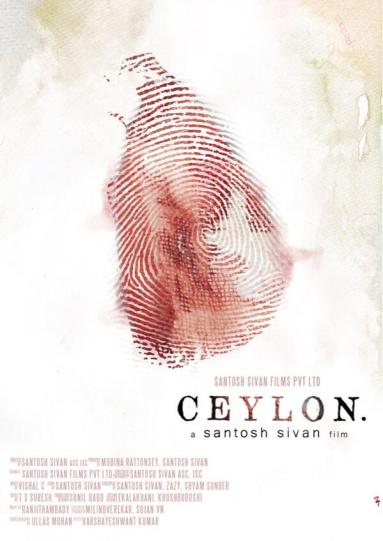
Ceylon Poster

First Look Poster: Ceylon

A brand-new teaser for director-cinematographer Santosh Sivan’s new film Ceylon (Inam in Tamil) has launched online. We don’t have details on the plot currently, but the film reportedly revolves around the lives of teenagers in an orphanage against the backdrop of war-torn Sri Lanka.

It’s an interesting, unconventional first look for the film, which doesn’t showcase any of the characters just yet, and instead chooses to show the destruction of war juxtaposed against nature, something Sivan is known to capture beautifully. Take a look:

The film stars Saritha, Karunaas, Sugandha Ram among others. Here are some of the crew details:

Directed by: Santosh Sivan
Producer: Mubina Rattonsey – Santosh Sivan – N.Subash Chandra Bose
Cinematography: Santosh Sivan ASC, ISC
Production Designer: Sunil Babu
Editor: T.S.Suresh
Music Director: Vishal Chandrashekhar
Sound Designer: Vishnu PC, Arun S Mani
Co Producer: Milind Verekar – Sojan.VN – Anirudh Menon
Lyrics: Charukesh Sekar – Karunaas
Dialogues: Aarthi Sivakumar – Shyam Sundar
Screenplay: Santosh Sivan – S.Sasikumaran – Saranya Rajagopal

Well, the header is self-explanatory.

So Milords, scroll down to read Gyandeep Pattnayak‘s defense of Ridley Scott’s The Counselor, and see if it convinces you otherwise.

the-counselor02

‘The Counselor’, for over than a week, has been like that itch which I’ve tried really hard to ignore but can’t anymore.

And won’t.

The reactions to the film are as fascinating as the film itself. But I’m getting way ahead of myself here. Let’s wind back our clocks a little. Remember how the Internet exploded with euphoria when it was announced that Cormac McCarthy had sold his first ever screenplay, and that Ridley Scott was attached to direct it? I mean, who wouldn’t be excited, right? McCarthy – the genius that he is – writes prose that oozes blood and as a writer, he’s pretty much cemented his position as one of the literary greats. Scott, on the other hand, is a filmmaker whose greater works have (often) initially been rejected as being overtly indulgent and devoid of any real emotion. ‘The Counselor’, which boasts of such impeccable pedigree (both in front of and behind the camera) was bound to raise expectations to an all-time high. So, what went wrong?

Nothing.

The primary issue that the audiences (and critics) had with the film was that it was too talky. Agreed that the dialogs are a bit impenetrable at first but meandering and unnecessary they aren’t. Also, this is a film that warrants repeated viewings and it will only get better the next time you see it. To validate this, let’s consider the scene in which the Counselor (Michael Fassbender, as the titular character) goes to Amsterdam to purchase a diamond from a diamond dealer. They engage in a conversation related to the quality of flawed and perfect diamonds. Slowly, the conversation veers towards country, culture, God, philosophy. You are hooked, you ARE the Counselor in this moment. You don’t understand all of what the diamond merchant says but you are intrigued. The words flow like music. And then McCarthy subverts this very scene, with the merchant saying, “Enough, i see your look. No more philosophy.” You expect the conversation to stop. But what the old man says next will show how incisively sharp McCarthy’s writing really is. And this is just the beginning.

Another complaint: the plot is foggy, not enough of story to chew on. Wrong. There is a story about consequences, about what greed begets. There is always some talk about a deal, something which isn’t made clear. But we do see drugs being transported and re-transported in a truck. So we know it’s got something to do with them. And the Counselor is just asked by his friend, Javier Bardem’s Reiner, in plain and simple English, “Do you want to be a part of this?” He agrees. And this being a McCarthy/Scott film, things go spectacularly wrong. What else do you need to know?

Too little action. What the actual fuck? Dread is omnipresent, lurking around in all the frames (and we have Daniel Pemberton’s excellent, moody score to thank for, which adds to the mounting creepiness). There are at least two scenes that will scare you shitless. And then, there’s violence in those words, in between the lines, in all those phrases left unsaid and also in those which are spoken out explicitly (you’ll see what a bolito does). Like that scene in which Brad Pitt’s character Westray asks the Counselor to steer clear of the ‘deal’ while there’s still time. And then, he makes it clear that the beheadings, the mutilations are just part of the business, to keep the fear alive. It is a chilling scene, an indicator of what’s about to follow, and remarkably performed by both Pitt and Fassbender.

Scott, who is an atheist, also injects some of his own perversity into a scene where a character goes into a confession chamber and confesses (or at least tries to) to a priest about the sins that she’s committed. Initially, I thought this scene did not fit anywhere in the film. After seeing the film for a second time, I see where this one’s coming from. This character is just trying to piss off the priest. She wants to see what it feels like being in a confession chamber and she is aware that she feels no remorse, no matter how much she tries to. At one point, she even tells the priest, ‘Look, I don’t need any forgiveness. Just listen to my sins.’ It’s almost as if she’s laughing in the face of the beliefs and rules that ‘normal’ people adhere to.

I could also give you one more reason to watch the film: Cameron Diaz’s character Malkina fucks a car. Yes, you read that right. No, I didn’t mean a cartoon.

SHE.    FUCKS.     A.      CAR.

Got your attention, haven’t I? Nudge, nudge, wink, wink. But yes, there are also two flaws that I can think of right away – 1) A woman wakes up from what she thinks is a nightmare (this scene reminded me of Raakhee from Karan Arjun. You’ll know it when you see it) and 2) the film would have been all the more edgier if not for the couple of cameos that pop up once in a while. Like my friend @drdang observed, ‘Audiences would have lapped it up in a big way had it been a foreign language film.’ I couldn’t agree with him more. To me, it constantly felt like (and I say this with no intention of belittling Scott’s craft) I was watching an Alejandro Gonsalez Inarritu film. In short, the film is anything but your typical Hollywood fare.

I can go on and on about this film because that’s how rich it is, with all those dialogues and those visuals. And honestly, I don’t expect this film to be everybody’s cup of tea because it simply isn’t. But next time, when Scott chooses to direct a tentpole summer movie like ‘Prometheus’, don’t be a dick about it. Because clearly there isn’t any appetite for restrained and intelligent cinema like this one. Towards the end of the film, one character tells another how easy it is to trade places for a loved one’s life and given the current situation, how impossible it really is. The scene closes with this particular piece of dialog – “The extinction of reality is a concept no resignation can encompass.” Even McCarthy couldn’t have put it any better. But he has.

Few years from now, people will look back at this film and wonder: this is the film we’d ridiculed back then? The year is young and there are 10 more months till we start making top 10 lists but guess what, I already know what one of my top favorites is going to be. Simply put, with this one, Messrs McCarthy and Scott have taken ruthless and cynical filmmaking to lethal heights.

Gyandeep Pattnayak

In what’s turning out to be a most heartening trend in recent years, yet another Indian film has made a name for itself at a prestigious International film festival. Avinash Arun’s directorial debut, the Marathi feature film Killa (The Fort) had its world premiere at the Berlin International Film Festival (better known as the Berlinale). The film was selected in the Generation Kplus competitive category and has won a Crystal Bear from the Children’s Jury and a Special Mention from the International Jury.

About the Prize

In the Generation Kplus section the jury members are no older than those of the audience. Eleven children and seven teens award the best films with Crystal Bears. Special Mentions are given for outstanding achievements. Two international juries present further prizes in the Generation Kplus and Generation 14plus competition.

The film received glowing reviews from both juries. The Children’s Jury, awarding the Crystal Bear said:

“This film convinced us in all respects: with his good camera work and the great actors, but also because of its incredibly beautiful nature images which blend perfectly with the music. This film made us all want to discover India.”

Interestingly, the film also received a Special Mention from the International Jury too:

“A beautifully photographed story about the challenges of being a boy. This film had wonderful pace and rhythm. Never reverting to clichés, the fresh performances left us feeling we were right there with the characters.”

About the Film

Coping with the recent death of his father, Chinu, 11- year old boy moves to a small Konkan town from a big city because of his mother’s job transfer. He finds it difficult to adjust to the new place and finds himself alienated and reluctant to open up to its people. Both Chinu and his mother grapple with their own individual struggles and anxieties in the new town. In the process, they emerge with newer experiences and as newer people, both healed and enriched.

Produced by Madhukar R Musle, Ajay G Rai, Alan McAlex under the banner, Jar Pictures and presented by M R Filmworks, the film was a part of NFDC Film Bazaar’s Work-in-Progress (WIP) Lab in 2013.

It stars Amruta Subhash, Archit Deodhar, Parth Bhalerao and Shrikant Yadav. Here are some stills from the film:

About the Director

Avinash Arun is a Director – Cinematographer from Maharashtra, India. Born in the textile town Solapur in 1985 in a middle class Maharashtrian family, he started assisting in FTII Diploma films at the age of 16. He eventually graduated in Cinematography from FTII in 2011. In 2010, his school project “The Light and Her Shadows” won him the cinematography award in Kodak film school Competition. His diploma film “Allah Is Great” was the official entry from India for Student Oscars. It also won several awards including the National award in 2012. Avinash has worked on “Kai Po Che!” (Berlinale Panorama section 2012), Deool (National Award winner 2011). Killa is his first feature film as director. He is also the cinematographer on this film.

Avinash has also shot Vasan Bala‘s short film ‘Geek Out’, which we’ve featured previously on this blog.

Watch the short below:

— Posted by @diaporesis

fandry2

1. Because it’s a terrific film.

2. Because it’s a terrific film to debut with. Such an assured debut is rarity.

3. Because it has released with English subtitles all over Maharashtra. And will release outside Maharashtra on 28th February, 2014.

4. Because to quote Mira Nair, if we don’t tell our stories, who will. And to add to that, if we don’t watch our stories, who will.

5. Because only Nagraj Popatrao Manjule could tell this story, not anyone else. Because he has lived it. Much like why nobody thought about setting an entire film inside a tank.

6. Because you probably don’t know what ‘Fandry’ means, even if you are a Marathi manoos. And if not, try asking your Maharashtrian friends. Doubt you will get the answer. We tried it all, saying it from experience. You love your little cocoon.

7. Because current Bollywood has forgotten what “adolescence” means. Same with you.

8. Because you don’t know what your caste is. And it has never mattered in your life.

9. Because every time you saw a pig, you felt it’s ugly and so filthy. Nothing humane there. You don’t need a new feeling.

10. Because it’s that rare film whose 2 scenes made it to our year end list of 16 Most Memorable scenes of the year. Scroll down to read why.

Still looking for another excuse?

We discovered the film at last year’s Mumbai Film Festival. This was our first reaction, or you can call it brief review of the film (was posted here)  :

Fandry – It’s Beasts Of The Maharashtrian Wild. The pains of growing up, of dreaming about the girl from upper caste, trying to get fair skin, and aspiring to own a pair of jeans. About a family of pig catchers who are considered untouchable in the village, and of adolescent days. The harsh reality might seem like poverty porn, but a line from The Great Beauty came to my mind – you can’t talk about poverty, you have to live it. A daring film where the entire film seems to be set-up for the powerful last 20 minutes.

Later on, for our year-end post, Kushan Nandy and Varun Grover wrote about 2 powerful scenes of the film. One has spoiler alert, other you can read.

@kushannandy on Fandry’s climax

[SPOILER ALERT]

Fandry, Nagraj Manjule’s charming story of Jabya, a young boy battling his inner turmoil of being born a Dalit, whose only source of income is rescuing the village from droves of pigs by chasing them out, and only happiness is a teenage infatuation and perhaps a non-existent bird, reaches an inevitable, satirical climax that can truly be described as the successor of the Mahabharata scene from Jaane Bhi Do Yaaro.

Cruelly hilarious and dripping with pathos, the last scene of Fandry is a portrayal of who we truly are. As Jabya is forced to help his aging parents chase the pigs down, the village gathers to celebrate this humiliation, almost like spectators at a T20 match.

At one point, one of the characters uploads Jabya’s plight on his Facebook page. That one moment points out how technology has invaded us and yet human values remain absent.

However, Manjule’s masterstroke is Jabya doing exactly what the viewer had been wanting to do all along. He gathers his frustration and desperation to plant a sounding kick into the belly of the very society that was trying to hold him down. Match over.

Sadly though, Jabya’s non-existent bird somewhere stands for the freedom from society’s humiliation that he shall never ever get.

And this one is SPOILER FREE.

@varungrover on Fandry’s national anthem scene

Only in a state like Maharashtra, where right-wing is so strong that even after the death of their biggest ideologue I don’t feel confident and safe mentioning his name in a post that has no direct criticism of his easily-criticizable styles of functioning, where newspaper offices get ransacked for faintest of hurt sentiments, where people get beaten up for not standing up during the mandatory National Anthem before the film –  a film like ‘Fandry’ is possible. (Just like BR Ambedkar and Vijay Tendulkar couldn’t have been anywhere else.) A state of oppression breeds an inventiveness and ferocity of protest like nothing else.

And in a protest film (though treated like a coming of age for the most part) like ‘Fandry’, comes a scene that makes all the protest scenes in the history of our cinema look tame in comparison. A Dalit family is trying to catch a pig next to a school, the Dalit kid is feeling humiliated ‘cos his friends might be watching the reality of his caste he has so carefully hidden from them, the pig evading them like a pro. After lots of chasing the pig finally seems to be cornered. The family now just has to move closer and catch it and end the misery on both sides of this hunter-hunted divide. The kid seems slightly relieved that the ordeal may be over as they encircle the pig. But, just before they could swoop down, the national anthem starts playing in the school assembly next door. Nobody can move now, except of course the pig. As the Dalit family stands in attention, paying ‘due respects’ to the nation they are equal citizens of, the pig walks away into the free morning.

The whole cinema hall jumped up and applauded the scene wildly. I guess the irreverence, cheekiness, and metaphor it stood for connected with all of us, so used to standing awkwardly before the film, one hand carrying smartphone, another carrying popcorn, thinking ‘Pandit Bhimsen Joshi ji, aalaap mat lo itna lamba. 56 second mein khatam hona chaahiye ideally!

– Click here to watch its trailer and for cast-crew and other details.

Still waiting?

Go, watch it.

– Posted by @NotSoSnob

mastram-poster-moifightclub

This one’s taken some coming (no pun intended). The first look of ‘Mastram’, based on the life of the mythical writer of Hindi erotica from the 90s, surfaced a few weeks before the 15th Mumbai Film Festival (MAMI) last year, where it was an official entry. However, the first trailer has only arrived today.

Those who follow this blog closely will immediately recognise Akhilesh Jaiswal as one of the writers of ‘Gangs as Wasseypur’; while that’s a strong film to have on your resume, it remains to be seen how well he’s managed to adapt this particular story — given how often “bold” themes in our cinema warp into juvenilia —  for the screen. The official Facebook page for ‘Mastram’ has been posting quite of bit of promotional material since the beginning of January: mostly posters that range from cheesy to raunchy.

The trailer itself, which was released earlier today, doesn’t say much about the film, except for putting together a mishmash of various steamy scenes and the angst of a writer. Nonetheless, a friend who watched the film at MAMI last year enjoyed the movie and believes it does well in bringing to light the sheer hypocrisy that oils the wheels of our society.

Here’s the trailer of the film, followed by the synopsis:

Rajaram, a bank clerk in a small town, dreams of traveling to Delhi and becoming a reputed writer. No one takes his aspirations seriously, least of all his uncle, who marries him off to the beautiful Renu. Although a simpleton, Renu wholeheartedly supports her husband’s ambition. Edged on by her encouragement, Rajaram starts stealing writing time from his humdrum work routine, and is eventually forced to leave his job. But being a stay-at-home writer doesn’t go down too well with prying neighbours. Rajaram becomes a butt of all jokes in the neighbourhood.

Turning a deaf ear to the all the snubs, Rajaram starts in earnest to show his work to several publishers. Each time he is rebuked. Finally, Rajaram encounters a fledgling publisher duo – Purohit and his brother-in-law, Bharti. They agree to publish Rajaram’s story about the plight of a small town girl. However, there is one hitch. Rajaram would have to add some necessary sensational elements to his dull tale – some `masala’, as they refer to euphemistically. Rajaram is initially miffed by this writing brief. He is not sure what it means to bring that to his writing – till he meets Chacha, an eccentric, old village Idiot. He introduces Rajaram to the salacious and secret world of soft pornography. It’s on everybody’s mind, but no one will admit it. Chacha does.

Rajaram, scandalized at first, accedes to the “compromise”, and thus starts discovering another facet of literature – erotica. He adopts the colorful pseudonym of `Mastram’ becomes the first author of the first pornographic novel series in Hindi. He churns out colourful stories about sex that his eager readers voraciously devour. Yet, Rajaram’s success still remains elusive to him, as all the glory is due to `Mastram’. Will the “real” Mastram finally be exposed? Will Rajaram’s sudden windfall arouse suspicion in his ever-supportive wife? How will Rajaram face the hypocrisy of a society that secretly enjoys reading porn, but otherwise treats such matters with disdain?

Cast & Crew

Starring Rahul Bagga, Tara Alisha Berry, Akash Dahiya

Produced By Ajay G Rai, Sanjeev Singh Pal
Director : Akhilesh Jaiswal
Casting : Mukesh Chhabra
Costume Designer : Subodh Srivastava
Music : Manan Bharadwaj
Background Music : Saurabh Kalsi
Digital Partner : One Digital Entertainment
Editor : Apurva Motiwale Ashish Mhatre
Production Designer : Dhananjoy Mondal
Director Of Photography : Gavemic Ary
Writer : Akhilesh Jaiswal Gunjan Saxena
Lab : Prime Focus
Co Producer : The Film Label &Ashoke Pandit

– For those who wish to read more, click here and here to read interviews with Akhilesh Jaiswal in which he talks about the real Mastram; the process of researching the film; and then some.

— Posted by @diaporesis

Bored and dead of watching all those mushy V-Day videos? Here we are, the cynical bunch, the anti-VD group.

And here’s the perfect VOTD for V-Day. Watch and have fun.

Tip – @kaurvaki

After the success of Pancham Unmixed, the National Award-winning film on RD Burman, filmmaker Brahmanand Siingh is now working on another feature length biopic, this time on legendary ghazal maestro, Jagjit Singh, titled “Kagaz Ki Kashti…”

“Kaghaz Ki Kashti…” is planned to be an evocative account of a down-to-earth small town boy from Rajasthan who became a legend in no time, but not without his share of struggle. In the process, the film will capture that extra something in his music that gave his compositions a certain polish and a soul at the same time which delighted millions of listeners across countries, cultures and age segments.

Through visual and sensory experiences, the film intends to take us on a journey of his choice of poetry — simple but touching world of Urdu lyrics that he chose to sing (sometimes nazms, sometimes ghazals), setting them to soulful tunes and introducing western instrumentation to make them textured, contemporary, and rich. The film will also take us back in time and trace the zigzag marathon run by a man with passion, fire, and soulful melodies within him, which kept him alight all through his luminous career as well as in some difficult personal times, all with a seamless and gripping narrative.

The lyrical film aims to use his music and the poems he chose to tell his own story of love and loss, of tribulations and triumphs. In the process, the film creates a warm portrayal of the man behind the visible, and the artist behind his creations.

Brahmanand’s previous film “Pancham Unmixed” went on to become a big success at film festivals and won two National Awards, among many others, and was a big draw at over 40 International film festivals.

– For all the updates on the film, click here to go to its FB page.

(via press release)

Echoes, the annual cultural festival of IIM Kozhikode, in association with filmmaker Shekhar Kapur had launched a short film making competition titled “I Love Paani”. We had posted about it here.

The filmmaker has picked his Top 3 favourite shorts, and has tweeted the reasons why he liked them. We are embedding the shorts below each tweet.


screenwriting-215x300WHAT : NFDC Screenwriters’ Lab 2014 gives an opportunity to six independent screenwriters to develop their skill under the guidance of a variety of industry experts from across the globe. Through one-on-one sessions with their Mentors, the Screenwriter Fellows are advised on tools and techniques required to improve their scripts and methods to pitch the same in the international domain.

WHY : The Screenwriters’ Lab is specially re-designed to prepare screenwriters with original Indian stories for working with the international filmmaking market.

– The Screenwriters’ Lab also creates a unique opportunity for these scripts to gain a direct entry to the Film Bazaar Co-Production Market.

– This two stage script development lab, now in it’s 7th Edition delivers intensive coaching tailored to the precise needs of each writer and project selected for development.

– Screenwriters bring to the lab a script in development to be part of an in-depth group and one to one creative discourse. From session one of the lab at Sarajevo Film Festival, international industry knowledge and sessions with renowned, award winning mentors will prepare the writers to present their projects during NFDC’s Film Bazaar in Goa.

Submission Requirements : 2 page synopsis

•- You will have two months to submit the screenplay if short listed.

Session 1 :

Will be held in Sarajevo, during the 2014 Film Festival. August 15 -23, 2014

Session 2 :

Will be held in Goa, prior to and during the Film Bazaar, 21 – 24 November, 2014

DEADLINE : 5th March, 2014

DETAILS : To know more about the lab, rules and regulations, how to submit, click here.