This one is a brief  (and spoiler free) recco/review of the film. We happened to catch this at a private screening and quite enjoyed it. Here’s the post containing the trailer and the short story on which it is based on. The film releases on 12th July. Here are two small reviews by Kartik Krishnan and Nusrat Jafri.

BA Pass3

Ajay Bahl takes us through the narrow lanes of Pahadgunj and the badi badi kothis of Kamla Nagar/Rajpura/DU in his adaptation of Railway Aunty by Mohan Sikka (one of the many stories in the must read book Delhi Noir). The days are lazy with the freshly served wahi-purana-Rajma-Chawal-wali-Punju-Middle class Dilli-Roohafza sherbets-Cokey Coley; while the nights are neon lit with all kinds of depraved creatures on the prowl (Beer se naha kar Gaddi chalane wale Jaat, Rishwatkhor Thulley – you know the ilk). Such is the world the characters of BA Pass inhabit.

The story is fairly straightforward in the Noir ballpark. This ‘Postman Always Rings Twice‘  begins with the very talented Shilpa Shukla playing the seductress with zestful ferocity and oomph, charming the young & unsuspecting Shadab Kamal, who then delves deeper into the behind-the-parde-wala world of Kothiwali aunties residing in posh Delhi colonies. Money is tempting; Sex with ‘experienced’ married (lonely) women is irresistible, and a combination of both is a potent enough mindf**k for any below average BA/B Com/B Sc student. Not only is he struggling to make ends meet with two younger sisters (and their troubles) but is also feeling suffocated in a not so pleasant rishtedaaron ke ghar mein PG environment. Slowly but steadily, the pyaada goes onto becoming the wazir but not before he traverses through the netherworld, with the transition punctuated by clear daylights transforming into rang birangi tubelit hazy nights.

This erotic drama boasts of arresting performances by the supporting cast right down to the junior artists. While the ‘Bijis’ & the ‘Chachis’ add color to the story, the benevolent gravedigger Johnny (played adequately by Dibyendu Bhattacharya – though may be a Vinod Nagpal or M K Raina might have taken the role to another level) and the ever reliable Rajesh Sharma (once again pitching in with a bravura 3-4 scene performance) stand out. Shilpa Shukla nails Sarika Aunty to perfection and hope she gets meaty roles like this in Bollywood. One wishes however, that the pivotal performance by the sincere Shadab Kamal had been a little more nuanced and multi layered as opposed to the two note one. Also may be the film could have gone one a tangent than in the somewhat predictable direction, but that is perhaps a limitation imposed by a faithful adaptation of the short story.

But a special mention for Ajay Bahl (the Director – Dop – Producer) who’s done quite an impressive task of faithfully adapting the story and embellishing it with realism and drama. It is to his credit (along with the enthusiastic production design) that the film (considering the subject material at hand) steers away from B Grade/Kanti Shah/tacky-pulpy/Low budget ‘gareeb’ film territory and that there is enough foregrounding/back grounding in the frames to lend an aesthetic richness to the film. Definitely looking forward to the director’s next.

Kartik Krishnan

Ajay Behl’s Erotic Noir film, BA PASS is based on Mohan Sikka’s short story “Railway Aunty,” which was published in Delhi Noir. And true to the tagline of the book, B A Pass is indeed the story of “Darkness and Despair.”

Mukesh, is a young, shy, small town boy, who moves in to live with his Bua’s family in Delhi, after tragedy strikes home. He is burdened with the responsibility of two younger sisters, with whom he longs to re-unite. He runs errands in the house and plays chess in a graveyard at leisure. Until Mukesh meets the flirtatious Sarika “Aunty” at his Bua’s kitty party, and his rollercoaster ride of sex, life and deceit begins. Their surreptitious affair and dealings go on till Sarika’s husband walks in on them. Things go out of control and life reveals it’s ugly teachings to Mukesh.

When I saw the promo of the film, I was captivated. It looked classy and well made, even though the amount of sex in the promo itself was a bit concerning. Films made on such shoe – string budgets, can easily look tasteless but B A Pass is aesthetic to say the least.

Ajay Behl, donning the cap of both the Director and the Cinematographer takes you into the world of Mukesh, the naïve, and emotionally vulnerable boy. In a perverse world that not only exists but also flourishes behind the veneer of boredom that middle class lives project. It takes us into the mysterious world of Sarika, who is not only fiercely attractive but has desires that break the hypocrisy of our middle class notions of modesty. Shilpa Shukla, adds power to the character with her is impressive performance. She has gotten into the skin of the character and not let inhibitions get in the way. Rarely seen in Indian films.

Sex is a big part of the film.  Seeing purely from the growth of Mukesh’s character, it goes from initial lust driven to fulfilling the quirky requests of Sarika, to hilarious script narrations with one of the other women clients! But never once is it lewd.  The scene when Khanna, (Sarika’s husband) walks in on her and Mukesh, gave me goose bumps. It was scary and real in equal measures.

Behl has captured a middle class Delhi of colonies and gullies. One that is aspiring and ruthless at the same time. He uses sound and silences beautifully. Shadab Kamal, is raw and his performance as the lonely, timid and vulnerable boy, is very good. Though at some point I felt the transformation in his character didn’t surface too well. Supporting cast members, Dibyendu as the graveyard caretaker and Sarika’s husband are all fantastic.

I loved Bibiji, in the scene (it’s in the trailer too!) when she says “vo dayan hai” to Mukesh, she is brilliant!

Mohan Sikka’s short story ends quite metaphorically; Behl’s screenplay leaves Mukesh with even fewer choices.

If Noir has it’s roots in German Expressionist Cinematography, BA Pass has it’s in Neon – Realistic Cinematography (If I may be allowed to coin a phrase!). This is the Pahargunj we saw in Dev D, but only more asphyxiating, garish, neon lit, and yet real. Tough lessons for this BA Pass.

Nusrat Jafri

logo1NFDC (National Film Development Corporation) has announced the Call for entries for one of its important programs, Co-production Market at Film Bazaar 2013 (Nov 21st- 24th). The seventh edition of South Asia’s Global Film Market- Film Bazaar, will be held from November 20th-24th, alongside IFFI (Nov 20th- 30th), in Goa.

– The first of its kind in South Asia, the Film Bazaar Co-Production Market offers a unique opportunity to filmmakers with South Asian stories seeking international co- productions as well as artistic support.

– Every year, the Co-Production Market invites a select number of directors and producers to present their projects to international producers, distributors, sales agents, funding representatives and other financial partners from across the world.

– Film Bazaar Co-production Market boasts an eclectic range of films that were successful outcomes, namely; The Lunchbox (by Ritesh Batra), Monsoon Shootout (by Amit Kumar), Titli (produced by Dibakar Banerjee), Deool (by Umesh Kulkarni), I AM (by Onir), LSD (by Dibakar Banerjee), Shor in the City (by Raj Nidimoru), to name a few, from the past editions.

– Film Bazaar Co-Production Market 2012 selected twenty six South Asian projects from thirteen countries, namely, Pakistan, Bangladesh, Sri Lanka, Australia, New Zealand, USA, UK, Germany, France, Algeria, Canada, Netherlands and India including an Independent Filmmaker Project, USA.

– The deadline for applications is July 30, 2013.

– There is an entry fee of Rs 3,500.

– For more details on the program and its process, click here.

(All info from press release)

Features Kartik Krishnan, Varun Grover, Namrata Rao and Richa Chadda.

Vibhendu Tiwari, the well known quizzer on national quizzing circles had put up a 100 question quiz-paper recently on Indian Cinema,  for the Bombay Quiz Club, to commemorate 100 years of Indian Cinema. We are sharing the Quiz Paper here for the film buffs and readers of our blog.  We will share the answers subsequently in a few days.

Till then you can try cracking the quiz and post your answers  in comments section (with respective question number). Get ready to test your Cinema Quotient.

if you are unable to view quiz questions above, try this dropbox link https://www.dropbox.com/s/1uiqzzxa4l0mp3v/VibhenduCinema100yrsQuiz.pdf

[Vibhendu Tiwari can be reached on Twitter at @vibhendu –

The Bombay Quiz Club Blog : http://bombayquiz.blogspot.in/ ]

The header surely gives you an idea what this post is all about. And going by the latest trend, most of you might have skipped M. Night Shyamalan’s latest release, “After Earth”. But Rahul Desai saw it, and he argues that there’s more to him than what the world wants you to believe. Read on.

enemy

‘After Earth’ is realistically Shyamalan’s solo follow-up to ‘Lady In The Water’.

The latter was an original fairytale written from scratch by Shyamalan for his daughter, an urban mythical world imagined and created by the filmmaker – based within the confines of an apartment complex. It had fairies, creatures, parallel worlds, rules and characters intertwined with everyday life. It was a fascinating play on children’s classics, and if not for the limited tolerance of many of today’s film analysts, it could stand alone in its right on any illustrated bookshelf across the world. It was very much how a child with vivid imagination would look at today’s routine worldly scenarios, right from a boring stuttering caretaker to an eccentric writer neighbor. With ‘Lady In The Water’, I personally felt that M. Night Shyamalan cemented himself as one of the foremost storytellers of our times, even if his filmmaking wasn’t always as riveting as his writing.

Many called it an intensely personal and boring project, and concluded that he wasn’t the next Hitchcock or Spielberg after all.

It is interesting that while Americans and Hollywood in general rejected this melancholic little tale, countries like France embraced it and gave it glowing reviews – understanding the originality and simplicity at the root of his effort. This is not surprising considering the fact that movies like Avengers, IronMan and Harry Potter rule American box-offices, while the success of Avatar is attributed to more of a global phenomena with its path-breaking technology.

Shyamalan didn’t do himself any favours by making his only big mistake of his career in the name of ‘The Last Airbender’, and became the favorite whipping boy of American critics- who dismissed his films before they even hit screens anymore. This odd allergy even reached Indian shores, where reviewers began to rate his films at par with their own filmmakers dismal commercial projects- when in reality, no single Bollywood filmmaker is even half as original or is a visionary enough to match Shyamalan at his worst. Not to say reviewing is much of an art in countries like India, but this was not the first time they let the West influence their own opinions.

‘After Earth’ was meant to be a simple tale about a son trying to rescue his soldier father in a dangerous forest. Until Will Smith stepped in. It soon became a fantastical visual extravaganza about a son’s journey and redemption on an uninhabited dangerous waste planet named Earth.

Shyamalan took reigns of this project despite it being his first directorial venture not written by him. This was after the disastrous ‘The Last Airbender’- similarly heavy on VFX and mythical madness- and demonstrated Shyamalan’s willingness to step back into the ring for another brave round. Sneers that accompany his name on screen- either as story or screenplay writer of ‘Devil’- were from people who had forgotten that even his worst effort, allegedly ‘The Happening’ or ‘The Village’ was more original and daring than millions of book-to-screen adaptations and special effect orgies hitting the screens lately.

What is noteworthy is the storyteller’s consistent craving to tell and create new stories- not as films or Hollywood blockbusters- but as tales told with a whispering voice by the fireplace on a cold winter night. The seriousness and self-awareness that his stories contain isn’t necessarily a bad thing- with even superhero classics being dumbed down and sexed up for audience votes these days. And yet, Shyamalan is the man solely responsible behind possibly the greatest superhero story of our time- the unassuming and path breaking ‘Unbreakable’. It was the near perfect anti-epic that took the extraordinary-man-in-ordinary-world genre to another level. It used comic books and graphic novels (again a lead up to ‘Lady In The Water’) to illustrate the clear good v/s evil relationship in an unlikely unique tone.

after-earth-slice

With the amount of preparation put into ‘After Earth’- a 300-page Bible about the history of mankind and their decision to leave Earth (much like Wall-E) written by award-winning comicbook writers- Shyamalan took charge of the immense visual part of the project- blocking and constructing shots with his trademark anticipation-of-fear-is-greater-than-fear-itself style.

The monologues in the film bear a very existential ‘The Village’ feel about them, deconstructing basic human emotions, fear and danger, under the hood of survival and invincibility. At the center of it all was a fractured relationship between a warrior named Cypher Raige who has overcome fear and a son (Kitai Raige) that is struggling to overcome their history. This is portrayed wonderfully by an I-Am-Legend zoned Will Smith and his real-life son Jaden, who impressed all with his physicality and versatile talents in the nth version of Karate Kid a few years ago. The boy’s desire to acquire his destiny- convinced that is it different than others, much like Phoenix in Village, or Gibson in Signs, or Willis in Unbreakable- forms the crux of this post-apocalyptic story. Concepts like ‘ghosting’ and ranger-codes were created, along with the current destructive nature of Earth- all given a form not too dissimilar from the likes of Pandora or wasted Earth in Wall-E.

Yet, Shyamalan’s version of Earth was rejected before even being given a chance, despite Smith and his son carrying on admirably from where they left off in ‘Pursuit of Happyness’. Adjectives like ‘terrible’ and ‘unbearable’ were thrown around carelessly by respected critics like Bradshaw and the likes- in the process only further highlighting the huge dent caused to film criticism after the passing of master Ebert.

In the film, the talented father-son Smith duo make their relationship believable enough to even forgive the disappointment of the rather tame revelation of those-who-we-cannot-speak-of creatures at the end.
The filmmaker’s Hitchcockian awareness of the sheer bone-chilling result of what can be heard but not seen on screen, remains in tact, even in this attempt to tell a story over a vast canvas.

There is a particular scene that involves a big angry bird and Jaden. It portrays the most basic of primal emotions and could seem comical on paper- but Shyamalan’s understanding of when to reveal the bird in conjunction to Jaden’s startled face is second to none. It is a typically underplayed yet important moment in the film. It possesses wordless undertones that pretty much define Katai’s existence uptil then- constructed in a masterfully subtle manner that escape the blind rage of reviewers today. Instruments like adding the audiovisual contact at all times between father and son- letting the father view his son’s journey to manhood at close quarters while being helpless, or the position-mapping technology visible to father but not son- only add to Shyamalan’s impressive ability to manipulate simple visual situations into something far more suspenseful.

His framing has always been a highly underrated skill, and one can only imagine him snatching the screenplay away from the original writers to give it his own signature.
His use of a rousing background score still manages to tell its own individual story- words that cannot be read between the lines even on paper.

Often enough, his obsession with twist endings and surprise climaxes that try to convince the viewer that it was happening all along has led to his overambitious downfall- but the manner in which he uses dramatic orchestral themes at every single crucial second of such climaxes will be appreciated in the years to come, just like ‘Lady In The Water’ and ‘After Earth’ are destined to become perfect Sunday afternoon family viewings/storybook sessions for generations of Americans kids whose ancestors scoffed at a brooding serious auteur South-Indian writer that once told a slow-burning ghost story and a superhero tale that challenged the very concept of genres it represented.

(For more posts by Rahul, you can visit his blog here)

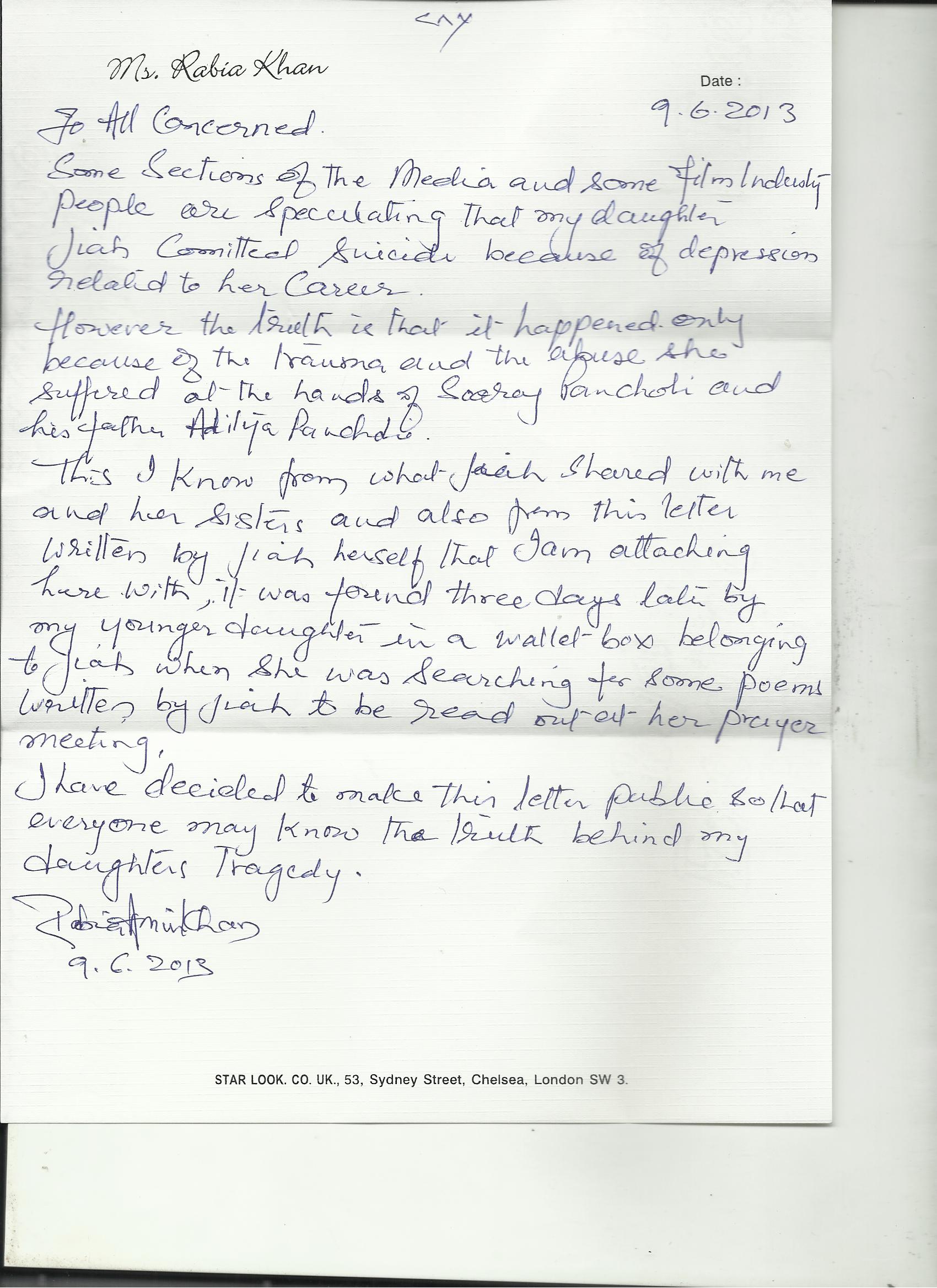
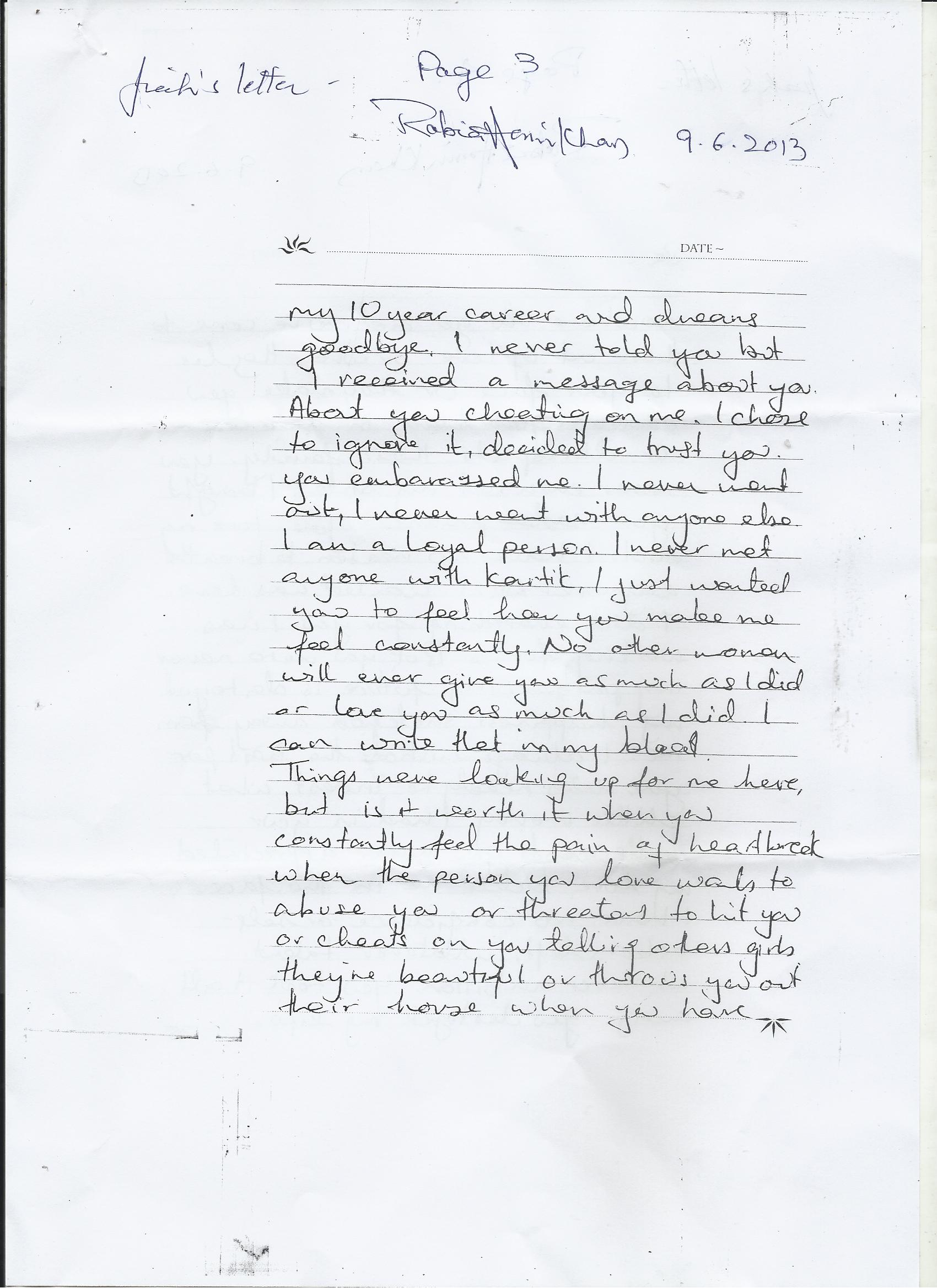
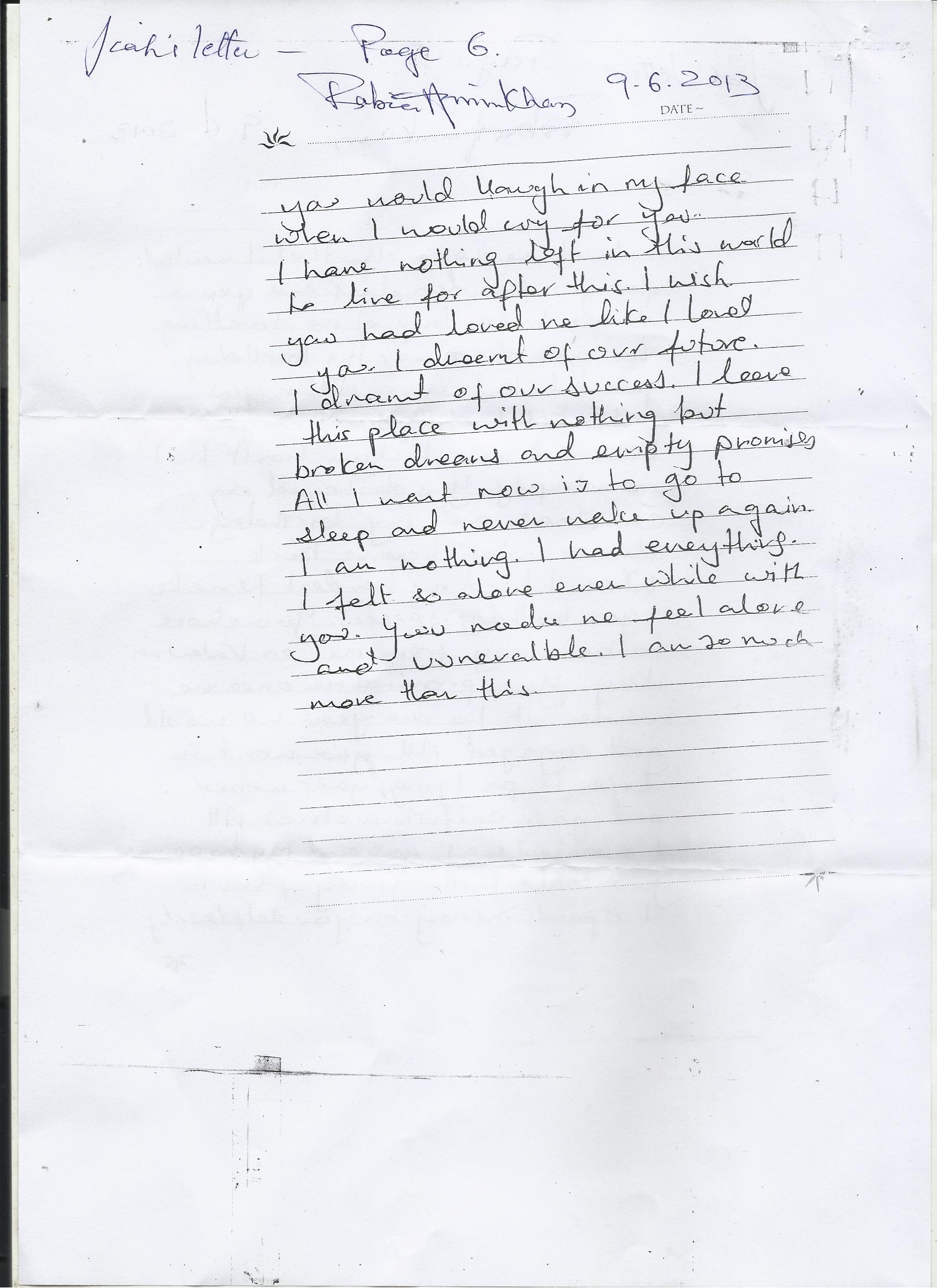
Jiah Khan’s death not only shocked everyone but in the last few days there have been various speculations surrounding it. Initially Police didn’t find any suicide letter. But now her mom Rabia Khan ‘claims’ to have found a note written by her. She has made this note public and so we are sharing it here.

It’s quite sad and heartbreaking stuff, especially for someone who has just twenty five year old. As they say, the real picture is not what you get to see on screen.

1 2 3 4 5 6 7

VOTD : SHAME

Posted: June 7, 2013 by moifightclub in bollywood, video, VOTD
Tags: , , , ,

It’s a new low for journalism in India. Especially film journalism. What most don’t realise is that now film journalism is mostly either plugged or paid. And if not, it’s just about the access. At Jiah Khan’s funeral, actor Aditya Pancholi got into a scuffle with the media. His car hit a camera tripod, broke it, then journos attacked him, blocked his way and extorted money (Rs 15,000 or so) from him. It’s correct to say that Pancholi started it by breaking the tripod with his car, but to extort money from him is quite a shameful act.

With 25-30 channels on the spot trying to shoot one person, scuffle is bound to happen. It means 25-30 reporters with boom mics, 25-30 cameramen with camera and tripods. Plus, attendants, onlookers. So imagine a scenario of about 100 people pouncing on one person. Anyone will react violently to get out of the situation.

The scenario has become worst with no discipline, no rules and regulations, cut throat competition to get the best visuals, and anyone with a camera or boom becoming a Video Journalist or reporter. Watch the videos to see it unfold before your eyes.

via Tanqeed

Since the release of Ek Thi Daayan, many of us have been looking for the short story on which it was based. We asked Konkona about it on twitter as it’s written by her father Mukul Sharma. She guided us to his blog where he had posted the short story. Those of you who missed it earlier, posting the story here after taking his permission.

And click here for a short interview of his on converting the short into a novella and then a screenplay.

ek_thi_daayan final

“Psst”

Misha looked up from the card house she was building to see her nine-year-old brother Bobo peek around the playroom door.

“What?” she asked, immediately interested.

“Want to see a trick?”

“Yes, yes!”

“No you’ll tell Daddy.” The head disappeared.

Misha jumped up upsetting the cards and ran out to the corridor. It was afternoon. And even though father would be sleeping, she didn’t want to take any chances. He had become so funny after mother died last year. Her wise eyes swept both ends of the corridor as she tiptoed to the outside door of the apartment. Reaching up — she was beginning to make it to the handle these days — she upped the latch and, very carefully or it would squeak, opened the door and stepped out into the eighth floor landing.

It was deserted. Her eyes darted to the two old fashioned elevator wells and saw one registered at the door. Through the tiny window she could see the lights on inside it along with some vague movements. Someone inside was doing something. Again on her toes, she went forward and pulled the door out a couple of inches. It was Bobo! He was standing in front of the button panel doing the funniest things. Once he pushed three buttons in at a time with his right hand while simultaneously jabbing in another couple with his left. Then, pointing one finger of each hand at the two rows, he alternately pressed one button of each row. When he did that, the overhead light seemed to dim a little. Misha opened the door fully. Bobo spun around.

“Why did you come?” he whispered angrily.

“What are you doing? Is this the secret?”

“Yes it is,” he said, “but I’m not going to tell you.”

“Please, please.”

“You’ll tell.”

“No, no I promise. I really promise.”

“Okay come, I’ll show you.”

She went inside. He put his finger to his lips, cautioning her to keep quiet.

“I need a lot of concentration to set it,” he said solemnly. Whenever he spoke like that, Misha knew he was really serious about something. He was only two years older than her but far more intelligent and could do a lot of interesting things with his hands. Like the time he had taught her how to control her dreams by moving her fingers in a special way for instance, and she deliberately dreamt of mother ten nights in a row. Now, with his back to her, he was fiddling with the buttons again.

“There,” he said turning around, “I’ve set it now. Watch what happens when I press the ‘G’ button.”

As he did, the lights dimmed once again and, slowly, the elevator began to descend. There was nothing like a trick to it at all thought Misha. It was going down like it did every time she went down in it herself. The ‘7’ of the seventh floor, written between the floor walls, flashed by the window, followed by the ‘6’ of the sixth floor and the ‘5’ of the fifth.

“Where’s the trick Bobo?”

“Wait,” he said impatiently, his eyes on the window.

Misha looked into his face, trying to read his thoughts. She could do it sometimes. She could usually guess when father would wake up, for example. When she looked back at the window, the ‘2’ of the second floor was just going by. She hoped the janitor wouldn’t see her downstairs because then father would know she’d been out of the house in the afternoon. The ‘1’ went by as she was thinking of what excuse she would have to give. Then, without any fuss and at absolutely the same speed, the trick unfolded. The ‘G’ of the ground floor also flashed by and there was no basement below their building.

It took her a moment to comprehend what was happening but when she did there was a thrilling sense of re-orientation. She whirled on Bobo who was standing there looking very pleased with himself. “That was a good trick!” she said clapping her hands gleefully in excitement, “Where are we going now? How far down?”

“Oh, a little way,” he replied mysteriously.

“What’s down there?”

“A playground I think, I’m not sure. I’ve only been down once before. Look!” he said pointing at the window suddenly.

Misha saw a small weeping child’s face flash by the window. It was a round lonely face about the same age as herself or a little older. Then another face flashed by, then another — there were lots of them. They stopped as suddenly as they had begun.

“Who are those Bobo?”

“Orphans,” he said knowingly, playing with the buttons again. “Keep watching.”

Misha looked up back at the window but there was nothing there. Just blackness outside. Suddenly a face came into it and scared her. It was a middle-aged women with long stringy hair and a snarled, unwashed face and whose hands clawed at the window glass desperately as she passed. Then there was blackness once more. Then that same face went by again. The faces quickly multiplied and rolled which Misha didn’t like at all. She was very frightened.

“Stop it now Bobo, I’m scared.”

“I have stopped it silly. We’re going up now. You can’t make out because it’s so black outside.”

They stood in silence. Nothing passed in front of them anymore.

“Who was the other person who came so many times Bobo?”

“A stepmother I think.”

“If,” said Misha with a far away look in her eyes, “I had a cruel stepmother, I’d like to put her in there too. You’d have to help me though.”

“Of course I’d have to help you. I’d have to set it for you first, wouldn’t I? Then when she came and pressed the button for ground floor, she’d automatically be taken right down to where we went and when the elevator finally stopped, they’d open the door and take her out and keep her. She’d never have stepchildren again to be cruel to.”

“Don’t you wish we had a cruel stepmother Bobo?”

*

“You’re lying!”

“God promise Daddy, I was in my room all afternoon just like you told me to.”

Mr Kapoor got off the rocking chair and advanced towards Misha till he was almost towering over her. Misha’s hands were ready to ward off a slap. Instead, he just bent his great body down till his face was inches away from hers and said in a soft, menacing voice:

“The janitor saw you downstairs. That’s how I know you’re lying.”

“But he couldn’t have,” blurted Misha, “I only . . .”

“That’s better. You only what?”

“Bobo was showing me something inside the elevator and . . .”

Mr Kapoor almost exploded in anger. “I don’t want to hear about your imaginary brother one more time, you understand?”

Misha nodded.

“I don’t know what pleasure you get in making all this up.”

But with that, to Misha’s great relief, he stalked away to his study. Misha went back to her broken card house.

*

Mrs Kapoor stood in front of the mirror in her petticoat and blouse and liked what she saw. Her dresses still showed her body off with magnificent ease. Her low-cut blouse for instance, not only cupped her large breasts firmly, but all too often tended to reveal their top halves each time her georgette saris slid carelessly off her ample front. She neither looked nor felt forty. Not even when Mrs Nandy, her rummy playing partner whose house she was on her way to right now, said all those snide things behind her back about her wrinkles. The girls at the afternoon’s session were going to be envious again.

She put on the sari, applied eye shadow, mascara, lip gloss and a bindi, in that order and went out into the landing. The elevator arrived moments later. She opened the door and went in.

She pressed the ‘G’ absentmindedly, opened her handbag and took out the bottle of Dior. So absorbed was she in spraying her cleavage that she hardly noticed that as the lift started descending, the overhead lights had dimmed a little. But then Mrs Kapoor’s mind was on other things. On her husband for one. He had told her to wait downstairs at 2.30 sharp where he’d pick her up from without having to go upstairs. She was hoping he would be on time. She hated waiting downstairs with all the servants, drivers and maids who worked in the building pretending they weren’t ogling her. On the other hand she hoped she herself was not late because he could be really irritable then. That made her panic. She glanced at the window to see which floor she had come to and saw the ‘2’ slide past and impatiently began counting the seconds of the ‘1’. Six seconds later it came into view and went. Exactly six seconds after that the ‘G’ too impassively slid past — like it was the most natural thing in the world.

Disbelief slammed Mrs Kapoor’s face into a cold statue of terror as everything from her gut to her mind caved in at the absurdity. Only a dumb vestige of curiosity still made her look zombielike into the window’s fascinating rectangle in silent slow-motion as it turned into a mirror in front of her and all she saw was her contorted face everywhere in it. She lunged on the button panel and jammed her fingers into the emergency bell push. An incredibly loud jangle exploded somewhere over her head and began falling off in intensity almost immediately as if the sound source were receding.

And Mrs Kapoor dug her frenzied hands into her hair above both ears and ruined her lovely, pulled back bun at the nape. Then, as her eyes locked with those of a little boy and girl in the mirror, she spun away to the rear wall and clawed at its smooth self-designed surface till she collapsed on the floor, eyes open unstaring, kicking, kicking and kicking at the red georgette sari strangling her from all over until the elevator stopped.

The janitor looked in astonishment at the spectacle at his feet in front of him. Others who had come running hearing the emergency bell found him gaping at a fantastically writhing red form in the elevator, which was now human, now an animal grunting savagely, howling insanities, talking of stepchildren, tearing her clothes, with saliva all over her chin.

Until a small crowd had gathered and Mr Kapoor, her tall, powerful husband, arrived to extricate his spitting raging wife in a mess of clothes and tears, screaming for all to hear, that her stepchildren had done this while her husband, facing her in total incredulity, kept mechanically repeating, as if that would bring her back to him, that they had no children, or stepchildren, at all.

As part of the campaign “India is a visual journey”, five filmmakers were commissioned to make five short films. You must have seen the promos of the shorts. Now all the films are online. Do watch and vote for your favourite

1. Hidden Cricket by Shlok Sharma

About the film – A country that is divided in the name of religion, state, language, caste, economy, profession and even god… breathes together, stands together in the name of CRICKET!

A sport that defines the country. Cricket is in our blood and rules our hearts. A synonym to passion — cricket redefines enthusiasm, craze, zeal and excitement. We are a nation that loves cricket, lives cricket, beyond conventions and beyond rules, from breaking boundaries to breathtaking highs, a million cheers and a zillion sighs, such is the madness, such is the passion to play it anywhere, any day, all the time, all the way. Cricket is our way of life!

2. The Epiphany by Neeraj Ghaywan

About the film – After their college reunion in Pune, a divorced couple is forced to take a ride together to Mumbai. As they meet an old woman on the highway in desperate need of help, their disparate sense of morality, culture and class creates friction, scraping the wounds of past that they thought was long gone. Some journeys may not take you anywhere, but you do move on.

3. Moi Marjani by Anubhuti Kashyap

About the film – A spirited independent single mother struggles on a daily basis to provide a comfortable life to her son and herself. She runs a small Internet cafe in Patiala, Punjab for a living, and is an Internet user herself. The film highlights a phase in her life when love comes knocking on her door. If only its timing was right!

4. Geek Out by Vasan Bala

About the film – The dual lives we lead, that virtual alter ego we all have nurtured and empowered, The Indian “Geek” today is no longer that lad who sat in a corner. He could be that carefully framed pic on Instagram to that deadly opinionated Twitter handle or maybe that pop philosophy spitting Facebook page or that revolutionary blog that was created to change the world or just plain drowned into the Audio-Visual black hole “You-Tube”. Day dreaming now has a new address, the world wide web. Dream on ! May the force be with the Geek!

5. Chai by Geentanjali Rao

About the film – The film is a sequence of montages that shows four different people making tea in a tea shop. A ten year old boy selling tea in Bombay at the Gateway Of India, An 18 year old girl with her tea shop in a mid level town, A 19 year old Kashmiri lad in a Barrista and An 80 year old man’s tea shop in a busy Kerala bus stand.

The film is a view of rapid change that India is going through and what it means to those people whose faces we never notice as we go along sipping our cup of tea everyday. Tea like the people of India changes with every language, culture, climate yet serves the same purpose everywhere always. A constant in a flux.

– And do VOTE for your favourite short. You can vote for as many shorts as you like, there’s no limit.

raanjhanaa_rahman360_Arrahman

After a long wait, it’s finally out – the music of Raanjhanaa. But seems the wait was worth it. Do check out the music of Raanjhanaa. Rahman is back and how. Over to @Rohwit for its music review.

  • Raanjhanaa hua – The ever so melodious (yet not as popular as I would like him to be) Jaswinder Singh starts the song and vanishes too quickly. Anyway, the song belongs to ‘at times out of sync Shiraz Uppal’ and that’s what you will love the song for. It just doesn’t try to ‘fit in with calculated singing’. The percussion arrangement – top class, the use of Sitar – exemplary. In fact, when the song ends, the sitar doesn’t leave your mind. Go ahead, try it! A racy tune marked with excellent violins (which literally take the song to it’s peak every time they appear), the song is top class! Watch out for the faint guitar riffs throughout!

  • Banarasiya – Like the name indicates, a song that ought to remind us of Benaras. Starts quite rightly with Sarangi and flute (aided with the mandatory manjiras). Tune wise crisp, singing wise excellent, Shreya Ghoshal’s vocals! Sitar, Tabla and flute do their bit to raise the level of the song. The playful backup vocals by the hugely talented Meenal Jain and Anwesha add the right amount of playfulness and mischief to the song and you can picture the dancers in a group, exchanging glances and moving the neck and eyes in sync.The atmosphere is very ‘evening’ and the setting reminds us of the ‘Kotha’ culture.

  • Piya Milengey – The song that begins with KMMC sufi ensemble going at it along with Sukhwinder is endowed with definitive bass and faint piano notes towards the beginning part of the song. The ensemble does an excellent job without getting loud at all. A song that is likely to appear in the background as the film paces up. Thankfully a bollywood – sufi offering that leaves an impact and not screaming singers in the mind as it ends.

  • Aye Sakhi – A song that has the most delightful and talented singers around. Madhushree, Chinmayi, Vaishali and Aanchal sethi come up with a song that’s treated with sheer brilliance and arranged classically (and gives out a feel that the singers are practising kathak). In fact, the music and the feel around the ‘aye sakhi uljhan’ reminded us of ‘Jao rey jogi tum jao rey’ (from Amrapali). The ‘Tyun tyun tyun’ bit in between reminded us of the Tain tain tain song from Gangs Of Wasseypur. Still so enjoyable! The song has an element of ‘Kya dekh rahey ho tum’ from Taal in terms of feel but is vastly different tune wise. Thumbs up!

  • Nazar Laaye – With lazy guitars, simple beats and Rashid Ali who is almost sleep-singing along with Neeti Mohan, the first impression of the song is ‘JTYJN-hangover!’ A typical song that gets skipped most of the times but stays in the playlist nevertheless.

  • Tu Mun Shudi – A lot has been written and propagated about Hazrat Amir Khusro’s Persian words around which the song is created, so we won’t go there. (By the way, Tu = you, mun = mine, shudi = became, Muntu = me yours, shudam = have become). The techno start to the song with superlative A R Rahman setting the tone of the song welcomes Rabbi (No no, not the Rabbi who sang Challa, this one sings better!). The use of shehnai in the song is top class. The way it flirts with the beats, we never thought it can, and all this with a constant hip-hop like beat. There is always that song in an ARR album that evokes extreme reaction (apart from other songs which are tagged in ‘Give it time and they will grow’ category). This one belongs to the ‘extreme reaction’ category. People will either like it or completely dislike it. We? LOVED it! ARR at his innovative best (with his characteristic giggle!)

  • Aise na Dekho – A bonfire song. Starts with a frolicky mouth organ up and about with guitars. Yet another ‘JTYJN-hangover’ infected song, one might argue. Sung by ARR himself, the song scores low on words and the way they are pronounced (May be intentional?). Still the music arrangement is soothing. The whistling in between is simple and adds charm to the tune. Will I hear it again? Not now.

  • The land of shiva – Heavy chants with heavier music setting and bells marks this piece and before you realise what is happening, it gets over. With a little over 1 minute running time, the tune is clearly added to compliment the overall feel of the album and is surely going to appear in the film.

  • Tum Tak – May be it is Javed Ali who melts with the musical arrangement (The other way of looking it could be – his voice doesn’t stand out), the song is likeable only because of it’s music arrangement. The construct is too confusing, singing wise. Too many ‘Tum taks’ are irritating to say the least. The sudden change in the song on the other side of 3 minutes is bearable vocally. Kirthi and Pooja are efficient in the song. What lessens the impact of average singing is the excellent use of Manjeera and shehnai.

AR Rahman somewhere mentioned that the use of shehnai in this album is a tribute to Ustad Bismillah khan.

What we liked the most about the album is that it gives out sense of the film without being vague. The lyrics by Irshad Kamil are largely effective.

The variation that we hear in terms of tune selection and treatment is vast, the music arrangement as usual top drawer! The album exudes a lot of confidence and the feeling of ‘durability’ oozes in good measure.

Just when the promos were looking an ordinary, it is unbelievable what a brilliant music album can change it all. Now only if the film is good enough to hold it all together.

Correction for Tu man shudi explanation – Tu man shodi” means You became me and “Man tu shodam” means “I became you” not “yours”. “Man” means “I” not “mine”. “I became yours” is “Man maal-e-to shodam”. Thank you for correcting it everyone