


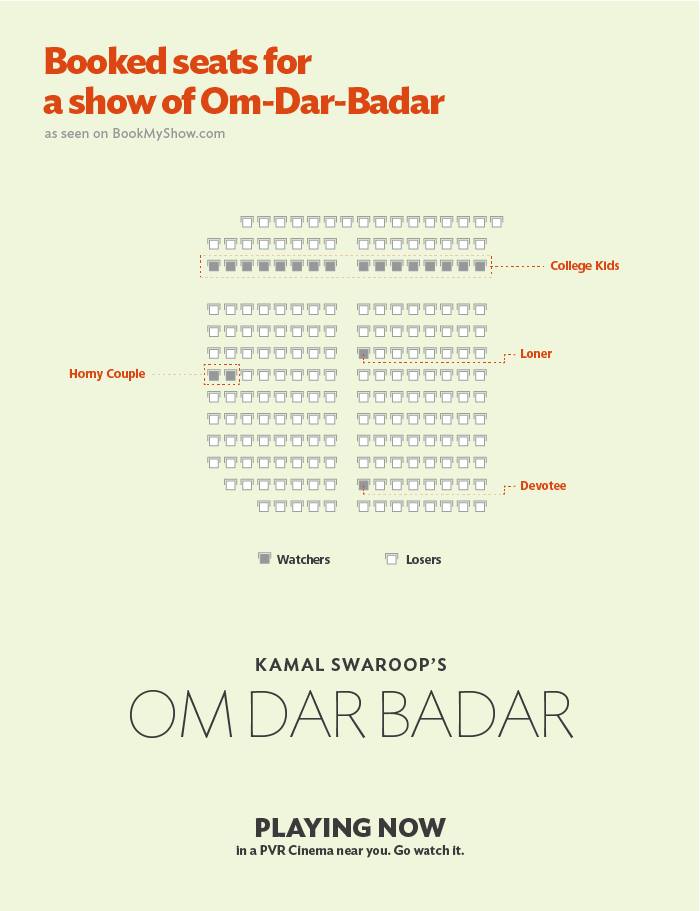
Still haven’t seen Om Dar-B-Dar? Want more reasons? Well, listen to Anurag Kashyap, Imtiaz Ali, Amole Gupte, Kiran Rao and Resul Pookutty to understand what the film means to them and why.
And here’s Rajat Dholakia on its music madness
 what we are reading – EightandHalf


Still haven’t seen Om Dar-B-Dar? Want more reasons? Well, listen to Anurag Kashyap, Imtiaz Ali, Amole Gupte, Kiran Rao and Resul Pookutty to understand what the film means to them and why.
And here’s Rajat Dholakia on its music madness
As we have done in the past, this year too we are trying to source the scripts of some of the best films of the year. As most of you know, the scripts of Hollywood films are easily available online, even the unreleased ones. But we don’t have any such database for Hindi or Indian films. So that has been the primary reason for this initiative. And it has been possible because some of the filmmakers have been very supportive about it. It’s only for educational purpose and much like the spirit of the blog, is a complete non-profitable exercise. Thanks to Abhishek Kapoor and Hansal Mehta, we have been able to post the script of Kai Po Che! and Shahid here and here.
Lootera has been a subject of much debate and discussion on this blog. And if you are regular reader of this blog, you probably know that unlike other filmmakers Vikramaditya Motwane has always been gracious enough to take it in the right spirit. He has also been much supportive of this endeavor to share scripts publicly and helped us by sharing the script of his film Udaan earlier. If you haven’t read the script, it’s here.
In this post, we are sharing the two drafts of Vikramaditya Motwane’s Lootera – the second draft of the script (in English) and the shooting draft of the film (Hindi dialogues).
Film – Lootera
Story – Inspired by O. Henry’s The Last Leaf
Screenplay – Bhavani Iyer and Vikramaditya Motwane
Dialogue – Anurag Kashyap
We tried to pretend for some time that it’s completely normal to stand next to Martin Scorsese and pose exactly like him. We even controlled the fanboy BP and heartbeats for as long as we could. And as we went breathless, we shouted out it’s M-A-R-T-I-N-F-U-C-K-I-N-G-S-C-O-R-S-E-S-E.
So spare our fanboyism and so called sycophancy for this post. This is the fucking school of cool (Yes, Varun, said that school-of-cool again). Men are here, only the mean machines are missing.
As Charlie said, Twenty dollars! Let’s go da movies!

Bet, AK must have repeated Stack Edwards – This drink is better than sex, baby.
(PS – If you have been living under some rock, this picture is from Marrakech International Film Festival where Anurag Kashyap was on the jury with Scorsese saab)
“Gangs Of Wasseypur – The Making Of A Modern Classic” by Jigna Kothari and Supriya Madangarli is finally out. Interestingly, the book also has the screenplay of both the parts of the film. Jigna tells us more about the book, and scroll down to read an excerpt from it. And if you find it interesting, have also given links below it from where you can order it online.
 The book captures director Anurag Kashyap’s organised chaos during the making of this darkly comic tale of alley gangsters and their absurdities and idiosyncrasies. As the film traverses a fine path between myths and memories, fact and fiction, the book delineates these elements and introduces the men and women who inspired their celluloid counterparts.
It also shares the director’s exploration of his roots while making the film, and looks at the components of the director and crew’s vision of the design, soundtrack and songs, and most importantly, the locations that give the film its sense of time, and at times, irony. The final pieces of the puzzle are blended in drawing upon narratives and anecdotes from crew and cast of the film.
Beginning with Anurag Kashyap’s foreword, and ending with the screenplay of GOW Part I and II, the book is divided into seven chapters and has some on location pictures as well. The seven chapters are as follows –
(On location pic from the book)

Excerpt from the book
– You can order the book from Flipkart (click here) which is giving 25% discount (Rs 299) or from Infibeam (click here) which is giving 27% (Rs 291) discount. The book is priced at Rs 399.
The much awaited trailer of Anurag Kashyap’s new film Ugly is out. Have a look.
It looks damn intriguing. A kidnapping goes wrong and things get ugly.
The film stars Ronit Roy, Rahul Bhat, Tejaswini Kolhapure, Vineet Kumar Singh, Surveen Chawala, Siddhant Kapoor, Anshika Shrivastava & Girish Kulkarni.
Produced by Dar Motion Pictures and Phantom Films, it has music by G V Prakash.
The film had its premiere at the Cannes Film Festival in the Directors Fortnight section.
 Official Synopsis
Bose, an Additional Commissioner of Police, is an extremely straight-forward professional. However, these lines are a bit blurred in his relationship with his wife Shalini. Shalini is a clinically depressed person and an alcoholic. Shalini was first married to Rahul, a struggling actor and also has a daughter with him, called Kali. The story starts on a Saturday, which is the day when Rahul is allowed to meet Kali as per court custody arrangements. Rahul leaves her in the car as he goes to meet his friend, and Kali goes missing.
What follows is an endless series of blame game and one up-man ship. A dark psychological thriller on the surface, Ugly is an emotional drama within.
To know more about the film, you can follow its FB page here.

Filmmaker Anurag Kashyap and producer Guneet Monga under their banner, AKFPL, will be releasing SHORTS (a collection of 5 short films) on July 12 2013.
The films will be released by PVR Directors Rare across Mumbai, Delhi, Pune, Kolkata, Surat, Cochin, Ahmedabad and Bangalore in select theatres. The five shorts are directed by Shlok Sharma, Neeraj Ghaywan, Rohit Pandey, Siddharth Gupt and Anirban Roy. The films feature Huma Qureshi, Nawazuddin Siddiqui, Richa Chadda, Vineet Singh, Aditya Kumar, Ratnabali Bhattacharjee, Shweta Tripathy, Satya Anand, Preeti Singh among others.
Synopsis of the 5 Shorts –
1. SUJATA by Shlok Sharma
Starring: Huma Qureshi, Shweta Tripathi, Satya Anand & Aditya Kumar
– Sujata is a riveting tale of a young girl, who is struggling to come out of the clutches of her tormenting cousin brother. At a very young age, she is forced to live with her cousin and his family. Herein, begins a life of incessant harassment by her cousin brother.
Even as an adult she lives in the shadow of fear. For years, she changes addresses and identities in the hope of finding freedom; but each time he hunts her down. Neither the police, nor the NGOs are able to help her. Pushed to a corner, she decides to take the extreme step.
2. EPILOGUE by Siddharth Gupt
Starring: Richa Chaddha and Arjun Shrivastav
A relationship that has already fallen apart and is just about to snap. It describes the love and intimacy, the entangling of two lives and the completely symbiotic nature of a couple.
It reflects the possessiveness control isolation, depression and desperation that a relationship can lead to, representing a cycle that needs to be broken in order to keep sane.
3. AUDACITY by Anirban Roy
Starring Preeti Singh, Sankar Debnath and Kanchan Mullick
A thirteen-year-old girl has her first real confrontation with authority when her father forbids her to play the American dance music she loves. When she decides to take revenge, the situation escalates to become a neighbourhood scandal.
A dark comedy about parental authority, teenage rebellion, curry, whiskey, and house music.
4. MEHFUZ by Rohit Pandey
Starring: Nawazuddin Siddiqui and Aditi Khanna
In an ambiguous space and time. The city has turned mad, as violence has taken its toll. But, far away in the sounds of silence at the border of the town, a man takes care of all the death around. He drags away this usual routine with every passing night.
One night, he notices a strange woman wandering on empty streets. As her behavior changes, so does his journey.
5. SHOR by Neeraj Ghaywan
Starring: Vineet Singh and Ratnabali Bhattacharjee
Lallan and Meena, a couple from Banaras, are consumed by their pursuit to survive in the city of Mumbai. Meena takes up a job in a sewing factory.
One day over a phone call, they find each other while embracing death, divorce and redemption. It takes the darkest hour of our life, the fear of death, to regain our consciousness back in to life. To find the beauty that is lost in our relentless angst towards an unyielding life.
Karan Johar, Dibakar Banerjee, Zoya Akhtar and Anurag Kashyap – four filmmakers with distinct signature style of filmmaking. So it’s interesting that a film like Bombay Talkies managed to bring them together. Though the occasion is 100 years of Indian cinema, all four shorts don’t have a strong cinema connect.
Interestingly, we also have got four writers to write about these four films. Read the post, watch the films and do vote for your favourite short in our poll.
Jahan Singh Bakshi on Karan Johar’s Ajeeb Dastaan Hai Yeh
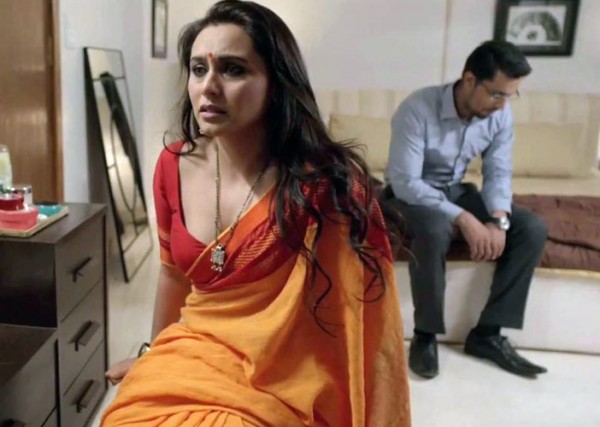
Of the four shorts in Bombay Talkies, I was most interested in Karan Johar’s film. One couldn’t quite tell what it is about beyond the fact that there is a troubled marriage in an urban setting (between Rani and Randeep) and a blossoming friendship (between Rani and Saqib) that perhaps gets the plot rolling. Also, there was a delicous sense of irony in the fact that in an anthology including films by Anurag, Zoya and Dibakar, it was K-Jo’s that seemed like the most dark and bleak!
What Karan has delivered in Bombay Talkies is something I did not expect (and I’m sure no one did). And with unexpected elan as well! Not just daring and bold, but equally graceful and poised- this is a Karan Johar you haven’t seen before. Or maybe he always had this in him but was waiting for the right time and a film where he did not have to wear the producer’s hat. I won’t reveal the plot of the film here (even though soon people would be talking about it) but when a filmmaker like Karan Johar makes a film like this, it isn’t just a film, it’s a massive statement. A few glass ceilings have been instantly shattered in a snap.
But let’s give Karan Johar, the guy everyone is probably looking at as the dark horse black sheep among these four, credit for more than just audaciousness. Ajeeb Dastan Hai Yeh grabs you by the collar and jolts you in its very first scene. But it instantly and nonchalantly moves on. This isn’t a Madhur Bhandarkar ‘shockfest’ or a film about ‘issues’.
What you get is an astutely made relationship drama- funny, candid, empathetic and in the end, wonderfully poignant. As I thought of the film later, I also appreciated how economically and smoothly it moved, everything is established so quickly and well. The characters are all flawed; there are no judgments made, no quick answers given, no simple resolutions. Apart from the odd cornball line in the beginning (‘Gale mein mangalsutra, aakhon mein kamasutra!‘- and that too from an intern to his boss!) the dialogue is smart and well written. And yes, no clumsy melodrama either. Maybe it’s the effect of shooting in ‘real’ locations! 😉
The performances are excellent and fearless. After trying too hard in NOKJ & Aiyaa, Rani Mukerji is back to doing what she does best- in Talaash, and now this. She is raw and wonderful, and the camera doesn’t look away from the love handles pouring out of her blouse or the freckles on her face. This is the sexiest and most beautiful she has looked in a long time. Saqib has cocky charm, but also a heart-breaking vulnerability. This is a role few young actors with Bollywood-Hero aspirations would take on. And Randeep Hooda surprises with a superbly reined-in performance, emotions carefully simmering under the surface.
As tempting as it is to discuss the story, I’d prefer to let everyone discover it on their own and react. This is surely going to be the most talked-about film of the four. And bagging second place in such illustrious company is no mean feat either. So many good directors stumble when it comes to short films- and well, here we have a filmmaker who’s so often reviled and not exactly known for brevity- making such a terrific one.
Mr Johar, you had my attention, now you have my curiosity. I’m curious to see where you go from here. You’ve taken the big leap, now don’t stop.
PS: You’ll be humming the ‘title song’ for a long, long time after the film. 🙂

Varun Grover on Dibakar Banerjee’s स्टार
अगस्त 2011. हम रेखा झा से पटना में मिले थे. उन्होंने ‘गैंग्स ऑफ़ वासेपुर’ में ‘वुमनिया’ गीत गाया था. वो एक और गाने (तार बिजली) में कोरस की लड़कियों वाले ग्रुप में आई थीं. स्नेहा खानवलकर को उनकी आवाज़ अच्छी लगी और उन्हें अलग से पूरा गाना मिल गया. वापसी के समय उनके पति (झा बाबू) मुझे अपनी टैक्सी में छोड़ने आये. उनका पटना में ही भाड़े की टैक्सी का बिजनेस है. रास्ते में उन्होंने बताया कि वो १९९०/९१ के आस-पास एक बार बंबई आये थे; हीरो बनने. “उस समय अगर कोई हमको बोल देता कि दस मंजिल से कूद जाओ और हम तुम्हें हीरो बना देंगे तो हम कूद जाते.” मैंने पूछा “तो किसी ने बोला क्या?” उन्होंने बताया काफी दिन बंबई में भटकने के बाद उन्हें एक जुगाड़ मिला. बाज़ीगर की शूट चल रही थी…लोनावला साइड कहीं पे. वो वहां पहुँच गए और यही ताव (कूद जायेंगे वाला) सब प्रोडक्शन वालों को सुनाने लगे. एक ने कह दिया, यह नदी है सामने छोटी सी, इसको तैर के पार कर लो तो किसी एक सीन में हीरो के अगल-बगल कहीं खड़े होने को मिल जाएगा. जनाब कूद गए. तैरना नहीं आता था, फिर भी कूद गए. किसी और को उन्हें पकड़ के निकालना पड़ा. झा बाबू के मुताबिक़ उनकी इस हिम्मत को देखकर सेट पर मौजूद (वीनस वाले) रतन जैन का दिल पिघल गया और उन्होंने झा जी को एक हफ्ते बाद बंबई में अपने दफ्तर बुलाया. झा जी एक हफ्ते तक सडकों पर रहे, बस स्टाप पर सोये, पर रतन जैन से मिलने का दिन आने से पहले ही उनका सारा सामान, जिसमें रतन जैन के दफ्तर का पता भी था, चोरी हो गया. उन्हें वापस पटना लौटना पड़ा. हमेशा के लिए.
कट टू – जनवरी 2013. एक अवार्ड फंक्शन में रेखा झा वुमनिया के लिए nominate हुयीं. झा जी भी उनके साथ बंबई आये. यशराज स्टूडियो के अन्दर बैठ के उस दुनिया को देखा जिसके लिए वो कूद जाना चाहते थे. मुझे सुपरमैन ऑफ़ मालेगांव के शायर फरोग़ जाफरी याद आ गए. (“मैं कब से बंबई की तरफ चल रहा हूँ. मालेगांव से बंबई बस एक रात का सफ़र है. पर ये रात ख़त्म नहीं होती.”) झा जी की छलांग भी 22-साल तक लगती ही रही.
कट टू – मई 2013. दिबाकर बनर्जी की फिल्म ‘स्टार’ में पुरंदर (नवाज़ुद्दीन सिद्दीकी, हमेशा की तरह बवाल) भी ऐसी ही एक छलांग के बीच में कहीं है. और पुरंदर की छलांग इतनी सीधी भी नहीं है. वो कई दिशाओं में कूद रहा है. या हवा में कहीं बीच में लटक रहा है. दिबाकर बनर्जी की हर अच्छी फिल्म की हर खासियत इस २०-२५ मिनट की फिल्म में मिल जायेगी – बहुत ही कडुवा सा sense of humor; social issues पर एक तीखी नज़र; खतरनाक casting (हमारे drunk-शायर और असल ज़िन्दगी में बहुत ही sincere, assistant director कार्तिक कृष्णन का इस से अच्छा इस्तेमाल नहीं हो सकता था, नवाज़ की पत्नी के रोल में एक गज़ब की नयी एक्टर (sorry नाम नहीं देख पाया end credits के गीले कचरे से भी बदतर गाने के चक्कर में), और सदाशिव अमरापुरकर की धांसू वापसी); कहने को एक बहुत ही गहरी बात; और एक गांड-फाड opening scene.
बल्कि अगर दिबाकर की फिल्मों का एक सबसे बड़ा recurring structural-motif ढूँढा जाए तो वो यही होगा कि उनकी हर फिल्म का पहला सीन पूरी फिल्म का सार होता है. और अपने आप में एक complete short-film भी. LSD में short-film या meta-film का element deliberately बहुत साफ़ था, लेकिन बाकी हर फिल्म में (‘ओये लक्की..’ में तो बहुत ही गज़ब तरह से) पहले सीन को लिखने की मेहनत साफ़ दिखती है. Shanghai पर हज़ार debate हुए कि फिल्म किसके बारे में थी लेकिन दिबाकर के motif से जाएँ तो फिल्म का पहला सीन साफ़ कर देता है कि फिल्म मामा और भग्गू के बारे में ही थी.
और ‘स्टार’ का पहला सीन ‘ओये लक्की’ की टक्कर का है. बस उनके पिछले काम से काफी अलग, (के.के. के शब्द) “फुल बंगाली सिनेमा है रे!” और सिर्फ पहला सीन ही नहीं, क्योंकि पूरी फिल्म सत्यजित रे की लघु कथा ‘पोटोल बाबू फिल्म स्टार’ से है, तो बहुत जगह रे की छाप साफ़ दिखती है. (मुझे एक जगह ‘नायक’ दिखी और एक जगह ‘महानगर’. और एक जगह एक जानवर में रे बाबू की २-३ लघु कथाएँ.)
फिल्म के बारे में कोई spoilers नहीं लिख रहा. लेकिन बस इतना ही कि Bombay Talkies की चारों फिल्मों का पैसा मेरे लिए इस अकेली में ही वसूल हो गया. (करण जोहर की फिल्म भी शानदार लगी वैसे.) नवाज़, दिबाकर बनर्जी, और सत्यजित रे – इससे आगे कोई क्या मांगेगा?
Update: अभी अभी एक जुगाड़ से नवाज़ की पत्नी का रोल करने वाली एक्टर का नाम पता चल गया. मराठी थियेटर की एक्टर – शुभांगी भुजबल. और ये भी पता चला कि वो खुद ऐसी ही एक चाल में पली-बढ़ी जैसी फिल्म में दिखाई गयी है.
(If you have difficulty reading it in Hindi, scroll down and read its English transalation)

Kartik Krishnan on Zoya Akhtar’s Sheila Ki Jawani
It’s more Taare Zameen Par than Pankh. The 6 yr old’s desires stifled by the ‘Sharma ji’ type moochad father with shades of Naseer-Ishan Nair (the fat dancing kid from Monsoon Wedding) conflict. मेरे-Parents-चाहते-हैं-मैं-आम-खाऊँ-जबकि-मुझे-केले-पसंद-हैं is the dillema/drama. The sexuality theme is not explored (or maybe I’m reading too much into it).
The film stealthily enters the kid(s) world and takes you along. Not the most ‘fresh’ stories but again very well done, non-melodramatic realistic treatment by Zoya Akhtar (with Excel Ent Production Design from LBC not Rock On). The casting of the kids and mom is spot on. And the relationship between the siblings could’ve been autobiographical, which is probably why it is so heart tugging despite being no Children of Heaven. They help each other out in the ‘trying circumstances’ and unlike the एक दूसरे की चुगली करने वाले बच्चे, would probably be best ‘friends for life’. The message of the film is not so much ‘Follow Your Dreams’ but more ‘Follow Your Dreams लेकिन शान्पट्टी से’. Slightly underwhelming coming from Zoya Akhtar but it seems her most ‘personal’ film (like KJo’s and AK’s short films). ‘शुरू होते ही ख़त्म हो जाती है’, ‘3rd Act है ही नही, setup ही setup है’ were the common refrain but the climactic performance with the arresting cutaways is itself worth the price of ticket itself.
The pillow conversations at night between the siblings took me back to my childhood days, and that’s why may be I’m being a little too lenient unlike rest. ‘मानता हूँ Cliche है Sir लेकिन Conviction से किया जाए तो आज भी work करता है !’
P.S – An aside – On the occasion of 100 yrs of Indian cinema celebration – here are two of the most brilliant kids performances in recent cinematic history for you – this & this.
Neeraja Sahasrabudhe on Anurag Kashyap’s Murabba
Twice during the film, I was reminded of this funny inimitable character from my childhood. There was a short period of time, when we used to get dabbawala food at home in Banaras (Yes! there are dabbawalas in Banaras too). That man had a wild imagination. From the stories about owning the golden temple land to getting his mobile phone repaired in 2 lakhs (back in 2000! well, that sounds ridiculous even now), there was no end to his cock-and-bull stories, and there was a new किस्सा everyday.
The sequence where Vijay is regaling his fellow travelers in the train reminded me of many such characters from Banaras. जैसे दिल्ली में गाली देना सच में गाली देना नहीं होता, वैसे ही पूर्वांचल में गप्प मारना झूठ बोलना नहीं होता। Another one from a train journey is that of a group biharis…I remember looking at my brother and suppressing a giggle when one of the men said “ये बहुत संघर्शेबुल (sangharsh-able) हैं “. ऐसी बहुत सी सुनी-सुनाई कहानियां हैं अपने यहाँ के amazing गप्पी लोगों की, जो याद करके भी हँसी आ जाती है. Anyway, the point here being that the film captures that character and that space very well. For me, this was the best part of the film.
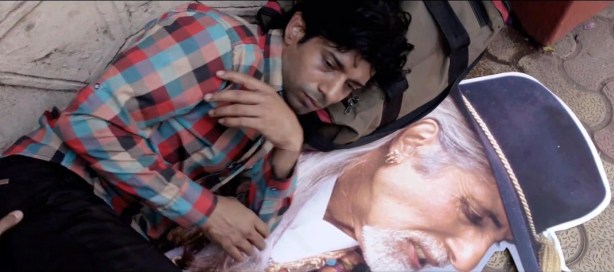
The film is about a young man traveling from Allahabad to Mumbai to meet Amitabh Bachchan so that he can offer the superstar a piece of Murabba that his mother has made. This is his father’s “last wish”. As far as the theme of celebrating 100 years of Indian cinema goes, among all four shorts, this film comes closest to capture the passionate frenzy that bollywood has created among the masses over the years. As usual Kashyap get the milieu right but the punchline is not strong enough to make you fall in love with the film. Unfortunately the film goes downhill as soon as Mr. Bachchan makes an appearance. There are moments that made me nostalgic and made me chuckle but overall the film was a bit of a disappointment. But inspite of all the shortcomings, I am sure all the fanboys/girls out there who have done crazy things for the stars they love, will connect to the film.
PS: The other thing that I noticed is that when Vijay’s father asked him where he was, Vijay replies “मेल में थे”. The people in and around Allahanad always call the kumbh mela as just “mela” whereas it is the outsider (mostly the पढ़ा – लिखा वर्ग) that always calls in “kumbh” or “kumbh mela”. Full marks to AK for that.
*****
The film ends with an atrocious music video which seems to be have been produced on MS Paint. Though the initial montage of yesteryear actors make it look slightly better. As a friend pointed out, wish they had just used the opening credits of Luck By Chance in the end credits here. That would have been enough.
And do vote for your favourite short. You can vote for 2 films.
UPDATE – 3rd May, 2013
(Since many people have been asking for English translation of Varun’s post on Star, here it is. We still suggest that you try in Hindi first, Do “Control +”, make the font bigger and it becomes easy. If not, here you go)
August 2011. We met Rekha Jha in Patna. She would sing ‘Womaniya’ for ‘Gangs of Wasseypur’ a few days later. She was part of the group of girls we had called for chorus singing in ‘Taar Bijli Se’ song. Sneha Khanwalkar liked her voice so much that she got offered a full song to herself. On my way back from Patna, her husband (Jha babu) dropped me to the airport in his taxi. He has a small taxi-rental business in Patna. He started talking and told me ‘I had gone to Bombay sometime in 1990/91; to become a hero. If at that time, somebody had told me to jump from a 10-storeyed building to get a role in films, I’d have done that.’ I asked – ‘So did somebody say that to you?’ He said after wasting many days in Bombay, he somehow landed one contact which took him to the film shoot of ‘Baazigar’ in Lonavla or around. On the sets of Baazigar, he again started bragging that he can jump from a building to get a role, and some production hand dared him to cross the small river nearby. He promised Jha Babu a role (of being in the same frame as the film’s hero) if he finished the swim across the river. Jha babu jumped in the river without a thought. He didn’t know how to swim, but jumped anyway. He had to be rescued by some locals else he was sure to drown. Seeing the commotion and young man’s stupid desperation, Ratan Jain (Tips owner) was impressed. He gave Jha babu his card and asked him to come over at the Bombay office a week later. The whole coming week Jha ji spent on the roads, sleeping on bus stops, but before the big day arrived his whole luggage including the address of Ratan Jain was stolen. He returned back home to Patna, never to attempt his Bombay dreams again.
Cut to: January 2013. An award function nominated Rekha Jha for singing ‘Womaniya’. Jha babu came with her to Bombay, first time since he left it in 1991. Sitting inside Yashraj Studios, he finally saw the unreal world he wanted to jump from a high-rise for, up-close and live. I was reminded of Farogue Jafari, the poet and writer of/from Supermen of Malegaon – “Main kab se Bombay ki taraf chal raha hoon. Malegaon se Bombay bas ek raat ka safar hai. Par ye raat khatam nahin hoti.” (I have been walking towards Bombay for a long time. Malegaon to Bombay is just an overnight journey. But this night is too long.) Jha babu’s jump also lasted for 22-years.
Cut to: May 2013. Purandar (Nawazuddin Siddiqui, terrific as always) in Dibakar Banerjee’s segment ‘Star’ is also in the middle of one such night/jump. But Purandar’s jump is not so simple. He is jumping in many directions simultaneously. Or may be he just thinks he is jumping while being magically, depressingly hanging static mid-air, like a cartoon dog from Tom and Jerry. The 25 minute film has all the best elements of all the good Dibakar Banerjee films. A very wry sense of humor, a sharp comment on social issues (right from the very first scene that stays on long enough for you to attempt decode its meaning), pitch-perfect casting (our drunk-shaayar and a sincere assistant director Kartik Krishnan couldn’t have been cast in a better role, the lady playing Nawaz’s wife Shubhangi Bhujbal is a gem of a find from Marathi theatre though her name gets drowned in that horribly composed and shot end-credits song, and Sadashiv Amrapurkar’s comeback to cinema alone is worthy enough for this film to be made), a new world to explore, and a kick-ass opening scene – all DB strengths are at their top-game in ‘Star’.
In fact, a recurring structural-motif of DB’s films has been a meta-film like opening scene that has the sly-synopsis and tone of the entire film you’re going to watch. If you go back to any of his film after finishing it, and watch the opening scene again, you’ll be surprised by the number of hidden-meanings it contained. LSD had the short-film/meta-film element deliberately carved out but even the rest of his films have a masterful opening scene (OLLO has the strongest one). Shanghai generated many debates, chief among them was who the film ACTUALLY is about, and going by this motif the opening scene of the film clearly says that the film is about Bhaggu and Mama, the two ‘killers’.
And the first scene in ‘Star’ is as powerful and poetic as Dibakar has ever written/shot. Though in a different league/tone altogether (as Kartik Krishnan said ‘Full Bengali cinema hai re!’). And not just the opening scene, the entire film bears a noticeable stamp of Satyajit Ray as the screenplay is adapted from a Satyajit ray short-story (“Potol Babu Film Star”). I could spot a hat-tip to ‘Nayak’ (appearance of Sadashiv Amrapurkar scene), and another to ‘Mahanagar’ (working wife and daily memorabilia for child), and a pet-animal Purandar keeps reminded me of a couple more short-stories of Ray. (Fascination with abnormal/surreal animals/plants is a recurring motif in Ray’s stories for children.)
Keeping it spoiler-free so can’t write much more. Just enough to say that DB’s ‘Star’ alone is worth the price of admission for Bombay Talkies. (While K-Jo’s film too is as good as they come.) Nawaz+Dibakar+Satyajit Ray – and the sum is greater than the parts!
(Note : To make life bit simpler, now you don’t need to fill in all the details to post comments. If you are already logged into Facebook or Twitter, just log in with your FB/T account. Click on comment box, you can see the small (FB/T) icon below the comment box, click on FB/T, a pop up will appear, authorize the app and you are done)
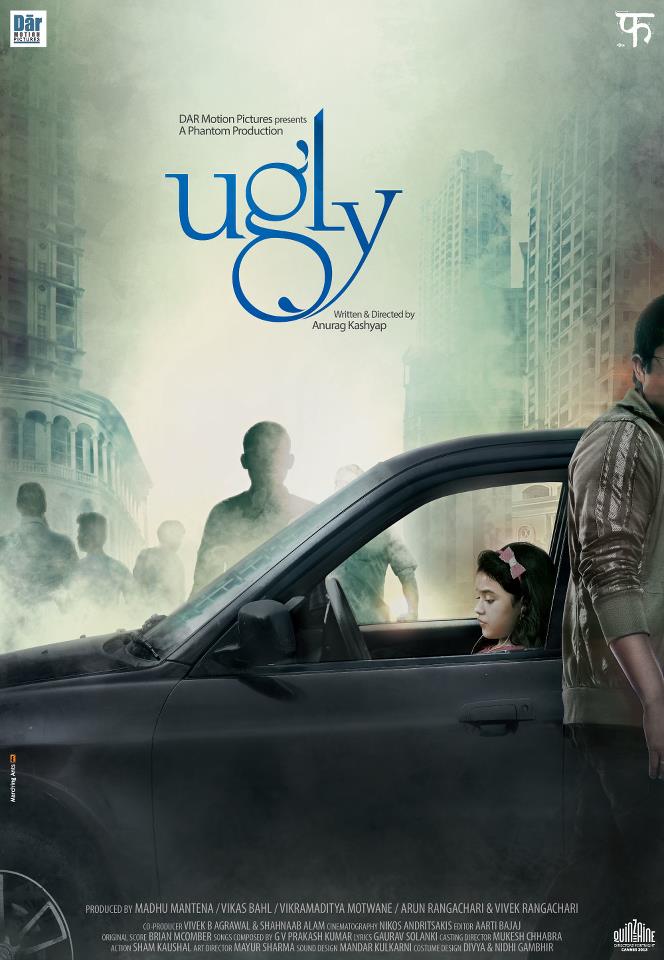
A poster of Anurag Kashyap’s new film Ugly was floating on the net. But Kashyap confirmed on twitter that it’s indeed the official first poster. Have a look.
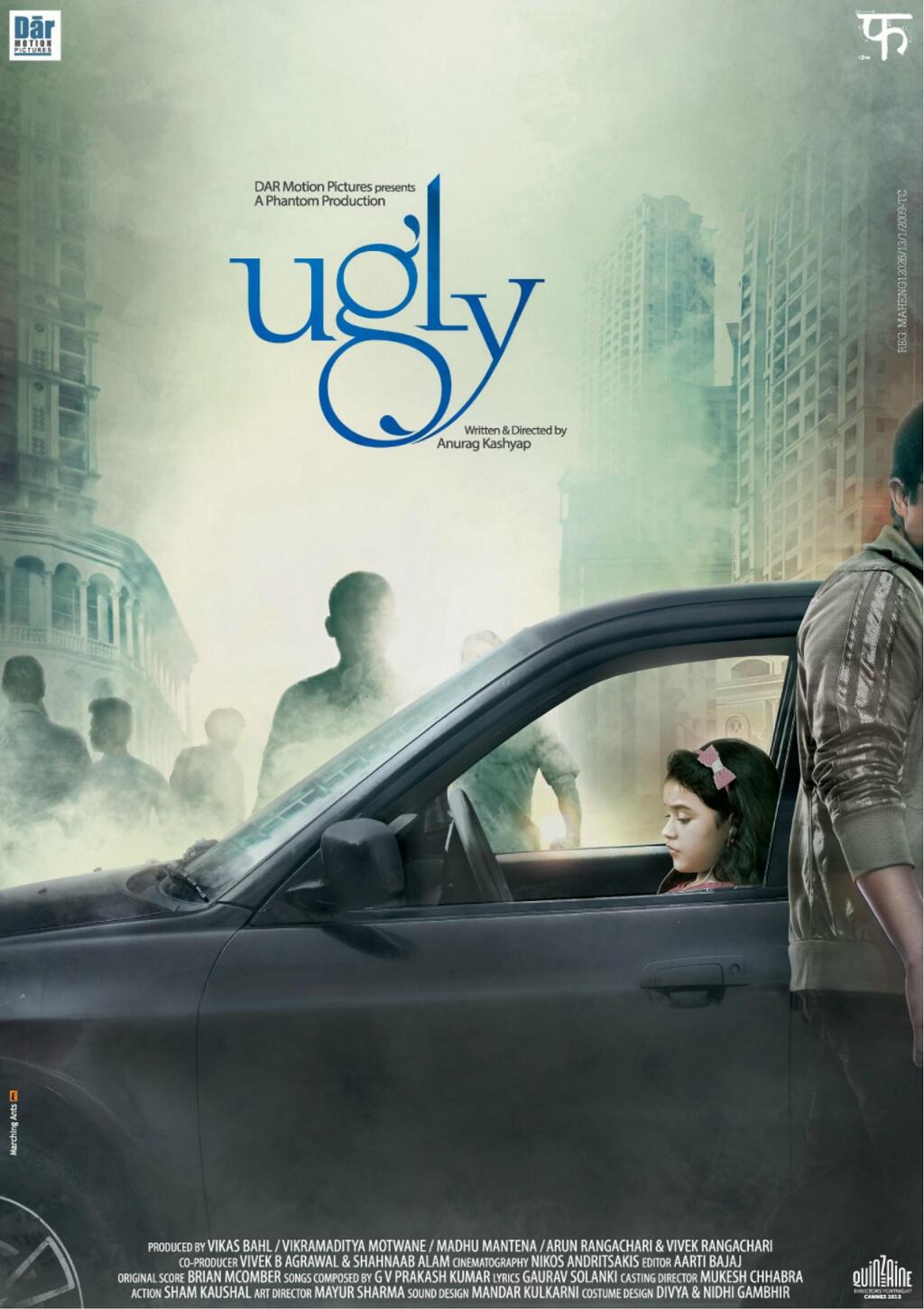
It’s like a minimal poster – a kid and a bunch of men. All in dark. Looks impressive.
The film will have its world premiere at the Cannes Film Festival in Directors’ Fortnight section. It stars Rahul Bhatt, Tejaswini Kolhapure, Ronit Roy, Girish Kulkarni and Siddhant Kapoor.
So what’s Ugly about?
It seems Kashyap is not willing to divulge any details yet. But in this interview to DearCinema he says that it’s a thriller, a simple kidnap drama but it actually deals with lots of things. It deals with relationships, our patriarchal system, how men look at women, domestic violence. It’s a very personal drama in the shape of a thriller.
Tip – Shyam Joseph
The first part of the “Satya” series was posted here. And now the second one. Written by its editor Apurva Asrani.
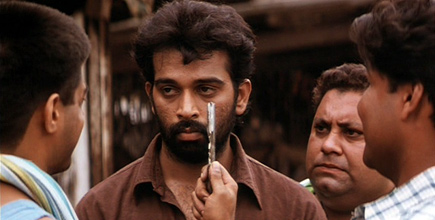
–> Disclaimer: There is a term called ‘The Rashomon Effect’; in which observers of an event produce substantially different but equally plausible accounts of ‘the truth’.
So it is possible, that my truth, may differ from yours…
1997.
Sequences from Satya were getting a fabulous response from those that previewed it. We were editing alongside the filming. Ramu was a very instinctive director and was confident enough to alter characters & screenplay as he went along. His vision was broadening before our eyes. Saurabh Shukla was on set playing Kallu Mama as well as collaborating as a writer. Anurag Kashyap too was writing on location, other times he wrote in the evenings at Ramu’s large but modest Four Bungalows apartment.
It was a vodka/whisky darbar and young non-drinkers (or beer-drinkers like me) spent evenings like this without a glass. I can be corny and say that we were intoxicated in the air of a brilliant collaboration! The fit and pretty Urmila Matondkar hung out with us too, she was warm and charming, a complete departure from her cold & reserved self on set.
Along with the other assistants like Barnali Ray (now Shukla), Pradnya Lokhande (now Sharma), Feroze and Dev, I too pondered about the plausibility of the Ramu-Urmila affair as was reported. We looked for clues in those casual evenings, and convened later on to exchange notes. My close friends would often ask for gossip and I would try to look for evidence. If you’re eager to know, I never did find it; nothing conclusive at least.
First day of shooting. 12th of August 1997.
The location was a stinky stable in the suburb of Jogeshwari where Manoj Pahwa’s character introduces Satya to his new home. I wasn’t sure about Chakri’s dialogue delivery, but there was comfort in the talk that it might be dubbed later. A few hours into the shoot, Ramu received a phone-call. I saw before my eyes the blood drain from his face. His friend, media baron Gulshan Kumar had been murdered, riddled indiscriminately with bullets.
Ramu became very disturbed. We stopped work and followed him around for more news, he was among the few with a mobile-phone. It dawned upon me for the first time, how close to the truth our film was. Ramu was taking a great risk by making a film on the extortion enterprise while gangsters still ruled Bombay. I didn’t know then, that much of the film’s story-flow would be altered post this incident.
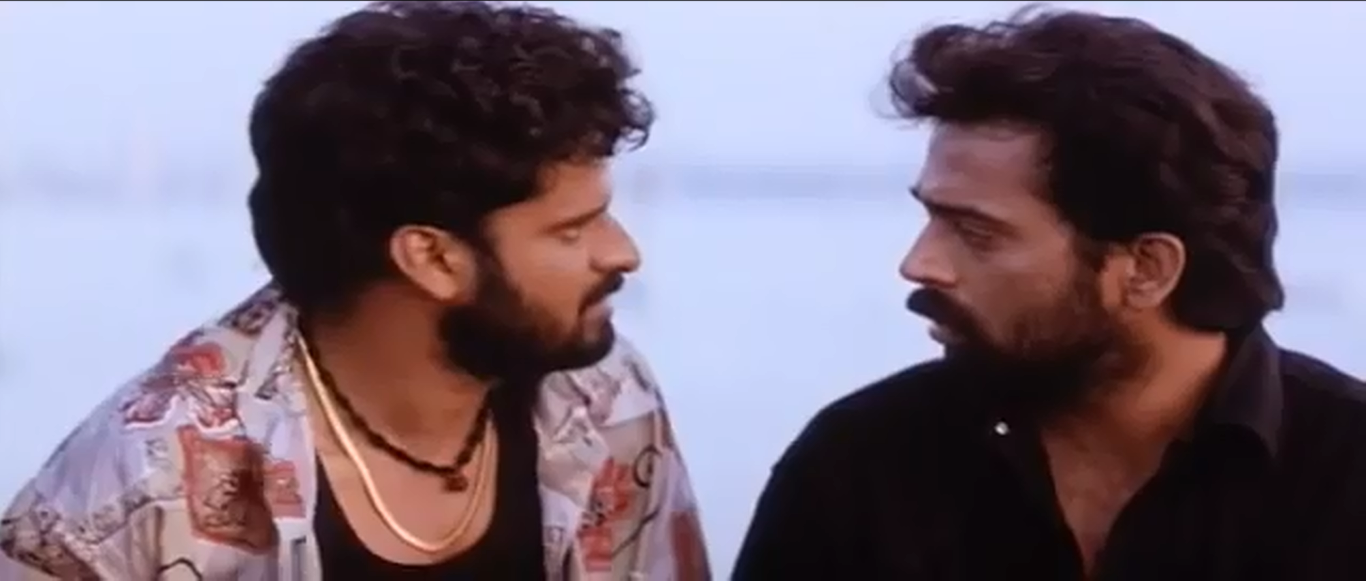
Chakri & Manjo
I liked Chakri (Chakravarti). He came from an acting background that I was familiar with. My mother is a Telugu girl and I had seen many Telugu film’s while growing up. I empathized with Chakri’s discomfort with Hindi and we spent a lot of time together, discussing his plans for the character. I was also privy to Chakri’s soft-spot for another crew member and I often dispensed to him the wisdom of a 19 yr old.
Manoj Bajpai also became a close friend. I called him ‘Manjo’. Manoj often hitched a ride with me on my rickety-old Kinetic Honda, came out clubbing with me and my friends, and even had a few drinks with my father. Manoj had the utmost awe for the work I was doing, and encouraged me to follow my style. One day Manoj signed an agreement with me stating that he would act in my 1st film for 2 rupees. Even though it was written on a paper napkin, I was sure that it would stand the test of time. Manoj was a talent like we had never seen before, and I remember feeling like I had hit the jackpot.
I learned much later that ‘editors are an actors best friend’. So when I bonded recently with the talented Rajkumar Yadav during the making of Shahid, we added a line to this pearl of wisdom…‘till the film is complete.’ 😉
Chakri and Manoj were another ‘hit-duo’ from Satya, who’s celluloid chemistry didn’t exactly come from admiration for the other. Their rivalry was less subdued than the other’s, and it worked wonders for the film. It was the battle of the North Indian vs the South Indian, of the NSD actor vs the commercial actor. I thought that both vied to be Ramu’s pet actor. But then everyone was in awe of Mr Varma, he commanded it effortlessly.
I had mentioned in my previous blog, the tension between Anurag & Saurabh, and I think from Anurag’s reactions to my blog, that he took my claim very seriously. I didn’t mean to say that their friction over credit on the promo caused any bad blood. It seemed quite innocent, and was obviously channeled correctly, which is why they wrote a cracker of a film. Besides the ones mentioned above, there were a couple of other ‘teams’ that struggled for their inpidual place in the sun.
Two’s company
Let me pose a few questions, and see if there is a one-word/one name answer that comes to mind.
‘To whom would you attribute the cinematography of Satya?’ Would you say it was the American veteran DP Gerhard Hooper or the realistic documentary cameraman, Mazhar Kamran? Both were eventually credited.
‘Whose words were Satya really based on?’ Were they Saurabh Shukla’s–who was basking from his association with the semantic Bandit Queen & Is Raat Ki Subah Nahi or were they Anurag Kashyap’s–who was this wonder-kid that everyone was talking about and had just written Jayate (Hansal Mehta’s first tryst with the courtroom). Both were credited.
‘Who’s music will Satya be remembered for?‘ Vishal Bharadwaj’s?–The man who infused emotion into the film with songs like the dreamy Badalon se kaat kaat ke or Sandeep Chowta–who’s stark and intense themes reverberated in a shattering new system called DTS. Both were credited.
‘Who actually edited Satya?’ Apurva Asrani, the urban kid who had made promos for Sanjay Bhansali’s Khamoshi and Ramu’s Daud or was it Bhanodaya-the Telugu editor who had earlier edited Ramu’s Ana Ganaga Oku Roju & Daud? Both were credited.
While Manoj-Chakri, Saurabh-Anurag, Gerry-Mazhar, Vishal-Sandeep will be best suited to answer how they felt about sharing credit at the time, they will also be able to tell you why why none of them ever teamed up again. I can only tell you how I felt. I got asked for years, ‘who edited Satya?’ and that question used to make me angry. I guess, the simplest thing for me would have been to say ‘we both did’. But to me, that would have been a diplomatic answer, not necessarily an honest one.
Jump Cut to: Bhanodaya
If I remember right, Satya was the first Hindi film to be cut on avid. We were choosing a work-flow that required us to make a print from the negative, transfer the print to tape, digitize the tapes onto the hard disk and then start editing. The process was fascinating and I think we used Avid to its fullest potential to maintain a fresh & compelling rhythm, now synonymous with the film. But it is when the film was edited, and the technical process had to be reversed, that Ramu began to get angsty. He was nervous about matching the negative to an Avid produced cut-list. He was worried that something may go wrong with the negative. He began to feel that his judgment would work best if he saw a print before locking the film. So Ramu brought in his Daud editor Bhanodaya, specifically to match the print to the list.
What I didn’t see coming, was that I would have to share credit with Bhanodaya. This came as a bolt from the blue. I first heard about it from Ramu’s cousin, Satya’s Executive Producer, Som Shekhar. I felt somewhat cheated by Ramu and began to find it impossible make-up lies about how Bhanodaya had co-edited the film. Jitesh Pillai, then the bright kid at Filmfare had interviewed me for his magazine, and had asked me about Bhano. I remember saying, ‘I don’t know Bhano, I never met him during the editing of the film’. It was the truth, but my lack of diplomacy and patience brought out the arrogance in me.
What made things worse were the rumors going around. I would hear that Ramu had gone about telling people that I had only cut the promos of the film, and that Bhano was the editor. Now whether the rumors were true or whether people were fanning my anger, I was too naïve to know.
Filmfare Awards, February 1998
I remember the night of the Filmfare awards when the award for ‘Best Editing’ was announced. I was sitting among my loved ones who became very emotional and pushed me towards the stage to collect the award. As I walked, from the corner of my eye, I looked at a familiar man, wearing a black shirt, who also began walking towards the podium. I remember thinking ‘I hardly know that man, have not had a single creative exchange with him, but he is sharing my award.’ Bhanodaya was being celebrated for my work, and it just didn’t make sense.
There was only one award statuette. So I buckled my speed. Bhanodaya also walked faster. He had the advantage of being two rows ahead – with Ramu. I was like an energizer bunny, high from the industry’s acknowledgment of my skills, but somewhat wounded by the sudden U-turn of my mentor. I somehow got to Jeetendra and Poonam Dhillon first, and they handed me the statuette. Bhanodaya followed behind me and shook hands with them after I did. As I held up the coveted statuette in the air, a much shorter Bhanoday reached for it, touched it, and smiled.
If only I had known then, that I would get opportunities to prove myself again; to be part of some meaningful cinematic attempts. If I had know then that I would see other awards and some rewards that are far greater than trophies, I would have shared that award gracefully with Bhanodaya. After all, his efforts touched the final product too.
So my dear colleague Bhanodaya, I guess it isn’t too late to say ‘Congratulations….! for our Filmfare award for Satya!’
– Apurva Asrani
( You can follow Apurva Asrani on Twitter here and his blog is here)
(PS – To make life bit simpler, now you don’t need to fill in all the details to post comments. If you are already logged into Facebook or Twitter, just log in with your FB/T account. Click on comment box, you can see the small (FB/T) icon below the comment box, click on FB/T, a pop up will appear, authorize the app and you are done)
The Cannes Directors’ Fortnight section unveiled its official selection list today. And there’s one Indian film in the list – Anurag Kashyap’s Ugly. His two-parter Gangs Of Wasseypur was also screened in the same section last year.
An edge of the seat thriller, Ugly stars Rahul Bhatt, Tejaswini Kolhapure, Ronit Roy, Girish Kulkarni and Siddhant Kapoor.
Interestingly, five films which are going to Cannes this year has some kind of connect with Kashyap or his company, AKFPL. Ari Folman’s The Congress, Amit Kumar’s Monsoon Shootout and Ritesh Batra’s The Lunchbox – these three films have been co-produced by AKFPL. And Kashyap has directed one of the shorts in Bombay Talkies which is going to have its Gala premiere at Cannes.
Click here to know more about The Directors’ Fortnight section.
 F.i.g.h.t C.l.u.b