Archive for April, 2012

The Joy Of Crying At The Movies

Posted: April 21, 2012 by moifightclub in bollywood, cinema, film
Tags: , , ,

This post was suppose to be on something else. But as it happens with hindi films and matters of heart, mostly we land up somewhere else. And it started with the gorgeous Namesake tribute video posted below. Jahan Bakshi writes on the matters of heart and the magic of silver screen that let the salty waters flow.

Watch the video first and then read the post.

Ever since I posted the video tribute to Mira Nair’s beautiful adaptation of ‘The Namesake’ on Twitter and Facebook, at least 7-8 people wrote back to me with thanks, saying how it made them cry. One of them had recently lost his father. In fact, as I was watching it myself with what seemed like a boulder in my throat, a friend of mine who also lost his father a year back sat quietly, tears streaming down his face. It was absolutely heartbreaking.

One of the many great things cinema has to offer us is a sense of catharsis, and that is a special feeling that becomes increasingly difficult to experience as one watches a lot films and reads a lot about them, becoming more aware of their manipulations and craft. It becomes even harder for a film to overwhelm you when you see it with all the distractions and thoughts that accompany you watching a film at home. I try to watch most films in theatres these days for this very reason, but like we all know, sadly and most often, the only option we cine-buffs have is this.

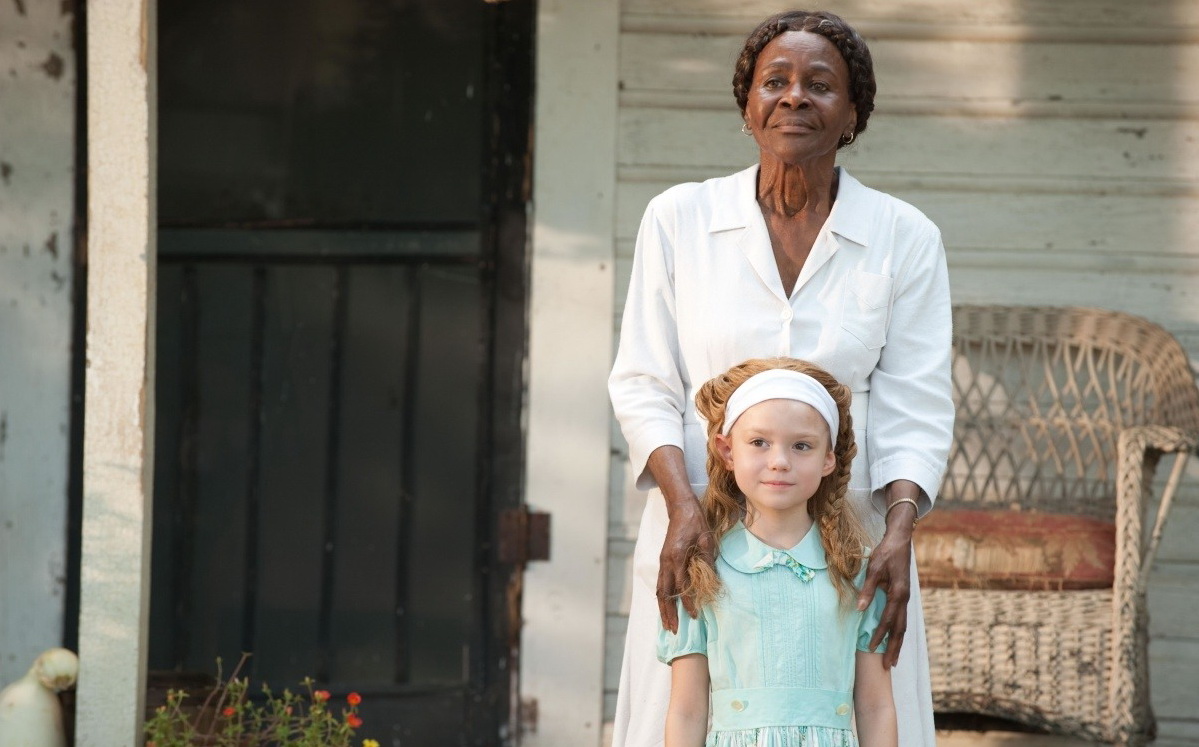
I miss crying at the movies. I think the last time I sat teary-eyed at a cinema hall was watching ‘The Help’ on an evening that found me in a particularly vulnerable emotional state. I was walking down the road outside my house when a group of guys I don’t know began calling me some names (which I’ll not bother mentioning here).

Not a big deal, really- but for some reason it just deeply upset me. Part of the reason is that while I am no saint or an Aamir Khan, I have never really understood the desire in human beings to hurt others deliberately for no reason at all. All bitching and snarky talk aside, and at the risk of sounding righteous and all, the urge to harm someone is something I have genuinely never felt in my life.

I know this sounds idiotic but while watching the film I thought a lot about why people want to hurt other people, about why people are hated just for being who they are and the general injustice of it all and blah, blah.

It also reminded me of my own nanny, my Didi, who literally brought me up along with my mother as a child, giving me more time than her own children perhaps. I remembered resenting my mother a little when she would tell her off because of anything. Of course my mother cared for her too, and still does, but for me she wasn’t hired domestic help. She was my second mother.

Till date, MilkaDidi– as I call her- sends me a Rakhi every year by post, and sends me birthday cards that probably cost her a lot. I remember her every now and then and think of calling her, but unlike my mother who speaks to her every now and then, I conveniently forget to. Maybe it’s also because I’ve grown up too much and find it hard to make conversation with her as effortlessly as my mother can. Right now, again I am feeling those familiar pangs of guilt. Maybe after I write this, I’ll call her. Maybe… if I haven’t forgotten to store her number again or something.

Now some of you might figure one of the many reasons I love Swades so much.

Anyway, when I came back from the film, I let out all the tears that I was trying to hold back at the movie theatre or as Subhash K Jha would put it: all the liquid contents of my eyes spilled out in a torrential tumble of tantalizing tears.

And I felt lighter. TheHelp is not a ‘great’ movie. It has one of the most cringe worthy scenes I’ve seen in a film in some time, won’t even figure in my Top 15 films of last year. But it made me cry, and for that I am grateful.

At other times when I am not feeling so low and my defenses are not as down like when I wrote this post (Yes, shameless plug, bitchezz!), I’m not as lucky. I saw Weekend recently, an outstanding film that I cannot recommend enough and that I intend on writing about soon. The film is beautiful and heartbreaking… but it didn’t make me cry. It should have, really. Sitting next to me was a friend who doesn’t watch too many films and probably didn’t ‘appreciate’ the film(making) as much as I did. But he had tears in his eyes.

I could have given anything to have that, I tell ya.

PS: Apologies to Kaka…

So when was the last time you cried at the movies?

…But were afraid to ask? Well, that doesn’t quite work out. Let’s say, But you were not sure whom to ask.

First came the teasers (Here, here and here).

And then came the official song where we saw Jesus Aamir Christ, who is here to save us.

But what is the show about? Well, like Aamir Khan’s movies, the show is also being guarded as a top secret. No details are being given out anywhere. And that’s why you don’t see anything about the show in the teasers or the song. But we suffer from a strange disease – the more you want to keep something as a secret, it makes us more curious. If you belong to the same tribe, we got all the answers for you. If you are not, skip the post.

– Satyamev Jayate is basically a chat show with guests and case studies from across the country.

– The first season will have 13 episodes out of which 10 have already been recorded.

– The idea is to pick one subject and discuss it from every possible angle – social, political, economic and such.

– The subjects include health, water, marriage, child issues (abuse and other), addiction and other social issues.

– The duration of each episode is 90mins.

– Each episode will end with a musical performance of a new song. All songs have been composed by Ram Sampath and lyrics are by Prasoon Joshi, Swanand Kirkire, Munna Dhiman and few others.

– The series is directed by Satyajeet Bhatkal (Aamir’s friend and director of Zokkoman) but every decision is taken by Aamir Khan. The final edit call is also his. Nothing is finalised without his approval.

– The series was earlier produced by Big Synergy. But they wanted to make it more commercial and Aamir wasn’t in favour of it. Currently it’s being produced by Aamir Khan Productions.

– Imran Khan and Sridevi will appear in two different episodes of the series.

– The pilot episode of the series was rejected by Aamir himself after it received negative feedback from test audience.

– The first episode is on girl child discrimination and female infanticide. Not sure if they have changed the sequence.

– Do expect lots of rona-dhona was they discuss sensitive issues. Aamir will be in full Oprah Winfrey avatar.

Anything else? If you have some more dope on it, the comment box is all yours.

Cannes film festival has just announced its list for films for competition, out of competition and Un Certain Regard category. And an Indian film has made the cut.

Ashim Ahluwalia’s debut feature film Miss Lovely has been selected in the Un certain regard section. The film stars Nawazuddin Siddiqui, Niharika Singh and Anil George. According to imdb, this feature is set in the lower depths of Bombay’s “C” grade film industry. It follows the devastating story of two brothers who produce sleazy horror films in the mid-1980s.

Click here to read an interview of Ashim on the making of Miss Lovely.

And click here for the complete list of the line-up announced so far.

We first heard about Baboo Band Baaja when it bagged three national awards – for Best First Film of a Director, Best Actress and Best Child Artist. The film has been ready for quite sometime and it finally released last friday. Some of the theatres are screening the film with  subtitles. Here’s Mohit Patil‘s recco post for the film.

This is Mohit‘s first post here. When he isn’t busy attending engineering college, he worships Kaufman, Bhardwaj and Scorsese.In the very first scene in director Rajesh Pinjani’s Baboo Band Baaja, we are given a glimpse of the life led by Baboo (played brilliantly by Vivek Chabukswar) – that his family must bank on the deaths/births happening in their village in order to make a living. His father Jaggya (Milind Shinde) is a band player. Once a band party owner, he now earns a (rather lumpish) living by playing at modest wedding processions and cortegès. His mother Shirmi (Mitali Jagtap) works as a Bohareen – selling utensils in exchange for old, used garments. The story begins as Baboo finds his rucksack missing, and so does an endless struggle of this family to change things.

Jaggya wants Baboo to become a band member like him. The reason for this call isn’t a father wanting to see his son to be like him, but his presumption that there is no other way out. “We villagers are in no way helped by the technological advancements,” he argues, “All that has changed is the number of airplanes flying above our heads”. Throughout the film, we see his mother as a heterodox in a comparatively orthodoxical society. She wants to educate her son and goes to great lengths to earn money to buy books for Baboo, whose school master won’t allow him in without books and uniform. She’s elated when she gets a pair of khaki shorts in exchange for a larger vessel, which can be used as her son’s school uniform. And she is enraged when she discovers that the reason for her husband’s anger is the fact that Baboo has lost his rattle and not that he has lost his school bag.

One of the film’s biggest triumphs is that it sticks to its business and tells the story of the family’s endeavor with great simplicity and without diverting its focus towards “shocking the viewer with the appalling reality…” etc. I did find the emotions exaggerated at places with the lurid low angle shots of the school master punishing Baboo or the histrionics of the wily politician, and wished it weren’t as overstated, but it all works nevertheless.

Another very impressive thing about Baboo Band Baaja is that it has a very keen eye for detail. Not a single thing here seems unauthentic or out-of-place. Especially, the language used here, is pure gold. If you couldn’t buy the Hindi speaking characters in some of our recent urban rom-coms, or the characters not referring to Mumbai as Bombay or Bambai in Dhobi Ghat, you are bound to be more than satisfied with the language and the actors’ inch perfect dialect here. The instruments that the bandwallahs play in the film, the songs that they play, selecting the dress code for the grand wedding they are appointed for, the astute observations about the local life in Vidarbha… Discovering these rural life vignettes first hand is pure joy, so I’d rather not spoil it for you.

The characters are very well written, and the actors who play them are terrific for the most part, save for the school teacher who is baselessly portrayed as an evil baddie, as opposed to someone who is just doing his job. Watch Mitali Jagtap and Vivek Chabukswar speak through their eyes in one of the best moments in the film; the scene which has hardly any dialogue, in which Shirmi readies Baboo for school.

<Mild spoilers>

The film uses all its subplots, which rather smartly towards the culmination. There is metrical dichotomy in the way things fall back into place towards the end. The beautiful symmetry between the first and the last scene of the film more than made up for my feeling of redundancy after the final blow.

<Spoilers end>

Baboo Band Baaja is a simple, heartfelt story of what appears to be parents’ struggle to make things better, and turns into something so painful, it takes a piece of your heart.

If you religiously follow the movement of film scripts in blogosphere, you must be aware that the script of QT’s Inglourious Basterds was out almost a year before he started shooting. He did the same with Django Unchained. And that’s not a rare case. There are blogs and websites dedicated to script reviews/news/sales. And since last few years they have the Black List too.

Compare this to the script scenario here. Writers/directors guard it as if it’s life and death scenario. Almost scared to give it out to anyone even after the film has released. And then we find it difficult to churn out even some five good films in a year. I still haven’t been able to figure that out. Though most would happily brag about sending their scripts to Oscar library which is another stupid achievement if you know the truth.

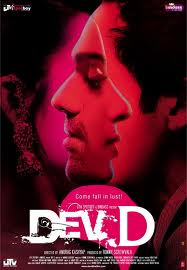
We keep on asking many filmmakers and screenwriters to share their scripts so that we can put it online. Some do, some never get back, most don’t give a fck. If you have missed, we had earlier put the script of Vikramaditya Motwane’s debut feature Udaan (click here) and now we are sharing the script of Anurag Kashyap’s Dev D. Thanks, AK.

Dev D got almost every possible reaction from critics – it was rated everything between 1 and 5 stars. Everything. If you don’t believe me, google. Some of the reviews are listed here .

Interesting thing about Kashyap’s films are that they are never the same which you see on paper. They go through some drastic changes while shooting. Plus, music played a big role in Dev D. So, it will be interesting if you compare the script to the film. Though am not sure which draft/version of the script i have got. It’s written by Anurag Kashyap and Vikramaditya Motwane. Read and have fun.

(PS – Was feeling lazy. Copy-pasted the intro from Udaan script post. Sorry about that)

Sir, May I Have an Opinion, Please?

Posted: April 13, 2012 by moifightclub in bollywood, cinema
Tags: , , ,

So what have you done to comment on my film or the trailer? – This seems to be every filmmaker’s favourite argument whenever you say something that they don’t like. My film is for common man, not for you. I have always wondered if i can say, sir, i eat, sleep, fart, shit, masturbate and do every other thing that a common man does. Will that count? No? So, here’s filmmaker Kushan Nandy‘s candid take on why we deserve the right to have an opinion. And a filmmaker endorsing this view makes so much sense.

BTW, if you are not on twitter you are missing some good fun – all related to bollywood films and filmmakers. And today is friday. Aha, the fun day. Read on.

I am a two-film-flop director.

My first film- if you may call it so- was so terrible that I think the only person who liked it was Goblin, my dachshund. Incidentally, he passed away after repeated viewings.

My second – the one I am secretly and partially proud of – went unnoticed. Partly because the distributors gave me eleven and a half all-India shows, I had no money to promote it and to add to it, I packed it with Bollywood cliches.

So, actually I don’t have a right to have an opinion. Stop reading now.

For those who have continued, here is the dope. Every time Raju Hirani releases a film, I want to say how much I liked it and what I didn’t. And every time, Bhandarkar releases his next, I want to express how dirty the basin is after continuous throw ups. But the Bollywood law is simple. You have the right to have an opinion only if you are successful.

Hey, wait. The Bollywood, read BullyWood-law is that no one – in absolute terms – has a right to have an opinion. Not critics. Not Twitter handles. Least of all, failed filmmakers.

Don’t comment on the poster. Judge the film on its entirety.

Don’t comment on the teaser. Judge the film on its entirety.

Don’t comment on the trailer. Judge the film on its entirety.

Don’t judge the film. You are being personal.

If you have a personal opinion, tell me personally.

What have you made that you have an opinion?

The only opinion we understand is the one that the ‘common man’ has, the one who spends on the ticket.

Now here are the facts:

You put that poster, teaser and trailer because you wanted an opinion. Correction : You wanted a positive opinion.

Every opinion is personal.

You showed me this film publicly. In a movie theatre with thirty-one people and one usher. I have a right to give you my opinion publicly.

I don’t need to be a Karan Johar to comment on your film. The ‘common man’ is me. I buy six tickets and blow my money and evening on a three-hour film like everyone else. I spend five minutes buffering a one-minute teaser and make an effort of downloading a film poster when I could have spent it more productively downloading porn.

Every critic has a right to comment on your film. Because either you invited him to see it or he has spent his hard earned money to buy the ticket, which invariably makes him your ‘common man’.

Every Twitter handle has a right to comment on your film. Because you inflicted it on them by posting it on Twitter, re-tweeting and spamming the timeline of every man, woman and dog that follows you.

Everyone – successful, unsuccessful, who can or cannot make a film, cast, creed, religion, sex, sexual preference no-bar – has a right to have an opinion. Just the way they have an opinion on the latest book, car, restaurant, cell phone and underwear.

And yes sir, you have a right to have an opinion on my opinion. But you can’t bully me to stop having one. So go out and spend time and make a better film next time.

And I promise you, I will applaud.

PS. And for those who care – and I am sure that it does not include my dead dachshund – I am going out and making my next  film. Hopefully a better one than my last two.

And every, man, woman, critic, handle and porcupine will have an opinion on it.

Bring it on. I will be waiting.

(Pic Courtesy – From Here)

Alejandro Gonzalez Inarritu, Guillermo Del Toro and Alfonso Cuaron – are these three names enough to sell the post? Try it. It’s a great interview. These three filmmakers talk about their cinema, life, Mexican roots, what’s common between them, friendship, criticism, competition and much more. It’s a Must Watch.

Tip – Chintan

So what happens in a script lab? Does it really help? If so, in what way? – These are few questions that i have been asked many times since i attended the NFDC-Locarno script lab. Have been thinking about writing a post for a long time but never managed to do so. And so here’s Vikas Chandra‘s post about his experience at Mahindra-Sundance script lab. His script Toothache was one of the eight scripts selected for the lab this year.

To give you a better sense of  this post, am putting a synopsis of his script from the official release – Toothache is a bittersweet tale of a North Korean expat wife named Kim who lives in Delhi during the Emergency of 1976 with her husband – the couple yearns to be back in North Korea, but struggles to find a new and different idea of home in Delhi. Toothache celebrates of the tenacity of the human spirit, and re-affirms that the dawn approaches only after you have lived the darkest hour.

It’s bit long but a great insightful post. Read on.

When he was hired by director Walter Sallas to adapt Che’s memoirs into a film, Jose Rivera began, as he always does, by searching for an image that would propel him into the screenplay. Finally he got one, of a young Ernesto swimming across the river that separated the two societies of the San Pablo leper colony, which led to the central question of The Motorcycle Diaries – Which side of the river do you want to be on?

                                                                         * * * *

This year saw the launch of the prestigious Sundance Screenwriters’ Lab in India with the support of Mumbai Mantra, the media &entertainment division of the Mahindra group. (details here)

After a rigorous evaluation of more than 550 applications from Indian screenwriters across the world, 8 screenplays were selected to be mentored at the lab. The writers of these screenplays along with 11 highly distinguished advisors were then whisked away to an enchanting resort overlooking the Pavna lake near Lonavla, to lead a cocooned existence where the only thing that mattered was an unbridled exchange of ideas.

Over a span of 5 days, the screenplays were discussed threadbare by the advisors and the fellows in one-on-one meetings. Each fellow or writer was assigned 6 mentors, who would go on to give detailed feedback and initiate free-flowing discussions with the writer about their story.

It’s tough to encapsulate everything that transpired in those 5 days, but here I will try to give a brief lowdown on my experience at the lab.

Your donkeys are not carrying enough load!

In the beginning I had no clue on how to prepare or even what to expect from the lab. Worse, I was gripped with the fear that in no time I would be exposed as a writer!

What’s the inner motivation of your character? What’s her outer motivation? Can you draw the Story vs Character Arc graph? Who plays the Shadow archetype? Where is the Belly of the Whale scene? Where have you done foreshadowing in the script?

I expected to be bombarded with questions I had no answers to, at least not at that moment. With such apprehensions, I approached my first session, which was with Audrey Wells.

Thankfully nothing of the above happened.

We started talking about the central character in my script. Why did I choose my protagonist? What do I like about her? Can I connect her to my personal life?

Soon it became clear that the exercise was only about finding the spine of the story – my story. The discussion was rigorous. We went back to the genesis of the idea, the news article that sparked the film in the first place, and how it evolved over various drafts.

I am here to help you tell the story you want to tell

Once we managed to pin down the spine of the story in one line, it became a filter to sieve through the scenes and decide which of them were not working.

Audrey has a simple thumb rule for scene construction. Each scene is like a donkey, which has to carry the load of your plot.

“Is this scene giving me any new information about the character… Is it progressing the plot”

Well…umm….it further shows the cute husband-wife relationship

“It’s a beautifully written scene… but it doesn’t deserve to be here”

In a Kitty Party scene – What should the secondary characters chat about so that the scene doesn’t meander and remain relevant to the plot?

The protagonist’s problems. Other women will talk about their son’s achievements while your protagonist misses her son, they will talk about their wonderful marriages while your character puts up a brave smile. Whatever the others say has to drive another nail in the coffin of your main character.

Audrey is the writer of The Truth About Cats & Dogs &The Kid and writer/director of Under The Tuscan Sun, starring Diane Lane. Most of her stories have been about “sick people getting well”, in some way or the other.

The most valuable advice she has to offer to upcoming writers is – “Be kind to your back. Stand and write.”

Audrey is slated to begin shooting for her next film The Fugees, about a team of refugee soccer players coached by a Jordanian woman, and who go on to become an unlikely success. I cheekily told her that we already have a Bollywood version on similar lines!

What’s the last thing you would change about your story?

Asif Kapadia is a BAFTA award winning filmmaker, known for the visually striking The Warrior and the beautifully crafted biopic Senna. He describes himself as an outsider, making films that explore the live of “outsiders” living in time less, unforgiving landscapes.

“Why a North Korean couple? Why can’t they be a Punjabi refugee couple living in Delhi?”

This is the question I dreaded the most. My script Toothache is about a North Korean expat wife named Kim who lives in India with her husband – the couple yearns to be back in North Korea, but struggles to find a new and different idea of home in Delhi.When I had begun to write it, the question for me was not why.. but why not!Gradually though, as my investment in the story increased, I realized what an uphill task it is to get this kind of a film made.

So when Asif asked the same, I started to buckle..

Umm.. may be.. it’ll definitely make it easier to get produced…

                                                                    * * * *

If the city of Delhi is under curfew, what can you show to convey that effectively..?

For a writer/director its important to breakdown the screenplay into images that imply more than what’s necessarily said in the plot and give the required emotional thrust to the narrative.

In The Warrior, there is a sequence when the army of warriors led by Ir(r)fan Khan attacks the village that had requested for waiver of loans. The otherwise frantically paced sequence ends with a long-ish shot of an earthen pot smashing into the ground and water seeping into the parched earth. Kapadia chanced upon this shot through pure logic – the most precious thing in a desert is water, and hence the loss of water signifies the real extent of loss.

For Kapadia, it is a string of images like these that helped him craft a minimalist film like The Warrior. The genesis of the film itself lay in a solitary image that was derived from a footnote in a short story about a samurai kid who is shown a severed head and asked if it was his father’s.

Before ending the session Asif threw his final salvo at me –

“What is the last thing in your script you would compromise on?”

I hesitated. I knew I had to take a stand. I went back to the beginning, to figure why I had even wanted to tell this particular story.

The fact that the couple is North Korean… is the last thing I would change in my story.

“Good.. that’s a beginning at least”

What do you mean by a hopeless, pathological optimist?

I hate it when I have to describe my characters. I would rather you read my script and draw your own inferences. And I also hate to admit it, but articulation is not one of my strongest points. I still haven’t figured what my primary language is… Hindi? English? Hinglish?

Shekhar caught me not once but several times.

“Yeh teri bhasha nahin lagti..”

“Tu apne hi shabdon mein ulajh raha hai”

                                                                * * * *

Would you like to watch a film like this?

“That’s irrelevant. Would you want to make a film like this?”

Yes.

Then go ahead and make it.

Shekhar Kapur has directed Masoom, Mr India, Bandit Queen & Elizabeth, apart from other films. He was the only Indian advisor I had on my panel.

                                                                      * * * *

Research. Research. Research.

“Which school in Delhi does the Korean kid go to?”

Umm.. she stays in Jangpura.. but definitely can’t afford Bluebells International.. then.. may be.. Kendriya Vidyalaya.

“Then she should be speaking fluent and not broken Hindi.. Every student from KV is good with Hindi”

“What car did the Korean ambassador to India use.. was it an ambassador or an Impala?”

“How long did it take to get an Indian passport in 1976.. how long did it take to get a phone connection?”

“Why do your protagonists have a landline in their house.. why can’t you make them dependent on the neighbor’s phone for receiving their calls, which was a common practice in those days..”

                                                         * * * *

God lies in the details.

What do characters talk about in a scene?

Themselves.

It helps to know the back stories of each of your character, even beyond the scope of the script, in as much detail as possible, as those back stories will tell you what the character will say in any damn situation.

What does a man who’s been shot and thinks he’s going to die, say?

“Main jaa raha hun Phoolan, tu apna khayaal rakhna..” OR “Meri chinta chhod, tu bhaag, apni jaan bacha..”..?

In Bandit Queen, when Vikram Mallah is grievously injured near the pond, he falls into Phoolan’s arms and sensing that his death is near, blurts out,

“Maa se kahi, doodh pee liyo maine..”

You are a land of cobras and tigers.. your country is fierce.. where’s the ferocity in your story..?

I sat across Guillermo Arriaga, author of Amores Perros & Babel, while he drew 9 concentric circles on the title page of my screenplay.

“Where is your protagonist right now?”

Arriaga was referring to Dante’s 9 circles of hell as laid out in Inferno, the first part of his epic poem Divine Comedy.

I hesitated… maybe in the 2nd circle.. at the max 3rd..

“Why can’t you push her to 7th.. 8th.. 9th..?”

But she’s such a nice person…

Nice is boring

The deeper your protagonist is inside the circles of hell, the stronger will be her journey back, and the greater will be the pay off.

Arriaga is a hunter who works as a writer. He doesn’t believe in the 3 Act structure. He hates outlining his story. He doesn’t do research. He draws mostly from his own life, and keeps re-writing drafts of the story till the story has found itself.

Drafts – NOT revisions. Each draft is a draft from scratch.

The Babel that we saw on screen was his 72nd draft.

“Who wants to see the story of a 60 year old woman looking for a medicine.. That’s boring.. I want to see a 19 year hot chick on screen..”

He asked me to rewrite the screenplay with the husband’s POV. Then another draft with their son’s POV. Then another, this time changing the protagonist to a 19 year old girl. Then another…

My heart sank.

Be rigorous with your story. Kill the dearest. Only then the truth in the story will come out

                                                          * * * *

Our meeting did have a silver lining for me though.

Arriaga admitted that he liked my dialogues, and said that my writing has a sense of rhythm. I couldn’t have asked for a better return gift from him. It was March 13, his birthday. I gifted him a DVD of Manirathnam’s Yuva – albeit with a poker face.

This is the story about a woman WHO…

Howard Rodman’s was the 5th advisor meeting I had on my schedule, and he stressed that he wouldn’t want to repeat what the others had already said. Each morning the creative advisors had an extensive meeting where they recounted the sessions of the previous day and shared notes among each other. So, even though each one of them brought their unique perspective to the individual sessions, they also took care to build upon what had already been discussed.

Rodman is a screenwriter, novelist, and educator. His feature adaptation of the book Savage Grace, starring Julianne Moore, premiered at the Cannes Film Festival, and was nominated for the Spirit Award for Best Screenplay. Rodman is also the Vice President of the Writers Guild of America, West.

“Who do you write your screenplays for?”

The Actor. They are a writer’s best friend and the most important medium – who will project your scene.

Write your scenes for an actor – not necessarily for any particular actor. Get into an actor’s shoes and the re-read your scenes to figure out how they might approach the scene.

Take acting workshops – to understand actors’ motivations, to see what they seek from a scene, what’s going on in their minds while acting.

Rodman is 61. Conversations with him are delicious, peppered with a lethal sense of humor.

“Let’s play a game.. Finish the sentence – This is the story about a woman WHO..”

He sums up movies in one line – Bad things happen to not-so-good people so that they become good.

I countered that.. in Hindi cinema, goodness is a virtue heroes are born with – they don’t need character transformation. Apart from other things I also gave him the example of a future blockbuster during the shoot of which the superstar refused to run after the baddies, saying the goons need to come to him to be bashed up.

Quick came the repartee,“I would take that as – Bad things happen to good people and they become better!”

                                                        * * * *

As a writer, I often get stuck after a scene wondering what scene to conjure up next. Is there a formula that can help you decide that?

Rodman let out a secret that was shared with him by the creators of South Park – In every screenplay, there are only three bridges that connect the scenes.

Therefore.

But.

And then.

Sc 1. Therefore. Sc 2. But. Sc 3. And then. Sc 4. Therefore…

If you find that there are more “And then” in your screenplay than “Therefore” and “Buts”, you know your pace is sagging.

Elementary, I now say!

In any situation, where she puts her attention – is her personality

Malia Scotch-Marmo wrote Steven Spielberg’s fantasy Hook, and also served as associate producer on the film. She is an adjunct professor at Columbia Graduate Film School. Recently she co-wrote a script with Sundance Institute Lab alumna, Sabiha Sumar. The film, Rafina, was shot on location in Karachi in 2011.

With Scotch-Marmo, I had the last of the 6 advisor meetings, and surprisingly, the longest one. Even at this stage, when a lot of water had already flown under, she had something new to offer.

                                                     * * * *

I asked her the same question I had been asking everyone.

Would you like to watch a film like this?

“Of course. Why do you even ask?”

                                                      * * * *

The Screenwriters’ Lab has been a core program of the Sundance Institute since its inception. Spearheaded by Founding Director Michelle Satter and Associate Director Alesia Weston, the lab is about their support of writers’ community that embraces originality, risk taking and exploration of common humanity in authentic and distinctive ways.

Bringing the Sundance Screenwriters’ Lab to India is indeed a laudable initiative by Rohit Khattar, Chairman of Mumbai Mantra. Rohit, along with his team led by Aparna Purohit, ensured that this experience was an unforgettable one for all of us.

I missed having one-on-ones with other advisors like Jose Rivera, Anjum Rajabali, Kasi Lemmons, Michael Goldenberg & Marcos Bernstein, but even post-film-screening & dinner-table interactions with them were enriching. It’s humbling to see such stalwarts offer their valuable time and insights into their craft so generously and unconditionally. In a profession where people customarily wear their oh-so-fragile egos on their sleeves, it was liberating to be in the same room as them. It made me look within the petty me – a couple of years in the profession, hardly any achievement to write home about, and yet shards of arrogance had already been creeping up inside me.

I could do nothing but cringe.

                                                                       * * * *

It’s hard to put in words the feeling you get when you see someone else’s eyes light up for your story. That’s why we want to make movies in the first place – to make connections with some stranger in some god-forsaken part of the world, to light up his eyes, to make his day. For me, this lab was about learning to make those connections. It isn’t about scripting the next blockbuster, or finding the right film for the market. It’s about finding the right choices for the stories you’ve been dying to tell. And realizing that somewhere along the line you’d forgotten that these were the stories you’d been dying to tell.

Jose Rivera has a simple explanation for what is known as a Writer’s Block – It’s your inner-self telling you that you lied somewhere in your writing. You have to go back and fix it.

I would like to extend it further to something that can be termed as a Filmmaker’s Block – when I know I’m stuck in the middle, stagnated at a point, not sure of the choices I’ve made in the past, don’t know what choices to make next…It’s time probably to go back and fix my share of lies.

It’s time to swim to the side of the river I want to be on.

(PS – To know more about the Mahindra-Sundance script lab, click here. To know the details of next year’s call for entries, click here.)

Among many other things, his twitter bio includes a distinct aspiration – future porn filmmaker. And as we wish him all the best for it, who better than writer-filmmaker Suparn Verma to look back into Bollywood’s past which might have triggered off this aspiration of his. So here’s Bollywood’s Rape-O-Meter according to him. Read on.

Rape is an ugly word of a horrible and cowardly act.

But in Bollywood especially in the 70’s and 80’s it was actually considered as necessary as an item number.

The movie pitch went something like this ‘Sirji, Introduction of hero on a dark night, he saves the heroine from being raped and beats up 10 goons,  3 romantic songs, 1 religious song, 1 sad song and 1 item number, 4 action scenes, and Sir beat this our film will have not 1! Not 2! But 3 rape scenes!’

Why did we need those scenes?

Two reasons in my opinion. Firstly in those days the skin code was unimaginable, so only the vamp or the victim could show skin, even the heroine had to be shown as a bitch in a swimsuit before she was reformed by the man into a salwar or sari clad socially acceptable ‘bhartiya nari’.

Secondly, all action films followed a simple formula almost as if it was a game called Screw-the-hero!

So the villains would start by raping the bhabi and killing her husband, and putting the hero behind bars for the crime. In his absence his sister would be raped as well and his parents killed. The wife would be saved for the second act whereupon his release he would get one more romantic song with her before she too was raped and killed and then the hero would be tortured till the vamp let him out and he would take on the entire crew of villains beating them up as he would make each punch count.

Yeh meri abla bhabhi ke liye’ DISHOOM ‘Yeh mere bhai ke liye’ DISHOOM ‘Yeh meri behen ke liye’ DISHOOM ‘yeh mere bhoode maa-baap ke liye’ DISHOOM ‘yeh meri biwi aur uske pet ke andar panap rahe bacche ke liye’ DISHOOM! And then came the final blow ‘aur yeh insaniyat ke dushman tujhe jeene ka koi haq nahin….yeh….mere liye’ DISHOOM

But as the filmmakers tried and found new ways to create those item rape scenes, they actually invented a new form of comedy.

Truly! You would exclaim, how can such a disgusting act be made funny!

I will show you how today.

But before that I have to share certain statistics a fellow Bollywood fan and amateur statistician had put up on the net. I call it the Bollywood Villains Rape-o-Meter.

Top lining the gang of Rapists is

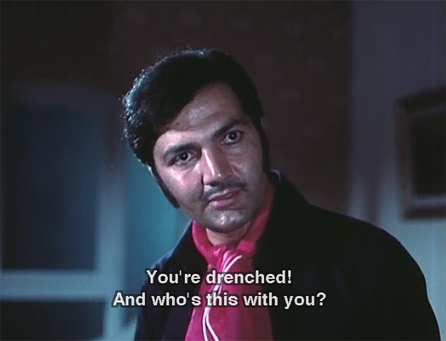
Rapist No. 1 – Prem Chopra with 250 rapes in his career….to quote the man the legend ‘Mera naam hai Prem….Prem Chopra

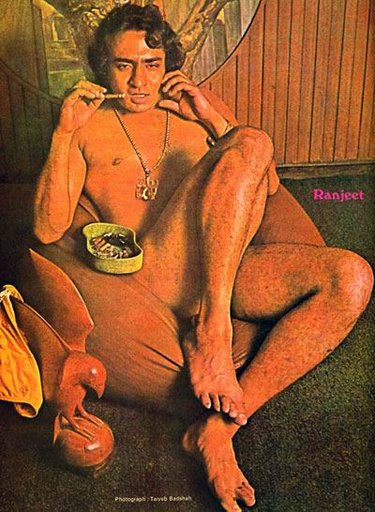
Rapist No. 2 – Ranjeet with 150 rapes comes close. This man ruled the rape scene from 1970-1985

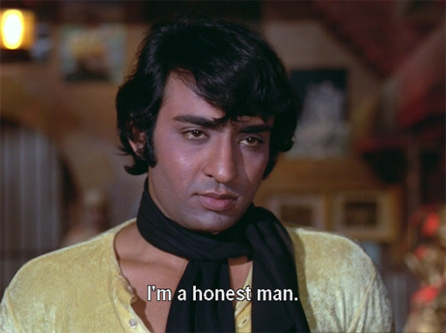
Rapist No. 3 – Danny Denzongpa has 110+ rape scenes to his credit. The reason why these guys also make it to the top is because in the 70’s and 80’s even the villains would be multi-starrers, so the above three or some combinations would indulge in group rapes so that they all could be killed in 10 minute intervals in the second half.

Rapist No. 4 – Shakti Kapoor with over 80 rapes to his credit

Rapist No. 5 – Amjad Khan with over 30+ rapes to his screen credit, in 1981 every film he acted in had a rape scene.

Rapist No. 6 – The original Bad Man of Hindi cinema – Gulshan Grover, with over 22+ rape scenes to his credit.

The others in this infamous list include The Lion – Ajit (12), Amrish Puri (9), Premnath (3), Rehman (7), Om Puri (6), the awesome Jeevan (6), Ruppesh Kumar never got a solo rape scene but only participated in a group (5), Kiran Kumar (4), K N Singh (3), Madan Puri (2) and finally Mac Mohan (1).

Presenting to you today are the funniest rape scenes from Bollywood. Let me prepare you for the climatic one. It is from Manoj Kumar’s cult movie Clerk!

To kick things off we have Ranjeet enacting the famous Bollywood group rape scene with quotable gems being spouted by them

On the subject of rapes, it is a very interesting fact to note that the ethereal Poonam Dhillon left the industry after her career got into this cycle of being raped in every second film. This scene is Bollywood creators favourite setting! A dark night, stock shots of lightning and rain and the rapists laughing like hyenas

Ever wanted to see how a date rape could kill you?…laughing I mean? Gullubhai will show you how it’s done in this howlarious sequence

While we are on the subject of Gulshan Grover, this one has him playing the flute to Divya Bharti, in a getup that screams I am gonna rape you, but still the lamb-like Bharti gets in the vanity van.

One of my all time favourites with Shakti Kapoor and Anita Raaj. Did you know that she ended her career by being raped by Shakti Kapoor in 6 films in a row! This one has her tried to a fake wall actually asking ‘What are you doing?’

I know I promised you the most funny rape scene ever! Well this one is from Manoj Kumar’s Clerk, where the 100 year old Bharat Kumar plays a college student! He also manages to do the impossible – make Rekha look like a skunk – I do mean a skunk not a skank!!! If you don’t believe me check out that hideous wig or head gear long with the make-up. But coming back to the matter at hand…it has Omshiv Puri raping….once again Anita Raaj. One piece of advise, when you hear these six words again…RUN….’Sweety, Sweety, Sweety..Baby, Baby, Baby’

The 5th Documentary and Short Film Festival of Kerala will be held in the capital city Kerala ,Thiruvananthapuram (formely known as Trivandrum) from the 8th to 12th June 2012. The festival, a unique venture in India is being organized by the Kerala State Chalachitra Academy for the Dept of Cultural Affairs, Govt of Kerala as part of its endeavor to catalyse a vibrant documentary and short film movement.

PROGRAMME:

The festival will have :

A. National Competition Section under the following categories:

1) Long Documentary (over 40mts)

2) Short Documentary

3) Short Fiction (under 70mts)

4) Animation

5) Music Videos

B. Campus films competition for films produced by students from Educational Institutions above Higher Secondary level based in Kerala:

1) Short Fiction works 20min and less.

C. National and International non-competitive sections with the following categories.

1) Long Documentary Section (over 40mts)

2) Short Documentary Section

3) Short Fiction section (under 70mts)

4) Public Interest spots

5) Music Videos

6) Animation Films

7) Student Productions (Director must provide proof of being a bonafide student)

– There will also be specially curated sections focusing on issues, themes, countries and the works of filmmakers. The programme will also include Interaction/Workshop Sections with Media and Professionals from all over India.

DEADLINE: Last Date for receiving the Completed Entry form and preview material is30th April 2012.

PRIZE MONEY :

A. There will be a National Level competition for long documentaries, short documentaries, Animation and short fiction films produced in India between May 1st 2011 and 30th April 2012. The following awards will be given:

a) Best Long Documentary (40mts and above) with a cash prize of Rs 1.00 lakh and a certificate.

b) Best Short Documentary (under 40mts) with a cash prize of Rs. 50,000/ and a certificate

c) Best Short Fiction (under 70mts) with a cash prize of Rs. 50,000/ and a certificate

d) Best Animation with a cash prize of Rs. 25,000/ and a certificate.

e) Best Music Video with a cash prize of Rs. 25,000/ and a certificate

– Navroze Contractor Award for the Best Documentary Cameraman: Rs. 10,000/

B. Campus films competition for films produced by students from Educational Institutions above Higher Secondary level based in Kerala:

– There will be a competition for short fiction films for bonafide students studying within Kerala .The films will have to be 20min or under in duration and produced between Jan 1st 2011 and 30th April 2012 . The director of the film has to be above 18years at the time of production. The jury will award the following prizes:

i) Best Campus Film (20min and below) with a cash prize of Rs. 20,000/ and a  certificate to the creative team.

RULES & REGULATIONS (for competitive sections):

1) Eminent Juries will be appointed by the Kerala State Chalachitra Academy .No person with any involvement in the films will be present on the Jury.

2) Only films produced in India or with one Indian Director are eligible for the National level competition. All films participating in the competition have to present either a certificate from the Board of Film Certification or a signed notarized affidavit on Rs 50/ Stamp paper by the person entering the film that the film has been completed between May 1st 2011 and 30th April 2012 (both days inclusive)

3) Campus Films have to be made by students who were registered students at the time of the production of the film, in an educational institute above Higher Secondary level located within Kerala. The films have to be short fiction of under 20min duration. The films have to be produced between Jan 1st 2011 and 30th April 2012 (both days inclusive) .The age of the Director has to be above 18yrs at the time of production. A certificate from the Educational Institution stating both the above is required.

4) Films must be available for festival screening on one of the following formats : DV, Beta SP/PAL, 35mm

5) A selection committee appointed by the Kerala State Chalachitra Academy will select films for the screening in the competition and non competitive sections.

6) A director or production company may enter more than one film, provided a separate entry form accompanies each film.

7) No films as works in progress will be accepted. A film once entered cannot be re-entered in the competition.

7) Only selected films will be intimated by email. No letters of non- acceptance will be sent. All lists will be available on the website by 20th May 2012

8) Directors of films in competition will be invited to attend the festival with 2 Class AC Train fare and hospitality during the festival.

9) All non English-speaking projects must have English subtitles.

10) The Director of the festival has the power to include any film at his discretion.

ADDRESS :

Secretary, Kerala State Chalachitra Academy, Mani Bhavan, Sasthamangalam Thiruvananthapuram, Kerala –

695010

CONTACT : Ph – 0091-4712310323. Fax -0091-4712310322. Email – iffkoffice@gmail.com

For more information, please visit www.iffk.in or www.keralafilm.com or direct link to the page is here.

Tip : Sumit Purohit