Archive for the ‘cinema’ Category

Booked your tickets yet? Do it first. Then come back to this post. This isn’t the usual hyperbole. It’s really good and rare chicken soup for your soul. And so the film straight goes into our list of “Must Watch” films.

Our regular contributors Varun Grover, Svetlana Naudiyal, Mihir Desai and Sumit Purohit tells you what the film meant to them, why it spoke the way no other Indian film has done in a long time, and why you should not miss this one at any cost.

And as the norm goes with most of our posts, these are not formal reviews. Just ramblings. Why four? Well, we are going with the theme of of the film – three for three stories and one to connect it all. or something like that. Aha, call it cheap thrill and read on.

Ship MFC

Cinema of duality

by Varun Grover

I have been struggling with this scenario for some time now, this concept of duality. Not in a spiritual sense (that is still many years away I think) but in a very daily-life sense. Have been swinging between left and right ideologies, between Arundhati Roy and her detractors,  between hedonism of sab chaat lo/bator lo and nihilism of sab chootiyapa hai, between the urge to document every travel trip through photographs/ticket stubs  and the need to live in the moment making the concept of posterity sound like a well-manufactured fraud, and many other, similar conundrums.

Anand Gandhi picks up three such stories of duality, set in three different worlds, and binds them together through the philosophical paradox of Ship of Theseus. If that sounds heavy then yes, ambition-wise the film is this heavy. But the beauty is that the team has pulled-it off with great cinematic value in each frame and line of writing. It’s refreshing, beautiful, insightful, and as gripping as a well-made thriller.

The philosophical moorings never get in the way of entertainment or storytelling, the two core elements people safely assume missing from any film termed an ‘Indie’.  And that, I think, is the greatest success of Ship of Theseus. Here’s an Indie that appeals to the mind as well as the heart. We don’t need to love it out of some guilt for the poor filmmaker who sold his house and ate only vada-paav for 1008-days non-stop to fund the film. We don’t need to love it because it’s arbitrary and arty and we don’t get it but ‘Mint Lounge or Caravan are loving it so we must too’ pressure.  We can love it with all our understanding, ego, and guiltlessness intact, like we love any mainstream film.  It’s like health food that doesn’t taste like health food.

The 3 stories – a visually-impaired photographer about to get new eyes, an atheist monk and stand-up comic cum lawyer sparring on about the relative value of an animal’s (and human’s) life, and a man with a new kidney having doubts about the legality and ethics of the transplant – explore one genuine doubt each (माकूल शक़  as KK Raina said in Ek Ruka Hua Faisla) about existence and mortality.

The characters are talking a language rarely heard before on Indian cinema’s screens.  The language of loaded words and of a life lived in knowledge. Though I’ve met some people who found the language to be faux-intellectual and the 2nd story a bit too verbose.  I think it’ll come down to how invested in the basic conflict of the story you are. Do you want to know more about the layers of conflict at hand or are just happy seeing the surface and are now mumbling ‘Haan samajh gaye…ab aagey story bataao na!’ Like after watching a great film, I spend hours reading about it on the internet. Director’s interviews, googling ‘<film name> explained’, trivia, theories, hate it generated – everything.  Sometimes I know how much I liked the film only after realizing I have spent 2 days reading up on it. I think same theory works here – if you find the core debate interesting, you will enjoy the शास्त्रार्थ going on between the monk and stand-up comic. (And what is a stand-up comic if not a modern-day version of debate-loving, analyzing, theorizing monks we read about in stories from mythology, people who debate just for the heck of it. So in a way, 2nd story is a debate on morality between two monks/comics from two different time periods.)

If a film’s merit is in showing a new world with great authenticity and insight, then Ship of Theseus shows us three. And to top that, terrific performances, excellent background score, one brilliant song in Prakrit, and consistently sharp photography throughout made this most-awaited Indian film of the year for me absolutely worth the hype.
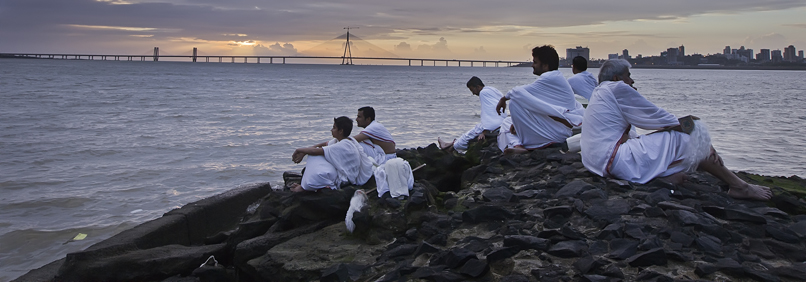
Ship Of Theseus

“You chose your journey long before you came upon this highway”

by Svetlana Naudiyal

I really don’t know what to say amidst the deluge of opinions and interviews and reviews. Social media is flooding with them and here I am, adding my own two bit to that. Will saying that I’ve seen it thrice already at different occasions and will happily (and surely) see it again, suffice?

Quite lazily and shamelessly, I am kind of reiterating something I wrote earlier this year for this very same blog. Primarily because, I think kisne padha hoga. And secondly, what I think about the film, it hasn’t changed a bit.  (Also, maybe now I can add some of those so-called spoilers.)

Ship of Theseus invents a language. Not just in terms of cinema, but in terms of thought. It compels you to go home and read. If not read, then at least think.  (At times when we spend our lives not thinking, you may discover that ‘thinking’ is a wonderful exercise). It takes you closer to your own self and yet far away from it, where almost unintentionally you find yourself objectively pondering over your own self and its relationship with the world around.

It is so evolved in thought and yet so accessible. Sophisticated, mature and nowhere in the remote vicinity of pretentiousness. And yet it is light like a feather, a pleasant watch replete with humour. (And in case I haven’t yet reiterated enough in indirect phrases, the film stems from life itself.)

The blind photographer’s search for meaning in being able to see, the monk’s dilemma and the stockbroker’s quest for purpose in his own life. You may like a story little less and another a little more, but it is the whole they construct that runs like a background score for you after you’ve seen the film.  In our Cinema, where do we see references to something like Unilateralis Cordyceps,  Charvak and Church of the Flying Spaghetti Monster anyway? Or to introduce a blind photographer, to have a song in ‘Prakrit’, to choose Sweden (Sweden is rated to be one of the most fair and just social systems in the world – this little piece of info comes from the filmmaker, not my discovery. I just crosschecked a bit.)

I also love how the film resorts to traveling. (More of a personal connect, may be, for a firm believer of the idea that any meaning that can ever be found is during a journey). From wandering to a far off valley in Himachal to cave diving in Manipur, a journey into the infinite and open world within.

[May be next week, we could compile a post listing the brilliant moments of the film. There are many. The only one I would probably want to mention for now is Maitreya’s encounter with what seems like death. In each viewing, at that particular moment and in every reflection about that moment, I’ve found myself come to a standstill. Needless to mention, if a film can capture that particular feeling, that moment in all its freezing cold reality, one can imagine how close to life the film is.]

Having said that, I must also admit that I’ve wondered if I’m breathing too much meaning into the film for its (and my) own good. I’ve refuted my own thoughts, with reasons ranging from beauty in lack of perfection to the subjectivity of what we call perfect. I’ve oscillated between “if this is a very well done pop philosophy” to “if this could have been deeper, darker” or something else, something more. Whether it is too much on words or too little on silence? But then again, those questions are personal, subjective and could be irrelevant to someone else who might not or might appreciate the film in a very different way for very different reasons.

Here’s where I found a bit of my answer –

Quoting Anand

An early treatment scribble

I’ve made a conscious choice of dialogue over action in several scenes in the script. I felt a strong urge to revert the “show, don’t tell” thumb rule, to the extent that many scenes cut abruptly at their most dramatic high point, and then in the following scenes, the characters narrate, through casual conversation, their experience of the dramatic moment. I analysed this urge to distance myself from the heart of the action. I discovered that I find some human experiences too deep, intimate and emotionally stirring to try and capture on camera. Also the immediacy and the drama of the experience end up fogging the essence, which seems to come out more honestly in the objective after-experience reflection. When a character talks about a moment experienced in the previous scene, it is not intended as a guide for the audience, but rather as an experiential lens, through which the audience lives the moment twice – once through the speculation of the dramatic high point of the moment led towards by the author, which being never shown, is experienced in the imagination, and then, the moment redefined through a tinted world-view of the character.”

It is in being the narrow, delicate bridge between simplicity and complexity, the singularity and duality of the quest for meaning, that Ship of Theseus is poetry reinstating itself as cinema, or vice versa.

Will it change your life? Maybe not. Life changing events and experiencing deep meaningful literature or cinema, are known to be mutually exclusive. But the film is sure to rekindle a little hope and a little faith or maybe a little more.

(p.s. In the 100 years of Indian Cinema brouhaha all around, Ship of Theseus arrives as a perfect anti-tribute and thankfully so! Here’s to The New!)
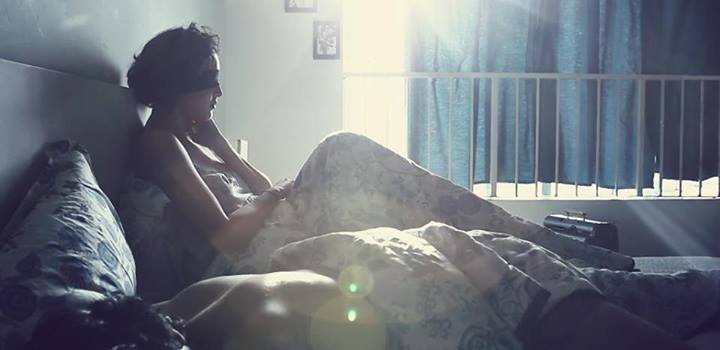
Ship Of Theseus

Let It Sail

by Mihir Desai

I didn’t want Ship of Theseus to end. The philosophical depth and visual beauty put me in a mind space that movies don’t tend to these days. I didn’t want to come out of it, back to mediocrity where filmmakers take their audience for granted. SoT treats the audience as equal, it gives an opportunity to reflect and interact with the thoughts presented in the film. Anand Gandhi very carefully crafts a film that raises questions about identity, ethics and evolution. The three stories within the film come together in what could be the best closing shot of the year! The film doesn’t take the easy route of leaving things up to ‘audience interpretation,’ instead it gives its audience some food for thought, without being preachy.

Ship of Theseus is truly made with an independent spirit. This is an example of what DSLRs are capable of doing. The visuals will prove once again that for DIY and low budget filmmakers, DSLRs are still a worthy investment. Pankaj Kumar’s (Director of Photography) brave cinematic choices takes the core idea of Theseus’ paradox to a whole new level. Three different looks and specific choice of camera movements for each story adds a new dimension to the characters. Technically this is a perfect film.

I look forward to a second viewing of the film as it opens to public. We’ve always been cynical about audiences rejecting new kind of films. The evolution of Indian cinema is in its prime, it’s not the audience that needs to carry this forward, it’s us, the filmmaking community that shouldn’t shy away from taking such risks.
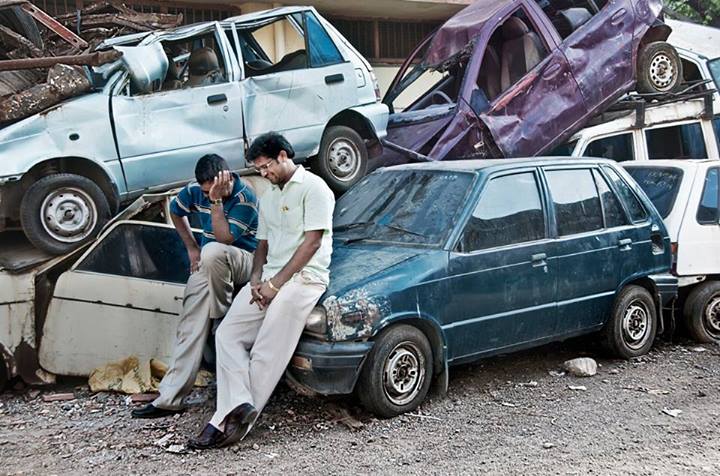
Ship Of Theseus2

Kyunki Gandhi Bhi Kabhi Soaps Likhta Tha

– by Sumit Purohit

It was a rainy morning of July 2011. The Enlighten Film Society’s Naya Cinema Festival was going to screen Aaranya Kaandam as the closing film. I had heard lot about it, so I went despite the rain and the morning. I had no idea then that I will get introduced to another very special film there. It was announced that post the film screening the excerpts from three upcoming films will be played. I decided to stay back. One of these three films was SHIP OF THESEUS. That was the first time I heard about it. Anand Gandhi was present there with his team. He spoke briefly about the film.  But the few minutes of visuals that were played on screen were enough to tell everyone in the theatre that they were witnessing something exceptional. It probably was a film that will change Indian Independent cinema forever.

Almost a year later, Ship of Theseus was screened at Mumbai International Film Festival and it went beyond all expectations. It was not only the best Independent film to come out of India; it was a film which could compete with the finest from around the world. It was a master class in filmmaking. It was technically superior to most Indian films and it explored the stories significant to our times.

To realise that Anand Gandhi is a genius you need not watch his films. You just need to listen him talk for five minutes. He can talk about most things under the sky with great expertise. It seems he is less of a filmmaker and more of a cross between a mad scientist and a philosopher. No wonder he calls his production house a lab and writes research papers too. May be he is the monk from his film, or may be he is the young man who keeps arguing with the monk. Actually, he could be both of them at the same time.

Ship Of Theseus in a way is reflection of what Anand has experienced and learnt over the years. Though what’s wonderful about the film is that it communicates all those ideas and beliefs simplistically yet beautifully when it could have easily become pretentious, preachy or gone all abstract. Ship of Theseus is not what we usually associate with Indie films that have been to film festivals. It’s entertaining, at times humorous and very accessible. It respects its audience, and is intelligent.

The three stories in the film are all set in present Bombay and yet they look like they could be worlds separated by time and space. It’s interesting to notice how Anand uses certain elements in his film. The 1st story is about a blind photographer. Some of the gadgets she uses are straight from science fiction as if the story was taking place in the near future. At the same time the background song with Prakrit lyrics in the 2nd story makes the soundscape feel ancient. It’s a story about a monk who is fighting a court case to ban animal testing in India. He seems to connect with the most unlikely person, a young lawyer who sports long curly hairs and shares Internet jokes with him. In the 3rd story a young stockbroker’s obsession forces him to travel to Stockholm, a place away from his comfort zone. This coming together of contrasting elements makes Ship Of Theseus such an intriguing cinema.

Recently I read that the three films Anand suggested that everyone should watch are – Du Levande (You, the Living), The Turin Horse and Underground. If you look closely, you might find that these films could have influenced Ship Of Theseus conceptually and technically (Gábor ifj. Erdélyi, the sound designer of SOT has also worked on The Turin Horse). SoT has lot of non-actors in the cast, similar to what Roy Andersson prefers. Then there is a scene in the film where a fat man gets stuck in a narrow alley. One can easily imagine it to be a scene from an Emir Kusturica film.

SoT is a great example of how a filmmaker uses his experiences – things he has seen, stories he has heard, films he has watched, books he has read, and gels them together into something new. And at times referring back to them amusingly in the film.  This is a good reason why Ship Of Theseus can be seen again – to search for such references, to find those connections and see how they have changed in this process. Isn’t it similar to the Ship of Theseus paradox?

You will not hear or read any negative criticism of Ship of Theseus, so let me try it (for the sake of an argument and for fun). Strictly speaking it’s not a feature film. I will consider it an anthology of three short films that are thematically connected. The three films are visually and stylistically distinctive.  It’s deliberate but then you can’t overlook the clear dissimilarity between the writing, the way actors approach their roles, the language used and the impact it creates.  But then, for a debut filmmaker this really is not a negative thing. It only shows how talented Anand and his team are and how capable they are at creating these different worlds. It would be really interesting to see what Anand does when he decides to make a feature length film that follows one storyline. What narrative techniques he will use? What cinematic style he will adapt? He is an exciting filmmaker to follow. The best way to start stalking him is by watching Ship Of Theseus.

(PS – If you still need more reason to watch the film and you are a TV soap fan, then you should know that at once upon a time Anand used to write Kyunki Saas Bhi Kabhi Bahu Thi and Kahaani Ghar Ghar ki. Now, that should excite some of you.)

– And if these four writers have not been able to convince you so far, click here to read what Dibakar Banerjee has to say about it. Not everyone has the guts to say such good things about someone else’s film.
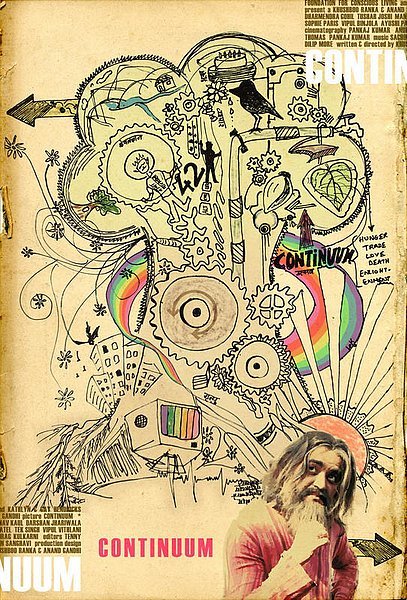
Anand Gandhi’s much accalimed film Ship Of Theseus is going to release this friday. Thanks to Kiran Rao and UTV, the film is getting much deserved space in mainstream media. If you have read about Gandhi’s short films in those interviews and still haven’t seen them, we are embedding two of his shorts here. The video quality is not great but do watch both the shorts.

Right Here Right Now (2003)

29 Minutes. 12 Locations. 19 Characters. 8 Languages. 2 Shots. 1 Cut.

Continuum (2006)

– written and directed by Khushboo Ranka & Anand Gandhi.


continuumSynopsis – This film narrates simple enjoyable stories from everyday life that explore the continuum of life and death, of love and paranoia, of trade and value, of need and invention, of hunger and enlightenment. The five moments of its childlike innocence branch out into a more intricate gamut of an urban scape, culminating into a space where the stories no longer exist as singular threads in their own vacuum but come across and play with each other to form a larger fabric of life.

– You can also check out the filmmaker’s blog here and his DeviantArt page here to see some of his interesting work.

– Click here to check out the Flickr page of Pankaj Kaumar, the DoP of Ship Of Theseus.

Bidesia In Bambai

“Bidesia in Bambai” is a story of music, migration and mobile phones. Ah, that sounds interesting – the title and its description. And what a gorgeous poster too. Not sure what exactly i was googling when i landed up on this blog. Just found out on Film Divison’s FB page that the first trailer of the film is out. Have a look.

For a better view, you can go directly to its vimeo page here.

Here’s more on the film (from the director’s blog) – Migration is the predominant theme in the music, and the phone is a recurring motif. Mobile phones are also used to circulate the music. And it’s the only way to stay connected to the mothers and wives back home in the village. This film follows two singers in Mumbai who occupy extreme ends of the migrant worker’s vibrant music scene, a taxi-driver chasing his first record deal and Kalpana, the star of the industry.

Film details – 86 minutes/2013/ Bhojpuri and Hindi/ with English subtitles/ INDIA

Screening – The film will have a screening in Mumbai on 20th July. You can follow the FD FB page for venue and other details. Hopefully they will update later on.

If you want to know more about the film, copy/pasting her latest post from the filmmaker’s blog

Bidesia is Bhojpuri for ‘the one who leaves home’. One in four migrants in Mumbai is Bhojpuria, a people from the north Indian states of Uttar Pradesh and Bihar. Bambai is their name for Mumbai/Bombay.

The bidesia in Bambai, like most recent migrants in this ‘global city’, inhabit the precarious edges of Mumbai. Along with his meagre belongings though, the impoverished migrant brings with him a vibrant musical culture.

Bhojpuri pop music is produced, circulated and performed in the crumbling sites that is home to the bidesia in the big city. Migration is the predominant theme in the music, and the mobile phone is a recurring motif in the songs. Frequently sexually charged, at times religious, often lyrical and occasionally political, the migrant is both the subject of, and the audience for this music. The musical landscape he inhabits mobilises notions of masculinity; gives form to his identity; makes tangible his desire for a place in the city; and evokes his longing for home.

This feature-length film attempts to make the migrant visible by celebrating the musical sphere that he inhabits, in a city that renders him illegal and unwanted.

– Click here to go to Surabhi Sharma’s blog.

Poster/Trailer courtsey – Surabhi’s blog.

Through this blog we have always tried to spread the good word about various crowd-funded (Kickstarter, wishberry and such) projects. Not sure how much it helps those projects but even if its in a small way, it feels good to get the acknowledgement. We hope at least the information reaches some kind souls (with deep pockets) who are pursuing similar interest. Here’s the latest one in our “Fund A Film” page – Supriti Malhotra’s Shakti – of science and traditions.

About the film : A documentary on the concept of Shakti, as seen in mythology, religious practices, social influence, and modern scientific theories.

Video Preview : Currently, the trailer only includes footage pertaining to modern scientific theory

More on the film (from its Kickstarter page) – This feature length documentary explores the concept of Shakti, the Hindu Mother Goddess, whilst looking at various versions of her myth. A parallel search in the scientific world, a world of empirical enquiry, reveals a similarity of concepts. This film also explores the idea that women are active manifestations of the Goddess, believed by those practicing Shaktism or worshipping the Mother Goddess.

In India, the worlds largest democracy, with close to 80% Hindus, religion finds expression not just as personal belief; it also plays a role in politics and media; as well as dictating social traditions as per its code of conduct.

I have always questioned the idea of women’s empowerment. Is it simply about equal rights and opportunities? Is it not also the right to decide the course of your life?

In a country seeped in rituals of tradition and modern economics, the role of women has changed in recent times. I seek to largely examine whether it has filtered to those living outside urban areas.

As I search through the villages and small towns, through temples and traditions, the film is hopeful of finding a new perspective on women, Shakti and their relationships in a fast changing India. The film also hopes to show that some mythical and scientific concepts may not be that different after all.

In order to make academic data interesting, I would like to present them through animation. The animation will include characters based on avatars of Shakti. A fictionalized story of events will be written based on myth, scientific theories, archaeological and anthropological data. There was a simultaneity of changes in mythologies around the world, given the trade that existed between early civilisations – Supriti Malhotra

– To know more about the film, the filmmaker and how you can contribute to it, click here to go to its Kickstarter page.

– She has just 27 days to get her funding.

If you want us to feature your project, you can send us the details at moifightclub [at] gmail dot com. We will put out the posts with the interesting ones.

I got to watch the film on Tuesday. This was amidst too much hype, too much expectation, pressure to like/dislike instantly, and too eager to react. By that time reactions from the film fraternity had already started pouring in. And as a member of the crew told me during the screening, honestly, it’s impossible to make out anything from the pre-release screenings. Also, if one has read the script, one might be reacting differently from others.

In terms of reactions, Lootera has turned out to be strangely divisive films. The reaction of critics and audience going in extreme directions is quite obvious for most films these days. But here the critics rating varied from 2.5 to 5 stars. I can only think of Dev D which went further extreme and got ratings from 1 to 5 stars, and everything in between. But strangely, the audience reaction have also been extreme with Lootera. To give an example, as this twitter friend tweeted – “In our theater, about 15 ppl walked out. And about 15 broke into applause at the end. Strange. Didn’t think Lootera would be so polarizing.”

Anyway, after watching the film i told Motwane that i will mail my reaction, all in detail. Can’t react so quickly. And VM has responded to the criticism. Much thanks to him as most filmmakers in B-town run away as soon as their film releases. Also, thanks for agreeing to make the mail public.

Actually we wanted to do a post-release Q and A with him and his DoP Mahendra Shetty. But as the joke goes, Sonakshi is spreading her Lootera disease quite fast. So me and few others have been coughing like her since the film released, and hopefully these few answers are better than having absolutely nothing else.

Lootera

What worked for me

– as i told you i loved the second half. I loved the way it’s shot, so dark ( i hope it’s visible in theatres with bad projection. i remember problems with Kaminey, Gangster), the mood it creates and almost meditative in its space and silence. it’s GORGEOUS!

– as expected from you, it’s very well directed. well mounted, well captured.

– acting across the board is good, from leads to small roles.
– the pace is slow or leisurely which goes well with the mood and setting. good you didn’t hurry anywhere – consistent through out.

– the romantic village portions with so much brightness was looking tacky to me in the trailers. Thankfully it doesn’t feel so in the film. Right rustic touch with a FabIndia colour palette , if i can say so 🙂

– BEST part – you didn’t hit the excess notes for melodrama, perfect balance, didn’t even try to cash in on deaths on screen. That’s GREAT!
i was actually waiting to see if you will go Bhansali way with the father and friend’s death 😉 but you didn’t even go close there. Smart! and smartly handled.

what didnt work for me (and VM’s reply below each point)

– i think people will love the 1st half more but i didn’t feel that romance or passion in the first half. i am not sure why. or was it the heavy  background that you were using to make the point which was distracting me.

VM : It’s the same issue I have with the script in it’s current form. Though when I tried to think back to my original intention when writing the screenplay, it was pretty intentional to make it a love story that wasn’t quite a love story. It’s wasn’t supposed to be the achy type of love story and wasn’t supposed to become that way at all, even towards the end. I always wanted a lightness to the film throughout. So can’t say whether this is better or that. It is a flawed screenplay. Willing to live with that.

– actually the sound design at two places in 1st half was very odd, i felt. when the father starts narrating the story to Sonakshi in the beginning, the music suddenly fades in and goes so high. It was very out of place. i know you might be trying to make the easy connect with the sound so that it can be used in 2nd half with Sonakshi and tree. But it was too loud and so suddenly.

VM : The intention wasn’t to connect the music with the second half. It was a background piece. Maybe it was too loud. Didn’t seem that way when mixing it.

– similarly the use of that old hindi song that goes through all the montage when they are at the site and many such odd things, as in not romantic stuff but the song goes on, and just stops with the news of zamindari over. again very out of place.

VM : It stops with the zamindari news because that’s where the plot changes a little bit. And it feels loud because it’s mono and it cuts through the rest of the dialogue. Something we discovered too late and only at the final mix stage. No matter how soft we had it, it cut through,

– why so much grainy footage in 2nd half?

VM : Aesthetic call that me and (Mahendra) Shetty took. We both like grain and purposely went for a high grain stock. Wanted to give an aged, period feel without making it glossy or sepia tinted. In fact, there is more grain in the injection scene in the first half, which is just an under-lit scene. Mistake on our end.

–  And this might be nitpicking – when he climbs the tree, and the climax sequence – when he is walking, she is coming out of the house – at few places one can see the (VFX) jugaad – foreground and background not in sync especially when Ranveer is walking towards the police, the light, the things you have cheated – i mean it’s nice but not pitch perfect. similarly with snow and when he falls from the tree, you can make out it’s fluff. maybe if you are watching minutely then only.

VM : If you’ve seen the making video, you know what we had to go back to shoot snow sequences in summer with fake snow. Which means VFX work. Work that we have shot on grainy film, without green screen, with handheld camera. It’s the worst kind of situation for a VFX team and under the circumstances, they did an amazing job. The whole tree climbing and shoot out is VFX created. There are shots and mattes and snowflakes that make me cringe every time I see them but it’s just something we have to live with. Will do better next time.

– Basically, overall another good film. But you are so strong at filmmaking aspect, the craft, why tell a bollywood story. I hope you go beyond it now that you have done your conventional part. a more non-conventional/interesting/out of box idea/tale to match up to the talent of your craft.

VM : So the indie world thinks i’m telling a bollywood story. And the bollywood world thinks i’m too indie. You think this is conventional, they think this is too out of the box. So I can’t win…

Fact is, I went to tell a story that I believed in, warts and all. I can make all the excuses in the world about not having enough time to fix the script before shooting because we only had two months of pre-production blah blah but it’s pointless. This is the film I chose to make and I stand by it. Nobody knows and feels and understands the flaws of the film better than I do but that’s a discussion for another day.

I don’t want to get stuck making 4 crore films for the rest of my life because that’s what happens in this industry. It gets very easy for them to slot you into a ‘type’ of filmmaker. For better or for worse, this film was my attempt to break out of that.

– Posted by @CilemaSnob

(Pic courtesy – Lootera FB page)

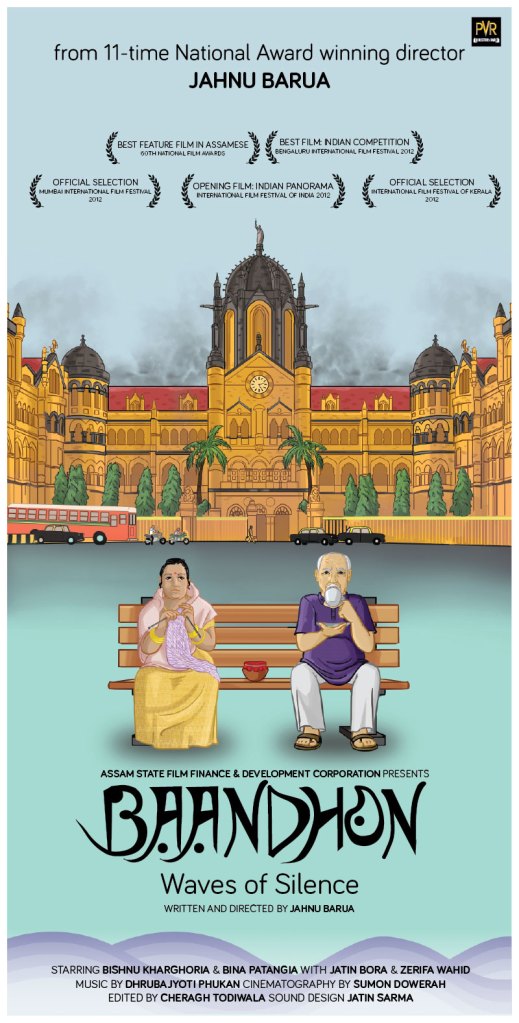
Baandhon is the first Jahnu Barua film to get a multi-city release outside Assam. Thanks to PVR Directors Rare. For cities and show timings, do check the poster below. And here’s Pradeep Menon on the film.

943271_470624503025894_1991809589_n

The media, social and otherwise, has been abuzz with the latest Hindi release; an exciting, talented director’s sophomore feature, one that is making critics and audiences alike gush over gorgeous frames, celebrate the coming of clean cinematic craft, and most importantly, reminisce about romances of the days of old.

Indeed, sometimes one can’t help but feel that, in this day and age, we’ve all forgotten how to fall in love. We’ve forgotten what it is like to drown oneself in that heady rush of a new romance, embrace unbridled passion today like there isn’t a tomorrow and push the limits of rational behaviour in the pursuit of real life moments that make us feel like we’re living a movie.

But here’s the thing about romance – it always dies away. No question about it. So what remains then? What happens when you spend years, or even decades, with a person? Hopefully, once the romance, the passion and the giddy joy of the other’s company gradually ebb away, what you’re left with is respect, stability, comfort, and, if you’re extremely lucky, a lifelong friendship.

That, precisely, is what Jahnu Barua’s ‘Baandhon’ (“Waves of Silence”) is about. On the surface, it appears to be about the complex relationship shared by a married couple; a man and a woman who’ve spent nearly their entire life together. But if you really pause to think about it, it is quite simple. Their love has evaporated perhaps, but they are left with the next best thing – companionship.

Baandhon spends more than half its run-time soaking itself in a single fight between an aged husband and wife; a couple that has already been bereaved of its offspring, and is now solely alive for their grandson, who studies in IIT Mumbai. However, right from the outset, we know that this fight isn’t for real. They’ve done it to death umpteen times before, and it is perhaps the only thing that keeps them going on a daily basis. One ticks because the other is.

But, before we even see the couple for the first time, we are told the date of the fight. 26th of November 2008; a day that sent waves of silence of its own, all around the country. And immediately, you know that this is a story that is always going to end in some sort of a tragedy.

Barua, then, with his decades of filmmaking experience and multiple National Awards, chooses to douse his narrative in such minimalism and sparseness that not only is there never a twist, but there also isn’t even the anticipation of one. The terse inevitability of the path the film traverses is always writ large over the goings-on, and yet, Baandhon gently attempts to reaffirm faith in humanity while admitting that somewhere along the way, humanity has failed.

Reminiscent more than once of Mahesh Bhatt’s ‘Saaransh’, yet largely steering clear of some of the harsh questions and issues that Bhatt’s film raises, ‘Baandhon’ roots itself in economy of craft and storytelling. Even the background score of the film tries its best to camouflage itself behind the visuals; so rare for Indian cinema today, which nearly always attempts to elevate every emotion with over-the-top mood music embellishment.

There isn’t an overt attempt at displaying craft or technique here. Baandhon could easily have been a play. It is set mostly in Guwahati, before the climax, if I can call it that, shifts to Mumbai. Yet, there is no attempt to give the film a texture that sets it in a particular time or place. It could be happening anywhere, at any time. The 26/11 backdrop gives it a real world context perhaps, but even that could just as easily have been a fictional human tragedy that only needed Mumbai to be the place it occurs in. This of course, is clearly intentional on Barua’s part. If you’ve watched ‘Maine Gandhi Ko Nahin Mara’, you know that he’s fully capable of creating a perceptible flavour of place and time.

Baandhon also has no solutions on offer. In fact, it hardly asks any questions. All the film does is give us a brief window of a few days, into the life of a man and woman who, after 73 years of their life, have only each other, even if their journey brings in their path a few kind souls who unselfishly look out for them. It is in these side characters, the ones that attempt to show you that humanity has hope after all, where the film really falters. Our cynical selves will find it hard to swallow the genuine goodness that the peripheral characters go out of their way to shower on our protagonists.

It doesn’t help that most of these side characters aren’t particularly well performed either. Even Bina Patangia, who plays one half of our couple, has an adorable character to fall back on, but her performance itself is mostly functional. Only Bishnu Kharghoria, who plays the husband, truly manages to turn in a memorable performance.

Despite some almost naïve writing and characterization, it is in its silences and pauses that Baandhon’s honesty shines through. This honesty draws you in and makes you want to sit right next to the couple as they deal with loss. Yet, just before your hand reaches out to caress them, you realize that they still have each other. And as you draw your hand back and walk away from them, all you really tell yourself is that perhaps that is all one needs – another person to fall back on, forever.

( To read more posts by Pradeep, you can check out his blog here)

Rome_header_Wide_new(from Official release)

WHAT – ROME FILM FESTIVAL
(FESTIVAL INTERNAZIONALE DEL FILM DI ROMA)
Calls for Entries in all categories for 2013.

Fest Dates – The 8th Rome Film Festival will run November 8 – 17, 2013.

Basic Criteria – Only films that will be world premieres at the festival will be considered for selection.

SECTIONS –  The Official Selection will present two competitive sections for International films

1) International Competition (16 films, presented as world premieres)

2) CinemaXXI (21st-century Cinema, a selection of films devoted to new trends in world cinema, which will welcome feature-length and short films presented as world premieres)

– And a choice of Out of Competition screenings (a maximum of 12 titles, presented as world, international and European premieres)

– Last year, ‘Tasher Desh’ by Q and ‘The Museum of Imagination’ by Amit Dutta were the films from India which had their world premieres in the CinemaXXI Competition Section.

AWARDS – The festival will give out more than 12 awards for World Cinema.

– Last year, more than 2500 members of the major press and media and more than 800 professionals from all over the world attended the event, which will take place in the screening venues of the renowned Auditorium Parco della Musica, the multi-functional public complex designed by Italian architect Renzo Piano. CinemaXXI program will be hosted in the nearby MAXXI, the National Museum dedicated to contemporary creativity, designed as a multidisciplinary space by Iraqi-British architect Zaha Hadid.

– Films will also be offered the possibility to participate in The Business Street (November 13-17), Rome Film Festival program dedicated to the circulation, acquisition and sale of audiovisual products, which will be hosted in the area of Via Veneto, the famous street of Rome that was portrayed in Fellini’s classic “La Dolce Vita” and it is known all over the world for its cafés, restaurants and shops. The Business Street offer includes screenings reserved for industry professionals, buyers and sellers.

Eligibility Criteria: All submitted films must be recent productions completed not prior to Friday, November 29th, 2012. They must not have been presented in any other format or length, not even as works-in-progress, for submission to previous editions of the Festival. Under no circumstances may films that have had prior public screenings, have participated in other international festivals or are available on the Internet, be presented at Rome Film Festival.

– To submit a film to the selection, one has to fill out a pre-selection entry form on the official festival website (www.romacinemafest.org).

– The preview DVDs should be sent to Deepti DCunha, the India Consultant to Artistic Director, Marco Mueller.

– The DVDs should reach her before 1st September 2013. Filmmakers with films in post-production are requested to contact Deepti at the address below.

– All submissions (duly subtitled in English) should be sent to the contact details given below before the 1st of September.

Deepti DCunha, 23 Gautam Niwas, 7 Bungalows, Andheri West, Mumbai 400 053, India

Email: deepti.dcunha@gmail.com or d.dcunha@romacinemafest.org

– For complete rules and regulations please visit the Festival website at www.romacinemafest.org

– The festival’s Director Marco Mueller will be visiting India at the end of August for the final selection of films.

Filmmaker Anurag Kashyap did AMA on Reddit yesterday. Someone asked him about the state of Indian film criticism. His reply in one word was “terrible”. Well, it doesn’t take much brains to figure this out. Open the papers on Friday and you can see it all over. Not to mention the reviews by trade analysts which industry endorses most vehemently, and who then manipulates box office updates accordingly, the ones with agendas other than films, and then there are the paid and the plugged ones. It’s routine now. Nobody is shocked or surprised. And that’s the worst thing to happen – to get used to it.

With social media getting prominence and becoming at least some kind of parameter to get audience reaction, the game of making a “perceptive hit or classic” starts days before the release. You are blinded by the blitzkrieg, a kind of emperor’s new clothes. And journos who are suppose to tell you otherwise, they are happy to get their pictures clicked with the stars. Well, why am i ranting? Because today is friday. Because a bigger rant follows this one. And because we have always been accused of being biased for/against some films and filmmakers. Not to mention being branded contrarian for the sake of it. From saying Talaash works best when you know the spoiler to defending Shyamalan’s latest to liking Raanjhanaa’s 2nd half more to Ghanchakkar being not that bad what critics are saying. Here’s the latest one in the series – on Lootera. And am saying this even though i liked lot of things in the film, especially the 2nd half. And you have to watch it because it’s made by the same filmmaker who gave us Udaan.

So watch the film and come back to the post. Though it’s a spoiler free and you can read before watching the film too. This one is by a new author called Nicolas Bourbaki. Familiar? You will get to know him soon.

Lootera

Warning – this is NOT a review of the film. This is a rant. A wannabe brilliant piece in support of brilliant cinema and stemming from the rangat of self conceit. And even though it doesn’t have spoilers, it is recommended to not read this piece of crap before watching the film.

It’s 1.30 am in my bedroom. I’m alone sitting by the almirah with the king sized mirror. I look at my reflection. I have pain anguish angst remorse guilt redemption realization hope despair despondency writ all over my face. The fan whirls 7 ft above my head. It’s a second hand cheap 800 rupees fan which makes a whirrring noise. No PSPO unlike the film I saw. Bedbugs trouble me. I look at my freckled face. Time stands still unhealed by pain and unfettered by the nocturnal twists and turns of a solitary night. Half a drop of tear rolls over my eyelid, brimming over, somewhat reluctant to fall down. Yet it knows, and it can feel my melancholia. It knows it must fall down. But will it or will it not ?

आँसुओं की किंकर्तव्यविमूढ़ता हो तो ऐसी हो

Please bear with me dear reader. This is not another synopsis of Ship of Theseus.

What a brilliant film!

Brilliant cinematography. Such gorgeous frames. Color schemes which would guarantee taciturn unconditional approval by Kie-slow-iski. Yellow when the mood is prosperous. White when characters are fighting inner demons. Dark interiors for people with dark circles. Transitions from Puja/Ramleela fervor to fever-ish asthma attacks that Baradwaj Rangan would love to write thesis & books on. Aesthetics which are carefully calibrated to the exact precision so well that Light appears to meticulously obey both Particle & Wave theory simultaneously at the director (and DOP’s) will.

When the characters come to kiss each other in a Terrance Malick-ian way, there is just about enough background flare to make the moment surreal, yet real without the hyper reality of the scene underscoring the cinematic liberties. Equality Fraternity. That’s the French revolution all the way till 2008’s Entre Les Murs (Class) – maybe the director’s favorite film that year. Sheer class!

Breaths. Pauses. Stays. Beats. Playback songs. Measured. Sure. Nimble footed. Sometimes hurried. Sometimes slow. Asphyxiating. Liberating. Gesticulating. Pontificating. Prepossessing. Repossessing.

“चार बाल सामने चाहिए. सिर्फ़ चार बाल! मुझे एकदम Natural look चाहिए. बिल्कुल made up नही”.” – Steven Kapoor said.

“मैं पिछली picture का print Tirupati (Balaji) ले जाना भूल गया था. इसी लिए नही चली थी” – the producer from Ludhiana reasoned with him.

I suddenly observe. Snowflakes are falling on me. यारी रोड में बर्फ बारी ? हौले हौले धीमे धीमे. I quickly wear my color co-ordinated sweater and stand up with my arms folded out like Andy Dufrene. Epiphany striked, symphony plays – Costume Design and Art Direction should have had top billing over writer/director’s credit.

I scribble my review on a piece of paper with a Chinese fountain pen dipped in a दवात. Then tear it apart. Then do a for-next loop until fade out.

What a performance by the father (Barun Chanda). Ranveer Singh restrains in restraining himself while Sonakshi Sinha has all the reasons to have my sympathy. But for some strange reason my sympathies lie with my bums, which have been lying motionless for over the 2 hours, uninvolved, dis interested, dazed, waiting for a jump in my seat moment, a lump in the throat, a mournful sigh. They perhaps demand too much as they get only assiduously created multi-textured verisimilitude along with a velvet touch of a fabric. Kora kagaz tha yeh bum mera…..

I wanted to cry, to laugh, to be angry, nervously bite my nails, fight with the irritating uncle with the kid asking them to shut up instead of searching for adjectives to define the craft. Even some of the later films directed by Santosh Sivan were … (space left intentionally for background music).

Even a gunshot wound has been brilliantly (decorated) created with 50 shades of grey. Nerolac Nerolac Nerolac! Waah miyaan Henry! Life is a tale told by an idiot. All sound and fury. Signifying nothing. Like this rant perhaps.

As the song goes – (har ek frame ko) Sanwaar loon, Sanwaar loon.

(PS – And now the media blitzkrieg begins. All I can muster up is this –

लबों के सिलवटों से उप्पर सिकुड़ी हुई छोटी सी एक नाक है

रूह ही ना डाली पिक्चर पोस्टकार्ड में तो फिर खुजली मज़ाक है)

(PPS – what’s well shot, needs editing, slow pace and blah blah blah? Here you go.

So Jahan Singh Bakshi gets to design his first film poster. And that too for a well know filmmaker – Jahnu Barua. His film Baandhon is getting a multi-city release this friday. Do watch the film if you can. And over to Jahan on “making of the poster”. Or should we say when Jahan met Jahnu 🙂 Anyway, go ahead and read this very interesting post.

943271_470624503025894_1991809589_n

Jahnu Barua’s Baandhon (Waves of Silence) will be releasing in select theaters across the nation this week, and thanks to Shiladitya Bora I had the great opportunity to design a poster for the film. I haven’t seen any of Jahnu Da’s work apart from his only (released) feature in Hindi- Maine Gandhi Ko Nahi Maara- which is something I hope to change soon. But I happened to meet the soft-spoken filmmaker once before during college in Calcutta and then recently in Bombay before getting to work on the poster and it was a pleasure on both occasions- even though he speaks so gently that one often has to strain to even hear what he is saying! Moreover, I spent much of my growing years in Assam and it is an honour to have an Assamese film from one of the most esteemed filmmakers from the region as my feature poster debut, especially since this is a first-of-its-kind Pan-India release for an Assamese film.

Anyway, back to the poster. Baandhon is a disarmingly sweet film  which beautifully shows the relationship between an old couple superbly played by Bishnu Kharghoria and Bina Patangia. The first half of the film plays out like a genteel comedy, with the old man and woman constantly bickering and then making up. It reminded me of so many old couples including my grandparents- they can’t live with or without each other. The second half of the film, where their grandson goes missing during the 26/11 attacks in Bombay is a comment on how it is the common man who bears the impact of the large scale politics and terror.

For me, one dialogue from the film pretty much summed it all up:

“We are common people. The world is too big for us. We have no choice but to trust in it.” 

Two simple people who live in their own small world oblivious to the harshness and the cruelty that lies outside.

Since the film’s look is pretty simple and basic, I wanted to reinterpret the film a little differently while maintaining this essence. I saw the film in two halves. When I am making a poster the first thing I look out for is an image from the film that stays with me. In the first half I would say this was the image that defined the film for me.

Jahnu]--330x220

The first thought was to use this image with the two on the rickshaw with the two holding hands in between. I loved the charming and hilarious first half of the film- I have to admit that I wished that the terror angle never came into the picture; I could watch these two quarrel endlessly!) However, I realized that the comment on terror and violence is an important part of the film and the Jahnu Da’s intent behind making it.

After watching the second half, I found what is easily one of the most haunting and defining visuals from the film:

Baandhon cover

So this was it. The old couple on a bench with the alien city of Bombay in the backdrop which could perhaps have a hint of violence or destruction. I deliberated on how I would depict Bombay in the backdrop and suggest violence without it becoming  loud or overwhelming. Ultimately I zeroed in on Victoria Terminus (you’ll see why when you watch the film).

The shot in question is from behind the bench, and Deepshikha Mondal (who did the title design and was to initially do the artwork) asked why can’t we use the exact shot from the film as seen above. It is a powerful visual, no doubt. But I insisted on sticking to a front-on view. Movie Posters are after all, commercial art and it always helps to have a face on a poster, especially when a lot of the audience know nothing about the film or its characters, and especially since we were going to have only one poster, it’s essential to make that connect. And it needs to stand out.

Besides, I have a soft spot for what I like to call the ‘dollhouse’ aesthetic, with a flat symmetrical design- reminiscent as many have pointed out- of Wes Anderson films. I wouldn’t say it is inspired by him- in fact my love for this kind of frame is what drew me to Wes Anderson’s films in the first place- but yeah, they do serve as a great reference point. Also I was keen to have a caricature style for the character design- to lend the poster freshness as well as capture the innocence and droll humour of the film.

Clients, as any designer will tell you, can be a nightmare to work with. At the very least, you need to show them exactly what you have in mind for the final design, or they can’t visualize it. (And I can tell you that even after they are executed completely, the best designs often lie unused and unseen.) And I have to really hand it to Shiladitya for not even asking a single question regarding what the poster would really look like. This is the sketch I first sent him, to give him a basic idea- and it really  is BASIC in the truest sense.

Baandhon

Sketch by Deepshikha Mondal

Anyway, I don’t know whether he really got the idea or just trusted me highly, but I really have to thank him for giving me a go ahead on the basis of this. It’s a big risk to take on someone who has done almost no independent posters before. Now the next step was to make the title logo and flesh out the character design and drawing style.

TITLE DESIGN

For the title design, Deepshikha suggested we create/use a font that is a fusion of the Roman and Assamese script and I was totally on board with the idea. Shiladitya didn’t like the initial title design (seen in the second image from top)- and I agreed that readablility could be an issue. However I was a bit stubborn here and managed to convince him that with bolder glyphs and minus some lines and curves it would be perfectly readable. I wanted this particularly because I wanted an Assamese touch to the poster, in the title, even if not in the image.

Untitled

Final Title Logo by Deepshikha Mondal

ILLUSTRATION/CHARACTER DESIGN:

We had already decided on a clean, caricature style for the characters- droll, but still serious. I wanted the feeling of two simpletons sitting on a bench a la Forrest Gump, looking straight ahead at the audience. Deepshikha made the first sketch- which didn’t quite turn out as I imagined it. We tried to rework the design as Deepshikha had seen the film and I thought she could give a nice, North-East Indian aesthetic to it. Unfortunately, she was piled with other work and we were way past deadline and running out of time.

altAp2kR3ddim3ConPGJPQ_Cuq4vVcxLUBlb6s0P53YwZad_jpg

First illustration by Deepshikha Mondal

That’s when Mrinal Roy came into the picture. I love Mrinal’s illustration work and I was working with him on another poster that should be out soon. I couldn’t give him a copy of Baandhon, which is why I didn’t approach him for this poster. However, now being short on time I got in touch with him and he agreed to do it at incredibly short notice. Mrinal is one of those guys who- unlike me- doesn’t speak a lot- so I never really know whether he’s getting my vision. Anyway, I sent him as many stills and promos off the net that I could find online along with references.

When I saw the first line-drawing, I breathed a HUGE sigh of relief. He had got it down pat  and pretty much nailed it perfectly.. I remember telling him that he could place the ‘kalash’ anywhere he wanted- in the center or the side (even though I preferred it  in the center). He sent me this, saying: ‘I put the kalash in the center because it belongs to both of them.’ That made me smile.

lineart

First cut- Character line-art by Mrinal Roy

The man’s face looked a little too angry, and the woman was a little too roly-poly and North-Indian. So the man’s eyes were to be made softer and sadder and the lady was to be put on a bit of a diet. That was fixed. Then came the background. I hadn’t asked Mrinal to put a lot of detail in the background- there was very little time and it wasn’t necessary. However, he absolutely floored me with the detailing he put into the Victoria Terminus sketch and the poster is all the better for it. My idea was to have a busy background and a clean foreground with gentle waves ending the picture. I think he got that right. The last thing to do was to add the smoke rising from the building which was my little contribution to the artwork.

Bandhon-Standee

The Final Poster

There are a few things I would have liked to change, if I had more time. Mainly the colours and the textures. Maybe a little more detail to say, the lady’s saree, etc. But I’m largely satisfied with the result and this was a great learning experience. Most of the credit for this however goes to Mrinal. Like I said before (the night I was sent the artwork):Screen shot 2013-07-04 at 12.05.06 PM

A thank you to a few more people:

Malvika Asher who suggested the font for the poster- Bariol was just the kind of clean, slightly rounded typeface I was looking for (it’s been used in the trailer too). Sidharth who painstakingly put it all together on Illustrator. Shiladitya and Jahnu Da for the opportunity. for And to everyone who has had kind and encouraging words to say about the poster .

Do watch the film, it releases in cinemas this Friday.

PS: Confession. I purposely didn’t send Shiladitya the line drawing and the in-progress pictures from the poster. Wanted him to see it in entirety before making any suggestions or changes. Thankfully, there were none. 🙂

FD

This one seems like a great and unique retrospective. Check out the details and if possible, do attend it. Copy-pasting the info from the official release. And the best part – Entry is FREE!

(from official release)

Retrospective of Indian cinema and video
28, 29, 30 June 2013
FD Zone, Films Division, Mumbai

Print Courtesy: DFF, FTII, SRFTI, NFAI, NID

ENTRY – All screenings are free!

CURATED by – Ashish Avikunthak & Pankaj Rishi Kumar

SCREENING SCHEDULE

Day 1 – 28 June, 2013, Friday

Session 1: Experiments with Gods 

10.00-12.30 pm
A collection of early films made by D.B. Phalke between 1913 and 1935.
Raja Harishchandra (20 mins, 35mm, 1913)
Lanka Dahan (9 mins, 35mm, 1917)
Shree Krishna Janma (6 mins, 35mm, 1918)
Kaliya Mardan (50 mins, 35mm, 1919)

Session 2: Experiment in the State

 1.15- 3.45 pm
The earliest robust experimentation in India begins under the imaginative tutelage of Jean Bhownagary while he headed the Films Division in 1965.
Explorer – Pramod Pati (7 mins, 35mm, 1968)
Claxplosion – Pramod Pati (2 mins, 35mm, 1968)
Trip – Pramod Pati (4 mins, 35mm, 1970)
Koodal – Tyeb Mehta (16 mins, 35mm, 1970)
Abid – Pramod Pati (5 mins, 35mm, 1972)
Child on a Chess Board – Vijay B. Chandra (8 mins, 35mm, 1979)
India ’67 – S. Sukhdev (57 mins, 35mm, 1968)

Session 3: Experiment in the School 

4.00- 6.45 pm
FTII became the centre of experimentation soon after it was headed by Ritwik Ghatak. Since then, along with SRFTI, it has continued to be a space where experimentation in cinema occurs on a regular basis.
Bodh Vriksha – Rajan Khosa (27mins, 35mm, 1987)
In Short – Kuntal Bhogilal (18 mins, 35mm, 1996)
Repentance – Rajeev Raj (22 mins, 35mm, 1997)
Chinese Whisper – Raka Dutta (27 mins, 35mm, 2006)
Airawat – Renu Savant (10mins, 35mm, 2011)
Moon Stars Lovers – Jessica Sadana (10 mins, 35mm, 2012)

Session 4: Feature Film 1 – Kanchan Seetha (87 mins, 35mm, Malayalam, 1977) by G. Aravindan

7.00- 9.00 pm
Ending the first day with Malayali Filmmaker Aravindan’s masterpiece Kanchan Seetha – an invigorating reworking of the Ramayana, which opens up a new discourse on Indian cinema and its interpretation of religion. This film is located here to be in direct conversation with Phalke’s cinema of religiosity.

Day 2 – 29 June, 2013, Saturday

Session 1: Experiment with the Documentary
10.00- 12.30 pm

Documentary has been a formidable cinematic form in India. Although most innovation has occurred in world of the political, it has also has seen serious experimentation.
I am Twenty S.N.S. Sastry (20 mins, 35mm, 1967)
Tales from Planet Kolkata – Ruchir Joshi (38 mins, 16mm, 1993)
Brahma, Vishu, Shiva – R.V. Ramani (19 mins, video, 1999)
Presence – Ekta Mittal & Yashaswini B. R.- Behind the Tin Sheets Project (18 mins, HD, 2012 )
Nayi Kheti – Pallavi Paul (11 mins, HD, 2013)

Session 2: Experiments with the Short Film

Saturday, 1.15- 3.45 pm
This section focuses on films that were made outside the institutional framework of the state or the school and can be understood as independent experimentations, especially focusing on the short form.
Nirjan Godhuli – Santosh Gour (10 mins, 16mm, 1993)
Dust – Ashim Ahulwalia (20 mins, Video, 1993)
Atreyee – Shumona Goel (17 mins, Video, 2003)
Straight 8 – Ayisha Abraham (17 mins, Video, 2005)
Bare – Santana Issar (11 mins, Video, 2006)
Jan Villa – Natasha Mendonca (20 mins, HD, 2010)

Session 3: Experiments in the Gallery

4.00- 6.00 pm
In the last decade, the Art Gallery has become a vibrant space for exhibiting moving images mostly in the form of video art and installations. This section attempts to grasp with this new space of experimentation. It has been co-curated by Mortimer Chatterjee.
Record/Erase – Nalini Malani (10 mins, Video, 1996 )
Flight Rehearsals – Kiran Subbaiah (7: 26 mins, Video, 2007)
Dance Like Your Dad – Hetain Patel (6:15 mins, Video, 2009)
There is a spider living between us – Tejal Shah (7 mins, Video, 2009)
Man Eats Rock – Nikhil Chopra & Munir Kabani (22:11 mins, Video, 2011)
The First Dance – Hetain Patel (7:44 mins, Video, 2012)
Forerunner – Sahej Rahal (12:16 mins, Video, 2013)
File not Found – Jaret Vadera (1 min, Video, 2013)

Session 4: Feature Film 2 – Satah Se Uthata Aadmi (114 mins, 35mm, Hindi, 1980) by Mani Kaul

6.30-8.30 pm 
Mani Kaul is known mostly for his landmark film Uski Roti. However, the Satah Se Uthata Aadmi is probably his most conceptually rigorous and philosophically penetrating work. Based on the writings on Muktibodh, this film is a deep philosophical articulation on post-colonial modernity.

Day 3 – 30 June, 2013, Sunday

Session 1: Experiments with Animation

10.00- 12.30 pm
Co-curated by Nina Sabnani, this section examines experimentation in the world of animation. We shall look at the way in which animation directors have pushed the boundaries and expanded its scope in process, materials, concepts and its functions.

Session 2: Cinema of Prayoga

1.30- 4pm 
The invocation of “prayoga” from Sanskrit etymology is Amrit Gangar’s radical move of rejecting the Western art historical terminology of experimental and avant-garde to explain the specific nature of experimentation in Indian cinema. This section has been co-curated by Amrit Gangar.
And now i feel i don’t know anything – Kabir Mohanty (35 mins, 35mm, 2001)
Egotic World – Vipin Vijay (21 mins, 35mm, 2002)
Kramasha – Amit Dutta (22 mins, 35mm, 2006)
Vakratunda Swaha – Ashish Avikunthak (22 mins, HD, 2010)
21 Chitrakoot – Sambhavi Kaul (9 min, HD, 2012)

Session 3: Feature Film 2- Kaal Abhirati (120 mins, 35mm Bengali, 1989) by Amitabh Chakraborthy

4.15- 6.30 pm 
This is a significant film of this era that explores the complexities of human existence within the confines of Indian philosophy and discourse. This film, along with Kamal Swaroop’s Om Dar Badar, is the link between experimentations by Mani Kaul and Kumar Shahni and contemporary articulations by the ‘Cinema of Prayoga’ filmmakers.

Session 4: Round Table Discussion

6.45- 8 pm 
The curators along with filmmakers, discussants and respondents will have a Round Table conversation teasing out and putting on the board the major points/ issues /debates that have been brought out in these three days.

VENUE
RR Theatre, 10th floor, Films Division
24, Pedder Road, Mumbai – 400026

– The exhibitional emphasis of this retrospective has been to show almost all the works in their original format – 35mm, 16mm and digital video.

If you want to know more about this retrospective, keep reading.

– FB page of the event is here.

CURATORIAL CONCEPT

This retrospective is a celebration of the spirit of experimentation in Indian cinema; from the moment of its mythic birth in 1913, with Phalke’s Raja Harishchandra, to the innovative and challenging moving images produced and exhibited today. The films brought together chart the transformation of experimentation, from early celluloid spectacle to contemporary digital adroitness. The curatorial impetus of this retrospective is marked by an emphasis on tracing the chronology of experimentation through the history of Indian cinema. It halts at pit stops of radical moments of experimentation and underscores it.

The idea of ‘experimentation’ rather than the experimental or avant-garde drives the films put together in this retrospective. The conceptual rubric of this ‘experimentation’ traces its theoretical genealogy from Gandhi’s “Experiments with Truth” rather than the Western art historical lineage of experimental or avant-garde. Although these terms are temporally analogous to the 1920s and have an aesthetic origin, experimentation in Gandhi has a metaphysical, self-reflexive and ontological root.

In this retrospective, experimentation is viewed as a philosophical response to colonial and postcolonial modernity in India. These films challenge modernity by generating a contemplative dialogue with Indian history, tradition, culture and religion. Experimentation then becomes a dexterous rejoinder, like Gandhi’s experiments that rupture the trajectory of modernity. These are careful, controlled and meticulous interventions in the world of cinematic modernity, than fortuitous laboratory experiments. These films are not driven by the desire to just produce an aesthetic artifact, but rather to create a discursive field. Here, corresponding to Gandhi’s “Experiments with Truth” cinema is an engagement with the self, located in the world.

RETROSPECTIVE PROGRAM
The retrospective begins by underscoring that the moment of birth of Indian cinema with Phalke was the first experiment – the “Experiments with Gods”. The kinesthetic employment of the divine sparks a birth of a representation medium in India that catapults modernity and tradition into a cinema of religiosity – a dominant form of cinema of the silent era. Here, the cinematic apparatus becomes a technological conduit, comparable to the oral, the visual and the written, for the manifestation of that religiosity.

It was more than 50 years later that the first experimentation occurred within the bureaucratic confines of the post-colonial Films Division in the late 1960s. These films challenged the formidable account of the sturdy developmentalist state and shattered its edifying edifice. These were the first cinematic critiques of the nation – forthright, trenchant and angry. S. Sukhdev, Pramod Pati, S.N.S Shastry and K.S. Chari among others, radically altered the possibilities of cinematic representation in India.

Soon the films funded by Film Finance Corporation (later NFDC) ushered the much-celebrated rise of the Indian New Wave. Mani Kaul’s Uski Roti (1969) and Kumar Shahani’s Maya Darpan (1972) spearheaded profound experimentation in this period. However, the foundation of this continued experimentation was first established in the venerable FTII under the tutelage of Ritwik Ghatak. The section “Experiment in School” is a small curatorial gesture towards the pioneering works produced in its confines along with the later established SRFTI.

Just like the narrative feature, documentary, short film and animation were also formidable sites of experimentation. There are sections devoted to each of these forms in this retrospective that will showcase some of the most cutting-edge works made in recent times as well as in the past. The films in these sections push the boundaries of form and structure in a direction not seen earlier; like the enlivening usage of found footage or the construction of disjunctural narrative structures. Films were not only made with state funding, but also by filmmakers who were outside institutional settings.

In the last decade, the meteoric rise of contemporary Indian art along with the technological democratization of video has allowed for a productive intersection. Now galleries and museums have become fecund locations of experimentation in moving images. The section “Experiment in the Gallery” focuses on both established as well as emerging artists experimenting with digital video and specifically showing in the gallery/museum context. The works selected here are particularly single-channel works that also have exhibitive possibilities outside of the installation context.

Finally, the emergence of the term ‘Cinema of Prayoga’ coined by Amrit Gangar to challenge the hegemonic category of the experimental and avant-garde. It has been one of the most significant moves in the history of Indian cinema. The term ‘Prayoga’ in “Cinema of Prayoga” is in conversation with the Western art history term ‘experimental’, by unequivocally critiquing it. Simultaneously, it argues for a new imagination for comprehending idiosyncratic cinematic practices in India. It signals the conceptual inadequacy of the term ‘experimental’ and at the same time opens up a richer discourse to understand what is happening in India. It roots its discursive imagination within the world of Indian philosophical theories that accentuate temporal probabilities.

RETROSPECTIVE STRUCTURE 

This retrospective is conceptualized as a conversation with cinema, cinematic experience and cinematic thought. The curators hope that the three-day festival will provide opportunities for thinking through the nature of experimentation in Indian cinema in a historical fashion – the transformation of form and structure through time. The conceptual tension of terms like experimentation, experimental, avant-garde and Prayoga hope to be debated upon and thought through.

It also responds to the careless and ahistorical usage of the term ‘experimental’ in media and popular culture. It delineates a clear genealogy of experimentation and creates a lineage. More than a curatorial assertion, this retrospective is a historical framing of experimentation in Indian cinema. It builds upon the pioneering work of curators like Shai Heredia and Amrit Gangar, who have in the past decade signaled a robust nature of experimentation in Indian cinematic modernity.

As a disclaimer, it should be noted that this not a comprehensive historical delineation of experimentation in Indian cinema. Some key and very important works by filmmakers like Mani Kaul, Kumar Shahani, G. Arvindan, John Abraham are missing because the curatorial emphasis has been on showing rarer, and unseen films rather than known masterpieces.

The various sections of this retrospective are not mutually exclusive. Some films and filmmakers can exist in more than one section if not multiple. The quantum of experimentation in Indian cinema is multifarious; therefore as a curatorial policy we have decided to show only one film by a contemporary filmmaker. Due to time constraints, we have focused on shorter works rather than epic and longer works which are equally important. Here it is imperative to mention films by Amar Kanwar, Arghya Basu, Kabir Mohanty, and feature length narratives by Amit Dutta, Vipin Vijay and Ashish Avikunthak.

We would also like to note that the curatorial ambitions of this retrospective have been thwarted due to the lack of original prints for exhibition of some films that we would have liked to show. Here we would specifically like to name Kamal Swaroop’s Om Dar Badar (1988), S. N. Dheer’s Pratishodh (1982), Vishnu Mathur’s Pahela Adhyay (1981) and Nirad Mahapatra’s Maya Miriga (1983).

– The exhibitional emphasis of this retrospective has been to show almost all the works in their original format – 35mm, 16mm and digital video.

The office of the Director-General of Films Division who have artfully negotiated the bureaucratic maze of the Indian government to get us these prints have made this retrospective possible. We take this opportunity to thank them. We would also like to thank the National Film Archive, Pune, Directorate of Film Festival Delhi, Film & Television Institute of India, Pune Satyajit Ray Film & Television Institute, Calcutta and National Institute of Design for loaning us the prints for this retrospective.

CURATOR BIOGRAPHIES
– Ashish Avikunthak is a filmmaker, film scholar and anthropologist. He has been making films for the past eighteen years and his films have been shown in film festivals and museums worldwide. He is an Assistant Professor in Film Media at the University of Rhode Island and has a PhD in Cultural Anthropology from Stanford University.

– Pankaj Rishi Kumar is a graduate from FTII who began his career as an assistant editor on Sekhar Kapoor’s Bandit Queen. He has been working as a documentary filmmaker for more than 20 years and his work has been shown at festivals all over the world. He has won grants from Hubert Bals, IFA, Jan Vrijman, AND (Korea), Banff, Majlis, Sarai and Pad.ma and was awarded an Asia Society fellowship at Harvard Asia Centre (2003). He also teaches and curates.

Other Screenings

6th July : To Let The World In, Volume 1 by Avijit Mukul Kishore
13th July : To Let The World In, Volume 2 by Avijit Mukul Kishore
20th July: BIDESIA in BAMBAI by Surabhi Sharma