Archive for the ‘cinema’ Category

Telluride Film Festival has finally unveiled its line-up for this year. And Shivendra Singh Dungarpur’s documentary film “Celluloid Man : A Film on P K Nair” will have its screening at the fest. According to official release, it will be part of Telluride’s intimate screening room which features behind-the-scenes movies and portraits of artists, musicians and filmmakers.


(Click on the pics to enlarge)

Here’s more on the film from its official FB page…

Celluloid Man is a tribute to an extraordinary man called Mr. P.K. Nair, the founder of the National Film Archive of India, and the guardian of Indian cinema. He built the Archive can by can in a country where the archiving of cinema is considered unimportant.

The fact that the Archive still has nine precious silent films of the 1700 silent films made in India, and that Dadasaheb Phalke, the father of Indian cinema, has a place in history today is because of Mr. Nair. He influenced generations of Indian filmmakers and showed us new worlds through the prism of cinema.

As Mr. Nair speaks, we see the history of Indian cinema unfold. What emerges is a portrait of a man so in love with cinema that even his family had to take a backseat to his obsession. Mr. Nair is not just the founder of the National Film Archive, but a living, breathing museum of cinema. Even in retirement, he chooses to stay across the road from the Archive watching over his legacy. The fact that India has a cinematic heritage at all is the singlehanded achievement of this man.

He is truly India’s Celluloid Man. There will be no one like him again.

Cinematography: Santosh Thundiyil, K.U. Mohanan, Avik Mukhopadhyay, P.S. Vinod, H.M. Ramachandra, R.V. Ramani, Vikas Sivaraman, Mahesh Aney, Kiran Deohans, Ranjan Palit, V.Gopinath

Editor: Irene Dhar Malik

Sound Design: Mohandas

Music: Ram Sampath

Titles/Online: Huzefa Lokhandwala, Santosh Sabherwal

Associate Director & Research: Manju Parvathy Iyer

Post Production: Pixion, Prime Focus. Processing: Kodak, EFX Prasad

– 35mm; English with Subtitles; Duration: 163 mins

Aspect Ratio: 1.85:1; Dolby 5.1; Colour / B&W

To know more about the film, click here for its Facebook page.

Every decade Sight and Sound magazine does this poll to find out the Greatest films of all time. Filmmakers, critics, festival programmers, academics, distributors, writers and other cinephiles are asked to vote for the poll. We are not sure about the criteria on the basis of which the people are asked to vote, but this year five Indian filmmakers are there in the voting list – Adoor Gopalakrishnan, Amit Dutta, Anurag Kashyap, Ashim Ahluwalia and Vidhu Vinod Chopra. And a strange thing caught our eyes – Raqs Media Collective has voted in Director’s category! Can anyone explain that?

Here’s the list of top 10 films that Indian directors voted for…

1. Adoor Gopalkrishnan

400 Blows, The – 1959 –  François Truffaut

Andrei Rublev – 1966 – Andrei Tarkovsky

Boy, The – 1969 – Oshima Nagisa

Pather Panchali – 1955 – Satyajit Ray

Pickpocket – 1959 – Robert Bresson

Puppetmaster, The – 1993 – Hsiao-hsien Hou

Rashomon – 1950 – Akira Kurosawa

Round-Up, The – 1966 – Miklos Jancso

strada, La – 1954 – Federico Fellini

Tokyo Story – 1953 – Ozu Yasujirô

2. Amit Dutta

Andrei Rublev – 1966 – Andrei Tarkovsky

Distant Thunder – 1973 – Satyajit Ray

Lancelot Du Lac – 1974 – Robert Bresson

Late Spring – 1949 – Ozu Yasujirô

My Ain Folk – 1973 – Bill Douglas

My American Uncle – 1980 – Alain Resnais

Arguments and a Story or Reason, Debate and a Tale – 1974 – Ritwik Ghatak

Rikyu – 1989 – Teshigahara Hiroshi

Saint Dnyaneshwar –     XXX – Vishnupant Govind Damle/Sheikh Fattelal

Shadows of Our Forgotten Ancestors – 1964 – Sergei Parajanov

3. Anurag Kashyap

Apocalypse Now – 1979 – Francis Ford Coppola

Bicycle Thieves, The – 1948 – Vittorio de Sica

Breathless – 1960 – Jean-Luc Godard

Fanny and Alexander – 1984 – Ingmar Bergman

Godfather: Part II, The – 1974 – Francis Ford Coppola

Head-On – 2003 – Fatih Akin

Peeping Tom – 1960 – Michael Powell

Pyaasa – 1957 – Guru Dutt

Taxi Driver – 1976 – Martin Scorsese

Trainspotting – 1995 – Danny Boyle

4. Ashim Ahluwalia

Adversary, The – 1971 – Satyajit Ray

Bogey-Man, The – 1980 – Govindan Aravindan

Close-Up – 1989 – Abbas Kiarostami

End of Summer, The – 1961 – Ozu Yasujirô

Golden Thread, The – 1965 – Ritwik Ghatak

Mirror – 1974 – Andrei Tarkovsky

Nanami: Inferno of First Love – 1968 – Hani Susumi

Pale Flower – 1964 – Shinoda Mashiro

Unsere Afrikareise – 1961 – Peter Kubelka

Veronika Voss – 1982 – Rainer Werner Fassbinder

5. Vidhu Vinod Chopra

8½ – 1963 – Federico Fellini

Breathless – 1960 – Jean-Luc Godard

Citizen Kane – 1941 – Orson Welles

Cloud-Capped Star, The – 1960 – Ritwik Ghatak

Emperor of the Mughals, The – 1960 – K. Asif

Lawrence of Arabia – 1962 – David Lean

Mother India – 1957 – Mehboob Khan

Pather Panchali – 1955 – Satyajit Ray

Pyaasa – 1957 – Guru Dutt

Rashomon – 1950 – Akira Kurosawa

– You can click on the filmmakers names to go their voting page and know more about the films.

– To know about the films that other Indian voters voted for, click here. You can go to the individual pages and scroll down to read their notes as well.

– To know more about the poll in details, click here and here.

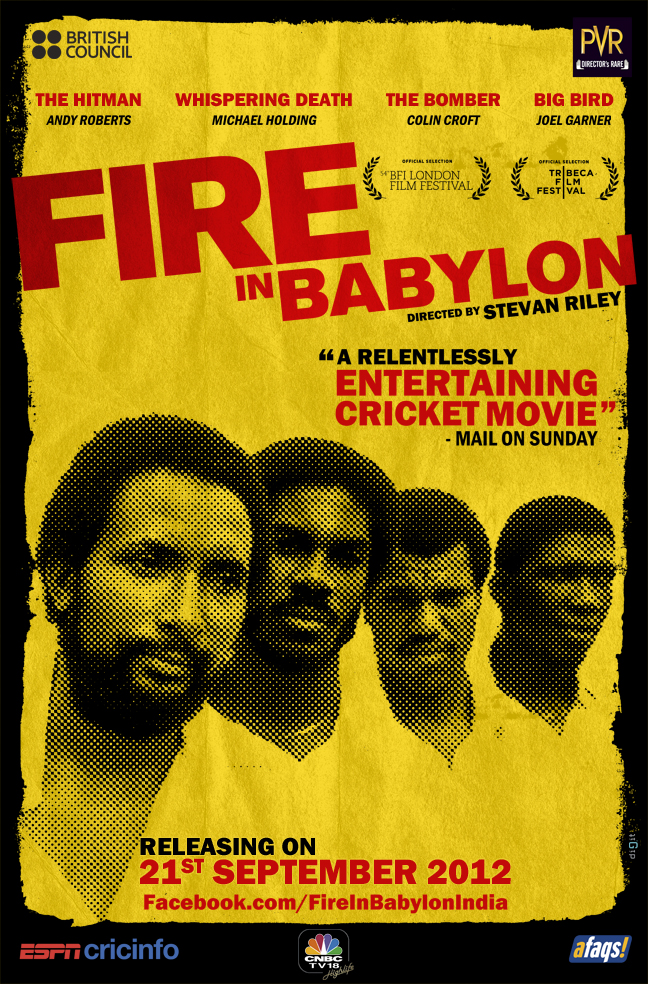
The documentary film “Fire In Babylon” will have a theatrical release in India on 21st of Sept, 2012. It will be released under PVR Director’s Rare series.

If you haven’t heard about the docu, here’s the official release…

From the Oscar winning producers of One Day in September and The Last King of Scotland, comes the relentlessly entertaining cricket film FIRE IN BABYLON. The film charts the glorious supremacy of the West Indies cricket team throughout the late ‘70s and ‘80s.

A display of dominance at the highest level – longer than any team in the history of sport – in a game previously reserved for the privileged elite, their symbolic declaration was clear: people of colour will not be dictated to – on a cricket ground or in any other field of life.

Recounting the defiant and symbolic dominance of the West Indies cricket team throughout the late 1970s and 80s, FIRE IN BABYLON charts the events, which led to the rise of the West Indian cricketers becoming a fearsome and all conquering force to be reckoned with, striking a wonderfully defiant blow at the forces of white prejudice world-wide, inspiring a generation still struggling to emerge from racial discrimination.

FIRE IN BABYLON is told completely from a West Indian perspective, featuring a host of some of the legendary and revered players of the time and significant names from Caribbean culture including Sir Viv Richards, Michael Holding, Sir Clive Lloyd and Bunny Wailer, against a soundtrack of vibrant and classic music by the likes of Bob Marley and the Wailers, Gregory Issacs, Faithless and Horace Andy.

And here’s the new trailer of the film..

Click here to go to its FB page for more details and updates.

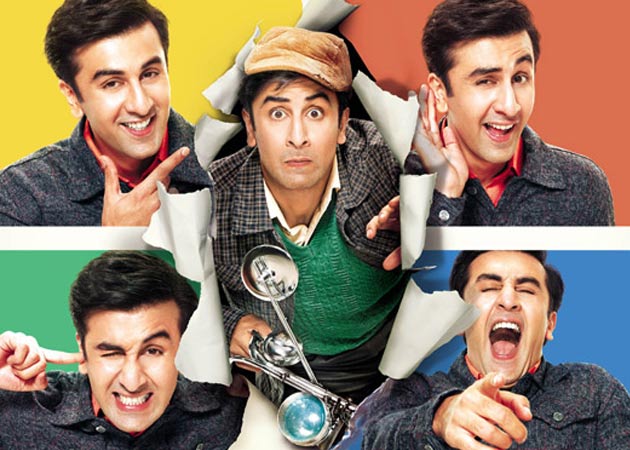
Ranbir Kapoor films have become a must-wait-for event and Pritam’s music the reverse – must-avoid-if-possible. Yet, surprise! What’s this mellifluous music we hear trailing off our TV sets and music players? Is it really Barfi music composed by Pritam? It is and a delicious blend of warmth-quirk-melody at that! Here’s the music review by the almost-resident MFC music reviewer @rohwit. This post was originally written for and published here. But Rohit being a friend, we thought he wouldn’t really mind if we stole it. 😉 Enjoy the spoils!

Ala Barfi! – Right from the first moment when you hear the whistle, you know this song is all about fun! A narrative of the alleged ‘sad’ life of Barfi, the song takes a lighter take on the situation rather than brooding over it (Sanjay Leela Bhansali, take note). There are 2 versions of this song. One is sung by Mohit chauhan and one by Swanand Kirkire. The version by Mohit Chauhan is peppier and stays true to the mood that the song aims to create. Swanand kirkire on the other hand, gives a naughtier touch to the song (so much so that ‘Munna mute hee aansu bahaye’ part doesn’t leave any impact in his version as much as it does in Mohit’s). Both versions are good in their own right. I liked the Mohit Chauhan version better because it’s easy on ears. At times, with the Swanand Kirkire version, the voice is too heavy for a song that is to be sung lightly. In Mohit’s version, in each ‘antra’, you can hear some brief ‘tom and jerry prank style music pieces’ even as Mohit sings. Kudos to Swanand Kirkire for penning  superb lyrics though.

Main kya karu – The song starts very quickly and in a very kya karu from ‘Wake Up Sid’ mood. The song doesn’t have an elaborate music setting before the singer starts. Nikhil Paul George starts the song with less than 6 seconds of music into the track. The ‘guitar resignation of a note’ at every ‘uff’ in the song is cleverly placed. The ‘antras’ have a ‘hopeless in love’ mood to them which is immensely relatable and melodiously performed. The song again is very easy on ears and has a lazy feel to it due to the absence of ‘orchestra overload’ sort of music setting. Liked. Super liked.

Kyon – Papon, (I mean THE Papon!) starts the song with a very 1970’s beat accompanying him. You almost miss a romantic accordion from the setting. The sweet violin arrangement makes it up very well though. Excellently penned by Neelesh Misra, the song makes just enough space for Sunidhi Chauhan to take over one antra and leave us mesmerized. Excellent display of two master artists at work. The only grouse I have is that I left wanting to hear Sunidhi Chauhan for one more Antra. Thoroughly enjoyable and hummable. Papon, sing more for us, will you? Please! The 25 second-odd simple twinkling music arrangement towards the end of the song puts us back to sleep and the song ends.

Phir le aaya dil (Reprise) – Sung by Arijit Singh in a contemporary music setting (yes, with faint tabla throughout the song) and ghazal-like lyrics. This sums up the song best . The use of piano in between and the general mood of this song is just too good. There is another version of this song as well and we will go there in a minute but this song has more layers because it’s not an out-n-out ghazal. The vocals of Arijit are apt for the song (And reminded me of Shail Hada. Where’s he by the way?) Pritam, is that you? Really? Pleasantly surprised! For me, the best song of the album.

Phir le aaya dil – Sung by Rekha Bhardwaj, this composition is an out and out ghazal – very linear in it’s approach. Not many layers. Not sure if this will feature in the film. We have heard Rekha Bhardwaj sing many a ghazals such as this one so it doesn’t come as a surprise that she hugs the lyrics, hi-5’s the music setting and sings with her usual aplomb.

Aashiyan – Excellent accordion play starts this song and Shreya Ghosal greets us smiling. Nikhil Paul George makes another appearance and compliments Shreya Ghosal superbly. This is a happy song. There is  flute  and voilin play in between and it does to us just what good music should!  Yes, music to the ears. The adorable ‘almost’ yodelling is placed perfectly in the song and you can’t help but smile everytime it comes up. Excellent arrangement, this.

Sawali si raat – Beautiful piano starts the song and guitars drift away in the background. Arijit Singh whisper-starts the song. The song talks about ‘sleep’ but the singer sounds clearly out of place in this song. Not comfortable with the subdued singing, Arijit perhaps wasn’t the right choice of the song. The tune nevertheless is quite hummable (Youtube ‘versions’ of this ahoy!). The only blip on the otherwise excellent album and for this, I can’t penalize Mr. Pritam.

Phir le aaya dil (by Shafqat Amanat Ali) – A very ‘raabta‘ like start (initial notes remind you of the Siyah Raatein version of Raabta), piano and a gentle music arrangement, thankfully aided by sarangi this time starts this song and Shafqat Amanat Ali Khan gets on with it. The moment you hear this song you feel it is the ‘cleanest’ arranged and presented song of all the versions. Best part – you cannot (and should not) compare the 3 versions of this song. Arijit Singh’s version is blessed with more ‘feel’. Rekha Bharadwaj and Shafqat’s version is more directed towards singing it right. I cannot get over the excellent use of our very own ‘Sarangi’ in this version though. Not nitpicking but please do pay chotu attention to the way Shafqat Amanat Ali Khan pronounces ‘Baaki’. This is the version that will make you cry a bit, yep.

Special mention – Shafqat Amanat Ali Khan has to be appreciated for not choosing similar songs and falling into the ‘Rahat Fateh Ali Khan’ sahab wala ‘typecast’ groove.
Aashiyan – Nikhil Paul George goes on and about in this solo version. While the duet version sounds fresh with Shreya Ghosal (and if you have heard that version already), you will miss her voice in this one because the energy is a little low. The tempo, music arrangement (save for voilins) is pretty much the same. The only difference that I could make out was the spacing between the opening lines of the mukhda. The lines are spaced using violins so that the listener doesn’t feel that the male voice is singing the female part as well. Not a song that would make you buy this album on a stand alone basis but compliments the album very well.
It’s already been said, blogged and screamed that Pritam has outdone himself with this album and I will just reiterate it shamelessly! You can visualize the film when you hear the songs. If the teaser of Barfi looks like picture perfect painting, the music adds beautiful colors to it. Thrilled beyond words, Pritam has given us one of the best music albums of this year!

Take a bow, Pritam…I owe you a 5 star chocolate, for this tasty Barfi!

ROME FILM FESTIVAL
(FESTIVAL INTERNAZIONALE DEL FILM DI ROMA)
Calls for Entries in all categories for 2012.

– Rome Film Festival now has a new artistic director, Marco Mueller (who used to head the Venice fest) and they are introducing some new categories and going for a makeover.  Scroll down for all the details.

DATES : The New redesigned 7th Rome Film Festival will take place from November 9 – 17, 2012 and will be a ‘World Premiere’ festival with a selection of around 60 world premieres. There will also be a focus on new trends in contemporary cinema in a New Competition section called Cinema XXI (21st-century cinema)

 – NEW SECTION : Cinema XXI (21st-century Cinema) focuses on works that “reflect the continuous reinvention of cinema on the contemporary visual scene,” and will host a competition showing feature films, medium-length features, and short films, for a maximum of fifteen films.

– The Official Selection is composed of an International Competition, a choice of films Out of Competition, and two additional competitive showcases: CinemaXXI (21st-century Cinema) and Perspectives Italy.

– The Rome Film festival will give out more than 12 awards for World Cinema.

 – The 7th Rome Film Festival is now open for Entries.

Eligibility Criteria: All film submissions must be recent productions completed not prior to November 30th, 2011, and they must not have been presented in any other format or length, not even as works-in-progress, for submission to previous editions of the Festival. Under no circumstances may films that have had prior public screenings be presented at the Rome Film Festival. Exceptions may be made only for films presented exclusively in their own country of origin. Works previously presented in competition or out of competition at other international festivals or shown on the Internet will not be considered for selection.

 – To submit a film to the selection, one has to fill out a pre-selection entry form on the official festival website.

– The preview DVDs should be sent to Deepti DCunha, who continues as the India Consultant to Artistic Director, Marco Mueller for the 7th Rome Film Festival.

– The DVDs should reach her before 1st September, 2012. Filmmakers with films in post-production are requested to contact Deepti at the address below.

– The festival’s Director Marco Mueller will be visiting India in September for the final selection of films.

– All submissions (duly subtitled in English) should be sent to the contact details given below before the 1st of September.

Name & Address: Deepti DCunha. 23 Gautam Niwas, 7 Bungalows. Andheri West, Mumbai 400 053. India

Email: deepti.dcunha@gmail.com or d.dcunha@romacinemafest.org

WEBSITE : For complete rules and regulations, you can visit the Festival website at www.romacinemafest.it

The sixth edition of Film Bazaar in which the Screenwriters’ Lab is conducted for Indian writers with original screenplays, has announced its results. The Lab is held in partnership with the Venice International Film Festival and has selected six scripts this year.

1. Kanu Behl – Titli

2. Umesh Vinayk Kulkarni – Antaraal

3. Ruchika Oberoi – Island City

4. Siddhartha Sinha – Behind the Camera

5. Alankrita Shrivastava – Lipstick Under My Burkha

6. Anupam Barve – The Shadow Lines

– Film Bazaar will be held from November 21-24, 2012 alongside the International Film Festival of India (IFFI). The screenwriters’ will travel to Venice during the Festival for the first working session of the Screenwriters’ Lab with mentors Marten Rabarts, Olivia Stewart, Urmi Juvekar & Bianca Taal. The second working session will take place in Goa at the Film Bazaar.

Shubha Shetty is a journalist and a writer who says she is still in the process of learning the art of diplomacy. Blurting out what she feels strongly about, and then repenting at leisure is how she kills her free time. Over to her now – An open letter to Anurag Kashyap.

I like people like Anurag Kashyap. This guy comes from nowhere and in spite of adverse conditions and zero support, with the sheer dint of an enviable amount of confidence and conviction, cocks a snook at the largely untalented and hence averse to risk film-makers. He does what he wants to. Without any compromise. Who doesn’t love an immensely talented underdog?

A decade later, his talent still shines bright. Watch Gangs of Wasseypur part I and you will need no further proof. And admirably he continues to use the power he has gathered over the years, in supporting other deserving film-makers.

But unfortunately, the very power has changed the man in a not so nice manner too. In recent times we have been witness to an unbridled bully, hidden inside this otherwise grounded man, rearing its ugly head once in a while This bully also attempts to cock a snook at his critics, but with not the same amount of confidence, also this one seems to operate more from ego than earnestness.

It is this bully who tells entertainment journalists that they shouldn’t care to criticise him because he has stopped reading entertainment supplements long back, but then we see him paying (?) and posing for an entertainment supplement of a leading newspaper.

I am more disheartened that this bully seems to be forcing entry into his films too. While Gangs of Wasseypur part II is excellent in parts as expected, you see unmissable traces of cockiness of the director in the form of self-indulgent long sequences and unexplained trail of characters.

To me, Kashyap now seems like this super brilliant boy from small town, an outsider, wasting his energy trying silly antics to just prove a point to a posh but mediocre group of city bred teenagers in college. I am concerned, like perhaps an old friend of that boy would be. After all, the friend knows that this boy can do wonders, only if he just stayed true to the genius that he’s blessed with.

But now that’s my opinion.

You decide which path you want to take, Mr. Kashyap. Do you want to be that all powerful, all successful film-maker who thinks he can sway people’s opinion by pushing his way through, with little help from his newly acquired sycophantic coterie or you want to continue being the awe inspiring film maker that you were, without wasting even an ounce of energy over thinking how powerful your craft and talent makes you.

You are already a successful and admirable man. It is time you stopped proving points to anyone. In the meanwhile, as much as I despise that bully inside you, I am still holding on to that faith I have on you. I am sure millions of others are too.

This slideshow requires JavaScript.

Manjeet Singh’s debut feature Maumbai Cha Raja has been selected to premiere at the Toronto International Film Festival (TIFF) in its “City To City”program where “Mumbai” is the focus this year. But the film is yet to be completed. And Manjeet is looking for funds to complete the film.

– TIFF website describes the film as “A young boy comes of age in a Mumbai slum while dealing with his long-suffering mother and violent father, in this gently observational portrait crafted in the tradition of the great neorealist classics.”

– And here’s the detailed official synopsis of the film…

Rahul is a misunderstood and troubled adolescent who lives in the slums bordering the nouveau riche areas of Northern Mumbai with his alcoholic father, ahrd working mother and a kid brother. He hangs out with his balloon seller streetwise younger friend, Arbaaz.

Set during the grand festival devoted to Lord Ganesha over the last two days when huge idols of the elephant headed God are taken in procession to the beach for immersion. Rahul has to handle the chaos in his life amidst the chaos of the colorful and vibrant festival.

It’s a peep into the lives of kids living in the slums of Mumbai. A tribute to their spirit of finding joy in trivial things and living life to the fullest.

– Click on the play button to watch the trailer

The film also bagged the Prasad Award in Work in Progress Lab at Film Bazaar 2011. And was also selected for Producer’s Lab in Cinemart at the International Film Festival of Rotterdam 2012.

– You can contribute between Rs 2000 to Rs 300,000 for its completion. To know more about the film and to make contribution, click here.

QOTD : Gangs Of Wasseypur – Part 1 or 2?

Posted: August 9, 2012 by moifightclub in cinema, QOTD
Tags: ,

The second part of Anurag Kashyap’s two-parter Gangs Of Wasseypur has finally released. Once you have seen both the parts, then only you can imagine how daunting task it must have been to make these two films, and still hit the right notes at the right places. (Aha, we will be again accused of being biased for his films. Not a single day passes without the accusation anyway.)

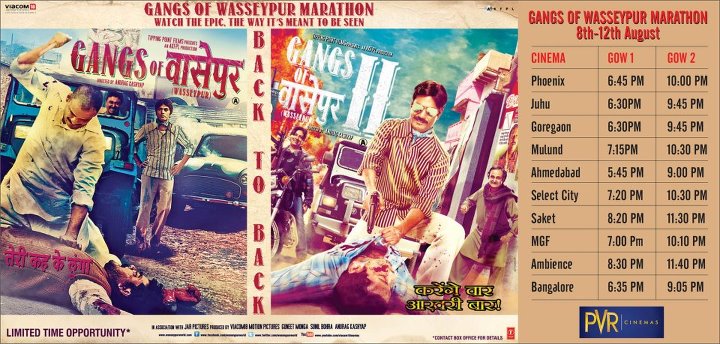
The opinion is still divided on whether 1 is better or 2, but one thing is for sure 1+2 = Epic Masterclass in Filmmaking! A rare feat which only few can dare to imagine and then translate it onscreen into cinematic orgasm of almost 6hours. There are few theatres across the country which are showing both the parts back to back (see pics). If you can, you must go for one of these marathons.

And so here’s our QOTD – Pick your favourites. If you are bit confused with who played which character, click here to access the family chart and then vote.

As for me, i would say Part 1 was like wine – slow, smooth and acquired taste. Part 2 is like beer – fast, popcorn-ish and fun! Full dhickiyaoon!

Do put your reasons in the comments section. Let the gang war begin!

We have been hearing a lot about Anand Gandhi’s debut feature Ship Of Theseus, and for a long time. Having seen his shorts, Right Here Right Now and Continuum, we can easily bet that he is an exciting talent to watch out for. The film is going to have its world premiere at the Toronto International Film Festival this year.

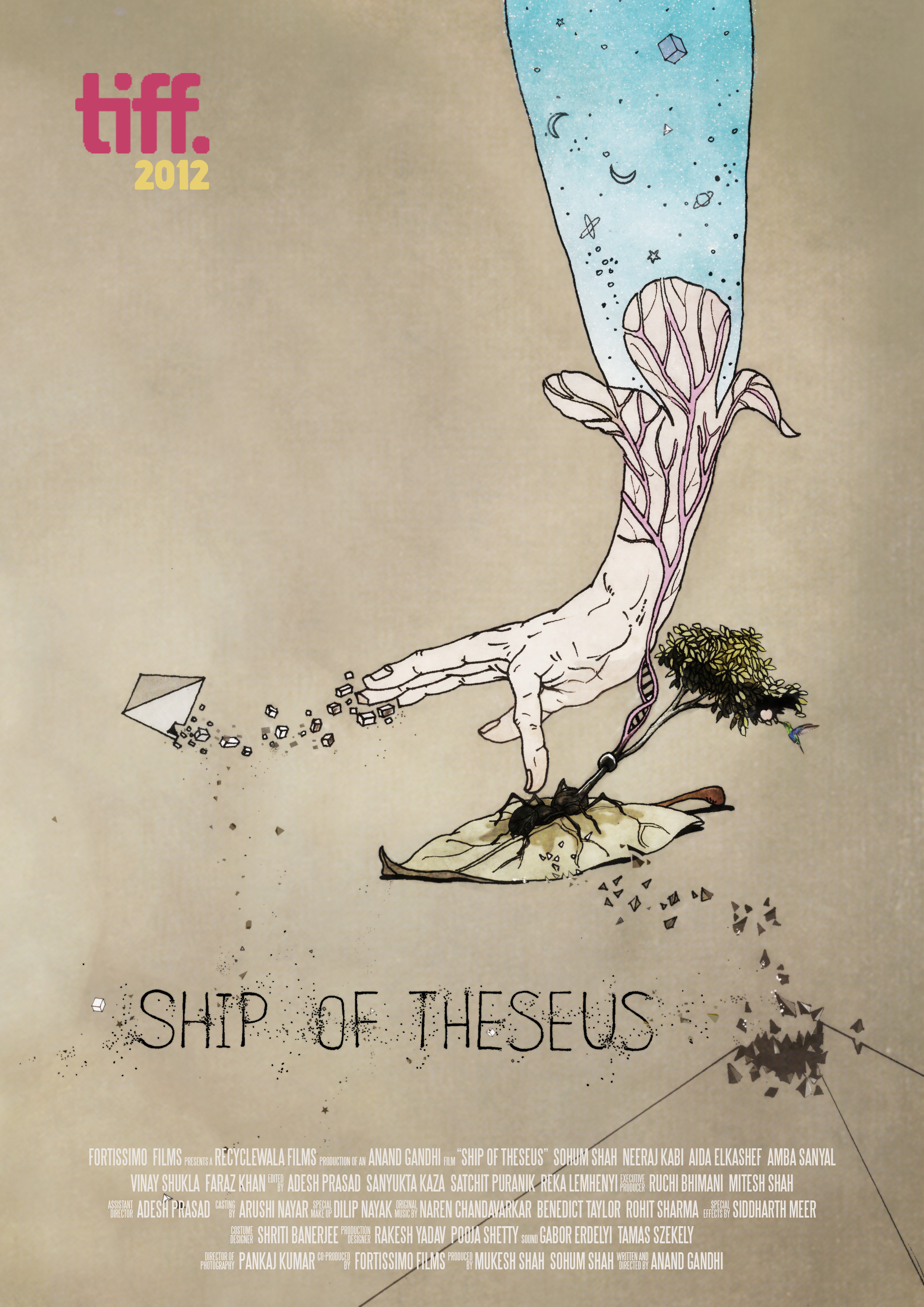
The poster, few stills and official synopsis of the film is out. Read it, have a look and you can decide if it looks/sounds exciting or not.

And here’s the official synopsis…

If the parts of a ship are replaced, bit-by-bit, is it still the same ship?

An unusual photographer, celebrated for her intuitive work, successfully captures the essence of her experience in her photography. However, she also struggles with insecurities over authorship in the context of larger questions about subjectivity and intent in art.

An erudite monk, who is an ideologue and practitioner of non-violence, and involved in animal rights activism, is forced to make a choice between death and medicine – medicine that is either derived from, or tested on animals. As death closes in, he re-questions all the ideas that he has always taken for granted.

A young stockbroker has a frictional relationship with his grandmother, whom he nurses in a hospital. When it is discovered that a neighbouring patient has had his kidney stolen, he starts out on a trail that leads him to a kidney tourism racket. Altruism and concern leads him to confront the recipient of the kidney, eventually making him discover how intricate morality could be.

Following the separate strands of their philosophical journeys, and their eventual convergence, Ship of Theseus explores questions of identity, justice, beauty, meaning and death.

The cast and the credit list…

Director: Anand Gandhi

Language: English, Hindi, Arabic

Runtime: 139 minutes

Exec. Producer: Mitesh Shah, Ruchi Bhimani

Producer: Mukesh Shah

Production Co.: Recyclewala Films

Principal Cast: Neeraj Kabi, Sohum Shah, Aida Elkashef, Faraz Khan, Vinay Shukla, Amba Sanyal

Screenplay: Anand Gandhi

Cinematographer: Pankaj Kumar

Editor: Adesh Prasad, Sanyukta Kaza, Satchit Puranik, Reka Lemhenyi

Sound: Gábor Erdélyi, Tamás Székely

Music: Rohit Sharma, Naren Chandavarkar, Benedict Taylor

Prod. Designer: Rakesh Yadav, Pooja Shetty

Int. Sales Agent: Fortissimo Films