Archive for the ‘cinema’ Category

WHAT:  Screenwriter’s Lab 2012, a 2-part workshop is designed to prepare screenwriters with original Indian stories for working with the international filmmaking market place. It aims at improving a completed screenplay in its final stages and to increase the international marketability of the same.

The Lab is organised in partnership with Binger Filmlab, Netherlands, and the Venice International Film Festival, Italy.

LAB : The 1st Session will be held during the Venice International Film Festival in Venice (31st August- 4th September, 2012) where participants will get first-hand experience of the workings of the international film community and get to train with their screenplay mentors.

The 2nd session at Film Bazaar, Goa from 24–27 November, 2011 is where participants will apply their training and pitch their revised screenplays to participants at the film market. (dates are subjected to change)

MENTORS : The workshop will be conducted by Marten Rabarts, Artistic Director, Binger Filmlab, aided by experienced international guest mentors. It is organized in association with Binger Filmlab, Netherlands and Venice International Film Festival.

DATES : Last date for submitting complete application forms : 31st May 2012.  Results : August 2012

FEES : Application will not be considered complete without the Submission fee of Rs. Three Thousand Only [Rs. 3000/-]. The fee can be paid through cheque/demand draft/electronic transfer. For more details, click here.

CONTACT: For any doubts, you can check out the FAQ and other details here or can write to  screenwriters-lab@filmbazaarindia.com

Rules & Regulations : Do carefully read the Rules and Regulations page as there has been some changes this year.

Happy writing!

This slideshow requires JavaScript.

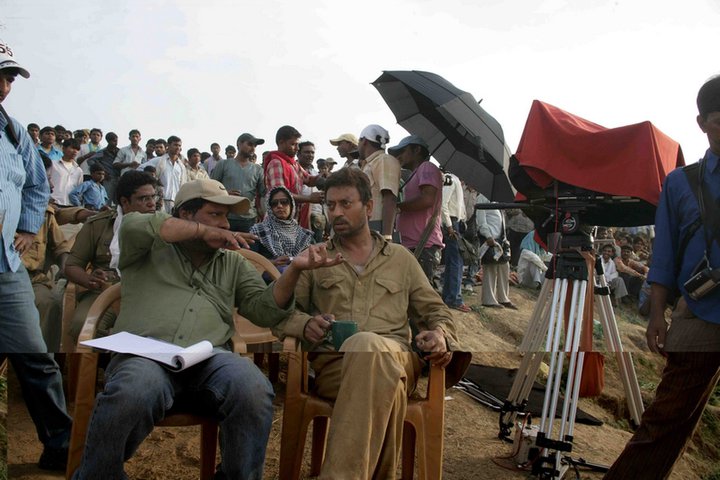
Last time when we met Imtiaz Ali to discuss Rockstar, there were many conspiracies and accusations. But since some of you appreciated our effort, we thought let’s try it again. This time it was done in a bit formal way. Film was Paan Singh Tomar, guests were Tigmanshu Dhulia (Director) and Sanjay Chouhan (Writer). Location – PVR, Juhu.

To get more time for Q & A, PVR helped us by cutting down the time for commercials, making the interval much shorter and delaying the next show by few minutes. But even then we could hardly manage some 20minutes of interaction. Because even the next show was housefull and people were getting desperate to get in. So we quickly wrapped it up and went outside. Aha, back to the stairs. And a filmmaker really needs a cigarette in his hand to open up. Watch the two videos and you will get what i am saying.

I saw the film on friday morning with just 15 people in the theater. And then i saw it again on wednesday night. This time it was a housefull show. A good film finding its audience is a great feeling.

And many thanks to Anurag Kashyap, Shiladitya Bora and PVR Cinemas for making it possible.

Pics – Priyanka Jain

Videos – Sumit Purohit and Manu Warrier. Edit – Sumit Purohit.

And here are pointers to some priceless gems –

00:47 – I needed an actor who could give me more than just his dates.

03:33 – Hum log ab mombatti na uthayein, bandook utha le.

04:25 – Koi research fund karne ke liye tayyar hi nahi tha.

04:40 – Actually yeh picture Vikas Behl ke wajah se huyee hai………..aaj us aadmi ko (credit) nikal diya hai unhone.

05:45 – Mad woman in the mayhem – Boss, yeh main karoonga. (Jo Shekhar Kapoor ke film se kat gaya tha.)

07:03 – Irrfan ne apne paise aadhe kar diye. Maine apne paise aadhe kar diye.

08:22 – Meri kisi picture me itne zyada darshak nahi aaye hain.

11:20 – Hum sabse galtiyaan ho jaati hai.

13:20 – Aapke sanskaar bolte hain yaar.

18:16 – Is society me hero kahan hai yaar?

20:13 – Aaj bhi duno cheeks me ched hai uske, woh zinda hai.

And if you enjoyed the first part of the video, you must watch the second part of the video.

It started with Rockstar. We went to see the film and then came out, sat on the stairs of Cinemax, Versova and discussed the film with its director Imtiaz Ali for next three hours. If you haven’t read the post, it’s here. The idea is to create space and platform for discussion with filmmakers after we have seen the film. Pre-release buzz is all fine but we rarely get to hear them post-release.

Last time it was completely informal. This time we are trying to do it in a bit formal way and as always, with the help of filmmaker Anurag Kashyap who will also be there. The film is Paan SIngh Tomar, one of the best reviewed films in recent times. So here are the details…

Film : Paan Singh Tomar

Venue : PVR, Juhu

Date : Today (7th March, Wednesday)

Time : 8pm show. We are hoping it will get over by 10pm and we will have 1hour time for discussion as the next show is at 11pm.

Entry : Since it’s a normal screening and discussion will be inside the auditorium, do book your tickets.

Tickets : Rs 150. You can either get it from the counter or book it at www.pvrcinemas.com

And thanks to PVR Cinemas and Shiladitya Bora for all the help.

See you there!

We are desperate for comebacks. And we are quick to dismiss too. All it takes is just a status update or 140 characters.

When Tigamanshu Dhulia’s last film, Sahib Biwi Aur Gangster released, it was the usual hype on the social networking platforms. As if friends, family and colleagues were dying to put that “comeback” tag on him. The film had it’s charm but it was nowhere close to what it was made out to be. The usual suspects tried the same with Ramu and his Not A Love Story. To put it mildly, that was unadulterated garbage in every way.

But, this is what a comeback looks like – Paan Singh Tomar. Ironic that the producers (UTV) had to sell the film as “from the director of Sahib Biwi Aur Gangster”. May be it wouldn’t have got a theatrical release even if it wasn’t for SBAG’s success. The film has been ready for quite sometime (about two years). They sent it to few desi festivals in USA where the general feedback was “Irrfan is good, film is bad”. News started doing the rounds that UTV was planning to dump it on tv along with some half a dozen other films. Then SBAG happened. Some strings were pulled, a release date was quickly announced and without much pubilcity or promotions, the film was released.

Those who have seen both the versions of the film, they said that music has surely been changed. But how much can just the “background music” change the film? No clue, not sure.

I went to see the film FDFS. Just because of that actor called Irrfan Khan. Or just Irrfan. Seems he has dropped his surname. Good, we have too many of them in this industry anyway. When i entered the auditorium, it felt like it was going to be a private screening only for me – the luxury that makers provide to few critics to give a bloated sense of being important and score some brownie points. Slowly some dozen people turned up including a director whose film has recently released.

The film opens with Brijendra Kala, an actor who is a delight to watch – the desi Bill Murray who knows his deadpan too well. As Irrfan narrates his story to Kala, it goes into flashback and we get to see the story of Paan Singh Tomar. I have been often told that narrating a story to a character to get into flashback is the worst device in a film. But with two terrific actors in the frame, they make everything mundane look so interesting. There are just counted few scenes between the two, but that thing called chemistry, well, it’s found in strange places between stranger people.

I have always felt that the mark of a good director is in the casting of those actors who have just one or two lines to deliver. You go to watch a film because of the lead actors but you come back home with those “character actors” who steal the show. This is where Paan Singh Tomar scores again. Even Zakir Hussain and Mahie Gill are so impressive in such small roles. Though it seems Nawazuddin had more to do in the film and it was edited out later on.

Paan Singh Tomar is the Tigamanshu we knew, the one we wanted to see again after Haasil. The director who could take us to a new place, away from bollywood where he knows the terrain, its politics and dialect well. Written by Sanjay Chouhan with dialogues by Dhulia, it captures the sound and soul of that barren land with a dose of black humour – a rarity in this industry. So when i saw his other film Shagird, i could not believe it was the same director. From one extreme to other – how could one go so far? As a screenwriter who saw the film with us  said, this is Race for intellectuals.

Welcome back, Tigmanshu. It’s been long.

And Irrfan? Well, he can do anything. Just anything. No wonder he is the only Khan they know in the west. It’s our bad luck that he is born in a country and at a time when we are obsessed with the weekend numbers and 100-crore mark, and we don’t make films that can’t justify his talent. Forget films, we don’t even dare to put him on magazine covers. I hope and pray that in your next birth you get a better place which knows how to respect talent.

The actor doesn’t need lines, his glances pack a punch. In the scene where he comes to meet his son and asks him not to touch him, when his son leaves and he looks around, that glance stays with you long after you have left the theater. Much like that awkward hug with his son’s girlfriend in one of my favourite films of all time, Namesake. He is about to hug her, she is about to kiss, and then that slight bend, slow movement and a strange look on his face. He can play young, can play old and even a father of a young man in the same film. He can run and romance with equal ease.

Only weird thing about the film is that it leaves you with a strange vacuous feeling – Not sure how you react to the character in the end. It keeps you engaged through the film but doesn’t hit the spot in the end which you desperately want it to.The emotional hook? Or may be just a bit of empathy.

As for Paan Singh Tomar, in other part of the world the most famous runner’s mom told him that life was like a box of chocolates, you never know what you’re gonna get. This side, we are sure about one thing – there’s no box, there are no chocolates and life is just a race which you must complete.

Sometime back we had a put a post on Kabir Chowdhary’s indie film Good Morning. The entire film is online now. Click on the play button and enjoy!

Synopsis: Good morning is a psychological drama that explores the obsessions and insecurities of a married man who is completely dedicated to his wife.
His world is shattered one day when he discovers his wife in Bed with another man.
What happens next is diabolical, cold and shocking.

Starring: Manish Kumar, Sukhmani, Emannuel Singh, Dolly Ahluwalia, Happy Vij, Gick Grewal, Payal, Daanish Singh, Raagini Ghai.

Director:  Kabir Singh Chowdhry
Cinematography: Rahat Mahajan
Editor/Costumes/Art: Sakshi Bhatia
Music: Hari Singh
Screenplay : Kabir Chowdhry and Sakshi Bhatia
Story: Can Themba
Producer : Pate Picture Company(2011)

Awarded The Grand Jury Prize for Best Narrative short at South Asian International Film Festival, New York 2011.
Genre: Psychological Drama
Studio: PATE Picture Company 2011 in association with Mahamudra Film Company
Description :  Good Morning
Fiction(Short)
Running time: 42 Mins
Budget: Rs.30,000 ($600)
Location: Chandigarh
Camera: Canon 5d

The Oscar buzz is in full swing now. And it’s not surprising that with The Artist, Carnage, Moneyball and My Week With Marilyn in the theatres, it’s one of the best weekends at the movies. Here’s Fatema Kagalwala‘s recco for one more charming film – Woody Allen’s Midnight In Paris. Read On. And don’t miss it.

Perhaps the most beautiful emotion to feel and soak in, besides love, is nostalgia, humankind’s singular tool to change the past, otherwise believed to be unchangeable. It is our very own time-travel device that takes us to places that never were but have become because of the way we choose to remember them. Present is drudgery but over time, after events have collected a dust of distance, they get shrouded in a mist of romance that becomes our haven, a cocoon which protects us from the unbearable banality of the present. A dreamworld we can escape to at will, and stay there for as long as the common concerns of the present do not summon us back with brutal force. With no control over the future and saddled permanently with a present we can never be content in, we are left with only this. This ability of re-writing our history to have something to be proud of. This gift, as it maybe perceived as, is the backbone of the much-loved Midnight in Paris. Above and beyond the travels of Gil into the depths of Time, it harks us back into the territory of rosy nostalgia, the blindfold behind which everything is safe.

This love for the past is almost lyrical. As poetic as Woody Allen presents in his dreamy albeit slightly woolly-headed Gil. And as precise as science, he makes him a writer, dwelling in the poetry of yesteryears, seeking the mirage of a gold-dusted past. Allen makes him choose Paris, the most fabled (at least in the Western world) romantic city full of the mystique and exoticism of art and expression. As we watch Gil engage with the city, we begin to crave the opiate of escape and begin to wear his shroud of nostalgia with pride and a certain willingness beyond the power of Gil’s experiences to arouse. We give up to the visions of our own Golden Age, whatever it might be, and revel in the feeling of the enigmatic ‘if only’. We thirst to find our own Parisian street we could roam at midnight and enter our perfect world, a world that never was but that which always lives within us.

It is this thirst, accompanied with Allen’s intuitive writing that steers us through fundamental truths of our relationship with time. None of the wonder that consumes Gil in his nightly sojourns is part of the lives of Adriana, Hemmingway or the Fitzgeralds. But the cyclical obsession for yore shows up in Adriana’s climactic choice when a somewhat misplaced wisdom shakes Gil back into the present. Misplaced because it seems out-of-character and sync with the young, idealist we see seeking truth and beauty with the innocence of a child. As a climactic turning point his revelation appears without notice and motivation, almost like a screen-writer-induced epiphany, diluting the entire premise of Gil’s character, thirst and search.

But it is with his ‘epiphany’ that the strong undercurrent of post-modern ennui, resonating in every single of Allen’s work, suddenly comes into play. It is logical and it makes the most sense. And as unpoetic as it is, it draws that familiar blanket of dejection around the theme, particularly in the way we now perceive Adriana and her delusion in contrast.

In that sense, Midnight in Paris, in the true tradition of Allen’s films, isn’t a hopeful picture even if Gil’s ultimate ‘escape’ may seem victorious. There is that unmistakable, underlying thread of pessimism that is a founding trope of all of Allen’s films. This juxtapositioning of reality and delusion is subtler than the film would have us believe and almost missable. But it is this juxtapositioning that brings home the universal truth of what we may not hurry to see, that this too shall pass. Apply it to the living present or the living in the past as it were.

However smart this juxtapositioning may be, its smartness becomes the undoing of the deeper and more significant sub-text. Were Gil’s realisation a result of a character growth or an outcome of an event, the smartness would have suddenly transformed into a more studied expose. We, in our terrific rush of having limply succumbed into the arms of yesterday, accept it because the act of breaking his suffocating engagement becomes our direct point-of-reference for his character growth. But it is merely a diversion that we mistake as the destination.

At first glance, Owen Wilson seems an unlikely actor to play the part of wide-eyed Gil. His demeanour and biography is hardly striking enough to carry off a character that sparks off dreamworlds in the most magical manner. But as Gil, he is transformed in front of our eyes into the part-naïve, part-grounded, part-dreamy idealist charming us into his utopia compelling us to love his journey as much as we would love our own. Marion Cotilard, on the other hand, does not have to ‘do’ anything for us to love her. She is undoubtedly the perfect choice to play the pixie-like, porcelain Adriana whom we can’t help but want to protect, even if it is from her own self-destructiveness. The wispy, ethereal beauty of Marion does half the work and the rest is superbly accomplished by the stunning actress herself. Coming away, we are forced to admit, no one could have played the parts better than these two.

Allen chooses his Golden Age with art and its main protagonists with a tongue-firmly-in-cheek. The Fitzgeralds were almost as mythical in their own time as they are now, and so was the Jazz Age. He picks the best representatives of the time but presents them as trophy heroes. We are left star-struck, as much as Gil is and hunger for more. But the legends, as we know them to be today, seem bound by a necessity to shock and entertain. And it is here that Midnight in Paris falters. As legends after legends flood Gil’s dream, ours is disrupted. A certain dishonesty of intent creeps in and the onus veers towards gimmick, taking away the artfulness it has carefully built so far.

But by now they have created a beautiful world, a world neither we nor Gil would like to ever be taken from, a dream we would never like to be awakened from. Probably for this, Midnight in Paris will forever remain a very dear piece of cinema to us. Because despite the choices the film makes, it brings us close to a world we all yearn for. But more importantly, it brings to us very vividly, the joys of attaining the perfection that is humanly impossible. It is this affirmation we cherish which is far, far beyond the artistry of the film. Yet, it is a gift, an ascertained gift the film gives us so that we can continue to look for our time in the rain, at midnight, when we can escape into our Golden Age, even if momentarily. Meanwhile, we can turn to Gil’s. Even if it is for less than two hours, and which even though smaller than our own love for the past, will suffice.

Click on the play button to enjoy the opening scene of the film.

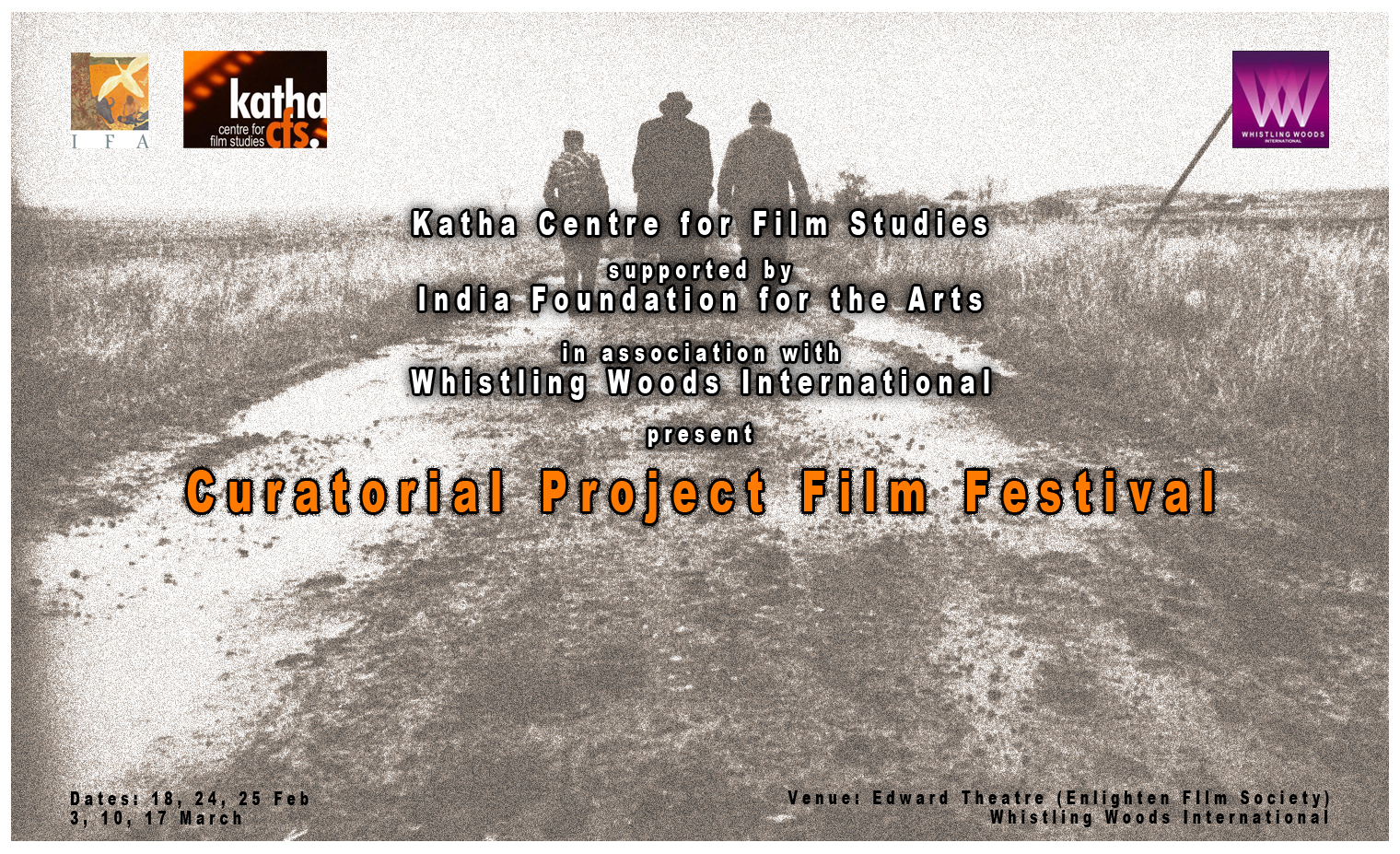
Katha Centre for Film Studies : Curatorial Project Film Festival (Weekend Screenings from 18th Feb to 17th March)

Curatorial Project Film Festival is a part of the workshops on Film Curatorial Practices organized by Katha Centre for Film Studies and supported by India Foundation for the Arts.

– All film screenings are followed by discussions around films and the curatorial idea. The film screenings and discussions are open to all. No registration, no tickets required – just reach the venue and join us!

Schedule:

1. A bit of I, A bit of Me –  Curated by Afrah Shafiq.

Date : 24th and 25th Feb, 2012

Location : Edward Theatre, Kalbadevi and Whistling Woods International, Film City, Goregaon East, respectively

The programme includes a collection of documentary work that is in one way or the other a cinematic rendition of the self. These subjective truths with generous doses of reality, explore the practice where the filmmaker chooses to face the camera and implicate themselves in their own work and the teller becomes inseparable from what is being told.

Desperately Seeking Helen (Eisha Marjara, 81min, Canada)-  3:15pm, 24 Feb, Edward Theatre| 3:45pm, 25 Feb, Whistling Woods International

The Beaches of Agnes (Agnes Vards, 110min, France) – 5:00pm, 24 Feb, Edward Theatre| 10:15am, 25 Feb, Whistling Woods International

Summer in my veins (Nish Saran, 41min, India) 7pm, 24 Feb, Edward Theatre| 5:30pm, 25 Feb, Whistling Woods International

Unlimited Girls (Paromita Vohra, 94min, India) – 12:15pm, 25 Feb, Whistling Woods International

2. Emerging Voices of Indian Cinema – Curated by Manjeet Singh.

Unreleased Independent Feature films / Short films / Animation films. An attempt to probe into the challenges and delights of filmmaking

Date – 3rd March, 2012

Venue – Whistling Woods International, Film City, Goregaon East

Alms of a blind horse (Gurvinder Singh, 90min, India) – 10:15am

VideoKaran (Jagannathan Krishnan, 73min, India) – 12:00 noon

Hawa Anne De (Partho Sen Gupta, 93min, India) – 3:00pm

Carnival (Madhuja Mukherjee, 61min, India) – 4:45pm

3. Sonic Silences, Soundscape and Cinema – Curated by Geetha B.

The programme explores varied ways in which silence is used in films and the complexity of silence both in a philosophical and acoustic sense.

Date : 10th Mar, 2012

Venue : Whistling Woods International, Film City, Goregaon East

2001 A Space Odyssey (Stanley Kubrick, 142min, USA ) – 10:30am

In the Mood for Love (Wong Kar Wai, 98min, Hong Kong) – 1:45pm

Satantango  (Bela Tarr, 60min, Hungary) – Selections from the film – 3:30pm

Siddheshwari (Mani Kaul, 123min, India) – 5:15pm

4. Food and Cinema –  Curated by Atika Chohan.

The programme looks at the centrality of food as  recurrent film theme and how imperative a tool it is to explore society, culture, tradition, race, displacement, immigration, current socio-economic concerns and politics; and further, since food-films marry cinematics and rhetoric so engagingly that it finds an instant  receptivity amongst both the lay and initiated audience.

Date : 17th March, 2012

Venue : Whistling Woods International, Film City, Goregaon East

The Cook the Thief his Wife her lover  (Peter Greenaway, 95min, France-UK)  –  10:15am

Silence of the Lambs (Jonathan Demme, 118min, USA) – 12:00 noon

My Dinner with Andre (Louis Malle, 110min, USA) – 3:15pm

Eat Drink Man Woman (Ang Lee, 124min, Taiwan) – 5:15pm

– In case of any query, tweet to @kathaCFS or @svetlana25 or you can write to  katha.film@gmail.com

– **Please note that screening times are subject to change in case of certain unavoidable situations.

“घर को ढूंढें पागल सा, मूर्ख दीवाना है
जहाँ रुके वहीँ घर हो जावे, ठौर-ठिकाना है
नाथ तुंग के कभी प्रयाग-ऐ-रूद्र होइयां
अन्दर झाँका, बुद्ध होइयां”

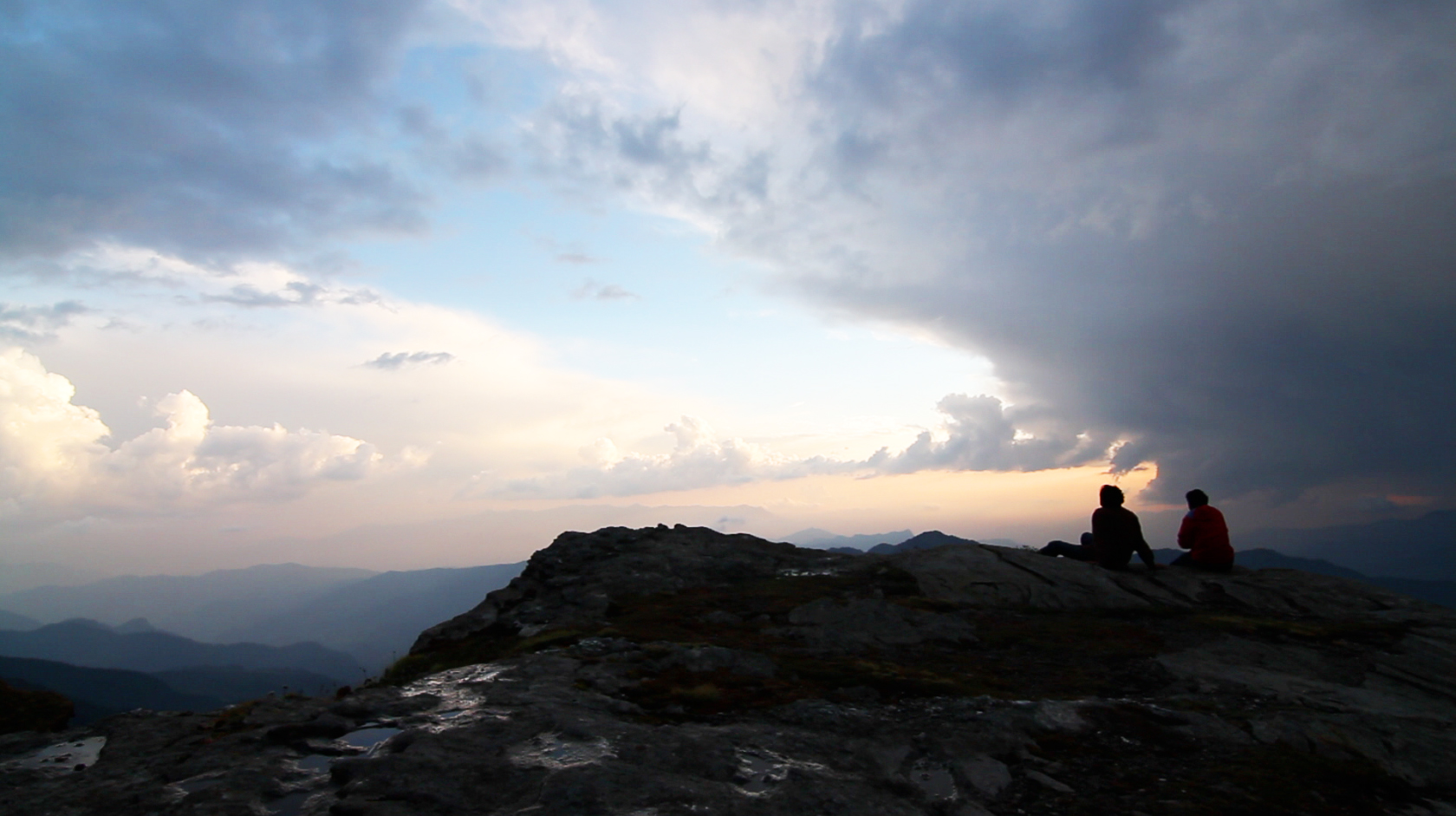
It all started with the idea to see what Canon 7D was capable of. I could have tested it in Mumbai but when you are from a place like Uttarakhand, what better than to explore your own home.

Thereafter started the ideation, scribblings and conversations. And all through the shooting, that is how we worked. There was no bound script and no story in a traditional sense. There were notes I jotten down, every now and then on my phone. There were fairly clear character sketches in our minds. And there was the idea to explore, much like the characters do – two friends, one revisiting the hills he belongs to and other experiencing a whole new world.

I had been following Mihir’s DSLR work for a while. He is one of the few people doing a great job with it, at least in India, so he was quite an obvious choice for cinematographer. Our friend and my co-writer on many projects, Puneet Krishna, decided to co-produce. Because most of the film relied on improvising, I cast trained actors from FTII – Gaurav Dwivedi and Shubham.

A small crew of five, we took off from Mumbai, with a seven-day plan in hand. Little did we anticipate a glitch, that too right in the beginning; an unexpected train delay made us lose one whole day. The schedule had to be worked around to shoot as much as possible all through, right from the banks of Ganga to up in the Himalayas. What we overlooked this time was that trekking up the steep four kilometre Himalayan strech, to reach Tunganath – the final destination of our road movie, wouldn’t be a piece of cake (had it been so, we wouldn’t have enjoyed as much!). Shooting on low budget, with limited time-frame and that too while traveling, can lead to innumerable permutations and combinations of situations which have to be incorporated in the film, no matter what. Sometimes the actors can surprise you for good and on some occasions one has to live with whatever has been captured. Limitation can be a beauty.

This film, as and when it gets made, is the idea we began with – exploration.

I wish I could edit the film sooner, but in between jobs that get the daily bread and a whole lot of footage essentially shot without a screenplay, editing is a long process.

(p.s. If this teaser interests you, do get in touch with us. We are still looking for people to help us with music, sound design, vfx etc. The final cut would be around 60-70 minutes. The following teaser has been edited on Tibetan bowl music)

(ps 1 – The first four lines in Hindi are by Puneet Krishna)

For production stills click here.

All feedback is welcome!

Sumit Purohit

India doesn’t have anything to boast about at the ongoing Berlin Film Festival. Like any other cinema snob, if you don’t count Don2, Rajan Khosa’s Gattu is the only film in the official selection of Berlin. The film will be screened in the Generation section of the festival.

Since 1978, the Berlinale has devoted a section to children and young people: Generation. In two competitions, Generation Kplus and Generation 14plus, discoveries from state of the art world-cinema and on a par with young people are presented and the most outstanding of these are awarded the Crystal Bears. (from official release)

Gattu is produced by CFSI and the cast includes Mohammad Samad, Naresh Kumar and Bhura.

And here’s the official synopsis….

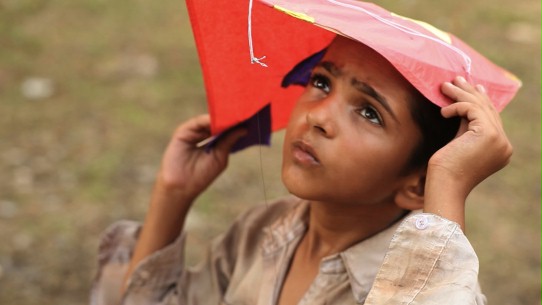
‘Truth with triumph in the end’ is the motto of the local school in the part of town where Gattu lives. But Gattu is too poor to go to school and he’s not always that truthful either. Gattu lives and works very hard at a scrap yard belonging to a man he simply calls ‘uncle’. Uncle bought him years ago from his sick father. Gattu is particularly inventive when it comes to thinking up excuses so he can slip away and indulge his passion for kite-flying. Day after day the children love to compete against each other with their kites. They’ve given the name Kali to one mysterious black kite that dominates the sky; strangely, nobody seems to know who owns it. If Gattu wants to win the next competition he’ll have to climb to the highest place in town. This is the school roof, of all places. Gattu manages to creep inside where he assumes command of a small but determined group of pupils. A dramatic battle of the skies ensues during which Gattu uses every trick in the book to claim the lead. But his greatest achievement is when, encouraged by his friendship with his new-found comrades, he decides to tell the truth.

Musa Syeed’s low-budget debut feature, Valley Of Saints recently premiered at the Sundance Film Festival and also bagged the World Cinema Audience Award for dramatic feature. It’s currently screening at the International Film festival Of Rotterdam.

To quote from the official synopsis, during a violent summer in the beautiful Kashmir Valley, a young boatman tries to escape. But then he finds a new love. It’s a story of conflict, but it’s also about the environmental destruction of the beautiful Dal Lake.

Do check out the trailer.

To know more about the film and the director, click here to read the DearCinema.com interview.