Archive for the ‘Film Festival’ Category

Cannes

Cannes Film Festival has just announced its official selection list. And as expected not too many Indian films at fest this year.

As part of tribute to 100 years of Indian Cinema, Bombay Talkies will have its Gala premiere at the fest. It’s a collection of four short films directed by Dibakar Banerjee, Anurag Kashyap, Karan Johar and Zoya Akhtar.

Another selection is Amit Kumar’s Monsoon Shootout which is in Midnight Screenings section. It stars Vijay Varma, Nawazuddin Siddiqi, Tannishtha Chatterjee, Neeraj Kabi, Geetanjali Thapa.

And here’s the official synopsis – A rookie cop faces a suspected gangster in a dead-end alley and has to decide whether to shoot or not to shoot. Three separate scenarios explore the impact of his decision on other people’s lives.

Amit had earlier directed a terrific short called Bypass which won many awards. Click here and here to watch the film in two parts.

Also, Indian actor and director Nandita Das is part of the CineFoundation and Short Film Jury.

To read the complete list, click here.

always-being-born-recipient-of-dadasaheb-phalke-award-mrinal-sen-a-memoir-275x275-imad96etkbdskjezRecently I watched a documentary film where Mrinal Sen is quoted. Mrinal Sen? It left me wondering when was the last time I heard his name. Honestly, not sure. In which discussion? Well, really not sure. We talk so much about world cinema, but we rarely get to hear the desi names beyond the few obvious ones.

People like us, who could easily be branded as the fest-fuckers, are bigger culprits. Even before fests became kind of cool for kids here, Sen had been there, done that. Apart from many other international awards, his Kharij was in Cannes Official Competition and bagged the Jury Prize in 1983. His another film Akaler Shandhaney (In Search Of A Famine) was in cometition at Berlin Fest where it bagged the Silver Bear in 1981, and at Venice Film Festival, Ek Din Achanak got an Honourable Mention. Do watch the films if you haven’t.

Back to Sen, and we have a new segment – Just A Page. The film reminded me of his memoir, Always Being Born. I had read it long back. As soon as i came back home, i took out the book and read few pages. Ironically, even at the risk of it being used to poke fun at me for obvious reasons (by friends and well-wishers mostly), am going to quote a page from this book. Quite a terrific one. Do read.

Suddenly, from behind a boulder on which I was seated, appeared a boy, hardly ten, the external anatomy giving the appearance of a beggar. He stood before me, but unlike a hungry beggar, his eyes were bright. I smiled and he smiled back. I pulled out a ten-rupee note, quite a fat amount in those days, and gave it to him. He could not believe that the amount was meant for him. I drew him close, patted him on the shoulder and gave him the push with a smile. The boy ran away with the money, looked back from a distance, his eyes beaming, and disappeared. Instantly, I felt I was a different man altogether. I sprang to my feet and, with nobody around, i shouted at the top of my voice and in ecstasy uttered a few Bengali words, Dekh-re Shala’ra, Kemon Aami Nirbaashan’e Aachhi! (Look bastards, I’m an exile here!) And there was nobody around. Bengali, for the first time in last three days, because it was Greek in Jhansi. Could there be a streak of madness in me? Or, to quote Jacques Tati or getting a kick from Chaplin, Inspired Nonsense?

I, then, returned to my hotel, shut myself up in my small room and moved towards the tall mirror. Standing before the mirror, I could see myself from top to toe, head to foot. Watching me, I enjoyed looking at “it”. As I looked deep into the eyes of my ‘double’, I wanted to see more of ‘it’, the whole of ‘it’. Without caring to behave myself, I made a violent move to strip myself.

There stood my ‘double’, stark naked, face to face with me. Was the look menancing? The double’s? Or mine? I did not remember. I remembered the ‘talk’ I had with ‘him’. I said, hugely intrigued:

There you are, Mr Mrinal Sen, one who read a lot on cinema, wrote substantially on its aesthetics and made frantic efforts to impress others! Now, here you are, Mr Sen, a dawai-walla (medicine-seller), who once wanted to be a filmmaker! Didn’t you, Mr Sen, manage to hook a money-backer and finally backed out for fear of making  lousy film? Oh, no! Serve your bosses well, rot here and try to get an increment. To feel bored is not your business, you cannot afford it, can you?

So saying, I made faces, muttered words in languages I know, then giggled and laughed and made all kinds of absurd gestures and finally, unable to control myself, I cried. Cried like a child. All alone in a hotel room in Jhansi!

After three days, I sent a long telegram to the management in Bombay and I resigned.

You can order the book from Flipkart here.

(PS – To make life bit simpler, now you don’t need to fill in all the details to post comments. If you are already logged into Facebook or Twitter, just log in with your FB/T account. Click on the small (FB/T) icon below the comment box, a pop up will appear, authorize the app and you are done)

@NotSoSnob

This slideshow requires JavaScript.

An interesting trailer of Ajay Bahl’s debut film “BA Pass” came out online recently. If you still haven’t seen it, click on the play button.

The cast includes Shilpa Shukla, Shadab Kamal, Rajesh Sharma, Dibyendu Bhattacharya and Geeta Agarwal.

And here’s the official synopsis of the film –

A young small town boy moves to Delhi to stay with his aunt and finish his college. Soon a mysterious married woman seduces him known to him as Sarika ‘Aunty’. Set amidst the neon-lit by lanes of Delhi’s Paharganj unfolds an erotic human drama between the two. A relationship based on lust, lies and deceit is forged. As the young boy gets more and more entrenched into his surroundings he discovers a city that thrives on corrupting even the most naive and innocent.

– The film is based on Mohan Sikka’s story “The Railway Aunty”, which was part of the anthology “Delhi Noir”. The story is available online. If you haven’t read it yet, click here.

– Click here to read an interview of the director on DearCinema.com.

– The film will have its next screening at New York Indian Film Festival which is scheduled from April 30th to May4th, 2013.

– To know more about the film, you can follow its Facebook page.

unhung heroSince none of us are getting much time to write posts these days, i thought let’s at least compile cinema related interesting news bits that we come across on the net everyday and put it in a post. Otherwise it just gets lost in the timeline flood.

When i first heard the term “cockumentary”, i had no clue how to react. But that’s how Patrick Moote branded his film “Unhung Hero” – a cockumentary. And it started because of his cock size and because of which he was publicly rejected by the girl whom he proposed. The film is premiering at the ongoing SXSW Festival.

Indiewire has got a clip. Click here to read more about it and watch the clip.

Twitchfilm has reviewed the film. Click here to read.

But does size matter? Well, this isn’t the first time that the million dollar question has bothered men. And this won’t be the last. You can’t deny that it’s a serious issue. Problem is the moment one tries to talk about it, the reactions goes in all extreme directions.

And like Moote, filmmaker Lawrence Barraclough also has mini-me issue. And he made two docus on it, putting the camera on his dick. First one is called “My Penis and I” which was made for BBC. The second one is called “My Penis and Everyone Else’s”. Both the films are quite funny, sad and serious. He even talks to his girlfriend and parents about it. If not big dick, this surely needs big balls. Do watch.

And that’s not all. If you were offended by Seth MacFarlane’s “We Saw Your Boobs”, Ladies, here’s your revenge – we saw your junk. Have fun.

Pic courtesy – FB page of the film

Two festival news updates.

Manjeet Singh’s next feature Chenu has been selected for the 9th edition of L’Atelier organized by the Cinéfondation of the Cannes Film Festival. 15 projects from 14 countries have been selected for 2013 edition of L’Atelier which invites directors/producers to meet potential partners during the Festival. So far, out of 126 projects presented over the last eight years, 83 have been completed and 29 are currently in pre-production. From May 17 to 23, L’Atelier will arrange meetings with the directors for film industry professionals interested in investing in their projects.

DearCinema has more info on the film – Chenu is the story of a young dalit boy in the northern Ganges belt. He is drawn into ongoing war between the naxals and upper caste militia, when his younger sister’s fingers are chopped for plucking mustard leaves from a landlord’s field. The script explores various factions existing in the northern Ganges belt and delves into the humiliating lives of the underprivileged dalits.

Manjeet Singh’s directorial debut Mumbai Cha Raja premiered at TIFF and have been doing the fest rounds since then. Last year Shivajee Chandrabhushan’s project The Untold Tale was selected for L’Atelier.

powerless_tff

Tribeca Film festival has released the list of 12 documentaries that will premiere at the fest and will compete in the World Documentary competition section. Fahad Mustafa and Deepti Kakkar’s Powerless, which recently premiered at the Berlin Film festival, will have its North American premiere at Tribeca. Here’s the official synopsis from the Tribeca release..

Would you risk your life to flip a switch? In Kanpur, India, putting oneself in harm’s way to deliver electrical power is all too common. Powerless sheds light on the opposing corners of this political ring, from an electrical Robin Hood tapping wires for neighbors to the myopic utility company whose failure to understand economics forces it deeper into financial disarray. This vibrant exposé gives a whole new meaning to the words “power struggle.” In English, Hindi with subtitles.

To know more about the film, watch its trailer/teaser and for its credit roll, click here.

The 2013 film selection includes feature films from 30 different countries, including 53 World Premieres, 7 International Premieres, 15 North American Premieres, 6 U.S. Premieres and 8 New York Premieres. A total of 113 directors will present feature works at the Festival, with 35 of these filmmakers marking their feature directorial debuts. Among these directors, 26 are women. The 2013 film slate was chosen from a total of 6005 submissions.

Fahad Mustafa and Deepti Kakkar’s documentary Powerless was selected to premiere at the ongoing Berlin Film Fest. The first look of the film is out with three interesting trailers.

Powerless is set in Kanpur, a city with 15-hour power cuts, where a nimble young electrician provides robin-hood style services to the poor. Meanwhile, the first female chief of the electricity supply company is on a mission to dismantle the illegal connections, for good. The documentary recently received a grant from Sundance Institute’s Documentary Film Program and Fund.

To read the Hollywood Reporter’s review of the film, click here.

Production companies: Globalistan Films, ITVS International

Directors: Fahad Mustafa, Deepti Kakkar

Producers: Fahad Mustafa, Deepti Kakkar, Judy Tam, Leopold Koegler

Directors of photography: Maria Trieb, Amith Surendran, Fahad Mustafa

Music: Gingger Shankar

Editors: Maria Trieb, Namrata Rao

Sales Agent: Globalistan Films

No rating, 84 minutes

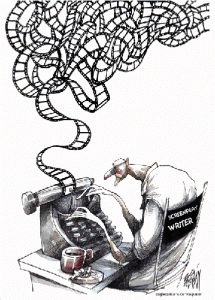
screenwriting-215x300There have been some changes in NFDC’s Screenwriters Lab this year. And also there’s a new partner – Toronto International Film Festival. Scroll down for further details.

WHAT : In keeping with the mandate of promoting the development of the Cinemas of India, the National Film Development Corporation of India (NFDC) conducts the Film Bazaar Screenwriters’ Lab. The 2013 Lab will be in partnership with Toronto International Film Festival.

LAB : The Screenwriters’ Lab 2013 gives an opportunity to six independent screenwriters to develop their skill under the guidance of a variety of industry experts from across the globe. Through one-on-one sessions with their Mentors, the Screenwriter Fellows are advised on tools and techniques required to improve their scripts and methods to pitch the same in the international domain.

—> Selected screenwriters attend the first part at the Toronto International Film Festival and the second part at NFDC’s Film Bazaar, Goa.

The Screenwriters’ Lab is specially re-designed to prepare screenwriters with original Indian stories for working with the international filmmaking market.  The Screenwriters’ Lab also creates a unique opportunity for these scripts to gain a direct entry to the Film Bazaar Co-Production Market.

(Revised) Application Process :

– Apply before March 1, 2013 with your synopsis.

– Short listed participants will then be asked to submit their scripts by June 2013.

– Six participants will be declared in the month of August 2013.

General Rules

– This Lab is open only to Indian passport holders

– The selection process is in two parts. This is the first part of the selection procedure where participants will be shortlisted based on the submitted synopsis.

– Participants shortlisted for the second stage will be given a scheduled duration to submit completed scripts.

– Submission via email only as a single pdf/doc file. Do not send requisite material as separate attachments. No hard copy submissions are to be sent.

– Applications are to be sent to screenwriters-lab@fimbazaarindia.com

– Application Fee for the lab is INR 1000/- only. It is payable by Demand Draft made in favour of National Film Development Corporation Ltd payable at Mumbai or by Wire Transfer.

—> To know more about the rules, regulations, application form and the rest, click here.

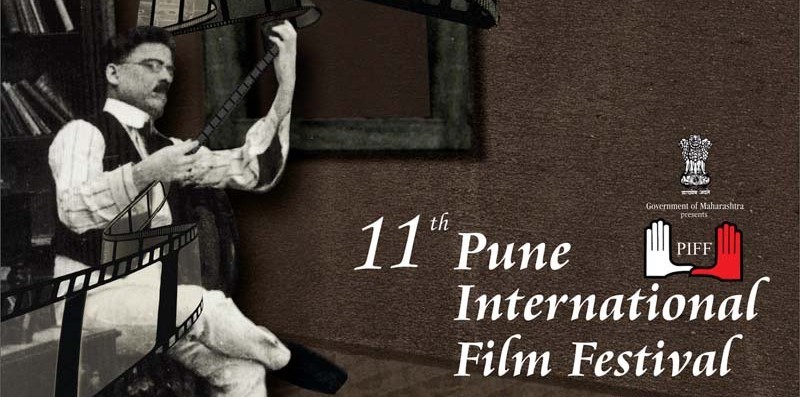
This post is bit late. But here’s Mohit Patil‘s notes from PIFF, 2013. And as his twitter bio goes, he loves films and scotch. For films, the recco list is here. For scotch, you can ask him on twitter.
PIFF2

First things first, this was the most awesomely organised edition of PIFF. They not only made sure that we got to watch great films from around the world, but also end up learning the basics of film projection before the fest concluded. For most of the screenings took place only after someone from the audience helped the projection operator with his job – like explaining what subtitles are, helping him change the aspect ratio, explaining the difference between the original audio track and the Director’s Commentary, telling him that talking on the phone in the projection booth is bad manners etc.

Anyway, here’s what I thought of the films I saw at the Pune International Film Festival 2013 –  The old ones and the new ones, the shorts, the documentaries, feature films, everything.

[ Title (Director, Country, Year, Section under which the film was screened) ]

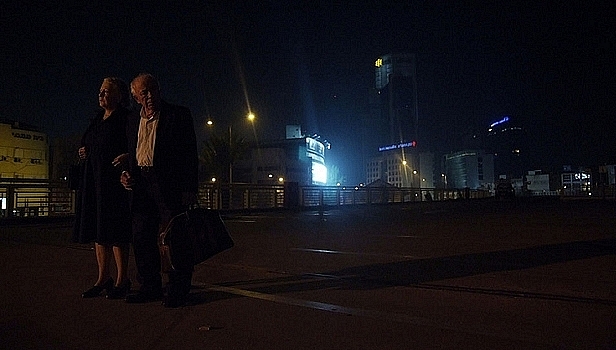
Epilogue (Amir Manor, Israel, 2012, Opening film):

1

(Another short paragraph and I’ll be done with the rant, I promise)

I was in a terrible state of mind when I saw this one. They delayed the screening by an hour, then started the film without subtitles, and then after half the delegates had walked out disappointed and about half an hour of hunting for a PIFF authority (and eventually finding none) began the film. Only to allow the projectionist to talk (read: shout, yell, scream etc.) on the phone for a full 45 minutes.

I came across this review by Leda Galanou which nicely sums up what I thought of, from whatever I could grasp of this mess of a sceening of a fine little film.

Story Of A Love Affair (Michelangelo Antonioni, Italy, 1950, Retrospective) :

                                          “Giovanna separated us in life… And in death…”

This debut feature film of the Italian master Michelangelo Antonioni is as entertaining as it is a meticulous study of its characters stuck in a labyrinth of guilt, paranoia, wild lust and reluctant pragmatism, and a theme common to quite a few Antonioni films – characters replete with material needs but craving for emotional/spiritual solace. The film throws basic noir elements at us right from the beginning, where a private detective investigates about a certain Paola Molon for her rich suspicious husband, ironically causing Paola to meet and eventually start seeing her former lover after years. And what follows is a dark, incisive Hitchcockian trip.

The Fifth Season Of The Year (Jerzy Domaradzki, Poland, 2012, World Competition):
1095_fifth-season-of-the-year-640

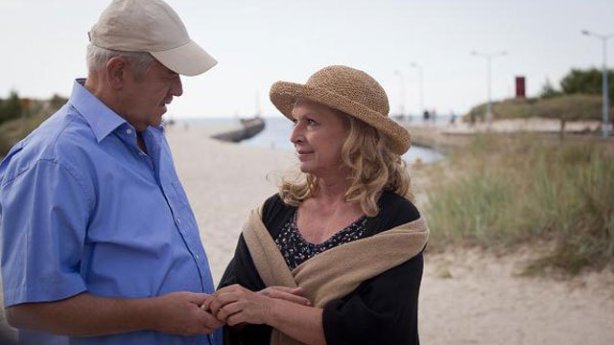
The opening 5 minutes of the film are highly misleading. It opens with a picturesque long shot of the sea, sunset and a boat enters the frame, all this accompanied by a quaint piano; followed by a close up of a kohl eyed woman playing with a cigarette lighter; the kind of opening which prepares us for a film blatantly art-house in nature. The rest of the film, however, is nice fluffy entertainment: a romcom-cum-roadtrip movie, and a very likable one. The charm lies in its simplicity and although it doesn’t really offer anything you haven’t seen before, it’s the fine strokes Domaradzki paints the characters with, largely aided by the actors that made this one work for me. After one film  screening full of sulking and another one which was a great film, but a tiring watch too, this film came as a whiff of fresh air.

Kaliya Mardan (D.G.Phalke, India, 1919, 100 Years Of Indian Cinema) :

The film by Dadasaheb Phalke based on Little Krishna’s mischiefs in the neighbourhood and his endeavor to conquer the giant snake Kaliya was the first Indian film to employ special effects. While Ms.Mandakini Phalke steals the show as Krishna, and the film might be historically significant with respect to Indian cinema, it was a bit of a slog and didn’t really work for me. Full film is available on youtube here.

Duvidha (Mani Kaul, India, 1973, 100 Years Of Indian Cinema) :

Duvidha is based on the same Rajasthani folk legend as Amol Palekar’sPaheli. The story has been narrated through voice-over, allowing the haunting imagery to take over the film, and how! The dialogues are minimal, the frames mostly consist of reds and whites, the camera is mostly static and the actors do little but stare at something or someone. And Kaul incredibly employs this hyper de-dramatized style to amplify the eventual pay off. You can watch the entire film on YouTube here.

(P.S. Since Paheli treats the story as a wicked comedy-cum-romance, an approach completely different than Kaul’s, I’m salivating at the idea of Vishal Bhardwaj making his version of Paheli. Anyone?)

——————————————————————————

 Short Films – Live Action shorts by students:

Allah Is Great (25 min, A foreigner in a politically tense region and his Indian cab driver): The film quite smoothly shepherds us through the journey of and the conversations between the foreigner, who’s  here for a conference and his cab driver who’s a die hard film buff, a bade dilwala, and ardently religious. I’m still unsure of the purpose of the inclusion of one of the subplots here. And the film makes me appreciate the ending more than I would have on paper.

Back Against The Wall (14 min, A girl desperately wants the attendant at a shop to know something) : I’d be spoiling it for you if I say anything about the story. All I can tell you about are the performances and the atmosphere, and both are very good here.

Last Calls (22 min, A 17-something girl dials the numbers last dialed by her departed sister) : Wow! This one hits all the right notes. Has a very strong emotional core and terrific mood too. Completely different tonally and structurally, but it reminded me of another favourite of mine, Vihir.

(This was the last of the short films section. Over to feature films.)

————————————————–

Rose (Wojciech Smarzowski, Poland, 2011, World Competition) :

2

It’s Summer of 1945 and we are in Masuria, a German territory before the war but granted to Poland afterwards. The war is the backdrop and the emphasis is on the two main characters living together under brooding circumstances. Shot in greyish-greenish quasi-monochrome, the film doesn’t shy away from showing us the horrific consequences of war – personal lives shattered by macro-level political moves, but instead of going for kitschy manipulation, it wisely and effectively uses these as devices to develop the relationship between Rose, the widow of a soldier and his colleague who happens to stay with her.

Celluloid Man (Shivendra Singh Dungarpur, India, 2012, 100 Years Of Indian Cinema):
Celluloid Man2

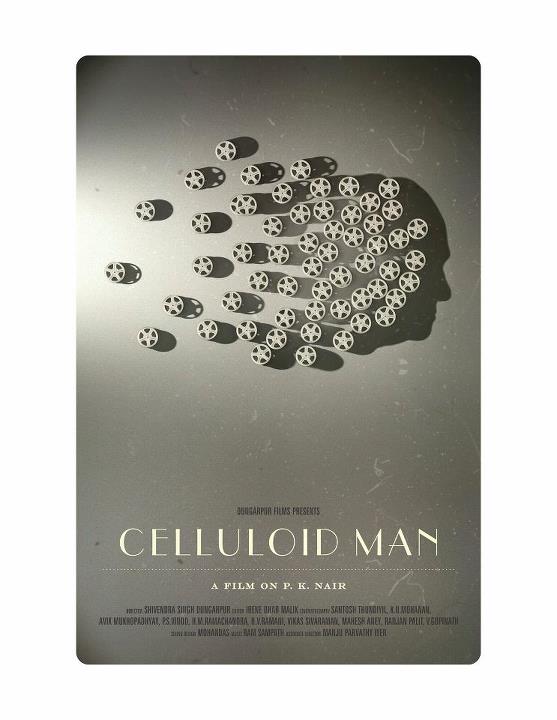
The first “Wow!” of the fest. The 164 minute documentary traces the life and work of one of arguably one of the greatest contributors towards Indian cinema not as a filmmaker but as a film archivist : the founder of National Film Archive of India, P.K.Nair. The film begins with a vivid image where we see P.K.Nair juxtaposed against  a scene from Citizen Kane playing on the screen behind him. And the film before us, much like the film playing in the background, builds a fascinating sketch, mostly through interviews, of a towering personality. Through a series of interviews with some important figures of Indian parallel cinema, with each giving insight into Mr.Nair’s life – how he would acquire films from the archives abroad or from the families of the early pioneers, some admitting with a smile and a coy pride that some of their films exist today simply because of Mr. Nair’s relentless and unbiased passion for film preservation. Interspersed with footages from classics, and talks with Mr.Nair himself about his childhood memories with cinema, his “Rosebuds” and how cinema became a part of him and vice versa; the film is a tribute to a man who Indian cinema owes its history to, a fascinating trip to the early cinema, and an important film asserting the importance of film archiving in a country that boasts of its cutural prosperity. What’s more, the screening took place at NFAI and was graced by Mr.Nair’s presence.

The film is scheduled for release in March.  Click here for the teaser. 

Short Films – Legends We Remember:

I Am Twenty (S.N.S Sastry): This epic docu-short was made in 1967, when independent India was exactly 20. Through a series of interviews with the then-20-year-olds hailing from diverse cultural backgrounds and strata and holding diverse interests and ambitions; the film serves as a sprawling essay on the then past, present and future of India with respect to personal, professional, societal, and cultural spheres through its youth; their dreams and their fears, their interaction with the country, and their take on the varied phenomena India was going through then.

Explorer (Pramod Pati):

Pramod Pati’s exceptional Explorer(1968), a highly abstract experimental short can be said to be a hefty companion piece to ‘I Am Twenty’. If Sastry used conversations with youngsters as a device to present a comprehensive picture of India, Pati shows India torn between past and future, science and religion through a mosaic of random, sequentially rhythmic shots using elemental components of cinema: camera movements, the sounds accompanying every shot and swift focus shifts dexterously.

You can watch the film here.

(P.S. Some other films by Pramod Pati are available on Youtube. Here are the links: a) Trip/Udan   b) ABID c) Claxplosion d) Six, Five, Four, Three, Two. )

(Essential reading: 1) A superb exhaustive essay on ‘Explorer’ by Just Another Film Buff

2) Excavating Indian Experimental Film by Shai Heradia 

3) Pramod Pati – The Cinema Of Pra-Yoga, Of Swa-Bhava by Amrit Gangar)

Arrival (Mani Kaul):

Through incessant shots of jam-packed crowd and of the action of eating (consuming), Arrival is a cold, stirring look at the exploitation of life to cater to industrial needs. And even here, Kaul lets the visuals do the talking and the technique is used to maximum effect in one of the most chilling moments of the film, when we’re given a detailed visual account of sheep being brought in, unpeeled and slaughtered, treated like objects; cut to shots of labourers who, much like the sheep, are mere pawns of a much larger commerce.

Daastan-E-AlamAra (Chetan Mathur):

This short uses some 30 stills from Alam Ara that have managed to survive (the film itself is not available anymore) and employs a lyrical narrative written by Kaifi Azmi and sung by Jagjit Singh (citation needed) to plot the story of India’s first talkie. Sounds interesting on paper? Well, the film, sadly, is pitiably insipid.

Khilonewala (S Sukhdev):

The disappointing ‘Khilonewala’ begins with saccharine event when a bunch of children gather around a Khilonewla and he makes faces and sings for them. It was after an assortment of goons (Amrish Puri in multiple roles, to underline the fact that crime has no class or religion) encircle the Khilonewala that the film begins to get unbearable. You can watch it here.

Mandi (Shyam Benegal, India, 1983, Tribute – Ashok Mehta) :

Mandi (Market) satirizes the interpersonal relationships between people directly or indirectly associated with a brothel when a social activist decides to eradicate prostitution from the town. For me, it was darkly funny with some sharp observations and  ironies, but ultimately vacuous.

I.D. (Kamal K.M, India, 2012, Indian Cinema Today):

IDKamal--621x414

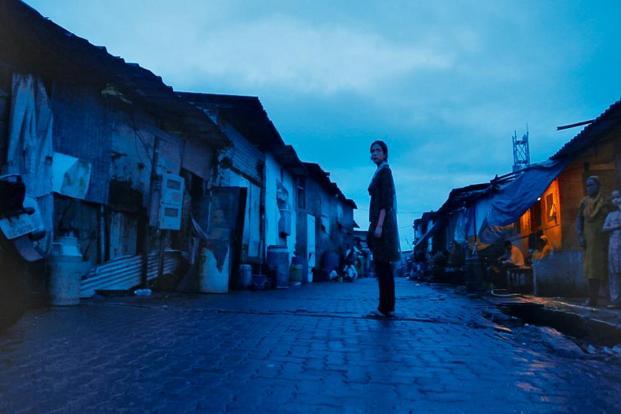
Another Indian Wow! Here, we have a taut, nuanced thriller that transcends the limitations of the “quest to find someone’s identity” sort of films and presents a complex and intriguing portrayal of obsession, and the ambiguity and elusiveness of one’s “identity” as our protagonist gets sucked from her laidback life shot sharply in robust colours into the dusky blue-tinted world of digression. I was quite impressed. The film is produced by Resul Pookutty and Rajeev Ravi, and I don’t see a reason why it shouldn’t find a release. Don’t miss it when it does. And be warned, the official trailer floating online contains a spoiler.

Blow Up (Michelangelo Antonioni, USA, 1966, Retrospective)

Thomas, a fashion photographer spends most of his time clicking the most glamorous “birds” (sic) in the business, who he is fed up of being with. He clicks informal photographs of a couple in a garden and spots a man with a gun hiding in the bushes when he develops them. He visits the garden the next day, finds the corpse lying there and soon intrigue turns into obsession. The film rightfully doesn’t even care to tell us any more about the murder and Antonioni’s Blow Up is really a solemn rumination of its central character’s emotional solitude and his dire pursuit of the feeling of having done something remarkable. For me, it served as a languid companion piece to the somewhat dynamic Taxi Driver. And it’s the muted final scene of Blow Up that takes it to an all new meditative high. Mind Blown Up.

My Father’s Bike (Piotr Trzaskalski, Poland, 2012, Global Cinema)

My Father’s Bike, a delicately crafted family drama with not one, but two sour father-son relationships at its core. The film, instead of judging its characters, gives us a warm coming-of-age picture of a family with its members innocuously flawed and imperfect. In other words, human; but unforgivably so among themselves. And there’s some very good acting at display.

With You, Without You (PrassannaVithanage,Sri Lanka/India, 2012,Global Cinema)

With You, Without You, based on Dostoyevsky’s short story “The Meek One”; designed and scored in blues making us feel the gloominess; is a tenderly composed and deeply moving film about a personal relationship ruptured irreparably by politically influenced deeds of the past.

Night #1 (Anne Emond, Canada, 2011, Global Cinema)

786-NIGHT_no_1

Night #1 could well be described as a darker, more Bergman-esque version of Before Sunrise. Oh, and quite brilliant. Through their profoundly bleak yet romantic monologues, the two characters open themselves up to each other, revealing their true inner fractured selves after a one-night stand.

Laurence Anyways (Xavier Dolan, France/Canada, 2012, Global Cinema)

156233_445021915514187_361463324_n

Initially, I was sort of put off by Dolan’s music video like style and wasn’t sure what to make of certain sequences. It was after some pondering that the film started to grow. The film tracks over a decade of Lawrence Alia’s life and relationships and remarkably makes us sense not only the protagonist’s physical transformation but her emotional journey as well. And with a lot of heart.

Liv & Ingmar (Dheeraj Akolkar, Norway/UK/India, 2012):

Note: I’m fully aware that it’s unfair to opine about a film one hasn’t seen completely.

Implication of the Note: I walked out.

This utterly frustrating documentary about the off-screen relationship between the legendary Ingmar Bergman and his muse-cum-wife Liv Ullmann makes some terrible choices: it chooses peripheral cutesy over insight, shows us random shots of pretty landscapes which make no sense whatsoever in context and intersperses that with clips from Bergman’s films which are so literally synonymous (and thus redundant) with the lines spoken (by Liv Ullmann in the interviews) that it insults the the medium of cinema itself. I myself am a Bergman fanboy but I can’t even give ‘Liv & Ingmar’ the least respectable pass(?) a film can get, that “it’s strictly for fans.”

Heck, even ‘Mohabbatein…’ was less schmaltzy. Cons of going for a film without watching the trailer. Sigh.

80 Million (Waldemar Krzystek, Poland, 2011, World Competition) :

Beginning with dense details and lots of jargon about a confrontation between communists and the opposition in Poland, what we find here is a rather entertaining heist movie about a group of Solidarity activists who conspire to withdraw 80 million of the Union money from a bank before their account would be blocked. And it was refreshing to see a film that declares that it was “based on true events” only in the end credits.

The Adventure (Michelangelo Antonioni, Italy/France, 1960, Global Cinema):

Much like Antonioni’s ‘Story Of A Love Affair’, we have a couple madly in love but separated by the dead, by their conscience. And much like a theme common to a lot of his films, it is a study of the emotional isolation of its characters and the complexity of love.

Clip (Maja Milos, Serbia, 2012, Global Cinema):

The disconcerted Clip is crammed-to-the-point-of-rupture with scenes of hyper-explicit sex (so much so that it has little else to offer for most part) and often tested my patience. It’s only towards the end that the film begins to work as an unruly depiction of the wayward, disturbingly nonchalant and shallow youth of urban Serbia. And all those scenes, which had seemed showy earlier, start making sense rendering the film with meaning. A one that takes forever to arrive at its point? Yes, and may be no. May be, the indulgence is the point here. May be the director wants the film to be a metaphor for its characters. Boy, that was repulsive in parts, often repetitive, but ultimately trippy. And a special mention for Jelena Mitrovic, who is absolutely terrific as the disillusioned, riotous Jasna.

Chidambaram (Govind Aravindan, India, 1985, Retrospective):

The imagery and expressive silences render the languidly paced Chidambaram effectively with the meditative quality it was supposed to have.  Aravindan explores the personal spiritual journey of Shankaran battling his own conscience.

kai-po-che3

Berlin International Film Festival have added few new titles to its programming list in the last few days. And it includes some Indian films as well.

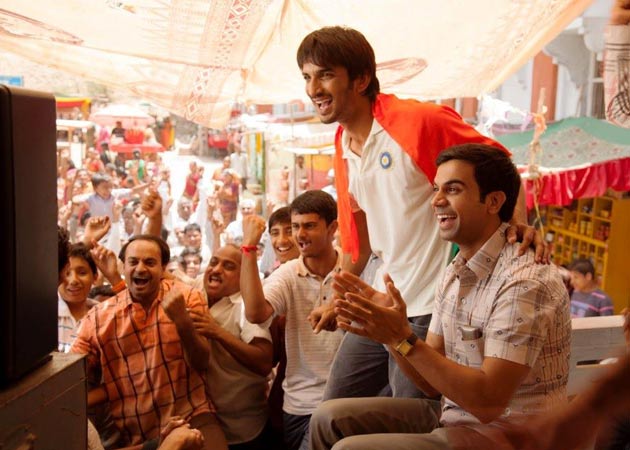
Abhishek Kapoor’s new film Kai Po Che will have its International premiere in the Panorama section. It stars With Sushant Singh Rajput, Raj Kumar, Amit Sadh, Amrita Puri and is based on Chetan Bhagat’s book 3 Mistakes Of My Life. And here’s the official synopsis of the film…

Best friends Ishaan, Omi and Govind – young, ambitious and restless – are trying to make a mark in the India of the early 2000’s. These are exciting times – a new millennium has just dawned, India is a nuclear power and ostensibly shining – a perfect place for the 3 Ahmedabad boys to start a business that could be their ticket to fame and riches. In a country where cricket is religion, they hit upon a brilliant plan – to start a training academy that could produce India’s next sporting superstars! What follows is without doubt the greatest adventure of their lives, as they attempt to navigate the big hurdles in the path of fulfilling their dreams.     Based on Chetan Bhagat’s bestselling novel “The Three Mistakes of My Life”, Kai Po Che (meaning a triumphant yell in Gujarati) is an unforgettable ode to friendship and the magical moments one shares with one’s closest pals – celebrating festivals, drunken dancing, watching cricket matches together, strategizing on how to catch the attention of the cute neighborhood girl, being there to watch each other’s back in troubled times and to celebrate one’s successes by screaming “Kai Po Che”!

The other Indian films include Sourav Sarangi’s Char…The No Man’s Island and Powerless by Fahad Mustafa and Deepti Kakkar which will be screened in Berlinale Forum. DearCinema has more details about these two documentaries –

Powerless is set in Kanpur, a city with 15-hour power cuts, where a nimble young electrician provides robin-hood style services to the poor. Meanwhile, the first female chief of the electricity supply company is on a mission to dismantle the illegal connections, for good. The documentary recently received a grant from Sundance Institute’s Documentary Film Program and Fund.

Char…The No Man’s Island,about a fourteen year-old boy who smuggles rice from India to Bangladesh, recently won a Special Mention in Muhr Asia Africa Documentary category at Dubai film festival 2012.

The 63rd Berlinale will be held from February 7-17, 2013.

We have been covering the Mumbai Film Festival (MFF) extensively on our blog – reccos, reviews, day to day wraps and more. And now, here’s something different.

Sumit Purohit loves to sketch specific frames from his favourite films. And we are posting eight such sketches in this post. See if you can guess them, and if you can, do watch them. Those are his reccos from the recently concluded MFF. If you can’t figure them out, we will update the post with all the names later on. Over to him now.

Have been experimenting with this new mobile app which lets you sketch directly on mobile screen using fingers. It’s really quick and fun, so thought should try and sketch frames from some of the movies I enjoyed watching at MFF, 2012. If you haven’t already seen these films, then these must be on your must watch list.

This slideshow requires JavaScript.

(Hint – There are two Indian films)

And after you are done with the guessing part, click here to go to his FB page for more of his film sketches which he has now started printing on T-shirts too (pics on FB page). If you want to order T-shirts with any specific film frames painted on it, you can write to mailthinblackline@gmail.com.