Archive for the ‘film review’ Category

Wouldn’t it be very boring if we all start liking the same things – no arguments, no fights. And that’s the beauty of  cinema – a divided house, because it means different things to different people. So while i wasn’t sure about the “faith” factor in this week’s release, Life Of Pi, here’s a post by Suprateek Chatterjee who thinks otherwise – have faith, will sail.

A software engineer by degree, Suprateek is passionate about cinema as well as music, and on weekends, can be found writing, composing and playing new music for his electro-rock band Vega Massive. He harbours a strong dislike for pretentious attitudes, Salman Khan fans and Andheri station. Currently at Hindustan Times as features writer/film critic.

Until the age of ten, I used to be quite religious. More than religion, it was mythology that fascinated me. C Rajagopalchari’s versions of Ramayana and Mahabharata occupied a place of pride on my bookshelf, next to my prized Enid Blytons, Hardy Boys and R L Stine’s Fear Street series. I had another book, Tales From The Bible, part of my Catechism/Moral Science curriculum in Don Bosco School, Delhi, where I studied for four years. I was fascinated by the stories, wildly improbable as they seem now, and would often characterise myself according to them.

Alas, I eventually grew up and turned to atheism. However, while the myth stopped appealing to me, the stories didn’t. Over the years, I realised that a part of being religious is accepting a myth blindly, no matter how incredible it sounds. It doesn’t make you smarter or stupider – or better or worse – to give yourself to the myth, and take back the right lessons (whatever those may be).

I read Yann Martel’s Life Of Pi nearly nine years ago and have been waiting dying to watch a cinematic version since. The fact that it was supposedly ‘unfilmable’ (I don’t think I ever agreed with that) only added to the charm, given that past cine-adaptations of unfilmable novels have included stellar films such as ‘A Clockwork Orange’, ‘Lolita’ and ‘American Psycho’, amongst many others.

I watched Ang Lee’s version last Tuesday at a press screening and was stunned. To me, this is the best film version of the novel that could’ve been made. The visuals were stunning and usage of 3D, to me, the best ever – it somehow felt more necessary here than it did even in ‘Avatar’, to convey that feeling of loneliness and intimacy, not to mention the stunning CGI and creature effects. Richard Parker, the part-live-action, part-CGI tiger, is a creation of genius, and goes right up there with Gollum in the category of Non-Human Characters That Deserve All Kinds Of Accolades. The sequence where a helpless Pi spreads his arms heavenward in the face of a raging storm, screaming, “I give myself to you, God!” stands out as one of the most powerful sequences in recent memory. And, of course, that little sequence depicting Pi’s hallucinations when he’s almost lost hope is surely our generation’s version of the Jupiter and Beyond sequence from 2001: A Space Odyssey. If there were an award for The Trippiest Shit Ever Put On Film, this sequence would surely be a strong contender.

I’m not saying I loved everything about the film. David Magee’s screenplay was slightly patchy and hurriedly put together – I agree with CilemaSnob only on that count, that one doesn’t entirely get the sense of Pi having spent 227 days out at sea. Also, that short minute-and-a-half appearance of Pi’s uncle, who named him, has got to be the worst Peter Sellers impression of all time.

That said, a lot of people have been criticising the accents in the film, particularly how Irrfan, the older Pi, and Sharma, the younger one, don’t sound like they speak the same way. How people have come to this conclusion (without being armed with a degree in linguistics, might I add) is beyond me. The older Pi has stayed in Canada for 20 years, but clearly within an Indian community. If we must nitpick about accents, why should we assume that Irrfan’s mostly-Indian-with-a-few-random-Canadian-inflections accent is inauthentic? After all, accents have no set patterns – I have a friend who went to the States for a year and came back with a strong accent and an uncle who has lived in the UK for 40 years and sounds like a Kolkata Bengali trying to put on a slight British accent. Isn’t this just our inherent bias of trying to look for flaws because we’re so sensitive about how Indians are being portrayed by Hollywood, as though Hollywood is aces at portraying everyone else accurately? One justification for this argument goes: “How come our actors can’t pull off accents as well as theirs can?” The answer, of course, is “That statement is bollocks, unless one’s name is Christian Bale,” as this article and this article will show you.

As for the central complaint, about why a story that claims to make one believe in God doesn’t leave you feeling any different, all I can say is, somewhere Yann Martel and Ang Lee are snickering to themselves over a drink and saying, “Gotcha!” Were you really expecting your carefully-constructed belief system, built up over at least a couple of decades, to be shaken by a two-and-a-half hour film? Life Of Pi is not a story about God or religion – it is a well-disguised critique, or should I say an analysis, of how faith affects us. The concept of the myth, religion’s greatest tool, forms the basis for the central act of Life Of Pi. The alternate storyline, revealed at the end, is probably the true version of events, but does that matter? Ultimately, the story is all about faith: Pi’s faith in his many Gods, his faith in his ability to survive, his faith in the story he tells and our faith in his journey.

Irrfan’s Pi asks the writer, “Which of the two is a better story?” Martel and Lee seem to be asking us a similar question: “Between religion and its sometimes-incredible myths, and atheism and its rationalised outlook, which do you prefer?” Whichever side of the fence you’re on, the answer is immaterial; what they’re really asking us is, “Do you like good stories or do you like great stories?”

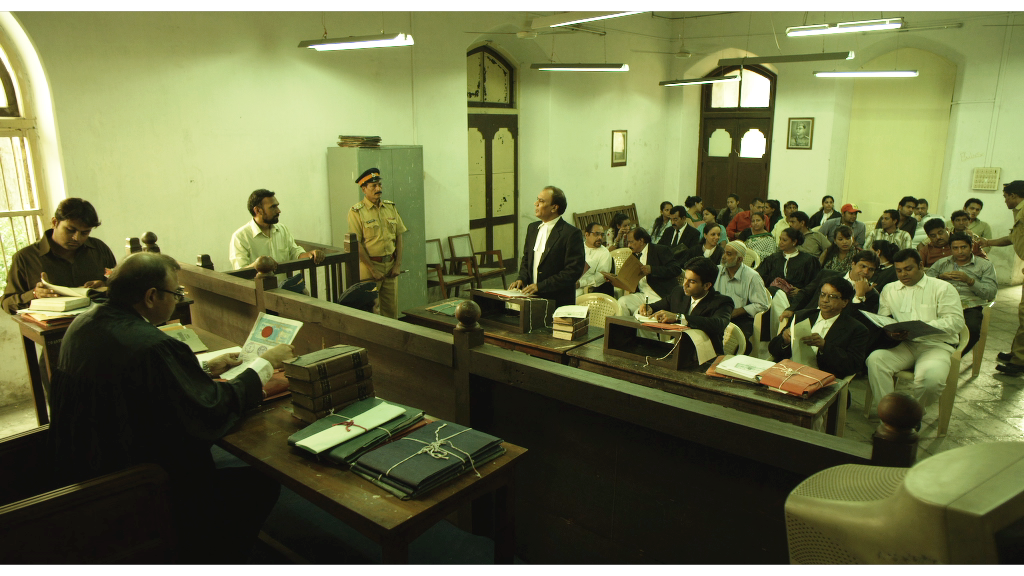
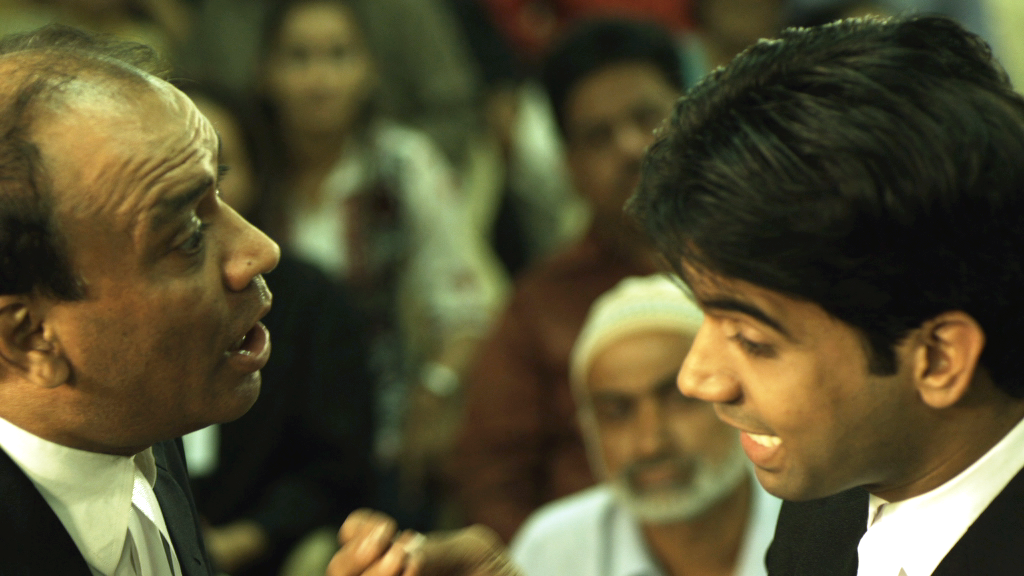
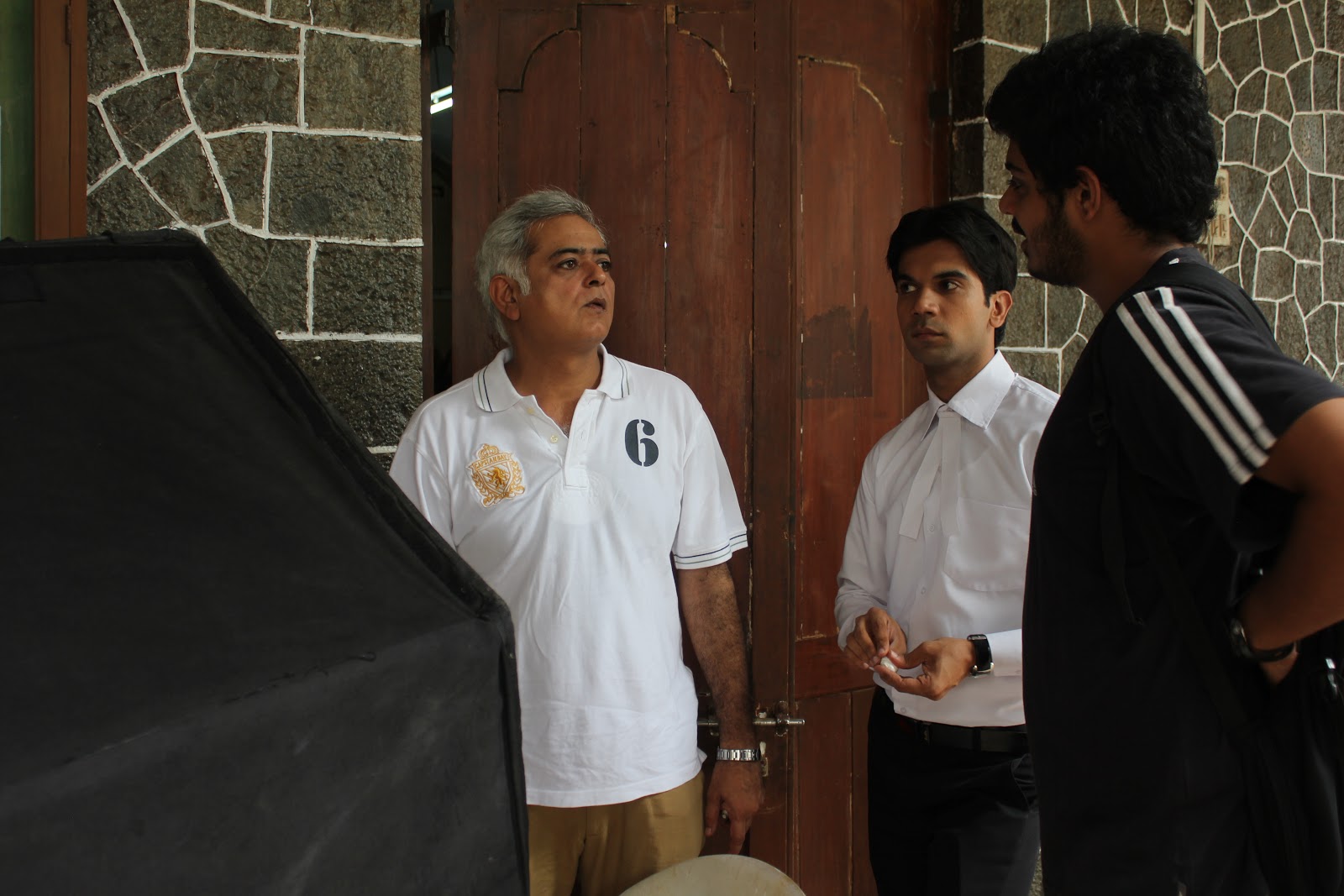
Ad film maker and FTII alumni Ravi Deshpande writes on Hansal Mehta’s Shahid and its journey so far. (Disclaimer – Hansal says he has been a guide and friend.)

“From reluctant jihadist to crusading lawyer, the life of Shahid Azmi was a remarkable one. Gunned down while defending accused Mumbai bomber Fahim Ansari, Azmi was transformed into an unlikely martyr. But Hansal Mehta’s new film is much more than a biopic; Shahid captures the zeitgeist of a generation.

Shahid’s story began in the slums of Govandi in eastern Mumbai amid violent riots between Hindus and Muslims. A young witness to injustice, Shahid fled his home to a jihadist camp deep in the mountains but, never a dedicated soldier, he deserted as a teenager and returned home — only to be imprisoned on terrorist charges. Tutored by older political prisoners, he resolves to fight injustice upon his release. Finding work in a law office, Shahid struggles against a system steeped in contradictions and hypocrisies, defending clients labelled “anti-nationalist,” “radicals” or “terrorists.”

Hansal Mehta’s Shahid is as much a testament to a remarkable life cut tragically short as it is a cathartic journey through a city filled it seems with equal measure grave injustice and great idealism.”

– Cameron Bailey, Artistic Director, Toronto International Film Festival.

Consider this : By the time he was gunned down, Shahid Azmi had at least 17 acquittals to his credit, a great benchmark for the small span of time he was an advocate.

So why am I writing about this film? Or rather, why am I compelled to write about the experience of this film? Because the film is as close to a real tale as I have seen. The real story of the film concluded with Shahid’s death but just 2 years ago. His strife is still fresh in our minds. It is a Mumbai tale that Mumbaites know. Difficult to satisfy a critical Mumbaite filmmaker’s mind with a Mumbai story.

In the film, the protagonist is a young lad from the FTII stable of actors, Rajkumar Yadav. Leave aside the fact that the bloke does not age through the 2 decades that the narrative unfolds. This fact does not bother me and has not bothered others while watching his stunning underplayed performance. All the other characters (Casting Director Mukesh Chabra) move through the fabric of the film story with finesse (Prableen Sandhu, Mohd Zeeshan Ayyub, Baljinder Kaur, Tigmanshu Dhulia, Kay Kay Menon, Vipin Sharma, Shalini Vatsa, Vinod Rawat, Suvinder Pal, Pawan Kumar, Vivek Ghamande, Paritosh Sand, Prabal Panjabi, Yusuf Husain)

Their mannerisms and expressions are palpable, the interactions are humanly common stance, and the scenes make me angry, make me cry, make my blood rush through my temples, and sometimes make me smile, even squirm with discomfort.

Hansal’s approach to acting as well as most things in the film has been organic in nature, and bereft of conventional method. Many scenes, even dialogues have often been reworked on location. It is a dangerous terrain for a Director to operate because an actor can easily bend a scene in a fashion that could alter the earlier intent. Hansal chose a difficult route to extract from artists what they felt was the most honest delivery. So in the court scene, when the judge too becomes argumentative with the advocates and the accused, the theatre split into laughter, or when the naked Shahid is tortured in the Lodhi Police Station Cell, the viewer in the next seat clenched his fists.

There are other reasons too why this impact is astounding. The Cell is lit by a single tube, and does not light up the protagonist in agony.


Consider this: The DOP (Anuj Dhawan) saw the location (A friend’s godown in Andheri) and said, “Perfect! Lets shoot!” And Hansal as a Director had the balls to do exactly that. Hence the spaces become volumes that the viewer can relate to and inhabit.

Consider this: Shahid’s house in the film is Shahid’s own house, and Shahid’s office in the film where he was shot dead, is in actuality Shahid’s office. A year after his murder, when they were shooting in her house, Shahid’s real mother asked to meet the actor. She just wanted to see him…for her, Shahid was still a part of her ‘present continuous’. Her other son, Khalid Azmi (Played by Vaibhav) has gone on record to say that the film is 95% close to the real story.

So Hansal’s choices, or democratically speaking the crew’s and the cast’s choices were nakedly honest. Hansal was able to guide them through to keep the story of Shahid alive and true. It is one thing to say, fine, I do not care that the actor’s face is not lit up in a scene, and yet another to accept that different digital cameras will land on the shoot on a regular basis.

Consider this: They get a RED MX camera one day, a Red One on another and the next day an Alexa. On some days all they had was a Canon 5D. Hansal and his DOP (Anuj Dhawan) have the guts and gumption to mount it and shoot, to make the most of the time available with the given location and the cast on roll call. What a nightmare for the DI artist and the post-production technical crew.

It looks like a film about the Muslims, for the Muslims, by the Muslims. However, there is not a single crewmember except the artist Arif and the Professor (Played by Mohd. Zeeshan Ayyub and Yusuf Husain respectively) who are muslims. Not the protagonist, neither the director, nor any of the artists, nor even the writers. And the film is about the plight of the Muslims in India. Or perhaps anywhere and everywhere in the world. Simple folk who are pious, righteous, and who wean through the hard struggle of life. Muslims who are wronged for the only reason – that they are Muslims.

And yet, the story could be of any community, as one never becomes conscious of the ‘religion’ in the story but is sensitized only to the situation and the events. Go see any other film about the Muslim community made with adequate or handsome funds and compare – which is the more engaging, which is more honest, which is the tougher film to make, which is bringing a truer story for the audience’s appetite in today’s time of the RTI, which has more layers, which sets you thinking, which churns your bowels, which makes you feel guilty, helpless, angry, which is the one not biased, which is the one that makes you more aware, more empowered, which is the one non-exploitative?

So there is no definite genre that the story can be pinned by. It is neither a courtroom dram, although the crucial scenes are set in courts, neither is it a romantic tragedy, although Shahid’s supportive wife leaves him and then he dies, nor is it a martyr heroic film, although Shahid ends his life as a martyr for a cause. In fact, it is all this and more, because Hansal does not steer it to a dramatic fictional tale but insists steadfastly to narrate the story of an individual with all the truisms intact.

Consider this: Shahid was supposed to be a well-funded film by a corporate production house with a star in place. Hansal and Sunil Bohra (Producer) chose the other route lest the shenanigans of the star system or the numbers game shackle them. And they embraced the hardship with a tougher stance of honesty to make a moving, compassionate film.

For any Director to touch and mould his material with a humanitarian approach is one of the most difficult directing tasks. Hansal has not just immersed himself with the material but internalized it, forgotten his leanings, left aside the grammar of filmmaking that he learnt through his earlier seven feature films, as well as rid himself of easy shooting or post production solutions.

Consider this: The editor Apurva Asrani also co-wrote the film. The earlier decision was to make a non-linear narrative as the world over, the traditional linear narrative is considered to be passé and not smart enough for today’s times. Apu is also known for drastic usage of NGs (No-good takes), jump cutting, and edgy editing styles. With the material in front of them, they both opted to be dumb but true to the material and formed a linear narrative! Apu’s edit does not leap out of the screen at you but lets you immerse yourself in the development of the story unhindered.

Consider this: A veteran artist has reservations because her role seems to be just 3 pages in the courtroom. So she decides nearly 8 hours before the shoot to decline. She has doubted the director because he has said that we will improvise the scene and the dialogues as we shoot. But that is the organic way that Hansal wanted to make the film by involving everyone concerned with the scenes.

Consider this: When the village in the hills threw up extras that were Hindus, the lead actor Raj Kumar Yadav had to train them stepwise (12 steps) on how to do Namaaz. The Director read numbers in order to get shots with movements in cohesion from the group. The sound recordist had but just one assistant for the schedule. That is brave for a film with live sound (Sound Recordist: Mandar Kulkarni).

Although the temptation to turn voyeuristic is huge, Hansal’s camera does not try to barge close to the man who is in flames in the riot filled streets of 1993 Mumbai to sensationalize it, nor does it travel from sunset silhouettes to a frontal of the twosome’s faces up North in POK as they share a happy repartee moment, nor does it underline the most significant moment of Shahid’s assassination in the office with a close up or a long shot. Hansal and the DOP refrain from the usual temptations of over dramatizing the situation. The screenplay (Sameer Gautam Singh and Apurva Asrani), the Mise en scène, the acting, and the editing too blends the subtle manner of telling, aided by a music track that does not interfere with the realism. During the depiction of the love story, the dialogues are as matter of fact as can be, and so are the situations.

Hansal’s ingenious shot division helps us see to events in a seamless fashion. This Spartan style of filmmaking lends way to a new language that is close to real life, and not the crafted, arranged carefully kind of a story, spoon fed by loud, crass everything-to-be-said-through-dialogue and underlined by music. The proximity to the material increases manifold and the viewer relates to the unfolding of the story in a much more integral, much more organic manner. No wonder that audiences in Canada (At the Toronto Film Festival) and at the MAMI waited in long ques due to ‘word of mouth’ to see the film. And no wonder that Hansal has had standing ovations at both places.

Consider this: While Music was being discussed for the film, the sound Engineer was asked what ought to be the music. “Sparse, minimal, hardly there types”, he said. His diktat was followed. (Music: Karan Kulkarni)

Hansal’s directorial abilities were never questioned, and infact lauded several times (Dil Pe Mat le Yaar, Chhal, Jayate, etc.) Nor were his sensibilities (it was his own decision to stay away in ‘Wanvas’ at Lonawala for so many years). He meandered just about everywhere in the Mumbai Bollywood terrain of storytelling. This film has cemented his road. Hansal has to start walking on this path which will lead him to greater heights and us as viewers to greater experiences that he will invoke as a refined old-wine director.

I just hope that the film sees the light of the day and does not but just roam the festivals of discerning viewers across the globe. And hoping against hope that the authorities and political parties do not intervene with their typical horse blinds on release or before.


Consider this: Hansal and Sunil Bohra (Producer) have refrained from censoring the film and releasing it because they want audiences to see the film in this form; the more the better – wonder what will transpire at the censor board.

It is a significant film of our times about our times. There, I have said it.

(It was first posted on Ravi Deshpande’s blog here)

To know more about Varun Grover and to read his Day 1 report, click here, and Day 2 report is here.

One thing I realized this time, thanks to the daily commute of roughly 4-hours to and from the festival venue. Watching a film festival is as much a measure  of your love for cinema as it is a test of your fitness. Running down the railway station stairs to catch Virar-Churchgate fast that is arriving in 1-minute, keeping your senses alert and combative till a seat is found in the crowded train (generally happens after initial 30-minutes of standing at the optimum place – somewhere in the middle of two rows so that you have double the probability of getting a seat), taking the 2-3 kilometer walks from Churchgate station to the venue, and of course keeping your legs folded and hands tied for the duration of the films. That’s why, people who look so enthusiastic on day 1 or 2 of the festival start dropping out by 3rd/4th day. Or start looking like one of the characters from depressing European cinema they are watching.

That’s why, if you don’t sleep mid-screening at least once, you aren’t doing a film festival right.

Digression done.

Shameless/2012/Filip Marczewski/Poland: 

Festival’s centerpiece film Michael Haneke’s ‘Amour’ was cancelled in the morning. Theories abound – they couldn’t find the password to open the disk (apparently, password is sent just one hour before the screening to avoid piracy etc.), the file format they sent was unreadable, that they had a special screening for Tina Ambani and friends the previous night and didn’t realize the password is valid for one screening only. (Thankfully, Amour is screening today afternoon finally.)

So in the slot emptied by ‘Amour’, we headed for ‘Shameless’. And why not? The trailer and synopsis made it read like a juicy piece on a sex-filled drama about a brother and sister. In many ways, it can be thought of as a prequel to Steve Mcqueen’s ‘Shame’, again about a brother and sister having problems due to their unusual sexual ‘conditions’. The ‘troubled place’ Carey Mulligan’s Sissy talks about but is never shown in the film could be imagined as vaguely similar to this. But that’s the only good I could extract out of this film with so many coincidences, thin sub-plots, and sexually charged but never lighting up  mood. Ending, in true European cinema fashion, was abrupt and frustrating. So was most of the film too.

The Taste of Money/2012/Sang-soo Im/South Korea

This reminded me, above all, of DD afternoon show ‘Swabhimaan’ (the one with Rohit Roy, Kittu Gidwani, Manoj Bajpayi et al). A family drama about rich, perverted, crazy for power and sex people. Had a few moments of brilliance, but overall was quite self-serious and  at places, hilariously ridiculous. The worst watch in this festival for me. P.S. – It was the kind of film where in an emotional scene, it starts raining heavily.

Sunrise/1927/F.W. Murnau/USA

Hadn’t seen any film by this master of silent cinema – Murnau, and thanks to this rare opportunity by MFF, I got to see one of his best. So much visual experimentation in a 1927 film, and so original humor and slice-of-life moments (the two toughest things to write in my opinion). And Liberty Cinema, with its red carpeted staircase and red-leather finish chairs in balcony was just the perfect venue for this chicken-soup of a film.

Kauwboy/2012/Boudewijn Koole/Netherlands: 

The last film of the day was an easy watch. Jojo finds a chick Jackdaw fallen out of its nest, carries it home and pets it, while his always-angry-and-cruel single-father learns to love his son over the course of the film. It was that simple a plot, told with lots of humor, emotion, music, and slice-of-life moments. Very little could have gone wrong with this, and very little did.

(Am tempted to add – It should do well in close-knit-family oriented territories of Central and Northern India. First weekend collections should be good. The Jackdaw bird does a satisfactory job but could have done better in emotional scenes. Music was as per the need, and editing was good, but another 10-minutes shorter and it would have crossed 20-crores in 1st weekend.)

DAY 4

Holy Motors/2012/Leos Carax/France-Germany:  

How does one begin writing about this film? A film that is trying to break every convention, burn every book, and shake every belief about cinema in particular and philosophy of life and living in general. It starts with a dream-like sequence of a man breaking a wall to enter the balcony of a cinema hall, where people are watching a film while a naked baby and huge bull-dogs parade the aisles. And from here on, it gets more bizarre. But it’s the variety of bizarre that keeps you completely engaged (I had donated my senses and soul to the film completely, within initial 15-minutes), asking you to stay alert and try piecing together the information, and in return giving you visuals and events of such ambition that your brain’s g-spot is constantly in a rub.

Though for the best experience, I’d suggest you go for it without reading ANYTHING about the film or its plot (as I did) because most of the reviews do give out the philosophical connotations the film is hinting at. And that means some of the awe of discovering it for the first time is gone.

It reminded me of many things, from Hindu mythology to  reptile-race-aliens based science-fiction to Freud’s ‘On Dreams’ to this short film to one of my all-time favorite films, Charlie Kaufman’s ‘Synecdoche, New York’ – another crazy, inventive journey into trying to point out the loopholes in the normal understanding of why/how we exist. And in spite of all this apparent depth, the film is never heavy. In fact, it’s comical at quite a few places, and musical at quite a few others. Will write a detailed piece after the fest is done, and after I’ve watched it one more time when it’s out online.

The Hunt/2012/Thomas Vinterberg/Denmark: 

Ideally, nothing should have been watched after the high of Holy Motors, but the greedy festival junkies we are, chucking a film as hyped as The Hunt would have been out of character. Going with the image of Scandinavian cinema, this one too had a cold and dark feel to it. A man, accused of a sex-offense by a kindergarten kid, faces the witch-hunt from a small hunting-crazy town of Denmark. The film gets heavier and intense as it proceeds, but in spite of all its finesse (in almost every department), it failed to impress me much. May be I was still in Holy Motors zone, or may be it worked on too predictable lines of persecution and silence – I found it quite a middling, safe attempt. The last section and the epilogue are terrific though. Good enough to redeem the depressing-frustrating middle.

Something in the Air/2012/Olivier Assayas/France:

Ghanta kuchh samajh nahin aaya. French version of ‘Hazaaron Khwahishein Aisi’. Set in 70′s France, featuring a group of students learning and unlearning the neo-communist movement. Bas itna hi samajh mein aaya. Rest of it was oppression-repression-dissolution-subaltern-minimalistic-bourgeoisie-mumbojumbovadapaav. Excellent production design, a couple of sex-scenes, and evocation of an era gone by were the only redeeming factors. I even stopped reading subtitles after the 1st hour and just spent time looking at the props and recreation of the 70′s France.

************************

To read Varun Grover’s blog, click here.

To know more about Varun Grover and to read his Day 1 report, click here.

Disclaimer: I don’t think I’ve turned into that post-1990-born creature that thinks, reads, and writes only in English but since am short of time, decided to file this entry in English today. Not because I think (faster) in English, but because English typing is faster and as a related brain function, when you type faster, crisper words come to you. (Or so I think.)

Also, quick notes today. (‘Amour’ calls tomorrow morning.)

Ai Weiwei: Never Sorry/2012/Alison Klayman/USA:

– Behind the iron curtain, there is an artist struggling to retain his freedom, and in the process turns his protest into art, and curtain into an art-installation.

– A very ‘upbeat’ documentary (mainly ‘cos so many frames are full of his artistic creations, and his calm, about-to-smile face) about  a very angry but very optimistic man that took a few years in the making, and hence capturing Ai Weiwei at very crucial moments in China’s recent history. (The 2009 Earthquakes, Nobel for Liu Xiaobo, post-Olympic demolition of his studio over his criticism of Chinese government).

– Hope they put it out online for free distribution because that goes totally with the spirit of Ai Weiwei.

– After seeing this and Michael Moore’s ‘Bowling for Columbine’, I started loving India more. See both of these to know what words like freedom, liberty, human rights, angst, and censorship may mean in different contexts, countries, and times.

– Also, the best advertisement ever for Twitter. They should just sponsor it and show it to the world. Ai Weiwei uses twitter like Gandhi used Satyagraha, and to great results. “Don’t retreat. Retweet.”

– Can your cat open the latch door? If yes, are you fascinated by it?

The Bay/2012/Barry Levinson/USA: 

– Another ‘found footage’ film with elements of creature-based horror and zombie.

– Goes on for too long after having made the point.

– Not a fan of found footage genre anyway. Also the most difficult genre I guess. Stripped of visual grandness, technical finesse, and controlled-environment drama (and most of the background score), Cinema is tough to please.

– More creepy and gory than chilling.

Rust and Bone/2012/Jacques Audiard/France-Belgium

– 2nd watch hence less satisfying but still, so many terrific moments created and captured so well.

– Marion Cotillard is that rare female – thinking man’s sex symbol as well as non-thinking man’s sex symbol too. She’s in top form in this, and is on top too in one scene.

– Audiard’s previous one ‘A Prophet’ was more gritty, more abstract and complicated too, but this one is fairly straightforward, on the verge of feelgood, and dealing with a less complex world/character(s). So yes, slightly less ambitious, but never mind, he still makes high-cinema out of the material at hand. Some of the best romantic repartee in a world of non-romantics is here, and in a way, this could be called Audiard’s attempt at interpreting a ‘romance drama’.

– Just like in ‘Beasts of the Southern Wild’, lots of shadows and light-play, another subtle ‘homage’ to Malick may be?

Writer, observer, cynic – That’s how Varun Grover  defines himself in his twitter bio. If you have been following this blog for a long time, you obviously know him. If not, he’s the multi-talented man behind the terrific lyrics of Gangs Of Wasseypur and is also a well known stand-up comic.

Like last year, Varun is writing his Mumbai Film Festival diary this year too.

यह निरा रोमांटिक सा आइडिया है, डायरियाँ लिखना. और मैं अब ३० पार करने के बाद ख़ासा रोमांटिक रहा नहीं. पर डायरी लिखना समय को पकड़ने की एक कोशिश भी है, जो लोग ३० पार करने के बाद ज्यादा करने लगते हैं. तो यह वो वाली डायरी है जो खुद को भरोसा दिलाना चाहती है कि इसकी असली value आज नहीं, आज से ५० साल बाद होगी जब हम ना होंगे, जब कोई इसे मुड़ के खोलेगा और इसे antique वाली इज्ज़त देगा.

इस ब्लॉग पर आखिरी पोस्ट पिछले साल के मुम्बई फिल्म फेस्टिवल की डायरी से ही है. साल बीता, लोग बिगड़े, देश पर और गर्त चढ़ी, और फिल्म फेस्टिवल वापस आया. आज सुबह तक सोचा था इस साल डायरी नहीं लिखूँगा क्योंकि इस बार फेस्टिवल का venue घर से बहुत दूर है…आने जाने में ही हर रोज़ साढ़े तीन घंटे बर्बाद हो रहे हैं तो लिखने के लिए अलग से समय कैसे निकले? लेकिन अभी अभी बस, १० मिनट पहले सोचा, कि समय तो उतना धीरे चलता है जितना तेज़ आप टाइप कर सकें. तो सिर्फ कोशिश है….जो आज है, कल हो सकता है ना हो.

Stories We Tell/2012/Sarah Polley/Canada : कम से कम एक उम्र में सबको लगता है कि उनका परिवार weird है. जिनको बचपन में लगता है, उनको बड़े होकर नहीं लगता (क्योंकि शायद वो खुद वैसे हो जाते हैं), और जिनको बचपन में नहीं लगता, उनको बड़े होकर लगता है. Sarah Polley ने अपने बिखरे से (महा-weird) परिवार को जोड़ने की कोशिश की है, अपने परिवार के हर सदस्य को एक ही कहानी अपने अपने निजी point-of-view से सुनाने को कहकर. Documentary और drama का इतना शानदार मिश्रण मैंने पहले तो कभी नहीं देखा. Sarah Polley और उनके पिता Michael Polley (जिनकी आँखें बहुत उदास लेकिन आवाज़ बहुत खनक वाली है) एक साउंड-स्टूडियो में हैं जहां Michael Sarah की दी हुयी एक स्क्रिप्ट अपनी आवाज़ में रिकार्ड कर रहे हैं. कैमरा चल रहा है, माइकल जो कहानी कह रहे हैं वो बाप-बेटी दोनों की है. लेकिन माइकल भी उसे ऐसे कह रहे हैं जैसे वो किसी तीसरे की हो. लेकिन धीरे धीरे और किरदार जुड़ते हैं, सब Sarah को Sarah की ही कहानी सुनाते हैं (“मुझे वो भी बताओ जो मुझे पता है, और ऐसे बताओ जैसे मैंने कभी नहीं सुना”, Sarah शुरू में ही यह निर्देश देती है), और आगे बढ़ते बढ़ते फिल्म memories, love, और closure पर एक अद्भुत व्याख्यान बन जाती है.

Beasts of the Southern Wild/2012/Benh Zeitlin/USA: बहुत चर्चे थे इस फिल्म के. Cannes फिल्म फेस्टिवल में Camera d’Or के अलावा ३ और अवार्ड जीते हैं और Sundance में Grand Jury Prize जीता है. मतलब जैसे कोई नामी पहलवान रिंग में आता है, वैसे यह फिल्म जमशेद भाभा थियेटर में आई. और शुरू के पाँच मिनट में ही पूरा मुकाबला जीत लिया. शुद्ध पॉपुलर सिनेमा की आत्मा (uplifting, underdog story), उसपर art cinema की तकनीक का चोगा (imaginative, allegorical, भयानक sound design और music), और चोगे में Indie Cinema की छोटी-छोटी जेबें. पत्थर जैसे बाप और 6 साल की, खुद को प्राग-ऐतेहासिक जीव मानने वाली बेटी की कहानी (हालांकि बहुत देर में पता चला कि वो बेटी है, बेटा नहीं) – जो उनके छोटे से टापू पर आये तूफ़ान के बाद का struggle ऐसे दिखाती है जैसे कविता कह रही हो. अगर थियेटर वाले बत्तियां जल्दी नहीं जलाते तो मैं अंत में और देर तक रोता.

Throw of Dice/1929/Franz Austen/India-Germany: यह वाली सिर्फ इसलिए देखी क्योंकि Germany से एक Orchestra आया था जो इस silent फिल्म के साथ live music बजा रहा था. यह अनोखा अनुभव फिर कहाँ मिलेगा यह सोच कर हंसल मेहता की ‘शाहिद’ आज कुर्बान करनी पड़ी. और जितना सोचा था, उससे कहीं ज्यादा मज़ा आया. फिल्म अपने आप में बहुत सरल, और काफी मायनों में मसाला थी. जर्मन निर्देशक को हिन्दुस्तानी exotica बेचना था शायद…गाँव की गोरी बनी हिरोइन को अपने पल्लू का भी सहूर नहीं था (क्योंकि वो कोई एंग्लो-इन्डियन ऐक्ट्रेस थी), हाथी, सपेरे, आग खाने वाले कलाबाज़ वगैरह बड़ी देर तक कैमरे के आगे रहे,  राजा निरे ऐय्याश और प्रजा निरी stockholm complex की मारी. लेकिन असली खेल Orchestra का ही था. सिर्फ ८-१० तरह के trumpets, २ तरह के drums, और चिमटा-घंटी से उन्होंने जो समां बाँधा वो out-worldly था. एक तरह से फिल्म को कई जगहों पर reinterpret कर दिया उन्होंने. जहां सीन बहुत self-serious था, वहाँ orchestra ने ‘मेरे हाथों में नौ-नौ चूड़ियाँ हैं’ का एक version बजा कर परदे की कहानी को एक अलग layer दे दी.

और फिल्म ख़तम होने पर मिली तालियों से musicians इतने खुश हुए कि उन्होंने जाते-जाते एक ऐसी धमाल धुन बजाई कि १००० लोगों से भरा auditorium खड़े होकर साथ-साथ लगातार ताली बजाता रहा. पहले दिन का आखिरी अलौकिक राग!

*********

कल क्या देखना है?: Ai Wei-Wei पर एक documentary है, Jacques Audiard की Rust and Bone है (जिसमें खूब भीड़ होने की पूरी संभावना है), और Takeshi Kitano की कान में पेचकस घुसा के मारने वाली Outrage:Beyond है.

(This was first posted on Varun Grover’s blog.)

He is a certified boob-yist. Well, i remember he won a contest on twitter where you had to figure out the faces from just the cleavage pics. And he got all six of them spot on! But that story is for some other day. Shivam Sharma masquerades as GhantaGuy on twitter (#FF) and describes himself as “Passionate movie-buff. Not a critic”. Over to him. on Gangs Of Wasseypur.

Even after seeing the movie twice I could not bring myself to review it because there was so much in it, so much to take in all at once and I was not sure from where to start. The following post started out as about some amusing reactions and things that I have observed in the last week regarding Wasseypur. Things that surprise me and make me laugh at the same time. Though there is a lot that I still want to write, it’s still a start. Read on.

‘गैंग्स ऑफ़ वासेपुर’ को रिलीज़ हुए एक हफ्ता हो चुका है. समीक्षाएं पढ़ी जा चुकी हैं. पिक्चर को पसंद-नापसंद किया जा चुका है. पर वासेपुर अभी भी दिमाग पे छाई हुई है, ज़ाहिर है कि और कुछ हो न हो, ये एक ज़रूरी फिल्म है.

“The Magic of Cinema”.शायद वही.

पर कुछ बातें जो मुझे खटकी हैं वो हैं audience के अलग और कुछ अजीब reaction. मैंने ये फिल्म नागपुर के एक ठसाठस भरे पिक्चर हॉल में देखी थी (गौरतलब है कि नागपुर सलमान खान का गढ़ माना जाता है और ‘दबंग’ के all-India collections में नागपुर सबसे आगे था.) पिक्चर में करीब ७०-८० बार गालियाँ आती हैं. फिल्म सच्ची घटनाओं पर आधारित है और गालियाँ ज़रूरी हैं क्योंकि वासेपुर कि गलियों में घूमने वाले, बात-बात पर कट्टा चलाने वाले जिन लोगों की ये कहानी है वो गालियों का प्रयोग रोज़मर्रा में करते हैं. आप और मैं भी गरमा-गर्मी में इनका प्रयोग करते हैं और कुछ अपने मन में ही देकर सुकून का अनुभव कर लेते हैं.

बहरहाल, फिल्म में जितनी बार भी गालियाँ आयीं, लोग जोर से हँसे. जोकि मुझे खटका क्योंकि ये लोग भी आपस में गालियाँ देते है पर हर बार उसे मज़ाक के तौर पे नहीं लिया जाता और न ही ठहाका मार के हंसा जाता है. फिल्म में भी सब जगह इन्हें मज़ाक के तौर पर नहीं डाला गया. जहाँ हैं वहां सही हैं. पर शायद हमें सच्चाई को मज़ाक में और मज़ाक को सच्चाई की तरह लेने की आदत पड़ गयी है.

ये कहानी उस जगह की है जहाँ की ख़बरें ‘अमर-उजाला’ और ‘दैनिक जागरण’ के क्षेत्रीय पन्नों पर छपती हैं. अर्नब गोस्वामी और राजदीप सरदेसाई के आदी शायद उससे relate न कर पायें और क्योंकि हम उनसे काफी दूर हैं इसीलिए वो गालियाँ हमें या तो हंसाती हैं या discomfort महसूस कराती हैं.

क्या एक normal reaction देना इतना मुश्किल है? शायद हाँ.

कुछ लोगों का कहना है कि पिक्चर बहुत vulgar और cheap है.

हमें ‘शीला की जवानी’ और ‘मुन्नी बदनाम हुई’ आदि, जोकि सिर्फ अंग प्रदर्शन के लिए बनाये हुए item songs हैं, उनसे कोई आपत्ति नहीं है. अगर कोई शब्द अपने आपको सबसे आसानी से explain करते हैं तो वो है “item song”. साफ़ तौर पर ये वो गाना होता है जिसका प्रयोग सिर्फ लोगों को खींचने के लिए किया जाता है और उसके लिए अधनंगे खुले प्रदर्शन से बेहतर हथकंडा नहीं है. (ऐसे गाने ज़्यादातर उन फिल्मों में होते हैं जिनकी कहानी लोगों को खींचने के लिए काफी नहीं होती. यहाँ मेरा उद्देश्य इन गानों को बनाने वालों के विरोध में नहीं है पर हमारा दोगलापन दर्शाना ज़रूरी है.) जितना बड़ा स्टार उतना बड़ा गाना. और ‘aesthetically shot’ होने के कारण इन्हें public domain में accept कर लिया जाता है और ‘vulgar’ tag तो दूर-दूर तक नहीं दिया जाता.

इस समय मेरे मन में एक गाली ज़रूर आ रही है पर उससे मेरे अभिप्राय पर कुछ ख़ास फर्क नहीं पड़ेगा. छोडिये.

खैर, वासेपुर में कोई item song या kissing scene नहीं है. क्योंकि गाँव और छोटे कस्बों में मुंह पर चूमना कोई आम या ज़रूरी बात नहीं होती. बल्कि, kissing भी एक तरीके से यहाँ western (या french कहें) phenomenon है और पिक्चर में दिखाए गए उस २०-३० साल पहले के fridge की तरह ये भी अभी तक अंदरूनी भारत में पूरी तरह पैठ नहीं कर पाया है.

अगर तब भी आपको फिल्म ‘vulgar’ लगी हो, तो इसका मतलब है के आपका दिमाग स्क्रीन पर चल रहे scene से आगे निकल गया है. निर्देशक और किरदार, और किसी को न सही पर आपको उत्तेजित करने में सफल हो गए हैं और ‘vulgar’ शायद आपके दिमाग में बनी वो image है जिसे अब आप guilty-feeling के तौर पर बाहर उलटी करके निकाल रहे हैं. निकालते रहिये.

शायद कुछ देर बाद आपको अच्छा लगे.

और एक बड़ा मुद्दा उठाया जा रहा है के फिल्म में बदला तो हुआ ही नहीं, सरदार खान बाकी कामों में लग गया और यूँही बिना बदला लिए मर गया. दर्शक को उसके किरदार से कोई sympathy नहीं हुई और इसलिए फिल्म भी मात खा गयी.

जनाब, ये एक सच्ची कहानी पर आधारित है. फिल्म में कोई हीरो नहीं है. मतलब, conventional defintion वाला तो कतई नहीं. सरदार खान निहायती कमीना, शातिर, ठरकी और एक हत्यारा है. राह-चलते आदमी को जो चाक़ू गोद-गोद के मारने में हिचकी नहीं लेता उससे आपको बहुत sympathy तो नहीं होनी चाहिए.

अगर आप ऐसे इंसान को ढूंढ रहे हैं जो किसी महिला की इज्ज़त लुटने से बचाता है, या किसी गाँव को डाकुओं के आतंक से या फिर जिसकी बहन की हत्या हो गयी है और ऐसी ज़बरदस्ती थोपी हुई sympathy आपको चाहिए तो साहब ये गलत फिल्म है आपके लिए. यहाँ कहानीकार आपको ज़बरदस्ती कुछ “feel” करवाने की कोशिश नहीं कर रहा है. ये वो manipulative सिनेमा नहीं है जहाँ हीरो के आंसू निकलते ही पीछे से १०० violin मेघ-मल्हार बजाने लगते हैं और आपकी रुलाई फूट पड़ती है. वो काम आजकल के prime-time TV shows बेहतर कर लेते हैं.

इसे एक new-wave कह लीजिये या फिर सालों से चली आ रही इस तरह की फिल्मों का mainstream हो जाना कह लीजिये कि आज की हर फिल्म आपको manipulate नहीं करती बल्कि काफी कुछ आपकी judgment पर छोडती हैं और वासेपुर इस मामले में मील का पत्थर साबित होगी. आज से कई साल बाद तक इसका नाम याद रखा जायेगा जिसने सही मायने में unconventional और conventional के बीच की रेखा को पूरी तरह मिटा दिया.

वासेपुर भारत की underbelly को दर्शाता एक दर्पण है जिसमें हम झांकते हैं और हमें गंदगी दिखाई देती है. हमें दिखाई देते हैं रेलगाड़ियों का पाखाना साफ़ करते हुए छोटे बच्चे और एक ऐसा नर्क जहाँ इंसान की जान की कीमत कोयले से कम और कौड़ियों के भाव है. शायद इसलिए हम इसे देखकर या तो हँसते हैं या घिनौना समझ कर नज़रंदाज़ करने की कोशिश करते हैं.

ये कहानी बड़े शहरों को जोड़ते हुए किसी चौड़े highway की नहीं है, बल्कि उस highway से उतर के पांच मील अन्दर, इधर-धर दौड़ती हुई पगडंडियों और टूटी सड़कों की कहानी है.

Problem आपको तब होगी जब आप highway पर अपनी air-conditioned कार में बैठे हुए ही अन्दर की तरफ देखेंगे.

थोडा सा धूप में बाहर निकलिए और अन्दर जाकर देखिये..

क्योंकि ये भी ज़रूरी है.

(PS – Shivam blogs here and here)

Image

“What is any good film without the extreme reactions it sparks? What’s any bad film without the guilty pleasures it gives?” said Peddlers director Vasan Bala after watching the debate around Shanghai. So many of us loved it, and a surprisingly big number hated it. Surprisingly because it’s a Dibakar Banerjee film. The man who reinvents himself every time, makes films so technically brilliant and well-detailed that rest of Hindi film industry must feel like Salieri in front of him, whose films are at that rare edge of feel-good and feel-bad and has not yet seen many bad reviews for his 3 earlier films.

While we wait for a long juicy post from someone who hated the film, (here’s a medium-sized one by Bikas Mishra on Dear Cinema), Varun Grover, writes one on why he loved it. Debate is still open though.

***************************

नोट: इस लेख में कदम-कदम पर spoilers हैं. बेहतर यही होगा कि फिल्म देख के पढ़ें. (हाँ, फिल्म देखने लायक है.) आगे आपकी श्रद्धा.

मुझे नहीं पता मैं लेफ्टिस्ट हूँ या राइटिस्ट. मेरे दो बहुत करीबी, दुनिया में सबसे करीबी, दोस्त हैं. एक लेफ्टिस्ट है एक राइटिस्ट. (वैसे दोनों को ही शायद यह categorization ख़ासा पसंद नहीं.) जब मैं लेफ्टिस्ट के साथ होता हूँ तो undercover-rightist होता हूँ. जब राइटिस्ट के साथ होता हूँ तो undercover-leftist. दोनों के हर तर्क को, दुनिया देखने के तरीके को, उनकी political understanding को, अपने अंदर लगे इस cynic-spray से झाड़ता रहता हूँ. दोनों की समाज और राजनीति की समझ बहुत पैनी है, बहुत नयी भी. अपने अपने क्षेत्र में दोनों शायद सबसे revolutionary, सबसे संजीदा विचार लेकर आयेंगे. और बहुत हद तक मेरी अपनी राजनीतिक समझ ने भी इन दोनों दोस्तों से घंटों हुई बातों के बाद भस्म होकर पुनर्जन्म लिया है. मैं अब हर बड़े मुद्दे (अन्ना, inflation, मोदी, कश्मीर, और काम की फिल्मों) पर उनके विचार जानने की कोशिश करता हूँ. और बहुत कन्फ्यूज रहता हूँ. क्योंकि अब मेरे पास हर सच के कम से कम दो version होते हैं. क्योंकि आज के इस दौर में हर सच के कम से कम दो version मौजूद हैं.

इस अजब हालात की बदौलत मैं हर चीज़ को दो नज़रियों से देखता हूँ, देख पाता हूँ. अक्सर ना चाहते हुए भी. यह दिव्य-शक्ति मुझे मेरा political satire शो (जय हिंद) लिखने में बहुत मदद करती है लेकिन मेरी बाकी की ज़िंदगी हराम हो गयी है. अब मैं किसी एक की साइड नहीं ले सकता. (मुझे याद है बचपन में मैं और मेरा छोटा भाई क्रिकेट के फ़ालतू मैचों में भी, जैसे कि जिम्बाब्वे बनाम श्रीलंका, अपनी अपनी साइड चुन लेते थे. इससे मैच का मज़ा कई गुना बढ़ जाता था. और देखने का एक मकसद मिलता था.) और साइड न ले सकना बहुत बड़ा श्राप है.

यह सब इसलिए बता रहा हूँ क्योंकि शांघाई में भी ऐसे ही ढेर सारे सच हैं. यह आज के शापित समय की कहानी है. ढेर सारे Conflicting सच जो पूरी फिल्म में एक दूसरे से बोतल में बंद जिन्नों की तरह आपस में टकराते रहते हैं. आज के हिंदुस्तान की तरह, आप इस फिल्म में भी किसी एक की साइड नहीं ले सकते. उस डॉक्टर अहमदी की नहीं जो अमेरिका में प्रोफेसरी कर रहे हैं और अपने लेफ्टिस्ट विचारों से एक बस्ती के आंदोलन को हवा देने चार्टर्ड फ्लाईट पकड़ के आते हैं. वो जो निडर हैं और सबसे नीचे तबके के हक की बात बोलते हैं लेकिन सच में आज तक एक भी displaced को rehabilitate नहीं कर पाए हैं.

डॉक्टर अहमदी की बीच चौक में हुई हत्या (सफ़दर हाशमी?) जिसे एक्सीडेंट साबित करना कोई मुश्किल काम नहीं, जगाता है उनकी पूर्व-छात्रा और प्रेमिका शालिनी को. लेकिन आप शालिनी की भी साइड नहीं ले सकते क्योंकि वो एक अजीब से idealism में जीती है. वो idealism जो ढेर सी किताबें पढ़ के, दुनिया देखे बिना आता है. वो idealism जो अक्सर छात्रों में होता है, तब तक जब तक नौकरी ढूँढने का वक्त नहीं आ जाता.

शालिनी का idealism उसको अपनी कामवाली बाई की बेटी को पढाने के लिए पैसे देने को तो कहता है लेकिन कभी उसके घर के अंदर नहीं ले जाता. और इसलिए जब शालिनी पहली बार अपनी बाई के घर के अंदर जाती है तो उसकी टक्कर एक दूसरी दुनिया के सच से होती है और शालिनी को उस सच पे हमला करना पड़ता है. उसकी किताबें कोने में धरी रह जाती हैं और वार करने के लिए हाथ में जो आता है वो है खाने की एक थाली. Poetically देखें तो, दुनिया का अंतिम सच.

हम middle-class वालों के लिए सबसे आसान जिसकी साइड लेना है वो है IAS अफसर कृष्णन. उसे अहमदी की मौत की रपट बनाने के लिए one-man enquiry commission का चीफ बनाया गया है. (“हमारे देश में ऐसे कमीशन अक्सर बैठते हैं. फिर लेट जाते हैं. और फिर सो जाते हैं.”, ऐसा मैंने देहरादून में १९८९ में एक कवि सम्मेलन में सुना था.) कृष्णन IIT का है. IITs देश की और इस फिल्म की आखिरी उम्मीद हैं. अगर इन्साफ मिला तो कृष्णन ही उसे लाएगा. लेकिन अंत आते आते कृष्णन का इन्साफ भी बेमानी लगने लगता है. वो दो चोरों में से एक को ही पकड़ सकता है. एक चोर को इस्तेमाल कर के दूसरे को पकड़ सकता है. कौन सा चोर बड़ा है यह ना हम जानते हैं ना वो. और पकड़ भी क्या सकता है, इशारा कर सकता है कि भई ये चोर है इसे पकड़ लो. उसे हिंदुस्तान की कछुआ-छाप अदालतें पकड़ेंगी या नहीं इसपर सट्टा लगाया जा सकता है. (आप किसपर सट्टा लगाएंगे? बोफोर्स मामले में किसी पे लगाया था कभी?) कृष्णन का इन्साफ एक मरीचिका है. जैसे बाकी का shining India और उसके IIT-IIM हैं. (एक लाइन जो फिल्म के ट्रेलर में थी लेकिन फाइनल प्रिंट में नहीं – कृष्णन की कही हुई- ‘सर जस्टिस का सपना मैंने छोड़ दिया है .’)

शांघाई के बाकी किरदार भी इतने ही flawed हैं. इतने ही उलझे हुए. (शायद इसीलिए Comedy Circus को अपनी आत्मा बेचे हुए हमारे देश को यह फिल्म समझ ही नहीं आ रही.) लेकिन इन सब के बावजूद शांघाई एक serious फिल्म नहीं है. Depressing है, डरावनी भी…लेकिन उतनी ही जितना कोई भी well-written political satire होता है. दो हिस्सा ‘जाने भी दो यारों’ में एक हिस्सा ‘दो बीघा ज़मीन’ घोली हुई. ’दो बीघा ज़मीन’ से थोड़ी ज़्यादा भयावह… ‘जाने भी दो यारों’ से काफी ज़्यादा tongue in cheek. (‘जाने भी दो यारों’ से कुछ और धागे भी मिलते हैं. Politician-builder lobby, एक हत्या, अधमने पत्रकार, ह्त्या की जाँच, और एक अंतिम दृश्य जो कह दे ‘यहाँ कुछ नहीं हो सकता.’)

दिबाकर की नज़र

Image

दिबाकर बनर्जी को बहुत से लोग हमारे समय का सबसे intellectual फिल्म-मेकर मानते हैं. वैसे मेरे हिसाब से intellectual आज के समय की सबसे भद्र गाली है लेकिन जो मानते हैं वो शायद इसलिए मानते हैं कि उनके अलावा कोई और है ही नहीं जो कहानी नहीं, concepts पर फिल्म बना रहा हो. दिबाकर की दूसरी फिल्म ‘ओए लक्की लक्की ओए’ देखने वाले बहुतों को लगा कि कहानी नहीं थी. या कहानी पूरी नहीं हुई. हाल ही में प्रकाशित ‘शहर और सिनेमा वाया दिल्ली’ के लेखक मिहिर पंड्या के शब्दों में “‘ओए लक्की..’ शहरी नागरिक समाज की आलोचना है. इस समाज की आधुनिकता की परिभाषा कुछ इस तरह गढ़ी गयी है कि उसमें हाशिए का व्यक्ति चाह कर भी शामिल नहीं हो पाता.”

उनकी पिछली फिल्म ‘लव, सेक्स, और धोखा’ voyeursim को तीन दिशाओं से छुप के देखती एक चुपचाप नज़र थी. यानी कि voyeurism पर एक voyeuristic नज़र.

अब आप बताइये, आज कल के किस और निर्देशक की फिल्मों को इस तरह के सटीक concepts पे बिछाया जा सकता है? और क्योंकि वो concepts पर फिल्में बनाते हैं इसलिए उनकी हर फिल्म एक नयी दुनिया में घुसती है, एक नया genre पकडती है.

लेकिन उनकी जो बात सबसे unique है वो है उनकी detailing. शर्तिया उनके level की detailing पूरे हिंदुस्तान के सिनेमा में कोई नहीं कर रहा. उनके satire की चाबी भी वहीँ है. बिना दो-पैसा farcical हुए भी वो सर्वोच्च दर्ज़े का satire लाते हैं. Observation इतना तगड़ा होता है, और इतनी realistic detailing के साथ आता है कि वही satire बन जाता है. और शांघाई में ऐसे observations किलो के भाव हैं. कुछ मासूम हैं और कुछ morbid, लेकिन सब के सब effortless.

स्टेज शो में चल रहे Item song का एक नेता जी की entry पर रुक जाना, और item girl का झुक कर नेता को नमस्ते करना, कृष्णन का अपने laptop पर भजन चलाकर पूजा करना, चीफ मिनिस्टर के कमरे के बाहर बिना जूतों के जुराबें पहन कर बैठे इंतज़ार करता IAS अफसर और कमरे में जाते हुए रास्ते में एक कोने में पड़े गिफ्ट्स के डब्बों का अम्बार, सुबह gym और शाम को हलवे-पनीर की दावत  की रोजाना साइकल में उलझा सत्ता का एक प्रतिनिधि, तराजू पर मुफ्त में बांटे जाने वाले laptops से तुलता एक ज़मीनी नेता, हस्पताल में अपने मरते हुए प्रोफेसर को देख बिफरी सी शालिनी के चिल्लाने पर नर्स का कहना ‘आपको fighting करना है तो बाहर जाकर कीजिये’, अंग्रेजी स्पीकिंग कोर्स की क्लास में दीवार पर मूँछ वाले सुपरमैन की पेन्टिंग, एक पूरी बस्ती ढहा देने के पक्ष में lobbying कर रहे दल का नारा ‘जय प्रगति’ होना, अपने टेम्पो से एक आदमी को उड़ा देने के बाद भी टेम्पो वाले को दुनिया की सबसे बड़ी फ़िक्र ये होना कि उसका टेम्पो पुलिस से वापस मिलेगा या नहीं – यह सब हमारे सुगन्धित कीचड़ भरे देश के छींटे ही हैं.

दिबाकर के पास वो cynical नज़र है जो हमें अपने सारे flaws के साथ अधनंगा पकड़ लेती है और थोड़ा सा मुस्कुरा कर परदे पर भी डाल देती है. शांघाई के एक-एक टूटे फ्रेम से हमारे देश का गुड-मिश्रित-गोबर रिस रहा है. आप इसपर हँस सकते हैं, रो सकते हैं, या जैसा ज्यादातर ने किया – इसे छोड़ के आगे बढ़ सकते हैं यह कहते हुए कि ‘बड़ी complicated पिच्चर है यार.’

फिल्म की आत्मा

जग्गू और भग्गू इस फिल्म की आत्मा होने के लिए थोड़े अजीब किरदार हैं. इन दोनों ने सिर्फ पैसों के लिए उस आदमी को अपने टेम्पो के नीचे कुचल दिया जो असल में उन्हीं की लड़ाई लड़ रहा था. और उसके मरने के बाद भी कम से कम भग्गू को तो कोई अफ़सोस नहीं है. उसे बस यही चिंता है कि जग्गू मामा जेल से कब छूटेगा और उन्हें उनका टेम्पो वापस कब मिलेगा.

Image

ऐसे morally खोखले प्राणी इस फिल्म की आत्मा हैं. और यही इस फिल्म का मास्टर-स्ट्रोक भी है. फिल्म इन्हीं से शुरू होती है, और इनपर ही खत्म होती है. पहले सीन में भग्गू अपने मामा जग्गू से पूछ रहा है कि मटन को अंग्रेजी में क्या कहते हैं. उसने सुना है कि मिलिट्री में लड़ाई पे जाने से पहले मटन खिलाया जाता है. उसके इस सवाल का अर्थ थोड़ी देर में समझ आता है. प्रोफेसर अहमदी को मारने के काम को भग्गू युद्ध से कम नहीं मान रहा, और इसलिए वो मटन की सोच रहा है. वो एक कोचिंग में अंग्रेजी भी सीख रहा है, ताकि इस गुरबत की ज़िंदगी से बाहर निकले. कहाँ, उसे नहीं पता, पर बाहर कुछ तो होगा शायद ये धुंधला ख्याल उसके दिमाग में है. लेकिन अंग्रेजी सीख रहा है इसलिए भी मटन की अंग्रेजी सोच रहा है. (संवादों में इस detailing का जादू दिबाकर के अलावा किसकी फिल्म में दिखता है? और इसके लिए फिल्म की सह-लेखिका उर्मी जुवेकर को भी सलाम.)

भग्गू फिल्म में (और देश में) दिखने वाले हर उग्र aimless युवा का representative है. हर उस भीड़ का collective face जो भंडारकर ओरिएंटल रिसर्च इंस्टीट्यूट में घुसकर तोड़फोड़ करती है क्योंकि किसी ने उन्हें कह दिया है कि शिवाजी के खिलाफ लिखी गयी किताब की रिसर्च यहीं हुई थी. भग्गू को नहीं जानना है शिवाजी कौन थे, या किताब में उनपर क्या बुरा लिखा गया था. उसे बस तेज़ी से दौड़ती इस भीड़ में अपना हिस्सा चाहिए. उसे दुनिया के शोर में अपनी आवाज़ चाहिए. उसे थोड़े पैसे चाहिए और कुछ पलों के लिए यह एहसास चाहिए कि वो कुछ ऐतेहासिक कर रहा है. किसी म्यूजियम या पेंटिंग exhibition पर हमला करना, किसी किताबों की दुकान जला देना, किसी पर ट्रक चढ़ा देना…सब ऐतेहासिक है, और भग्गू ये सब करेगा. क्योंकि भग्गू वैसे भी क्या ही कर रहा है?

जग्गू मामा थोड़ा बूढा है. वो शायद जवानी में भग्गू जैसा ही था. लेकिन अब वो दौर गुज़र गया. अब वो बोलता नहीं. लेकिन वो मना भी नहीं करता. फिल्म की सबसे यादगार लाइन में, शालिनी के हाथों बेहिसाब पिटने के बाद और ये पूछे जाने के बाद कि ‘तुम्हें शर्म नहीं आई सबके सामने एक आदमी को मारते हुए?’, जग्गू कहता है – ‘आपने भी तो मारा मुझे. मेरी बेटी के सामने. मैने आपका क्या कर लिया?’ जग्गू सर्वहारा है. जग्गू ‘पीपली लाइव’ के बाद एक बार फिर प्रेमचंद के ‘गोदान’ का होरी महतो है. जग्गू को हर सुबह अपना ही घर तोडना है और रात में उसे बनाना है. क्योंकि उसी में बाकी की दुनिया का फायदा है.

बाकी की फिल्म…

बाकी की फिल्म में ढेर सारे और किरदार हैं…हमारे आस-पास से निकले हुए. जात के बाहर शादी ना कर पाया, जोधपुर से भागा एक लड़का है, जो अभी चीज़ें समझ ही रहा है. प्रोफेसर अहमदी की बीवी है जो फिल्म के अंत में एक hording पर नज़र आती है और कालचक्र का एक चक्र पूरा करती है, IAS अफसर कृष्णन का बॉस है जो बिलकुल वैसा है जैसा हम आँख बंद कर के सोच सकते हैं. और हमेशा की तरह दिबाकर बनर्जी के कास्टिंग डायरेक्टर अतुल मोंगिया का चुनाव हर रोल के लिए गज़ब-फिट है.

इतनी अद्भुत कास्टिंग है कि फिल्म का realism का वादा आधा तो यूँ ही पूरा हो जाता है. इमरान हाशमी तक से वो काम निकाला गया है कि आने वाली पुश्तें हैरान फिरेंगी देख कर. फारुख शेख (जिनका ‘चश्मे बद्दूर’ का एक फोटो मेरे डेस्कटॉप पर बहुत दिनों से लगा हुआ है), कलकी, तिलोत्तमा शोम, पितोबाश, और अभय देओल ने अपने-अपने किरदार को अमृत पिलाया है अमृत. लेकिन सबसे कमाल रहे अनंत जोग (जग्गू मामा) और सुप्रिया पाठक कपूर (मुख्य मंत्री). अनंत जोग, जिनके बारे में वासन बाला ने इंटरवल में कहा कि ‘ये तो पुलिस कमिश्नर भी बनता है तो छिछोरी हरकतें करता है’ इस फिल्म में किसी दूसरे ही प्लेन पर थे. इतनी ठहरी हुई, खोई आँखें ही चाहिए थीं फिल्म को मुकम्मल करने को. और सुप्रिया पाठक, जो पूरी फिल्म में hoardings और banners से दिखती रहीं अंत में सिर्फ एक ३-४ मिनट के सीन के लिए दिखीं लेकिन उसमें उन्होंने सब नाप लिया. बेरुखी, formality, shrewdness, controlled relief…पता नहीं कितने सारे expressions थे उस छोटे से सीन में.

जाते जाते…

फिल्म में कुछ कमजोरियां हैं. खास कर के अंत के १०-१५ मिनट जल्दी में समेटे हुए लगते हैं, और कहीं थोड़े से compromised भी. लेकिन अगर इसे satire की नज़र से देखा जाए तो वो भी बहुत अखरते नहीं. बाकी बहुतों को पसंद नहीं आ रही…और जिन्हें नहीं आ रही, उनसे कोई शिकायत नहीं. क्योंकि जैसा कि मेरे दो मित्रों ने मुझे सिखाया है – सच के कम से कम दो version तो होते ही हैं.

*******************

After working in the television industry for about 15 years in various capacities, Rony D’Costa decided to quit it all and pursue happiness. He generally finds it in dark theatres or under the open sky and write about those adventures here and here. Here’s Rony’s recco post on the marathi film Masala.

“Do you do this for your own happiness?”, when this question is asked to the character played by Dilip Prabhvalkar, a scientist experimenting to create bio fuel, he says, “mi anadasaati kaahich karat naahi. Ananddaani karto”. Loosely translated as, “I don’t do things for happiness. I do it with happiness”. Sandesh Kulkarni’s Masala is filled with such gems of wisdom and is casually thrown in scene after scene by characters straight out of Malgudi Days. It almost works like a self-help movie for entrepreneurs without any high-handed preaching. No wonder then that it reminded me of ‘The Pursuit of Happyness’.

Revan(Girish Kulkarni) and his wife Sarika(Amruta Subhash) keep shuttling from one village to another hiding away from creditors. Not because they are dishonest people but, as it’s shown in one scene, they are more worried about the problems of the people who owe them money. From one failed business to another one quietly supported by his wife, Revan reaches Solapur where he meets Sarika’s long lost cousin (Hrishikesh Joshi) and his wife (Sneha Majgaonkar). Thus begins Revan’s encounters with some crazy, quirky and eccentric characters who ultimately become his family.

The film is not in a hurry to reach its destination. It doesn’t even care about the plot much and to go by traditional rule book, it’s devoid of any conflict too. Debutant director Sandesh Kulkarni invests all the screen time in his characters and their bittersweet life. It works like a Hrishikesh Mukherjee film as Girish Kulkarni’s writing is simple and effective and never resorts to melodrama to make a point. Like RajKumar Hirani’s films, this one also chooses to look at the goodness in human beings, so none of the characters have any shades of black.

I strongly feel that Masala should be made compulsory viewing in business schools and can work as an anti-depressant for people who have given up on their dreams. It also reminded me of ‘The Alchemist’ in the way it talks about finding the treasure within you. Add to that the lilting background score which makes its presence felt only if you choose to focus on it. On acting front, Girish Kulkarni plays the role of Revan with the right amount of innocence and Amruta Subhash ably supports him with the silent portrayal of her character. Hrishikesh Joshi’s character is one of my favorites in the film and Sneha Majgaonkar, who makes her debut with this film, has an infectious smile. I loved the scene in which she tells Sarika about her husband’s problems with a smile on her face as if she is praising him.

It also has one of the most romantic scenes I have seen on the big screen in recent times. The scene when Sarika has to take her husband’s name in the form of an Ukhane (a Marathi custom in which the wife takes her husband’s name in the form of couplets).

The film is loosely based on the life story of Hukmichand Chordia of Pravin Masalewale fame. It looks at their struggle in a lighter vein and with the rose-tinted glasses. The next time I look at a packet of Pravin Masala, scenes from this film will start floating in my head.

We first heard about Baboo Band Baaja when it bagged three national awards – for Best First Film of a Director, Best Actress and Best Child Artist. The film has been ready for quite sometime and it finally released last friday. Some of the theatres are screening the film with  subtitles. Here’s Mohit Patil‘s recco post for the film.

This is Mohit‘s first post here. When he isn’t busy attending engineering college, he worships Kaufman, Bhardwaj and Scorsese.In the very first scene in director Rajesh Pinjani’s Baboo Band Baaja, we are given a glimpse of the life led by Baboo (played brilliantly by Vivek Chabukswar) – that his family must bank on the deaths/births happening in their village in order to make a living. His father Jaggya (Milind Shinde) is a band player. Once a band party owner, he now earns a (rather lumpish) living by playing at modest wedding processions and cortegès. His mother Shirmi (Mitali Jagtap) works as a Bohareen – selling utensils in exchange for old, used garments. The story begins as Baboo finds his rucksack missing, and so does an endless struggle of this family to change things.

Jaggya wants Baboo to become a band member like him. The reason for this call isn’t a father wanting to see his son to be like him, but his presumption that there is no other way out. “We villagers are in no way helped by the technological advancements,” he argues, “All that has changed is the number of airplanes flying above our heads”. Throughout the film, we see his mother as a heterodox in a comparatively orthodoxical society. She wants to educate her son and goes to great lengths to earn money to buy books for Baboo, whose school master won’t allow him in without books and uniform. She’s elated when she gets a pair of khaki shorts in exchange for a larger vessel, which can be used as her son’s school uniform. And she is enraged when she discovers that the reason for her husband’s anger is the fact that Baboo has lost his rattle and not that he has lost his school bag.

One of the film’s biggest triumphs is that it sticks to its business and tells the story of the family’s endeavor with great simplicity and without diverting its focus towards “shocking the viewer with the appalling reality…” etc. I did find the emotions exaggerated at places with the lurid low angle shots of the school master punishing Baboo or the histrionics of the wily politician, and wished it weren’t as overstated, but it all works nevertheless.

Another very impressive thing about Baboo Band Baaja is that it has a very keen eye for detail. Not a single thing here seems unauthentic or out-of-place. Especially, the language used here, is pure gold. If you couldn’t buy the Hindi speaking characters in some of our recent urban rom-coms, or the characters not referring to Mumbai as Bombay or Bambai in Dhobi Ghat, you are bound to be more than satisfied with the language and the actors’ inch perfect dialect here. The instruments that the bandwallahs play in the film, the songs that they play, selecting the dress code for the grand wedding they are appointed for, the astute observations about the local life in Vidarbha… Discovering these rural life vignettes first hand is pure joy, so I’d rather not spoil it for you.

The characters are very well written, and the actors who play them are terrific for the most part, save for the school teacher who is baselessly portrayed as an evil baddie, as opposed to someone who is just doing his job. Watch Mitali Jagtap and Vivek Chabukswar speak through their eyes in one of the best moments in the film; the scene which has hardly any dialogue, in which Shirmi readies Baboo for school.

<Mild spoilers>

The film uses all its subplots, which rather smartly towards the culmination. There is metrical dichotomy in the way things fall back into place towards the end. The beautiful symmetry between the first and the last scene of the film more than made up for my feeling of redundancy after the final blow.

<Spoilers end>

Baboo Band Baaja is a simple, heartfelt story of what appears to be parents’ struggle to make things better, and turns into something so painful, it takes a piece of your heart.

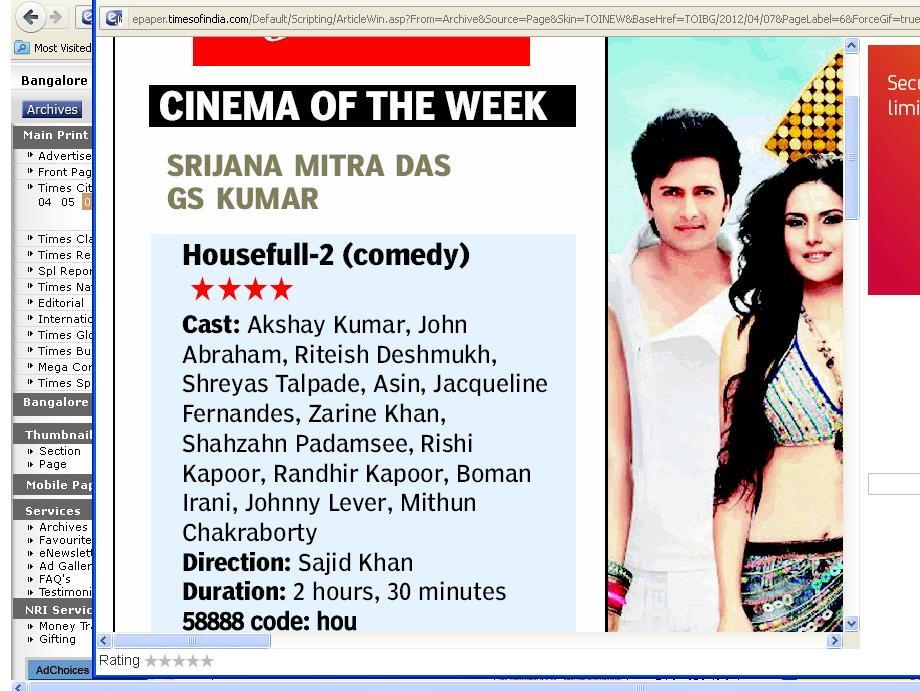
Times of India’s film critic Srijana Mitra Das has given 4 stars to Sajid Khan’s Housefull2. Who is this enlightened soul? Someone please introduce us to him/her. Seems like a bong. And a bong with such unique taste in cinema must belong to some rare tribe. Anyway, if the 4 stars weren’t baffling eough, there’s more to the story. Take a look at this pic.

This is the Bangalore edition of TOI. Have taken a screengrab of the review page. Reviewer is the same Srijana Mitra Das and rating is 4 stars. Now take a look at this next pic.

This screengrab is from the Chennai edition of TOI. Again, reviewer is the same Srijana Mitra Das. But the rating is 2.5 stars. Who ate up my 1.5 stars?

Same film, same reviewer, same newspaper but two editions and two different ratings.

WTF!

Who writes the reviews? Who gives the ratings? Does Srijan Mitra Das really exist?

CAN SOMEONE PLEASE EXPLAIN THIS TO US?

Tip – Yashpal Singh/Dhanya Rajendran