Archive for the ‘rewind’ Category

If you love Hindi mainstream cinema but are disappointed with the quality of cinema being made in the country right now, and believe that online content has taken over, then this is for you. By the end of this post you might realise that it may have been an underwhelming year at the movies but yet there have been few things that we all need to cherish.

Listing my favourite cinematic moments from the Hindi films that have released in the year 2016.

Airlift

1. At the end of Airlift the tricolour is waved and Vande Mataram sung by KK plays in the background. Now, i’m not the one for jingoism but the way they did it in Airlift, it got me. The build up to this point with the an Argo-ish execution by director Raja Menon was A-class.

Neerja

2. Neerja Bhanot’s mom delivers a speech in the end of the movie. I saw the film first day first show with a half-full auditorium and i can say for sure that almost all of us were in tears when she said the line, ‘meri mamma sey kehna, Pushpa i hate tears’.

Kapoor & Sons

3. The Plumber scene. A plumber is repairing a leak in the house while all the family members are fighting. He becomes a part of the chaos and witnesses the fight between the family members. As his work is completed, he goes and announces that he is done. Rajat Kapoor asks him, ‘kitna hua‘. He says ‘is bure waqt pe jo theek lagey‘. The line was delivered with utmost seriousness but the audience (including me) burst out laughing out of sheer nostalgia. It’s almost as if we all have had this scene play out in life at some point.

Nil Battey Sannata

4. The interview scene with Pankaj Tripathi, Ratna Pathak Shah & Swara Bhaskar is incredible. Imagine a mother wanting to get admitted in the school where her daughter studies.

Udta Punjab

5. At a point in the film Ik Kudi reprise plays in the background and there is a high speed sequence in which Shahid Kapoor’s Tommy fights some goons, and then cycles his way to find Mary Jane played by Alia Bhatt. The build up to this moment by writer Sudip Sharma and Abhishek Chaubey is nothing short of spectacular and the pay-off is a HOOT.

Sultan

6. Many people love the moment when Salman Khan looks at his paunch but for me it is the jag ghoomeya step in the movie. The song itself is one of my favourites of this year, and i think the magic is in the step too. It’s not some extraordinary dance move but the fact that Salman Khan made so much effort and pulled it off with so much élan tells us how serious he is for his craft. In what is perhaps the golden phase of his career, he is the one setting the guidelines for the rest of the industry by working with talented directors and doing content driven films.

Rustom

7. The track between Anang Desai (as the judge) and Kumud Mishra (as the tabloid editor) had me in splits. It seemed out of place in an otherwise serious movie. But in isolation it’s hilarious. Full playing to the gallery and seeti maar stuff. The small town front bencher inside me loved it.

Pink

8. In a moment during the courtroom sequence Mr.Bacchan explains the meaning of consent to Angad Bedi’s character who comes from a typical patriarchal mindset. That was gold.

M.S.Dhoni  – The Untold Story

9. Dhoni may not have been the greatest film of the year but it sure had some really fine moments. Sushant Singh Rajput is talking on the landline without a wire and his friend who is visiting him thinks he has gone nuts as his career is not doing anywhere. It turns out to be a prank.

10. Pre-Interval moment when Sushant’s character finally decides to follow his dreams and gets into the running empty train.

Ae Dil hai Mushkil

11. The love in the eyes of Ayan played by Ranbir Kapoor for Anushka Sharma’s Alizeh as she walks around with her friends just before her nikaah. The look that Ranbir Kapoor had in his eyes is what i call the ufff-moment. So is the entire song. I dare say that channa mereya is the best directed song of Karan Johar’s career.

Dangal

12.Geeta played by Fatema Sana Sheikh comes back to her hometown after her stay at NSA where she has been exposed to new methods of wrestling, and she believes that her father’ Mahavir Phogat’s (Aamir Khan) coaching methods are outdated. The father-daughter get into a bout and it turns out to be one hell of a fight.

Sairat

13. The climax where Archie and Parshya’s son Tatya walks back as we follow the footsteps drenched in blood. One of the most powerful and heart wrenching moments at the movies this year. Nagraj Manjule’s Sairat went on to become a classic, and this powerful scene was our take away when we left the theatres.

Dear Zindagi

14. Now, Dear Zindagi may not have been one of the best movies of the year but one particular moment in the film made me smile no end. The point when SRK’s Jehangir khan sits on the chair after Alia’s Kaira walks out and the chair’s creeking sound signify the fact that he may have feelings for her.

Waiting

15. Kaliki : How long have you been married for?

Naseer : 40 years.

Kalik : FUCK!

Naseer: You mean, ‘how wonderful’.

The scene with this dialogue exchange between the two leads who are waiting by the bedside of their respective spouses was truly wonderful.

16. And in case you are wondering about the 16th one, well, i want you to discover that yourself in the criminally underrated and under-watched movie, Buddhia Singh : Born to Run. Had an Aamir Khan backed it, it would have been a sure shot winner at the box office and found its audience.

So yeah, by this point i hope you would want to believe that the year has not been that bad.

Please do comment and tell me your favourite moments/scenes from this year’s movies.

Navjot Gulati

(PS – I know Sairat should not be in this Hindi film list but i do believe that the film had a greater impact than any of the movies released this year. It’s a film that transcended across language barriers)

As we have done in the past, this year too we are trying to source the scripts of some of the best bollywood films of the year. As most of you know, the scripts of Hollywood films are easily available online, even the unreleased ones. But we don’t have any such database of Hindi or Indian films. So that has been the primary reason for this initiative. And it has been possible only because some of the screenwriters and filmmakers have been very supportive about it. It’s only for educational purpose and much like the spirit of the blog, is a complete non-commercial exercise.

To read the scripts of best bollywood films of last few years, click here. For this year, so far we have posted the script of Neerja. And here’s the script of Kapoor & Sons.

kapoor-sons

Shakun Batra’s Kapoor & Sons was not just commercially successful and critically acclaimed, but it scored a rare achievement. His sophomore feature better was than his assured debut, Ek Main Aur Ekk Tu. Most filmmakers in bollywood falter after making an impressive debut.  What’s also praiseworthy is the way the film presented its stars and characters. A leading character in mainstream bollywood film was gay without being caricatured and a leading star was seen in a supporting role.  No wonder that this film is in everyone’s list of top films of the year.

Film : Kapoor & Sons

Director : Shakun Batra

Written by :  Ayesha DeVitre and Shakun Batra
(Shoot draft – July 2015)

adhm

This year was mostly dull, film songs wise. The clutter was celebrated by digging the same old formula to return a fake spectacle of sanitized arrangement, auto-tune overload, and, in most cases zero relevance to the film which the album represented. My ‘top film songs’ are as under. Yes, it features a song from a Sunny Leone film and another song from a film you might not have heard about. These songs remain in my playlist, till today as we close the year.

I would suggest you click the play button and then keep scrolling down to read the post. The songs will play in the sequence you will read about them.

Dug dugi dug (Jugni) Vishal bhardwaj‘s voice, Clinton‘s free flowing composition and Shellee‘s beautiful poetry, all made up for a fantastic song that lasted the whole year in spite of the fact that the film released in January. The album was quite ok but nothing lasted longer than Vishal’s balm of a voice in this song.

Dil mein hua ghotala (Saala Khadoos) – Now I am mindful that there is an ‘original’ of this song in another language, but I don’t think most songs retain their charm when they are reborn as a Hindi film song. Ok jaanu?  That said, the frisky vocals of Monali and the ‘toom toom’ in the song made it impossible for me to take the song off my playlist. Santosh Narayanan gets full marks for using strings which are intertwined beautifully in the song. Monali Thakur, sing more?

Haminastu (Fitoor) – Rarely have I come across a song so beautiful about Kashmir. Tapas’ superlative string play, Zeb‘s spirited singing and Amit Trivedi‘s talent culminated into a magnificent song that will outlast us all.

Bollywood Diaries* – I wish I could write a recco post about this beauty. Oh wait! I did! You can read me raving about the album here. Vipin Patwa‘s music and Dr. Sagar‘s lyrics were beautiful and devastating in equal measure. Hear Titli (By Papon), my pick of this album. It might have escaped your attention but tell me if it doesn’t affect you as a song, as an album. Highly recommended.

Single chal reya haiMohit chauhan got the bhopali accent right and Krsna‘s composition made the song even more adorable. I do suspect that the lyricist Rajshekhar has paid a tribute to Javed Akhtar by mentioning him, subtly. Anyway, the cute song’s high point is – Tu hai ab tak akeli, humko khal reya hai…ha! what fun!

Le chala (One Night Stand) – Jeet Ganguli can melt us with his romantic tune is old news. For One Night Stand (the film), he teamed up with Jubin Nautiyal for a song that deserved much wider audience than it got. This is one of the better penned songs by Manoj Muntashir and even if you are rolling eyes thinking ‘Sunny Leone’s film? really?’, give this song a listen, you will know what I mean. A romantic song, done right.

Waiting* – Mike Mccleary is much more than someone who makes ‘English-type’ songs. He has a distinctive sound and it is time for the ‘gyaani’ mainstream people to fuse his sound with good lyrics. The effect of that would be something to look forward to, just like it was in this album. My pick is tu hai to main hu, of course.

Mehandi (Dhanak) – While the album didn’t set my playlist on fire, this song from Dhanak rocked and how! Tapas Relia‘s earthy fusion and raw singing by Anwar, Swaroop & Niyaz sounded just too good to miss. Do not miss the khadtal all throughout! This is just a glimpse of what we can achieve in bollywood music if our neeyat is at right place.

Udta Punjab* – This album by Amit Trivedi didn’t soar exactly but gave us the delightful Kanika Kapoor in memorable da da dasse, Splendid re-imagination of ik kudi, and my favorite title song of the year – Udta Punjab. Disclaimer – Now the lyricist is somewhat related to our blog, but trust me when I say this – Haven’t heard such wildness in a song this year. Andar da kutta, rifle dikha ke mushayre lutiye forever! Also, fuck disclaimers! Amit trivedi and Vishal dadlani should be fined for sounding this good with a song that has Bakaiti written all over it.

Jag Ghoomeya  (Sultan) – Salman, err! Sultan had some decent tunes to its credit but Neha Bhasin’s affectionately sung version stole my heart and hid it somewhere in those strings that accompany her throughout the song. A song for bonfires and those mushy evenings. Kudos to Vishal-Shekhar and Irshad Kamil as well.

Chu liya (Hai Apna Dil Toh Awara) – We don’t come across such simply composed songs anymore. So kudos to Ajay Singha for creating this song. Papon and Neha Rajpal sound like fragile lovers. (Fun fact – The central riff of this song is pretty similar to Bipul Chettri‘s asaan from the album that we featured here 2 years ago. Still it is a damn good song.)

Mirzya* – If only music could save the fate of a film! I was quick to pronounce Mirzya as the album of the year in my post here and it pretty much remained so till someone else invaded the playlist. More on that later. Mirzya, if not the best, can be surely called as the most experimental album of the year. We have included the title song of the film in the playlist but the entire album remains our favorite.

Dariya (Baar Baar Dekho) – Granted that the song is a case study in excessive auto-tuning, still, I love the way Arko has retained the emotion so well in lyrics and the way he has sang this. Hopelessly in love, flowing like a dariya.

Besabriyan (MSDhoni – The Untold Story) – Amaal- Armaan Malik are good guys but it is becoming increasingly difficult to find out which song of theirs belongs to which album. Still, this gem from ‘Dhoni’ makes me soar the way Udaan‘s music did. Yes, big statement, but Manoj Muntashir has penned a beauty and full marks to Amaal and Armaan for such a fabulous effort.

Ae Dil Hai Mushkil* – For me, the album of the year. For me, the album that should get Amitabh Bhattacharya and Pritam all the awards. The way songs came together and helped the narrative was unparalleled this year. Channa mereya is where I have been living since I heard it for the first time, I don’t think I will ever relocate from there. It has a destructive pleasure that lucky few among us have experienced. Give all the awards to Arijit Singh already!

Haanikaarak bapu (Dangal) – While I love Raftaar‘s Dhaakad a lot, I go crazy at the smart lyrics and crisp presentation of this song. Sarwar Khan & Sartaz Khan Barna are such a treat! Also, Amitabh Bhattacharya should be weighed in gold for every word, and the way he has used them here – haanikarak, baapu, torchar, vaahanchalak, mogambo, khalnayak…wooot! Total riot.

This does it! Yes, this year had Mr. Rahman coming out with an inconsequential album that neither sounded true to its time nor the present. This year also had Neerja which fit the film well but sadly didn’t stay in my playlist beyond the film’s release and stay in theaters. We had almost Sanam Re which was almost instructive in telling us not to expect much from the songs as it is. Then we had embarrassing attempts like Zubaan, Terra Surrooor, Fever and so on.

That said, we have a ‘Dhinchak Bollywood’ playlist as well that we will share in our post about the non-film songs of the year. Till then, share your favorites and let us know what you think of this playlist.

Rohwit

(* signifies that I liked the entire album but in the interest of keeping the post shorter than an Ashutosh Gowarikar film, I had to pick one song)

As we have done in the past, this year too we are trying to source the scripts of some of the best bollywood films of the year. As most of you know, the scripts of Hollywood films are easily available online, even the unreleased ones. But we don’t have any such database of Hindi or Indian films. So that has been the primary reason for this initiative. And it has been possible only because some of the screenwriters and filmmakers have been very supportive about it. It’s only for educational purpose and much like the spirit of the blog, is a complete non-commercial exercise.

To read the scripts of best bollywood films of last few years, click here. We are starting this year’s series with Ram Madhvani’s Neerja.

neerja

Not many remember that Neerja isn’t Ram Madhvani’s debut film. He made his debut in 2002 with a small underrated film, Let’s Talk. It’s good to have him back after more than a decade.

The film broke an important bollywood myth – a Hindi film with a solo heroine in the lead that can work wonders at the box office and can get critical acclaim too. Yes, it’s possible. And there is lot to learn from the film’s writing and direction. Ram’s direction and Saiwyn’s story/screenplay showed us how to build a 2-hour film revolving around a single incident. Everyone knew the story, the act of bravery, and even the climax. But still how do you hold audience’s attention? This one did the magic from the opening scene. Sanyuktha’s dialogues in just one monologue (by Shabana) showed us the power of the words that made us reach for the tissues. So here it is, the script of Neerja.

Happy reading!

Film : Neerja

Director : Ram Madhvani

Story & Screenplay : Saiwyn Quadras

Dialogues : Sanyuktha Chawla Shaikh

As we have done in the past, this year too we are trying to source the scripts of some of the best films of the year. As most of you know, the scripts of Hollywood films are easily available online, even the unreleased ones. But we don’t have any such database of Hindi or Indian films. So that has been the primary reason for this initiative. And it has been possible only because some of the screenwriters and filmmakers have been very supportive about it. It’s only for educational purpose and much like the spirit of the blog, is a complete non-commercial exercise.

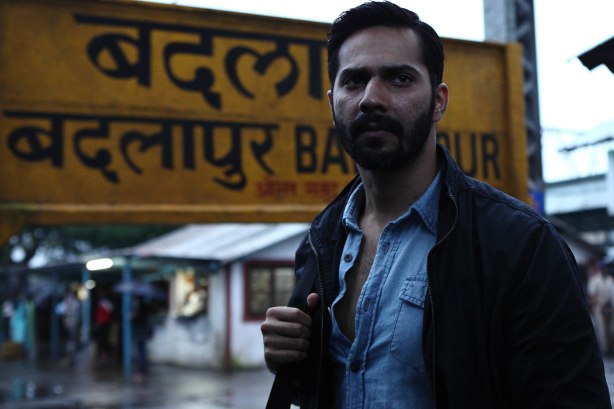
In our “Best of 2015” series, earlier we shared the script of Neeraj Ghaywan’s MasaanMeghna Gulzar’s Talvar, Navdeep Singh’s NH10, Kanu Behl’s Titli and Sharat Katariya’s Dum Laga Ke Haisha. Badlapur was missing. So here it is.

badlapur

A Sriram Raghavan film always has a lot to offer. Sadly, his last few films received the critical acclaim but never got the box office numbers. This time, with Badlapur, he scored on both counts.

A revenge film unlike any, where the morality tables are turned, and you keep wondering with whom should your sympathy be. Aha, so delicious. Apologies for delay in posting this. And thanks to Sriram for making the script available. And before you start reading the script, here’s a small note from him about the draft –

Too many drafts to hunt from and sift through. Finally found one…still work in progress but there are couple of scenes that are different, or were written but never shot…etc etc. Some cringe lines which we later realized and so on. As always, the process is magical. (at least most of the times). Hope you have fun reading it.

Film : Badlapur

Director : Sriram Raghavan

Story : Story – Massimmo Carlotto

Screenplay and Dialogue – Sriram Raghavan, Arijit Biswas, Pooja Ladha Surti

The brief was the same this year. A mail was sent to the usual cinema comrades who watch almost all the films, write about them, or contribute and help in running this blog. Pick a film (released/unreleased/long/short/docu/any language/anything) that stood out and has stayed with you, whatever is the reason. Since the idea was that we cover maximum films, so no two people were allowed to write on the same film. And nobody was told who was writing on which film. Also, this year, writers were asked to pick underrated ones. The more underrated it is, better was the choice.

So here is the final list – a mixed bag of few usual suspects and some underrated ones.

Earl_fixed_big_screengrab.png.CROP.promovar-mediumlarge

kartik krishnan on Titli

We tail the protagonist who we’ve been informed has औकात के बाहर dreams under construction. Aspiration in his hazy eyes and cobwebs in his head, we see him traversing through the narrow lanes of east delhi (जमुना पार) leading up to the footsteps of his house. His brothers are supposedly arranging a newly purchased item into the house but the delivery guy argues that the door entrance is too small. Yes too small for such a big & expensive product. The casual disagreement escalates into an argument slowly. We get to know that birthday cake has been made by the eldest son of the family for his visiting wife and daughter. Hopes, aspirations, dreams of a ‘family’ day transform into an ugly senseless typical ego-fight. The family’s Babuji enjoys his tea & biscuits & watches with relish. This perhaps wasn’t the first time the ‘Bahu’ of the family was repulsed by the everyday violence and walked away. The protagonist watches the separation with helplessness and awkwardness. And we immediately know how difficult it is going to be for our hero to escape this gutter life. As the film progresses the director slowly subverts our idea of the underdog by showing his violent side too. Will he cross over and become like the ‘nark’ members he so despises? One of the finest debuts by a director who also wrote the killer Love Sex & Dhokha – Titli is the non pretentious ‘art house’ noir film that is firmly rooted in the Indian milieu without an eye at the festivals. The film which should have been celebrated much more in our country and abroad

shazia iqbal on Inside Out

We are closest to the voices within us, multiple voices that reside within us, our emotions that talk to us, maneuvers specially through life’s complicated phases. Pete Doctor personifies these complex emotions in Pixar’s Inside Out. It starts with Kaufman-esque question that most of us have asked ourselves, whether it is possible to get a peak inside somebody’s head and wonder what’s going on. Doctor’s pre teen daughter was the inspiration behind the idea when he wondered about her changing emotional behaviour, which was reminiscent of his own memory of moving out of his childhood home.

In the film the 11-year-old Riley goes through an emotional turmoil when her family moves from a quaint idyllic life in a small town to the hustle bustle of a city. The five emotions in her mind’s headquarters, Joy, Sadness, Anger, Disgust and Fear struggle to help Riley maintain a balance.

The genius of the film lies in the interplay between Riley’s physical and emotional world where it tells us depression is not just a state of absence of Joy and Sadness but the role sadness plays as a heroic emotion to connect us to our closed ones. Inside out moves you to the extent that you will find yourself talking and empathizing with the running emotions of your own control room.

aniruddh chatterjee  on  Open Tee Bioscope

90s hold a special place in our hearts for us 80s kids. We grew up in the 90s. I grew up in Bardhaman, a small town then, which is very similar to North Kolkata, where the film is based.

The images are soaked in nostalgia.

The bylanes, the para culture (neighbourhood), street food, tea shops, evening adda eventually turning into political debate no matter where one started, the clubs and above all football. The characters we fondly remember from childhood. The overweight naive neighbour, the social activist who wears a jeans, the local goon who eventually becomes a policeman, the dubious left wing politician, the unwed, super orthodox, elderly, paternal aunt, the hipsters playing Bangla rock and the frustrated, angry coach who eventually becomes the mentor and more than a father figure.

The coming to terms with father’s absence, one has never seen since birth. The anger when bullied about the same fact. Turning rebel against the mother, a single mom who’s working round the clock to make sure her child goes to the best school. The displeasure of going to the local politician’s house for favour on mother’s repeated insistence. A new girl coming into the neighbourhood. The first love letter. The first kiss. The fight with best friend as both fell for the same girl.

 And eventually coming of age and growing up. Open Tee Bioscope is all that and more.

sukanya verma  on  Crimson Peak 

Watching Guillermo del Toro’s Crimson Peak is like securing a privilege pass inside the ambitious imagination of a dark genius inhabited by fanciful monsters and imprinted by a mammoth knowledge of art, literature and cinema.

Every corridor opens into wonderment but macabre and mystery occupy a place of prominence.

Crimson Peak relates the fanboy influences and how he’s manifested them to fashion an exquisite gothic romance.

In this spellbindingly atmospheric tale where production design is king, ghosts aren’t merely to terrify but provide gruesome clues leading up to a reality that’s far more creepier.

And yet its seductive narration isn’t concerned with revelations as much it is with dedicatedly fanning our morbid fascination for everything forbidden and murky. All this time testing if his viewer can recognize the hat tips to all the innumerable classics del Toro’s inspired by.

Gratifying if you do, educating if you don’t.

bhaskarmani tripathi  on  Phoenix

Talking about a dreadful and painful event, instead of considering it sacred, helps healing. That must be the reason why Holocaust is a very well documented event in European culture. It has been the premise of some of the greatest films ever made. Agar apne girebaan mein dekhein, we’ve not given Partition its due. A Holocaust survivor returns to Berlin after her wounded face is reconstructed, and searches for her husband only to come of age with the dynamics of the society that’s now a radically different one. An atmospheric, twisted story about the trauma, conflicts, loss and identity crisis in a post war Germany where Nazis and survivors now have to live together. But most importantly, it’s also about a love compromised. The title Phoenix serves as a metaphorical reference to the tragedy. The pain can be seen as a constant shade in Nina Hoss’s eyes in the film, especially in that gut wrenching climax that renders a different meaning to Goosebumps.

mihir pandya  on  मुज़फ़्फ़रनगर बाक़ी है / इन दिनों मुज़फ़फ़रनगर

पच्चीस अगस्त 2015। वो गाढ़ी ऊमस से कुचला हुआ उदास दिन था। जब मैं गांधी शान्ति प्रतिष्ठान के उस परिचित अंधेरे हॉल में घुसा तो फ़िल्म शुरू हो चुकी थी आैर मुझे भीतर परदे पर चलती फ़िल्म की रौशनी के अलावा कुछ आैर दिखाई नहीं दिया। संयोग नहीं कि वो फ़िल्मकार शुभ्रदीप चक्रवर्ती की पहली बरसी का दिन था। वही दिन जब उनकी फ़िल्म की कैम्पस में स्क्रीनिंग करना चुनौती बन गया था। यहाँ कैम्पस को दिल्ली पढ़ें आैर दिल्ली को पूरा देश। पृष्ठभूमि: एक अगस्त 2015 को दिल्ली के किरोड़ीमल कॉलेज में फ़िल्मकार नकुल सिंह साहनी की दस्तावेज़ी फ़िल्म ‘मुज़फ़्फ़रनगर बाक़ी है’ की स्क्रीनिंग को सत्तारूढ़ दल से जुड़े छात्र संगठन ने जबरन रुकवा दिया था। नया निज़ाम अपने डैने फैला रहा था। जिस कॉलेज से मैंने अपना मास्टर्स किया, जिस विश्वविद्यालय ने मुझे वो बनाया जो मैं आज हूँ, आज इनके नाम सार्वजनिक समाचारों में अजनबी लग रहे थे। शुभ्रदीप की मुज़फ़्फ़रनगर पर निर्मित दस्तावेज़ी फ़िल्म ‘इन दिनों मुज़फ़्फ़रनगर’ की स्क्रीनिंग नहीं हो सकती, हमें साफ़ बता दिया गया था। ‘देखा नहीं क्या हुआ’, छात्रसंघ चुनाव सर पर थे आैर नकुल की फ़िल्म का उदाहरण सामने था। आखिर शुभ्रदीप की एक अन्य फ़िल्म की स्क्रीनिंग हुई, मुश्किल से 15-16 दर्शकों के साथ, लेकिन सच कहूँ, हम हर आहट पर चौंक रहे थे।

पच्चीस अगस्त 2015। वो बारिश की उम्मीद से भरा उर्वर दिन था। परदे पर चलती फ़िल्म की चमक कुछ कम हुई तो मेरी नज़रें अंधेरे की अभ्यस्त हुईं। खचाखच भरा जीपीएफ़ का हॉल मेरे सामने था। दिल्ली में अगस्त की ऊमस भरी शाम बिना किसी एसी या पंखे के तीन सौ चार सौ लोग सिनेमा देख रहे थे, जिनमें ज़्यादातर के पास बैठने को कुर्सियाँ भी नहीं थीं। उस एक अगस्त की घटना के बाद, जहाँ दर्शकों की गवाही के बाद भी अन्तत: ‘मुज़फ़्फ़रनगर बाक़ी है’ की स्क्रीनिंग रुकवा दी गई थी, बहुत सारे सिनेमा को चाहनेवालों आैर ‘प्रतिरोध का सिनेमा’ के दोस्तों ने कौल लिया था फ़िल्म की सार्वजनिक स्क्रीनिंग का। पच्चीस अगस्त को, शुभ्रदीप की पहली बरसी पर यह स्क्रीनिंग हुई, लेकिन सिर्फ़ दिल्ली में नहीं। बाइस राज्यों के पचास से ज़्यादा शहरों आैर कस्बों में अस्सी से ज़्यादा स्क्रीनिंग्स हुईं ‘मुज़फ़्फ़रनगर बाक़ी है’ की। कहीं पचास दर्शक थे तो कहीं पाँच सौ। हज़ारों लोग साथ देख रहे थे उस सच्चाई को जिसे निज़ाम नहीं चाहता की आप देखें। भले ही यह शुभ्रदीप की फ़िल्म नहीं थी (उस पर सेंसर की रोक जारी है आैर मामला कोेर्ट में है) लेकिन उन्हीं के संघर्ष की साझेदार फ़िल्म थी। मृत फ़िल्मकार जिसके रचनाकर्म को निज़ाम कहीं गहरे गाड़ देना चाहता है, फ़िर राख़ से उठ खड़ा होता है।

अरुंधति अपने निबंध में एक जगह लिखती हैं कि लेखकों को यह भ्रम है कि वे सुनाने के लिए अपनी कथाएं चुनते हैं। दरअसल यह कथाएं हैं जो अपने लेखकों को चुनती हैं। समय भी अपनी कथाएं खुद चुनता है आैर एक ऐसे साल में जब सिनेमा की बात करना दरअसल प्रतिबंधों, राजनैतिक नियुक्तियों, जीवट भरी छात्र हड़तालों, पुरस्कार वापसी की प्रतिरोधी कार्यवाहियों आैर ‘संस्कारी फ़िल्मों’ की आेर नियंता संस्थानों के बढ़ते कदम की बात करना हो,  2014 के मुज़फ़्फ़रनगर दंगों पर निर्मित इन दो वृत्तचित्रों से ज़्यादा ज़रूरी आैर कुछ मुझे नज़र नहीं आता। सिनेमा कला के लिहाज़ से शायद यह साल की सर्वश्रेष्ठ फ़िल्में नहीं हैं। धर्म-जाति-जेंडर-वर्ग के भेदों बीच उलझे समकालीन यथार्थ को समझने के क्रम में शायद यहाँ कुछ सरलीकरण भी मिलें। लेकिन यह हमारे दौर को समझने के लिए सबसे ज़रूरी जीवित दस्तावेज़ हैं। शुभ्रदीप की फ़िल्म जहाँ बड़ी बारीक़ी से आकस्मिक लगती घटनाआें के पीछे के षड़यंत्र को उजागर करती है, नकुल दिखाते हैं कि कैसे इन दंगों के फलितार्थ  वृहत चुनावी परिदृश्य से सीधे जुड़ते हैं। फ़िल्म के एक प्रसंग में जहाँ एक युवा अपनी जला दी गई हलेवी के नष्ट अवशेष दिखाने फ़िल्मकार को भीतर ले लाया है, नकुल पृष्ठभूमि में ‘गरम हवा’ की दादी अम्मा की अपनी हवेली को याद करती आवाजें पिरो देते हैं। आैर मुझे याद आते हैं स्वयं प्रकाश की कहानी ‘पार्टीशन’ के कुर्बान भाई, “अाप क्या ख़ाक हिस्ट्री पढ़ाते हैं? कह रहे हैं पार्टीशन हुअा था! हुअा था नहीं, हो रहा है, ज़ारी है…”

anand kadam   on   Killa

Killa was cathartic. It ripped through my memories. That craving for a MTB cycle which we couldn’t afford, that desire to visit a city, sunday mornings watching Rangoli on neighbour’s television and friday nights with Philips top ten with Chitrahaar in somewhere between, Mowgli and Leela and Bagheera, those rainy days with gumboots, those unheard words, those unspoken sorrows, lost friendships and broken relationships without understanding any of those. It made me want to go back in time and hug my 12 year old self and let him know that it’s going to be a fuck up full of heartaches and scars but you’ll manage, you’ll survive, you’ll be all right. Killa did all this to me while being absolutely beautiful. Drop dead gorgeous. Each frame dripping with nostalgia and melancholy.

karan anshuman  on  Taxi

After This is Not a Film, one would expect Jafar Panahi to take it easy. Closed Curtain was a subject like many other Iranian films, a melancholic metaphor about the state of affairs except the parable here, was his own personal persecution.

But with Taxi, the moment you realize it’s him driving the titular car and that unassuming smile that he breaks into when one of his customers – a DVD bootlegger – recognizes him, you can’t help but salute the spirit of a man who will give up every personal freedom to make a small film to bring us within touching distance of life in theocratic Iran. And do it with such panache, humility, and sharpness!

And it is not only using filmmaking as a political vehicle, a point to prove. His life is his love for filmmaking itself. Look at the sheer craft of Taxi. Look at that flawless writing, casting, and performances. For those of us who’ve chosen a path where film is fantasy, Taxi comes as an awakening, to go back to our roots, to what inspired us in the first place. And that human rights lawyer who proffers us viewers a flower, keeping it on the dash and says “Here is a rose for the people of cinema, because the people of cinema can be relied on.” We must live up to her expectations.

silverlight gal  on  Kumiko, the Treasure Hunter  and  Experimenter

Anyone who has had film-related conversations with me (online or offline) will know that I’m an unabashed Coen brothers fan. So, in early 2015, when I got to know from a film news website that a Coen brothers movie Fargo forms a crucial part in a new indie movie, I knew I had to see it. While Kumiko The Treasure Hunter may not count as one of the year’s best, it has stayed with me and will stay so for a long time to come. First shown at Sundance in 2014 and later released widely in 2015, this film by the writer-director-actor Zellner brothers tells the story of the titular Kumiko, an office lady in Tokyo who finds her everyday life and job increasingly mundane and decides to leave everything in search of a supposed hidden treasure in the American midwest. To what extreme this journey takes her and what happens to her along the journey forms the premise of the film.

***

Experimenter (with leads Peter Sarsgaard and Winona Ryder) is one of the underrated films of 2015. A biographical drama, it tells about the experiments conducted in the 1960s by Stanley Milgram, an American social psychologist. Called as the Obedience experiments, they first generated some controversy due to the ethics involved in the experiments. Years later, the experiments were widely acknowledged and his book based on them went to win awards and accolades. The findings of his experiments are timeless and relevant even in this day and age, especially in the field of politics. With a bravura performance by Sarsgaard and an offbeat storytelling approach by Michael Almereyda, the film packs a neat punch.

rahul desai  on  The Threshold

I wandered into this film on a drowsy Mumbai Film Festival morning without any expectations. Pushan, the DOP-director, is a popular playwright, and the son of famous stage/TV actor Jayant Kripalani; this is his first feature-length film, which, rightfully, is a simple chamber-piece that seems to have found its origins on stage. It is entirely set in a cabin in the mountains, where a newly-retired Delhi couple are beginning the last phase of their lives. The husband (Rajit Kapoor) is shocked to discover that his wife (Neena Gupta) wants to leave him, a day after their only son gets married. “What do I tell others?” is a line that keeps popping up – representative of the form of many unions – sustained only through habit and comfort, instead of old-school passion and love. The film happens over one tumultuous, argumentative day – where, through their bickering and desperate pleading, we are left to imagine their 30 previous years of ‘wedded bliss’.

Perhaps I find myself writing about this film again and again because it hit me while I wasn’t looking. It isn’t a masterpiece, or even the best film I’ve seen all year; it’s just one I cannot forget, because it happens to touch upon a phase that I’ve always been very afraid – and increasingly curious – about. It shows me two very familiar characters I’ve seen in almost every Indian household, and gives me an intimate, uncomfortable peak into what happens behind closed doors. The two actors cultivate such a weathered, lived-in feel about them, and together, they prove that love is traditionally a subset of dependence, and that escaping isn’t the same as breaking free.

manish gaekwad  on  Bajirao Mastani

Period films are full of bombast – fire and brimstone. Some of the best achieved films of the genre this year – Baahubali and Katyar Kaljat Ghusli suffer from hammy content – characters often roar like bruised lions and run amok like musth elephants – as ill-behaved as the past comes through period dramas – since we couldn’t know better. And so amidst the general helter-skelter Sanjay Leela Bhansali’s Kashibai gently burns the screen reflecting the ill-fated lovers, sits down in absolute silence – notice there is no hysteria and ham slips, or rather burns with the screen before us. A screen-burning intermission follows. This mute elegance (if fire can soothe), something Bhansali has himself floundered to reach over the hammy years, sab maaf hai. Despite its stiff or vapid leading lady, its hero engaging in simian behaviour, Bajirao Mastani – a pale version of Mughal-E-Azam deserves to be this era’s period film to beat. Writer Prakash Kapadia ko bada salaam.

kushan nandy  on  Victoria

A heist film that starts in a basement pub at presumably an hour before dawn, rockets to a terrace, travels through underground parkings and hotel rooms as night turns into dawn, love into desperation, a Linklater-ish tale into a Hadley Chase thriller, erasing from our minds the fact that this is all happening in a real-time and single shot sequence giving little space to actors or technicians to err, turning into a schoolbook of cinematic execution and improvisation, finally leaving us with the haunting image of Laia Costa, playing the protagonist Victoria, and successfully pulling off that rare blend of content and technique that cinema is all about.

varun grover  on  Junun

It was a rare event – watching JUNUN at MAMI-2015. I don’t think I’ve ever listened to an entire (virgin) album AND seen its making process together at the same time. Generally one looks for the ‘making of’ after one has experienced & liked the film or album, but in this case the process was reversed. (I think Imtiaz Ali knows that such a reversal works as he always releases the making of his songs before the very song.) The album was being launched to us through the film. We had no idea what to expect (except of course a ‘good’ film, as Paul Thomas Anderson’s name is attached) when we walked in & the first surprise was to know that Shye Ben-Tzur was present at the screening. What followed was an hour long session of madness – Jonny Greenwood and Shye Ben-Tzur jamming with local qawwals from Rajasthan as lots of shaky handy-cam/drone-cam movements took us into the emotional as well as real bylanes of the artists’ lives. (IMDB says PTA’s real cameras got confiscated at the airport so he had to make do with handycams and cheap drone cams. What a blessing!) The music, of course you’ve heard it by now, hit the flesh like a hot-red nail & the ultra-casual footage elevated the illusion of being in the same room of Mehrangarh Fort as the musicians. By the end, I had even forgotten that it was a PTA film. It was, but it was way more a Shye Ben-Tzur, Jonny Greenwood, Aamir Bhiyani (my fav musician in the film), Zaki Ali Qawwal, Asin and Afshana Khan (what voices!) film. (click here to see some deleted footage)

neeraja sahasrabudhe  on  Badlapur

If they have Fargo, we have Badlapur. Dark, twisted and extremely riveting. Delving deep into the psyche of what makes a crime/criminal. Is a cold-blooded murder worse than a crime committed in the heat of the moment?
The intended crime itself was flimsy – robbing a small bank, but nothing is that simple when you know that the director is Sriram Raghavan. So, as the film warns you – don’t miss the beginning!

As the film introduces us to its protagonists – I couldn’t help but think how much the idea of black and white has changed from the 80s, 90s cinema, when the hero was almost always lower/lower middle class – they had the moral high ground. I was soon proven wrong, for there is no black and white in Badlapur. The film shifts its perspectives and audiences shift their loyalties. The story moves through false leads, uncomfortable encounters, and some extremely tense scenes. Badlapur is uncompromising, and one of the most original films to have come out of Hindi film industry in recent times.

ranjib mazumder  on  Aferim!

We love to crib, criticise and abuse, because it’s easier than being objective or exercising compassion. History that retains all the seeds of our present dystopia is hardly present in our discourses, and our films, too, avoid any dialogue with the past. History is conveniently mauled in our cinema, because filmmakers find a shortcut to research in the name of serving popular entertainment. Just like it took a non-Indian to make the definitive film on Gandhi, the authoritative film on slavery in America, 12 Years A Slave, too, was made by Steve McQueen, a non-American.

In such a context, Radu Jude’s 2015 film Aferim! was a beautiful surprise. A Romanian director making a film on slavery, one of the grim realities of his country’s past, with anger so informed, it made me wonder whether we would be capable of such a feat in our cinema, without getting swayed by nationalistic fervour. Set in Wallachia of the early 19th century, and shot in crisp black and white, this costume drama sends a father-son duo in search of a fugitive slave. Masked as a road trip film, their journey reveals the ugly side of racism in a key historical period through the prism of black humour, and never for a moment, does the director let his contempt for the past come in the way of objectivity. It doesn’t wish to set the record straight, and makes you stand at the hapless space between the perpetrator and the perpetrated, something that J. M. Coetzee does most brutally in his novels. I wasn’t surprised a bit when I read about the backlash it received in its home country since its release. For those who are historyless, the past is a foreign country. And yes, the word ‘aferim’ is Turkish for ‘bravo’, and the director uses it several times in the film to lay the irony bare. Aferim, Mr Jude.

sudhish kamath  on  Kaaka Muttai

When a pizza outlet comes up where their playground used to be, two kids who make a living picking and selling coal off the railway tracks need to figure out a way to sink their teeth into this appetizing mouth-watering new dish called pizza.

Except that it costs 300 rupees. What they would make in 30 days of selling coal. Manikandan’s Kaaka Muttai, is the Slumdog Millionaire the world never saw. It shows us an India that’s happy and comfortable in its slums despite the growing gap between the haves and the have-nots.

Kaaka Muttai is set in a slum at the edge of civilization where good and evil is simply a choice for kids. Having grown up with kids next door who steal phones (they wait for speeding trains to pass them and knock off phones from the hands of train passengers sitting at the door… all it takes is the swing of a stick), the two young heroes of Kaaka Muttai, in the middle of their adventure to buy a pizza through honest means, hit a dead end.

And the older kid picks up the stick and waits for the speeding train. He sees a guy engrossed on his phone sitting at the door. He stands ready to strike… and he realises. That it’s wrong. It’s not him. He drops the stick and walks away. This is India too.

(P.S: This is not how the film ends and there’s no way I would ruin the film for you but enough to say, it’s got one of the best endings of the year.)

suyash kamat on Lal Bhi Udhaas Ho Sakta Ha

Amit Dutta’s cinematic world isn’t what we are used to. We must submit ourselves, consciously as well as subconsciously. As he begins to guide us through his seemingly abstract narrative, we begin to lose our usual selves, and start living his sense of time and space. A rush of feelings engulfed me as I chose to walk back home after the screening instead of driving. I wanted to stay there, in his time, in his spaces. Contemplate a little more, meet myself. A written post couldn’t have possibly done justice to what his film had done to me. Following are the lines/poem that I noted as the feelings rushed past me, hazy and unclear.

It began.
A house, a bulb, a phone call and him.
Lost. Surrendering unknowingly to its world.
Valleys of Shimla echoing with the chants of Varanasi.
Mani Kaul’s Siddheshwari, perhaps,
We were now living his childhood
Strokes of green, red too.
Leaving his world, time lost its count
And I wonder, what changed by the end?

jahan bakshi  on   The Diary of a Teenage Girl

“This is for all the girls when they have grown.”

Dramedies about coming-of-age and dysfunctional families have become such a tired cliche, especially among American indies- and yet, once in a while comes a film that surprises you and gives the genre a fresh shot in the arm. Debutant Marielle Heller directs this adaptation of Phoebe Gloeckner’s illustrated novel with astonishing confidence, sensitivity and poise. It’s genuinely risky and dark material, morally complex, not politically correct by any measure, and the film doesn’t take any easy stances or routes. It’s a daring portrayal of budding female sexuality- 15 year old Minnie Goetz (Bel Powley in a staggeringly good performance) is horny as fuck and yet aching for intimacy, vulnerable yet equally manipulative. She wants to be touched- in every sense of the word. The film is brave and astute enough not only to not judge her, but even her mom’s boyfriend who she falls into a torrid affair with. Her experience, sexual or otherwise change her, but don’t define her… she is more than the sum of them. A film critic remarked that ‘no man could have ever gotten away with adapting Phoebe Gloeckner’s novel in such frank terms.’ But isn’t that the whole point? This is a story about a woman, (which had to be) told by a woman… and we sure as hell need more of that.

PS: Marielle Heller and Andrea Arnold have both individually directed some episodes of the amazing second season of Transparent (if you still haven’t checked out this show, change that NOW) and it was quite interesting to realise this funny coincidence between their two (otherwise very different) films.

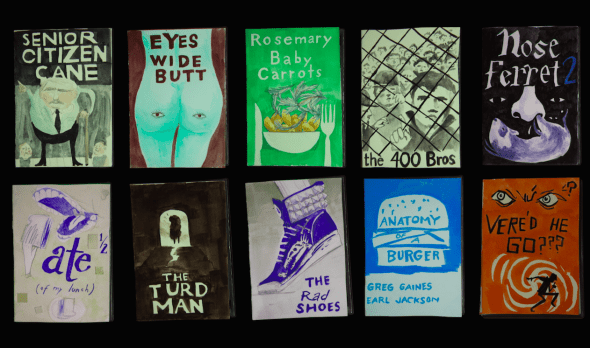
shubhodeep pal  on   Me, Earl and The Dying Girl

Where did movies with heart go? It seems that as Hollywood progresses through the years — or regresses, depending on which side of the glass you’re looking at — there is very little space left for small films to make a big impact, outside of film festivals. In fact, if you look at the top grossing movies of 2015, you inevitably find a sorry pattern in the films that made it big — franchises (Star Wars, Hunger Games, Spectre); action entertainers (Jurassic World); a combination (Furious 7); and, of course, the nearly unbearable Marvel factory (Avengers, Ant Man). Then, of course, there are also films that have grand ideas — science fiction / fantasy films generally fall under this umbrella: for instance, The Martian; Mad Max.

Inside Out is perhaps the only exception, but that too follows a relatively well-set formula of animated movies made painstakingly by Pixar. Of the major films released this year, it is only the last one that left me (and possibly everyone else) with a warm, fuzzy feeling. A feeling that was brought back in surprising ways by this year’s Me and Earl and the Dying Girl, a film whose title says everything and nothing about the film. Forget the dying girl; forget the characters; forget the well-worn plot of evoking sympathy for an endearing character who is about to die (Rachel). Me and Earl and the Dying Girl is about films; the joy of making them; the underpinning madness of it all; the tropes, and overturning the tropes (a tattooed, weed-smoking teacher; the ending of the film). Nothing is what it seems. Through the medium of parody film-making, Greg and Earl, show a madness for films that finds its pinnacle in the life (or what remains of it) of the dying girl. The final fifteen minutes are perhaps the most surreal and touching moments I’ve experienced through a film in recent times — a combination of sorrow and pathos that only film can engender. And, at the end, when the film — and the film within a film — is winding down, you discover that you knew nothing at all about the Dying Girl.
And that is why films never end, and the madness never fades. Because even after the final fade out, the story is still unwinding, and there are more scenes and lines to discover.
What is your pick of the year?

It’s that time of the year again. And we are back with our year end “Rewind” series.

Here is a list of songs and albums that kept us hooked to film music, in the order we heard them, beginning from the oldest all the way down to the latest.

Dil-e-Nadaan (Hawaizaada) – Ayushmann Khurrana draws extreme opinions for his singing, and, I am the last one to like his work. Still, I was pleasantly surprised at his contemporary tribute to Ghalib’s classic. In Dil-e-nadaan, Shweta Subram and Ayushmann were fluid and the result was quite hummable . The song was released in January, and it continues to be in my playlist. The slight guitar riff in the background of ‘humko unse’ is what the rush of first love feels like. The entire album was actually quite good!

Jee Karda (Badlapur) – The trailer gave me an inkling to wait for the song that has the lionhearted guitar riff. Truth be told, I was underwhelmed by the album but this song is what I felt defined the tone of the film. Divya kumar is what Sukhwinder Singh used to be. More often than not, his presence in a song means the song would be good. For me, the guitar riff of the year…badass!

Dum Laga Ke Haisha (Album) – The music of DLKH is a case study in sticking to the feel of the subject without compromising on anything. While Rahul Ram, Kumar Sanu and Sadhna Sargam were reasons enough to hear the album on the repeat, Moh moh ke dhaage gets my vote. I like the Monali Thakur version better. Delicate, unbelievably sweet and durable! Kudos to a certain Mr. Anu Malik! I don’t know why I kept on thinking about the music of ‘Mrityudand’ while listening to this album, in a good way that is.

Kya karein (NH10) – I became a fan of Rachel Varghese on the first hearing of Kya karein from NH10. Savera Mehta & Ayush Shrestha kept the sinking feel of the song with a harmony like treatment, and I absolutely loved the way the song ends, abruptly.  Haunting, heartbreaking, and so beautiful!

Chori chori (Hunterrr) – While I am still a proud lover of the title song of Hunterr, this song grew quietly on repeated listening for the simplicity of composition and emotive singing by Sona and Arijit Singh. Isn’t it reassuring to hear Arijit in a song that isn’t filled with ‘made-to-order-for-Arijit’ long taans?

Detective Byomkesh Bakshy (Album) – Having the courage to have such varied contemporary genres in a film album itself is so crazy, and add to the fact that the film was based in 1940s, you get what I call the definitive album of the year! The album was filled with right amount of hysteria, melody, joie de vivre, and sensuous sparks. I don’t think we will have a better album than this for a long time, not only in terms of music but how the music came together in accentuating the feel of the film as a whole.

Journey Song (Piku) – I like the way Anupam Roy has made his debut in Bollywood with Piku. The entire album is musically light and lyrically rich. While it was tough for me to pick between ‘Bezubaan’ and this song, I picked the journey song because it is such a happy song and that bangla in between by Shreya Ghoshal is so charming, it nearly took me to ‘Learn Bengali in one week’ course coaching!

Dhadaam dhadaam (Bombay Velvet) – No other song this year can be called ‘Majestic’. In dhadaam dhadaam, Neeti Mohan has done what our people up north refer to as ‘Kaleja nikaal ke rakh dena’. Marvelous composition, excellent music arrangement got almost overlooked thanks to Neeti. The regular forceful rhythm of the composition is addictive to say the least. It would be wrong to call this a swan song for someone as promising as Neeti, but i feel this song would take some getting to be surpassed. Magnificence and pain in equal measure. Take a bow, Neeti and Amit Trivedi!

Mann Kasturi (Masaan) – is a song that will outlive us all. Future generations would keep coming back to the song to get the meaning of life. I don’t think anyone else could have done justice to the cogent lyrics than Indian ocean and talking of Indian Ocean, my senses swirl like a lattu every time I hear Rahul ram in the song. These are the kind of songs which, when we grow old would be a reference point to the ‘music of our times was so good’ argument.

O saathi mere (Tanu Weds Manu Returns) – The song that was too good for the film, and I say this because this is a song that would have worked wonders had it been included in the film and film’s promotion. Sonu Nigam has gone choosy in picking up his songs, but if he wants to give us songs like this, I have no problems with that. The layered composition and easy lyrics just needed the gayaki of Sonu nigam to capture our imagination, and boy, did the song did just that or what!

Bhor bhayo (Bezubaan Ishq) – Osman Mir wasn’t a new name to come across, thanks to my mum who played some of his songs over last few years and insisted that I like him because he was singing in Morari bapu’s baithaks. Anyway, in a film like Bezubaan Ishq, catching his name in the credit was intriguing and once you hear his powerful voice with the magical flute in the minimal music arrangement that adorns this song, you will know why he is one of the most exciting voices we have. Hope he gets noticed a lot and goes mainstream.

Sapna jahan (Brothers) – A film as inconsequential and boring as Brothers had one good thing, and that was this song. Neeti Mohan and Sonu Nigam gave us a very 90-ish Jatin-Llalit-sque dreamy song with Ajay-Atul’s signature splendour. The lullaby like treatment of the stanzas is a super touch. Sonu Nigam, please sing more!

Insaaf insaaf insaaf hoga (Talvar) – I didn’t know Arooj Aftab. I heard ‘Insaaf Insaaf’ from Talvar, and now I cannot wait for her next outing. Trust Gulzar-Vishal to come up with a song that gives us hope in a prejudiced backdrop of our logical society. Arooj’s voice gave newness to pain. I don’t think this song was talked about as much as it should have been, because here is a song that lifts the feel and leaves that sense of loss we can all empathize with if we just look around.

Tamasha (Album) – I couldn’t find anything ‘Level-ARR-outstanding’ about the album but it did give us four good songs, and for the same, it deserves a mention. Parade de la bastille is breezy, Wat wat wat is a riot, and so is Heer to badi sad hai. What surprised post-viewing the film was the ‘Agar tum saath ho’ song. I pretty much like it the way I used to like it before watching the film. I disliked the fact that the ‘composed-to-be-liked-after-watching-the-film soundtrack’ forgot to make good use of the moans in ‘wat wat wat’ 🙂

There is a lot to look forward to in 2016, and we hope there is more innovation than routine, more melody than soulless grandeur, more masti than item number driven chutiyapa.

What are your favorites? Comment section is all yours.

Rohwit

(Disclaimer – One of the editors of the blog was part of Talvar. Two of the contributors of this blog were part of Masaan. Also, fuck disclaimers)

You can hear the playlist here


Now that the ‘rewind’ is done, allow me to share the ‘other’ list that consists of songs which might not get you RT’s and endorsements from thinkers, but they are amazing when you play them and sing in your car, bathroom or any other place you think you are alone 🙂

In no particular order, here we go!

Chittiyan kalaiyan – (Roy) – If there were an award for wasting a song by badly filming it (and there were way too many this year), this song would win it hands down! Kanika kapoor can make you dance just by reading out daily newspaper and if you give her a tune that has 1990s ‘dance music’ touch, you are asking for a murderous dance song and this was it!

Hunterr 303 – Nothing and absolutely nothing can cause the same level of ‘let’s dance banjo’ mood like Bappi lahiri’s voice in a new film song treated with junk food level of sinfulness. This song had everything going for it especially the backup vocals and Bappi ‘cowboy’ lahiri giving it like only he can! Insanely enjoyable!

Tera happy budday (ABCD2) – Yet another party song by Sachin Jigar where they took a conventional song and twisted it. In this case, it worked and the ‘saarey bolo’ chants…heeeehaw!

Banno tera swagger (Tanu weds Manu returns) – Mix of Rajasthani folk, sprinkled with intelligent choice of english words and treated with punjabi  craziness..I say Winner!!!

Guddu Rangeela title song – While I love the ‘jagrata’ treatment and excellent word choice in ‘Mata ka email’, I keep going back to the title song of the film. I cannot get enough of Amit Trivedi’s yodel and his mischievous singing!

Hogi Kranti (Bangistan) – Never before sarcasm and repressed anger sounded better. Kudos on the lyrics!

Afghan jalebi (Phantom) – Asrar is amazing as we have already mentioned so earlier and this year he took the ‘dhaasu’ film dance song to another level with this belter of a track…Still addictive…Still infectious! 

Neeli bullet ( Main aur Charles) – With so many ‘nouveau riche’ making laddakh trips on it, we feel bullet the bike, deserved a song and it was long overdue (much before the ‘nouveau riche’ were born, to be precise). Lyrics might be a bit cringeworthy at times but my word the hook!

Neendein khul jaati hain (Hate story 3) – Yes! Hate story 3! Kanika Kapoor being herself in a naughty song with Mika singing so clearly that you can actually understand every single word…Junky tune and it works!

And here is the playlist…Let’s hear your favourites we have missed!


Disclaimer – All the editors of the blog have sometime or the other danced a bit (in public or alone) on one or more songs mentioned above 🙂

Happy new year everyone!


Continuing with our Year-End series, Rewind 2014, in this post our music blogger Rohwit picks up the best sounds of the year – the songs that he loved and we played in loop. In no particular order, this post includes both films and non-films music/talent/songs/album.

(More from our Rewind 2014 series : Musical Gems We Discovered This Year is here, Kaali Zubaan’s bollywood wrap is here, 18 Film Fanatics on 18 Films That Stayed With Them is here, Best of 2014 – Script of Queen is here, Script of Ankhon Dekhi is here)

  1. Jagave saari raina (Dedh Ishqiya) – Much has been written about this underwhelming album from Gulzar-Vishal collaboration. However, Hamri ataria and Jagave saari raina were beautiful exceptions. No, the antraa of ‘Na bolu main to’ weren’t as good as the mukhda, so I won’t include that song here. Even before the videos were released, we knew this would be the song that would capitalize on Mrs. Nene’s grace and her dancing prowess. To hear Pt. Birju Maharaj just sweetened everything that much more. Did I miss mentioning about how charming was Rekha Bhardwaj in the song? Well, you knew that already didn’t you?

  1. Fandry bird theme (Fandry) – No words should endeavor to convey what this cute little piece did to us. Give it a try here. In fact the love theme here is equally good. The use of Oudh and Cello lent a solid, raw feel to the sound and two thumbs up for that! Aloknanda Dasgupta ji, take a bow!

  1. Indian Ocean – If you have been living under a rock, then perhaps you might not have noticed the release of ‘Tandanu’ by Indian Ocean which will go down as one of the best albums by the group ever! From what could be easily termed as one of the most important films of the year, Katiyabaaz, we got the track ‘Kanpoora’, a must hear if you haven’t heard it already! (and what a delightful video!)

  1. Sooha saha (Highway) – Bollywood is running from darkness towards even more darkness when it comes to giving us songs which mothers can sing to their little ones. ARRahman took cognizance of this problem and gave us this tender piece from Highway. While Alia was rightfully showered a lot of credit for this song, we mustn’t forget AR Rahman’s ‘mixing and tuning’ and a solid Zeb who made this song what it is. Heera from this album comes a close second because it’s a  delicacy of sorts when Kabir and Rahman are credited in the same song. Here is Sooha Saha…much of the song’s impact was experienced thanks to a superlative Randeep Hooda. The World would be unfair if it doesn’t acknowledge Randeep this year for Highway.

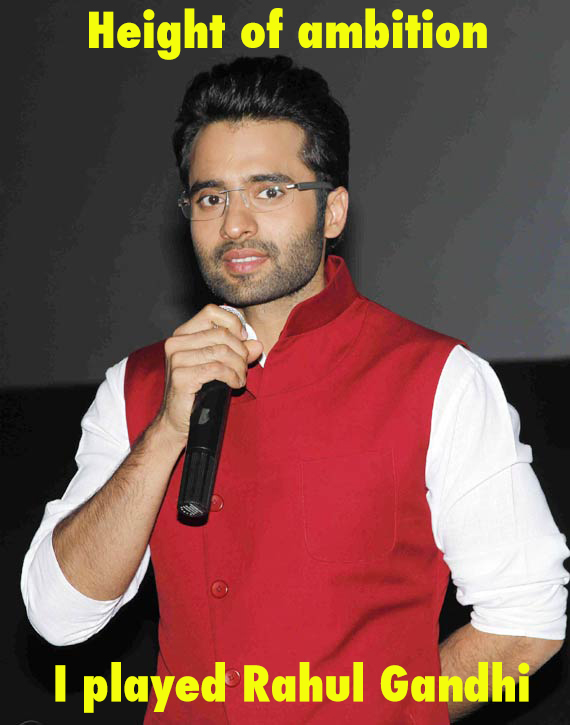
  1. Suno na sang e marmar (Youngistaan) – Now that the well deserved nomination to Oscar has been sent, it would be criminal not to mention the blockbuster Youngistaan to the list. When Jackkkkie decided to diss Mayawati’s hardwork involving sang-e-mar-mar with a song, it gave us this hummable track. Frankly, I thought it took a lot of guts to film the song right where a lot of public money was wasted on sang-e-mar-mar (wink wink). The song was perhaps too good for the film and when Jeet Ganguly and Arijit recreated the magic for the Hindi version, they added some grandeur to the sound. Here is the Bengali version and here is the Hindi version. My favorite is the Bengali version of course!

  1. Title song (Revolver Rani) – the film might have fallen flat on its face but the title track of the film was a riot thanks to the word ‘bhasad’ and Usha Uthup! Do give it a try. Had the film done well, it would have played in a the loop on ‘popular’ charts, just the way they played vomit inducing Kicks and what not! And trust me, it is much more fun than all the garbage music of  100 crore commodities. Watch this video.

  1. Sketches of Darjeeling (Bipul Chettri) – I came across this album when it was released in the month of July, 2014 but didn’t hear it because I was quite occupied with my day job. Then one of the many ‘anonymous’ people who share music with me sent me one track from this album, and I punched myself for about 40 minutes continuously for having sat on the album for so long! Do hear my favorite track from the album titled – Ode to my father here, and then buy the album. The track is free flowing and you will hear the free flowing water as well. Is the track in Hindi? No. Does it matter? No!! So do pick it up!

  1. Ding dong (Finding Fanny) – I  couldn’t make sense of fusing this Goa film with a Punjabi title song and a messy song at that, still this one oozed out a lot of love, and we love it for that! Cliched as it might sound to some of us, but the song painted a picture of an adorable Uncle ‘Pedro’, who is liked by everyone,  singing this song near a beach, on just another day in Goa. Loved Mathias for this one!

  1. Haider (Album) – It won’t be right to pinpoint a song that was good because this album was the best from 2014. The only underwhelming part was the song by Arijit. I still feel that song was composed FVBV (For Vishal, By Vishal), and Arijit came in as an afterthought. This album is the reason we wait for Vishal and Gulzar to get together more often. All songs are here. Imagine the ‘Aao na’ opening bit and now count your goose pimples. Also, while we are on the subject…here is the Roohdaar theme from Haider.

  1. Oopar oopar renn de – Tanishk and Baba Vayu gave us a laid back anthem this year and I can openly declare with no hesitation that this was the best non-filmi song by a new band I came across in 2014. Hear the song once and tell me if you aren’t of the same opinion. I do hope they put the song on sale soon and that they don’t fizzle out after setting the bar this *high*!

  1. Mikey Mccleary – We all love everything Mikey does. Why else can you explain people sticking to networks which don’t work? May be because their ads are oh-so-musical and cute! It was no surprise that the album Mikey came out with was instantly likeable. If you haven’t heard the album yet, do hear it once! Our favorite – The world is our playground (Sung by Mikey) and Just a little crush (Sung by Shalmali). That said, Mikey’s song in Sonali cable wasn’t bad either. The entire album is available here.

Let me know if you agree with my picks of the year. And yours?

@Rohwit

The brief was the same this year. A mail was sent to the usual cinema comrades who write, contribute, and help in running this blog. Pick a film (released/unreleased/long/short/docu/anything) that stood out and has stayed with you, whatever is the reason. Since the idea was that we cover maximum films, so no two people were allowed to write on the same film. And nobody was told who was writing on which film. So here is the final list:

This slideshow requires JavaScript.

shripriya mahesh on Love Is Strange

Love Is Strange is a quiet, contemplative, almost observational movie that follows two older gay men, Ben (John Lithgow) and George (Alfred Molina). After finally getting married, they are then forced to live apart when George loses his job. We follow their separate lives as they adjust to not being together and to imposing on those who host them. The awkwardness of small talk with family he doesn’t know well, the feeling of constantly being underfoot, the profound sadness at being separated from someone he’s spent his life with are all portrayed exquisitely by John Lithgow. The loneliness and dependency of old age are captured so perfectly that months after seeing the movie, I find myself thinking about Lithgow sitting alone in the kitchen or painting on the roof. The little moments stay with you and make this a special, intimate film.

shubhodeep pal on Drevo (The Tree)

I wrote about the Slovenian film Drevo (The Tree) almost three months ago when I watched it at the Mumbai Film Festival. A month later, by a curious turn of fate, I found myself in Slovenia. At the main train station in Ljubljana — where trains themselves look like art installations — I chanced upon exactly what I was looking for: a poster of Drevo, in its homeland. In Ljubljana, which has forever embedded itself as a colour in my memory — grey — I explored the scantily populated streets in the early hours of the morning and thought about Drevo, a film that has refused to leave me since I saw it first. Juxtaposed with the chilling backdrop of the movie — about a peculiar sort of honour killing in the Balkans — the Slovenia I saw felt harmless, almost inert. But this curious contradiction left me with two realisations: first, the power of imagination, which transcends reality despite all odds, lends colour to the most drab surroundings — as indeed it does to the child trapped inside his house, going endlessly around the courtyard on his bicycle, and imagining the world outside, out of his reach seemingly for ever. Second, the nature of reality itself is twisted: accidents become murders; a place of beauty houses ugliness; seemingly innocuous places house terrors. The films I watch inevitably take on a life of their own, outside the screen, moving me in inexplicable ways. For Drevo, this has never been truer.

shazia iqbal on Boyhood

After a dramatic scene where the mother (played by Patricia Arquette) walks out on her abusive alcoholic second husband, she tries to pacify her daughter’s tantrums and breaks down, we see a poster outside her son, Mason’s new classroom that says ‘You are responsible for your own actions’. Richard Linklater is the most remarkable filmmaker of our times who has cracked certain philosophical conundrums of life like most of the humanity hasn’t and makes stories to make sense of the same.

In a family where children are treated as adults, the boy (Ellar Coltrane) in Boyhood silently observes the intimate ‘in-betweens’ of life, post his parent’s separation, where the only constant is changing families, friends and houses. Linklater’s response is not anger, aggression and rebelling, typical of a quintessential coming-of-age story. He almost seems unaffected, unsure by wherever life puts him, and reasons it with confused curiosity only to conclude that growing old doesn’t mean having all the answers. Even during the most disturbing moments, the drama happens in a character’s head than outside of them. Which is why Boyhood, devoid of all sentimentality and melodrama is a path-breaking reflective piece of cinema, and to paraphrase the final line in the movie, it seizes you in its various moments. These moments stay with us accompanied by a daunting silence specially at the point where the mother breaks down saying ‘I just thought there would be more…’, which becomes the culmination of our collective expectations from life.

mihir fadnavis on Cheap Thrills

What if you found a guy in a bar who offers you ridiculous amounts of money to indulge in the most bizarre challenges? How far towards depravity would you go when the chips are down? Do you really care about right and wrong when defecating in your neighbors house gives you one thousand dollars? Debutant director EL Katz’s answers all your sickening queries in Cheap Thrills, a pitch black, hilarious, and audacious horror comedy that transcends the torture porn genre. As the crackpot version of Who Dares Wins unfolds on the screen Katz offers you a huge dose of guilty pleasure, and surprisingly, an even larger helping of social commentary, which sends over Cheap Thrills to this particular ‘best of 2014’ movie list. Katz also happened to direct the best segment of The ABCs of Death– couple that with Cheap Thrills and you’ve got a very interesting young filmmaker on your radar.

rahul desai on Mommy

Forget that director Xavier Dolan is 25 years old. Forget that this is his fifth full-length feature film. Forget that he is known as L’enfant Terrible in Quebec–where he has grown up, and perhaps the town that has made his films such throbbing, breathing, evocative chunks of heart.

Mommy is his finest; a wretched, energetic snapshot of time. It is about a single mother struggling to bring up her ADHD-afflicted 15-year old son, with the help of an enigmatic, stuttering woman next door. Somehow, somewhere, this is a rousing film; brutally honest escapism, grounded and battered into frames of all-consuming chaos.

Three souls combine to give us something more than just mere performances; they blend into their surroundings and suck us into their vortex of desperate love. None of them are quite in sync with society. They’re not ideal mothers, sons and neighbours. They’re misfits, but unapologetic and glorious. So uncomfortable, yet beautiful to watch. The cheesy pop collection chosen as an audacious score surprises with intent, and album-izes their lives in phases.The result of messing around with something as taken-for-granted as a screen aspect-ratio is not always pleasant, but Dolan gives us the cinematic moment of the year when it happens.

Mommy is best symbolized by this fervid Ludovico Einaudi piece, which incidentally amounts to the most exhilarating time-lapse imagery captured on film. Not because of how it looks or sounds, but because of where it appears, and because of where we hope it will take us.
Because it gives us light, and messes with our jittery minds, and because we don’t want to discover what happens next.

varun grover on The Wind Rises

Didn’t see many films this year and I can feel the emptiness in my heart. Among the ones I saw Dedh Ishqiya, Haider, Abhay Kumar’s docu Placebo (due in 2015), Avinash Arun’s Killa (due in 2015), and Nisha Pahuja’s The World Before Her were the most powerful and delightful. But the film that churned the cold corners of my existence and turned them into soft, frothy Malaiyyo was Boss Miyazaki’s The Wind Rises. An animated feature unlike any other I’ve seen (quite unlike earlier Miyazaki films too) – a period love story in the backdrop of early days of aviation industry in Japan. I can watch it again just for the stunning colors of sky in various frames, and once again just for the various sources of light shown and used. And then there is this flight of crazy fancy by Miyazaki in his last film. The film has the feel of a farewell letter – lots of meta references to Miyazaki’s own career and ambitions – and that makes it all the more poignant. Magical, and I mean it when I use the word, in every sense.

manish gaekwad on Under The Skin

The other night, watching Under The Skin, I was reminded of what Kiarostami had once said about the kinds of films he likes watching. “I prefer the films that put their audience to sleep in the theater. I think those films are kind enough to allow you a nice nap and not leave you disturbed when you leave the theater. Some films have made me doze off in the theater, but the same films have made me stay up at night, wake up thinking about them in the morning, and keep on thinking about them for weeks.” A little bit of that rubbed on us when i watched the film with a few friends.

Our senses were so dulled by what was happening in the film, that between switching it off, to leaning forward and peering at the screen, only sleep could have rescued us. But we kept staring, unblinking, intrigued by the mysterious nature of the film, discussing if this was any different than Veerana, where a pale white woman, lures men into her lair. IMDB pretty much sums it as, ‘A demonic woman uses her seductive charm to prey on unsuspecting men,’ and this could be said for Under The Skin.

While Veerana was obviously titillating giallo, Under The Skin is simply hypnotic; from the striking images to the creepy Ramsay upgrade background score. That divide between what is crass, and what is art comes here, when days after viewing, the images and sounds of UTS recur and crawl under my skin. What separates these two films is also what unites them in memory – if it is unforgettably etched, difficult to erase, then that’s what Kiarostami is getting at. Oh and he also made a film where all the action is inside a car with a woman driver talking to various people, quite like Scar Jo in Under The Skin. Ah, almost.

kushan nandy on Interstellar

Writing about a Nolan film is monumental. What can you write about a film directed by a man who is the greatest illusionist of all? The Alfred Borden of Cinema.

The standout moment of the film is when Cooper watches his teenage daughter suddenly turn as old as him. Stationed in the darkness of a spaceship, millions of miles away, he watches time slip out.

I felt like Cooper, sitting in the darkness of the theatre, watching time slip out. Remembering
the moments of life I skipped in an attempt to survive life itself. I wanted to savour and appreciate the remaining moments of life just like Cooper did.

It made me pause. It took me beyond Cinema.

Kubrick must be watching from up there. Proud.

sukanya verma on Aankhon Dekhi

When a 50-something family man of limited means and unfinished responsibilities decides to go the distance between method and madness, real and surreal, thought and practicality, there will be repercussions. To question the natural order of things, to argue, to protest is one thing but to make it a way of life is another.

Rarely does a Hindi film probe into its protagonist’s soul as nimbly as Rajat Kapoor’s brilliant Ankhon Dekhi. Told with tremendous thought and texture, Ankhon Dekhi’s parable-like profundity unfolds through Bauji’s unique metamorphosis (conveyed in Sanjay Mishra’s extraordinarily perceptive performance) following his resolve to believe only what he sees or experiences.

If one aspect of Ankhon Dekhi’s episodic narrative is concerned with the different stages of his idiosyncratic obsession and its impact on his big family, the other draws us into the authentic sights and sounds of his hectic, populated space in Old Delhi– rickety roofs, yellowed walls, poor plumbing, crumpled sheets as well as the multihued personalities of his claustrophobic neighbourhood among whom he eventually garners a spontaneous, unsought following.

Where many would solely focus on his quirk to generate ridicule and humour, Kapoor, even when proffering moments of ingenious wit (“Male menopause”) treats him with fascination and fragility. Bauji’s existential crisis may cause embarrassment to his supportive wife, darling daughter and reserved younger brother but he’s much too well meaning and mild-mannered to take offence. Even if they don’t understand his motivations, they never cease to care.

Absorbing, whimsical, intimate, awe-inspiring and evocative, Ankhon Dekhi doesn’t make claims of knowing better but faithfully documents a determined individual’s journey to seek answers unmindful of what the world dubs him– fool or fearless.

karan anshuman on Pride

Pride may not be the best film I’ve seen this year (that’d probably go to Tamhane’s Court) but it’s definitely the best formula (commercial? mainstream? sellout?) film I’ve seen all year. Having entered the Bollywood fray, these days I’ve newfound respect and appreciation for films that pull off the balancing act with grace.

Pride’s remarkable, still-relevant tale set in Thatcherian UK essays a comic love/hate standoff between exuberant London homosexuals and dour Welsh miners. This is a true, unlikely underdog story with heaps of emotion, humor, social and political insight, and a magnificent feel-good ending: the ultimate recipe for that sense of contentment when you walk out the theater. Pride would make Hirani proud (and is probably the ideal next subject for him) and other filmmakers scramble a search for similar real-life stories.

But for crying out loud, director Matthew Warchus, why didn’t you use U2’s Pride, my all-time favorite song, in the movie?

jahan bakshi on The Grand Budapest Hotel

As one sees more and more films, there’s this dreadful kind of inertia that sets in- and film experiences that arouse genuine joy and excitement rather than cold admiration become increasingly rare. Of late, the one thing I’ve longed for at the movies is for a film to really move and surprise me. With his last film, Wes Anderson managed to do both these things- and as the cliché goes- made me rediscover that elusive magic of the movies.

This one actually warrants that much-abused M-word: The Grand Budapest Hotel is a masterpiece. There is just so much happening in this movie on so many levels, it’s a minor miracle that it never goes off the rails- and major credit for this must go to Ralph Fiennes’ soulful and masterfully comic performance and Anderson’s astonishing control over his material and craft. Together, they make it all look like a piece of cake, quite literally.

An internet commenter put it perfectly: This is a beautiful pastry of a film- with chisels and sharp files baked into it. I expected to be delighted but was startled by the sadness and darkness at its core. Loaded with mirth, melancholy and a streak of the macabre, Grand Budapest Hotel is an ebullient comic caper that ultimately reveals itself as an elegy to an era long gone by (or perhaps one that only exists in the collective imagination of a few- such as Monsieur Gustave H himself). The film’s unexpectedly poignant, tragic ending stabbed me right in the heart- and in the sweetest way possible. Sorry Amazing Amy- this was the real cinematic twist of the year, darling.

PS: I recently realized that the two best films I saw this year: Grand Budapest Hotel and The Square (2013) couldn’t be more different- and yet, they’re both about essentially noble people fighting battles to defend the liberal ideals of human dignity and freedom from the looming dark clouds of fascism. This is Anderson’s most violent and overtly political film- not just as an indictment of modern barbarism, but because it puts forward the argument that maybe prettiness is political. If ‘a thing of beauty is a joy forever’- perhaps it’s also something worth fighting for.

fatema kagalwala on Clownwise

Very recently I was contemplating on the films that stay with me and I realised all of those films have been portraits of life seen through the prism of hope. Maybe that is why I jumped and clutched at Clownwise to write about. A story of a once-superstar trio of clowns now in the dusk of their lives trying to gather its strands, Clownwise made me happy, it had me literally smiling at its sheer joie-de-vivre of not only the world and its people, but of the writing and the making. It is this very vitality of thought and spirit of the world of the film and film itself that has had me charmed. The bittersweet tone of the film effortlessly carries through the dramas and dysfunctionality of the lives of the three men, now in their sixties, seeing them dealing with it all with a head held high and enough gumption to see it through till its logical end. Smart and sensitive at once, large-hearted and laughing at one’s owns pain, a little cheerful, a little sad, a little profound, a little reflective, and a lot of fun – now where do we get films like that often?

aniruddha chatterjee on Anubrata Bhalo Acho?

His wife, her husband, both terminally ill with cancer. All they do is come to the hospital, sit beside their respective spouses and give false hope. Life has become repetitive, mundane. They meet and fall in love. To have a film that deals with people in their 50s, married, yet daring to fall in love to heal themselves from the pain they are in, deserves to be applauded especially in a country obsessed with morality. While watching the film I was worried that the climax will be a cop out. That is where the film scores the most. Brownie points for taking the film where we as viewers will shudder to go. It has been more than two months I have seen the film. Yet, the shocking climax keeps on lingering in the mind.

kartik krishnan on Jigarthanda

A bunch of gangsters are seated somewhere in a banana ‘bhajji’ (pakoda) shop in Madurai, pulling one of the lieutenant’s legs. It’s Tea/Snack time with few goons sipping a quarter whisky in a plastic cup. It’s a setting straight out of Goodfellas with goons chilling out, joking.

The Gangster Boss – ‘Assault Sethu’ casually takes one last jibe at his lieutenant, spits out the tasteless bajji, orders the shop owner to put more masala and walks ahead. Does small talk with the dosa making chef and walks outside into the rain with a steel plate as cover on his head, behind the shady single screen theatre which, true to the nature of the film, has a Kamal-Rajni poster somewhere in the background.

Sethu walks ahead to the sarvajanik shauchalay where a cleaner does dua-slaam and ingratiatingly asks for some baksheesh, directing him to the 1st loo which he has cleaned just now, for his use of course. That is the power of a gangster. And that is all what a poor toilet cleaner can offer as obeisance to him.

Sethu replies cheekily – You should be the one paying me to crap in your loo instead.

Sethu walks ahead and is about to enter the designated loo when a Vomiting (presumably) drunkard, who under sober circumstances wouldn’t dare cross his path, dissuades him from entering his ‘territory’. The disgusted gangster moves ahead into another loo and the vomiting drunkard opens the door of the designated loo instead.

BAM ! BAM ! BAM ! BAM!

The door to the loo opens and the poor drunkard is shot to instant death by an Assassin from inside the loo who immediately calls up his Clients – “Hey. Sethu is dead. Hear this” – Bam ! Bam! Bam!.”

More bullets are fired into the dead body as Sethu who has just survived a hit by sheer luck, watches silently. The shirt pant wearing assassin continues on the phone -“Sethu seems to have lost a lot of weight”.

And then Sethu’s goons rush in to see – the cocky assassin boasting his kill – “Come on folks, take away your Boss’s dead body.”

Slowly, the assassin realises that he has killed the wrong man and Sethu is very much alive, standing behind him. He shoots at Sethu but his gun is empty. SHIT!

He is facing certain death and Sethu can kill him any second.

However, Sethu prefers to go and answer nature’s call instead of bludgeoning the assassin to death. Revenge can wait.

This long take sequence is laced with humor, violence, pop culture & unpredictability that is so omnipresent in Karthik Subbaraj’s Jigarthanda – a film which is much more than just a gangster flick. While some might have been disappointed by his debut film Pizza’s ‘cheat’, this one is a must watch. Yes it is long and a genre bending film again, but immensely rewarding.

neeraja sahasrabudhe on Court

न्याय (सामजिक, आर्थिक और राजनीतिक) पहला अधिकार है जिसे हम भारतीयों (“We, the people of India”) ने अपने संविधान के preamble में अपनी आवाम को दिया है। चैतन्य ताम्हणे की फिल्म ‘कोर्ट’ इस अधिकार, इससे जुड़े संस्थाओं व उन संस्थाओं और जनता के बीच के सम्बन्धों को समझने का एक प्रयास है।

कहानी की शुरुआत लोकशाहिर और दलित कार्यकर्ता नारायण कांबळे की गिरफ्तारी से होती है। इलज़ाम यह है की उन्होंने अपने किसी भड़काऊ गीत द्वारा सीवर साफ़ करने वाले कर्मचारियों को आत्महत्या के लिए उकसाया और इससे एक व्यक्ति की मौत को गयी। ये case तो एक बहाना है, हमें कोर्ट के अंदर ले जाने का। इस case के बहाने चैतन्य हमें उस कोर्टरूम के महत्वपूर्ण खिलाड़ियों के जीवन से परिचित करवाते हैं। मध्यम वर्ग की प्रॉसिक्यूशन वकील, नए पैसेवाले तबके के जज और व्यापारी वर्ग में जन्मे डिफेंस वकील। ऐसा करने से एक disconnect उभर कर आता है (जो चेखोव की इस कहानी की याद दिलाता है)। हालांकि डिफेन्स वकील कांबळे साहब के काम के प्रति संवेदनशील है, पर उनके जीवन के तमाम पहलु देख कर यह समझ बनती है कि बड़े सामाजिक बदलाव के लिए संवेदनशीलता या ज़रा सी मदद काफी नहीं है। ऊपर के तबके को जिस तरह के जीवन की आदत पड़ चुकी है उसे चुनौती देनी ही होगी और अगर उसमें ये संवेदनशील लोग साथ नहीं हैं, तो वे सब कुछ कर करा कर भी उसी शासक वर्ग को serve कर रहे हैं जो चाहता है कि आवाज़ें उठें पर उतनी ही जितनी दबाई जा सकें।

कोर्ट में चल रही कभी हास्यास्पद तो कभी झल्ला देने वाली जिरह के बीच एक दूसरी ज़रूरी बात उभर कर आती है। वह यह कि – ये सच है कि ये सरकारी दफ्तर, कचहरी वगैरह bureaucracy से लदे हैं और यहाँ काम करने वाले लोग न्याय की परिकल्पना या न्याय मांगने आई जनता के प्रति बिलकुल असंवेदनशील हैं, लेकिन न्याय न मिलने का असली कारण है कि नारायण कांबळे जैसे लोगों को, जिन्हे शासक वर्ग अपने रास्ते का काँटा समझता है, state न्याय देना ही नहीं चाहता। State चाहता है की वे या तो जेल में रहें या कचहरी के चक्कर काटते रहे। न्यायपालिका एक साधन है लोगों को डरा कर रखने का।

‘कोर्ट’ अभी हमारे समाज में हो रही घटनाओं के द्वारा एक अहम मुद्दा सामने लाता है। ये फिल्म हमें मजबूर करती है उन बातों पर सोचने के लिए जो छुपी हैं और सिर्फ कचहरी के न्याय-अन्याय तक सीमित नहीं हैं।

और अंत में नारायण कांबळे की तरफ से बोलते गोरख पाण्डेय:

हज़ार साल पुराना है उनका गुस्सा
हज़ार साल पुरानी है उनकी नफ़रत
मैं तो सिर्फ़
उनके बिखरे हुए शब्दों को
लय और तुक के साथ लौटा रहा हूँ
मगर तुम्हें डर है कि
आग भड़का रहा हूँ

mihir pandya on Killa

‘किल्ला’ देखना किसी रूठे हुए जिगरी दोस्त से सालों के अन्तराल के बाद मिलने की तरह है। इसमें उदासी भी है, उन बीते सालों की जब वक़्त हाथ से छूटता रहा अौर दोस्त की बेतरह याद अाती रही। इसमें बेचैनी भी है, उस पल को पकड़ लेने की चाहत जिसका सालों इन्तज़ार किया अौर अाज अचानक समयचक्र ने उसे सामने ला खड़ा किया है। इसमें ठहराव भी है, जब दौड़ती ज़िन्दगी में अचानक अासपास की दुनिया की तमाम गतिविधियाँ अापके लिए रुक जाती हैं अौर सब कुछ उसी पल में सिमट अाता है। अौर इन सबके ऊपर इसमें निस्संगता भी है, कि दोस्त के चले जाने से दोस्तियाँ नहीं जाया करतीं। कि वर्तमान से बड़ा कोई सच नहीं अौर वे तमाम स्मृतियाँ अतीत नहीं, दरअसल इसी गतिमान वर्तमान का हिस्सा हैं। हमारा हिस्सा हैं। कि ज़िन्दगी का नाम चलते रहने में है।

लड़कपन की दहलीज़ पर खड़ा चिन्मय (अर्चित देवधर) अपनी माँ के तबादले की वजह से ‘बड़े शहर’ पूना को छोड़ कोंकण के किसी छोटे से कस्बे में अाया है। ‘किल्ला’ की कथा हमें ग्यारह वर्षीय चिन्मय के जीवन संसार के भीतर ले जाती है। इसमें एक अोर है चिन्मय का अपनी कामकाजी माँ (अमृता सुभाष) से रिश्ता जहाँ पिता के असमय चले जाने की ख़ामोश उदासी घुली है, वहीं दूसरी अोर है कस्बे के स्कूल में चिन्मय के नए बने दोस्तों का संसार जहाँ बेपरवाह दिखती दोस्तियों में गहरे छिपी व्यक्तिगत प्रतिस्पर्धाअों अौर रूठने-मनाने के अबोले दायरों के मध्य वह ज़िन्दगी के कुछ सबसे महत्वपूर्ण सबक सीखता है। उमेश विनायक कुलकर्णी की लघु फ़िल्म ‘गिरणी’ अौर उनकी बेहतरीन फीचर फ़िल्म ‘विहीर’ की याद दिलाती अविनाश अरुण द्वारा निर्देशित ‘किल्ला’ मेरे लिए अात्मकथात्मक फ़िल्म है, लेकिन भिन्न क़िस्म से। यहाँ फ़िल्म सिनेमा बनानेवाले की अात्मकथा न होकर देखने वाले की ज़िन्दगी के किसी पीछे छूटे अध्याय का अात्मकथात्मक अंश हो जाती है। जिस कस्बे की यह कथा है, वह प्रतिनिधि है मेरी किशोरवय स्मृति में छूटे कस्बे का। इसे परदे पर देखने वाले हम सब इन्हीं बाहर से उनींदे दिखते लेकिन भीतर से खदबदाते कस्बों, देहातों को छोड़ अाज शहर के मेले में अा पहुँचे हैं। अौर ऐसे में ‘किल्ला’ का यह ‘पुनरागमन’ स्वयं हमारी स्मृतियों की कथा बन जाता है।

‘किल्ला’ जितनी उसकी कथा में है, उससे कहीं ज़्यादा उसकी गतिमान तस्वीरों में है, उसकी ख़ामोश ध्वनियों में है। पावस के महीने में मूसलाधार बरसते बादलों के बीच अविनाश अरुण कोंकण को उसकी अनछुई काया में टटोलते हैं। समन्दर किनारे बसा यह ठहरा हुअा कस्बा बारिशों के बाद जैसे एक नई हरी सघन पोशाक पहनता है। यह समन्दर की लहर के लौटने के बाद रेत के कोरे किनारे पर पहला पैर रखने की तरह है। उन्होंने किरदारों की भीतरी उदासी को परदे पर फ़िल्माने के लिए इंडोर दृश्यों को लट्टू की सघन पीली रौशनी में फ़िल्माया है अौर इस उदास पीले का विलोम वे बरसात, समन्दर अौर अाकाश के अासमानी नीले के साथ अपने अाउटडोर दृश्यों में रचते हैं। पानी स्वयं यहाँ सबसे बड़ा मैटाफर है। पानी ही यहाँ बाँधता है अौर पानी ही यहाँ किरदारों को बंधनों से अाज़ाद कर देता है। किरदारों के मन का बोझ जब पक जाता है तो वे भरी बरसात में छाता ‘भूलकर’ निकल जाते हैं, अौर मुझे चैप्लिन की कही वो बात याद अाती है जिसमें वे बरसात को अपना दोस्त बताते थे जो अाँखों से नमकीन पानी बनकर निकलते दुख को अपने अाँचल में छिपा लेती है। ‘किल्ला’ की कोमलता मुझे भाषा में कविता कहने वाले, सदा मुंह में छालों वाले किसी मितव्ययी स्वभाव पहाड़ी कवि की कविताअों की याद दिलाती है। यह उन फ़िल्मों की सूची में शामिल होगी जिसकी स्मृति को अाप फ़िल्म ख़त्म होने के बाद सिनेमाघर के अंधेरे में छोड़ने की बजाए किसी नवजात ख़रगोश के बच्चे की तरह नज़ाकत के साथ अपने सफ़री झोले में रख साथ घर ले जाना चाहेंगे।

sudhish kamath on The Interview

The stoner bromance that almost started World War III was smarter than most people gave it credit for and truly representative of our times. In fact, The Interview > Newsroom.

The world doesn’t give a shit about anything anymore.

One tweet, it’s mourning innocent kids being shot dead, the next it’s cheering a goal. Or a six. Aircraft lost. Sad face. Next moment. OMG! Eminem’s gay? Did you know McConaughey fucked a goat?

The guys behind Superbad, Pineapple Express or This is the End never intended The Interview to be seen as a symbol of patriotism. The film’s clever enough to take digs at not just American/global media priorities, it also portrays America as the country that is capable of making citizens shove a missile up their own ass (literally) to fuck with another country’s politics.

When the American “heroes” of the film believe they have the required statistics to corner Kim Jong-Un, he simply gives it back to them raising far more uncomfortable questions about the US and sanctions imposed that was driving them to the brink of despair.

Unable to deal with reasoning, the Americans go back to what they are best at.

Because trolling NOT reason, bullying NOT debate, is the only form of supremacy that the world recognizes today. Mediocrity connects with more people than intellectuals or custodians of high art do. No wonder then that the elitists, the critics and all the snooty uptight fuckers hate The Interview. As Skylark says: “They are motherfuckin peanut butter and jealous… They hate us ‘cause they ain’t us… You know what you do to haters? You just smile.” *pops Ecstasy*

sudhish kamath on Birdman

“You’re not important, ok? Get used to it.”

Only the greatest epiphany you would ever have.

That’s Alejandro Gonzalez Inarritu’s Birdman in a line.

We lead dysfunctional – largely unsatisfying – lives and try hard for relevance and popularity that matches the self-importance in our heads. The film is full of precious little moments, a fucking brilliant drums score and cinematography so fluid and seamless that you can’t ever spot the cuts even if you try. A terrific ensemble that’s going to have a field day at the Oscars.

When Riggan (Michael Keaton) tries to reinvent himself as an artist, after having played a superhero earlier in his life (and continues to in his head), he has this superb conversation with his daughter who tells him about her days in rehab and an exercise they gave her. About drawing tally sticks.

She hands him a roll of toilet paper full of tally sticks. Each stick represents thousand years. And all of humanity has been around for what would fit in one slip of toilet paper, she tells him. The rest of the roll is how long the world has been around.

He hears out her perspective and wipes his hand with it accidentally. And he’s wiped out all of humanity, she jokes.

How good is Emma Stone! She’s even better in this scene here that pretty much seals her a Best Supporting Actress nomination: Click here.

There are just too many brilliant scenes to list – the one where’s locked out of his green groom in his underwear and has to make his way in public and get up on stage to not miss his cue or the one where Norton tells Keaton that popularity is the slutty little cousin of prestige when they go out to get coffee. But every single scene in the film is designed to tell us that in the larger scheme of things, nothing really matters. Nobody’s opinion really matters. Or as a sign in Riggan’s green room tells us: A thing is a thing, not what is said of that thing.

ranjib mazumder on Jatishwar

Jatishwar as a concept is brave and ambitious to say the least. As the film unfolds, it has the promise of a new classic. Traversing through different timelines and a story of reincarnation, it dares to bring back Anthony Firingee, a man of Portuguese origin and exceptional talent, who not only mastered Bengali but also composed songs in it to perform in public duels known as Kavigaan in the early part of the 19th century.

Kabir Suman’s music is so good that I can’t possibly to begin to imagine another music album in the last 20 years that can match the majesty of this work. Bringing back lyrical fights of nostalgic Bengal, Mukherji shoots it with beautiful tenderness. That’s the film’s biggest strength. Also the biggest weakness. Apart from Anthony’s story, you hardly care about modern day sappiness that the story brings along.

Mukherji is probably the most acclaimed filmmaker working in West Bengal today. And that speaks a lot about the current state of Bengali cinema. I find Mukherji brimming with new ideas in every film; flashes of brilliance in certain scenes but the sum of the parts never make an engaging whole. And that’s been my consistent problem with his filmography. I know I would be attacked by my fellow Bengalis for looking at Mukherji through a glass darkly, and I have tried hard to sum up my feeling for his brand of inconsistent narrative. And then I stumbled upon this paragraph by one of my literary heroes.

“From the moment I start a new novel, life’s just one endless torture. The first few chapters may go fairly well and I may feel there’s still a chance to prove my worth, but that feeling soon disappears and every day I feel less and less satisfied. I begin to say the book’s no good, far inferior to my earlier ones, until I’ve wrung torture out of every page, every sentence, every word, and the very commas begin to look excruciatingly ugly. Then, when it’s finished, what a relief! Not the blissful delight of the gentleman who goes into ecstasies over his own production, but the resentful relief of a porter dropping a burden that’s nearly broken his back . . . Then it starts all over again, and it’ll go on starting all over again till it grinds the life out of me, and I shall end my days furious with myself for lacking talent, for not leaving behind a more finished work, a bigger pile of books, and lie on my death-bed filled with awful doubts about the task I’ve done, wondering whether it was as it ought to have been, whether I ought not to have done this or that, expressing my last dying breath the wish that I might do it all over again!”

― Émile Zola, The Masterpiece

So that was our list. What’s your list? The films that stood out and stayed with you, and you won’t mind pushing the rewind button on it. Tell us in the comments below!

First things first. I will be accused of hiding behind a fake name and hence everything that follows will be discredited by some of you. Just one lovely phrase for those who will resort to this.

  whofuckingcares

2014 was a pretty average year for Bollywood (like the previous 83-years) but things are looking up for 2015 with this new film’s trailer where Ameesha Patel is in a double role and surprise attraction is Zayed Khan. Also, a spiritual (?) guru (??) is showing how easy it is to make a Sallu/Devgn type chutiyapa and my bet is this film will be our generation’s Jai Santoshi Maa.

But here, a quick Kaali Zubaan recap of 2014.

January:

Year started with Joe B. Carvalho where Arshad Warsi tried his hand at a single-hero film for 25th time in his career and failed. Pro-tip: Films with a name-pun in the title suck. (PK included.)

T-series ki daughter-in-law Divya Khosla Kumar’s Yaariyaan became the first hit of the year proving once again that Honey Singh is the NaMo of 15-20 year olds (And T-series is Ambani).

Bhairoxx’s 1st release of the year Jai Ho (directed by Sohail Khan) had bhai paired with another new heroine, was directed by Bhai’s Bhai Sohail Khan, made lots of money and…and that was pretty much the point of it.

February :

Shekhar Suman acted in and directed Heartless, starring his son Adhyayan Suman (yup, he’s still trying!) where his heart is transplanted and he gets emotions of the dead guy whose heart is now inside him. That sounds like Inarittu’s 21 Grams with an additional dead-weight of 75-kilograms Adhyayan. The film spawned a social revolution where people started avoiding anything with the word ‘Suman’ in it.

Imtiaz Ali recycled a TV episode he directed 10 years ago to make Highway – yet another bubbly girl – brooding guy on the road traveling to yet another ARR album – letting fresh air fill their lungs and diluting the unpleasant smell of yet another half-baked script.

Saket Choudhary’s sequel to Pyaar Ke Side Effects, Shaadi Ke Side Effects took many years to come and made me miss (I never thought I’ll say this) Rahul Bose and Mallika Sherawat. Also, as smartass friend of hero Lakshmikant Berde >>> Vir Das.

Jackky-Bhagnani

March :

Watching Soumik Sen’s Gulaab Gang I kept waiting for Juhi to look into the camera, get that mad glint in her eye, chuckle and say ‘Sab randomly OTT bakheda hai, par mera hai.’

Bhagnani Jr’s Youngistaan. Little known fact. Every time his film flops, Vashu ji hikes the property rates in Bombay by 10 rupees per square feet.

Ragini MMS2 with anthem of the year – Baby Doll Main Soney Di . The only serious competition to NaMo this year. No, really. Here.

April :

Revolver Rani. After doing lots of intellectual, oh-am-so-different-and-classy interviews post-Queen, Kangana reminded us that Krrish-3 bodysuit was not so long back.

Kangana

May :

Mastram did good business. Kyonki hum log sex ke bhooke, hawas ke pujari, vahashi, malnourished, kunthaaon ke bojh ke neeche dabey log hain.

Himess Bhai rocked the world with The Xposé – the first ever usage of Latin e or acute e in a Hindi film title. And it was a period drama, set in Bombay of the 60s. Read this in Anant Mahadevan’s voice please – “Talent ho na ho, ambissan hona chaahiye”. Bombay Velvet jab aayegi tab aayegi, is saal isi se kaam chalana parha.

Trivia: ‘Ice cream khaungi, Kashmir Jaungi’ became the separatist anthem, while Irrfan Khan (who later played a separatist in ‘Haider’) charged 1 crore per day for his walk-on part.

Yo Yo

 June :

Sonakshi Sinha reprised her role of a broad smiling, desi-attired vacuum of nothingness, for the 10th time in her 12 film career for Holiday. Akshay Kumar comes back from Army for a Holiday and realizes he hasn’t done enough South Indian remakes of trashy action so does one more.

Sajid Khan’s much-awaited lol Humshakals lol had a pair each of lol Saif, Riteish, and Ram Kapoor lol. This was his response to critics who accuse his films of being too empty.

Ek Villain confession. Had Riteish’s character not killed Shradhha’s character, I’d have done it. She was SO irritating.

July :

Vidya Balan played a detective in Bobby Jasoos. At the same time, Allison Tolman played a detective in the TV series ‘Fargo’. Abb aur kyaa kahein?

Very exciting time for Hate Story fans world over as Hate Story 2 came out. As Lord Krishna said in our national book Gita, death is simply soul changing clothes and Hate Story sequels are simply different heroines changing/removing clothes.

Bhai’s Kick gave us the best whatsapp forward of the year : Here

August :

Akki vs a Dog in Entertainment. Poor man’s Sajid Khan film, if such a thing is possible and needed on this planet. No points for guessing who, out of Akki and the Dog, looked and behaved more cultured & learned in the film.

Raja Natwarlal. Definitely the most boring film title of the year. Why would you have a title reminding people of Aamir Khan’s most-awkward rain kiss scene waali film by Dharmesh Darshan. (Aside on Dharmesh Darshan. A friend was driving Bombay-Pune and stopped to pee on the expressway. He found Dharmesh Darshan taking a shit in the bushes on the side. Yup.)

September  :

Lots of outrage over PC as a North Eastern in Mary Kom, very little outrage on how dull and lame the sports biopic of such an exciting sport turned out to be.

Daawat-E-Ishq. Everything about this film screamed BORING. Everyone was so bad that most of the reviewers ended up praising Anupam Kher’s acting only. That’s like reviewing a restaurant as ‘Traffic outside was good.’

Khoobsurat. Or as girls called it – WHEEE! FAWAD KHAN! Or as boys called it – Whyyyyyy? Sonam Kapoor?

Parineeti copy

October :

2 films released on the same day. Haider and Bang Bang. That’s like Mozart sharing his birthday with Sajid-Wajid. (Though surprisingly Haider was a hit and Bang Bang a flop. Kabhi kabhi Indian audience se bhi galti ho jaati hai.)

Happy New Year. This meme by Varun Grover sums it up. 

November :

Two films released on same day. One was titled 6 – 5 = 2 and another Kill Dil. Both didn’t make any sense.

Rensil D’Silva, who last made Kurbaan (whose script made it to MENSA’s library), came back with a vigilante film where Sanjay Dutt played a cop. “He’d look himself in the mirror and start running away afraid”, Rensil recalls.

Krishna DK and Raj Nidimoru attempted a smart rom-com with Happy Ending. Smart for Saif Ali Khan’s IQ I mean.

Waise Saif is Rajesh Khanna of our generation – long past the expiry date but still harboring delusions that one flutter of his eyes and girls are chucking their dildos out of the window.

Zed Plus had Aadil Hussein playing a puncture-repair-waala. In terms of characterization, this is the equal of Madan Puri playing a Chinese

Tabu

December :

Last month started with unanimously accepted as the worst movie of the year Action Jackson. One plot device in the film had Sonakshi wanting to see Ajay Devgn’s dick for good luck. I say she should have simply seen any of his films in the last 2-3 years. Huge, limp dicks, all of them.

And of course, PK is still in theatres, heading towards 300 crores (SRK smokes a pack in jealousy for every crore it makes). Though in the film they never reveal the alien’s full name, my sources tell me in the script it was mentioned as Pravachan Kumar.

 – Nicolas Bourbaki

 storm trooper fuck