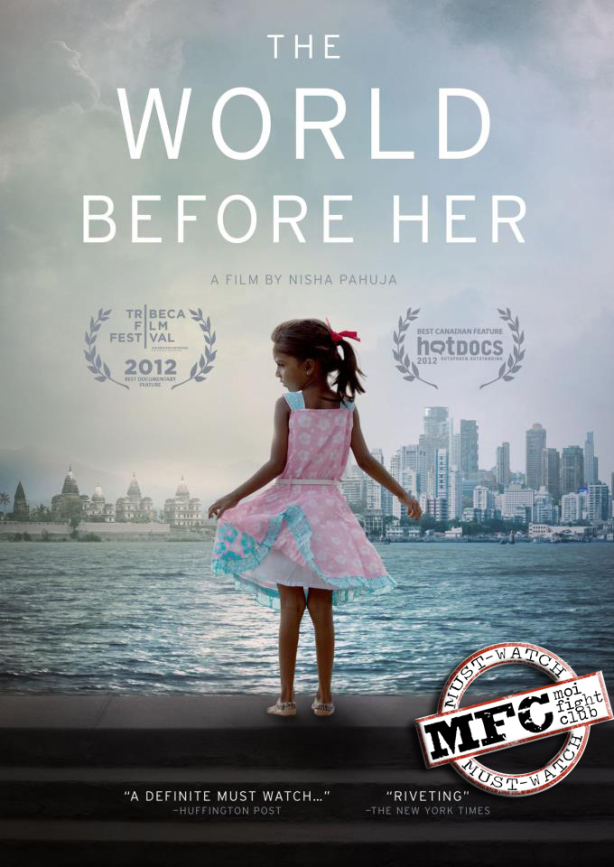
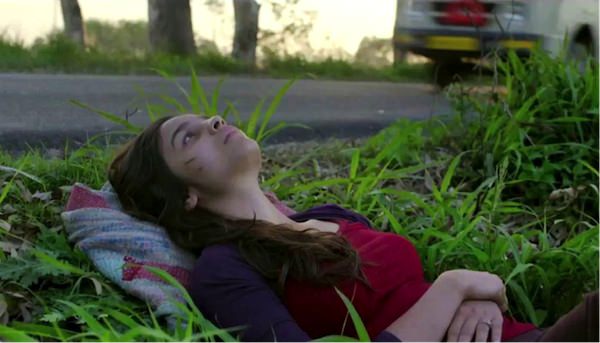
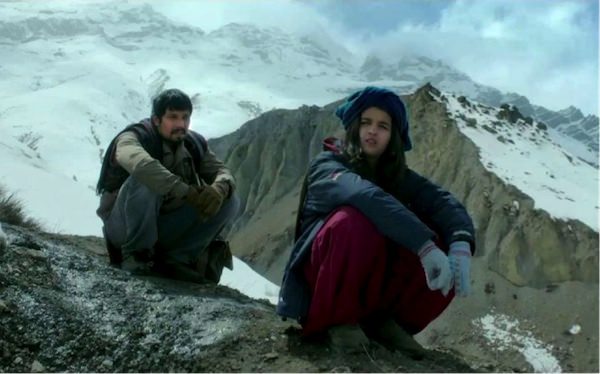
Some of us had the privilege of watching Nisha Pahuja’s critically-acclaimed, controversial and undoubtedly brilliant documentary “The World Before Her” last year, and had nothing but praise for it. In fact, we even wrote about it at length and put it on our Must Watch film recco list. We’re now delighted to announce that after having a theatrical release in US and Canada, and winning accolades and top awards in the prestigious International film festivals, the film will get a release in India via PVR Director’s Rare in 6 cities — Bombay, Delhi, Kolkata, Pune, Ahmedabad and Bangalore — on April 25. More about the film below.

the-world-before-her-copy

Synopsis

The World Before Her tells the story of girls competing in the Miss India Pageant and those taking part in the VHP’s Durga Vahini camps. It is a tale of two Indias. In one, Ruhi Singh is a small-town girl competing in Bombay to win the Miss India pageant—a ticket to stardom in a country wild about beauty contests. In the other India, Prachi Trivedi is the young, militant leader of a fundamentalist Hindu camp for girls run by Durga Vahini, where she preaches violent resistance to Western culture, Christianity, and Islam. Moving between these divergent realities, the film creates a lively, provocative portrait of the world’s largest democracy at a critical transitional moment—and of two women who hope to shape its future. The film also features former Miss India Pooja Chopra who was a near victim of female infanticide. Watch the trailer below:

The writer and the director of the film, Nisha Pahuja who is the first filmmaker to get inside a Durga Vahini camp says,

“I am thrilled to finally present the film to audiences in India!  Although we’ve had a great run with it abroad, I’ve always felt that it needs to be seen in India because it is first and foremost an Indian story.  And sharing it now is key since women’s rights has become an issue that is front and centre in the public consciousness.”

The award winning film is shot by the ace cinematographer and FTII graduate, Mrinal Desai and Derek Rogers.

Apart from the theatrical release, the film will be screened in various cities, villages, schools and colleges across the nation as a part of its ambitious nation-wide campaign. The film is being shown at the prestigious educational institutes including Symbiosis,  IIT and IIM institutes across the country. Joining the campaign are women’s rights activist and some of the incredible women featured in the film including the former beauty queen Pooja Chopra.

Awards and Accolades

The award winning film which premiered at Tribeca Film Festival in 2012 has been screened in more than 125 film festivals across the world and has won over 19 awards including best documentary feature at the Tribeca Film Festival 2012, best Canadian Feature, 2012 Hot Docs Film FestivaL, best Foreign Film, 2012 Traverse City Film FestivaL, best Canadian Documentary, 2012 Vancouver Film Critics Circle Awards. It was recently featured in the ‘Film Forward’ program of the prestigious Sundance film festival and was part of Indiana University Cinema program where Pahuja was invited to present and speak about the film along with other speakers including Meryl Streep, Abbas Kirostami and Roger Corman.

About the director

Nisha Pahuja is a freelance filmmaker, writer, producer, and researcher who was born in India, but grew up in Toronto. Her third film, The World Before Her won the World Documentary Competition Award at Tribeca Film Festival, where it premiered. Though she grew up in Toronto, this is her second film focusing on India. She makes films that deal with social and political issues and are driven by character and narrative.

For further information on the film please log onto the website.

Who wakes up at 5:30 am on a monday morning? We do. Why? Because to rephrase Godfather’s opening line, we believe in America Scorsese. So we will have faith in anything as long as Scorsese has respect for it.

It might be Foreign Awards for Hollywood films but it also attracts some of the best talents from across the world. Look at the two top filmmakers this year – Mexican Alfonso Cuaron and Brit director Steve McQueen. And its great fun to see some of your favourite directos, writers, DoPs, actors, singers all at one place, and sometimes they do some really ridiculous stuff which makes it great fun.

So what made this monday morning fun? Well, you know the winners by now. All the usual suspects, more or less. Click here for the full list. And if you are still wondering why are we so serious about it, well, scroll down to Cate Blanchett’s acceptance speech. The answer is in the second line.

If you were not mad enough to wake up so early, here’s the list of our Top Six Monday-Morning-Madness-Moments which made the show great fun.

1. Benedict Cumberbatch photobombs U2 on red carpet. Ovaries blast for Cumber-bitches.

BC

2. Ellen goes for the selfie of the year/decade

And the result was this

3. Brad Pitt handing out plates for Pizza. You are not going to see this sight in a long long time

4. Cate Blanchett’s perfect Oscar acceptance speech making all the valid points with grace and humour


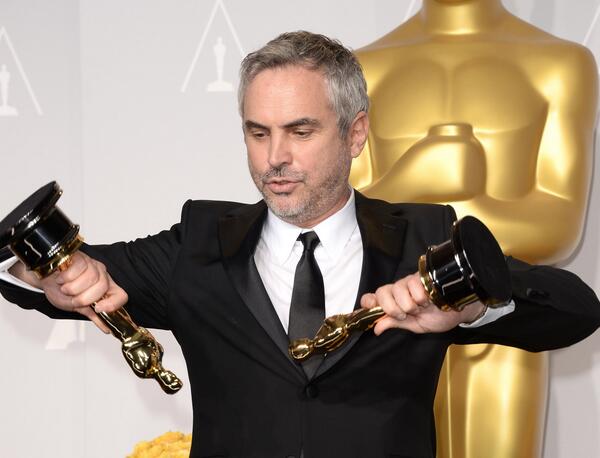
5. What do you do when you make a film after 7 years and win 2 Oscars at one go? You first test them for Gravity.

Alfonso Cuaron

5. And, finally, the jump of the year – Steve McQueen. After 12 Years A Slave bagged the Oscar for the Best film

Steve McQueen

So what was your favourite madness moment? Do post in the comments section.

Today morning, we were discussing reviews versus blogs. It started with a personal and candid post (Dad, We’re In Nebraska) by Rahul Desai. If you have seen Nebraska, do read it. It’s a strange feeling when you can identify your life with a film. And sometimes, it’s liberating in more ways than one. Today evening, we received another personal piece by @kuhukuro. This one is about Highway. An honest, brave, and candid open letter to the filmmaker whose film had an impact on her as it mirrors her life. Do read.

 Alia-Bhatt-and-Imtiaz-Ali-on-location-shooting-for-Highway-in-Punjab28.03.2013

Dear Imtiaz,

I am not a film critic, nor can I boast of being very cinema-savvy. But I have been insane enough to source my philosophies from cinematic moments. Films have been thriving territories for epiphanies. Highway comes at a point in my life when I am delving in the art of being ruthlessly honest to my feelings, of asserting myself, and of exploring a newer version of myself. This one is a film that resonates with me for various reasons.

For starters, I was also sexually abused as a child, and the perpetrator was a close relative. I could relate to the lingering and stealthy effect of the trauma depicted on screen. I also disclosed this fact to my family after entering adulthood. The film’s portrayal of the family’s reaction mirrored my situation. Watching Veera intrepidly telling it like it is and being unapologetically ‘herself’ in the last scene was heart-wrenching yet therapeutic for me.  I have not allowed myself that outburst though. Not yet.

Last year, my father succumbed to his mental illness and committed suicide. I know what you mean when you say that Bhaati’s death was the ultimate liberation for Veera. My dad’s death had a similar effect on me. I faced one of my worst fears. Nothing really terrifies me anymore. It incidentally also happened to be the year when I confronted the reality of my troubled marriage. Two trips that followed set me free in many ways. The salt pan scene in the film set against the ‘Tu Kuja’ soundtrack echoed my sense of self-inquiry.  After watching this film, I was even more convinced that a journey from which you don’t completely return was exactly what I needed. Unlikely confidants, unlikely confidences, and accidental yet gratifying connections were a part of my journey as well.

The journey in ‘Highway’ unfolds like a map of tragedies that exist in us, unfurls.  It was a catharsis to observe the metaphorical ride from fragility to strength to nerve. I was nodding my head vigorously in agreement while watching the moments on screen where the lines between terror and wonder blurred for Veera. I noticed that Veera climbed many rocks in the film – big and small. I am assuming it metaphorically indicated overcoming obstacles and the joy of small victories. Many people couldn’t fathom Veera’s behavior – laughing interspersed with crying, and then questioning herself aloud like she was having an out-of-body experience. According to my reading, her emotional reactions were a part of the process of shedding the repressed parts of herself, and, embarking on the confusing yet exhilarating expedition of letting her real feelings come to the fore.  Liberation is a strange and an idiosyncratic process.

The silent scenes in the film aptly mirrored the way a meditative stillness seizes our inner world, when we travel. Then you stumble upon moments that break you before they make you. They unshackle. They teach you to trust your gut. It is important for life to whirl you around and turn your world upside down oftentimes.

Memory is not something that fades in my case. It looms large and I crouch in its towering shadow. This time I have decided to soar higher than this menacing force. Patakha Gudi has egged me on to unleash that spirit, which was hitherto tucked away and silenced.

I have just begun the task of developing my own vocabulary to express who I am. Thanks to Highway, I am propelling myself further in the direction of dismantling norms that don’t serve me.

Before I sound like a gushing obsessive fanatic, I should wrap it up. Your film will be a part of the trajectory that is turning me into a functional, healthy, and a fulfilled woman. Thank-you Imtiaz, Thank-you Highway. I know I will get there soon. Along the way, I will live like I mean it.

@kuhukuro

gulabi

It’s a great time for desi documentaries. In the recent past we have seen some pretty terrific ones- Malegaon Ka Superman, The World Before Her and Katiyabaaz to name just a few. Which is why it’s a pity that Nishtha Jain’s powerful documentary Gulabi Gang hasn’t quite got the audience it deserves- yet.

Perhaps the makers ought to have employed the Gulabi Gang themselves to whack our lazy, torrent-savvy audiences into theaters. 😉   The film is now running in its second week in a select few theaters/cities with ticket rates further slashed. There’s no good excuse to miss this one, really.

Anyway, here we have an interesting post by Prashant Parvatneni on Gulabi Gang and how genres usually associated with (fiction) cinema can find their way into the documentary format as well. Over to him:

Gulabi Gang by Nishtha Jain is undoubtedly a rigorous study of a women’s movement in the deep interiors of Bundelkhand where a group of women networked between several villages have formed a ‘gang’ to fight against the oppression of women and dalits. They drape themselves in Pink sarees and carry pink lathis that becomes an image of the identity that binds these women. There are complex issues that these women are dealing with and fighting. Young brides are being burnt, dalit activists murdered and certain high-caste Choudharies have concentrated all power in their hands suppressing any and every dissent using gun and muscle power. It is this nexus of power and oppression that the Gulabi Gang is trying to tear apart under their feisty leader Sampat Pal.

Sampat Pal inevitably becomes the ‘hero’ of this film, her infectious zest and fearlessness naturally grabs the attention and it’s hard not to root for her like we would for the angry underdog taking on the system in a Bollywood film. It only helps that Jain adopts a form of narrative that is simple in structure but quite inventive. It follows 2-3 cases that Gulabi Gang encounters and as it does so, quite curiously these cases turn to a kind of whodunit with the Gang acting as detectives trying to uncover the truth behind the violence inflicted on women.

pink

Like in one of the cases, a young wife is found burnt inside the house. When Sampat reaches the spot, the in laws of the woman claim that she got burnt while making rotis but Sampat in true detective spirit, deduces that it cannot be a mere mishap. There wasn’t any stove at the spot, nor was any other part of the house burnt or even charred. Sitting in the audience even we also could start the process of knitting the clues together and deducing while also being acutely aware of entire machinery which includes the panchayat and the police trying to push this crime under the carpet. Sampat Pal’s own relative burns his wife but she wants the truth to come out. When the director’s voice asks her will you fight against your kin as well, she replies inspiringly ‘I just want to find out the truth’. Quite fittingly then, Anand Gandhi (director, Ship of Theseus) called this film a ‘reinvention of detective genre’.

This is a welcome change as the problem with most documentary films dealing with social evils, people’s movements, subaltern issues etc. is that they have sort of reached a saturation of form. While they do deal with a variety of issues, they follow the same old form – interview of key players, a bit of commentary, a bit of field action all merged seamlessly to ‘illustrate’ and ‘explain’ and thereby ‘document’ the problem. Such a form has turned even more uninteresting with its derivatives populating news channels through their ‘human stories’.

Thankfully the film doesn’t stop short of also pointing towards the limits of such genres that evidently end with a resolution a climax arrived at through carefully plotted series of events. Unlike in a detective genre film, we do not get to know whether the culprit was caught or not. Often the battles are lost and the guilty gets away. But like the truest of detective stories, the importance lies in questioning what one gets on face value rather than solving the puzzle and Gulabi Gang does point our attention towards the need to inquire and shakes up the static status quo.

Instead of a gradual convergence towards a resolution of problem, the film starts to spread in and out of such inquiries of cases and looks at the varied other forms of struggle that a people’s movement engages in – organization, activism, mobilization, planning etc. One of the most charming and equally thought provoking sequences involves the meetings and the practice sessions of the Gulabi Gang. As a ritual Gulabi Gang practices lathi fights with a playful zest as two women take on each other while others on the periphery cheer and clap. It quite casually points towards a ritual- even a ritual of violence (though more for protection in this case) that is involved in any people’s movement.

The entire movement also resembles a theatrical performance. There is backstage practice and rituals and there are costumes and props – the pink sarees and pink lathis juxtaposed against the dry, arid brown and gray landscape is an image that gives tremendous gravitas to the Gang and binds them into a community. In fact the saree and the lathi are the first things that are given to the women who join Gulabi Gang and they have to change into the ‘costume’ right away. There is a slightly comic cut in the film where we see Sampat Pal encouraging the mother of the burnt bride to fight her case and in the next shot the frail creature of the mother is draped in bright new pink saree as she is on her way to the court with the Gang. It’s a terrific reminder of how a bit of theatre and performance is a part of every movement or revolution. It also reminds us how such performativity can be appropriated for contradictory causes – for assertion of justice or for religious or political fanaticism.

Gulabi Gang ends with tragic human drama as the documentary manages to trace a character arc of sorts of one of the Gang’s members – Husna. Husna, a hardworking and passionate activist and member of Gulabi Gang takes a position completely contradictory to the movement when her own brother kills her sister for marrying out of love. When she supports him instead of condemning in the name of culture and tradition, one is hit by the extent to which such fundamental, patriarchal ideas can deride compassion and human justice and what a difficult battle Gulabi Gang is fighting – not just externally but internally. For me, the film was special because it shows how certain genres – like detective, political, social drama, human drama genres – can seep into documentary also; in-fact they come from the reality that the documentary often deals with. But, it also shows how cinema can avoid using genre as a trope and move in an out of genres to question the complexity instead of using such genre games to manipulate sentiment and to take an easy position of a sympathizer. The last sequence shows Gulabi Gang members waiting for a train on the platform and few men looking at these women clad in Pink Sarees with contemptuous humor. For them they look nothing short of fancy dress. One of the men asks the man who moves around with the Gang – ‘kuch milta hai issse’. The director shows amazing empathy here as she cuts to the image of Sampat Pal staring into the camera or perhaps into the far horizon, sitting amidst other women with eyes filled with acceptance of difficulty but shining with a rare honest hope. All the contempt of the scene just washes away and we are filled not with sentiment but with emotion – an unsaid but urgently felt hope and a desire at least to think.


(This post was originally published here.)

Since the time we saw Nagraj Manjule’s debut feature ‘Fandry’, we have been shouting out from rooftop that it’s a terrific debut and a must watch. Click here to read our recco post. This week, Fandry is releasing outside Maharashtra, and with English subtites.

The show details – Date: February 28 to March 6

Delhi NCR
PVR MGF Mall 9:10 PM
DT Cinemas Vasant Kunj: 3: 30 PM

Indore
PVR Indore 5:00 PM

After the film’s release and the acclaim it got all over, Nagraj wrote a piece for Maharashtra Times. Much thanks to @Shankasur who came up with the idea to translate it in English for wider reach, took the permission, and did it for us. Do watch the film if you haven’t seen it yet. And then read it.

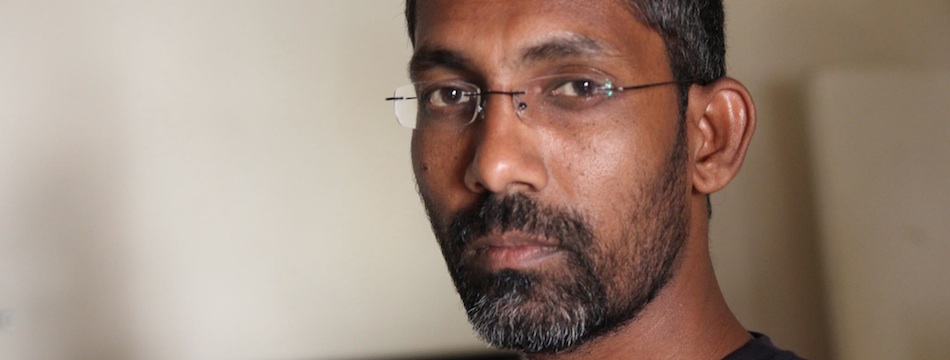
Nagraj-Manjule-photo

Remembering   Fandry

Now that Fandry has been released, I am reminiscing all the memories that are linked with it. These memories have accumulated over a long period of time. The very moment someone mentions Fandry, I am reminded of experiences from
childhood and that of growing. I grew up with a strange sense of fear and a realisation that I was born into an under-privileged life. I was made aware of my limits since my childhood. I would go to watch Ramayana and everybody’s seats were fixed. While watching King Ram from a corner, the invisible “No Entry” signage that was in my mind was getting bold and clear. The surrounding social setup was up in arms that constantly kept reminding me of my deprived social status.

I don’t exactly remember when my innocent courage took a backseat and I became aware of my caste limitations at every step. I never realised when this impotent maturity became a part of my life. Whenever I uttered my or my mother’s name, or even make a reference to my caste while filling forms in school, the class would break into a faint yet violent laughter. To avoid these embarrassments, I would walk up to the teacher and whisper my name and caste into his ears. I made this into a habit since I was in primary school. When one’s identity becomes the reason behind his inferiority complex, he has nothing more to say. I don’t remember since when I feared telling my own name to others. All I carried along was a sense of fear that it would be criminal of me to do so.

When my father would address my friends as “saheb”, “sarkar”, my expectations for friendship, equality would seem unreasonable. If someone loosened the noose around our neck, we would celebrate that as our freedom. But that didn’t stop me from dreaming. Even in this gated social setup, dreams would find their own little ways. A simple jean pant, a sweet dish during a festival, electricity connection at home, a new pair of footwear would seem like dreams that could come true. The system I was living in would stack up these little wishes and desires and make them appear as dreams that were out of my reach. But dreams don’t have labels of caste and religion. They express their desire to be realised in most innocent manner which gives rise to a chaotic struggle between these dreams and our own inferiority complexes. Sadly, the later always wins over the former.

When I entered college, the old nightmare was in front of me all over again. I had expected that at least in college, I would be treated with some dignity. In my first year, we had a story by S. M. Matey in which the protagonist curses the villian as “Hey Kalyaa Wadaaraa!” (Wadar is a denotified tribe (DNT), while Kalyaa refers to a dark skinned man. It’s difficult to translate the heinous undertone of this phrase). I had this habit of reading through all the lessons and stories before the course starts.
When I came across this sentence in Matey’s story, I decided to remain absent in the class the day when this story will be taken for discussion. I bunked classes for a week and thought that the professor must’ve finished discussing this story. To my worst surprise, the professor started with the story the same day I chose to remain present again to the classes. Not to mention, when sir recited those lines, everyone looked at me, trying hard to control their laughter. I felt an immediate need to miraculously disappear from where I was sitting, like a god.

A man starts expecting such miracles to happen at times of these depressing encounters with life. Fandry reminds me of these episodes. It reminds of the haunting space called school. It reminds of those innocent dreams; reminds me of the dreams that were squashed and crushed by the might of my underprivileged caste identity I carried throughout.

“Fandry means what?” is a question that I’ve been asked numerous times. And I’ve refrained telling its meaning in one simple word. Fandry is a word used by a tribe, that lives around us, in their dialect. We do not know of this dialect nor about the tribe. We are unaware of their lives, their dreams, the pleasures and perils of their existence. When you will come searching for the meaning to the word Fandry and spare a moment to understand about lives of these people, I would consider my attempt to keep its meaning a secret a ssuccess.

Fandry is not a secret but an invitation for all of you. Please accept it and face the ugly truth that we always prefer to ignore. A truth that we’ve always been hiding like an epidemic. But when a vaccine to this epidemic would be discovered, we will have to accept that we are struck by it. It is only then I can dream of a clean and compassionate dawn in history of mankind.

– Nagraj Manjule

(Translated by Kaustubh Naik aka @shankasur)

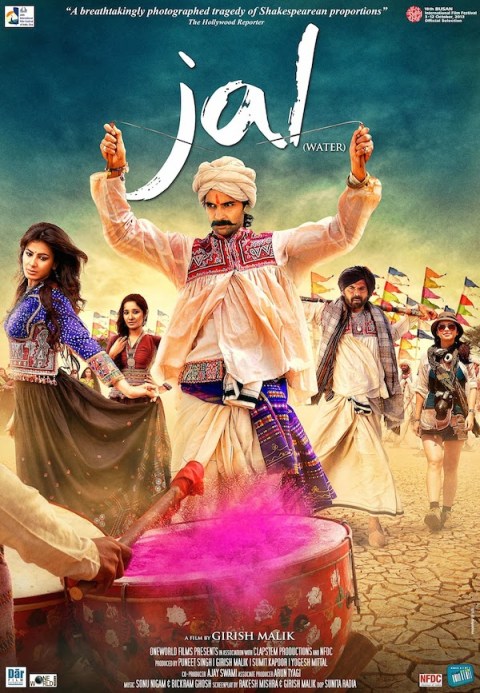
jal-film-poster-fight-club

The trailer for ‘Jal’ came our way recently, and left us somewhat intrigued. Even if the prominent blurb by The Hollywood Reporter — “a breathtakingly photographed tragedy of Shakespearean proportions” — doesn’t catch your attention, the lavish photography will surely charm you. Water has been a contentious resource since ages — prompting anything from friendly neighbourhood quarrels to full-blown riots to inter-governmental conflicts. We hope this premise translates into a good film.

After having travelled the festival circuit last year — it was selected in the New Currents section at Busan International Film Festival 2013 and was screened in the Indian Panorama section at the International Film Festival of India (IFFI) — ‘Jal’ releases on March 21 across India.

Here’s the trailer of the film, followed by the synopsis:

‘Jal’ is a high-octane, action-drama about a young water diviner, Bakka, who is gifted with a special ability to find water in the desert.With the backdrop of water scarcity, the film tells a complex and intriguing story of love, relationships, enmity, deceit and circumstances that bring about the dark side of human character. It is a high-octane, action- drama with a shocking climax. Shot on an epic scale, the film is a visual treat and has managed to capture ‘Rann Of Kutch’ like never before.

Cast and Crew

Produced by ‘One World Films Pvt. Ltd’ and ‘Clapstem Productions’, the film is directed by Girish Malik starring Purab Kohli, Tannishtha Chatterjee, Kirti Kulhari, Saidah Jules, Mukul Dev, Yashpal Sharma, Rahul Singh & Ravi Gosain.

Quite interestingly, the music is by Sonu Nigam and Bickram Ghosh.

For those who wish to learn more, here’s a short interview of Girish Malik in which he speaks about his inspiration for the film, the idea for which had been brewing in his mind for 15 years.

— Posted by @diaporesis

As far as the reactions go, Imtiaz Ali’s new film ‘Highway’ is more or less on the same track like his last film Rockstar – completely divided between lovers and haters. And like last time, Ali was quite open and candid to discuss the strength and every weakness of the film, and took it all head on. We love and respect those filmmakers who are open to such dialogues. So thanks a lot, Imtiaz Ali. Whatever film you make, hope you remain like this.

We also hope more bollywood filmmakers will be open to such Q and As. Who really wants to read about the film pre-release, which is still quite the norm in the country. And post-release, they just vanish.

Also, it all happened because Navjot Gulati took the initiative, contacted Ali, sorted the logistics and made it possible. And thanks to Mihir Desai, Aniruddh Patankar and Sumit Purohit for the videos.

The film got over by 12:15 or so, and then the discussion went on till 2:30 am, and then it went on for some more time outside the theatre. It was great fun. Hope you guys enjoy the videos as much as we enjoyed the live session. Some questions might not be audible, so do use your headphones or speakers.

Thanks to PVR Andheri and Shiladitya Bora for helping us out with all the logistical support.

Editor’s Note: Imtiaz Ali’s much-awaited film ‘Highway’ released last Friday, and, over the course of just a few days, has achieved the unique feat of inviting equal amounts of love and hate. What’s even more remarkable is the vehemence with which both ‘lovers‘ and ‘haters‘ have expressed their views about the film. Barring the sedate review or two, sharp words have flown between between the two ‘camps’, especially if you’ve followed the buzz on Twitter. Or perhaps you’ve read the gloriously funny Neruda-take on the film. With this Highway it seems, there’s been no middle-road.

However, as the fires die down, it’s time to pause and reflect on this undoubtedly fascinating film that’s made some fans of Ali despair at his latest turn; some fans exult in his new achievement; and converted some Ali-sceptics into fans. For now, here’s Shivam Sharma taking stock of the film and taking you on a journey he greatly enjoyed.

Also, if you have seen the feature, click here to watch Imtiaz’s original telefilm which inspired the feature and was also titled Highway. And do participate in an interesting poll in that post.

(The following piece contains spoilers. It also contains personal whims, fancies, two languages and if the point gets lost in between somewhere then भूल-चूक, लेनी-देनी माफ़ कीजियेगा.)

“मैं हमेशा कहती थी न कि मैं भाग जाउंगी यहाँ से, मुझे शहर में नहीं रहना।
सब कहते हैं न, पर भागता कौन है?”

highway-1

१५ साल पहले इम्तियाज़ अली ने ज़ी टीवी के शो “रिश्ते” के लिए एक एपिसोड बनाया था उसके बाद उन्होंने काफी कुछ बनाया, हासिल किया और काफी हद तक बॉलीवुड में एक secure, genre-specific director बन गए. Especially after ‘Rockstar’, his biggest hit, his career graph has gone steadily upwards. ‘रॉकस्टार’ जैसी बड़ी hit देने के बाद, he had the option of going even bigger financially. Knowing how the industry works, giving a big hit generally works wonders — Nolan had a carte blanche to give his whims free rein after ‘The Dark Knight’; and so he made ‘Inception’. But the decision of not going bigger in terms of cast, budget and stars, and instead making a movie based on a story he wrote 15 years ago (or more) with a modest budget, stripped of most ‘Bollywood’ elements and with a not-so-bankable cast, tells us more about the director that Imtiaz is and the path he is on. ‘हाईवे’ की journey सिर्फ वीरा और महाबीर की नहीं है. ये इम्तियाज़ की भी उतनी ही “Finding oneself” वाली journey है. Back to his roots.
१५ साल पहले वाली.

Highway may not be Imtiaz’s best work but it’s definitely his most honest. Of all his films, this has the most scenes without crutches — minimal background music; long, apparently aimless scenes interspersed with silence as if they were unplanned; and scenes that are ‘real’, that feel raw: Veera laughing/crying without any reason sitting on a boulder by a freshwater stream; Mahabeer’s breakdown. Rough edges काफी visible हैं and some scenes seem unfinished in a sense. काफी clear है कि इम्तियाज़ खुद कुछ नया ढूंढ रहे हैं यहाँ. He relies more on his instincts and the power of raw scenes and narrative here than anything else — and he fumbles along the way quite often too. His warts are quite visible here and the screenplay isn’t entirely convincing. However, he has tried to get out of his comfort zone i.e. a strong soundtrack, typical funny side characters, likeable leads etc. The part which juts out like a sore thumb — and that I personally hated the most — was the end segment, the final 15 minutes where he tried to define everything, make sense of the proceedings and tie all the loose ends. It all felt forced and unreal. That part was the most Bollywood-like of the whole movie and I wish he had ended the film 10 minutes earlier and not necessarily provided a forced closure. (The Lunchbox followed it so beautifully. Ritesh Batra knew where to stop. पर it’s ok, कोई बात नहीं.)

The movie soars with the terrain it slowly travels — almost metaphorically. The part where Veera and Mahabeer lose themselves in the mountains, without a care in the world, is the most enchanting. These scenes soar higher than all others. सूफ़ियत कह लें या कुछ और, उस हिस्से में फ़िल्म एक अलग space में पहुँच जाती है. Imtiaz makes a great decision here to cut back on the spoken word and just let the ambient sounds and the scenery do the talking. This part is probably one of the purest cinematic experiences that I have had at a theatre ever.

highway-2

“एक गोली में आदमी ख़तम हो जाता है न?”
“दो आदमी.”

What looks like a simple ‘Stockholm Syndrome’ story gradually becomes much more as we go farther up the mountains and Imtiaz lets the story take its course beautifully towards the latter half (with the help of some great cinematography by Anil Mehta). There are many scenes without much dialogue here. These silent scenes help — they make you think; at that point, it all becomes subjective. You interpret what you want to, you become a part of the journey and maybe that’s what it all comes down to eventually.
You find stuff about yourself.

The two leads shine as does the supporting cast. Alia is brilliant in most parts, despite overdoing a few things here and there. But what a revelation she is! Randeep Hooda is restrained throughout and gradually takes over when Mahabeer finally breaks down. He is one of the best actors we currently have and this performance strengthens that position. AR Rahman’s music and background score take a backseat here and honestly he does not have that much to do. It’s just not that kind of movie maybe. ‘Patakha Guddi’ and ‘Maahi Ve’ are soulful; Sooha Saha is a lovely track as well. However, I really missed Mohit Chauhan’s vocals. The visuals reminded me a lot of especially this song of his.

Highway tries and succeds and fails and then succeeds again. It has some glorious highs and some not-quite-there moments but कुल मिला कर its highs spectacularly overshadow the lows and the movie now and again transcends into a रूहानी space which is well worth the journey — a rarity in Hindi cinema.

But I have always been a mountain person all my life so do excuse me for being a bit biased. चलिए फिर, I’ll see Highway again and try to find out more.
अपने बारे में.

Shivam Sharma aka @GhantaGuy

(Professional procrastinator. Amateur doer. I sleep, eat, drink and live movies. And right now I am trying to learn how to make movies at FTII)

UPDATE (22-02-2014) : Highway has finally released. As Imtiaz mentioned earlier, it’s a retelling of one of his earlier telefilm which was also titled Highway. If you have seen the feature and not seen the telefilm, scroll down and do watch it now. And do participate in our poll.

Please do also rate the feature film on the scale of One to Five

If you HATE spoilers and have not seen the feature yet, DON’T watch the telefilm or read the synopsis. DON’T  SCROLL  DOWN  ANY  FURTHER.

EARLIER POST (18-12-2013)

Has Imtiaz Ali rehashed his own Highway? Watch it and decide for yourself. This ‘Highway’ was part of Rishtey series on small screen. It stars Aditya Srivastava, Kartika Rane and Manish Chaudhari.

And here’s the official synopsis of this highway –

(SPOILER ALERT)

Vinay and Veera are going to be married in a week. They meet stealthily as they are forbidden to meet before the wedding. They go for a drive on the highway, but unfortunately, some thugs kidnap Veera. Vijay, the head of the gang, regularly supplies girls to brothels and Veera is his latest catch. He plans to sell Veera but the plan is put on hold as he learns that her fiance’s father is a police commissioner. Veera tries her best to escape, but is unsuccessful. Somehow, Vijay and Veera begin to get emotionally involved with each other. Veera and Vijay spend time together escaping to another place. Veera confides to him that she was raped as a child. She tells him that she feels very safe when he is around because he would not let any harm befall her. Having a change of heart, Vijay asks her to escape and return to her home. Will Veera go back to Vinay or choose to stay with Vijay?

Imtiaz did mention about this Rishtey episode in few interviews. But after looking at the trailer and this episode, it looks more or less the same. Let’s wait till the film releases to see how much has been changed.

 NFDC recently organised the first Directors Lab. One of the participants of the lab, Vasant Nath, Director, Sebastian Wants to Remember (SWTR), writes about his experience of this 2-week residential workshop which was held in Pune recently. And since many of us had doubts about its fee, he also clarifies on that front – was it worth it? If so, why and how.

Vasant Nath’s drama SWTR found an Indian co-producer in Kartikeya Narayan Singh’s production house The Film Café. SWTR is the story of an aging photographer who loses his memory and must embark on a daunting journey with his wife in search of his past. It was selected for NFDC Screenwriters’ Lab 2011 and Co-production Market 2012.

Over to him now.

(Click any of the pics to start the slide show. Hold your cursor on specific pic, details will pop up)

I did not go to film school, I learned whatever I know of filmmaking on the job and through self-study.  Working in production for five years gave me some technical skills.  Working on other people’s screenplays as a creative assistant to another filmmaker taught me the basic mechanics of screenwriting.  Making some short films put me on the path towards finding a personal voice.  Meeting a dead end in my career as an assistant made me try working independently.  That was five years ago – when I wrote my first original feature-length screenplay – ‘Sebastian Wants to Remember’.

‘Sebastian’ has had a long (but necessary) development process – eight drafts till date.  I’ve been fortunate enough to have some excellent mentors during this process, and the steady effort has borne fruit.   The screenplay is in good shape and should serve as a reliable blueprint for the film’s realisation.  However, ’Sebastian’ is by no means an easy film.  It’s a road movie with a 70-year-old amnesiac as the lead character, and he doesn’t talk much.  The story structure is interspersed with flashbacks that introduce a cocktail of emotions to the protagonists each time they happen.  Over the many rewrites, my second character has started competing with the primary character for point of view.  And there are some tough sequences that I have blithely written without the slightest inkling of the challenges they will present when I have to film them.

I’m very happy that I did not let such anxieties limit the writing process, but now, as the time to step out of the secure confines of the writing room draws near, I am visited by a recurrent nightmare where I’m on set as director with a large crew looking to me for instruction…and I have no idea what to say to them!  Initially, I drew comfort from the thought that things would take care of themselves once I start making the film, and that doing was the only way to learn.  Of course there is truth in this, but this film – even looking at it just in terms of scale – is unlike anything I’ve ever done before.  I will have to be extremely well-prepared, and I’m going to be of no use to anyone if I go into the whole thing cowering like a scared rabbit.

Indian filmmakers live in very fortunate climes today – because Marten Rabarts is in the house.  As Development Consultant to the NFDC, he has streamlined the organization’s agenda to work on our filmmakers from the roots and has fuelled its engine with the best development talent from across Europe.  This, coupled with the environment for exchange and collaboration that NFDC’s Film Bazaar provides, is extremely fertile ground for new voices to flourish and for a film like mine to find the support it needs to get made.  By the time I applied for the Director’s Lab, I had already been a sort of crash-test dummy for the other NFDC labs – usually one of the first to apply, usually to be found in the front row taking copious notes once they happened.  By the time I heard of their Director’s Lab, I already had great faith in such endeavours: the NFDC’s 2011 Screenwriter’s Lab I participated in represents perhaps the sharpest learning curve I had experienced till then.

Udayan Prasad is both a teacher and a director – known for his films ‘The Yellow Handkerchief’ and ‘My Son the Fanatic’.  He teaches this director’s lab in the UK, sometimes at the National Film and Television School, and sometimes in London as a three-week summer school.  Here, he had crafted a two-week program that fell somewhere between the longer and shorter versions of his usual course in Europe.  Before arriving, I had wondered how much ground he would be able to cover in this short a time, but there was no way of telling beforehand.  However, once it started, Udayan’s lab was like a feeding frenzy.  Every day of the twelve days that we were there (cooped up in the Marriott Courtyard Hotel in the middle of Pune) we were encouraged to repeatedly bite off more than we could chew with the assurance that the digestion would happen later.

This was the NFDC’s first director’s lab, and – except for maybe three of us – most of the participants were at very early stages with their films – some of them didn’t even have first drafts yet.  I initially feared that I was attending another (very expensive) script lab, because the format of the first two days was more or less identical to that of the opening of the screenwriter’s lab I had attended in 2011.  In both scenarios, it was necessary for the participants to share their stories and visions with each other with as much honesty as possible.  It is a very testing task – both the sharing and the listening.  While telling, you feel that you are suddenly admitting a whole bunch of voyeurs into your head.  While listening, you feel embarrassed for being held privy to the intimate inner worlds of eleven strangers.  But eventually, it turned out that this had immense payoffs for the work we had come there to do.  In my experience with labs, it has been quite clear that any sort of filmmaking workshop can only succeed in an environment of trust.  Through this process of sharing, we grew to recognise the common craziness that united us and brought us there.  As neophytes filmmakers, we all knew something of the anxieties each of us suffered because of the familiar challenges our work presented.  Constantly encouraged by our mentors, we were really starting to trust each other by the time we got to the real meat of the workshop.

Our time was interspersed with lectures, ‘workshop-y’ stuff, master classes given by established industry professionals, film viewings and individual consultations for script and production.  Almost every minute of the waking day was taken up by these for twelve consecutive days.  Whatever was left was spent (at least by me) nursing exhaustion.   As Udayan kept telling us – we were getting what we paid for.  It was only fair!  The whole workshop was consciously kept non-technical and perhaps this came as a surprise to some of the participants who had come there expecting to work with cameras et al.  Udayan focused instead on things that led to good technical choices – with an emphatic emphasis on using all tools available to serve the stories we wanted to tell – trusting that we’d be able to take care of the technical training ourselves.

Acting exercises made up a very large chunk of the workshop – perhaps the most hands-on and ‘workshop-y’ section of the whole experience.  I have done other acting workshops before and what I learned here was that acting workshops oriented towards actors are quite different from acting workshops oriented towards directors; even though both start pretty much from the same place.  A director-oriented acting workshop eventually has to serve the director’s requirement of giving actors the right environment they need to thrive in, and actor-oriented acting workshops do not go that distance because they do not need to.  I found these sessions extremely useful.  The exercises we did here allowed us to experience first what an actor does and then showed us what an actor finds useful in trying to arrive at the right sort of performance.  It was all very practical and methodical – we got to test many tools and techniques even in the short time we had.

The acting exercises proceeded into another very useful section – Scene Analysis – where we had two very accomplished actors – Adil Hussain and Tannishtha Chatterjee – as our clay.  Having already spent two days in the actors’ shoes, we had been sensitised to the challenges they face when receiving instruction from a director that just isn’t playable.  Udayan had been drumming a discipline into our heads – to use verbs instead of adjectives in our instruction; to convey the facts of the script in a systematic way.  With Adil and Tannishtha, we put Udayan’s instructions to work and watched in wonder how a basic line-reading of a script turns into a performance full of genuine feeling and surprise when an actor is provided with the right information, in the right quantity at the right time.

Very soon, we were thrown into the nerve-wracking scenario where we had to put these techniques into play with professional actors (mostly very generous acting grads from FTII) with scenes from our own films.  This was probably the very first time any of us had realised anything from our pages, and it was frightening.  But better to feel the shivers here than on set!  I was given three young actors for a scene that involved two old people…and little else.  The actors knew nothing of my film and I wanted to transfer all my knowledge of the story to them via firewire so that they could quickly enact the scene in my head and be done with it!  But of course, that was not possible.  What was possible, though, was falling back on the techniques that Udayan had taught us –  basic principles of sharing information slowly and carefully, leaving room for the actors to bring something to the scene.  As I got into the flow of the exercise, that’s exactly what happened.  My actors brought a lot to the scene.  In just a couple of hours, they were showing me things that I could never have accomplished while working alone on the page as I had done till then.  Then another problem arose – they just kept on giving!  I had gone from feeling very excited by a lot of new interpretations of my material, but suddenly it felt too much to work with.  Then I took a deep breath and started making decisions…

I may never have five hours to rehearse a one-page scene in an actual shooting scenario.  But the process of going through this exercise – feeling the fear, smelling the failure, being unsuccessful at realising the film in my head, righting myself, making decisions under pressure (even though simulated), trusting a technique, giving, receiving, disciplining myself to only give playable action – all this was f*****g priceless!  Udayan was in and out of the room right through the exercise.  He has this x-ray vision that could diagnose what we were doing wrong within a few minutes of watching our work.  He didn’t go easy on us, and I am very happy he didn’t.

By the time I got through this exercise, the lab had begun to seriously work upon me.  I was already looking at my material differently.  It wasn’t that I was distrusting everything I had written till then, but I was recognising how far the writing had got me and where I needed to steer the process from here on.  There would definitely be some re-writing – I came back from the lab and quickly shot off a fast polish to my producer – Draft 8.1!  Suddenly, there were so many new things to think about.  There was already a greater sense of empowerment when looking at the many difficult choices that lay ahead when I make ’Sebastian’.  At least I knew where to start thinking about the things I’ll need to say to my waiting crew when my nightmare revisits..!

We touched upon various aspects of film craft – production design, cinematography (and point of view), sound – through master-classes and lectures.  The master-classes did well in keeping the theory grounded.  But even with Udayan’s lectures, I never for once felt that we were all sitting in some sort of ivory tower – everything Udayan talked about, he always connected to his experiences as a filmmaker or to the real-world experiences of filmmakers he knew or had studied.  He often invited the professionals conducting the master-classes to comment on the concepts he outlined.  In all sections of the workshop, Udayan’s teachings were a distillation of a very large cross-section of filmmaking traditions.  He brought with him a clear understanding of where these traditions came from, how they could be applied, where they succeeded, where they failed, how they evolved, and – most importantly – what worked well for him in his experience as a filmmaker.   All the theory was accompanied by clips of films that demonstrated the corresponding concepts in successful execution.  The workshop was thus also very enriching in terms of the reading lists and watching lists that Udayan left us with.

The individual consultations for script and production were a very necessary component of the lab, since the participants were each in very different stages with their projects.  I believe it allowed the mentors at least some room to tailor their guidance to each participants’ particular needs. More consultants were brought in for this – Urmi Juvekar, Priya Sreedharan, Shivani Saran – some of whom (along with Marten, of course) represent for me what I call “the NFDC ecosystem” – something that I have come to trust implicitly in my career as an NFDC Lab crash test dummy.  This ecosystem is becoming better with each passing year, and hopefully – in the foreseeable future – when the corresponding production and financing side of the NFDC stands on steadier ground with as great a confidence as its development arm, we will witness a thriving harvest of great new films, in greater volumes, year after year.

By the time we pitched our projects again at the end of the workshop, the difference was apparent.  Some of the participants had made some giant leaps with their material.  They stood on surer ground, knowing exactly what they had to do next. For some, the leap was about being able to kill some of their darlings: things that needed to be unhinged before they could move forward – and imagine how deeply they must have been anchored in their darlings if it took two weeks to unhinge them!

Overall, a lot of ground was covered, but I missed a section on the role and dramatic purpose of Music, only because Udayan had been so comprehensive and enlightening about the other components of film craft that he’d addressed.  Some of the participants were keen on squeezing in a session on comedy, but sadly there just wasn’t any time.  Still, the whole group showed a very strong commitment to the workshop and its structure and I feel that this was one of the main reasons for its success.  The ‘workshop environment’ dictated that every exercise we did was reviewed both by our peers and by our mentors.  We became each others’ first audiences with the added advantage of being able to express and listen to feedback articulated after every presentation.  And none of this would work without the trust I spoke of earlier, consciously cultivated by our mentors.  Because of it, we were able to repeatedly fail before each other without fear.

For me – I left the lab with a greater, deeper engagement with my film.  I remember that it felt almost exactly how it had felt when I finished the 2011 screenwriters’ lab with Marten as my mentor.  Even though it had been such a sharp learning curve for me, it had taken a good two or three years of applying the lab’s principles in various screenplays before I acquired a confident, working knowledge of them.  I take it that it’s going to be the same with Udayan’s teachings; I will have to apply them over and over until they set in.  Apart from everything that he taught us about the craft of our work, I also thoroughly appreciate how Udayan kept telling us time and again about good work practices – simple things like acknowledging your crew at the start of the day, thanking them at the end of it; especially important in our country that subscribes so heavily to ‘the cult of the director’.

I don’t think I can end this review without a comment on the lab fee, because I know so many filmmakers who wanted to and deserved to do this lab but simply could not afford to.  While I feel that the experience the lab afforded me was worth every paisa, Rs. 1.5 lakhs is not a small amount for anyone to pay, especially if their projects do not have funding.  That said, I also think that it was a very brave move by the NFDC and the Lab team to actually take the plunge and hold the lab despite all the protests they must have received about the fee.  I sincerely believe that it is a great precedent.  Only time will stand testament to the actual success of the lab – in terms of how many participants end up making their films successfully – but I have a very good feeling about it.  I do hope that some subsidies come into play soon that lower the cost for the participants, because it will really allow the lab to contribute more fully to the NFDC’s long-term development goals.

With regard to my co-participants’ responses – overall, I saw more smiles than frowns.  I think we all knew that a mountain of work was waiting for us when we got back to the real, non-workshop world.  There were some in the group who were still negotiating with the decision to commit fully to this perilous career – and I could feel their anxiety in the face of the big decisions that lay ahead.  But I think that they knew that this was a good thing.  Good workshops are meant to make you go green.  The work that you do afterwards is the only effective antacid.   I wish my co-participants a happy digestion!  I thank Udayan, Marten and the NFDC – Leena who helms the their lab program, and Mayur who helped execute our twelve days so efficiently – for this wonderful learning experience.

(Vasant Nath’s ‘Sebastian Wants to Remember’ is being produced by Michael Henrichs of Berlin based Die Gesellschaft along with France’s 24 Images and Kartikeya Narayan Singh’s The Film Café.  It is currently in financing, having received EU Media Development Support in 2013, expecting to start production at the end of 2014)