


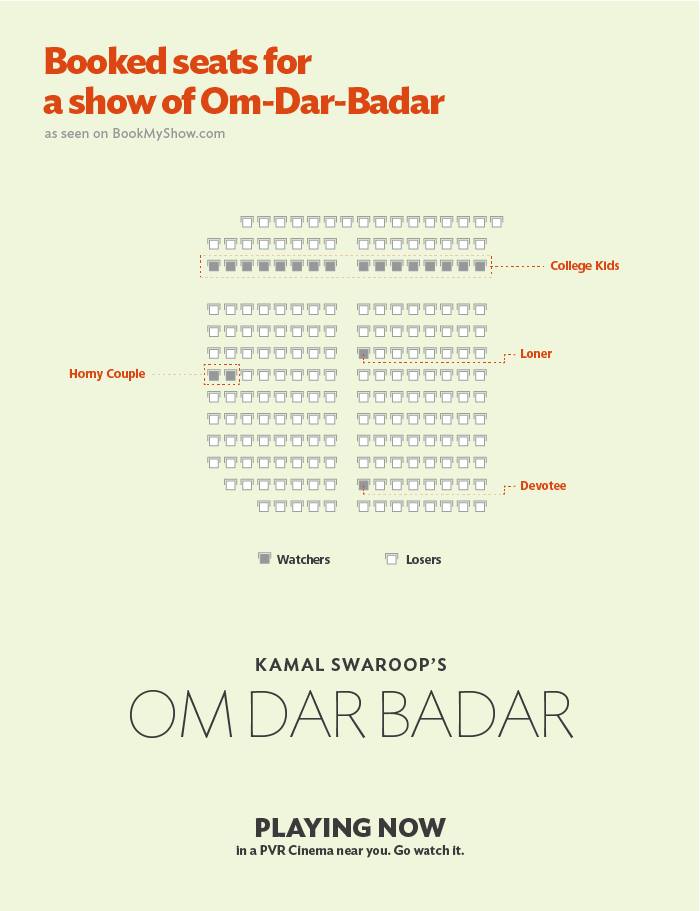
Still haven’t seen Om Dar-B-Dar? Want more reasons? Well, listen to Anurag Kashyap, Imtiaz Ali, Amole Gupte, Kiran Rao and Resul Pookutty to understand what the film means to them and why.
And here’s Rajat Dholakia on its music madness
 what we are reading – EightandHalf


Still haven’t seen Om Dar-B-Dar? Want more reasons? Well, listen to Anurag Kashyap, Imtiaz Ali, Amole Gupte, Kiran Rao and Resul Pookutty to understand what the film means to them and why.
And here’s Rajat Dholakia on its music madness
It’s that time of the year again. Time for a new season of Coke Studio India. That time when we will again become hopeful about it, and then finally give up, and go back to the edition of Pakistan. Aha, still not there.
Rohwit earlier wrote this post wondering if this new edition will finally deliver what Coke Studio really stands for in our neighboring country. This season opened with A R Rahman. And then? Well, play the songs and keep reading. And let us know in comments section if you agree with our views or not.

The much awaited Season 3 of the Indian Version of Coke Studio kickstarted with a bang on August 17, with none other than ARRahman and his team of musicians. The anticipation was 2 inches above sky high because of the hype that MTV successfully created with systematic ‘leaks’ and a million teasers. Let’s see if it did what it has to do and must do!
Zariya – Ani Choying Drolma sets the pace with superb bass accompanying the arrangement. She chants, and enchants! Not before long the backup girls spring into action (One of them is the Indian Idol Season 1 contestant Prajakta shukre as well). Couldn’t help but feel the girls were singing on that all too familiar ‘ishwar allah’ (1947 The Earth) tune. But that’s when Farah Siraj makes an entry and stays till the end of the song. A typical ‘hook’ in the song is missing and arrives just 2 mins before the song ends. It’s not a ‘typical’ song. It’s a prayer, a call for love and we have never experienced Tibetan chants the way this song makes you experience them. There are 3 vocal characters in the song – Ani, Back up vocals, and Farah Siraj. Farah is the ‘hook’ and she soon infects the backup girls to sing to her tune as Ani goes about with the chants. Music equivalent of the word ‘heaven’ was explored with this song and HOW! The percussion is spot on, ARR on fingerboard was spot on so much so that he was smiling, swaying, something we thought we would never see! The arrangement feels studio, Coke Studio!
Naan yen – Rayhanah calls out and while the call in itself sounded a little rough, AR Rahman brings in polish with this free flowing composition that gives the soul some rest the same way Nenjukulle soothed us in Unplugged. We would have liked a bite more from Reyhanah though. A Tamil track that makes the entire ‘language barrier’ incidental and almost insignificant. Highly recommended!
Aao Balma – Padma Bhushan Ustad Ghulam Mustafa Khan (one of the doyens of Indian classical music and the uncle of Ustad Rashid Khan) in all his glory takes the dias in this song. A Hindustani classical piece that flirts melodiously with Carnatic. The song starts delicately giving an overall feel of a beloved welcoming her lover. The sargam in between was arranged well and even though at times the arrangement dominated the voice, nothing went out of sync. The percussion in between did very little to lift the song and in my view it broke the continuity of the song. Towards the end it felt a little scattered. Will I hear it again? Not much. Will I see it again? YES! perhaps a million times! The visual delight that we have come to associate with Coke Studio is there for all to see in it’s full glory in this song. Be it the Juganbandi between Ustad and Prasanna (who makes the electric guitar sound like an electric bulbul tarang at times in the song). The grandson Faiz Mustafa sounds promising along with Murtuza, Qadir, Rabbani and Hasan Mustafa.
Ennile Maha Oliyo – The shortest offering from the episode and we wish that was longer. Issrath and Rayhanah sing the song together and you can make out easily how well prepared they are. Easy on ears, the tune will lead you to play this on repeat (just like Naan Yen) and I am referring to people who don’t understand Tamil (like me). That’s what ARR does and does it in style! The guitar man (Prasanna) flirts with carnatic notes yet again and does a huge favor on our senses. The percussion by Sivamani is fragile yet perfect!
Jagao mere desh ko – AR Rahman tries his hand in Bangla in the opening part of the song and does rather well. However, the continuous descending tone of the opening notes is what will catch your attention first. It is from there, the song goes up up and away! Fusion at its (Coke Studio) best! It is quite tough what to praise most. The superb arrangement, the excellent Suchi, the superlative backups or Blaaze. Back in Pakistan they used bohemia in turns and not together with the singers but here, ARR gets Blaaze to sing along and boy does it sound good! Of course there were some pronunciation issues and towards the end you feel the song if going a bit off track, but when you can live with someone pronouncing ‘ghut ke’ as ‘gutkhe’ here, you can certainly let go of these minor glitches. We did! And it felt superb! Try it.
Soz O Salaam – Again the three generations team up to present this song. The magician Ustad Ghulam Mustafa Khan sahab welomes us to the composition and his grandson Faiz Mustafa holds his ground well. The song could have done slight better had the words been clearer. The tune makes up for it though. Tune wise (even though the rest of the season remains to be seen), this would be one of the best this year. The ‘ARR’ continuum fingerboard adds an overall feeling of a spaced out composition which is unmatched by any other song from this episode. Ironical that this song wasn’t featured on August 17 episode (but is available here). Word has it that this will be featured on T.V. in the ‘sum up’ episode that will have one song from each producer.
With so much already being said (rightfully so, most of it) about Coke Studio India, this episode has set the right tone and it looks like we are in for a cracking season, finally! With the promising line up ahead, we have all the reasons to believe so.
It also reinforces the new formula that a lot of music shows would want to imitate….’When in trouble, call Allah-Rakha Rahman’
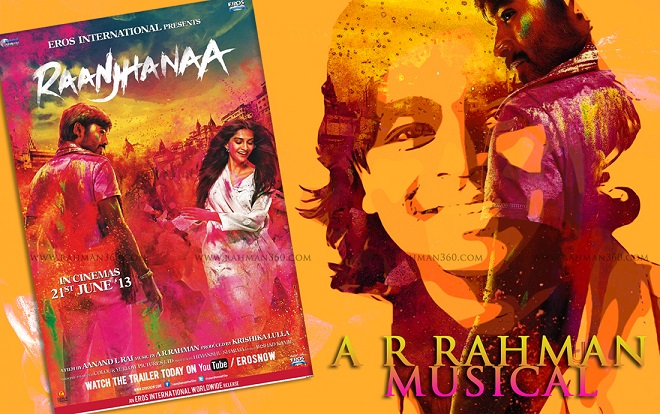
After a long wait, it’s finally out – the music of Raanjhanaa. But seems the wait was worth it. Do check out the music of Raanjhanaa. Rahman is back and how. Over to @Rohwit for its music review.
Raanjhanaa hua – The ever so melodious (yet not as popular as I would like him to be) Jaswinder Singh starts the song and vanishes too quickly. Anyway, the song belongs to ‘at times out of sync Shiraz Uppal’ and that’s what you will love the song for. It just doesn’t try to ‘fit in with calculated singing’. The percussion arrangement – top class, the use of Sitar – exemplary. In fact, when the song ends, the sitar doesn’t leave your mind. Go ahead, try it! A racy tune marked with excellent violins (which literally take the song to it’s peak every time they appear), the song is top class! Watch out for the faint guitar riffs throughout!
Banarasiya – Like the name indicates, a song that ought to remind us of Benaras. Starts quite rightly with Sarangi and flute (aided with the mandatory manjiras). Tune wise crisp, singing wise excellent, Shreya Ghoshal’s vocals! Sitar, Tabla and flute do their bit to raise the level of the song. The playful backup vocals by the hugely talented Meenal Jain and Anwesha add the right amount of playfulness and mischief to the song and you can picture the dancers in a group, exchanging glances and moving the neck and eyes in sync.The atmosphere is very ‘evening’ and the setting reminds us of the ‘Kotha’ culture.
Piya Milengey – The song that begins with KMMC sufi ensemble going at it along with Sukhwinder is endowed with definitive bass and faint piano notes towards the beginning part of the song. The ensemble does an excellent job without getting loud at all. A song that is likely to appear in the background as the film paces up. Thankfully a bollywood – sufi offering that leaves an impact and not screaming singers in the mind as it ends.
Aye Sakhi – A song that has the most delightful and talented singers around. Madhushree, Chinmayi, Vaishali and Aanchal sethi come up with a song that’s treated with sheer brilliance and arranged classically (and gives out a feel that the singers are practising kathak). In fact, the music and the feel around the ‘aye sakhi uljhan’ reminded us of ‘Jao rey jogi tum jao rey’ (from Amrapali). The ‘Tyun tyun tyun’ bit in between reminded us of the Tain tain tain song from Gangs Of Wasseypur. Still so enjoyable! The song has an element of ‘Kya dekh rahey ho tum’ from Taal in terms of feel but is vastly different tune wise. Thumbs up!
Nazar Laaye – With lazy guitars, simple beats and Rashid Ali who is almost sleep-singing along with Neeti Mohan, the first impression of the song is ‘JTYJN-hangover!’ A typical song that gets skipped most of the times but stays in the playlist nevertheless.
Tu Mun Shudi – A lot has been written and propagated about Hazrat Amir Khusro’s Persian words around which the song is created, so we won’t go there. (By the way, Tu = you, mun = mine, shudi = became, Muntu = me yours, shudam = have become). The techno start to the song with superlative A R Rahman setting the tone of the song welcomes Rabbi (No no, not the Rabbi who sang Challa, this one sings better!). The use of shehnai in the song is top class. The way it flirts with the beats, we never thought it can, and all this with a constant hip-hop like beat. There is always that song in an ARR album that evokes extreme reaction (apart from other songs which are tagged in ‘Give it time and they will grow’ category). This one belongs to the ‘extreme reaction’ category. People will either like it or completely dislike it. We? LOVED it! ARR at his innovative best (with his characteristic giggle!)
Aise na Dekho – A bonfire song. Starts with a frolicky mouth organ up and about with guitars. Yet another ‘JTYJN-hangover’ infected song, one might argue. Sung by ARR himself, the song scores low on words and the way they are pronounced (May be intentional?). Still the music arrangement is soothing. The whistling in between is simple and adds charm to the tune. Will I hear it again? Not now.
The land of shiva – Heavy chants with heavier music setting and bells marks this piece and before you realise what is happening, it gets over. With a little over 1 minute running time, the tune is clearly added to compliment the overall feel of the album and is surely going to appear in the film.
Tum Tak – May be it is Javed Ali who melts with the musical arrangement (The other way of looking it could be – his voice doesn’t stand out), the song is likeable only because of it’s music arrangement. The construct is too confusing, singing wise. Too many ‘Tum taks’ are irritating to say the least. The sudden change in the song on the other side of 3 minutes is bearable vocally. Kirthi and Pooja are efficient in the song. What lessens the impact of average singing is the excellent use of Manjeera and shehnai.
AR Rahman somewhere mentioned that the use of shehnai in this album is a tribute to Ustad Bismillah khan.
What we liked the most about the album is that it gives out sense of the film without being vague. The lyrics by Irshad Kamil are largely effective.
The variation that we hear in terms of tune selection and treatment is vast, the music arrangement as usual top drawer! The album exudes a lot of confidence and the feeling of ‘durability’ oozes in good measure.
Just when the promos were looking an ordinary, it is unbelievable what a brilliant music album can change it all. Now only if the film is good enough to hold it all together.
Correction for Tu man shudi explanation – Tu man shodi” means You became me and “Man tu shodam” means “I became you” not “yours”. “Man” means “I” not “mine”. “I became yours” is “Man maal-e-to shodam”. Thank you for correcting it everyone
When we put out the post on Lootera’s first teaser, i wrote that “close your eyes and watch the teaser again – i think it’s the music.” Well, none of us had any clue that it will turn out to be KLPD.
Why?
Play both the tracks back to back and decide for yourself.
So? Who is the culprit? Who has done the background score? Or have they taken the rights? Can anyone please connect the dots?
Tip – Prosit
(PS – Something similar had happened when Udaan’s trailer came out. The text was plagiarised from the trailer of Where The Wild Things Are and we had mentioned in our post.)
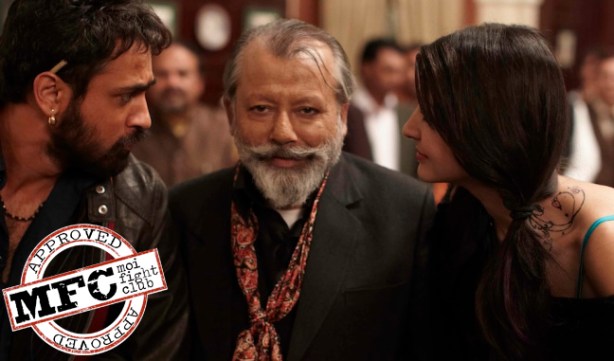
Light play, clever shooting angels, or whatever people might be waiting for, when Vishal Bhardwaj announces a film, there is a breed of people that waits for the music of his film because even if it is ‘7 Khoon maaf’-ish, the music album comes packed with a lot of ‘Gulzar Goodies’. Save for the mess that the music release of the film created, we really can’t complain much because as someone wise once remarked ‘If it’s worth the wait, then shut up!’
1. Matru Ki Bijlee Ka Mandola – Sukhwinder…O Sukhwinder! You have done so much on the same lines already, yet you make it sound all so easy and peppy! Excellently arranged and marvellously penned, the song gives a lesson or two to some ill-fated idiots who think in order to sound catchy (and in order to use the name of the film in a song) they have to have an ‘item’ to endorse it. The splendid African weaving in between (with a continuous guitar note in the background) gives the song a certain amount of class that is always missing when it comes to halkat sheilas who are talking about munnis all the time. The bass effect that ‘stops and starts’ gives just the adequate thump to the song. 2 Thumbs up!
2. Khamakha – Beautiful ‘evening’ guitars, accompanied by a coral like backup group (with African lyrics?), excellent bass and, and, and Vishal Bhardwaj! Sung like a madly in love ‘aashiq’, this is easily one of the best arranged songs by Vishal ever. The simple yet never so beautifully expressed habits of those in love (sleeping by the window, for example) are a forte of Gulzarsaab. What amazes simple listeners like us is his ability to convey love every time in the simplest manner without EVER repeating words. Anyway, the end of the song, the last 1 minute and 14 seconds of the song, tell us why there is an ever-growing army of hopeless romantics who wait for a Vishal Bhardwaj music album. The song is pregnant with a range of varied emotions that haven’t been explored before. The note on which the song starts and the note on which ends will tell you exactly what we are talking about. 3 Thumbs up!
3. Oye Boy Charlie – ‘Singerwala Shankar Mahadevan’ starts the song and the song shoots higher thanks to Rekha Bhardwaj and Mohit Chauhan. There is a bit of saxophone and then there is a bit of nasal Shankar Mahadevan (that is just too good!) and then there is a good amount of ‘motorwala mouth organ’ in between along with good guitar. ‘Vishal purists’ might not like the song much because there is an element of cacophony in between, where you feel VB is trying too hard to arrest your attention by throwing in too many elements altogether. There are way too many elements that I missed in the first hearing. It is a fun song with an element of ‘Jhoom Barabar Jhoom’ and ‘Kajra re’ and ‘Satrangi re’ and some comedy and this and that!
4. Lootnewaley – Sukhwinder and Master Saleem start the song. If you play the song with the ‘Awara’ expectation from Master Saleem, you will be a tad disappointed. Sukhwinder emotes better than Saleem to convey the anger. The track is serious. The words are direct and effective. Clearly, a revolution is being hinted. At times chaotic (which may be intentional), the song won’t set music charts on fire. You might argue that any other set of singers could have done the same job as Sukhwinder or Master Saleem have done. The fantastic possibility that these two names promised is clearly missing. How we wish they were exploited better!
5. Sha ra ra – Prem Dehati starts the song again with the typical mela like music arrangement. The brass bands sing along with the singer to elevate the effect of the song. A very short track that begins and ends leaving the brass bands in your mind.
6. Badal Uthiya – The track starts beautifully with Prem Dehati echoing at a distance and then the music setting takes a completely contemporary turn with generous dose of sitar in between. Rekha Bhardwaj does a splendid job (What’s new?) with this track and even though the Prem Dehati version of the song is my favorite, this track can’t be sidelined at all. Rekha Bhardwaj in her typical ‘soul drugged with romance’ voice makes it very hummable.
7. Char dina ki – A Haryanvi kickass item that just elevates the level of the album and how! Excessive usage of brass bands and some real catchy lyrics ensure that it has a very roadside feel. The beginning of this track has shades of ‘chicha leather‘ from Gangs of Wasseypur. Pankaj Kapur, Prem Dehati and Imran Khan go behind the microphone for this and clearly Mr. Kapoor is having fun like only he can. Excellent track! (Mind it – ‘Char dina ki chamak chandni’ will linger in your head…shart laga lo tau!)
8. Chor Police – A fun recitation by Pankaj Kapur with heavy dose of political wrongdoings that the elected government has been committing. Ends with a splash! Back up vocals, brass band and excellent tempo ‘waali’ claps is what make this track up…good one!
9. Nomvula – African track it may be, but this composition has fun written all over it. If you aren’t one of the ‘I don’t understand the words so I won’t automatically like the song’, then you will like it. A very ‘by the beach with beers’ feel. Really what’s music got to do with language?
10. Badal uthiya (Reprise) – There are few good souls that are trying their best to give the masses a taste of the sheer variety that Hindustani classical offers. This song is an addition to that effort. Prem Dehati accompanied with excellent sitar and a contemporary music arrangement hold your soul hostage. The words, the pronunciation of the same, the stillness, the sadness, everything has traces of God particle in it. If you didn’t know, God particle is generally defined as a song/composition that has mastery of Gulzar saab and Vishal Bhardwaj in it.
11. Lootnewaaley (Reprise) – A strong vocal demonstration against the shrewd landlords, Sukhwinder leads the backup singers in what sounds like a ‘lagaan-like’ track, feel wise. Word rich and music light. The track is clearly banking a lot on the visuals. It isn’t musically as structured as the other version. Clearly a circumstantial song.
Including the recitations and other titbits is the new ‘in’ thing for Hindi film O.S.T these days. Strictly ‘song-wise’ speaking, Khamakha, Badal Uthiya (both versions but Prem Dehati version), title song and Oye Boy Charlie are the ones that will remain with us and that’s a lot of them! We missed the mandatory ‘Have Vishal, so Suresh Wadkar will sing’ song.
An album that benefits (like all of us!) with the presence of Gulzar saab and showcases the obvious abilities of Vishal Bhardwaj, the composer. Also, those having silly doubts on Gulzar saab (Ref: JTHJ) have gone missing and how! ख़ामाखा का doubt, वो भी अल्लाह पे? हट पगले!
– Post by @Rohwit (who is currently देहाती.)
Film critic turned filmmaker Sudhish Kamath is planning his next film. And he is trying something new with this one. He has put out the script of his film along with the instrumental theme track on his blog even before he has started shooting. Why and how? Over to him.
EK NAYI DUNIYA / APOTHEOSIS
The END is here.
In an ideal world, I would have had enough money to have shot and released my new film called Ek Nayi Duniya/Apotheosis today. But for now, I would like to share the script and the instrumental theme composed by Sudeep Swaroop with supporters of independent cinema in the hope that some of you like it and spread the word.
By the time the film is ready for release next year, you will know if you want to watch it or save your money.
After Good Night | Good Morning, I wanted to do a film at the opposite end of the spectrum.
If GNGM was new age romance in an old-world setting, I wanted to deal with an old-world arrangement in a futuristic setting.
If GNGM was conversational, I wanted to make a film that was largely atmospheric.
If GNGM was claustrophobic, I wanted to make one on a huge canvas and a lot of space.
If GNGM was shot indoors in an air-conditioned studio, END will be shot in the middle of the Indian Ocean during the monsoon mid 2013.
Why am I then putting the script out?
Could someone steal it?
Sure. They are most welcome to. Only that I am 100 per cent certain that they wouldn’t dare.
Besides, I have taken care of the legalities to protect myself in the unlikely event that someone figures a way out to monetise this script without really making the film. But if you want to go ahead and make the film, please go ahead. I promise I won’t sue…as long as you credit and pay me, of course.
But I am certain that wouldn’t happen. Because nobody wants to invest money on anything without a precedent.
I am pretty sure that nobody would have made Good Night Good Morning even if I had put the script out before making it. Nobody would have thought it was possible to make a feature with two people on the phone for its entire duration. But it worked. I couldn’t have asked for a better launch as a filmmaker.
EK NAYI DUNIYA (Apotheosis is the English working title) is a modern day Adam and Eve relationship drama that plays out like a science fiction psychological thriller.
Like Good Night | Good Morning, I have tried to keep things simple: a two-character film once again. Something I can shoot in three weeks even in the most difficult of conditions. As an independent filmmaker who really likes his day job (I’m a film critic), I don’t want to make films that take too much time to shoot. But I compensate by spending months writing the film.
We have been writing this since mid-March.
END didn’t start out as a science fiction film. But today, it’s just impossible to even imagine it as any other genre.
I started writing this as a simple film about a couple on honeymoon dealing with the pangs of arranged marriage – as an antithesis to Woh Saat Din or Hum Dil De Chuke Sanam.
We did a lot of research, got over a 100 respondents for a sex survey to figure out what happens during the honeymoon in an arranged marriage set-up. It seemed like India’s best-kept secret.
But after the first draft, I felt I was exploring a few relationship issues that I had already covered in GNGM. Besides, I felt claustrophobic…every morning, the couple would wake up on the same bed during their honeymoon!
One of the exercises I used to make students do when I was teaching screenwriting was to make them rewrite the logline as different genres, just to check if they had indeed chosen the best genre to tell the story. It helps to practice what you preach. We hit a goldmine when we transported the idea of an incompatible odd couple into science fiction.
To cut a long prologue short, take a look at what the film/script tries to do and a brief synopsis below.
If you like it, maybe you want to give the script a read. It’s an early draft and the script is likely to change a lot more in the next six months. So if you have any ideas, criticism or any words of appreciation… or better still, MONEY to collaborate and co-produce this film, mail me at madeinmadras@gmail.com.
It would be refreshing to see someone put money on the table reading the script and not looking at the star cast.
I don’t want to announce our actors at the moment so that you can visualise the characters just the way you want them to be.
Thanks for your time and interest in my work.
EK NAYI DUNIYA: WHAT IT SEEKS TO DO
The Indian Arranged Marriage presents a fascinating dynamic and a unique equation between the sexes. It’s an arrangement, a match that’s put together by a system that expects the marriage to work simply because it is tried and tested. Over centuries. It has worked. And continues to work. The divorce rates in India are among the lowest in the world.
Yet, it isn’t exactly ‘And They Lived Happily Everafter’ situation that we have seen in most Indian films about the arranged marriage. In the conventional Hindi film narrative, a couple bound in matrimony inevitably falls in love. This cannot be further from reality today as couples in metros are falling apart, unable to reconcile their differences, especially when the woman is strong-minded, truly liberated and fiercely independent.
This isn’t because culture, tradition or society is to be blamed. This is because men and women are built so differently that even if they were the last people left on the planet, they would still have issues living with each other IF they were equals.
After the first draft of this idea, I realised that no matter how I played it, it would seem like I am criticising the Hindu arranged marriage system simply because the film chooses to highlight conflict and the tension that’s bound to rise.
To ensure that the conflict takes centre-stage and does not get hijacked or distracted by the cultural and socio-political subtext that isn’t intended, I decided to explore this dynamic of the arrangement through the lens of science fiction.
What if this was a story of the modern day Adam and Eve? Two people who are products of the world that was. Two people who are the only survivors of an apocalypse triggered by man’s disregard for nature. What if they got a chance to start afresh? Would they go nature’s way or want to stick to what years of nurture taught them?
Man, a soldier of the system, is a survivor who would do anything to feel safe, inexplicably attached to the concept of a home. Or the nurturing of the mother. (Though the character will never be referred to by name in the film, I call him RUDY, short for RUDRA KAILASH SINGH – a name borrowed from God of destruction – Shiva.)
Woman, an explorer always questioning the world, is a preserver who would do anything to protect, and is too wild to be tamed by any boundary, man-made or otherwise. She’s nature herself. (Though she will never be referred to by name in the film either, I call her BHAIRAVI, short for BHAIRAVI KUMAR – a name borrowed from the fierce Goddess, the other half of SHIVA/RUDRA.)
Can these opposites really fall in love? What is this home and the world they want to start together? A unit of the system that will lay down rules on how things must play out for the future? Or an unending quest? Is it a physical place? An emotional state? Or a mental space?
To understand who they are, we need to understand what made them – the system. Is there someone who’s controlling what’s happening to them? Or can they beat this system?
There are no easy answers. Hence, this is a film that hopes to provoke you into thinking about what we really want, how we want to live and where? This is a puzzle of a film that can be interpreted according to your own faith and belief system. But it also assures you that there may be other possibilities too. Equally real. The only truth, after all, is that there is no one truth.
The film tells you the story of the modern day Adam and Eve and their post-apocalyptic world that may or may not exist physically but we see the pattern. It’s almost cyclical – The Wild, The Cradle of Invention, Civilization & Escape – and through these four chapters of history, we see it repeat itself. The film then becomes the story of our world itself and its life cycle.
SYNOPSIS
Fourteen years after a global catastrophe, a spaceship on a mission returns home to an accident.
RUDY and BHAIRAVI fall out of the sky and are probably the only ones to survive. They manage to land on a pristine island in the Southern Hemisphere.
This modern day Adam and Eve need to create a new world together. It was a match made in heaven. Just not right for earth.
As the male and female energies clash and the opposites repel, the couple thrown into this unlikely marriage must survive the odds.
And each other.
Read the full script here:

The much awaited music (by Sneha Khanwalkar) of part 2 of Anurag Kashyap’s gangster-political-crime-drama Gangs of Wasseypur is finally out. Just 3 weeks before the film’s release on 8th August. A tad bit late, some may feel but der-durust and all that.
Given the film’s bhojpuri-mixed-Hindi dialect, we thought of doing another post (like last time) with lyrics. And embedded the songs too from soundcloud, so that you can read and sing-along if in the mood. Over to album’s co-lyricist Varun Grover.
*******
२ साल, और उन दो सालों के हर दिन के चौबीसों घंटे लगे यहाँ तक पहुँचने में. इतना intense क्रियटिव प्रोसेस मैंने इससे पहले कभी नहीं देखा था. और थोड़े दिन पहले तक भी मुझे लग रहा था कि वो दिन कभी आएगा ही नहीं जब वासेपुर के गानों का काम खतम हो जाएगा. लेकिन आ गया है. सारे गाने एक-एक कर के यहाँ नीचे हैं…शब्दों के साथ.
और सबके बारे में २-२ लाइनें भी.
छीछालेदर: Singer: Durga, Lyrics: Varun Grover
‘छीछालेदर’ शब्द अनुराग कश्यप ने दिया. उनको एक बिना लॉजिक का गाना चाहिए था. कैरेक्टर स्केच की तरह. बस टुकड़ों-टुकड़ों में किसी बंदे की व्याख्या करते हुए. गाया है १२-१३ साल की दुर्गा ने जो मूलतः आंध्र प्रदेश की है.
Mera joota fake leather,
Dil chichha-ledar
Wo humse poochey whether,
I like the weather
Chamcham waali goggle, bhool ke sarahu bhaage,
Makhmal waala maflar, chhorh ke sarahu bhaagey
Tere naam ke raadhe bhaiyya
Najar kateeli laser.
Mera joota fake leather,
Dil chichha-ledar
Wo humse poochey whether,
I like the weather
Hedar-dedar hedar-dedar
Dil chhichha-ledar
Maar tamaam haraamkhori,
lambi lambi chhorhe
Kare tikalla, jaat aghori,
Bani banaayi godhey…
Maar tamaam haraamkhori,
lambi lambi chhorhe
Daant se kholey beer botal,
Nain se loha modey-modey…
Nakshebaaji haath mein lekar,
Sab rangbaaji saath mein lekar,
Dar se farr se bedar…(2)
Hedar-dedar hedar-dedar (4)
Dil chhichha-ledar…
काला रे: Singer: Sneha Khanwalkar, Lyrics: Varun Grover
फिल्म का इकलौता ‘रोमांटिक’ गाना. लेकिन क्योंकि हीरो (फैज़ल खान) गैंगस्टर भी है और काला भी, इसलिए गाना भी थोड़ा dark और haunting बनाना था.
Kaala re, saiyyaan, kaala re…
Mann kaala re, tann kaala re,
Kaali zubaan ki kaali gaari….
Kaale din ki kaali shaamein,
Saiyyaan karte ji kolbazaari…
Bairi kol kol kol, chheney tol tol tol,
Chhat aangan chaar deewari…
Saiyyaan karte ji…saiyyaan karte ji…
Saiyyan karte ji kolbazaari…
Kaali mitti, kutta kaala,
Kaala bilkul surmey waala,
Kaala kauvva, hauvva kaala….
Kaala baadal ghirne waala,
Kaala moti, girne waala,
Kaala jhanda, danda kaala….
Kaala batua, paisa kaala..
Kaali aankhon jaisa kaala,
Kaali agni…
Kaali garmi, sooraj kaala,
Kaala beegha, aur gaj kaala,
Kaali baaati…haathi kaala…
Kaala-kaala-kaala…
Bairi coal coal…
Bairi kol kol kol,
chheeney whole-sole-tol….
Rang paani aur pichkaari…
Saiyyaan karte ji…saiyyaan karte ji…
Saiyyan karte ji kolbazaari…
बहुत खूब: Singer: A group of school kids (एक बच्चे का नाम, जिसकी आवाज़ में कविता सबसे ज़्यादा है: पड़फूल था.)
यह किसी ने नहीं लिखा. बिहार में फिल्म पर रिसर्च के दौरान स्नेहा मुज़फ्फरपुर के बेरिया गाँव में पहुंची. स्कूल से लौटे बच्चों ने टेक्नोलोजी से लदे ‘शहरी’ ग्रुप को घेर लिया. स्नेहा ने बच्चों से कहा कोई कविता सुनाओ, मैं रिकार्ड करूंगी. वही आवाजें रिकार्ड की और फिर उन्हीं को जोड़ कर यह गीत बना.
Bahut khoob Bahut khoob Bahut khoob
Chakachak kumari..
Chattanon se krida karti
Kal kal karti, chal chal karti
Chattanon se krida karti
Kabhi idhar mud, kabhi udhar mud
Ban parbat mein lipti chhupti.
Dharti ke har kisi chor se,
Ban parbat ke kisi mod se
Boond boond se bana hai, kaun
Chaar dhaamon se juda hai, kaun.
Bahut khoob Bahut khoob Bahut khoob
मूरा: Singer: Sneha Khanwalkar/Deepak Kumar Lyrics: Varun Grover
इस गीत के दो versions हैं. एक स्नेहा की आवाज़ में और दूसरा दीपक कुमार (जिसने Gow-1 में ‘हमनी के छोरी के’ गाया था) की आवाज़ में. कोशिश थी एक tongue-in-cheek pep-talk song लिखने की. IT-BHU में रहते हुए hostel में ‘फ्रस्टियाओ’ और ‘नर्भसाओ’ बहुत सुना था. वो काम आया. इसमें भी स्नेहा की संगत में एक कैलिप्सो बैंड है, उसके कैरिबियन रिसर्च के दौरान ढूँढा हुआ.
Moora Morning (sung by Deepak Kumar)
Frustiyaao nahin moora,
Narbhasaao nahin moora,
Anytime moodwa ko,
Anytime moodwa ko,
Upsettaao nahin moora…
Anytime moodwa ko,
Anytime moodwa ko,
Upsettaao nahin moora…
Jo bhi wrongwa hai usey,
Set right-wa karo ji,
Naahin loojiye ji hope,
Thoda fightwa karo ji…
Jo bhi wrongwa hai usey,
Set right-wa karo ji,
Naahin loojiye ji hope,
Thoda fightwa karo ji…moora…
Anytime moodwa ko,
Anytime moodwa ko,
Upsettaao nahin moora…
Kaahe muthhi mein pakad,
Raha paniya re moora…
Kaahe muthhi mein pakar,
Raha paniya re moora…
Rahe paani ki na yaad
Naa nisaniya re moora
Startey startey startey..
Startey brainwa re moora,
Charh trainwa re moora,
Startey brainwa re moora,
Charh trainwa re moora,
Naahin pagla re bann,
Act sane-wa re moora..
Anytime anytime,
Hai yeh retiya kaa ghar,
Anytime anytime,
Bharbharaao nahin moora..
Anytime anytime,
Diye chance-wa jo life,
Refuse-aao nahin moora…
Sakpakaao nahin moora,
Latpataao nahin moora…
Sakpakaao nahin moora,
Latpataao nahin moora…
Anytime moodwa ko,
Anytime moodwa ko,
Upsettaao nahin moora…
आबरू: Singer: Bhupesh Singh, Piyush Mishra, Lyrics: Piyush Mishra
कव्वाली-मुकाबला जैसी शैली में रामाधीर सिंह और फैज़ल खान के चुनाव प्रचार के लिए एक गीत बनाना था. पीयूष मिश्रा ने अपने धुरंधर अंदाज़ में लिखा और गाया.
Hum zahar se bhare, bicchhuon mein paley
arey tu humein kaatne ki saza payega
Arey aabroo ki kasam, cheer denge tujhe
Dum kate saanp sa.. bil bila jayega
Aabroo ke jane, draupadi ki kasam
Kauravon ki sabha mein jo aa jayega
Arey Dushaasan hain hum, kheench lenge tujhey
Aabroo jo bachi hai luta jayega
Aabroo ki kahi aaj sun le abhi
Choli lehanga pehan ke kahan jaayega
Jo har ik chhed mein goliyan jo padi
toh har ik chhed bansi baaja jayega
chhedo.. chhedo chhedo.. chhedo
oh chhedon key khuda meri sun to zara
beech baazaar mein tu toh aa jayega
le aa gaya beech bazaar mein, ab bol.
Toh ruk…
Sand ban ke nache-ga, sarey aam tuu..
Bhaand ban ke muhaley mein chaa jayega.
Hum to duryodhan ke poot, saath mein raavan ke chele
Hum to bhari-putna surpanakha ki godon mein khele
hum to aise hain chandal cheer ke kutta khate hain
hum to aise teer-andaj aadmi ain chabate hain
hum to shakuni hain, hum kansraj hain kulta shulta neech
hum toh narbhakshi hain, gaay bhains ka chara khaan ley kheench
arey hum maar tamancha, bail pe nikley, bail bech aaye
hum to kirkit ka balla chodo hum khel bech aaye.
Haaji maula Haaji maula Haaji maula, Haaji maula Haaji maula..
तार बिजली: Singer: (Padmashree) Sharda Sinha, Lyrics: Varun Grover (Mukhda from traditional/folk)
फॉर्मेट से शादी का गीत है. लेकिन शब्द पोलिटिकल हैं. ‘८० और ‘९० के दशक के बिहार की बिगड़ती दशा पर एक दुहाई है देश के ‘पालनहारों’ से कि ये क्या कर दिया ‘हमारे पिया’ के साथ. Surreal मान सकते हैं…कि ऐसा गीत अब इस फिल्म की दुनिया में लोकगीत बन गया है और शादी में गाया जा रहा है. और गाया है legendary शारदा सिन्हा जी ने. बहुत सालों बाद फिल्म संगीत में वापसी है उनके लिए यह.
Taar bijli se patley, humaare piya…(x2)
O ri saasu bata tuney yeh kya biya…(x2)
Sookh ke ho gaye hain chhuaare piya…(x2)
Bechaarey piya…
Sab haarey piya…
Kuchh khaatey nahin hain…
Kuchh khaatey nahin hain…humaarey piya
O ri saasu bata tuney yeh kya biya…
Taar bijli se patley humaare piya….
Kha dhatoora ji sutley humaare piya,
Maara dhakka na uthley dulaare piya, (x2)
O re bapu bata tuney yeh kya biya,
Yeh kya biya tuney yeh kya biya…
(chorus) Gulaabi Chachha…
Gulaabi Chachha ki kyaari mein kaanta bhara…
Na idhar na udhar hi sihaare piya…
Taar bijli se…
Ghupp andhera mein chaltey, dulaarey piya,
Ghupp andhera mein chaltey, dulaarey piya,
Jindagi kolbari, phoot paani bhara,
Aarra Chhapra ke Babuji yeh kya kiya?
Loknayak jalaaye yeh kaisa diya? (x2)
Bhaav koyla ke bik-lay dihaari piya…
Nihaari piya….Bihaari piya….
Maarey dukh ke ji phootey fuhaarey piya…
Haan fuhaare-fuhaarey-fuhaarey piya…
Taar bijli se patley, humaare piya…
Taar bijli se patley, humaare piya…
O ri saasu bata tuney yeh kya biya…
O ri saasu bata tuney yeh kya biya…
O ri bhauji bata tuney yeh kya biya…
O re Bapu bata tuney yeh kya biya…
O re Chacha bata tuney yeh kya biya…
Loknayak bata tuney yeh kya biya…
Jan-nayak bata tuney yeh kya biya…
Baba Saaheb bata tuney yeh kya biya…
Taar bijli se patle humaare piya…
इलेक्ट्रिक पिया: Singer: Rasika Rani, Lyrics: Varun Grover
यह गाना स्नेहा ने कैरिबियन में रिकार्ड किया. वहाँ वो चटनी म्युज़िक ढूँढने गयी थी और रसिका से मिली. इसका पूरा अरेंजमेंट चटनी है इसलिए शब्द भी fusion हैं. ‘तार बिजली’ को लोकगीत का surreal जामा पहनाने में भी यह गीत मदद करता है. फिल्म में यह गीत एक पार्टी में बज रहा है. मतलब एक ऐसी दुनिया है जहाँ यह (और ‘तार बिजली’) पहले से प्रचलित हैं. इसमें भी मर्म वही है…दुहाई है…लेकिन इसमें मूड एकदम अलग है. यह सत्ता के iron curtain के दूसरी तरफ खड़े लोगों का गीत है. ‘तार बिजली’ से ठीक उल्टा. (फिल्म देखेंगे तो पूरा subtext समझ आएगा.)
Electric piya…electric piya!
Taar bijli se patle humaare piya..
Arre taar taar taar…
Taar bijli se patle humaare piya..
As thin as a wire, humaare piya
Taar bijli se patle humaare piya..
As thin as a wire, humaare piya
Ghar aate hain deri se, tutli hai road…
Road road road…arre tutli hai road…
Roj roj roj roj…
Baba-saaheb kathin kitna rasta diya,
Jan-Nayak re haalat kya khasta kiya,
Riding donkeys, my horse-rider piya…
Getting tangled in web of spider piya…
Electric piya…electric piya….
Electric piya…electric piya….
Taar bijli se patle humaare piya..
As thin as a wire, humaare piya
Taar bijli se patle humaare piya..
As thin as a wire, humaare piya
My loveless, and luck less, and messed-up piya…
Arre messed-up piya… Arre messed-up piya…
Aandhi-maata bata tuney yeh kya biya,
100-baras jeeney waale re yeh kya kiya,
Slipping out of my hands, humaarepiya,
Falling into quick-sands, humaare piya…
Electric piya…electric piya!
Taar bijli se patle humaare piya..
Arre taar taar taar…
Taar bijli se patle humaare piya..
As thin as a wire, humaare piya
Taar bijli se patle humaare piya..
As thin as a wire, humaare piya
If you have been following this blog for sometime, you will know that music review means it’s time for Rohit to take over. So over to him. But before you read the review, you can check out all the songs here.
Also, click here to read our earlier post in which lyricist Varun Grover introduced the two hit songs of the album – jiya ho Bihar ke lala and I am a hunter, the foot-tapping and fun song, which i feel, is dying to have a music video. Mr Kashyap, do it. The song has great potential. You are sitting on a goldmine. Explore it!
The post also has lyrics of six songs – Jiya ho Bihar ke lala, I am a hunter, Ek bagal, Keh ke loonga, O Womania and Humne ke chhori ke.
Back to the music review.
Music – Sneha Khanwalkar
Lyrics – Varun Grover, Piyush Mishra
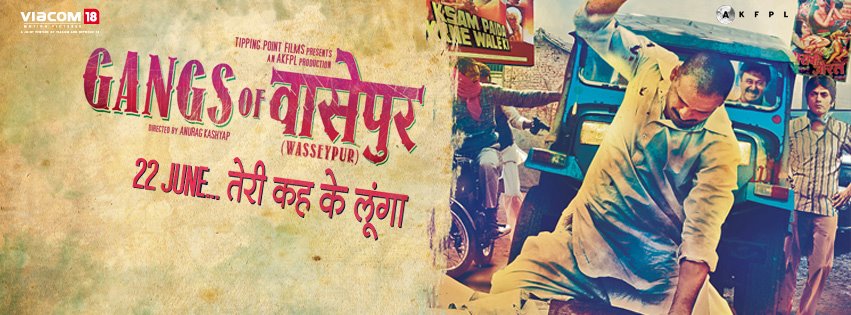
इतना दिन से इन्तेज़ार था. पूरा उत्तर प्रदेश और बिहार में लोग बाग कोई गाना नहीं सुन रहे थे. चलो ज़रा देखें ससुरा इन्तेज़ार के लायक था या नहीं?
1. Jiya ho Bihar – The song starts with faint ‘thaaps’ as if a traditional song but soon is joined by electric guitars and then the techno arrangement leads us to the very desi Manoj Tiwari. The song makes no bones, thanks to excellent Manoj Tiwari and some real catchy lyrics (Tani Taan kheech ke taansen kehlawo rey bhaiyya, for example). The backup vocals are excellent. Somewhere in the background you will hear shehnai as well. Yes. The marriage of techno sound with Manoj Tiwari is just brilliant. There is a constant ‘bhaiyya bhaiyya’ in the background! Just too good a touch!
There is always that song from which you associate a movie, This one will be the image of Gangs of Wasseypur).
If interested, you can get the lyrics here.
2. I am a hunter – (पापी लोग का नाम है – वेदेश सोकू, मुन्ना ओर रजनीश) The song starts with a ‘Heyllllo’(and TRUST ME!, you will repeat the ‘heylllo’ to hear if it is actually said the way it is said) and then something that we all have done while growing up! (Listen and tell me if you can find it, not telling it here). Special mention must be made for Sneha. This is a fun song and trust me, the song has 2 funny moments per second. Be it the laughter in the background, be it the interplay between vocals along with the constant Caribbean beats the song has ‘fun’ written all over it. Yes, it’s a tad naughty. Still, the words like ‘bhokali’ will ensure that this is played by guys (And girls, may be!) in bonfires. Yes. Up till now Patti rap was THE song that got guys (and sometimes girls together) in a gathering. Now, that place belongs, rightfully to ‘I am a hunter’. Best.Bakchod.Song.Ever.
You can check out the lyrics of the song here.
3. O Womaniya Live (Performed by – Khushboo Raj, Rekha Jha ओर उनकी सहेलिया) Singers start this song in a way that will remind the people who have grown up in north India, those ‘sangeet’ settings that happen during marriages wherein the ‘ladies’ (pronounced as – lay-deej) sing and poke fun at the new bride or may be her ‘in laws’ or may be her ‘bridegroom’. The words are pure ‘North’ and are laced with lot of fun (and naughty-ness). People who will have tough time trying to find the meaning of the songs will get the ‘fun quotient’ when the backup vocal singers will go ‘o o o ho ho ho’ Very naughty! The music setting is very ‘drawing room’ like and even when backup singers giggle you get the feel that they are sharing a joke! Singing is just incidental to the setting. Kudos Sneha! Kudos for reading this very rare, Very, very rare genre. The words of this song in particular have a flavor of north. Big time. Varun Grover, take a bow! Also the singer will remind you of that one character in such family settings who is the ‘leader’ and repeats certain words in order to poke fun at the bride, डबल अर्थ wala fun. (case in context – Patna and satna. ‘Satna’ means when someone sits uncomfortably close to someone else)
4. Keh ke loonga – Night. That’s what the ‘itchy’ start of this song reminds you of. Sneha gets behind the microphone and gets on with it. Accompanied by Amit Trivedi, the ‘graveyard’ feeling of the song gets scarier when the intentions are reflected in words. No matter where you are, I will dig you up and ‘teri keh ke loonga’. It has a very ‘Ghar mein ghus ke maroonga’ feel. Still, it’s not loud. The song just stares at you with the coldness of a dead body. We need Sneha Khanwalkar to sing more. Much more. Much, much more. She is THAT good in the song. Composed by Piyush Mishra and arranged by Sneha. Amit Trivedi is in his usual brilliant self! The resonating sound of howling might not be liked by all. Dark. Scary. This sums up the song.
5. Bhoos ke dher mein – Manish J. Tipu and Bhupesh start the song and will actually lead you into believing that it’s a sad song. Suddenly, an ‘all male’ group of backup singers (accompanied by harmonium and brass band), get into your ears shouting ‘Na milihey’ (you shall not get). This song has a message. More like the songs that you associate with the wanderers who gives out message about life in their songs. The difference? There are way too many singers (and at times a barking dog in the background if I heard it right!). Situational song. Has a very ‘chadhta suraj dheerey dheerey dhalta hai dhal jayega’ (A qawwali-sque song by Aziz Naza, very popular up North). Won’t be a chartbuster. May be that’s exactly what is needed. Let’s see.
6. Ek Bagal – Flute and Sitar talk between themselves and put you at ease immediately and then the strong bass creates a perfect platform for Piyush Mishra (PM) to start what is probably the most powerful song (in terms of effect that it will leave on you) of the film. The excellent use of electric flute deserves a repeat mention. It is THAT good. There is no doubt that this song is penned by PM himself and composed by him as well. The song has a little ‘jis raat sheher mein khoon ki baarish aayi thee’ feel in between. I suspect this song will find a place in the second part of the film as well. Minimalistic ‘arranged’ music. Authentic is the word. 2 thumbs up!
For lyrics, click here.
7. Bhaiyya – This track, performed by the musahars of Sundapur, is another avtaar of a folk song but is music heavy. My guess, this is a background song again. It ends too soon. Didn’t touch me. May be you will like it.
8. Tain Tain – A good harmonium along with at least 10 other sounds suddenly start this song. Then it all settles down. The beat continues and so does a siren! And then Sneha Khanwalkar goes ‘tey tey tey’. Before you figure out what’s happening, the brass band arrests your attention! Ok, too much happening at the same time! This has to be a background sound. This track is just a mix of a lot of sounds (whistles, vocal ‘ta ta ta chu chu ley ley lu li’ and so much more!). Remember the track ‘dol dol’ from ‘Yuva’? This track, in principal is the same, BUT is very DESI. This track grow on you and somehow satisfies the ‘constant casio synthesizer beats wali bhookh’ in me.
9. Suna kar ke Gharwa – performed by Sujeet (From Gaya ओर उनके दोस्त भाई लोग). The song uses a slow tabla and ‘manjeera’. Very folk. But too short. सब लोगों को नही समझ आएगा. It has a sound of a ‘folk singer’ closing his eyes as he connects with self and the powers that be via his singing.
10. Aey Jawanon – Yes, some shayari. Some ‘UP-Bihar’ style shayari about how people are selfish. The stop-and-go and stop-and-run music arrangement completely reminds a ‘northie’ like me of the roadside ‘nautanki’ music. To you, it might remind of ‘pintya gela’ (from shaitaan) in essence, because the instruments used are completely different but the linear tune is somewhat ‘pintya gela’ like.
11. Womaniya (Remix) – Starts exactly like the ‘live’ version but the bass and trance effects soon take over. Something that I haven’t heard ever. Something Desi…real wala desi mixed with ‘mehengai dayan’ like remix (from Peepli Live). The naughty feel of the song is retained. At times I felt some excessive instruments were used but I won’t be surprised if this is played in pubs and people go ‘OMG OMG’! There is a brief romantic exchange of words between shehnai and electric guitar…Just too damn good! मुहझौंसा and what not! This remix grew on me!
The pronunciation of ‘womaniya’ as ऊमनिया is just too adorable (in both the versions)
12. Mann Mauji – Probably one of the best romantic songs this year. Iktaara, algoza and so many other beautiful sounds along with the singer Usari Banerjee is a touch of pure genius. Even the singing style has a touch of vintage in it! ‘Khula hai bajuband phata hai kaaj sambhal ke chalna hoga’. Composed and penned by Piyush Mishra, arranged excellently by Sneha, this song has a sweet vintage feel. Hear it. The ‘secondary vocal’ (at times algoza, at times violin) that constantly accompanies the singer is so so so vintage. Brings back the days of कुएँ के किनारे गाना और नाचना.
13. Loonga loonga (Remix) – The roadside shayari about life (Along with constant beats and ‘loonga loonga’ in the background) starts the song. A faint ‘siren’ (The one that you associate with IPL when a bowler bowls a No-ball and free hit is about to be executed. This is a short version and thankfully so, because the music arrangement and the overall sound of this song is in contrast to the theme of the album. Passable.
14. Humni ki chhoree ke – (Sung by Deepak Kumar – मुजफ्फरपुर वाले) – With just the harmonium and very पक्का ओर रिसा हुआ गला the singer gives us a flavor of a very, very touching song. It’s a folk bhojpuri song and many a singers have sung it already. We could come across Pawan Singh and few others (Check them out on youtube) but this version, with minimalistic music arrangement, has everything that will make you very sad, lump in throat stuff. Even if you don’t understand the meaning of it. Magic of good music, isn’t it? Highly recommended!
Overall a fantastic album! The music stays true to the overalls of the film. Even though 2 remixes are included (to make the album appeal to the ‘non small town’ पब्लिक) फिर भी, This will go down as a फसाद मचाने वाला album by Sneha Khanwalkar and Piyush Mishra. Comparisons will be made with the OST of Omkara, Dev D, Gulaal and so on, but this album will stand it’s ground. Quite easily.
The backdrop is more or less same (in terms of geography), so the sound influences could overlap. Still, inclusion of some pure folk songs of the region is a superb idea and makes the album more relatable. The effort in terms of penning the right lyrics (Piyush Mishra, Varun Grover and Vikas (for hunter – english lyrics), arranging and composing music (Piyush Mishra and Sneha Khanwalkar), singers and the sheer research about it all is praiseworthy.
Rough around edges, raw and melodious in equal measure, here is an unputdownable power album that deserves a listen.
In the days of ch**** Studio (इंडिया) and all those wannabe ‘EXPERIMENTAL page 3 types’, here is an album that gives you a sound and taste of what the sound of those places is like. Those places are called ‘Chowk’ in small towns – an open market area in a city at the junction of two roads.
Chowk Studio. Anyone?
वूफेर फाड़ दिया भैय्या!
My Picks – Entire album.
माने की पूरा एल्बमवा सुनियेगा एक बार. चीन जायेंगे आप, की हम का कह रहे हैं.
(PS – You can order the album on Flipkart also. click here.)
One of my favourite albums of all time is Gulzar-Pancham. I bought the cassettes first and then the CDs. The 2-CD pack is compilation of songs written by Gulzar and composed by R D Burman. But what makes the album special is the introduction to every song by Gulzar. We all know that he can weave magic with words. But the way he narrates it, the way he pours out every bit of nostalgia in his narration, it creates an intoxicating mood. Years later he did another similar album – Amrita Pritam recited by Gulzar. The magic was still the same. And now, there’s a new album – Tera Bayaan Ghalib. Here’s Rohit‘s recco post on the same.
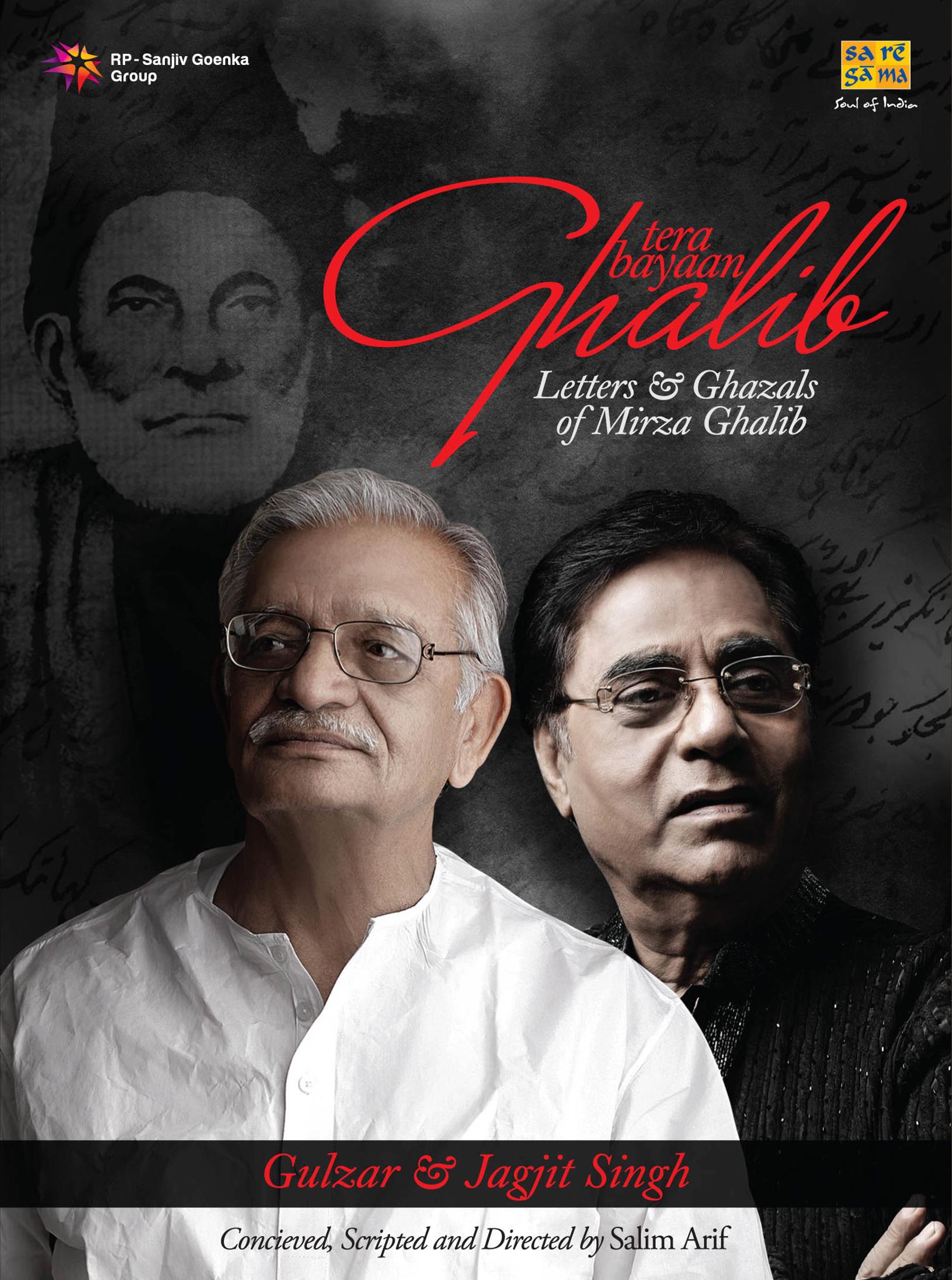 Anything, be it a new song or a poem recitation or a book release or a film by Gulzar sahab guarantees that it will have an aroma of freshness and nostalgia in it. This music album quietly made it’s way into the mind space and thanks to Pavan and Sa Re Ga Ma’s online store I could get a hold of the original tracks.
First up, please know that this is not a ‘tribute to Jagjit Singh’ sort of an album by Gulzar sahab. It goes a step further. Gulzar sahab has convinced Jagjit Singh to sit and recite/sing some lines for all of us and what tribute do we want anyway? Jagjit Singh is still there. Very much there. Gulzar sahab has read/recited Ghalib’s letters enacting as Ghalib and it is NOT a commentary on him. It’s a fact that we can’t get enough of Gulzar sahab‘s voice and when you hear him modulating his voice and enacting Ghalib, you will feel the words with him.
Since the album is aimed at giving a peek to all us in the life and times of ‘Ghalib’, Gulzar sahab has plucked many a gems from his TV Serial on Ghalib in the voice of Ghazaljit Singh.
The album starts with a track that was featured in the TV serial (but wasn’t available in music cassettes or CDs). After this, Gulzar sahab recites some couplets from Mirza Ghalib. The mithaas in his voice will remind you of the times when you were dipping your senses into your favorite food and talking about your favorite person. The album then turns to GhazalJit Singh’s rendition of ‘Har ek baat pey’. The difference (nitpickers like me will notice) is a faint note on the keyboard in the background which is unlike the versions already available with us all. This version ends where GhazalJit Singh ends the recitation in the original.
It won’t be fair to give out the flow of what Gulzar sahab discusses in the album because it will spoil the mood of anyone who listens it. So I won’t go into much detail. All I will say that there is a difference between telling and narrating. Gulzar sahab narrates. Beautifully. Many a times you won’t be able to realize that the ghazal has started and the narration has stopped. It’s all in the same fabric. Like for example, there is a part where Gulzar sahab is talking about the ‘patang baazi’ of Ghalib and the melodious flute makes an entry and GhazalJit Singh recites a line of ‘woh firaq aur wo visaal kahan’. Listen how dearly and affectionately Gulzar sahab goes about telling us why Ghalib chose Ghalib and not ‘Asad’ as his pen name. GhazalJit Singh comes again to recite the beautiful couplet ‘Dost gham’ (which wasn’t available earlier in Music cassettes or CDs of the serial).
Using Ghalib’s lines to create the atmosphere of the old times is a great idea and GhazalJit Singh’s voice comes as a compliment. You can’t help but feel that it’s completely unnatural to live in a world where GhazalJit Singh is no more. The album is full of those unreleased nazms/couplets in the voice of GhazalJeet Singh.
The narrative spans across life and times of Ghalib including the 1857 and how Ghalib shut himself out during that period. And how Delhi was never the same, more or less like Ghalib. There is a lot of pain, especially when Gulzar sahab touches the ‘7 deaths’ in Ghalib family…of all his kids.
Towards the end of the album when Gulzar sahab speaks about old age, the depth of his narration will move you, and on top of it Jagjit Singh’s (unreleased) nazm might move you to tears. You will get goosebumps when you will come across the famous Ghalib composition ‘sab kahan kuch’ because Gulzar sahab accompanies Jagjit (Ghazaljit Singh) in the same. This is Gold. Probably purest form of Gold.
This is not a music album. It’s a melodious session with Gulzar sahab and GhazalJit Singh full of conversations, nazms and ghazals. Anyone with a mild inclination towards Gulzar sahab/Ghalib or GhazalJit Singh will find this album a treasure. A treasure which you will hold on to forever.
You are likely to come across a lot of familiar ghazals in this album but the difference is – this time you live the ghazal rather than just listening to it.
Buy it.
Album : Tera Bayaan Ghalib
Label : Saregama (2-CD pack)
Price : Rs 300 ( Available at Flipkart for Rs 255)
(Rohit blogs at http://almostareview.wordpress.com/)
If you want music on your twitter timeline, you must follow Rohit. And if you are lucky enough, your mailbox will be flooded with some evergreen goodies. So when it came to a post on the most awaited album of the year, who better than him to do the job.
With Couples Retreat and some bits here and there, i thought we have lost Rahman. And lost him for Retreat? That’s worst. But it seems he is back and how. As one of the song goes, i wanna sing O nadaan parindey ghar aa ja..for him. Hope we get more. Read On…

In the times of ‘gone with the click’ I cannot remember the last time when the curiosity of a music score being released was even half as it was for the soundtrack of ‘Rockstar’. Guilt is my witness as I shamelessly searched all the ‘shady’ sites to catch hold of this album because right from the first promo we could all smell ‘Rahman on the rocks’ soundtrack. Does it live up to the hype? (Yes T-series, we are talking about the artificial hype you created…Boo you for that by the way!)
1. Phir se udd chala – A folkish chorus of girls humming a tune which you associate with hill stations normally, welcomes you to this song with Mohit Chauhan taking over almost instantly. A song set up with a nomadic feel and the usually accused of being ‘Instrument heavy’ AR Rahman gives us a flavor of how can he blend the music in the background. The first 2 minutes successfully create the anticipation of the song taking off and Mohit chauhan doesnt disappoint throughout. A very positive song.
2. Jo bhi main – Guitar…Yes ‘THAT’guitar starts off with Mohit chauhan throwing his voice melodiously. If you hear attentively you will find the chorus (which is brilliant throughout the album) is set in a very theatrical and live concert style. It doesn’t give you the feeling that a few back up vocals were called in the studio to ‘sing’ (like the ones in the soundtrack of Rock On). The music setting is mostly soft and almost all the ‘hysterics’ are done by a wonderful mix of the ‘crowd’ and Mohit chauhan. Meaning wise, a very deep song especially the part where lyricist has revealed that all of us are just mirrors….I just cannot get the beautiful and very theatrical crowd effect of the song. Two thumbs up!
3. Kateya karoon – The punjabi folk sounds welcome you to a bubbly song mixed with good bass to begin with and then the characteristic (and almost continuous ‘hoye hoye’ chorus). Harshdeep Kaur has sung this song in a very ‘Jaspinder Narula’ style by occassionally making her voice heavy. A generally happy song. Personally speaking, It did not touch me at all because I felt that the song just couldn’t take off. The song iis just under 4 minutes so it just comes and goes.
4. Kun Faya Kun – AR Rahman starts and is accompanied by a very ‘dargah like’ harmonium and Javed ali joins. The surreal atmosphere of this composition is very infectious and you would definitely end up listening to it more than once. The ‘beautiful romance between ‘claps’ and a slow guitar is ‘oh so very Rahman’. Javed Ali in between calls out to the power that be. Mohit Chauhan joins the party and gives the song his soul. The part where Mohit is reciting words with a very faint harmonium is what makes this song very very special. The near jugalbandi feel towards the end of the song is surreal and hasn’t been heard for a long time. A very pure song. If you feel it reminds you of ‘Khwaja mere khwaja’ then the purpose of the song is accomplished because when you call out to ‘Maula’, it doesn’t matter if someone else has remembered ‘Maula’ before you. Again, the way the song ends is very very theatrical with AR Rahman leaving a haunting echo.
5. Sheher mein – Karthik and Mohit – Not a melodious earth shattering song but a funny song largely thanks to the overall sound of it. The ‘composer’ is very vocal about how should Mohit Chauhan sing this song to ensure that the song is made ‘caller tune’ and is a ‘hit in UP and Bihar’. Mohit by the way croons it well. This will be a treat to see in the film. Clearly the composer (in the film) wants Mohit chauhan to stick to the ‘hit formula’ and not ‘innovate’…but does Mohit listen? Melodiously NO!
6. Hawa Hawa – Acoordion, voilin and a catchy chorus start this retro feel song with somewhat Arabian undertone. A good song because of the way Mohit chauhan has sung it. Hear it attentively and you can almost feel Mohit chauhan dancing in the studio while singing this. The musical setting you might argue is very ‘Zubeida’ like but then hear it and you will hear words like ‘waat’ and ‘bhajiya’! Towards the end you do feel that may be the composer is trying a little too hard. Might grow when the film hits the theatres. (Mohit ‘Meows’ in this song by the way) : )
7. Aur Ho – Mohit and Alma ferovic – A sinking feeling. Thats what the beginning tells you and Mohit chauhan confirms it with very powerful lyrics. The song has a ‘satrangi rey’ (Dil Se) feeling. The instruments are usually repeating short notes to create an eerie feeling. Mohit chauhan at times fades and then comes back almost dreamy/drugged with Alma in the background crying out. A song perfect for theatre performances depicting pain. The song really ends on a high. beautifully.
8. Nadaan Parindey – AR Rahman and Mohit chauhan – Carol like start with electric guitar. The song starts with Rahman requesting one to come back. The song has a very pop feel to it (Ok Ok I will use ‘pop’ and ‘rock’ interchangeably). The words like ‘Har karam ke kapdey mailey hain’ means that the song is advocating peace. Mohit chauhan almost cries out the fact that you will come back home no matter which road you take. The ‘chun chun khaiyoo maas’ (lines from Kabir I guess) are a misfit in the song so I did not like them at all. You might.
9. Tum Ko -Kavita subramaniam – From the start of this song, I got a feeling that this song is an old Rahman song. I hate to mention this but this came across as the weakest song of the album. Although the use of sarangi and tabla is very ghazal like, the song didn’t touch me at all. May be it was because of the fact that the other songs didn’t have me believe that there could be a ghazal like composition woven in between.
10. Sadda Haq – Yes…HELLL YES! Orianthi starts the guitar and tells you quite clearly that this would be the song that will result in the demise of a lot of woofers and speakers all over the world. Kicking ass from the beginning Mohit recites some lines which are very ‘rebellion’ in nature and then the song reaches the HIGH when Mohit along with the chorus cries out ‘Sadddaaaa Haq’. Trust me, when someone sings from heart, it reaches your heart and this so called SCREAM does exactly that. Cannot recall a song in the near future which shakes you up (in a good way) as this one. I could write an entire post on this song but I will stop. Do check this song out even if you feel it is a rip off from here there or somewhere (because I know such tribe exists who cannot accept a good thing from INDIAN composer you see).
Special mention – Would have been too easy for Imtiaz ali and AR Rahman to have opted for Ranbir’s voice at the beginning of the song but thankfully they have used Mohit chauhan. Keeps the wholesome feel alive to the song.
11. Tum ho – Mohit and Suzanne – Romantica! Aha! Suzanne shines in the background (like always) and Mohit chauhan does a vocal waltz around that feeling of someone’s presence and how he has lost himself and gained love. The song lasts for about 5 mins or so but ends leaving you wanting for more. Strange isn’t it? The tune is more or less similar to ‘Tum Ko’ mentioned above. I am yet to make an opinion about the song. Any help on this would be much appreciated 🙂
12. Tango for Taj – Here is a tango piece which is very old piece and signature Rahman. A typical song which if treated well will be a visual treat. The constant piano and the claps are just too good too be in a piece which just lasts for about 3 minutes. Two thumbs up.
13. The Dichotomy of Fame – Shehnai! oh how i have missed you after ‘Swades’ song. After opening this piece beautifully the shehnai mixes well with the rest of the instruments, yet enjoys a ‘lead vocal’ status. Just too good a piece to miss.
14. The Meeting Place – Ranbir Kapoor says one sentence and vanishes…leaving you with much curiosity about the film. No, I won’t write it here. Go discover yourself. In a way, this piece might give away the ending of this film. Or may be not. Spoiler? Let’s see.
This album is undoubtedly a coming of age experience for Mohit Chauhan because he has shouted and romanced at many different levels. A special mention for the master lyricist Irshad Kamil. It’s almost taken for granted that a rock album will have a ‘woofer-phaadu’ music but the character of the songs come out when the lyrics are powerful and it is certainly the case here.
AR Rahman and Imtiaz Ali have gone to the press stating that they have invested a lot of time in this album and when you hear it, you feel they might be right!
Rating – 4/5
So which track are you playing in loop?
(PS – For the complete credit list of the songs, click here.)
(PS1 – For more posts by Rohwit, you can check his blog almostareview.wordpress.com )
 F.i.g.h.t C.l.u.b