Author Archive

Bhaag, DK Bose.

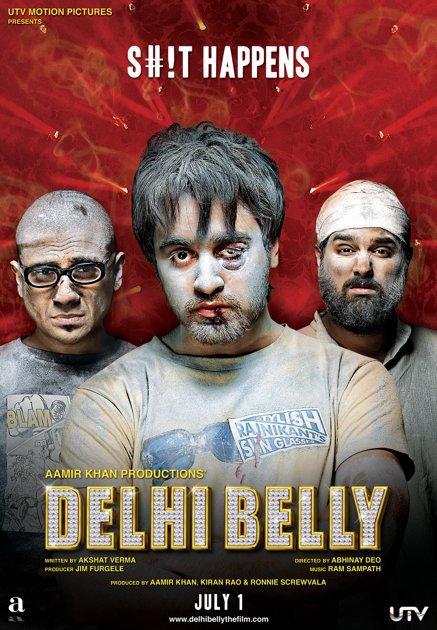
The first song promo for Delhi Belly is out and it looks pretty quirky and interesting, though a little more OTT than we would have liked (and yes, the Hangover hangover remains, like in the poster). Still, the song is pretty catchy and the film looks promising; looking forward to this one.

Take a look.

(The theatrical trailer, which was launched today should be out soon too. Also, you can read the synopsis of Delhi Belly right here.)

As far as my limited cinema knowledge goes, I think there is a big difference between a trailer and a montage. And as the trailer of Bollywood – The Greatest Love Story Ever Told (Who thought about this title?) was out, it was a perfect #Facepalm (for lack of better expression) moment. It even forced Screeny to come out of his slumber and puke out this rambling post. Read on…

Respected Sir,

I’m a Big fan of Mr India, Masoom & Bandit Queen. Have been following your blog on and off. Untill today when I saw the trailer of the documentary which has been produced by you and co, and directed by the “acclaimed director” (have seen him at conferences and am sure he regards himself as one, for having gifted the people of this country THE seminal film – Rang De Basanti) Mr Rakyesh Omprakash Mehra.

Needless to say, I was thoroughly, thoroughly disappointed.

Why? Because the trailer (so is the film I’m sure) is- as usual- selling Bollywood exotica la-la land to the west. The incestous, celebratory, mutual admiration society which regards Aishwarya Rai and Katrina Kaif as ‘icons’ who will talk about Hindi Cinema to the “goras” and tell them in effect – “One billion people are enjoying this. See, this is so special. This is India! This is Indian Cinema! Come, Watch it. And fall in Love. NAMASTE. Achcha Lagta Hai.”

The first half is virtual showreel for the Bachchans, another attempt to sell Aishwarya to the west. The same song and dance routine which we are (in)famous for. The DDLJ clip, the rain, the matrix style shots, the same ghisa-pita bakwaas.

And of course, it contains generous footage from the magnum opus Rang De Basanti. After all Rakeysh (Is the spelling correct? Am a bit confused) Omprakash Mehra is the co-director & UTV is the producer. And the exact same clip when people land up at the India Gate with candles in their hands (the prophetic subtitle below is “This country will change. We will change it”). Yes sir, we will.

I wish you had produced a 2 hour documentary on Kerala or Goa Tourism instead.

Or helped produce any of the films from the “new wave” of Indian cinema, which I’m sure you must be more aware of than me.

At a time when Indian Cinema is taking baby steps towards maturity, and managing to gain a foothold in the international arena, slowly changing “their” perception of “our films” by coming up with IN COMPETITION FILMS like Udaan, Peepli Live, Dhobi Ghat, Harud, Gandu, Shor in the City, Gabhricha Paus, Aranya Kandam, Paruthiveeran, Subramanipuram, the new Wave Tamil & Marathi Cinema; this self congratulatory AV on Bollywood films actually is taking us two steps back, reinforcing the stereotypes. Forcing us to be still perceived as the audience which enjoys 3 hour long musicals embellished with the garangutan setpieces, laughable action sequences & antics, titillating item numbers and melodramatic rejoice.

I was hoping to find some echo in the comments section of this post but clearly, I’m the minority here.

http://shekharkapur.com/blog/2011/04/bollywood-the-greatest-love-story-ever-told-at-the-cannes-film-festival/

I shudder to think how I would react if I would ever meet a “gora” who sees this film and recognises by my skin tone, that I’m an Indian. Will he be overjoyed at what I’m embarassed at ? Will he be like the Japanese tourists from Munnabhai who only want to shoot “dirty, hungry, poor Indians” ? Will I be asked to dance at the Visa interview if (and when) I travel to Europe ?

My nightmarish thoughts aside, I request you to read a post written by you, Sir. Your blogpost on Black Friday and why it is the film which should have gone for Oscars submission instead of Paheli.

http://shekharkapur.com/blog/2005/10/oscar-hoo-haaa/

Yours disappointed,

Screeny

(PS1 –  Have you heard about a documentary film called Videokaaran? Watch it.)

(PS2 – Screeny forgot to mention that if the film turns out to be any good, he will be the first person to say it and will apologise for the post.)

(PS3 – Screeny’s previous posts can be read here, here and here. )

The first one was a straight lift, (The Dinner Game)and it turned out to be a surprise hit. Here’s the second one. Poster, official synopsis and the trailer.

Directed by Sagar Bellary, Produced by Mukul Deora, it stars Vinay Pathak, Minissha Lamba, Kay Kay Menon and Amole Gupte. Sharad Kataria and Bellary have written it. Here’s the official synopsis..

Good hearted but not worldly-wise, the rolly-polly tax inspector, Bharat Bhushan (Vinay Pathak) is back to fulfill his long cherished dream of becoming a singer. To further his media ambition he enters a game show hoping to win a cash prize with which he can make his own music album. Eventually Bhushan goes on to win the competition which also gifts him a free stay on a cruise ship. It is on this cruise that he meets Ajit Talwar (Kay Kay Menon), an acrid tongue sadistic business tycoon, who is taking sheath on the cruise to flee from the Income Tax department. Close on his heels is tax inspector M.T.Shekharan (Suresh Menon), who is trying to unearth the identity of a financial scamster who has been elusive since long.

On the cruise when Ajit Talwar learns about Bharat Bhushan’s profession, he alerts his subordinates to keep a watch on him and in due course, get rid of him. However, on being introduced to Ajit Talwar, Bhushan finds out of his media investments and is out to impress him. The cruise becomes a perfect rendezvous for Bharat with the presence of Ranjini (Minnisha Lamba), a sweet and straight- forward media executive who Bhushan met on the game show. Everything seems perfect in his life with her company and positive future prospects of developing contacts with Ajit Talwar and his clique. The presence of a disguised M.T.Shekharan further excites the plot and a string of oddball occurrences owing to a mistaken identity finally wind up Ajit Talwar and Bharat Bhushan stranded on a deserted island.

It is on the island that Ajit realises what a pain Bharat Bhushan is. His stupidity drives Ajit up the wall. And if that isn’t enough, Bhushan’s folly lands them hostage in the hands of an eccentric reclusive photographer (Amole Gupte). As fate would have it Bhushan’s colleague M.T.Shekharan comes and rescues them exposing the sly Ajit Talwar and making a shocked Bhushan realise that Ajit was trying to get rid of him all the while on the cruise.

The photographer Raghu Burman, M.T.Shekharan and Bharat Bhushan bond with each other with the thought of an idealist utopian state, free of crime and based on social justice. Their bonding is short-lived as they manage to blow off the very house they are in. In the wee hours of morning, a completely harrowed Ajit Talwar is rescued by his business associate Kapoor (Rahul Vohra) and his loyal lieutenant which puts an end to his nightmare.

The story comes a full cycle with Bharat Bhushan realizing what a great friend he has in M.T.Shekharan and a proud Ajit Talwar being punished for his arrogance and high-handedness.

Most of you might not have even heard about the film Videokaaran. We also had no clue. A video link on someone’s FB wall and it quickly spread all over. Varun Grover saw the film, loved it and strongly recommends it. Read on…

“Nahin boloonga – Mera secret hai yaar yeh” – Videokaaran

Before the film: The trailer hit like a bolt. “A film about a slightly unusual film buff” it said, and gave me the biggest blood rush that week. It looked dark, candid, grungy, and very passionate. Aur Hindustan mein film lovers pe film kaun banaata hai? It looked like a story from our own backyard, an original story. The trailer was shared, RTed, discussed, and we all were very curious. A screening at Vikalp, Alliance Francaise Mumbai came up. Not on a weekend, hence only I from among the Mumbai group could make it. And mighty glad that I did. Baaki ki kahaani…cut to.

After the film: Starting with a question. How many of us remember the title song, with antara, of Amitabh Bachhan’s 1992 film ‘Khuda Gawah’ (probably his last good act as a ‘hero’ in Hindi cinema). Think a bit. I am sure some can come close to remembering ‘Ho koi ghulaam…ya ho baadshaah…ishq ke bagair, zindagi gunaah’ lines. (Or was it ‘zindagi tabaah’?) But how many will remember, AND relish, the casually thrown in repeat-phrase ‘wai-wai’ throughout the song? Videokaaran is about a group of film-lovers who not only remember this ‘wai-wai’ bit but also sing it (over a doped out night at one point in the film) with as much respect as the rest of the song. In fact, a lone voice keeps singing ‘wai-wai’ even after the rest of the group has faded off.

Now this may sounds like a frivolous start – especially when the claim is that Videokaaran is the most definitive work you will see on the very complex cinema-fan relationship in India. But the example, much like a zen puzzle, is an answer in itself. It’s about passion for something some of us may consider unpassionworthy. It’s about people, who while living on the edge in their day to day existence, find a bond with moving images, words, tunes, stories, and to use an Arundhati Roy-esque term ‘the collective hysteria of larger-than-life’.

And it’s not a ‘look, they are so unique/ weird/ curio-pieces’ narrative the director goes for at all (the easiest way out, taken by many including the ‘B-Movie-Club’ of Mumbai which shows 80’s films to a group ‘for laughs’, or Anuvab Pal’s latest book on ‘Disco Dancer’ which reads the film as campy fun at its best). The subjects, with Sagai Raj in focus mostly, have been treated with as much respect as a serious film lover/observer deserves.

And the best part – Videokaaran (Video-waalah), doesn’t just stop at cinema. It very incidentally, mostly through the conversations, paints a picture of a world within Mumbai which seems not only time-removed from us, but plane-removed too. The characters, their pains, days, uninhibited laughter seem to hang in a surreal space-time we never cared to check. (But don’t mistake it for an ‘activist’ take on ‘two Indias’ or such. It’s as much fun as you will ever have at the movies.) A real, brass-and-nails world where Rajnikanth is God, and with a very strong reason.

And it helps that the Rajnikanth fan Sagai Raj, the central character of Jagannathan Krishnan’s debut docu-feature, has a unique, intelligent opinion on almost everything to do with cinema. Sagai used to run a Tamil video parlor in Chembur, in the shanties by the railway tracks, and is the kind of Thalaivar fan we have come to smirk at. But the smirk fades off with every passing minute, replaced by friendly warmth.

Sagai talks non-stop, loves porn and slasher flicks, has a quirky tangential mind (“I can’t fool a mad dog by pretending that I am not afraid. Dog’s sixth sense will interact with my sixth sense to let out the truth”), a weirdly original thought process (“porn films are the best indicator of a girl’s mind”), lives in a shady locality where police-raids and death by local trains is a norm, and has a life-story straight out of City of God. But above all, and in the context of Videokaaran, he is the brand ambassador of a class of people who consume cinema differently. And a brand-ambassador who not only was a regular viewer, but somebody who sourced porn to be exhibited, edited out films according to audience tastes at his own machine, marked out escape routes and strategies in case of a police raid, and indulgently, heartbreakingly filmed (on his DV cam) the bulldozer destruction of the very video-parlor he helped grow.

Interspersed with film footage (‘Subramaniapuram’, primarily) and Hindi songs sung by the group of Sagai’s friends on a trippy night in Karjat, Videokaaran is as intimate a piece of documenting a vanishing history as it comes. The astonishing thing is, Jagan had not initially planned to make the film around Sagai. Sagai was just going to be the camera-person for the documentary, and the story was supposed to be about this bunch of Chembur guys who are the standard target audience of single-screen and/or video parlor cinema. And this bunch is equally interesting – comprising of a professional juggler and clown, whom Jagan calls ‘an evolved soul’, a DJ and painter who even designed a camera rig for the shoot on his own instinct, a sadhu baba they chanced upon who loves singing sappy songs from the 90’s hindi films (and whatay voice he has!), and a couple of other friends from the locality. (“We even thought up a sequence where the juggler-clown (name: Alisha) stands outside SRK’s bungalow, wearing an SRK mask, and does the juggling act.”)

But while filming, Jagan stumbled upon Sagai’s story and the camera changed hands. (The film still retains many portions shot by Sagai too.) From then on, it’s Sagai and his worldview – filled with anecdotes that shock, regale, and in a few surprise moments pierce through the hard skins of our snobbery to treat him as an equal, if not greater film lover.

The 70-minute film, culled from 40-hrs of footage, is edited (by Jagan’s life-partner Pallavi Singhal) unconventionally too. No voice-overs, no time-stamps or location-stamps (you won’t see many documentaries this confident about their content), and no fixation with linearity – Indian docus just took a huge leap ahead with Videokaaran.

Watch it wherever you can – jaise bhi. A film this passionate deserves some passion from each and every film lover out there. Options? At a film club or festival screening, by buying the DVD straight from Jagan, or waiting for someone to rip it off and put it up online.

As a final important word – Jagan hopes the film helps Sagai get more work as a photographer and photoshop artist. He is a brilliant, natural artist, as per Jagan. He can be contacted through his FB page: http://www.facebook.com/profile.php?id=100002362315963. And Jagan at: http://www.facebook.com/profile.php?id=781940706. So if any of you have any photoshop or photography gig in Chembur or around, try Sagai.

This recco post is by Gyandeep Pattnayak. You can read his previous recco posts here (Chaser), here (The Proposition) and here (Tell No One).

Are we ever satisfied with the way we define love? Ask yourself this question. Cut out the entire philosophical dialog-pedia such as, “Love is friendship” or “Love is when you don’t know you are in love”. Think deep and you will come to realize that love can not only be not defined but can also be an emotion which you know intuitively but you don’t know why you know it. The question that lurks at the core of Mark Romanek’s hauntingly beautiful Never Let Me Go is a difficult one, to begin with. It’s not difficult in the sense that it can be or can’t be answered; it is difficult because it HAS to be asked.

Based on Kazuo Ishiguro’s bestselling (and said to be unfilmable) novel of the same name, Never Let Me Go begins with a school called Hailsham where kids are told that they are special and that Hailsham is a special school. Kids here are required to swipe in their attendances with the help of a metal wrist band. Intriguing? Even more so because the year is 1978 and a title card suggests that breakthrough in medical science came when it was discovered in 1952 that human life can be extended beyond the normal 100 years. We are introduced to the three principal characters – Tommy, a lonely boy who finds it difficult to mingle with his friends; Kathy, a girl who takes a liking to Tommy because he behaves strangely; Ruth, a manipulative girl who decides to come in between Kathy and Tommy for seemingly no particular reason.

The children of Hailsham are brought up like normal children – they are given food, clothing and shelter. They are taught everything that normal kids should learn, they are taught to actively take part in arts. But, there is one exception – a rule is imposed on all of them that nobody should cross the school boundaries. The world outside is dark and violent, they are told. As any normal kid would, they believe in the stories. There is no reason for them to question these rules. Tell me, if you were taught right since your childhood that a horse is called a rabbit, you will definitely call it a rabbit – unless somebody tells you otherwise. Anyway, the kids grow up and leave Hailsham and move to a new place – ‘The Cottages’. It is here where they start questioning their choices and the reasons why they are called ‘special’. I don’t want to give out any spoilers and ruin the show for you. Let me be extra careful here — when our protagonists get into the ‘conflict’, they do not understand what to make of their existence. Slowly, Kathy makes peace with everything but Tommy is devastated. Everything he has been living for is a lie. I can’t even begin to imagine how nightmarish it would be for me if everybody around me told me tomorrow that we all are not called humans but “zodpackia”. (Don’t make too much of the word, I’m just giving you a hypothetical scenario)

Andrew Garfield’s performance can be described in one and only one word – heartbreaking. Piece by piece, we see him disintegrate into nothing, literally. Physically delving into the role, Garfield creates one of the most endearing characters on screen in recent times. Nothing I say will be a perfect measure of what Garfield brings to his performance. He is as vulnerable and as earnest as a kid sitting next to you in the exams asking you the answer to question number 5 because if he doesn’t answer that particular thing, he’s going to fail. (Please don’t assume that I am making a lousy comparison.) Tommy is searching for answers and he is pretty confident that he has it all figured out. Just watch the scene in which Garfield lets out a wail of anguish at nothing in particular when he realizes that he has been denied something which he deserves so rightfully. It might have been a loud, uneven scene had it been in a different film or performed by a different actor. Garfield makes the pain his own.

Carey Mulligan portrays Kathy as a person who has a sensible understanding of what’s going on around her, even if she believes some of the stories which she has heard at Hailsham. “My name is Kathy H.” she says and thus begins the film. Take one look at her expression and listen to the lines as she speaks and you’ll know why she is one of the brightest talents to have emerged from British cinema. Kathy is, let’s say, too mature for her age and Mulligan nails it by going a bit further and portraying Kathy as someone who can accept defeat and still be satisfied that she ‘lived’ to accept defeat. Keira Knightley essays the role of the manipulative Ruth, who decides she must love Tommy even if she doesn’t understand why she has to love Tommy. Or anyone. Didn’t I just tell you that love is a strange emotion? Strangely, I found myself sympathizing with the Ruth character even when I knew that she had to do something with the gradual separation of Tommy and Kathy. I believe you will too. And it is to the abundantly talented actress’ credit that she doesn’t make Ruth the caricature that she could have so easily been.

One word about the child actors Charlie Rowe, Isobel Meikle-Small and Ella Purnell who portray Tommy, Kathy and Ruth respectively – that their faces resemble so much of the adult actors isn’t the only thing to be admired here. These kids actually become Tommy, Kathy and Ruth when they grow up. May be it is the other way around – because Garfield, Mulligan and Knightley definitely behave like these kids once they start playing their adult versions on screen.

The screenplay is by Alex Garland, the man behind the ingenious Sunshine, which was cruelly overlooked when it released in 2007. Garland distinctly separates the two facets upon which the premise of Ishiguro’s novel is based – love and death – and then makes us question these themes, about what really are our choices. There is a slight sci-fi bend in this love story and thankfully nothing is overdone. What I mean to say exactly is there are no futuristic machines, no jargon-spewing people and no undecipherable mess. Garland is not an ordinary writer; I never had any doubt about that. But, when he hangs up his boots (which I hope he never does), Never Let Me Go will feature prominently as one of his best works ever. This is Mark Romanek’s debut film as a director and I feel Romanek’s importance as a director has been established, given that he has an impressive number of music videos on his resume. He is a director with a vision. Going for restrained shots and a bleak setting and loads of melancholia, Romanek delivers a spectacle of a movie aided by Garland’s brave and uncompromising screenplay.

You may have seen love stories but none as profound as this, none as unsettling as this. And it is not disturbing because of some gratuitous elements; it is disturbing because you will have to answer the fundamental question posed by this movie. You know the answer. It isn’t a puzzle but sometimes, the truth isn’t meant to liberate.

Often done to death and diabetically sweet, love stories are a tricky genre. Hopefully, the times are changing. Because after 2009’s excellent (500) Days of Summer, we not only have a great love story but also something that can be hailed as one of the best films of the year gone by.

P.S. – There is a solo-violin piece in the movie called ‘We All Complete’ by Rachel Portman and I haven’t been able to get it out of my head ever since I heard it.

Here it is…

It’s directed by Abhinay Deo, written by Akshat Verma and stars Imran Khan, Vir Das, Kunal Roy Kapoor and Shenaz Treasurywala. And here’s the official synopsis….

Tashi, Arun and Nitin – flat mates, buddies and partners in crime. Tashi is to get married in a month but still doesn’t know if his fiancee is THE ONE! Arun can’t make up his mind who he wants to kill first – his girlfriend (who has just dumped him) or his stupid, annoying boss (whose idea of creativity is sketching a smiling banana). And Nitin is about to discover that eating delicious Tandoori Chicken off a street vendor is going to give him the worst case of Delhi Belly he’s ever known! Three regular blokes, living the regular life except for one small detail – they are on the hit list of one of the world’s deadliest crime syndicates. Will they be able to get away before the shit hits the roof and it comes crashing down? Delhi Belly is the meanest comedy you’re ever likely to see.

On 7th May, 2011, it’s the 150th birth anniversary of Gurudev Rabindranath Tagore. And to celebrate it, Ministry of Culture and Ministry of I & B in association with NFDC will release a commemorative dvd pack called Tagore Stories on Film.

“Tagore Stories on Film”, is a collection of 6 DVD’s and is a rare compilation of five classic stories written by Tagore and filmed by different talented directors. It also includes  2 documentaries as bonus features based on Tagore’s life. These films, the material for which was acquired from various sources in India and abroad, have undergone both picture and sound restoration.

The five films are…

1. National award winning film from Tagore’s classic story ‘Khudito Pashan’ (Hungry Stones) by Tapan Sinha, 1960 in Bengali.

2. Teen Kanya (Three Daughters) directed by Satyajit Ray, 1961 in Bengali, based on three of Tagore’s stories – The Post Master, Monihara and Samapti.

3. Critically and commercially successful ‘Kabuliwala’ directed by Hemen Gupta in Hindi, 1961 featuring Balraj Sahni.

 4. Cannes Film Festival Golden Palm Nominee film, a 1984 classic, Ghare Bhaire (Home and the World) by Satyajit Ray based on women’s empowerment.

 5. A poignant comment on the adverse effects of nationalism and a nuanced interpretation of Tagore’s novella, Char Adhyay (Four Chapters), directed by Kumar Shahani, 1997 in Hindi.

6a) The silent film Natir Puja is a compilation of the footage available of the film that was directed by Rabindranath Tagore. A picturization of the dance-drama Natir Puja, this partial but restored film forms a landmark in Indian Cinema being the only film where Tagore was directly involved in production. Shot over four days on the occasion of Tagore’s 70th Birth Anniversary on 1932, the film also features Rabindranath Tagore in an important role.

6b) The second documentary was made by Satyajit Ray in 1961 to celebrate Tagore’s Birth centenary called ‘Rabindranath Tagore’.

If you want to know more about the films, keep on scrolling…

Disc 1. Khudito Pashan (Hungry Stones). Tapan Sinha.  1960. Bengali.  106min. B&W

A classic by every standard, this National Award winning film, originally the story of a tax collector who moves into a haunted mansion in a small town and falls in love with a beautiful ghost, finds a unique, visual interpretation from an ardent Tagore Fan – Tapan Sinha.

Disc 2. Teen Kanya (Three Daughters). Satyajit Ray. 1961. Bengali. 161 min. B&W

Satyajit Ray’s neorealistic style of filmmaking found an ally in Tagore’s stories of ordinary folks. Teen Kanya is based on three of his stories – The Post Master, Monihara and Samapti, and tells the story of a young village girl taught by a city-bred postmaster, a woman’s obsession with her jewels and a tomboyish girls who changes after marriage.

Disc 3. Kabuliwala. Hemen Gupta. 1961.  Hindi. 140 min. B&W

A critical and commercial success, Kabuliwala is the tender story of a widower Afghani Pathan, played evocatively by Balraj Sahni, compelled to leave his daughter in Afghanistan and relocate to India. He misses his daughter and showers his affections on a young girl in this emotional memorable film that tugs at the heart of audiences.

Disc 4. Ghare Baire (The Home and the world). Satyajit Ray. 1984.  Bengali.  138 min.  Color

This Cannes Film Festival Golden Palm Nominee film is one of the most telling statements on women’s empowerment. Encouraged by her Bengali Noble husband Nikhil, Bimala takes her first step to emancipation, only to fall for the hypocritical, but charismatic nationalist leader Sandip.

Disc 5. Char Adhyay (Four Chapters). Kumar Shahani. 1997. Hindi. 110 min. Color

A poignant comment on the adverse affects of nationalism and a nuanced interpretation of Tagore’s novella, Char Adhyay is the story of Ela, loved by armed revolutionaries of the Indian freedom movement as a mascot for the country, who questions this blind indoctrination after falling in love with Atin.

Bonus Features:

Disc 6

 1. Natir Puja l Rabindranath Tagore | 1932 | Silent with Commentary in English | 20 min | B&W

Natir Puja is a landmark in Indian cinema being the only film where Tagore was directly involved in production. Shot over four days on the occasion of Tagore’s 70th birth anniversary in 1932, this partial, but restored film written by Tagore also features him in an important role.

 2. Rabindranath Tagore l Satyajit Ray l 1961 l English l 52 min l B&W

Made by Satyajit Ray in 1961 to celebrate Tagore’s birth centenary, this dramatized documentary features some deft cinematic touches of a master filmmaker that sets it apart from most biographical documentaries in the world.

Locarno Film festival has announced the projects selected for the Open Doors Co-production Lab this year. From over 200 projects submitted, in 18 different languages, from 30 regions in India, these are the 12 finalists which will participate in Open Doors, the Festival del film Locarno’s co-production lab.

The selected projects are:

–  Aharbal Falls by Ajay Raina

–  Ajeeb Aashiq / Strange Love by Natasha Mendonca

–  Arunoday / Sunrise by Partho Sen-Gupta

–  Burqa Boxers by Alka Raghuram

–  Char, The Island Within by Sourav Sarangi

–  Jat Panchayat / The Judgement by Satish Manwar

–  Lasya / The Gentle Dance by Anup Singh

–  Samaadhi / The Penance by Sidharth Srinivasan

–  Sebastian Wants to Remember by Vasant Nath

–  The Trapper’s Snare by Shanker Raman

–  Thread / Le Fil by Lilium Leonard

–  Vidhvastha / Devastated by Ashish Avikunthak

Supported, since its inception in 2003, by the Swiss Foreign Ministry’s Agency for Development and Cooperation (SDC), Open Doors aims to assist the directors and producers of the selected projects to find co-production partners, to complete their film. It is organised in close collaboration with the Festival’s Industry Office and enjoys support from the following partners: ACE (Ateliers du Cinéma Européen), EAVE (European Audiovisual Entrepreneurs), EPC (European Producers Club) and Producers Network Marché du Film (Festival de Cannes).

At the end of the three-day workshop a prize of 50,000 CHF (approx 39,000 euros) is funded by Open Doors. A second prize of 7,000 euros is financed by the CNC (Centre national du cinéma et de l’image animée) and ARTE will award the International Relations ARTE Prize of 6,000 euros.

The Open Doors co-production lab will take place August 6-9, 2011 as part of the 64th edition of the Festival del film Locarno.

To know more about the projects and the directors, do click here.

Coup d’état vs Coup de grâce

Posted: May 1, 2011 by moifightclub in cinema
Tags: ,

In media res : My favourite literary technique where, to put it quite simply, the story starts at the middle and not at the beginning and the end. Most of my favourite movies employ it to great effect, and I still think it’s the most interesting way to tell a story. A certain Chris Nolan seems to think so as well, but that’s name dropping and star fucking which is the fundamental reason of why PFC is dead and will remain so in all but name.

My story starts about 3 years ago in NYC where I was trying my hardest to avoid anything and everything Bollywood because I was in voluntary exile from the Emerald City (See how cleverly I foreshadowed Oz. I’m nothing if not subtle). I don’t even remember how but I came across the PFC blog and was very interested to read a rambling, almost incoherent account about a Scriptwriting workshop which had diggaj log like Vishal Bhardwaj, Javed Akhtar etc.

If you know me personally, then you might get the impression that I’m a bit of a snob. I’ve tried to dispel this perception of myself for a very long time but having turned 30 recently I’m like fuck this shit. If you can’t fight it, then bite it. You see I despise amateurism and mediocrity in everything, especially myself. I have a pretty good idea of my strengths and a very good idea of my weaknesses. I limit my singing to drunken karaoke sessions and in the shower and I keep my mouth shut if I know nothing about the topic being discussed. I don’t feel the need to express my opinion on everything under the sun but I realize I’m a minority. I’m not easily impressed by other people’s work and thankfully I hold myself to those same standards. I’m the first person to admit I fucked up or did a crappy job.

Coming back to that avtaar of pfc, everything seemed mickey mouse to me, so as is my habit, I wasn’t impressed. Cut to almost a year later, I land up in LA knowing exactly one person who ran the US division of the biggest Indian studio. (See how I name dropped here since I’m from Delhi it’s second nature). I was in a strange town, without a car and it was Christmas season. I remember spending a very sad and lonely new year by myself eating pizza and watching reruns of house.

It was during these less than champagne days of my life before I began to metaphorically rock the casbah that I recalled PFC and became an author. Mainak was one of the first people to friend me in LA and buy me some truly diabolical chai (See my latent snobbery emerging here again) and I thought, “hey this is pretty cool.” Even while being tadipaar I can kinda sorta keep in touch with desi filmmakers and maybe we can collaborate. Gheun Tak, as they say.

I think I blogged for about a year and a half and the quality of my posts varied mightily in quality, content and grammar. It was really influenced by the state of my liver, love life and very occasionally by intense bouts of homesickness. Some of my posts make me cringe now and I wish they would vanish forever but like films once it’s out there you have to live with it forever. PFC in that time changed it’s look and editorial direction a few times.

I got in touch with some amazing people and made some very close friends with PFC folk. I’ve had the good fortune of working with some of them and hope that their tribe increases with every passing day. I’m not gonna name you guys since clearly your not famous yet so I’m gonna wait till you are winning awards and shit till I start bragging bout you guys. Btw, Shripriya’s film is playing in NYC this week. So catch it if you can (Shri, it’s ok to plug you). Very recently I shot a documentary on the legendary K Balachander for another PFC founding member Vijay. (Note the blatant the name dropping here? Respect my authoritah !!)

Now that I’m back home, I run into a lot of people who know me through my posts on PFC, and in a sense I’m probably the one who took advantage of PFC the most as I was able to have a foothold in Bombay even as I was slogging my ass in LA and working towards my goal of racking up imdb credits like it was going out of business. PFC was a pleasant distraction but I never lost sight of what’s important i.e honing my skills and craft.

I have a lot to be thankful for, to PFC and to Oz, but the thing is, buddy, you can’t demand gratitude, you gotta earn it and it’s the most delicate thing in the world. As far as emotions go, it’s pretty much unobtanium. You can’t rub it in people’s faces and demand to be worshipped. It works when your Idi Amin Dada but not when you are Oz. For someone who always thought himself to be spiritually enlightened, you forgot the basic tenet of Karma. What goes around comes around. But enough of Oz who misguided though he was was in reality a puppet of the greater problem.

The problem was you, dear reader, who supported mediocrity in all manners possible and never put your money where your mouth was. For all the talk about supporting being warriors for indie cinema, it was Yashraj and UTV which got you hard. Indie cinema was a mere footnote and even at that moral relativity came into play. A film is not good or bad based on it’s budget or it’s director. It’s just good or bad. You refused to call a spade a spade and lavished praised on films which were meh and condemned films which were decent just because they were masala.

Why did I start reading PFC ? Because I wanted to read what a filmmaker went through while making a film not what the audience thought about it. I wanted to read about the blood, sweat and tears. I wanted to read about how they failed and how they triumphed. What I didn’t wanna read was fanboys giving online blowjobs, which what PFC ultimately mutated into. I’ve shot enough real porn to make fanboy porn look very boring. Then, of course, was the other end of the spectrum of the trolls getting their kicks by being a bitch.

Remember what I said about being a snob and keeping my mouth shut when I don’t know what I’m talking about? There are two sides to that coin. Shut the fuck up when you don’t know what you are talking about as well !!!! The amount of pinheads waving their dicks around in the name of their take on cinema was staggering. I mean, really would you tolerate it if I came to your place of work and gave you pointers on how to code or build a car from the ground up ? You would brand me a loony and kick me out on my ass. If PFC had done that long ago then it wouldn’t be a vestigal entity right now.

Mediocrity breeds mediocrity. It seems unfair to pick on one person but as a case study let’s take the enigmatic XX (Not exclusive author, just a blogger). I’m sure he’s a wonderful human being but as a writer he’s the donkey’s bollocks. If you can’t write in English then for god’s sake write in Hindi or Swahili for that matter. Why must you brutalize the language and cinema in the process? I can tell you for a fact he was one of the primary reasons why a lot of bloggers who were actual filmmakers quit PFC coz they couldn’t bear to write on a site where XX reigned supreme.

His divinely incoherent posts replete with bad grammar, syntax and almost zero understanding of the craft of filmmaking was a sight to behold. If you ever engaged him in an conversation, then the prospect of cutting your balls off with a blunt nail would probably prove to be less painful. When XX wrote, the collective soul of PFC had an orgasm and that sperm resulted in something much more dangerous. The pollen seed of mediocrity which spread like the kudzu weed and in the end throttled the life and soul of PFC. The folks who actually made or wanted to make films. When XX can write, so can anybody with access to a computer. All very democratic and idealistic wouldn’t you agree?

Unfortunately this very idea that everyone can make a film proved to be the death knell of PFC. Life isn’t a democracy and neither are films. It’s equal parts idiocracy and meritocracy with each playing the role of yin and yang. Once again as I’m a snob I believe there needs to be a barrier between the artist and the customer otherwise what will result is not going to be a work of daring individuality but rather a cookie cutter compromise intended to please the most number of people.

In essence a fast moving consumer good rather than an artifact of the human condition. Yes, PFC unearthed a lot of filmmakers and gave them hope and put them in touch with their heroes but there was a price to be paid. The price was mind-numbing sycophancy and with sycophancy comes the loss of perspective and eventually megalomania. It’s happened to lot of filmmakers who were touted as the saviors of Indian cinema and now they are nothing but a case study of what went wrong.

PFC was a great idea but it’s time is past and it’s for the better interest of the filmmakers themselves that I beg you not to indulge the fanboys and fan the fires of mediocrity. I know it’s a great ego boost but I’m pretty sure Kubrick didn’t a software engineer or any other random dude with an intense need to starfuck to tell how him great he was.

Another sad fallout of the entire PFC movement was that a lot of budding filmmakers got it into their head that the lack of craft in their films made it somehow more legit and honest. You would have an entire generation of filmmakers for whom being amateurish in their approach was a badge of honor. Even for established filmmakers excuses were made and discounts were given for their slipshod films.

I personally think the worst thing you can do to anybody in a creative endeavor is to give them dishonest feedback. This is the time I go arty farty and quote Rumi, “If you are irritated by every rub, how will your mirror be polished?”

I studied Business in my undergrad and despite having forgotten most of what I studied, one thing has always remained with men and hopefully always will. The two most important things for any entity be it for profit or otherwise are goodwill and brand perception. Once lost it’s almost impossible to get back and there is always a faintly rotten smell in the premises. PFC lost it’s goodwill a while ago and it’s brand perception is a joke.

I won’t be coming back to write on PFC and most probably on any other forum either as I am terrified of what sycophancy will do to my creative process. Now I understand why most visionaries are recluses. I’m no genius or visionary but I do value my work so I leave PFC to XX and his merry men. I feel sorry for picking on you but you are endemic of all I deplore in life the most, namely the celebration of mediocrity in the name of democracy. More than the folks who write on PFC it’s the people who read it now are the problem.

In the end just to prove how fucking indie/hatke/cool/ I am, I leave you with these words from William Shakespeare who may or may not have been from Kapurthala.

I come to bury Caesar, not to praise him.

The evil that men do lives after them;

The good is oft interred with their bones

 – Mitchinder Singh Mathurawaale aka Mitch aka Gangopadhyay

This isn’t a tale of heroic feats. It’s about two lives running parallel for a while, with common aspirations and similar dreams.

-Ernesto Guevara de la Serna

I am bad with names. I guess, terrible. And am very good with excuses. So, it gets compensated mostly. And that’s why whenever I save a new contact in my phone, I always add a suffix or prefix to the name. It makes life easier. Because whenever I am searching for anyone, if not the name, the suffix or prefix will help. Either place, profession, common friends, where we met, how  we met, why we met, and noun, pronoun, adjectives, verb (don’t pick) of all kinds.

Before I started writing the post, I quickly searched for PFC in my phone’s contacts list and believe it or not, the number of contacts with PFC as suffix is 44 – covering almost every alphabet from A(shish) to W(B), even Z if you count Zoorya (Surya) as I call him. And in the last few years some of them have become 4am friends too. And am not counting any filmmaker, producer, writer or celeb here, with them it’s always aspirational, at least to start with. Talking about mere mortals like us. Friends from across states, nations and even continents. Many of us have met each other, shared our stories and bonded over everything that’s life. At the end of the day,  I guess, that’s what PFC has done. Internet, you beauty. Add cinema, and we are alive.
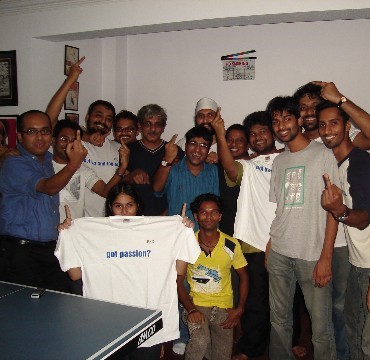
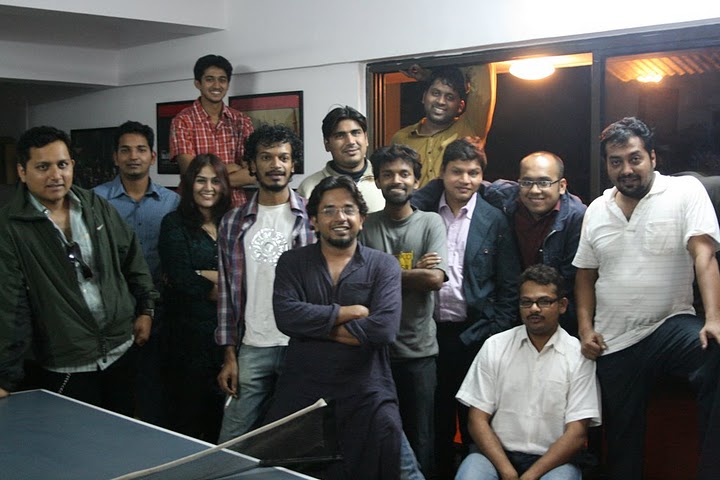
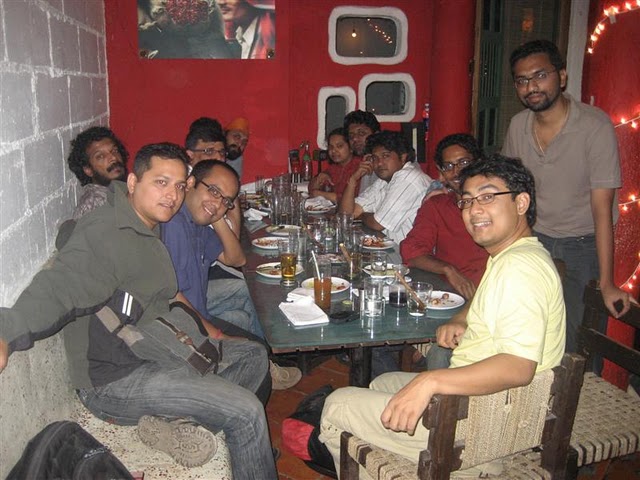
PFC started in August-September 2006. I guess I joined in December. How, why – don’t remember exactly. I wasn’t in a boring cubicle and my day job wasn’t boring either. Then? Must have been a google search for ‘Anurag Kashyap’. Because there was a time when PFC = AK, which wasn’t true but the industry always thought so. “Oh, AK’s mouthpiece. So much negativity on that site!”. Well, that’s the way it was.  Just because we had endless rounds of biryanis and drinks at his place with access to some of the best world cinema, it didn’t mean that we had to worship him or his friends. Criticise him and he will listen. He will argue, fight, try to make fun of you, put his favourite question to you, “tune kya likha/banaya hai?“. But that’s just him, trying to figure out if you really know your shit or just blabbering. And yeah, No Smoking had equal number of posts on both the extremes. Let me also confess that there were times when many comments which attacked AK were moderated and without telling anyone I used to approve them. If it’s about cinema, if someone is making a point that AK might not agree with, there is no point in blocking that comment. The general policy was to keeps the trolls away from filmmakers, keep the site clean but what’s life without some cheap thrills. If it’s AK’s cinema, his post, let him face it.

There was also Suparn Varma, Hansal Mehta, Pavan Kaul, Sourabh Usha Narang, Sam Longoria, Ramu Ramanathan, Bhavani Iyer (Onir, Navdeep Singh came onboard later) and some 30-35 bloggers from across the world. Forget everything else, we had no clue about each others names also. Some of us used to write posts with nicknames/handles and we used to address each with those handles. Honhaar Goonda, DPac, RK, Ranga, Macchar Kumar, Dabba – some of the handles that I can think of right now. Once a friend was visiting London and he needed some cash urgently. The first name that came to my mind was Honhar Goonda and I had to ask another friend for his real name. There were mele-mein-bichhde-huye-bhai too, Pavan Saab and Subrat: where Google fails, they come to the rescue. Do you know Chic Chocolate?
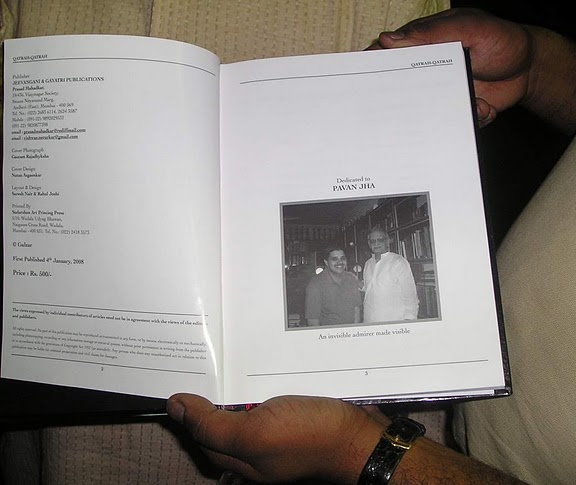
Then there was Kartik Krishnan (KK) – the face of PFC in Mumbai. He would go to any length to do anything for PFC, would travel any distance to meet any new author of PFC. With Vasan, three of us soon became the point persons for all kinds of activity. And the invisible brain, the hand, the man behind everything else was Oz. PFC was his idea, his intiative. Log milte gaye aur karwaan banta gaya.

For the first few years, it was all smooth. We never bothered to ask how the site was running, how much space, what the readership was and  other such technical details. That was all Oz’s headache. A bunch of 10-12 editors, including three of us, used to take editorial calls and we were busy blogging – shouting, screaming, fighting – all for cinema.

I might be completely wrong but I think the first time we had some kind of disagreement when a filmmaker gave the idea of turning PFC into commercial venture and someone decided to do it. Since it was mostly one man control as far as any cost was concern, it was all his call. Rest of us were foot soldiers. Discussion soon moved from club to chain mails and many of us expressed our discomfort about the way the decision was taken. We were blogging because we loved it, there was no intention of making it IndiaFM or any such commercial venture.

Of course there was ample space and time given to everyone to debate, discuss and put forward all kinds of suggestions in Club. Those days authorship wasn’t open to everyone, but by invitation only. We had a club for the authors which was not visible to the rest of the world. And countless nights have been spent on random discussion threads in that club. Those were the Club days too!

There was Review contest (Yes, Thani), One minute short film contest, Poster design contest, Pitcher contest – Oz was always the man to go and we would execute it in best possible way. TOI gave us half page coverage too, with some of us happily posing for the camera in the middle of  a busy road in Dadar’s Hindu colony. Aha, the cheap thrills. Every mention of PFC in the media was one step forward in making it more visible, making it more mainstream. The industry slowly took notice and mostly loved to hate us.

Krsn Kavita Kasturi (I hope I have got her name right) – She was one of the  respected blogger at PFC who knew her cinema quite well. As it mostly happened in the club, once she disagreed on some point which we all were gung-ho about. We were quick to brand her as PFC-Drohi and me and KK got into an altercation with her. I Still can’t remember what was the reason, the exact topic. Blame it on age. But we were PFC-Bhakts and she was PFCDrohi soon. She quit PFC after that. KKK, if you have Google Alert on, apologies from me. Because all this seems too trivial now.

And what a surprise, in the next two years, I was in her shoes. As a dozen of us  met last night  at a friend’s place and we started talking about PFC, we could not agree on one version of the story – how it started? Was it this or that? And there were alternate versions too. Why we could not agree on few things?

Among many other things (man with an agenda, conspirator), I was even branded racist. I could not figure out the reason then and discovered it much later that I had put a comment saying “firangi” or something like that in one of the threads in the Club and by that time one of us had got married to someone for whom that was racist remark or kind of. I tried the search option in my gmail, went through some mails, and gave up. Too tedious, too kiddish. There must be hundreds of those mails, may be we will tell our grand kids about it.

Like every story has my right side and your wrong side, it was the same for PFC. Also, it was “Catfish” syndrome for some of us. “Dude, he is so boring. Come on, we can’t say it to him. We have to meet him. No, you go away, I will skip.”  We also realised that the set-up was becoming too feudal. One man would control it all, he would not listen to anyone except those who  agree with him and celebrate him. We asked questions, raised our voice and it made things worse. The reason given was, “I quit my job, I gave my life and soul to it, my space, my time for it. How dare can anyone ask me what i want to do?”.  And we thought, “But who asked you to do so? We all have our jobs, we all still contribute”. The ping-pong game continued.

By that time, the commercial venture keeda had done the trick too. The critic we had no respect for and who is known for his extremely biased reviews, was asked if he would blog at PFC. Posts/blogs were done in tie-up with films/directors. The aim was to get more page views, more readership and thus generate revenue.

Things started piling up. All kind of decisions were taken on the basis of MBBS (Miyan-Biwi-Baccha-Samet). Many bloggers were finding an excuse to quit it.  Or as Roger Ebert wrote in the review of Blue Valentine, “I’ve read reviews saying Cianfrance isn’t clear about what went wrong as they got from there to here. Is anybody?” When in doubt, trust Ebert.

Oz also used to run DesiTrain.com, his personal blog. And there were some incidents where personal things got mixed up with PFC. It involved his family, he felt that some of us said/did something nasty about someone related to him, he wrote a post on it, we commented there, he was hurt, attacks, counter-attacks. And back to Ebert. Since there was no professional set-up for PFC, it was again Oz’s call. So, if he was pissed off with someone because of some personal reason, that also meant that it’s the end for him/her at PFC. You can take any side here and have your arguments, and we did the same. As I wrote earlier, I am not sure if this was the correct flow of the events. Flashbacks are not so smooth always as they show in movies. I might have missed many things but I am writing whatever I can remember now.

What else? I am still trying to think if there was any big reason apart from “making PFC commercial”. We tied up with Tehelka for PFC Awards, some felt we were moving too hastily,  some felt it’s better to do something rather than ponder over it and make powerpoint presentations. Few calls and more miscommunication – ‘how dare you hang up the phone, it was ISD call and so must have been the time difference my and your voice, you sent such a nasty SMS when I was going through a family crisis’, ‘But that was a joke and how am I supposed to know that you had a crisis at home..’ – everything that counts for the lovers’ tiff, we had it all. And like in every lovers’ tiff which ends in separation, this story is from one side, the other side’s story might be completely different.

I quit. KK quit. And for similar reasons some 20 authors also quit one after another. And we all felt strange that nobody thought that this was strange – if 20 active bloggers decide to quit one by one, there has to be some reason, some logic, some problem. Someone must be wrong somewhere. Naah, by that time it has straight forward – we are right, they are wrong. It was Us Vs Them. Those who stayed Vs Those who left. Those who stayed – we stayed at the worst period of PFC, we are friends, we saved him, saved PFC. Those who left – they don’t make any sense, it’s feudal approach, it’s MBBS, power drunk, dropping names, enough! It might have been lil’ bit of this, lil’ bit of that, some ego here and there, and that was the end for us. But I/we never thought that it would end in such a bitter way.

I started writing this as a Goodbye post and soon realised that it might not be a goodbye after all. But I thought it’s better to complete it.

So, Dear PFC – Cheers for all those 40 friends and 4am buddies, and apologies for all kinds of ugly spats, intentionally or otherwise, it just seems so funny now, or may be it was all for cheap thrill. May be we all were in our best possible Natural Born Killers avatar and part of that secret club. It was great fun till it lasted.

But no apologies for watching the 2nd half of Contract before the first half and then again going to the other screen to catch the first half, no apologies for asking Ramu, “Do you think you have lost it?”, no apologies for not liking No Smoking and Jaane Tu Ya Jaane Na and million other such things.

(PS: Questions have been raised many times about exclusive authors/filmmakers. Why don’t they write more often? They come only for their film promotions. But let me clarify – most of the time we wanted them to blog. Except few, it was us who approached them. They were not dying to blog. We wanted them and they had a film for release, they had something to say, so they blogged whatever they could. There is no point in putting the blame on them. We were eager to get them onboard – always!)

(PPS – Hansal – Sirjee, I have never cooked for anyone.)

What else? Lots, but can’t remember. Told ya, the age.

Yours,

Phoenixnu
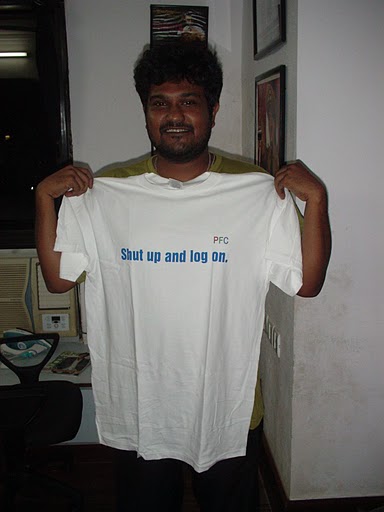
RK now runs Cinemanthan,  Sameer went full time with his CinemaaOnline, Shripriya’s site is Tatvam, Mitch’s work can be seen at Bokehchaser, Fatema reviews films for Indiaentertainment and blogs at filmsandwords, and Pavan still runs GulzarOneline. Also, Indraneel can be found here, Sudhir is here, Jahan Bakshi writes here, Dipankar is here, and Srinivas here . And a bunch of us still create nuisance here at mFC. 🙂 For the rest, they are all on Facebook and Twitter.