Archive for the ‘cinema’ Category

Blame it on that thing called life, we have been bit irregular with that other thing called cinema, and so the updates have been missing. Here’s a fresh start with a new film called Prague.

Prague is the directorial debut of Ashish Shukla. And since Ashish is a good friend, we might be bit biased. But that doesn’t take away anything from his talent and his previous works which we have seen and loved. And hopefully you all will agree soon. Here’s the first look of Prague – an interesting poster and some stills from the film.

This slideshow requires JavaScript.

And here’s the official synopsis….

A city with a history of heritage, myth and superstition. A passionate architect with hang ups and delusions about love and life. A Czech gypsy girl looking for her identity and love. Add to that a mean friend you can’t get away with and can’t trust. And a left out- left over of someone who isn’t really there but doesn’t leave you alone. All of them come together, interfering, manipulating, coaxing and torturing each other as their search for peace, freedom and love continues.

This film is a psychological thrilling ride which takes you to the darkest corners of your mind, the shut down alleys of your soul and the graveyard of your heart.

– It stars Chandan Roy Sanyal, Arfi Lamba, Mayank Kumar, Sonia Bindra, Elena Kazan, Lucien Zell & Vaibhav Suman.

– Interestingly, it’s the debut feature for most of them which includes the Producer, Director, DP, Composer, Cast (Arfi Lamba, Sonia Bindra, Mayank Kumar), Costume Designer, Production designer.

Other credits and details are as follows….

Title : PRAGUE

Language : Hindi/ Czech/ English

Duration : 105mins

Genre : Psychological Drama, Romance

Songs : Background Scores/ OST

Shooting Locales : Prague/ Mumbai/ New Delhi

Produced by : Rohit Khaitan, Sunil Pathare

Executive Producer : Bombay Berlin Film Production

Cinematographer : Udaysingh Mohite

Editor : Meghna Manchanda Sen

Sound : Sanjay Chaturvedi

Music : Atif Afzal, Daniela Fojtu (Czech original Score)

Lyrics : Varun Grover

Concept : Rohit Khaitan

Story  : Ashish R. Shukla

Screenplay & Dialogues : Sumit Saxena & Ashish R. Shukla

Additional Screenplay : Akshendra Mishra & Vijay Verma

Director : Ashish R. Shukla

– The film will have its world premiere in the “Indian Competition” section of the Osian’s Cinefan Film Festival. For more details, click here and here.

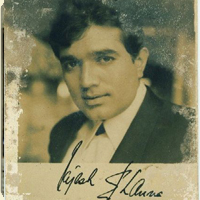
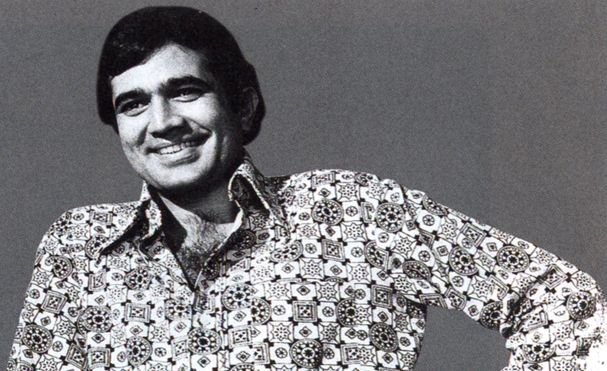
Fatema Kagalwala puts on those nostalgia-wala goggles and remembers Rajesh Khanna.

I have a very 70’s generational angst. I have a theory that we, all of us born in the 70’s are marked. And politely speaking quite fucked. We are the in-between generation constantly straddling two worlds, one full of a traditionalism no longer serving us, and another of modernisation hurtling us to a place that has stripped us completely of our original identities. We have one foot in both. Our childhoods were wrapped in what was probably the blackest period of modern India – the 80’s where decay, political, social and personal was at its ugliest, poverty and disillusionment with the Great Indian Dream had left us utterly hopeless and arts were a shadow of their original selves. Maybe, it is for this that I (we?) continue to feel like an alien in this uber-modernised, superficial millennium and keep asking myself ‘Where do I belong?’ And probably it is this that makes me misty-eyed with nostalgia, sense of loss and emptiness when I but merely watch a yester-year film song especially of the 50’s, 60’s or 70’s.

Films and the heroes we loved in our childhood keep us connected to our past and the entire world it embodied. No other medium or star can do that for us, but yes, film heroes can. And that’s why when I heard of Rajesh Khanna’s demise yesterday I had a lump in my throat like he was a long-lost childhood friend. His going brought up all that sense of immense loss and pain that had been growing ever since Dev Anand and Shammi Kapoor left us.

I was having lunch when I heard it. My first reaction was ‘Don’t go!’, ‘Don’t do this to us…’ ‘We need you…’ I was screaming inside, ‘You don’t know the way you keep us connected us to ourselves…’ ‘We don’t recognise this world we live in but with you it’s bearable…’ ‘What will we do without the dreams you gave us to dream?’ I felt I had lost yet another link to myself, my past, my world. It wasn’t about cinema anymore. It was about the world Rajesh Khanna was a part of, the world he kept alive for me. The world I could go to at will, to rejuvenate myself. A sort of coming home when tired… Rajesh Khanna, Dev Saab, Shammi Kapoor symbolised a world of gentility and innocence that I was born in and then rudely shaken out of before I had my fill. They kept me connected to what was no more…And now they are…

Rajesh Khanna the star and Rajesh Khanna the man were both something that I wasn’t personally attached to, like I was to Dev Anand, the first man I ever fell in love with. Yet, his charming smile, the innocence in his eyes, the warmth he invested in his characters and his eccentrically crooked style, all remained endearing to me no matter how frail a shadow of himself he became. In my eyes, he remained Anand, Arun, Raj and Kamal, none of his later life pursuits ever diminishing all the beautiful worlds he had created for me in my childhood. It must be the dreams he (and others before him) sold to my wide-eyed child that makes me cling to a world that has long past…

A world where innocence meant thinking that when actors died in films they died in real life…

Where women scraped the mud of an actor’s car tyres and marked their foreheads with it as sindoor…

Where an autograph or a mere sighting of our favourite star would leave us in a tizzy for days…

Where the word ‘matinee’ gave us shivers of delicious delight be it pre-fixed to our loved idol or show…

Where we dressed up for a film outing and carried tiffins to movie halls…

Where we were willing to sit on the aisles if need be and would get up dance when we felt like…

Where we could sit on the footpath to watch a film being projected at a random street celebration…

Where we made films run for months and months never tiring of watching it for the 5th or 15th time as long as it was in the halls…

Where it was a big big deal to escape school / college to watch that film’s first day first show…

Where first day first show meant a lot more than our careers ever would…

Where men were gentlemen and women ladies…

Where stars were gods…almost…

…until they passed on. And left us bitter about the fact that they are mortal after all.

This is less of an obituary to a man we all loved and will continue to and more of an obituary to the passing of an era he and many like him embodied. An era that holds the key to me, an era that gave me my roots only to find that they no longer sustain me in this weird world I find myself living in. I will always live by the dreams that you, my childhood stars showed me and hope it will suffice. Because now that you are gone, what else do I have?

Saying goodbye with one of my most favourite Rajesh Khanna song.

Thank you for that world

Thank you for those dreams

Thank you for those movies…

Without them, my childhood wouldn’t have been half as beautiful.

Rest in peace.

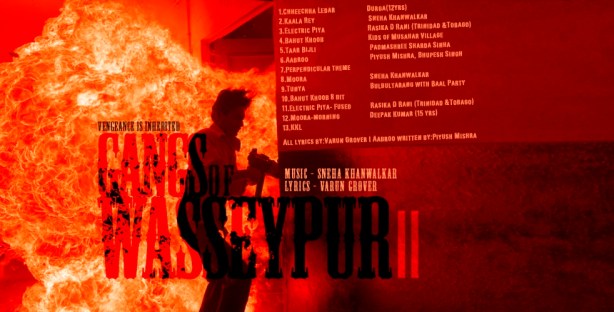
The much awaited music (by Sneha Khanwalkar) of part 2 of Anurag Kashyap’s gangster-political-crime-drama Gangs of Wasseypur is finally out. Just 3 weeks before the film’s release on 8th August. A tad bit late, some may feel but der-durust and all that.

Given the film’s bhojpuri-mixed-Hindi dialect, we thought of doing another post (like last time) with lyrics. And embedded the songs too from soundcloud, so that you can read and sing-along if in the mood. Over to album’s co-lyricist Varun Grover.

*******

२ साल, और उन दो सालों के हर दिन के चौबीसों घंटे लगे यहाँ तक पहुँचने में. इतना intense क्रियटिव प्रोसेस मैंने इससे पहले कभी नहीं देखा था. और थोड़े दिन पहले तक भी मुझे लग रहा था कि वो दिन कभी आएगा ही नहीं जब वासेपुर के गानों का काम खतम हो जाएगा. लेकिन आ गया है. सारे गाने एक-एक कर के यहाँ नीचे हैं…शब्दों के साथ.

और सबके बारे में २-२ लाइनें भी.

छीछालेदर: Singer: Durga, Lyrics: Varun Grover

‘छीछालेदर’ शब्द अनुराग कश्यप ने दिया. उनको एक बिना लॉजिक का गाना चाहिए था. कैरेक्टर स्केच की तरह. बस टुकड़ों-टुकड़ों में किसी बंदे की व्याख्या करते हुए. गाया है १२-१३ साल की दुर्गा ने जो मूलतः आंध्र प्रदेश की है.

Mera joota fake leather,

Dil chichha-ledar

Wo humse poochey whether,

I like the weather

Chamcham waali goggle, bhool ke sarahu bhaage,

Makhmal waala maflar, chhorh ke sarahu bhaagey

Tere naam ke raadhe bhaiyya

Najar kateeli laser.

Mera joota fake leather,

Dil chichha-ledar

Wo humse poochey whether,

I like the weather

Hedar-dedar hedar-dedar

Dil chhichha-ledar

Maar tamaam haraamkhori,

lambi lambi chhorhe

Kare tikalla, jaat aghori,

Bani banaayi godhey…

Maar tamaam haraamkhori,

lambi lambi chhorhe

Daant se kholey beer botal,

Nain se loha modey-modey…

Nakshebaaji haath mein lekar,

Sab rangbaaji saath mein lekar,

Dar se farr se bedar…(2)

Hedar-dedar hedar-dedar (4)

Dil chhichha-ledar…

काला रे: Singer: Sneha Khanwalkar, Lyrics: Varun Grover

फिल्म का इकलौता ‘रोमांटिक’ गाना. लेकिन क्योंकि हीरो (फैज़ल खान) गैंगस्टर भी है और काला भी, इसलिए गाना भी थोड़ा dark और haunting बनाना था.

Kaala re, saiyyaan, kaala re…

Mann kaala re, tann kaala re,

Kaali zubaan ki kaali gaari….

Kaale din ki kaali shaamein,

Saiyyaan karte ji kolbazaari…

Bairi kol kol kol, chheney tol tol tol,

Chhat aangan chaar deewari…

Saiyyaan karte ji…saiyyaan karte ji…

Saiyyan karte ji kolbazaari…

Kaali mitti, kutta kaala,

Kaala bilkul surmey waala,

Kaala kauvva, hauvva kaala….

Kaala baadal ghirne waala,

Kaala moti, girne waala,

Kaala jhanda, danda kaala….

Kaala batua, paisa kaala..

Kaali aankhon jaisa kaala,

Kaali agni…

Kaali garmi, sooraj kaala,

Kaala beegha, aur gaj kaala,

Kaali baaati…haathi kaala…

Kaala-kaala-kaala…

Bairi coal coal…

Bairi kol kol kol,

chheeney whole-sole-tol….

Rang paani aur pichkaari…

Saiyyaan karte ji…saiyyaan karte ji…

Saiyyan karte ji kolbazaari…

बहुत खूब: Singer: A group of school kids (एक बच्चे का नाम, जिसकी आवाज़ में कविता सबसे ज़्यादा है: पड़फूल था.)

यह किसी ने नहीं लिखा. बिहार में फिल्म पर रिसर्च के दौरान स्नेहा मुज़फ्फरपुर के बेरिया गाँव में पहुंची. स्कूल से लौटे बच्चों ने टेक्नोलोजी से लदे ‘शहरी’ ग्रुप को घेर लिया. स्नेहा ने  बच्चों से कहा कोई कविता सुनाओ, मैं रिकार्ड करूंगी. वही आवाजें रिकार्ड की और फिर उन्हीं को जोड़ कर यह गीत बना.

Bahut khoob Bahut khoob Bahut khoob

Chakachak kumari..

Chattanon se krida karti

Kal kal karti, chal chal karti

Chattanon se krida karti

Kabhi idhar mud, kabhi udhar mud

Ban parbat mein lipti chhupti.

Dharti ke har kisi chor se,

Ban parbat ke kisi mod se

Boond boond se bana hai, kaun

Chaar dhaamon se juda hai, kaun.

Bahut khoob Bahut khoob Bahut khoob

मूरा: Singer: Sneha Khanwalkar/Deepak Kumar Lyrics: Varun Grover

इस गीत के दो versions हैं. एक स्नेहा की आवाज़ में और दूसरा दीपक कुमार (जिसने Gow-1 में ‘हमनी के छोरी के’ गाया था) की आवाज़ में. कोशिश थी एक tongue-in-cheek pep-talk song लिखने की. IT-BHU में रहते हुए hostel में ‘फ्रस्टियाओ’ और ‘नर्भसाओ’ बहुत सुना था. वो काम आया. इसमें भी स्नेहा की संगत में एक कैलिप्सो बैंड है, उसके कैरिबियन रिसर्च के दौरान ढूँढा हुआ.

Moora Morning (sung by Deepak Kumar)

Frustiyaao nahin moora,

Narbhasaao nahin moora,

Anytime moodwa ko,

Anytime moodwa ko,

Upsettaao nahin moora…

Anytime moodwa ko,

Anytime moodwa ko,

Upsettaao nahin moora…

Jo bhi wrongwa hai usey,

Set right-wa karo ji,

Naahin loojiye ji hope,

Thoda fightwa karo ji…

Jo bhi wrongwa hai usey,

Set right-wa karo ji,

Naahin loojiye ji hope,

Thoda fightwa karo ji…moora…

Anytime moodwa ko,

Anytime moodwa ko,

Upsettaao nahin moora…

Kaahe muthhi mein pakad,

Raha paniya re moora…

Kaahe muthhi mein pakar,

Raha paniya re moora…

Rahe paani ki na yaad

Naa nisaniya re moora

Startey startey startey..

Startey brainwa re moora,

Charh trainwa re moora,

Startey brainwa re moora,

Charh trainwa re moora,

Naahin pagla re bann,

Act sane-wa re moora..

Anytime anytime,

Hai yeh retiya kaa ghar,

Anytime anytime,

Bharbharaao nahin moora..

Anytime anytime,

Diye chance-wa jo life,

Refuse-aao nahin moora…

Sakpakaao nahin moora,

Latpataao nahin moora…

Sakpakaao nahin moora,

Latpataao nahin moora…

Anytime moodwa ko,

Anytime moodwa ko,

Upsettaao nahin moora…

आबरू: Singer: Bhupesh Singh, Piyush Mishra, Lyrics: Piyush Mishra

कव्वाली-मुकाबला जैसी शैली में रामाधीर सिंह और फैज़ल खान के चुनाव प्रचार के लिए एक गीत बनाना था. पीयूष मिश्रा ने अपने धुरंधर अंदाज़ में लिखा और गाया.

Hum zahar se bhare, bicchhuon mein paley

arey tu humein kaatne ki saza payega

Arey aabroo ki kasam, cheer denge tujhe

Dum kate saanp sa.. bil bila jayega

Aabroo ke jane, draupadi ki kasam

Kauravon ki sabha mein jo aa jayega

Arey Dushaasan hain hum, kheench lenge tujhey

Aabroo jo bachi hai luta jayega

Aabroo ki kahi aaj sun le abhi

Choli lehanga pehan ke kahan jaayega

Jo har ik chhed mein goliyan jo padi

toh har ik chhed bansi baaja jayega

chhedo.. chhedo chhedo.. chhedo

oh chhedon key khuda meri sun to zara

beech baazaar mein tu toh aa jayega

le aa gaya beech bazaar mein, ab bol.

Toh ruk…

Sand ban ke nache-ga, sarey aam tuu..

Bhaand ban ke muhaley mein chaa jayega.

Hum to duryodhan ke poot, saath mein raavan ke chele

Hum to  bhari-putna surpanakha ki godon mein khele

hum to aise hain chandal cheer ke kutta khate hain

hum to aise teer-andaj aadmi ain chabate hain

hum to shakuni hain, hum kansraj hain kulta shulta neech

hum toh narbhakshi hain, gaay bhains ka chara khaan ley kheench

arey hum maar tamancha, bail pe nikley, bail bech aaye

hum to kirkit ka balla chodo hum khel bech aaye.

Haaji maula Haaji maula Haaji maula, Haaji maula Haaji maula..

तार बिजली: Singer: (Padmashree) Sharda Sinha, Lyrics: Varun Grover (Mukhda from traditional/folk)

फॉर्मेट से शादी का गीत है. लेकिन शब्द पोलिटिकल हैं. ‘८० और ‘९० के दशक के बिहार की बिगड़ती दशा पर एक दुहाई है देश के ‘पालनहारों’ से कि ये क्या कर दिया ‘हमारे पिया’ के साथ. Surreal मान सकते हैं…कि ऐसा गीत अब इस फिल्म की दुनिया में लोकगीत बन गया है और शादी में गाया जा रहा है. और गाया है legendary शारदा सिन्हा जी ने. बहुत सालों बाद फिल्म संगीत में वापसी है उनके लिए यह.

Taar bijli se patley, humaare piya…(x2)

O ri saasu bata tuney yeh kya biya…(x2)

Sookh ke ho gaye hain chhuaare piya…(x2)

Bechaarey piya…

Sab haarey piya…

Kuchh khaatey nahin hain…

Kuchh khaatey nahin hain…humaarey piya

O ri saasu bata tuney yeh kya biya…

Taar bijli se patley humaare piya….

Kha dhatoora ji sutley humaare piya,

Maara dhakka na uthley dulaare piya, (x2)

O re bapu bata tuney yeh kya biya,

Yeh kya biya tuney yeh kya biya…

(chorus) Gulaabi Chachha…

Gulaabi Chachha ki kyaari mein kaanta bhara…

Na idhar na udhar hi sihaare piya…

Taar bijli se…

Ghupp andhera mein chaltey, dulaarey piya,

Ghupp andhera mein chaltey, dulaarey piya,

Jindagi kolbari, phoot paani bhara,

Aarra Chhapra ke Babuji yeh kya kiya?

Loknayak jalaaye yeh kaisa diya? (x2)

Bhaav koyla ke bik-lay dihaari piya…

Nihaari piya….Bihaari piya….

Maarey dukh ke ji phootey fuhaarey piya…

Haan fuhaare-fuhaarey-fuhaarey piya…

Taar bijli se patley, humaare piya…

Taar bijli se patley, humaare piya…

O ri saasu bata tuney yeh kya biya…

O ri saasu bata tuney yeh kya biya…

O ri bhauji bata tuney yeh kya biya…

O re Bapu bata tuney yeh kya biya…

O re Chacha bata tuney yeh kya biya…

Loknayak bata tuney yeh kya biya…

Jan-nayak bata tuney yeh kya biya…

Baba Saaheb bata tuney yeh kya biya…

Taar bijli se patle humaare piya…

इलेक्ट्रिक पिया: Singer: Rasika Rani, Lyrics: Varun Grover

यह गाना स्नेहा ने कैरिबियन में रिकार्ड किया. वहाँ वो चटनी म्युज़िक ढूँढने गयी थी और रसिका से मिली. इसका पूरा अरेंजमेंट चटनी है इसलिए शब्द भी fusion हैं. ‘तार बिजली’ को लोकगीत का surreal जामा पहनाने में भी यह गीत मदद करता है. फिल्म में यह गीत एक पार्टी में बज रहा है. मतलब एक ऐसी दुनिया है जहाँ यह (और ‘तार बिजली’) पहले से प्रचलित हैं. इसमें भी मर्म वही है…दुहाई है…लेकिन इसमें मूड एकदम अलग है. यह सत्ता के iron curtain के दूसरी तरफ खड़े लोगों का गीत है. ‘तार बिजली’ से ठीक उल्टा. (फिल्म देखेंगे तो पूरा subtext समझ आएगा.)

Electric piya…electric piya!

Taar bijli se patle humaare piya..

Arre taar taar taar…

Taar bijli se patle humaare piya..

As thin as a wire, humaare piya

Taar bijli se patle humaare piya..

As thin as a wire, humaare piya

Ghar aate hain deri se, tutli hai road…

Road road road…arre tutli hai road…

Roj roj roj roj…

Baba-saaheb kathin kitna rasta diya,

Jan-Nayak re haalat kya khasta kiya,

Riding donkeys, my horse-rider piya…

Getting tangled in web of spider piya…

Electric piya…electric piya….

Electric piya…electric piya….

Taar bijli se patle humaare piya..

As thin as a wire, humaare piya

Taar bijli se patle humaare piya..

As thin as a wire, humaare piya

My loveless, and luck less, and messed-up piya…

Arre messed-up piya… Arre messed-up piya…

Aandhi-maata bata tuney yeh kya biya,

100-baras jeeney waale re yeh kya kiya,

Slipping out of my hands, humaarepiya,

Falling into quick-sands, humaare piya…

Electric piya…electric piya!

Taar bijli se patle humaare piya..

Arre taar taar taar…

Taar bijli se patle humaare piya..

As thin as a wire, humaare piya

Taar bijli se patle humaare piya..

As thin as a wire, humaare piya

SPOILER ALERT

Not again, I said. Bhartiya naari gets the guy. Boozie naari gets converted to bhartiya nari as she tries to get the guy. And the guy is desi at heart who is also Mama’s boy- will sleep with boozie, will fall in love with bharatiya. Imtiaz Ali, Sajid Ali and Homi Adjania took bollywood’s oldest and most favourite formula of love traingles and did just one brilliant thing – remove the communication gap between the three which has always been a bane in desi love triangles. So all three of them sat together and discussed it openly – tum mujhse, main isse pyaar karta hoon. And then? Nobody had any clue what to do – writers, characters, makers. As the formula goes, cool and confused lovers will travel a distance to discover true love. London —-> Cape Town —-> Delhi.

Fatema disagrees. She says there’s more to it. So, over to Fatema Kagalwala and Nadi Palshikar for the rest. We are going with the Cocktail trend. This post is also by 1 guy + 2 women –  @CilemaSnob

Cinema feeds us so many stereotypes. Loudly, brazenly, irresponsibly. In the race for finding the formula, women characters have been brutally pigeonholed in our cinema for ages, making us believe there isn’t anything more. The curse of populist feminism as well as quick mass appeal has given us generations of blanket portrayals of loud, gender role-defying women as ‘strong’ and shy, silent and traditional women as helpless wimps. It is easy for us to see a gun-toting Zoya and the sassy Veronica as perfectly liberated but is it a true portrayal of liberation or is there more? Are we missing something because the definitions we are fed are shaky themselves and years of gender polarisation have left us no gaps to sieve characters that don’t fit in? Is Meera as wimpy as she comes across and is Veronica as care-a-damn as she looks? Let’s uncover the world behind the characters of Veronica and Meera discovering what makes them tick and different in Imtiaz Ali’s and Homi Adajania’s Cocktail. First, over to Nadi

Veronica’s Parents. They send her money but do not really care. So our girl is a wild child. An attention-seeking child. She breezes into places and then behaves brazenly. Look at me, I am being bad. The loud music gets faster and faster until towards the end she says, “I can’t do this anymore” Tantrums are tiring. The tantrums have not worked either. Kya hai mere paas, she asks- not once saying “what did I get after loving you so much?” There has been no question of that anyway. There was supposed to be no question of that anyway. But that she is fatigued, exhausted. Going round and round like a child having a fit. Having banged her head against a wall to seek attention and then complaining that her head hurts to the same person that never saw anyway. For now that she knows that the love she wants can never be had, does she want to gain bliss by being child to this couple? This couple, who unlike her own parents, will stay together. This woman who has given her house a feeling of ‘Home’, this man for whom, what started as a superficial thing has turned into a love so deep that he has to be clung to- whatever maybe the rules of the game. Like Martin who does not mind being scolded like a child and then comforted by his wife Antonia when he finds her with Palmer in iris Murdoch’s A Severed Head. Like Anais Nin in some moments, felt about Henry Miller and his wife. And in our own cinema- my favourite ‘triangle- Gulzar’s Ijaazat (based on  Jatugriha by Subodh Ghosh)  where Maya says  about Sudha, her lover’s wife- “Didi maarengi toh nahi” while Mahender has said – I will put you in Sudha’s care. She will know what is to be done with you. And the bitter words between Sudha and Mahender that Maya hears over the phone- which remind her of the fights between her parents. And she goes away-

But coming back to Veronica-

Outside the club, Gautam glances at Meera- like an adult signalling to another about taking care of a child who is sick. Veronica quiet easily slides into the role of child being taken care of by parents. Two people who love each other, and yes she knows that, but are responsible for her well being. Deep, difficult, this. The scene – Lest we do not recognize that this has gone beyond mere two friends taking care of a drunk friend, is the explicitly spelt out – “Why can’t Gautam take me to the bathroom?” The tantrum of “Why can’t Daddy take me to the bathroom?” which is usually explained by a “Because you are a big girl now, and so you go with the women.” Which usually appeases the child.

But here the script goes dangerously close to the enactment of incest or rather an incest –like fantasy with the shocking “There isn’t anything you haven’t seen before.”And how easy it is to sink into fantasies. (Maybe this is the way he need not give this girl up?) Sink together near Veronica’s bed after tucking her in and ask a very adult, really caring. Are you okay? Parents saying thank God, the children have finally slept.

The next day- while Meera who is good and kind has done what she thinks is the right thing – gone away, we have veronica trying to win Gautam back. Not like an adult woman. But emphasizing the imitation of Meera – See, I got the recipe off the net – I will cook – just like her. The apron almost a disguise – poised with a ladle in hand. Saying defiantly – I sent her away. The simulation of the fantasy of mother being banished – I’ll look after father – I can even make ‘the yoghurt salad thing’ and the difficult biryani. And here, thankfully, I thought, Gautam does the responsible thing. He is angry, rightfully so. From somewhere far away there was more than money coming for this neglected child at last. Sensible, stern ‘parenting’?

And ‘stern’ I do not think she would mind. For looking back, we now remember that comic scene with Gautam’s Mama telling her how to sit properly, for Kavita Kapoor would surely disapprove. This comic scene in retrospect, seems poignant as this is what Veronica has never had – a gentle reprimand for the way she has been dressing and behaving wilder and wilder.

Here, when Gautam does the right thing- reprimands her for this silly behavior, looks for Meera, I saw hope for Veronica. After that  little relief that is awarded to her – Gautam looking after her- making her laugh, feeding her. Plaiting her hair- (reminding me of that other film – Sadma which too hinted at a kind of quasi-incestuous relationship), I hoped Veronica would realize the situation that she was in.

And so we are okay with Meera ordering Gautam to take care of Veronica, this being agreed to. Sure. Sometimes the writer would like to provide just a little succour for a character he can’t help but love.

And Veronica did not let us down. Being cared for a while- like someone blowing softly on all those wounds the crazy girl carried on herself- the hospital-bed scene actually bringing out the wounds, making visible, the scars of Veronica. This almost dying and then being given a chance to make a new beginning- and she does realize what the situation is. And decides to restore the rightful couple to each other. It is here that the script is not very kind to this, its most lovable character. And we see that although the character arc of Veronica seems to be on the way to something good, Gautam has not become adult enough. So there’s the jumping out of autorickshaw and dialogue like “My best friend’s marrying my other friend” or something as corny as that! And our photographer girl who has put them in the rightful frame and would have liked to click and walk away, is pulled into the frame- collective hugs all around. Once again, she is let down. You can’t really blame the Kapoors for not knowing the right thing to be done of course – after all, the D’costas didn’t.

For this is where she should have been restored to her place, the door shut in her face, so to speak. However traumatic it might be for her, the script should have left her behind while Gautam goes to India (Meera’s located nicely in this other separate world to where he can go ‘leaving’ Veronica to her own resources of which she has quite a few, considering her realization etc).

But even as the potential darkness is broken by a loud song, as the screen fulfils the Indian fantasy of both these girls dancing with the hero,  I say to myself – once again a ‘not really my type of movie’ has connected in a way I cannot describe. Once again, just a love story – good looking people in pretty locales – written by Imtiaz Ali has gone beyond – has shown me the painful journey, the remarkable transformation of a character. And just like that other time, Homi Adajania has very subtly gone dangerously close to taboos, hinted at the terrible hurts that lie behind our ‘bad’ behavior.

And now Meera. Nadi Palshikar’s intuitive post on Veronica made Fatema want to delve deeper into Meera. She was intrigued to uncover the world behind her character because something told her there was more to her. She felt Imtiaz hadn’t written a stereotype howmuchever our sensibilities may push us to believe… Read on.

Meera – In our cinematic landscape where women characters have to be one of a few ‘types’, on first glance Meera seems to be your regular chhui-mui, sacrificing goat because she knows no better. The first time we see her she is dressed in a demure salwar kameez, with jhumkas and a mangalsutra, extremely uncomfortable sitting close to a garrulous gent on a cramped flight to London. She manages her luggage awkwardly while she waits for a husband who doesn’t show up. We see her as a reserved and simple girl from the heartland of India (assumed by her dress and demeanour) and think she will be the dependant, helpless type as we are generally shown such girls to be. Soon after a long wait at the airport of a foreign land where she knows no one, has no place to stay and whose ways are completely unfamiliar to her, she heads to the police station to seek her husband. Her first action when she meets trouble is to look for a solution. Her first thought is not a victimised ‘oh what will I do?’ something we’d expect a character like hers to automatically do. She breaks down only after her husband brutally rejects her. We see her hiding in the bathroom of a store sobbing away…It is only later that we understand she wasn’t sobbing because she was feeling helpless at her plight but because she was deeply hurt. If by then we have already typecast her in our heads we are likely to miss out on more that we learn of her later…

Meera is a product of her upbringing. An upbringing that is rooted in values very Indian across the spectrum of positives and negatives. She does not understand live-in relationships and relationships without commitment. She is a self-respecting girl, one who is a little out of her depth in this foreign land but who does not let that become an excuse to wallow in self-pity. She willingly looks for and takes up a job to support herself, as if it is the most natural thing to do. Yes, she blames herself for her husband leaving her and that hints at a typically low self-esteem but how many of us haven’t blamed ourselves for our partners leaving us? Especially if you come from a space where marriages are sacred and a world where women’s identities are closely linked to their house-bound roles…Actually even without either…

One would expect Meera to ‘Indianise’ the rootless Veronica and Gautam, and the film to an extent. Any other film would have done so and that’s where Meera’s character becomes independent of the demands of the story. It does not use her character to sell Indian values, which is what we are used to seeing. She is who she is but she also lets the two stay who they are. She draws the limits of her comfort but does not impose her will. Yes, she does lack a confidence in herself in relation to the larger world but not in her own values; hence, she does not shy from praying to her gods in the irreverent household she lives in but refuses to give friendly hugs to Gautam, even after they become friends. Yet, she straddles both worlds beautifully, allowing herself to change some and then drawing her boundaries tight. She keeps emphasising ‘Main aisi hi hoon’. She rejects an idea not because it scandalises her but because that is who she is and that is what she identifies with. That is what she does not want to change… She does not flee at the first hint of trouble, but then we know she is not the fleeing type. She leaves when she thinks that is the right thing to do. Right not because she believes sacrifice is a great virtue and as a woman she is supposed to be so, but because that is what she sees as doing the right thing by her friend Veronica, someone she has come to love like a sister.

It is a thin line Imtiaz Ali and Homi Adajania tow in keeping Meera just this side of stereotyping but they do it with an intuitiveness and maturity we aren’t used to. It is another thing that a lot of this is swept by in dialogues and the compulsive yuppie-ness of the film. Some more is in the over-weaning need of romantic films to be dreamily so. Extrapolating a bit, it is this strength of character that must have made the flighty Gautam fall in love with her, something the film should have emphasised rather than go on a romantic trip of ‘you are this’ and ‘you are that’. She grounded him, something Veronica (or any other girl) couldn’t do for him. Isn’t love after all, about finding a home for our souls to rest in? Gautam had to find it in Meera because she always chooses to remain who she is not because she cannot go beyond her boundaries but because she won’t. Choice is empowerment and what better symbol of strength than the ability to make it?

It is for this that despite her shy exterior, Meera comes across as a woman stronger than cinema would have us believe. Because being true to oneself requires far more strength than we can imagine, in cinema as much as in life. It isn’t an exciting thing many times, hence Meera is a boring character and Veronica is attractive. But isn’t the foundation of ‘self’ far more solid than colourful antics and a glossy exterior that barely manage to hide the chinks inside? As a film, Cocktail didn’t strike me as anything more than a warm romance but all its superficiality couldn’t hide the worlds of its characters…created with a subtlety we aren’t used to watching.

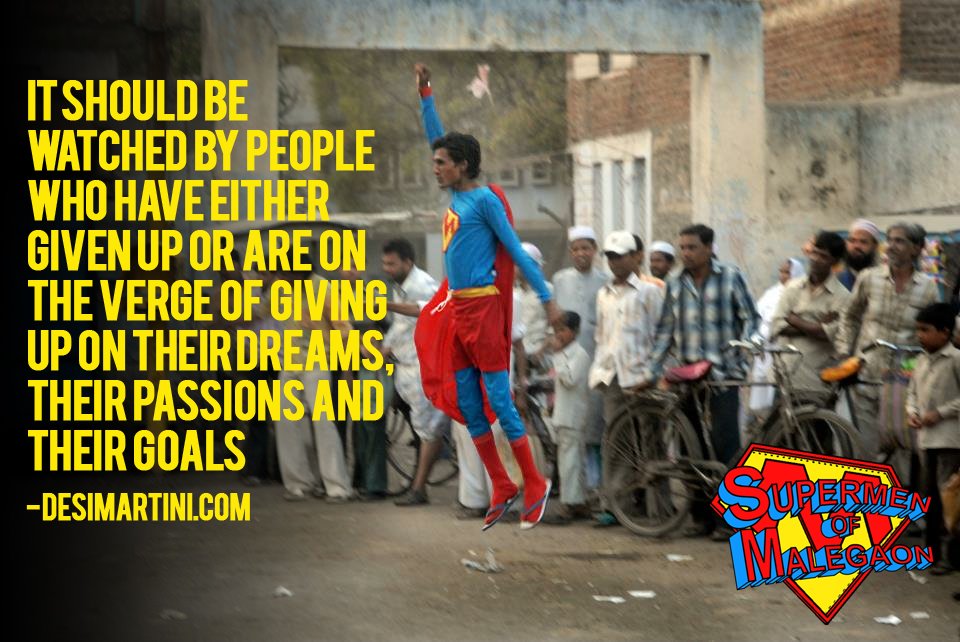
Indian cinema turns 100 this year. And there’s a great film currently playing in the theatres which celebrates this magic of cinema. It’s a small film which you might not have heard about because it has no ads on tv, no chartbuster songs on radio and no hoardings to boast about. The film is Supermen Of Malegaon (SoM). And indian cinema can’t get a better homage than this documentary made by Faiza Ahmad Khan.

The film has been doing the festival rounds since last few years. But good or bad, we don’t watch docus in theatres. We don’t even release them to give it a chance. Thanks to PVR Directors Rare, SoM has got a limited release across few PVR properties. Make sure you watch it. And if you have any doubts, we are giving you not one or two, but 50 reasons to watch it. And since “crowd-funding” for indie films is in vogue these days, we crowd-funded this post to go with the same spirit.

Do watch and do contribute your reason in the comments section. Will start with mine.

1. Because Vijay and Ravi can finally move on. Mere paas ma nahi, cinema hai! It has one of the best, unrehearsed and unscripted scene between two brothers – one consumed by the addiction called cinema and the other……well, watch it. Poignant.

2. If you watch or love or make cinema and you miss SoM in theatres, you’d miss the cinema equivalent of finding the G-spot – @varungrover

3. Because 1hr of supermen of malegaon is more fun than 2hrs of Spiderman – @ronyd

4. Because even Brando would be appreciative of Jor-El and the ‘method’ here – @krnx

5. Because it blurs the line between fiction & docu. It was more entertaining than a commercial Hindi feature –  @ghaywan

6. Because SoM doesn’t sell itself on sympathy like the recent “indie” filmmaking fad – @auteurmark

7. Because these people have not collaborated on the film : Samir, Sajid, Bhansali, Shetty, Bellary, Ekta, RGV, Bhatts, Kohlis, Kapoors – @mihirfadnavis

8. Because it’s a better (hate the term but…) Love Letter to Cinema than ‘The Artist’ or ‘Hugo’ could ever be… @jahanbakshi

9. You’ll laugh a lot, being fully aware that there’s a lot of grimness in the tale as well. Its a unique feeling   @RangbadluGirgit

10. ‘Pairon ki bediyaa khwabo ko bandhe nahi re..’ Madhyam ki garibi sabse badi prerna kaise banti hai @koripaati

11. See Pic

12. Why else do we watch films ? To get entertained ! And entertained you shall be !! – @z_maahir

13. Location is not Switzerland and the lead would not look like a million bucks even with plastic surgeries STILL SoM is Beautiful – @humHeroine

14. Superman with a 24″ waist. A costume that involves rubber chappals. A film that is inspired and inspiring – @ashish_mehta_

15. Because it celebrates the simple human notion that if you are passionate about something then no one can stop you. There is always a way around. Always. Equipments, technology, know-how, resources etc just don’t matter. As long as you want it badly enough – @ghantaguy

16. You should watch SOM because it will make you pick up a camera and shoot – @varunvarghese

17. Bolchaal mein itne achhey Urdu shabd bahut dinon baad sun-ne ko miley – Rakhi (on FB)

18. That cinema by all other names would still be magical! – Suhel Banerjee (on FB)

19. Kyuki bhai ise ‘naa dekhne ka’ ek bhi reason nahi hai ! Puneet Sharma (on FB)

20. Which was the last film you saw that you wished you could see more of? – @gyandeep4a

21. For one poem Chand. Just that is worth the ticket money – @shubhas

22. Because it gets over in about an hour and you won’t get bored. Forget all the irony and the film about a film business blah blah – Swati Trivedi

23. Kyuki aisi filme dekhkar khud se ye sawaal poochhne ka man karta hai…. Ab to bahana banaane chhod de, ja aur kuch man ka bana !!!! Puneet Sharma (on FB)

24. It makes us feel that good filmmakers still exist. Faisal Numan (FB)

25. See pic

26. The one reason that counts – it is paisaa vasool – Vinay Jain (FB)

27. Simple. Because its one of the best films you will see this year –  Anant Raina (FB)

28. Because it makes you smile. The passion for Cinema in India is equivalent to religion. This 60 minute beauty inspires everyone to do something even if you cannot afford it – Abhinav Bhatt (on FB)

29. kyonki yehi Cine-Maa hai!! – Nitin Baid (FB)

30. “Life is full of sorrow, so it is very important to dream. No one should ever stop dreaming,” says the narrator of #Supermen of Malegaon, the funniest, sweetest movie I have seen in a long time. The writer in the movie says things like “Most of the films you see is only 20% output. Imagine being a writer and having to live with 80% of the angst. It’s hard. But it doesn’t stop you.” In an age of multi-crore promotion budgets for glitz, here is an honest movie with a soul, a story of dreams and passion, a movie that you won’t see ads and promos of, as they have no money for them. It’s playing at PVR Juhu at 6.20 pm. I am going back for the lines. Who is coming? – Lalita Iyer (FB)

31. Because tragedy brings out the best comedy – @ronyd 

32. Because it completes the Unique distinction of having watched Superman, Spiderman and Batman in the same year – @nitinnair81

33. Because its a RICH film made by POOR people which you get to see in a POSH theater for CHEAP price. Rs 110. Pvr Juhu. 6.20pm – @navjotalive

34. Because despite it being a documentary avoids all the docu cliches and still becomes accessible for just about every man jack who likes movies – @mihirfadnavis

35. See pic

36. Have you ever seen a superman wearing naadewala kachha and slippers, and ppl wiping their face with his red cape? @thepuccacritic

37. Because, in fact more than Hazanavicius’ film, Supermen Of Malegaon could actually be called ‘The Artist’ and *earn* that title – @jahanbakshi

38. As a filmmaker, it made me want to get out and start shooting my first. Thoroughly inspiring! @ghaywan

39. Not everyday you see a film where the hero is flying on one hand and paddling on a float in the river the next min @HumHeroine

40. FUN ke beyond, sach aur jhoot se pare , ek khula maidan hai.. Superman Of Malegaon tumhe waha milega @AmritaThavrani

41. Well, one reason is definitely that writer, Farokh. He had more personality than half the film industry combined –  @pradeep_smenon

42. Because it really does take supermen only to make films – Malhar Salil (on FB)

43. Because if you believe in your dreams, it can happen. Passion for cinema = SoM = Simply Superb!!  – Himanshu Vora

44. Without a VO, the film is spoken from the residents’ pov which makes it experiential than being a hawk eyed narrative – @ghaywan

45. Because some guy in a small town made his film Undaunted by BO, ratings, festivals,100crs or twitter trends. And that’s rare – Vasan Bala

46. Because it’s the best rated film of the year. See pic

47. The writter in Supermen ka Malegaon, Hamid Faroghi – Kya bhaari awaaz aur kya personality, jab bhi koi baat kehte the toh har baat me ek gehri baat hoti thi! – Yogesh Dube (on FB)

48. It just made me extremely happy and uplifted. Not even hint of manipulation, morality or design. They just let it be..the protagonists just do their thing only because they love doing it, not to prove anything. Only complain was it ended too soon – Apan Singhal

49. Because it celebrates that aspect of a film which most of the people have just a surface-level idea of – filmmaking itself. – Gyandeep Pattnayak (on FB)

And here’s the most important reason…

50. To support PVR director’s Rare so that it can continue to bring more such quality cinema to you – @ShiladityaBora

So what’s your reason for not watching it?

He is a certified boob-yist. Well, i remember he won a contest on twitter where you had to figure out the faces from just the cleavage pics. And he got all six of them spot on! But that story is for some other day. Shivam Sharma masquerades as GhantaGuy on twitter (#FF) and describes himself as “Passionate movie-buff. Not a critic”. Over to him. on Gangs Of Wasseypur.

Even after seeing the movie twice I could not bring myself to review it because there was so much in it, so much to take in all at once and I was not sure from where to start. The following post started out as about some amusing reactions and things that I have observed in the last week regarding Wasseypur. Things that surprise me and make me laugh at the same time. Though there is a lot that I still want to write, it’s still a start. Read on.

‘गैंग्स ऑफ़ वासेपुर’ को रिलीज़ हुए एक हफ्ता हो चुका है. समीक्षाएं पढ़ी जा चुकी हैं. पिक्चर को पसंद-नापसंद किया जा चुका है. पर वासेपुर अभी भी दिमाग पे छाई हुई है, ज़ाहिर है कि और कुछ हो न हो, ये एक ज़रूरी फिल्म है.

“The Magic of Cinema”.शायद वही.

पर कुछ बातें जो मुझे खटकी हैं वो हैं audience के अलग और कुछ अजीब reaction. मैंने ये फिल्म नागपुर के एक ठसाठस भरे पिक्चर हॉल में देखी थी (गौरतलब है कि नागपुर सलमान खान का गढ़ माना जाता है और ‘दबंग’ के all-India collections में नागपुर सबसे आगे था.) पिक्चर में करीब ७०-८० बार गालियाँ आती हैं. फिल्म सच्ची घटनाओं पर आधारित है और गालियाँ ज़रूरी हैं क्योंकि वासेपुर कि गलियों में घूमने वाले, बात-बात पर कट्टा चलाने वाले जिन लोगों की ये कहानी है वो गालियों का प्रयोग रोज़मर्रा में करते हैं. आप और मैं भी गरमा-गर्मी में इनका प्रयोग करते हैं और कुछ अपने मन में ही देकर सुकून का अनुभव कर लेते हैं.

बहरहाल, फिल्म में जितनी बार भी गालियाँ आयीं, लोग जोर से हँसे. जोकि मुझे खटका क्योंकि ये लोग भी आपस में गालियाँ देते है पर हर बार उसे मज़ाक के तौर पे नहीं लिया जाता और न ही ठहाका मार के हंसा जाता है. फिल्म में भी सब जगह इन्हें मज़ाक के तौर पर नहीं डाला गया. जहाँ हैं वहां सही हैं. पर शायद हमें सच्चाई को मज़ाक में और मज़ाक को सच्चाई की तरह लेने की आदत पड़ गयी है.

ये कहानी उस जगह की है जहाँ की ख़बरें ‘अमर-उजाला’ और ‘दैनिक जागरण’ के क्षेत्रीय पन्नों पर छपती हैं. अर्नब गोस्वामी और राजदीप सरदेसाई के आदी शायद उससे relate न कर पायें और क्योंकि हम उनसे काफी दूर हैं इसीलिए वो गालियाँ हमें या तो हंसाती हैं या discomfort महसूस कराती हैं.

क्या एक normal reaction देना इतना मुश्किल है? शायद हाँ.

कुछ लोगों का कहना है कि पिक्चर बहुत vulgar और cheap है.

हमें ‘शीला की जवानी’ और ‘मुन्नी बदनाम हुई’ आदि, जोकि सिर्फ अंग प्रदर्शन के लिए बनाये हुए item songs हैं, उनसे कोई आपत्ति नहीं है. अगर कोई शब्द अपने आपको सबसे आसानी से explain करते हैं तो वो है “item song”. साफ़ तौर पर ये वो गाना होता है जिसका प्रयोग सिर्फ लोगों को खींचने के लिए किया जाता है और उसके लिए अधनंगे खुले प्रदर्शन से बेहतर हथकंडा नहीं है. (ऐसे गाने ज़्यादातर उन फिल्मों में होते हैं जिनकी कहानी लोगों को खींचने के लिए काफी नहीं होती. यहाँ मेरा उद्देश्य इन गानों को बनाने वालों के विरोध में नहीं है पर हमारा दोगलापन दर्शाना ज़रूरी है.) जितना बड़ा स्टार उतना बड़ा गाना. और ‘aesthetically shot’ होने के कारण इन्हें public domain में accept कर लिया जाता है और ‘vulgar’ tag तो दूर-दूर तक नहीं दिया जाता.

इस समय मेरे मन में एक गाली ज़रूर आ रही है पर उससे मेरे अभिप्राय पर कुछ ख़ास फर्क नहीं पड़ेगा. छोडिये.

खैर, वासेपुर में कोई item song या kissing scene नहीं है. क्योंकि गाँव और छोटे कस्बों में मुंह पर चूमना कोई आम या ज़रूरी बात नहीं होती. बल्कि, kissing भी एक तरीके से यहाँ western (या french कहें) phenomenon है और पिक्चर में दिखाए गए उस २०-३० साल पहले के fridge की तरह ये भी अभी तक अंदरूनी भारत में पूरी तरह पैठ नहीं कर पाया है.

अगर तब भी आपको फिल्म ‘vulgar’ लगी हो, तो इसका मतलब है के आपका दिमाग स्क्रीन पर चल रहे scene से आगे निकल गया है. निर्देशक और किरदार, और किसी को न सही पर आपको उत्तेजित करने में सफल हो गए हैं और ‘vulgar’ शायद आपके दिमाग में बनी वो image है जिसे अब आप guilty-feeling के तौर पर बाहर उलटी करके निकाल रहे हैं. निकालते रहिये.

शायद कुछ देर बाद आपको अच्छा लगे.

और एक बड़ा मुद्दा उठाया जा रहा है के फिल्म में बदला तो हुआ ही नहीं, सरदार खान बाकी कामों में लग गया और यूँही बिना बदला लिए मर गया. दर्शक को उसके किरदार से कोई sympathy नहीं हुई और इसलिए फिल्म भी मात खा गयी.

जनाब, ये एक सच्ची कहानी पर आधारित है. फिल्म में कोई हीरो नहीं है. मतलब, conventional defintion वाला तो कतई नहीं. सरदार खान निहायती कमीना, शातिर, ठरकी और एक हत्यारा है. राह-चलते आदमी को जो चाक़ू गोद-गोद के मारने में हिचकी नहीं लेता उससे आपको बहुत sympathy तो नहीं होनी चाहिए.

अगर आप ऐसे इंसान को ढूंढ रहे हैं जो किसी महिला की इज्ज़त लुटने से बचाता है, या किसी गाँव को डाकुओं के आतंक से या फिर जिसकी बहन की हत्या हो गयी है और ऐसी ज़बरदस्ती थोपी हुई sympathy आपको चाहिए तो साहब ये गलत फिल्म है आपके लिए. यहाँ कहानीकार आपको ज़बरदस्ती कुछ “feel” करवाने की कोशिश नहीं कर रहा है. ये वो manipulative सिनेमा नहीं है जहाँ हीरो के आंसू निकलते ही पीछे से १०० violin मेघ-मल्हार बजाने लगते हैं और आपकी रुलाई फूट पड़ती है. वो काम आजकल के prime-time TV shows बेहतर कर लेते हैं.

इसे एक new-wave कह लीजिये या फिर सालों से चली आ रही इस तरह की फिल्मों का mainstream हो जाना कह लीजिये कि आज की हर फिल्म आपको manipulate नहीं करती बल्कि काफी कुछ आपकी judgment पर छोडती हैं और वासेपुर इस मामले में मील का पत्थर साबित होगी. आज से कई साल बाद तक इसका नाम याद रखा जायेगा जिसने सही मायने में unconventional और conventional के बीच की रेखा को पूरी तरह मिटा दिया.

वासेपुर भारत की underbelly को दर्शाता एक दर्पण है जिसमें हम झांकते हैं और हमें गंदगी दिखाई देती है. हमें दिखाई देते हैं रेलगाड़ियों का पाखाना साफ़ करते हुए छोटे बच्चे और एक ऐसा नर्क जहाँ इंसान की जान की कीमत कोयले से कम और कौड़ियों के भाव है. शायद इसलिए हम इसे देखकर या तो हँसते हैं या घिनौना समझ कर नज़रंदाज़ करने की कोशिश करते हैं.

ये कहानी बड़े शहरों को जोड़ते हुए किसी चौड़े highway की नहीं है, बल्कि उस highway से उतर के पांच मील अन्दर, इधर-धर दौड़ती हुई पगडंडियों और टूटी सड़कों की कहानी है.

Problem आपको तब होगी जब आप highway पर अपनी air-conditioned कार में बैठे हुए ही अन्दर की तरफ देखेंगे.

थोडा सा धूप में बाहर निकलिए और अन्दर जाकर देखिये..

क्योंकि ये भी ज़रूरी है.

(PS – Shivam blogs here and here)

We’ve seen all kinds of reactions to Gangs Of Wasseypur… and like many would say, what good is a film if it doesn’t spark intense discussion and debate? But the reactions that are most interesting to see are in the form of fan art. Fan Posters is a relatively new trend here and we’ve recently had a whole wave of Bollywood and Indian movie inspired fan posters.

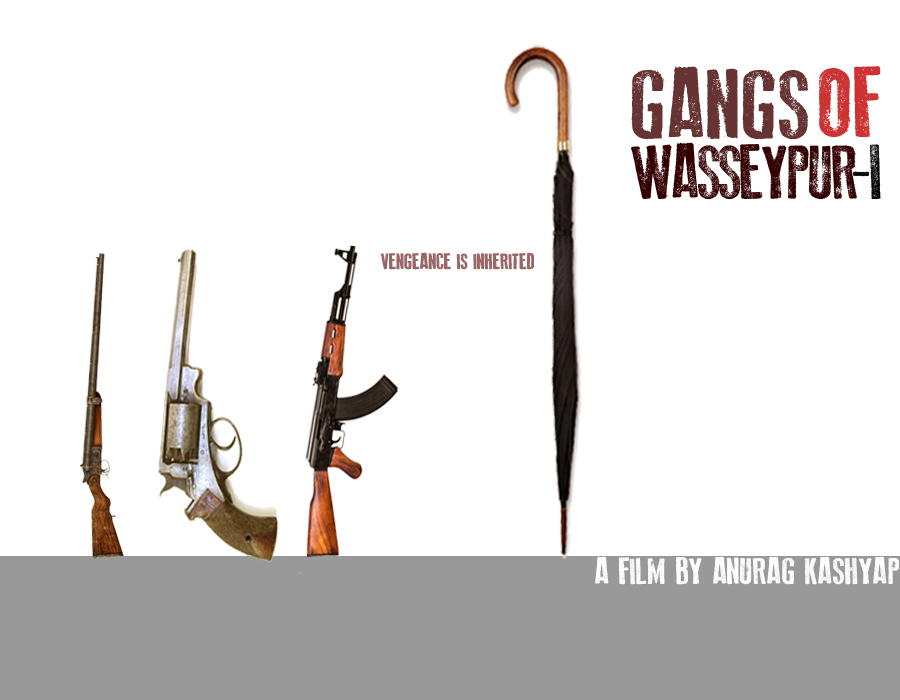
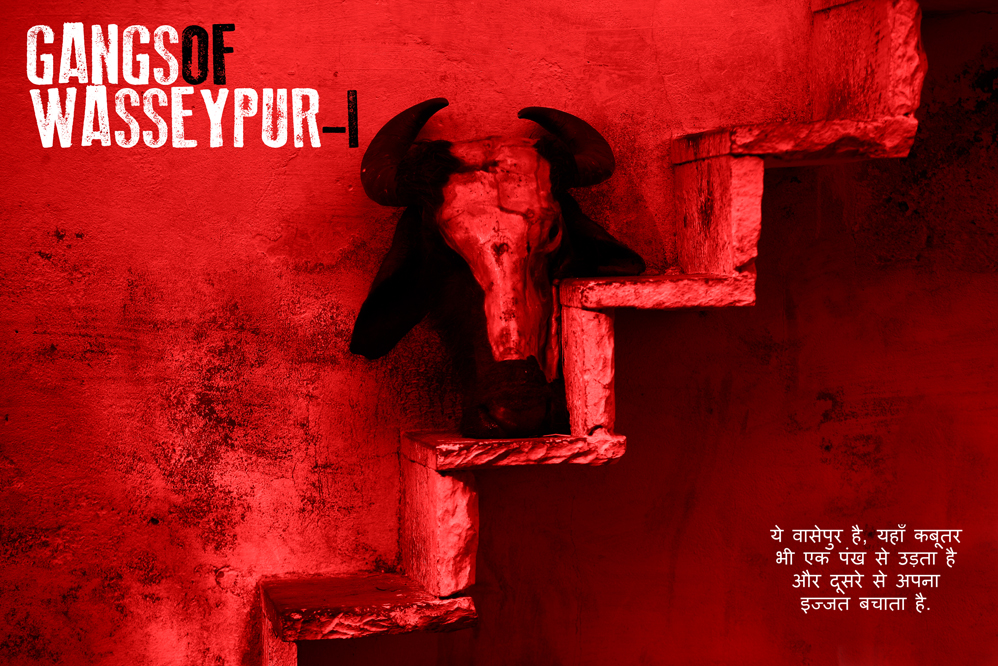
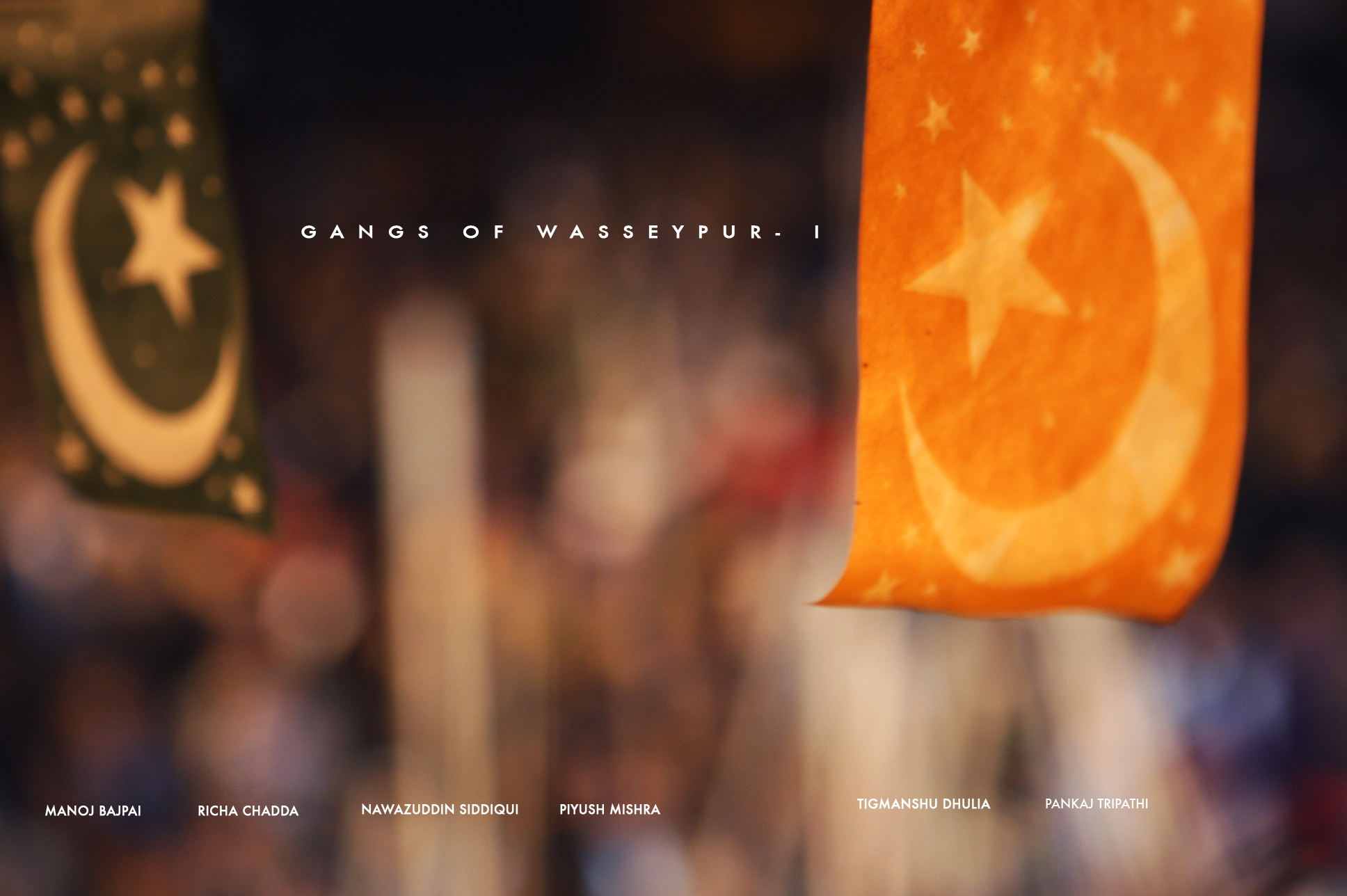
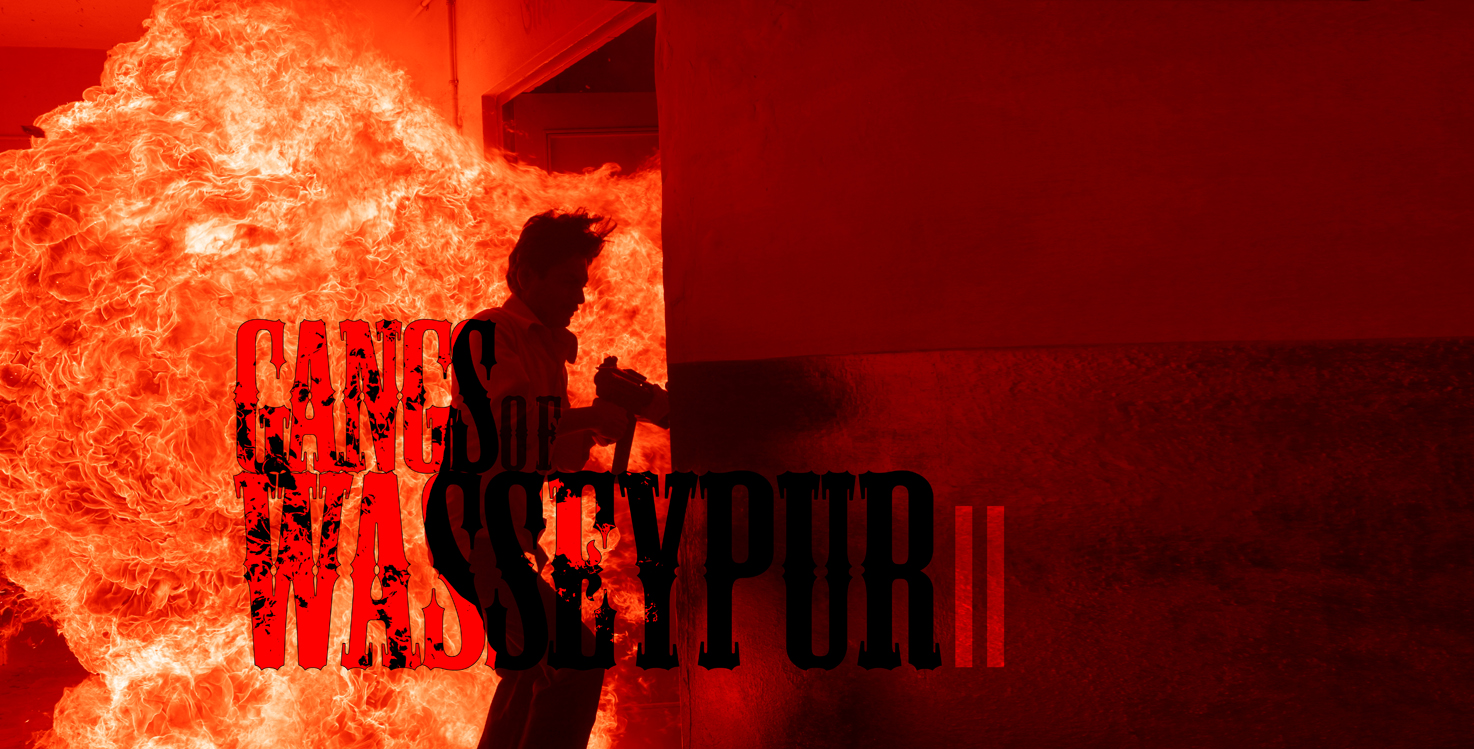
So here are some interesting ‘fanboy’ posters for Gangs Of Wasseypur… Take a look, and do send us your own if you’ve made any of your own. Enjoy!

The 10th, 11th and 12th posters are by Vijesh Rajan, Akshar Pathak and Abhinav Bhatt respectively.

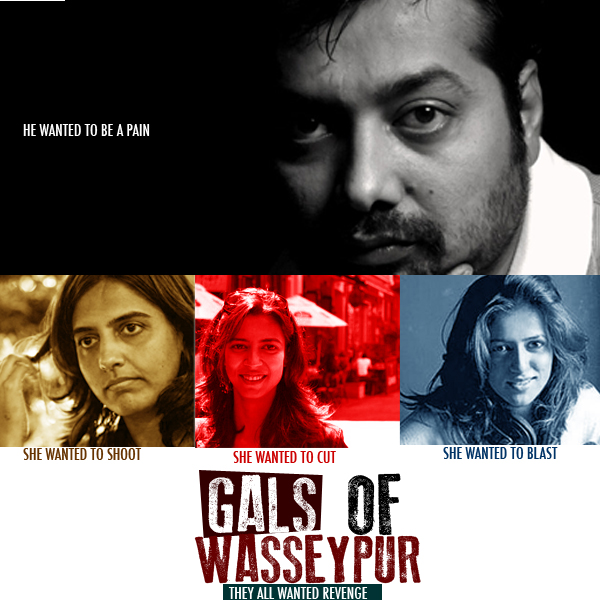
The first 9  are by Neeraj Ghaywan… Who was clearly very bored during post-production for the film. And also the last one, dedicated to the 3 Womaniyas who were a major force behind the film and had to suffer much at the hands of a certain Mr K. Here they have their revenge. This one is our favorite!

(Update: Added Sumit Purohit‘s Minimalist Poster as well. Keem ’em coming!)

(Update 2: Added  अमित aka @hypnosh‘s fantastic new minimal poster. We love this!)

Gangs OF Wasseypur by Vijesh Rajan

Gangs Of Wasseypur by Vijesh Rajan

Gangs Of Wasseypur Minimal Poster by Akshar Pathak

Gangs Of Wasseypur Minimal Poster by Akshar Pathak

Gangs Of Wasseypur Minimal Movie Poster by Abhinav Bhatt

Gangs Of Wasseypur Minimal Movie Poster by Abhinav Bhatt

Gangs Of Wasseypur Minimal Poster by Sumit Purohit


Gangs of Wasseypur Minimal Poster by @hypnosh


Gals Of Wasseypur

Anubhuti, Shweta and Sneha. Hell yeah.

Lot of us have been talking about the characters of Gangs Of Wasseypur and how they are confusing at times as they keep on entering and vanishing from the main plot. And then film critic Anupama Chopra pointed out in her review that it would have been good if there was a booklet with all the main characters and the family trees. Talk started on social networking platforms and our man from Wasseypur, Neeraj Ghaywan came to the rescue. This is also going to help you in understanding the family dynamics in Part2. So here it is.

Have a look and spread the good word to your confused friends. There are two pages – 1st one is Khan tree and click on the arrow which appears on the tree to take you to 2nd page – that’s Singh and Qureshi clan.

Growing up in a small colliery town in Dhanbad district, the first tax that i learnt about was called rangdaari tax. That was much before the “tax and debentures” chapter in school. As a kid it seemed fun. You demand and someone pays you. Also, everything was related and dictated by coal there. The two important trains to Calcutta, the closest metro town, were Coalfield Express and Black Diamond Express. With so much coal dust floating all around, all the trees in our area were black in colour. My aunts and relatives would even compare Dad’s dark complexion with coal mines to tease us when we were kids. (Similar emotions are there in a terrific song in part 2 of Gangs Of Wasseypur). Vishwakarma puja – celebration of God of architecture and engineering was a household thing. Have rarely seen that anywhere. Worshipping your bicycles and scooters!

The area had a local don called D N Singh. That rangdaari tax! And as filmy legends go, the guy was good at heart too. Donating generous amounts for Durga Puja and other local festivities. And had a filmy end too. With the posting of a new police chief, he was attacked and beaten up in the middle of the market on a broad day light and was literally stripped off his power.  Since Dad was posted as Welfare Officer there, we used to hear all kind of stories revolving around miners welfare. And film conversations with Dad or his friends meant someone will surely talk about Amitabh Bachchan starrer Kala Patthar. Everyone used to claim that it was shot in their area and they had seen its shooting. I never bothered to check where exactly it was shot. There is no fun in killing that joy of nostalgia with little bit of knowledge.

But Anurag Kashyap’s two-parter Gangs of Wasseypur is more than just nostalgia for me. Though i was happy that finally we have some new tales beyond the legend of Kala Patthar. We moved out of Dhanbad after Dad’s retirement but am going to call him and tell about a new film from the land of Bharat Coking Coal Limited (BCCL).

Gangs Of Wasseypur is quite an ambitious film in every possible way and Kashyap is in top form with his craft. He was never this good! To tame and deliver a beast of this epic proportion is a mammoth task.

I first saw the film when it was in edit. Still don’t have the talent to gauge the final film from its rough cut. Could figure out that individual scenes and humour was working. After that, me and some others have been pestering him to screen the film before he left for Cannes. And unlike others, he scores quite high there. Has no insecurity about showing his films, no matter what you think about it. I hated That Girl In Yellow Boots and wrote about it here.

Then a call at 1am.

Film dekhega? Dikhao. Kab se bol raha hoon.

Abhi dekhega? Abhi? Kahaan?

PVR aa ja. 10 min me. Kya? Haan. aa ja.

It started around 1:30 am and got over by 4:30 am or so. In an empty cinema hall with just 10-12 of us and Manoj Tiwari’s voice blasting in the early morning hours, my morning never started on such a high note. It was pure cinematic orgasm on big screen! Jiya ho bihar ke lala kept on playing in loop in my head.

I saw the film today again. The opening credits still looked the coolest in the B-town! It still felt bit long and indulgent. But as i have often believed and contradicted myself too – if filmmakers and artists don’t indulge, who will? My kiranawala? Finally it all depends on you – what indulgence by which artists you can connect to.

Piyush Mishra’s voiceover still sounds bad. The beginning is too hotchpotch. Too many characters criss-crossing each others paths and confusing at times. Hopefully we will put a family chart soon to have more clarity there.

But what an epic filmmaker’s masterclass is this!

With the terrific talents of Rajeev Ravi and Wasiq Khan, Kashyap has managed to create a whole new world all together. A world where men are beasts but are stripped down to their bare minimum and are eyed and hunted by the womaniyas! I don’t remember seeing a Gang leader in his underwear and eyed by the woman in any film. Or when they need to take permishan to even touch the girl. Playing with gangs and guns but tears roll down when denied permishan. There are many such cinematic kinks, flavours and reasons why this film by Kashyap stands out easily. And like others, he doesn’t even claim to write strong female characters.

The humour is distinct like in any other Kashyap film. I still laugh thinking about that No Smoking scene – tum ja rahe ho? Tum aa rahi ho? Main aa rahi hoon. Main ja raha hoon. Here, a woman in labour pain while delivering the baby gets you a chuckle. Or an impromptu race between two people after a loot, when the older person shouts out hum phirst, hum phirst. I am not going to write about the rest and spoil it for you. You will be left wondering about them because these are people from a different world that we have never seen on our screen.

Now, I guess everyone knows that GoW i’s a revenge saga spanning across few generations in the backdrop of coal mafia. Having seen both the parts, what i can tell you is that the first part takes time to set up as everyone is doomed and is busy sowing the seeds for their ends, either with love or hate. 2nd part is more action, more drama and more revenge. First is like wine, you can’t treat it like junk food. You need time to savour it. There’s no takeaway from it. In the business of guns and groins, coal is just the excuse. Enjoy it till it lasts. Kyunki yahan last me kuch nahi hota hai! Because the beginning is the end. Kyunki Saans Bhi Kabhi Bahu Thi – That’s it! And in that way it’s unlike other desi films we see these days. So even in your viewing, you can’t treat it like any other film – start, beginning and end!

Nothing makes me more cringe that seeing a bad scene on screen. That breakdown scene by Kumud Mishra in TGIYB still haunts me because it’s atrociously bad. In Gangs Of Wasseypur, you can’t point a single scene which is badly acted or directed. The actors, each one of them, from the main lead (Manoj Bajpayee, Tigmanshu Dhulia, Nawazuddin, Richha Chaddha, Jaideep Ahlawat, Piyush Mishra, Jameel Khan, Huma Quereshi, Reema Sen and rest) to the extras, they all make it look so real. They don’t act, they *are* the characters. Once inside their world, you forget the real world that you belong to – that’s a rare achievement. But my favourite is Pankaj Tripathy. He has such a strong presence and am happy that he finally gets his due.

But it would have been better if it was bit shorter, no?

Why only shorter, it should have been just one film. Right.

And if there was no voice-over in the beginning. True.

And would have been better without all that history of Bihar and Jharkhand.

It’s also so self indulgent!

And you don’t emotionally connect with the characters.

May be then it would have been my film and not a film by Anurag Kashyap. Having seen all his film in the last few years, i have made peace with his art and craft. You can’t beat him in craft and in the budget that he delivers, it’s almost impossible. As for his art, it’s not easy to digest. It’s never going to be your regular fare. And i hope it remains that way. Once in a while I like being restless. There’s a thrill in getting out of your comfort zone and figuring out things in the dark – where the wild things are! It’s time you do the same. It will take some time but you will get used to it. If you can afford, why should your cinema be just for escapism? And if you are worried, don’t think because we have enough Imtiaz Alis and Raj Kumar Hiranis to take us back to those comfort zones.

(Update – I hate it when people like a film but forget to mention the writing credits. And i just did the same. So here it is – Zeishan Quadri, Akhilesh, Sachin Ladia and AK.  This is via wiki, so am not sure about the right credits. Deadly lyrics by Varun Grover and Piyush Mishra & Music – Sneha Khanwalkar. Background –  G V Prakash. And all of them contribute immensely to this experience)

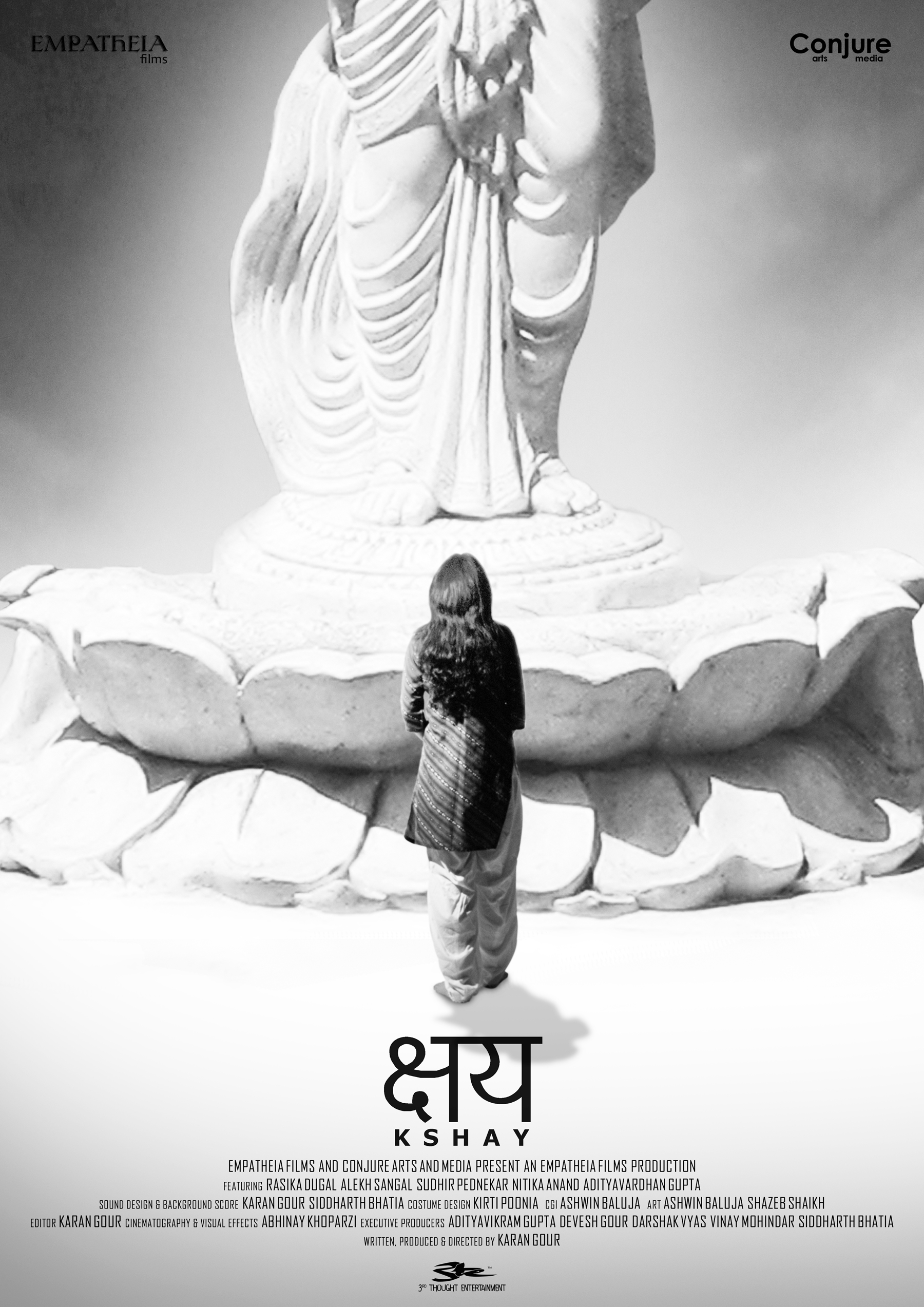
In her twitter bio, Svetlana Naudiyal describes herself as Murphy’s favourite child. So over to the child who is just back from a country where there is almost no cinema culture and she was trying to make them understand what is the point of a film festival. Back to India and here’s her recco of the film Kshay, which has been doing the rounds of film festivals since quite sometime.

There is no local popular cinema in the theaters. The only theaters are the ones in the malls. From malls to pirated dvd stores – all you’d prominently see is Hollywood. I’ve just returned from Cebu City, so to say, the second largest city in Philippines. The townesque city is burgeoning with Malls, Multiplexes, BPOs and all possible American Chains. The city glistens, roads are well done, cab drivers never say no and their peso is better placed against dollar than the rupee. In this seemingly ‘developing’ state of affairs, local cinema has no ground beneath its feet. I get to meet a few Cebuano Filmmakers and see their films. Great work and talented, no doubt! But what do they do?

Cut to – my country, my crazy cinephile country.

Here back home, I see Kshay on the big screen, and I am moved by the mere thought that here someone can not only make the film they want to but also hope that it would see the light of theatrical release someday.

But is that why you should support it? Just because someone really struggled to make an Indie film and then eventually managed to get it to the box office?

——

Kshay, as the very poetic title suggests, corrodes.

Corrodes the being.

Chhaya, a simple housewife, becomes strangely obsessed with an unfinished idol of Goddess Lakshmi. Her husband, Arvind, works for a reckless building contractor and struggles to make ends meet while reeling under the guilt of not being able to give Chhaya the life he promised to. Their lives are thrown in a downwards spiral as Chhaya slowly becomes oblivious of their circumstance and succumbs to faith turned into obsession.

It is not often that the frames and sequences of a film hover in your mind for long after you see it. They corrode the mind, resonate with life and create a surreal-real world of obsession, hopelessness and love. It’s beautiful how the textures, lights and score accentuate the psychological corrosion of Chhaya. Together with Arvind’s frustrations and the hopelessness a viewer sees in their situation, the film builds a strange tempo as it progresses; it might not be evident in the pace but most certainly so in the feeling it leaves one with.

Shot in black and white, the cinematography by Abhinay Khoparzi, is highlight of the film. The eerie absurdity of dreams, delusions, reality and the textures, all stand out in black & white frames. The background score is by director Karan Gour himself is the perfect companion to it. Rasika is unbelievably real as Chhaya and beautifully brings out her pain, coldness, obsession; Alekh complements her as much in portraying Arvind’s frustrations, hope and hopelessness. Even the small roles of building contractor and neighbour lady, are marked by really fine performances.

To me, story apart, Kshay also questions – questions faith, questions reason and questions the merciless set up we live in. It’s a world where WTC crash becomes table-top merchandise.. Exploiters continue to have their cake and eat it too.. Exploited barely find a way.. It’s a world of faith becoming obsession and obsession ending only in….

Coming back to the question – Don’t watch it because it’s another oh-so-poor-striving-for-support indie film, watch it because it’s good cinema, that totally deserves your time and money.

———————————————————————————–

– Here’s a preview of Kshay’s hauntingly gorgeous music –

Kshay OST – Home

Kshay OST – Everywhere

– And the trailer

– To know more about the film click here. And click here for the FB page of the film.

– PVR JUHU (Mumbai) will have one show running in the next week at 6:35PM. Don’t miss this one!

– And if our recco isn’t enough to convince you, here are some more reviews – Namrata Joshi of Outlook rates it 3.5/4, Karan Anshuman (Mumbai Mirror) has rated it 3.5/5 and Aseem Chhabra (Rediff) has also given it 3.5/5.