Archive for the ‘film’ Category

Finally, the official trailer of Vasan Bala‘s debut feature Peddlers is out. The film is all set to premiere at Cannes International Critics’ Week.

So what works and what doesn’t? Since he is a good friend, i might be biased. But let me try. The visuals look gorgeous, there is a sudden tension in the mood but it all looks calm on the surface. Great! And the ‘ud jayega‘ raw vocals adds to the creepiness. But the text seems to be too vague. Actually it’s the same as that cryptic synopsis of the film. Why? Who does that? Also, font is dull and boring. And it comes on the visuals. Found it too be distracting.

What do you guys think? Do leave your comments.

To quote the official synopsis,

Peddlers – A ghost town, Mumbai, inhabited by millions. A lady on a mission, a man living a lie, an aimless drifter. They collide. Some collisions are of consequence, some not, either ways the city moves on.

And here’s the cast and credit list..

Director : Vasan Bala
Screenplay : Vasan Bala
Cinematography : Siddharth Diwan
Editing : Prerna Saigal
Sound : Anthony B.J. Ruban
Music : Karan Kulkarni

Cast: Gulshan Devaiah, Siddharth Mennon, Kriti Malhotra, Nimrat Kaur, Murari Kumar, Sagai Raj, Megh Pant, Nishikant Kamat, Neeraj Ghaywan and Anubhuti Kashyap.

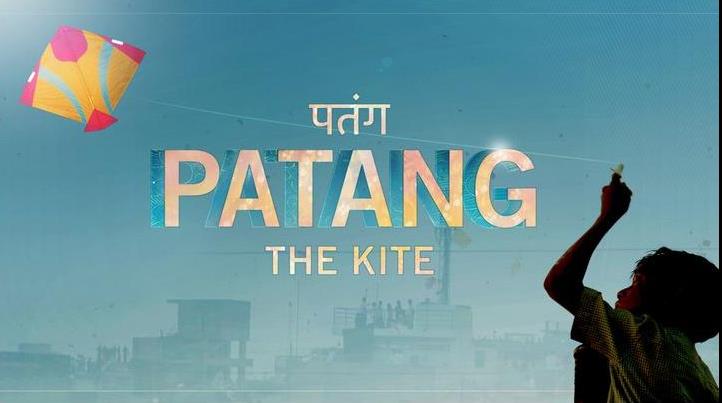
Prashant Bhargava’s debut feature Patang has been doing the rounds of international film festivals since last year and the latest one was the prestigious Ebertfest.

It stars Seema Biswas, Nawazuddin Siddiqui, Sugandha Garg and Aakash Mahayera, and has been shot by Shanker Raman.

The film will be finally in US theatres from June 15th. And here’s a new trailer of the film.

And here’s the synopsis..

A family saga set against the colorful spectacle of the Uttarayan, India’s largest kite festival, The Kite is a kaleidoscopic whirlwind of energy, romance, and turmoil. A businessman arrives in Ahmedabad for a surprise visit to his once grand family home, bringing with him his daughter and some unexpected news for the family’s future. Amongst the flurry of preparations and the energy of the festival itself, the transformative and intersecting tales of six characters unfold.

To know more about the film, click here.

You can also watch Prashant’s short film Sangam at www.mubi.com. The film premiered at Sundance Film Festival in 2004.

A new book titled Mother Maiden Mistress – Women in Hindi Cinema, 1950-2010 is out in the market. The co-writer of the book, Jigna Kothri, writes about it and shares an excerpt from it.

The first woman protagonist in Hindi cinema was Taramati, in Dadasaheb Phalke’s Raja Harishchandra (1913) enacted by a man since cinema was considered a profession beneath the dignity of ‘respectable’ women, even if she was playing a pious, and ideal wife on screen. It would seem Hindi cinema has come long way since then, though, the journey that Mother Maiden Mistress makes through six decades of cinema, finds that the more things have changed, the more they have remained the same.

The book  brings to life the women characters that peopled cinema and the popular imagination, and shaped fashion and culture. The book records and reviews the woman in Hindi cinema – the mythical, the Sati-Savitri, the rebel, the avant-garde and the contemporary. To get a better idea of where these characters come from, the book shows the society that the the filmmakers lived in, the socio-political milieu of the particular decade. We look at what kind of films were made during that decade and what were the dominant features of women protagonists at that time. In this context, certain protagonist are chosen and dicussed in detail.

It’s not just the character that is discussed, one section of the chapter, looks at the way women were dressed in the films of the decade, the high and lows of fashion in Hindi cinema. There is also the first-person narratives of a leading actress from each decade – Waheeda Rehman, Asha Parekh, Hema Malini, Shabana Azmi, Madhuri Dixit and Rani Mukherjee – all close-up examinations of how some of the iconic characters of Hindi cinema came to be.

The following is an excerpt of Chapter 3: Seventies – Look Back In Anger. These paragraphs are from the section that discusses the roles accorded to women characters in the popular films of the decade and attempts to record and review not just the stereotypes but also the exceptions.

“Films dominated by male superstars often reduced women to uni-dimensional figures. The action films of the seventies revolved around action/angst-ridden, disenfranchised hero/heroes who took over all the rasa/bhava of the narrative. The women were passive constructs whose fate and circumstances lead to the hero’s heroism. The multi-starrer phenomenon – films like Manmohan Desai’s Amar Akbar

 Anthony, Suhaag, Dharam Veer and others – further reduced the woman’s impact on the narrative. Love stories and big-budget musicals were no exception. The same was seen in buddy films where the so-called feminine emotions and feminized virtues of love and sacrifice usually accorded to the heroine were taken over by the heroes.

In Hindi films, friendship among males always involves tender emotions. The friends are separated by circumstances or a woman, and the film usually ends with one sacrificing his life/love for the other.

The men would have their respective romantic interest keeping in mind the interests of heterosexuality. Sholay (1975) became the definitive and probably the first ‘action-buddy’ film in which the two heroes, united against the forces of injustice, carried the narrative.

To seek a definitive feminist or even a progressive representation of women characters in mainstream cinema in the seventies would be futile. However, several traits were seen in women characters that were definitely a breakthrough in commercial cinema.

Yash Chopra’s heroines were well-sketched, realistic individuals who could compromise but never suffer to be victims. In Kabhi Kabhie (1976), Pooja (Raakhee) and Vijay (Amitabh Bachchan) choose duty over love and decide to part. Pooja accepts the new relationship in her life and grows into the role of doting mother, wife and career woman whereas Vijay continues to nurse his hurt over his lost love and neglects his wife. His wife, Anjali (Waheeda Rehman), married to an indifferent man and forced to play second fiddle to her own daughter, has also to come to terms with the guilt of abandoning her first-born child. Her instinctive reaction on meeting, for the first time, her adult daughter born out of wedlock is to hide the truth from her husband. Pinky (Neetu Singh), that daughter, puts her marriage plans on hold when she learns about her biological mother and embarks on a journey to meet her.

In Trishul, the heroines Geeta (Raakhee) and Sheetal (Hema Malini) have their individual personalities, being neither subservient to nor dependent on the heroes. Kaala Patthar, a film about a man’s cowardice and redemption (the story is partly based on Dhanbad’s Chasnala Colliery tragedy in 1975 that killed 372 miners and on Joseph Conrad’s Lord Jim), did find space for characters such as Anita (Parveen Babi), a photo-journalist investigating the conditions of coal miners, Dr Sudha Sen (Raakhee), who serves the mining colony, and the street vendor Channo (Neetu Singh). Nisha (Raakhee), a single woman and successful professional in Doosra Aadmi  (1977), falls in love with a much younger, married man who resembles her late beloved.

Significantly, most of these characters were created by Salim–Javed, whose iconic creation in Sholay  – the loud-mouthed tangewali Basanti (Hema Malini) – was a departure from the stereotypical village belle. Earning her own keep, she certainly does not believe that women should be seen and not heard, and does not surrender to her fate, choosing to fight instead. Hema Malini, dubbed the ‘Dream Girl’, was one of the rare heroines who pulled off action scenes in films such as Seeta Aur Geeta  (1972) and Paraya Dhan  (1971) in which the heroes occupy the usually feminine passive space.

Films in which the women not only take control of their life and their space but are active participants in the fight against the system are rare. Usually, the heroines either hold the hero back or garland and send him off to the battleground. There were rare examples, such as some roles essayed by Asha Parekh, which often broke away from the stereotype. In Aan Milo Sajna  (1970), the lead character pretends to be betrothed to the villain but falls in love with the hero and actively pursues him, complete with an eve- or rather Adam-teaser of a song: ‘Palat meri jaan’. It is the hero who is suspected of immoral behavior and has to prove himself to the heroine – a reversal of Sita’s taint.” 

DETAILS : Written by Bhawana Somaaya, Jigna Kothari and Supriya Madangarli.

Publishing Date: 2012.  Publisher: Harper Collins.  Number of Pages: 272. Language: English. Price – Rs 299

We will be reviewing the book soon. If you are interested, you can order it from Flipkart here or from Infibeam here.

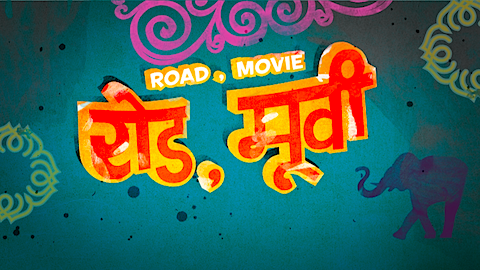
Few months back, Dev Benegal posted the script of his film Road, Movie on his website. But if you missed it, we are posting it here again. Simply because we try to gather and post as many hindi film scripts as we can and all at one place. The screenplay of the film was selected for the L’Atelier section at the Cannes Film Festival 2006. ( Click here to read his interview on the same)

I didn’t like the film much. Thought it was pure desi exotica for the west but it had lot of interesting stuff. But whether you like a film or not, reading a script is always going to help. So, here you go – download and happy reading.

Courtesy – Dev Benegal

Ah, finally. The way Viacom18, the producer of Gangs of Wasseypur, was reluctant to share even on location images of the film after the Cannes announcement, we were thinking if they were going to lay some golden eggs.

The trailer, poster and the official synopsis of the film is finally out. Let’s go one by one. First, the trailer.

Loot, coal mines, volatile people in volatile land, zindagi ka ek-e maksad – badla, jail, chop shop, Tishu, Bihar ke lala, cuss words, Richa attacking the same man who has been killing everyone, sex, goggles-wala-pyaar, dhoom-dhaam, more cuss words, more earthy and punchy dialogues, more abuses and some more dhaam-dhaam. And everything is inherited! E toh poora ka poora dabang haiabki badke Kashyap ki baari.

But why is the text font so bland? Bad font always bores me.

As far as the trailer goes, this is as mainstream as it can be. But i think the trailer serves more masala than the film will offer. Might be wrong. But Kashyap without his indulgences? Jiyo o Bihar ke lala. The trailer doesn’t tell you much about the film but it gives the ambiance and the mood of the film and tells you what to expect – you connect the dots. And if you can’t, scroll down for the synopsis.

My fav bit – Pankaj Tripathy. Bahut-e kamaal ke actor hai. Agle Yashpal Sharma hai jo hame bahut-ey pasand hai.

Now, the poster.

Superb art work. Like the colours and the treatment. But why such a bad finish? The film posters on the right and left hand side looks so weird. As if at the last moment they asked some intern to put two posters. Just doesn’t gel with the rest.

And now the official synopsis…

Towards the end of colonial India, Shahid Khan loots the British trains, impersonating the legendary Sultana Daku. Now outcast, Shahid becomes a worker at Ramadhir Singh’s colliery, only to spur a revenge battle that passes on to generations. At the turn of the decade, Shahid’s son, the philandering Sardar Khan vows to get his father’s honor back, becoming the most feared man of Wasseypur. In contemporary times, the weed addicted grandson, Faizal Khan, wakes up to this vengeance that his family has inherited. Staying true to its real life influences, the film explores this revenge saga through the socio-political dynamic in erstwhile Bihar (North India), in the coal and scrap trade mafia of Wasseypur, through the imprudence of a place obsessed with mainstream ‘Bollywood’ cinema.

The film stars Manoj Bajpai, Nawazuddin Siddiqui, Jaideep Ahlawat, Tigmanshu Dhulia, Aditya Kumar, Reemma Sen, Richa Chadda, Huma Qureshi, Piyush Mishra and Syed Zeeshan Qadri.

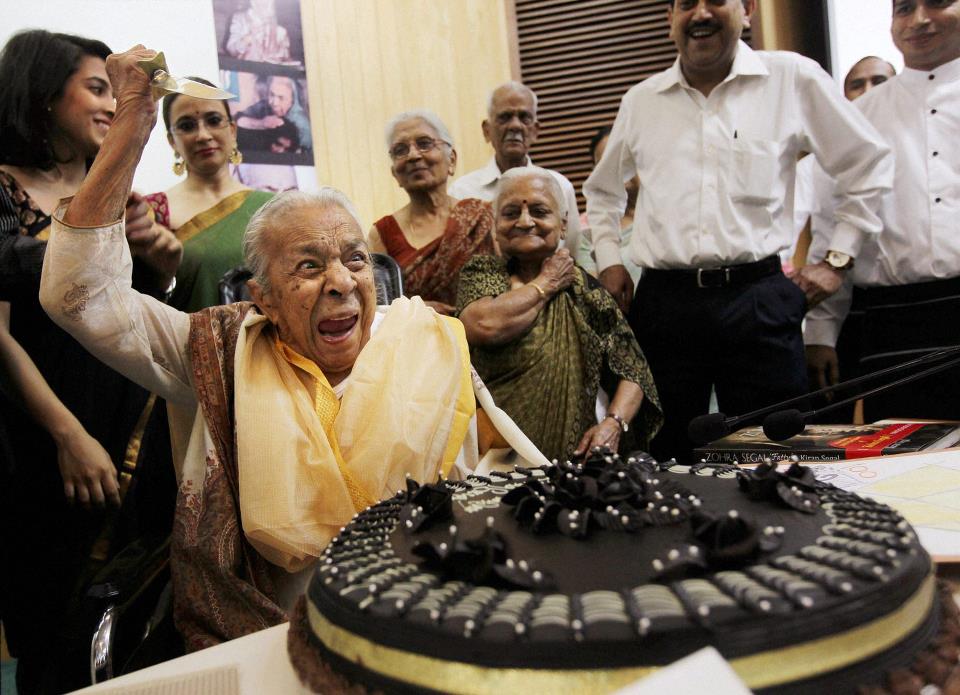
Zohra Sehgal, a name that symbolizes liveliness, and truly defines ‘Life’ in every possible way.  The unmatched charm, the animated smile on that expressive face, and the young heart, even at this age it fills every ambiance with so much joy and happiness. Forget real life, look at any of her pictures and you realise that it’s so easy for the camera to capture it.

The living legend completes a century “full of Life” today on April 27, 2012.  Born exactly 100 years ago, Zohra started her career  as a dancer with Uday Shankar, was later associated with IPTA & Prithvi Theater and made her onscreen debut in Khwaja Ahmed Abbas’s much acclaimed Dharti Ke Laal in 1946.

Here’s a rare clip of her onscreen appearance in Dharti Ke Lal.

In recent years she has continued to work in films and has made her unique presence felt strongly in films like Dil Se, Bend it Like Beckham, Saaya & Cheeni Kum.

Hundred & not out, we wish Zohra Sehgal many more years of life…a life that has priceless memories to share, stories to tell and moments to cherish.

Happy 100 years, Zohra-ji!

(PS – ANI recently did an interview with her. It’s in three parts. Click here to start with the first part.)

Pavan Jha

For small and regional films, social networking platforms can be quite a boon. If anything is good, one doesn’t need to worry about its audience. When people become your ambassador, you don’t need advertising or pr. I discovered the wonderful trailer of Bhooter Bhobishyot on FB and was instantly hooked. Have been following it since then and it’s finally getting a limited release in Mumbai today. So here’s a recco post on the film by Aniruddha Chatterjee. But first watch the trailer. Wish they had released it with subtitles.

Imagine this. Two ghosts, one a zamindar who got killed by the dacaits, and the other, a British officer who served in pre-independent India, are auditioning other ghosts to fill the zamindar’s abandoned mansion. This is because most old mansions and houses are demolished and turned to shopping malls and multiplexes by money hungry promoters and are ruining the culture and heritage of the city. So the ghosts all over the world, especially in Kolkata, are finding it very difficult to find a place to live in. Interestingly, even the ghosts are worried about their food, entertainment and security. The selections in the audition are made accordingly. This is the crux of debutant director Anik Dutta’s delicious bengali film Bhooter Bhobishyot.

Siraj-ud-Daulah’s trusted cook who gave his life in the Battle of Plassey, an Indian army officer who got killed during the Kargil war, an actress cum singing Kanan Devi-isque sensation of the 1940s who committed suicide after her producer boyfriend ditched her and married someone else, a Bangla rock band member who overdosed himself to death, a Bihari rickshaw puller who was killed due to reckless driving by a rich brat, a Hindu refugee from Bangladesh who was killed during partition, and a modern day city girl who jumped from her apartment terrace when her industrialist father refused to let her marry a Muslim boy – all of them get selected after the audition. The thread connecting all the ghosts is that they all died unusual deaths.

The ghosts sing, dance, romance, go to picnic, argue over hilsa and prawn, and when endangered, unite to fight against a promoter who wants to destroy Choudhury mansion and build a mall.

The script is unique and original, and is one of the most satisfying satirical comedies of late. The filmmaker takes a dig at everything that is Bengali – the intellectual filmmakers who only prefer Godard, Fellini and Ray, the pseudo communist rebel who thinks wearing Che Guevara t-shirt proves everything, the Dada and Didi of Bengali politics including the Rizwanur Rahman incident, and the everlasting fight between ghoti and bangal. It is refreshing to see usage of Spookbook, Facebook for ghosts, to find a suitable match for an item number.

Interestingly, the narrative is a tribute to Ray’s Hirak Rajar Deshe, as almost every character in the film speaks by rhyming their lines. The humour is subtle and situational. Literal and political references are plenty, and so it needs to be seen whether non-Bengalis find the humour appealing or not.

Another aspect that must be mentioned is the music. Raja Narayan Deb has created one of a kind soundtrack with influences from every genre possible – rock, pop, rabindra sangeet, jazz, folk or qawwali, and also from the different eras the characters belong to. (Click here to watch a terrific song medley from the film)

Also, it has excellent performances by the entire ensemble cast, but Sumit Samaddar as the Bangladeshi refugee and Swastika Mukherjee as Kadalibala, the actress cum singer of the black and white era, are the scene stealers.

Anik Dutta, the writer-director of the film is a renowned ad-filmmaker. This is his first feature film and for that he deserves every bit of accolade he is receiving for creating such an entertaining film.

Currently, the film is playing in theaters all over West Bengal. It’s getting a limited release in Mumbai on 27th April. Don’t miss it!

For more details, film’s Facebook page is here. For Bombay’s theatre listing, click here.

In the last few years Marathi cinema has done everything that Hindi cinema wasn’t doing. And most importantly, tackling subjects which are rooted. As they say, if we don’t tell our stories, who will? A good marathi film is not a surprise any more. The question is how good it is? Here’s a trailer of a new film called Pune 52. And it looks damn interesting.

To quote from the official release, Pune 52 is a noir thriller about a private detective living in Pune circa 1992, whose life undergoes a dramatic change when he takes up a case that is both dangerously complex and deeply personal.

Starring national award winning actor Girish Kulkarni, Sonali Kulkarni and Sai Tamhankar, Pune 52 is set to release by the end of 2012.

It’s produced by the makers of films such as Valu, Vihir, Deool and Harishchandrachi Factory and is the debut feature of writer/director Nikhil Mahajan.

Here’s a small note by the director on the making of the film..

Like most middle class Maharashtrian brahmin boys, I went to do engineering after std. 12th. Took me 2 years to realize that I suck at it and another 2 years to convince my parents that I have to get out of it. So I dropped out and went on to work at Ramu’s factory as a screenwriter on a project that never took off.

I then went to Sydney and graduated in Film and came back. Got a job with the Hinduja Group’s In Entertainment as a writer where I was writing Tamil superhero films for a living. As much as I enjoyed doing that, I had to write a film about someone who aspires to be a hero. So started writing Pune 52.

Girish was the first person I approached to act in the film. He had doubts because of the content, but still was game for it. They were still shooting Deool then. I went to around 40 producers who all turned it down because it was too adult for the conventional marathi audience’s taste. Eventually Umesh and Girish decided to produce it themselves. And luckily the script got selected at Primexchange at IFFI. Then there was no looking back.

Its being shot by Jeremy Reagan, my friend from Film School and is edited by Abhijeet Deshpande. Stars Girish Kulkarni and Sonali Kulkarni and has background score by Hyun Jung Shim ( who composed for Oldboy) The film has 2 songs, composed by Atif Afzal who has done the music of the soon to release Prague.

For more information, film’s FB page is here.

After working in the television industry for about 15 years in various capacities, Rony D’Costa decided to quit it all and pursue happiness. He generally finds it in dark theatres or under the open sky and write about those adventures here and here. Here’s Rony’s recco post on the marathi film Masala.

“Do you do this for your own happiness?”, when this question is asked to the character played by Dilip Prabhvalkar, a scientist experimenting to create bio fuel, he says, “mi anadasaati kaahich karat naahi. Ananddaani karto”. Loosely translated as, “I don’t do things for happiness. I do it with happiness”. Sandesh Kulkarni’s Masala is filled with such gems of wisdom and is casually thrown in scene after scene by characters straight out of Malgudi Days. It almost works like a self-help movie for entrepreneurs without any high-handed preaching. No wonder then that it reminded me of ‘The Pursuit of Happyness’.

Revan(Girish Kulkarni) and his wife Sarika(Amruta Subhash) keep shuttling from one village to another hiding away from creditors. Not because they are dishonest people but, as it’s shown in one scene, they are more worried about the problems of the people who owe them money. From one failed business to another one quietly supported by his wife, Revan reaches Solapur where he meets Sarika’s long lost cousin (Hrishikesh Joshi) and his wife (Sneha Majgaonkar). Thus begins Revan’s encounters with some crazy, quirky and eccentric characters who ultimately become his family.

The film is not in a hurry to reach its destination. It doesn’t even care about the plot much and to go by traditional rule book, it’s devoid of any conflict too. Debutant director Sandesh Kulkarni invests all the screen time in his characters and their bittersweet life. It works like a Hrishikesh Mukherjee film as Girish Kulkarni’s writing is simple and effective and never resorts to melodrama to make a point. Like RajKumar Hirani’s films, this one also chooses to look at the goodness in human beings, so none of the characters have any shades of black.

I strongly feel that Masala should be made compulsory viewing in business schools and can work as an anti-depressant for people who have given up on their dreams. It also reminded me of ‘The Alchemist’ in the way it talks about finding the treasure within you. Add to that the lilting background score which makes its presence felt only if you choose to focus on it. On acting front, Girish Kulkarni plays the role of Revan with the right amount of innocence and Amruta Subhash ably supports him with the silent portrayal of her character. Hrishikesh Joshi’s character is one of my favorites in the film and Sneha Majgaonkar, who makes her debut with this film, has an infectious smile. I loved the scene in which she tells Sarika about her husband’s problems with a smile on her face as if she is praising him.

It also has one of the most romantic scenes I have seen on the big screen in recent times. The scene when Sarika has to take her husband’s name in the form of an Ukhane (a Marathi custom in which the wife takes her husband’s name in the form of couplets).

The film is loosely based on the life story of Hukmichand Chordia of Pravin Masalewale fame. It looks at their struggle in a lighter vein and with the rose-tinted glasses. The next time I look at a packet of Pravin Masala, scenes from this film will start floating in my head.

It’s raining good news and how! After Miss Lovely and Peddlers, the latest one to join the Cannes club is Anurag Kashyap’s two-parter Gangs of Wasseypur.

The film will be screened in the Directors’ Fortnight Section. Produced by Viacom18, it stars Manoj Bajpayee, Nawazuddin Siddiqui and Richa Chaddha.

Interestingly, Peddlers is also produced by Anurag Kashyap Films. So Peddlers and two-parter Gangs of Wasseypur in the same year. That’s a hattrick! And if you count Udaan, then Un Certain Regard, Critics Week and  Directors Fortnight has been cracked. Now AKFPL just need to crack the competition!

According to its official release,  the Directors’ Fortnight is distinguished by its independent-mindedness, its non-competitive nature and its concern to cater to non-professional Cannes audiences. Striving to be eclectic and receptive to all forms of cinematic expression, the Directors’ Fortnight pays particular attention to the annual production of fiction features, short films and documentaries, to the emergence of independent fringe filmmaking, and even to contemporary popular genres, provided these films are the expression of an individual talent and an original directorial style.

Click here to read Kashyap interview on Gangs of Wasseypur.

(PS – To know more about the Directors’ Fortnight section and selection, click here.)