Archive for the ‘Special’ Category

As the opening credits of the film rolled, a plate appears on screen, of you dedicating the film to your father.  My mind quickly went back to another film, and easily this year’s best so far, Alejandro Gonzalez Inarritu’s Biutiful. And strange as it may sound, the actor of the film is Javier Bardem. You may not have seen his film, The Sea Inside, or may be it’s difficult to remember what all films you saw before you decided to make Guzaarish, but whoever told you that making the canvas BIGGER creates all the magic, needs to see the film Biutiful.

Workman 1: Hey, you can’t go down there!
Alfred Borden: I’m part of the bloody act you fool!

Black wasn’t The Miracle Worker, Saawariya wasn’t White Nights, and of course, Guzaarish isn’t The Sea Inside. I remember a friend telling me that after he interviewed you and left, you called him up and asked him to describe you as an “auteur” in the piece that he is going to write. Over the years, those who have access to you, or say those who are granted access to you, including a certain famous fluffer of Patna, and his tribe, they don’t spare the opportunity to put you into that “Auteur” category. But if possible, look outside, get out of your cocoon, take your film outside and ask any film lover, what do they think of it? No, not the star lovers. Not the production designers. Not the cinematographers. Only those who love film.

Sarah: Alfred I can’t live like this!
Alfred Borden: Well, what do you want from me?
Sarah: I want… I want you to be honest with me. No tricks, no lies, no secrets.
[pause]
Sarah: Do you… do you love me?
Alfred Borden: Not today. No

Not sure if you will ever read this post, or even if you get to read, one of your fluffer will surely dismiss it as another smear campaign, by someone who belongs to blah and blah camp, one who has no sense of aesthetics. But if you are happy with all the love and respect of all your fluffers who surround you, who nod all their heads in every word that you utter, only because they are all there to gain something from you, then, sir, the artist in you is dead.

Cutter: Take a minute to consider your achievement. I once told you about a sailor who drowned.
Robert Angier: Yes, he said it was like going home.
Cutter: I lied. He said it was agony.

The same happened with another filmmaker. The man who came with his explosive brand of cinema. Bollywood hadn’t seen something like that before. We worshipped him. And then, came the fluffers. He said yes, they agreed. He said no, they agreed. He says anything, they agree. And those who agree, are those who matter to him. Earlier we used to think, he will deliver with his next one. Now, we don’t bother. We will never. Because Ramu is RIP. More than once. Long live the fluffers!

[after showing a little boy how to do a coin trick]
Alfred Borden: Never show anyone. They’ll beg you and they’ll flatter you for the secret, but as soon as you give it up… you’ll be nothing to them.

And you know whats the worst part, your character wants to die. And I don’t feel anything. Because it seems synthetic, its seems just a wish, because you don’t dare to go close to him. To show us how ugly he is.  How ugly his life is. In the opening scene, when Ethan is lying on the bed with just a bedcover on him, the camera goes far away from him, almost scared that he might appear ugly. Or is he really ugly ? He is still the Hrithik Roshan, looks well maintained, body all covered. Now see this picture.

Ackerman: We’ll have to dress it up a little. Disguise it. Give them enough reason to doubt it.

Difficult to stare? Eh? Well, still can’t figure out? Now, imagine if i tell you that he is one of the hottest hunks around, the heart throb of millions. Its hard to believe, right? That’s what daring is all about. Shouting out from rooftop that my film doesn’t have an item number doesn’t make it any different or daring. If your memory is still failing you, here is another one to complete the picture…

Yes, its Javier Bardem, easily one of the best actors of our generation. In one of the sequence in The Sea Inside, the camera moves over his body, from toe to head, and nothing is Biutiful there, but unlike your film it doesn’t shy away to get close to him.

You stay far away, making the frames bigger with every film, lighting up million candles, illuminating your canvas from every angle and making it as soulless as possible. Do they have blood in their veins? Are they just mannequins who can emote? Since you rarely watch films by other directors, as you claim in every interview, let me introduce you to a small marathi film called Vihir. It also deals with death, almost in a meditative way. As a character tries to understand it, everything goes silent for about 15-20mins. No dialogues. Nothing big. No drapes. No candles. No coffins. Thats Biutiful.

Robert Angier: He lives his act.

Even the one by Innaritu. Biutiful. It also deals with love, loss and death. It moves in breathless and dingy spaces, not a single prop that makes you go wow at the talent of the production designer. But when the lead character is about to die, you want to hold his hand, want to make him believe that this will not happen, and you forget that its just cinema. Innaritu is also accused of  telling an intimate tale, being over indulgent, spending millions but when you stare at the screen in that dark room, nothing else matters. There is no shaft of light. Its still gut-wrenching, and yes, its not even dressed in any designer attire.

And the magic tricks? On screen? Well, ask the Harry Potter fans. Special effects make it look like nursery kids homework. Even if its a flying flame. The beauty is always in the story, the ones that lead to the tricks.

Alfred Borden : A real magician tries to invent something new, that other magicians are gonna scratch their heads over.

And is Guzaarish again set in timeless and spaceless zone? The court is all smoky. Or is it magic realism? News channels, discussions, campaigns, where are you heading SLB? Does it feels like a scary thought, to go out in the sun and shoot? And so even the court comes home soon. Yes, we have all read about your bad childhood days and how that has inspired the way you work.  Now you don’t want to see anything ugly, you want to control everything, you are the master of every frame, you will beautify the way you want it, the revenge of the childhood scars. But now that the claustrophobic trilogy is complete, can you please step out? Perhaps inhale some fresh and ugly air. Remember the joy of aaj main upar, aasman neeche? Wasn’t that Goa too?

Sullen Warder: How did you get so famous then, eh?
Alfred Borden: Magic.

And those who have worked closely with you have a theory to offer. Since Khamoshi was all soul and it didn’t work at the box office, you decided to go for all possible decorations to make it bigger and better, and it worked! The obsession continued. To make it bigger than the previous one! The fluffers made sure that you went in that direction, with more vengeance.  Yes sir, that looks just WOW! They must have said with every move of yours. But since fluffing is a physical act, I wonder if they could trace the soul anywhere. And may be its high time to  report a ‘Lost & Found’ case for that battered soul.

Nikola Tesla: You’re familiar with the phrase “man’s reach exceeds his grasp”? It’s a lie: man’s grasp exceeds his nerve.

Or, it will remain what it looks like, a big boring pretentious fuck. Much like what google seems to offer as i typed your name and selected the “Images” option. Its all just poses. Here, there, see i am thinking, see i am seriously thinking, see i am making a film! And  some more! Where are you, Mr Bhansali? Still in the cocoon. May be you can’t control everything but the world is not so bad. Come out. We will applaud.

Or hail the fluffers! May be they only make your life worth living. We will move to the next epitaph.

cilemasnob

(P S – Please leave the tangible-meet-intangible words for Gulzarsaab. Because everything else sounds like nursery rhyme. Yeh coffee gadhi kaali hai is pure pedestrian, which is trying too hard to belong, and is not really getting any help from Kunal Ganjawala’s voice dipped in sugary syrup. Its making it more synthetic)


.Robert Angier: Which hat is mine?
Nikola Tesla: They are all your hat, Mr. Angier

Aamir Ko Darr Kyon Lagta Hai ?

Posted: November 20, 2010 by moifightclub in bollywood, cinema, Special
Tags: , , ,

And so Raja Sen, the movie critic with Rediff, wrote this column for Mumbai Mirror last wednesday. Some of us liked it, thought it made sense, but ButtUpSajid (the self-proclaimed alter-ego of the biggest fartmaker of our time Sajid Khan) felt otherwise and since we believe in giving space to every fart that matters, here is ButtUpSajid’s take on Raja Sen’s column, his debut post. The piece is in two pfarts, smell the first one, he is busy cooking the second one.

Mujhe yeh dar lagta hai ki Dhobi Ghat shaayad audiences ko — matlab jo masses hai — unko pasand nahin aayegi. Kyonki yeh bahut hi fine film hai. Matlab jin logon ko cinema ki samajh hai, jo log sensitive hai, dil se jo jazbaati log hain, unke liye ye film hai.

“I fear that maybe audiences — the masses — won’t like Dhobi Ghat. Because it’s a very fine film. I mean people who have knowledge of cinema, who are sensitive, who think from the heart and are emotional, this film is for them.”

An innocuous quote, which generally wouldn’t make much difference to anyone. But this statement comes from Aamir Khan, so I guess it must be fussed over, eh? Clearly, our friend Raja Sen thought so, in his column in this week’s Mumbai Mirror.

A thoroughly silly piece focusing more on indulgent wordplay than logic, the column seriously pissed me off. I guess it was meant to elicit some reaction, considering how it played to the gallery, but what was appalling was not its hare-brained logic, but how much it stank of pure hypocrisy at every level. More on that later.

Let’s look at what Aamir actually said first. Granted, it wasn’t say, the smartest choice of words. He struggled to put across what he wanted to say, especially in Hindi: that Dhobi Ghat is not remotely mainstream stuff, its not even the kind of stuff we generally tag as ‘offbeat’ cinema: which encompasses everything from Taare Zameen Par to A Wednesday to (gulp) even a My Name Is Khan sometimes- all pretty mainstream for my money. Its format and treatment- from what one hears of it, and from what one sees in the lovely, just-released trailer- is clearly not mainstream ‘entertainment’- at least not in the Bollywood sense. By her own admission, Kiran Rao’s style is more attuned to art-house world cinema, and that shows in the first look of the film- a low-key feel, grainy, intimate visuals, a quaint, tender approach- and I’m glad to note: a distinct (woman’s) touch.

It’s a low-budget film that would normally have been finding a hard time creating buzz back home, getting a little publicity through fest-coverage perhaps. What’s made all the difference is one man: Aamir Khan, who hasn’t just produced Dhobi Ghat, but also features in it as a major character. The problem is rare: that of too much buzz, more than the makers actually want. It’s a legitimate concern, and that explains the nervousness on Aamir’s part, considering his matinee-idol status. For the first time, the widely acknowledged marketing whiz has to actually under-sell a film. Simply because- as I heard him say a few months back- ‘It’s not (a film) for everyone’.

Brand Aamir is a fascinating thing, an image cultivated with smart, calculated risk-taking, admirable foresight and a commendable consistency in churning out films with a certain amount of substance to them. Aamir has- in most of his films- maintained a certain standard of quality throughout his body of work, especially post the epoch-making Lagaan, which he courageously backed and produced, creating a watershed moment in Bollywood cinema. In the process, he also developed this image of an ‘intellectual’, thinking actor, or as they call him- the ‘perfectionist’. This could be attributed to his playing ‘hard-to-get’ with his audience by being super-selective with his work and also perhaps through his involvement with a cinema that has some social relevance- or at least seems to. (While it may seem otherwise, we really are an audience that loves being preached to.)

To be honest, of the Khans- Aamir doesn’t come close to say, a Shah Rukh or Salman when it comes to charisma or ‘star quality’- and Shah Rukh comes across as way more articulate and well read- I can’t imagine him, for example- making a statement as clumsy as the one quoted above. But where Aamir has stolen a march over them is in his superb choice of films. None of his films have been particularly risky. (Except, perhaps Lagaan, considering the time when it released- though then again- wasn’t it, after all- a formulaic, classic feel-good Hindi film?)

But Aamir’s had the smarts to recognize potential in films like Rang De Basanti and Taare Zameen Par– films that our other top heroes would consider dicey- and back them with gusto. At the same time, he’s also shrewdly thrown in a Fanaa and Ghajini in the mix. Even as a producer, he never jumped on the ‘big-movie’ bandwagon after Lagaan and launched say, a couple of monster-budgeted biggies featuring himself. Contrast this with Shah Rukh Khan, who, for all his shrewdness couldn’t resist starring in even a Billu, a small film turned into a mangled mess of set-pieces and item-songs.

Aamir Khan stands for consistency, because his steady body of work defines his stardom more than his persona. The average viewer walks into an Aamir Khan film (produced by/ starring him), knowing for sure that he/she’ll get ‘sensible’, quality entertainment. That belief is so strong that a shamelessly crowd-pleasing 3 Idiots or even a crude potboiler like Ghajini – is often passed off by a large number of people as serious, ‘cerebral’ cinema. It’s the Aamir stamp at work. He has miraculously managed to condition his audience to take his films seriously. We’ll still buy a forty-plus actor as a college student without much fuss-… because it’s Aamir. And there’s nothing that Ghajini-kant do, right?

(I’ll get back to where I started- the column. And Dhobi Ghat. To be continued.)

————————————————————————————————————————————————

Well, this part was more about Brand Aamir and his cinema, ButtUpSajid has promised that the next one will be on Raja’s column. ButtUpSajid ke fart ki kasam!

Our friends at DearCinema.com are trying something new. A dialogue series, and the first one is on November 18th, 2010 (Thursday). Read on for more details.

What : Sadak Chhaap Films presents DearCinema Dialogue Series on “Crowd-funding: Raising Money from Public for Your Film”.

Meet and interact with Onir, Sanjay Suri and Sudhir Mishra and get all your queries answered on Independent filmmaking this Thursday,

When : November 18, 2010.

Where : Screen 5, PVR, Juhu

How : Registration begins at: 9:30 AM at Level 3, PVR Cinema, Juhu

Registration Fee: Rs. 500/-

For more, you can write to: registration@dearcinema.com

The registration fee might seem bit much but if it works out well, things might change from the next event. So, do attend and spread the word. See you there!

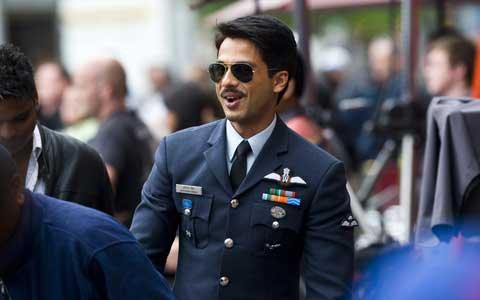
The weather was cloudy, again. And this time, it rained. We again headed to Juhu for some chaana zor garam. And again, it was Ripley’s Believe It Or Not. This time it was the script of Pankaj Kapur’s directorial debut Mausam. It stars Shahid Kapoor and Sonam Kapoor.

And those of you who are still wondering about the “again” factor, click here to read how we got lucky one day and put an open bet on Imran Khan’s famous dud – Luck. And if you  are curious to know the weather report this time, read on…

Looks like Pankaj Kapur’s aim is to tell an epic love story, which crosses the barriers of age, time, space, religion, countries and events. But the problem is, there is nothing epic about it. Its all about Harry and Aayat’s meeting, separation, meeting, separation, meeting, separation and finally, well, we all know how hindi films end.

And this meeting & separation of lovers happens all of a sudden, every time, once, twice, thrice and so on. The script is divided into four seasons, each like one chapter that tells us how the lovers meet to separate again. It starts with political undertones, and then, few more big national and international news incidents are added in every chapter to separate the lovers. The story starts in 1992 and ends in 2002. The impact of one big international incident is hilarious, its just in one scene. And there is NO need for it.

In the first season, the set up is quite elaborate, all about a marriage that has got nothing to do with the main story.  The story moves in sluggish pace and will test your patience. The second season is the one where the love story happens. And its all in Scotland. Why ? No clue. It could have been any other place, even in India. The lovers don’t get to meet because there is a communication gap. And may be, the distance helps in making the gap wider.  Season three keeps the lovers away from each other for some reason or another and then the finale in season four. One more big national incident and suddenly all is well. So, the drama is all about the communication gap and  after a point, we felt like we should just call up both Harry and Aayat and tell both of them about their whereabouts. No need to struggle to find each other. That was 70’s, sir!

If we can’t finish about 120pages at one go, it means there is something wrong with us or with the script. First 30 pages and we were snoring and how! And there are three songs in the first 30 pages. Jejus! Holy fuck! Its PANKAJ KAPUR – one of the best actors we have. Lets go back.

We tried again and finally managed to finish it. And re-read it. Its not bad, its just boring. May be, Pankaj Kapur should continue with acting or may be, he will prove us wrong and show us the big middle finger. But with Shahid Kapoor and Sonam Kapoor in the lead, it needs the talent of Wong Kar-Wai to make something interesting out of this script. And yes, lot of scenes have to go. Lots! Just go. They don’t make any sense and go nowhere though the story moves from Kashmir to Mallukot to Scotland to London to Udhampur to Ahmedabad.

And here is what we liked – The writer-director seems to be very clear about the ambience sound he wants and the way he wants. Almost every scene has decription of the same. Some of the romantic scenes in season two are interesting. There are options written for some of the scenes – either this way or that. And here is one scene from the script….

I/E.  TRAIN/TRAM.  SCOTLAND  – DAY

Harry and Aayat are seen standing in a train or tram, it is crowded.

AAYAT

Bua ab hamare saath rehti hain.

HARRY

Oh! I see. Kaise hain ?

AAYAT

Theek hai….aur tum ?

HARRY

Main bhi theek hun

AAYAT

( smiles a little or small laugh)

Nahi. I mean tum kahan rahe itne saal ?

HARRY

Kaha raha hun….(looks at her) Mallukot station se tumhari gadi ko jate dekha – ussi waqt air force mein selection ka khat mil gaya. bas phir training, uske baad commission, ab jahan jahan posting hoti hai vahin rehta hun.I mean in a way Mallukot choot sa gaya hai.

AAYAT

Mallukot what a lovely place na ?

HARRY

Yaad hai tumhe ?

AAYAT

Yes, of course.

There is a silent pause. They look at each other.

Show us the finger, sir! Show us. We are waiting and how!

The film is produced by Madhu Mantena, Reliance Religare (Sheetal Talwar) and Eros Entertainment. Madhu and Sheetal’s last masterpiece was Rann. And Eros have been delivering one dud after another. Their latest is Anjaana Anjaani. Click here and here to read what the makers have to say about this film.

Sirs, hope you do read scripts before you decide to produce a film. Hope you do know how to read a script. And hope you will be able to deliver. Good luck. And if you decided to produce the film because it has Shahid Kapoor and Sonam Kapoor, well, its never too late to start praying. Jejus!

This is the 12th year of the Mumbai Film Festival organised by MAMI ( Mumbai Academy of Moving Images) and looks like this year’s fest might turn out to be the best so far. Reasons ? Well, they got the best of the lot from Cannes, Venice, Berling, Sundance and Locarno.  200 films from 58 countries will be screened and here are the highlights…

1. It opens with David Fincher’s The Social Network, which is already getting some great reviews.

2. Sofia Coppola’s Somewhere, winner of Golden Lion at Venice 2010.

3. Abbas Kiarostami’s Certified Copy. Juliette Binoche bagged the Best Actress Award for it at Cannes 2010.

4. Semih Kaplanoglu’s Honey which won the Golden Bear at the Berlin Film Festival 2010.

5. Li Hongqi’s Winter Vacation – bagged the top prize at Locarno Film festival 2010.

6. Xavier Beauvois’ Of Gods and Men – won the Grand Prix at 2010 Cannes Film Festival.

7. Lee Chang-dong’s Poetry – won the Best Screenplay award at 2010 Cannes Film festival.

8. Alexei Popogrebsky’s How I Ended This Summer – Best Actor Award for Grigory Dobrygin & Sergei Puskepalis and Outstanding Artistic Contribution Award to its cinematographer Pavel Kostomarov.

9. If I want To Whistle, I Whistle – Silver Bear at Berline Film festival 2010.

10. Aamir Bashir’s directorial debut Harud is in International Competition for the First Feature Film Of the directors.

11. Hang Sang-Soo’s Hahaha – won the top prize in Un Certain Regard category at Cannes 2010.

12. Michael Haneke’s The White Ribbon (Cannes winner 2009), Danish film Submarino (was in competition in Berlin 2010) , Takeshi Kitano’s Outrage (was in Cannes competition 2010), Alejandro Gonzalez Inarritu’s Biutiful, Mike Leigh’s Another Year and Mathieu Amalric’s On Tour will have screening under World Cinema section.

13. 20 documentaries from across the world.

14. Japanese Cinema – Screening of 43 films from Japan including Takeshi Kitano’s Boiling Point, Takashi Mike’s Crows Zero and Akira Kurosawa’s No Regrets For Our Youth. Kurosawa’s Chief AD will present the special screening of Ran.

15. Mainsteam titles – Company Men, Inside Job, Banraku, Letters to Juliette.

16. Screening of Good Night I Good Morning – directed by Sudhish Kamath (film reviewer with The Hindu) and has cameo by Rediff’s film critic Raja Sen. Time to return the favours ? Dear Raja, will you be there ? 😉

17. Screening of The Untitled Kartik Krishnan Project directed by Srinivas Sunderrajan and starring our very own Kartik Krishnan.

18. Film Business Centre – plan is to get sales agents and buyers from across the world.

19. Master class in direction by Jane Campion and round table by Oliver Stone with Indian Filmmakers. Emerging Directors panel with Nandita Das, Kiran rao, Anusha Rizvi will be moderated by Sooni Taraporevala. Daily Open forums by Indian Independent Filmmakers Worldwide.

Venues – Chandan Cinema, Juhu and PVR ( Juhu).  Also, 2 screens in Metro Big Cinemas ( Marine Lines) and one screen in Big Cinemas R City (Ghatkopar).

Dates – 21 -28th October 2010

So, what are you still waiting for ? Go, run for your registration. Click here for online registration.

If you liked the Day1 report of the FWA Seminar by Mr Screeny, there is more. Here is the Day 2 report – the good, the bad, the ugly and the goss. Quite long but worth it. Do read.

FWA Seminar @NFAI Pune – Day 2

9 am, usual crowd, catching hold of whatever seats that were available with many many people standing in the aisles. Day 2 was better since there were more filmmakers than pedantic film critics/scholars talking about cinema.

Session 4 – Anger and Rebellion: The New Wave Cinema (plus the Angry Young Man’s Evolution)

Govind Nihlani

The 70s was a decade of discontent with the Naxalbari movement, the Bangladesh war & eventually the JaiPrakash Narayan movement against the corruption & the failure of the state. People started feeling restless & cheated and there was a built up of discontent in the country and then the Jai Prakash Narayan movement happened which led to Emergency being declared. Every line was censored, the civil liberties were taken away, the freedom of expression was impounded.

From that environment emerged a phenomena in Indian Cinema – the angry young man – Amitabh Bachchan-Salim-Javed, Om Puri-Naseerudin shah (Aakrosh, Ardhasatya), Mirch Masala etc. Parallel cinema picked up. You can see how the then contemporary/current socio-political situations were reflected in the cinema of those times. Even at the time of partition, partition based films were not being made but now, thanks to the discontent, there were films based on partition like Garam Hawa.

Rashmi Doraiswamy – presented a very well analyzed paper on the angry young man phenomena specifically with regard to Salim-Javed’s films. (Don’t remember anything sadly from it- because again it was almost a read-out-word-to-word-from-her-article than an impromptu/informal discourse with notes’ consultation)

Ashish Rajadhyaksha – showed clips from Albert Pinto ko Gussa kyun aata hai, Arvind Desai ki Ajeeb Daastan and stated it was a very interesting film written by two very different writers – Vijay Tendulkar & Cyrus Mistry. Albert Pinto clipping was the scene in which Naseer comes up to the gang – Satish Shah, Avtar Gill and requests them not to do ‘lafda’ with Dominique. The whole scene was apparently improvised by the actors lending a very realistic portrayal.

I went one day to Saeed Mirza’s house and saw a big board with lots of charts, papers, diagrams etc stuck – almost in an expanding spiral-esque manner. I asked Saeed what it was. He coolly replied “my script”!

Kundan Shah

I feel we’re reading too much and doing a lot of analysis of the angry young man vis-à-vis Salim-Javed’s films. Their scripts were not socially rebellious, but more parasitic. How many angry people have turned into a smuggler ala Deewar ?

We have lots of talent in India but how do we crack it ?

JBDY was made thinking it will not release. We were almost making a home video since we had the freedom to do anything. The budget of Albert Pinto was 2&1/2 lakhs. I was the assistant & the clap continuity guy and everything on Albert Pinto. During the middle of the shoot Saeed had to go meet the producers so I had to ask him how he wanted the scene (which to be shot) to be directed.

I wanted to be an assistant on a foreign production film which was being made in those days – Gandhi. The perks were tempting – 10,000 rupees salary for 6 months, plus 10,000 rupees allowance. And the job was ‘limited’ – crowd management. I got the job through some contact.

I asked Saeed what do I do ? Should I go ahead with the job or write my script? He said “Don’t be silly. Write your script!” . And I started writing JBDY.

The reference to ‘gutter’ in JBDY was intentional. I was the secretary in my society building, and there was a gutter leakage probem in my building. I used to see that every morning the gurkha would drain out the ‘gutter ka paani’ in a bucket. And he would do this everyday without fail. I always used to wonder what happened at night and I put that and many such references in my film.

Jahnu Barua

Don’t worry I only have half a page so you guys are safe from a long boring lecture.

Anger – Anger of a filmmaker – I will talk through my experience. I grew up with anger. The environment in which I grew up, gave me anger. When I came to FTII, I was an angry young man. I learnt filmmaking and when I passed out I was still an angry young man. I made many films as an angry young man. Today, I’m still an angry man – though not so young.

Anger is the catalyst for the filmmaker. If the anger isn’t there we can’t make films. I don’t know if my films will be called ‘New Wave’ or not. I try to put in 100% anyway.

I come from the North-East – at any and every moment, one can get angry easily. The things that happen there are unbelievable. Compared to them, the incidents that happen in Mumbai are nothing. I make films to not to overcome my anger, but somewhere we get to understand a few things. I just kept on making films & never tried to analyze these things. I don’t know the definition of ‘New Wave’ and never tried to analyze it either. I don’t even know how to categorize my films.

Films should come from the heart – regardless of what one wants to make. ‘Commercial’ or ‘Arty’ – films should be truthful. I feel the intention of the filmmaker becomes clear while watching it – whether it comes from the heart or whether it has been made for a different purpose.

I often quote – A screenwriter is the first to be contacted and the last to be paid – may be even not. And if you are a writer-director like me, the writing fee is almost forgotten. They say “Your writing fees is in the director fees”. I try to express my anger in my films – how do I do it ?

After Maine Gandhi Ko Nahi Maara, I feel I’ve sobered down. And I’m sad that I’ve sobered down. When I wrote it, my anger was it’s peak. Why ? I’d met militants, seen bloodshed, suffering & death at close quarters. I met a woman who was raped continuously for 2 months both by the army & the militants. When she narrated her story, I instantly wanted to make a film on her. I even wrote the script.

But I asked myself – will my film be able to resolve her problems ? NO

Will it matter to the audience and will they take an interest in solving her problems ? NO

I studied the whole problem differently and tried to get into the root cause. What is missing in our society ?

Then I wrote Maine Gandhi… not to express my anger but to resolve my anger. And I’m happy I made that film. But sadly I had sobered down after that.

I remember how people perceive the ‘art’ filmmakers. I was invited to a university seminar on Media’s Social Responsibility and one after the other there was a lot of attack on the ‘art’ films. One of the speakers kept referring to them as ‘mad off-beat filmmakers’. Every time he said that – the audience would look at me.

My first film was produced by NFDC. The ‘new wave’ films need promotion and NFDC itself may not be enough.

Oscar! Oscar! Oscar!  – Satyajit Ray made 32 films and not one of them went to the Oscars. Let us not please look at the Oscars. And let us not please concentrate only on Mumbai. India is a reservoir of stories. Every home has a story. Find them.

Open Forum – (questions from other writers/filmmakers and audience)

Govind Nihlani – Have we as a society lost anger ? Where is the anger ? Are we filmmakers writing anything in anger ? Are we even having any anger ? Do you see anger in films ?

Saeed Mirza- Times have changed. Example – Tere Bin Laden – it’s a minor but an important film. Anger is expressed in humor. The whole concept of terror has been destroyed. To me that’s also an angry film. JBDY was also an angry film.

I have tried to mix my anger with my personal struggle. How do you make an idea to a narrative ? I start from my personal and then go to the social, and slowly the text becomes richer.

If we refuse to see the turmoil & tension in the land we will still be making bad commercial films. We turn a blind eye to the problems – North East, Naxals, MNS, Telangana, Kashmir, Tamils vs Kannadigas.

Shama Zaidi – Why in films is anger a male preserve ?

Saeed Mirza – What about Mirch Masala & Godmother ?

Govind Nihlani – How is anger handled in the ‘new wave’ tamil cinema ?

K Hariharan – In tamil cinema the representation of anger has changed & shifted from the pleasurable zone to the disgust/disturbing/’Bibhathsa’ zone

Govind Nihlani – Many a times, anger is used as an excuse to extract vengeance. It deteriorates into vengeance and from being social it degenerates to personal.

Bhavna Somaiyya – What about the anger of Sridevi in her dance scene in Lamhe or Salman’s anger at his father in Maine Pyaar Kiya- when he goes to his room and punches the sandbag ?

(I don’t know how the panelists responded to the above question since I was busy banging my head away at the nearest wall at the sheer stupidity of the aforementioned question. Apparently Saeed Mirza explained to her that they were talking about a different kind of anger – angst)

Session 5 – Urban Foibles and a New Individualism: Current Trends in Indian Scriptwriting 1995-2010

Kundan Shah

I’m trying to be a practicing filmmaker and am making a ‘sponsored’ film on the theme – Overfed Urban and Underfed Rural. If I say what we see & what the truth is, the script may get rejected. So now I’m writing a neutral/backup (not so hard hitting-real) script in the event the first (more honest) one gets rejected.

Anees Bazmee is not the beginning and ending of writing. New talents are not getting a chance. There is a lot of illiteracy in the film industry.

Ranjani Majumdar

showed clips from Dombivali Fast, Being Cyrus & No Smoking talking about the urban view that the filmmakers created in these films

John Mathew Mathan

Dictionary defines the word ‘trends’ as a popular preference or latest style/fashion.

Is storytelling about something as fleeting as fashion ?

Bheja Fry started a new trend. Similarly may be even Peepli Live might start a trend.

My initiation into cinema was through Ankur, Bhuvan Shome, Sara Aakash, Garam Hawa. By the time I wanted to make films, NFDC had stopped producing films. If you are making a film like Gandhi, you need money.

Storytelling is different from Reportage, which is a big business.

According to a fable, once in a city which had a temple with statues of gods, a theft took place – some idols were stolen. People stepped up vigilance and issued death penalties/warnings to catch the thief, but still the thefts didn’t stop.

One fine day the thief was finally caught. When asked why he committed the crime he replied “I was a nobody before I started stealing. Today the whole city knows me”

Is this the reason why people write ?

People are looking for resolutions, the answers to the things they don’t/can’t understand. And if there is no resolution then they’ll not spare us.

Frank Capra says – “Thou shall not bore thy audience” That is my most important mantra.

What do I need in a story for me to decide this is the story worth telling ?

TIME – an abbreviation for

Thought provoking,

Information,

Motivation (does it move/touch the audience),

Entertainment

If you tell a story which is believable, then the TIME capsule is complete. The best example is – Gandhi. On 15th August every year, they show Gandhi on TV. Films like Godfather, Pulp Fiction withstand the test of time.

Bhavna Somaiya

Kamal Hassan says “I take my critics very seriously so they better do their job well”

What I look for in a film ?

To me it’s like buying a sari in a sari shop. I’m paying for it and give me a fantastic sari. Don’t ask me if this border is correct or that color is good. Just give me a fantastic sari.

Astitva – The turning point in the film isn’t the scene when Tabu sleeps with Mohnish Behl. The turning point is the scene when she narrates the incident to her city friend & her husband.

Dil chahta hai – I was surprised during the Aamir proposing to Preity Zinta at her engagement scene. After the resolution, I felt Aamir should bend down and touch her foster father’s feet. But then I thought may be he won’t do it. Eventually when Aamir did bend down to touch Preity’s foster father’s feet, I was surprised since the director is from an urban upbringing and it is not a part of his culture to do the same.

When I questioned Farhan later about the same, he said the touching the feet suggestion had come from Aamir Khan.

DCH showed real parents – no gajar ka halwa, no sone ka kada – just like how I would be with my family

Rensil D’ Silva (came in wearing a cap onstage which had FBI written on it)

I wanted to make a ‘real & dark’ film about terrorists bombing metro stations in USA but the budget wasn’t enough. So I had to rope in Kareena Kapoor & Saif Ali Khan and put in songs to get the budget I wanted. These are the sort of things one has to do. (Here’s a question Mr Rensil D’Silva – why the ‘aspirational’ USA ? Aren’t there enough bomb blasts in Mumbai, Malegaon, Delhi, Ahmadabad, Pune, Bangalore and of course the punching bag state of India- Kashmir. Or would you rather make a film about the american victims of terror than us Indian victims of terror ?)

There is no reason for angst anymore. This is the best time to be making films. Mainstream cinema is making ‘different’ films. The fact that personal, individualistic, quirky films like No Smoking & Being Cyrus get made is very assuring. These films would not be possible otherwise. The trends are what we make behind the camera. It really is an optimistic time.

Open Forum – (questions from other writer/filmmakers and audience)

Q) Why are so many comedies being made ?

Kundan Shah – People come to the multiplexes to seek an instant gratification – hence the comedies.

Q) Film length ? How much is too much?

John Mathew Mathan – If you are saying something interesting then there is no time limit. If you don’t have anything interesting then even 30 min is too much.

Q) The films not addressing ‘real’ issues ? I come from a small town where people have stopped going to cinema halls since the quality of films are so bad.

Rensil D’Silva – It’s all about ‘aspirational’. My driver aspires to wear jeans like me and a T shirt like the one I’m wearing. He is not interested in seeing films on problems. Why would anybody be interested in seeing films on their problems when they aspire to be someone better/for something better. Hence people do not watch films on real issues/problems. Even my maid only watches ‘happy’ films.

(Needless to say the above swooping statement was met with a furor from the audience)

Abhishek Sharma ( Tere Bin Laden) – There is a difference between someone living in a small town and someone who has come to Mumbai to work. The former are happy living where they are and the latter have come to the metro looking for work and wanting to be someone in life. Hence somebody like say your driver working in Mumbai may not like watching ‘multiplex films’.

Q) Where have all the writers gone ? Why aren’t there any more writers ?

Manish Gupta – They’ve all become directors ! Me, Anurag Kashyap, Abbas Tyrewala, Abhishek Sharma, Anees Bazmee, Rumi Jafry…

Session 6 – The Road Ahead: Globalism, the Digital Revolution and Other Attractions

This was more or less an open session with discussions involving questions posed from the audience. The panellists were – Rakesh Om Prakash Mehra, Paresh Mokashi, Rohan Sippy, Navdeep Singh, Satish Manwar, Abhishek Sharma, Vikramaditya Motwane, Vivek Agnihotri & chaired/moderated by the very polite and all accommodating Anubhav Pal.

Rakeysh Omprakash Mehra – Let us flash-forward to 2025. Will America successfully ‘entertainise’ (invade the film industry) India like they have done Europe already ? A film like Avatar today grossed a lot in India– not just in the English version but even the subtitled & regional language dubbed versions were lapped up all over the country.

West has already invaded all over the world with media, books, movies, TV etc. Will we be watching ‘Americanised’ entertainment in India or will they be watching ‘Indianised’ entertainment ?

Vikramaditya Motwane – Roger Ebert said in his review of Udaan that the film could have been set anywhere. This year has been a watershed for Indian film industry since we have a film in every important film festival all over the world. What’s more – these films are showing India in a non regressive, non tourist manner.

Rohan Sippy – The commercial film industry is also failing. We need to decide if we will follow the Hollywood model of Indianization or should we be telling ‘Indian stories’.

ROM – The more Indian our films are, the more global they will be. The story has to originate from our soil, our ideas. However, one grouse that I have is with characters singing songs. Regardless of whether he/she is a doctor, gangster, cop, engineer, businessman – he/she still lip-syncs to a song. As a result of which audiences abroad do not take us seriously.

Anubhav Pal – When you are telling a ‘local’ story, do people abroad identify ?

Satish Manwar- Yes. eg: Pather Panchali is so rich in the sense of its aesthetics. It is not a difference of urban/rural. It’s the sense of aesthetics which matters. People from Vidharbha like the film (Gabhricha Paus), people from LA like it too. The issue from your side needs to be genuine & we need to be honest to the creative process, and the aesthetics of the process of filmmaking.

Paresh Mokashi – That is the way to go ahead. We need to know the usage of cinematic language in our films, regardless of our subject. We’re discussing-focussing more on content but not on the technique. Two films based on the same subject are different. Why ? It’s the filmmaking material. Deewar, Sholay both were popular films with Amitabh Bachchan but similar films with the same actor have flopped. There are some ‘art’ films which are attention holding. Similarly there are some ‘art’ films which are boring. Just having a good subject doesn’t guarantee a good film.

RS – We have to appeal to ourselves culturally, and make it work in our own market, and then work it in a market that is not ours. eg: Stephen Chow’s films are set in Hong Kong but have a universal appeal.

Abhishek Sharma – Tere Bin Laden wasn’t about Osama. It was about a journalist from a 3rd world country wanting to live the ‘American dream’. The journalist could not have been an Afghani since their lingo is too different. An Indian journalist would’ve been too unbelievable. Pakistani culture & lingo is very much like ours. Hence it had to be a Pakistani journalist. People ask ‘then how come it is an Indian film?’ Because, it is a film told by an Indian storyteller with his roots.

Just because the audience liked Udaan, Tere Bin Laden, Peepli Live doesn’t mean suddenly the audience has become mature. The audience was always there. We need to mature. The writers, producers, directors all of us.

Sometimes people from marketing asked me ‘What is your Target Audience?’ How can a writer say what his script’s target audience is ? Tere Bin Laden ran not just in India but also in Dubai – among the Indians, Pakistanis & the Dubai sheikhs!

Vivek Agnihotri – Somewhere the NRI market has also accepted Hindi films. During the making of any film the oft asked question is ‘How will the NRI audience react to this film ?’ And we started catering to them gradually in our films. Soon the common man got lost from our films. It is very sad. I think it is the best time to write Indian stories. There are problems all over India. 70% of Indians live in villages, average income is less than 1$. We’re celebrating throughout the year with festivals all along. We should emerge as a country making films about us – the real us. The minute we say ‘small town’ – we think of Bihar/Jharkhand. All this is thanks to the Indian media. Literature is another area which we’ve ignored for long.

AP – Was it a conscious decision to set Manorama in a small town with the protagonist being a cop who is a drunkard ? (Mr Pal – next time please watch the film before asking an intelligent looking question on it.)

Navdeep Singh – It was not a conscious decision to set in a small town. Every story has its time & space and yes we have been not seeing the rural India/small town India in our Hindi films, unlike the tamil films where they have been exploring that territory a lot authentically.

AP – How come the protagonists in your films are outsiders ?

ROM- Story ki requirement hi waisi thi. Ek mein gori aa gayi aur ek mein apna hi aa gaya. Otherwise the kind of requirements I have to cater to are weird. Sometimes I’m asked “Interval daal do, interval mein samose bikte hain”. Why should I put an interval so that samosas can sell ? My 3 ACT structure has to become a 2 ACT structure now.

Do your personal cinema, tell the story you tell best. Why put someone else’s story ?

Writing is scary, it is terrible & I say please don’t make me a writer. I’m not a true writer.

A screenplay is a story told in pictures. It’s not on stage (play), it’s not in the mind (novel).

If we’re only deliberately making social films, we should be making documentaries.

Bottom line – make what you feel.

Open Forum – (questions from other writer/filmmakers and audience)

Q) What is the difference between an ‘art’ film & a ‘commercial’ film ?

VA – It all depends on budgets. In my mind every film is a commercial film.

VM– Sadly it’s the stars. Without AB Jr, Dilli 6 is a non commercial film.

Q) Would you have taken SRK as Dada Saheb Phalke in your film ?

PM- SRK as Dada Sahib Phalke ? ………………. I’m still thinking

AS – Even Asoka ?

PM – As far as the ‘cross-over’ is concerned, Jan Aranya, Pather panchali crossed over 40 yrs ago. If it is a good film, it will cross over.

ROM – The South American films have done it – Ya tu Mama Tambien, City of God, Pan’s Labyrinth all have crossed over to become big hits. I remember the director of Pan’s Labyrinth’s previous film wasn’t that big a hit – because it was too ‘local’. He corrected it in his next and the cinematic idiom was more appropriate in the next. We need to remember – more pictures, less words.

Q)You say your film was to be a realistic depiction of the struggle of the football players to save their club. Then why was Billo Rani there in the promos ?

VA – Why was Billo Rani there in the film itself ??? There is a lot of pressure while making a film and we all succumb to it.

Q) Why are there workshops for the writers when it is the producers who need to be ‘educated’ ?

ROM – Write a good script. Pehle likho toh sahi yaar!

AS – As far as tips on pitching/summarizing a script is concerned, I can tell you from personal experience working in adlabs for 4 yrs as an executive, you need to sell yourself – the one liner, the idea, the USP. Most of the scripts don’t have an act – write damn good scripts. Executives do not read beyond 15 pages if the script doesn’t interest them. And if it does, then they finish it and forward it to their seniors – and the same 15 page rule applies to them too. Never ever say/compare it with other films in your pitch – like ‘this script is Pretty Woman meets Chandni Bar’. Write great original scripts and original one liners.

Q) Would you continue making regional films ?

PM – Yes I want to make more Marathi films.

SM – No. There is no money recovery. I’m a filmmaker and I want to explore every genre. My film was shown everywhere abroad and people all over the world enjoyed it. However at a screening in PVR Mumbai, only 15-20 people were there. I want to reach to more people.

Q) Can you make a film not in your language/culture ?

ROM – Write a script yaar pehle. Murgi ne anda diya nahi aur butter chicken khaane ki baat kar rahe ho.

AS– I just made one about Pakistan, and I’ve never been there before.

Q) Does it have to be set in Mumbai or Jamshedpur or Rajasthan ?

ROM – Yaar ek script toh likho yaar. Woh sab baad mein kar dena.

VM – If you have a story to tell you can set it anywhere in any language. Stories do not need to be rooted. They’re local but the impact needs to be global.

And that was it more or less. Quite a few irrelevant & stupid questions and quite some standard responses. Apparently Rakesh Omprakash Mehra wasn’t so arrogant as before.

Was quite a decent 2nd day – more so since there were more filmmakers than scholars. Not that scholars cant be fun but pedantic ones – Nooo. May be the next time it should be paid because the discussions were quite digressing at times, and the bad questions asked by the audience members hurt man, really hurt.

Mr Screeny is back. For those of you, who don’t know him, click here to read his first post. This time he attended the weekend seminar at NFAI Pune and here is all the details from the Day 1. The good, the bad, the ugly and the goss.

The day began with a BIG queue at the NFAI – and with a mammoth crowd of students, film industry people, media professionals, writers directors, and aspirants. Felt a little bored of the over scholarly talk & lectures and didn’t take any notes whenever I felt there was too much to write/too irrelevant/too soporific; but ‘on the whole’ the first day was okay dokay. Had taken down few notes whatever I found interesting, and am paraphrasing it all below

Imtiaz Hussien – FWA committee member (& dialogue writer of Parinda)

The term ‘Melodrama’ originated in the 1780s and means two diametrically opposite things in German & French.

In German it means – a passage of opera with music

In French it means – a passage in which characters say nothing but the music conveys/says everything.

Kedarnath Outy – the chief of NFAI (spoke about preservation of films)

Since the inception of Indian cinema, there have been 43000 Indian films released.

The NFAI has only 5000 odd films!

I passionately request you all to if and when you come across original film material (footage, print, rolls etc) please contact us. The corporate do not bother to give us the prints because they are lying with the film labs. When we request the labs, they say they’ve written umpteen times to the corporate/production houses informing them of their film footage lying around; but the corporate regard it as a recording & archiving formality and do not bother replying back. In such cases, the onus often should be taken by the film buffs and volunteers like us to help preserve film culture.

Anjum Rajabali

The purpose of this seminar is educational so that it leads to a better understanding of cinema. Until 2004 there was no screenwriting courses in India. And then FTII introduced screenplay writing course. Since then we’ve tried to hold as many interactions between film writers/aspirants & the professionals.

We were also trying to get Salim-Javed together for this conference (after a gap of 31 yrs., they would be sharing a platform together). Both had readily agreed to the idea. Javed saab had even said “It would be a privilege to hear him speak on screenplay”. However unfortunately, Salim Khan couldn’t come due to ill health.

Session 1. How it all Began: Genesis of  and Influences on the Early Indian Script

Adoor Gopalakrishnan

When I joined FTII in 1962, there was no separate course in screenwriting. The course was Screenplay writing cum Film Direction. Most people who joined hated screenplay writing then. Today when I see this big an audience for a screenwriting seminar, I feel a lot has changed since then. May be part of this change is thanks to the Bombay Film Industry.

In Malayalam films, script wasn’t the starting point of the film. Many a times it was written on the sets ‘fresh’& ‘hot’ (Taaza taaza). One or two films written this way became successful, and it therefore became a trend to write the script on the sets only! The writer would be sometimes standing in a pose under a tree, busy writing the next scene which was to be shot. Whenever we saw someone standing in a pose on any film set, we knew immediately that he was the writer!

In 1985 a screenplay of one of my films got published, but nobody read it. Nowadays, the sale of film scripts has increased, not for learning how to write for films, but to write for TV. My scripts will be a bad choice if one wants to read them and learn how to write for TV.

When my films get screened abroad, foreign film fraternity often comes unto me and asks “In India, do they make films like you do ? Don’t they only make ‘song & dance’ films ?” For them the only exposure to Indian Cinema is ‘Bollywood’. It takes time for me to explain that I’m as much an outsider in ‘Bollywood’ as they are!

We are heir to a great tradition of Art but have we really imbibed from it ? Very little is taken from our culture except song & dance and melodrama.

Bombay makes high budget rich looking commercial masala films and all other regional cinema makes poor imitations of the same. The commercial cinema is either derived from Hollywood and/or the tradition of Parsi theater.

Coming back to the FTII course then, the 1st 2 yrs. was about writing & basic elements of direction and in the 3rd year we were taught advanced direction.

Many directors have no sense in drama, because they have no interest in writing.

A director has to bring his vision to the script and understand the written form – how to convert it dramatically on screen. Otherwise, the writer will write the script, cameraman will shoot it and editor will edit it – and the film can be made. A director is NOT an organizer of talents – there are production managers for that.

My colleagues wanted to be in Bombay Film Industry; not to be against the ‘system’, but to be absorbed by it.

“You have to READ to WRITE”

Screenplay is the very basic material on which the film is built on. It’s your idea of the film. You can hardly explain the film on a screenplay. It eventually finds its completion in the film that is made out of it.

The other panelists/speakers weren’t too interesting. A word of request to the super arrogant Shama Zaidi…..

….We respect you for your costume work in Shatranj ke Khiladi (Satyajit Ray, Premchand – two greats), your writing in Bharat ek Khoj, Garam Hawa, Mandi and many many such superb films (and your work as an Art director too in many such films). We also know that as a panelist you do get asked some slightly peripheral questions at times. But you could do your HUGE IMDB LIST a great service by replying in a non dismissive, polite, humorous manner. I mean cummon – your paper talks about the roots of Hindi-Urdu cinema and starts from 1853 – Wajid Ali Shah’s court (an interesting though self-important self reference to Shatranj ke Khiladi – one might argue) and if a naïve screenwriter asks you about a question related to the 1920s films, you turn around and needlessly retort “I don’t know about 1920s. I wasn’t born then!”; “I think this question is completely irrelevant” in a tone which would outrival Vidhu Vinod Chopra’s famous two words “Shut up!!!”

And Kaushik Bhaumick – the other panelist. I don’t have any remarks for him, because I slept through his whole lecture.

Atul Tiwari – the audience woke up when he started talking, thanks to his witty one liners, intelligent puns and wonderful Javed Akhtar-ish sense of humor.

During the break, I met Adoor since I have myself been trying to lay my hands on his films for quite some time but to no avail. I asked him where can I see his films subtitled ? No DVD shops in Mumbai/Chennai/Delhi have it. And I doubt if any subtitled copies are available in Kerala. He said the only way to get to see 2-3 (of the whole lot) was through Amazon !!!

I told him it was ridiculous to pay the extra shipping cost when the films ideally could/should be available in Kerala/Trivandrum/Cochin/Munnar any-friggin city down south.

“No. there is no other way” – he said with a rather I-know-it-sucks-I-can’t-help-it expression

Session 2  Dramatic Highs: Melodrama and our Cinematic Form

Clips were shown from various Indian films – Meghe dhaka Tara, Subarnarekha, Kannathil Muthamital, Mughal-e-azam, Shejari, Pyaasa and others and ‘melodrama’ was discussed using terms like “hyperbolic cinematization”, “orchestration & amplification of emotion”, “dizzying camerawork”, “stylized & exaggerated movements” etc.

The other two panelists (not mentioned below) used scholarly english words in their papers which were grandiloquently pontificating with hyperbolic propensity towards 14-alphabets-long-words which might be good to read (if it were a TOI editorial) but listening to them was a unwieldy task thanks to the soporific hallucinogenic monotonous style of speech.

Kamlesh Pandey

When I started screenwriting, I had predicted that the 1st star of the film will be the screenwriter, and ‘they’ used to laugh at me. Today I look at the interest in screenwriting, and I feel very happy.

What is Melodrama ?

My Marathi theater friends would joke that Melodrama is ‘Melo’ Drama (‘Melo’ in Marathi means Dead). i.e. dead drama

I remember an ‘intellectual’ journalist once asked a question to RD Burman –

Q) When the hero and heroine are sitting in a boat in a lake singing a song , it is a considerable co-incidence that they might be ‘good singers’, but where the hell does the orchestra come from ? Orchestra kahaan se aata hai ?

A) Arrey Idiot – jahaan se camera aata hai!!!

Films are for life, and not about framing life. If I want to see life why would I spend 200 bucks to go to theater to see it when I can easily go down to the streets and see ‘life’ for free!

All film language is derivative of everything including real life. The heart of melodrama is big enough to accommodate anti melodrama & realism. Ardhasatya & Zanjeer have the same appeal for me.

Tezaab is Awara set in the 90s. The introduction sequence of Anil Kapoor in Tezaab is the same as the introduction sequence of KN Singh in Awara. It shows how much cinema has travelled in a span of 30-40 yrs., the hero has become the villain.

Dil – I asked the director Inder kumar “If Saeed Jaffrey (rich father of madhuri) is so rich then will he not hire a detective to investigate if Anupam Kher (the poor father of Aamir) is indeed a big industrialist or a raddi-wala ?”

He replied “You are the only one who is asking this question. Trust me, no one else in the theaters will ask the same”

People don’t go to theaters to ask questions. Entertain them, but don’t let them down.

We don’t have a 3rd ACT (the resolution) in life but we need one in films. Life doesn’t make sense. Films however, give us the vicarious pleasure and the hope to live. They help us make sense in life. When we see heartbreak in films, it prepares us to deal with our heartbreaks in real life. Life is what we are. Movies are what we want to be.

Cinema/Theater is a gym for emotional fitness. In spite of having 60 TV channels we still go to theaters.

K Hariharan (Tamil film director)

During the time when there was a tremendous anti North India and anti Hindi sentiment in tamil Nadu, the Dravidian movement found its voice in the ‘new wave’ of tamil cinema. Directors like Bharathiraja, Mahendran, Balu mahendru, K Balachander etc went and made non commercial films and ‘village films’ which were similar in spirit to the ‘parallel’ cinema of Shyam benegal, Govind nihlani, MS Sathyu etc. They existed along with the commercial tamil films until the ‘phenomena’ of manirathnam invaded the tamil cinema screen, and everything ended up looking more aesthetic & ÁD film’ like rather than the raw & visceral.  (wrt the kanathil muthamital title track with simran & the kid) Don’t you think this is an AD film ? I mean you could safely release this song segment titled as ‘Vimal Saris’!!!

We have explored the ‘Sringar Ras’ a lot in our films – art for pleasure’s sake – the entire bandwidth of guy meets girl, love, different shades of it – eventually to a pleasant culmination etc etc. However the current ‘new wave’ in Tamil Cinema (directors like Bala, Ameer, Sasikumar, Cheran, Mysskin) are making films on the less travelled path of ‘Bibathsa Ras’ or the emotion of disgust. The raw violence, the energy, the ambition to not shy away from uncomfortable zone all are the characteristics of this new school of filmmaking and the best part is – these films are successful! 

Chitra Palekar

We make films with ‘heightened drama’. I remember when our first film (directed by Amol Palekar) was screened at a film festival, a foreign film critic argued with us about why we had songs & dance ‘melodrama’ in our film. I replied that in our traditions, we have songs for all occasions, every festival and even every time of the day. It is our culture. “Apun toh aise hi hain!!!”

Session 3 : A Song and Dance About Everything: Music, Song, and Lyrics in the Script

Vinay Shukla (talked about music in 50s-60s-70s)

Songs were a part of the narrative and not an ‘item’. A very good example would be ‘Jab Pyaar Kiya toh darna kya’ from Mughal-e-azam in which an otherwise introverted & shy Anarkali proclaimed her love for Salim in front of the whole world. And we believe it and how! That is the strength of a song

Songs & Melodrama are two distinct features of the Indian script. We are a country of songs. The first film Alam Ara had 7 songs.

The ‘sufi fakir’ singing a song “De de khuda ke naam pe” was another common feature in many film songs even till the 70s-80s eg: Pran singing ‘Kasme Vaade Pyaar Wafa sab’ from Upkaar; where a normal personal drama/situation spreads to a universal appeal thanks to the song & lyrics. Songs universalize a specific dramatic situation.

We also had a ‘theme song’ eg: Kaagaz ke Phool ‘Dekhi Zamaane Ki Yaari’ which was used throughout the film to punctuate the protagonist Suresh Sinha’s journey.

A song can condense or expand time and hence is a very important tool to be used for cinematic advantage. It can act as the ‘bridge’ between the credible & the incredible for the audience to walk through it, willingly suspending disbelief.

Javed Akhtar was to be the chairperson of this session but he couldn’t come due to some reasons. As a result Swanand was asked to be the chairperson for the same. Atul Tiwari remarked “Ek din maine aapse kahaa tha ki aap Javed Saab ki jagah lenge”

Btw – Saaed Mirza & Kundan shah were walking through the aisles when it was announced on stage that Javed Akhtar wouldn’t be coming, and the audience heaved a big sigh of disappointment – “Oh Noo”.

The two filmmakers half muttered under their breath “That is so sad” – “It breaks my heart” – “Oh dear dear dear…”

It was interesting to observe such a private sarcastic disapproval of Javed Akhtar by the two. Clearly they do not think too high of the the man for whatever reasons, some which they spoke about on Day-2 when they came on the panel.

Swanand Kirkire

These days a dangerous trend has started thanks to Ibn-e-batoota. The producers want some similar sounding nonsensical lyrics from everyone.

“Sir ek word de do ibn-e-batoota jaisa. Gaana HIT ho jayega”

When I’m writing my own screenplay, I myself find it strange to put in songs.

The day ended with a rendition of ‘Bawra Mann’ by Swanand (it was almost mandatory wasn’t it ?), much to our delight.

Post on Day 2 coming soon. And it was much better than Day 1.

We struggled really hard to figure out what to write on this D-day, how to write a new post on the legend, and write something that has not been written or said before.  Or something that his fans haven’t seen before. Naah, everything has been discussed and dissected million times in trillion ways. 116 (chaand ki raatei) has turned into a magical number too, with everyone having their own theory about it.  From Bandini to Beera, Kinara to Kaminey, Dil Se to Dil toh baccha hai ji, he never fails to surprise. Will there ever be any Gulzar ? Well, we all know the answer.

Click on the play button to see if the video surprises you…if you have seen Gulzarsaab in this avatar before…

Got it ? If no, read on. The film is Jallianwala Bagh and was produced and directed by Balraj Tah. As the name suggests, its based on the historical Jallianwala Bagh incident. Gulzarsaab played an Indian student studying in England, and as a part of freedom movement, he delivered speeches in the campus. He played a friend to Parikshit Sahni, who was one of the main characters in the film. The music was by R D Burman.

As the story goes, most of the people were associated with this production because there were in good terms with the makers of the film. Hrishikesh Mukherjee was also involved with the film as a “friendly” director. In Gulzarsaab’s words..

Kyonki production mein bahut saari cast ki zaroorat thi, isliye jitne bhi log film mein backstage pe bhi involved the un sabko in front of camera khada kar diya..(except Pancham) aur sabse kaha ki ek ek role kar lo.. meine jo specific character kiya wo sirf isliye kiya ki film Thand ke dino mein shoot huyee thi.. aur film mein kewal mera character ki dress pullover (fully covered) mein thi :)… isliye wo character meine maang liya.”

And now its time to test your GQ – Gulzar Quotient. Guess the names of  the films in which he has made onscreen appearance.   Clueless like us ? Well, check out this song from Basu Bhattacharya’s Griha Pravesh starring Sanjeev Kumar, Sharmila Tagore, Sarika and Dinesh Thakur.

Can you remember any other film where he has made onscreen appearance ? Do let us know in the comment section.

PS – And as always, thanks to Pavan Jha for everything!

In yesterday’s Mint Lounge I-Day Special Edition Sidin Vadukut had a piece where he argued that Twitter is better than blog. Just 140 characters, say it, over and out. But we don’t agree. What do you do when you have to make a list ? So, we are back to a post which was in drafts for long time. And what better day than I-Day to put it out.

So, here is our list of Top 10 Twitteraties who blocked us in the last one year or so. And some, for damn fcuk funny reasons. Its time to celebrate our gag order and do tell us who blocked you and for what ? In no particular order…the new members of Fight Club Hall Of Shame…read on…

1. Mahesh Bhatt – He makes us feel that Itchgaurd will never make a loss till he is alive. But he gave us some brillant movies too. He is the biggest importer of talent from across the border, at the cheapest possible rate. But we loved his book A Taste Of Life too.

This time he was tweeting about how the Copyright Bill is not good for Bollywood. We decided to burst his tweets, retweeted them with the correct facts, that how its going to stop the exploitation of lyricists, singers, composers and how they will finally be able to retain the copyright of their compositions. With no straight arguements in hand (ok, may be he was busy itching), he clicked the BLOCKED button.

2. Vikram Bhatt – If Uncle is here, can the nephew be far behind! The director delivered more than dozen duds, all in a row. But we loved the HT Cafe covers that he wrote when Khalid Mohamed was the editor there. Aha, that love story also went kaput. Back to our story.

He tweeted – Mahakshay Chakraborty is the next big thing. Whoever disagrees has something coming! And we dared to disagree. Which sane person wouldn’t ? BTW, Mahakshay is MIMOH reloaded! And when we reacted in the nasty possible way, he told us – don’t be in too much of a hurry to write someone’s obituary. You are not even what he is.

But as Arnab Goswami would put it The country wants to know, who wants to be Mimoh or Mahaskahy and why ? Tell us NOW! Not us and we don’t know anyone with such  a wish. But we have to thank him, he made us bit more (in)famous!

3. Shirish Kunder – This is our favourite story! It seems he discovered Adaptation quite late and tweeted that its a brillant film written by Charlie & Donald Kaufman. We corrected him. There is nobody called Donald. He again tweeted that how Charlie & Donald Kaufman were nominated for the Oscar Award for Adaptation. We again corrected him and retweeted that Donald Kaufman doesn’t exist. And don’t expect us to be sober when we are telling you something about someone whom we consider to be the God of screenwriting. And then boom..Blocked.

BTW, we think he shot some of the songs in Jaaneman superbly. His next is JOKER with Akshay Kumar. #JGrin. Get ready for all the puns, Mr. Donald Duck!

4. Sajid Khan – Aha, the gasbag! What do you call someone who made supershits like Heyy Potty and Housedull ? Not Filmmaker for sure. We call him Pottymaker. You need some talent to make such expensive potties and make people eat it too!

The last nail in our  BLOCK coffin – he tweeted that Up In The Air was boring. He could not finish the film and stopped it midway. Ooh la la. Reaction and his action! Last heard, he is MIA on Twitterverse. We have started following the fake one.

5. Suhel Seth – Nobody knows about his day job. But we all know  that he is a fuckall actor (Courtesy Pooja Bhatt). Does he sleep in tv studios ? How come he is such an authoritative voice on everything…from Arundhati to Arunachal and Commonwealth Games to Chinese Cuisine ? Does he have a twin brother ? Because sometimes he is on air at 2-3 channels at the same time. HOW ? Plus, he writes Agony Uncle columns too!

Can’t find the piece now but someone wrote a feature on him and enlightened us about his day job. We retweeted it with all our genuine concerns. The Agony Uncle went BANG! We like his Agony Uncle pose though! Check out the pic here,  on the top left-hand corner of the website.

6. Shatrughan Sinha – Can’t locate him on Twitter now but swear, he was there. Was tweeting about his son Luv Sinha’s Saddiyaan. Guess it was the beta tweeting on behalf of daddy dearest. Ok, so we can cover both the Sinhas together. Go check No. 7.

7. Luv Sinha – Who ? Yes, that should be the first question. But then, thats how Bollylalaland operate. Ok, here is the joke of the century. Luv Sinha has two fan clubs on twitter. Here & here. But then, he can reply in another joke – Even Uday Chopra has a fan club. Aur bolo ?Can we please have one too ? Hands up ?

As we were busy cracking Sadiyaan jokes, the baap-beta duo shouted KHAMOSH!

8. Jitesh PillaaiBus naam hi kaafi hai ? Ok, Test your Bolly Quotient – Tell us the name of one editor who calls Sonam Kapoor as My Shona Chona  or something like that ? Well, if you edit the most expensive and glossy  toilet paper in the country, guess you can do so. We were cribbing about the toilet paper for a long time and finally one day he woke up and did the good tweed of the day!

BTW, did Kalmadi order the same toilet paper  from filmUNfare office for CWG? It needs lot of talent to fill so many pages, issue after issue, with so much shit! Oh yeah, finally after ages they did a nice feature recently where they got Dibakar Bannerjee, Zoya Akhtar, Shimit Amin, Anurag Kashyap and Madhur Bhandarkar together for a delicious chat. But Madhur ????

9. Sarita Tanwar – We love Mid Day for all the sleaze and the goss. But she edits the Hit List. We loved the fact that its editor Abhijit Majumder didn’t compromise his stand after his famous altercation with Amitabh Bachchan.

But how can you let anyone to rate Once Upon A Time In Mumbai 4.5/5 stars!!!?? Even more than Peepli Live and many other such films. We happily crowned her the Jackass Critic Of The Week. And there she went…chore ko toh dikhte hai sab chor!

BTW, a bitchy actress called up to say that by the weekend she was celebrating the success of OUATIM at her best friend and producer Ekta Kapoor’s party. And she makes it to our sHIT List!

10. Like all those morons who dedicate their tweets to Anupam Kher, this one is dedicated to all those nameless and faceless creatures who blocked as for all the right reasons. Go kiddos, make your list and make us more famous. We Love Hate Storys and We Are Family for sure! Aha, KJo always comes so handy! Even on I-Day!