Posts Tagged ‘Neeraj Ghaywan’

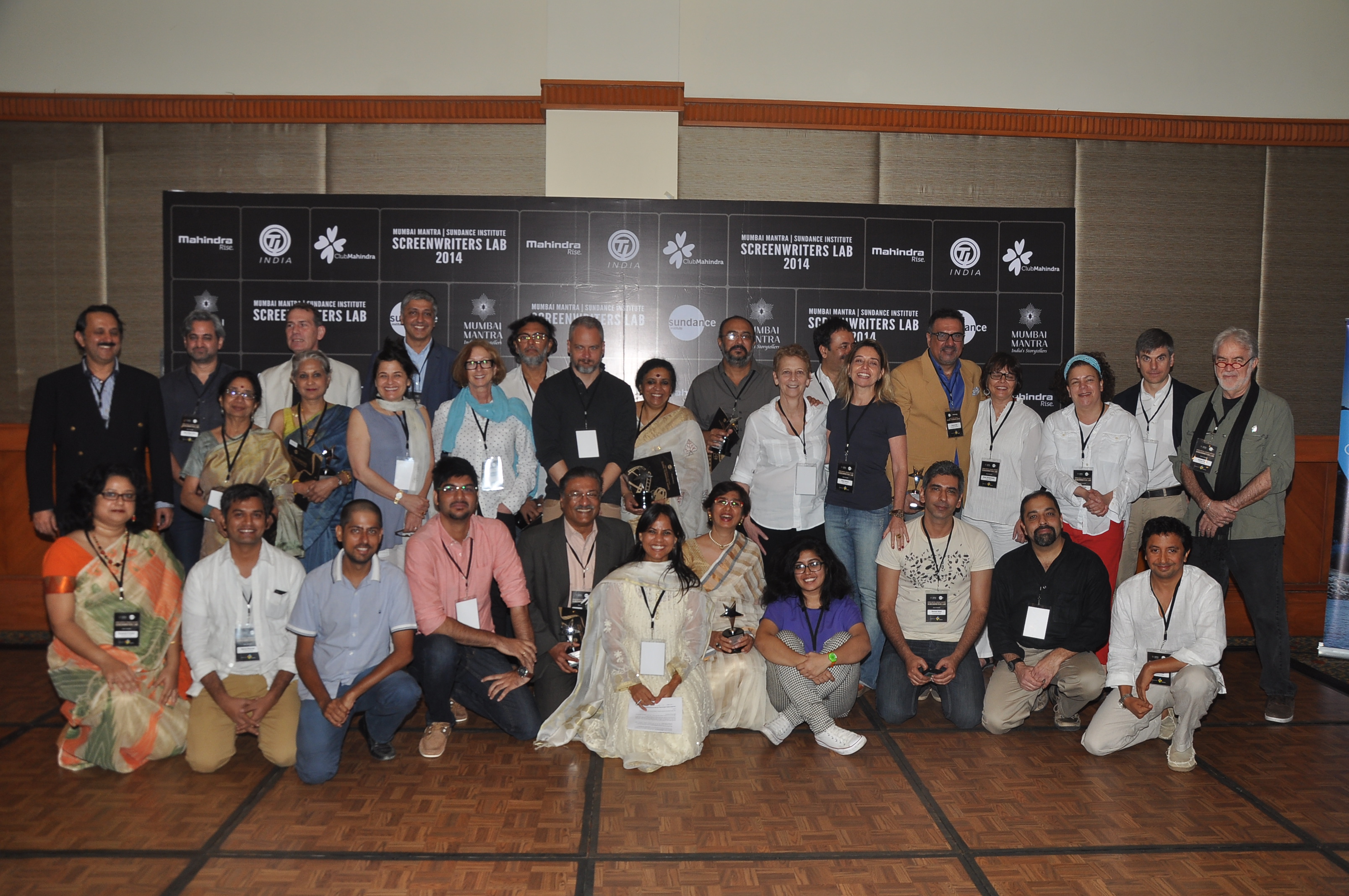
Mumbai Mantra Sundance Institute Screewriters LabMumbai Mantra, the media and entertainment division of the Mahindra Group, in collaboration with Sundance Institute, has selected eight Indian Screenwriters and their feature film projects for the third annual Mumbai Mantra | Sundance Institute Screenwriters Lab, to be held from March 16-21 at the Club Mahindra Resort in Tungi.

– This year’s Screenwriting Fellows, selected from submissions from India and the Indian diaspora around the world, are: Navneet Behal (Experiments with Truth); Ashvin Kumar (Noor); Bornila Chatterjee (Nuclear Hearts); Gaurav Madan (Shaktipur Crude); Deepanjali B Sarkar (Svadharma); Dylan Mohan Gray (The Last Day of Winter); Sanjay Talreja (The River Murder); and Neeraj Ghaywan and Varun Grover (Ud Jayega / Fly Away Solo).

– Creative Advisors include: Naomi Foner (Running on Empty, The Bee Season), Michael Handelman (The Ex, Night At The Museum), Dante Harper (The Delicate Art of the Rifle), James V Hart (Contact, August Rush, Dracula, Tuck Everlasting), Malia Scotch Marmo (Hook, Madeline), Anjum Rajabali (The Legend of Bhagat Singh, Raajneeti), Elena Soarez (City of Men, House of Sand), Rose Troche (Go Fish, The Safety of Objects) and Sooni Taraporevala (Salaam Bombay!, Mississippi Masala, The Namesake).

– Mumbai Mantra received over 500 applications for the Lab from Indian screenwriters across the globe. After a rigorous deliberation and consultation with Sundance Institute, the final eight projects were chosen.

– The Selection Advisory Committee included Advaita Kala, Anjum Rajabali, Deven Khote, K. Hariharan, Kanika Luthra, Mahesh Samat, Meenakshi Shedde, Neeru Nanda, Prakash Kovelamudi, Ram Madhvani, Ravina Kohli, Uma Da Cunha and Vikramaditya Motwane.

PROJECTS AND SCREENWRITERS SELECTED

EXPERIMENTS WITH TRUTH

LOGLINE: Following three children over the course of eighteen years, Experiments With Truth explores a recent history of state-sponsored violence.

Writer/director: Navneet Behal

While pursuing his Masters in Film at the New York Institute of Technology, Navneet Behal started work in New York as a camera operator. Upon his return to India, Navneet worked as Associate Director on a Hindi feature film, produced by Wild Elephant Motion Pictures. He is currently directing his first feature film, produced by M.A.S Universal Fin & Intra, due for release in 2015.

NOOR

LOGLINE: A six year-old girl sets out to find her missing father and stumbles upon mass graves, implicating the Indian army and putting herself in danger.

Writer/director: Ashvin Kumar

Ashvin Kumar is the youngest Indian filmmaker to be nominated for an Academy Award, for Little Terrorist, which played at 130 film festivals, winning 25 awards, including Honourable Mention at BAFTA/LA and a nomination by the European Film Academy. In 2012, his documentary Inshallah Football was awarded the National Award, India’s highest honor for cinema. Its sequel Inshallah, Kashmir won the National Award for best investigative film in 2013. His other work includes Dazed in Doon and The Forest.

NUCLEAR HEARTS

LOGLINE: A Bengali lounge singer who becomes involved with two French expats living in Calcutta, India.

Writer/director: Bornila Chatterjee

Bornila Chatterjee graduated from New York University’s Tisch School of the Arts with a BFA in Film and TV in 2008. Her debut feature film, Let’s Be Out, The Sun Is Shining, premiered at the 2012 New York Indian Film Festival, where it won the Audience Award and received a Best Actress nomination for lead Lipica Shah. Bornila was previously Managing Director of Stone Street Studios, a screen acting school and advanced conservatory in the Department of Drama at Tisch. Bornila is a curator and essayist for Vyer Films, a Brooklyn-based film streaming service, and a writer for Overdose Art Pvt. Ltd, a progressive art platform and production company in Calcutta, India.

SHAKTIPUR CRUDE

LOGLINE: When oil is discovered, a small village at Indo-China border suddenly becomes the most important place in the country and changes the lives of its people forever.

Writer/director: Gaurav Madan

Gaurav Madan grew up in a small town in Haryana. He received his Masters in Communications from University of Pune. He has won several awards for his commercial work, and owns an advertising production company based in Mumbai. His first screenplay was 3 nights 4 days, which was completed in 2009.

SVADHARMA

LOGLINE: The true story of an army officer who is betrayed by his government and sentenced to eight years of solitary confinement.

Writer/director: Deepanjali B Sarkar

Deepanjali B Sarkar is a digital media content specialist with experience ranging from internet and telecom content to corporate communications. She has worked with ITC, Indiatimes.com and Mobifusion. An alumnus of Presidency College Kolkata and Jadavpur University, she blogs regularly at http://filmandbookclub.blogspot.com/.

THE LAST DAY OF WINTER

LOGLINE: Condemned by a thuggish political regime as the son of a traitor, a 15-year-old boy faces a torturous set of choices as he reluctantly leaves childhood behind.

Writer/director: Dylan Mohan Gray

Dylan Mohan Gray is an award-winning producer, writer and director. His documentary Fire in the Blood was presented at the 2013 Sundance Film Festival and set a record for the longest theatrical run by a non-fiction feature film in Indian history. Fire in the Blood has won major awards in Washington, Hamburg and Vancouver and also received the award for Best Debut Film at the 2014 Mumbai International Film Festival (MIFF). Trained as a historian, Dylan founded the production company Sparkwater India in 2005 and has worked in various capacities on feature films, including collaborations with directors Fatih Akin, Peter Greenaway, Paul Greengrass, Deepa Mehta and Mira Nair.

THE RIVER MURDER

LOGLINE: A small town cop investigates whether a body found floating on the river is one of four missing local men.

Writer/director: Sanjay Talreja

Sanjay Talreja is an award-winning writer, director and editor of narrative features and documentaries, whose work has appeared on television and at film festivals. He most recently wrote and directed the feature film Surkhaab, which won Best Director, Foreign Language Feature at the 2013 London International Film Festival. Sanjay also teaches at various colleges and universities in Canada, the US and India. He has a MFA in Film.

UD JAYEGA (FLY AWAY SOLO)

LOGLINE: Four lives intersect along the Ganges river, each yearning to escape the constrictions of a small town.

Writers-director: Neeraj Ghaywan / Varun Grover (co-writer)

Neeraj Ghaywan worked with Anurag Kashyap on the veteran director’s two-part opus Gangs of Wasseypur and as second unit director on Ugly. His short films as writer-director include Shor and The Epiphany. Shor won the grand jury prize at three International film festivals.

Varun Grover grew up in Dehradun and Lucknow. He has written stand-up comedy for various TV shows and currently performs stand-up comedy at the biggest venues in India, writes fiction and graphic series for children in Chakmak (published from Bhopal, by Eklavya), and has written lyrics for Anurag Kashyap’s Gangs of Wasseypur (2012), Vasan Bala’s Peddlers (2012), Rajat Kapoor’s Aankhon Dekhi (2013), and Fahad Mustafa/Deepti Kakkar’s Katiyabaaz (2013).

If you are regular reader of the blog, you probably know his name. Neeraj Ghaywan is part of the editorial team and is a regular contributor to the blog. So it’s a great news for all of us. Yay! Yay! Yay!

Sundance Institute and Mahindra today announced the winners of the 2014 Sundance Institute | Mahindra Global Filmmaking Award, in recognition and support of emerging independent filmmakers from around the world. The winning directors and projects are Hong Khaou, MONSOON from Vietnam/UK; Tobias Lindholm, A WAR from Denmark; Ashlee Page, ARCHIVE from Australia; and Neeraj Ghaywan, FLY AWAY SOLO from India.

– Each of the four winning filmmakers will receive a cash award of $10,000, attendance at the Sundance Film Festival for targeted industry and creative meetings, year-round mentoring from Institute staff and creative advisors, eligibility to participate in a Sundance Institute Lab, and ongoing creative and strategic support from Sundance Institute’s renowned Feature Film Program.

More details about the winners and their films –

Hong Khaou / MONSOON (Vietnam/UK): Two young men visit present day Vietnam, and are confronted with the war’s ramifications nearly forty years after its end.

Hong Khaou’s debut feature film Lilting premiered in World Cinema Competition at the 2014 Sundance Film Festival.  The film stars Ben Whishaw and Cheng Pei Pei. He is also the director of three short films, including Spring, which premiered at the 2011 Sundance Film Festival, and Summer, which premiered at the 2006 Berlinale. This year, Hong was named one of the Stars of Tomorrow by Screen International.

Tobias Lindholm / A WAR (Denmark):  The major of a Danish unit in Afghanistan faces the consequences of his actions in the aftermath of his most dangerous mission..

Tobias Lindholm graduated as a screenwriter from the National Film School of Denmark in 2007, and has collaborated with Thomas Vinterberg as co-writer on Submarino and Oscar nominee The Hunt. In 2010 he wrote and directed his first feature film in collaboration with Michael Noer, and in 2012 he wrote and directed the critical acclaimed A hijacking.

Ashlee Page / ARCHIVE (Australia): With the help of a supercomputer, an isolated 16-year-old girl grows plant life on Saturn’s moon Titan in the hope of one day restoring Earth’s ecosystems. But when an unexpected accident leads her to the moon’s surface, she discovers evidence that her mission is a lie and that her life is in danger.

Ashlee Page is an Australian writer and director. Her multi-award winning short The Kiss screened at Busan, Clermont-Ferrand, Palm Springs and Tribeca film festivals. Her most recent work is on the film compendium The Turning, adapted from the novel by Tim Winton. Archive is her first feature film.

Neeraj Ghaywan / FLY AWAY SOLO (India): Four lives intersect along the Ganges river: a lower-caste boy in a hopeless love, a daughter torn with guilt, a father sinking in greed, and a spirited kid craving a family, all yearning to escape the constrictions of a small-town.

Neeraj Ghaywan worked with Anurag Kashyap on the veteran director’s two-part opus Gangs of Wasseypur and as the second unit director on Ugly.  His short films as writer-director include Shor and The Epiphany. Shor won the grand jury prize at three International film festivals.

– The script of Fly Away Solo is been written by Varun Grover.

– You can watch Neeraj’s short films Shor and Epiphany here and here. And click here to read a post by him on the making of Shor.

– Also, Love.Love.Love, a short documentary directed by FTII student Sandhya Daisy Sundaram, won the Short Film Special Jury award for non-fiction at the ongoing Sundance Film Festival. More details here.

ShortsShorts, an anthology of five short films was released in the theatres few months back. Now the entire film is online. The five film in the order in which they appear are as follows

1. SUJATA is by Shlok Sharma and stars Huma Qureshi, Shweta Tripathi, Satya Anand (JP Singh of GoW) and Aditya Kumar.

2. EPILOGUE (from 20:33) is by Siddharth Gupt and stars Richa Chaddha and Arjun Shrivastav.

3. AUDACITY (from 35:00) by Anirban Roy starring Preeti Singh, Sankar Debnath and Kanchan Mullick.

4. MEHFUZ (from 48:30) by Rohit Pandey has Nawazuddin Siddiqui and Aditi Khanna in the lead.

5. SHOR (from 01:04:00) is by Neeraj Ghaywan and stars Vineet Singh and Ratnabali Bhattacharjee.

And do VOTE for your favourite film(s). You can vote for maximum 3 films.

If you want to read about the films before watching, go on.

1. SUJATA – Sujata is a riveting tale of a young girl, who is struggling to come out of the clutches of her tormenting cousin brother. At a very young age, she is forced to live with her cousin and his family. Herein, begins a life of incessant harassment by her cousin brother. Even as an adult she lives in the shadow of fear. For years, she changes addresses and identities in the hope of finding freedom; but each time he hunts her down. Neither the police, nor the NGOs are able to help her. Pushed to a corner, she decides to take the extreme step.

2. EPILOGUE – A relationship that has already fallen apart and is just about to snap. It describes the love and intimacy, the entangling of two lives and the completely symbiotic nature of a couple. It reflects the possessiveness control isolation, depression and desperation that a relationship can lead to, representing a cycle that needs to be broken in order to keep sane.

3. AUDACITY – A thirteen-year-old girl has her first real confrontation with authority when her father forbids her to play the American dance music she loves. When she decides to take revenge, the situation escalates to become a neighbourhood scandal. A dark comedy about parental authority, teenage rebellion, curry, whiskey, and house music.

4. MEHFUZ – In an ambiguous space and time. The city has turned mad, as violence has taken its toll. But, far away in the sounds of silence at the border of the town, a man takes care of all the death around. He drags away this usual routine with every passing night. One night, he notices a strange woman wandering on empty streets. As her behavior changes, so does his journey.

5. SHOR – Lallan and Meena, a couple from Banaras, are consumed by their pursuit to survive in the city of Mumbai. Meena takes up a job in a sewing factory. One day over a phone call, they find each other while embracing death, divorce and redemption. It takes the darkest hour of our life, the fear of death, to regain our consciousness back in to life. To find the beauty that is lost in our relentless angst towards an unyielding life.

TRANLITE new low(1)

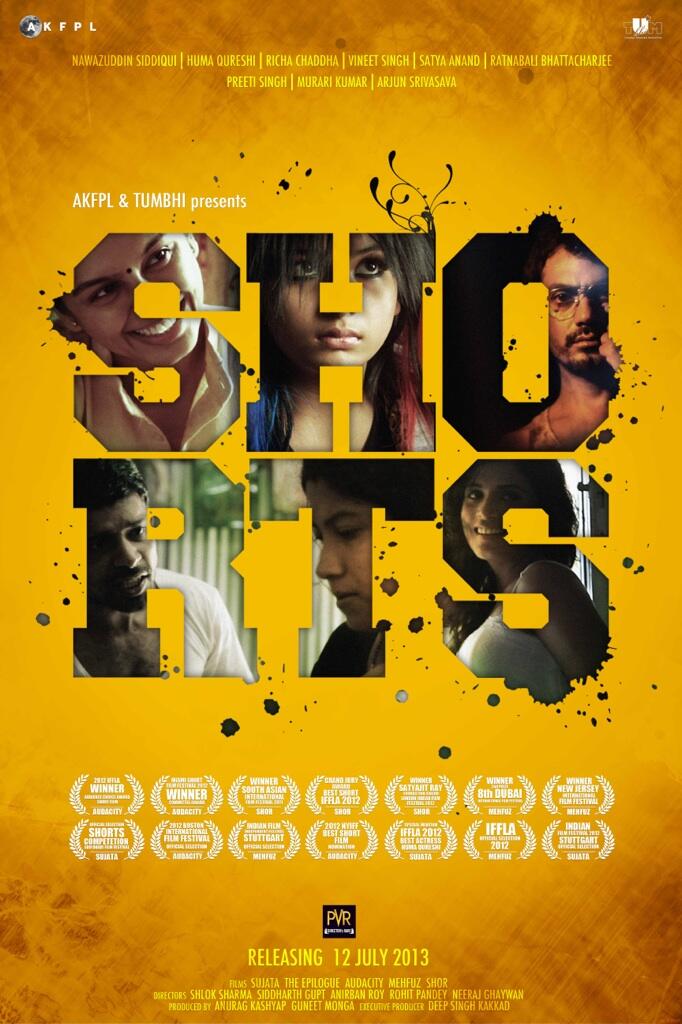
Filmmaker Anurag Kashyap and producer Guneet Monga under their banner, AKFPL, will be releasing SHORTS (a collection of 5 short films) on July 12 2013.

The films will be released by PVR Directors Rare across Mumbai, Delhi, Pune, Kolkata, Surat, Cochin, Ahmedabad and Bangalore in select theatres. The five shorts are directed by Shlok Sharma, Neeraj Ghaywan, Rohit Pandey, Siddharth Gupt and Anirban Roy. The films feature Huma Qureshi, Nawazuddin Siddiqui, Richa Chadda, Vineet Singh, Aditya Kumar, Ratnabali Bhattacharjee, Shweta Tripathy, Satya Anand, Preeti Singh among others.

Synopsis of the 5 Shorts –

1. SUJATA by Shlok Sharma

Starring: Huma Qureshi, Shweta Tripathi, Satya Anand & Aditya Kumar

– Sujata is a riveting tale of a young girl, who is struggling to come out of the clutches of her tormenting cousin brother. At a very young age, she is forced to live with her cousin and his family. Herein, begins a life of incessant harassment by her cousin brother.

Even as an adult she lives in the shadow of fear. For years, she changes addresses and identities in the hope of finding freedom; but each time he hunts her down. Neither the police, nor the NGOs are able to help her. Pushed to a corner, she decides to take the extreme step.

2. EPILOGUE by Siddharth Gupt

Starring: Richa Chaddha and Arjun Shrivastav

A relationship that has already fallen apart and is just about to snap. It describes the love and intimacy, the entangling of two lives and the completely symbiotic nature of a couple.

It reflects the possessiveness control isolation, depression and desperation that a relationship can lead to, representing a cycle that needs to be broken in order to keep sane.

3. AUDACITY by Anirban Roy

Starring Preeti Singh, Sankar Debnath and Kanchan Mullick

A thirteen-year-old girl has her first real confrontation with authority when her father forbids her to play the American dance music she loves. When she decides to take revenge, the situation escalates to become a neighbourhood scandal.

A dark comedy about parental authority, teenage rebellion, curry, whiskey, and house music.

4. MEHFUZ by Rohit Pandey

Starring: Nawazuddin Siddiqui and Aditi Khanna

In an ambiguous space and time. The city has turned mad, as violence has taken its toll. But, far away in the sounds of silence at the border of the town, a man takes care of all the death around. He drags away this usual routine with every passing night.

One night, he notices a strange woman wandering on empty streets. As her behavior changes, so does his journey.

5. SHOR by Neeraj Ghaywan

Starring: Vineet Singh and Ratnabali Bhattacharjee

Lallan and Meena, a couple from Banaras, are consumed by their pursuit to survive in the city of Mumbai. Meena takes up a job in a sewing factory.

One day over a phone call, they find each other while embracing death, divorce and redemption. It takes the darkest hour of our life, the fear of death, to regain our consciousness back in to life. To find the beauty that is lost in our relentless angst towards an unyielding life.

As part of the campaign “India is a visual journey”, five filmmakers were commissioned to make five short films. You must have seen the promos of the shorts. Now all the films are online. Do watch and vote for your favourite

1. Hidden Cricket by Shlok Sharma

About the film – A country that is divided in the name of religion, state, language, caste, economy, profession and even god… breathes together, stands together in the name of CRICKET!

A sport that defines the country. Cricket is in our blood and rules our hearts. A synonym to passion — cricket redefines enthusiasm, craze, zeal and excitement. We are a nation that loves cricket, lives cricket, beyond conventions and beyond rules, from breaking boundaries to breathtaking highs, a million cheers and a zillion sighs, such is the madness, such is the passion to play it anywhere, any day, all the time, all the way. Cricket is our way of life!

2. The Epiphany by Neeraj Ghaywan

About the film – After their college reunion in Pune, a divorced couple is forced to take a ride together to Mumbai. As they meet an old woman on the highway in desperate need of help, their disparate sense of morality, culture and class creates friction, scraping the wounds of past that they thought was long gone. Some journeys may not take you anywhere, but you do move on.

3. Moi Marjani by Anubhuti Kashyap

About the film – A spirited independent single mother struggles on a daily basis to provide a comfortable life to her son and herself. She runs a small Internet cafe in Patiala, Punjab for a living, and is an Internet user herself. The film highlights a phase in her life when love comes knocking on her door. If only its timing was right!

4. Geek Out by Vasan Bala

About the film – The dual lives we lead, that virtual alter ego we all have nurtured and empowered, The Indian “Geek” today is no longer that lad who sat in a corner. He could be that carefully framed pic on Instagram to that deadly opinionated Twitter handle or maybe that pop philosophy spitting Facebook page or that revolutionary blog that was created to change the world or just plain drowned into the Audio-Visual black hole “You-Tube”. Day dreaming now has a new address, the world wide web. Dream on ! May the force be with the Geek!

5. Chai by Geentanjali Rao

About the film – The film is a sequence of montages that shows four different people making tea in a tea shop. A ten year old boy selling tea in Bombay at the Gateway Of India, An 18 year old girl with her tea shop in a mid level town, A 19 year old Kashmiri lad in a Barrista and An 80 year old man’s tea shop in a busy Kerala bus stand.

The film is a view of rapid change that India is going through and what it means to those people whose faces we never notice as we go along sipping our cup of tea everyday. Tea like the people of India changes with every language, culture, climate yet serves the same purpose everywhere always. A constant in a flux.

– And do VOTE for your favourite short. You can vote for as many shorts as you like, there’s no limit.

Sam: [In the women’s dressing room] What kind of bird are you?
Sparrow: [Starting to point to the other actresses] I’m a sparrow, she’s a dove…
Sam: [Cutting her off] No. I said…
[Points to Suzy]
Sam: What kind of bird are YOU?
Suzy: I’m a raven.
what-kind-of-bird-are-you

I have stood in front of the mirror, pointed my index finger at my image, just like Sam points at Suzy in that delicious Wes Anderson film, and have asked the same question quite a number of time, using all kind of possible emotions. And whenever i think about the scene, it still makes me smile. Bit of Googling tells me that am not the only one who loves this dialogue so much. Though it’s quite difficult to dissect why such a simple line from the film has turned out to be one of my favourite quotes of the year and has stayed back with me for such a long time.

So i thought about doing a collaborative post on similar lines. Quickly mailed some of the friends/films buffs for a simple exercise –

1. Close your eyes

2. Think of all the films you have seen in 2012…released/unreleased/long/short/docu/anything

3. Think what has stayed back with you…impressed/touched/affected/blew

4. Write on it and tell us why.

And i didn’t tell anyone else what the other person was writing about. Got some very interesting responses on all kinds of films and i have put it all together in this collaborative post – 15 film buffs on 17 movies (memories) of the year. The post has turned out to be bit long but hopefully you will enjoy it. And it can also serve as a movie recco list if you haven’t seen the films.

@CilemsSnob

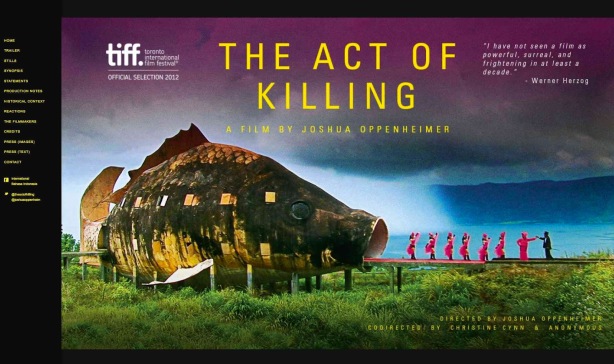
Joshua #TheActOfKilling

—–> Kushan Nandy on The Act of Killing

I saw this two and a half hour-plus documentary at the Toronto International Film Festival in September 2012 and was blown away. Long after the film got over, after Joshua Oppenheimer spoke about it, even much after, weeks later, the film haunted me. It did to me what Incendies had done to me a couple of years back. But much more.

Never before have I seen a film or documentary, where, during the process of film making, the characters go through a life changing process. They metamorphosize into better beings, and this becomes a part of the actual film.

For example, what would happen if someone video interviewed Modi, his political associates or even the people who were the actual executioners of the 2002 Gujarat massacres? And they all accepted their crimes and celebrated this with glee? But suddenly, one of them changed, understanding the repercussions of what he had done?

Anwar, from The Act of Killing, is a person I will never forget. He had butchered thousands. But it was this documentary, and the process of filming it, that showed him who he actually was. He can’t sleep anymore, he stutters, he throws up. He will never be the same again.

And after watching this film, I wont either.

SRK JTHJ1

—–> Varun Grover on Shah Rukh Khan/Jab Tak Hai Jaan

Setting: 7 degree centigrade. Fog. Railway station. A small town in North India where Shatabdi/Rajdhani trains don’t stop.

My fingers are numb and typing out each letter is like feeling the power of it. For some strange reason, the 1st image from Cinema of 2012 that comes to my mind is SRK’s bike rising above the horizon as AR Rahman’s strings go crazy in the background. The theme music of JTHJ (the one they used in promos) it is. Call it the power of music, and it can’t be anything else ‘cos I didn’t even bother to watch the film, or call it my latent romanticism.

My friends from Lucknow – who were there alongside me, fighting for tickets outside Anand cinema hall in 1997 when Dil To Paagal Hai released – watched JTHJ on 1st day in Lucknow and sent me an excited SMS telling me – “Don’t believe the reviews. It’s as good as any Yash Chopra – SRk film you’ve seen. The crowd at Novelty loved it.”

The crowd at Novelty. I was that crowd once. My life’s biggest joys came from being that crowd. Especially on being among the select few who had the matinee show ticket on the 1st day. (1st show was for loafers, matinee was for civilized middle class.)

For Dil Toh Paagal Hai, our friends’ group of 5 was split into 2. Three of us got the evening show, while two fortunate ones got the matinee show. They were clearly the winners – getting to see Maya and Rahul and a new-look Karishma before us. Also they’d get to tease us on their way out, may be telling a couple of spoilers too. So we tried our best to avoid them as their show got over and we were allowed in.

But as it turned out – the theatre owner had cut the film by 15 mins in the 1st and 2nd shows. Apparently he didn’t think the Karishma outrage scene by the river had any merit. But when he saw the audience going crazy with whatever they saw in 1st two shows, he added the cut footage back. And we, the losers till just a few hours ago, were the 1st bunch in Lucknow to watch the entire film.

This scene, Karishma blaming God for complications in love, is almost the crux of Jab Tak Hai Jaan. Though that doesn’t explain why that image of SRK is the 1st that comes to mind. My nostalgia does.
Paan Singh Tomar4

—–> Varun Grover on Paan Singh Tomar

Now inside the train. Cozy and warm. Time to think clearly.

I can’t be a cinema buff by just noting down SRK/ARR as the lasting memory of 2012. But of course there are more. Neeraj Kabi’s intellectual-saint from Ship of Theseus, Denis Lavant and Kylie Minogue singing the existential song of the year (Who Were/Are We) in a post-apocalyptic shopping mall, Sridevi’s eyes full of tears (sprinkled throughout EV), Pi’s uncle swimming in what appears to be sky, the big-screen film print grainy look on Naseer’s face as he looks in the mirror half-seduced, half-confused by Bhakti Barve’s reflection in JBDY (which re-released this year), the spaceship landing smoothly in waters next to a dense mountain in Cloud Atlas, the sad, spent face of Dimple Kapadia at Rajesh Khanna’s funeral (in contrast to a 21-year old Dimple asking Khanna which color sari she should wear for the wedding reception party in the excellent BBC docu resurrected this year due to once-superstar’s death), Gael Garcia Bernal walking away silently, amused and (maybe) depressed amidst the emotionally charged crowds of his nation in Pablo Lorrain’s excellent NO, the trailer of Nikhil Mahajan’s ‘Pune 52’ (though the film didn’t live up to the high expectations and made the trailer look like a red herring), Faisal Khan’s eyes as he lets his gun go crazy on Ramadhir Singh while singer-composer Sneha Khanwalkar screams ‘Teri kah ke loonga‘ in the background……. and I can go on and on.

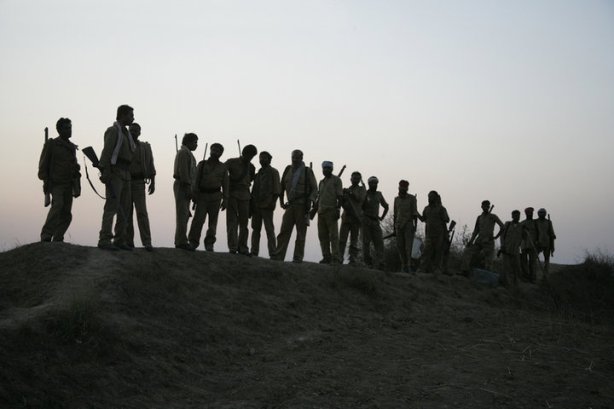
But one image that will shake me for many more years, the one that is so depressing that I haven’t seen the film again even though it is, for me, one of the best films of the year – Paan Singh Tomar’s sadness at seeing his worst enemy Bhanwar Singh dead. The man who had forced Paan Singh to end his international sporting career to become a dacoit had died. And instead of being relieved, Paan Singh was left purpose-less. The cries of Paan Singh, telling Bhanwar Singh’s dead body that he will chase him in another world and get his answers still give me chills. Those lines are the best lines of the year for me, resonating so much with the cynicism and depression of our times, where one fine morning, without any notice, all good turns into hopeless, impossible bad by the apathy of the system and resident evil of vengeful human kind we are, making Paan Singh Tomar the film, a kind of socio-political version of unrequited love stories.

Talaash

—–> @Anand Kadam on Talaash

This year we saw a gamut of movies from the hilarious yet fresh Vicky Donor, violently poetic Gangs Of Wasseypur,  and a mystery with a pregnant femme fatale  – Kahaani . But the movie that has stayed with me, which still sneaks into my mind and cuddles me, is a strange one. I call it a strange choice since this movie isn’t a great one (to be honest), and i didn’t think of it much when i watched it. But the grief stricken Shekhawat and his wife refuse to leave me. Talaash is like “Rabbit hole” with more guilt. When you lose someone very close to you, really really close, his or her or its memories sticks to you like a parasite, sucking every notion of happiness from you. You become a robot going through your daily chores with only one thing playing inside your head – how things could/would have been different. And when a small ray of hope or redemption comes into your life, even if it defies common sense, you cling on to it, not for a closure which comes later (or does it really comes) but for confronting the loss and accepting life as it is.

This is Talaash for me, not the twist, not Kareena or Aamir Khan, or the underbelly of Mumbai. And as i had said it earlier – A movie is never about its twist and if it is, it’s not worth it.
Kumki

—–> @Vasan Bala on Kumki

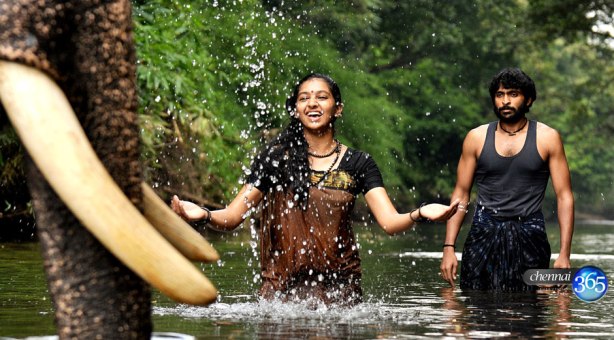
This year, I guess, without much fuss some low budget sleeper hits happened down south. Sundarapandian, Pizza, Naduvula Konjam Pakkatha Kaanom (a few pages missing in between). This year’s Paruthiveen-set-in-the-Jungles-with-an-Elephant marked the debut of Sivaji Ganeshan’s grandson, KUMKI! Breathtakingly shot. Directed by Prabhu Solomon, the guy who made Mynaa.

The film was earlier called “Komban” (Big Tusker). It’s about a mahavat and his “timid” Elephant Kumki, which is supposed to keep a wild elephant Komban from straying into the fields. The film is basically Kumki v/s Komban. It almost reads like a Pixar film, doesn’t it? BUT….Like any south RURAL “hit” this too has it’s rugged faced man with a toothy grin walking behind a shy girl “LOU STORY”, this one too has endless walks and shy glances and grins and predictably ends in a bloody tragic battle. An epic elephant battle! and it boils down to Computer Generated Blood and Dust (hmmm..ummmm). It’s a bona fide formula now, it’s a dream debut for any Star before he graduates into City “Criminal and Cop” roles, mouthing punch lines and beating up Telugu Villains. Loved the music though.

take-this-waltz04

—–> Jahan Bakshi on The Sarah Polley Double Bill : Take This Waltz & Stories We Tell

Sarah Polley delivered a double whammy this year with two diametrically different but intrinsically linked films. The first was Take This Waltz, her deeply sensual and feminine take on love, longing and those gaps in life that we try to fill in vain, and those questions about relationships that never have easy answers. Once you get over the affectedness: the overtly twee touches and some clunky dialogue at the start, Take This Waltz is in turns both superbly seductive and devastating. Michelle Williams once again, brilliantly owns her character and her mousy imperfection, and it’s clear that Margot could only spring from the mind of a filmmaker with a distinctive voice, and one who is a woman. And it contains two of the most exhilarating (musical) sequences I’ve seen at the movies this year.

In Stories We Tell, Sarah turns the camera on her own family with a brave, deeply felt documentary/personal detective story about her discovery of her real biological father, but more importantly, the meaning of family, secrets, memory and the very nature of storytelling. This must have been an impossibly hard and emotionally testing project to put together, but Polley pulls it off- life might be messy but Stories We Tell holds together very well as a rich document, revelatory in unexpected ways. Watch it when you can, and you’ll see where Take This Waltz comes from.

Shanghai-Movie-2012-Review

—–> Kartik Krishnan and Fatema Kagalwala on Shanghai

Kartik’s take

He gets to know that the system is rotten, that the investigation he was heading was flawed to start with from beginning, that beyond the scattered red herrings lay the actual ‘villain’, who incidentally is the same person who gave him the power & ‘support’ to start the investigation in the first place, that the ‘villain’ is the CM of the State.

So easy for any protagonist to become an Anna Hazare/Kejriwal in such a case, or to become a whistle blower and later face the inevitable martyrdom (ala the Satyendra Dubeys & Manjunath Shanmughams). What else can a cog in a wheel in such a scenario do? Pickup the gun like Eddie Dunford in Red Riding 1974 and blaze away? Become corrupt like Micheal Corleone or Ram Saran Pandey (Mihir Pandya has written an awesome article on Dil Pe Mat Le Yaar) ? Or run away into overexposed light like Vijay in Pyaasa? Should he accept defeat and get down to some other profession like learning Medicine (like KK Menon in HKA), or resign hopelessly like Vikas Pande in The New Delhi Times? Even Z didn’t have an answer.

He goes to the party and plays a ‘Prisoner’s Dillema‘ of sorts with his Paneer tikka-munching Boss and the other Powerful man. Eventually he somehow manages to ensure that the guilty get their comeuppance. But this ‘victory’ is hollow. As his Boss asks him “Yeh hai tumhari Justice?”, he gives a reply which was there in the promos but sadly cut out from the film – “Justice Ka Sapna Maine Chhod Diya Hai”.

And this was probably my moment of the year which is not there in the film, but there in my memory, for a long time!

Fatema’s take

The cutaway from Dr. Ahmadi’s murder to the item song. It was a stroke of brilliance. Not only technically, but as a comment on our conscience in itself. Physically it’s a jolt, meant to unsettle us and shake us up. We’ve just witnessed a murder we’ve seen hundreds of times before but what we expect to come next is NOT an item song. And so we sit up and take notice. Besides, there is the juxtapositioning of the two warring factions of the film itself, one (the ‘good’) killed like a dog on the street and the other (the ‘bad’) celebrating his decadent power in all its ugliness. And then there is that tenuous mirror to our own conscience – what’s our rtn to this cutaway? Are we glad we are back into an indulgent song-n-dance setting and away from boring Dr Ahmadi? Or gratified by our own lust? Or guilty about feeling so? Or disgusted to watch such sharp contrasts unfolding in front of us? Or do we feel the cut is an over-sighted mistake? That the director doesn’t know what he is doing? The answer to this is a huge part of our response to the film and to think AND achieve something like this is no less than genius.
Beasts of the Southern Wild - 6—–> Shripriya Mahesh on Beasts Of The Southern Wild

The movie of the year for me was Beasts of the Southern Wild. I saw it in Sundance in January 2012 at it’s premier. I knew very little about the movie going in because the filmmakers were careful about not even putting out a trailer before the premier.

It was instantly captivating. I love the world Benh Zeitlin creates. It is constantly surprising, always engaging. All the actors are local and that lends significant authenticity to the world (bigwig directors would do well to take note). It tackles such powerful themes, but all from the perspective of the little girl, Hushpuppy, played to perfection by the adorable Quevenzhané Wallis.

There are no long speeches about government control, environmental disasters or about the right to live freely in a manner you choose. No sermonizing. The visuals speak and the magical realism is very nicely done. The music (also composed by Zeitlin) and the the production design really elevate this movie.

And it’s a debut feature. It won the Camera d’Or and Sundance.

Since the film’s theatrical release, there has been a fair share of haters. But for me, it just worked. Eleven months later, I still think about it.

ScreenShotAlma
—–>Mihir Desai on Fjögur Píanó

There are times when I can’t put things in words, I feel the need to express and communicate in visuals. Visuals stick with me and this year one such visual experiment has been playing in my head for the longest time. Directed by Alma Har’el, the Sigur Rós music video, Fjögur Píanó.

Har’el, director of last year’s surreal documentary Bombay Beach creates this gorgeous portrait about the painful pleasures of love. The couple, addicted to each other only really ‘feel’ the pain when separated. The edit juxtaposes the bruises on the girl with the boy softly touching the butterfly. This image stuck with me and Alma Har’el’s quote sums it up so perfectly, “For me it’s about not knowing how to get out of something without causing pain to somebody else.” Without lyrics Alma Har’el has created this beautiful story which I feel was one of the best, cinematic experiences of the year. Due credit to Sigur Rós’ music that inspired Alma Har’el to create this world. Click here to watch the video if you still haven’t seen it.

Other Picks: Celluloid Man, Last Ride, Rampart, Once Upon A Time In Anatolia, Holy Motors, Your Sister’s Sister.

Supermen Of Malegaon

—–> Neeraj Ghaywan on Supermen Of Malegaon

At the surface it may be about the lives of people dreaming about film-making with empty stomachs and hearts full of passion, it could be about an accidental hero, about a world we have never seen but still seems so close. The director is never interested in milking the tragedy of the crew’s limitations, their poverty or the tragic loss of the lead character. Instead, she turns it all into a celebration of life, we smile along with the characters who are making the film, in a way we reflect upon our own personal constraints and learn to laugh at them. It is a comment on the Bollywood system of over-produced film-making, it is paying homage to films of the 80s/90s, it’s also a drawing lessons about how to keep going at it even when there is no hope, it is philosophical at times, it is laughing at itself too.

A film that is so simple in its structure and still speak at so many levels is remarkable. And above everything, it inspires you to take the plunge without thinking twice. When I saw the film, I wanted to get out of the hall and start shooting a film immediately. The biggest achievement of this film is that it goes beyond the confines of being a documentary and touches you more than a big budget fiction based feature.

 Koormavathara

—–> Ranjib Mazumder on Koormavatara and Makkhi

Be it a random blogger or a certified critic, everyone is Noah on internet and takes no time to float the boat of top ten lists. Like the middle-class father comparing his kids among themselves or with other families, we always manage to make a list of ten best films every year, irrespective of their debatable qualities. I am no exception.

However, when I was asked to contribute for this collaborative piece after shutting the eyelids, a bald man appeared in front of my eyes, riding a fly. So, here I am, writing (only because I have been threatened with sarcasm) on two of the most remarkable Indian films of 2012.

Koormavatara

It starts late at MFF 2012. I am almost certain that I would leave it midway because Hansal Mehta’s Shahid is right after it and almost everyone from my group is going for it. The film opens, Godse shoots Gandhi and my doubts evaporated in no time. This is the world of an old man, disinclined to show emotions and engrossed only in his mundane office work and his little grandson. A Gandhi lookalike, when he is approached to play Gandhi in a TV show, he vehemently opposes but gives in due to the greedy family tentacles. Gandhi, like the fourth passenger in Mumbai locals, slowly invades his life, brings him down to the level of helpless co-passengers. Like a master of swift attack, Girish Kasaravalli breaks down the middle-class system and releases the Gandhi in him, leaving him in the midst of incessant disintegration of his surroundings. Rajkumar Hirani’s Munnabhai MBBS was a joy to behold, but Lage Raho Munnabhi, despite a splendid screenplay, offended the adult in me, with its preachy attitude. Without making him God, Koormavatara makes Gandhi accessible showing the mighty repercussions it can have in a typical family in independent India. As far as breaking down the myth of Mahatma, this is the best we have seen so far.

Makkhi

With scenes dipped in liquid cheese, a boy constantly stalks a girl with trite expressions; Makkhi was loathsome in the first 20 minutes. I wanted that boy to just die. Thankfully he did thanks to the overdramatic villain, soon after I wished. Little shaky special effects took charge. And I witnessed the most inventive revenge drama this year. A fly killing a mighty man is simply an impossible idea! But the way this little soldier choreographs his action scenes in the concrete fort of the villain, you can’t help but root for an insect that you have always detested. The triumph of S S Rajamouli’s film lies in the sheer leap of faith. We are yet to have our Jaws, but this is the one that comes closest to the idea of a fantastically executed concept film.

Kahaani2

—–> Pratim D. Gupta on Kahaani

Parineeta did the same thing for me in 2005. Celebrate Calcutta! And how. It reminded me of the way Mira Nair shot Delhi in Monsoon Wedding and Taj Mahal in The Namesake, almost pausing the narrative to just soak in the sensuality of the space. You sexy! Also what Sujoy Ghosh did brilliantly was inculcate his love for cinema in the many myriad moments of the movie in a way that they never became copie conformes but rambunctious references that served those respective scenes just fine. From Satyajit Ray to Salim-Javed to Bryan Singer. And those eyes of Bidya Balan when she looks up in the twist-revealing scene before unleashing her real self. Eyes filled with hurt, vengeance and rage…Our own Beatrice Kiddo? Present please!

Ship Of Theseus

—–> Svetlana Naudiyal on Ship Of Theseus

I don’t see all films that release in the year (and I am kind of unabashedly arrogant about it; can’t spend moneys contributing to someone’s 100 crores or out of sympathies to so called indie/different films), so my opinion from the very beginning of it, is skewed. The indie film movement (or whatever there is of it) took a whole new leap with PVR Director’s Rare creating a platform for their release. And even though in my personal opinion, indie films are becoming the cinema equivalent of DSLR carrying people with so & so photography facebook pages (read opinion as – ‘people should be banned, either from making films or from expecting people to watch’), there have been moments of pure delight at the movies in 2012 than years before that, much thanks to the few Indie films that released this year.

Some of the favourites this year are Supermen of Malegaon (one of the best, a documentary so delightful, hard hitting and yet nowhere remotely close to being poverty porn), Kshay (for Chhaya), Gattu (for finally bringing to the screen an unpolished, bratty, clever, naive and most importantly, real kid), Shanghai (for creating that discomfort that exists in our world and we do not see) , Anhey Ghorhey Da Daan (for creating a cinema experience like no other, for delving into time space and making the silences speak)

The most favorite of all that I managed to see in 2012 would be Ship of Theseus for its language, for its being able to be so unique, so evolved in thought and yet not have an iota of pretentiousness and be accessible to just anyone. For the benchmark it creates not just for indie filmmakers but Indian cinema, in general. I am dying to point out and quote every single nuance I loved, but that should be saved for the film’s release. For the smallest of elements it picks and for the whole it creates. For repeating itself like a poem long after you’ve seen it. This is Cinema!!

anhey ghorey da daan

—–> Mihir Pandya on  “अन्हें घोड़े दा दान” (पंजाबी), निर्देशक – गुरविंदर सिंह

एका – कदमों का, कराहों का, नांइसाफ़ियों का, नकार का। एका – दुख: का, संघर्ष का, सपनों का, समता का। वही इंसानी पैरों का जत्था जिसकी मूक कदमताल में पलटकर मेलू सिंह के पिता शामिल हो जाते हैं। किसी अभ्रक से चमकते इंसानी इरादों का जत्था, जिसका सीधा मुकाबला समाजसत्ता अौर राज्यसत्ता के मध्य हुए भ्रष्ट समझौते से तैयार हुई दुनाली दुरुभिसंधि से होना है। किसी ख़ास दिशा में सतत बढ़ते चले जा रहे वे कदम कोरी भीड़ भर नहीं, वे जनता हैं। एक अात्मचेतस समूह। निर्देशक गुरविंदर सिंह की ‘अन्हें घोड़े दा दान’ के इस विरल संवादों से बने विस्मयकारी दृश्य में, जिसके अन्त में सरपंच की दुनाली के सामने गाँव के दलित फ़कत लाठियाँ किए खड़े हैं, अाप सोचते हैं कि अाख़िर वो कौनसी अात्महंता चेतना है जिसने उन्हें वहाँ साथ अा खड़े होने का यह गर्वीला माद्दा दिया है?

बराबरी का सपना। समता का सपना। यह खुद अपने में पूरा मूल्य है। गैरबराबरी के अंधेरी सुरंग रूपी वर्तमान के अाख़िर में न्याय अौर समानता रूपी किसी उजले सिरे के होने का यूटोपियाई स्वप्न। बराबरी स्वयं ऐसा मूल्य है जिसके लिए लड़ा जा सकता है, जिसके लिए मरा जा सकता है। अौर जिस दिन एक दलित दूसरे के लिए खड़ा होता है, एक शोषित दूसरे शोषित के हक़ की अावाज़ का साझेदार बनता है, वह सदियों से जड़वत इस सत्ता व्यवस्था के लिए अंत का बिगुल है। यह दलित चेतना सबक है जानने का कि हमारी देश के भीतर की तमाम पुरानी संरचनाएं कहीं गहरे बदल रही हैं। यह शोषित की साझेदारी है। यह दुख का एका है। वो बस एक फ्रेम भर है ़फ़िल्म में। गाँव के सरपंच की दुनाली के सामने डटकर खड़े मेरी पिता की उमर के ये निहत्थे भूमिहीन किसान। लेकिन इस एक फ्रेम में अक्स है मणिपुर की उन तमाम माअों का जिन्होंने अपनी उस एक बेटी के लिए खुद को विद्रोह में उठे जिंदा माँस के झंडों में बदल लिया था। इनमें अक्स है सशस्त्र सेना का सामना पत्थरों से करने का दम रखने वाली उस नौजवान पीढ़ी का जिनकी ज़बान पर बस यही गूँजता रहा, “हम क्या चाहते… अाज़ादी”। इनमें अक्स है खंडवा मध्य प्रदेश के उन किसानों का जिनकी सामूहिक जल समाधि ने एक बहरी सरकार को भी सुनने अौर अपना फैसला बदलने पर मजबूर कर दिया। अौर इनमें मेरी ही उमर के उन दो नौजवान साथियों का भी अक्स है जो रविवार की उस रात उस बस में इंसानी जिस्म की हदों के पार जाकर भी अंत तक लड़ते रहे, एक-दूसरे के लिए। बराबरी के उस अप्राप्य दिखते स्वप्न के लिए जो सदा ‘फेंस के उधर’ रही इन अाँखों ने अब देख लिया है।

So this was our list. Do comment and share your movie memories/thoughts/opinions of this year.

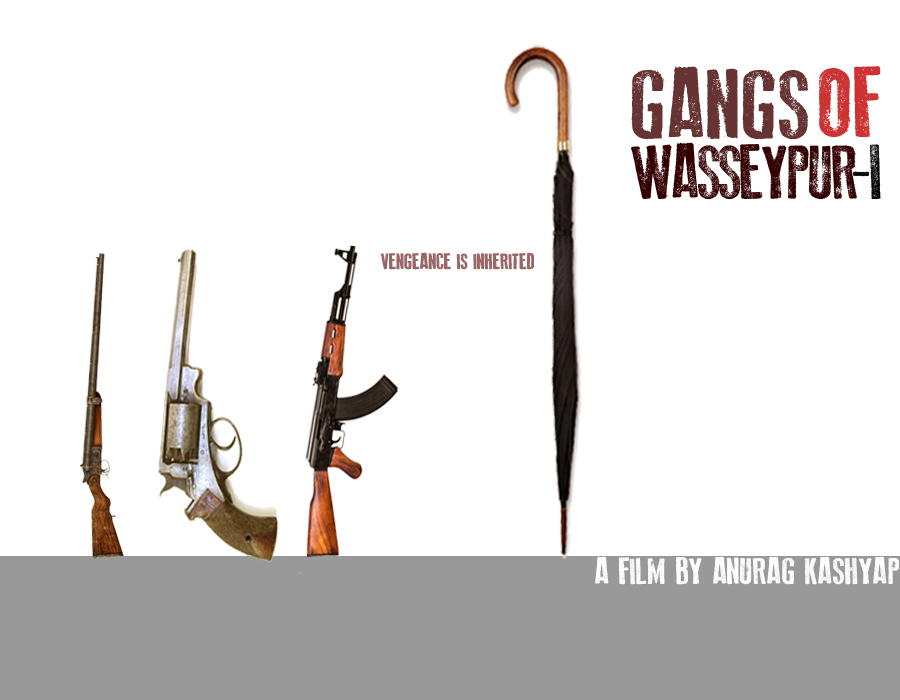
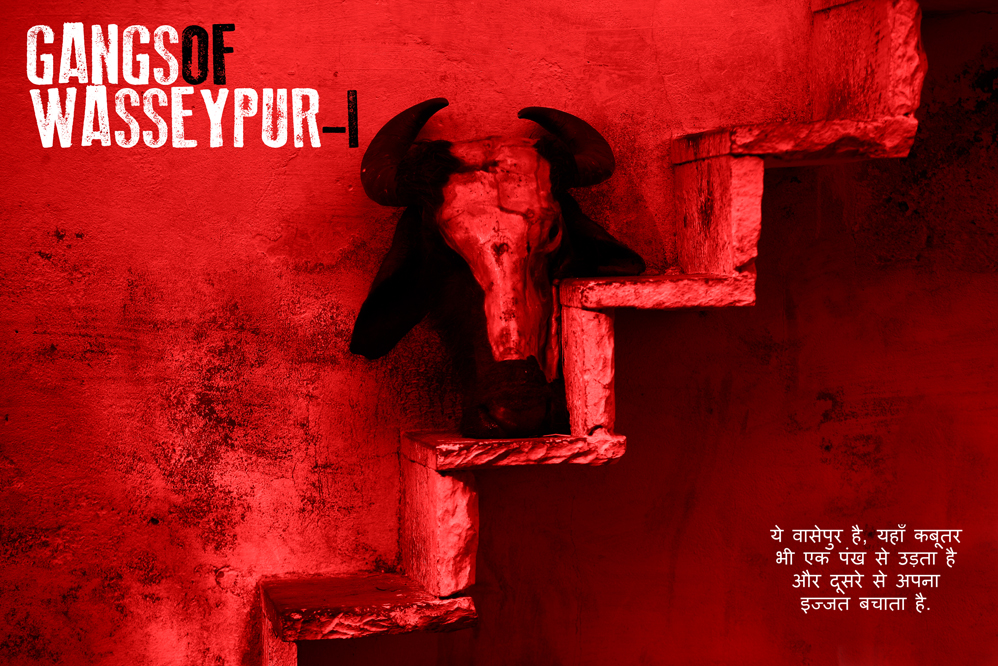
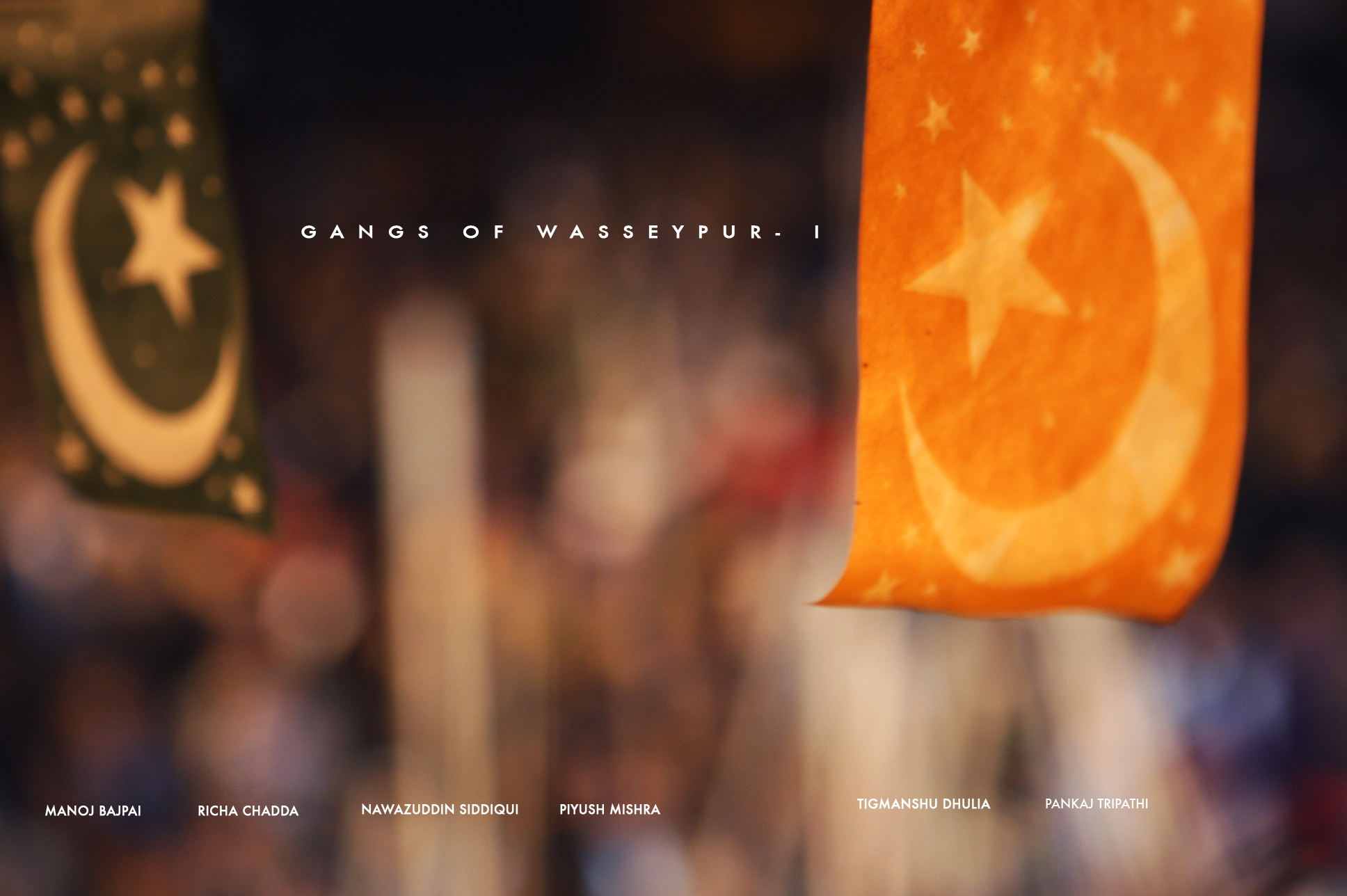
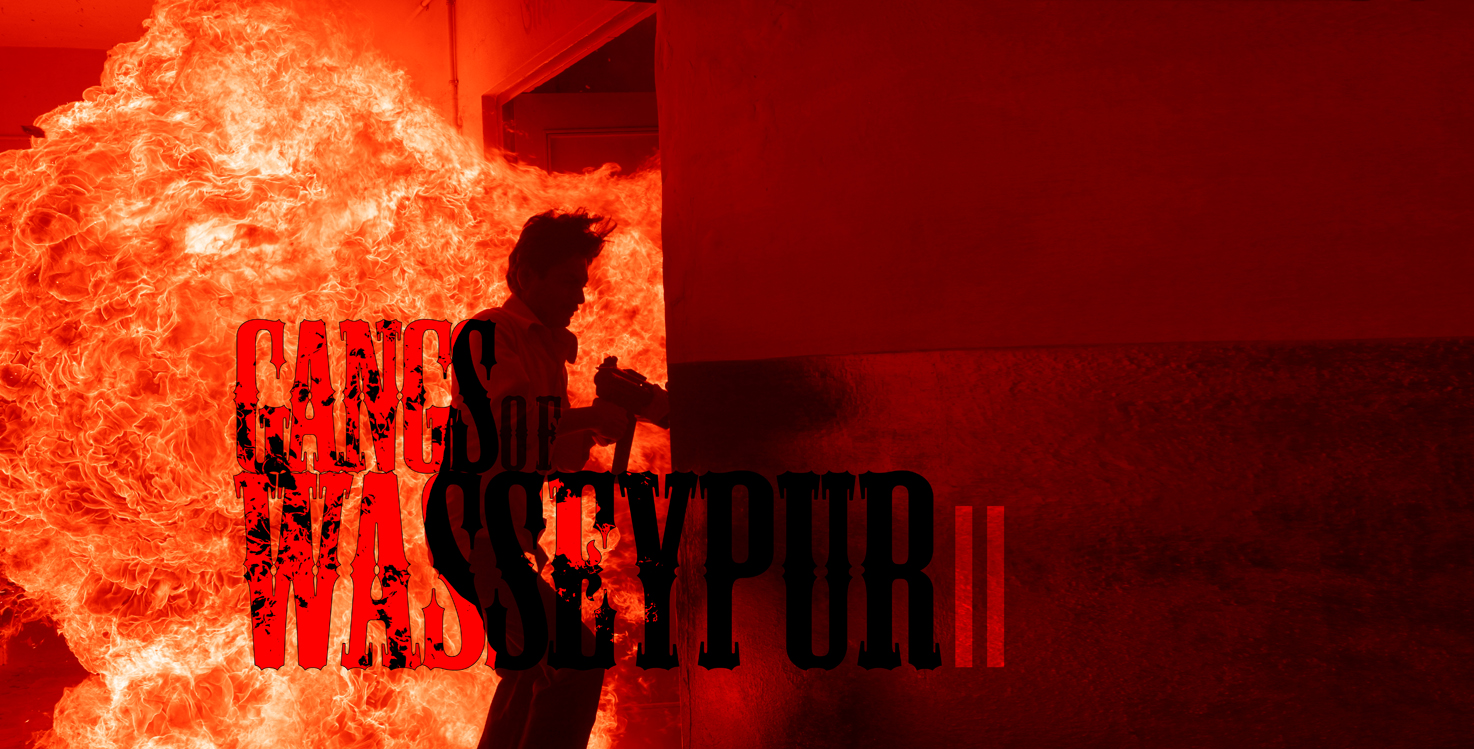
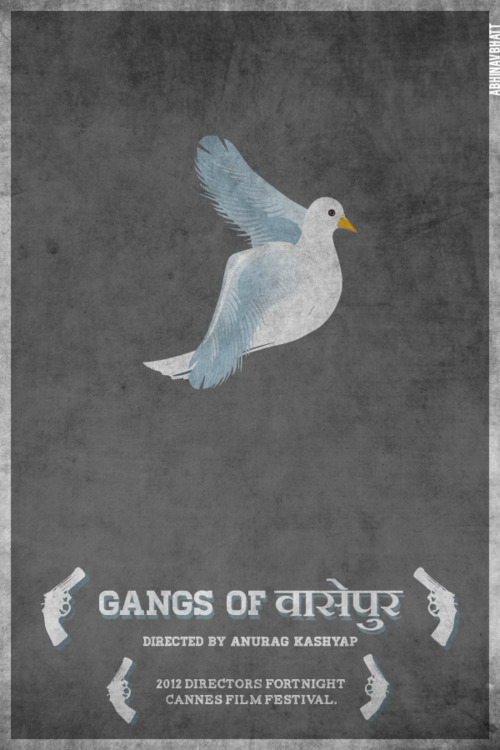
We’ve seen all kinds of reactions to Gangs Of Wasseypur… and like many would say, what good is a film if it doesn’t spark intense discussion and debate? But the reactions that are most interesting to see are in the form of fan art. Fan Posters is a relatively new trend here and we’ve recently had a whole wave of Bollywood and Indian movie inspired fan posters.

So here are some interesting ‘fanboy’ posters for Gangs Of Wasseypur… Take a look, and do send us your own if you’ve made any of your own. Enjoy!

The 10th, 11th and 12th posters are by Vijesh Rajan, Akshar Pathak and Abhinav Bhatt respectively.

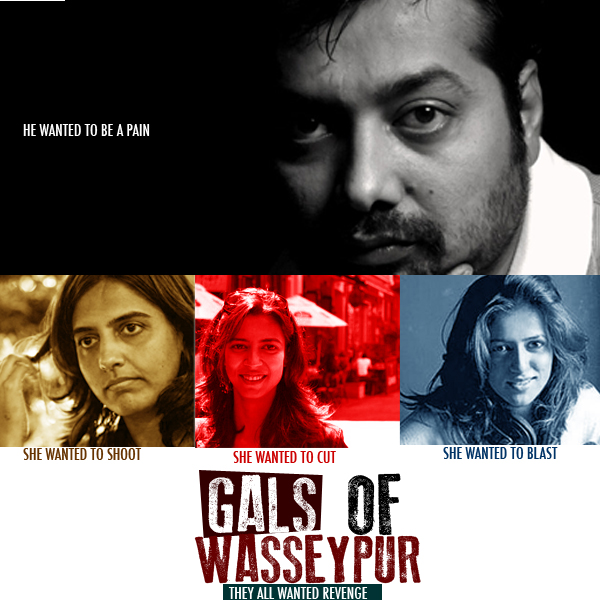
The first 9  are by Neeraj Ghaywan… Who was clearly very bored during post-production for the film. And also the last one, dedicated to the 3 Womaniyas who were a major force behind the film and had to suffer much at the hands of a certain Mr K. Here they have their revenge. This one is our favorite!

(Update: Added Sumit Purohit‘s Minimalist Poster as well. Keem ’em coming!)

(Update 2: Added  अमित aka @hypnosh‘s fantastic new minimal poster. We love this!)

Gangs OF Wasseypur by Vijesh Rajan

Gangs Of Wasseypur by Vijesh Rajan

Gangs Of Wasseypur Minimal Poster by Akshar Pathak

Gangs Of Wasseypur Minimal Poster by Akshar Pathak

Gangs Of Wasseypur Minimal Movie Poster by Abhinav Bhatt

Gangs Of Wasseypur Minimal Movie Poster by Abhinav Bhatt

Gangs Of Wasseypur Minimal Poster by Sumit Purohit


Gangs of Wasseypur Minimal Poster by @hypnosh


Gals Of Wasseypur

Anubhuti, Shweta and Sneha. Hell yeah.

This barter of bloody blows will make you cry, you’ll know my name when I fuck you dry.

There have been a lot of requests for the translations for Gangs of Wasseypur lyrics ( Written by apna Varun Grover and Piyush Mishra). So here are the ‘adaptions’ of the lyrics in English (as the team would like to call it).

English adaptations by:  Renuka Kunzru, Neeraj Ghaywan, and Varun Grover.

Renuka Kunzru (with Neeraj Ghaywan) has done the subtitling of both the parts of Gangs of Wasseypur and you have seen her in a cameo in ‘Jaane Tu Ya Jaane Na’. She’s the girl (Mala) at the airport the friends’ gang narrates the love story of Jai and Aditi to.

1.     EK BAGAL MEIN CHAND HOGA:

(Lyrics: Piyush Mishra)
Ek bagal mein chand hoga, ek bagal mein rotiyan  I dream of a bejeweled moon, some warm bread,
Ek bagal mein neend hogi, ek bagal mein loriyan  I dream of gentle sleep, and a lullaby in my head.
Hum chaand pe, roti ki chaadar, daal kar so jayenge Dear moon, I’ll cover you with my bread warm
Aur neend se keh denge lori kal sunane aynege And soon, dear sleep, I will sing thee my song.
Ek bagal mein khankhanati seepiyan ho jayngi | My dream sees shells bobbing,
Ek bagal mein kuch rulati sisikiyan ho jayengi  | My dream hears muffled sobbing…
Hum seepiyon mein bhar ke saare tare chu ke aayenge | So I’ll ride my shells to my dream,
Aur siskiyon ko gudgudi kar kar key un bahlayenge |and tickle my tears till they beam.
Amma teri siskiyon pe koi rone aayega | Fear not, mother, your plight will not go unwept
Gham na kar jo ayega  woh phir kabhi naa jayega |The friendly shoulder will stay, and your tears will be kept.
Yaad rakh par koi anhoni nahin tu layegi | But dearest mother, just wish for no doom,
Layegi t phir kahani aur kuch ho jayegi  | Or my simple dream, will be my tomb.
Honi aur anhoni ki parwah kisie hai  meri jaan | Not that I fear ill luck or a doomed end
Hadh se jyaada ye hi hoga hum yahin mar jayenge  | If the worst is death, he is an old friend.
Hum maut ko sapna bata kar , uth khade honge yahin| I guess I’ll charm death with my dream-like riddle
Aur honi ko thenga dikha kar  khil khilate jayenge | And con fate,  with a wink and a giggle

2. Womaniya

(Lyrics: Varun Grover)

Taare jo babuna, tarti babuni | He ogles, stares and waits
Babuna ke hathe na chadti babuni | While she teases, taunts and baits.
Maange jo babuna prem nisaniya | He asks, ‘A loving bite on my chin, dear?’
Bole jo thodi, kattti ho kaniya | So she leans over and nibbles his ear.
Badle rupaya ke dena chawaniya | She gives him a quarter if he asks for a rupee
Saiyaan ji jhapte to ho na hiraniyan | And when he lunges, she flees like a flea
Rah rah ke maange choli bataniyan | Don’t let him play with your buttons, it’s a trick;
Jee mey lukaaye lot lotaniyan | The innocent game will end on his prick

Chaahe muh-jhaunsa jab haath sikaniya | When the bastard tries to warm his hands,
Kandha mein dena ji daant bhukaniya | Play along and bite his shoulder
 Bolega babuna, chal jai-ho Patna, | The fiancé will offer you a ride to Patna,
Patna bahaane wo chaahega satna, | And will see this as a chance to get close…
Dai-ho na pahuna ko ticket kataniya… | Don’t go all the way (to Patna) with him..
Patna naa jaana chaahe jaana Sivaniya… | Go only up to (Distt.) Sivan, dear.

3.     KEH KE LOONGA

(Lyrics: Piyush Mishra)

Ras bheege saude ka ye, khooni anjam teri keh ke loonga | This barter of bloody blows will make you cry,
Teri keh ke loonga  | you’ll know my name when I fuck you dry
Khanjar se doodh gire yaan, ho katle aam teri keh ke loonga | Sweet milk or blood my dagger shall reap
Teri keh ke loonga (2) | You’ll know my name when I fuck you deep
Saason ko saanp sunghan ke, jangli til chatta la ke, keh ke loonga | I’m a  scorpion’s kiss, a toxic lullaby at night
Bichu se hoth katta ke, lori jahreeli gaa ke keh ke looonga | It is I, sir, that has fucked you right.
Panghat ko bechunga main, mar mar ghat ke daam teri keh ke loonga |  Your fancy estate, I’ll sell at a graveyard’s price. Ain’t I nice, I just fucked you twice.
Khuli ho sadke, tambu thane chahe mil vil ho ya baaz mekhkama, mekhamaa aaaa | Hit the road, find a remote hut, prison or fort,
Jisme bachna ho bach le, yee, jisme bachna ho bach le, bach meri jaan teri keh ke loonga | Hide, take cover, run, my man, run, I’ll still fuck you, just for fun!

4.     JIYA HO BIHAR KE LAALA

(Lyrics: Varun Grover)

Jiya ho bihar ke laal, | Long live, Son of Bihar…
jiya tu hajaar saal, |  May you live a thousand years
Tani naachi ke, tani gaayi ke, | So sing and dance
Tani naachi gaayi, sabke mann behlaava re bhaiyya…| May you always sing and dance and make us smile, son.
Tu maati ka laal re laala, Bhaiyya-3| You’re the son of the soil, dear son…
Tohra magahi saan niraala,Bhaiyya-3 | May every breath you take be as majestic as this royal state, dear son…
Tere purkhey jiye andhera,aur tuney jana ujaala…| Your ancestors lived in darkness, but with you, may light be born, my son
Tere god pakhaarey ganga, tere tej se aag jhulasta |May the Holy Ganges keep washing your feet,  I pray that your aura be fiercer than even fire
Tere kandhey chadh ke sooraj, aakas mein roj pahunchta…|May your shoulders be so mighty, my son, that the sun rises by standing over them
Jiyaa tu honhaaaaaaar….| Aren’t you my good son, dear son?
Tani ghoom-ghaam ke, tani dhoomdhaam se…May everyone dance, rejoice and celebrate…
Tani taan kheench ke, taansen, kehlaawa re bhaiyya…. and open their hearts and sing to the skies.
Tani naachi gaayi sabke mann behlawa re bhaiyya,May you always sing and dance  and make us smile, son.
Tani neeke-neeke bol pe geet sunaava re bhaiyya…Tani teekhe-teekhe bol pe dhol bajaawa re bhaiyya…May your sweet words turn into songs…
Tani jhaal utha ke, taal se taal milaava re bhaiyya…may your sharp words turn  into drum beats.
Tani dholak, maandar, matka, chammach, laava re bhaiyya…Pick up any instrument and  join the others …And let the melody flow.
Tani oka-boka-teen-tadoka…
Tani chandan-maati-chauka-kaathi…
Tani oka-boka-teen-tadoka gaava re bhaiyya..We wait for your crazy music…
Tani chandan-maati-chauka-kaathi laava re bhaiyya…we know you will bring us light.
Tani saans fula ke phoonk se dhool udaava re bhaiyya, Only your mighty breath can blow the dust off our lives.
Tani jaan jala ke geet ke tel pilaava re bhaiyya...Only you can re-light our dying lamp.

5.     Bhoos ke dher mein 

(Lyrics: Varun Grover)

Bhoos ke dher mein raai ka daana, | Like looking for a pin in a haystack,
Rang biranga bail sayaana, | Like spotting a smart, colorful buffalo,
Bhoos ke dher mein raai ka daana,
Rang biranga bail sayaana,
Dooje pahar mein toot-ta taara, | Like seeing a falling star mid-afternoon,
Paani pe tirta pakka paara… | Like having mercury float on water…
Naa….
Naa milihey…| You won’t find it…
Naa milihey…naa…| Won’t find…
Na soch, Na khoj, | Don’t even think, Or try…
Ud jayi-ho, jag hai toap…| The world will vanish like a cannon…
Hai kohra rakh sab haath taan, | It’s vague ahead, so stick your hands out…
Imaan na dayi-ho hili-hey…| Just don’t let your faith wither…
Naa milihey…
Naa milihey…naa…
Naa milihey…
Naa milihey…naa…
Batiyaati haathon ki lakeera, | Like fate talking without ambiguity,
Mahal duwaarey, khada fakeera…| Like an ascetic waiting at a palace gate…
Ghaath laga le, Raat jaga le, | By hook or by crook,
Suruj ka sab ghoda bhaga le, baba..| Or by capturing the horses of Sun,
Dhar le chaahe bhoot ki dhoti, | Or by latching on to the ghost’s fabric,
Paa le ashwathhama ka moti, | Or by acquiring the mythical pearl of eternity,
Paani mein…

Paani mein, maati mein, | Or in water or mud,
Loha mein, kaathi mein, | Or in iron or wood,
Jiya ke jod mein, aankhan ki paati mein… | Or in the joint of hearts or crack of eyes,
Aakaas khuley mein, mann ki gaanthi mein…| Or in the vast skies or closed minds…
 Naa… Not a chance!
Batiyaati haathon ki lakeera, | Like fate talking without ambiguity,
Mahal duwaarey, khada fakeera…| Like an ascetic waiting at a palace gate…
Bhari dupahari naachey mayura, | Like a peacock dancing in blazing sun,
Yam se chatur, gaanv ka moora….| Like a village idiot more wicked than the Devil…
Na milihey… You won’t find it.
Hai kohra rakh sab haath taan,
Imaan na dayi-ho hili-hey…
Naa milihey…
Naa milihey…naa…
Naa milihey…
Naa milihey…naa…


6.     Humni Ke…

(Lyrics: Folk/Traditional)

Humni ke chhori ke nagariya ae baba… You have abandoned us, father,
Ki arre baba chhori dihala ghar-parivaar kahun banwa maayi gayili ho…| You have forsaken your town and family,
Ki aaho baba soooni kayi ke gharwa-duvaar, kawan banwa maayi gayili ho, | And now the empty walls of our home echo with loneliness, just like dear mother’s heart
Gaunwaan ke logawa, kehu…kehu se na bolein..|The little one refuses to speak to anyone,
Chhotaka laikawaa, bhora-hi se aankh nahin kholey..|He even refuses to see the morning sun…
Sunsaan bhaiyili dagariya ae baba…|Every road, every possible way is deserted, father,
Ki arre baba nimiya ho gayil patjhaar, kawan banwa maayi gayili ho..| Even the family tree has slipped into a long winter, much like dear mother’s heart.
Kaisa-hoo ae baba, humaraa maayi se milaa da | Father, bring our mother back…
Saparo tajaa ke humro araj sunaa da…| Only you can convey our message to her far away ears.
Chhutka ke chhote-ba umiriya re baba..| I implore you for the sake of the little boy and his tiny life,
Ki arre baba, pari lin hum pauwwaan tohaar kawan banwa maayi gayi li ho..| I do beg you, father, please bring his mother back.
Ki aaho baba soooni kayi ke anganwa-duvaar, kawan banwa maayi gayili ho, | For you have deserted us father, And made our home an empty shell, much like dear mother’s heart. 


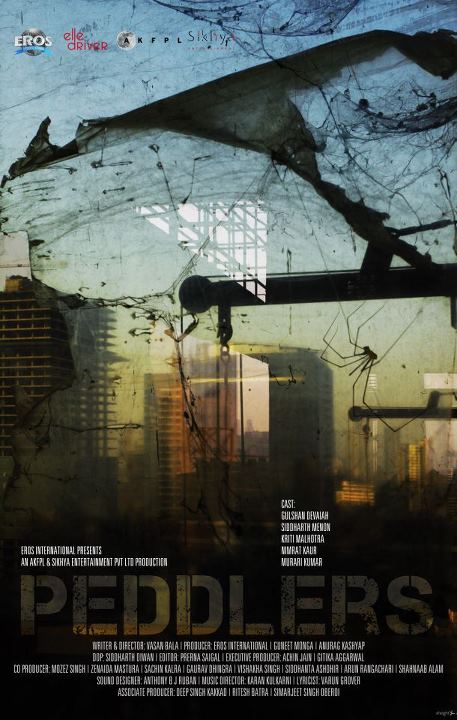
Finally, the official trailer of Vasan Bala‘s debut feature Peddlers is out. The film is all set to premiere at Cannes International Critics’ Week.

So what works and what doesn’t? Since he is a good friend, i might be biased. But let me try. The visuals look gorgeous, there is a sudden tension in the mood but it all looks calm on the surface. Great! And the ‘ud jayega‘ raw vocals adds to the creepiness. But the text seems to be too vague. Actually it’s the same as that cryptic synopsis of the film. Why? Who does that? Also, font is dull and boring. And it comes on the visuals. Found it too be distracting.

What do you guys think? Do leave your comments.

To quote the official synopsis,

Peddlers – A ghost town, Mumbai, inhabited by millions. A lady on a mission, a man living a lie, an aimless drifter. They collide. Some collisions are of consequence, some not, either ways the city moves on.

And here’s the cast and credit list..

Director : Vasan Bala
Screenplay : Vasan Bala
Cinematography : Siddharth Diwan
Editing : Prerna Saigal
Sound : Anthony B.J. Ruban
Music : Karan Kulkarni

Cast: Gulshan Devaiah, Siddharth Mennon, Kriti Malhotra, Nimrat Kaur, Murari Kumar, Sagai Raj, Megh Pant, Nishikant Kamat, Neeraj Ghaywan and Anubhuti Kashyap.

After graduating with an MBA degree and working for five years in Pune and Delhi, Neeraj Ghaywan moved to Mumbai. A new job for another 3 months and then he quit it all. To live, breathe and make Cinema. He started working with Anurag Kashyap. Life hasn’t been much easier since then but Ghaywan survived. Assisted Kashyap on Wasseypur and after working with him for a year, he has now directed a short called Shor. I saw it, loved it, and never thought that AK School Of Filmmaking could churn out another graduate so fast. In this post, Ghaywan blogs about making his short, from research to writing, casting to shooting..read on.. Some stills and the trailer is attached.

I read this research snippet about a woman doing a research on the influence of hormones on relationships. A part of the research involved the woman standing on an empty street asking out men for a date. She asked over 20 men. Her success rate was 40%. She did the same thing on a dangling bridge on a rough weather day. Her success rate jumped to about 85%. Though the static may not be exact but the hypothesis that she arrived at was that people are vulnerable to fall in love in dangerous situations. I had forgotten the article but it stuck in my subconscious and eventually led to an idea about the human condition at the face of death. When we embrace death, our most vulnerable time, we find our truest side. We confront what really matters to us. That became the basis for Shor. Yes, I wasn’t too happy with the title myself but when you see the film you’ll realize we couldn’t have come up with another name.

Shor is about Lallan and Meena, a couple from Banaras (North India), consumed by their pursuit to survive in the seedy ghettos of Mumbai city. Lallan has lost his job at the factory and ambles about hopelessly searching for a way out. Meena has taken up tailoring to make ends meet, losing touch with her emotions, and almost turning into a machine herself. One day they truly find each other while embracing death, divorce and redemption, all just over a phone call.

I had the basic structure of the script ready but I didn’t want to compromise with the culture and milieu of the characters. For me it is very essential to have the premise to adhere to a agreed upon set of culture and ethos. I used to take autorickshaw rides and speak to the drivers at length, recording the conversation on my phone and later make notes from it. I must have spoken to some 40 odd rickshaw drivers to arrive at 4 of them who were from Banaras. I conducted a focus group with these people, inviting them to my house. Yes yes, I have an academic and corporate background and old habits die hard. Anyway, I spoke to them for a long time about their lives, their homes, how they dealt with their wives, I made them call their wives and understand how they spoke to them in crisis etc. Finally, I wrote the script along with dialogue. I was very scared and excited. It was ready and I had to show it to Anurag ( I was assisting him on Wasseypur). It’s like you are going for an appraisal interview to your boss. He read the first page and rejected it. He didn’t read further and I was heartbroken. I felt terrible, this was not just a short film script, but my first work to my boss and he had rejected it. Some people rubbed it in. I almost felt like abandoning the whole idea of becoming a filmmaker. It was humiliating. I thought I should still do this.

I called my rickshawala brotherhood. I decided to go to their homes. Some of them were kind enough to oblige. I spent time at their place; observing their lifestyle, the objects in their houses, the kids, the neighborhood, what they did in their free time, what pained them, what made them happy etc. It helped in understanding their lifestyle and most importantly what language they spoke. Now that I had enough material, I started rewriting the dialogues. When you start writing dialogues, you realize how difficult is writing a screenplay as against a book or a short story. The research helped me in identifying the insecurities that they lived with and how they expressed themselves. I wrote a draft and ran it past Vineet Singh (the lead actor of Shor) and Varun Grover ( a writer friend). They made some tone and grammar corrections with the dialogue I wrote. By the way, Vineet Singh has the fine charm of the angry young man and I have lost the count of how many languages he knows. Finally Anurag read the script. He said it has great potential if I had established the two characters in the same space. He had couple of ideas. I put everything together but didn’t show the final draft which by the way, was the tenth draft.

I just wanted to go ahead and shoot. The more I deliberated the more I’d distance from the passion to make it. Also, there was this pressure of having assisted for only six months and here I was, attempting to make a difficult short film in complete guerrilla style. The folks at Tumbhi.com loved the script and I was ready to go. But there was one problem; the shooting process could only be started in August along with the competing short films, which was completely understandable. But I couldn’t have shot in the monsoons as the film was mostly in difficult exterior locations. So I borrowed money from friends for the shoot (Thank You Anubhuti Kashyap and Suresh Nayak). We got into pre-production, Rishabh and Puja jumped into help me on the film. Rishabh was great help on the locations and convincing people for the shoot.  Puja is responsible for the look  and the costumes. Poor her, she had to stay away from the action for all the work. They have really worked hard during the film. Super line producer Deep Singh came on board. We did the shot breakdowns, location recces and the research for costume, art and the train routes and stations. Mukesh Chhabra unconditionally helped me to understand what to look for while casting actors. He even did couple of auditions for me.

Umpteen number of rehearsals happened. Ratnabali, the female lead of Shor, was doing English theatre. To be honest, I was panicking because I wanted everyone to get the accent right. I am a stickler for accents. Vineet and I had a lot of sessions on accent modulation with Ratnabali. And when we did the final rehearsal, Ratnabali took me by surprise. I was shocked the way she picked the nuances of the culture. Amardeep Jha, agreed to play the amma. She was perfect in that role and she brought in her own mannerisms to add depth to her role. I remember someone telling me “Oh wow, she’s Sharman’s mom from Three Idiots”.

After an elaborate session we finally arrived at the shot break down. I am of the opinion that it’s almost impossible to replicate the feel of real locations and objects. I abstained from an extensive production design, relying completely on the property available on location (Malwani and Dharavi). . You can never think of a plastic toy of a swan couple with a broken wing. Like how coincidental is that!One of the auto drivers from the research, Pavan Sharma offered his house to make it as our crew base. His neighbor Irshad Shah offered his house as the main house of the film. Not only that, he and his wife also acted in the film. Pavan’s son was the little kid who plays Lallan and Meena’s son. His expressions still haunt me. Milind Shirke, my DoP is fantastic at guerrilla shoots. In public locations he would just hold the camera and either look away or talk over the phone. He used to tell me that if you set the frame, don’t look into the viewfinder for static shots. When you look in to your camera’s view finder, that’s when people look into the camera. He has great sense of framing and very quick at conceptualizing them too. We shot on Canon 7D as the motion capture is better on a 7D as against 5D. For the wide top angle shots, I got the watchman of the only tall building in the ghetto to agree use the building terrace. On the day of the shoot he backed out. In my broken Bhojpuri I made him believe that we are shooting a docu which is about ‘our people’ from Bihar and this film will be a ‘message to the government to listen to us to our woes’. That watchman got all charged up; thankfully he never asked me what I was fighting against. He was all supportive but he still declined. And then I realized he is expecting me to bribe him. I never felt so guilty in my life to have bribed someone, not even when I got caught driving without a license. It was a great idea to go all guerrilla with the shoot.

Without the guerrilla style, the film could have easily become one of the most expensive short films in India. More than the saving, it gave us the freedom of canning the shots exactly the way we wanted. The authorities would have never allowed us to take certain shots if we had shot with permissions. Honestly, if we were caught, we all would have been in jail. To avoid that, we made rules. No three people will be seen together, video assist was avoided. As much as I wanted it, we didn’t take the boom mike. We managed to shoot in sync sound with couple of lapels and a mini sound recorder for ambience. Every location we would find a make-shift base and hide whenever cops or some authorities would come around. I can’t thank Vineet and Ratnabali enough for their courage and conviction. They both risked their lives while shooting for Shor.

Post production took way longer than I had anticipated. I am working on the post-production of Wasseypur and I made Shor in between all the running around for Wasseypur. That was the most difficult part. I had to teleport myself from one studio to another studio, one film to another. Both films were equally close to my heart and it was difficult juggling and two timing. Thankfully, I had a great editor in Nitin Baid. I was handling post and he was assisting the head editor,Shweta Venkat for Wasseypur. They are a lovely team to work with. For few days, when I ran out of money for studios, Shweta loaned her macbook to me and also allowed Nitin to work on Shor while working on Wasseypur. It was great help. Zahir Bandukwala designed the sound and Suhaas Ahuja (You will soon experience their work in That Girl In Yellow Boots). We did a 5.1 surround mix for sound and think it really is achievement by the sound team to pull of sync sound in such difficult locations . Vijesh Rajan, is a bundle of joy to work with. He did the VFX, color correction ( made a DSLR short film look like a film)  and the titles. He also made the poster.

I don’t know which filmmaker said this that the biggest task for a filmmaker is to assemble a great team which is excited about the project. That’s what worked for me the most. All of this was possible through http://www.tumbhi.com. Most of the cast and crew were found on their portal. It’s a great platform to discover talent from all corners of India. I am eternally indebted to Tumbhi.com for not only funding the project but also to give us a platform to make this happen. Above all, thanks Anurag! I owe this to you.

( PS – This post was first published on Tumbhi.com)