Archive for the ‘writing’ Category

Its an annual event organised by FWA (Film Writers Association). A forum that gets some of the best and well known filmmakers and writers to discuss and dissect Indian cinema and screenwriting. Read on to know all the details.

WHERE – National Film Archives of India (NFAI). Its on Law College Road, Pune. Close to FTII, which was the venue earlier.

DATES – 28th & 29th August (Sat & Sun)

ENTRY – Free. There is no registration fee.

REGISTRATION – Starts at 9am on 28th August at the venue.

SESSIONS -There will be six sessions. Three on 28th and three on 29th August. Rest follows.

28th August – Session 1 (11am-1pm)

How it all Began: Genesis of and Influences on the Early Indian Script

Chair:Adoor Gopalkrishnan

Speakers: Shama Zaidi, Kaushik Bhaumik

Panel: Virchand Dharamsey, Suresh Chhabria, Atul Tiwari

Session 2 ( 2-4pm )

Dramatic Highs: Melodrama and our Cinematic Form

Chair: Salim Khan

Speakers: Ira Bhaskar, K. Hariharan

Panel: Christine Gledhill, Ravi Vasudevan, Kamlesh Pandey

Session 3 ( 4:30-6:30pm )

A Song and Dance About Everything : Music, Song and Lyrics in the Script

Chair: Javed Akhtar

Speaker: Vinay Shukla

Panel: Madan Gopal Singh, Swanand Kirkire

29th Aug 2010

Session 4 ( 9:30-11:15am )

Anger and Rebellion : The New Wave Cinema (plus the Angry Young Man’s evolution)

Chair: Govind Nihalani

Speakers: Rashmi Doraiswamy and Ashish Rajadhyaksha

Panel: Kundan Shah, Saeed Mirza, Jahnu Baruah

Session 5 ( 11:30am-1:30pm )

Urban Foibles and a New Individualism : Current Trends in Indian Scriptwriting 1995-2010

Chair: Ashutosh Gowariker

Speaker: Ranjani Mazumdar

Panel: Rensil D’Silva, John Mathew Matthan, Bhawana Somaayaa

Session 6 ( 2:30- 4:30pm )

The Road Ahead : Globalism, the Digital Revolution and Other Attractions (Round Table)

Chair: Shekhar Kapur/ Kamal Hassan

Panel: Rakeysh Omprakash Mehra, Paresh Mokashi, Anuvab Pal, Rohan Sippy, Navdeep Singh, Vivek Agnihotri

Speakers – Shekhar Kapur, Kamal Hassan and Shyam Benegal will confirm after 24th August. Shankar Mahadevan/Ehsaan may come for the music session- they are also yet to confirm.

If you are on Facebook, click here to join the group for all the details.

We are going. Who else is joining us ? We just hope that the speakers do come with some kind of preparations ( presentations or something exciting) and no just blabber their way to boredom. We will try to record and put video blogs of the same.

Aha, finally! After making headlines almost every year for all the wrong reasons, seems like GOI has finally decided to clean up the mess (like the one on the left). Plus some good news for screenwriters – instead of one, now there will be three awards. Scroll down to read it in more details.

– The selections for National Film Awards for 2009 will be implemented under the new system. The following are the new features of the re-vamped National Film Awards:

(A) 2-Tier Selection System

(i) 5 Regional Panels has been constituted for pre-selection of films

(a) North– English, Punjabi, Dogri, Urdu, Bhojpuri, Rajasthani and Central Indian Languages

(b) West – Marathi, Hindi, Gujarati & Konkani

(c) South I – Tamil and Malayalam.   South II – Kannada, Telugu and Tulu

(d) East – Bengali, Assamese, Oriya and dialects spoken in Northeast

– Each Regional Panel would comprise a Chairperson and one member (both of whom would be from outside the region) and 3 other members from with the region.

– The screenings of the Regional panel as well as the Central jury would be held in Delhi.

(ii) The Central jury would comprise Chairperson plus 10 Members, of whom 5 would be the Chairpersons of the 5 regional juries

(B) New Award Categories

(i) Audiography – The following new awards have been introduced in this category  (a) Location Sound Recordist & Sound Designer

(ii) Music Direction – An award for background Score has been introduced, in addition to an existing award for Best Music Direction (Songs)

(iii) Best screenplay and Dialogues – 3 Awards have been instituted in place of the current award, namely, award for Adapted Screenplay award for Original Screenplay and award for Dialogues

– The cash prize for several award in both feature films and non-feature films categories have been increased.

– The sitting Fee of Jury Members have been hiked from Rs.1000/- per day to Rs.2500/- per day.

– The changes have been carried out following recommendations by an Expert Committee headed by eminent filmmaker Shri Shyam Benegal for up-gradation of the National Film Awards.

– The mandate given to the Committee, constituted by the Ministry of Information and Broadcasting was to re-invent the National Film Awards with a view to making them more contemporary and acceptable.

Hopefully we will have a controversy free National Awards next year!

Bollywood – its still a strange place. We still dont have any concept of “script readers” and giving feedback to a filmmaker means “you are supposed to say only good things” about his film. And everyone has become so protective about the first look of their film, that passing on the script for feedback is an impossible dream.

We decided to check if the other way can work out. One of us wrote a script for a short film (3-4 mins) and we are putting the script here. Good, bad, fugly, whatever – do let us know in the comment section. Help us decide – should we make it, throw it in the dustbin or better, use it as toilet paper. And its just 3 pages, so please read on.

See if this makes any sense because we have been told it didn’t made so, to many.

BUM-CHUM

INT. XXX – DAY

ECU of a man’s face. He is lying on a bed.

Initially little nervous, he tries to bend his head little backward, turns back to starting position. Closes his eyes, mumbles few prayers. Suddenly he smiles, opens his eyes as if something unexpected happening to him, then again closes his eyes and giving an orgasmic expression. He seems to enjoy it. The expression keeps on changing from one extreme to other.

With a loud noise, the screen goes black out.

INT. HOUSE – DAY

A lean, thin man with receding hairline is busy playing a game on his mobile. Seems he just lost it. With a sigh, he looks up. Into the camera.

MAN (looks up – into camera)

……aur kya, bijli gul. Pehli baar ushey aise hi mila tha. Uska chehra bhi nahi dekha.

INT. HOUSE – DAY

WOMAN (into the camera)

Par maine dekhi thi…..picche se. Bilkul paas se (smiles). Bachpan ki bimaari hai…..(breaks into a hysterical laugh )

INT. HOUSE – DAY

A fat kid (girl – 9-10 years) on a dining table by herself and eating cornflakes.

WOMAN (VO)

Jo bhi khati, wahin atak jaati. Na pet me pachti, na bahar nikalti.

EXT. ROAD – MORNING

We see the fat kid from the back, going to school, with a heavy bag on her back and her big bum.  A water bottle hanging on her right side.

A young guy riding a cycle crosses her, tries to hit her bum with his waterbottle and shouts out.

GUY

Oye Bum–per…kuch pump—kar!

The handle of the bottle breaks, falls down. The girl smiles, sits on it suddenly, the bottle breaks with a loud sound.

The guy looks back at her. The girl seems very happy.

GIRL

Pump kiya…teri bottle ko.

The guy shakes his head and leaves on his cycle.

INT. HOUSE – DAY

Another kid, 9-10 years old boy, is trying to buckle up the school belt. Standing in front of the mirror, he is dressed up in school uniform. Only trying to fix up the belt. He moves his back towards the mirror and looks at his bum. There is almost nothing. It’s all flat. The pant hangs loosely and looks bad. He pulls the pant from both sides with his hand to make it look tighter to his bum.

MAN (VO)

Aur mere ko Chamcha bulate they. Kisi ki chaati nahi kabhi, bus gaand me dum nahi tha, matlab dum to tha bus gaand hi nahi thi. Chamach jaisa. Short me Chum!

The kid put his left hand on his bum and tries to figure out the curve of his bum…he moves the hand, still  in that small curve form, to the front and places it in a position that covers Pamela Anderson’s bum. He is comparing the size.

A pic of Pamela Anderson in swimsuit, still from Baywatch, is placed in one corner of the mirror.

INT. HOUSE  – DAY

MAN (into the camera)

Jab isse doorsi baar milne gaya. Tab bhi chehra nahi dekh paya. Waise hi…aao let jao, bhagwan ka naam lo aur intezaar karo….ki is baar Bijli corporation ki meherbani rahe….

INT. XXXX – DAY

ECU of a man’s face

He is lying on a bed. Closes his eyes, mumbles few prayers. Suddenly he smiles, opens his eyes as if something unexpected happening to him, then again closes his eyes and giving an orgasmic expression. He seems to enjoy it. The expression keeps on changing from one extreme to other.

INT. HOSPITAL – DAY

WOMAN (VO)

Aur mere pe tabhi jadoo sa hua.

The woman smells something in the air. Takes a deep breath in. Almost bliss. She takes a Man’s pant, which is hanging in one corner of the room, slyly puts her hand in one of the pockets, and finds something, smiles, tries to cover up her expression. Gets out of the room with a packet in hand.

CUT TO

INT. CLASSROOM – DAY

All 9-10 year olds in the classroom. A man sitting on a chair, talking to the students.

TEACHER

Simple sa sawaal hai. Yeh batana ki tumko kaun sa khusboo sabse pasand hai aur kyun ?

We see the same fat girl (with big bum) sitting on the right hand side of the teacher. The teacher points his hand in the right direction.

TEACHER

Idhar se chaloo karo.

GIRL1

Gulaab. Kyunki bahut acchi khusboo hai.

She sits down.

GIRL2

Chameli ka….

She also sits down after saying the answer.

The fat girl, Bum, is next. She has a disgusted look at her face. Hesitatingly, she stands up.

FAT KID/GIRL

Rollies…

TEACHER (shouts out)

…Rollies….

FAT KID/GIRL

jo Papa roll karte hain na….usko roll karne ke pehle…..

INT. HOUSE – DAY

We see a middle-aged man rolling tobacco into tabacco paper. The fat kid/girl peeping through one corner and inhaling it.

CUT TO

INT. HOUSE – DAY

WOMAN

Phir kya ? Bum pe bum bum padi. Aur us din maine isko baad me phone kiya…sorry bolne ko….

INT. HOUSE – DAY

Close up of the man’s face – He is nodding his head to some music and enjoying it. Twitching his lips with a blissful/orgasmic feeling.

WOMAN(VO)

Ek baar call kiya…..do baar call kiya…..phir last baar…

The Woman is making call through her mobile.

We hear the sound of mobile vibration. The camera tilts down to show that the guy has kept his mobile just under his crotch, it’s in silent vibration mode and as it vibrates, giving a ticklish feeling and he is enjoying it. He pulls out the mobile from under the crotch and takes the call.

INT. HOUSE – DAY

MAN

Maza aata hai. Try karke dekho (winks). Ma kasam. Par us raat main phir so nahi paaya…..

We see the man mixing a bottle of some liquid with lemonade. Gulps it down. And then sitting on the shit pot.

MAN (VO)

Ab tak uska chehra nahi dekha tha. Par usne le li meri…teen baar…hattrick…woh bhi picche se….virgin tha main…….ma kasam…picche se….

INT. HOSPITAL – DAY

We see that the man is lying on a bed. The Woman is taking a thin pipe and is putting it inside him, from behind. She is in doctor/nurse’s uniform.

CUT TO

CU of the tv screen – The camera shows his intestine on the screen. She is doing colonoscopy. She is staring blankly at the screen. Is very happy at the result on the screen.

WOMAN (VO)

Gulabi. Bilkul gulabi. Aisa pehle nahi dekha tha. It was love at first sight…

INT. HOUSE – DAY

We realise that the man and the woman are sitting next to each other.

MAN

….sight nahi…at first pipe…..woh gaana iska favourite hai…gulaabi aantein jo teri dekhi…deewana mera dil….He laughs out singing.

WOMAN

Tab jaake pehli bar usko dekha. Samne se . Picche tha bhi nahi kuch dekhne ko….

(she laughs out hysterically)

INT. HOSPITAL – DAY

The woman comes to the front, looks at him. They stare each other for few seconds. The man still on the bed.

MAN (VO)

Kehte hai na, opposites attract.

CUT TO

We see the back of the man with no bum and the woman with big bum, walking closely next to each other. The screen forms a heart shape and zooms into their bums.

The end.

————————————————————————————————————————————————————————-

Synopsis – Its a story about two people, their weird nature, how they meet thrice and finally fall for each other. She is a doctor. And he needs to get his colonscopy done. She does it right, only at the third time. And they are narrating their experiences. The hospital setting, colonoscopy factor is not revealed from the start. So, its mostly in close ups and location is marked as XXX in the script.

Also, he could not sleep the night before because one is suppose to drink a liquid mixed with any lemonade that cleans your system completely. You almost remain on the shitpot every few minutes.

————————————————————————————————————————————————————————–

Lot of our friends and readers have been asking us about the NFDC Screenwriters Lab 2010, so here it is. One of us was part of the Lab last year and it was quite enriching experience. Now am more confused and have more questions to answers. BTW, did i tell that Locarno is gorgeous! So, if you are a screenwriter and want to apply for the Lab, read on.

What : NFDC is organising Screenwriters Lab 2010 for promising script writers. The 2-part workshop is designed to prepare screenwriters’ with original Indian stories for working with the international filmmaking market place. It aims at improving a completed screenplay in its final stages and to increase the international marketability of the same.

This is done  in association with Binger Filmlab, the Locarno International Film Festival and the Entertainment Society of Goa.

Workshop: The 1st Session will be held during the Locarno International Film Festival, Locarno, Switzerland from 7th – 9th August, 2010 where participants will get first-hand experience of the workings of the international film community and get to train with their screenplay mentors.

The 2nd session will be at Film Bazaar, Goa from 23th – 26th November 2010 where participants will apply their training and pitch their revised screenplays to participants at the film market.

Who : The workshop will be conducted by Marten Rabarts, Artistic Director, Binger Filmlab alongwith other guest mentors.

Eligibility : To participate in the workshop the participants need to submit entry form along with screenplay in classic format, Log-line, one page synopsis along with screenwriters’ CV in English. A letter of intent and a DVD of previous work (if existing).

Applications: The applications are available online at www.filmbazaarindia.com or email writers@nfdcindia.com for the application form.

Last Date : The application must be sent to NFDC before 17th May, 2010.

About Binger Filmlab: Binger Filmlab is an Amsterdam based international feature-film development centre. Binger opened its doors in 1996 as a post academic training for film professionals and has matured into a challenging and unique film lab with intensive five month programmes that focus on the development of projects and the individual talents that create them. In this first 10-year trajectory Binger has discovered its natural allies in this work of supporting the brightest emerging talents; the Sundance institute and its Labs in the US, The Nipkow programme residencies in Berlin, Paris’ Cinefondation (Cannes Film Festival) residence and now with NFDC’s Film Bazaar in India.

Binger believes in challenging the film-makers to look at the many choices available and recognise the wide array of possibilities which are inherent in their stories and lie within the vision for their film.

About Film Bazaar: National Film Development Corporation’s international co-production and sales market is held over 4 days in November alongside the International Film Festival of India in Goa.

Projects at all stages of development and production are eligible to apply for the co-production meetings.

Other activities include the companies’ marketplace, the Work-in-Progress lab for rough cuts, the Screenwriters’ Lab, and a Business Conclave. International partnerships include an award for the most promising project presented by the Hubert Bals Fund. Its partners include Primehouse, Europa Cinemas, AFI Projects, CineMart, Locarno International Film Festival, the Hubert Bals Fund and the Binger Filmlab of the Netherlands

All the best! Happy writing!

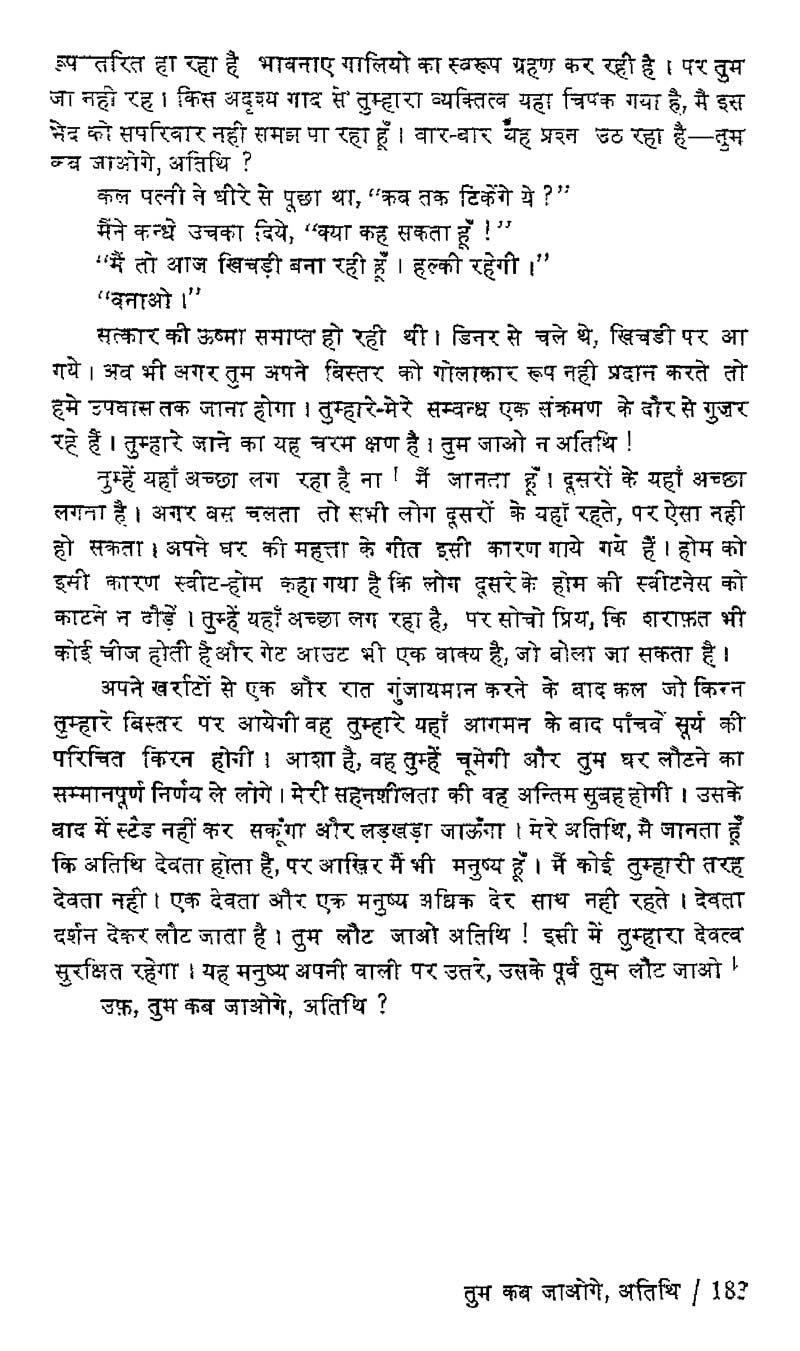
First, lets get the facts correct. Lot of reviewers in their reviews have mentioned that the Ajay Devgan-Konkon Sen starrer film Atithi Tum Kab Jaoge is based on Sharad Joshi’s short story. NO, its NOT a short story! But its based on a short essay written by him.

We still havent seen the film. But our walkie-talkie-moviepedia from Jaipur, Pavan Jha alerted us on this one. The essay is titled Tum Kab Jaoge, Atithi. It was published in his book  “Yatha Sambhav”  and also made it to other compilations.  The makers of the film have taken due permission and have also given him credit in the film, even if its just an idea.

The film has got average rating. But do read the essay. Or do we still need to sell you Sharad Joshi’s writing ?


So, she sat down, pushed the rewind button, compared notes with other films and wrote this post for us. Fatema Kagalwala is the girl on the bike. Thats an easy way to spot her. Atleast we dont know any other girl in Mumbai who is happy to give us a bike ride anytime. In between ADing and writing, these days she is bit busy with pati and ghar-grasthi but like many of us her first love remains cinema. Read on. And like us, if you loved Rocket Singh, attack her!

”You know what I feel about these new-age ‘realist’ kinda movies, they put a complete honest effort into developing the whole film and when it comes to the climax its like they have lost all interest and want to just wrap it up hurriedly.”

These words were said to me by my husband introducing Rocket Singh, the salesman of the year, before I watched it. After I watched it, it made me think. Sadly because I tended to agree with them whole-heartedly about our so-called ‘new-age’, ‘multiplex’, ‘slice-of-life’, ‘realist’ cinema.

I finished watching the film with these words in mind. I did not agree with the analysis with respect to this film but still have chosen to open my piece with it as the problem with Rocket Singh, I believe, is not sincerity or honesty but simply a lack of balance.

Balance between dramatic reality and reality, entertainment and truth. In the cinema of some makers these dimensions are polarised. But when it comes to what I term as ‘filmy realism’ the tight-rope walk is do or die. Sadly, in these days it is becoming more die than do.  

At the end of Rocket Singh, I missed Hrishikesh Mukherjee, Basu Chatterjee and his likes with a pain. Generally, I crave that era wistfully but this time I missed it with a bit more vigour. Because, filmy realism began with them and ended with them. And try as we might we are unable to  recreate that world try as we might with whatever talent and money we can muster.  

Why do I compare both the world of Rocket Singh with that of Hrishida is not because of simple idealism or old-world values. I do so from the pov of story-telling, plain and simple.  

The drama of melodrama as a genre is easy to achieve insofar as one knows its boundaries and does not go the ham way or over-emphasize too much. There has been an established formula for melodrama for years which has successfully played out and will continue to do so. No blancing act required there except to keep in check over-emphasis.  

The drama of brutal, raw realism comes from itself. No holds barred, reality gets more real by this token. There is no limit to drama here as long as it is raw, brutal and stark. There are no balancing acts here that put demands on the maker vis-a-vis the value of his film, the choice only determining the nature. 

But filmy realism is a tricky thing. It is ambitious too. It straddles the world of reality and tempers it with a light-hearted note that might or might not be true/real, takes on the baggage of entertainment and even a note of drama to spice up the proceedings. All this within the construct of strict everyday reality yet keepng the fourth wall intact. Reality that is charming yet real yet engaging enough to keep you hooked yet unreal enough to keep you suspended in that ‘story-world’, yet layered enough for you to identify with every motivation, yet interesting enough to keep you rooted and at the end of it all real enough to be believable. Tall order, which Hrishikesh Mukherjee and his likes seemed to do effortlessly. And which our bluest-eyed boys fail at miserably time and again.  

Rocket Singh, according to me failed there. It did not have the correct balance of all ingredients. To spell it out, it relied too much on the truth of the character and sacrificed all the spice to it. The climax was beautiful in its honesty to the film, to reality, to the film’s reality and the world of its characters. But it left us cold. It left me cold and the person who I have quoted in the beginning. And millions of viewers who rejected it, which is painful.

Because it is not a bad film at all. In fact it is a good film. Far better than Chak De. Far braver too. But the idealism of the climax (and I don’t mean Rocket’s idealisim, I mean Jaideep’s idealism as a writer) not to compromise the truth of his character to drama and entertainment, not to pander to our baser and easily-fulfilled sides of our minds that would demand that. Brave decision. And in doing so he has made sure he has maintained the soul of the film. It is one film start to end and does not become something else altogether in the end just because a climax has to be certain way and story-writing conventions say so.

But, and now I will contradict myself. It is still not one film. Because it holds out two promises to us. One of idealism winning by its own gumption, the other of a nice light-hearted but deeper film, like Khosla ka Ghosla. It does not deliver on both accounts. 

Let’s examine the first one – Rocket Singh, the character is one of pure idealism, one who is forced to be honest, almost as though he is congenitally diseased by it. This idealism is doubly fuelled by his confidence in himself, his abilities and then later in his values and  to an extent, revenge. These were the very attributes that made Rocket Singh a hero, a real hero, even though he espoused what would seem today unrealistic values. These very values stood by him to give him strength in all his endeavours and weaknesses. So what happened in the end? What happened in the end, the breaking down of the man, in front of circumstances yet not bending his values yet being destroyed himself by his choice is I think a brilliant characterisation. It’s far more layered and telling that any our cinema has seen in a long-time. But, the promise the writer makes to us right from the beginning is that this man’s values are his strength. And so we expect him to derive strength from those. But that does not happen. What happens is a Gandhian ending where suffering is epitomised and ‘satya’ compels the ‘enemy’ to bend. Very idealistic and touching. But we were not promised a Gandhi’s story and so we felt cheated.

We felt even more cheated because the impact of this Gandhian ending left us miserably shaken out of our light-hearted mode (no it did not do anything to our consciences or anything, nothing RDB type of shaking up) but a rude awakening or say let-down. Like as though DDLJ had ended like  a Tezaab!

Not to say that a writer cannot suit his endings to his ideology. That he cannot subtly make his character do what he wishes him to do if it is within the parameters. Of course he can. But then do not promise a character that is different from that. Or do not scultp the tone of a story such that the legitimate conclusion would not fit in with your aspirations. I think Oye Lucky Lucky Oye did that brilliantly in recent times. Trippy, the film made no misleading promises, just sit back and enjoy the ride, it said. It’s an episode. Rocket Singh promised not only a joy-ride with a meaningful end but also an entertaining 2 and a half hours full of real-world charm and old-world values. But with the tone of the ending changed the complete tone of the film. Something that it was not building upto all this while. That’s why it was not one film. That is why even though it may have been true to its character it still was not true to its film.

Agreed, the questions were serious and choices life-defining even. But throughout the film not only does the tone of the film but the central character also promises me that life will be defined in a breezy way. More or less. And then a Hrishikesh Mukherjee film becomes a Shyam Benegal film. (Don’t take it literally, I am talking about the cinema they represent.)

On a more massy level, I would attribute the lack of drama in the climax to its failure. Maybe there are more such reasons with what was wrong with it. And if there wasn’t much, then lots is wrong with the audience that rejected it so brutally. 

– FK

PS – And to read more of her filmy thoughts, you can visit http://filmsandwords.blog.com/

Because its not Agyaat!

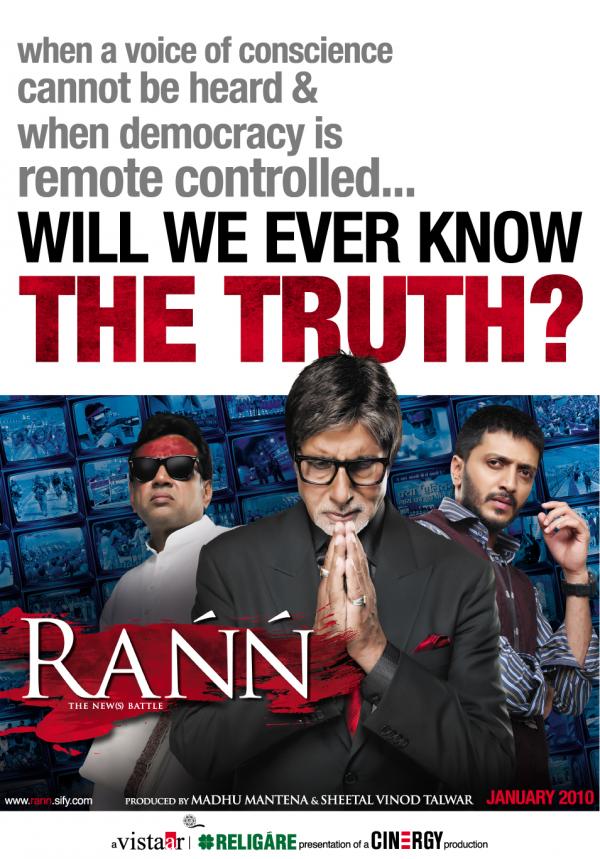
And look at the irony! The man who went out to expose the media, got himself exposed! Courtesy writer Sonal Mehta.

First, lets kill the rumours. Sonal Mehta is no journalist. Was never a journalist. All you journos get you facts right! She comes from advertising background and has experience of more than ten years. She met Ramu and assisted him on James.

What we know – Here is the way Ram Gopal Varma works. He gets an idea and tells the same idea to 3-4-5-6 writers and ask them to write story/treatment. None of the two writers get to know that they are writing the same. It doesnt happen at one go. First one writer, then second, third and so on. Sometimes they get paid, sometimes they dont. Nobody knows the reason. May be he gets bored soon. He changes writers faster than his girlfriends!

Based on the treatment notes, Ramu decides which way to go. And he would suddenly call up the 7th writer and tell him the same one line and some more ideas from one of the treatments without telling the 7th writer about other six and their notes. This is not new.

We have been following Sonal Mehta’s case quite closely and here is all the dope that we got from our journalist and writer friends.

– After James, Ramu asked Sonal to work on his one line idea of media expose and all that holier than thou gyaan. She wrote the script. Ramu liked it.

– Sonal was told that she will direct it as well.

– Sonal’s script/film was titled Break ke Baad.

– She was even working from Ramu’s office.

– When she got to know about Rann, Ramu denied it first saying that its a completely new script. She was kept in the dark.

– When she confronted him again, he offered her to direct a new film. And that was the end.

Sonal Mehta went to FWA ( Film Writers’ Association). When the matter wasn’t solved there, she went to the court. And click here to know how the case was settled. Though our sources confirm that its not 55 Lakhs but the case was settled for 20 lakhs. Thats not bad too! And coming from Ramu, who is known to pay peanuts to his writers.

But Ramu is not happy with the way the producers have settled the matter. According to the official press release, Ramu states….

I hereby want to state that the Producers – Sheetal Talwar and Madhu Mantena have taken a decision to settle the dispute with that Mehta girl without my consent. The Honorable High Court has not passed any judgement or granted any injunction in the said dispute in any parties favour. As delaying the matter could cause irreparable loss to them they have taken this step to end the matter so that they can concentrate on release issues.

This settlement should not amount to any misconception that I was involved in the discussion regarding the same. I hereby by want to make it clear that Absolutely NO Credit will be given to her with regard to the story, screenplay or whatever of RANN.

I am hereby stating that I am just the Director of the film and the script has been written solely and wholly by Rohit G. Banawlikar and that Mehta girl is nothing but a fraud and a scamster and an opportunist. I will proceed with action on her to teach her and the likes of her a strong lesson as soon as I get free from my work.

Ramu ki dhamki!! Hmm. So why did the producers went ahead and settled the case out of court ? Well, simply because her case was stronger. Here is what she had with her…

– All documents proving every kind of official communication. Sms and mail exchanges between her and Ramu/his secretary/company.

– Comparative notes showing similarities between Rann & Break ke Baad.

– Letters from actors stating that she had narrated her Break Ke Baad script to them.

– No, she had NOT signed any contract and it worked her in favor. Beacuse mostly all the contracts state that in case of any conflict, all rights belong to the producer/director. So, even without the contract, she had much stronger evidences to prove her claim.

This is surely a landmark case. And when the other party is so strong. Not everyone manages to get their dues. Any knows what happened to Sajit Warrier’s case ? That was again Ramu!

So, all you writers, make sure that you don’t fool yourself. And if you are working with Ramu, make sure that save all possible evidences. Hope it never happens to you, but you never know! And if it happens, pray that you manage to get 20 lakhs!

Because he did a great and grand job there and you had all the voyeuristic pleasure. Because dil pe hath rakhkar you cant do that! That would be a great fake job.

What We Thought

1. Chetan Bhagat is a shitty writer who is like Priyadarshan of desi english writing. His PR guys are always working over time and going for the over kill. There is no reason to like him or his writing.

2. Raj Kumar Hirani was the Rocket Singh of Bollywood. He would not commit any wrong. Jadu ki jhappi and Gandhigiri happened because the man seriously believes in those virtues. The man who can say no to Shah Rukh Khan and his 20 crores, he surely has some ethics.

3. Vidhu Vinod Chopra is insane and passionate about films. The only producer who doesnt mind sharing profits with his cast and crew. But he loves talking only about himself and his films and has even passed his genes to his one time AD Sanjay Leela Bhansali. But he is here for cinema and nothing else.

Now, forget what Chetan said, what RajKumar Hirani replied, how VVC reacted and what percentage of the book is the film debate. Because their story has more twists and turns than the film. If you are still interested, you can click here to know more. Lets see what we got to know.

The Problem

The problem is simple. As Vir Sanghvi has put out in his blog post here. Imagine a producer like Vidhu Vinod Chopra and a filmmaker like RajKumar Hirani wanting to buy the rights of your book. Ask any sane writer, anyone will happily go for it and will settle for whatever decent money is offered.

When a writer is starting his career, most of them dont care much about the contract or the money. Because contracts are difficult to read and they are never in favour of writers anyway. And money doesnt matter much because its your first one. You just want to step in. For Chetan, am guessing it most have been the opposite. With IIT-IIM degree, how much more do you want ? 

When signing a contract in bollywood, try asking for a fair deal and they will show you the door. And nobody wants to lose an opportunity in this cut-throat competition. Argue a bit and they will tell you that they have million other stories to tell, trillion other books in mind and drillion writers waiting to write for free. Go figure! And Chetan was ofcourse more than interested to make an entry into bollywood, as he sent the copy of the book to Hirani first, who found it interesting and thought about adapting it.

The way bollywood works, its mostly based on relationship. You take the spoken words for guarantee. The bigger the other party, the lesser power you have to talk. Writers are asked to start writing, money comes later on depending on the mood of the producer/director and then the contract is signed. And when any writer is desperately looking for work, he/she will go ahead and sign any contract. Dont look at this case, look at the contract.

Let me tell you the story of the lyricist who wrote one of the cult songs of this decade. It was in a cult film directed by a well respected director and produced by a well known production house. Since it was his first song, you would not believe what he was offered. Listen to this carefully, he was offered to take some costumes fom the film which was ordered for the lead character. He didn’t say anything, entry was important. No doubt he is doing good for himself now and can ask for a fat cheque.

Curious Case of Contracts

In bollywood, its just another way of full proof exploitation unless you belong to the league of Kashyap & Tyrewala . Its a document that state the writer agrees with all their terms and conditions. In an industry where there are millions waiting for a door to open, people go for whatever they get. In this scenario, it totally depends on the other party, the one who has all the powers, to decide the deal he/she is going for. And if a big producer like VVC goes for this kind of contract, you can imagine the rest.

Its true that Chetan signed the contract and accepted a rolling credit. But the contract itself is UNFAIR! He accepted it for whatever reasons. But to even offer a credit in the end is like trying to sabotage the credit. VVC could have atleast consulted his in-house film reviewer Anupama Chopra, who contributes for many international newspapers and magazines.

Everywhere in the world, everywhere, when a book is adapted on screen, its always credited in the opening credit roll. It doesnt matter if its a 5 percent, 50 or cent percent. Whats surprising is that Vidhu Vinod Chopra gets a credit for Associate Screenplay in the opening titles. Also, since there is lot of similarity between the book and the film as pointed by those who have read the book, Chetan deserves a story credit as well.

Rahman Cant, Chetan Can ?

Many believe that its Chetan’s mistake because he signed the contract. Well, he signed it but was there any other choice ? I doubt. Those of you who have any bit of info about how the industry works, will understand.

Do you know that all big and small musicians and singers who are currently working in the industry have to pay a fee to the music company every time they perform their own songs ? Because none of them own copyright over their own creations. How weird is that! It happens only in thie country and nowhere else. Blame it on contracts again. Because you have no choice but to sign it or you will be out of work soon. They will tel you  forget intelluctual property, count what you are getting now! And we are talking about big names here. When A R Rahman asked for rights of music of Om Shanti Om, which he has suppose to compose, he was shown the door. He didnt even ask for complete rights but just wanted to share. The makers replaced Rahma with Vishal-Shekhar. Imagine if this can happen to A R Rahman, what can a new writer or even Chetan Bhagat do ? Even if he had asked for it, doubt it would have any kind of difference. You can read more about it here (Rahman episode) and here (artists & contracts).

In many countries including France, where the copyright issue was sorted out first, the contract is not counted for even if the artist has sold his intelluctual rights on the basis of contract. Because the creation of any artist always remains his/her, those are non-transferable rights, by any kind of contracts.

So, fuck the contracts. And its great that VVC and his gang put out the contract in the public domain. Now everyone can read and see for themselves, the way bollywood goes for bonded labour.

Forget Filmmaking, Learn Creditmaking

Learn it from Danny Boyle. He didnt bother even sharing the direction credits. It was not mentioned anywhere that Loveleen Tandon would get the co-director’s credit but Boyle felt that she deserves more. He even called his Chief AD Raj Acharya onstage at the Director’s Guild Award. It doesnt make him any less talented but  just better human being.

Closer home, look at the credits of Kaminey. Cajetan Boy, whose short story was the trigger point for the film gets the first credit in the opening title and a font so big that can be spotted from a distance. Whats more, even a character in the film is names Cajetan.  

What We Think Now

Chetan was never holier-than-thou, no doubt about that, and he still isn’t but all this is happening with those who taught us jadu ki jhappi and gandhigiri! Why fool us any more, Sir ? Wasnt there an easy solution ? When your cinema is all about commerce and credits, spare us the great gyaan of life. This real life story taught us more and hopefully our bollywoodwallahs are watching and learning too!

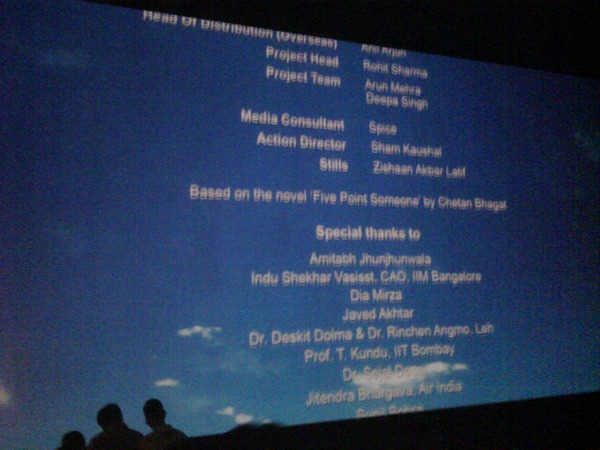
25th December (Friday) – This is how it started (see the pic). Chetan Bhagat and his book is not mentioned in the opening credits of the film 3 Idiots. In the closing credit, it comes quite late. 

27th December (Sunday) – In an interview to Hindustan Times, Chetan says that it feels strange. Click here to read the full interview.

29th December (Tuesday) –  Vidhu Vinod Chopra and Aamir Khan accused Chetan Bhagat of being publicity hungry at a press conference in Bangalore. And then this is what happened. Check out the video.

Vodpod videos no longer available.
more about “Author Chetan Bhagat, team 3 Idiots t…“, posted with vodpod

December 31st (Thursday) – Chetan Bhagat wrote a post on his blog titled A book, a film and the truth and explained his stand on the credit controversy. Click here to read the post.

1st January (Friday) – Vidhu Vinod Chopra started the year with a bang. Shut Up! Today at a presser in Delhi, Vidhu Vinod Chopra lost his cool and went insane when asked about Chetan Bhagat’s claims. Check out the video.

And here is more….

September 9, 2009Here is the link to an interview where RajKumar Hirani said that the film is only 5 percent similar to the book.

 How true are you keeping 3 Idiots to the book by Chetan Bhagat Five Point Someone?

3 Idiots is inspired from the book but it is completely different. I would say just five per cent of it is the same. Books and films are different. So the moment you decide to pick up a book and make a film as it is, it will be a disaster. It’s a nice book, but it’s anecdotal and films can’t be anecdotal. It has to have a story. The reason I mention this is because people should not go to the theatre thinking, we are going to watch Five Point Someone and later find out that it’s a completely different film.

Chetan Bhagat is also not exactly holier-than-thou. He said that he never read the script or may be, just the first draft. But check out this video (thnx for the tip Mohammad Moizuddin), at 5:30, Chetan saying that Raju narrated the full script to him, 2-3 times.

We havent read the book. But those who have, said its easily more than 5-10 percent. And if thats the case, then Chetan surely deserves better place in the credit. Watch any film which is based on any book, its always mentioned in the opening credits. And if the similarity is beyond the set up and the one liner pitch, Chetan also deserves a story credit.

Whats surprising is that in the centre of it is Vidhu Vinod Chopra. The man who doesnt leave any small credit. Remember the song bande me tha dum in Munnabhai MBBS. If we are not wrong, Vidhu Vinod Chopra suggested one or two lines of the song, to be exact, just the phrase bande me that dum! Rest was all written by Swanand Kirkire. But check out anywhere, Vidhu Vinod Chopra is credited everywhere for those few words. He made sure that he is credited.

At the Apsara Awards that year, when the song was nominated and only Swanand’s name was mentioned in the nomination list, VVC was shouting from rooftop for getting his name in the credit list. Yeh to poori kahani hai Sirji!

We love the filmmaker because he is insanely passionate about films and has discovered some great talent. He is the only producer who shares profit with his cast and crew. Abhijaat Joshi was paid Rs 1 crore after the sucess of Lage Raho Munnabhai. A writer getting a crore in this country ?? Thats Ripley’s Believe It Or Not. But thats VVC!

But the man is equally pompous and loud and loves talking about only his films. Its difficult to say why he did this to Chetan Bhagat, whose PR guys are always on overdrive to the point of irritation. But sadly this time, the man seems to be on the right side. And to read the contract between Vidhu Vinod Chopra and Chetan Bhagat, click www.vinodchopra.com and scroll down to the bottom of the page.

And isnt it a great irony! The film which told us that ranks, grades and marks are not everything, their makers are fighting over the credit! Wow! Strange are the ways of bollywood. And you, Mr RajKumar Hirani, where do you stand ?

On second thoughts, Superhero might not be the right term for them. They are Super-Human! Hirani’s Humans.

Finally saw Raj Kumar Hirani’s new film 3 Idiots. The feeling is “been there, seen that” but as long as it works, all is well. Its as endearing and as entertaining as a RajKumar Hirani film should be.

Munnabhai MBBS, Lage Raho Munnabhai and 3 Idiots – Three films. Critical accalim. Box office blockbusters. The Master of Feel-good cinema! Cent percent success rate, a rare feat these days. But it also seems that  Hirani has found his own formula – a false catharsis for middle class where his Superheroes find quickfix solutions to many big and small problems.

We sat down to rackle our brains and figured out dozen pointers for Hirani and his superheroes. Let us know if you agree or not.

1. He wears his underwear always under, never outside.

2. Even his krypton is all inside, nothing to worry outside.

3. He comes with a superhuman virtue (jadu ki jhappi, gandhigiri, aal izz well) that slowly transforms the world around him.

4. He lands up in a world that he doesnt belong to or is not comfortable in (medical school/radio station/engineering college) but makes sure that everyone else is comfortable in that world.

5. The biggest challenge for the Superhero is to change the heart of SuperVillain. No kill thrill, only dil ka parivartan. 100 percent guarantee, the SuperVillain will be Boman Irani, only the make-up will change.

6. The SuperVillain becomes bigger challenge because he will have a gorgeous daughter who will fall in love with the Superhero and will also deliver the final punch for daddy dearest’s heart change.

7. Hirani’s Superhero will not fly or stop a train but he will alternately switch his work with two specific purpose – pull your heartstrings & tickle your funny bone!

8. He will never face any problem that is threat to Planet Earth but he is the master when it comes to middle class dilemmas. Career choice, pension, loan, health issues, housing and whatever else you can think of!  

9. He will land up be in the middle of many mother-father-son stories and will use his superpower to make them understand their mistakes. 75% chances are the father will be Parikshit Sahni. And the music will give you the exact cue for that redemption!

10. Medical miracles and chemical lochas will happen in his world. He can get a baby delivery done through vacuum pump and can bring a man back to life from vegetative state. He doesnt know how and why but he can deliver.

11. There is nothing grey in his world. Its all black and white! 

 12.  And believe it or not, Hirani wanted Shah Rukh Khan to be Munnabhai. He also wanted Shah Rukh Khan to be Rancho. Arent we happy that some real miracles do happen!

Will Mr Hirani deliver something new next time ? This is all good but all deja vu! When there are not even ten directors who can deliver, if not Hirani, whom do we expect from ? After all, he is the man who cracked that magic called Lage Raho Munnabhai!

Sirjee, dum lagake haiiisha! You have done it, you can do it! Check if you remember…

PS – Am also bit biased for 3 Idiots because finally a hindi film hero (Rancho) lands up with my dream job at a dream destination. Never expected this one to happen!