Posts Tagged ‘Dibakar Banerjee’

Cannes

Cannes Film Festival has just announced its official selection list. And as expected not too many Indian films at fest this year.

As part of tribute to 100 years of Indian Cinema, Bombay Talkies will have its Gala premiere at the fest. It’s a collection of four short films directed by Dibakar Banerjee, Anurag Kashyap, Karan Johar and Zoya Akhtar.

Another selection is Amit Kumar’s Monsoon Shootout which is in Midnight Screenings section. It stars Vijay Varma, Nawazuddin Siddiqi, Tannishtha Chatterjee, Neeraj Kabi, Geetanjali Thapa.

And here’s the official synopsis – A rookie cop faces a suspected gangster in a dead-end alley and has to decide whether to shoot or not to shoot. Three separate scenarios explore the impact of his decision on other people’s lives.

Amit had earlier directed a terrific short called Bypass which won many awards. Click here and here to watch the film in two parts.

Also, Indian actor and director Nandita Das is part of the CineFoundation and Short Film Jury.

To read the complete list, click here.

 Adaptation

If you missed it earlier, click here for the recap of Day 1. And over to mister Screeny for Day2.

Thankfully this was a better day with more writer-filmmakers talking about writing than sociologists!

Anjum Rajabali – I appeal to the sanity of the audience regarding questions asked in the Q&A sessions.

SESSION 1 – THE NEW ‘WRITE’ BRIGADE
Pubali Chowdhary (Rock On, Kai Po che. The FTII Screenwriting alumni who touched her guru Anjum Sir’s feet when she came at the dais) –
I’m a Bong. Hindi films were not cultural for me. Like most Bongs, I’ve grown on Tagore & Ray. Sholay was the first Hindi film I ever saw. The rest followed when I was a teenager (Qayamat Se Qayamat Tak, Jo Jeeta Wahi Sikander, Aashiqui etc). I was exposed to World Cinema in College. Mainstream Hindi Films were not talking to me. I’m a city girl. There was no depiction of Urban existence in Hindi films back then.
The reactions I got for Rock On were like – ‘Oh this is new modern India. Real and non melodramatic‘. The language has changed a lot for contemporary films. Technicality, Treatment, Craft has improved. The 60s melodramatic treatment is no longer relatable. Though 50s & 70s were slightly non conformist. Do Beegha Zameen, Pyaasa, Kaagaz Ke Phool, Aaradhana. If I were to pitch the story of Aaradhana (woman having a child out of wedlock and surviving in the world), it would be tough to push it through today. The Producers will as usual say ‘Let’s maintain status quo. Give feel good. Let’s not ruffle any feathers’
There is hardly anything that we’re doing ‘different’. Everything we’re trying already has a precedent. I’m sure when Akshat Verma is writing Delhi Belly he is aware of Jaane Bhi Do Yaaron which is a classic.

Reema Katgi – I’m not trying to be different. Honeymoon Travels came to me. The genesis was a short story about a ‘perfect’ couple who never have any fights. But I realized no one will fund it. Then I wrote 5 other ‘real’ stories and juxtaposed with it.

Pubali – No one sets out to write ‘path breaking’ stuff. But what were you trying to say with Honeymoon?

Reema– Before Honeymoon I wrote a dark film and pursued it for 3 years. Nothing happened. Then I said I’ll do something light.
For me Talaash was a 5 yr struggle. Me and Zoya are from happy, comfortable and cosy environment. But we were dealing with darkness, demons and depressive material. It is hard but not impossible.

Pubali – Doomed Love story is almost a tradition. The Romeo-Juliet Space. How did you think you will make your film different?

Habib Faisal – You are not consciously working to create path breaking stuff. I love the power of clichés. Neither of the films I directed is ‘New’. Do Dooni Chaar is Bicycle Thief meets Garam Coat. For those who don’t know Garam Coat is a Balraj Sahni, Nirupa Roy film (written by Rajinder Singh Bedi). Balraj Sahni works in a post office and wears a coat which has a hole in the pocket. Pocket se sau ka note ek din kho jaata hai. Also Band Baja Baraat has the most clichéd rom-com structure. Ishaqzaade wasn’t Romeo & Juliet. I wasn’t doing a Vishal Bhardwaj-Shakespeare because in the play Romeo and Juliet are innocent. Zoya and Parma however imbibed venom & hatred in the space which they grew up. The film was about how women are used in politics. The first victim in the war/battle is usually woman (property). The device was the sense of ‘others’ underneath the surface. For me the smaller things, details were very attractive. Like the idea of a hard-core Hindu man spending time with a Muslim woman and seeing her offer Namaz. Or whether he will touch her parents feet or do salaam or a namaste when he meets them. It is a film. We want to be entertained and not strain ourselves. We will explore new what we want to do but it will be in a genre space.

Pubali – When you are writing you are not being analytical. But later don’t you analyse your work or critique it?

Habib – Yes, I do analyse but not mathematically. ‘Is this falling into a certain genre while there are these rules of the genre not meant to be broken? Should I fix it?’ – No I don’t do it. If I did it would’ve become a cliché.

Akshat Verma – I try and follow a character. I just want the scene to work. Give the audience what they want but not in a way they expect. It’s the same thing like saying audiences want the same old things served new. Every story has been told. Every story comes from a What If moment. Follow the moment. Spend 6-9 months with it. Why does Terminator 2 work? Because you don’t know how the villain will be stopped. Not even the writer knew. But when the solution comes, it is such a big surprise that we forgive.

Pubali – Was Vicky Donor a spec script? Commissioned? Or was it your own script?

Juhi Chaturvedi – You all have had ‘struggle’. For me Rock on, Delhi Belly, Do Dooni Chaar etc were good films already released and appreciated by the audience. I wanted to do something good in that environment. To do something good and respectable when great stuff is happening around. I laughed at the idea of a sperm donor who couldn’t have a baby. The whole day I kept on being troubled by the thought. It was a serious subject but not a serious film. Shoojit had made a great film with Amitabh Bachchan called Shoebite (unreleased). When I told Shoojit about it he didn’t react. Luckily I didn’t mention infertility else he would’ve thought this is a message oriented PSA. After 2-3 days he called back. You can come up with a wacky idea but it is important that someone believes in you. After reading the 1st draft everyone said write a nice rom-com, but they couldn’t figure out the genre. It wasn’t a rom-com or a social film. It was drama. We waited for it to go on floor and then showed it to people who liked it then. The director always believed in me and I just wrote.

Pubali – At least now can you say what kind of film it is?

Juhi – No!

Pubali – I haven’t seen your film. Could you tell us about your experiences?

Sanjay Patil (writer of 5 national Award winning Marathi fim Jogwa) – Main Kolhapur se hoon. Sugar belt area. Wahaan Devdasi ka tradtion hai jinko hum log Jogtin bolte hain. Agar koi accident hota hai toh uss ghar ki betiyon ko unke paas le jaaye jaata hai Tuesday aur Friday ko Bhiksha maangne ke liye. Yeh ek Jogwa aur Jogtin ke prem kahaani hai. Maine script likhi par 4-1/2 saal lagey. Jis kisi ko sunata woh shock ho jaate thay. ‘Hero (Upendra Limaye) poori picture mein aurat ki tarah sari mein hai!’ aisa bolte thay. Phir main iDream Productions ke Sripal Morakhia ko mila jinhoney Monsoon Wedding produce ki thi.

Unhoney kaha ‘I don’t know marathi so why should I produce your film?’.
Maine kaha – ‘aapke production house ko ek bhi National Award nahi mila hai. Yeh film woh kami poori kar degi!’
Phir woh pooche ‘Tu direct karega isey?’
‘Nahin, main director laaonga’
Phir unhoney mujhe 100 rupaye signing amount diya. Main uss waqt sarkari post mein tha, films divison mein (Subsidy Department mein). Mera kaam tha roz din mein jaa ke 3-4 filmein dekhna, AC mein baithna, popcorn samosa lunch khana. Main roz subsidy wali filmein dekhta tha jiss sey mujhe pata laga kaun achcha director hai aur kaun nahi. Maine Rajiv Patil ko bulaya. Lekin milney par maine unhe koi aur play sunaya jo sunke unhoney mujhe kaha ‘ispey ek hindi film ban sakti hai. Marathi nahi. Tumhare paas aur kuch hai ?’ Phir maine unhey Jogwa sunayi. Hum raat bhar baat karte rahe aur subah woh maan gaye.

Dheere dheere Jogwa bani. Film hit ho gayi. Uperndra Limaye ko National Award mila. Uskey baad maine ‘Pangira’ pitch kari jo onion farmers ke uppar thi jinko minimum guarantee paise nahi miltey, aur jo aandolan kartey hain, jismey police shootout ki wajah se 8 farmers marr jaatey hain. Sabne kaha ‘End aisa kyun ? Isko Badal. Rom-com bana’. Lekin yeh never before seen subject tha aur main isey banana chahta tha.

Sripal Morakhia ke paas gaya toh unhoney kaha ‘Subsidy (30 lakh rps approx) sirf 1st film ko milti hai. 2nd ko nahi.” Yeh baat mere ko maloom thi. Phir unhoney poocha ‘Budget kya hai?’. ‘1 cr 30 lakh’. ‘Theek hai. Main sirf 30 lakh daalonga!’. Baaki ka 1 Cr maine apni taraf se jugaad kiya yahaan wahaan se intezaam kiya.

Film bani, release hui aur pitt gayi ! Abhi main phir bhi udaas nahi hoon. Meri agli marathi film titled ’72 miles’ Grazing Goat Films (Akshay Kumar ka production House) fund karegi. Aur main pichle 5-6 saal se Naxalism ke subject pe kaam kar raha hoon.

Pubali – What is the hardest part of writing process for you?

Reema – I write with Zoya. We first write story and then get into writing scenes & screenplay. Getting the story is the toughest!

Pubali – But honeymoon had multiple protagonists.

Reema – The story was the perfect couple superhero story which had stayed with me while I was AD-ing on Lakshya and working in the mountains. Post the film got over, I eventually penned it down. I don’t plan or analyse but go on my instinct instead. I’ve not done ‘Rewrites’ but sometimes because of ‘fabulous inputs’ from actors I have had to incorporate some stuff into my scripts.

Habib – I am often called a ‘late bloomer’. I’m an accidental screenplay writer. I was happily covering shooting for NDTV for 5 yrs. But then News started becoming fiction. It became a monster! I didn’t find it exciting anymore. So I said let us get into fiction honestly. I directed a TV serial first. Worked on a project called ‘Electric Moon’ through which I knew Tishu who later introduced me to Shaad Ali.
My first film was Salaam Namaste. My 1st half was there in the story. 2nd half was inspired by 9 months. Salaam Namaste was a story about a live in couple with Saif from Ludhiana and Priety as an RJ from Lahore! The interval was that their respective parents land up at the house!

But then around the time before shoot, some big TV serial was announced which was something similar. Siddarth said ‘Hold onto the thought. We’ll change it to 9 months. Something else will happen’
I wrote Ta Ra Rum Pum & Jhoom Barabar Jhoom.

I used to get responses for Salaam Namaste writing like -‘How can my hero make breakfast for the heroine?’. I used to respond ‘Because it is a cool thing to do for a hero!’. I’m not a feminine/feminist person. I’m very particular and anal about cleanliness so I put all those personal traits into the film. Through Ta Ra Ram Pam, Salaam Namaste, Jhoom Barabar I felt my voice isn’t being translated. Not ‘Blooming’. So I told myself, the next idea I will make myself. I went ahead and made Do Dooni Chaar. DDC happened before BBB. DDC gave Aditya chopra the confidence that BBB can work.

Pubali – You came out of film school. How did Delhi Belly happen? Was the story always set in India?

Akshat – I never wanted to be a writer. I wanted to be a porn star. DB was written for India. I had spent a limited time in US only so didn’t have enough experience to base it there. I had 12 weeks to write a script I would’ve got an F grade. When the pressure is on you, you fall back to the world you know and come from. So I wrote DB. The comedy was very specific in the nuances. People were laughing in the workshops. They were interested and suggested I set it in NY. But I always saw it as an Indian film.

Juhi– The hardest part of writing? I didn’t start to become a writer. I wanted to be a painter. I’m an art college graduate. To earn money I started working in advertising, so that I could continue painting. I would like to thank my writing partner because she used to pitch my scripts (AD film scripts) but while she was doing so, I felt she was pitching it wrong! So I started doing it myself. I started writing Radio spots. And I’m from Lucknow so I used to write long pieces. My boss Piyush Pandey used to say ‘Chota karo!’. I struggled more in advertising trying to convince people that I can write, I can express. In films, I didn’t have very many struggles. May be finding the right ending of the film was a struggle for me. I didn’t know how to end it. Shoojit gave me the adoption idea.

Q&A
1. Don’t you get frustrated when the director changes your script?
Habib – The final author of the film is the Director. I’m a crew member like the DOP, Editor, Art Dir etc. If he wants a 90 min film, I’ll do it. If he wants a 3 hr long movie, I will charge more and do it. If the Dir wants flat lighting for a scene, then regardless of the fact that the DoP may light it up brilliantly in high contrast, the Dir has every right to insist on the flat lighting. Then the DoP will try and interestingly do a good job in that flat lighting. Same is the case with me. The ultimate author is the director. Because the film is told cinematically. However, more and more directors & producers are giving respect to the vision of the writer. The collaboration is becoming more synergetic and organic.

Reema – I never had this problem since no one was changing my script, since no one was interested in it anyway!

2. Is this the time for non interval 90 min films like Delhi Belly?
Habib – I love the interval time. I love the structure. It gives me two climaxes! I need to have them by their balls at the interval point so that they are eager to find out what happens post interval, while they are buying the samosa popcorn. Agar aap interval nahi dete, toh Ratlam/Bhopal mein woh Theater owners waise bhi beech mein kaat hi deengey picture ko aur samose popcorn bechengey. Uss sey achcha toh main hi kaat doon.

Reema – We need a loo break in films. We need the popcorn samosa to be sold. If we took out songs from our films, it would become 90 min films. But I personally like songs in the films

Akshat – The interval doesn’t work for me at all. I really worked hard following the 3 ACT structure, and try and build up my scenes. But when an interval comes, all the effort goes wasted away.

3. VO in films.
Akshat – VO is bad writing. It is a short way of getting the point across. Despite the occasional Sunset Boulevard & American Beauty, VO is often bad.

Reema – VO is used as lazy scripting often. But it can be used interestingly too at times. In Honeymoon the radio show (agony aunt) almost acts as a VO. In a ‘confessional’ format.

Habib – I’m guilty of having used the VO in DDC. But it was fun.

4. Last few words?

Sanjay Patil – Main jo bhi likhoonga social context mein hi likhoonga. Naxalite film ke alawa main ek Hindu-Muslim relationship pe kaam karna chahta hoon, jo mere experiences pe based ho.

Juhi – Good writing happens when you don’t succumb to the pressure. The script has to be inventive and should come from within, despite (if at all) being borrowed from somewhere. A little bit of Ego is important to believe that writing isn’t pure entertainment for you.

Reema – I’ve been around in the industry for nearly 16 yrs. Now people are wanting to explore different films. I’m not against blockbusters. But space for alternate films should be there. I was so depressed at a time I was considering taking up playing professional poker for a living. But I’m hopeful.

Akshat – Too many blank pages and not enough sleep!

Habib – My wife Shaila teaches in a school for slum kids. The ages of the kids vary from tiny toddlers to 14-15 yr olds. Every now and then, BMC mows down their houses. These kids are on and off education and they do not even know how to write their names! And yet they sing and dance to Chikni Chamelis, Sheilas, Munnis! That is the amazing power of Cinema. We owe it to them.

Juhi – We’re making safe films compared to yester-years. Guide was so path breaking in the 60s! If today we were to make it, Marco might have a hriday-parivartan. Let us attempt more Guide & Mother India.

Habib – There’s a lot of anti establishment films which are being made in recent times. Both my films were anti establishment.

Pubali – Being a writer all you have got is that computer screen. So, be at it. Work, Work and work a little more.

SESSION 2 – IS THE OLD ORDER CRACKING?

Anjum Rajabali – I would like to introduce this session by talking a little about my friend Mr Nihlani’s seminal film Ardha Satya. Back then (1983) there was a spate of Amitabh Bachchan films as angry young man, son disillusioned with his father, grey man. There was a set format which overshadowed everything else – Zanjeer, Deewar, Sholay, Trishul etc. Govind Nihalani got a rebel cop story written by the great Vijay Tendulkar similar to the themes that were in vogue. And Mr Nihalani chose Om Puri as his hero who did not look like a hero from any angle. It is dark, violent, cynical, ends on a bitter and pessimistic note. In those days there were two theaters which were considered benchmarks of ‘commercial successes were Novelty Cinema in Grant Road and Chandan in Juhu. The film ran for 20 weeks in Novelty Cinema and was a resounding success ! If a film like ArdhaSatya can be accepted by the audiences back then, then we have no business cribbing that audiences want this and that!

Govind Nihalani – Storytelling in Cinema is a complex process. Not a one to one transaction. It is not narrating a sequence of events. It is creating an experience for the viewer. The writer while telling something to the audiences also makes them experience it. To make them angry, happy, sad, delirious. Some response from the audience on sensuous and intellectual level is storytelling. Story idea could come to you anytime anywhere. To convert that idea into a script, we need to script it. Scriptwriting is craft. A whole are of making decisions opens in scripting. How will you want to tell the story ? A to Z chronologically ? Flashbacks ? Flashforwards ? Whose POV should it be ? Needs a very calculated, imaginative and mindful approach. How will you open the story? How will you end it? It needs to be calculated and put in order. Who is the most important element in the story which engages you from start? My choice is always the main character/protagonist. Is the writer enamoured by plot or by character? Keep in mind what is it that you want to say in the script. ‘Sabko sabak sikhana hai’ is a much maligned word. Put a POV. What is it that attracted you to the story in the first place?

The 3 ACT structure! Exposition, Escalation of Conflict and Resolution. Our own narratives stem from Tamasha, Ramleela, Parsi theater. Hindi Cinema Narrative is Song, Dance, Comedy. Then we have the Non Linear/Multi Story Structure. At Kerala Film Festival, they showed films not from Europe & US but from Latin America, Africa etc. I was surprised to see a number of films which do not follow the 3 ACT structure and yet are impactful. The 3 ACT structure emerges from the West due to their emphasis on plays. It works best there. That structure has survived 100 yrs of Cinema. Yet there is a quest to create new narrative energies. All different strategies/structures are not adversaries of one another. They are strategies to connect with the audience.

Abbas Tyrewala – I disagree humbly with Govind Sir. To me, the 3 Act and the Non narrative structures are adversaries of one another. William Shakespeare worked in 3 ACT structure. Let me give a few instances/points

1. A storyteller started narrating a story to the villagers on one bonfire lit night. He had all of their attention. He began the story – A beautiful woman is sleeping peacefully on a bed. A man walks by the window and sees her. He creeps in through the window and looks at her, remarks ‘She’s hot’; and then kisses her!
Every single villager started shouting ‘Bloody Pevert he is. Stop! Stop!’ and no one heard the full story. It actually was the story of Sleeping Beauty (a cursed princess who will be asleep for 100 yrs only to be awakened by a prince who will kiss her)

The next night the storyteller narrated the same tale differently and then the villagers were holding onto every word. By the time the prince comes into the window, they all start yelling ‘Yeah! Go on! Kiss the girl!’

2. The storyteller began with – ‘They all lived happily ever after. Cut to, we see a prince sitting alone, drinking alone, and looking at a glass slipper. Cut to, we see few hours ago the clock strikes 12 and a carriage turning into pumpkin. Cut to, we see a shabbily dressed but beautiful looking girl is cleaning the floor with a broom as her sisters are scolding her.’ And so on and so forth. It is of course the Cinderella story but the story teller kept narrating it in a trial and error basis. Eventually he realises that the story is good and impactful when you narrate from the POV of a protagonist.

3. The storyteller then for his next story, keeps intercutting between the Red Riding Hood and the story of The Boy who cried Wolf. He mixes these two stories confusing himself and the villagers and finally in a bumbling manner reveals the ‘twist‘ – it is the same wolf in both the stories!

The point of these three instances being – As a ballpark, the simpler (masses) care about simpler stories.

4. Why do smokers smoke? Because they feel they get ‘high’. Non smokers don’t get/feel that ‘high’. When a smoker doesn’t smoke for some time he feels something is missing. There is craving for nicotine. When you get your nicotine you get back to feeling what a non smoker feels (without smoking) – ‘normal’. For a smoker, smoking a cigarette isn’t a high but returning back to being ‘normal’ is. At the end of each film, people will walk out with a ‘High’. A story should have its crest, a trough and then a crest again.

5. You need to have a hook point. Three qualities that a story can/should evoke in you
sympathy (I feel sorry for the character)
empathy (I connect with the character)
antipathy (I want to kill the character!)
As sympathy you want to go through his journey. Classic revenge dramas (Apne baap ki maut ka badla lena hai) to Revenge taken is the graph of the character from depression to being ‘normal’. How much ‘high’ you get from a story is how well you connect/feel for/associate with the character.

6. In a screenwriting class I went up to the blackboard and wrote “Anurag Kashyap is a dickhead” as the students were walking in and continued to behave normally. I checked my phone, read my book, behaved normal. Once the students were seated I began my screenwriting lesson. Mid way during the lesson one of the students interrupted me and asked ‘I’m sorry why have you written that on the board?’. I said ‘You tell me’. And then they started asking me questions but I didn’t yield. Slowly they started accusing me of being jealous of Anurag Kashyap. ‘He is more successful than you.’ ‘You are a bad guy. You hate him’ and so on and so forth.

Eventually when they all became rabid and vociferous, I politely revealed the twist – ‘I hate him because behind my back, he slept with my girlfriend’. Then there was a sudden silence. And then slowly, they all started abusing Anurag Kashyap! I changed their antipathy to sympathy in a flash. But the trigger is Anurag Kashyap. And then I added a key question – “A Hollywood director wants to either work with me or Anurag Kashyap”. And I narrate what all Anurag does to get the film and what all I do to get the film. That is the plot point and escalation. Eventually it boils down to who will win. Say the Hollywood Director’s Indian representive Javed Akhtar has to make that decision. So both me and Anurag try to impress Javed Saab. Who wins and how? That’s the last act!

P.S – The whole Anurag sleeping with my G and Hollywood dir is obviously fictitious

7. Some boys like playing chess/bridge, putting together puzzles. So when they hear the storyteller’s multiple narrative version of the story, they love it! But others who play cricket/football couldn’t connect with it at all.

8. Music – We like listening to different forms of music like Stomping/Accapella and so on. It may work at times but not all the time. Instrumental (Traditional) Music will always be there.

Bottom Line – 3 ACT is not the only way to narrate stories. Some are telling stories traditionally. Some are playing with the aspects/changing cinema. It is not great just because it is different.

Bejoy Nambiar – Even Abbas Tyrewala’s speech had a 3 ACT Structure! I agree with him on lots of points. 3 ACT is a great device/template. I don’t have formal training in films. I learnt filmmaking by watching films. That explains why David didn’t work.

Abbas (interrupting)Can we talk about writing structure without getting reminded of our last release?

Bejoy (continuing) – Stories need to CONNECT with the audiences. You can choose to tell it whichever way you want. I don’t subscribe to 3 ACT, though it works for the audience. I choose to tell it the way I want to because it works for me! The need came because the content caters to wide range of audiences. I felt there is an audience which wants more than what is being given. Audience here is ready for something new. It is ready and can process more data. I feel different kind of stories can also be told. But they need to be told well. Multiple story structure also follows the 3 Act Structure. Barfi didn’t follow a structure. It went back and forth. Yet it connected. Though the multiple story narrative may not be as simple, it may be truncated. It may have a grammar though not a prescribed one.
Zoya’s ZNMD followed a 3 Act structure. But it had consecutive characters, whose stories we saw one after the other. Because David didn’t work doesn’t mean I will stop making multiple narrative films. Not because I want to be different but because this kind of form appeals to me. Stories can be complicated or simple. But both need to have a connect.
TV has been following Multiple character narratives for a long time. Buniyaad did it years ago. When TV why not films? Sadly when multiple narrative films don’t work, people write off the whole ‘genre’ of multiple narrative films.

Govind Nihlani – Marathi has 3 Act plays, 5 Act plays and experimental theatre. Even practitioners (writers, actors) come from stage. In contemporary Marathi cinema you can see both traditions.

Sanjay Patil – Marathi theater bahut rich hai. Kirloskar, Keshav Bhonsle, Acharya, Raglekar, Tendulkar – yeh sab legends hain. Acharya aatre’s Shyaam chi aai got Swarnakamal award. Master Vinayak with his bramhachari, Bhalji Pendhalkar, Raja Paranjpe. Kumkum Manush by Shantaram was very strong content wise. Rau Kadam, Vasant Pawar ka toh base hi folk pe tha. Marathi cinema mein social context tha jo Sahukari Pash se initiate ho gaya tha. Dr Jabbar Patel, Sati Salekar, Vijay Tendulkar Pune Theater se thay. Among the other important films we had Simhasan, Saamna and Umbartha (All made by Jabbar Patel). Satish Saleskar made Jait re Jait jiske dialogues bhi lyrical thay. Jabbar Patel and Pula Deshpande worked omn Ek Hota Vidushak. 90% of all the actors, writers, filmakers in the award winning recent marathi cinema are from theater. Shwaas se marathi film ne classical boundary cross kiya intellectual region mein. Ravi Jadhav ke teenon filmon ka (Natrang – tragedy of the Tamasha kalakaar, Bal Gandharv, Balak Palak – teenagers is psychology pe bani film) genre/texture/content/presentation ekdum alag hai.
Unless I understand tradition my experiment will not be fulfilled. Marathi has classic literature. Sadly we haven’t even explored .01% of it in our films.
Music is a very powerful compared to the music in other regional language films.
Except Simhasan political subjects pe marathi films nahi bani hain. If we don’t write about what is around us then what is the point?

Urmi Juvekar – What is the effective format? How do you write something effective? What is (more) effective? Something which appeals to 50,000 people or 5 lakh? This is subjective. Audience decides what is going to be effective.
Dibakar told me an anecdote once. When he was a child his grandfather would narrate him stories. One day DB wanted to hear the story of ‘shikaar’. His grandfather started narrating.
‘Ek shikaari tha. Jungle mein aaya. Gun wagairah ke saath ek dum tayarri karke. Kaafi intezaar ke baad aakhir usey ek Sher dikha’
Suddenly DB interrupted – ‘Nahi nahi! Sher nahi marna chahiye kahaani mein!!!’

Bottom line – story is incomplete without audience participation & response. There are two important elements
1. Audience ek tribe hai, code hai culture hai. They engage with the material onscreen by popcorn, talking to friends, BBM-ing, discussing with each other. So it is a many to one audience-film experience. They want to share their experiences. Unko lage give me the ‘same stuff’ taaki aasaani se woh share kar sakein.
Aur kuch log hotey hain jinke liye film watching is a one-to-one experience. They want something ‘new’. Not trite stuff.
2. We’re selfish audiences. We don’t want the Lion to die.

Dil To Pagal Hai had a ‘new’ idea. There was the Valentine’s Day concept introduced in the film for the first time. But it wasn’t an ‘Indian’ concept back then. So how do you get the audiences to accept it ?
Solution – There is a scene where Madhuri Dixit talks to her saheli about ‘Sant Valentine’ and does the whole exposition for the audience. Then they nail it for the audience when Madhuri says ‘Lekin iss saal ka Valentine’s Day bahut special hai. Kyunki is saal Valentine’s day pooranmaasi pe aata hai!!!

Rakeysh OmPrakash Mehra – Stories are personal experiences. I’m primarily a director and a spare time writer. Story is THE king. When there was no structure were there not stories and storytellers? So is this structure only related to cinema? Yes there is a beginning, middle, end in a story but when you translate it on screen, it needn’t be in the same order.
Hundreds of poets and shayars have written about Romance, lekin kehte hain ki Ghalib ka andaz-e-bayaan aur hai!
Every film I make is a film school for me. I watch many movies, read many scripts. The driving force for me is when you want to say something and deciding how you want to say it.
In my next two scripts, I’m trying to discover a free flowing structure. I’ve done away with INT/EXT/DAY/NIGHT. That is for the 1st AD and the production to figure out. My next film I want to write a long essay. And want to translate it into cinema using a free flowing structure. Because I know the story and character inside out. I’ve followed the 2 ACT, 3 ACT, Linear and Non Linear structure in my movies.

Govind Nihlani – Rakesh even a free flowing structure is a structure in itself. By the way, recently there have been a lot of South Remakes which has also brought a lot of change in Hindi Cinema – A ‘Madras Cut’. Could you shed some light on it?

K Hariharan – There are two kinds of cinema down south. First is the Madras Cinema (which always saw itself as ‘National’ Cinema and not as regional cinema). Second is the Tamil Cinema. Madras Cinema was like kind of a ‘testing ground’. The scripts were written in English. If you see the scripts of L V Prasad they were written in English. And in south the audiences are far more engaged in cinema. So Madas Cinema was a great testing ground for these films. A film which became a hit would immediately be remade in Hindi. Gulshan Rai, Tarachand Barjatya were producers who used to enquire about the films ‘How many weeks did such-and-such film ran? 30 weeks! Ok then we’ll fund the hindi remake!’

L V Prasad made Samsaran (Telugu) which ran for 50 weeks and it was remade in hindi with Raj Kapoor and Meena Kumari as Sharada. Yenge Veetu Pillai with MGR was remade as Ram aur Shyaam. Namme Naal was remade as Haathi Mere Saathi.
I take Ghajini, Bodyguard, Singham etc very seriously. The story structure is very simple in such films. It’s a heroic story story with the graph from Zero to Infinity! Bodyguard has that slight college campus which is its USP. Rest all is the same zero to infinity flow. Bodyguard was a telugu film remade in Tamil and then eventually into Hindi. There is no space for complexity in such films. It is Melodrama and Melodrama doesn’t accept psychology. It’s pure structure of Ascendant. Zero to Infinity!
So you see in most such films, the villains have no motivation at all. They are mere walls/obstacles for the protagonist to overcome. When the audiences get lost in psychologically complex films, they want to take a break. Then they see such films. We don’t get into grey areas. The audience is being reassured that good will win and evil will be defeated.

Tom Schulman on why America is so stuck on 3 ACT structure –
By the way, Shakespeare used the 5 ACT structure and not 3 ACT. Personally I feel Analysis is Paralysis. I want the freedom to create. The only thing I think about is that my script should be between 100-130 pages and the film should be 90-120 min in duration. Lots of writers do rebel against the 3 ACT and the rules. The others still want an inciting incident on the 24th page and a conflict escalation point on the 85th page and blah blah.

I wrote ‘What about Bob’ and the director asked me during one of our many discussions –
‘Where is the 2nd Act Curtain?
I had no clue what he meant but I vaguely described the scene which I thought was the ‘2nd ACT Curtain scene’. I said may be such and such scene is the one you are looking for.
‘Yeah this one. You are right. But which page?
I didn’t remember! I checked my script and replied ’93’
‘Oh that’s great. So we can knock off 3 pages and shift it to page number 90, where it should be!’
I was flabbergasted. Then he asked me –
‘What’s your favourite scene in the film ?’
I replied ‘Is this kill your babies from Syd Field?’
‘Yes’
‘Then I’m not telling you my favourite scene!’
Then he tells me his favourite scene. Co-incidentally it was my favourite scene too!
He said ‘Ok great. This scene has to go then!’
‘This is ridiculous. This scene is your fav scene and mine too. The writer’s and Director’s fav scene in the movie. Why should it go ? Purely because Syd Field says you should kill your babies in the script ?’
‘No. Not just that. But also because it is in the 2nd Act and not in the 3rd Act!!!

I rebel against such usage of the 3 ACT structure.

Javed Akhtar (to BN) – How can we talk about structure without deciding content? It has to be the other way round. If we decide structure in advance then it is dangerous. Mother India, Deewar, Sholay were not ‘linear’ at all. Are you communicating with your target audience?

Bejoy – I agree. Story should dictate structure. There cannot be permanent likings/preferences. The 3 ACT isn’t obsolete.

Anjum Rajabali – Many stories can be told in different ways.

Abbas – Simple stories are not there anymore. As Javed Saab rightly pointed out Villains are not there any more. Inter caste/religion marriages are being approved of by parents. So who is the villain now?
Memento is a clear example. It is a reasonably mild story told very very impact fully thanks to its structure. If you see it top down it may not be as impactful. It works more because of its reverse chronology. But the content determined that structure.

Javed Akhtar – I wish Abbas I had said your speech. I think it was superb. By the way things are not all that simple. Most super hit films are films which didn’t have happy endings. Like Mother India, Sholay, Deewar, Mughal-e-azam.

Q&A
1. Sometimes you write flashback scenes which do not have the narrating character in them. Isn’t that logically wrong?
Abbas – Right ya wrong, it doesn’t matter. IF you are watching it and the Drama is strong enough, we ignore logic. Sholay ke scene mein after Amitabh’s death, how does Dharamendra go and find Gabbar’s den? You don’t care because drama is so strong!
ROM – If you’ve played chinese whispher you will know. You need to be a good liar. Don’t get logic into it.

2 Multiple Narrative & ZNMD
Abbas – Zoya did really well in ZNMD. At no point the viewer felt ‘arey! Achanak ek ki story rok ke doosre ki shuru kar di hai!’ It was appreciated by the audience. You don’t feel jolted out as one character’s personal story gets over and another one’s begins. You feel for all the characters and care enough for all the three characters. The two qualities of a good writer are
-Do you have a story?
– Can you listen to your own story before the audience can hear it?
Listen to your story. Don’t kill it.

I didn’t attend the other two sessions since they were centered around TV writing. And forgive me if i got a few marathi film names wrong. Mala sampoorna Marathi mait nahi!

Toronto International Film Festival’s focus in this year’s ‘City To City’ program is Mumbai and its showing Manjeet Singh’s Mumbai Cha Raja (The King of Mumbai), Anand Gandhi’s Ship of Theseus, Mohit Takalkar’s The Bright Day, Hansal Mehta’s Shahid along with Anurag Kashyap’s two-parter Gangs of Wasseypur, Ashim Ahluwalia’s Miss Lovely, Habib Faisal’s Ishaqzaade, Dibakar Banerjee’s Shanghai and Vasan Bala’s Peddlers.

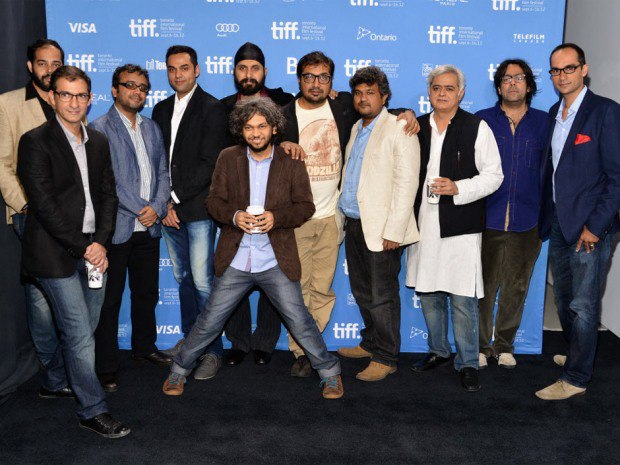
TIFF has made the presser video online where are all the directors were present and they talk about various subjects – festival, female directors, reviews, bollywood vs indies, changing film making scenario,

16:50 onward – On reviews. Waah, Vasan!

19:80 onward – Ha! Good try, Mr Habib Faisal to defend the regressive Ishaqzaade.

39:15 – Balaji took bits and pieces from Miss Lovely and made The Dirty Picture – Ashim Ahluwalia.

40:15 – If you send a script like this, i will file a criminal complaint with the police.

Toronto International Film festival (TIFF) has announced 10 Indian films in its “City to City” segment where the focus this year is Mumbai.

Out of the selected ten films, four film will have its world premiere at TIFF. These four are Manjeet Singh’s Mumbai Cha Raja (The King of Mumbai), Anand Gandhi’s Ship of Theseus, Mohit Takalkar’s The Bright Day and Hansal Mehta’s Shahid. The other six includes Anurag Kashyap’s two-parter Gangs of Wasseypur, Ashim Ahluwalia’s Miss Lovely, Habib Faisal’s Ishaqzaade, Dibakar Banerjee’s Shanghai and Vasan Bala’s Peddlers.

Since we have been covering Gangs Of Wasseypur, Miss Lovely, Peddlers, Ishaqzaade and Sanghai extensively, we are going to put out the info about the rest of the films now.

—> Shahid. Director : Hansal Mehta

Shahid is the remarkable true story of slain human rights activist and lawyer Shahid Azmi, who was killed in 2010 by unidentified assailants in his office. From attempting to become a terrorist, to being wrongly imprisoned under a draconian anti-terrorism law, to becoming a champion of human rights (particularly of the Muslim minorities in India), Shahid traces the inspiring personal journey of a boy who became an unlikely messiah for human rights, while following the rise of communal violence in India. This story of an impoverished Muslim struggling to come to terms with injustice and inequality, whilerising above his circumstances is an inspiring testament to the human spirit. Starring Raj Kumar, Prabhleen Sandhu and Baljinder Kaur.

—> Mumbai’s King (Mumbai Cha Raja). Director : Manjeet Singh


Rahul roams the streets with his balloon-seller friend Arbaaz. These two kids escape the grim realities of their lives by gambling, roasting stolen potatoes, stealing an auto rickshaw for a joyride, and chasing girls. But soon Rahul has to “take care” of his violent father, who has forced him to live on streets. Starring Rahul Bairagi, Arbaaz Khan and Tejas Parvatkar.

—> Ship of Theseus. Director : Anand Gandhi

For Poster, Stills and Official synopsis of the film, click here.

—> The Bright Day. Director : Mohit Takalkar

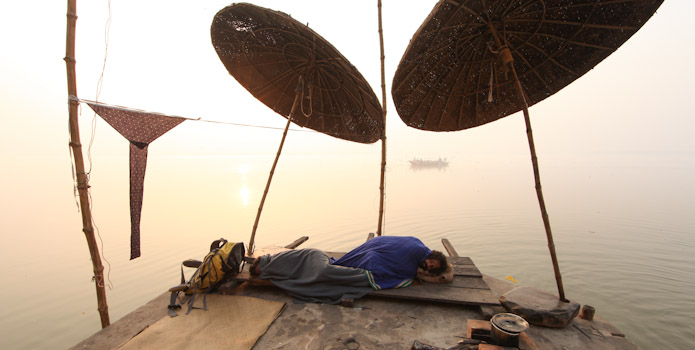
Yearning for meaning in his life, a coddled young man abandons his girlfriend and family to set out on a spiritual quest across India. Shot with sophisticated DSLR cameras and reflecting a new passion for personal filmmaking, The Bright Day finds images to chart a soul’s progress.

Image

“What is any good film without the extreme reactions it sparks? What’s any bad film without the guilty pleasures it gives?” said Peddlers director Vasan Bala after watching the debate around Shanghai. So many of us loved it, and a surprisingly big number hated it. Surprisingly because it’s a Dibakar Banerjee film. The man who reinvents himself every time, makes films so technically brilliant and well-detailed that rest of Hindi film industry must feel like Salieri in front of him, whose films are at that rare edge of feel-good and feel-bad and has not yet seen many bad reviews for his 3 earlier films.

While we wait for a long juicy post from someone who hated the film, (here’s a medium-sized one by Bikas Mishra on Dear Cinema), Varun Grover, writes one on why he loved it. Debate is still open though.

***************************

नोट: इस लेख में कदम-कदम पर spoilers हैं. बेहतर यही होगा कि फिल्म देख के पढ़ें. (हाँ, फिल्म देखने लायक है.) आगे आपकी श्रद्धा.

मुझे नहीं पता मैं लेफ्टिस्ट हूँ या राइटिस्ट. मेरे दो बहुत करीबी, दुनिया में सबसे करीबी, दोस्त हैं. एक लेफ्टिस्ट है एक राइटिस्ट. (वैसे दोनों को ही शायद यह categorization ख़ासा पसंद नहीं.) जब मैं लेफ्टिस्ट के साथ होता हूँ तो undercover-rightist होता हूँ. जब राइटिस्ट के साथ होता हूँ तो undercover-leftist. दोनों के हर तर्क को, दुनिया देखने के तरीके को, उनकी political understanding को, अपने अंदर लगे इस cynic-spray से झाड़ता रहता हूँ. दोनों की समाज और राजनीति की समझ बहुत पैनी है, बहुत नयी भी. अपने अपने क्षेत्र में दोनों शायद सबसे revolutionary, सबसे संजीदा विचार लेकर आयेंगे. और बहुत हद तक मेरी अपनी राजनीतिक समझ ने भी इन दोनों दोस्तों से घंटों हुई बातों के बाद भस्म होकर पुनर्जन्म लिया है. मैं अब हर बड़े मुद्दे (अन्ना, inflation, मोदी, कश्मीर, और काम की फिल्मों) पर उनके विचार जानने की कोशिश करता हूँ. और बहुत कन्फ्यूज रहता हूँ. क्योंकि अब मेरे पास हर सच के कम से कम दो version होते हैं. क्योंकि आज के इस दौर में हर सच के कम से कम दो version मौजूद हैं.

इस अजब हालात की बदौलत मैं हर चीज़ को दो नज़रियों से देखता हूँ, देख पाता हूँ. अक्सर ना चाहते हुए भी. यह दिव्य-शक्ति मुझे मेरा political satire शो (जय हिंद) लिखने में बहुत मदद करती है लेकिन मेरी बाकी की ज़िंदगी हराम हो गयी है. अब मैं किसी एक की साइड नहीं ले सकता. (मुझे याद है बचपन में मैं और मेरा छोटा भाई क्रिकेट के फ़ालतू मैचों में भी, जैसे कि जिम्बाब्वे बनाम श्रीलंका, अपनी अपनी साइड चुन लेते थे. इससे मैच का मज़ा कई गुना बढ़ जाता था. और देखने का एक मकसद मिलता था.) और साइड न ले सकना बहुत बड़ा श्राप है.

यह सब इसलिए बता रहा हूँ क्योंकि शांघाई में भी ऐसे ही ढेर सारे सच हैं. यह आज के शापित समय की कहानी है. ढेर सारे Conflicting सच जो पूरी फिल्म में एक दूसरे से बोतल में बंद जिन्नों की तरह आपस में टकराते रहते हैं. आज के हिंदुस्तान की तरह, आप इस फिल्म में भी किसी एक की साइड नहीं ले सकते. उस डॉक्टर अहमदी की नहीं जो अमेरिका में प्रोफेसरी कर रहे हैं और अपने लेफ्टिस्ट विचारों से एक बस्ती के आंदोलन को हवा देने चार्टर्ड फ्लाईट पकड़ के आते हैं. वो जो निडर हैं और सबसे नीचे तबके के हक की बात बोलते हैं लेकिन सच में आज तक एक भी displaced को rehabilitate नहीं कर पाए हैं.

डॉक्टर अहमदी की बीच चौक में हुई हत्या (सफ़दर हाशमी?) जिसे एक्सीडेंट साबित करना कोई मुश्किल काम नहीं, जगाता है उनकी पूर्व-छात्रा और प्रेमिका शालिनी को. लेकिन आप शालिनी की भी साइड नहीं ले सकते क्योंकि वो एक अजीब से idealism में जीती है. वो idealism जो ढेर सी किताबें पढ़ के, दुनिया देखे बिना आता है. वो idealism जो अक्सर छात्रों में होता है, तब तक जब तक नौकरी ढूँढने का वक्त नहीं आ जाता.

शालिनी का idealism उसको अपनी कामवाली बाई की बेटी को पढाने के लिए पैसे देने को तो कहता है लेकिन कभी उसके घर के अंदर नहीं ले जाता. और इसलिए जब शालिनी पहली बार अपनी बाई के घर के अंदर जाती है तो उसकी टक्कर एक दूसरी दुनिया के सच से होती है और शालिनी को उस सच पे हमला करना पड़ता है. उसकी किताबें कोने में धरी रह जाती हैं और वार करने के लिए हाथ में जो आता है वो है खाने की एक थाली. Poetically देखें तो, दुनिया का अंतिम सच.

हम middle-class वालों के लिए सबसे आसान जिसकी साइड लेना है वो है IAS अफसर कृष्णन. उसे अहमदी की मौत की रपट बनाने के लिए one-man enquiry commission का चीफ बनाया गया है. (“हमारे देश में ऐसे कमीशन अक्सर बैठते हैं. फिर लेट जाते हैं. और फिर सो जाते हैं.”, ऐसा मैंने देहरादून में १९८९ में एक कवि सम्मेलन में सुना था.) कृष्णन IIT का है. IITs देश की और इस फिल्म की आखिरी उम्मीद हैं. अगर इन्साफ मिला तो कृष्णन ही उसे लाएगा. लेकिन अंत आते आते कृष्णन का इन्साफ भी बेमानी लगने लगता है. वो दो चोरों में से एक को ही पकड़ सकता है. एक चोर को इस्तेमाल कर के दूसरे को पकड़ सकता है. कौन सा चोर बड़ा है यह ना हम जानते हैं ना वो. और पकड़ भी क्या सकता है, इशारा कर सकता है कि भई ये चोर है इसे पकड़ लो. उसे हिंदुस्तान की कछुआ-छाप अदालतें पकड़ेंगी या नहीं इसपर सट्टा लगाया जा सकता है. (आप किसपर सट्टा लगाएंगे? बोफोर्स मामले में किसी पे लगाया था कभी?) कृष्णन का इन्साफ एक मरीचिका है. जैसे बाकी का shining India और उसके IIT-IIM हैं. (एक लाइन जो फिल्म के ट्रेलर में थी लेकिन फाइनल प्रिंट में नहीं – कृष्णन की कही हुई- ‘सर जस्टिस का सपना मैंने छोड़ दिया है .’)

शांघाई के बाकी किरदार भी इतने ही flawed हैं. इतने ही उलझे हुए. (शायद इसीलिए Comedy Circus को अपनी आत्मा बेचे हुए हमारे देश को यह फिल्म समझ ही नहीं आ रही.) लेकिन इन सब के बावजूद शांघाई एक serious फिल्म नहीं है. Depressing है, डरावनी भी…लेकिन उतनी ही जितना कोई भी well-written political satire होता है. दो हिस्सा ‘जाने भी दो यारों’ में एक हिस्सा ‘दो बीघा ज़मीन’ घोली हुई. ’दो बीघा ज़मीन’ से थोड़ी ज़्यादा भयावह… ‘जाने भी दो यारों’ से काफी ज़्यादा tongue in cheek. (‘जाने भी दो यारों’ से कुछ और धागे भी मिलते हैं. Politician-builder lobby, एक हत्या, अधमने पत्रकार, ह्त्या की जाँच, और एक अंतिम दृश्य जो कह दे ‘यहाँ कुछ नहीं हो सकता.’)

दिबाकर की नज़र

Image

दिबाकर बनर्जी को बहुत से लोग हमारे समय का सबसे intellectual फिल्म-मेकर मानते हैं. वैसे मेरे हिसाब से intellectual आज के समय की सबसे भद्र गाली है लेकिन जो मानते हैं वो शायद इसलिए मानते हैं कि उनके अलावा कोई और है ही नहीं जो कहानी नहीं, concepts पर फिल्म बना रहा हो. दिबाकर की दूसरी फिल्म ‘ओए लक्की लक्की ओए’ देखने वाले बहुतों को लगा कि कहानी नहीं थी. या कहानी पूरी नहीं हुई. हाल ही में प्रकाशित ‘शहर और सिनेमा वाया दिल्ली’ के लेखक मिहिर पंड्या के शब्दों में “‘ओए लक्की..’ शहरी नागरिक समाज की आलोचना है. इस समाज की आधुनिकता की परिभाषा कुछ इस तरह गढ़ी गयी है कि उसमें हाशिए का व्यक्ति चाह कर भी शामिल नहीं हो पाता.”

उनकी पिछली फिल्म ‘लव, सेक्स, और धोखा’ voyeursim को तीन दिशाओं से छुप के देखती एक चुपचाप नज़र थी. यानी कि voyeurism पर एक voyeuristic नज़र.

अब आप बताइये, आज कल के किस और निर्देशक की फिल्मों को इस तरह के सटीक concepts पे बिछाया जा सकता है? और क्योंकि वो concepts पर फिल्में बनाते हैं इसलिए उनकी हर फिल्म एक नयी दुनिया में घुसती है, एक नया genre पकडती है.

लेकिन उनकी जो बात सबसे unique है वो है उनकी detailing. शर्तिया उनके level की detailing पूरे हिंदुस्तान के सिनेमा में कोई नहीं कर रहा. उनके satire की चाबी भी वहीँ है. बिना दो-पैसा farcical हुए भी वो सर्वोच्च दर्ज़े का satire लाते हैं. Observation इतना तगड़ा होता है, और इतनी realistic detailing के साथ आता है कि वही satire बन जाता है. और शांघाई में ऐसे observations किलो के भाव हैं. कुछ मासूम हैं और कुछ morbid, लेकिन सब के सब effortless.

स्टेज शो में चल रहे Item song का एक नेता जी की entry पर रुक जाना, और item girl का झुक कर नेता को नमस्ते करना, कृष्णन का अपने laptop पर भजन चलाकर पूजा करना, चीफ मिनिस्टर के कमरे के बाहर बिना जूतों के जुराबें पहन कर बैठे इंतज़ार करता IAS अफसर और कमरे में जाते हुए रास्ते में एक कोने में पड़े गिफ्ट्स के डब्बों का अम्बार, सुबह gym और शाम को हलवे-पनीर की दावत  की रोजाना साइकल में उलझा सत्ता का एक प्रतिनिधि, तराजू पर मुफ्त में बांटे जाने वाले laptops से तुलता एक ज़मीनी नेता, हस्पताल में अपने मरते हुए प्रोफेसर को देख बिफरी सी शालिनी के चिल्लाने पर नर्स का कहना ‘आपको fighting करना है तो बाहर जाकर कीजिये’, अंग्रेजी स्पीकिंग कोर्स की क्लास में दीवार पर मूँछ वाले सुपरमैन की पेन्टिंग, एक पूरी बस्ती ढहा देने के पक्ष में lobbying कर रहे दल का नारा ‘जय प्रगति’ होना, अपने टेम्पो से एक आदमी को उड़ा देने के बाद भी टेम्पो वाले को दुनिया की सबसे बड़ी फ़िक्र ये होना कि उसका टेम्पो पुलिस से वापस मिलेगा या नहीं – यह सब हमारे सुगन्धित कीचड़ भरे देश के छींटे ही हैं.

दिबाकर के पास वो cynical नज़र है जो हमें अपने सारे flaws के साथ अधनंगा पकड़ लेती है और थोड़ा सा मुस्कुरा कर परदे पर भी डाल देती है. शांघाई के एक-एक टूटे फ्रेम से हमारे देश का गुड-मिश्रित-गोबर रिस रहा है. आप इसपर हँस सकते हैं, रो सकते हैं, या जैसा ज्यादातर ने किया – इसे छोड़ के आगे बढ़ सकते हैं यह कहते हुए कि ‘बड़ी complicated पिच्चर है यार.’

फिल्म की आत्मा

जग्गू और भग्गू इस फिल्म की आत्मा होने के लिए थोड़े अजीब किरदार हैं. इन दोनों ने सिर्फ पैसों के लिए उस आदमी को अपने टेम्पो के नीचे कुचल दिया जो असल में उन्हीं की लड़ाई लड़ रहा था. और उसके मरने के बाद भी कम से कम भग्गू को तो कोई अफ़सोस नहीं है. उसे बस यही चिंता है कि जग्गू मामा जेल से कब छूटेगा और उन्हें उनका टेम्पो वापस कब मिलेगा.

Image

ऐसे morally खोखले प्राणी इस फिल्म की आत्मा हैं. और यही इस फिल्म का मास्टर-स्ट्रोक भी है. फिल्म इन्हीं से शुरू होती है, और इनपर ही खत्म होती है. पहले सीन में भग्गू अपने मामा जग्गू से पूछ रहा है कि मटन को अंग्रेजी में क्या कहते हैं. उसने सुना है कि मिलिट्री में लड़ाई पे जाने से पहले मटन खिलाया जाता है. उसके इस सवाल का अर्थ थोड़ी देर में समझ आता है. प्रोफेसर अहमदी को मारने के काम को भग्गू युद्ध से कम नहीं मान रहा, और इसलिए वो मटन की सोच रहा है. वो एक कोचिंग में अंग्रेजी भी सीख रहा है, ताकि इस गुरबत की ज़िंदगी से बाहर निकले. कहाँ, उसे नहीं पता, पर बाहर कुछ तो होगा शायद ये धुंधला ख्याल उसके दिमाग में है. लेकिन अंग्रेजी सीख रहा है इसलिए भी मटन की अंग्रेजी सोच रहा है. (संवादों में इस detailing का जादू दिबाकर के अलावा किसकी फिल्म में दिखता है? और इसके लिए फिल्म की सह-लेखिका उर्मी जुवेकर को भी सलाम.)

भग्गू फिल्म में (और देश में) दिखने वाले हर उग्र aimless युवा का representative है. हर उस भीड़ का collective face जो भंडारकर ओरिएंटल रिसर्च इंस्टीट्यूट में घुसकर तोड़फोड़ करती है क्योंकि किसी ने उन्हें कह दिया है कि शिवाजी के खिलाफ लिखी गयी किताब की रिसर्च यहीं हुई थी. भग्गू को नहीं जानना है शिवाजी कौन थे, या किताब में उनपर क्या बुरा लिखा गया था. उसे बस तेज़ी से दौड़ती इस भीड़ में अपना हिस्सा चाहिए. उसे दुनिया के शोर में अपनी आवाज़ चाहिए. उसे थोड़े पैसे चाहिए और कुछ पलों के लिए यह एहसास चाहिए कि वो कुछ ऐतेहासिक कर रहा है. किसी म्यूजियम या पेंटिंग exhibition पर हमला करना, किसी किताबों की दुकान जला देना, किसी पर ट्रक चढ़ा देना…सब ऐतेहासिक है, और भग्गू ये सब करेगा. क्योंकि भग्गू वैसे भी क्या ही कर रहा है?

जग्गू मामा थोड़ा बूढा है. वो शायद जवानी में भग्गू जैसा ही था. लेकिन अब वो दौर गुज़र गया. अब वो बोलता नहीं. लेकिन वो मना भी नहीं करता. फिल्म की सबसे यादगार लाइन में, शालिनी के हाथों बेहिसाब पिटने के बाद और ये पूछे जाने के बाद कि ‘तुम्हें शर्म नहीं आई सबके सामने एक आदमी को मारते हुए?’, जग्गू कहता है – ‘आपने भी तो मारा मुझे. मेरी बेटी के सामने. मैने आपका क्या कर लिया?’ जग्गू सर्वहारा है. जग्गू ‘पीपली लाइव’ के बाद एक बार फिर प्रेमचंद के ‘गोदान’ का होरी महतो है. जग्गू को हर सुबह अपना ही घर तोडना है और रात में उसे बनाना है. क्योंकि उसी में बाकी की दुनिया का फायदा है.

बाकी की फिल्म…

बाकी की फिल्म में ढेर सारे और किरदार हैं…हमारे आस-पास से निकले हुए. जात के बाहर शादी ना कर पाया, जोधपुर से भागा एक लड़का है, जो अभी चीज़ें समझ ही रहा है. प्रोफेसर अहमदी की बीवी है जो फिल्म के अंत में एक hording पर नज़र आती है और कालचक्र का एक चक्र पूरा करती है, IAS अफसर कृष्णन का बॉस है जो बिलकुल वैसा है जैसा हम आँख बंद कर के सोच सकते हैं. और हमेशा की तरह दिबाकर बनर्जी के कास्टिंग डायरेक्टर अतुल मोंगिया का चुनाव हर रोल के लिए गज़ब-फिट है.

इतनी अद्भुत कास्टिंग है कि फिल्म का realism का वादा आधा तो यूँ ही पूरा हो जाता है. इमरान हाशमी तक से वो काम निकाला गया है कि आने वाली पुश्तें हैरान फिरेंगी देख कर. फारुख शेख (जिनका ‘चश्मे बद्दूर’ का एक फोटो मेरे डेस्कटॉप पर बहुत दिनों से लगा हुआ है), कलकी, तिलोत्तमा शोम, पितोबाश, और अभय देओल ने अपने-अपने किरदार को अमृत पिलाया है अमृत. लेकिन सबसे कमाल रहे अनंत जोग (जग्गू मामा) और सुप्रिया पाठक कपूर (मुख्य मंत्री). अनंत जोग, जिनके बारे में वासन बाला ने इंटरवल में कहा कि ‘ये तो पुलिस कमिश्नर भी बनता है तो छिछोरी हरकतें करता है’ इस फिल्म में किसी दूसरे ही प्लेन पर थे. इतनी ठहरी हुई, खोई आँखें ही चाहिए थीं फिल्म को मुकम्मल करने को. और सुप्रिया पाठक, जो पूरी फिल्म में hoardings और banners से दिखती रहीं अंत में सिर्फ एक ३-४ मिनट के सीन के लिए दिखीं लेकिन उसमें उन्होंने सब नाप लिया. बेरुखी, formality, shrewdness, controlled relief…पता नहीं कितने सारे expressions थे उस छोटे से सीन में.

जाते जाते…

फिल्म में कुछ कमजोरियां हैं. खास कर के अंत के १०-१५ मिनट जल्दी में समेटे हुए लगते हैं, और कहीं थोड़े से compromised भी. लेकिन अगर इसे satire की नज़र से देखा जाए तो वो भी बहुत अखरते नहीं. बाकी बहुतों को पसंद नहीं आ रही…और जिन्हें नहीं आ रही, उनसे कोई शिकायत नहीं. क्योंकि जैसा कि मेरे दो मित्रों ने मुझे सिखाया है – सच के कम से कम दो version तो होते ही हैं.

*******************

….wonders filmmaker Kushan Nandy. And if you are smart and well aware of the discussions in social media platforms, you can connect the dots too.

Last night I watched Shanghai.

The entire 114 minutes of its running time, I did not flinch. Brilliantly scripted, performed and directed, it is a film where every department competes with each other to underplay. A rarity in Indian Cinema today.

I was truly entertained.

There were twenty-four people watching the Friday evening show along with me, a few had dozed off, three men sitting behind me were giggling and farting away and another gentleman was screaming and spitting into his cellphone.

Obviously they weren’t entertained.

Back home, I read the trade reports that claimed a 15% opening. The film hadn’t entertained a soul.

I was the idiot.

Indian Cinema, now almost 100 years old, the largest movie industry in the world says entertainment is the only driving factor that persuades people to go to a movie theatre.

Sad. Because porn entertains too. And you don’t need to pay for it.

Sad. Because even one of the most stressed out, autocratic, poverty-stricken countries, Iran, doesn’t say that. They go out and make A Separation instead.

Sad. Because, entertainment has a new name. Constipation-remedy.

Poverty. Corruption. Quality of Life. Our audience is stressed out, they say. They need a release. Which makes it sound a bit like constipation looking for relief.

And what hits me every Friday, in the name of this entertainment or laxative is more frightening. I see men flying at ninety-six frames per second, defying gravity. I see inane, asinine humor, which doesn’t even make my driver laugh. I see the same item number, repackaged with different breasts every time.

And all these films have not made a penny less than a 100 crores. They have obviously entertained someone, somewhere. Well, quite a few someones who belong to an India I don’t understand. These someones who have discovered laxative and named it entertainment and vice versa.

And yes, I love entertaining cinema. I love Sholay. I love Jaane Bhi Do Yaaro. I love Hrishikesh Mukherjee. I love Parinda. I love Paan Singh Tomar. I love the Ram Gopal Verma films which were made before the dinosaurs went extinct.

So I will go out and watch Shanghai again. I will hope it picks up. Makes money. So that more people make more Shanghais. So that I get the weekly dose of entertainment I prefer.

Because sir, I am not constipated.

Are you?

(PS – You can read his earlier post here.)

The much anticipated trailer of Dibakar Banerjee’s Shanghai is finally out. Have a look.

So far Dibakar’s record has been cent percent – 3/3. Will he deliver once again? Going by the trailer, it surely seems so. But then, political films are a different beast.

SEZ, activism, murder, accident, conspiracy theories and the mess and madness kicks in. And then a ball drops in – yeh khelne ki jagah hai kya? Aha, that Dibakar touch. So refreshing to see Emraan Hashmi getting out of his comfort factor and doing it without anything remotely sufiyana. Wouldn’t be surprised if he overshadows Abhay Deol. And Kalki looks perfectly vulnerable.

Strangely, the text doesn’t mention Khosla Ka Ghosla. It says “from the director of Oye Lucky Lucky Oye and Love Sex Aur Dhoka”. Why would you not mention KKG?

Kasam khoon ki khayee hai….yeh shahar nahi Shanghai hai – Ok, am sold. Now bring it on.

Writing credits include Urmi Juvekar and Dibakar Banerjee and unlike others it mentions the book Z by Vassilis Vassilikos.

At the end of it the only thing that doesn’t sound convincing is the title – Shanghai.

Suresh Mathew caught up with filmmaker Dibakar Banerjee on the sets of his forthcoming film “Shanghai”. While all the questions and answers relating to “Shangai” will be out closer to the film’s release, here Dibakar speaks about his previous films, chasing stars, the craft of filmmaking and more.

Q: Do you always manage to make the film that you set out to make, or do pressures from the producer and the market finally work their way into your film?

DB: You see market is wavy kind of flag that’s waved in front of you; I generally don’t know what the market is. You see when the film is made, the biggest truth is at the point of making and selling a film, it is made for two markets, one is for the audience that will pay the ticket price and one is for the distributors and producers and exhibitors who will buy the film off you and exhibit it to people, so sometimes you have to keep the sensibilities of the people who are buying from you to sell it to the audience in mind but generally the way I survive is this that I have definitely a clear idea of what I am trying to do.

I am under no illusion that I am not selling any kind of happy utopian dream. Most of my films have something grey about them; most of my films have something which is positive and negative about them. So their is a certain amount of grayness involved in it, there are no heroes, there are no heroes abject heroes, abject villains, when you tell it like that to an audience, you know that it is not going to be all is well. You essentially understand that your audience basically slightly more interested in a typical romantic comedy or a nice melodrama about how our lives are the best that we can have. My audiences therefore are the kind of people that have time to think and yet be entertained.

Therefore the trick that I employ to my films is that I keep the budget as low as possible and within that budget with planning and with our own inventiveness, give the maximum production values as possible and keep your narrative, keep the subject, keep the treatment as engaging, as relating, as entertaining as possible because I want my films to be seen by as many people as possible. I don’t want to live in an ivory tower or in a bubble and think that I am creating some piece of inert art, no I am not. I want to earn money from my films which I have. So therefore what I say has to immediately relate to the ordinary Joe on the streets who sees those films. The rest is the luck of the film, which I can’t control so I don’t think about that. Fortunately its not that I impose upon myself, because of the way I have been brought up, or what ever it is, I haven’t had a very elitist kind of an upbringing or an existence. I know what the man on street thinks, how he speaks, I know the behaviour of people, the general common man of India so I relate to that and I make films about that and I hope that gets seen by the maximum number of people.

Q: How do you feel when films like “Singham”, “Ready” and “Bodyguard” set records at the box-office? Are you happy that there is an audience out there that is expanding, so a film can rake in so many crores at the end of the day, or are you disheartened about the sensibilities of the audience that you have to cater to?

DB: It’s like saying that when I am driving around my Innova and somebody passes by in a Porsche; do you feel happy or sad? I mean of course you wish that I could have that Porsche but to have that Porsche you will have to do something that you don’t want to do. So ultimately it becomes the same thing. The fact is that I would love to have my films earn 300 crores at the box office if I didn’t have to change my film. Till the time that I don’t want to change the way I make my films, I will wish for a 300 crores box office but I will be very happy with 30.

So I am very happy because that way I exercise the discipline on myself, make my films in a budget that always return a profit and that’s the way I have learnt to survive. So the kind of figures that you are talking about is the result of star power and stars. True, stars who bring in that kind of money at the box office exist because even now in India, cinema and the urge to watch cinema is not to go and see a story unfold in front of your eyes, its also to see a star, become a star and behave like a star and put up a starry spectacle in front of your eyes and that’s because most of our ordinary lives are so tough and so unbearable to be with that those 2-3hrs in an air conditioned cinema hall, Salman saves our lives, Aamir and Shahrukh save our lives so that life saving experience can only happen with a star. So if I ever find a film where the right star meets the right role and I am assured of a 100 crore plus box office, I will definitely go for it till that time I will go on making what I can and make a profit out of it.

Q: Do you also first go after saleable stars after you finish writing your script?

DB: Absolutely, otherwise how do you survive? When I cast Anupam kher for “Khosla Ka Ghosla”, he was not just a good actor, he was the character star. When I cast Abhay for “Oye Lucky Lucky Oye”, he was an upcoming face that people were interested in and I knew that Anurag and I were making “Oye Lucky” and “Dev D” together and we knew that one film will rub off on the other and something will come out of it. Whenever you make something that earns its commercial existence out of people’s interest in the central character, of course you will have to go for a star.

The fact remains that whether the star matches your narrative and your character as you have designed it or are you designing your story around the star? That I refused to do currently, so therefore I meet every star available and every star available meets me and they meet every other director because its an ongoing principle in our industry, we meet each other, we ask each other, ok what are you doing, I like your work, can we work together, what suits us and therefore out of every 10 meetings only 1 converts because everybody is hearing different stories, a multiple choice of narratives and they are making their choices according to their careers. So the fact is that I will always go to stars and I will always go to character actors and I have always have new people introduced in my films as I have constantly done in all my films, “Khosla Ka Ghosla”, “Oye Lucky” and “LSD”, each gave actors to the industry who are now carving their own careers, basis their debuts, same way in Shanghai. So it’s a mix of everything and if you give me a star who matches my character and who fits the narrative as I have designed it, I’ll take him any day.

Q: Are you happy with the way your films have done commercially? Of your three films (Khosla Ka Ghosla, Oye Lucky Lucky Oye, LSD) which is the one you are most happy with?

DB: To tell you truthfully, as far as how it’s done commercially, I’m reasonably ok. I couldn’t, you know… hope for more because for someone like me who had no film background and film experience, to come out and make a film like “Khosla Ka Ghosla” as your debut film and you know people all over the country liking it, and me going over and making another maverick kind of film like “Oye Lucky…” and then downscaling my budget to make something even more maverick like “Love Sex aur Dhokha” and it being appreciated and being very good commercial success again. I really think I can’t complain and I have been lucky.

As far as my own satisfaction with my own execution of my film, you know I mean… I am very reluctant to tell you this, but actually I hate them because what happens is, that a film happens over a period of a year, 12 months, 14 months and the moment it finishes you realize that you have grown in that one year. And the moment the film is released you can’t do anything to it. You can’t change it, you can’t edit it, you can’t improve it, it becomes inert. It becomes this piece of inert stone, you can’t think about any change. You have grown in the meantime, you have left the film behind and when I see my own old films, all I see is mistakes. So I therefore generally don’t have a very comfortable relationship with my earlier films because I’m slightly embarrassed to look at them, infact one of the reasons why I make my next film is because I’m slightly embarrassed with my last film. And in the next film I am trying improve and you know kind of set right the mistakes that I thought that I have committed in the last movie. This is truth because on the other day I was watching “Oye Lucky…” on a flight and couldn’t watch it, because I knew every cut that was going to come and I could see the mistakes and I just looked away from it. So I don’t have a very comfortable relation with what I have done.

Q: How involved are you with your films’ technical aspects? You are known to be completely absorbed with your script, music and actors – the emotional content of your films, does the same apply to the technical side as well?

DB: Well, if you don’t have technique, then you don’t have anything, that’s what I believe, that’s my school of filmmaking. I don’t think its enough for a director to feel that emotions and then be at the set and feel that by some divine intervention what he feels is what he will be able to translate to the audience and the audience will feel that… that’s actually bullshit…. films don’t get made that way. Without the knowhow and essentially a technical knowhow of which shot to take and how to take it and which piece of sound and which piece of music to put to which shot to get that emotion that you want the audience to feel. And translate what’s here to what’s there, you need technique so as far I’m concerned that technique and emotion cannot be separated.

The tool by which you translate your emotion to the audience is technique. And the better your technique is the better you translate. All the greatest directors are the greatest technicians. Kubrick could actually tell each and every lens of each and every shot that he ever took in his life and he started shooting still pictures really early, by the time he got to making his 1st film he’d had a good understanding of optics and lenses. Unless and until you understand that, how will you understand where to put the camera and where to take the close-up from to have the most telling effect of the actors’ emotion? So I generally don’t believe that as a director you have to feel something and not have the technique. I think you must have the technique, I’m totally involved in everything that I do… having come up from the world of advertising and promo-making and all that, having edited, having painted my own set, having plotted each and every move of the camera, having choreographed this move or dance or whatever it is and learning from other people, filmmaking is a kind of school for me so I’m still learning. And I think there is no other way to get around it.

Q: There have been so many Hindi film teasers out recently, any that have caught your eye?

DB: Don 2, I saw it on a big screen and the music and the way Shahrukh’s character enters, it was a nice kick, very interesting, and I liked that.

Q: Which was the last Hindi and English film that you saw that impressed you?

DB: Last impressive Hindi film was “Zindagi Milegi Na Dobara”, it’s extremely pretty candy floss and the three characters have to go either below the surface of the water or above the surface of atmosphere or braving the bulls to come up with their own catharsis and the coming of age experiences. But in spite of those rather big thematic set pieces, the film is amazingly heartfelt and in spite of all the glamour and the all plethora of good visuals and good life style and every thing, it was not artificial. You will really get engaged in the crossfire of these three friends, you know Hrithik’s character reminds me of a friend that I still have from my school days, who is a system analyst in New York. I mailed him in the other day, you know… another character reminds, I mean, Farhan’s character reminds of myself, I always used to be the cynical buffoon in my group of friends, you know so its a very interesting look into the nature of friendship, and I thought that bit came out with extreme candor and with out any artificiality and that’s very difficult to achieve in the framework of a very typical Hindi commercial film with stars and extremely glamorous lighting and look and all that because a Hindi commercial film basically what its trying to do, is to sell a kind of Utopian life style to the Indian audience. It’s very difficult to portray a real relationship according to me within the framework of that kind of necessity, and that “Zindagi…” did very very interestingly, very convincingly. While I was watching the film I was totally drawn in to the world of these three friends, that I think is very impressive, I told Zoya that.

My favorite foreign film has been “Gomorrah”, an independent Italian film which is made on the mafia, though they are not called mafia… the underworld of Central Italy and they are called Camorra. Its a very interesting look into how the underworld permeates every strata of society in that region of the world and I don’t understand a word of Italian, I saw the whole film in subtitles but the treatment of the film and the way it brings those people alive, I thought I knew them, I could understand each and every bit of emotional change that those character in that film went through and it is a multi-character multi-strand film and I think the camera work the technique the invisibility of the director, and the camera and the making is par excellence. And I got really inspired and intimidated at the same time because I hope to be able to make films like that but I don’t think that I rate up to that kind of skills yet so that was a very inspiring film.

( The interview was first posted on Suresh Mathew’s blog Word Of Mouth)

UPDATE – We had put this post last year. But the makers got to know about it and thought it was too early and might harm the prospect of the film. So we removed the post. Now that the film’s trailer is out, we are posting it again. Haven’t change anything else.

This one is strictly for the fanboys. Dibakar Banerjee, easily one of the best directors among the current lot, is busy working on his fourth film titled Shanghai. And a good soul did a good deed for the day – mailed us the synopsis of the film. And it seems much more than just synopsis. The film is based on Vassilis Vassilikos’ novel Z. Costa Gavras’ film Z was also based on the same novel. Click here to read the synopsis of Z.

And yes, here is the SPOILER ALERT! Read on…

A politically volatile state in India gears up for two much awaited events : the assembly elections and the completion of a multi-billion dollar special economic zone (SEZ) deal, both timed together to help the ruling party clinch the elections.

This is a story of modern India. A country ruled by contradictions. A country whose elite leadership is preoccupied with the growth rate and elected politicians thrive on the resentment created by economic development. This story is playing out across every town in India that wants to find itself on the map of “shining India” at any cost.

A prominent and respected social activist, Doctor Ahmedi, known as nationally and internationally for his successful struggle against the governments and multinationals to protect the rights of the poor, accuses the state government of acquiring huge real estate for the project without adequate compensation to the people living on it.

On the day of Doctor Ahmedi’s arrival, Shalini Pearson, a British social worker working in the working-class area where the SEZ is going to be set-up, learns of a threat to Doctor Ahmedi’s life. She warns the party, but her warnings are not taken seriously. They tell her, “You cannot afford to be afraid if you decide to stand up against injustice.”

That evening, amid a turbulent meeting in Bharat Nagar, Doctor Ahemdi with his supporters exhorts the locals to fight for their rights. A handful of police officials keep a mute watch, ostensibly to protect the doctor. A lone photojournalist, Jogi Parmar, is present.

As the doctor and his supporters are leaving the venue, a scuffle break out between the supporters and opponents of the doctor. In the melee, a truck crashes into the crowd, heads for the doctor, mows him down inches away from Shalini and escapes. One of the doctor’s supporters chases the truck and gets on to it. A distraught Shalini rushes to the doctor to the hospital, where he slips into a deep coma.

The state machinery moves into high gear to defuse the situation. The truck driver is caught and a case of drunk driving is registered. The doctor’s wife accuses the state of a conspiracy to kill her husband. The allegation is quickly countered by setting up of an enquiry commission by a former judge, Padmanabhiah.

Soon skeletons start tumbling out as the judge starts his meticulous investigation into the accident. Truth and falsehood get mixed up as testimonies get recorded. Questions are left unanswered or stalled. What seems to have been an open-and-shut case soon becomes a conspiracy and a cold-blooded plot to get rid of Doctor Ahmedi.

Shalini, working relentlessly to strengthen the case, finds the first witness, a local cable operator and photojournalist Jogi’s boss, who has accidently recorded a  telephone conversation between the local politician, Bhausaheb, and an unknown person plotting to get rid of Ahmedi. However the witness is found dead and the tape is lost before it can be presented to the judge.

Shanghai is a political story about the workings of Indian democracy told through three unlikely protagonists with ground level differing aims and often conflicting with each other as they start unraveling the story behind Doctor Ahmedi’s death.

Judge Padmanabhiah for the first time emerges out of the legalistic cocoon to understand the real, messy truth at the ground level. Jogi starts fighting for truth – something his opportunistic, hustling mind could have never thought possible before.

The danger increases, the hunter becomes the hunted. Truth pits them against the might of a  ruthless political machinery. Hanging in balance is the control of the state, power equations in the country’s political capital, Delhi, and the very meaning of justice in contemporary India.

So, what’s your bet ?

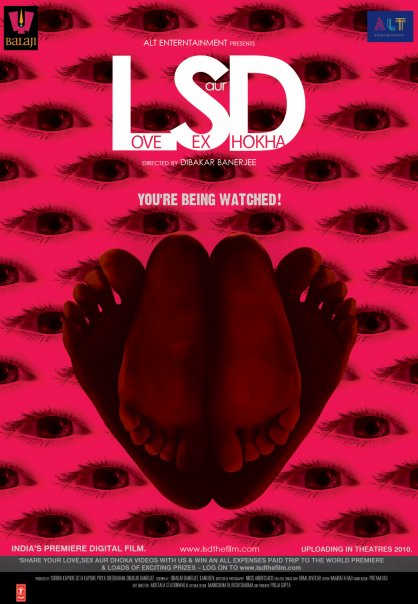
At least many think so. A friend mailed us this video to check what we think. Since its really not a high concept, don’t think one can claim much at the concept level. The story and screenplay of “L” story in LSD also has much more that just a love story. And nobody can have a copyright on the treatment of “handycam” view.

Those of you who have seen Dibakar Banerjee’s Love Sex Aur Dhoka, do watch this short film Udaan by Abhay Kumar and let us know what do you think.