Posts Tagged ‘Vikramaditya Motwane’

If you religiously follow the movement of film scripts in blogosphere, you must be aware that the script of QT’s Inglourious Basterds was out almost a year before he started shooting. He did the same with Django Unchained. And that’s not a rare case. There are blogs and websites dedicated to script reviews/news/sales. And since last few years they have the Black List too.

Compare this to the script scenario here. Writers/directors guard it as if it’s life and death scenario. Almost scared to give it out to anyone even after the film has released. And then we find it difficult to churn out even some five good films in a year. I still haven’t been able to figure that out. Though most would happily brag about sending their scripts to Oscar library which is another stupid achievement if you know the truth.

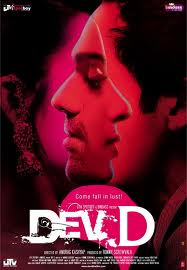
We keep on asking many filmmakers and screenwriters to share their scripts so that we can put it online. Some do, some never get back, most don’t give a fck. If you have missed, we had earlier put the script of Vikramaditya Motwane’s debut feature Udaan (click here) and now we are sharing the script of Anurag Kashyap’s Dev D. Thanks, AK.

Dev D got almost every possible reaction from critics – it was rated everything between 1 and 5 stars. Everything. If you don’t believe me, google. Some of the reviews are listed here .

Interesting thing about Kashyap’s films are that they are never the same which you see on paper. They go through some drastic changes while shooting. Plus, music played a big role in Dev D. So, it will be interesting if you compare the script to the film. Though am not sure which draft/version of the script i have got. It’s written by Anurag Kashyap and Vikramaditya Motwane. Read and have fun.

(PS – Was feeling lazy. Copy-pasted the intro from Udaan script post. Sorry about that)

Blame it on Ides Of March ? When we are wishing desperately that when we grow up just make us  Bhagnani, any Bhagnani, and Karan Johar goes for the reverse take!

Think about it – you can be a FALTU Bhagnani and still have everything you want. And we never expected that the one who are born with Khan, Chopra and Johar surnames in Bollywood would openly want to be Kashyap or Bhardwaj. They belong to the two extremes, their cinema and sensibility is different. My Name Is Johar And I am Not Kashyap or Bhardwaj ?

On a serious note, is Karan Johar serious about it ? As in, seriously serious ? One of the most powerful brands in Bollywood, if he is admitting that there is a shift in our cinema, you got to listen. To say the cliche, love or hate him but you can’t ignore K JO.

Or is it the effect of Ishqiya + LSD + Udaan + Peepli Live + Do Dooni Chaar + Band Baaja Baarat + Phans Gaye Re Obama + Tanu Weds Manu ?

Also, you may HATE his films, but there is no doubt he is easily one of the smartest guys around. May be, just next to Shah Rukh Khan. Just that their smartness doesn’t show in the choice of their films, whatever is the reason for that. Lack of talent, conviction, fear of failure or just opting for the easy route.

And here are some more priceless gems from him….( From Anupama Chopra’s show Picture This on NDTV. The topic of discussion was Bollywood discovers its roots. Vikramaditya Motwane and Habib Faisal were also part of the discussion.)

The english speaking critics were watching Dabang like they were watching a Tarantino film.

You have Kashyap as your last name so its all validated. If he was Abhinav Sharma, it was what he is making ? Oh he is Kashyap guy, so definitely he is intelligent. He is making fun of the genrae. He is having fun.

I want to change my last name. It will help a lot.

There is very strong credibility factor that people are aspiring to acheive as well. I have made so many films but none of them have got the credibility of say 3 crore net box office Udaan. I know that for a fact. And that credibility is paramount for a production house. While you want to make the money, you also want the respect. The combination of those two is 3 idiots.

You cant beat them, join them.

(Scroll down and watch the full discussion in the embedded video. And if the video doesn’t work, click here to watch it.)

And if you were surprised about Johar, Kashyap and Motwane joining hands for Motwane’s next, then this video has all the answers. Credibility. Or may be The Unbearable Lightness Of Being.

If KJo is here, can SRK be far behind. Ok, bad one. Shah Rukh Khan was at the India Today conclave recently. To quote him…

–  Three essentials to make Bollywood films global – screenplay writing, technology and discipline.

– It disturbs me that all Indian filmmakers are chasing an elusive dream of crossover cinema…It is nothing at all – there is nothing known as crossover film.

Click here and here to read the full report.

We agree on the first point. And completely disagree on the second point. Because Kites is not crossover cinema.

Vodpod videos no longer available.


Those of you who religiously follow the movement of film scripts in blogosphere, must be aware that the script of QT’s Inglourious Basterds was out almost a year before its release. And that’s not a rare case. There are blogs and websites dedicated to script reviews/news/sales. And since last few years they have the Black List too.

Compare this to the script scenario here. Writers/directors guard it as if it’s life and death scenario. Almost scared to give it out to anyone to read. The fear of bad (or honest) feedback  is too much to bear! If only someone can explain it to them that you cant hang your film on your drawing room walls like you treat your paintings! Plus, there is no concept of professional readers.

Even after the film has released, there is no way to source the script online. So we are trying to change the scenario with a small intiative. Asking directors of all the best reviewed films of 2010 to share their scripts with us. Its purely for non-commercial and educational purpose.

The first in the series is the script of Vikramaditya Motwane’s Udaan – the much loved and one of the best reviewed films of 2010. You can read it and download it too. We have attached three drafts – shooting script (in Roman Hindi ), the second one is slightly polished draft ( In English – 2004/2005) and the last one is the very first raw draft ( In English – 2003 ).

We will soon be putting out the script of Goal too. It’s also written by him and has always baffled us that how can a filmmaker go so wrong with a sports genre film! Till then, enjoy Udaan.

Shooting draft –

Slightly polished draft –

First raw draft –

PS – We are also trying to source the scripts of LSD, Peepli Live, Ishqiya, Do Dooni Chaar, Phas Gaye Re Obama, Striker, Band Bajaa Baarat, Tere Bin Laden and more. If you have the script and want to share it with our readers, do write to us at moifightclub@gmail.com. This is stritcly for non-commercial purpose.

If you liked the Day1 report of the FWA Seminar by Mr Screeny, there is more. Here is the Day 2 report – the good, the bad, the ugly and the goss. Quite long but worth it. Do read.

FWA Seminar @NFAI Pune – Day 2

9 am, usual crowd, catching hold of whatever seats that were available with many many people standing in the aisles. Day 2 was better since there were more filmmakers than pedantic film critics/scholars talking about cinema.

Session 4 – Anger and Rebellion: The New Wave Cinema (plus the Angry Young Man’s Evolution)

Govind Nihlani

The 70s was a decade of discontent with the Naxalbari movement, the Bangladesh war & eventually the JaiPrakash Narayan movement against the corruption & the failure of the state. People started feeling restless & cheated and there was a built up of discontent in the country and then the Jai Prakash Narayan movement happened which led to Emergency being declared. Every line was censored, the civil liberties were taken away, the freedom of expression was impounded.

From that environment emerged a phenomena in Indian Cinema – the angry young man – Amitabh Bachchan-Salim-Javed, Om Puri-Naseerudin shah (Aakrosh, Ardhasatya), Mirch Masala etc. Parallel cinema picked up. You can see how the then contemporary/current socio-political situations were reflected in the cinema of those times. Even at the time of partition, partition based films were not being made but now, thanks to the discontent, there were films based on partition like Garam Hawa.

Rashmi Doraiswamy – presented a very well analyzed paper on the angry young man phenomena specifically with regard to Salim-Javed’s films. (Don’t remember anything sadly from it- because again it was almost a read-out-word-to-word-from-her-article than an impromptu/informal discourse with notes’ consultation)

Ashish Rajadhyaksha – showed clips from Albert Pinto ko Gussa kyun aata hai, Arvind Desai ki Ajeeb Daastan and stated it was a very interesting film written by two very different writers – Vijay Tendulkar & Cyrus Mistry. Albert Pinto clipping was the scene in which Naseer comes up to the gang – Satish Shah, Avtar Gill and requests them not to do ‘lafda’ with Dominique. The whole scene was apparently improvised by the actors lending a very realistic portrayal.

I went one day to Saeed Mirza’s house and saw a big board with lots of charts, papers, diagrams etc stuck – almost in an expanding spiral-esque manner. I asked Saeed what it was. He coolly replied “my script”!

Kundan Shah

I feel we’re reading too much and doing a lot of analysis of the angry young man vis-à-vis Salim-Javed’s films. Their scripts were not socially rebellious, but more parasitic. How many angry people have turned into a smuggler ala Deewar ?

We have lots of talent in India but how do we crack it ?

JBDY was made thinking it will not release. We were almost making a home video since we had the freedom to do anything. The budget of Albert Pinto was 2&1/2 lakhs. I was the assistant & the clap continuity guy and everything on Albert Pinto. During the middle of the shoot Saeed had to go meet the producers so I had to ask him how he wanted the scene (which to be shot) to be directed.

I wanted to be an assistant on a foreign production film which was being made in those days – Gandhi. The perks were tempting – 10,000 rupees salary for 6 months, plus 10,000 rupees allowance. And the job was ‘limited’ – crowd management. I got the job through some contact.

I asked Saeed what do I do ? Should I go ahead with the job or write my script? He said “Don’t be silly. Write your script!” . And I started writing JBDY.

The reference to ‘gutter’ in JBDY was intentional. I was the secretary in my society building, and there was a gutter leakage probem in my building. I used to see that every morning the gurkha would drain out the ‘gutter ka paani’ in a bucket. And he would do this everyday without fail. I always used to wonder what happened at night and I put that and many such references in my film.

Jahnu Barua

Don’t worry I only have half a page so you guys are safe from a long boring lecture.

Anger – Anger of a filmmaker – I will talk through my experience. I grew up with anger. The environment in which I grew up, gave me anger. When I came to FTII, I was an angry young man. I learnt filmmaking and when I passed out I was still an angry young man. I made many films as an angry young man. Today, I’m still an angry man – though not so young.

Anger is the catalyst for the filmmaker. If the anger isn’t there we can’t make films. I don’t know if my films will be called ‘New Wave’ or not. I try to put in 100% anyway.

I come from the North-East – at any and every moment, one can get angry easily. The things that happen there are unbelievable. Compared to them, the incidents that happen in Mumbai are nothing. I make films to not to overcome my anger, but somewhere we get to understand a few things. I just kept on making films & never tried to analyze these things. I don’t know the definition of ‘New Wave’ and never tried to analyze it either. I don’t even know how to categorize my films.

Films should come from the heart – regardless of what one wants to make. ‘Commercial’ or ‘Arty’ – films should be truthful. I feel the intention of the filmmaker becomes clear while watching it – whether it comes from the heart or whether it has been made for a different purpose.

I often quote – A screenwriter is the first to be contacted and the last to be paid – may be even not. And if you are a writer-director like me, the writing fee is almost forgotten. They say “Your writing fees is in the director fees”. I try to express my anger in my films – how do I do it ?

After Maine Gandhi Ko Nahi Maara, I feel I’ve sobered down. And I’m sad that I’ve sobered down. When I wrote it, my anger was it’s peak. Why ? I’d met militants, seen bloodshed, suffering & death at close quarters. I met a woman who was raped continuously for 2 months both by the army & the militants. When she narrated her story, I instantly wanted to make a film on her. I even wrote the script.

But I asked myself – will my film be able to resolve her problems ? NO

Will it matter to the audience and will they take an interest in solving her problems ? NO

I studied the whole problem differently and tried to get into the root cause. What is missing in our society ?

Then I wrote Maine Gandhi… not to express my anger but to resolve my anger. And I’m happy I made that film. But sadly I had sobered down after that.

I remember how people perceive the ‘art’ filmmakers. I was invited to a university seminar on Media’s Social Responsibility and one after the other there was a lot of attack on the ‘art’ films. One of the speakers kept referring to them as ‘mad off-beat filmmakers’. Every time he said that – the audience would look at me.

My first film was produced by NFDC. The ‘new wave’ films need promotion and NFDC itself may not be enough.

Oscar! Oscar! Oscar!  – Satyajit Ray made 32 films and not one of them went to the Oscars. Let us not please look at the Oscars. And let us not please concentrate only on Mumbai. India is a reservoir of stories. Every home has a story. Find them.

Open Forum – (questions from other writers/filmmakers and audience)

Govind Nihlani – Have we as a society lost anger ? Where is the anger ? Are we filmmakers writing anything in anger ? Are we even having any anger ? Do you see anger in films ?

Saeed Mirza- Times have changed. Example – Tere Bin Laden – it’s a minor but an important film. Anger is expressed in humor. The whole concept of terror has been destroyed. To me that’s also an angry film. JBDY was also an angry film.

I have tried to mix my anger with my personal struggle. How do you make an idea to a narrative ? I start from my personal and then go to the social, and slowly the text becomes richer.

If we refuse to see the turmoil & tension in the land we will still be making bad commercial films. We turn a blind eye to the problems – North East, Naxals, MNS, Telangana, Kashmir, Tamils vs Kannadigas.

Shama Zaidi – Why in films is anger a male preserve ?

Saeed Mirza – What about Mirch Masala & Godmother ?

Govind Nihlani – How is anger handled in the ‘new wave’ tamil cinema ?

K Hariharan – In tamil cinema the representation of anger has changed & shifted from the pleasurable zone to the disgust/disturbing/’Bibhathsa’ zone

Govind Nihlani – Many a times, anger is used as an excuse to extract vengeance. It deteriorates into vengeance and from being social it degenerates to personal.

Bhavna Somaiyya – What about the anger of Sridevi in her dance scene in Lamhe or Salman’s anger at his father in Maine Pyaar Kiya- when he goes to his room and punches the sandbag ?

(I don’t know how the panelists responded to the above question since I was busy banging my head away at the nearest wall at the sheer stupidity of the aforementioned question. Apparently Saeed Mirza explained to her that they were talking about a different kind of anger – angst)

Session 5 – Urban Foibles and a New Individualism: Current Trends in Indian Scriptwriting 1995-2010

Kundan Shah

I’m trying to be a practicing filmmaker and am making a ‘sponsored’ film on the theme – Overfed Urban and Underfed Rural. If I say what we see & what the truth is, the script may get rejected. So now I’m writing a neutral/backup (not so hard hitting-real) script in the event the first (more honest) one gets rejected.

Anees Bazmee is not the beginning and ending of writing. New talents are not getting a chance. There is a lot of illiteracy in the film industry.

Ranjani Majumdar

showed clips from Dombivali Fast, Being Cyrus & No Smoking talking about the urban view that the filmmakers created in these films

John Mathew Mathan

Dictionary defines the word ‘trends’ as a popular preference or latest style/fashion.

Is storytelling about something as fleeting as fashion ?

Bheja Fry started a new trend. Similarly may be even Peepli Live might start a trend.

My initiation into cinema was through Ankur, Bhuvan Shome, Sara Aakash, Garam Hawa. By the time I wanted to make films, NFDC had stopped producing films. If you are making a film like Gandhi, you need money.

Storytelling is different from Reportage, which is a big business.

According to a fable, once in a city which had a temple with statues of gods, a theft took place – some idols were stolen. People stepped up vigilance and issued death penalties/warnings to catch the thief, but still the thefts didn’t stop.

One fine day the thief was finally caught. When asked why he committed the crime he replied “I was a nobody before I started stealing. Today the whole city knows me”

Is this the reason why people write ?

People are looking for resolutions, the answers to the things they don’t/can’t understand. And if there is no resolution then they’ll not spare us.

Frank Capra says – “Thou shall not bore thy audience” That is my most important mantra.

What do I need in a story for me to decide this is the story worth telling ?

TIME – an abbreviation for

Thought provoking,

Information,

Motivation (does it move/touch the audience),

Entertainment

If you tell a story which is believable, then the TIME capsule is complete. The best example is – Gandhi. On 15th August every year, they show Gandhi on TV. Films like Godfather, Pulp Fiction withstand the test of time.

Bhavna Somaiya

Kamal Hassan says “I take my critics very seriously so they better do their job well”

What I look for in a film ?

To me it’s like buying a sari in a sari shop. I’m paying for it and give me a fantastic sari. Don’t ask me if this border is correct or that color is good. Just give me a fantastic sari.

Astitva – The turning point in the film isn’t the scene when Tabu sleeps with Mohnish Behl. The turning point is the scene when she narrates the incident to her city friend & her husband.

Dil chahta hai – I was surprised during the Aamir proposing to Preity Zinta at her engagement scene. After the resolution, I felt Aamir should bend down and touch her foster father’s feet. But then I thought may be he won’t do it. Eventually when Aamir did bend down to touch Preity’s foster father’s feet, I was surprised since the director is from an urban upbringing and it is not a part of his culture to do the same.

When I questioned Farhan later about the same, he said the touching the feet suggestion had come from Aamir Khan.

DCH showed real parents – no gajar ka halwa, no sone ka kada – just like how I would be with my family

Rensil D’ Silva (came in wearing a cap onstage which had FBI written on it)

I wanted to make a ‘real & dark’ film about terrorists bombing metro stations in USA but the budget wasn’t enough. So I had to rope in Kareena Kapoor & Saif Ali Khan and put in songs to get the budget I wanted. These are the sort of things one has to do. (Here’s a question Mr Rensil D’Silva – why the ‘aspirational’ USA ? Aren’t there enough bomb blasts in Mumbai, Malegaon, Delhi, Ahmadabad, Pune, Bangalore and of course the punching bag state of India- Kashmir. Or would you rather make a film about the american victims of terror than us Indian victims of terror ?)

There is no reason for angst anymore. This is the best time to be making films. Mainstream cinema is making ‘different’ films. The fact that personal, individualistic, quirky films like No Smoking & Being Cyrus get made is very assuring. These films would not be possible otherwise. The trends are what we make behind the camera. It really is an optimistic time.

Open Forum – (questions from other writer/filmmakers and audience)

Q) Why are so many comedies being made ?

Kundan Shah – People come to the multiplexes to seek an instant gratification – hence the comedies.

Q) Film length ? How much is too much?

John Mathew Mathan – If you are saying something interesting then there is no time limit. If you don’t have anything interesting then even 30 min is too much.

Q) The films not addressing ‘real’ issues ? I come from a small town where people have stopped going to cinema halls since the quality of films are so bad.

Rensil D’Silva – It’s all about ‘aspirational’. My driver aspires to wear jeans like me and a T shirt like the one I’m wearing. He is not interested in seeing films on problems. Why would anybody be interested in seeing films on their problems when they aspire to be someone better/for something better. Hence people do not watch films on real issues/problems. Even my maid only watches ‘happy’ films.

(Needless to say the above swooping statement was met with a furor from the audience)

Abhishek Sharma ( Tere Bin Laden) – There is a difference between someone living in a small town and someone who has come to Mumbai to work. The former are happy living where they are and the latter have come to the metro looking for work and wanting to be someone in life. Hence somebody like say your driver working in Mumbai may not like watching ‘multiplex films’.

Q) Where have all the writers gone ? Why aren’t there any more writers ?

Manish Gupta – They’ve all become directors ! Me, Anurag Kashyap, Abbas Tyrewala, Abhishek Sharma, Anees Bazmee, Rumi Jafry…

Session 6 – The Road Ahead: Globalism, the Digital Revolution and Other Attractions

This was more or less an open session with discussions involving questions posed from the audience. The panellists were – Rakesh Om Prakash Mehra, Paresh Mokashi, Rohan Sippy, Navdeep Singh, Satish Manwar, Abhishek Sharma, Vikramaditya Motwane, Vivek Agnihotri & chaired/moderated by the very polite and all accommodating Anubhav Pal.

Rakeysh Omprakash Mehra – Let us flash-forward to 2025. Will America successfully ‘entertainise’ (invade the film industry) India like they have done Europe already ? A film like Avatar today grossed a lot in India– not just in the English version but even the subtitled & regional language dubbed versions were lapped up all over the country.

West has already invaded all over the world with media, books, movies, TV etc. Will we be watching ‘Americanised’ entertainment in India or will they be watching ‘Indianised’ entertainment ?

Vikramaditya Motwane – Roger Ebert said in his review of Udaan that the film could have been set anywhere. This year has been a watershed for Indian film industry since we have a film in every important film festival all over the world. What’s more – these films are showing India in a non regressive, non tourist manner.

Rohan Sippy – The commercial film industry is also failing. We need to decide if we will follow the Hollywood model of Indianization or should we be telling ‘Indian stories’.

ROM – The more Indian our films are, the more global they will be. The story has to originate from our soil, our ideas. However, one grouse that I have is with characters singing songs. Regardless of whether he/she is a doctor, gangster, cop, engineer, businessman – he/she still lip-syncs to a song. As a result of which audiences abroad do not take us seriously.

Anubhav Pal – When you are telling a ‘local’ story, do people abroad identify ?

Satish Manwar- Yes. eg: Pather Panchali is so rich in the sense of its aesthetics. It is not a difference of urban/rural. It’s the sense of aesthetics which matters. People from Vidharbha like the film (Gabhricha Paus), people from LA like it too. The issue from your side needs to be genuine & we need to be honest to the creative process, and the aesthetics of the process of filmmaking.

Paresh Mokashi – That is the way to go ahead. We need to know the usage of cinematic language in our films, regardless of our subject. We’re discussing-focussing more on content but not on the technique. Two films based on the same subject are different. Why ? It’s the filmmaking material. Deewar, Sholay both were popular films with Amitabh Bachchan but similar films with the same actor have flopped. There are some ‘art’ films which are attention holding. Similarly there are some ‘art’ films which are boring. Just having a good subject doesn’t guarantee a good film.

RS – We have to appeal to ourselves culturally, and make it work in our own market, and then work it in a market that is not ours. eg: Stephen Chow’s films are set in Hong Kong but have a universal appeal.

Abhishek Sharma – Tere Bin Laden wasn’t about Osama. It was about a journalist from a 3rd world country wanting to live the ‘American dream’. The journalist could not have been an Afghani since their lingo is too different. An Indian journalist would’ve been too unbelievable. Pakistani culture & lingo is very much like ours. Hence it had to be a Pakistani journalist. People ask ‘then how come it is an Indian film?’ Because, it is a film told by an Indian storyteller with his roots.

Just because the audience liked Udaan, Tere Bin Laden, Peepli Live doesn’t mean suddenly the audience has become mature. The audience was always there. We need to mature. The writers, producers, directors all of us.

Sometimes people from marketing asked me ‘What is your Target Audience?’ How can a writer say what his script’s target audience is ? Tere Bin Laden ran not just in India but also in Dubai – among the Indians, Pakistanis & the Dubai sheikhs!

Vivek Agnihotri – Somewhere the NRI market has also accepted Hindi films. During the making of any film the oft asked question is ‘How will the NRI audience react to this film ?’ And we started catering to them gradually in our films. Soon the common man got lost from our films. It is very sad. I think it is the best time to write Indian stories. There are problems all over India. 70% of Indians live in villages, average income is less than 1$. We’re celebrating throughout the year with festivals all along. We should emerge as a country making films about us – the real us. The minute we say ‘small town’ – we think of Bihar/Jharkhand. All this is thanks to the Indian media. Literature is another area which we’ve ignored for long.

AP – Was it a conscious decision to set Manorama in a small town with the protagonist being a cop who is a drunkard ? (Mr Pal – next time please watch the film before asking an intelligent looking question on it.)

Navdeep Singh – It was not a conscious decision to set in a small town. Every story has its time & space and yes we have been not seeing the rural India/small town India in our Hindi films, unlike the tamil films where they have been exploring that territory a lot authentically.

AP – How come the protagonists in your films are outsiders ?

ROM- Story ki requirement hi waisi thi. Ek mein gori aa gayi aur ek mein apna hi aa gaya. Otherwise the kind of requirements I have to cater to are weird. Sometimes I’m asked “Interval daal do, interval mein samose bikte hain”. Why should I put an interval so that samosas can sell ? My 3 ACT structure has to become a 2 ACT structure now.

Do your personal cinema, tell the story you tell best. Why put someone else’s story ?

Writing is scary, it is terrible & I say please don’t make me a writer. I’m not a true writer.

A screenplay is a story told in pictures. It’s not on stage (play), it’s not in the mind (novel).

If we’re only deliberately making social films, we should be making documentaries.

Bottom line – make what you feel.

Open Forum – (questions from other writer/filmmakers and audience)

Q) What is the difference between an ‘art’ film & a ‘commercial’ film ?

VA – It all depends on budgets. In my mind every film is a commercial film.

VM– Sadly it’s the stars. Without AB Jr, Dilli 6 is a non commercial film.

Q) Would you have taken SRK as Dada Saheb Phalke in your film ?

PM- SRK as Dada Sahib Phalke ? ………………. I’m still thinking

AS – Even Asoka ?

PM – As far as the ‘cross-over’ is concerned, Jan Aranya, Pather panchali crossed over 40 yrs ago. If it is a good film, it will cross over.

ROM – The South American films have done it – Ya tu Mama Tambien, City of God, Pan’s Labyrinth all have crossed over to become big hits. I remember the director of Pan’s Labyrinth’s previous film wasn’t that big a hit – because it was too ‘local’. He corrected it in his next and the cinematic idiom was more appropriate in the next. We need to remember – more pictures, less words.

Q)You say your film was to be a realistic depiction of the struggle of the football players to save their club. Then why was Billo Rani there in the promos ?

VA – Why was Billo Rani there in the film itself ??? There is a lot of pressure while making a film and we all succumb to it.

Q) Why are there workshops for the writers when it is the producers who need to be ‘educated’ ?

ROM – Write a good script. Pehle likho toh sahi yaar!

AS – As far as tips on pitching/summarizing a script is concerned, I can tell you from personal experience working in adlabs for 4 yrs as an executive, you need to sell yourself – the one liner, the idea, the USP. Most of the scripts don’t have an act – write damn good scripts. Executives do not read beyond 15 pages if the script doesn’t interest them. And if it does, then they finish it and forward it to their seniors – and the same 15 page rule applies to them too. Never ever say/compare it with other films in your pitch – like ‘this script is Pretty Woman meets Chandni Bar’. Write great original scripts and original one liners.

Q) Would you continue making regional films ?

PM – Yes I want to make more Marathi films.

SM – No. There is no money recovery. I’m a filmmaker and I want to explore every genre. My film was shown everywhere abroad and people all over the world enjoyed it. However at a screening in PVR Mumbai, only 15-20 people were there. I want to reach to more people.

Q) Can you make a film not in your language/culture ?

ROM – Write a script yaar pehle. Murgi ne anda diya nahi aur butter chicken khaane ki baat kar rahe ho.

AS– I just made one about Pakistan, and I’ve never been there before.

Q) Does it have to be set in Mumbai or Jamshedpur or Rajasthan ?

ROM – Yaar ek script toh likho yaar. Woh sab baad mein kar dena.

VM – If you have a story to tell you can set it anywhere in any language. Stories do not need to be rooted. They’re local but the impact needs to be global.

And that was it more or less. Quite a few irrelevant & stupid questions and quite some standard responses. Apparently Rakesh Omprakash Mehra wasn’t so arrogant as before.

Was quite a decent 2nd day – more so since there were more filmmakers than scholars. Not that scholars cant be fun but pedantic ones – Nooo. May be the next time it should be paid because the discussions were quite digressing at times, and the bad questions asked by the audience members hurt man, really hurt.

Will Udaan survive ? Will it manage to fly ? Cannes is great, and that too after so many years, but,  can We, The (Dumb) People, give the film its due ?  Will the bitch called box office be on our side for a change ? And how many bums does it require to get that elusive “hit” tag ?  Do we count ? And if we do, how much ? Since the time we saw the film, all of us had the same questions and doubts but nobody knew the answers. Only one thing was common – we all LOVED the film.

By now, am sure lot many have seen Udaan.  Its easily one of the best rated films of the year so far. So, it seems some people out there are writing good scripts, making uncompromised films too, though far and few in between, but have we been able to crack the “budget” ? And  even after doing so, how will the film reach the theatre ? And if it does so, will it manage to get those valuable bums who turn “shit” into “hit” ? Aah life. Ooh cinema! So, here it is all……after the art & craft of cinema…the arithematics of Udaan….. by someone who has been there, done that and seen it all.  Anurag Kashyap. Am sure, he doesnt need any introduction. And if he does, you are on the wrong page. Read on….

Udaan has finally been declared a success. It was the only film amongst others in the week which garnered the same box-office on Monday to Thursday, as it did on the first weekend.

Faith, in the end, has won.

There was no-way a film like Udaan could have got this kind of a release. Amidst the speculations and accusations on Twitter and Facebook that the marketing of Udaan was bad, it has survived.

Well, Udaan was not an easy film to sell. We racked our brains on it, Shikha and her team at UTV, Vikram, all of us tried coming up with every idea we could to sell it. Most of them had nothing to do with the film, so were rejected. The pressure on the team was so much, because of what they did with Dev.D. But the idea was not to do anything that would give the wrong perception of Udaan.

We also wanted to release the film the way it was cut. For once we had a film that everyone thought was poetic and had its own pace. All those decisions became a big no no for exhibitors. No one wanted to give many shows to Udaan, because the film smelled strange.

Hard negotiations followed. Gaurav from UTV armed with biggies like “Thank You” and “Tees Maar Khan” negotiated with theatre owners, got us two to three shows.

UTV similarily negotiated the TV rights. Who knew the fate of Udaan, but we had faith on good old word of mouth. In the second week, our number of shows have reduced to one or two shows but on Friday night in some theatres, it  was packed yesterday.

Here is hoping it continues its silent march through the theatres. For all the people screaming bad marketing, the truth is we just did’nt have the budget, we had to make do with what we had.

The fact is Udaan could very well have been “Firaaq“. A good film that got lost. But it isn’t. Today we sold our TV rights for 3.5 crores, film is released on Warner’s VOD , which has access to 20 million homes in the US. The same site where most of the indies and international arthouse films are releasing in the US today. Disney has got the homevideo rights for around 75lakhs (Plus T-Series has the music rights). And our first week net is 2.5 cr. It makes us profitable by around 25% of the investment and makes a film like Udaan a viability in the future.

If the film continues like this and just the box office starts to show us that so far elusive ‘Profit Margin”.. we are here to stay.

Today, I can say, after seeing him struggle with the industry, the market, himself and fate.. that Vikramaditya Motwane has truly arrived, and thank you Sanjay Singh and UTV for that.

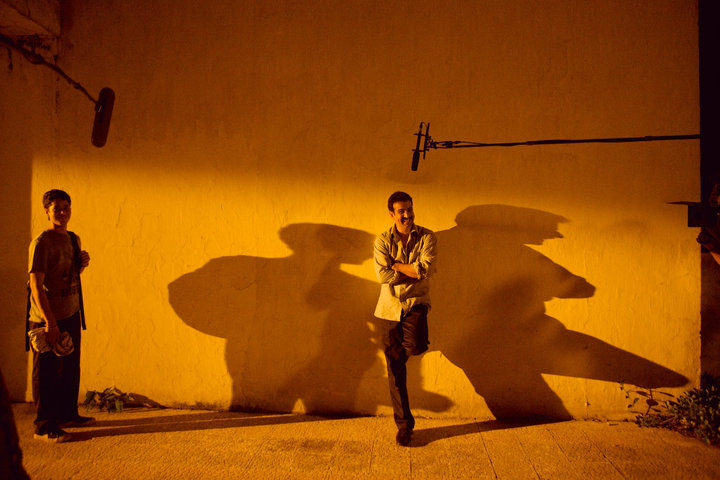
Pic Courtesy – Making Of Udaan

PS – If you can read hindi, click here and read the post by Mihir Pandya…a different perspective and one of the best pieces on Udaan.

And this one comes from far east. Or you can say far North, North of Bengal. Jahan Bakshi, a member of U-25 gang, is currently stuck in the tea gardens of Dooars. Bored with the smell of tea and too much green all around, he traveled to Siliguri (some 95kms) to watch Udaan. And thinks it was worth every penny. Since he was non-stop tweeting about the film after he saw it (No, he wasn’t paid to do so), we asked him if he can go beyond 140 characters and write a post for us. So, here it is…read on…

(And a clarification…No, he was never thrown out of Mayo College, Ajmer or Calcutta’s St Xaviers  College from where he graduated in Mass Communication. Current Status – Still flying high!)

Okay. Have been tweeting since the screening like a man possessed. Not, however out of bored frustration like @moifightclub during #Lamhaa screening. But because I take Anton Ego’s monologue in Ratatouille rather seriously. You see, unlike Mr. Amitabh Bachchan, I don’t think a critic is someone ‘who knows the way but can’t drive the car’, but someone who encourages the new, because the new needs friends. The new needs US – you & me. And hence before I talk about the film, I urge you to please (get over/ delay watching Inception and) go and watch this film. You’ll do yourself and good cinema a favour.

I genuinely haven’t felt the way I felt after watching Udaan this afternoon seeing any Hindi film. Forget about the emotional richness of the film- I’ll probably see the film again to absorb it fully. I was stunned by the maturity and delicateness with which Motwane crafts this film. As treatment goes, this is as un-Bollywood as it gets. As opposed to the Bollywood hammer and tongs approach, here is a film that feels like it’s been created with forceps. Nothing goes overboard or out of hand, thanks to the amazingly controlled direction. Each character and emotion has nuance and heart, thanks to some of the most sharp, sensitive writing I’ve seen in some time. Each frame breathes with life, and Jamshedpur becomes a character in the film, thanks to the wonderful cinematography. And each frame is allowed to speak, thanks to the absolutely exquisite pacing. This is a film with a texture (yes, Kartik Krishnan you can laugh) that truly echoes international cinema.

Rohan Singh (Rajat Barmecha, whose eyes speak volumes, and who I described earlier in the day as ‘twice as cute as Imran Khan and a 1000 times more talented’ and his ‘despotic’ Bhairon Singh (Ronit Roy, mind-blowingly brilliant, who knew he had this in him?) are both men with scarred souls. No one really understands them, and they certainly don’t understand each other. Rohan, however distills his pain into his writing and poetry (watch out for the hauntingly beautiful poems recited through the film), while his father chooses to drown it in, well, distilled spirits. He may be a well built monster on the outside, but inside, he is a lonely, pathetic figure, swallowed by his hopelessness and personal demons- a fact that comes through brilliantly in the end.

Troubled growing years are something that inevitably change you. Even if you come out of it as a healthy, ‘functional’ human being, you bear scars that people mostly can’t see or imagine. And even when those wounds occasionally surface to fester, you can’t expect other people to understand. But the amazing thing is- you feel you’re cursed, but what you may not realize is that it is the reason you can feel things and sense emotions no one else can feel. And in that sense, you’ve been blessed with something beautiful- the ability to appreciate beauty all the more. In my many moments of self-pity, I’ve often wished I wasn’t the mind-fucked creature I am, only to realize how all my bad experiences have only enriched me as a human being, and frankly I wouldn’t trade that for anything.

Udaan is also such a magnificent story about fathers and sons. I wondered what Rohan actually felt more- the real absence of his mother, or the virtual absence of his father. I empathized with his feeling of being trapped, of having to bear the consequences of things that you have no hand in, and which you can do absolutely nothing about. I felt his humiliation, his helplessness, his anger. And I was touched by the power of his undying hope and spirit to overcome in the midst of this unending cycle of despair.

Udaan is truly a little film that says so much, that moves you on so many levels, that inspires you like nothing I’ve seen in a long time- and not in the ‘light a candle today, and piss on it tomorrow’ way. I said it before and will say it again: Red Bull doesn’t give you wings, but Udaan will.

P.S: I also must say that the film is pure poetry, not just in metaphor, but literally. The haunting pieces of poetry recited by Rohan through the film are so good, they’re worth the price of admission by themselves.

P.P.S: For those who can spare a good 15 odd minutes, do read this lecture by Orhan Pamuk, where he talks all about his father and being a writer.

‘For me, to be a writer is to acknowledge the secret wounds that we carry inside us, the wounds so secret that we ourselves are barely aware of them, and to patiently explore them, know them, illuminate them, to own these pains and wounds, and to make them a conscious part of our spirits and our writing. ‘

Makes for great reading.

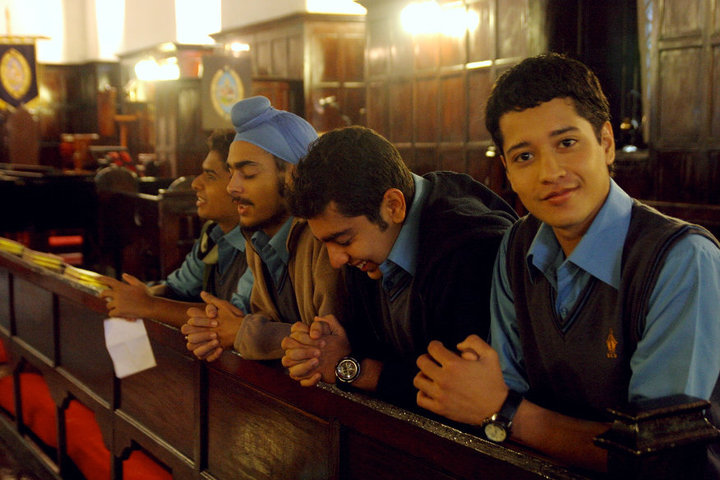
Pic Courtesy – From making of Udaan

Is this the bestest friday we have seen in ages ? Seems so. The Baap of every mind-bending game is here! Christopher Nolan, with his Inception. Plus, there is Udaan by Vikramaditya Motwane, Tere Bin Laden and Rahul Dholakia’s Lamhaa. Ok, rest can wait. Back to Inception.

The year was 1997. He was “Chris Nolan” on the credits then. But as they, the signs were all there. Watch it, if you havent seen it yet – the short film by the master before the world discovered him through Following.

We are Nolan-bhakts since we saw Following and he still delivers and how! As we saw his latest release Inception, I flooded the Twitter timeline with orgasmic, or should we call it Nolan-asmic tweets! If you are not on Twitter, here is all our gloating, as friends called it, all in 140 characters……..

I.N.C.E.P.T.I.O.N. See you guys after the dream (Jackass grin) !

Interval – HOLY FUCKETY FUCK! NOBODY, nobody is gonna fuck you like this. Everything is explained slowly but you CANT even blink!

Inception – go with as much expectations as u want! Its a BET! Nolan plants an idea, gives u orgasm, ditches u and gives u hard-on again!

Inception – anyone try writing the spoiler alerts…its gonna be one fat book u cant even imagine. Am not sure what can Nolan do after this.

Inception – did i mention its a love story! Ur mind is d scene of the crime. But ur heart gonna pull the trigger!

Inception – at every scene u r given explanation. Sm call it dialogue exposition. But still, it defies all gravity!

Inception – am willing to sponsor Aamir khan’s ticket. He didn’t understand Memento. I want to see the expression on his face after this one.

Inception -not sure if any1 ever balanced matters of head N heart so perfectly well 2 get u into d trap. Oops, did he beat my God C.Kaufman. J.Grin

As i said, I Luv Hate Storys. Cue – J. Grin! RT @Rychyk: @moifightclub I HATE YOU…make that WE. 😦

Envelope? He pushed d whole post office! RT @vicramb @moifightclub Knwing him,Smthing evn crazier! Tht guy really knws how 2 push d envelope

Inception – as d movie is about 2 end n u think Nolan has done everything possible 2 u, he delivers a BIG punch in d last scene. V r still debating it.

now m still in d Nolanland. Bet u cant locate me! J. Grin! RT @Envyas @moifightclub OK,stop this gloating or I know where u stay. :p

Block me 😉 not sure when i will b able 2 do that again RT @ArtRevel @moifightclub I want to Block you till I watch it 🙂 Making me jealous

# Ok, one last one…after all d Inception tweets how many Nolanbhakts cant sleep 2nite…wanna count 😉 and i will be in a dream! Aha, life!

So, have you booked you tickets ? Don’t forget to book you brains too. Ok, get that over-booked! J. Grin (we just can’t get enough of it). Also, releasing this friday is Udaan. And click here to read our review of Udaan.

PS – Don’t forget to let us know what you felt about it. And what do you think about the last scene/sequence of the film ?

The first trailer of Vikramaditya Motwane’s Udaan is out. And its pitch perfect. The trailer exactly tells what the movie is all about.

And now the problem! Why is the text in the trailer straight lift from one of our favourite trailers of last year – Where The Wild Things Are! If you dont believe us, just play the video. Inside all of us is HOPE. Inside all of us is Fear. Even the way it comes on screen, is the same. After Cannes, we had to see this ? Can any soul enlighten us ? Who cut this trailer ? Someone surely is Un-certain of few things! Beware!

For our review of Udaan, poster, pics, synopsis and all the jazz from Cannes, click on this post and follow the links given in the post.

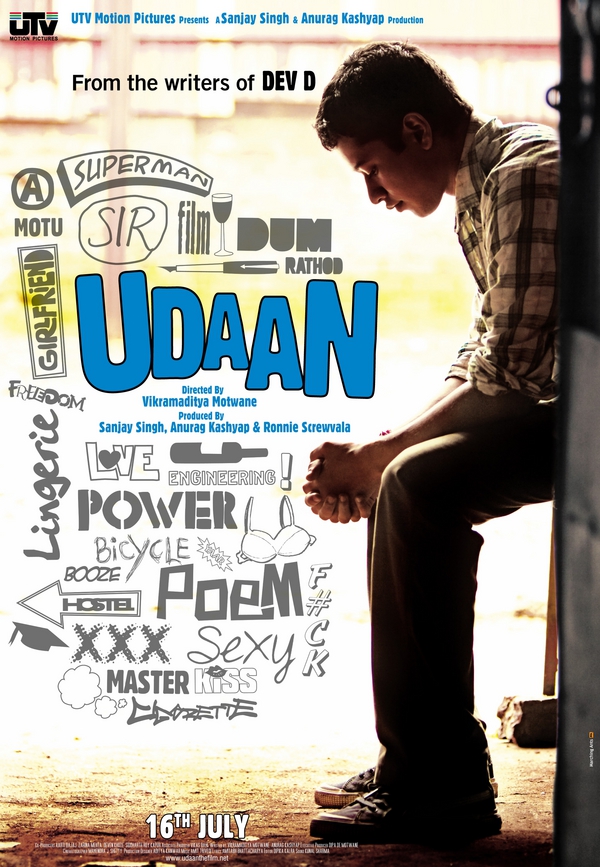
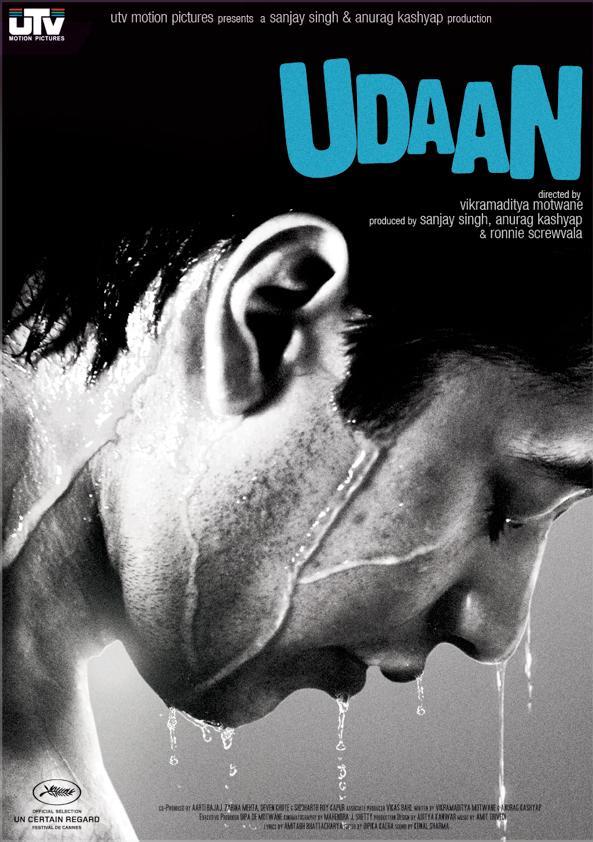
Aha, this seems like the perfect pitch for its theatrical release in India. We love it, except the title font and its colour, which looks little bland in the middle of all that chaos. For us, its “days of being wild & pains of growing up” and the poster seems to have captured that.

The lead actor is Rajat Barmecha, who looks a lot like Imran Khan and acts million times better than him. For our review of Udaan click here, for Vikramaditya Motwane & Anurag Kashyap’s video interviews here, for earlier poster/pics/synopsis of the film here and for all the Cannes jazz here.

Some of us were lucky enough to catch a screening of Vikramaditya Motwane’s Udaan. I came back, sat down with my laptop on the writing table, wrote the header for my post – Days Of Being Wild & the Pains of Growing Up. Looked up. The poster of Persepolis, newly framed, was in front of me. I put on the same thinking pose and in my thought bubble went back to the days of that small industrial town where I grew up. Same state, different town. Udaan is  set in Jamshedpur.

The post remains unwritten and is saved as a draft with only the header . Cinema that connects  strongly, has this effect on me. Either I go silent or feel like pouring my heart out. After Vihir, Udaan is the second film of 2010 that I fell in love with. And the best part is, its uncompromised. Who would cast Ronit Roy, Ram Kapoor and  a bunch of new kids to make a film! Producer Anurag Kashyap and Sanjay Singh did. And Vikramaditya delivered. More power to people who dare to make such films! A script which was rejected by almost every producer in Bollylalaland, got made, and made it to Cannes’ official selection. Aur bolo?!

Finally, good friend Fatema Kagalwala came to our rescue. Yes, same Fatema, the girl on the bike (She doesn’t like the description but we feel it sounds cool like the title The Girl With the Dragon Tattoo)! And she drives smoothly even after four pegs! Anyway, back to Udaan. Read on.

There is moment of breaking-free in every teenager’s life. From barriers within or without. And this is a journey that defines the rest of life’s journey. The moment when one takes wing. And flies away to find one’s feet in a world where the present is free from the past and the future a freedom to dream and build.

It is said that the things that we cannot change, in this flux of constantly changing life, are the things that end up changing us the most. But it is also the things we break ourselves to change that end up keeping us together. Rohan finds that out as he sets out to find himself among the pieces of life thrown to him by fate. Thrown out of hostel and college for a breach of (archaic) rules he finds himself in his home with an over-bearing, uncaring, violent father and a step-brother he has no knowledge of. The odds are stacked against him and larger because of his nature.

Rohan is a poet, a sensitive soul…fully well personifed in Rajat Barmecha’s soulful eyes and tender expression. And the poetry he writes is equally touching. He writes of his innermost quests, his need to find his path, his feet in a confusing world of do’s and don’ts that don’t make sense to his simple desires and simple individuality.

Rohan’s dilemma is as special as it is common. A semi-neurotic father with demons of his own to battle clamping down hard on the gentle boy and his harmless dreams forms the core of his life that is now reduced to an empty carton much like the cold, spaceless walls that adorn his house. The only sense of belonging he ever felt is far away in Mumbai, the city of dreams, his bunch of pot-pourri friends that are seemingly very happy and carefree, a life Rohan craves for. A shadow of a loving yet unattainable family in his chachu’s person and marriage gives Rohan the much needed respite from the tyranny and cruelty of his circumstances…

But Udaan needs to be experienced not explained. It’s a simple story, simply told. And like a friend said, a ‘difficult’ simple film to make. As it goes in simple stories what you don’t do is more important than what you do. It is the pitfalls that are avoided that make the subtle milestones achievements. Writers Vikramaditya Motwane and Anurag Kashyap pick and choose moments, shear them of over-emphasis, indulgence and sentimentality and present a coming-of-age story that is as universal as unique.

Of course, there are also moments of glorification that seem out of place…a bit of clichéd representation of conventional thinking…a bit of over-doing of the ‘feel-good’ factor…they make for a few wincing moments…taking away from the absorbing true-ness of the film…somewhere indicating a lack of real depth…but they do not take away from the soul of the film, which is clean and sincere, much like it’s protagonist and his dreams.

The film is Rohan’s story but the other characters complete his picture well. The balance in characterization, a rare treat, is a genuine pleasure to experience, especially the father’s. A brutish tyrant who could have been painted black and explained away, is handled with a touch of grey never justifying his behaviour but by just putting a germ of reason as to why he must have turned out like this. A back story would have killed it. Especially with the diversity of perspective that is brought in by how Rohan looks at him, how his brother looks at him and how the audience looks at him. It clearly makes us take sides but with an understanding. And that understanding is fraught with the knowledge that life is like that. Imperfect and full of tough choices. And it takes the theme (as it may be defined) that either you let your past dictate your present or you dissociate and build a new present for yourself. Beautiful contrasting life choices in the personification of the father-son.

The step-brother (a perfect cute-heart casting) brings out more of this of balancing out of the human-ness of its characters. His fears are matched well with his simple dignity and his silence used perfectly to show his place and role in the scheme of things. His small and limited presence looms large, very telling of the family dynamics and Rohan’s decisions.

Generically, the film is very European in its film-making sensibilities. The use of sound and silence is stark, contrasting. The cinematography captures without drawing attention to itself (the denial of over-weening cine-artistry is actually a pleasure in these times of technology obsessed film-making). The dialogues are conversational, everyday life but never pedestrian. The power of realism rests in every creative choice the director makes to tell his story in the most earthy fashion. And the power of realism shines through a well-told story that speaks from the heart and goes right through the heart. An extremely heart-warming debut by director Vikramaditya Motwane, one that shoots our expectations of his second feature sky-high 🙂