KAUFMAN - "Or cramming in sex, or car chases, or guns. Or characters learning profound life lessons. Or characters growing or characters changing or characters learning to like each other or characters overcoming obstacles to succeed in the end. Y'know ? Movie shit."
Kaufman is sweating like crazy now. Valerie is quiet for a moment - from "Adaptation".
We are all about CINEMA. That movie shit.
NOTHING is sacred.
NOBODY is spared.
Because we talk about films, dammit.
Not your sex life.
Films, fests, unsung, indies, undiscovered - all that and some fun. If you have dope on anything related to cinema or you would like to share something, do write to us at moifightclub@gmail.com.
The views, opinions, reviews, articles, or positions, expressed by the authors and those providing comments are theirs alone, and do not necessarily reflect the views, opinions, positions or strategies of ANY OF THE EMPLOYERS, FRIENDS, RELATIVES, PR agencies, Production houses, Media group and such third parties associated with the authors. The latter make no representations as to accuracy, completeness, currentness, suitability, or validity of any information on this site and will not be liable for any errors, omissions, or delays in this information or any losses, injuries, or damages arising from its display or use.
In short, if you have an issue with us or any post we've written, write to us at moifightclub@gmail.com
Aha, quite a long header. Let’s tackle it one by one. And not sure if it deserves a SPOILER ALERT because its all in the official synopsis.
Synopsis – The romantic misadventures of Susanna Anna-Marie Johannes, a beautiful lass who over the course of thirty-five odd years, gets married seven times due to the untimely and mysterious deaths of half a dozen of her hapless husbands. The strange circumstances of their deaths, makes Susanna a prime accused. Did the husbands deserve to die? Were the murders out of necessity or pure blood-lust? Does Susanna ever find her one true love?
Key Word – Half a dozen.
And check out the six new character posters. And 7th one is again missing!
Character Details :
Susanna Anna-Marie Johannes (Priyanka Chopra) – She is a beautiful lass who over the course of thirty-five odd years, gets married seven times due to the untimely and mysterious deaths of half a dozen of her hapless husbands. The strange circumstances of their deaths make Susanna a prime suspect. Enigmatic and irresistibly charming in equal measure – Susanna is the kind of woman any man would die for! Literally!
Key word – Half a dozen.
Neil Nitin Mukesh (Edwin Rodriques) – A young and beautiful Susanna falls in love with The Major, who’s oh-so-dashing in his uniform. Yes, he’s a bit too old for her, and he likes giving orders. But love is blind.
John Abraham ( Jimmy Stetson) – Soon thereafter – very soon – Susanna decides to marry Jimmy, whose good looks and musical talent sweep her off her feet. She invests in him, but she has no idea what lies in store.
Irrfan Khan (Wasiullah Khan) – As a romantic soul. Susanna is susceptible to beautiful poetry. Hence it is that she discovers and marries Wasiullah Khan A.k.a Musafir, by day a gentle poet and by night… something else.
Aleksandr Dyachenko (Nicolai Vronsky) – Growing older but no wiser. Susanna next marries a Mr. Vronsky from Moscow and almost re-enacts her very own Anna Karenina love story.
Anu Kapoor (Keemat Lal) – All these dead husbands! The police take an interest, especially Officer Keemat Lal, who is helpful to the extreme. He not only persuades Susanna to marry him, he makes it impossible for her to say no.
Naseruddin Shah( Modhusudhon Tarafdar) – By now our Susanna is suffering from melancholy, not to mention indigestion. Along comes her savior, Dr. Modhusudhon Tarafdar with a healthy answer to both problems: a strict mushroom diet.
The 7th Husband – It turns out that Dr. Mushroom isn’t Susanna’s last savior. She marries yet again, and finally it’s for good.
Hmm. The 7th Husband is played by Naseeruddin Shah’s son Vivan Shah. So is it just 6KM ? And is there more to the 7th one ? If you have seen the theatrical trailer of the film, you must have also noticed that the last few seconds of the trailer has Vivaan Shah in a contemplative mood with Priyanka Chopra in the other corner. Your thoughts ?
From Mumbai Meri Jaan to John Meri Jaan. Remake of Khaka Khaka. John Abraham, who looks like Arjun Rampal. Title that sounds infinitely boring. And a gun that points to, umm, the gun. Bound by duty, Unleashed by love. And so the twain meet at the crotch ? Till love found him….where are we heading ? Sincerely hope that not in the direction of the gun. And this is just the first communication message of the film.
Though the music is still not out but a new song promo (Bekaraan) of 7 Khoon Maaf has been released. It opens with Irrfan Khan reciting two lines, which beautifully sums up the mood of the main character of the film – Ek baar to yoon hoga, thoda sa sukoon hoga…Na dil me kasak hogi, na sar me junoon hoga.. Who else but good ol’ Gulzar.
Subrat, who ? If you know him, great. If not, Kartik Krishnan has an intro for him – He is The Guru-Mahaguru encyclopedia of film knowledge, pop (and other) culture, literature connoisseur from the Raymond Chandlers, Oscar Wildes to Ibn-e-Saafis, and expert on music, quizzing, food & alcohol (One would think in that order). Unlike most professors, his musings on cinema are non pedantic and yet rich with layers of subtle meaning (and humor). And as he says himself – he’s more a consumer than producer of creative output. He’s even introduced us to two of his legendary colleagues. Prof ATM Yadav – whom KRK so shamelessly copied saying , “Yadav kabhi Bhikhari nahi hota, hamesha raja hota hai raja“. And Prof Arthashastri. We do hope to see both of them soon. And if you thought that’s all the man does, his day job has nothing to do with any of his aforementioned passions.
Woohoo! Quite a long one! And since the intro has managed to over-hype the author, please read on….
It was an opening sequence that filled me with dread. A tiny sapling being planted into the soil by a female hand soon to be trampled over by an insensitive passerby. Was this “Rabbit Hole” or will I now espy a Guru Dutt sprawled in a park morosely observing the world go by? Is this Pyaasa with the oft talked about symbolic opening sequence of a bee hovering over flowers in an ‘all’s well with the world’ sort of a manner till a surprisingly careless foot precisely squashes it away? Thankfully, that was a minor aberration in Rabbit Hole as it went on to depict a heartrending yet understated story of loss and longing. Pyaasa, on the other hand, for all its hallowed position in the classics of Indian cinema, would go onto show an overwought story of poet who riles against this soulless world with barely a nod to subtlety barring Sahir’s poetry. Maybe I am being harsh to Pyaasa. In my opinion it was the subtler of the Guru Dutt films and it showcased his limited acting abilities rather well. The rest of Guru Dutt ‘tragic’ oeuvre has often left me wondering. When it comes to raw display of emotions, why do we love going over the top and then staying there. As the lawyer pleads NOKJ – kab tak chhat pe rahega. Ab to neeche aaja.
And, this is Guru Dutt – widely held to be one of our more understated filmmakers.
I have lost my appetite for melodrama. As more life happens to me (as opposed to I seeing more life), I realize nothing dramatic happens in ordinary life. And, nothing dramatic happens in things around ordinary lives. The background score to our lives is the drone of the whirring fan above our heads. You will be lucky to discern melody there if you hear closely and start humming to it. But, trust me, there’s no Salilda doing an Anand in that drone. But, why has this discovery eluded our filmmakers who claim to show ordinariness in our lives? Or, why do we as audience love melodrama so much that it is a ‘fix’ we need in every movie watching experience?
These are questions that crop up in my mind as I see the audience reactions around me on No One Killed Jessica. Admittedly, the film fell short of my expectations – an inconsistent screenplay, an over the top Rani and a poor supporting cast. However, what surprised me was the commonest reason cited for disappointment – the way the movie closed. Apparently, there wasn’t enough drama; a spectacular last reel of monologue, rousing emotions and the deliverance to all of us who invested our emotions in Sabrina.
We must love melodrama dearly to expect such a denouement and then be bitter about not finding it. Why do over the top portrayals win our hearts and then the awards? How does one bear Rani Mukerji in Black? Or, why should the last sequence of Sadma be so iconic? In my mind it spoils an, otherwise, remarkably restrained film. Or, take Dilip Kumar’s shtick through the decade of the 60s. How was it great acting? And, since I am getting these things off my chest, let me not forget the cringeworthy Karishma throwing stones into the lake while cursing her creator in Dil To Pagal Hai and finding a Filmfare and a National Award being thrown at her in return for display of such histrionics.
The reason I am often given is a version of ‘we are like this only’. That we love our emotions, the rona-dhona and our movies reflect them. I find this hard to accept. Firstly, we are not the most emotionally expressive race. I am sure the Italians, Spaniards or the Latinos will concur. Secondly, the arts that precede filmmaking like theatre and literature hardly betray any signs of our future love affair with melodrama. Read Premchand, Tagore or even the relatively pedestarian Devdas (that marker in melodramatic history of Hindi cinema). You will be surprised by the restraint, by what’s left unsaid. Even the early years of Hindi cinema rarely had the protagonist declaiming for long periods on social ills or the mythical mother with her gajar ka halwa.
So, where did we go wrong? I don’t know. May be the answer lies in the transformation of Dilip Kumar from a genuine brooding actor in intense portrayals in the early 1950s to a caricature of the ‘tragedy king’ that lazy directors made out of him in the 1960s. Is it any surprise that the most restrained of the directors of that era, Bimal Roy, didn’t direct Dilip Kumar after late 50s? And, once you had accepted Gunga Jumna, Dil Diya Dard Liya or Aadmi as great dramatic performances, how far is Rajendra Kumar banging the door down in Dil Ek Mandir and Manoj Kumar grating on and on about Indian culture in Purab Aur Paschim. Follow that linear process and you will reach Sunny Deol with a handpump and Shah Rukh Khan’s quivering lips in Devdas. And,eventually, to the million TV serials where each emotion is amped up a million times with the camera going berserk being lapped up by millions of us.
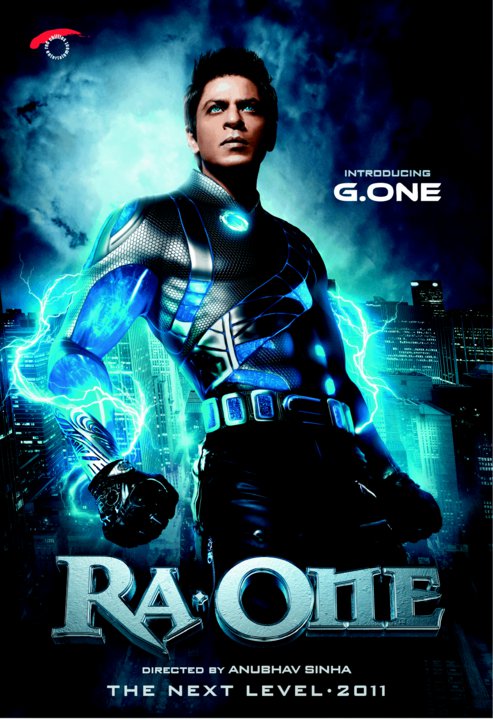
There have been signs of improvement though. Movies like Johnny Gaddar, Oye Lucky, Kaminey and, lately, Udaan, all had great drama without going over the top. Just as I was letting a sigh of relief, I find everyone around me sorely missing that dramatic closure in NOKJ. And, then I saw the Ra.One poster. Out went subtlety through the window.
One more film awards ? NO! But we are different. SO ? Everyone says so! Am sure that must be the initial reaction after you read the header of the post. But just give me few minutes and let me try to explain it once. If you like it, great. And if not, that’s ok.
Ask yourself –
Q. Do you have any respect for any of the current hindi film awards ?
Q. Do you even know how they are selected ? Who votes for whom and who is selected how ?
Q. Do you remember who won what awards in which year ?
If answers to all the questions are in negative, and if you are branded as a cynic for wondering why we don’t have a single credible film awards in the country, then let’s join hands and try to do something.
Honestly, we all know that the film awards in our country are just “tv shows”. The tv shows needs TRPs and so they need stars. Event companies get involved, they are asked to get the stars, and its all about the negotiation power of the star. Every year new categories are added to suit the need of the “star”. Debutant, Best comic role, Best villain , Best Jodi of the year, Best Jodi of the decade, Hottest couple, Best Child Artist, Power List Topper and blah blah blah. You name it and they have it.
There are awards by film magazines, production houses, movie channels, event management companies and some more. Scratch the surface and you get to know everything. Every year they come out with their nominations, we read and crib, they host the awards, we see and crib some more and then forget it completely.
It started in the same manner this year. Nomination lists of awards came out and we started cribbing about it. Only difference, the platform was new – Twitter. Nikhil Taneja suggested that we should try to do something. Enough of cribbing! Is it possible ? Yes, let’s give it a try.
Some of us came on board and we started discussing the Do’s and Don’ts. It all emerged from Tweet-discussions A twitter handle ( @twi_fi_awards) was created and more debates and discussions followed. Someone suggested the name TwiFi Awards and others loved it. TwiFi ? Twitter Film Awards. The idea is use to the vast and unique platform of Twitter and get everyone involved to spot the best of the cinema talent.
And everyone agreed that let’s keep it free, fair, independent and most importantly, Transparent. Whatever we do, should be visible to everyone….who is voting for whom and who is getting how many votes.
But who will decide ?
A. To filter out the best from the rest, a Jury consisting of country’s top critics and bloggers will vote to select the nominations. Critics because they see almost every film and you may agree or not, but their opinion matters. And bloggers because they do it just for the love of it. So if we get the best of the both, we might be heading in right direction. Also, the jury for music nominations is different.
To read the full list of critics who are on jury, click here. You name them and they are there! Bet you won’t be disappointed.
Once they submit their nominations, we will compile it all and put it out for voting. And everyone can vote. All you need is a twitter account.
Q. Who will decide which blogger will vote ?
A. Everyone. We asked people to nominate their favourite bloggers by just tweeting his/her name to the official account (@twi_fi_awards). Believe it or not, we got names of 70 bloggers to be part of the jury. Pavan Jha designed an application where people can cast their vote to select their favourite blogger. Voting is still open. Click here and access it through your twitter account. And to keep it transparent, your vote will appear on your Timeline too. ( We are not storing any data. Its used only for the purpose of voting)
And if you have any more doubts, click here to know all about the TwiFi Awards.
To know more about the TwiFi Awards, click here. To know more about how to vote for the jury, click here.
We are not sure where and how far we will reach, we are not even sure if we are heading in the right direction. But one thing is for sure – we are trying to make a change. And the intention is entirely honest. Only because we are sick, bored and tired of “tv shows” masquerading as film awards.
About 1500 people on Twitter, more than 500 on FB, about 30 critics, 70 bloggers and some 800 voters have already joined us. Will you contribute too ?
Let’s give cinema a chance.
Or you can go back and cheer for Golmaal. Or may be you can try and crack this puzzle – Omkar Das Manikpuri ( Peepli Live) is nominated for Best Performance In A Comic Role.
Its that time of the year again. The only time when we love making, reading and sharing lists. We decided to compile all the filmy lists and compare them. So here it is – all the year-ender lists . And any critic who puts I Hate Luv Storys and Khelein Hum Jee Jaan Sey in his/her list of Top 10 films of the year, needs to stop reviewing films. Now.
Anupama Chopra (NDTV)
Top 5 – 1. Udaan 2. LSD 3. Peepli Live 4. Ishqiya 5. Robot
Best Trailers – 1. Dabangg 2. Yamla Pagla Deewana 3. Road, Movie 4. Ishqiya 5. Yeh Saali Zindagi 6. Love Sex Aur Dhokha 7. Once Upon A Time In Mumbai 8. Tere Bin Laden 9. Peepli Live 10. Udaan.
Film Soundtracks – 1. Ishqiya 2. No One Killed Jessica 3. Love Sex Aur Dhokha 4. Aisha 5. Udaan For details, click here .
Sukanya Varma ( Rediff)
Best Films ( In no particular order) – Peepli Live. Ishqiya. Robot. LSD . Tere Bin Laden. Pas Gaye Re Obama. Udaan. Do Dooni Char. Band Baaja Baarat. Dabangg
Golden Trophies – 1. Peepli Live 2. Do Dooni Chaar 3. Love Sex Aur Dhokha 4. Ishqiya 5. Udaan 6. Rajneeti 7. Tere Bin Laden / Phas Gaye Re Obama / Well Done Abba 8. Dabangg / Guzaarish / My Name Is Khan 9. Kartik Calling Kartik 10. Striker / Antardwand
Best Of The Worst – 1. It’s A Wonderful Afterlife 2. Krantiveer 3. Knock Out 4. Mumbai To India 332 5. Teen Patti 6. Accident On Hill Road 7. Sadiyaan 8. Bum Bum Bole 9. Hiss 10. Dunno Y… Na Jaane Kyon. In details Click here
Namrata Joshi (Outlook) :And the one that touched the heart: Ab bhool gaye hain joote kahan utaare the…
For Liberalisation’s Children, click here and for a very personal recap, click here.
Shubhra Gupta (Indian Express) : Can you tell a story, Mr Fink? Can you make us laugh? Can you make us cry?” Onwards, to 2011.
When i pinged Kartik Krishnan on GTalk yesterday, he told me has busy reading a new book. Film book ? Yeah. As always, i asked him if he could write a (recco) post and as always, he replied with a hmmmmm, which is a difficult expression to decipher. What to write about a book where every page is delicious ? Now that’s a genuine excuse, and difficult argument to win. So he wrote something and typed some excerpts from the book. Knowing him so well, I should have guessed it ( Click here to read Kundan Shah on Renu Saluja. And click here for Guru Dutt on Classics and Cash) Typing out excerpts from a book may sound simple but is really a painstaking job. And is also a service for less privileged human beings who don’t have access to the book but are e-connected. And now his side of the story and more..
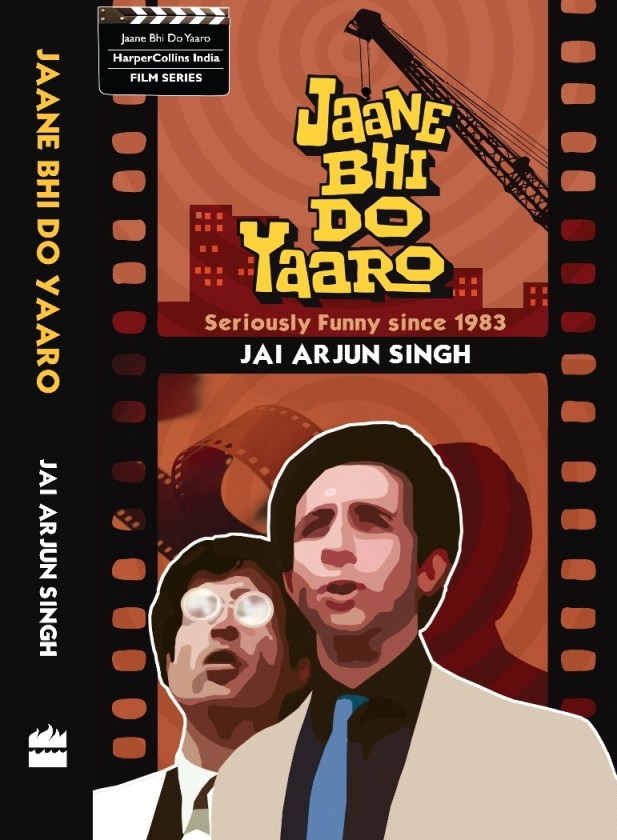
He asked me to ‘review’ this book written by Jai Arjun Singh (a superb writer-blogger who should write as frequently about cinema as literature – cos when he does – he nails it)
“Jaane Bhi Do Yaaro – Seriously Funny since 1983 – By Jai Arjun Singh” – click here to buy it
Now how does one try an encapsulate more than 250 pages devoted to the making of one of the oft quoted cult classic films of our times, in about 500 words ? How much trivia do we JBDY Bhakts know already, that we need a book to tell us ? What good could it possible tell which would be new ?
Turns out – Lots !!! My knowledge of the film is a measly 1% of what is there in the book. And I claimed to be one of the biggest JBDY bhakts among my circles-have even met Kundan Shah and tried to squeeze out maximum information out of him on the film. Clearly I’m wrong 😛
Trivias, Background history of the players, the director, writer, actors, scripting, NFDC, pre production, fights, troubles, ultra low budget shooting, post production, release & reviews, the legacy – it has it all – all summed up in an unputdownable read.
And when you read such a revelation – how do you write a post on it ?
May be stop endlessly raving about it and simply give some snippets of the book. May be hope that seduced by the ‘trailer’ of the book, people will go and buy it. Because at 188 bucks (film books normally cost Rs 500,800,1500 or more) this book is a steal. Highly Recommended. Cash on delivered to you doorstep in 3 days! Flipkart rocks!
So instead of a recco post, am transcribing quarter of a chapter here & there, hoping that this will contribute to the sales of the book. I hope I’m not offending the author of the book or the director.
Over to the book’s Intro –
The Artist as a Store Attendant(talks about the initial days of Kundan Shah- the humor streaks – the beginning transcribed below)
“Take this hypothetical situation”, Kundan Shah tells me at our first meeting in his Bandra office. “You want to write a book about this film I made years ago. So you call repeatedly and ask me to meet you and I keep putting you off, and you are getting fed up but you aren’t in any position to say anything. You’re the underdog in our relationship.”
“Then, finally, I do call you over at a very inconvenient time, say 10.30 at night. You travel a great distance to get here, but then find that I’m busy-I have people over. I brush you off with the words :”Hey listen, can you come later?”. It’s an inconsequential matter for me – your book isn’t going to make my 25 year old film more popular than it already is- but for you, it’s as if the world has come crashing down.”
“But you don’t want the people sitting around to see that you’re hurt. So you put on a brave face, turn the whole thing into a joke. “Okay, sir,” you say with your dead pan expression, “should I go back and come again at one am?” So now your humiliation has been transferred into another medium -sarcasm, whatever. And it’s for me to respond because, suddenly, I’ve become the butt of the joke”
Comedy and cruelty often go hand in hand, stresses the man who wrote and directed a very funny film that ends with its two most likeable characters heading for the hangman’s noose. “When a person slips and falls, he might -speaking realistically – have broken his hip, or worse, but people laugh. You create humour out of something painful.”
The Corpse, The Chess Game And The Flush Handle
Given how popular the ‘laash’ sequences would become, it’s a pity that the crew never got around to shooting some of the zanier scenes with the dead body, especially after the inebriated Ahuja takes it home with him. The scenes at the guesthouse were to include one where Ahuja – eager to entertain this strangely shy mehmaan who doesn’t say a word-initiates a game of chess with the body.Naturally, the drunkard ends up losing to the dead man. (Ingmar Bergman’s The Seventh Seal had established a precedent for Death winning cinematic chess games, though it is unlikely that Kundan and Ranjit Kapoor had this in mind when they wrote the scene).
Ranjit also fondly remembers a sight gag that begins with Ahuja encouraging the corpse to have some whiskey. When the drink inevitably spills on the floor, the builder slurs, “Arre yaar, tu yahaan susu kar raha hai? (‘You’re peeing on the floor?’), but regains his courteousness and, in the tradition of the good Indian host, carries his guest to the bathroom. There he puts the deceased commissioner’s hands through the flush chain, comes back to his room and falls asleep. The next day, when Vinod and Sudhir are looking for the body in the guesthouse, they are alerted by the osund of the flush: the body has been upright in the bathroom all night, the weight of its arm pulling down the flush handle every time the tank fills. Rinse and repeat, so to speak.
The climactic chase offered endless possibilities for droll use of the laash, one of them being a planned scene where Vinod and Sudhir disguise it as a beggar asking for alms. In a fine touch, Tarneja, Ahuja and the other crooks – who have built a career by cheating people out of crores of rupees – interrupt the chase to conscientiously put money in the ‘beggar’s’ bowl. But pehraps the funniest laash moment that didn’t make it to the final cut was a scene where the partners hide the body in a doctor’s clinic. The physician, described in the script as ‘a Jiri Menzel type’ (a reference to the Czech director of such movies as Closely Watched Trains), gives the body a complete check-up (temperature, blood pressure, pulse etc) and then proclaims, in the self assured, avuncular manner of the typical Hindi-film doctor : “Ghabraane ki koi baat nahin hai. Do din mein theek ho jaoge” (“Nothing to worry about. You’ll be fine in two days”)
Naseeruddin Shah Ko Gussa Kyun Aata Hai ? The Mirror Crack’d
But the next scene with which Naseer had problems might have worked better if he had been allowed to have his way. This is a sequence that ranks among the films weakest, most awkward moments – the faux mushy exchange between Vinod and Shobha as they stand in front of the mirror and she plays victim (‘Main ek akaylee abhla aurat hoon …’) to mine his romantic-hero feelings and manipulate him into helping her.
Actually the scene begins with Vinod trying to cosy up to Shobha, who swiftly makes it clear that theirs is a ‘professional sambandh’, that of ‘maalik aur naukar’ (hence the famous shot of Shobha placing her foot under Vinod’s chin). But then, realising how important these photographers are to her grand design, she changes tack. Some of the dialogue that follows – “Mere sapnon ka sathi, main bhi bhookhi hoon…pyaar ki” and “Suno mere dil ki dhadkan” – plays like a parody of mainstream melodrama.
When Kundan wrote the scene, his idea was that it would be a game of charades between Shobha and Vinod. Obviously, Shobha is the devious one, but Vinod isn’t entirely innocent either: he wants the fun of being seduced by this attractive woman but at the same time he vaguely senses that this might be a trap and he doesn’t know how far he can trust her. The scene was to be driven by this conflict. In fact, it was the thought of this scene which had inspired Kundan to cast Bhakti Barve – when he saw her on stage in Hands Up!, he realized that she was an actress who could handle the required nuance.
However when it came to shooting, Naseer said he wanted to play the scene seriously – Vinod would take everything Shobha said at face value and fall hook, line and sinker for her trap. A major arguement followed.
Naseer: There has to be a serious moment between these two!
Kundan: I agree. But this isn’t it! The serious moment can come afterwards, once she has backstabbed them.
Naseer: Let’s put it to a vote. The whole unit can decide whether I should play this scene straight or crooked.
So everyone voted and it turned out that almost everyone was on Naseer’s side.
Kundan: This is ridiculous. So what if everyone agrees with you. I’m the bloody writer of this thing and I’m also the director – I’m using my power to overrule the vote.
Naseer: Fine, then I won’t have dinner!
Okay, it probably didn’t happen exactly that way, but the upshot is that things were threatening to fall apart. As it is, this was never going to be an easy or straightforward take. When you are shooting a scene where two actors face a mirror together and the viewer sees only their reflections, the camera set-up is complicated. The actors have to look at predetermined spots rather than at each other, which can make performing the scene somewhat tricky since they can’t directly respond to each others facial expressions. A lot of preparation is required, and it is probably a good idea if the overall mood on the sets is congenial.
Eventually, Naseer agreed to play the scene the director’s way – and even had his food – but the results of the disagreements are sadly visible in the film. The sequence begins very well – Bhakti is outstanding in the shot where she realizes that she has to put on an act for this lovelorn fool and slowly starts drawing the curtains – but it quickly deteriorates into something clunky and inconsistent. Temporarily deprived of his simplicity, Vinod has a sly, cocky look about him that goes against the character, and Naseer doesn’t look at all convinced about what he is doing. Watching the scene today, one cringes at the sight of one of India’s finest actors so obviously out of sorts.
But this is the only scene where the actor’s discomfiture shows: though his role in the film is relatively subdued compared to those of Ravi Baswani, Om Puri and Satish Shah. He has a gala time in scenes such as the one where he pretends to be an American reporter for DeMello’s benefit, and as the fake ‘Duryodhana’ in the Mahabharata scene. In some ways, his achievement is all the more notable because he wasn’t to the genre born, so to speak. Besides, his commitment to the movie never flagged. Crew members remember him as being constantly encouraging towards the younger members of the unit, and very keen not to be treated as a big-shot (which he was, in the context of non mainstream cinema). Anytime there was a problem with money – as there frequently was – he would tell Kundan: “Take this out of my salary”. His attitude was emblematic of the overall approach to the making of Jaane Bhi Do Yaaro: fume and curse about specific things going wrong, but then get over it and put in your best.
PS – This post is NOT sponsored by the author, the publishers of the book or by Flipkart. If you are good, we will shout out from roof top and let the world know.
But first here is my top 5 films of the year – Udaan. LSD. Ishqiya. Peepli Live. Do Dooni Chaar. That was easy. Tell me which one needs any explanation.
And now here is the list of 20 things we discovered this year and 10 unanswered questions which confused us all. And this required long debate, discussion and dissection. Please do add yours in the comment box.
1. If looks could kill, the most romantic moment of the year had Naseeruddin Shah staring at an unknown passenger in a bus. And she did respond. Matter of just few seconds, but what a foreplay. Click here…from 00:12.
2. Striker – The underrated, underplayed and easily one of the best albums of the year.
3. LSD – Can be bollywoodised and still have the same psychedelic effect.
4. If your intials are A.K, chances are actors can be cast according to the characters. Rajat Barmecha. Omkar Das Manikpuri.
5. Habib Faisal is the new Jaideep Sahni. Or Sahni of Twenty10. YRF. Delhi. Do Dooni Chaar. Band Bajaa Baraat.
6. Delicious Exports of The Year – ( Phans Gaye Re ) Obama and Osama ( Tere Bin Laden ). We had both. Next is what ?
7. KLPD Imports of The Year – Ben Kingsley ( Teen Patti) and Barack Obama ( MNIK).
8. Bollywood learnt a new hindi word – Dabangg. Some still think its Da Bang.
9. Dibakar Banerjee can give other lyricists a run for their money. Try LSD again. Title track, tainu tv pe wekhya, I cant hold it and more.
10. KJo took one step forward – We Are Family is an official remake of Stepmom. And few steps back – Everything else was a waste.
11. Ashutosh Gowariker thinks watching KHJJS and fighting for the freedom struggle is the same. Well, at endurance level, it might be. On Twitter, when we asked him for refund, he replied – asking for a refund?? It is like asking for a refund from the revolutionaries who gave their lives for us!! I am saddened!!
12. Impossible – Thy name is Uday Chopra. Pyaar Impossible. Height of Impossibility – Daya Prochu. Anagram of Uday Chopra, his philosophical twitter twin who has lots of time and loads of gyaan. And is now in comic avatar.
13. The Year of disasteR – Road, Movie. Rann. Raavan. Rakht Charitra 1 and 2. Rokk. Right Ya Wrong. Red Alert. The exception that proved the rule – Robot.
14. SLB is still in his cocoon. Nagesh Kuknoor is still in denial. And Ramu is still RIP.
15. Abbas Tyrewala proved that all rumours about JTYJN were true. Yes, Aamir can.
16. Surnames can be misleading. Highly misleading. Try Lynch. Hisss.
17. Gloria Jeans ( Bandra) and Costa Coffee (the one below Karan Johar’s office) kills creativity. Otherwise how do you explain the sound of Vishal-Shekhar’s music this year ? Four films. No new sound. And you can spot them there at any time of the day.
18. The reason why nobody is casting all Bs together. Action Replay. Teen Patti. Raavan. KHJJS. Rann. Guzaarish. Half a dozen. Housefull of duds.
19. Kumar is the new Khan. If star status is all about opening day collections, then Salman Khan ( Dabangg), Aamir Khan ( 3 Idiots) and Tees Maar Khan are on Top 3 positions. Time to change the title of SRK’s next – Ra One Khan ?
20. Rajni can do anything but as Nana Patekar said…ek macchar aadmi ko…..Remember Robot.
10 Unanswered Questions
1. Who directed Kites ?
2. Why UTV produced Guzaarish ?
3. Who thought that Priyadarshan can remake Majid Majidi’s Children Of Heaven ?
4. Why was Filmfare’s Editor and the entire team so gung-ho about Farrukh Kabir’s Allah Ke Banday ? They non-stop tweeted and retweeted.
5. Did Ranveer Singh’s dad produce Band Bajaa Baarat ? Though post-release he silenced all his critics.
6. How does Gorilla’s fart smell like ? Dear Anil Kapoor, we are at moifightclub@gmail.com
7. How many more sequels of Golmaal are still being planned ?
Since the trailer of 7 Khoon Maaf came out yesterday, we have been playing it in loop. All for Darrling – the killer combo of Rekha Bhardwaj and Usha Uthup’s voice. The song is composed by Vishal Bhardwaj and it seems there is more to the Darrling story.
It might be little too early to predict anything because we haven’t heard the full song yet. But from whatever is there in the promo, it sounds similar to a popular Russian song called Kalinka. And since there is a Russian actor (Alexander Dyachenko) in the film too, its easy to connect the dots. Or may be its part of the narrative and comes along with the character (Vronsky – Oh yes! Its a Russian name) he plays. The visuals in the trailer also suggests the same.
Click on the play button to hear Kalinka…from 4:00 onwards its almost the same tune.
Also, if its in public domain (folk songs) and has been reproduced many times in different versions, then there is no issue in using the tune. But if the case is different, then it might be plagiarism. According to wikipedia, it was composed in 1860, and so most probably its in public domain and can be used. Or may be they have taken the rights. We are desperately waiting for the full song and the story behind it.




 F.i.g.h.t C.l.u.b