Archive for the ‘film’ Category

Like us, if you have been playing the song Moh Moh Ke Dhaage from Dum Laga Ke Haisha in non-stop loop, and love to sing along, here’s something you will like – the full lyrics of the song which includes 2 unused antaras. The music is by Anu Malik and lyrics are by apna Varun Grover.

Moh Moh Ke Dhaage  
VOCALS : PAPON (Male version) and MONALI THAKUR (Female version)
SONG ARRANGED AND PRODUCED : HITESH MODAK
GUITAR : ADITYA BENIA
FLUTE : NAVEEN KUMAR
SHEHNAI : OMKAR DHUMAL

And here’s Varun Grover’s note about the song – why and how –

शरत कटारिया की लिखी स्क्रिप्ट ही इतनी दमदार थी कि शुरू में ही समझ आ गया था गाने लिखने में बहुत मज़ा आएगा। सबसे ज़्यादा मज़ा वैसे सामूहिक विवाह वाली सिचुएशन पे ‘सुन्दर सुशील’ लिखने में आया जिसमें बचपन से पढ़े हुए ढेर सारे मेट्रिमोनियल इश्तेहारों का ज्ञान काम आया, लेकिन म्युज़िकली देखें तो सबसे भारी सिचुएशन यही वाली थी। प्रेम रूठा हुआ सा है, बिना खाना खाए अपने ससुराल से निकला है नयी दुल्हन को लेकर, और दोनों के बीच तनातनी सी है। ऐसे में, रात को स्कूटर पर जाते-जाते दोनों को पहली बार साथ एक सफर पे जाने का मौका मिल रहा है।  शरत चाहता था यहाँ एक क्लासिकल गीत आये। अनु मालिक साब ने बहुत सी धुनें सुनायीं और हम सबको करीबन सब अच्छी लग रहीं थीं लेकिन एकदम (अनु जी के लफ़्ज़ों में) ‘ठाँ कर के लग जाए’ जैसी नहीं मिल रही थी। फिर एक दिन अनु जी ने ये वाली सुनाई जिसे सुनते ही सब कूद पड़े। गज़ब कम्पोज़ीशन, जो अन्तरे में जा के और निखर जाता है।

गाने में सफर, रात, प्यार और गुस्सा, सब है इसलिए लिखते वक्त ध्यान दिया कि ऐसी उपमाएं हों जो थोड़ी डिस्फ़ंक्शनल हों। उलझे, गिरह, तेरी झूठी बातें वगैरह। और क्यूंकि सफर का फील देना था इसलिए शब्दों को रिपीट किया – मोह-मोह, रोम-रोम, टोह-टोह। रिपीटीशन से एक स्विंग सा आता है गीत में, जैसे स्कूटर के पीछे बैठने से आता है।

मुखड़ा

ये मोह मोह के धागे,
तेरी उँगलियों से जा उलझे,
कोई टोहटोह ना लागे
किस तरह गिरहा ये सुलझे।

है रोम रोम इक तारा,
है रोम रोम इक तारा,
जो बादलों में से गुज़रे।

अन्तरा १

तू होगा ज़रा पागल
तूने मुझको है चुना
कैसे तूने अनकहा,
तूने अनकहा, सब सुना।

तू दिन सा है, मैं रात,
आ ना दोनों,
मिल जाएँ शामों की तरह।

अन्तरा २

के ऐसा बेपरवाह मन पहले तो ना था
चिट्ठियों को जैसे मिल गया,
जैसे इक नया सा पता
के ऐसा बेपरवाह मन पहले तो ना था।

खाली राहें, हम आँख मूंदे जाएँ,
पहुंचें कहीं तो बेवजह।

(मोनाली ठाकुर वाले वर्ज़न में अलग अन्तरा)

अन्तरा ३

के तेरी झूठी बातें मैं सारी मान लूँ,
आँखों से तेरे सच सभी,
सब कुछ अभी जान लूँ।
के तेरी झूठी बातें मैं सारी मान लूँ।

तेज़ है धारा,
बहते से हम आवारा,
आ थम के सांसें लें यहां।

And two unused antaras for Moh Moh Ke Dhaage:

आ ऐसे भर जाएँ रहे खाली ना जगह

घोल दें इक सांस में आ सारा फासला
कि ऐसे भर जाएँ रहे खाली ना जगह
झील किनारे
आजा ना खेल बिछा लें,
और जोड़ें साड़ी कौड़ियाँ।

***********

कि जैसे पानी का इक मीठा सा कुआँ
हाथ जो तू थाम ले, तो छंट चलेगा धुआँ
कि मिला पानी का इक मीठा सा कुआँ।
झूठ कहानी
तेरी है सारी मानी
तू भी इशारा सुन ज़रा।

If you can’t read Hindi, click here to go to Varun’s site to read it in Roman. Also, it has the lyrics of rest of the songs.

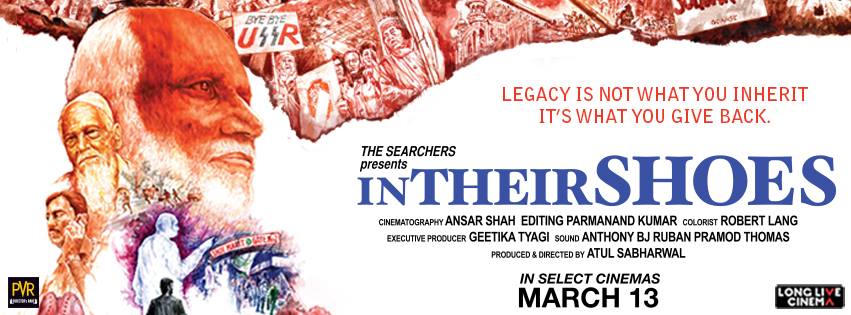
In Their Shoes

After making his debut with Hindi feature Aurangzeb, and TV series, Powder, Atul Sabharwal is now coming out with a documentary  titled “In Their Shoes”.

Centered on the shoe industry in Agra and the people who are engaged in it, this feature length documentary is set to get a limited release in 5 cities (Mumbai, Delhi, Bangalore, Agra and Pune) on March 13th, 2015, through PVR Director’s Rare and Long Live Cinema  in five cities

And here’s the trailer

In the docu, filmmaker Atul Sabharwal goes on a quest to find out why his father pushed him away from
joining their family business of shoe material trading in Agra. With a runtime of 92 minutes, this film navigates through the narrow alleys, crowded slums and giant export houses of the historic city of Agra, India, exploring certain answers through the interviews of footwear artisans, traders, manufacturers, exporters and government officials. Through their voices this film pieces together the tale of the industry and the men who built it and sailed it through or got sunk with the global events like India-Pakistan Partition, rise of the USSR, Solidarnosc movement of Poland, the collapse of Berlin Wall, opening of trade economies.

Shot by Ansar Shah and edited by Parmananad Kumar, this film allows the filmmaker to unravel the history of the footwear industry in Agra, and discovers how the global events of his growing up years impacted his relationship with his father.

For more info, FB page is here. Twitter account is here.

The Censor Board chief, Leela Samson, has quit. And then the entire Board members have also followed her steps. Reason? A new film titled MSG : Messenger of God, by a controversial religious leader who plays himself in the film. Not only that, according to reports, the Baba of MSG can cure AIDS, bring a dead man back to life, and so on. So why exactly did the Censor Board Chief and the members quit? Because going by the way the film was cleared, it made them completely useless.

The Tribunal has all the rights to clear a film which the Board objects to. But there is a protocol to be followed – how the film goes from where to where, who is informed, who is kept in the loop, the issues Board members had with the film, and many more. In the case, none of the guidelines were followed. Again, going by reports, seems the Board Chief wasn’t even kept in the loop about how things went. And the film quickly got a clearance. Pulling strings always works, right? Especially when there is a political connect and clout. In that scenario, the Censor Board chief really has no role to play. The Board members followed the same route soon.

Yes, they were appointed during the previous Government. But the members had major issues with the previous Government too, in terms of transparency and making the system better. Every Government tries to put their people at various capacities. The members had given many recommendations to make it better and more independent. But none of it was followed. Their letter sent to previous Government is also embedded. That issue was going on, and then the final nail in the coffin by this Government. All gone with the wind!

Hail Baba’s film! Hail Babas rule!

The Minister of State,

Ministry of Information & Broadcasting

Government of India

Shastri Bhavan

New Delhi


Respected Minister,

With this letter, we the undersigned are submitting our resignation from our position as Board Members of the Central Board of Film Certification with immediate effect.

The events that led to the Chairperson Ms. Leela Samson resigning from her position are merely the proverbial last straw. Since the time that we first occupied seats on the Board, we have been asking for some critical changes, which are imperative if the functioning of the CBFC has to be reformed. However, in spite of sending numerous recommendations and appeals, and having several meetings with the Secretaries and senior officials of the ministry, and even one with an earlier Minister, not a single positive step has been taken by the Ministry. We had also sent a letter to the then I & B Minister in December 2013 making several recommendations that would strengthen CBFC as an institution, and that we were willing to work on with the government. The earlier letter is attached to this mail. None of the recommendations that we made in that letter have been taken on board, and there has been no engagement with us on crucial issues that we were raising.

The Advisory Panel continues to be filled up with people of questionable credentials appointed directly by the Ministry, without taking the Board’s recommendations into account. No funds have been released for conducting orientation workshops for the panel members. Officers from other departments, who have no understanding or experience in cinema are appointed as officials. Furthermore, there are several positions in the regional offices that do not have regular appointments There has been no Board meeting for the last one year for us to discuss developments and make recommendations, as we were told that there are no funds to organize it! It seems that the CBFC Board is not required at all.

This Board has consistently attempted to make the certification process more uniform, transparent, consistent and sensitive to the freedom of filmmakers’ right to expression with responsibility. The struggle to do so has been extremely frustrating and disappointing.

It is our firm position that given the cavalier and dismissive manner in which the CBFC is treated by the government, it is impossible to perform this duty with even a modicum of efficacy or autonomy. We also object to the way in which the Chairperson has been treated by the Ministry which we feel has been humiliating for us all. This is not the way in which the head of an organization ought to be treated, and it is certainly not one that is conducive to any productive relationship.

We do hope that the new Board will find the government more responsive than we have.

With regards.

Ira Bhaskar

Lora Prabhu

Pankaj Sharma,

Rajeev Masand,

Sekharbabu Kancherla

Shaji Karun,

Shubhra Gupta,

T.G.Thyagarajan

And here is their letter to previous Government


The brief was the same this year. A mail was sent to the usual cinema comrades who write, contribute, and help in running this blog. Pick a film (released/unreleased/long/short/docu/anything) that stood out and has stayed with you, whatever is the reason. Since the idea was that we cover maximum films, so no two people were allowed to write on the same film. And nobody was told who was writing on which film. So here is the final list:

This slideshow requires JavaScript.

shripriya mahesh on Love Is Strange

Love Is Strange is a quiet, contemplative, almost observational movie that follows two older gay men, Ben (John Lithgow) and George (Alfred Molina). After finally getting married, they are then forced to live apart when George loses his job. We follow their separate lives as they adjust to not being together and to imposing on those who host them. The awkwardness of small talk with family he doesn’t know well, the feeling of constantly being underfoot, the profound sadness at being separated from someone he’s spent his life with are all portrayed exquisitely by John Lithgow. The loneliness and dependency of old age are captured so perfectly that months after seeing the movie, I find myself thinking about Lithgow sitting alone in the kitchen or painting on the roof. The little moments stay with you and make this a special, intimate film.

shubhodeep pal on Drevo (The Tree)

I wrote about the Slovenian film Drevo (The Tree) almost three months ago when I watched it at the Mumbai Film Festival. A month later, by a curious turn of fate, I found myself in Slovenia. At the main train station in Ljubljana — where trains themselves look like art installations — I chanced upon exactly what I was looking for: a poster of Drevo, in its homeland. In Ljubljana, which has forever embedded itself as a colour in my memory — grey — I explored the scantily populated streets in the early hours of the morning and thought about Drevo, a film that has refused to leave me since I saw it first. Juxtaposed with the chilling backdrop of the movie — about a peculiar sort of honour killing in the Balkans — the Slovenia I saw felt harmless, almost inert. But this curious contradiction left me with two realisations: first, the power of imagination, which transcends reality despite all odds, lends colour to the most drab surroundings — as indeed it does to the child trapped inside his house, going endlessly around the courtyard on his bicycle, and imagining the world outside, out of his reach seemingly for ever. Second, the nature of reality itself is twisted: accidents become murders; a place of beauty houses ugliness; seemingly innocuous places house terrors. The films I watch inevitably take on a life of their own, outside the screen, moving me in inexplicable ways. For Drevo, this has never been truer.

shazia iqbal on Boyhood

After a dramatic scene where the mother (played by Patricia Arquette) walks out on her abusive alcoholic second husband, she tries to pacify her daughter’s tantrums and breaks down, we see a poster outside her son, Mason’s new classroom that says ‘You are responsible for your own actions’. Richard Linklater is the most remarkable filmmaker of our times who has cracked certain philosophical conundrums of life like most of the humanity hasn’t and makes stories to make sense of the same.

In a family where children are treated as adults, the boy (Ellar Coltrane) in Boyhood silently observes the intimate ‘in-betweens’ of life, post his parent’s separation, where the only constant is changing families, friends and houses. Linklater’s response is not anger, aggression and rebelling, typical of a quintessential coming-of-age story. He almost seems unaffected, unsure by wherever life puts him, and reasons it with confused curiosity only to conclude that growing old doesn’t mean having all the answers. Even during the most disturbing moments, the drama happens in a character’s head than outside of them. Which is why Boyhood, devoid of all sentimentality and melodrama is a path-breaking reflective piece of cinema, and to paraphrase the final line in the movie, it seizes you in its various moments. These moments stay with us accompanied by a daunting silence specially at the point where the mother breaks down saying ‘I just thought there would be more…’, which becomes the culmination of our collective expectations from life.

mihir fadnavis on Cheap Thrills

What if you found a guy in a bar who offers you ridiculous amounts of money to indulge in the most bizarre challenges? How far towards depravity would you go when the chips are down? Do you really care about right and wrong when defecating in your neighbors house gives you one thousand dollars? Debutant director EL Katz’s answers all your sickening queries in Cheap Thrills, a pitch black, hilarious, and audacious horror comedy that transcends the torture porn genre. As the crackpot version of Who Dares Wins unfolds on the screen Katz offers you a huge dose of guilty pleasure, and surprisingly, an even larger helping of social commentary, which sends over Cheap Thrills to this particular ‘best of 2014’ movie list. Katz also happened to direct the best segment of The ABCs of Death– couple that with Cheap Thrills and you’ve got a very interesting young filmmaker on your radar.

rahul desai on Mommy

Forget that director Xavier Dolan is 25 years old. Forget that this is his fifth full-length feature film. Forget that he is known as L’enfant Terrible in Quebec–where he has grown up, and perhaps the town that has made his films such throbbing, breathing, evocative chunks of heart.

Mommy is his finest; a wretched, energetic snapshot of time. It is about a single mother struggling to bring up her ADHD-afflicted 15-year old son, with the help of an enigmatic, stuttering woman next door. Somehow, somewhere, this is a rousing film; brutally honest escapism, grounded and battered into frames of all-consuming chaos.

Three souls combine to give us something more than just mere performances; they blend into their surroundings and suck us into their vortex of desperate love. None of them are quite in sync with society. They’re not ideal mothers, sons and neighbours. They’re misfits, but unapologetic and glorious. So uncomfortable, yet beautiful to watch. The cheesy pop collection chosen as an audacious score surprises with intent, and album-izes their lives in phases.The result of messing around with something as taken-for-granted as a screen aspect-ratio is not always pleasant, but Dolan gives us the cinematic moment of the year when it happens.

Mommy is best symbolized by this fervid Ludovico Einaudi piece, which incidentally amounts to the most exhilarating time-lapse imagery captured on film. Not because of how it looks or sounds, but because of where it appears, and because of where we hope it will take us.
Because it gives us light, and messes with our jittery minds, and because we don’t want to discover what happens next.

varun grover on The Wind Rises

Didn’t see many films this year and I can feel the emptiness in my heart. Among the ones I saw Dedh Ishqiya, Haider, Abhay Kumar’s docu Placebo (due in 2015), Avinash Arun’s Killa (due in 2015), and Nisha Pahuja’s The World Before Her were the most powerful and delightful. But the film that churned the cold corners of my existence and turned them into soft, frothy Malaiyyo was Boss Miyazaki’s The Wind Rises. An animated feature unlike any other I’ve seen (quite unlike earlier Miyazaki films too) – a period love story in the backdrop of early days of aviation industry in Japan. I can watch it again just for the stunning colors of sky in various frames, and once again just for the various sources of light shown and used. And then there is this flight of crazy fancy by Miyazaki in his last film. The film has the feel of a farewell letter – lots of meta references to Miyazaki’s own career and ambitions – and that makes it all the more poignant. Magical, and I mean it when I use the word, in every sense.

manish gaekwad on Under The Skin

The other night, watching Under The Skin, I was reminded of what Kiarostami had once said about the kinds of films he likes watching. “I prefer the films that put their audience to sleep in the theater. I think those films are kind enough to allow you a nice nap and not leave you disturbed when you leave the theater. Some films have made me doze off in the theater, but the same films have made me stay up at night, wake up thinking about them in the morning, and keep on thinking about them for weeks.” A little bit of that rubbed on us when i watched the film with a few friends.

Our senses were so dulled by what was happening in the film, that between switching it off, to leaning forward and peering at the screen, only sleep could have rescued us. But we kept staring, unblinking, intrigued by the mysterious nature of the film, discussing if this was any different than Veerana, where a pale white woman, lures men into her lair. IMDB pretty much sums it as, ‘A demonic woman uses her seductive charm to prey on unsuspecting men,’ and this could be said for Under The Skin.

While Veerana was obviously titillating giallo, Under The Skin is simply hypnotic; from the striking images to the creepy Ramsay upgrade background score. That divide between what is crass, and what is art comes here, when days after viewing, the images and sounds of UTS recur and crawl under my skin. What separates these two films is also what unites them in memory – if it is unforgettably etched, difficult to erase, then that’s what Kiarostami is getting at. Oh and he also made a film where all the action is inside a car with a woman driver talking to various people, quite like Scar Jo in Under The Skin. Ah, almost.

kushan nandy on Interstellar

Writing about a Nolan film is monumental. What can you write about a film directed by a man who is the greatest illusionist of all? The Alfred Borden of Cinema.

The standout moment of the film is when Cooper watches his teenage daughter suddenly turn as old as him. Stationed in the darkness of a spaceship, millions of miles away, he watches time slip out.

I felt like Cooper, sitting in the darkness of the theatre, watching time slip out. Remembering
the moments of life I skipped in an attempt to survive life itself. I wanted to savour and appreciate the remaining moments of life just like Cooper did.

It made me pause. It took me beyond Cinema.

Kubrick must be watching from up there. Proud.

sukanya verma on Aankhon Dekhi

When a 50-something family man of limited means and unfinished responsibilities decides to go the distance between method and madness, real and surreal, thought and practicality, there will be repercussions. To question the natural order of things, to argue, to protest is one thing but to make it a way of life is another.

Rarely does a Hindi film probe into its protagonist’s soul as nimbly as Rajat Kapoor’s brilliant Ankhon Dekhi. Told with tremendous thought and texture, Ankhon Dekhi’s parable-like profundity unfolds through Bauji’s unique metamorphosis (conveyed in Sanjay Mishra’s extraordinarily perceptive performance) following his resolve to believe only what he sees or experiences.

If one aspect of Ankhon Dekhi’s episodic narrative is concerned with the different stages of his idiosyncratic obsession and its impact on his big family, the other draws us into the authentic sights and sounds of his hectic, populated space in Old Delhi– rickety roofs, yellowed walls, poor plumbing, crumpled sheets as well as the multihued personalities of his claustrophobic neighbourhood among whom he eventually garners a spontaneous, unsought following.

Where many would solely focus on his quirk to generate ridicule and humour, Kapoor, even when proffering moments of ingenious wit (“Male menopause”) treats him with fascination and fragility. Bauji’s existential crisis may cause embarrassment to his supportive wife, darling daughter and reserved younger brother but he’s much too well meaning and mild-mannered to take offence. Even if they don’t understand his motivations, they never cease to care.

Absorbing, whimsical, intimate, awe-inspiring and evocative, Ankhon Dekhi doesn’t make claims of knowing better but faithfully documents a determined individual’s journey to seek answers unmindful of what the world dubs him– fool or fearless.

karan anshuman on Pride

Pride may not be the best film I’ve seen this year (that’d probably go to Tamhane’s Court) but it’s definitely the best formula (commercial? mainstream? sellout?) film I’ve seen all year. Having entered the Bollywood fray, these days I’ve newfound respect and appreciation for films that pull off the balancing act with grace.

Pride’s remarkable, still-relevant tale set in Thatcherian UK essays a comic love/hate standoff between exuberant London homosexuals and dour Welsh miners. This is a true, unlikely underdog story with heaps of emotion, humor, social and political insight, and a magnificent feel-good ending: the ultimate recipe for that sense of contentment when you walk out the theater. Pride would make Hirani proud (and is probably the ideal next subject for him) and other filmmakers scramble a search for similar real-life stories.

But for crying out loud, director Matthew Warchus, why didn’t you use U2’s Pride, my all-time favorite song, in the movie?

jahan bakshi on The Grand Budapest Hotel

As one sees more and more films, there’s this dreadful kind of inertia that sets in- and film experiences that arouse genuine joy and excitement rather than cold admiration become increasingly rare. Of late, the one thing I’ve longed for at the movies is for a film to really move and surprise me. With his last film, Wes Anderson managed to do both these things- and as the cliché goes- made me rediscover that elusive magic of the movies.

This one actually warrants that much-abused M-word: The Grand Budapest Hotel is a masterpiece. There is just so much happening in this movie on so many levels, it’s a minor miracle that it never goes off the rails- and major credit for this must go to Ralph Fiennes’ soulful and masterfully comic performance and Anderson’s astonishing control over his material and craft. Together, they make it all look like a piece of cake, quite literally.

An internet commenter put it perfectly: This is a beautiful pastry of a film- with chisels and sharp files baked into it. I expected to be delighted but was startled by the sadness and darkness at its core. Loaded with mirth, melancholy and a streak of the macabre, Grand Budapest Hotel is an ebullient comic caper that ultimately reveals itself as an elegy to an era long gone by (or perhaps one that only exists in the collective imagination of a few- such as Monsieur Gustave H himself). The film’s unexpectedly poignant, tragic ending stabbed me right in the heart- and in the sweetest way possible. Sorry Amazing Amy- this was the real cinematic twist of the year, darling.

PS: I recently realized that the two best films I saw this year: Grand Budapest Hotel and The Square (2013) couldn’t be more different- and yet, they’re both about essentially noble people fighting battles to defend the liberal ideals of human dignity and freedom from the looming dark clouds of fascism. This is Anderson’s most violent and overtly political film- not just as an indictment of modern barbarism, but because it puts forward the argument that maybe prettiness is political. If ‘a thing of beauty is a joy forever’- perhaps it’s also something worth fighting for.

fatema kagalwala on Clownwise

Very recently I was contemplating on the films that stay with me and I realised all of those films have been portraits of life seen through the prism of hope. Maybe that is why I jumped and clutched at Clownwise to write about. A story of a once-superstar trio of clowns now in the dusk of their lives trying to gather its strands, Clownwise made me happy, it had me literally smiling at its sheer joie-de-vivre of not only the world and its people, but of the writing and the making. It is this very vitality of thought and spirit of the world of the film and film itself that has had me charmed. The bittersweet tone of the film effortlessly carries through the dramas and dysfunctionality of the lives of the three men, now in their sixties, seeing them dealing with it all with a head held high and enough gumption to see it through till its logical end. Smart and sensitive at once, large-hearted and laughing at one’s owns pain, a little cheerful, a little sad, a little profound, a little reflective, and a lot of fun – now where do we get films like that often?

aniruddha chatterjee on Anubrata Bhalo Acho?

His wife, her husband, both terminally ill with cancer. All they do is come to the hospital, sit beside their respective spouses and give false hope. Life has become repetitive, mundane. They meet and fall in love. To have a film that deals with people in their 50s, married, yet daring to fall in love to heal themselves from the pain they are in, deserves to be applauded especially in a country obsessed with morality. While watching the film I was worried that the climax will be a cop out. That is where the film scores the most. Brownie points for taking the film where we as viewers will shudder to go. It has been more than two months I have seen the film. Yet, the shocking climax keeps on lingering in the mind.

kartik krishnan on Jigarthanda

A bunch of gangsters are seated somewhere in a banana ‘bhajji’ (pakoda) shop in Madurai, pulling one of the lieutenant’s legs. It’s Tea/Snack time with few goons sipping a quarter whisky in a plastic cup. It’s a setting straight out of Goodfellas with goons chilling out, joking.

The Gangster Boss – ‘Assault Sethu’ casually takes one last jibe at his lieutenant, spits out the tasteless bajji, orders the shop owner to put more masala and walks ahead. Does small talk with the dosa making chef and walks outside into the rain with a steel plate as cover on his head, behind the shady single screen theatre which, true to the nature of the film, has a Kamal-Rajni poster somewhere in the background.

Sethu walks ahead to the sarvajanik shauchalay where a cleaner does dua-slaam and ingratiatingly asks for some baksheesh, directing him to the 1st loo which he has cleaned just now, for his use of course. That is the power of a gangster. And that is all what a poor toilet cleaner can offer as obeisance to him.

Sethu replies cheekily – You should be the one paying me to crap in your loo instead.

Sethu walks ahead and is about to enter the designated loo when a Vomiting (presumably) drunkard, who under sober circumstances wouldn’t dare cross his path, dissuades him from entering his ‘territory’. The disgusted gangster moves ahead into another loo and the vomiting drunkard opens the door of the designated loo instead.

BAM ! BAM ! BAM ! BAM!

The door to the loo opens and the poor drunkard is shot to instant death by an Assassin from inside the loo who immediately calls up his Clients – “Hey. Sethu is dead. Hear this” – Bam ! Bam! Bam!.”

More bullets are fired into the dead body as Sethu who has just survived a hit by sheer luck, watches silently. The shirt pant wearing assassin continues on the phone -“Sethu seems to have lost a lot of weight”.

And then Sethu’s goons rush in to see – the cocky assassin boasting his kill – “Come on folks, take away your Boss’s dead body.”

Slowly, the assassin realises that he has killed the wrong man and Sethu is very much alive, standing behind him. He shoots at Sethu but his gun is empty. SHIT!

He is facing certain death and Sethu can kill him any second.

However, Sethu prefers to go and answer nature’s call instead of bludgeoning the assassin to death. Revenge can wait.

This long take sequence is laced with humor, violence, pop culture & unpredictability that is so omnipresent in Karthik Subbaraj’s Jigarthanda – a film which is much more than just a gangster flick. While some might have been disappointed by his debut film Pizza’s ‘cheat’, this one is a must watch. Yes it is long and a genre bending film again, but immensely rewarding.

neeraja sahasrabudhe on Court

न्याय (सामजिक, आर्थिक और राजनीतिक) पहला अधिकार है जिसे हम भारतीयों (“We, the people of India”) ने अपने संविधान के preamble में अपनी आवाम को दिया है। चैतन्य ताम्हणे की फिल्म ‘कोर्ट’ इस अधिकार, इससे जुड़े संस्थाओं व उन संस्थाओं और जनता के बीच के सम्बन्धों को समझने का एक प्रयास है।

कहानी की शुरुआत लोकशाहिर और दलित कार्यकर्ता नारायण कांबळे की गिरफ्तारी से होती है। इलज़ाम यह है की उन्होंने अपने किसी भड़काऊ गीत द्वारा सीवर साफ़ करने वाले कर्मचारियों को आत्महत्या के लिए उकसाया और इससे एक व्यक्ति की मौत को गयी। ये case तो एक बहाना है, हमें कोर्ट के अंदर ले जाने का। इस case के बहाने चैतन्य हमें उस कोर्टरूम के महत्वपूर्ण खिलाड़ियों के जीवन से परिचित करवाते हैं। मध्यम वर्ग की प्रॉसिक्यूशन वकील, नए पैसेवाले तबके के जज और व्यापारी वर्ग में जन्मे डिफेंस वकील। ऐसा करने से एक disconnect उभर कर आता है (जो चेखोव की इस कहानी की याद दिलाता है)। हालांकि डिफेन्स वकील कांबळे साहब के काम के प्रति संवेदनशील है, पर उनके जीवन के तमाम पहलु देख कर यह समझ बनती है कि बड़े सामाजिक बदलाव के लिए संवेदनशीलता या ज़रा सी मदद काफी नहीं है। ऊपर के तबके को जिस तरह के जीवन की आदत पड़ चुकी है उसे चुनौती देनी ही होगी और अगर उसमें ये संवेदनशील लोग साथ नहीं हैं, तो वे सब कुछ कर करा कर भी उसी शासक वर्ग को serve कर रहे हैं जो चाहता है कि आवाज़ें उठें पर उतनी ही जितनी दबाई जा सकें।

कोर्ट में चल रही कभी हास्यास्पद तो कभी झल्ला देने वाली जिरह के बीच एक दूसरी ज़रूरी बात उभर कर आती है। वह यह कि – ये सच है कि ये सरकारी दफ्तर, कचहरी वगैरह bureaucracy से लदे हैं और यहाँ काम करने वाले लोग न्याय की परिकल्पना या न्याय मांगने आई जनता के प्रति बिलकुल असंवेदनशील हैं, लेकिन न्याय न मिलने का असली कारण है कि नारायण कांबळे जैसे लोगों को, जिन्हे शासक वर्ग अपने रास्ते का काँटा समझता है, state न्याय देना ही नहीं चाहता। State चाहता है की वे या तो जेल में रहें या कचहरी के चक्कर काटते रहे। न्यायपालिका एक साधन है लोगों को डरा कर रखने का।

‘कोर्ट’ अभी हमारे समाज में हो रही घटनाओं के द्वारा एक अहम मुद्दा सामने लाता है। ये फिल्म हमें मजबूर करती है उन बातों पर सोचने के लिए जो छुपी हैं और सिर्फ कचहरी के न्याय-अन्याय तक सीमित नहीं हैं।

और अंत में नारायण कांबळे की तरफ से बोलते गोरख पाण्डेय:

हज़ार साल पुराना है उनका गुस्सा
हज़ार साल पुरानी है उनकी नफ़रत
मैं तो सिर्फ़
उनके बिखरे हुए शब्दों को
लय और तुक के साथ लौटा रहा हूँ
मगर तुम्हें डर है कि
आग भड़का रहा हूँ

mihir pandya on Killa

‘किल्ला’ देखना किसी रूठे हुए जिगरी दोस्त से सालों के अन्तराल के बाद मिलने की तरह है। इसमें उदासी भी है, उन बीते सालों की जब वक़्त हाथ से छूटता रहा अौर दोस्त की बेतरह याद अाती रही। इसमें बेचैनी भी है, उस पल को पकड़ लेने की चाहत जिसका सालों इन्तज़ार किया अौर अाज अचानक समयचक्र ने उसे सामने ला खड़ा किया है। इसमें ठहराव भी है, जब दौड़ती ज़िन्दगी में अचानक अासपास की दुनिया की तमाम गतिविधियाँ अापके लिए रुक जाती हैं अौर सब कुछ उसी पल में सिमट अाता है। अौर इन सबके ऊपर इसमें निस्संगता भी है, कि दोस्त के चले जाने से दोस्तियाँ नहीं जाया करतीं। कि वर्तमान से बड़ा कोई सच नहीं अौर वे तमाम स्मृतियाँ अतीत नहीं, दरअसल इसी गतिमान वर्तमान का हिस्सा हैं। हमारा हिस्सा हैं। कि ज़िन्दगी का नाम चलते रहने में है।

लड़कपन की दहलीज़ पर खड़ा चिन्मय (अर्चित देवधर) अपनी माँ के तबादले की वजह से ‘बड़े शहर’ पूना को छोड़ कोंकण के किसी छोटे से कस्बे में अाया है। ‘किल्ला’ की कथा हमें ग्यारह वर्षीय चिन्मय के जीवन संसार के भीतर ले जाती है। इसमें एक अोर है चिन्मय का अपनी कामकाजी माँ (अमृता सुभाष) से रिश्ता जहाँ पिता के असमय चले जाने की ख़ामोश उदासी घुली है, वहीं दूसरी अोर है कस्बे के स्कूल में चिन्मय के नए बने दोस्तों का संसार जहाँ बेपरवाह दिखती दोस्तियों में गहरे छिपी व्यक्तिगत प्रतिस्पर्धाअों अौर रूठने-मनाने के अबोले दायरों के मध्य वह ज़िन्दगी के कुछ सबसे महत्वपूर्ण सबक सीखता है। उमेश विनायक कुलकर्णी की लघु फ़िल्म ‘गिरणी’ अौर उनकी बेहतरीन फीचर फ़िल्म ‘विहीर’ की याद दिलाती अविनाश अरुण द्वारा निर्देशित ‘किल्ला’ मेरे लिए अात्मकथात्मक फ़िल्म है, लेकिन भिन्न क़िस्म से। यहाँ फ़िल्म सिनेमा बनानेवाले की अात्मकथा न होकर देखने वाले की ज़िन्दगी के किसी पीछे छूटे अध्याय का अात्मकथात्मक अंश हो जाती है। जिस कस्बे की यह कथा है, वह प्रतिनिधि है मेरी किशोरवय स्मृति में छूटे कस्बे का। इसे परदे पर देखने वाले हम सब इन्हीं बाहर से उनींदे दिखते लेकिन भीतर से खदबदाते कस्बों, देहातों को छोड़ अाज शहर के मेले में अा पहुँचे हैं। अौर ऐसे में ‘किल्ला’ का यह ‘पुनरागमन’ स्वयं हमारी स्मृतियों की कथा बन जाता है।

‘किल्ला’ जितनी उसकी कथा में है, उससे कहीं ज़्यादा उसकी गतिमान तस्वीरों में है, उसकी ख़ामोश ध्वनियों में है। पावस के महीने में मूसलाधार बरसते बादलों के बीच अविनाश अरुण कोंकण को उसकी अनछुई काया में टटोलते हैं। समन्दर किनारे बसा यह ठहरा हुअा कस्बा बारिशों के बाद जैसे एक नई हरी सघन पोशाक पहनता है। यह समन्दर की लहर के लौटने के बाद रेत के कोरे किनारे पर पहला पैर रखने की तरह है। उन्होंने किरदारों की भीतरी उदासी को परदे पर फ़िल्माने के लिए इंडोर दृश्यों को लट्टू की सघन पीली रौशनी में फ़िल्माया है अौर इस उदास पीले का विलोम वे बरसात, समन्दर अौर अाकाश के अासमानी नीले के साथ अपने अाउटडोर दृश्यों में रचते हैं। पानी स्वयं यहाँ सबसे बड़ा मैटाफर है। पानी ही यहाँ बाँधता है अौर पानी ही यहाँ किरदारों को बंधनों से अाज़ाद कर देता है। किरदारों के मन का बोझ जब पक जाता है तो वे भरी बरसात में छाता ‘भूलकर’ निकल जाते हैं, अौर मुझे चैप्लिन की कही वो बात याद अाती है जिसमें वे बरसात को अपना दोस्त बताते थे जो अाँखों से नमकीन पानी बनकर निकलते दुख को अपने अाँचल में छिपा लेती है। ‘किल्ला’ की कोमलता मुझे भाषा में कविता कहने वाले, सदा मुंह में छालों वाले किसी मितव्ययी स्वभाव पहाड़ी कवि की कविताअों की याद दिलाती है। यह उन फ़िल्मों की सूची में शामिल होगी जिसकी स्मृति को अाप फ़िल्म ख़त्म होने के बाद सिनेमाघर के अंधेरे में छोड़ने की बजाए किसी नवजात ख़रगोश के बच्चे की तरह नज़ाकत के साथ अपने सफ़री झोले में रख साथ घर ले जाना चाहेंगे।

sudhish kamath on The Interview

The stoner bromance that almost started World War III was smarter than most people gave it credit for and truly representative of our times. In fact, The Interview > Newsroom.

The world doesn’t give a shit about anything anymore.

One tweet, it’s mourning innocent kids being shot dead, the next it’s cheering a goal. Or a six. Aircraft lost. Sad face. Next moment. OMG! Eminem’s gay? Did you know McConaughey fucked a goat?

The guys behind Superbad, Pineapple Express or This is the End never intended The Interview to be seen as a symbol of patriotism. The film’s clever enough to take digs at not just American/global media priorities, it also portrays America as the country that is capable of making citizens shove a missile up their own ass (literally) to fuck with another country’s politics.

When the American “heroes” of the film believe they have the required statistics to corner Kim Jong-Un, he simply gives it back to them raising far more uncomfortable questions about the US and sanctions imposed that was driving them to the brink of despair.

Unable to deal with reasoning, the Americans go back to what they are best at.

Because trolling NOT reason, bullying NOT debate, is the only form of supremacy that the world recognizes today. Mediocrity connects with more people than intellectuals or custodians of high art do. No wonder then that the elitists, the critics and all the snooty uptight fuckers hate The Interview. As Skylark says: “They are motherfuckin peanut butter and jealous… They hate us ‘cause they ain’t us… You know what you do to haters? You just smile.” *pops Ecstasy*

sudhish kamath on Birdman

“You’re not important, ok? Get used to it.”

Only the greatest epiphany you would ever have.

That’s Alejandro Gonzalez Inarritu’s Birdman in a line.

We lead dysfunctional – largely unsatisfying – lives and try hard for relevance and popularity that matches the self-importance in our heads. The film is full of precious little moments, a fucking brilliant drums score and cinematography so fluid and seamless that you can’t ever spot the cuts even if you try. A terrific ensemble that’s going to have a field day at the Oscars.

When Riggan (Michael Keaton) tries to reinvent himself as an artist, after having played a superhero earlier in his life (and continues to in his head), he has this superb conversation with his daughter who tells him about her days in rehab and an exercise they gave her. About drawing tally sticks.

She hands him a roll of toilet paper full of tally sticks. Each stick represents thousand years. And all of humanity has been around for what would fit in one slip of toilet paper, she tells him. The rest of the roll is how long the world has been around.

He hears out her perspective and wipes his hand with it accidentally. And he’s wiped out all of humanity, she jokes.

How good is Emma Stone! She’s even better in this scene here that pretty much seals her a Best Supporting Actress nomination: Click here.

There are just too many brilliant scenes to list – the one where’s locked out of his green groom in his underwear and has to make his way in public and get up on stage to not miss his cue or the one where Norton tells Keaton that popularity is the slutty little cousin of prestige when they go out to get coffee. But every single scene in the film is designed to tell us that in the larger scheme of things, nothing really matters. Nobody’s opinion really matters. Or as a sign in Riggan’s green room tells us: A thing is a thing, not what is said of that thing.

ranjib mazumder on Jatishwar

Jatishwar as a concept is brave and ambitious to say the least. As the film unfolds, it has the promise of a new classic. Traversing through different timelines and a story of reincarnation, it dares to bring back Anthony Firingee, a man of Portuguese origin and exceptional talent, who not only mastered Bengali but also composed songs in it to perform in public duels known as Kavigaan in the early part of the 19th century.

Kabir Suman’s music is so good that I can’t possibly to begin to imagine another music album in the last 20 years that can match the majesty of this work. Bringing back lyrical fights of nostalgic Bengal, Mukherji shoots it with beautiful tenderness. That’s the film’s biggest strength. Also the biggest weakness. Apart from Anthony’s story, you hardly care about modern day sappiness that the story brings along.

Mukherji is probably the most acclaimed filmmaker working in West Bengal today. And that speaks a lot about the current state of Bengali cinema. I find Mukherji brimming with new ideas in every film; flashes of brilliance in certain scenes but the sum of the parts never make an engaging whole. And that’s been my consistent problem with his filmography. I know I would be attacked by my fellow Bengalis for looking at Mukherji through a glass darkly, and I have tried hard to sum up my feeling for his brand of inconsistent narrative. And then I stumbled upon this paragraph by one of my literary heroes.

“From the moment I start a new novel, life’s just one endless torture. The first few chapters may go fairly well and I may feel there’s still a chance to prove my worth, but that feeling soon disappears and every day I feel less and less satisfied. I begin to say the book’s no good, far inferior to my earlier ones, until I’ve wrung torture out of every page, every sentence, every word, and the very commas begin to look excruciatingly ugly. Then, when it’s finished, what a relief! Not the blissful delight of the gentleman who goes into ecstasies over his own production, but the resentful relief of a porter dropping a burden that’s nearly broken his back . . . Then it starts all over again, and it’ll go on starting all over again till it grinds the life out of me, and I shall end my days furious with myself for lacking talent, for not leaving behind a more finished work, a bigger pile of books, and lie on my death-bed filled with awful doubts about the task I’ve done, wondering whether it was as it ought to have been, whether I ought not to have done this or that, expressing my last dying breath the wish that I might do it all over again!”

― Émile Zola, The Masterpiece

So that was our list. What’s your list? The films that stood out and stayed with you, and you won’t mind pushing the rewind button on it. Tell us in the comments below!

First things first. I will be accused of hiding behind a fake name and hence everything that follows will be discredited by some of you. Just one lovely phrase for those who will resort to this.

  whofuckingcares

2014 was a pretty average year for Bollywood (like the previous 83-years) but things are looking up for 2015 with this new film’s trailer where Ameesha Patel is in a double role and surprise attraction is Zayed Khan. Also, a spiritual (?) guru (??) is showing how easy it is to make a Sallu/Devgn type chutiyapa and my bet is this film will be our generation’s Jai Santoshi Maa.

But here, a quick Kaali Zubaan recap of 2014.

January:

Year started with Joe B. Carvalho where Arshad Warsi tried his hand at a single-hero film for 25th time in his career and failed. Pro-tip: Films with a name-pun in the title suck. (PK included.)

T-series ki daughter-in-law Divya Khosla Kumar’s Yaariyaan became the first hit of the year proving once again that Honey Singh is the NaMo of 15-20 year olds (And T-series is Ambani).

Bhairoxx’s 1st release of the year Jai Ho (directed by Sohail Khan) had bhai paired with another new heroine, was directed by Bhai’s Bhai Sohail Khan, made lots of money and…and that was pretty much the point of it.

February :

Shekhar Suman acted in and directed Heartless, starring his son Adhyayan Suman (yup, he’s still trying!) where his heart is transplanted and he gets emotions of the dead guy whose heart is now inside him. That sounds like Inarittu’s 21 Grams with an additional dead-weight of 75-kilograms Adhyayan. The film spawned a social revolution where people started avoiding anything with the word ‘Suman’ in it.

Imtiaz Ali recycled a TV episode he directed 10 years ago to make Highway – yet another bubbly girl – brooding guy on the road traveling to yet another ARR album – letting fresh air fill their lungs and diluting the unpleasant smell of yet another half-baked script.

Saket Choudhary’s sequel to Pyaar Ke Side Effects, Shaadi Ke Side Effects took many years to come and made me miss (I never thought I’ll say this) Rahul Bose and Mallika Sherawat. Also, as smartass friend of hero Lakshmikant Berde >>> Vir Das.

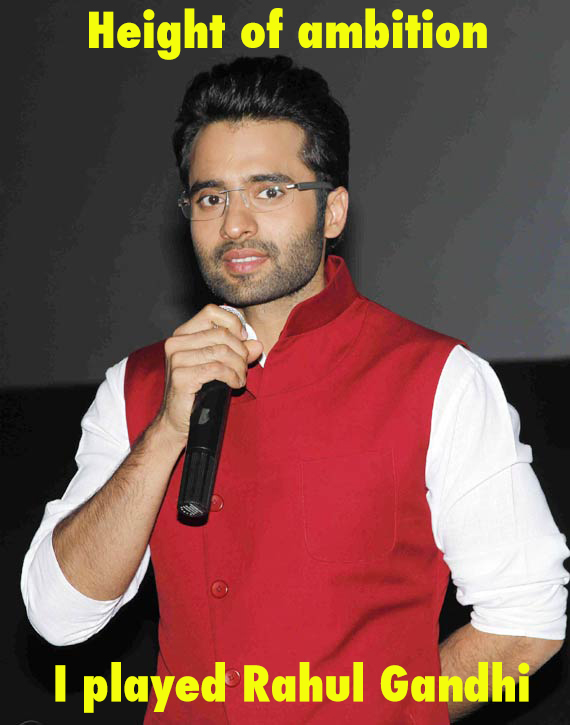
Jackky-Bhagnani

March :

Watching Soumik Sen’s Gulaab Gang I kept waiting for Juhi to look into the camera, get that mad glint in her eye, chuckle and say ‘Sab randomly OTT bakheda hai, par mera hai.’

Bhagnani Jr’s Youngistaan. Little known fact. Every time his film flops, Vashu ji hikes the property rates in Bombay by 10 rupees per square feet.

Ragini MMS2 with anthem of the year – Baby Doll Main Soney Di . The only serious competition to NaMo this year. No, really. Here.

April :

Revolver Rani. After doing lots of intellectual, oh-am-so-different-and-classy interviews post-Queen, Kangana reminded us that Krrish-3 bodysuit was not so long back.

Kangana

May :

Mastram did good business. Kyonki hum log sex ke bhooke, hawas ke pujari, vahashi, malnourished, kunthaaon ke bojh ke neeche dabey log hain.

Himess Bhai rocked the world with The Xposé – the first ever usage of Latin e or acute e in a Hindi film title. And it was a period drama, set in Bombay of the 60s. Read this in Anant Mahadevan’s voice please – “Talent ho na ho, ambissan hona chaahiye”. Bombay Velvet jab aayegi tab aayegi, is saal isi se kaam chalana parha.

Trivia: ‘Ice cream khaungi, Kashmir Jaungi’ became the separatist anthem, while Irrfan Khan (who later played a separatist in ‘Haider’) charged 1 crore per day for his walk-on part.

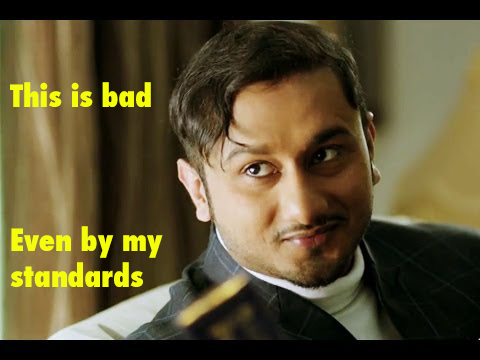
Yo Yo

 June :

Sonakshi Sinha reprised her role of a broad smiling, desi-attired vacuum of nothingness, for the 10th time in her 12 film career for Holiday. Akshay Kumar comes back from Army for a Holiday and realizes he hasn’t done enough South Indian remakes of trashy action so does one more.

Sajid Khan’s much-awaited lol Humshakals lol had a pair each of lol Saif, Riteish, and Ram Kapoor lol. This was his response to critics who accuse his films of being too empty.

Ek Villain confession. Had Riteish’s character not killed Shradhha’s character, I’d have done it. She was SO irritating.

July :

Vidya Balan played a detective in Bobby Jasoos. At the same time, Allison Tolman played a detective in the TV series ‘Fargo’. Abb aur kyaa kahein?

Very exciting time for Hate Story fans world over as Hate Story 2 came out. As Lord Krishna said in our national book Gita, death is simply soul changing clothes and Hate Story sequels are simply different heroines changing/removing clothes.

Bhai’s Kick gave us the best whatsapp forward of the year : Here

August :

Akki vs a Dog in Entertainment. Poor man’s Sajid Khan film, if such a thing is possible and needed on this planet. No points for guessing who, out of Akki and the Dog, looked and behaved more cultured & learned in the film.

Raja Natwarlal. Definitely the most boring film title of the year. Why would you have a title reminding people of Aamir Khan’s most-awkward rain kiss scene waali film by Dharmesh Darshan. (Aside on Dharmesh Darshan. A friend was driving Bombay-Pune and stopped to pee on the expressway. He found Dharmesh Darshan taking a shit in the bushes on the side. Yup.)

September  :

Lots of outrage over PC as a North Eastern in Mary Kom, very little outrage on how dull and lame the sports biopic of such an exciting sport turned out to be.

Daawat-E-Ishq. Everything about this film screamed BORING. Everyone was so bad that most of the reviewers ended up praising Anupam Kher’s acting only. That’s like reviewing a restaurant as ‘Traffic outside was good.’

Khoobsurat. Or as girls called it – WHEEE! FAWAD KHAN! Or as boys called it – Whyyyyyy? Sonam Kapoor?

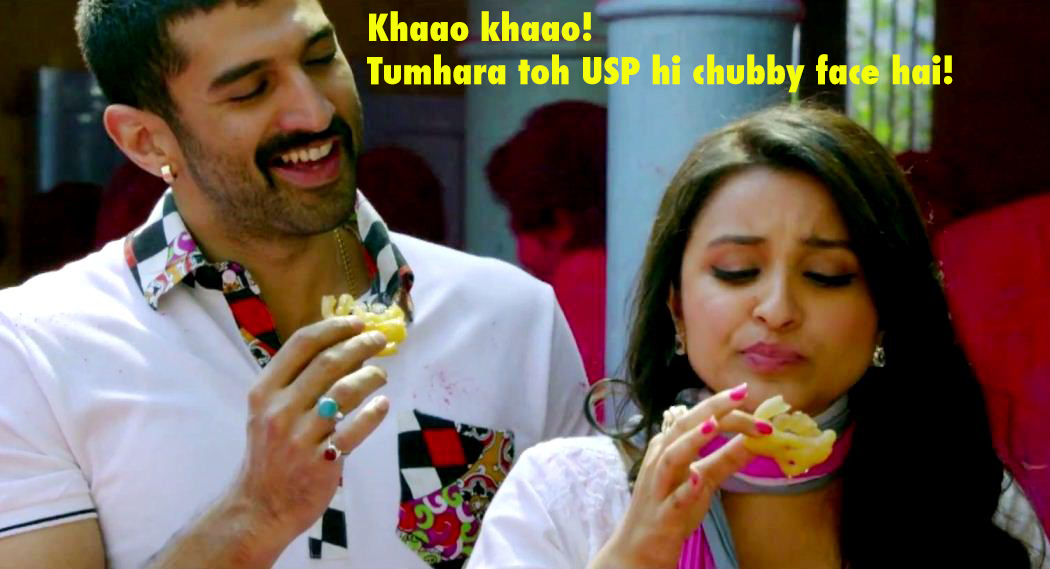
Parineeti copy

October :

2 films released on the same day. Haider and Bang Bang. That’s like Mozart sharing his birthday with Sajid-Wajid. (Though surprisingly Haider was a hit and Bang Bang a flop. Kabhi kabhi Indian audience se bhi galti ho jaati hai.)

Happy New Year. This meme by Varun Grover sums it up. 

November :

Two films released on same day. One was titled 6 – 5 = 2 and another Kill Dil. Both didn’t make any sense.

Rensil D’Silva, who last made Kurbaan (whose script made it to MENSA’s library), came back with a vigilante film where Sanjay Dutt played a cop. “He’d look himself in the mirror and start running away afraid”, Rensil recalls.

Krishna DK and Raj Nidimoru attempted a smart rom-com with Happy Ending. Smart for Saif Ali Khan’s IQ I mean.

Waise Saif is Rajesh Khanna of our generation – long past the expiry date but still harboring delusions that one flutter of his eyes and girls are chucking their dildos out of the window.

Zed Plus had Aadil Hussein playing a puncture-repair-waala. In terms of characterization, this is the equal of Madan Puri playing a Chinese

Tabu

December :

Last month started with unanimously accepted as the worst movie of the year Action Jackson. One plot device in the film had Sonakshi wanting to see Ajay Devgn’s dick for good luck. I say she should have simply seen any of his films in the last 2-3 years. Huge, limp dicks, all of them.

And of course, PK is still in theatres, heading towards 300 crores (SRK smokes a pack in jealousy for every crore it makes). Though in the film they never reveal the alien’s full name, my sources tell me in the script it was mentioned as Pravachan Kumar.

 – Nicolas Bourbaki

 storm trooper fuck

Umrika-1-550x308

The Sundance Institute has unveiled the competition line-up for the 2015 edition of the Sundance Film Festival. The fest will run from January 22nd to February 1st, 2015. Out of 12,166 submissions, about 185 selections were made.

Prashant Nair’s film Umrika will have its world premiere in the “World Cinema Dramatic Competition” section. This section has twelve films from emerging filmmaking talents around the world which offers fresh perspectives and inventive styles. The film is produced by Swati Shetty and Manish Mundra. And here’s the official synopsis of the film –

When a young village boy discovers that his brother, long believed to be in America, has actually gone missing, he begins to invent letters on his behalf to save their mother from heartbreak, all the while searching for him. 

The film’s leading cast includes Suraj Sharma, Tony Revolori, Smita Tambe, Adil Hussain, Rajesh Tailang and Prateik Babbar.

Last year, Geethu Mohandas’ Liar’s Dice was in the same section of the Sundance Fest.

What happens you see a story on screen which seems like pages from your life? You hate it? You love it? Over to Navjot Gulati who writes about Amit Masurkar’s film Sulemani Keeda.

Sulemani Keeda

Disclaimer: I’m a struggling writer/filmmaker for over six years now, so I will be biased towards a film that tells my story, and in the process, will overlook its shortcomings because….

…I’m Vacuous Versova too!

So here it goes. I will now list some incidents which have happened with me or my writers friends lives as it is shown in Sulemaani Keeda. And this should be reason enough for you to not miss Sulemaani Keeda at any cost.

because This SHIT is REAL BRO!

The film is essentially about two friends – Dulaal (Naveen Kasturia) and Mainak (Mayank Tewari) trying to make it as screen-writers in Bollywood, where you really need one talent to be big – to be someone’s son/nephew. If you are an outsider, then all the best. Allah hi aapka maalik hai.

SPOILERS ALERT (But they hardly matter. Read it anyway)

Dulaal gets a call from the girl he is in love with, and she tells him, ‘I met someone’. Boom! His world comes crashing down.

Earlier this year, something similar happened with a friend of mine. He was madly in love with a girl and they were in a complex relationship where the girl would never commit to him, and keep giving him hope that one day they will be together as a couple. But then his world came crashing down just like Dulaal’s. One day she told him, ‘I met someone’, and life was never the same for him. He did use her as an inspiration in many of his stories just like Dulaal did.

The film has a hilarious appearance by Anil ‘Gadar’ Sharma and he sends Mainak and Dulaal to meet Gonzo Kapoor, the son of Sweety Kapoor, who wants to get launched in a film that is East European in sensibility.

Not long ago, a friend of mine was in a similar position. He was called to write the debut vehicle of a famous filmmaker of yesteryear who wanted to launch his son in a cool and contemporary love story (basically it involved a rich boy, poor girl and a college in Mumbai as the backdrop). I hope you get the contradiction – A cool and contemporary love story about a Rich Boy and Poor Girl. My friend was not talented enough to write it, so he said no. They did make it, and surprise – the film BOMBED!

Mainak goes to a party where he meets Oona from Poona, played brilliantly by Ruksaana Tabassum. She asks him to drop her home after the party. Mainak thinks he will finally get some action. But….

Aah, well. What follows next – A hot stud is waiting for Oona (from Poona) inside her house. Mainak’s dreams of getting laid are shattered. Yet again. I’m sure this has happened with almost every guy reading this.

The white handkerchief used as a metaphor for life.

Go hang out in any coffee shop in Versova, or Adarsh Bar, or even the (not so) new hangout of (wannabe) film people – WTF. You will find many out of work stalwarts who can change your life instantly with their pop philosophy, however they have not been able to change their own life.

Mainak and Dulaal are asked to go to a farmhouse to write the screenplay.

Farmhouse writing?

Yes? Yes!

This remains an unfulfilled dream. Once upon a time, a B-grade filmmaker of an unreleased film offered me to come to his farmhouse for fifteen days. He said lets finish the script and then he will take me to Aditya Chopra. Yeah. Right. I guess he meant in his dreams. In reality they won’t even let him cross the security gate of YRF.

Mainak and Dulaal have an argument with their tv-writer friends.

TV writers make a LOT of money but ALL of them want to write films. Film writers want to make a LOT of money but CAN’T write TV. #TrueStoryBro

Dulaal is asked, “which film have you written?” He says, “ek likh raha hoon..Aamir Khan kay liyein..bas milna baaki hai unsey”.

The identity of a filmmaker/writer in this B-town is only from the work that has come out. Spare a thought for thousands of us who have been working our asses off to get that one film made. And trust me, to have a solo film credit as a writer is nothing less than a miracle. After years of trying, one miracle happened in my life which is yet to get released. If there are no fault in my stars, hopefully, it should release next year. I wait that day when I can tell people that I’m the writer of that good film that you saw. And not only me. I’m sure everyone reading this is itching for such a thing to happen.

These are some of the similarities between the film and the life we lead.  However, our lives are not as funny as the film. Kudos to the writer-director Amit Masurkur and his team for making it look so real and yet so funny. The performances by Naveen, Mayank and Aditi Vasudev are exemplary. The writing is brilliant. Efficient direction by Amit. And yes, even the songs are really good. I love the one sung by Namit Das. It’s called the Colaba song. That’s so rare in a desi indi-bhindi!

To cut the long story short, Sulemaani Keeda is one of the best Indie films made in India, and it deserves your ticket money so that people like Shiladitya Bora (of PVR Directors Rare) can continue to support films made with heart and not just ones with big budgets and bigger stars.

(P.S – I know the film will have difficult show timings and high ticket prices but please do watch it. If you don’t have the money, ask me. I will book the ticket for you. I can surely spare 300 rupees from my hard earned money to make sure people see what we go through everyday 😛 )

Offer Valid for 10 tickets only, on first come first serve basis.

Navjot Gulati

SKeeda

So what do you do when you get to know that there’s a screening of Libaas? Well, only a Gulzar fan can tell you the right answer. So over to Mohit Kataria who tells us what exactly he did.

libaas_1988

Before you start:

Please don’t read this post as a film review post, it’s all about my personal experience with the movie Libaas and the way I got to watch it. I’ve never written any movie review before and I don’t think I even qualify for writing one (if there is any qualification criteria). You might also find it really biased as I’m a fan of Gulzar Saab and always wear a particular pair of admiration glasses while reading/watching/listening to any of his works.

Prologue

What do you do when you get any once-in-a-lifetime opportunity? You grab it with both the hands, right? That’s what I also did.

It all started with a Facebook post from a very dear friend and an ardent fan of Gulzar saab, Pavan Jha, that I came to know about Libaas getting screened in IFFI – 2014 in Goa on 22nd Of November. Then after a number of confusions, calculations and discussions later, I decided to go ahead and started making my travel plans. Then, I came to know about something called a delegate registration (I have already warned you about my credentials ), which was already into its “register-with-late-fee-phase”. Somehow got registered with some made up bio-data to prove that I was worthy enough to be a delegate there. I got an email mentioning that the confirmation will be done after some careful review of my bio-data. I waited impatiently for the whole day which was the last day for the registration, and by the end of the day, I got a confirmation mail asking me to pay to be a delegate. I followed the instructions and completed the formalities. Then it was time to book the tickets for travel. After doing some calculations, considering family, work, economics and time dynamics, I booked the flight from Bangalore, scheduled to reach Goa at 2 PM on the day of screening (22-Nov-14) (Libaas was scheduled for screening at 5:30 PM) and also booked first available flight from Goa the very next day (23-Nov-14). Needless to say, my only purpose of going through all this exercise was to witness something I really was waiting for ever since I started following and loving Gulzar Saab and his work – to get a chance to watch Libaas. And I never thought I would get an opportunity of a lifetime in this manner, to watch it with Gulzar Saab himself.

Experience

Before cutting through all the details of getting the passes (where Ashok Bindalji and IFFI organizers helped a lot), reaching the theater following Gulzar Saab, and finally settling down to watch Libaas, I would like to mention here that there were lots of people who wanted to get in and watch Libaas and the auditorium had a limited capacity of accommodating 280 people only. So one senior IFFI organizer (I won’t name him to get him into any trouble), took a call after consulting with Gulzar Saab and Vishal Bhardwaj, to allow people to sit in the gallery, on the floor, to stand on the gates, behind the last row and any other place wherever possible without making others uncomfortable. It got reminded me of the pre-multiplex era when it was a norm for any big movie. Isn’t it delightful to treat and watch the movie in the same manner we used to watch movies when it was actually made (in 1988)?

The stage was set by welcoming Gulzar Saab by the IFFI authorities, and then Vishal Bhardwaj presented the movie Libaas as the inauguration movie of retrospective: Gulzar. Vishal said that it’s an honor for him to present this movie, and spoke about how Gulzar Saab started his career as a poet and brought his poetry from paper to screen. Each of his movies are poetries on screen. He also briefly mentioned about the efforts at various levels that have gone in trying to get the movie released, including his personal efforts of 20 years which has gone in vain. Then he mentioned what it means to him personally, and for his whole family to be part of this historic event.

Gulzar Saab was visibly holding back his emotions, and he started on a lighter note saying, saying, “दोस्तो, मैं भी उतना ही curious हूँ फ़िल्म के लिए, जितने कि आप हैं. आप ने भी नहीं देखी फ़िल्म, मैंने भी नहीं देखी”, which rightly summed up the significance of the film. He was happy that the family and friends have come from all over to see this screening. You can listen to the whole discussion here. And then the magic started on screen. We were in for a very delightful treat for next couple of hours.

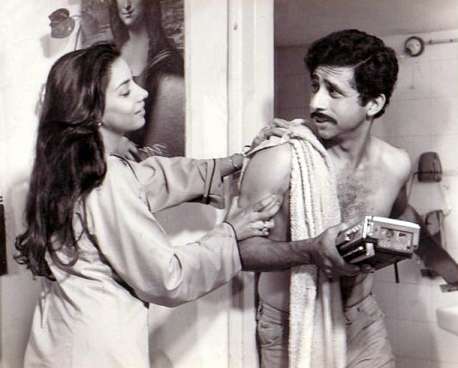
As you might know, the movie was completely based on Gulzar Saab’s own story Chaabiyaan which has also published later with the title Seema. There was wit, brilliance, intelligence and emotions written all over the movie. Each frame was flowing into the other one like the way water flows – at times like a river, sometimes like a silent lake and often like waterfall. It was a sheer pleasure to experience Gulzar Saab’s poetry for the next 137 minutes. The movie has four main characters – Sudhir Bhardwaj (a passionate theater director, played by Naseeruddin Shah), T.K. (a flamboyant businessman, played by Raj Babbar), Seema (an amazing actress who is also a not-so-happy wife, played by Shabana Azmi) and the theater which is the sutradhar which keeps tying all the running threads of the movie. It also has a handful of supporting cast who made their presence felt without shadowing the main leads. Not even a single character was out of place or not required. The story primarily deals with husband-wife relationship and a extra-marital affair, all in the backdrop of theater. While watching it, I could feel it was much ahead of its time (it was scheduled to be released in 1988), as was confirmed by Gulzar Saab in a post screening Q&A session that such things were happening at that time but were never shown in cinema. He dared to reflect what was part of society then.

Opening scene of the movie is in a theater, where Jamal Saheb (played by Utpal Dutt) is entering the theater while taking a look at the play being staged.

Utpal Dutt in Libaas

Utpal Dutt in Libaas

In the canteen, he is greeted by youngsters who are theater artists/aficionados and the scene establishes that Jamal Saheb is a great artist from the times gone by. He is not relevant anymore and is in a poor state. He has been replaced, so to say, by Sudhir, who is dominating the contemporary theater scene. In next few scenes, we come to know that for Sudhir, the first priority of his life is theater – the way he forces Seema to gargle every day in the morning, no matter what, and the way he keeps on talking about and enacting various scenes from his plays. One scene which nails it down clearly is when Seema asks Sudhir if she could get a hair-cut as she feels she would look prettier in short hair.  To which he replies, if she gets the hair cut, what would happen to all the characters she is playing in theater, and starts quoting each of the characters from different plays. All the members of his theater group love and fear him in equal measure due to his strictness while doing the rehearsals. A couple of times when Seema forgets her lines during the rehearsals, he yells at her, and at home, he tells her,

“खाना बनाना भूल जाओगी तो बर्दाश्त कर लूँगा, dialogues भूल जाओगी तो कभी बर्दाश्त नहीं करूँगा.”

Phir Kisi Shaakh Ne Phenki Chaanv - Libaas

Phir Kisi Shaakh Ne Phenki Chaanv – Libaas

Seema is already strained, and wants a break from the monotony of Sudhir being so hard on her as he always thinking about one thing – theater. That’s when T.K. enters the scene and their home. He is informal and is such a close friend of Sudhir that even Seema feelss surprised as she had never seen Sudhir being so comfortable with anyone, including her. TK’s flamboyant style of talking and cheerful behavior attracts Seema, and he gets attracted to her beauty. They all meet a couple of times and then while one relationship starts forming, other one starts breaking. On one side, Sudhir is always busy with his play rehearsals and on the other hand, T.K., a well versed businessman is always ready to meet her and pay attention to her.

Her loneliness and boredom from theater adds fire to the fuel, and before even they realize, the relationship becomes complicated. The high-point of the movie is a scene which has brilliance of Gulzar Saab written all over it. It was Gulzar Saab’s craftsmanship that he handled such a burdened situation in such a subtle manner. The treatment of the characters, the dialogues of this one scene leaves us completely mesmerized and catches us unguarded. The scene is when Sudhir decides to confront T.K. and Seema about their relationship. Seema and T.K. enter the house after spending some good time together, and they find Sudhir at home. T.K. tries to cover up his embarrassment by telling Sudhir that he was asking about him from Seema as Sudhir was very busy, they were not able to meet.

T.K. – और किस ड्रामे में busy हो आजकल?

Sudhir – “अ..अ..म.. आजकल… अ… एक personal से नाटक में ज्यादा busy हूँ.”

“ह.. ह.. मतलब..?”

“नाटक तो दूसरे लोगों का है, मैं खा-म-खां बीच में फंस गया”

“अम.. कुछ समझा नहीं यार, वो कैसे?”

T.K., though embarrassed, is still trying to appear innocent even though he is guilty of cheating Sudhir.

“क्या है के हमारे यहाँ… हमारे यहाँ, वो हैं ना… मि. मुखर्जी”

He looks at Seema and starts building the story.

“मुखर्जी? कौन?”

Seema asks, to which Sudhir replies –

“तुम मिली हो उन से, शायद याद नहीं है… मि. मुखर्जी में याद रखने जैसा कुछ है या नहीं मालूम नहीं… लेकिन अपनी पत्नी की वजह से वो.. अक्सर याद रह जाते हैं लोगों को…. बड़ी talented… और talented से ज्यादा ख़ूबसूरत पत्नी है उन की. अब ज़ाहिर है कि लोग उन की तरफ़ तवज्जो देते हैं, attract होते हैं. और ये कम्बख़्त चीज़ ऎसी है कि आदमी हो या औरत, पाँव तले की ज़मीन खींच लेती है. आदमी सोचता है, इश्क ही में ज़िंदगी है, बाकी सब तो फ़न, आर्ट, talent, सब सजावट की चीज़ें हैं. बहरहाल, मि. मुखर्जी का problem है, उन की पत्नी… वो किसी के इश्क में पड़ गई हैं या कोई है जो उन के इश्क में पड़ गया है….”

Seema asks, “तो problem क्या है?”

To which Sudhir replies, point blank, still keeping it indirect,

“तुम्हें नज़र नहीं आता?”

“नहीं मतलब… समझ में आता है लेकिन दोनों अगर एक दूसरे को चाहते हैं तो…”

“नहीं, नहीं, नहीं, नहीं… तुम उस लड़की के problem को देख रही हो, मैं मि. मुखर्जी के problem की बात कर रहा हूँ”

“उनका क्या problem है?”

“क्यूँ? याने… उन का कुछ है ही नहीं?…

उन का problem ये है कि उन्हें मालूम हो गया है… और जान लेने के बाद शौहर यानि मि. मुखर्जी क्या करे उस पत्नी का? चुप रहे? देखता रहे? होने दे जो हो रहा है? मुश्किल तो ये है कि कोई भी शौहर जान लेने के बाद ये निगल नहीं सकता”

Now T.K. intervenes,

“आख़िर मुखर्जी चाहता क्या है?” “चाहता क्या है, वो छोड़ो, क्या करना चाहिए उसे?”

“अम..ज़ाहिर है अगर उन की पत्नी, उन के साथ नहीं रहना चाहती तो उन्हें कोई हक़ नहीं है कि वो उस के साथ ज़बरदस्ती करें. After all.. वो अपना अच्छा-बुरा समझ सकती है, ऎसी कोई बात नहीं है…”

“हाँ, समझना तो चाहिए, सिर्फ़ ये कि जिस से वो प्यार करती है, क्या सचमुच प्यार करती है? यूँ ही उन्स में तो नहीं पड़ गई? ख़ा-म-ख़ां का infatuation तो नहीं है, जिसे वो प्यार समझ बैठी है?”

“आख़िर शादी-शुदा औरत है, क्या इतना नहीं समझती? इतनी mature नहीं होगी के…”

And that’s when Gulzar Saab’s intelligence of handling the complicated situations comes in full form.

Sudhir interrupts Seema at this point and says it straight,

“इतनी mature हो तुम? इतना समझती हो कि जिस राह पे जा रही हो, जिस के साथ जा रही हो वो झूठ-मूठ का कोई ड्रामा तो नहीं कर रहा है?”

At this time T.K. tries to escape saying this is personal matter between husband and wife and he is an outsider.

Then, as a matter of fact, Sudhir tells him,

“बैठ जाओ T.K., तुम भी कोई बच्चे नहीं हो… बैठ जाओ… देखो T.K., इन रिश्तों में कानूनी, ग़ैर कानूनी कुछ नहीं होता. कानूनन कोई पत्नी नहीं बनती, कानूनन कोई शौहर नहीं होता.Law has nothing to do with it. हम ज़बरदस्ती इन रिश्तों पर कानूनी मोहरें लगाते रहते हैं. आज तक, कोई किसी आते को नहीं रोक सका और ना किसी जाते को थाम सका है. और मैं ये कैंसर ले कर नहीं घूम सकता…. तुम ने ठीक कहा, अगर सीमा मेरे साथ नहीं रहना चाहती तो मुझे कोई ज़बरदस्ती नहीं करनी चाहिए, मैं नहीं करूँगा, लेकिन मैं इसे रास्ते पर नहीं छोड़ सकता. मैं तुम्हारा फ़ैसला जानना चाह्ता हूँ, तुम दोनों का फ़ैसला जानना चाहता हूँ… अगर तुम दोनों flirt नहीं कर रहे हो, एक-दूसरे को धोखा नहीं दे रहे हो, सचमुच एक दूसरे को चाहते हो, तो हाथ पकड़ो और निकल जाओ इस घर से.”

Seeli Hawa Chhoo Gayi - Libaas

Seeli Hawa Chhoo Gayi – Libaas

Even after Sudhir and Seema get separated and she remarries T.K., there is still an element of care and affection for each other.

T.K. and Seema are living happily, yet Seema is not able to forget her past so easily.

In one scene, where one evening she is sitting sad all alone on a yatch, T.K. comes and asks,

 “क्या हुआ… सुधीर का ख़्याल आ गया?”

“हूं..”

“इसीलिए तो तुम्हें शादी के बाद यहाँ ले आया. जानता था, अगर वहाँ रहोगी तो अतीत याद आएगा. अतीत बुरा हो तो सीमा, आदमी गर्द की तरह झाड़ दे, ख़त्म कर दे, लेकिन सुधीर जैसा… मुझ पर अंधविश्वास था उसे. जो कुछ हुआ, मुझे उस का अफ़सोस नहीं, बिल्कुल नहीं, बस यही है कि अगर तुम किसी दोस्त के यहाँ ना होती ना…तो अच्छा होता, क्यूँकि तुम जहाँ भी होती, मैं यही करता, I love you. मैं तुम से प्यार करता. I love you Seema, I love you.”

[Edit Note : While Mohit has written the climax in his post, we are not going to reveal what happens in the end, as we expect more screenings of the film soon and expect you to watch it someday, somewhere. We leave you here with Ravi Shastri Quote : All Three Results Possible ]

And the end credits roll over with the song

“तुम से मिली जो ज़िंदगी, हम ने अभी बोई नहीं,

तेरे सिवा कोई ना था, तेरे सिवा कोई नहीं…”

…Leaving everyone in the theater completely spell bound.

Gulzar Saab got a standing ovation which refused to die down for the next few minutes.

Epilogue

It had Gulzar written all over it. Gulzar the writer, Gulzar the dialogue-writer, Gulzar the lyricist and Gulzar the director. It was like various Gulzar competing with each other and attaining the pinnacle of expressions. The music of R.D. Burman was also a highlight of the movie as the melodies are so soulful, the film would have been definitely incomplete without such lovely songs.

From story perspective, it is really difficult to say what was wrong or who was wrong or whether anyone was wrong at all? This is the power of a sensibly told story on screen. We all know that Gulzar Saab has great sense of expression when it comes to relationships. He is the one who has given the words to all the emotions we have gone through at various points in our different relationships. He is no different here as well. Gulzar Saab has also given various references of past work of theater artists who have explored the complexities of husband-wife relations – Leo Tostoy’s Anna Karenina, Vijay Tendulkar’s Khamosh adaalat jari hai, Mohan Rakesh’s Aadhe-adhure. The film, even though made some 26 years back, is still relevant and I believe due to the nature of human relationships, will be relevant even after 26 years.

There are so many situations in the movie which could have been exploited with melodramatic scenes but he kept them subtle, and trusted the intelligence of audience he was catering to. Like after re-marriage, one day when T.K. is gargling in the morning, all of a sudden she gets reminded of Sudhir, who was always after her for gargling. She gets in that groove for a moment that she actually calls out her old maid’s name “दुर्गा…” and then she realizes her mistake. And when she calls up their family doctor (played by A.K. Hangal) asking him to visit their home for T.K.’s cough and cold, she forgets to mention to the doctor about his new life and husband. The doctor habitually visits their old home and because Sudhir is also suffering from the cough at the same time, he doesn’t find it surprising that Seema called him up. Subtle ways to show that the bridges are not yet burnt completely. The central idea of the story keeps coming back again and again in multiple ways.

During the post-screening Q&A we came to know that the climax which was shown in the film was not his choice but the producers insisted upon him to change the climax.

He wanted to leave it a bit open ended, which he couldn’t do in this movie, hence he made Ijaazat, another masterpiece on husband-wife relationship which he ended the way he wanted it to be.

Nobody dared to ask the question, “अगर लिबास release हो जाती फिर भी क्या वो इजाज़त बनाते?”  and I doubt if anyone who has watched Ijaazat would even dare to think it being non-existent from the filmology of Gulzar Saab. Nothing to compare but to give a flavor to the people who could not watch the screening of Libaas, in my opinion, it was at par (if not more) with Ijaazat in terms of exploration of relationships, writing, dialogues, songs, direction and music.

To sum it up, I would just say, no matter how many years the movie has spent in the laundry or dry-clean, this Libaas is still as crisp, clean and white as new.

 – Mohit Kataria


(Mohit Kataria is an IT engineer by profession, writer & poet by passion, a Gulzar fan by heart. He is based in Bangalore and can be reached at [kataria dot mohit at gmail dot com] or [@hitm0 on twitter)

(Pics & Videos by Ashok Bindal [ajbindal at gmail dot com], a close associate of Gulzar saab, based in Mumbai)

Retrospective Inauguration Video via Ministry of I&B YouTube Channel]

So after much hype (courtesy our friends Namrata JoshiAseem Chhabra and others), a few of us finally ended up joining them this time at the 3rd edition of the annual Dharamsala International Film Festival, up in the beautiful township of McLeodganj- and I’m happy to report that it did live up to the buzz, and I can’t wait to get up there again next year. It’s an excellently organized festival- with helpful signs all over town to guide you, autos hired to take you up to the main venue TIPA (Tibetan Institute of Performing Arts) and a wonderful, warm team of volunteers, some of who travel from various parts of India and the world to be part of this joyous little celebration of cinema up in the mountains, in a town without a single cinema theatre.

Clearly, the common thread among many of the films shown at DIFF was that they belonged to the genre I will call ‘cinema of social unrest’- and from what I hear, this was the case the year before as well. So there are many documentaries as well as fiction features about social and political movements, revolutions, human rights violation and conflicts of land, culture and identity. This feels especially apt considering Dharamshala itself is a place where you can distinctly feel the angst of displacement and the forced refugee status of Tibetans under the gentle, tranquil atmosphere of the town.

This year included a fairly interesting selection of films (you can check out the list here) as well as some interesting retrospectives, curated short film packages and masterclass/Q&A sessions with filmmakers such as Rajat Kapoor, Hansal Mehta, Gitanjali Rao, Q and Umesh Kulkarni. I’m afraid I did not manage to catch a whole lot of them- the main drawback of having a film festival in such a picturesque location is that you are conflicted whether to spend your time watching films or savor the sights around, not to mention visit all the charming cafés and eateries in the area. Still, here are a few notes on some of the films I did catch at the festival:

KILLA:

Killa

Avinash Arun’s debut feature is a gorgeously evocative and poignant film about friendship, loss and the resilient ability of children to deal with disappointment, displacement and even death. Killa is clearly a very personal film, and is shot and crafted with great love and sensitivity. It also features some unforgettable, textured characters brought to life with amazingly natural performances from Amruta Subhash, Archit Deodhar, Parth Bhalerao and a wonderful ensemble of young actors. This is yet another strong contemporary Marathi film about children, and definitely the one with most finesse out of the ones I’ve seen. I must mention here though that I haven’t seen Umesh Kulkarni’s acclaimed Vihir yet- interestingly, Avinash Arun cites Kulkarni as his mentor and a strong influence.

BRINGING TIBET HOME:

Bringing Tibet Home documents the deeply emotional and often funny story of New York-based artist Tenzing Rigdol’s audacious art project to reunite exiled Tibetans with their land, quite literally. After his father dies with his last wish of setting foot in his homeland unfulfilled, Tenzing decides that if Tibetans can’t return to Tibet, he will bring Tibet to them by smuggling 20 tonnes of native Tibetan soil to Dharamshala for a one-of-its-kind art installation. It was especially moving watching the film in Dharamshala- though it did also really make me ponder about what makes land itself so important to human beings. Maybe because I’ve never quite had roots anywhere, soil to me just feels a little overrated… ‘it’s just tiny little rocks.’

THE SQUARE:

This shattered my heart and blew my mind to bits. Jehane Noujaim’s The Square is the most devastating film I have seen in a long time and easily the best one I saw at Dharamshala. The film puts you right at the heart of a revolution inside Tahrir Square, with young, common people spiritedly fighting a fascist and fundamentalist regime in Egypt, spilling their blood and guts out for the hope of a brighter, free future even as they come to the crushing realization that courage and idealism aren’t enough to win their war against oppression. This is absolutely essential viewing- the auditorium was filled with tears and goosebumps in the end and the applause didn’t stop till the credits had finished rolling.

(PS: Also spotted in the documentary- Aida Elkashef from Ship of Theseus and a Vikramaditya Motwane doppelganger. I kid you not- the resemblance is uncanny. See if you can spot him. 😉 )

OMAR:

Director Hany Abu-Assad cleverly sets a gripping tale of love, deceit and betrayal against the Palestine-Israel conflict. The film borrows sparingly from Romeo and Juliet and Othello to give us a heady mix of socio-political thriller and Shakespearean drama- and while a comparison might be a little unfair- I can’t help feel that Omar blends the two a lot more seamlessly and effortlessly than Vishal Bhardwaj’s Haider, which of course is very good in its own right. Adam Bakri gives a superbly charismatic performance as the protagonist- though admittedly, it’s hard to take your eyes off him anyway considering how jaw-droppingly good he looks.

TRUE LOVE STORY:

Filmmaker Gitanjali Rao showcased a great set of Indian and international animated shorts curated by her at DIFF (including her marvelous Printed Rainbow), and ended the session with her newest film True Love Story, which screened at the Cannes Critics’ Week section earlier this year. The film, originally scripted to be part of a feature film (alas, no one wants to fund quality animation films in India) begins as a homage to masala movies which is both affectionate and hilariously tongue-in-cheek- but in the end reveals itself to be a sharp social satire, using a real-life tragedy that made headlines a few years back (the court case is still on) to brilliant, scathing effect. The film is a visual and aural delight with its colorful evocation of Bombay’s sights and sounds through Bollywood tinted glasses, and hopefully it will make its way to a wider audience soon. And I hope some producers funding ‘indie’ films (which more often than not, turn out to be sub-par) see the potential in this medium and back Ms Rao’s extraordinary talent and bring more of her singular, unique vision to the big screen.

Jahan Singh Bakshi

(Photos courtesy DIFF Facebook page, Mihir Pandya and author)

We saw the film Sulemani Keeda at last year’s Mumbai Film Festival. To repeat what we had said, it’s the bonafide Versova indie – of versova, by versova, for versova (and hopefully beyond). It’s honest, charming, funny, and tells all those Versova tales which hardly travel beyond the walls of Aaram Nagar. If Luck By Chance was the big budget portrayal of the bollywood insanity, Sulemani Keeda is the opposite – of those who are on the fringes, of writers and their struggle with actors, producers, landlords.

And here’s the good news – PVR Director’s Rare will release the film on November 28th, 2014. Do check out the trailer.

Official Synopsis:

In this slacker bro-mantic comedy, writing partners Dulal and Mainak dream of shaking up the Bollywood with their script “Sulemani Keeda”. When they’re not being rejected by producers who refuse to read their script, they lurk around bookstores and poetry slams shamelessly hitting on girls. They find some hope when the drug addled, cat-obsessed Gonzo Kapoor, the son of a famous B movie producer, hires them to write an art house film billed as “Tarkovsky with orgies” for his directorial debut. All seems well until Dulal meets Ruma, a beautiful photographer who makes him question his choices in life.

Cast & Crew:

Title: Sulemani Keeda

International title: Writers

Writer & Director: Amit V Masurkar

Countries : India, USA

Year : 2014

Language : Hindi

Runtime : 90 minutes

Producers : Datta Dave, Chaitanya Hegde

Associate Producers : Deepa Tracy, Sailesh Dave, Suresh Mhatre

Production company : Tulsea Pictures in association with Mantra/Runaway Entertainment

Cast: Naveen Kasturia, Mayank Tewari, Aditi Vasudev, Karan Mirchandani, Krishna Bisht, Rukshana Tabassum

Cinematography: Surjodeep Ghosh

Editor: Khushboo Agarwal Raj

Sound Design: Niraj Gera

Music: Arfaaz-Anurag

Location Sound: Shailesh Sharma

DI: Post Blackbox

Line Producers: Deepak Arora, Arvinder Gill, Rakesh Singh, Navit Dutt

First Assistant Director: Omar Nissar Paul

Marketing Consultant: Rahul Merchant

Publicist: Mauli Singh