


Best Foreign Language Film – This is one category which is getting tougher every year. Because an Oscar Award easily turns into big bucks for any film from any country. And this year 65 countries have submitted films for consideration.
 Marathi film Harishchandrachi Factory is India’s official entry to this year’s Oscars in the Best Foreign Language Film Category. The film is directed by Paresh Mokashi who has been doing theatre since last twenty years. Harishchandrachi Factory is Mokashi’s debut film. The film traces the obstacles and hurdles faced by Dhundiraj Phalke ( or Dada Saheb Phalke, also known as the father of Indian cinema) while he was making the first Indian film Raja Harishchandra in 1913. So, Harishchandrachi Factory will compete with films from 64 countries!
And here is the complete list of films from 65 countries, in alphabetical order….
Albania, “Alive!,” Artan Minarolli, director;
Argentina, “El Secreto de Sus Ojos,” Juan Jose Campanella, director;
Armenia, “Autumn of the Magician,” Rouben Kevorkov and Vaheh Kevorkov, directors;
Australia, “Samson & Delilah,” Warwick Thornton, director;
Austria, “For a Moment Freedom,” Arash T. Riahi, director;
Bangladesh, “Beyond the Circle,” Golam Rabbany Biplob, director;
Belgium, “The Misfortunates,” Felix van Groeningen, director;
Bolivia, “Zona Sur,” Juan Carlos Valdivia, director;
Bosnia and Herzegovina, “Nightguards,” Namik Kabil, director;
Brazil, “Time of Fear,” Sergio Rezende, director;
Bulgaria, “The World Is Big and Salvation Lurks around the Corner,” Stephan Komandarev, director;
Canada, “I Killed My Mother,” Xavier Dolan, director;
Chile, “Dawson, Isla 10,” Miguel Littin, director;
China, “Forever Enthralled,” Chen Kaige, director;
Colombia, “The Wind Journeys,” Ciro Guerra, director;
Croatia, “Donkey,” Antonio Nuic, director;
Cuba, “Fallen Gods,” Ernesto Daranas, director;
Czech Republic, “Protektor,” Marek Najbrt, director;
Denmark, “Terribly Happy,” Henrik Ruben Genz, director;
Estonia, “December Heat,” Asko Kase, director;
Finland, “Letters to Father Jacob,” Klaus Haro, director;
France, “Un Prophete,” Jacques Audiard, director;
Georgia, “The Other Bank,” George Ovashvili, director;
Germany, “The White Ribbon,” Michael Haneke, director;
Greece, “Slaves in Their Bonds,” Tony Lykouressis, director;
Hong Kong, “Prince of Tears,” Yonfan, director;
Hungary, “Chameleon,” Krisztina Goda, director;
Iceland, “Reykjavik-Rotterdam,” Oskar Jonasson, director;
India, “Harishchandrachi Factory,” Paresh Mokashi, director;
Indonesia, “Jamila and the President,” Ratna Sarumpaet;
Iran, “About Elly,” Asghar Farhadi, director;
Israel, “Ajami,” Scandar Copti and Yaron Shani, director;
Italy, “Baaria,” Giuseppe Tornatore, director;
Japan, “Nobody to Watch over Me,” Ryoichi Kimizuka, director;
Kazakhstan, “Kelin,” Ermek Tursunov, director;
Korea, “Mother,” Joon-ho Bong, director;
Lithuania, “Vortex,” Gytis Luksas, director;
Luxembourg, “Refractaire,” Nicolas Steil, director;
Macedonia, “Wingless,” Ivo Trajkov, director;
Mexico, “Backyard,” Carlos Carrera, director;
Morocco, “Casanegra,” Nour-Eddine Lakhmari, director;
The Netherlands, “Winter in Wartime,” Martin Koolhoven, director;
Norway, “Max Manus,” Espen Sandberg and Joachim Roenning, directors;
Peru, “The Milk of Sorrow,” Claudia Llosa, director;
Philippines, “Grandpa Is Dead,” Soxie H. Topacio, director;
Poland, “Reverse,” Borys Lankosz, director;
Portugal, “Doomed Love,” Mario Barroso, director;
Puerto Rico, “Kabo and Platon,” Edmundo H. Rodriguez, director;
Romania, “Police, Adjective,” Corneliu Porumboiu, director;
Russia, “Ward No. 6,” Karen Shakhnazarov, director;
Serbia, “St. George Shoots the Dragon,” Srdjan Dragojevic, director;
Slovakia, “Broken Promise,” Jiri Chlumsky, director;
Slovenia, “Landscape No. 2,” Vinko Moderndorfer, director;
South Africa, “White Wedding,” Jann Turner, director;
Spain, “The Dancer and the Thief,” Fernando Trueba, director;
Sri Lanka, “The Road from Elephant Pass,” Chandran Rutnam;
Sweden, “Involuntary,” Ruben Ostlund, director;
Switzerland, “Home,” Ursula Meier, director;
Taiwan, “No Puedo Vivir sin Ti,” Leon Dai, director;
Thailand, “Best of Times,” Yongyoot Thongkongtoon, director;
Turkey, “I Saw the Sun,” Mahsun Kirmizigul, director;
United Kingdom, “Afghan Star,” Havana Marking, director;
Uruguay, “Bad Day for Fishing,” Alvaro Brechner, director;
Venezuela, “Libertador Morales, El Justiciero,” Efterpi Charalambidis, director;
Vietnam, “Don’t Burn It,” Dang Nhat Minh.
For more details about the Harishchandrachi Factory (film/director/promos), click on the website link http://harishchandrachifactory.com/ .





 Remember those good ol’ days of pen friendship ? And if you were born before the internet era and ever experienced the joy of pen friendship, then you must read Kunal Basu’s story The Japanese Wife. Its one of the most beautiful love stories I have read in recent times. Simple, serene, heartfelt and fascinating. The book is a collection of 12 short stories.
 Snehmoy (Rahul Bose) and Miyage (Chigusa Takaku) are pen friends who exchange wedding vows through letters. Fifteen years pass but they never meet. Yet the bond of marriage is strong between them. This unusual relationship comes under a cloud when a young widow, Sandhya (Raima Sen), comes to stay with Snehmoy along with her eight-year-old son. Snehmoy and the little boy bond and the arithmetic teacher discovers the joy of palpable bonds and fatherhood. There develops an inexplicable thread of understanding with Sandhya too. But what happens to the love story of Senhmoy and Miyage ? Will not spoil it for you. Read the book or wait for the film.
 Who says National Awards don’t matter! It does, atleast to few. And things do change accordingly.
 The jury citation for Shetgaonkar’s film read: “Far from the sensory overload of India’s big cities, this film explores smaller but enduring dilemmas, drawing together keen environmental sensitivity with a nuanced view of village dynamics.”
 The Man Beyond the Bridge is a story about Vinayak, a forest guard, who lives a lonely life, with just the memories of his dead wife in a Government house in the dense forests of Goa-Karnataka border. His repeatedly rejected pleas for a transfer by his superiors in the Department of Forests have left him bitter. One night, he comes across a filthy, unkempt mentally challenged woman lying in the compound outside his house. He drives her away but she keeps returning. From his initial irritation with her filthy appearance and irate behavior, he slowly gets used to her daily visits looking for food and sleeping in the courtyard. With time, he begins to derive comfort from her presence.
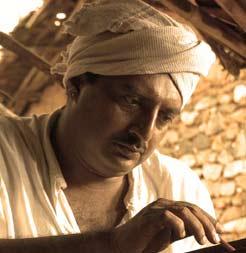 Yes, its confirmed. The rumours have been floating around for since last few hours. And its all true.
 Its 50 years of Kamal Hassan, on screen! And these days he insists on playing atleast 50 roles in each film of his. They even say, to call him megalomaniac is an understatement! In an interview, when Naseerduddin Shah was asked about his reaction to Kamal Hasaan playing his part in the tamil remake of A Wednesday, he said – why my part ? He should play all the parts! 😉
 We are the world, if we go by the mind-boggling numbers regarding Indian cinema. Chew on and see if you can digest!
 F.i.g.h.t C.l.u.b