KAUFMAN - "Or cramming in sex, or car chases, or guns. Or characters learning profound life lessons. Or characters growing or characters changing or characters learning to like each other or characters overcoming obstacles to succeed in the end. Y'know ? Movie shit."
Kaufman is sweating like crazy now. Valerie is quiet for a moment - from "Adaptation".
We are all about CINEMA. That movie shit.
NOTHING is sacred.
NOBODY is spared.
Because we talk about films, dammit.
Not your sex life.
Films, fests, unsung, indies, undiscovered - all that and some fun. If you have dope on anything related to cinema or you would like to share something, do write to us at moifightclub@gmail.com.
The views, opinions, reviews, articles, or positions, expressed by the authors and those providing comments are theirs alone, and do not necessarily reflect the views, opinions, positions or strategies of ANY OF THE EMPLOYERS, FRIENDS, RELATIVES, PR agencies, Production houses, Media group and such third parties associated with the authors. The latter make no representations as to accuracy, completeness, currentness, suitability, or validity of any information on this site and will not be liable for any errors, omissions, or delays in this information or any losses, injuries, or damages arising from its display or use.
In short, if you have an issue with us or any post we've written, write to us at moifightclub@gmail.com
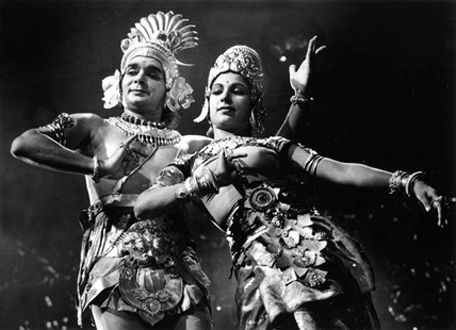
We all know about Miss Lovely, Gangs Of Wasseypur and Peddlers going to the Cannes. But apart from these three films, there’s a very important Indian film which will be at the festival this year – Uday Shankar’s 1948 classic film Kalpana. The restored print of Kalpana will be screened in the Cannes Classics section.
The other important films in the Classics section this year includes Sergio Leone’s Once Upon a time in America, Roman Polanski’s Tess, Spielberg’s Jaws, The Ring by Alfred Hitchcock, David Lean’s Lawrence of Arabia and Runaway Train by Andrei Konchalovsky. Since we really don’t have a habit and culture of preserving our cinema, i was wondering how did this happen. Then through a common friend i got to know about ad filmmaker Shivendra Singh Dungarpur, who is instrumental in making it happen. I asked him to share his experience on the same and he happily obliged. Read on.
I’ve been attending a festival called Il Cinema Ritrovato in Bologna, Italy for the last few years. This is a festival of restored films and it really amazed me what fantastic work they were doing at the restoration lab in Bologna. They work very closely with the World Cinema Foundation (WCF) headed by Martin Scorsese, who have been doing remarkable work restoring films from all around the world. Last year one of the representatives from WCF mentioned to me that they had been trying to get an Indian film called “Kalpana” directed by Uday Shankar for restoration. They had been trying for almost three years to get the film cans out of India, but they had not been able to do it for various reasons and they had given up.
I had seen Kalpana at a private screening that I had paid for at the Archive in Pune and I knew it was an extraordinary film especially from the point of view of dance and the use of light. I promised the WCF that I would get the film for them to restore, but they were sceptical given their previous experience. Even I didn’t anticipate the extent that I would have to run from pillar to post for this.
I knew the Shankar family and that I was working very closely with the National Film Archive of India (NFAI) for my documentary on P.K. Nair called “Celluloid Man.” I met Amala Shankar (Uday Shankar’s wife) in Kolkata along with her daughter Mamata Shankar and daughter-in-law Tanusree Shankar . I had to request them to procure a legal opinion from their lawyer as there was some litigation regarding the rights of the film that needed to be clarified before WCF could go ahead with the restoration. After a lot of persuasion and several trips to Pune, the NFAI also agreed after I showed them a letter from Martin Scorsese stating that I represented the WCF in this matter and on the condition that I took the onus of sending the cans to Italy and ensured their return. So in a matter of a few months, I managed to send the film to Bologna from my office in Mumbai. In fact, I am responsible for the negative.
I’ve been hearing great reports on the restoration and the lab in Bologna worked round the clock to ensure that they could premier the restored version of Kalpana at the Cannes Classic section. The WCF have very kindly invited me and Amala Shankar for the premier and we will walk the red carpet at 6.30 p.m. on May 17 before the premier. Amalaji is 94 years old and she is thrilled to travel to Cannes and walk the red carpet to see the only film made by her husband in which she played the main role.
At Cannes I have also been invited to see the restored version of Sergei Leone’s “Once Upon a Time in America”. As I am a donor for the restoration of Hitchcock’s film “The Lodger”, the British Film Institute has invited me to a screening of their restoration of Hitchcock’s silent film “The Ring” with live accompaniment.
In the West, there is a strong culture of preservation and restoration of films that India completely lacks. This is a shame given what a great cinematic history we have. This is what inspired me to make my documentary “Celluloid Man” on P.K. Nair, the founder of the National Film Archive of India. Mr. Nair singlehandedly built the Archive. It’s thanks to him that film students from the Film Institute, Pune like me had the opportunity to see the work of great filmmakers like Ozu, Tarkovsky, Fellini, etc. My film is a tribute to Mr. Nair and his life’s work and somewhere I hope people will realize how important it is to collect and restore our films.
One of the main reasons, I pushed so hard for Kalpana to be restored is that I am hoping that other Indian films will also get chosen for restoration. As a matter of fact, the lab in Bologna wants to restore Ritwik Ghatak’s “Meghe Daka Tara” and have asked me to help them raise the funding. I am hoping the Indian film fraternity or corporate houses will come forward so we don’t have to rely on the West.
(PS – To know more about the film and why it’s such a big deal, you can read this and this post.)
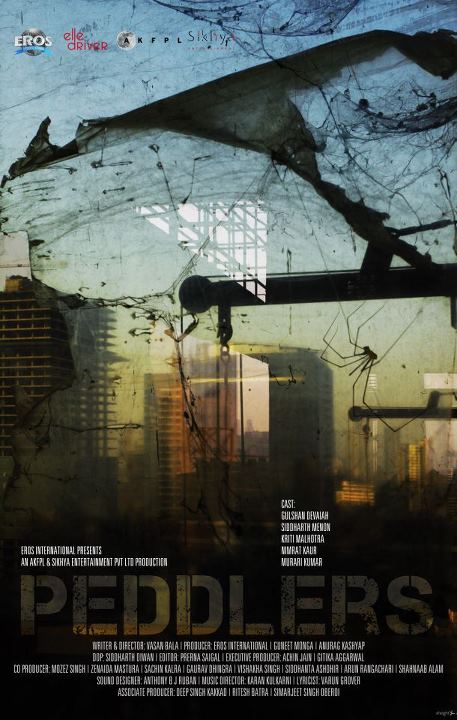
Finally, the official trailer of Vasan Bala‘s debut feature Peddlers is out. The film is all set to premiere at Cannes International Critics’ Week.
So what works and what doesn’t? Since he is a good friend, i might be biased. But let me try. The visuals look gorgeous, there is a sudden tension in the mood but it all looks calm on the surface. Great! And the ‘ud jayega‘ raw vocals adds to the creepiness. But the text seems to be too vague. Actually it’s the same as that cryptic synopsis of the film. Why? Who does that? Also, font is dull and boring. And it comes on the visuals. Found it too be distracting.
What do you guys think? Do leave your comments.
To quote the official synopsis,
Peddlers – A ghost town, Mumbai, inhabited by millions. A lady on a mission, a man living a lie, an aimless drifter. They collide. Some collisions are of consequence, some not, either ways the city moves on.
And here’s the cast and credit list..
Director : Vasan Bala
Screenplay : Vasan Bala
Cinematography : Siddharth Diwan
Editing : Prerna Saigal
Sound : Anthony B.J. Ruban
Music : Karan Kulkarni
The official trailer of Ashim Ahluwalia’s trailer is finally out. It looks like they have combined all the three teasers which came out earlier, put it all in sequence with some new footage. Do check out.

Miss Lovely has been selected to premiere in the Un Certain regard section of the Cannes. The film stars Nawazuddin Siddiqui, Niharika Singh and Anil George.
And here’s the new poster and official synopsis (has minor spoilers)
And the poster is very similar to this poster of Nehle Pe Dehla. Is it tribute or plagiarism?
Synopsis
Bombay, 1988. Vicky and Sonu are brothers and partners in crime. They produce “C” grade films in the lower depths of Bollywood – lurid horror films, erotic bandit pictures, sleazy social dramas. From a humid one-hour hotel, amidst spilled whisky and bouts of womanizing, Vicky churns out illicit titles like “Dolly Darling” and “Lady James Bond” for India’s small-town picture houses. He leaves the donkey-work to Sonu, his withdrawn, dim-witted younger sibling, who often cleans up after him.
Returning exhausted from a sales trip peddling erotic reels in the hinterland, Sonu encounters a mysterious girl on the train and is drawn to her fragile beauty. She’s only just arrived in Bombay and her vulnerability soothes his own sense of despair. Her name is Pinky and she appears to be a struggling actress.
Vicky dismisses the girl as a gullible piece of flesh but Sonu is desperate, bewitched by Pinky’s silent radiance. He knows that only she can save him; make his emptiness disappear.
As the seasons change, Sonu begins to resent his hard-edged brother. He no longer wants toslave for Vicky’s lawless operation and decides to make a film of his own, with Pinky in the lead. A double debut – producer and star. It’s a reckless, nihilistic venture with no story and no crew in place. But he has a title – the film will be called ‘Miss Lovely’ and Sonu will do whatever it takes to make it.
But nothing is what it seems in this garish underworld of shifting alliances, double dealing, and quivering flesh. Out on the streets three years later, Sonu realizes that his whole world has turned upside down.
A baroque tale of betrayal and doomed love, the animal instincts of the struggling actress prove to be the most cutthroat of all. As paranoia and violence spiral out of control, brother turns on brother, and blood spills like water. Sonu, now alone and abandoned, aimlessly wanders the streets, junkyards and film studios, aching for one last glimpse of Pinky.
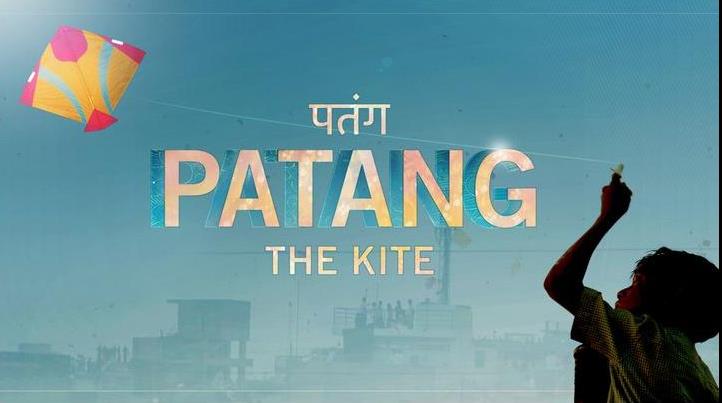
Prashant Bhargava’s debut feature Patang has been doing the rounds of international film festivals since last year and the latest one was the prestigious Ebertfest.
It stars Seema Biswas, Nawazuddin Siddiqui, Sugandha Garg and Aakash Mahayera, and has been shot by Shanker Raman.
The film will be finally in US theatres from June 15th. And here’s a new trailer of the film.
And here’s the synopsis..
A family saga set against the colorful spectacle of the Uttarayan, India’s largest kite festival, The Kite is a kaleidoscopic whirlwind of energy, romance, and turmoil. A businessman arrives in Ahmedabad for a surprise visit to his once grand family home, bringing with him his daughter and some unexpected news for the family’s future. Amongst the flurry of preparations and the energy of the festival itself, the transformative and intersecting tales of six characters unfold.
A new book titled Mother Maiden Mistress – Women in Hindi Cinema, 1950-2010 is out in the market. The co-writer of the book, Jigna Kothri, writes about it and shares an excerpt from it.
The first woman protagonist in Hindi cinema was Taramati, in Dadasaheb Phalke’s Raja Harishchandra (1913) enacted by a man since cinema was considered a profession beneath the dignity of ‘respectable’ women, even if she was playing a pious, and ideal wife on screen. It would seem Hindi cinema has come long way since then, though, the journey that Mother Maiden Mistress makes through six decades of cinema, finds that the more things have changed, the more they have remained the same.
The book brings to life the women characters that peopled cinema and the popular imagination, and shaped fashion and culture. The book records and reviews the woman in Hindi cinema – the mythical, the Sati-Savitri, the rebel, the avant-garde and the contemporary. To get a better idea of where these characters come from, the book shows the society that the the filmmakers lived in, the socio-political milieu of the particular decade. We look at what kind of films were made during that decade and what were the dominant features of women protagonists at that time. In this context, certain protagonist are chosen and dicussed in detail.
It’s not just the character that is discussed, one section of the chapter, looks at the way women were dressed in the films of the decade, the high and lows of fashion in Hindi cinema. There is also the first-person narratives of a leading actress from each decade – Waheeda Rehman, Asha Parekh, Hema Malini, Shabana Azmi, Madhuri Dixit and Rani Mukherjee – all close-up examinations of how some of the iconic characters of Hindi cinema came to be.
The following is an excerpt of Chapter 3: Seventies – Look Back In Anger. These paragraphs are from the section that discusses the roles accorded to women characters in the popular films of the decade and attempts to record and review not just the stereotypes but also the exceptions.
“Films dominated by male superstars often reduced women to uni-dimensional figures. The action films of the seventies revolved around action/angst-ridden, disenfranchised hero/heroes who took over all the rasa/bhava of the narrative. The women were passive constructs whose fate and circumstances lead to the hero’s heroism. The multi-starrer phenomenon – films like Manmohan Desai’s Amar Akbar
Anthony, Suhaag, Dharam Veer and others – further reduced the woman’s impact on the narrative. Love stories and big-budget musicals were no exception. The same was seen in buddy films where the so-called feminine emotions and feminized virtues of love and sacrifice usually accorded to the heroine were taken over by the heroes.
In Hindi films, friendship among males always involves tender emotions. The friends are separated by circumstances or a woman, and the film usually ends with one sacrificing his life/love for the other.
The men would have their respective romantic interest keeping in mind the interests of heterosexuality. Sholay (1975) became the definitive and probably the first ‘action-buddy’ film in which the two heroes, united against the forces of injustice, carried the narrative.
To seek a definitive feminist or even a progressive representation of women characters in mainstream cinema in the seventies would be futile. However, several traits were seen in women characters that were definitely a breakthrough in commercial cinema.
Yash Chopra’s heroines were well-sketched, realistic individuals who could compromise but never suffer to be victims. In Kabhi Kabhie (1976), Pooja (Raakhee) and Vijay (Amitabh Bachchan) choose duty over love and decide to part. Pooja accepts the new relationship in her life and grows into the role of doting mother, wife and career woman whereas Vijay continues to nurse his hurt over his lost love and neglects his wife. His wife, Anjali (Waheeda Rehman), married to an indifferent man and forced to play second fiddle to her own daughter, has also to come to terms with the guilt of abandoning her first-born child. Her instinctive reaction on meeting, for the first time, her adult daughter born out of wedlock is to hide the truth from her husband. Pinky (Neetu Singh), that daughter, puts her marriage plans on hold when she learns about her biological mother and embarks on a journey to meet her.
In Trishul, the heroines Geeta (Raakhee) and Sheetal (Hema Malini) have their individual personalities, being neither subservient to nor dependent on the heroes. Kaala Patthar, a film about a man’s cowardice and redemption (the story is partly based on Dhanbad’s Chasnala Colliery tragedy in 1975 that killed 372 miners and on Joseph Conrad’s Lord Jim), did find space for characters such as Anita (Parveen Babi), a photo-journalist investigating the conditions of coal miners, Dr Sudha Sen (Raakhee), who serves the mining colony, and the street vendor Channo (Neetu Singh). Nisha (Raakhee), a single woman and successful professional in Doosra Aadmi (1977), falls in love with a much younger, married man who resembles her late beloved.
Significantly, most of these characters were created by Salim–Javed, whose iconic creation in Sholay – the loud-mouthed tangewali Basanti (Hema Malini) – was a departure from the stereotypical village belle. Earning her own keep, she certainly does not believe that women should be seen and not heard, and does not surrender to her fate, choosing to fight instead. Hema Malini, dubbed the ‘Dream Girl’, was one of the rare heroines who pulled off action scenes in films such as Seeta Aur Geeta (1972) and Paraya Dhan (1971) in which the heroes occupy the usually feminine passive space.
Films in which the women not only take control of their life and their space but are active participants in the fight against the system are rare. Usually, the heroines either hold the hero back or garland and send him off to the battleground. There were rare examples, such as some roles essayed by Asha Parekh, which often broke away from the stereotype. In Aan Milo Sajna (1970), the lead character pretends to be betrothed to the villain but falls in love with the hero and actively pursues him, complete with an eve- or rather Adam-teaser of a song: ‘Palat meri jaan’. It is the hero who is suspected of immoral behavior and has to prove himself to the heroine – a reversal of Sita’s taint.”
DETAILS : Written by Bhawana Somaaya, Jigna Kothari and Supriya Madangarli.
Publishing Date: 2012. Publisher: Harper Collins. Number of Pages: 272. Language: English. Price – Rs 299
We will be reviewing the book soon. If you are interested, you can order it from Flipkart here or from Infibeam here.
Like his film projects, his tv debut was also kept a secret till it finally came on air on Sunday at 11am. And it turned out to be exactly the same as we had told you earlier. It started with Aamir Khan’s voiceover (aha, the emotional modulation there, noticed?) talking about where we stand today. And then the chat show started where the topic was female foeticide. Case studies, tears, figures, tears, doctor, more case studies, more tears, more questions and finally a song by Swanand Kirkire and Ram Sampath overlapped with visuals of girl child, Aamir asking the kids to come sit close to him. Aha, if the last season of KBC was poverty porn, this is going one step ahead with just one mantra – we will, we will make you cry!
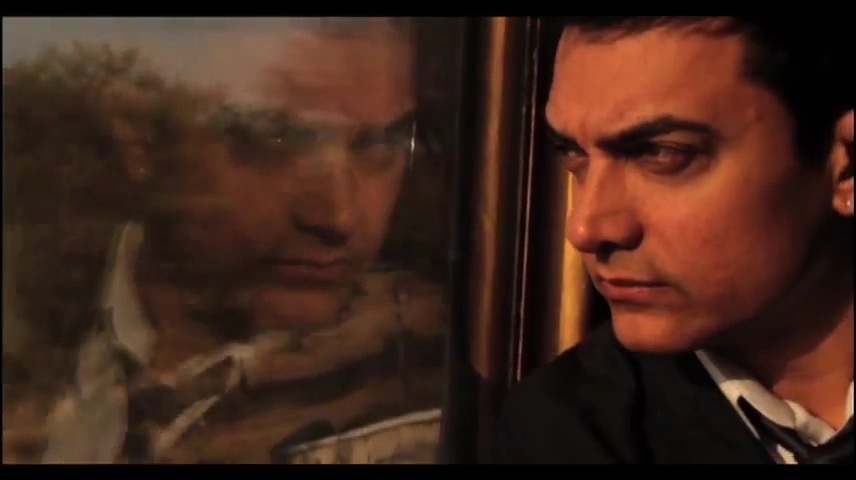
The set was tacky, production value made it looked like straight out of DD and graphics seemed out of CBSE school books. Who said serious issues need to look boring? Oh wait, our TA wouldn’t get it? That aside, i had two big issues with the show – First, the pitch and positioning of the show. Stand anywhere in Mumbai and you can see Aamir Khan staring into the void from one of the hoards. I am not sure why but i feel here’s our Aamir Jesus Christ. That look, that stare, the gaze, it’s all there in the stills, music videos, hoardings and the show. It’s so repulsive, so rehearsed and so bloody fake! The intention might be honest and i sincerely hope it helps in creating some awareness but one issue, one sunday, one episode – is it some kind of quick fix solution? Also, am cynical because he is the same actor who had suddenly felt about the Narmada Bachao Andolan during the promotion of Rang De Basanti and then vanished from the radar. Of course the release of RDB was just a coincidence. Blame it on my cynical mind!
My other issue is if he is really serious about endorsing social causes, why not let go your entire fees for it? Contribute to the cause and i will respect you for lifelong. There’s no harm in taking money and doing the show but i can’t digest the self-righteousness then. Doing 13 episodes for free isn’t a big deal, right? Go ahead, do it. Shut me up! Otherwise how different is it from NDTV Greenathon or IIFA Charity or such events which are organised by event management companies. Stars endorse the cause, gets paid, sponsors feel they have done their bit of corporate philanthropy and all happy. But is anyone really honest and serious? Aha, the cynical me.
But then the other point is our tv shows are pure garbage. There’s almost nothing to watch. At least this show is trying something new, it’s going to stand out. And in that process if it can serve a purpose, that’s great. Agree.
So i asked on twitter if anyone would be willing to write about the show. Posting two views on the same. First one is by Chintan Bhatt. From my previous interaction with him on twitter, i know for sure that he is a big fan of Aamir Khan.
I was not sure I was going to be able to watch Satyamev Jayate, though I had been waiting eagerly for it from weeks, because the night before which was full of drunken revelry, to celebrate the anniversary of another year of living, of yours truly, ended too late. But by some stroke of miracle, my eyes opened just to the tune of 11 am and with blurry eyes I switched on the TV. The show started and at least the format, the set, seemed nothing out of the ordinary. But as Aamir came on stage, giving a small speech, he did not sit on the sofa right away which was stationed on the middle of the stage. He slowly sat on the steps, just in front of the audience. I smiled and my hangover was gone.
He was not a superstar, or an expert, or a know it all and did not pretend to be one. He was like me, and everyone else. Surrounded by the problems, and people facing it, like we all are, and trying to understand it. Though this format, sets, was something we had seen before, this honesty and intimacy was something Indian television had not witnessed before. When he spoke of the problems, his style was not of preaching but was of self discovery, more than anything else, which let the viewers feel part of the show.
What was striking about the show for me was how all encompassing about the issue it was, or much more than anything I have seen before. Filled with facts and charts and statistics to supplement the emotional quotient and the true stories it presented, it attacked the issue right in its guts and where it hurts given the sense of denial, we as Indians have mastered to live in. The experts, the victims, their tears, the shock in the crowd, the silence that filled the room as they grasped the horror stories and the sense of disbelief on Aamir’s face, were all real and in a way reflected what so many of the viewers too felt.
A few days back I was watching Aamir’s interview on CNBC and the interviewer on being told by Aamir that he has invested 2 years into the show and has given up on the endorsements, crores of rupees he could have earned, of how his selection of show timing was termed suicidal, how to telecast the show on DD so that reaches the most commonest denominator of the population sounded impossible and unheard of, etc, she almost out of frustration asked him, which effectively was, ‘But why do you need to push yourself so much and keep such tough targets for yourself?’ And again, he smiled and shrugged.
My rage on seeing the views trying to demean him and the show on Twitter and elsewhere after watching the show, were gradually replaced by indifference of sorts. Fact which cannot be denied is that in a country obsessed with garbage in the name of entertainment and where smartness is equated with how manipulative and selfishly you can lead your life, he made the whole country talk about one of the most inhumane and disgustingly hidden practice which has become a commonality behind closed doors.
The anger towards the pointless and forced cynicism was further nullified by the thought I had of those thousands of families who would have done these heinous activities, which will be taken up in all the episodes of the show, who will now be forced to sit and think hopefully. Of all those silent voices, all those abused and assaulted, all those bullied and tortured who will now again have hope of fighting for their right to survive and live. Yes, its sounds good to say that we don’t need an Aamir Khan to tell us what is good and bad, we are too educated and intellectual for that, but as the biggest revelation of today’s episode was that education has nothing to do with goodness, intellect has nothing to do with being humane. We are living in an imperfect, corrupt and insensitive world, and we need heroes desperately, we need to face harsh true stories desperately, we need to know what being humane feels again desperately, and in this same imperfect world, this show does that. It forces the monsters in laws of the country to look in the eyes of their daughters in law, of their near and dear ones and face the truth. It makes the demonic husbands to feel ashamed and disgusted at themselves, if not from the inside, then the world in their immediate surroundings should have a collective voice to ridicule them, and this show will do that. We are living in a star obsessed country which silently breaths and breeds away from the confines of the cynicism of twitter and their likes, and that’s the nerve this show will catch, hopefully.
No, no one is claiming that this show will solve all the problems of the country. No one is that naive, but it’s worth an attempt, if it gets people to start talking. That’s all. And if that’s the minimum it can do, then be it. As the gentleman sardar who featured in today’s show with teary eyes said, – EVEN IF I CAN SAVE 1 GIRL, ITS ENOUGH. Some battles are worth fighting for, to win or lose is immaterial.
At the end, my bout of anger was gone completely when after about half hour after the show was over, the maid in my house came with a black eye and after few days of not coming to work. On coaxing by my flat mate she revealed that our husband is a drunkard and beats her in front of their two kids incessantly. From the fear of not telling anybody, she does not even scream, she takes it all on silently. And she is too scared to go to the police. Who will tell her and millions of other such stories? Will the cynics look in her eyes and crack a joke on the color of her wound? Well, you never know, they may. But this show talks about these victims, and will give countless number of them the tiniest bit of hope to fight back. By the end of the show Aamir said the biggest contribution was to be done by the youth of this country. And my rage towards the cynics was shifted to anger towards bastards like the maid’s husband, and attempts will be on to do something about it, like they have been from long. As they say there are those who say and crib, and there are those who do. Its very simple.
I remember debates with my father, who used to enjoy the so called escapist cinema which I despise. After a long heated debate, I simply used to ask him, ‘Why do we need to travel to a world unknown to find beauty and strength? Can’t we explore the same around us in our films?’ That is the biggest gift the show has given me. It has given me heroes who exist around me and us, whose beauty lies in their bravery, like all those women who were in the show today. They are the real heroes with real stories. Agreed, there may have been other shows who would do that, but for the first time I felt their bravery and strength, and that is why I thank Aamir and the channel for the show through this small insignificant post. All is not lost, yet.
————–
And here’s the other view. This one is by someone who calls himself The Pucca Critic.
After almost a month of promotion as “Har Baat dil pe lagegi toh hi baat banegi” by Aamir Khan, Satyameva Jayate’s first episode was aired on Star Plus, DD National & also Star Pravaah (with Marathi subtitles) today at 11 a.m. Let us see kitni baat dil pe lagi!
The show started with some scenic shots and Aamir Khan blabbering about himself as an actor and a human being. And that’s what he tried to do throughout the show: I’m The Aamir Khan. I’m India’s inspiring role model. The idol of the common man. I’m here to change your life with this TV show for which I’m charging hefty sum.
No sooner did the show started, we learn that it’s kind of talk show dealing with sensitive social issues. Aamir Khan pretending to be appealing enough for the aam – junta does gigs like sitting at the stairs of the dais while delivering his speech to expect Oh-look, this-superstar-doesn’t-mind-sitting-on-the-floor reaction.
Moving over, we are introduced with 3 ladies who narrated their ghastly tales about how they were tortured after delivering a baby girl. So that’s what the topic of the day was: female foeticide & how it is related with other criminal happenings like ignorance of women in society, sexual harassment and flesh trading. Their emotions were raw. Enough to give you a gulp in the throat.
While discussing a case, crude pictures of the lady being victimized of physical assault by his husband were displayed without a blur (which is how news channels are made to show). A leading daily once made a gore picture of a bomb blast victim to the headline to which their readers irked by remarking them as selling information porn. OK. So this is how Aamir Khan wants his words to touch the hearts?
All through the interview, you can hear Aamir interrogating silly questions. “Aur kaisa feel hua aapko tab?” “Aur kya hua tha?” Genuine thoughtful questions were lacked.
And more irritating were the reactions by the audience. “Haawww” “Ohh noo..” “Ohhff” That’s how general interactions with the common audience were lacked instead they were focused for their shocks and tears as if they were expecting the public watching on TV to cry too. The flawed direction is made deliberate when a lawyer (part of the related case) interrupts midway of another interview and the interview is carried no further but diverged by the host. I don’t know how many retakes were needed to shoot this!
They also ended up with some marketing of 3G technology of a telecom network by a video conference with some bachelors of Haryana who discussed bachelorhood of Salman Khan. Don’t tell me this wasn’t rigged!
This is how the show meant-to-be inspiring ended with the uninspiring host who asks his audience to send SMS to a number if they support the cause. Do you really think sending SMSes will help?
Finally, Aamir calls up his friend and musician Ram Sampth along with Swanand Kirkire to perform a beautiful, lyrical song “O Re Chiriya.”
What we expect is some improvement in the direction of the show with retaining the raw emotions of the subject and uplifting the enthusiasm of the audience as the show ends.
P.S: If you really want to see inspiring Aamir Khan, watch Sarfarosh or Lagaan. And if you hate Aamir’s face, watch Anoop Soni on Crime Patrol. He’s terrific.
———————-
And here’s a video review to end the post on a lighter note…
If you are not active on social networking platforms, you might have missed the two videos which are getting lot of attention. First came the mash-up of The Dark Knight Rises and Gangs of Wasseypur as “The Dark Knight Rises in Wasseypur”. Great fun!
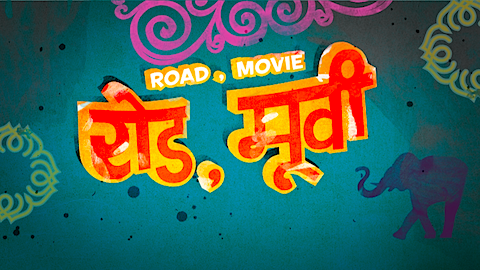
Few months back, Dev Benegal posted the script of his film Road, Movie on his website. But if you missed it, we are posting it here again. Simply because we try to gather and post as many hindi film scripts as we can and all at one place. The screenplay of the film was selected for the L’Atelier section at the Cannes Film Festival 2006. ( Click here to read his interview on the same)
I didn’t like the film much. Thought it was pure desi exotica for the west but it had lot of interesting stuff. But whether you like a film or not, reading a script is always going to help. So, here you go – download and happy reading.
Ah, finally. The way Viacom18, the producer of Gangs of Wasseypur, was reluctant to share even on location images of the film after the Cannes announcement, we were thinking if they were going to lay some golden eggs.
The trailer, poster and the official synopsis of the film is finally out. Let’s go one by one. First, the trailer.
Loot, coal mines, volatile people in volatile land, zindagi ka ek-e maksad – badla, jail, chop shop, Tishu, Bihar ke lala, cuss words, Richa attacking the same man who has been killing everyone, sex, goggles-wala-pyaar, dhoom-dhaam, more cuss words, more earthy and punchy dialogues, more abuses and some more dhaam-dhaam. And everything is inherited! E toh poora ka poora dabang hai – abki badke Kashyap ki baari.
But why is the text font so bland? Bad font always bores me.
As far as the trailer goes, this is as mainstream as it can be. But i think the trailer serves more masala than the film will offer. Might be wrong. But Kashyap without his indulgences? Jiyo o Bihar ke lala. The trailer doesn’t tell you much about the film but it gives the ambiance and the mood of the film and tells you what to expect – you connect the dots. And if you can’t, scroll down for the synopsis.
My fav bit – Pankaj Tripathy. Bahut-e kamaal ke actor hai. Agle Yashpal Sharma hai jo hame bahut-ey pasand hai.
Now, the poster.
Superb art work. Like the colours and the treatment. But why such a bad finish? The film posters on the right and left hand side looks so weird. As if at the last moment they asked some intern to put two posters. Just doesn’t gel with the rest.
And now the official synopsis…
Towards the end of colonial India, Shahid Khan loots the British trains, impersonating the legendary Sultana Daku. Now outcast, Shahid becomes a worker at Ramadhir Singh’s colliery, only to spur a revenge battle that passes on to generations. At the turn of the decade, Shahid’s son, the philandering Sardar Khan vows to get his father’s honor back, becoming the most feared man of Wasseypur. In contemporary times, the weed addicted grandson, Faizal Khan, wakes up to this vengeance that his family has inherited. Staying true to its real life influences, the film explores this revenge saga through the socio-political dynamic in erstwhile Bihar (North India), in the coal and scrap trade mafia of Wasseypur, through the imprudence of a place obsessed with mainstream ‘Bollywood’ cinema.
The film stars Manoj Bajpai, Nawazuddin Siddiqui, Jaideep Ahlawat, Tigmanshu Dhulia, Aditya Kumar, Reemma Sen, Richa Chadda, Huma Qureshi, Piyush Mishra and Syed Zeeshan Qadri.





 F.i.g.h.t C.l.u.b