Archive for the ‘bollywood’ Category

Ram Gopal Varma’s Department released last friday and as expected, had a disastrous opening at the box office. Well, that’s not new. He wrote an open letter to clarify his stand. That’s also not new. And then started blaming Sanjay Dutt and Dharm Oberoi for the debacle. Now, that’s a smart pitch for the potential producers.

I strongly believe that what Amitabh Bachchan is for directors, Ramu is for producers. Everyone aspires to direct AB in at least one film and every producer wants to make at least one film with Ramu. Just for good old nostalgia. But most don’t realise or are blind to the fact that both don’t have any box office pull now. What else can be the explanation for still giving shitloads of money to RGV? What kind of blind faith is this? Even if you forget box office, in terms of intangible gain also, it gets you nothing. Not even a single decent review. Or may be, he knows some kind of black magic to woo the producers. That’s the only talent he still has.

It’s hard to digest that someone will give him 27 fucking crore (via HT Cafe) for getting AB, Sanjay Dutt and Rana Daggubatti. And opening weekend collection is just 7.25crore – the lowest opener of 2012. And please don’t even to call it an indulgence – crotch cam is just being stupid and banal. That doesn’t qualify as cinematic indulgence by any rulebook.

Interestingly, Ishaqzaade – a film with newcomers managed almost the same amount in its 2nd weekend which Department collected in its opening weekend.

Going back to HT Cafe again, here are the opening weekend figures of Ramu’s last few releases –

Not A Love Story – Rs 2.1 Crore

Rakht Charitra 2 – Rs 1.25 Crore

Rakht Charitra – Rs 3.85 Crore

Rann – Rs 4.45 Crore

The list is quite long. To say that the man has lost it, will be putting it very mildly. And i can bet that the man is going to deliver ten more duds. Reason – he thinks he is making cult classics (read the open letter). He is dismissive of everything good or bad – it just happens by chance. And he is surrounded by yes-men. There was a time when he used to attract the best talent. Now it’s the opposite – anyone who is good, leaves him.

And here’s the bait for potential dumbfcks who will put money in his next films – his open letter which he tweeted yesterday.

I LOVE YOU TOO

I am not surprised at the hatred of some towards “Department” for the reason that when you do anything completely different from a beaten path many tend to pounce upon you with claws and knives. When Oliver Stone made “Natural Born Killers” most reviewers said it’s a piece of visual crap, exhibitionistic, he lost his head etc., which then in the later years came to be recognized as a cult classic. When DW Griffith cut to a close up they said how can a man be shown cut in half and when the camera moved in a Georges Melies film they said how can a point of view suddenly move.

Anyways the norm of critics these days is to bury the baby even before its born and kill the mother for giving it birth. It’s incredible to see the sadistic glee they take in running the Director down on a personal level even more than they run down the Film.

They accuse me of chaotic self-indulgence. I don’t know what that is but a Film eventually is a self expression of a subject matter which I as a maker chose to tell in a certain style and in Department I chose a graphic pattern in terms of angles and movements which were intended to represent the mindsets of the characters the film is dealing with.

A photographic image is a combination of the look of the location, the lightning, the costume, the make-up, the look of the actor etc. and any camera will only record whatever is kept in front of it. Then ofcourse there are the features of lensing, angles, movement perspectives etc., which would be employed as per the intended effect. In Department it’s the rapid swish pans and some hitherto unseen movement perspectives, which bothered some people, but the same were also liked by lots of others.

Also the rogue method I employed for Department is an alternative method I proposed but not as a replacement to a conventional method. The conventional usage of the cameras used for Department have been already used in “Slumdog Millionaire”, “127 Hours” and many other films the world over. In Department it’s their unconventional rapid movements, which created problem for some.

In “Department” I just attempted to do a realistic story with characters that intrigue and make one think rather than spoon feed and I attempted to package that in a never before seen visual style and some people got it and some didn’t.

It goes without saying that at the end of the day a Film’s likeability is about its content and its narrative grip and the technical style employed doesn’t matter to the viewer.

But having said that a constantly evolving innovative usage of the medium does add and sometimes also gives an emotional tone to the content and film eventually in its purest form is an emotional experience.

– Ram Gopal Varma

It seems like Subhash K Jha has converted this open letter into Q and A for Rediff. Click here.

And if that wasn’t enough, he has now put the blame on Sanjay Dutt and his manager Dharam Oberoi. You can check Ramu’s twitter timeline here or the snapshots here.
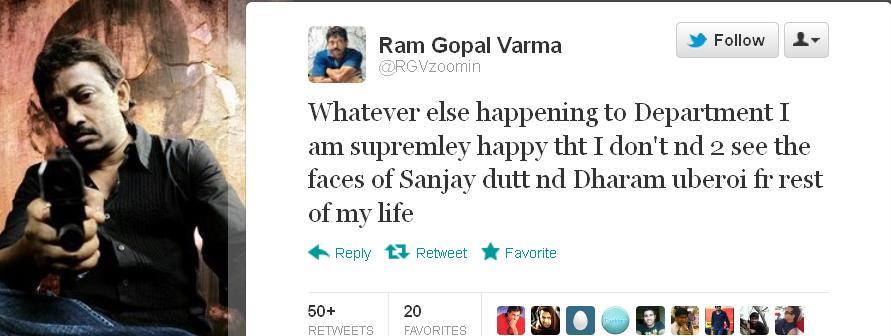
Wow! Some points for being candid at least.

Well, over to Dutt and Oberoi now.

Ram Gopal Varma doesn’t surprise and shock me anymore. He is the only filmmaker whose zero budget film was also a flop! You can’t beat that!

What baffles me is the fact there are “morons with money” who wants to blow it away by giving it to him. And at a time when films like Paan Singh Tomar, Kahaani, Vicky Donor are re-writing the rules of the box office. If you have excess, just donate it. And if you don’t have a big heart, just burn them – That’s a better thing to do.

UPDATE (22nd May) – Sanjay Dutt and Dharam Oberoi have reacted to Ramu’s tweets. Click here to read Mirror’s report.

23rd May – Ramu drags Abhishek Bachchan into it and blames him for getting Dutt into the film. Click here to read.
Has SPOILERS. DON’T read if you haven’t seen the film.

We are running a week late on this one. A new film by Ramu has already released this week and as expected, it’s call-it-whatever-you-want-to-call. Because of Do Dooni Chaar and the way the first promos of Ishaqzaade played out, we were really looking forward to Habib Faisal’s film. I liked lot of things in the film but it had the same problem which most desi films suffer from – 2nd half. It was the same story with his Band Bajaa Baraat and Do Dooni Chaar. And then a thanda climax. If it had to end that way, i would have liked to see them jumping from the roof with guns blazing from every side on the beats of the romantic title song and freeze!   say Thelma and Louise kind. The other criticism that the film received was of being sexist. Habib tried to defend it here.

And we have someone who is on the same page – Neeraja. She is from one of the many Almodas of India. She loves to think and her priorities in life includes books, cinema, mathematics, philosophy, politics and arguing about the same, in no particular order.

Ishaqzaade is an interesting film because it throws up interesting questions and reactions. I wouldn’t call it a love story but then what one takes away from a film is very subjective. After all, there are people who enjoy bodyguard and wanted.

Ishaqzaade is a story of a girl born in a society where violence is a way of life. There is not a single character in the film that is averse to violence. It is shocking and from what I know pretty close to truth. Upper-caste gun-toting warring political families is a cliche in real life…and not only in these parts (UP/Bihar) but in most parts of the world. Modern Politics at grass-root level is bullet-ridden and blood soaked. Patriarchy is a common feature of politically influential families across the world. Power flows from the barrel of the gun. Everywhere. In india, it has its own flavour blended with caste, religion and feudalism.

The film is a “love story” set in the backdrop of warring political families (hindu and muslim) in a small town somehwhere in north India. The kind of families that perpetuate honour killings, where only women worth loving are either prostitues or mothers and domestic violence is culture. To have a female character that defies all this and comes out a winner at the end would have been awesome but very unreal. The film portrays an honest and ugly picture of patriarchy that exists in it’s most violent form in some parts of our country.

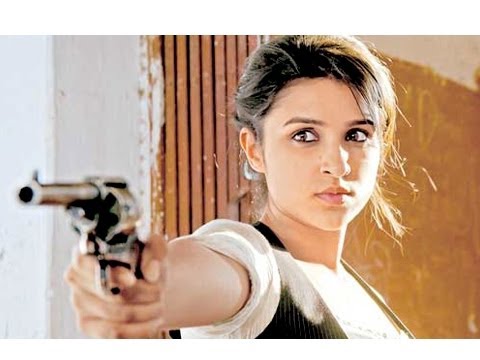
Zoya is a spirited girl. She owns a gun (which she buys by selling her jhumkas) and she can address a crowd like true blue small town sharp-tongued politician but she is also naive. What she doesn’t understand is that most of this freedom has been handed out to her for she is the youngest and the only girl in a moderately progressive family. Most of her strength is inherited. It comes from the fact that she was brought up in a politically influential family. A family where everyone carries a gun in their hands and a dhamki on their lips all the time. She gets to do things that perhaps other girls in the neighbourhood cannot and won’t even dream of doing. Her peers see her as a strong young woman who makes her way while her family just sees her as a spoilt little girl who wants to be like her father but will be married off to a nice muslim boy soon enough.

What’s a strong female character really? According to most of the reviews/opinions that I have been reading, it is someone who subscribes to feminist ideas of urban women. Zoya’s world however is very different from that of ours. She lives in a society where for young boys to visit prostitutes is coming of age (and is even encouraged by their fathers/grandfathers). Where a woman’s opinion is non-existant and her body is only for abuse. Where young adolescent girls do not learn about love by reading romantic novels. They watch crappy hindi movies where the hero is usually a stalker and a charmer. So, when they experience the hormonal rush of emotions when a boy touches them or claims to be in love with them – they are smitten and they get foolish. So, it is not a surprise that when Zoya falls in love, she falls hard. An outspoken, argumentative Zoya at home transforms into a blushing and smiling girl when she is with Parma. The boy, on the other hand, knows love, sex and manipulations all too well to succumb to any emotion.

Her values come from the society that she lives in and in some sense helps to perpetuate them (she tells her mother to shut up because she didn’t understand politics but she wouldn’t dare to talk to her father like that. It just shows how women are treated in the family and how this treatment is considered acceptable by other women members of the family). She wants to be a part of the very system that treats women like that. She wants to be an MLA like her father and agrees with the power hungry, violent politics that surrounds her. She just wants to be one of the boys but at some level she is aware of the fact that no matter how many shots she fires, she is a woman at the end of the day. She knows that being seen with Parma in college bathroom will bring dishonour to her and therefore to her family because she is a girl and a girl’s honour is attached to her family’s honour. She doesn’t however agree with the concept which is what makes her different from other women in her place. She is not angry at Parma for having sex with her under the pretext of a fake marriage (which is technically rape), she is mad at him for betraying her. She cannot stand the fact that she was stupid enough to fall for someone who betrayed her and made her look like a fool in front of the whole community which is why instead of attempting a suicide, she tries to kill him. The fact that in her mind her honour is not attached to her body makes her different. That is also why she is able to forgive him later on.

In the end, what do people really want to see? A khoon bhari maang like woman who wields a gun and seeks revenge? Is that liberated enough? Will that change the fact that no matter what she had done, she would have to die in the end because there is no place for a spirited independent woman in that society.

My biggest problem with the movie is that there is no emotional involvement. There are very few moments where you get to feel what the characters are feeling. None in case of Parma which is why the change in his attitude towards Zoya is unbelievable. There is a lot of running around, shooting and lost and found moments but you hardly ever get to feel what the characters are feeling. The Romeo-Juliet-esque death scene is hilarious and almost spoiled the film for me.

What makes it work is Parineeti Chopra’s Zoya and the small town ambience. Zoya’s character is so close to reality, it hurts to watch her. If you have lived in a small town, if you have met spunky, street-smart, sharp-tongued girls from conservative families, it would do you good to go back and check what happened to them. How and when they were tamed. It’s not always cruel. Most of the girls believe that it’s the right way…just like most of well educated independent girls believe that no man can dominate them but at the end of the day they must marry someone who is smarter or more educated or at least earns more than them. There traps after traps and you succumb somewhere and justify it to yourself using your brilliant analytic skills that you acquired through higher education. We have all fixed boundaries for ourselves according to the freedom and strength granted to us. There are few who venture beyond and try to break the status quo. Lets not judge them for not breaking your boundaries.

Just because a woman wields a gun and talks like a boy, doesn’t mean she is liberated and just because she fails to challenge the patriarchy on all fronts (in the way we want her to) doesn’t mean she is not strong.

Just for the sake of irony, I leave you with this poem by Meena Kandasamy

Paracetamol legends I know
For rising fevers, as pain-relievers—

Of my people—father’s father’s mother’s
Mother, dark lush hair caressing her ankles
Sometimes, sweeping earth, deep-honey skin,
Amber eyes—not beauty alone they say—she
Married a man who murdered thirteen men and one
Lonely summer afternoon her rice-white teeth tore
Through layers of khaki, and golden white skin to spill
The bloodied guts of a British soldier who tried to colonize her. . .
Of my land—uniform blue open skies,

Mad-artist palettes of green lands and lily-filled lakes that
Mirror all—not peace or tranquil alone, he shudders—some
Young woman near my father’s home, with a drunken husband
Who never changed; she bore his beatings everyday until on one
Stormy night, in fury, she killed him by stomping his seedbags. . .


We: their daughters.
We: the daughters of their soil.
We, mostly, write.
PS: I wonder if one can make the same film with a muslim boy and a hindu girl? Won’t that be a blasphemy in our shining secular nation!

Two song promos of Gangs Of Wasseypur are already out. One is in Bhojpuri and the other is Chutney (Bhojpuri meets calypso) from Caribbean islands. If you have already heard the songs and are playing it in loop but can’t figure out the lyrics, we are going to help you. For those who haven’t heard the songs, do check it out. The embedded links have the full songs, not really the best audio quality but you can manage. And if you like, do  buy the CD. You will not be disappointed. Bet!

Here’s a small intro to both the songs by lyricist Varun Grover, the audio links and the lyrics. If you haven’t seen yet, Jiya Ho Bihar ke lala song promo is here.

1. Jiya Ho – Introduction + Song + Lyrics

For this, Sneha traveled to the interiors of Bihar. It took her an entire month (and then few trips more) to cover all the major districts and languages. (Bhojpuri, Maithili, Chhota Nagpuri, Angika and more) She wanted to just explore the sounds and singing traditions of Bihar. The opening groove and words ‘Jiya ho bihar ke lala, jiya tu hajaar saala, tani naachi ke tani gaayi ke, tani naachi-gaayi sabke mann behlaawa re bhaiyya‘ was found in an all-night nautanki muqaabla in a village near Gaya District. The lines were being sung as a warm-up exercise for singers (around 20 of them in chorus) and instrumentalists.

Sneha improvised on the tune and extended the groove to make a complete song. The search for singer went on for long, and many options crossed our mind. But once the position of the song in the film was finalized, it had to be somebody with genuine roots and skills. It may sound strange, but Manoj Tiwari is the least experimental voice we have tried in the entire album. Yes, every other singer is either a new one, or a folk singer not many know of outside his/her district.

There’s a non-stop 20-minute plus take of Manoj Tiwari for this song. While recording he closed his eyes, went into a musical zone, and sang it like a sufi-possessed. May be it will be released online someday soon.

Music – Sneha Khanwalkar. Lyrics: Varun Grover (mukhda from traditional/folk). Singer – Manoj Tiwari

Jiya ho bihar…

Jiya ho bihar ke laal,

jiya tu hajaar saal,

Jiya ae bihar ke laal,

jiya tu hajaar saal,

Jiya ae bihar ke laal,

Jiya ae bihaar ke laal

jiya tu hajaar saal,

jiya tu hajaar saal,

jiyo tu hajaar…

Tani naachi ke,

tani gaayi ke,

Tani naachi gaayi, sabke mann behlaava re bhaiyya…

Tani naachi gaayi, sabke mann behlaava re bhaiyya…

Tani naachi gaayi, sabke mann behlaava re bhaiyya…

Tani naachi gaayi, sabke mann behlaava re bhaiyya…

Bhaiyya-aa-bhaiyya-aa…

Bhaiyya-aa-bhaiyya-aa…

Bhaiyya-aa-bhaiyya-aa…

Ae….bhaiyyaa….re….

Antara 1

Tu maati ka laal re laala,

Bhaiyya-bhaiyya-bhaiyya…

Tohra magahi saan niraala,

Bhaiyya-bhaiyya-bhaiyya…

Tere purkhey jiye andhera,

aur tuney jana ujaala…

Tere purkhey jiye andhera,

aur tuney jana ujaala…

Bhaiyya-aa-bhaiyya-aa…

Bhaiyya-aa-bhaiyya-aa…


Ho…

Tere god pakhaarey ganga,

tere tej se aag jhulasta,

Tere kandhey chadh ke sooraj,

aakas mein roj pahunchta…

Jiyaa tu honhaaaaaaar….

Tani ghoom-ghaam ke, tani dhoomdhaam se…

Tani ghoom-ghaam ke, tani dhoomdhaam se…

Tani taan kheench ke, taansen, kehlaawa re bhaiyya….

Tani naachi gaayi, sabke mann behlaava re bhaiyya…

Tani zor laga ke, sabko saath nachwa re bhaiyya……

Tani neeke-neeke bol pe geet sunaava re bhaiyya…

Tani teekhe-teekhe bol pe dhol bajaawa re bhaiyya…

Tani jhaal utha ke, taal se taal milaava re bhaiyya…

Tani dholak, maandar, matka, chammach, laava re bhaiyya…

Tani oka-boka-teen-tadoka…

Tani chandan-maati-chauka-kaathi…

Tani oka-boka-teen-tadoka gaava re bhaiyya..

Tani chandan-maati-chauka-kaathi laava re bhaiyya…

Tani saans fula ke phoonk se dhool udaava re bhaiyya,

Tani jaan jala ke geet ke tel pilaava re bhaiyya…

The second song which has just been released is the hilarious I am a Hunter. The song promo is here.
2. Hunter: Introduction + Song + Lyrics
Sneha went to Trinidad-Tobago to find some tunes. Migrants from UP,Bihar,Bengal moved to Caribbean islands in pre-Independence times. They settled there, mixed with local races and cultures, and gave birth to a new music called ‘Chutney’ (which is basically Bhojpuri-folk meets calypso). They sometimes use words, instruments, and folk-tunes we thought were lost forever. Of course these tunes have now fused and evolved with calypso very much.

‘Hunter’ is one such find, originally written in English by Vedesh Sukoo (who has sung it too with that trademark Bihari-lilt and curled-tongue ‘o’ sound beneath every word). The Hindi lines are sung by Rajneesh, Shyamoo, and Munna, all part of Nirman Kala Manch (NKM), a well-known theatre group in Patna. Interestingly, one of NKM’s most famous plays is called ‘Bidesiya’, a term used for migrants that never return to their origins. In this case, Rajneesh-Shyamoo-Munna’s co-singer Vedesh Sukoo.

(Migrants who go out for a long time and do return are called ‘Pardesiya‘ and those who go for a short-term, like once every year to the city, probably to sell goods/grains, are called ‘Batohiya’. Hindi film songs have used these terms loosely over the years but while researching for this film, we came to know how technically specific these are.)

Music Director – Sneha Khanwalkar, Lyrics – Vedesh Sukoo (English), Varun Grover (Hindi). Singer : Rajneesh, Shyamoo, Munna, Vedesh Sukoo.

Haillloo… Hello… Hello

I am a hunter and she want to see my gun

When I pull it out boy the woman start to run]à (2)

She beg me to see it, she beg me to show it

But when I reveal it, she want to run and hideà (2)

Ooooo… ooooo … Oooo..

Put on your hunting clothes, let we go and hunt

Please don’t be embarrassed, you could touch it if you want.

All them young one around here, ask them about me.

I am the baddest gunman that they ever see

I am a hunter and she want to see my gun

Hum hai sikari, sikari sikari

I am a hunter and she want to see my gun

When I pull it out, the woman start to run

Tan tan tan tan tan tan tan tan.. Tan tan tan tan tan tan tan tan.. (2)

Daily goli nikle, automatic, tan-tan… (2)

With one gun in my hand and the next one around my waist

If you see this young girl with da rude look on she face

I say as a hunter, I must be brave and strong

She say that she find that my gun extremely long

Hum hain sikaari, paacket mein lambi gun,

Dhaayein se jo chhootey tan man howey magan..

Oooooo.. ooooo.. oooo..

This girl harasses me, she won’t leave me alone.

But that kinda behavior I really can’t condone

Hai bahut Bhokali, na kabhi ho khali – (2)

This girl harasses me, she won’t leave me alone.

But that kinda behavior I really can’t condone

She says that she’s sorry, she just want to have fun.

Then she asks me kindly, if she can hold my gun

I am a hunter and she want to see my gunWhen I pull it out boy the woman start to run ]—(2)

Door tak hai phamous, kar de sab ke bebas—(2)

Usko milta darsan, jisko man mein hai lagan—(2)

Laagi lagan laagi lagan… Laagi lagan laagi lagan…

3. Ik Bagal – Lyrics

UPDATE : Thanks to GhantaGuy, now we have got the lyrics of the haunting song Ek bagal also.

इक बगल में चाँद होगा, इक बगल में रोटियां,
इक बगल में नींद होगी, इक बगल में लोरियां,
हम चाँद पे रोटी की चादर डालकर सो जायेंगे,
और नींद से कह देंगे लोरी कल सुनाने आयेंगे.

इक बगल में खनखनाती सीपियाँ हो जाएँगी,
इक बगल में कुछ रुलाती सिसकियाँ हो जाएँगी,
हम सीपियों में भरके सारे तारे छूके आयेंगे,
और सिसकियों को गुदगुदी कर कर के यूँ बहलाएँगे.

अब न तेरी सिसकियों पे कोई रोने आएगा,
गम न कर जो आएगा वो फिर कभी न जायेगा,
याद रख पर कोई अनहोनी नहीं तू लाएगी,
लाएगी तो फिर कहानी और कुछ हो जाएगी.

होनी और अनहोनी की परवाह किसे है मेरी जान,
हद से ज्यादा ये ही होगा कि यहीं मर जायेंगे,
हम मौत को सपना बता कर उठ खड़े होंगे यहीं,
और होनी को ठेंगा दिखाकर खिलखिलाते जायेंगे,
और होनी को ठेंगा दिखाकर खिलखिलाते जायेंगे.

– पियूष मिश्रा

4. Keh ke loonga – Lyrics

Here’s the lyrics of the terrific Keh ke lunga. Sung by Sneha Khanwalkar and Amit Trivedi.

Ras bheege saude ka ye, khooni anjam….teri keh ke loonga

Teri keh ke loonga (2)

Khanjar se doodh gire yaan, ho katle aam…teri keh ke loonga

Teri keh ke loonga (2)

Saason ko saanp sunghan ke, jangli til chatta la ke, keh ke loonga

Teri keh ke loonga.

Bichu se hoth katta ke, lori jahreeli gaa ke….keh ke looonga.

Keh ke loonga, keh ke loonga, keh ke loonga.

Panghat ko bechunga main, mar mar ghat ke daam..teri keh ke loonga

Khuli ho sadke, tambu thane chahe mil vil ho ya baaz mekhkama, mekhamaa aaaa

Jisme bachna ho bach le, yee,

jisme bachna ho bach le, bach meri jaan… teri keh ke loonga (2)

Ja tu ja ja tu ja dariya naddi sagar beech pe jhariya,

aa taal mein ghus jaa. aa ghus jaa,

Jisme ghusna ho ghus le, Jisme ghusna ho ghus le,

Jisme ghusna ho ghus le, ghus meri jaan teri keh ke loonga

teri keh ke loonga….loonga….loonga….loonga.

5. O WomaniyaLyrics

Prelude: 

तारै जो बबूना….तरती बबुनिया…

बबूना के हत्थे न चरति बबुनिया…

Mukhda: 

ओ वुमनिया…

मांगे जो बबुना, प्रेम निसनिया…

बोले जो ठोड़ी, कटीहो कनिया….

बदले रुपय्या के देना चवनीया…

सईयाँ जी झपटे तो होना हिरनिया…

हो…..

Antaras:

रह रह के मांगे चोली बटनीया..

जी में लुकाये लोट-लटनिया…

चाहे मुहझौंसा जब हाथ सिकनिया,

कंधा में देना, दाँत भुकनिया

हो…

बोलेगा बबुना, चल जैहो पटना,

पटना बहाने, वो चाहेगा सटना…

दैहो ना पहुना को टिकट कटनिया…

पटना ना जाना चाहे जाना सिवनिया…

हो….

बबुना को उठी हो जो घोर भभक्का…

हाथ पकड़ ले तो मारी हो धक्का…

मन में निरहुआ के छुआ-छुअनिया….

ललना की लीला नाहीं पड़ना ललनिया…
6. Humne ke choree ke – Lyrics + Translation
Humni ke chhori ke nagariya ae baba…Ki arre baba chhori dihala ghar-parivaar kahun banwa maayi gayili ho…Leaving my town, dear father,

Leaving the family behind, to which wilderness mother has gone…

Ki aaho baba soooni kayi ke gharwa-duvaar, kawan banwa maayi gayili ho,

Pushing the home into loneliness, to which wilderness mother has gone…

Gaunwaan ke logawa, kehu…kehu se na bolein..

Chhotaka laikawaa, bhora-hi se aankh nahin kholey..

He isn’t talking to anybody in the village,

The small boy isn’t even opening his eyes since morning…

Sunsaan bhaiyili dagariya ae baba…

Ki arre baba nimiya ho gayil patjhaar, kawan banwa maayi gayili ho..

The roads are all deserted,

And the Neem tree has shed its leaves, to which wilderness mother has gone…

Kaisa-hoo ae baba, humaraa maayi se milaa da

Saparo tajaa ke humro araj sunaa da…

Do whatever, but let me meet the mother once..

Anyhow convey my message to her…dear father…

Chhutka ke chhote-ba umiriya re baba..

The small boy has a small life, father…

Ki arre baba, pari lin hum pauwwaan tohaar kawan banwa maayi gayi li ho..

I fall at your feet tell me, to which wilderness mother has gone…

Ki aaho baba soooni kayi ke anganwa-duvaar, kawan banwa maayi gayili ho,

Pushing the home into loneliness, to which wilderness mother has gone…

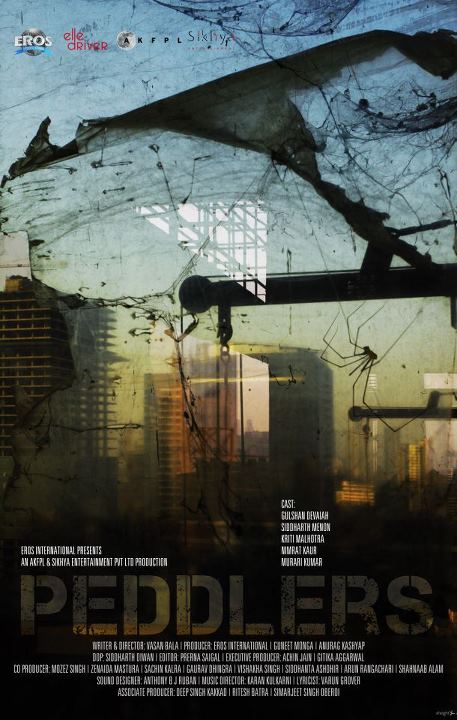
This is not really the official poster for its India release. But this is going to be used during the Cannes fest.

Peddlers will have its premiere at the Cannes Film festival in Critics Week and will compete for Camera D’Or.

A new book titled Mother Maiden Mistress – Women in Hindi Cinema, 1950-2010 is out in the market. The co-writer of the book, Jigna Kothri, writes about it and shares an excerpt from it.

The first woman protagonist in Hindi cinema was Taramati, in Dadasaheb Phalke’s Raja Harishchandra (1913) enacted by a man since cinema was considered a profession beneath the dignity of ‘respectable’ women, even if she was playing a pious, and ideal wife on screen. It would seem Hindi cinema has come long way since then, though, the journey that Mother Maiden Mistress makes through six decades of cinema, finds that the more things have changed, the more they have remained the same.

The book  brings to life the women characters that peopled cinema and the popular imagination, and shaped fashion and culture. The book records and reviews the woman in Hindi cinema – the mythical, the Sati-Savitri, the rebel, the avant-garde and the contemporary. To get a better idea of where these characters come from, the book shows the society that the the filmmakers lived in, the socio-political milieu of the particular decade. We look at what kind of films were made during that decade and what were the dominant features of women protagonists at that time. In this context, certain protagonist are chosen and dicussed in detail.

It’s not just the character that is discussed, one section of the chapter, looks at the way women were dressed in the films of the decade, the high and lows of fashion in Hindi cinema. There is also the first-person narratives of a leading actress from each decade – Waheeda Rehman, Asha Parekh, Hema Malini, Shabana Azmi, Madhuri Dixit and Rani Mukherjee – all close-up examinations of how some of the iconic characters of Hindi cinema came to be.

The following is an excerpt of Chapter 3: Seventies – Look Back In Anger. These paragraphs are from the section that discusses the roles accorded to women characters in the popular films of the decade and attempts to record and review not just the stereotypes but also the exceptions.

“Films dominated by male superstars often reduced women to uni-dimensional figures. The action films of the seventies revolved around action/angst-ridden, disenfranchised hero/heroes who took over all the rasa/bhava of the narrative. The women were passive constructs whose fate and circumstances lead to the hero’s heroism. The multi-starrer phenomenon – films like Manmohan Desai’s Amar Akbar

 Anthony, Suhaag, Dharam Veer and others – further reduced the woman’s impact on the narrative. Love stories and big-budget musicals were no exception. The same was seen in buddy films where the so-called feminine emotions and feminized virtues of love and sacrifice usually accorded to the heroine were taken over by the heroes.

In Hindi films, friendship among males always involves tender emotions. The friends are separated by circumstances or a woman, and the film usually ends with one sacrificing his life/love for the other.

The men would have their respective romantic interest keeping in mind the interests of heterosexuality. Sholay (1975) became the definitive and probably the first ‘action-buddy’ film in which the two heroes, united against the forces of injustice, carried the narrative.

To seek a definitive feminist or even a progressive representation of women characters in mainstream cinema in the seventies would be futile. However, several traits were seen in women characters that were definitely a breakthrough in commercial cinema.

Yash Chopra’s heroines were well-sketched, realistic individuals who could compromise but never suffer to be victims. In Kabhi Kabhie (1976), Pooja (Raakhee) and Vijay (Amitabh Bachchan) choose duty over love and decide to part. Pooja accepts the new relationship in her life and grows into the role of doting mother, wife and career woman whereas Vijay continues to nurse his hurt over his lost love and neglects his wife. His wife, Anjali (Waheeda Rehman), married to an indifferent man and forced to play second fiddle to her own daughter, has also to come to terms with the guilt of abandoning her first-born child. Her instinctive reaction on meeting, for the first time, her adult daughter born out of wedlock is to hide the truth from her husband. Pinky (Neetu Singh), that daughter, puts her marriage plans on hold when she learns about her biological mother and embarks on a journey to meet her.

In Trishul, the heroines Geeta (Raakhee) and Sheetal (Hema Malini) have their individual personalities, being neither subservient to nor dependent on the heroes. Kaala Patthar, a film about a man’s cowardice and redemption (the story is partly based on Dhanbad’s Chasnala Colliery tragedy in 1975 that killed 372 miners and on Joseph Conrad’s Lord Jim), did find space for characters such as Anita (Parveen Babi), a photo-journalist investigating the conditions of coal miners, Dr Sudha Sen (Raakhee), who serves the mining colony, and the street vendor Channo (Neetu Singh). Nisha (Raakhee), a single woman and successful professional in Doosra Aadmi  (1977), falls in love with a much younger, married man who resembles her late beloved.

Significantly, most of these characters were created by Salim–Javed, whose iconic creation in Sholay  – the loud-mouthed tangewali Basanti (Hema Malini) – was a departure from the stereotypical village belle. Earning her own keep, she certainly does not believe that women should be seen and not heard, and does not surrender to her fate, choosing to fight instead. Hema Malini, dubbed the ‘Dream Girl’, was one of the rare heroines who pulled off action scenes in films such as Seeta Aur Geeta  (1972) and Paraya Dhan  (1971) in which the heroes occupy the usually feminine passive space.

Films in which the women not only take control of their life and their space but are active participants in the fight against the system are rare. Usually, the heroines either hold the hero back or garland and send him off to the battleground. There were rare examples, such as some roles essayed by Asha Parekh, which often broke away from the stereotype. In Aan Milo Sajna  (1970), the lead character pretends to be betrothed to the villain but falls in love with the hero and actively pursues him, complete with an eve- or rather Adam-teaser of a song: ‘Palat meri jaan’. It is the hero who is suspected of immoral behavior and has to prove himself to the heroine – a reversal of Sita’s taint.” 

DETAILS : Written by Bhawana Somaaya, Jigna Kothari and Supriya Madangarli.

Publishing Date: 2012.  Publisher: Harper Collins.  Number of Pages: 272. Language: English. Price – Rs 299

We will be reviewing the book soon. If you are interested, you can order it from Flipkart here or from Infibeam here.

Or is he really serious?

Like his film projects, his tv debut was also kept a secret till it finally came on air on Sunday at 11am. And it turned out to be exactly the same as we had told you earlier. It started with Aamir Khan’s voiceover (aha, the emotional modulation there, noticed?) talking about where we stand today. And then the chat show started where the topic was female foeticide. Case studies, tears, figures, tears, doctor, more case studies, more tears, more questions and finally a song by Swanand Kirkire and Ram Sampath overlapped with visuals of girl child, Aamir asking the kids to come sit close to him. Aha, if the last season of KBC was poverty porn, this is going one step ahead with just one mantra – we will, we will make you cry!

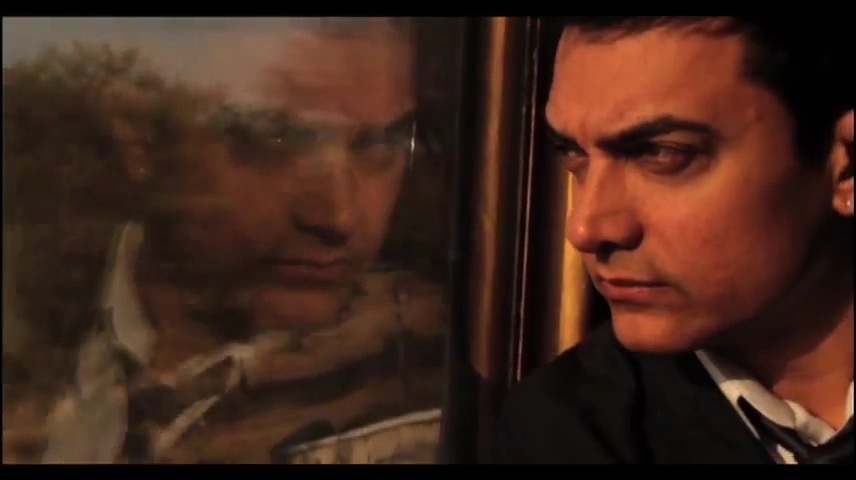
The set was tacky, production value made it looked like straight out of DD and graphics seemed out of CBSE school books. Who said serious issues need to look boring? Oh wait, our TA wouldn’t get it? That aside, i had two big issues with the show – First, the pitch and positioning of the show. Stand anywhere in Mumbai and you can see Aamir Khan staring into the void from one of the hoards. I am not sure why but i feel here’s our Aamir Jesus Christ. That look, that stare, the gaze, it’s all there in the stills, music videos, hoardings and the show. It’s so repulsive, so rehearsed and so bloody fake! The intention might be honest and i sincerely hope it helps in creating some awareness but one issue, one sunday, one episode – is it some kind of quick fix solution? Also, am cynical because he is the same actor who had suddenly felt about the Narmada Bachao Andolan during the promotion of Rang De Basanti and then vanished from the radar. Of course the release of RDB was just a coincidence. Blame it on my cynical mind!

My other issue is if he is really serious about endorsing social causes, why not let go your entire fees for it? Contribute to the cause and i will respect you for lifelong. There’s no harm in taking money and doing the show but i can’t digest the self-righteousness then. Doing 13 episodes for free isn’t a big deal, right? Go ahead, do it. Shut me up! Otherwise how different is it from NDTV Greenathon or IIFA Charity or such events which are organised by event management companies. Stars endorse the cause, gets paid, sponsors feel they have done their bit of corporate philanthropy and all happy. But is anyone really honest and serious? Aha, the cynical me.

But then the other point is our tv shows are pure garbage. There’s almost nothing to watch. At least this show is trying something new, it’s going to stand out. And in that process if it can serve a purpose, that’s great. Agree.

So i asked on twitter if anyone would be willing to write about the show. Posting two views on the same. First one is by Chintan Bhatt. From my previous interaction with him on twitter, i know for sure that he is a big fan of Aamir Khan.

I was not sure I was going to be able to watch Satyamev Jayate, though I had been waiting eagerly for it from weeks, because the night before which was full of drunken revelry, to celebrate the anniversary of another year of living, of yours truly, ended too late. But by some stroke of miracle, my eyes opened just to the tune of 11 am and with blurry eyes I switched on the TV. The show started and at least the format, the set, seemed nothing out of the ordinary. But as Aamir came on stage, giving a small speech, he did not sit on the sofa right away which was stationed on the middle of the stage. He slowly sat on the steps, just in front of the audience. I smiled and my hangover was gone.

He was not a superstar, or an expert, or a know it all and did not pretend to be one. He was like me, and everyone else. Surrounded by the problems, and people facing it, like we all are, and trying to understand it. Though this format, sets, was something we had seen before, this honesty and intimacy was something Indian television had not witnessed before. When he spoke of the problems, his style was not of preaching but was of self discovery, more than anything else, which let the viewers feel part of the show.

What was striking about the show for me was how all encompassing about the issue it was, or much more than anything I have seen before. Filled with facts and charts and statistics to supplement the emotional quotient and the true stories it presented, it attacked the issue right in its guts and where it hurts given the sense of denial, we as Indians have mastered to live in. The experts, the victims, their tears, the shock in the crowd, the silence that filled the room as they grasped the horror stories and the sense of disbelief on Aamir’s face, were all real and in a way reflected what so many of the viewers too felt.

A few days back I was watching Aamir’s interview on CNBC and the interviewer on being told by Aamir that he has invested 2 years into the show and has given up on the endorsements, crores of rupees he could have earned, of how his selection of show timing was termed suicidal, how to telecast the show on DD so that reaches the most commonest denominator of the population sounded impossible and unheard of, etc, she almost out of frustration asked him, which effectively was, ‘But why do you need to push yourself so much and keep such tough targets for yourself?’ And again, he smiled and shrugged.

My rage on seeing the views trying to demean him and the show on Twitter and elsewhere after watching the show, were gradually replaced by indifference of sorts. Fact which cannot be denied is that in a country obsessed with garbage in the name of entertainment and where smartness is equated with how manipulative and selfishly you can lead your life, he made the whole country talk about one of the most inhumane and disgustingly hidden practice which has become a commonality behind closed doors.

The anger towards the pointless and forced cynicism was further nullified by the thought I had of those thousands of families who would have done these heinous activities, which will be taken up in all the episodes of the show, who will now be forced to sit and think hopefully. Of all those silent voices, all those abused and assaulted, all those bullied and tortured who will now again have hope of fighting for their right to survive and live. Yes, its sounds good to say that we don’t need an Aamir Khan to tell us what is good and bad, we are too educated and intellectual for that, but as the biggest revelation of today’s episode was that education has nothing to do with goodness, intellect has nothing to do with being humane. We are living in an imperfect, corrupt and insensitive world, and we need heroes desperately, we need to face harsh true stories desperately, we need to know what being humane feels again desperately, and in this same imperfect world, this show does that. It forces the monsters in laws of the country to look in the eyes of their daughters in law, of their near and dear ones and face the truth. It makes the demonic husbands to feel ashamed and disgusted at themselves, if not from the inside, then the world in their immediate surroundings should have a collective voice to ridicule them, and this show will do that. We are living in a star obsessed country which silently breaths and breeds away from the confines of the cynicism of twitter and their likes, and that’s the nerve this show will catch, hopefully.

No, no one is claiming that this show will solve all the problems of the country. No one is that naive, but it’s worth an attempt, if it gets people to start talking. That’s all. And if that’s the minimum it can do, then be it. As the gentleman sardar who featured in today’s show with teary eyes said, – EVEN IF I CAN SAVE 1 GIRL, ITS ENOUGH. Some battles are worth fighting for, to win or lose is immaterial.

At the end, my bout of anger was gone completely when after about half hour after the show was over, the maid in my house came with a black eye and after few days of not coming to work. On coaxing by my flat mate she revealed that our husband is a drunkard and beats her in front of their two kids incessantly. From the fear of not telling anybody, she does not even scream, she takes it all on silently. And she is too scared to go to the police. Who will tell her and millions of other such stories? Will the cynics look in her eyes and crack a joke on the color of her wound? Well, you never know, they may. But this show talks about these victims, and will give countless number of them the tiniest bit of hope to fight back. By the end of the show Aamir said the biggest contribution was to be done by the youth of this country. And my rage towards the cynics was shifted to anger towards bastards like the maid’s husband, and attempts will be on to do something about it, like they have been from long. As they say there are those who say and crib, and there are those who do. Its very simple.

I remember debates with my father, who used to enjoy the so called escapist cinema which I despise. After a long heated debate, I simply used to ask him, ‘Why do we need to travel to a world unknown to find beauty and strength? Can’t we explore the same around us in our films?’ That is the biggest gift the show has given me. It has given me heroes who exist around me and us, whose beauty lies in their bravery, like all those women who were in the show today. They are the real heroes with real stories. Agreed, there may have been other shows who would do that, but for the first time I felt their bravery and strength, and that is why I thank Aamir and the channel for the show through this small insignificant post. All is not lost, yet.

                                                                          ————–

And here’s the other view. This one is by someone who calls himself The Pucca Critic.

After almost a month of promotion as “Har Baat dil pe lagegi toh hi baat banegi” by Aamir Khan, Satyameva Jayate’s first episode was aired on Star Plus, DD National & also Star Pravaah (with Marathi subtitles) today at 11 a.m. Let us see kitni baat dil pe lagi!

The show started with some scenic shots and Aamir Khan blabbering about himself as an actor and a human being. And that’s what he tried to do throughout the show: I’m The Aamir Khan. I’m India’s inspiring role model. The idol of the common man. I’m here to change your life with this TV show for which I’m charging hefty sum.

No sooner did the show started, we learn that it’s kind of talk show dealing with sensitive social issues. Aamir Khan pretending to be appealing enough for the aam – junta does gigs like sitting at the stairs of the dais while delivering his speech to expect Oh-look, this-superstar-doesn’t-mind-sitting-on-the-floor reaction.

Moving over, we are introduced with 3 ladies who narrated their ghastly tales about how they were tortured after delivering a baby girl. So that’s what the topic of the day was: female foeticide & how it is related with other criminal happenings like ignorance of women in society, sexual harassment and flesh trading. Their emotions were raw. Enough to give you a gulp in the throat.

While discussing a case, crude pictures of the lady being victimized of physical assault by his husband were displayed without a blur (which is how news channels are made to show). A leading daily once made a gore picture of a bomb blast victim to the headline to which their readers irked by remarking them as selling information porn. OK. So this is how Aamir Khan wants his words to touch the hearts?

All through the interview, you can hear Aamir interrogating silly questions. “Aur kaisa feel hua aapko tab?” “Aur kya hua tha?” Genuine thoughtful questions were lacked.

And more irritating were the reactions by the audience. “Haawww” “Ohh noo..” “Ohhff” That’s how general interactions with the common audience were lacked instead they were focused for their shocks and tears as if they were expecting the public watching on TV to cry too.  The flawed direction is made deliberate when a lawyer (part of the related case) interrupts midway of another interview and the interview is carried no further but diverged by the host. I don’t know how many retakes were needed to shoot this!

They also ended up with some marketing of 3G technology of a telecom network by a video conference with some bachelors of Haryana who discussed bachelorhood of Salman Khan. Don’t tell me this wasn’t rigged!

This is how the show meant-to-be inspiring ended with the uninspiring host who asks his audience to send SMS to a number if they support the cause. Do you really think sending SMSes will help?

Finally, Aamir calls up his friend and musician Ram Sampth along with Swanand Kirkire to perform a beautiful, lyrical song “O Re Chiriya.”

What we expect is some improvement in the direction of the show with retaining the raw emotions of the subject and uplifting the enthusiasm of the audience as the show ends.

P.S: If  you really want to see inspiring Aamir Khan, watch Sarfarosh or Lagaan. And if you hate Aamir’s face, watch Anoop Soni on Crime Patrol. He’s terrific.

———————-

And here’s a video review to end the post on a lighter note…

If you are not active on social networking platforms, you might have missed the two videos which are getting lot of attention. First came the mash-up of The Dark Knight Rises and Gangs of Wasseypur as  “The Dark Knight Rises in Wasseypur”. Great fun!

This is done by Sumit Purohit.

And insipired by the Dark Knight mash-up, came “The Avengers Of Wasseypur”. This is done by Sudarshan Ashok.


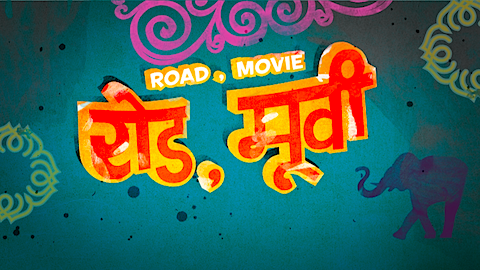
Few months back, Dev Benegal posted the script of his film Road, Movie on his website. But if you missed it, we are posting it here again. Simply because we try to gather and post as many hindi film scripts as we can and all at one place. The screenplay of the film was selected for the L’Atelier section at the Cannes Film Festival 2006. ( Click here to read his interview on the same)

I didn’t like the film much. Thought it was pure desi exotica for the west but it had lot of interesting stuff. But whether you like a film or not, reading a script is always going to help. So, here you go – download and happy reading.

Courtesy – Dev Benegal

Ah, finally. The way Viacom18, the producer of Gangs of Wasseypur, was reluctant to share even on location images of the film after the Cannes announcement, we were thinking if they were going to lay some golden eggs.

The trailer, poster and the official synopsis of the film is finally out. Let’s go one by one. First, the trailer.

Loot, coal mines, volatile people in volatile land, zindagi ka ek-e maksad – badla, jail, chop shop, Tishu, Bihar ke lala, cuss words, Richa attacking the same man who has been killing everyone, sex, goggles-wala-pyaar, dhoom-dhaam, more cuss words, more earthy and punchy dialogues, more abuses and some more dhaam-dhaam. And everything is inherited! E toh poora ka poora dabang haiabki badke Kashyap ki baari.

But why is the text font so bland? Bad font always bores me.

As far as the trailer goes, this is as mainstream as it can be. But i think the trailer serves more masala than the film will offer. Might be wrong. But Kashyap without his indulgences? Jiyo o Bihar ke lala. The trailer doesn’t tell you much about the film but it gives the ambiance and the mood of the film and tells you what to expect – you connect the dots. And if you can’t, scroll down for the synopsis.

My fav bit – Pankaj Tripathy. Bahut-e kamaal ke actor hai. Agle Yashpal Sharma hai jo hame bahut-ey pasand hai.

Now, the poster.

Superb art work. Like the colours and the treatment. But why such a bad finish? The film posters on the right and left hand side looks so weird. As if at the last moment they asked some intern to put two posters. Just doesn’t gel with the rest.

And now the official synopsis…

Towards the end of colonial India, Shahid Khan loots the British trains, impersonating the legendary Sultana Daku. Now outcast, Shahid becomes a worker at Ramadhir Singh’s colliery, only to spur a revenge battle that passes on to generations. At the turn of the decade, Shahid’s son, the philandering Sardar Khan vows to get his father’s honor back, becoming the most feared man of Wasseypur. In contemporary times, the weed addicted grandson, Faizal Khan, wakes up to this vengeance that his family has inherited. Staying true to its real life influences, the film explores this revenge saga through the socio-political dynamic in erstwhile Bihar (North India), in the coal and scrap trade mafia of Wasseypur, through the imprudence of a place obsessed with mainstream ‘Bollywood’ cinema.

The film stars Manoj Bajpai, Nawazuddin Siddiqui, Jaideep Ahlawat, Tigmanshu Dhulia, Aditya Kumar, Reemma Sen, Richa Chadda, Huma Qureshi, Piyush Mishra and Syed Zeeshan Qadri.

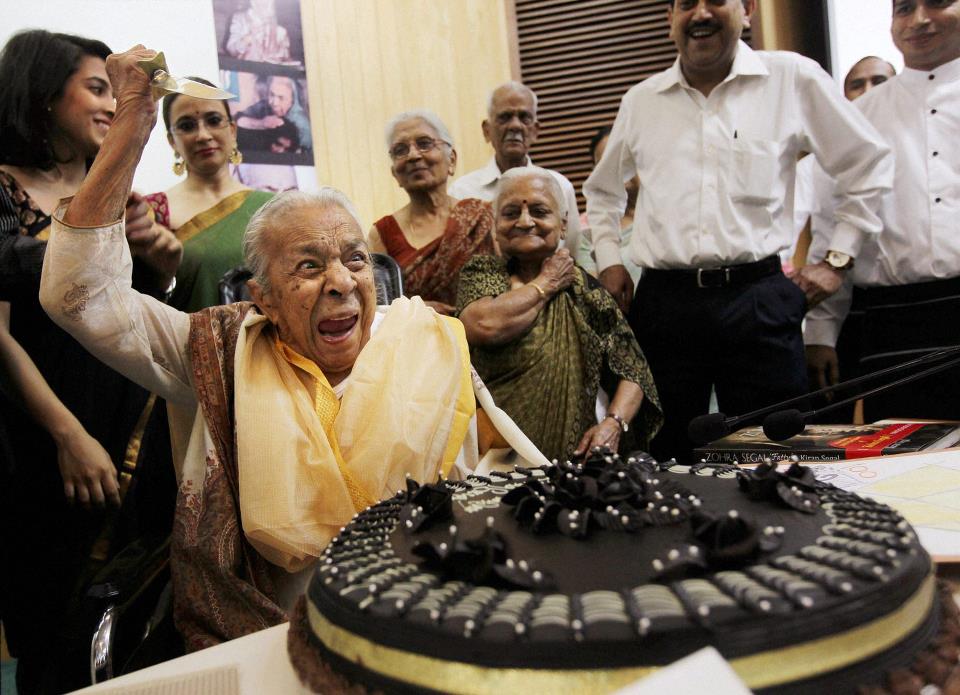
Zohra Sehgal, a name that symbolizes liveliness, and truly defines ‘Life’ in every possible way.  The unmatched charm, the animated smile on that expressive face, and the young heart, even at this age it fills every ambiance with so much joy and happiness. Forget real life, look at any of her pictures and you realise that it’s so easy for the camera to capture it.

The living legend completes a century “full of Life” today on April 27, 2012.  Born exactly 100 years ago, Zohra started her career  as a dancer with Uday Shankar, was later associated with IPTA & Prithvi Theater and made her onscreen debut in Khwaja Ahmed Abbas’s much acclaimed Dharti Ke Laal in 1946.

Here’s a rare clip of her onscreen appearance in Dharti Ke Lal.

In recent years she has continued to work in films and has made her unique presence felt strongly in films like Dil Se, Bend it Like Beckham, Saaya & Cheeni Kum.

Hundred & not out, we wish Zohra Sehgal many more years of life…a life that has priceless memories to share, stories to tell and moments to cherish.

Happy 100 years, Zohra-ji!

(PS – ANI recently did an interview with her. It’s in three parts. Click here to start with the first part.)

Pavan Jha