Archive for the ‘cinema’ Category

Has SPOILERS. DON’T read if you haven’t seen the film.

We are running a week late on this one. A new film by Ramu has already released this week and as expected, it’s call-it-whatever-you-want-to-call. Because of Do Dooni Chaar and the way the first promos of Ishaqzaade played out, we were really looking forward to Habib Faisal’s film. I liked lot of things in the film but it had the same problem which most desi films suffer from – 2nd half. It was the same story with his Band Bajaa Baraat and Do Dooni Chaar. And then a thanda climax. If it had to end that way, i would have liked to see them jumping from the roof with guns blazing from every side on the beats of the romantic title song and freeze!   say Thelma and Louise kind. The other criticism that the film received was of being sexist. Habib tried to defend it here.

And we have someone who is on the same page – Neeraja. She is from one of the many Almodas of India. She loves to think and her priorities in life includes books, cinema, mathematics, philosophy, politics and arguing about the same, in no particular order.
Ishaqzaade is an interesting film because it throws up interesting questions and reactions. I wouldn’t call it a love story but then what one takes away from a film is very subjective. After all, there are people who enjoy bodyguard and wanted.

Ishaqzaade is a story of a girl born in a society where violence is a way of life. There is not a single character in the film that is averse to violence. It is shocking and from what I know pretty close to truth. Upper-caste gun-toting warring political families is a cliche in real life…and not only in these parts (UP/Bihar) but in most parts of the world. Modern Politics at grass-root level is bullet-ridden and blood soaked. Patriarchy is a common feature of politically influential families across the world. Power flows from the barrel of the gun. Everywhere. In india, it has its own flavour blended with caste, religion and feudalism.

The film is a “love story” set in the backdrop of warring political families (hindu and muslim) in a small town somehwhere in north India. The kind of families that perpetuate honour killings, where only women worth loving are either prostitues or mothers and domestic violence is culture. To have a female character that defies all this and comes out a winner at the end would have been awesome but very unreal. The film portrays an honest and ugly picture of patriarchy that exists in it’s most violent form in some parts of our country.

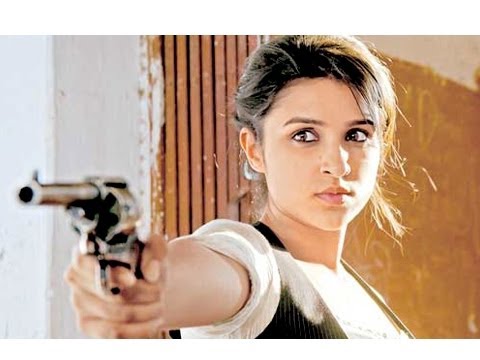
Zoya is a spirited girl. She owns a gun (which she buys by selling her jhumkas) and she can address a crowd like true blue small town sharp-tongued politician but she is also naive. What she doesn’t understand is that most of this freedom has been handed out to her for she is the youngest and the only girl in a moderately progressive family. Most of her strength is inherited. It comes from the fact that she was brought up in a politically influential family. A family where everyone carries a gun in their hands and a dhamki on their lips all the time. She gets to do things that perhaps other girls in the neighbourhood cannot and won’t even dream of doing. Her peers see her as a strong young woman who makes her way while her family just sees her as a spoilt little girl who wants to be like her father but will be married off to a nice muslim boy soon enough.

What’s a strong female character really? According to most of the reviews/opinions that I have been reading, it is someone who subscribes to feminist ideas of urban women. Zoya’s world however is very different from that of ours. She lives in a society where for young boys to visit prostitutes is coming of age (and is even encouraged by their fathers/grandfathers). Where a woman’s opinion is non-existant and her body is only for abuse. Where young adolescent girls do not learn about love by reading romantic novels. They watch crappy hindi movies where the hero is usually a stalker and a charmer. So, when they experience the hormonal rush of emotions when a boy touches them or claims to be in love with them – they are smitten and they get foolish. So, it is not a surprise that when Zoya falls in love, she falls hard. An outspoken, argumentative Zoya at home transforms into a blushing and smiling girl when she is with Parma. The boy, on the other hand, knows love, sex and manipulations all too well to succumb to any emotion.

Her values come from the society that she lives in and in some sense helps to perpetuate them (she tells her mother to shut up because she didn’t understand politics but she wouldn’t dare to talk to her father like that. It just shows how women are treated in the family and how this treatment is considered acceptable by other women members of the family). She wants to be a part of the very system that treats women like that. She wants to be an MLA like her father and agrees with the power hungry, violent politics that surrounds her. She just wants to be one of the boys but at some level she is aware of the fact that no matter how many shots she fires, she is a woman at the end of the day. She knows that being seen with Parma in college bathroom will bring dishonour to her and therefore to her family because she is a girl and a girl’s honour is attached to her family’s honour. She doesn’t however agree with the concept which is what makes her different from other women in her place. She is not angry at Parma for having sex with her under the pretext of a fake marriage (which is technically rape), she is mad at him for betraying her. She cannot stand the fact that she was stupid enough to fall for someone who betrayed her and made her look like a fool in front of the whole community which is why instead of attempting a suicide, she tries to kill him. The fact that in her mind her honour is not attached to her body makes her different. That is also why she is able to forgive him later on.

In the end, what do people really want to see? A khoon bhari maang like woman who wields a gun and seeks revenge? Is that liberated enough? Will that change the fact that no matter what she had done, she would have to die in the end because there is no place for a spirited independent woman in that society.

My biggest problem with the movie is that there is no emotional involvement. There are very few moments where you get to feel what the characters are feeling. None in case of Parma which is why the change in his attitude towards Zoya is unbelievable. There is a lot of running around, shooting and lost and found moments but you hardly ever get to feel what the characters are feeling. The Romeo-Juliet-esque death scene is hilarious and almost spoiled the film for me.

What makes it work is Parineeti Chopra’s Zoya and the small town ambience. Zoya’s character is so close to reality, it hurts to watch her. If you have lived in a small town, if you have met spunky, street-smart, sharp-tongued girls from conservative families, it would do you good to go back and check what happened to them. How and when they were tamed. It’s not always cruel. Most of the girls believe that it’s the right way…just like most of well educated independent girls believe that no man can dominate them but at the end of the day they must marry someone who is smarter or more educated or at least earns more than them. There traps after traps and you succumb somewhere and justify it to yourself using your brilliant analytic skills that you acquired through higher education. We have all fixed boundaries for ourselves according to the freedom and strength granted to us. There are few who venture beyond and try to break the status quo. Lets not judge them for not breaking your boundaries.

Just because a woman wields a gun and talks like a boy, doesn’t mean she is liberated and just because she fails to challenge the patriarchy on all fronts (in the way we want her to) doesn’t mean she is not strong.

Just for the sake of irony, I leave you with this poem by Meena Kandasamy

Paracetamol legends I know
For rising fevers, as pain-relievers—

Of my people—father’s father’s mother’s
Mother, dark lush hair caressing her ankles
Sometimes, sweeping earth, deep-honey skin,
Amber eyes—not beauty alone they say—she
Married a man who murdered thirteen men and one
Lonely summer afternoon her rice-white teeth tore
Through layers of khaki, and golden white skin to spill
The bloodied guts of a British soldier who tried to colonize her. . .
Of my land—uniform blue open skies,

Mad-artist palettes of green lands and lily-filled lakes that
Mirror all—not peace or tranquil alone, he shudders—some
Young woman near my father’s home, with a drunken husband
Who never changed; she bore his beatings everyday until on one
Stormy night, in fury, she killed him by stomping his seedbags. . .


We: their daughters.
We: the daughters of their soil.
We, mostly, write.
PS: I wonder if one can make the same film with a muslim boy and a hindu girl? Won’t that be a blasphemy in our shining secular nation!

Two song promos of Gangs Of Wasseypur are already out. One is in Bhojpuri and the other is Chutney (Bhojpuri meets calypso) from Caribbean islands. If you have already heard the songs and are playing it in loop but can’t figure out the lyrics, we are going to help you. For those who haven’t heard the songs, do check it out. The embedded links have the full songs, not really the best audio quality but you can manage. And if you like, do  buy the CD. You will not be disappointed. Bet!

Here’s a small intro to both the songs by lyricist Varun Grover, the audio links and the lyrics. If you haven’t seen yet, Jiya Ho Bihar ke lala song promo is here.

1. Jiya Ho – Introduction + Song + Lyrics

For this, Sneha traveled to the interiors of Bihar. It took her an entire month (and then few trips more) to cover all the major districts and languages. (Bhojpuri, Maithili, Chhota Nagpuri, Angika and more) She wanted to just explore the sounds and singing traditions of Bihar. The opening groove and words ‘Jiya ho bihar ke lala, jiya tu hajaar saala, tani naachi ke tani gaayi ke, tani naachi-gaayi sabke mann behlaawa re bhaiyya‘ was found in an all-night nautanki muqaabla in a village near Gaya District. The lines were being sung as a warm-up exercise for singers (around 20 of them in chorus) and instrumentalists.

Sneha improvised on the tune and extended the groove to make a complete song. The search for singer went on for long, and many options crossed our mind. But once the position of the song in the film was finalized, it had to be somebody with genuine roots and skills. It may sound strange, but Manoj Tiwari is the least experimental voice we have tried in the entire album. Yes, every other singer is either a new one, or a folk singer not many know of outside his/her district.

There’s a non-stop 20-minute plus take of Manoj Tiwari for this song. While recording he closed his eyes, went into a musical zone, and sang it like a sufi-possessed. May be it will be released online someday soon.

Music – Sneha Khanwalkar. Lyrics: Varun Grover (mukhda from traditional/folk). Singer – Manoj Tiwari

Jiya ho bihar…

Jiya ho bihar ke laal,

jiya tu hajaar saal,

Jiya ae bihar ke laal,

jiya tu hajaar saal,

Jiya ae bihar ke laal,

Jiya ae bihaar ke laal

jiya tu hajaar saal,

jiya tu hajaar saal,

jiyo tu hajaar…

Tani naachi ke,

tani gaayi ke,

Tani naachi gaayi, sabke mann behlaava re bhaiyya…

Tani naachi gaayi, sabke mann behlaava re bhaiyya…

Tani naachi gaayi, sabke mann behlaava re bhaiyya…

Tani naachi gaayi, sabke mann behlaava re bhaiyya…

Bhaiyya-aa-bhaiyya-aa…

Bhaiyya-aa-bhaiyya-aa…

Bhaiyya-aa-bhaiyya-aa…

Ae….bhaiyyaa….re….

Antara 1

Tu maati ka laal re laala,

Bhaiyya-bhaiyya-bhaiyya…

Tohra magahi saan niraala,

Bhaiyya-bhaiyya-bhaiyya…

Tere purkhey jiye andhera,

aur tuney jana ujaala…

Tere purkhey jiye andhera,

aur tuney jana ujaala…

Bhaiyya-aa-bhaiyya-aa…

Bhaiyya-aa-bhaiyya-aa…


Ho…

Tere god pakhaarey ganga,

tere tej se aag jhulasta,

Tere kandhey chadh ke sooraj,

aakas mein roj pahunchta…

Jiyaa tu honhaaaaaaar….

Tani ghoom-ghaam ke, tani dhoomdhaam se…

Tani ghoom-ghaam ke, tani dhoomdhaam se…

Tani taan kheench ke, taansen, kehlaawa re bhaiyya….

Tani naachi gaayi, sabke mann behlaava re bhaiyya…

Tani zor laga ke, sabko saath nachwa re bhaiyya……

Tani neeke-neeke bol pe geet sunaava re bhaiyya…

Tani teekhe-teekhe bol pe dhol bajaawa re bhaiyya…

Tani jhaal utha ke, taal se taal milaava re bhaiyya…

Tani dholak, maandar, matka, chammach, laava re bhaiyya…

Tani oka-boka-teen-tadoka…

Tani chandan-maati-chauka-kaathi…

Tani oka-boka-teen-tadoka gaava re bhaiyya..

Tani chandan-maati-chauka-kaathi laava re bhaiyya…

Tani saans fula ke phoonk se dhool udaava re bhaiyya,

Tani jaan jala ke geet ke tel pilaava re bhaiyya…

The second song which has just been released is the hilarious I am a Hunter. The song promo is here.
2. Hunter: Introduction + Song + Lyrics
Sneha went to Trinidad-Tobago to find some tunes. Migrants from UP,Bihar,Bengal moved to Caribbean islands in pre-Independence times. They settled there, mixed with local races and cultures, and gave birth to a new music called ‘Chutney’ (which is basically Bhojpuri-folk meets calypso). They sometimes use words, instruments, and folk-tunes we thought were lost forever. Of course these tunes have now fused and evolved with calypso very much.

‘Hunter’ is one such find, originally written in English by Vedesh Sukoo (who has sung it too with that trademark Bihari-lilt and curled-tongue ‘o’ sound beneath every word). The Hindi lines are sung by Rajneesh, Shyamoo, and Munna, all part of Nirman Kala Manch (NKM), a well-known theatre group in Patna. Interestingly, one of NKM’s most famous plays is called ‘Bidesiya’, a term used for migrants that never return to their origins. In this case, Rajneesh-Shyamoo-Munna’s co-singer Vedesh Sukoo.

(Migrants who go out for a long time and do return are called ‘Pardesiya‘ and those who go for a short-term, like once every year to the city, probably to sell goods/grains, are called ‘Batohiya’. Hindi film songs have used these terms loosely over the years but while researching for this film, we came to know how technically specific these are.)

Music Director – Sneha Khanwalkar, Lyrics – Vedesh Sukoo (English), Varun Grover (Hindi). Singer : Rajneesh, Shyamoo, Munna, Vedesh Sukoo.

Haillloo… Hello… Hello

I am a hunter and she want to see my gun

When I pull it out boy the woman start to run]à (2)

She beg me to see it, she beg me to show it

But when I reveal it, she want to run and hideà (2)

Ooooo… ooooo … Oooo..

Put on your hunting clothes, let we go and hunt

Please don’t be embarrassed, you could touch it if you want.

All them young one around here, ask them about me.

I am the baddest gunman that they ever see

I am a hunter and she want to see my gun

Hum hai sikari, sikari sikari

I am a hunter and she want to see my gun

When I pull it out, the woman start to run

Tan tan tan tan tan tan tan tan.. Tan tan tan tan tan tan tan tan.. (2)

Daily goli nikle, automatic, tan-tan… (2)

With one gun in my hand and the next one around my waist

If you see this young girl with da rude look on she face

I say as a hunter, I must be brave and strong

She say that she find that my gun extremely long

Hum hain sikaari, paacket mein lambi gun,

Dhaayein se jo chhootey tan man howey magan..

Oooooo.. ooooo.. oooo..

This girl harasses me, she won’t leave me alone.

But that kinda behavior I really can’t condone

Hai bahut Bhokali, na kabhi ho khali – (2)

This girl harasses me, she won’t leave me alone.

But that kinda behavior I really can’t condone

She says that she’s sorry, she just want to have fun.

Then she asks me kindly, if she can hold my gun

I am a hunter and she want to see my gunWhen I pull it out boy the woman start to run ]—(2)

Door tak hai phamous, kar de sab ke bebas—(2)

Usko milta darsan, jisko man mein hai lagan—(2)

Laagi lagan laagi lagan… Laagi lagan laagi lagan…

3. Ik Bagal – Lyrics

UPDATE : Thanks to GhantaGuy, now we have got the lyrics of the haunting song Ek bagal also.

इक बगल में चाँद होगा, इक बगल में रोटियां,
इक बगल में नींद होगी, इक बगल में लोरियां,
हम चाँद पे रोटी की चादर डालकर सो जायेंगे,
और नींद से कह देंगे लोरी कल सुनाने आयेंगे.

इक बगल में खनखनाती सीपियाँ हो जाएँगी,
इक बगल में कुछ रुलाती सिसकियाँ हो जाएँगी,
हम सीपियों में भरके सारे तारे छूके आयेंगे,
और सिसकियों को गुदगुदी कर कर के यूँ बहलाएँगे.

अब न तेरी सिसकियों पे कोई रोने आएगा,
गम न कर जो आएगा वो फिर कभी न जायेगा,
याद रख पर कोई अनहोनी नहीं तू लाएगी,
लाएगी तो फिर कहानी और कुछ हो जाएगी.

होनी और अनहोनी की परवाह किसे है मेरी जान,
हद से ज्यादा ये ही होगा कि यहीं मर जायेंगे,
हम मौत को सपना बता कर उठ खड़े होंगे यहीं,
और होनी को ठेंगा दिखाकर खिलखिलाते जायेंगे,
और होनी को ठेंगा दिखाकर खिलखिलाते जायेंगे.

– पियूष मिश्रा

4. Keh ke loonga – Lyrics

Here’s the lyrics of the terrific Keh ke lunga. Sung by Sneha Khanwalkar and Amit Trivedi.

Ras bheege saude ka ye, khooni anjam….teri keh ke loonga

Teri keh ke loonga (2)

Khanjar se doodh gire yaan, ho katle aam…teri keh ke loonga

Teri keh ke loonga (2)

Saason ko saanp sunghan ke, jangli til chatta la ke, keh ke loonga

Teri keh ke loonga.

Bichu se hoth katta ke, lori jahreeli gaa ke….keh ke looonga.

Keh ke loonga, keh ke loonga, keh ke loonga.

Panghat ko bechunga main, mar mar ghat ke daam..teri keh ke loonga

Khuli ho sadke, tambu thane chahe mil vil ho ya baaz mekhkama, mekhamaa aaaa

Jisme bachna ho bach le, yee,

jisme bachna ho bach le, bach meri jaan… teri keh ke loonga (2)

Ja tu ja ja tu ja dariya naddi sagar beech pe jhariya,

aa taal mein ghus jaa. aa ghus jaa,

Jisme ghusna ho ghus le, Jisme ghusna ho ghus le,

Jisme ghusna ho ghus le, ghus meri jaan teri keh ke loonga

teri keh ke loonga….loonga….loonga….loonga.

5. O WomaniyaLyrics

Prelude: 

तारै जो बबूना….तरती बबुनिया…

बबूना के हत्थे न चरति बबुनिया…

Mukhda: 

ओ वुमनिया…

मांगे जो बबुना, प्रेम निसनिया…

बोले जो ठोड़ी, कटीहो कनिया….

बदले रुपय्या के देना चवनीया…

सईयाँ जी झपटे तो होना हिरनिया…

हो…..

Antaras:

रह रह के मांगे चोली बटनीया..

जी में लुकाये लोट-लटनिया…

चाहे मुहझौंसा जब हाथ सिकनिया,

कंधा में देना, दाँत भुकनिया

हो…

बोलेगा बबुना, चल जैहो पटना,

पटना बहाने, वो चाहेगा सटना…

दैहो ना पहुना को टिकट कटनिया…

पटना ना जाना चाहे जाना सिवनिया…

हो….

बबुना को उठी हो जो घोर भभक्का…

हाथ पकड़ ले तो मारी हो धक्का…

मन में निरहुआ के छुआ-छुअनिया….

ललना की लीला नाहीं पड़ना ललनिया…
6. Humne ke choree ke – Lyrics + Translation
Humni ke chhori ke nagariya ae baba…Ki arre baba chhori dihala ghar-parivaar kahun banwa maayi gayili ho…Leaving my town, dear father,

Leaving the family behind, to which wilderness mother has gone…

Ki aaho baba soooni kayi ke gharwa-duvaar, kawan banwa maayi gayili ho,

Pushing the home into loneliness, to which wilderness mother has gone…

Gaunwaan ke logawa, kehu…kehu se na bolein..

Chhotaka laikawaa, bhora-hi se aankh nahin kholey..

He isn’t talking to anybody in the village,

The small boy isn’t even opening his eyes since morning…

Sunsaan bhaiyili dagariya ae baba…

Ki arre baba nimiya ho gayil patjhaar, kawan banwa maayi gayili ho..

The roads are all deserted,

And the Neem tree has shed its leaves, to which wilderness mother has gone…

Kaisa-hoo ae baba, humaraa maayi se milaa da

Saparo tajaa ke humro araj sunaa da…

Do whatever, but let me meet the mother once..

Anyhow convey my message to her…dear father…

Chhutka ke chhote-ba umiriya re baba..

The small boy has a small life, father…

Ki arre baba, pari lin hum pauwwaan tohaar kawan banwa maayi gayi li ho..

I fall at your feet tell me, to which wilderness mother has gone…

Ki aaho baba soooni kayi ke anganwa-duvaar, kawan banwa maayi gayili ho,

Pushing the home into loneliness, to which wilderness mother has gone…

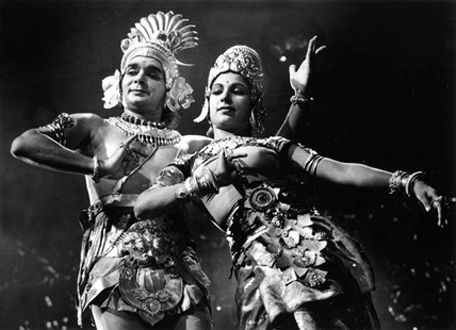
We all know about Miss Lovely, Gangs Of Wasseypur and Peddlers going to the Cannes. But apart from these three films, there’s a very important Indian film which will be at the festival this year – Uday Shankar’s 1948 classic film Kalpana. The restored print of Kalpana will be screened in the Cannes Classics section.
The other important films in the Classics section this year includes Sergio Leone’s Once Upon a time in America, Roman Polanski’s Tess, Spielberg’s Jaws, The Ring by Alfred Hitchcock, David Lean’s Lawrence of Arabia and Runaway Train by Andrei Konchalovsky. Since we really don’t have a habit and culture of preserving our cinema, i was wondering how did this happen. Then through a common friend i got to know about ad filmmaker Shivendra Singh Dungarpur, who is instrumental in making it happen. I asked him to share his experience on the same and he happily obliged. Read on.

I’ve been attending a festival called Il Cinema Ritrovato in Bologna, Italy for the last few years. This is a festival of restored films and it really amazed me what fantastic work they were doing at the restoration lab in Bologna. They work very closely with the World Cinema Foundation (WCF) headed by Martin Scorsese, who have been doing remarkable work restoring films from all around the world. Last year one of the representatives from WCF mentioned to me that they had been trying to get an Indian film called “Kalpana” directed by Uday Shankar for restoration. They had been trying for almost three years to get the film cans out of India, but they had not been able to do it for various reasons and they had given up.

I had seen Kalpana at a private screening that I had paid for at the Archive in Pune and I knew it was an extraordinary film especially from the point of view of dance and the use of light. I promised the WCF that I would get the film for them to restore, but they were sceptical given their previous experience. Even I didn’t anticipate the extent that I would have to run from pillar to post for this.

I knew the Shankar family and that I was working very closely with the National Film Archive of India (NFAI) for my documentary on P.K. Nair called “Celluloid Man.” I met Amala Shankar (Uday Shankar’s wife) in Kolkata along with her daughter Mamata Shankar and daughter-in-law Tanusree Shankar . I had to request them to procure a legal opinion from their lawyer as there was some litigation regarding the rights of the film that needed to be clarified before WCF could go ahead with the restoration. After a lot of persuasion and several trips to Pune, the NFAI also agreed after I showed them a letter from Martin Scorsese stating that I represented the WCF in this matter and on the condition that I took the onus of sending the cans to Italy and ensured their return. So in a matter of a few months, I managed to send the film to Bologna from my office in Mumbai. In fact, I am responsible for the negative.

I’ve been hearing great reports on the restoration and the lab in Bologna worked round the clock to ensure that they could premier the restored version of Kalpana at the Cannes Classic section. The WCF have very kindly invited me and Amala Shankar for the premier and we will walk the red carpet at 6.30 p.m. on May 17 before the premier. Amalaji is 94 years old and she is thrilled to travel to Cannes and walk the red carpet to see the only film made by her husband in which she played the main role.

At Cannes I have also been invited to see the restored version of Sergei Leone’s “Once Upon a Time in America”. As I am a donor for the restoration of Hitchcock’s film “The Lodger”, the British Film Institute has invited me to a screening of their restoration of Hitchcock’s silent film “The Ring” with live accompaniment.

In the West, there is a strong culture of preservation and restoration of films that India completely lacks. This is a shame given what a great cinematic history we have. This is what inspired me to make my documentary “Celluloid Man” on P.K. Nair, the founder of the National Film Archive of India. Mr. Nair singlehandedly built the Archive. It’s thanks to him that film students from the Film Institute, Pune like me had the opportunity to see the work of great filmmakers like Ozu, Tarkovsky, Fellini, etc. My film is a tribute to Mr. Nair and his life’s work and somewhere I hope people will realize how important it is to collect and restore our films.

One of the main reasons, I pushed so hard for Kalpana to be restored is that I am hoping that other Indian films will also get chosen for restoration. As a matter of fact, the lab in Bologna wants to restore Ritwik Ghatak’s “Meghe Daka Tara” and have asked me to help them raise the funding. I am hoping the Indian film fraternity or corporate houses will come forward so we don’t have to rely on the West.

(PS – To know more about the film and why it’s such a big deal, you can read this and this post.)

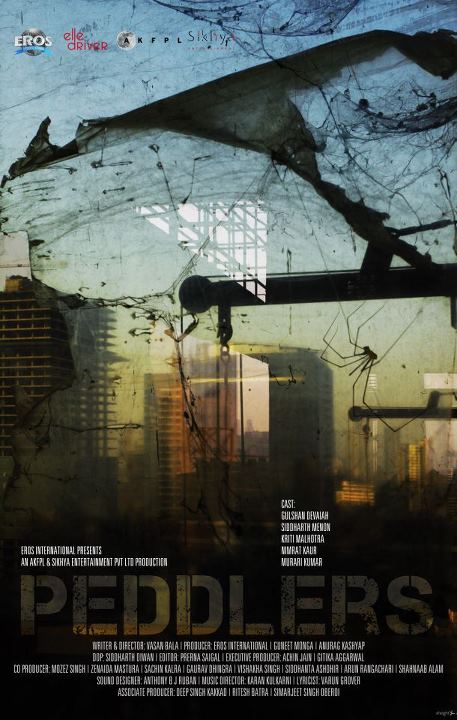
Finally, the official trailer of Vasan Bala‘s debut feature Peddlers is out. The film is all set to premiere at Cannes International Critics’ Week.

So what works and what doesn’t? Since he is a good friend, i might be biased. But let me try. The visuals look gorgeous, there is a sudden tension in the mood but it all looks calm on the surface. Great! And the ‘ud jayega‘ raw vocals adds to the creepiness. But the text seems to be too vague. Actually it’s the same as that cryptic synopsis of the film. Why? Who does that? Also, font is dull and boring. And it comes on the visuals. Found it too be distracting.

What do you guys think? Do leave your comments.

To quote the official synopsis,

Peddlers – A ghost town, Mumbai, inhabited by millions. A lady on a mission, a man living a lie, an aimless drifter. They collide. Some collisions are of consequence, some not, either ways the city moves on.

And here’s the cast and credit list..

Director : Vasan Bala
Screenplay : Vasan Bala
Cinematography : Siddharth Diwan
Editing : Prerna Saigal
Sound : Anthony B.J. Ruban
Music : Karan Kulkarni

Cast: Gulshan Devaiah, Siddharth Mennon, Kriti Malhotra, Nimrat Kaur, Murari Kumar, Sagai Raj, Megh Pant, Nishikant Kamat, Neeraj Ghaywan and Anubhuti Kashyap.

The official trailer of Ashim Ahluwalia’s trailer is finally out. It looks like they have combined all the three teasers which came out earlier, put it all in sequence with some new footage. Do check out.


Miss Lovely has been selected to premiere in the Un Certain regard section of the Cannes. The film stars Nawazuddin Siddiqui, Niharika Singh and Anil George.

And here’s the new poster and official synopsis (has minor spoilers)

And the poster is very similar to this poster of Nehle Pe Dehla. Is it tribute or plagiarism?

Synopsis

Bombay, 1988. Vicky and Sonu are brothers and partners in crime. They produce “C” grade films in the lower depths of Bollywood – lurid horror films, erotic bandit pictures, sleazy social dramas. From a humid one-hour hotel, amidst spilled whisky and bouts of womanizing, Vicky churns out illicit titles like “Dolly Darling” and “Lady James Bond” for India’s small-town picture houses. He leaves the donkey-work to Sonu, his withdrawn, dim-witted younger sibling, who often cleans up after him.

Returning exhausted from a sales trip peddling erotic reels in the hinterland, Sonu encounters a mysterious girl on the train and is drawn to her fragile beauty. She’s only just arrived in Bombay and her vulnerability soothes his own sense of despair. Her name is Pinky and she appears to be a struggling actress.

Vicky dismisses the girl as a gullible piece of flesh but Sonu is desperate, bewitched by Pinky’s silent radiance. He knows that only she can save him; make his emptiness disappear.

As the seasons change, Sonu begins to resent his hard-edged brother. He no longer wants toslave for Vicky’s lawless operation and decides to make a film of his own, with Pinky in the lead. A double debut – producer and star. It’s a reckless, nihilistic venture with no story and no crew in place. But he has a title – the film will be called ‘Miss Lovely’ and Sonu will do whatever it takes to make it.

But nothing is what it seems in this garish underworld of shifting alliances, double dealing, and quivering flesh. Out on the streets three years later, Sonu realizes that his whole world has turned upside down.

A baroque tale of betrayal and doomed love, the animal instincts of the struggling actress prove to be the most cutthroat of all. As paranoia and violence spiral out of control, brother turns on brother, and blood spills like water. Sonu, now alone and abandoned, aimlessly wanders the streets, junkyards and film studios, aching for one last glimpse of Pinky.

Tip – Damoviemaniac

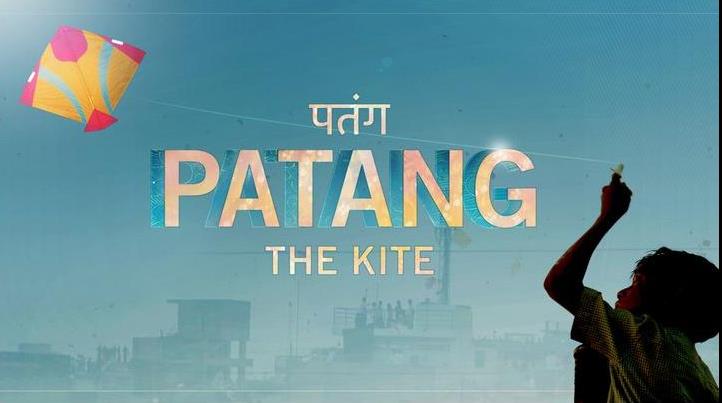
Prashant Bhargava’s debut feature Patang has been doing the rounds of international film festivals since last year and the latest one was the prestigious Ebertfest.

It stars Seema Biswas, Nawazuddin Siddiqui, Sugandha Garg and Aakash Mahayera, and has been shot by Shanker Raman.

The film will be finally in US theatres from June 15th. And here’s a new trailer of the film.

And here’s the synopsis..

A family saga set against the colorful spectacle of the Uttarayan, India’s largest kite festival, The Kite is a kaleidoscopic whirlwind of energy, romance, and turmoil. A businessman arrives in Ahmedabad for a surprise visit to his once grand family home, bringing with him his daughter and some unexpected news for the family’s future. Amongst the flurry of preparations and the energy of the festival itself, the transformative and intersecting tales of six characters unfold.

To know more about the film, click here.

You can also watch Prashant’s short film Sangam at www.mubi.com. The film premiered at Sundance Film Festival in 2004.

This is not really the official poster for its India release. But this is going to be used during the Cannes fest.

Peddlers will have its premiere at the Cannes Film festival in Critics Week and will compete for Camera D’Or.

A new book titled Mother Maiden Mistress – Women in Hindi Cinema, 1950-2010 is out in the market. The co-writer of the book, Jigna Kothri, writes about it and shares an excerpt from it.

The first woman protagonist in Hindi cinema was Taramati, in Dadasaheb Phalke’s Raja Harishchandra (1913) enacted by a man since cinema was considered a profession beneath the dignity of ‘respectable’ women, even if she was playing a pious, and ideal wife on screen. It would seem Hindi cinema has come long way since then, though, the journey that Mother Maiden Mistress makes through six decades of cinema, finds that the more things have changed, the more they have remained the same.

The book  brings to life the women characters that peopled cinema and the popular imagination, and shaped fashion and culture. The book records and reviews the woman in Hindi cinema – the mythical, the Sati-Savitri, the rebel, the avant-garde and the contemporary. To get a better idea of where these characters come from, the book shows the society that the the filmmakers lived in, the socio-political milieu of the particular decade. We look at what kind of films were made during that decade and what were the dominant features of women protagonists at that time. In this context, certain protagonist are chosen and dicussed in detail.

It’s not just the character that is discussed, one section of the chapter, looks at the way women were dressed in the films of the decade, the high and lows of fashion in Hindi cinema. There is also the first-person narratives of a leading actress from each decade – Waheeda Rehman, Asha Parekh, Hema Malini, Shabana Azmi, Madhuri Dixit and Rani Mukherjee – all close-up examinations of how some of the iconic characters of Hindi cinema came to be.

The following is an excerpt of Chapter 3: Seventies – Look Back In Anger. These paragraphs are from the section that discusses the roles accorded to women characters in the popular films of the decade and attempts to record and review not just the stereotypes but also the exceptions.

“Films dominated by male superstars often reduced women to uni-dimensional figures. The action films of the seventies revolved around action/angst-ridden, disenfranchised hero/heroes who took over all the rasa/bhava of the narrative. The women were passive constructs whose fate and circumstances lead to the hero’s heroism. The multi-starrer phenomenon – films like Manmohan Desai’s Amar Akbar

 Anthony, Suhaag, Dharam Veer and others – further reduced the woman’s impact on the narrative. Love stories and big-budget musicals were no exception. The same was seen in buddy films where the so-called feminine emotions and feminized virtues of love and sacrifice usually accorded to the heroine were taken over by the heroes.

In Hindi films, friendship among males always involves tender emotions. The friends are separated by circumstances or a woman, and the film usually ends with one sacrificing his life/love for the other.

The men would have their respective romantic interest keeping in mind the interests of heterosexuality. Sholay (1975) became the definitive and probably the first ‘action-buddy’ film in which the two heroes, united against the forces of injustice, carried the narrative.

To seek a definitive feminist or even a progressive representation of women characters in mainstream cinema in the seventies would be futile. However, several traits were seen in women characters that were definitely a breakthrough in commercial cinema.

Yash Chopra’s heroines were well-sketched, realistic individuals who could compromise but never suffer to be victims. In Kabhi Kabhie (1976), Pooja (Raakhee) and Vijay (Amitabh Bachchan) choose duty over love and decide to part. Pooja accepts the new relationship in her life and grows into the role of doting mother, wife and career woman whereas Vijay continues to nurse his hurt over his lost love and neglects his wife. His wife, Anjali (Waheeda Rehman), married to an indifferent man and forced to play second fiddle to her own daughter, has also to come to terms with the guilt of abandoning her first-born child. Her instinctive reaction on meeting, for the first time, her adult daughter born out of wedlock is to hide the truth from her husband. Pinky (Neetu Singh), that daughter, puts her marriage plans on hold when she learns about her biological mother and embarks on a journey to meet her.

In Trishul, the heroines Geeta (Raakhee) and Sheetal (Hema Malini) have their individual personalities, being neither subservient to nor dependent on the heroes. Kaala Patthar, a film about a man’s cowardice and redemption (the story is partly based on Dhanbad’s Chasnala Colliery tragedy in 1975 that killed 372 miners and on Joseph Conrad’s Lord Jim), did find space for characters such as Anita (Parveen Babi), a photo-journalist investigating the conditions of coal miners, Dr Sudha Sen (Raakhee), who serves the mining colony, and the street vendor Channo (Neetu Singh). Nisha (Raakhee), a single woman and successful professional in Doosra Aadmi  (1977), falls in love with a much younger, married man who resembles her late beloved.

Significantly, most of these characters were created by Salim–Javed, whose iconic creation in Sholay  – the loud-mouthed tangewali Basanti (Hema Malini) – was a departure from the stereotypical village belle. Earning her own keep, she certainly does not believe that women should be seen and not heard, and does not surrender to her fate, choosing to fight instead. Hema Malini, dubbed the ‘Dream Girl’, was one of the rare heroines who pulled off action scenes in films such as Seeta Aur Geeta  (1972) and Paraya Dhan  (1971) in which the heroes occupy the usually feminine passive space.

Films in which the women not only take control of their life and their space but are active participants in the fight against the system are rare. Usually, the heroines either hold the hero back or garland and send him off to the battleground. There were rare examples, such as some roles essayed by Asha Parekh, which often broke away from the stereotype. In Aan Milo Sajna  (1970), the lead character pretends to be betrothed to the villain but falls in love with the hero and actively pursues him, complete with an eve- or rather Adam-teaser of a song: ‘Palat meri jaan’. It is the hero who is suspected of immoral behavior and has to prove himself to the heroine – a reversal of Sita’s taint.” 

DETAILS : Written by Bhawana Somaaya, Jigna Kothari and Supriya Madangarli.

Publishing Date: 2012.  Publisher: Harper Collins.  Number of Pages: 272. Language: English. Price – Rs 299

We will be reviewing the book soon. If you are interested, you can order it from Flipkart here or from Infibeam here.

If you are not active on social networking platforms, you might have missed the two videos which are getting lot of attention. First came the mash-up of The Dark Knight Rises and Gangs of Wasseypur as  “The Dark Knight Rises in Wasseypur”. Great fun!

This is done by Sumit Purohit.

And insipired by the Dark Knight mash-up, came “The Avengers Of Wasseypur”. This is done by Sudarshan Ashok.


Few months back, Dev Benegal posted the script of his film Road, Movie on his website. But if you missed it, we are posting it here again. Simply because we try to gather and post as many hindi film scripts as we can and all at one place. The screenplay of the film was selected for the L’Atelier section at the Cannes Film Festival 2006. ( Click here to read his interview on the same)

I didn’t like the film much. Thought it was pure desi exotica for the west but it had lot of interesting stuff. But whether you like a film or not, reading a script is always going to help. So, here you go – download and happy reading.

Courtesy – Dev Benegal